Categories
Farm & Garden Homesteading

Recipe: Craft Your Own Homemade Lye Soap

Made with little more than oils, fats, water and lye, properly crafted old-fashioned lye soap is nourishing and gentle on the skin. While a few different ways to create this gentle soap exist, the easy-to-master cold-process method uses ingredients readily available at most big-box stores.

To get started, gather some basic equipment, hit the baking aisle, swing by the cleaning department, then head back home to make your first batch of all-natural soap.

Equipment

Soapmaking is like any other venture. It can be as simple or as complex as you wish to make it. For the first several batches, however, keep things simple, gradually acquiring skills and equipment as needed.

With the exception of the scale and stick blender, don’t invest heavily in equipment, as many of these items can be found on the cheap at garage sales or thrift shops. Just don’t use your good kitchen stash, because items used in soapmaking should be dedicated to soapmaking only and never reused for food production.

What you’ll need:

  • digital thermometer
  • freezer paper or trash bags to line mold
  • gallon-sized pitcher with pour spout
  • kitchen scale measuring in ounces, pounds and/or grams
  • large stainless steal or enameled stock pot
  • latex gloves
  • long-handled mixing spoon
  • old blanket/towels
  • old clothes
  • paper towels/old rags
  • rubber spatula
  • safety goggles (Yes, really: Caustic lye is painful and damaging if it gets in the eyes.)
  • smaller plastic/glass containers
  • soap mold
  • stick blender (This is optional, but it really speeds up the process and ensures lye/oils mix properly.)
  • vinegar
  • workspace covering—newspapers, paper bags or plastic table cover

Ingredients

To make soap, you need three things: oils/fats, lye and water. While the science is geekishly interesting and something you’ll likely wish to look into, we’re doing simple, so I’ll stick to the basics.

Oils and fats are combined with a lye-water solution, which in turn saponifies—or turns into soap. Each oil or fat contributes certain characteristics. Some, such as lard and palm, contribute hardness, while castor oil produces a creamy lather.

Others perform double-duty as is the case with coconut, which creates a hard bar and produces good suds. And oils such as olive and sunflower are selected primarily for their moisturizing qualities.

All of these oils and fats—with the exception of castor oil—are the same ones located in the baking section of most grocery stores.

Lye and distilled water, on the other hand, do nothing more than turn all those oils and fats into soap. For lye, select sodium hydroxide (NaOH) and not potassium hydroxide (KOH), which is intended for liquid soap production. Most hardware and several big-box stores carry lye—not Drano!—in the cleaning aisle.

While not necessary, you can include essential or fragrance oils to your recipe. Essential oils (EOs) are the oils collected from various plants, while fragrance oils (FOs) are man-made concoctions. Many suppliers, particularly of FOs, will provide guidelines as to how much to include in various-sized recipes.

These are all fun to experiment with and make the soapmaking journey even more exciting.

Breaking the Mold

You can order ready-made soap molds of any size, shape and cost online. However, shoeboxes, cake/loaf pans or any other container with rigid sides will do.

The key to determining if a potential mold will accommodate a given recipe is to do a little math. If you see that the recipe is too large or small for your mold, recalculate the recipe to fit the mold.

Don’t rush out to buy or build a mold just to fit a recipe.

Here’s an example using a mold with the inside dimensions of 10-by-4-by-4 inches and the recipe included in this article.

Step 1

Plug the mold’s dimensions into this formula:

Mold Length x Mold Width x Soap Bar Height x .40 = ounces of oils the mold can hold

Example: 10 inches x 4 inches x 3 inches x .40 = 48 ounces of total oil weights

Step 2

Compute the recipe’s oils’ combined weight in ounces.

Example: 13.57 + 22.29 + 13.57 = 49.43

Based on these two steps, my mold’s capacity is quite close to the recipe, so I can use the recipe as is. However, it’s unlikely that your mold will match my dimensions, so let’s assume your measurements and the recipe don’t match up.

Step 3

Calculate the percentage of each oil in the recipe: coconut oil: 27.45 percent; olive oil: 45.10 percent; palm/lard oil: 27.45 percent.

Step 4

Now, go to a lye calculator (such as the one at www.brambleberry.com or www.summerbeemeadow.com), and insert the recipe’s ingredients as listed.

Step 5

Look to the bottom of either site and locate the button for resizing your recipe. One allows you to simply change the total oil weight to your mold’s capacity while the other has you input your mold’s dimensions. Both will compute the new recipe accurately, although you may see a variance in the amount of lye/water suggested.

As long as the oil percentages for the new recipe are the same as the original, you know you computed correctly and can proceed with the newly converted recipe using your selected mold.

Baking-Aisle Soap Recipe

Now that you know the truth about lye soap, it’s time to make some! Note: Use weighted measurements only.

Ingredients

  • 16.39 ounces distilled water
  • 7.02 ounces lye
  • 13.57 ounces coconut oil (76 degree)
  • 13.57 ounces palm oil or lard
  • 22.29 ounces olive oil

Preparation

Cover workspace with paper or plastic to protect counters. Gather all equipment and ingredients. Line mold with freezer paper or trash bag.

Measure additives such as essential oils or fragrance oils, oatmeal, honey, etc. and set aside. (See “Variations,” below.)

Don goggles and gloves.

Place container on scale and hit “tare.” Measure distilled water, remove from scale and pour into a 1-gallon pitcher.

Place dry container on scale and hit “tare.” Carefully measure lye. Remove from scale and very slowly add to water in gallon pitcher while carefully stirring. I like to do this near a window with a fan blowing to my back to push the fumes outside.

The lye solution will reach approximately 200 degrees Fahrenheit. Set bowl aside out of reach of children or pets to cool to 90 to 105 degrees.

In a separate bowl, measure each liquid oil. Set aside.

Measure each solid fat, and add to stockpot. Over medium heat, melt solids. Once melted, add liquid oils. Stir to incorporate. Remove oils from heat. Allow to cool to 90 to 105 degrees.

Once oils and lye solution are both in the same temperature range, don goggles and gloves again.

Slowly drizzle lye solution into oils, carefully stirring with heavy-duty spatula until all lye solution has been mixed with the oils. If using a stick blender, gently set blender into oils and give short bursts throughout the pan until you see the solution begin to thicken.

If hand-stirring, begin with short, gentle strokes to keep solution moving, increasing speed and force as solution thickens. Scrape sides of pot periodically to incorporate all oils and lye together.

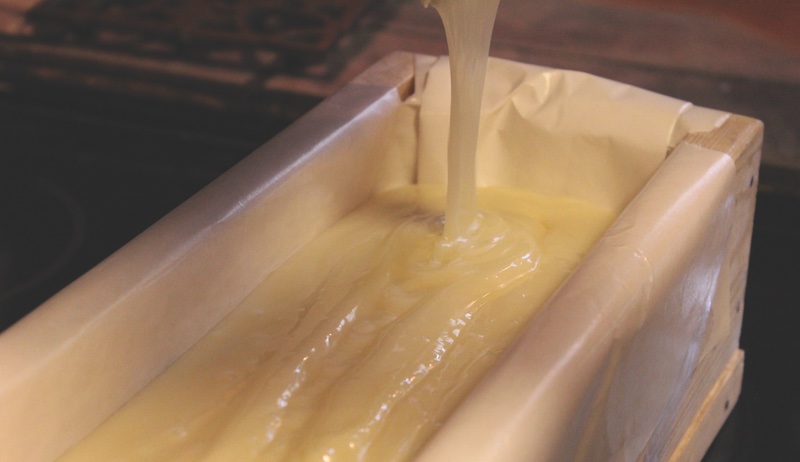
Eventually, the solution will “trace,” resembling a fairly thin pudding. To check for trace, take your spatula or stick blender and drizzle a small amount of liquid across the top of the solution. If the drizzle immediately settles back into the pot, you’ve not reached trace. Continue stirring/blending.

If, however, the drizzle leaves a faint “trace” of the pattern you made before sinking back into the solution, you have reached trace.
Make soap homemade lye
Kristi Cook

Post-Trace

Once you reach trace, it’s time to add nutrients. Add herbals first, then EO/FO, stirring between each addition.

Quickly, but carefully, pour solution into mold. Wrap mold with an old blanket or towels and allow to rest for 24 hours. At the end of 24 hours, remove covers and check hardness of soap. If soap feels hard enough to release from the mold, do so. Otherwise, allow to harden another 24 hours or longer uncovered.

Once soap is removed, slice into bars and place in a well-ventilated location to cure for three to four weeks which allows the saponification process to complete. Don’t be tempted to use bars early, as lye will still be present and can cause irritation.

Once curing is complete, take a bath and enjoy!

When taking that first step toward soapmaking, do be warned. Once you experience the goodness of all natural soaps, you’ll become addicted as you discover new ways to make your soaps your own creations.


Read more: You can use pig lard to make high-quality soap.


Variations

Once you’ve mastered the basic recipe, try some fun and interesting variations.

Oatmeal & Honey
  • 1⁄4 cup finely ground oatmeal
  • 1 tablespoon warm honey
Lavender
  • 1⁄4 cup lavender flowers
Patchouli Musk
  • 1 to 3 teaspoons patchouli essential oil

Sidebar: Safety First

Lye is highly caustic and should be handled with care.

  • Store out of reach of children.
  • Ensure children and pets are out of the working area.
  • Provide plenty of ventilation by utilizing windows and fans.
  • Never breathe the fumes. This can lead to respiratory distress.

Dial 911 immediately if you experience breathing difficulties.

Should lye come in contact with skin, apply vinegar and/or copious amounts of water to neutralize the burning. The good news about lye soap is that once saponification is complete, no lye remains in the finished product, provided the soap was created and cured properly.

This article originally appeared in the January/February 2021 issue of Hobby Farms magazine.
Categories
Animals Beekeeping

Beekeeper Erika Thompson Proudly Feels Emotional About Her 5 Million Bees

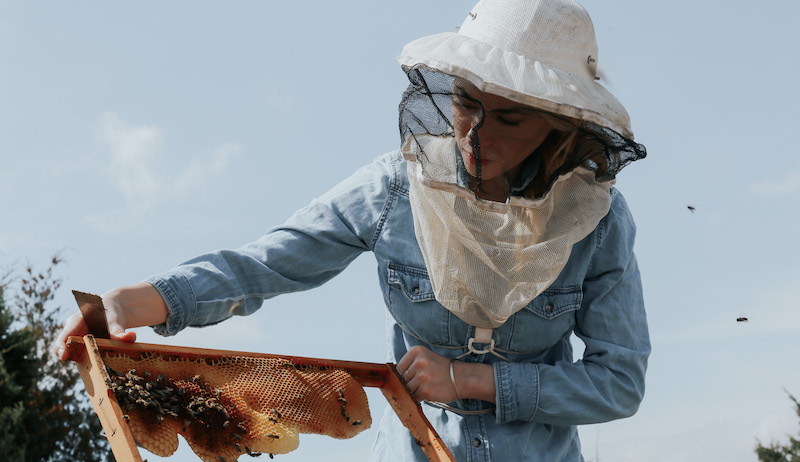
“I absolutely feel an emotional attachment to my bees,” says Erika Thompson, an Austin-based beekeeper who cares for around 5 million of the insects at her Texas Beeworks venture.

It’s a mid-morning weekday. Thompson is taking stock of the aftereffects of the gargantuan winter storm that ravished parts of Texas during February 2020. Her usually bright voice lowers to a more hushed tenor as she explains, “A lot of colonies made it through. But nobody was prepared for that weather, including the bees. Unfortunately some of the colonies that weren’t quite as strong didn’t make it through.”

Even taking into account the oversized scale of bees that Thompson claims responsibility for at Texas Beeworks—an industry standard formula for bee counts estimates 50,000 bees inhabit each hive—she says that every loss remains “incredibly emotional” to deal with. Thompson often tells herself that when she stops feeling affected by the loss of a colony, that will be the clear signal it’s time to move on from her calling as a beekeeper.

“I like having that emotional attachment to them,” she reasons. “It makes me a better beekeeper.”

Beeworks Backstory

Thompson originally started Texas Beeworks in 2014 and switched to running the venture full time in 2019. But it was the viral success of the bee-based instructional videos she began posting to the TikTok social media site the following year that boosted her rise to prominence as a public beekeeping figure.

Each TikTok upload to date has attracted a minimum of a million eyeballs.

In April of 2020, Thompson shared footage of herself shaking out a box of bees to a segment of pop singer Taylor Swift’s ubiquitous “Shake It Off” song. (Result: 1.7 million views.)

Recently, Thompson relayed footage of how to revive a bee that has become adversely affected by the cold winter weather and entered what she calls a “chill coma.” (Two million views and counting.) Most pivotal of all, in August of last year a video of Thompson removing a colony from a backyard compost bin went legitimately viral and was viewed over 40 million times.

@texasbeeworksAnother day saving the bees! #bees #beekeeper #fyp #tiktok #amazing #nature #learnontiktok #austin #texas♬ original sound – Erika Thompson

In the clip, Thompson handles the bees without any protective gear. She commentates on the process in an explanatory voice that blends enthusiasm with a calming tone.

(As a disclaimer, Thompson mentions in the footage that learning to read the behavior of bees let her know that she was not rescuing an agitated or angry bunch. So she was able to discard the traditional protective beekeeping garb.)


Read more: Here are 7 beekeeping myths that just aren’t true.


Surprised by Social Media

Reflecting on her rise to social media popularity, Thompson says that she’s “absolutely” surprised at the way her profile has skyrocketed. She also finds it a little surreal.

Speaking to such a vast audience through her Texas Beeworks accounts comes with what she views as a “deep sense of responsibility” toward both the bees and her beekeeping peers.

“I feel so lucky to have these opportunities to show people the important work bees and beekeepers do every day,” she says.

“Just Who I Was”

Long before Thompson arrived as a public beekeeper figure, she recalls becoming initially smitten with insects while growing up in Katy, a suburb of Houston. After Thompson’s parents denied her request to add a pet Dalmatian to the household, she found fulfillment in the backyard. There, she collected and monitored local bugs.

As a child, Thompson looked at the English primatologist and conservationist Jane Goodall as a hero. (Goodall is best known for her pioneering work studying chimpanzees in Tanzania.) “My mom has photos of me with binoculars around my neck and all my ape and monkey animals lined up,” recalls Thompson. “I was playing Jane Goodall growing up. That’s just who I was.”

@texasbeeworksSave the bees! ##bees ##fyp ##tiktok ##texas ##explore ##nature ##wow ##learnontiktok♬ original sound – Erika Thompson

A fascination with insects and animals stayed with Thompson through to adulthood. In 2011, she enrolled in a beekeeping class. This wasn’t, she reflects, with the express goal of becoming a beekeeper. Rather, she responded to news reports about how bees were dying and how it was imperative to save the bees.

“I didn’t really know what that meant and wanted to know why,” she says. “I lived in Central Austin at the time and had a very small backyard. So I didn’t think I could keep bees.”

After learning the basics of bee behavior in the class—along with gaining experience going into the hives—Thompson emerged with baseline knowledge. But she says instead of taking away specific lessons from her inaugural beekeeping class, she was inspired by the more holistic idea that it was paramount to “just follow your heart.” That’s what led her to start Texas Beeworks and find her eventual audience.

“If I didn’t do that, I wouldn’t be where I am today.”

Besotted with Bees

When Thompson talks about bees, she does so with a mixture of infectious wonderment—much in the manner of a child heading full on into their first hobby obsession—and the passion of an advocate.

She speaks with giddy awe about the time a year ago when Texas Beeworks received a call from someone who discovered bees in an old farmhouse that had been left vacant. When she arrived at the scene, Thompson was amazed to encounter five ginormous floor-to-ceiling bee hives embedded in the walls of the property.

“It was five completely separate colonies that had been living there for years, maybe even decades. It’s hard to say,” she recalls. “I hit the bee lottery! It’s one of those things that will never happen again, I’m sure. It was so much fun to spend time in that house and remove all the bees.”


Read more: Interested in beekeeping? Consider these things first.


Bee Behavior

Asked for a favorite fact about bees, Thompson takes a moment to dig into her internal archive. She then begins explaining how the makeup of a honeybee colony is around 90 to 100 per cent female.

“That’s because the female bees—we call them worker bees—do all the work. They’re the bees out foraging, collecting food, taking care of baby bees. They’re building the colonies. But the male bees, they have one job and that’s to mate with the queen. They don’t have stingers. They don’t have wax glands, and they don’t forage for food.”

Connecting Thompson’s many hive removal missions and intimate bee behavior knowledge and viral TikTok videos is her commitment to the broader philosophy of the insects. She openly talks about the respect and emotional attachment she feels towards her colonies. There’s an empathic reverence to her voice as she marvels at how bees operate as a collective.

@texasbeeworksSaving the bees with the amazing @jasonderulo and @beeleafusa ! ##bees ##honey ##explore ##fyp ##insane ##nature♬ original sound – Erika Thompson

They might all have unique temperaments. And rivalries may form between stronger and weaker colonies. But a colony ultimately operates as “a super-organism so no bee thinks of him or herself as an individual. They operate in this mass collective for the good of the colony.”

This communal way of thinking and focus on the welfare of the whole group is a mentality that Thompson readily feels humans could take a few pointers from.

“We can learn so much from bees,” she says. “Bees think of themselves as basically selfless and are just all working together and are so efficient and resourceful.”

After taking a beat, Thompson adds, “If we could all be a little more bee-like, it would be a better world.”

Categories
Crops & Gardening Farm & Garden Homesteading

From The Herb Garden: Make Pals With Parsley

The delightful parsley is an easy-to-grow herb that will add an attractive bright green color and fresh, peppery flavor to savory dishes.

Petroselinum crispum is a biennial member of the plant family Apiaceae, related to carrots, fennel and celery. Native to the eastern Mediterranean region, and naturized throughout Europe, this herb is widely cultivated for it culinary and medicinal attributes.

There are two basic cultivars—the flat-leafed variety (oftentimes referred to as Italian parsley) and the curly leafed type. These two parsleys are quite similar, and in many cases are used interchangeably. But chefs often insist on curly parsley’s superiority of flavor and texture.

There is a third type available to the gardener grown specifically for its large, edible root. This cultivar is commonly known as the Hamburg parsley, an heirloom variety dating back to the early 1600’s, believed to have been developed in its namesake city of Hamburg, Germany.

The root resembles something of a mix between a carrot and a parsnip. You can use it similarly, too, roasting the root or adding to soups and stews.


Read more: Want more like this delivered to your inbox? Subscribe to our newsletters!


Parsley in the Kitchen

Parsley is far too often regulated to the role of garnish. But you can use the leaves as an ingredient to liven up many meals. 

Add freshly chopped parsley to potatoes, grains and pastas to make things pop with a peppery, almost anise-like flavor. You’ll discover a wealth of culinary opportunities when combined with lemon!

In France, almost all soup stocks and stews include a bouquet garni, three sprigs of parsley tied together with a bay leaf and some thyme. The classic Italian soup minestrone also highlights the herb’s fresh and bright flavors.

Parsley is delicious in egg dishes, especially when combined with chives and tarragon. Try adding parsley to your favorite pesto recipe for a fresh take on this classic Italian sauce!

Parsley in the Apothecary

Surely the easiest way to harness the healing benefits of parsley is to incorporate this tasty herb into your diet. Parsley is a great source of vitamins A, C and K, and is rich in antioxidants, including flavonoids and carotenoids. 

Traditional herbalists have suggested parsley for a number of different ailments over the years. Most people use it for conditions involving the urinary system, though.

Parsley is often prescribed for use as a diuretic. In these cases, you should make a strong decoction, made by boiling the root of the herb. You could also brew a tea from the leaves. 

Parsley leaf tea will also also help with upset stomach and other digestive complaints. Blended with fennel seeds, the brew offers an inviting flavor along with its carminative benefits. 

Topically, you can use P. crispum to relieve bug bites, eczema and even dandruff. You can infuse the herb in oil to craft a healing salve or simply brew in a strong water infusion for use on the skin and scalp as an herbal wash. 


Read more: Which kind of parsley is best for your farm?


Growing Parsley

Parsley is an easy-to-grow addition to any herb garden. The most difficult part of cultivation is having the patience to wait for the slow-germinating seeds to get growing! Soaking the seeds overnight before planting will help, but they could still take as long as three weeks to germinate.

You can plant seeds early in the spring, about 3-4 weeks before last frost, as soon as the ground is workable. The plants prefer a full area and nutrient-rich soil, although they will still do well in partial shade.

Keep seeds and seedlings evenly moist until the plants are well established. 

Once the plant is around 6-8 inches tall, your herb is ready to harvest! Cut leaves from the outer portions of the plant for use, while allowing the inner stems of your parsley to mature. This will give you a continual harvest throughout the season. 

Parsley is also easy to grow indoors and can be enjoyed year-round! The key: Give your plants plenty of light and make to not let them get too dry. A south-facing window and regular watering will ensure a plentiful supply of tasty and nutritious leaves all winter long.

Categories
Beginning Farmers Crops & Gardening Farm & Garden

Chef Brandon Peralta Switches From The Table To The Farm To Support His Community

Brandon Peralta forged a career as a chef at West Coast, Michelin-starred restaurants for over a decade. But recently, he decided to trade nights toiling in hectic kitchens for outdoor days. Now he tends to a quarter-acre garden in Whittier, California.

This drastic change of career came about as a reaction to the COVID-19 pandemic.

“My career brought me back to the Los Angeles area to open a restaurant called M.Georgina,” says Peralta, who had spent the previous seven years cheffing in San Francisco. It was there that he experienced the farm to table movement first hand.

“We planned to open in 2018. That got pushed back, we had a $2-million build out, and then COVID-19 hit after eight months. It wiped us out.”

At this juncture, Peralta decided he wanted to “get closer to where my food is coming from.” So he teamed up with his business partner and “avid food grower” John Davis to form Friendly Hills Farm.

“We can get this fresh, nutritionally dense local food onto people’s plates, which I wasn’t going to be able to do with restaurants any more,” explains Peralta.

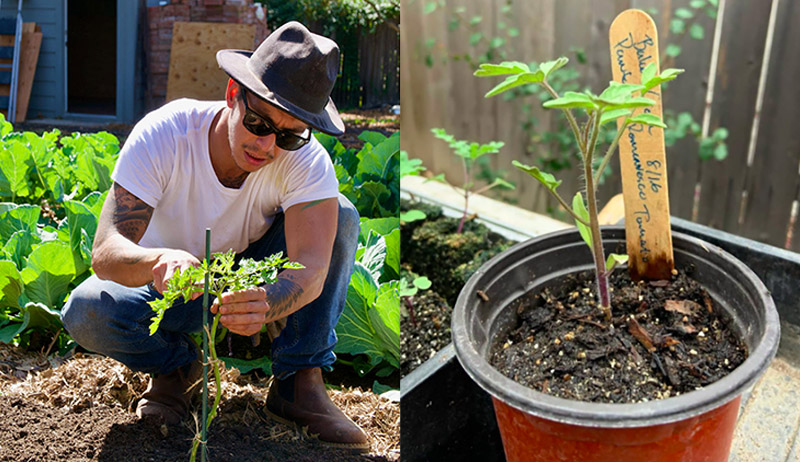
Taking a moment out from his daily duties at Friendly Hills Farm, we spoke to Peralta about no-till gardening methods and how bugs play a crucial role in farming. We also got into the high maintenance tendencies of tomatoes.

Journeying from Chef to Farmer

Peralta says that during his years in San Francisco, he was fortunate to be “exposed to really elevated produce, both nutrition wise and aesthetics wise.”

The experience caused Peralta to wonder, “Why do some parts of Los Angeles not have access to food like this? Instead, the food is imported and is sitting in warehouses for weeks.”

Eventually, he says that “being spoiled in San Francisco for seven years gave me a dream of being able to get this food into my family and community’s hands in Whittier.”

A No-Till State of Mind

No till-gardening methods form a key part in running Friendly Hills Farm.

“To be completely transparent, you have to till initially in California because we have a hard clay that heats up to 90-plus degrees in the middle of summer. So it’s like concrete when you’re trying to cultivate it,” he explains.

“But getting the initial till done and then adding carbon and nutrients into your clay and turning it from dirt to soil—once you have your land cultivated and inoculated with nitrogen and natural chemicals that plants need to survive, by not tilling you keep the nutrients where they’re supposed to be.”

He adds that you can think of tilling as equivalent to constantly ripping a Band-Aid off a wound just as it’s starting to heal.

“Every time you till, you not only disrupt the bio-intensity that is happening under the soil, but you also heat up the soil. You’re tearing it up and letting the sun’s UV rays penetrate it, which will then heat up and kill off microorganisms.”


Read more: Organic no-till? Yeah, it’s a thing—here’s what’s involved.


Farming on the Fly

Peralta says that one of the earliest lessons he learned about farming is that “it never goes the way you expect it” despite the best laid plans. (And, to remind himself, he says this on a daily basis.)

“I call the crops my babies,” he says. “They’re fine one day. The next day you see slugs or caterpillars or aphids attacking them due to too much moisture overnight. But those days when things are up in the air and might fall where they land are nothing compared to the hectic restaurant days.

“Now farming is far more special to me—being able to feed our community.”

High Maintenance Babies

When it comes to the needs of Peralta’s garden, he cites tomatoes as the highest maintenance babies. “They take the longest to grow where they’re at peak production,” he explains.

“Right now we have tomato crops that are 4 feet high, but we want to start harvesting them at about 5 feet high.

“Getting to the point where the crop is healthy really comes from healthy soil,” he continues. “We’re at the point where we’re looking much deeper below the plant than most traditional gardening books relay. We’re looking into the soil and figuring out what some of the issues might be, instead of just treating the symptoms with pesticides like traditional farming.”


Read more: Get your garden going sooner with plant starts.


Bonus Bugs!

If you follow Friendly Hills Farm on Instagram, you’ll have noticed that recently Peralta took part in a live video interview hosted by his cousin, the comedian (and Saturday Night Live repertory player) Melissa Villaseñor. The chat focused on the role bugs play in the garden.

Peralta’s a staunch advocate of letting insects do their thing. “If you have a pot that’s been in your garden for months, you’ll see lots of life under there, like caterpillars and ear wigs—all beneficial insects,” he says. “By tilling we disrupt that ecosystem.”

Despite his appreciation for insects, Peralta does admit that aphids can be a particular scourge of the garden. “They’re just feeders of any new life. We try to deal with them by wiping them off and using organic herbicides. It’s all about observation rather than trying to control.”

Follow Friendly Hills Farm on Instagram.

Categories
Animals Poultry

Keep Your Pandemic Poultry Safe From Salmonella

With the COVID-19 pandemic wearing on, many Americans are turning to raising chickens to fill their extra time at home. While raising backyard birds is a great idea—whether for food, for educational purposes or as a hobby—the influx of new flocks has put humans, as well as the poultry they care for, at risk of salmonella sickness.

As of July 28, 2020, more than 938 people in 48 states had reported being infected with one of the outbreak strains of salmonella—a 22 percent increase from 2019. According to the Centers for Disease Control and Prevention, 151 people—or 33 percent of those with information available—were hospitalized as a result of their sickness.

Even more concerning, 28 percent of the reported infections are from children younger than 5 years of age.

“It is a serious nationwide problem,” says Sherrill Davison, associate professor of avian medicine and pathology at the University of Pennsylvania’s School of Veterinary Medicine’s (Penn Vet) New Bolton Center. Davison is also Penn Vet’s lead avian flock health expert. She works to manage emerging health and biosecurity issues in flocks—large and small—across the country.

Since the beginning of the pandemic, Davison has seen an increase in phone calls from new flock owners looking for general management resources for their birds. She also gets calls from local veterinarians who may not be experts in avian health but need reliable information for their clients.

Based on the most recent data available from the CDC, 74 percent of individuals sickened in 2020 have reported contact with backyard poultry. But fear of contracting salmonella doesn’t mean individuals should be discouraged from enjoying poultry.

“The most important over-arching theme is to keep things around the birds clean and dry,” Davison says.

Don’t Play Chicken With Your Health

The primary key to healthy bird-keeping is diligent hand washing. “Wash your hands with soap and water right after touching backyard poultry, their eggs or anything in the area where they live and roam,” Davison says. “Use hand sanitizer if soap and water are not readily available.”

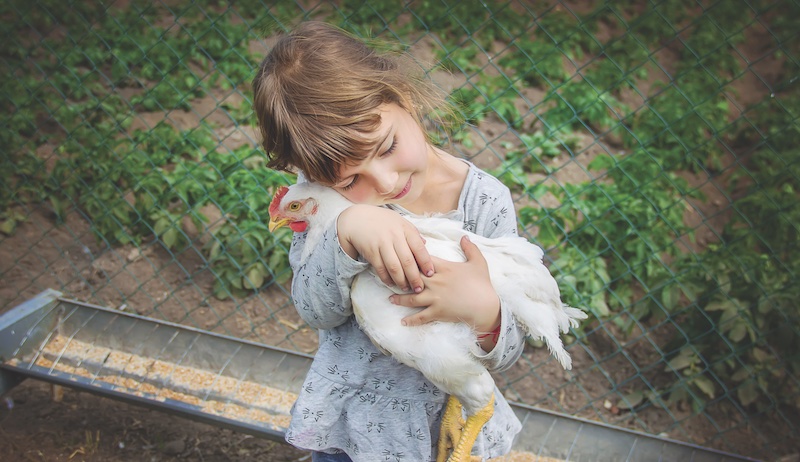
Be sure children wash up, too. Davison also advises against letting kids kiss backyard poultry or snuggle them. To further protect against salmonella, keep backyard poultry outside the house, and especially away from areas where food is prepared, served or stored.

“Keep in mind, that birds carrying the bacteria can appear healthy and clean,” Davison says. “Always err to the side of caution.”

Children and adults should have a separate pair of shoes to wear while taking care of poultry to limit any possible cross contamination. The CDC recommends those shoes or boots be kept outside of the house.


Read more: Biosecurity helps keep hens healthy.


Keep Bad Eggs at Bay

Eggs collected from backyard birds also need special care and attention. “Be sure to collect your eggs often, as eggs that sit in the nest for too long become dirty or break, increasing risk of infection,” Davison says. “If you do find cracked eggs, throw them away immediately. Germs can more easily enter an egg though a cracked shell, putting you at risk.”

Clean collected eggs carefully with fine sandpaper, a brush or a cloth. But don’t wash them too soon. “The CDC advises against washing warm, fresh eggs because colder water can pull germs into the egg,” Davison says.

Once cleaned properly, eggs from your poultry should be refrigerated. This prolongs freshness and slows the growth of pathogens such as salmonella. When cooking eggs, be sure both the yolk and white are firm. Egg dishes should be cooked to an internal temperature of 160 degrees Fahrenheit or hotter.

“Raw and undercooked eggs may contain salmonella bacteria that can make you sick,” Davison says.

chicken chickens poultry salmonella
Szike/Shutterstock

Hatch Good Poultry Husbandry Practices

Keeping healthy birds is at the heart of staving off disease. If starting or expanding a flock, purchase your birds from a reliable source. Most poultry hatcheries, including mail-order hatcheries, implement interventional practices to help prevent contamination and infection of salmonella as well as other well-known diseases.

If you get birds from an auction or a neighbor, quarantine the new birds. Test them to avoid rampant spread of disease in the flock.

Healthy birds need continual access to plenty of fresh water. Be sure to clean their waterers regularly. Owners will also need to ensure they are feeding the proper types of food for each stage of the flock’s life.

“Nutritional requirements vary by age and laying status,” Davison says. “If in doubt, consult a professional.”

In every case, keep the birds’ housing safe from predators like raccoons, foxes and hawks. Also make sure to keep the flock away from contact with wild birds.

“This includes keeping the henhouse away from wild bird feeders which can be a source of another disease known as Mycoplasma respiratory infections in flocks,” Davison says.

Lastly, understand your local township’s regulations. Some don’t allow poultry at all. Others limit flock size or forbid roosters.

Start Right

With proper care, backyard birds can be a safe, healthy and productive pastime. “It is just a matter of implementing simple, but appropriate, preventative practices to reduce the incidence of disease,” Davison says.

If you are new to backyard poultry but unsure where to start, consult a professional. Penn receives inquiries from all types of poultry owners and producers—novice or professional—as well as veterinarians or other health experts seeking reliable, science-based resources.

“We’ll look at anything with feathers,” Davison says, “chickens, turkeys, ducks, large flocks, small flocks, wild birds … even ostriches!”


Resources

This article originally appeared in the January/February 2021 issue of Chickens magazine.

Categories
Animals Poultry

Getting Started: Buying Your First Flock Of Baby Chicks

After numerous discarded lists and many hours of research, review and discussion, you have finally settled on the breed (or breeds) of chicken for your backyard flock. Breathe a sigh of relief. For many (including yours truly), this is the most arduous preliminary task. Next step: getting baby chicks.

This can be a breeze. Or it can be just as daunting as the previous one. It really depends on your choice of chooks.

If you’ve determined that a couple of Barred Plymouth Rocks and Buff Orpingtons meet your poultry needs, you’ve got an easy road ahead. But if you’ve set your heart on frizzled Naked Necks or on the exotic Ayam Cemani? Be ready for a little more legwork to determine reputable sources for these breeds.

Here are four suggestions for where to buy your birds.


Read more: Why get chickens? They’re great therapy animals, for starters.


Local Farming Stores

Each spring, feed shops and farm-supply stores usually celebrate “Chick Days.” During this time, you’ll hear the peeping of baby chicks throughout the premises.

These businesses typically receive weekly orders of chicks from hatcheries for approximately a month. Massive brooders typically take center stage in the store.

National chains like Tractor Supply Company and Rural King can be counted upon to carry such popular breeds as Buff Orpingtons, Barred Rocks, Golden Comets and Isa Browns. While the breeds sold at chain stores tend to be selected by corporate headquarters, feed-shop owners choose the chicks they sell for themselves.

Ask your local feed-shop owner about placing a special chick order for you. If the breeds are available in their hatchery catalog, all you need to do is pay and wait for your future flock’s arrival.

Local Breeders

If you live in or near a rural or agricultural area, chances are that your baby chicks are just minutes away from home. Before buying locally, however, consider these three factors.

  • Not all poultry farmers breed chicks. If their main focus is egg production, losing a hen to broodiness and chick rearing affects their product availability.
  • Those who do sell chicks may do so on a set schedule or on the whim of their hens, so their chick availability may not match your desired time frame.
  • Finally, not all chicken farmers know what kind of chicks they are selling. Many allow all their breeds to intermingle, so the chicks they sell are a “barnyard blend.”

Unfortunately, some farmers buy their birds from questionable sources. I’ve lost count of how many times I’ve seen Araucana and Ameraucana chicks for sale at local farms—and, sadly, at farm-supply stores—only to discover these were actually Easter Egger babies.

Before you buy, contact the farm, check out their Facebook page, and ask questions before committing to a purchase.


Read more: Here’s what you should know about poultry associations.


Specialty Breeders

If you have chosen a more exotic breed of chicken or decided to raise endangered breeds of birds, your sources may be rather limited. But the internet is your friend.

Search for the name of your breed and either “national club,” “breeders club” or “association.” (Example: “Serama national club”)

You”ll likely pull up the link for your chosen breed’s national organization (in this case, the Serama Council of North America).  Most poultry-breed organizations feature a breeders’ or members’ directory on their site. Check here to locate breeders close to your home. These birds will be more acclimated to your region’s weather than those from a breeder located halfway across the country.

Be aware that chicks ordered from specialty breeders cost more than your farm-store chick and that shipping costs will be high. (Live chicks must be sent via express delivery.) Stay ready to dash to the post office to pick up your package upon arrival, then offer your new babies chick electrolytes and lots of TLC as they recover from being shipped.

Hatcheries

Hatcheries remain the tried-and-true method of buying baby chicks. These companies make chick sales their primary business and, as a result, offer an expansive variety of breeds.

Many offer gendered chicks for a slightly higher price, which is a bonus if you can only keep hens.

The only drawbacks to ordering from a hatchery is that they sell out quickly. Place your order early in the year. You can select your desired delivery date.

Hatcheries also often require a minimum number of baby chicks for shipping, so you may need to team up with a friend or two to place an order in case the hatchery’s minimum is beyond what your local ordinance allows.

Finally, beware of temptation. The vast assortment of chick breeds listed on a hatchery site may cause you to waver from that list you worked so hard to draw up.

Stand firm! Submitting to chicken math now will affect the type and amount of equipment you’ll need to purchase for your flock. (We’ll discuss equipment in the next Getting Started column.)

Categories
Equipment Farm & Garden Farm Management

On The Farm, A Gun Can Offer Protection & More

As a frequent contributor to many national firearms magazines, writing about guns is my passion and comes quite easily to me. However, writing about gun knowledge for a widely varied audience like that of Hobby Farms—some of whom are very familiar with guns on the farm, and others who have likely never even shot a firearm—is somewhat more difficult.

The key is to give basic information that beginners need, while not lulling more experienced gun owners to sleep and having them simply turn the page. With that said, here goes.

Tools, Not Toys

Guns are utilitarian tools that have many appropriate—and, obviously, some inappropriate—uses. A gun is particularly handy in a rural farm environment for a variety of reasons, which we’ll take a quick look at.

First, the right gun can be a very handy tool for protecting livestock and poultry from four-legged predators that can wipe out your farm quickly if left unchecked. From possums and raccoons to coyotes, bobcats, mountain lions and even wolves, having a gun and knowing how to use it safely can be the difference between losing stock and keeping your farm intact.

Guns can also be important tools for protecting you and your family. The old saying, “God made man; Samuel Colt made men equal,” is an elaborate way of saying that common people with less strength can protect themselves against far bigger and stronger aggressors with the help of a firearm. Many states allow the use of a firearm for self-defense if a person’s life is endangered.

Lastly, a gun can be handy on the farm for putting meat in the freezer, whether domestic or wild game.

From dispatching lambs or pigs for butchering to taking down a deer, antelope or elk, a firearm gives farmers and other rural residents the best opportunity for killing animals quickly and humanely compared to other methods.

farm gun guns
CLP Media/Shutterstock

Is a Gun Right for Your Farm?

This is a good time to interject that guns aren’t for everyone. The Second Amendment to the U.S. Constitution guarantees the right to bear arms for every lawful citizen who is not otherwise disqualified by being convicted of a felony or other extenuating circumstances as noted under federal law. However, some people just aren’t comfortable with the thought of owning a gun or are afraid of guns.

That’s fine. It’s certainly a personal choice.

But note that more and more people are buying guns than ever before. In fact, during the 2020 pandemic year, more guns were sold by the middle of October than in any other entire year since records have been kept, according to the FBI’s National Instant Criminal Background Check System. And millions of those guns were sold to brand-new gun owners.

Many states have different laws regulating the ownership and use of some types of firearms. So, learn what your state’s laws have to say before jumping into the gun ownership arena.


Read more: Not into guns? A crossbow might be the right hunting tool for you!


Farm Gun Safety

In any discussion of guns and gun usage—whether on the farm or elsewhere—firearm safety should be at the top of the list of topics. New and expert gun owners who always follow four primary rules will stay safe and never accidentally hurt themselves or anyone else with a firearm.

The four rules are as follows.

  1. Always keep your gun pointed in a safe direction. Why is this so important? If your gun is always pointed in a safe direction, even if you accidentally fire it by violating the next rule, nobody will be hurt.
  2. Keep your finger off the trigger until ready to shoot. If you don’t pull the trigger, your properly functioning firearm won’t shoot. So if you always keep your finger off the trigger until you are ready to shoot, you greatly diminish the chance of an accident.
  3. Treat every gun like it is loaded. Assuming a gun is unloaded can cause a catastrophe. Always treating every gun like it is loaded—which means pointing it in a safe direction and keeping your finger off the trigger until you are ready to shoot—will ensure that a loaded gun you thought was unloaded still can’t accidentally hurt anyone.
  4. Know your target and what is beyond. Being sure what you think you are shooting at is exactly what you are shooting at is necessary before firing any gun. And knowing what is beyond that target should the bullet miss or pass through the initial target is critical to being a safe, responsible gun owner and shooter.

Training

This brings us to the training aspect. To properly and safely use firearms for whatever purpose you choose, training is important. And it goes beyond just going to the range and firing five or six rounds, then calling it good.

Frequent training with your firearm will make you not only a better shot, but also a safer, more responsible gun owner. Don’t have an experienced shooter friend to help you get started? There are plenty of professional firearms trainers whose services are well worth the cost.

Storage

Lastly, storing firearms safely when not in use is another critical safety aspect of responsible gun ownership. Many storage options are available to keep you and your family safe. (See “Safe Storage,” below.)

Let’s take a look at the three kinds of modern firearms: shotguns, rifles and handguns. (We’ll skip muzzle-loading arms here because their utility on the farm is marginal, at best.)

farm gun guns
Mossberg

Shotguns

Shotguns are one of the most versatile types of firearms you can have around your farm. They shoot shotshells, which hold a number of pellets instead of just one projectile, like a rifle or a handgun.

That makes it easier to hit what you are shooting at without being a crack shot.

Shotguns are useful for nearly all purposes on the farm or in rural areas. They’re great for protecting livestock, as they’ll work well on raccoons, coyotes or nearly anything else stalking your herd. Loaded with birdshot, they’re excellent for bagging quail or pheasants for the table. And, they shoot rifled slugs, giving you what you need to take down a deer on the back 40.

Lastly, loaded with buckshot, they’re among the best home-defense guns, especially for beginners. In fact, many companies make models specifically for home-defense purposes.

The four shotgun types are single-shot, pump, semi-automatic and double-barrel. Pumps and semi- autos are the easiest to use, and pumps usually fall at the lower end of the price range.

You can get a quality, brand- new pump shotgun for well under $400 from companies such as Mossberg and Stoeger.


Read more: It’s essential to care for your firearms for safe and proper use.


Rifles

Rifles are also quite useful and come in two broad types: rimfire and center-fire. Rimfire rifles are generally .22 caliber and, while lethal, have the lowest amount of energy behind their projectiles.

However, .22 rifles are much quieter than center-fire rifles. They can easily dispatch varmints or predators, or get a rabbit or squirrel for the stew pot. You can even put down lambs or pigs for butchering.

On the other hand, rimfire rifles don’t produce the energy needed to ethically and cleanly harvest deer. And while sometimes used for home defense, they aren’t really ideal for that purpose.

Center-fire rifles run the gamut from bolt-action to semi-auto to pump to single-shot. Bolt-action rifles are popular for harvesting deer, elk and other big game, but have little utility for home defense. They’ll dispatch a predator for sure but are overkill on varmints such as possums and raccoons.

Pump and single-shot rifles are similar. With their high-velocity rounds, they are great for hunting big game and dispatching livestock for butchering, but aren’t ideal for killing skunks and protecting your home and family.

Semi-Auto Rifles

Semi-auto rifles are much more versatile. Here, we’re talking about the AR-15-style rifles that some call “assault rifles.” Actually, they aren’t assault rifles, as true assault rifles are fully-automatic. And the “AR” in AR-15 doesn’t stand for “assault rifle” but for “ArmaLite Rifle,” giving props to the company that first made them.

These rifles fire one round with each pull of the trigger, just like bolt-actions, but eject the fired brass and load another shell for a quick follow-up shot.

Semi-auto rifles are lightweight, short for easy handling, accurate and (with the right ammo) plenty good for killing a deer or antelope. They take out predators quite well. And, with extended magazines, they hold plenty of rounds to give you several shots.

They are also quite useful for home defense when using the right ammunition. Many companies make such semi-autos, and new ones can be found for under $500 if you look hard enough.

Top makers include Smith & Wesson, Ruger, Savage, Rock River and Sig Sauer.

Handguns

Handguns are typically either revolvers or semi- automatic pistols. Revolvers have a cylinder that you load cartridges into. When you fire one, the cylinder “revolves” and puts the next cartridge in place to be fired.

Semi-auto pistols are made with a removable magazine held within the pistol’s grip. When a shot is fired, the shell is ejected and the pistol automatically loads the next round on top of the magazine into the chamber. Each pull of the trigger results in a shot until the magazine and chamber are emptied.

Handguns are also quite useful, but certainly not an absolute necessity around the farm. Best used for home defense (since shots there would be at much closer ranges), they’re hard to use for dispatching varmints since they aren’t easy to shoot accurately without quite a bit of practice. And they don’t have the power or accuracy needed to cleanly harvest big game.

If home defense or concealed carry is a priority, look into a semi-auto pistol or revolver. But if you just need one all-around gun for the farm, this probably isn’t it.

Top makers include Smith & Wesson, Springfield, Ruger, Mossberg, Colt, Kimber, Sig, Taurus, Beretta and FN.

Air Guns

While not technically firearms, a modern air gun can be powerful enough to come in useful around the farm. They’re very quiet. You can easily dispatch pests in more urban areas or where shooting real “firearms” is prohibited.

Some are also very powerful, shooting pellets at well over 1,000 feet per second.

I have a Gamo model that I use to kill pests bothering the chickens and to keep squirrels away from my wife’s tomato plants. It’s accurate, quiet and very deadly. Because I’m in the city limits where shooting a firearm is prohibited, I use it frequently with good success.

Top airgun makers include Gamo, Crosman, Benjamin, Beeman and Umarex.

farm gun guns
Krystina Kipp/Shutterstock

Making a Choice

In the end, it’s up to you whether you choose to keep a firearm on your farm or not. As discussed, they serve many different purposes and can be used safely and efficiently if you follow safety practices and practice regularly.

Most experienced firearm owners already know what works best for them. They might simply be looking to add another shotgun or handgun to their collection. But for newbies just considering a first gun for the farm, there are many things to consider.

If I were asked to suggest one gun to a new rural gun owner that would serve all of his or her purposes quite well, I’d suggest a 12-gauge pump shotgun. It’s easy to use and doesn’t require great marksmanship skills. You can also load it with a variety of ammunition, from birdshot to buckshot to slugs, adding to its versatility.

Mossberg and Remington are two of the top pump shotgun makers. Mossberg’s extensive Model 500 series is one of the best-selling pump shotgun lines in the country. And Remington’s venerable Model 870 can serve every purpose under the sun, from harvesting ducks and geese to use on the battlefield.

Whatever you choose or don’t choose, always put safety first. Guns are useful tools on the farm, as long as they are used legally and safely.


Sidebar: Safe Storage

Safe storage of firearms is just as critical as knowing and practicing the four rules of gun safety. However, how you should store your guns largely depends on who has access to your home, their ages and their knowledge of firearms.

Keeping a gun unloaded and locked up in a gun safe renders it virtually impossible to access quickly in a farm emergency. But it’s also the best way to render it safe from those who shouldn’t have access.

At the other end of the spectrum is the loaded shotgun propped up behind the bedroom door in a household where there are only one or two residents who know it’s there, know it’s loaded and know how to use it.

For safety’s sake, it’s always better to render your firearm safer than you think you’ll need it to be for your situation than to leave a gun where it can be accessed by an unauthorized person who might not know how to use it properly. You’ll need to consider your own unique situation when making a decision concerning this important matter.

Once you decide, do a quick internet search for “gun storage” to find dozens of different kinds of products. They range from conventional gun safes to a wide variety of other storage solutions designed to help you keep your guns safe and secure.

You’ll likely find the solution that fits your situation pretty easily.

This article originally appeared in the January/February 20201 issue of Hobby Farms magazine.

Categories
Animals Large Animals

How To Get Started Raising Feeder Lambs

For the most part, the beef cattle industry that supplies meat to U.S. major supermarkets involves three distinctly different operations. These specific phases may not be typical of small hobby farms or homesteads. But we can steal a page from their methodology and adapt the tactics to a small lamb-production farm.

The first phase of most livestock enterprises starts with a brood herd. Cows, ewes or even sows are kept and bred for their offspring. The underlings can be used as replacements if the operator is trying to increase herd numbers.

Additionally, there is absolutely nothing wrong with keeping animals for pets or the tranquility they bring to a small country farm. However, if production is the aim, some type of program should be in place to have the farm run smoothly, improve the soil, and make the production profitable and efficient.

Please be aware, production livestock may not be for all readers. Don’t become too attached to lambs. This program is not about pets.

In fact, this article is about raising feeder lambs for the freezer. If you are uncomfortable with that type of operation, stick to other types of farming endeavors. We’re OK with that!

Before we go too far, and for clarity, let’s discuss the three major phases of any livestock production. These three phases correspond to the growth steps of the young.

Phase One

As stated, the first phase is a brood herd. In the cattle business, it’s called the cow-calf phase. The mother and young are often called pairs.

The producer keeps a manageable number of mature cows for the calves they provide each year. The operator realizes his or her profit when weaned calves are sold.

Typically, the calves are sold at somewhere between 450 and 600 pounds. The operator keeps a few youngsters to replace any aging animals. But probably 80 to 85 percent of the weaned animals are sold privately or at auction to a second operator who should be set to raise animals through the second phase.

Phases Two & Three

The second phase means growers with a bit of available pasture will purchase and raise weaned young animals to a heavier weight and ready for finishing. Cattle people call phase No. 2 the stocker-yearling phase.

For sheep and goat people, we just think of it as the feeder phase.

feeder lambs sheep
Bill Graves

Remember, these animals (regardless of species) are weaned and ready to leave their mothers. Feeder lambs should have a developed rumen and be fully capable of making the transition from mother’s milk to grass, hay or other coarse feeds. At the end of this second phase, large corporate farm operations often send cattle or heavier feeder sheep to a feedlot for finishing.

Finishing is the third and final stage of the meat industry and simply means fattening the animal and creating a desirable finished product for consumers. Hobby farmers and production growers now realize that many consumers are choosing meat that isn’t sent to a feedlot but simply finished out in the pasture with the meat sold as “grass-fed.”

Finishing on grass may take bit more time and may be slightly more expensive. But the results are a healthier, more natural and tastier product.


Read more: Sheep are, quite possibly, the ultimate small-farm ruminant.


Lamb Logistics

You may be reluctant to take on risks involved with keeping farm animals. Drawbacks for many livestock operations can seem tricky or overly complicated. For example, concerning sheep, you may not want to keep breeding rams, worry about shearing or run risks that accompany birthing ewes.

However, raising feeder lambs is good for soil, healthy for you and can provide extra spending money for farm improvements. And you don’t need to shear or keep rams. Since you only keep animals on pasture for five to six months, your pasture can go fallow and recover in your off-season.

In fact, manure and urine left behind by your small temporary flock will improve your pasture. As the fallow season progresses, you’ll also break the cycle of any parasites that might otherwise persist.

You can take time to introduce cool-season grass seed in the off-season or provide irrigation to encourage recovery in the field. Small spaces are fairly easy to manage. Each season may bring marked improvements in your soil quality.

Here is what you’ll need to become a part-time shepherd who only keeps and finishes grass-fed lambs.

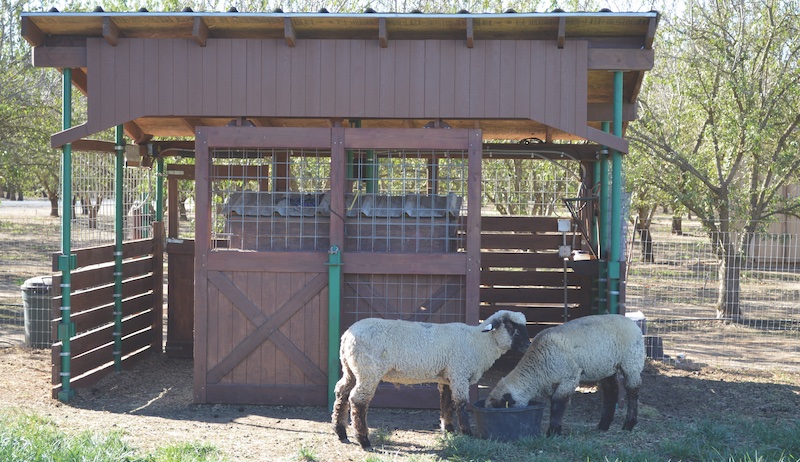
First, you will need a minimum 1⁄4-acre space. That may not seem like much, but you can actually raise about three feeder sheep on a 100-by-100-foot field. The space must have secure fencing, water, shade, some kind of minimal protective shed and a feed trough. A quarter to 1⁄2 acre is truly all you need if it has some good quality grass or clover.

For many hobby farms, about five sheep per year on just over 1⁄4 acre is perfect.

Five feeder lambs in my area of the country will net nearly $1,000 and leave one lamb for personal consumption.

Key to Success

The best way to success is to not pay high prices for your newly weaned lambs. If you have local 4-H and/ or FFA organization close by, find out where they buy lambs for the county fairs and junior livestock shows.

You don’t want to find club lambs that will make weight during your local fair. Competition lambs sell at very high prices. However, you will want the names of several producers with flocks. It’s very smart to arrange a farm visit before you’re ready to purchase.

You may also want to attend livestock auctions or talk to your local farm advisor. You can even inquire at local feed-supply stores.

feeder lambs sheep
Bill Graves

Just remember, lambs destined for competition at the county fairs are going to be too expensive to be profitable. You want to buy so-called spring weaned lambs at about 50 pounds. And you want to sell grass-fed finished lambs six months later, at about 130 pounds.

Your entire profit will come from the weight gain. Expensive, weaned, county-fair lambs simply won’t make you a profit. The farm advisor will know reputable sheep people that sell healthy and reliable animals.

Many of the fast-growing sheep breeds will work. Hampshire, Suffolk, Southdown and crosses are all very reliable as freezer market feeder lambs. Of course, auctions are somewhat less trustworthy.

Quality-weaned lambs are available all across the country. But you may have to do a little research to find them.


Read more: This first-aid checklist will help you keep your sheep in shape!


Stuff Ewe Need to Know

Once you transport your feeder lambs home, introduce them to their new pen. Keep the animals confined until they adjust to the move.

If you have lush green pasture, be cautious when releasing any ruminant animal to a new field. Cud-chewing critters break down cellulose with the aid of microbes that live in the rumen part of their gut. Lush moist greens cause a rapid bloom in the gut and animals may produce a frothy foam that can be difficult to expel.

This condition, known as bloat, can be prevented by slowly introducing the new lambs to their new pasture.

You may have to cut and feed small amounts to control their consumption. Better yet, you may be able to buy weaned lambs already exposed to green pasture. Another option would be to feed baled grass hay or alfalfa, so they are relatively full before you release them to greener pastures.

Just keep an eye on things for the first few days.

Your feeder lambs should adjust fairly quickly. They are probably already familiar with one another and should be about the same size.

At harvest, five or six months later, it’s fairly important that all the feeder lambs dress at about the same weight. They should all be dispatched on the same day.

Sadly, of all livestock species, lambs actually have the worst dressing percentage. A 130-pound lamb will yield about a 65-pound carcass, and even less cut and wrapped product. The poor yield is due to a fairly large G.I. tract, and a heavy head and hide, neither of which is included in the carcass weight.

Most lambs will carcass yield just slightly above 50 percent. Try to find buyers for your feeder lambs early on in the process. Once the carcass is cut and wrapped, the weight of packaged edible product may only be 45 pounds or so.

Sell First, Raise Later

It’s important to presell your feeder lambs. Most growers, including myself, prefer to sell to friends, family or other acquaintances. Of course, once you sell your first few lambs in the fall, you’ll have repeat customers wanting more the following year.

Make sure customers know the amount of meat they’ll likely receive and that the price may not be much lower than super- market lamb. However, the grass-fed quality is likely to be much better.

The USDA mandates that all meat sold in the U.S. be inspected. Nevertheless, producers can presell the lambs and then individual customers can have the meat cut and wrapped on their own. The idea here is that you have presold the lamb and are simply raising the lamb for your customer.

There are usually small companies in rural counties that specialize in ranch harvest. They will come to your location, do the work and then take the harvested lamb carcass to a meat locker of your choosing. There is, of course, a fee for this. But it’s simple and traditionally the fee is just added to the price of your lambs without markup.

Your customer pays you for their lamb and the harvest fee. Each will then pay their own wrapping fee when they pick up their meat. These methods work out especially well because the purchaser can let the butcher know exactly how they would like their lamb cut and wrapped.

Raising short-season lambs is a simple program easily adapted to your schedule. And it will provide high-quality grass-fed lamb for the table. If you enjoy the taste of high-quality lamb, you may find this type of operation easy, fairly risk free and even profitable, albeit on a small scale.

Sidebar: Feed Facts

You can feed a tiny amount of so-called sweet feed to your miniature flock each morning. Cup your hands together—that is about all each lamb needs. I do so just to be sure I am meeting all their nutritional needs.

If you happen to have whether lambs, they may actually need ammonium chloride to prevent urinary tract disorders. It should be in the feed. Ask at the feed-supply store, and read the label.

I also provide mineralized salt. Feed the salt in an area that stays fairly dry, so lambs can just lick as they feel the need. Then store salt away when your field is fallow.

Salt can be given free-choice, but don’t overfeed sweet feed. Sweetened show feed is expensive and better as a treat. Additionally, you are going to want your lambs to utilize the pasture.

This article originally appeared in the January/February 2021 issue of Hobby Farms magazine.

Categories
Crops & Gardening Farm & Garden

20 Vegetable Seeds To Try In Your 2021 Garden

One of the strangest things about the advent of COVID-19 has been its impact on so many aspects of life far removed from the virus itself. Who can forget the toilet paper shortage? Or work-from-home days punctuated by Zoom calls?

Or how about the astonishing increase of interest in gardening?

Nobody saw the 2020 seed shortage until we were right in the thick of it. As the lockdowns of 2020 wore on, people continued to search for productive ways to stay busy at home. Many turned to gardening.

“Over the last few years, we’ve seen a trend in younger gardeners’ interest in going ‘green’ and using eco-friendly products,” says Judy Seaborn of Botanical Interests, a seed company based in Broom- field, Colorado. “So when COVID-19 sent everyone back into their homes, we feel it accelerated that trend into gardening.”

“We are seeing many Americans starting vegetable gardens both to relieve stress as well as to grow food,” says Jaclyn Johnsen of Jung Seed, based in Randolph, Wisconsin.

But when everyone had the same idea in spring of 2020 (“Hey! Let’s plant a garden!”), the impact was unexpected.

Seed companies were inundated with orders and struggled to keep up with the unprecedented demand. Seed availability plummeted, and “Out of Stock” appeared on most of the favorite seed varieties.

Somehow or other, we made it through the growing season. Seed companies restocked their supplies as quickly as they could. Gardeners settled for substitute varieties or traded seeds with friends.

Not Again!

We planted, we grew, we harvested our garden (and we saved the seeds, too!). But here comes 2021. The seed shortage is (hopefully!) a thing of the past. And gardening companies will be ready to fulfill the coming need for seeds to jumpstart the 2021 season.

“We are doing everything we can to meet the demand,” says Kathy McFarland of Baker Creek Heirloom Seeds, based in Mansfield, Missouri. She adds that the company is packing more seeds and building a new warehouse and shipping facility to help them meet the demand.

“We pack seeds for the year based on previous sales, plus an estimated increase,” she says, adding they they “are now finding that our ‘year packs’ are selling out in about three months’ time!”

“We learned from last year’s growing demand for seeds and are prepared with new varieties, old favorites, and lots of seed for gardeners to choose from,” Johnsen says.

Be Flexible

But let’s say you’re after a particular variety—Dragon’s Tongue beans or Sugar Magnolia peas, for example. What happens when certain varieties run out?

Well, as we all learned last year, sometimes you simply have to shrug your shoulders and select a different variety instead.

“What happened last spring is that we eventually ran out of all varieties of cucumbers—or eggplant or lettuce or whatever,” McFarland says. “Customers were often ready to settle for any variety of the type of vegetable they wanted.”

A Lasting Trend

This year, with sufficient quantities of seed in stock, companies are poised to meet the needs of consumers whose enthusiasm for gardening remains high. “I don’t anticipate the interest in the seed-gardening lifestyle to wane this coming season,” says Seaborn, who sees a trend of families moving to areas with more space now that more people are working remotely.

“More space means more room to garden!”

The last time Johnsen saw growth like this, it persisted for about four years before tapering off. “Seed sales tend to be counter cyclical, meaning people are more interested in seeds when the economy is down,” he says. “I believe the increased enthusiasm for seeds will continue into 2022.”

As you’re planning your 2021 garden, be ready to order seeds. The earlier you do so, the better. Here are 20 veggie varieties that we recommend you consider this year.

Pea

Swenson Swedish

I initially chose these purely for sentimental reasons—they came from Småland in Sweden, which was where my great-grandmother was born. But now I grow them because they’re such a splendid variety.

They produce reliably, and the pods are quite tender and tasty when harvested young (and roasted in the oven with butter—yum!).

Broccoli

Calabrese Green Sprouting

There’s a lot to love about an heirloom variety that has endured since the 1880s. Calabrese broccoli originally came from Italy.

It is noted for its penchant for producing multiple side shoots. Calabrese is a delicious and delightful variety.

Kale

Casper

If you’ve ever thought that kale is somewhat boring, it just means that you haven’t grown Casper kale.

It’s packed with flavor and is stunningly beautiful besides. The frilly leaves are white in the center and framed by green. This gorgeous contrast makes it a showpiece for your garden.

Cabbage

cabbage garden seeds
Baker Creek Heirloom Seeds/rareseeds.com

Violaceo Di Verona

If you’ve ever thought that some cabbage varieties seem a bit humdrum, turn your attention to this eye-catching Italian heirloom.

Presumably named for its color (the leaves are green, laced with violet) and its region of origin (Verona), this variety is beautiful and hardy. It’s somewhat tolerant of frost, too

Cucumber

Lemon

I’m not sure there are enough superlatives in the dictionary to fully describe the wonder that is the Lemon cucumber. Its flavor is mild, its production impressive and its shape unique.

It’s one of my favorite heirlooms, and I love to grow the seeds in my garden.

Swiss Chard

Bright Lights

If you’d like to add some color to your garden, this vibrant variety of Swiss chard is just what you need. The stems are stunning in shades of red, pink, orange, yellow and white.

And they’re an absolute joy to have in the garden.

Carrot

Cosmic Purple

I guess you could grow orange carrots if you really want to. But why would you when you can grow purple carrots instead? These stunning carrots have it all: flavor, color, beauty and marketability.

If you’re looking for the total package, this is it.

Pole Bean

Hidatsa Shield Figure

This beautiful variety produces an abundant crop of dry beans that rank among my all-time favorites. These beans are well known for their mention in the book Buffalo Bird Woman’s Garden, as well as for their inclusion on Slow Food USA’s Ark of Taste.

They are simply gorgeous and delicious, too.

Bush Bean

Roquencourt

For pure beauty and exquisite flavor, it’s difficult to improve on a yellow wax bean. But the Roquencourt bean takes wax beans to the next level.

This early and productive producer makes a delightful choice.

Eggplant

Louisiana Green Oval

Take that stereotypical eggplant image and set it aside. Because here’s a variety that will give you a fresh appreciation for the surprising delights of this member of the nightshade family.

Louisiana Green Oval produces beautiful green fruit that reach approximately 6 inches long. It’s a prolific variety and tasty, too.

Winter  Squash

winter squash garden seeds
Jung Seed Company

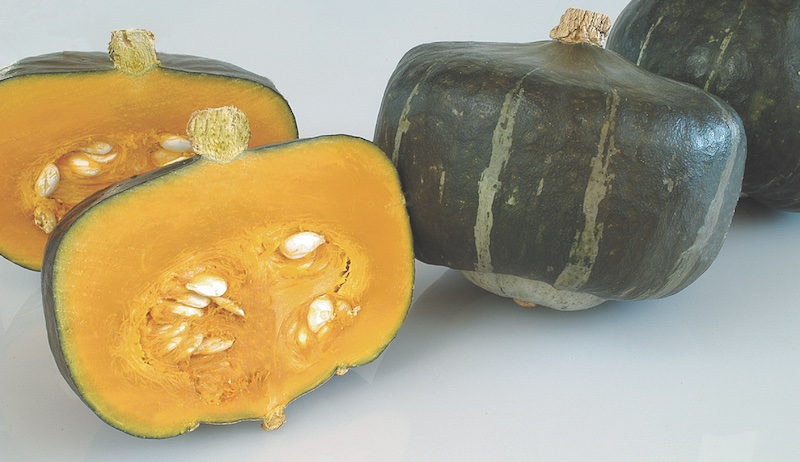
Bonbon Hybrid

Buttercup squash are delicious, and this delightfully sweet variety lives up to its candy-inspired name! Perfect for smaller gardens and noted for its disease resistance, Bonbon is an excellent choice for anyone who loves winter squash.

It’s easy to see why it’s an All-America Selections award-winner. Definitely try these seeds in your garden!

Lettuce

Green Ice

Leaf lettuce is a treat because it’s easy to grow and easy to harvest, and Green Ice is especially wonderful because it tastes so good. I’ve heard it described as the best lettuce ever.

Watermelon

Harvest Moon

Everybody loves the Moon and Stars variety of heirloom watermelon. But this award-winning hybrid provides some impressive upgrades.

The flavor is even better than the original. It produces excellent yields, and it’s seedless! Harvest Moon is definitely worth some space in your garden.

Radish

Cherry Belle

Here’s a brightly flavored and crunchy radish that has stood the test of time.

In 1949, it was named an All-America Selections winner, and since then, it has impressed gardeners with its early maturity and excellent flavor. It’s a tried-and-true variety that belongs in the garden of anyone who loves radishes.

Corn

Stowell’s Evergreen

Here’s a lovely, old-fashioned classic!

A garden staple since the mid-19th century, Stowell’s Evergreen Sweet Corn is an heirloom with white kernels and abundant production.

If vintage charm appeals to you, you’ll love this variety.

Tomato

Costoulto Fiorentino

Grow these seeds in your garden. Just do it. They never disappoint, producing until the branches overflow with gorgeous ribbed tomatoes in varying sizes.

This is a classic Italian heirloom that has amazed me time and again.

Turnip

Market  Express

How would you like to harvest turnips in just 40 days? Market Express is a versatile white turnip that is quick to mature and simply popping with flavor.

Give it a try and see for yourself.

Cauliflower

Early Tuscan

This has a well-earned reputation as an excellent example of cauliflower. As the name suggests, it originated in the Tuscany region of Italy. The plant produces lovely, large, round cabbage heads.

Beet

Robin

What’s more charming than baby beets? You can discover this for yourself with this delightful variety.

Harvest these beets when they’re 1 to 1 1/2 inches in diameter. Then try roasting them for a particularly delicious dish.

Pepper

bangles blend peppers garden seeds
White Harvest Seed Company

Bangles Blend

Colorful and delightful, these charming sweet peppers are less than 2 inches wide and provide a kaleidoscopic effect in shades of orange, red and chocolate. They’re the perfect size for making stuffed peppers.

Good luck planting seeds, growing plants and harvesting vegetables in your garden this year!

Categories
Beginning Farmers Crops & Gardening Farm & Garden Farm Management

Use Ecosystem Design Principles To Improve Your Garden

Regenerative garden design, sustainable gardening, permaculture design, natural gardening—all of these practices have roots in observing nature. And in doing so, we can build garden strategies by working within ecosystems.

My work is in ecosystem design, which is about understanding the natural principles that make wild and natural landscapes (ecosystems such as woodlands and meadows) successful. These wild systems are regenerative and resilient. They help to self-regulate fertility and pests, and create a wealth of sustainable resources.

What Is Ecosystem Design?

We can mimic (or emulate) these natural principles in our gardens and properties through ecosystem design to help us grow sustainably. This applies larger principles into the context of a typical modern garden and/or landscape as efficient and sustainable gardening practices.

When we observe wild ecosystems—such as woodlands, grasslands or wetlands—we can see similarities (and natural principles) in all of them. These similarities can guide design for gardens, landscapes and farms.

Let’s look at some major ecosystem principles found around the world in wild ecosystems and discuss how these translate to garden practices.


Read more: Ready to try permaculture gardening? Start with these 3 crops!


Benefits of Ecosystem Design

Some of obstacles gardeners face include:

  • weeds
  • pests
  • water
  • yields

Most gardens are also organized for short-term productivity. Annual inputs of fertility and regular irrigation in a drought are, therefore, necessary to keep the garden growing.

But ecosystem design is about creating a garden that is self-regulating and healthy. It relies on soil that is alive with beneficial soil organisms and able to fix, store and release nutrients on its own (without more fertilizer added).

Similarly, an ecosystem approach to garden soil management makes your soil able to hold more water in droughts and drain more water in flood-type rain events.

But ecosystem design is not just about soil. These sustainable gardening practices also diversify your backyards yields. They ensure you have more variety in your garden—more than just annuals).

These practices emphasize maximizing a property’s square footage with a layered approach to design. One example of this: Canopies of fruit trees, with berries and annual vegetables growing in between.

Maybe you want to apply ecosystem design to your annual vegetable garden. Or perhaps you’re building a perennial orchard or berry patch.

Regardless of your growing goals, there are some ways to include sustainable gardening into your backyard that will both increase yields and reduce weed, water and pest issues.You just need to look to principles found in permaculture and natural gardening.

In this and future articles, we’ll explore these principles, starting with biodiversity.

Biodiversity

All ecosystems are biodiverse, meaning they have many different life forms that occupy the landscape. As gardeners, we can integrate biodiversity into our gardens in a number of ways.

We can maximize under-utilized spaces to achieve more diversity. For instance, we can use ground covers like creeping thyme in our paths between raised garden beds. We can also include various herbs and groundcovers (lemon balms, chives, echinacea) as an understory under our fruit trees.

When you increase the diversity in your garden, you don’t “put all our eggs in one basket” if there is a pest problem. Pests get confused and predatory insects enjoy a natural habitat, decreasing the potential for destructive infestations.


Read more: Here’s how to identify and manage 4 common kale pests.


Site-Suitable Plants for an Environment

All ecosystems have plants best suitable to the environment. Soil texture (sand, silt or clay), moisture (dry or wet) and climate (how cold is in the winter or hot in summer) all contribute to this factor.

Each environment has plants that are site-suitable. These species can survive and thrive in that area in which they are found.

As gardeners and property owners, it is part of our role as stewards of our landscape to continuously discover which edible and useful plants are suitable to our soil and micro-climates.

At the Ecosystem Solution Institute, we trial thousands of edible plants to find those suitable to different climates. At home, you can also trial different fruits, berries and herbs and see which do best.

And those that don’t work? Drop them. A natural ecosystem would never continue to grow something that doesn’t perform well. But it also wouldn’t settle for only growing a few crops and nothing else.

For any of your property’s micro-landscapes (5 foot by 5 foot or larger), you can analyze the soil (clay, sandy, loam) and sun exposure (full, partial-shade, shady) to better understand the hardiness zone—your coldest average winter temperatures.

Then you can find varieties that will thrive.