Categories
Food Recipes

Recipe: Easy Preserved Lemons

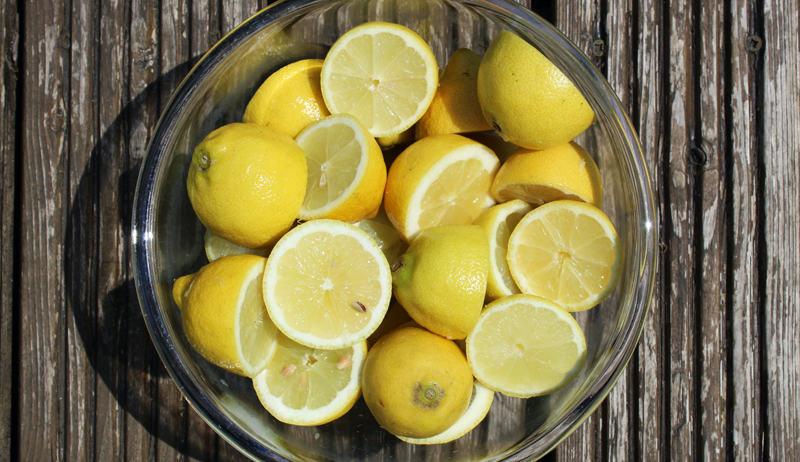
With lemon season coming to an end in March, it would be worth preserving a jar or two for convenience. There are several methods for preserving lemons, but this is my no-fail, go-to process of choice.

The preserved lemons can be used in a variety of ways. But I find myself most often tossing them into simmer sauces or adding them to water when I poach eggs and cook shrimp (or other seafood). They are also great in homemade vinaigrettes.

Yield: 1 quart jar

Ingredients

  • 3-4 (or more depending on size) fresh organic lemons
  • 3-4 tbsp. kosher salt

Read more: At Heritage Acres Homestead, preservation is a seasonal affair.


Directions

Scrub lemons clean. Unless you are certain that the lemons you are using are free of food-grade wax, it is worth taking the next step to remove any wax that may be present on the fruit.

To do so, put the lemons in a colander in the sink and carefully pour boiling water over them.

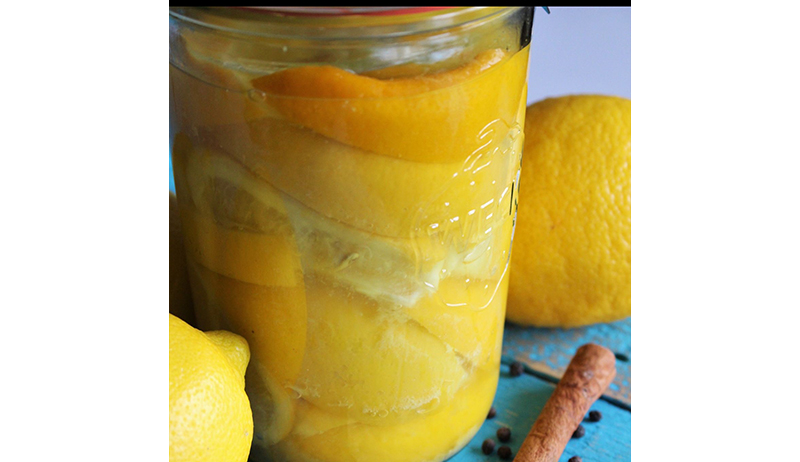
Trim off the ends of the lemons and cut them into quarters lengthwise. Discard seeds as they fall out, but no need to remove all. Generously sprinkle salt in the bottom of a clean quart jar and pack in one layer of sliced lemons. Repeat the salting and layering method until the jar is full.

Push down on, and gently smash the lemons as you fill the jar so that some of the lemon juice releases and there is no space between the lemon slices. Leave 1/2 an inch of headspace between the final layer of lemons and the rim of the jar. Sprinkle one final layer of salt over the last layer of lemons.

Through this process, enough lemon juice should be present to cover the lemon wedges. If not, juice another lemon and pour the juice over the jarred lemon slices until they are completely submerged.

If you have a small fermentation jar weight, add it to the jar to keep the lemons completely submerged under the brine. Wipe the jar rim clean with a dampened paper towel or clean lint-free towel, and add the canning jar lid and tighten on ring. Store the preserved lemons at room temperature, ideally between 60-75 degrees F (15-23 degrees C) and keep out of direct sunlight.

The lemons will keep preserved as long as they are kept under the lemon juice-salt brine.

preserved lemons
Stephanie Thurow

How to Enjoy Your Preserved Lemons

To use, remove the preserved lemon slices from the jar, remove seeds and you can either rinse them off before use, or if you’re looking to add saltiness to your dish, use them as-is.

For example, if I am poaching shrimp, I leave the salt on because I enjoy the salted water. But generally I rinse the salt off the lemon wedges before use.

I use the whole quartered wedge when cooking in water. Though when simmering in sauce, I rinse the lemon, remove the peel and only use the pulp to cook with. The rinsed and chopped peel is great for incorporating into salads.


Read more: Lemon curious? Grow some yuzu lemons!


To Flavor Your Preserved Lemons

Consider adding one or multiple of these ingredients to create new flavor combinations for your preserved lemons: one cinnamon stick, 2 bay leaves, 1 tsp. dried cloves, allspice berries, dried oregano, chili peppers, cardamom or whole black peppercorns.

This recipe has been adapted from WECK Home Preserving (2020) with permission from Skyhorse Publishing, Inc.

Categories
Farm & Garden Urban Farm Urban Farming

Roses, Tomatoes & Cucamelons Are All In The Mix At Brooklyn Rooftop Botanicals

Liana Blomquist was raised between the town of Grasse in France—which is known as the perfume capital of the world—and the suburbs of New Jersey. “I grew up surrounded by greenery and gardens,” she recalls. These days, Blomquist has channeled those formative environmental influences into running Brooklyn Rooftop Botanicals, where she seeks to fuse together the farming and beauty worlds.

“I do grow some veggies and quite a lot of herbs, but my main focus is beauty botanicals, which are mainly herbs and flowers,” explains Blomquist. She broadcasts her mission “growing and making beauty on my rooftop” via her popular Instagram account.

We spoke to Blomquist about the complex challenges of rooftop growing and striving to embrace sustainable practices. We also got into the joys of cucuamelons.

The Roots of a Rooftop Garden

Blomquist’s rooftop growing journey began when she had access to a small windowsill, where she dabbled with growing strawberries and herbs. After moving to an apartment in Brooklyn, New York, she “suddenly had access to a real outdoor space.”

“I started growing a lot of simple veggies and flowers to continue on with my hobby,” she recalls. “But after a bit of research I came to the understanding that I could actually grow a lot of potent botanicals to create my very own beauty products to live a more self-sufficient and sustainable life.”


Read more: Learn more about sustainable rooftop gardening!


Rooftop Gardening Challenges

“Growing on a rooftop throws a lot of complexities at you,” explains Blomquist. “You have the intense sun and the wind to battle on a daily basis, which are a lot stronger up on a rooftop versus at ground level.” She adds that this means you “have to think about shade structures and plant support systems.”

There’s also the issue of water availability. “It can be challenging when trying to water 50 to 60 different plants,” she says, “and when bringing soil and materials up and down four flights of stairs.”

Beware Overwatering!

Speaking of watering, Blomquist says that an early lesson she learned about the dynamics of rooftop growing is to avoid the temptation to overwater. “It’s the biggest plant killer,” she says. “A lot of people fail to understand this.”

Blomquist adds that as she’s progressed as a rooftop gardener, she’s “learned to accept failure and to be more resilient. When you’re dealing with nature, anything can happen.”


Read more: Do you have a farm water backup plan?


Sustainable Rooftop Tips

When it comes to incorporating sustainable growing techniques into Brooklyn Rooftop Botanicals, Blomquist says she uses a rolling composter to turn kitchen scraps and shredded toilet paper rolls into her own compost.

“This helps to revive my soil year after year so I can reuse it instead of throwing it out,” she explains.”I also start a lot of my seeds using toilet paper rolls and salad containers that I wash and use again year after year.

“Most importantly, I try and upcycle planters, pots and tomato cages whenever I can. This year I’m working to have a fully solar-powered rain barrel irrigation system so I can focus more of my time on pushing the plants to their limits.”

Spotlighting Roses and Tomatoes

Looking back over last season’s rooftop bounty, Blomquist says that she’s particularly proud of the roses, chamomile and cornflowers that she grew on the botanical side of things.

When it comes to vegetables, she put a special focus on heirloom tomatoes.

“I had taken the seeds from a tomato I bought from the McCarren Park farmers market,” she says. “It was one of the best tomatoes I had ever tasted, so I wanted to recreate it on the rooftop. It definitely did not disappoint, and I will be growing more this year!”

Behold the Cucamelon

Alongside tomatoes, dinky cucamelons also starred on Blomquist’s rooftop last year.

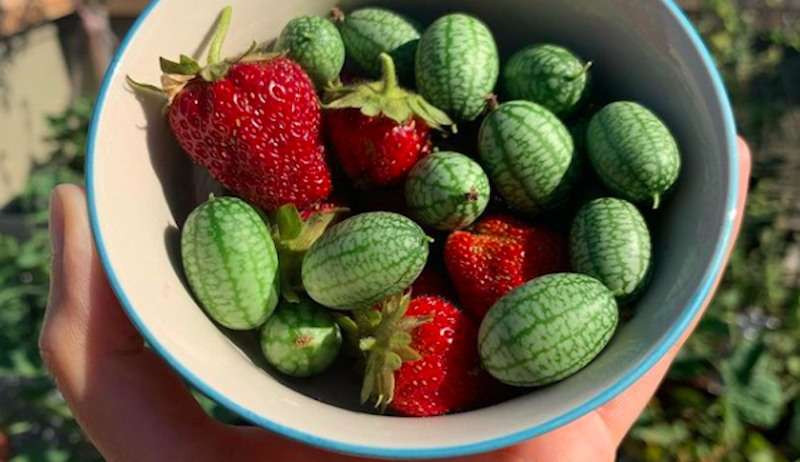
“Cucamelons are so incredibly fun to grow—albeit slow to start—and easy to incorporate into many dishes,” she says. “I actually really enjoyed just eating them raw with strawberries. I also loved making a Greek salad with them with my cherry tomatoes!”

Follow Brooklyn Rooftop Botanicals on Instagram.

Categories
Food Recipes

Quick Rock Candy? It’s Possible!

I’d always wanted to try making my own rock candy, but, frankly, I was kind of grossed out at the prospect of leaving several jars of sugary solution sitting around for days and days as I waited for the delectable crystals to form. (I admit, too, that I didn’t want to have to wait so long to get my sugary fix.)

But science—and this guy!—came to my rescue. See, it turns out that you can actually whip up a pretty—and satisfying—batch of rock candy in an afternoon.

Gather Your Supplies

To make super-fast rock candy you’ll need:

  • candy thermometer
  • stovetop-safe saucepan
  • small canning jars (half-pints work well)
  • bamboo skewers, wooden craft sticks or a few lengths of string
  • clothespins
  • 4 cups of refined, white sugar
  • a small dish containing a little extra sugar
  • 1 cup water (the purer, the better.)
  • liquid food coloring (optional)
  • liquid flavoring (optional)

Accuracy is very important for this, so make sure your candy thermometer works properly. You can test it by placing it in a pan of water that you bring to a boil. The thermometer reading should be 212 degrees F in boiling water.

Is your measurement off? Account for the over or under by adding or subtracting from future temperature readings accordingly.

Also, when selecting your saucepan, choose one that’s slightly larger than you think you’ll need. (If the pan’s too small, the hot, bubbly mixture just might get away from you!)

You should also make sure that it is very clean. Impurities and debris can affect the formation of your sugar crystals.

As for the last few ingredients in the list, I have found that filtered water works better than water straight out of the tap. Finally, if you want to make rock candy in an assortment of color-and-flavor combinations, you’ll need separate canning jars for each.

Some nice combinations to try include:

  • red coloring and cinnamon or cherry flavoring
  • yellow coloring and lemon or banana flavoring
  • orange coloring with orange or butterscotch flavoring

(You could also make several different flavored varieties, but leave the coloring out to create a “mystery” batch of rock candy!)


Read more: Keep things sweet with this recipe for spiced pumpkin coconut custard.


Getting Started

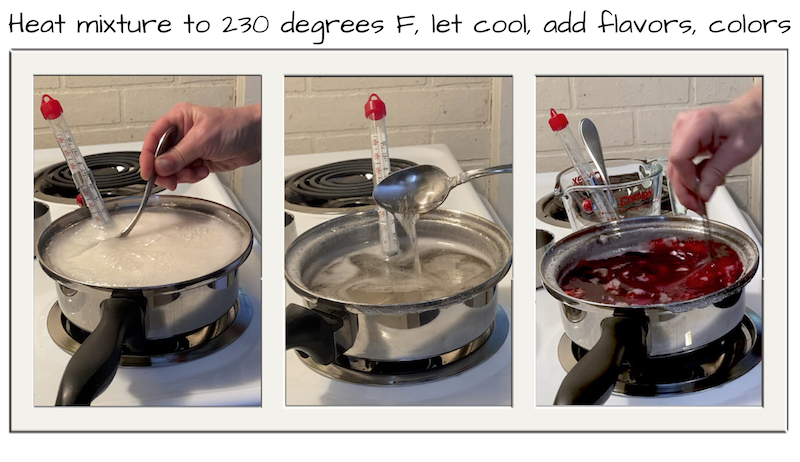
Mix 1 cup of water and 4 cups of sugar in your saucepan. Put on medium- to medium-high heat and stir constantly. Clip your candy thermometer to the side of your pan, taking care not to let the bottom of the thermometer make contact with the very bottom of the pan.

(As I stir, I periodically slip my spoon under the thermometer’s tip to make sure it is still in proper position.)

Your goal is to heat the sugar solution to 230 degrees F exactly. (Don’t let the mixture exceed this temperature!) As you stir and watch the thermometer, you will likely need to raise or lower your cooking heat. Once the sugar mixture approaches and then reaches the 230-degree mark, it will bubble up and go from opaque to clear.

At this point, you’ve transformed the sugar into a super-saturated solution.

rock candy
Susan Brackney

Seed Crystals and Next Steps

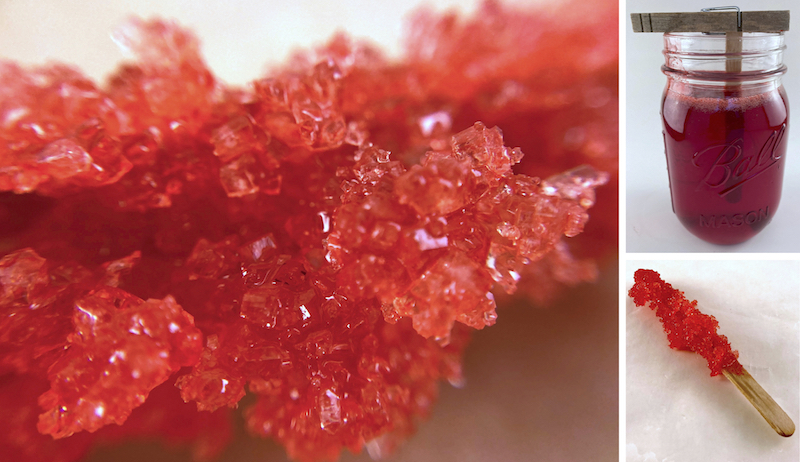
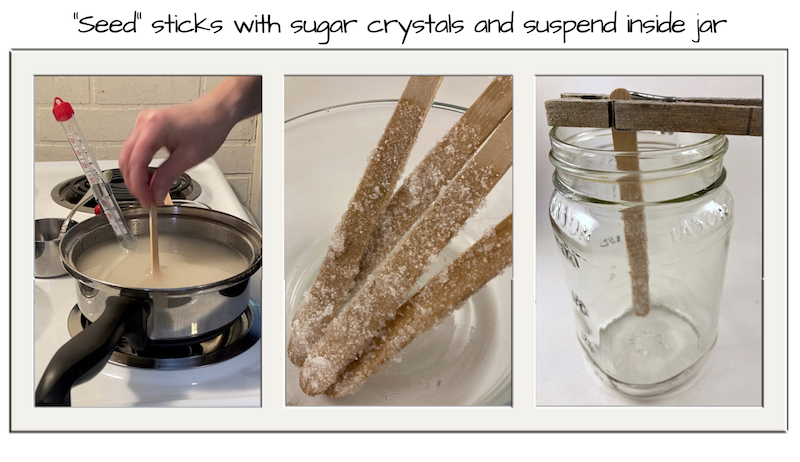
Turn off the heat and let the solution drop to 220 degrees F. Dip your bamboo skewers, wooden craft sticks or lengths of string into the solution, then coat them with raw sugar by dipping or rolling them in your small dish of sugar.

These are your seed crystals. When it’s time, you’ll use clothespins to suspend one of these per canning jar.

Once the solution has reached 220 degrees, add optional coloring and flavoring, but don’t dally. (I added 1/2 teaspoon of red to one full batch and was happy with the resulting vibrancy.) How much flavoring you use depends on the potency of the flavor you’ve chosen and how strong you want your finished rock candy to taste.

Next, carefully pour the hot sugar mixture into your containers. Suspend one seed crystal skewer (or string) per jar, and don’t let it touch the jar’s bottom or sides. Leave the jars in place for the next four or five hours.

rock candy
Susan Brackney

As the liquid cools, the sugar that you forced into solution will come back out again. As it does, new crystals will glom onto the seed crystals you introduced.

To extract your finished product, you may need to break up a few stray crystals on the top or around the edges of your jar. Suspend the rock candy inside an empty container to drip dry, and use hot, soapy water to remove leftover syrup from your jars.

Categories
Crops & Gardening Farm & Garden Food Homesteading Recipes

Video: Blend Your Own Flavorful Herbal Teas

Blending and brewing your own herbal teas at home is a wonderfully relaxing way to enjoy the bounty of the herb garden while taking the edge off of a cold winter’s day.

Herbal teas, also known as infusions, differ from traditional teas in one simple way. They are brewed using the leaves, flowers, roots and seeds of any herbaceous plant. Beverages known a ‘tea,’ however, are all made from a single plant: Camellia sinensis.

Traditional teas are known by a variety of names, based on their location of origin, how the leaves are processed and even by the color of the dried leaf. Green tea, black tea, orange pekoe, matcha and the classic southern sweet tea are all made by steeping the leaves of the tea plant, C. sinensis, in hot water.

A tea maker will need only minimal equipment in order to craft a tasty tea blend:

  • a teapot
  • their favorite cup
  • a reusable strainer of some form to hold the herbs as they steep

Tea balls of various shapes and sizes are available, as are reusable silk or muslin tea bags.

I always suggest that when one is beginning to explore herbal teas, they start by learning about and brewing one single herb. Taking the time to explore flavors, aromas and benefits of just one herb at a time will allow the tea maker to learn about each particular plant without becoming overwhelmed.


Read more: Grow your own herbs for home use and for profitable products.


Make a Winter Wellness Herbal Tea

Crafting an herbal tea blend can be a fun way to experience the healing power of herbs. Here is a recipe for a winter wellness herbal tea blend that will soothe a sore throat, ease a cough and boost the immune system:

  • Echinacea Leaf (1.5 tablespoon)
  • Fennel Seeds (1 teaspoon)
  • Thyme (1 teaspoon)
  • Lemon Balm (1.5 teaspoon)

Add 32 ounces boiling water, cover and steep overnight.

Herbal teas don’t always need to be enjoyed hot. Try this refreshing and flavorful lemon lavender iced tea:

  • Green Tea – 2 tablespoons
  • Lemon Balm – 2 tablespoons
  • Lavender Flowers – 2 teaspoons

Add 32 ounces boiling water, cover and steep in the refrigerator until cold. Serve over ice.

Categories
Poultry

Getting Started: Selecting Your Chicken Breeds

Once you’ve determined you can legally own backyard chickens and you’ve settled on a purpose for your poultry, it’s time to select birds that will fulfill your flock’s goal. It’s time to get serious. Because choosing the wrong chicken breeds can lead to major headaches, if not downright disasters.

You may have your heart set on Silkies. But if you live in Northern Minnesota, your breed of choice may not survive the harsh local winters.

It’s crucial to set aside an afternoon—or a weekend—to research the many different types of chickens available in the U.S. Knowing the chief traits of each type will help you narrow your list down to a handful of the breeds that are best for you.

For those new to poultry keeping—and even to old hands—this task can be overwhelming. You may find yourself wanting one of every type of chicken out there … or find eliminating breeds from your list such a daunting task that you decide to buy a goldfish instead.

Don’t despair. Organize!

Use color-coded index cards or a spreadsheet to record details for each breed you find of interest. Once you’ve finished taking notes, scan your cards or document to designate the breed or breeds with which you’ll start your poultry-keeping experience.

We’ve previously discussed egg-producing ability, including egg color and size. The following five traits will help you further narrow down your breeds list.

Weather Hardiness

The U.S. consists of a wide variety of climates: desert, tropical, temperate, Arctic and everything in between. Humans have definite preferences as to what type of temperatures they prefer. But when it comes to poultry, some birds simply do not thrive in certain conditions.

Lightly feathered birds thrive in warmer climates but suffer terribly in chillier regions. Their feathering does not trap  body heat in sufficiently to keep them warm or prevent frostbite.

Because of their light feathering, these birds often require special housing and heating to survive the winter. If you live in a hot and/or humid part of the United States, these lightly feathered, heat-hardy birds are ideal for you.

Similarly, heavily feathered chicken breeds will thrive in cooler climates but swelter and fare poorly in warmer regions. If you live in a zone known for its crisp falls and snowy winters, select thickly feathered, cold-hardy birds for your flock.


Read more: Here are some tips for keeping your birds comfy in the cold.


Body Size

Chicken breeds come in two sizes: bantam and standard. Bantam breeds are best described as miniature chickens, roughly about one quarter the size of a standard chicken.

Bantams are not dwarfs. They are perfectly proportioned, rarely weigh more than a few pounds, and lay small eggs. Standard breeds, also known as large-fowl chickens, can weigh 12 pounds or more depending on the breed.

Many breeds come in both bantam and standard sizes. So, if you have your heart set on a fluffy-footed Cochin but have a pocket-sized yard, opt for the bantam variety instead of the standard.

Some breeds, however, are strictly bantam in size: Seramas, Silkies, Japanese Bantams and Dutch Bantams are examples of bantam-only birds. Take the size of your property into careful consideration when selecting the size of your chickens.

You probably don’t want to spend hours chasing tiny, free-ranging Sebrights around your acreage. Nor do you want a flock of husky Jersey Giants just standing around on your patio because there isn’t enough room for them to roam.

Body Weight

Many heritage chickens were bred to yield meat as well as eggs. These dual-purpose birds tend to have a thick-set body, a fuller chest and an overall greater density. They include:

  • Wyandotte
  • Orpington
  • Brahma

Not surprisingly, these chicken breeds also tend to be cold hardy. Breeds that have a lighter, more streamlined body (such as the Appenzeller, the Campine and the Leghorn) were bred for eggs, beauty or both. These light-bodied birds tend to thrive better in temperate and warmer climates.

Body weight is a serious consideration if you may find yourself carrying your birds to pasture or elsewhere. After lugging around your flock of Dark Brahmas, you might wish you had selected the lighter La Fleche instead.


Read more: Do chickens feel? You bet they do! Here are 4 emotions your birds may experience.


Temperament

Just like humans, chickens have a wide range of dispositions. Some can be sweet and affectionate, others can be flighty and nervous. Some can even be high strung and aggressive.

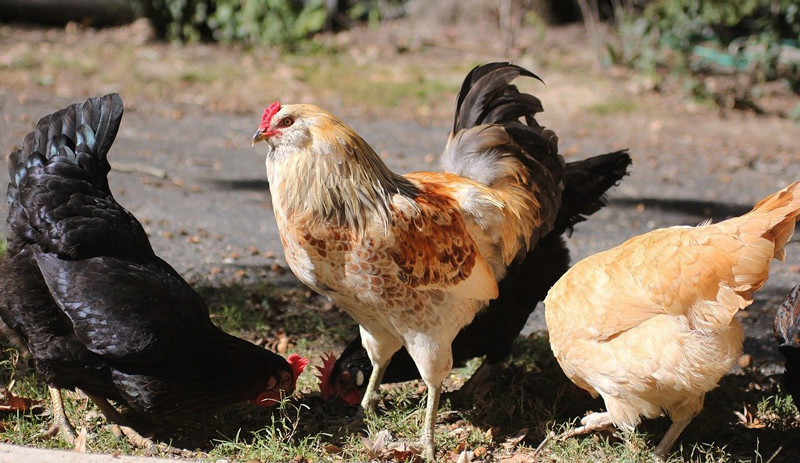
If you plan to keep chickens as pets for companionship, you’ll want to select breeds that are known for their gentle, docile natures, such as the Orpington and the Speckled Sussex.

Docile breeds are also best if you have small children who might be spooked by more belligerent birds.

The temperament of a breed is one of those grey areas where you may have to give a little to get a lot back. For instance, if you wish to raise Polish chickens for exhibition or conservation, you’ll have to understand that these birds frighten easily because their crests usually cover their eyes, limiting their vision.

Plan on raising Aseels for their excellent egg-laying ability? You’ll have to accept that this fierce fighter does not mix well with other poultry breeds.

Broodiness

Some breeds just love bringing chicks into the world. The hens will set on anything: their own eggs, another hen’s eggs, golf balls, anything remotely round in shape.

At first, this can serve as a source of amusement—and social-media photos. But eventually you realize that a broody hen is a non-productive hen. She just sits on her nest in a trancelike state, waiting for her chicks to hatch.

If you don’t have a rooster, your hen’s going to be sitting there for a long time. And an extended brood can be very unhealthy, since hens rarely eat or drink during this time.

If your town permits you to keep roosters and raise chicks, having one or two broodies is a great benefit to your flock. If you’re keeping chickens to produce eggs, however, you won’t get far with a flock full of broodies.

Unfortunately, the broodiest of chicken breeds also are amongst the most popular: Cochins, Silkies, Orpingtons and Dorkings will happily set on rocks if given the chance. If you don’t want to take a chance on broody hens, consider non-setting breeds such as Rhode Islands, Leghorns, Spanish, Minorcas and Catalanas.

Online Breed-Research Resources

Ready to do your research? Several sites offer in-depth information on chicken breeds and their different traits. These include:

Once you’ve narrowed down your list to the breed or breeds you want for your flock, you’ll need to know where to find them. That topic will be discussed in next week’s column.

Categories
Farm & Garden Food Homesteading Urban Farming

Don’t Be Afraid To Forage Hedgehog Mushrooms

Two guests at our dinner party—a Brit and a Yank—had declarations to make as they sat down. “I have an irrational fear of mushrooms,” said one. “Me too,” said the other.

“Thank goodness I like a challenge,” said I.

One of my tricks for converting mycophobes is to serve several types of mushrooms in separate bowls. But each one is cooked the same way with butter, garlic and parsley and served as a mini buffet. Few people can resist the temptation to compare and contrast bite-size pieces of food between courses.

Hedgehog Mushrooms

My wife and I were volunteering on a small organic farm in Italy’s southern Tuscany region. Luisa, the farmer, didn’t believe in letting work get in the way of having a good time.

While drinking bottles of local wine over dinner and watching the rest of us—two more Yanks, a Spaniard and three Italians—roaring with pleasure while forking up glistening bits of the mushrooms I’d prepared, our Anglophonic mycophobes began racing to eat their share. At the end of the meal, the Brit asked, “Are there any more of the hedgehogs left?”

The hedgehog in question was one of the half-dozen varieties of edible mushrooms we’d harvested the day before with the help of Severino, the local one-eyed forager.

Hedgehogs (Hydnum repandum) have a sweet, slightly nutty taste. Their texture is denser than most mushrooms. Noted forager and chef Alan Bergo has plenty of recipes for this delicious mushroom on his website.


Read more: Get inspired to engage with wild mushrooms!


Easy to Learn

Hedgehog mushrooms are also easy for novices to learn. There are no poisonous look-alikes for hedgehogs. (You might want to take a nibble to make sure you’re not harvesting a similar species with a slightly bitter taste and darker cap and spines, though.)

If you’re in doubt, edible hedgehog mushrooms have a white spore color. But that’s not really considered necessary for field identification.

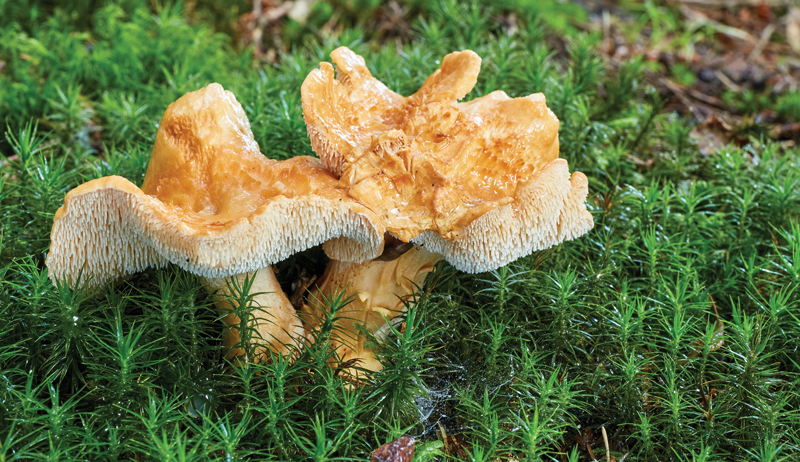
Hedgehog mushrooms have a buff-colored cap that has a similar color range to chanterelles, to which they’re related. The cap will be the size of your palm or smaller. It will have a smooth or sometimes suede-like top surface.

Its nearly white stalk—inside and out—will be no longer or wider than your thumb. The underside of the cap will also be white. The mushroom will lightly stain orange or brown where touched.

The clincher is that the underside will be completely covered by tiny teeth that are paler in color than the top of the cap and about 1⁄4 inch long. Just the right length for a fairy to use it as a hairbrush.

Some think the spikes resemble the fur on hedgehogs, hence the common name. Hedgehogs also go by the name “dentini” in Italy because the spikes resemble tiny teeth.

You can find hedgehogs throughout North America. Foragers in the Rockies may find them in fall. In areas with mild seasons, such as the West Coast, they run through fall and winter. East of the Rockies, they start fruiting in late summer and can keep showing up into early winter.

Even in the frosty Northeast, foragers may find them in December.


Read more: Make your own DIY chantrelle picker with these easy instructions.


The Marrying Kind

They belong to a group of mushrooms that I call “the marrying kind,” as they form collaborative relationships with the roots of conifers and deciduous trees. They might be found in almost any kind of forest.

Severino had helped us find ours in a forest of mature beech trees with moss-covered boulders as big as a house. He had been foraging there to put food on his family’s table since boyhood. In his hard-to-understand Tuscan dialect, he pointed out places where he had camped in some of the hollows in the boulders while making mushroom soup over a fire.

When we told him that some people from English-speaking countries had a fear of mushrooms, he found the concept laughable.

If you do any international travel, you’ll find the same odd phenomena. Only people in English-speaking countries—U.S., Canada, U.K., New Zealand, Australia—harbor fears about mushrooms.

I’ll shed more light on that in a future column.

This article originally appeared in the January/February 2021 issue of Hobby Farms magazine.

Categories
Equipment

10 Tools You Need For Building Or Repairing An Electric Fence

Whether you’re installing, modifying or repairing an electric fence, you can probably imagine the long list of bulky tools and supplies involved. Post hole diggers, a level, shovels, a digging bar, buckets of spare dirt, posts, a post driver, rolls of wire.…

That’s a long list of large (but necessary) items. Throw in a tractor and wagon to haul them all, and you’ve practically assembled a toolshed on wheels.

But don’t overlook the little things—all the smaller tools and supplies that can be packed into a mere toolbox instead of a toolshed and carried around like a suitcase. Here are 10 small but significant items you’ll want to bring along.


Read more: Follow these simple steps to maintain your electric fences.


Spare Insulators

The insulators separating wires from posts are a critical component for any electric fence. You can’t have too many of them on hand.

Voltage Tester

Since touching an electric fence is a poor way to confirm that it’s working, a simple voltage tester is one of your must-have tools.

Insert one end into the ground and touch the other end to a wire to get a reading on the strength of the current. If the measured voltage is weak (or nonexistent), you know there’s work to do somewhere along the line.

Ratchet

Unless you’re Hercules, you’ll need a ratchet to help tighten loose fence lines. Letting the ratchet hold the wires tightly in place enables the user to perform minor tightening tasks alone. And it sure beats throwing your weight against the end of a loose wire while a companion rushes to secure the tension you’ve accumulated.

Electrical Tape

You’re working with electricity, and whether you’re wrapping connections or simply securing the frayed ends of wires, electrical tape is a handy item to keep in stock.


Read more: Pack these tools in your toolbox when you’re headed out to fix a fence.


Electric Drill and Screws

A must-have tool for every toolbox. If you’re installing insulators on fence posts, try using a single type of screw to keep things consistent.

But if you’re replacing insulators, be sure to bring every screwdriver bit you can find, because you’re bound to come across several different types of screws. It’s just the inevitable result of making repairs over time with whatever supplies are handy.

Claw Hammer

Because even if you installed every insulator using screws, somehow the one that needs replacing will be nailed into place.

Pliers

For loosening and tightening bolts, undoing stubborn knots and more, multiple pairs of pliers (in various sizes) are always a good investment. Their versatility is convenient if you’re dealing with nuts and bolts of many different dimensions.

Locking pliers are particularly helpful since they bite down with force and don’t require a constant squeezing pressure from your hands to operate.

Wire Cutters

Some pliers have wire cutters built right in, but a dedicated pair will earn their keep. You’re working with wires, after all!

Utility Knife

By definition, a utility knife is useful in many ways. Keep one on hand, and you might be able to save your wire cutters from doing double-duty as a clunky pair of scissors.

50- or 100-foot Tape Measure

Because eyeballing distances isn’t the best way to go about constructing or repairing an electric fence.

Good luck with your electric fence project!

Categories
Farm & Garden Farm Management Homesteading

From Pig Barn To Family Party Space

It’s a rainy Sunday afternoon at the farm, and there is no better place to spend it than in the party barn, listening to the rain pound on the tin roof. Putting together puzzles, lounging in a comfy chair with a book, knitting and playing games are examples of some of the activities our family enjoys when we are relaxing in our party barn.

For the past decade, our family has celebrated birthdays, held family reunions and created memories in the old pig house that has been transformed into a party barn. Our mother and father would be shocked and amazed that we spend more time in the old pig barn than the house during lazy days of summer.

My sister and her husband, Larry and Sharon Adams, now own our family farm, a great 90-acre hobby farm. They have enjoyed a rich retirement restoring the farm and taking up a variety of hobbies, including beekeeping, gardening, canning vegetables and more!

We are all thankful to be able to continue living our childhood days on the farm, because they have lovingly restored the house, the barn and outbuildings that frame our childhood memories.


Read more: Considering a homestead barn? Keep these things in mind.


Fixer Upper

The first step of the renovation was to move out our parents’ furniture. The pig house, which is in the backyard, was the natural place to store the treasures. It soon filled up with chairs, tables, beds, lamps and household items collected over our parents’ lifetime.

pig barn
Becky Hunt

Next, the farmhouse was stripped to the studs, then transformed into a modern version of its original self. Saving and refinishing all the old doors, the staircase and original woodwork throughout the house became a painstaking labor of love.

When the house was finished, it retained the original floor plan and charm of the Michigan farmhouse that our grandparents built.


Read more: Want more articles like this in your inbox? Subscribe to our newsletters!


Swine Design

My sister, an interior designer, loves projects. When the farmhouse project was finished, she soon sought another.

She started cleaning the pig barn one day and moved some furniture around. Then, she noticed the floor needed cleaning. After she scrubbed the floor, she decided to put down one of her oriental rugs.

pig barn
Becky Hunt

That looked nice, so she moved a couple chairs and a table into the area. She added a lamp or two and found some old teapots and flowers to add a homey touch.

The project grabbed her interest, and it went from there. She began washing windows, hanging up lace curtains, and decorating using stored treasures and her creative imagination. The result? Our party barn.

A Fine Family Space

Our family, friends and neighbors have all enjoyed many parties and get-togethers over the years. Now our grandchildren come to the farm every year to create their own memories.

Thanks to my sister and brother-in-law, our family owns a magical place that brings families together. Our parents would be happy to see all the joy when we come together in the party barn. The pigs never had so much fun!

This article originally appeared in the January/February 2021 issue of Hobby Farms magazine.

Categories
Animals Large Animals

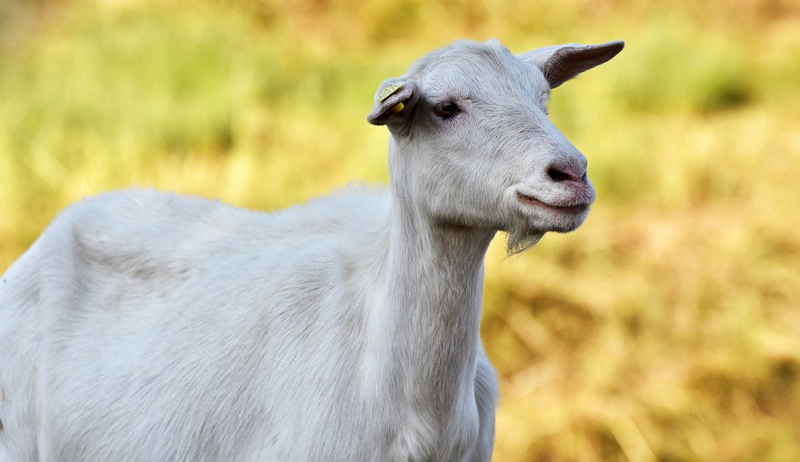
Nutritional Needs For Kidding & Lactating Goats

Pregnancy and lactation place extra nutritional demands on your female goats, or does. On average an open doe weight 157 pounds requires 2.76 pounds of dry matter daily, according to the National Research Council.

That jumps to 4.32 pounds during late pregnancy.

“During late gestation, as the kids are growing in the does abdomen, the feed concentrate should increase as the physical gut fill of the rumen decreases,” says Chelsea Hill, livestock and 4-H animal science educator with Penn State Extension, Wayne County.

At this point, you can increase grain or introduce a higher crude protein feed (14 to 16 percent). Combined with higher quality forage, this will meet the dam’s needs. Introduce diet changes slowly, usually over two weeks, to reduce rumen disruption.

“These are general feeding suggestions and vary depending on the quality of forage fed and the feed provided,” she says. “It’s always good for new goat owners to contact either a vet, extension agent or experienced goat owner in their area to see if there are any regional deficiencies that will need to be supplemented.


Read more: Check out these 5 key aspects of feeding goats.


Increasing Nutritional Demands for Goats

Lactation is the most nutritionally demanding stage in a doe’s life. It is during this stage she will lose some of her body condition/body stores to compensate.

While this is a normal part of the process, the goal is to limit weight loss. Starting a lactation diet about five to seven days before her due date can help prepare the body for lactation.

“Depending on the quality of forage, the grain given should be changed to one that is a crude protein of 16 to 18 percent,” Hill says. “The amount given depends on the amount of milk produced by the dam. Meat goats will not require as much as a high-producing dairy goat will unless she is feeding triplets or more.”

Access to fresh and clean water is part of good herd management, but it becomes even more critical during lactation. Water impacts milk production. And does will need a minimum of 3.5 gallons daily.

“Give warm water, usually with some molasses in it right after kidding, to help increase water intake. [This will] assist in replenishing fluids lost as well as aid in the ‘cleaning’ out process,” she says.

Timing for Dropping Rations

Pregnancy and lactation increase the nutritional needs of goats. Dairy goats milked for 10 months with a two-month dry period should remain on their dairy ration up until about month 8. Then, Hill says, evaluate for body condition score.

At this point, if a goat is deeply dropping off on milk production and carrying extra weight (BCS of 3.5 or higher), reduce the ration.

“At the time the doe is to be dried, extra feed given for lactation should be taken away,” Hill said. “It’s around month 7 that the doe should be bred once again, and will start to decline in milk production naturally.”

Conversely, meat goats should stay on their lactation diet as long as they are feeding kids. Then, post-weaning, reduce feed to maintenance to make sure they don’t gain too much weight.


Read more: How long can a dairy goat produce milk without breeding?


Work with an Expert

Depending on the feed and forage available in your region, it’s important to know of any natural mineral deficiencies that can lead to metabolic diseases. In Hill’s area, the two most common are:

  • hypocalcemia (a deficit of the calcium required by the dam)
  • hypomagnesaemia (a magnesium deficit)

“The calcium to phosphorus ratio in the diet should be as close to 2:1 as possible,” she said. “If the dam is not eating enough calcium during late pregnancy or ingests something blocking calcium absorption, the dam will draw on her bodily stores of calcium until clinical signs of the disease are observed.”

Both conditions can occur in dams on lush green pastures, where lower levels of both minerals are available.

Hypomagnesaemia is hard to catch and usually results in sudden death. Hypocalcemia, however, is treatable—but severe cases need veterinary care for optimal survival rates.

Work with a knowledgeable nutritionist or veterinarian to design a ration. You can meet your herd’s needs based on the supplements, forages and grain you feed.

Categories
Animals Farm & Garden Farm Management Large Animals Poultry Waterfowl

Cold Weather Care For Your Farm’s Livestock

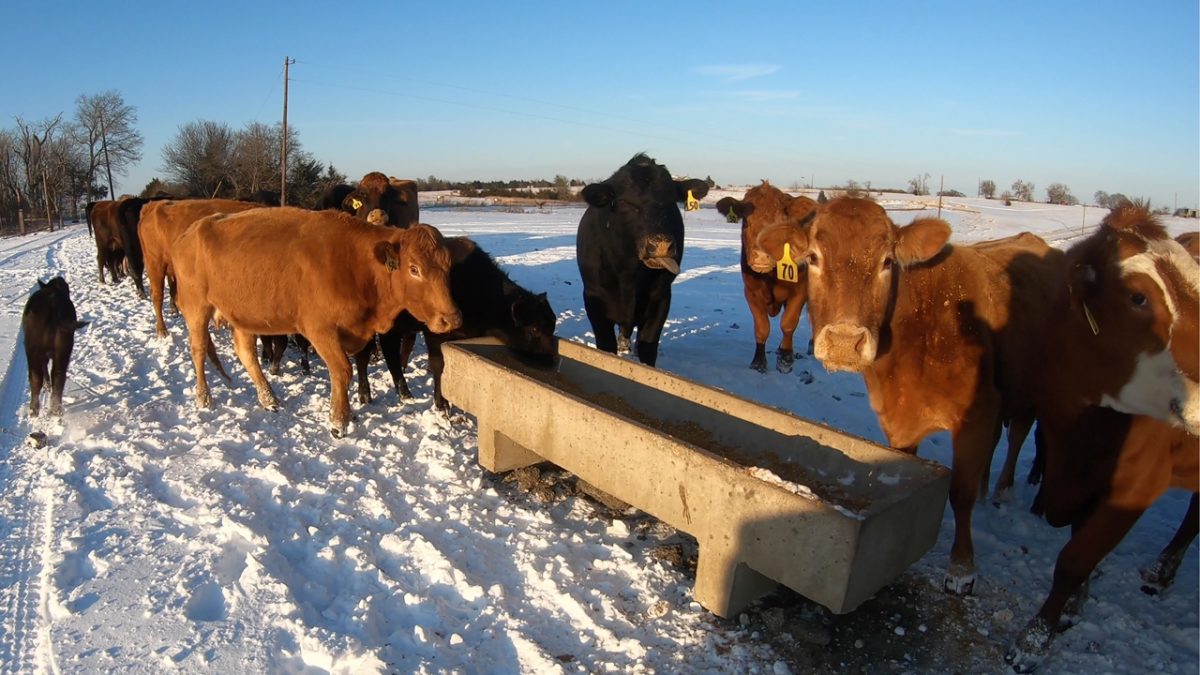
Winter is here. And depending on where you live in the U.S., cold weather could be wreaking serious havoc on your life. Your livestock need some cold weather attention, too. Despite being notably hardier than their keepers, your animals need some basic comforts when the mercury drops.

Provide your livestock with shelter from elements associated with cold weather, if possible. If not, at least make sure they can feed in a windbreak area, such as a stand of cedars.

And don’t skimp on the feed! Eating and digestion helps animals maintain internal body temperatures and stay warm despite the cold weather.

Finally, make sure your animals have plenty of fresh, unfrozen water. Check on the water several times a day. Break up ice in frozen tanks, or, for smaller animals such as chickens, swap out a frozen waterer with one from inside.

(In the video, you’ll see another inventive way to keep water from freezing in the chicken coop.)