Categories
Beginning Farmers Crops & Gardening Farm & Garden News

New to Hemp? Beware Bad Actors When Securing Seed

As more states green-light industrial hemp, increasing numbers of wannabe growers are breaking ground. Unfortunately, some predatory vendors are taking advantage of those seeking hemp seed. “It’s a new industry,” explains Don Robison, Seed Administrator for the Office of the Indiana State Chemist. “In any new industry, you’re going to get fraud coming in.”

Across the country, some unlucky customers have paid for seed—only to get nothing in return. Still others may think they’re growing a low-THC hemp product—only to discover that they’ve got a (not-so-legal) field full of medical-grade pot on their hands. That recently happened to one Indiana hemp grower.

“The buyer thought he was buying and growing hemp, but instead he grew a crop with 17 percent THC,” Robison noted via a recent Midwest Hemp Council news release.

Indiana state police were called and the crop had to be destroyed. Meanwhile, the farmer lost the cost of the seed and potential crop profits.

Worse yet? “The person who bought that seed asked all the right questions,” Robison recalls. “They did ask what the THC level was of that variety. They did ask specifically, ‘Is this a variety that is low-THC and can legally be called hemp or is it a marijuana variety?’”

Trust But Verify

Besides questioning prospective vendors about their seed varieties and the associated THC-content of those varieties, request references. “Ask the seed supplier, ‘Can you give me the names of five people who have bought your seed before, so that I can call them?’” Robison suggests.

You should also check with your state seed regulatory official to determine whether a prospective vendor is properly credentialed. For instance, to be permitted in the state of Indiana, Robison says hemp seed sellers must have their seed tested for percent purity, percent noxious weeds and percent THC, as well as the seed’s germination rate.

The product must be labeled in a specific way, too.

You can consult the American Association of Seed Control Officials online directory to find contact details for your state agency. “The membership directory lists all of the states,” Robison says.

He adds, “Most seed control officials would prefer an email rather than a phone call, so that they can be more thorough in answering.” Corresponding in writing with both regulatory officials and seed vendors also can further protect you in the event that there is a problem with your hemp crop.


Read more: Raise farm profits without the high by growing industrial hemp.


Buy Certified

When possible, you might also choose Certified seed. Certified seed purveyors adhere to strict standards and are subject to inspections by a member of the Association of Official Seed Certifying Agencies.

Certified vendors must isolate their hemp crops from other hemp crops which may be growing nearby. They also must document and verify information on seed source, purity, weed content and more.

“If you’re going to grow [hemp] for CBD (cannabidiol oil), there are very few Certified varieties in the country—in Canada or in the U.S.,” Robison admits. “That’s because the genetics and the breeding programs aren’t far enough along yet.”

However, if you want to grow hemp for fiber or grain, you have more Certified seed options. “Canada is way ahead of us on that, because they have had legal hemp for, I think, about a dozen years,” Robison says. As such, you might look to Canada for Certified seed for hemp fiber or grain production.
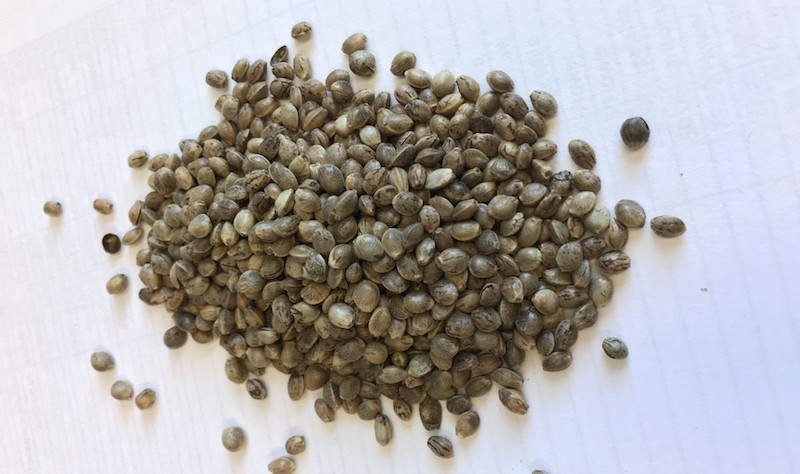
hemp seeds seed
Don Robison/Office of the Indiana State Chemist

Crop Insurance?

If you’re in a state that legalized industrial hemp-growing at least five years ago, you may be able to purchase crop insurance for your hemp. Still, Robison cautions, “It is not as well-established as crop insurance is for corn, beans or wheat. It’s just not there yet.”

Insurers need some historical data on industrial hemp crop performance and price in your region. If farming hemp is too new where you are, insurers won’t have access to the long-term data they’d normally use to help establish crop failure payout amounts.

Even if you can get hemp crop insurance, Robison says, “Payment is not available if the THC level goes too high—if [a hemp crop] becomes marijuana, it’s not eligible.”

Back to Basics

One of the best ways to protect yourself? If you grow other crops, think back to what you knew—and didn’t know—in the beginning.

“You had to ask a lot of questions,” Robison says. “What equipment were you going to buy? Was a certain fertility treatment organic or not? Think in the same terms with hemp. Start completely over—and verify everything!”

Categories
Food Recipes

Recipe: Egg & Herb Brunch Pastry Squares

Eggs bake beautifully over squares of puff pastry in this simple brunch recipe. Fresh herbs sprinkled on top of the egg adds a touch of fresh flavor to complement a buttery pastry base.

Thyme is used here, but any combination of what you have on hand will work. Try basil, cilantro, rosemary or parsley, too.

As shown, this recipe is meat-free. However, you can add your own twist by sprinkling the top of the eggs with finely minced ham before baking, or top them with crumbled cooked bacon once they come out of the oven.

Yield: 4 servings

Ingredients

  • 1, 8-inch square sheet puff pastry (thaw if frozen)
  • 4 medium to large eggs
  • 2 green onions, finely chopped
  • 1 teaspoon fresh thyme leaves, plus sprigs for garnish
  • fine sea salt
  • ground black pepper

Read more: Egg overload? Here are 5 tips for when the basket gets full.


Preparation

Preheat the oven to 400 degrees F. Cover a baking sheet with a piece of parchment paper.

Cut the puff pastry into 4 squares. Roll the edge of each square inward one turn so that each looks like a small picture frame.

Transfer the squares to the baking sheet.

Gently crack an egg into each puff pastry square. Try to keep the egg within the perimeter of the rolled edges, but it’s OK if a portion of the white runs out.

Sprinkle each with green onions and thyme leaves. Then, sprinkle a pinch of salt and pepper over each egg.

Bake for 25 minutes*, until the eggs are cooked and the puff pastry is golden brown. Remove from the oven, and sprinkle with thyme sprigs. Add more salt and pepper to taste, if desired. Serve warm.

*25 minutes will yield well-done eggs. If softer eggs are desired, begin checking the squares at 20 minutes and remove when they have reached your preferred doneness.

This recipe originally appeared in the July/August 2020 issue of Chickens magazine.

Categories
Animals Farm & Garden Farm Management

Mud Solutions For Soggy Season On The Farm

It’s getting to be that time of year we all dread, when snow melts and early spring rains collide. It’s mud time on the farm.

Keeping animals clean and dry with sticky muck all around feels like an uphill battle. But you don’t have to give in and wait for the heat of summer to solve the problem.

Mud is not only unsightly and annoying, it carries dangerous pathogens and fungi that can cause:

  • foot rot
  • thrush
  • bumblefoot
  • dirty udders and feathers
  • abscesses
  • skin infections (such as rain scald)
  • bacterial infections in newborn animals

Mud can also cause slips, falls and leg injuries around the farm. There are several strategies you can employ. Here are our top tips.

1. Protect Soil Structure

Don’t turn animals out on pasture or drive vehicles over unpaved areas when the ground is wet. Doing so can damage soil structure.

According to Clemson University’s Extension Services, the standing pressure of humans is 14 pounds per square inch (psi); cattle and horses is 27 pounds psi and tractors are 175 psi. Water won’t filter through compacted soil, and you’ll soon have mud.

In addition, hoof prints and tire tracks can trap water. Better to take the time to hand-walk animals or turn them out into “sacrifice paddock”, which is a non-grazing area of your farm given over to animals. Clemson University recommends 900 to 1500 square feet per large animal.

If you must turn out your animals, rotate smaller groups throughout the day, and place hay feeders and temporary watering troughs in several places to prevent animals from milling around and breaking up the soil.


Read more: Too much mud? Try making mud paint for some on-farm fun!


2. Go Organic

Sop up existing farm mud and water with any sort of organic material. Not only will it keep your animals clean, organic matter will add good things back to the soil.

You can use softwood chips or shavings, straw, dried grass clippings, pine straw, dried leaves, shredded corn stalks and leftover hay. If you have chickens, they will happily spread the material around as they scratch through to find seeds and insects.

Newspaper is also a good choice, too (as long as it’s newsprint and not the glossy paper used for magazines and circulars). You can either shred it or put it down as is. The soy-based ink most printers use breaks down easily.

Newsprint isn’t the most attractive choice, but it will get the job done.

3. Stay Soft

If you do use wood chips (many lumber mills and tree trimming services are happy to give you as much as you want), make sure you know what you’re getting. Soft wood species, such as pine, is the safest choice.

Mold spores can form in hardwood chippings left indoors, which can lead to respiratory diseases, such as Aspergillosis in chickens.

Do not accept wood chips from any part of cherry or black locust trees. Wilted leafs and seeds from the cherry tree are toxic to animals if they eat them. Black locust is typically found in the more colder more mountainous type areas.  All parts are of the black locust can be toxic to livestock, so it should be avoided.

Oak or walnut chips are harmful to horses, as they can build their own heat and cause the hoof to get hot. Black walnut shavings have a toxin in them that is poisonous to horses if ingested.

4. Permanent Solutions

You can go a more permanent route by using loose gravel or sand. This will double the soil’s ability to withstand traffic.

Compacted sand and gravel can eve triple it.

Place organic matter or gravel and sand around heavy use areas, such as feeding stations and water troughs, at the base of hills and on slopes, and on vehicle pathways.

5. Safe Cleaning

Cleaning caked-on mud from an animal—especially a farm animal—is tricky business. Brushing may seem the logical method, but vigorous brushing can cause tiny scratches in the skin and sweep the mud into it. This sets up infections.

Instead, soak a towel in hot water, wring it out and lay it onto the muddy patch for a minute or so. This will “steam” the dirt off.

Once the coat is dry, you can groom the animal’s coat gently with a soft brush.


Read more: Learn how to identify and deal with bumblefoot in your chicken flock.


6. Mind the Lower Extremities

Pay close attention to hooves and claws. During wet weather, keep hooves trimmed to eliminate areas that can trap mud and cause hoof rot and thrush. Treat afflicted feet with hoof rot treatment, or ask your farrier or veterinarian for advice.

Keep an eye on heels, fetlocks and pasterns for a bacterial and fungal condition called “scratches” (also called “cracked heels” or “mud fever”), which creates raised clustered scabs. Especially monitor animals with long fetlock hair, such as draft horses, that can hold moisture.

To treat scratches, carefully clip hair away from the infection and wash gently with antibacterial or antifungal shampoo, following the instructions carefully. Pat dry and then apply a topical treatment.

Ulcerative pododermatitis is a bacterial infection that afflicts birds (bumblefoot) and rabbits (sore hocks). A scratch or wound on the bottom of the claw is susceptible to bacterial pathogens in the mud. Treatments include soaking the foot in Epsom salts, draining the wound, applying topical medication.

Again, ask your veterinarian for advice.

Scratches and foot fungus are hard to cure and can cause pain and lameness, so keeping the legs clean of mud is important.

7. Mud Happens—Deal With It

Mud is a factor of life for all farmers. Take a few moments to identify your problem places, and come up with a plan of action for next year.

Professional Help and Grants

Mud is terrible for the environment because damaged soil allows polluted runoff into waterways (called nonpoint source pollution).

The National Resources Conservation Services (NRCS) offers advice at no charge by sending out a local conservation officer to your farm to help you make a heavy use and conservation plan. You may also quality for the Environmental Quality Incentives Program (EQUIP), which improves farms and protects the environment.

I went through this program several years ago, and received financial and technical assistance to install a sacrifice paddock, drains, pads for heavy use areas and pasture water pumps.

Categories
Beginning Farmers Equipment Farm & Garden

A UTV Or ATV Can Help With A Number Of Small-Farm Tasks

Once upon a time, the typical farmer needed little more than a single, trusty tractor to handle most of the jobs and tasks on a farm.

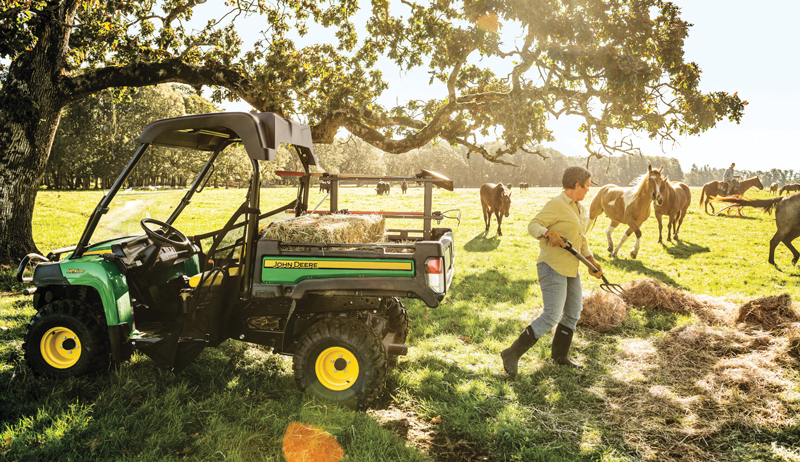
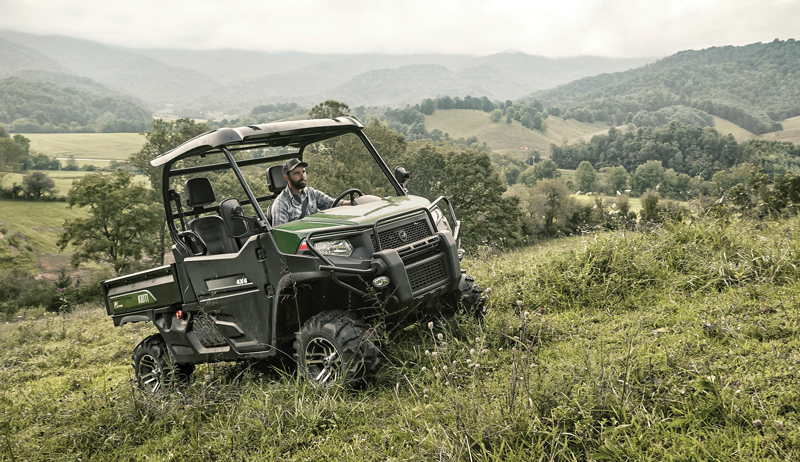
Tractors are still the go-to machine when you need power for big projects. But for many modern-day tasks, tractors are giving way to two surprising challengers: ATVs and UTVs.

It’s true that ATVs and UTVs can’t match the strength of a tractor. Their smaller sizes and versatility, however, allow farmers to easily travel across many acres and accomplish a wide variety of jobs.

Check out these options!


Read more: Learn 10 ways that you can use an ATV or UTV for farm work!


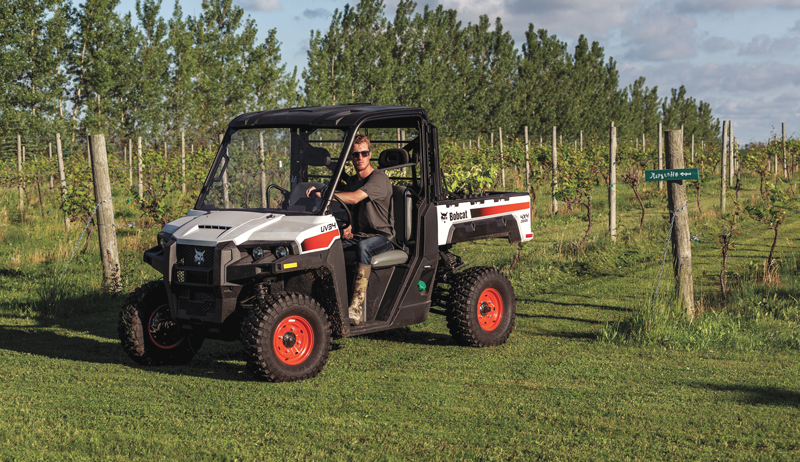
Bobcat UV34

The gas-powered, 39.9-horsepower UV34 features a 1,000-cubic-centimeter, two-cylinder, single-overhead-cam engine. The 900-watt stator provides more power—about 75 amps of output—for use with a snow blade and other electric-powered accessories.

UTV ATV ATVs UTVs
courtesy of Bobcat

The cargo box, constructed of a composite interior, handles up
to 1,250 pounds and 15.6 cubic feet of materials or supplies. The UV34 also features an increased tow rating, improved ground clearance, all-wheel drive and service access.

A diesel version is also available. Find out more at bobcat.com.

John Deere Gator

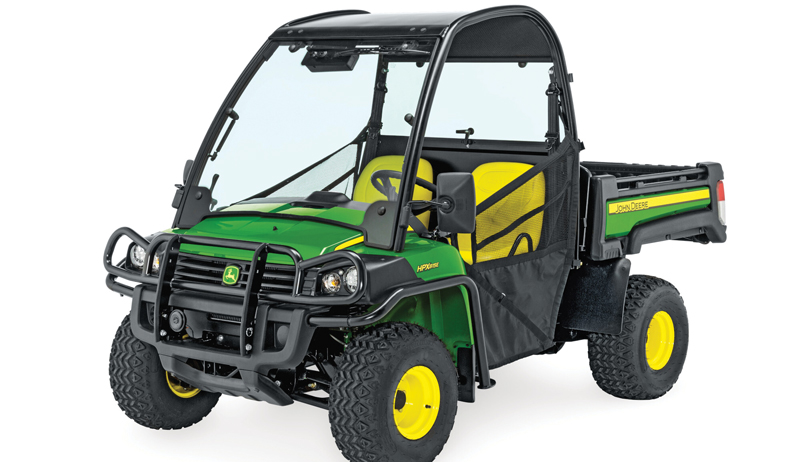
The HPX615E was built for farm and construction work. It features a two-cylinder gas engine that produces 20 horsepower.

UTV ATV ATVs UTVs
courtesy of John Deere

This UTV comes standard with four-wheel drive, a pickup-style tailgate, and real dumping cargo box with 16.4 cubic feet and 1,000 pounds of storage capacity.

The HPX815E version features a three-cylinder, four-cycle diesel engine that produces 18.2 horsepower. Find out more at deere.com.

KIOTI K9

Fully featured, tough and reliable companions, the KIOTI K9 2400 and K9 2440 offer an abundance of storage, an ergonomic design and contemporary styling.

UTV ATV ATVs UTVs
courtesy of Kioti

These workhorses feature a 24-horsepower, three-cylinder, in-line vertical, water-cooled Daedong diesel engine with top ground speed of 31 miles per hour.

The K9 2400, pictured above, also features an all-metal bed. It has a 1,102-pound bed capacity, a standard spray-in liner and an optional hydraulic dump kit.

All K9 models feature a towing capacity of 1,300 pounds and a payload capacity of 1,7501⁄2 pounds, allowing for a full range of towing and hauling capabilities. Find out more at kioti.com.

This article originally appeared in the September/October 2020 issue of Hobby Farms magazine.

Categories
Crops & Gardening Farm & Garden

Why Windbreaks Attract Beneficial Wildlife

We all know the main advantages that windbreaks can offer on our farms. They can:

  • reduce heating and cooling costs for our homes and barns
  • shelter our livestock from cold winter winds
  • help distribute snowfall and control erosion
  • protect gardens and orchards from drying winds
  • block sights, sounds, and smells

The list goes on and on.

But did you know windbreaks can also be beneficial to wildlife, with positive trickle-down effects for your farm? Depending on the specific trees and shrubs you plant, windbreaks can service a variety of birds and mammals.

And this, in turn, can provide both tangible and intangible benefits to your farm.


Read more: Here’s how to get started with windbreaks for the farm.


A Safe Haven for Birds

Birds of all sizes are among the beneficiaries of windbreaks, particularly if the outer rows are planted with small fruiting trees or shrubs (dogwoods, plums, cherries, etc.) that provide a source of food.

Some birds might even decide to nest in your windbreaks. So if you enjoy birdwatching, windbreaks can give your hobby a big boost.

But the benefits of attracting birds extend beyond quiet afternoons watching baby birds take their first flights. Birds consume insects, and windbreaks planted near gardens and orchards will benefit from enhanced pest control.

In addition, tall windbreak trees—standing in rows with fields on either side—are often preferred perching territory for birds of prey like eagles and hawks. These skilled hunters will help keep rodent populations in check.

A Boon for Pollinators

If the outer rows of your windbreaks are planted with flowering trees and shrubs, such as lilacs or crabapples, you’ll provide a food source for beneficial pollinators like honeybees, bumblebees, butterflies, and more. If your windbreaks are guarding an orchard or a garden, your fruit trees and vegetables plants are bound to benefit from the influx of pollinators drawn to your windbreaks.

In addition to providing a food source, windbreaks also reduce wind speeds, encouraging pollinators to take flight at times when they otherwise might not. An open field might be too windy for pollinator activity, but a protected field on the leeward side of a windbreak will be calmer and more inviting.


Read more: Keep an eye on woodland friends with a wildlife camera!


A Shelter and Food Source for Animals

While they offer fewer direct benefits to farms (and can be considered pests in some cases), deer, rabbits, squirrels and other animals will all appreciate the shelter and food provided by windbreaks.

Squirrels, for example, can be seen traveling from tree to tree in the fall. They harvest nuts and pinecones from the tallest trees.

The protection windbreaks provide can’t be overstated. During the winter, it’s not uncommon to see deer sleep in the midst of windbreaks. There, they’re protected from wind and snow.

Windbreaks can also provide travel lanes across otherwise open fields, particularly if they’re connected to adjacent woodlands. Windbreaks like these offer a safer means for wildlife to travel from one section of woods to another without stepping into the unguarded open.

As with birdwatching, if you take pleasure in watching wildlife, windbreaks can encourage a wider variety of woodland critters to cross your land. Mounting a wildlife camera on the trunk of a windbreak tree will even reveal animals that visit under the cover of darkness.

If you haven’t already planted windbreaks on your farm, what are you waiting for? As the old saying goes, the best time to plant a tree was 20 years ago. The sooner you get started, the sooner you’ll reap the benefits of wildlife attracted to your windbreaks!

Categories
Animals Large Animals

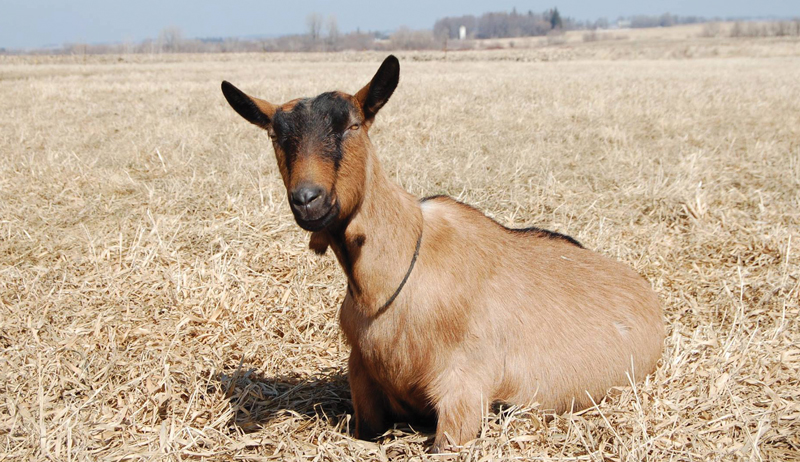
Breed Profiles: Get To Know Oberhasli & Boer Goats

Both popular breeds in the U.S., the Oberhasli and Boer goat breeds are versatile ruminants that fit in well on many small farms.

Meet the Oberhasli

Switzerland’s version of the Alpine, Oberhasli were originally known as “Swiss Alpines” in the U.S. The American Dairy Goat Association recognized them in 1979 as a separate breed, naming them Oberhasli.

Oberhasli feature a uniquely striking red-brown coat trimmed in black. Does can also be solid black in color. The reddish color is a hallmark of the breed and should not be confused with brown.

While similar to the other erect-eared Swiss breeds, there are some variations in type.

The classic Oberhasli has:

  • a shorter and wider head
  • typically a slight dish between the eyes
  • eyes that are more prominent than other goat breeds

Ears are often smaller and shorter in relation to size, set a bit lower on the head and point slightly forward instead of straight up.

While there is no upper size limit, the minimum height is 28 inches. This moderate size relative to other dairy breeds can be an advantage for some homesteads.

The Oberhasli is laid-back and quiet compared to many of the larger dairy goats.

Additionally, Oberhasli milk can be used for a variety of purposes, but its sweet taste may especially appeal to people interested in drinking it.

—Tom Rucker, Buttin’Heads Dairy Goats, with Kirt Schnipke, Ober-Boerd Dairy Goats


Read more: Why get goats? There are a ton of great reasons!


Boers

Dutch stockmen in South Africa during the early 1900s crossed African goats with European dairy breeds, selecting for size, meatiness, early maturity and rapid weight gain. This created the Boer, which in Dutch means “farmer.”

In 1993, the first North American-born Boers were dispersed throughout Canada and the U.S. Boers are now the most popular meat goat breed in North America.

Boers are long, heavy-boned, large-framed goats with massive, meaty muscling. Great size; large, pendulous ears; and a Roman-nosed face are hallmarks.

Most Boers are sparkling white with cherry red heads and necks.

Bucks tip the scale at 250 to 350 pounds; does, 150 to 250. Both sexes have sturdy, wide-set horns that sweep gracefully back from their skulls instead of up and out like the horns of other meat goat breeds.

Does are prolific moms (twins are the norm; triplets and quads are common) that give rich, high-butterfat milk. Unlike other goats, many Boer does have four functional teats.

The easy-going Boers are registered by three American organizations: The American Boer Goat Association, International Boer Goat Association and United States Boer Goat Association.

This article originally appeared in the May/June 2020 issue of Hobby Farms magazine.

Categories
Animals Large Animals

Goats Have Dental Needs, Too, So Watch Those Teeth!

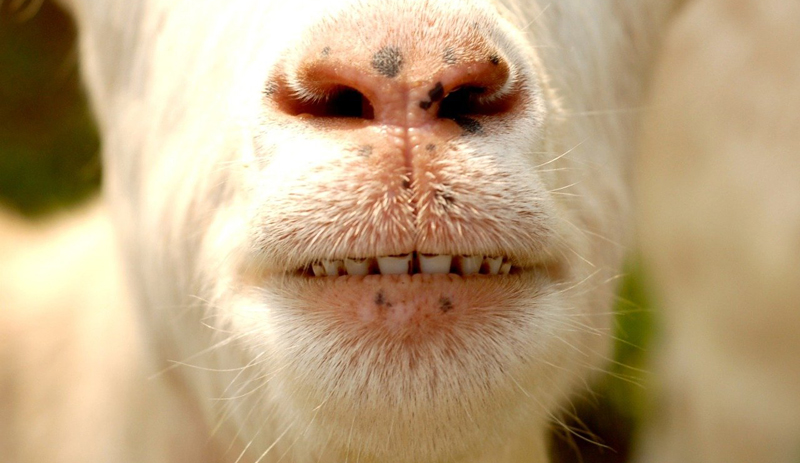
Compared to other animals like horses, goats tend to need less dental care. Maybe it’s because their diet is slightly different—goats eat scrub brush that horses won’t. Perhaps it’s the anatomical difference—goats only have lower incisors and a hard upper dental plate, whereas horses have upper and lower incisors.

“Goats seem to need floating (filing) less often than horses,” said Jen Kolberg, who owns Sweet Retreat Equine Dentistry. She also sees goats in her Pennsylvania-based practice.

“Most of the time it seems due to older age, but just like any animal it all depends on their lifestyle, diet and even confirmation.”

Just because goats may be lower maintenance in dental care needs doesn’t mean it’s something to be overlooked. Teeth play an important part in an animal nutrition, including that of goats. Chewing is the first step in the digestion system so that minerals, vitamins and fibers can be used in the body.

Here are a few things to consider for the goats on your farm.


Read more: Here are some things you need to know to start keeping goats.


Understanding Goat Teeth

Like all mammals, goats shed baby teeth for permanent ones. Kids develop their milk teeth from birth to 1 week old. Throughout the first month of life, they grow four sets of milk teeth.

By age 1 their permanent incisors begin erupting. The process lasts until about age 4.

During the average day, goats make 40,000 to 60,000 chewing motions. An extraordinarily agile upper lip allows them to selectively grab their food. This helps them avoid thorns and plant spines, according to Kolberg.

“Goats chew in an elliptical or oval-type motion, as well as side to side,” Kolberg said. “While horses only chew in the elliptical pattern and wear their teeth differently. I think this is why goats need floating or filing less often. It seems to wear them more evenly throughout life.”

Deciding It’s Time for a Dentist

Animals that are losing weight, dropping food while chewing or spitting out wads of roughage (also called quidding), are candidates for dental exams, according to Kolberg. Other signs of a sharp tooth edge or trouble spot include an exaggerated motion of the lower jaw while eating, stretching their neck, or twisting their head while chewing.

“Hooks, ramped molars, sharp points or tall teeth are just a few potential dental issues goats may have,” she said.

Weight loss can be a sign of multiple problems, but teeth should never be overlooked in the diagnosis process. If there’s a sore spot in a goat’s mouth, it’s not going to want to eat.

Skipping meals or eating smaller rations because of pain prevents goats from getting the nutrition needed to maintain a healthy weight.


Read more: Want stories delivered to your inbox? Sign up for the Hobby Farms newsletter!


Preparing to Work With a Dentist

Only veterinarians can make an official diagnosis about health conditions. But a dentist can offer observations about the animal’s health that can inform a consultation conversation with a veterinarian.

When Kolberg examines a goat, she starts with a visual inspection. She’s looking for lumps, bumps or other anomalies on the face, jaw or neck.

Peering inside the goat’s mouth, she looks for missing, broken or rotting teeth, as well as the overall shape of the teeth. She also examines inside the mouth for sores and cuts, which can indicate sharp tooth edges.

“Make sure the dentist knows their chewing pattern so they know where and what to take down (or angles to leave) and have tools that fit their mouths,” Kolberg said.

Since goats are herbivores, veterinarians and dentists aren’t typically worried about gingivitis or periodontal disease that is common in other animals. Low maintenance is always a benefit on any farm!

Categories
Food Recipes

Recipe: Make Poached Egg Carbonara For A Fun Twist On The Classic

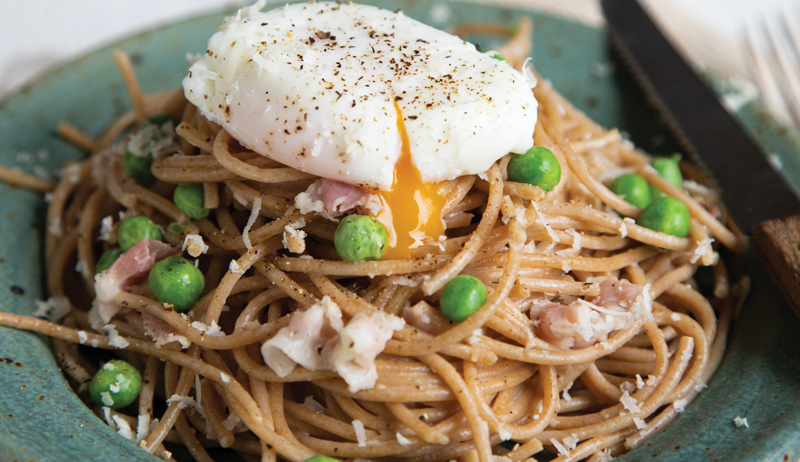
This pasta recipe puts a fun twist on traditional carbonara. Instead of tossing the pasta with egg during preparation, it’s lightly coated in a sauce made of Parmesan and cream.

It’s served with a poached egg on top so that each person can mix in the creamy yolk as they enjoy the meal.

The recipe calls for you to add peas to brighten the dish. But chopped asparagus makes another delicious addition.

If you can’t find pancetta, simply use finely chopped bacon. We use whole-wheat spaghetti here, but you can also substitute white pasta or gluten-free pasta.

Yield: 4 to 6 servings


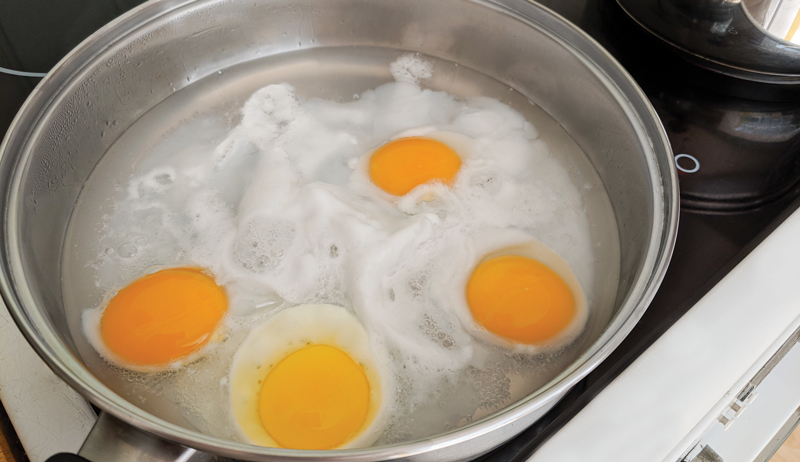
Read more: Here’s how to achieve poached egg perfection!


Ingredients

  • 1 pound whole wheat spaghetti
  • 6 ounces pancetta, chopped
  • 1⁄4 cup yellow onion, finely chopped
  • 1⁄2 cup heavy cream
  • 1⁄2 cup freshly grated Parmesan cheese, plus extra for garnish
  • 1⁄2 cup fresh or frozen peas
  • salt and ground black pepper to taste
  • 4 to 6 large eggs, poached, depending on choice of serving size
poached egg carbonara recipe
Linda Bestwick/Shutterstock

Preparation

Cook the spaghetti according to package directions. Reserve one cup of the cooking water, and set the pasta and the water aside.

Cook the pancetta in a large pot over medium-high heat for about 3 minutes, until it begins to firm up. Add the onion, and cook for 2 more minutes. The onion will begin to soften and the pancetta will darken in color.

Reduce the heat to medium, and add the pasta with the pasta water. Toss well, and reduce the heat again to medium-low.

Add the cream and Parmesan cheese. Toss well. Add the peas, and toss for about 2 more minutes until all of your ingredients are heated through. Add salt and pepper to taste.

To serve, add an equal amount of pasta to 4 or 6 serving plates. Top each with a poached egg. Garnish your carbonara with grated Parmesan cheese and cracked black pepper.

This article originally appeared in the May/June 2020 issue of Chickens magazine.

Categories
Beginning Farmers Crops & Gardening Farm & Garden

Shop Now For Your 2021 Vegetable Garden Seeds

Although it may seem early to begin planning your 2021 vegetable garden, now’s the perfect time. Winter is, after all, meant for resting and preparing for the next growing season.

Last year saw an increased demand for vegetable garden seeds as a result of the pandemic. So for 2121, it’s worth it to get your order in early.

Here’s how to select vegetables and varieties for your garden.

Select Your Crops

The first step in creating your seed order is to select the crops you plan on growing. Begin by writing a list of the crops you grew last year that you can add to or subtract from. 

When in doubt about whether or not a specific crop will grow in your climate, check which USDA Hardiness Zone you live in. It’s important to make sure that you have enough “growing days” in your hardiness zone to allow the crop to reach maturity.


Read more: Check out these tips for planning this year’s kitchen garden.


Take Notes

Once you have a list of all the crops you plan on growing, spend some time reflecting on the varieties you grew last year. Think about everything ranging from how the particular varieties tasted to how your plants grew and produced.

Also pay attention to the disease resistance and seasonality of the varieties you grew last year.

Maybe blights keep choosing your tomatoes over other varieties in the community garden. Or maybe the lettuce varieties that you grew bolted all summer long. Take notes to help keep track of your thoughts. 

Shop Around

Although you can usually find vegetable seeds at the local hardware store, broadening your horizons can help you find higher-quality seeds that are better suited to your garden. Many seed companies have extensive online libraries with detailed descriptions of all the varieties they offer.

Companies like Johnny’s Selected Seeds and High Mowing Organic Seeds have been selling to small, organic vegetable farmers and gardeners for decades and are among the industry-favorites. If you can, spend some time looking for regional seed companies in your area as well. 

Seeds grown regionally will be better adapted to your growing conditions and will therefore have a better chance of thriving in your garden.   


Read more: Why not save some seeds from this year’s garden? Here are 6 plants with seeds that save easily.


Select Varieties

Now that you’ve identified several seed companies to check out, begin to search for specific varieties that match your needs. If, for instance, verticillium wilt typically plagues your tomatoes, look for a variety bred to have resistance. 

If there are multiple resistant varieties, pick the one that is best suited to your garden based on other criteria as well.

As you’re browsing through seed libraries, make sure to keep an open mind as well. You’ll almost certainly come across intriguing or unusual varieties that you’ll want to plant out just for fun.

And most importantly, don’t forget to enjoy the process. Half the fun of farming is planning for next season and anticipating all the things that may (or may not) go that much better.


Categories
Food Homesteading

A Seasonal Approach To Canning Helps Fuel Heritage Acres Homestead

When Chas and her family wanted to name their homestead in the Southeastern U.S., they found inspiration in a passage from the Bible.

“Believing our children were ‘a heritage from the Lord,’ as it says in Psalm 127:3, and knowing that all our efforts were to raise and teach them, the word heritage stuck out to us,” recalls Chas, who settled on the name Heritage Acres Homestead.

“We want our lifestyle to be a blessing and a heritage as well.”

These days, Chas shares her passion for homesteading with the world via her blog and social media outlets. There, you’ll find inside looks at her canning, preserving and meal-planning skills.

We spoke to Chas about a seasonal approach to canning food and homesteading family values. We also got some tips for organizing your pantry.

A Homesteading Heritage

Chas recalls fond memories from growing up, when her grandfather kept horses, goats, pigs and chickens on his property. She retains fond memories of days spent canning with her grandmother.

These formative experiences helped inspire Chas’s own homesteading values. Now she’s determined to pass on the importance of “work ethic, knowledge and a love of homegrown, homemade and simply home” to her own children.


Read more: These 5 preservation methods bypass canning completely.


Getting Into Canning Essentials

“Every year without fail I can jam, apple butter, tomato sauce, spaghetti sauce, various fruits such as peaches, blueberries or blackberries, green beans, pickled okra and a variety of soups like vegetable or tomato,” says Chas, listing her must-have canning projects.

Meal Planning and Canning

When it comes to cooking with her stock of canned and preserved foods, Chas says she’s a big fan of using home-canned green beans as a versatile side dish, often mixed with some caramelized onions, bacon and mushrooms.

“If the pan is dry, I add a bit of homemade chicken broth for moisture,” she explains. “It gives such a rich, delicious decadence to the humble green bean. Simple ingredients can make a very special meal.”

For celebratory occasions, Chas likes to reach for a jar of home-canned peaches. She uses them as the basis of a cobbler.

“It’s a warm, comforting mix of fruit and sauce with a sweet bread topping,” she says. “My family’s most favorite way of eating cobbler is accompanied with a scoop of real vanilla bean ice cream.”


Read more: For this grower, seasonal produce led to better health.


A Seasonal Approach to Food Preservation

Chas says that she works on her pantry supplies all year around, which includes preserving bone broth and roasted winter squashes during the colder months.

“We have to work with the seasons and what that brings and that is a huge tip,” she explains. “When the strawberries begin coming in for spring, make jam. When the cucumbers begin to grow in early summer, before they get too bitter from the heat, begin your pickles. And when tomatoes come in, roast them and make your sauces or salsas.”

Chas’s seasonal approach to preserving food extends beyond her homestead, too. She asks local farmers to see if they have any excess crops they’re looking to move on.

“You might grab a bushel of okra for the freezer, for pickled okra or to dehydrate. Or maybe some extra tomatoes for a batch of spaghetti sauce for your shelves.”

A Love of Pantry Organization

If you scroll through the Heritage Acres Homestead Instagram account, you’ll come across photos of some exceptionally well-organized pantry shelves.

“I’ve said many times [that] organization is my love language and it really is!” says Chas. “Is everything in my life organized? Sadly, no. But it is something I strive for because it brings peace to my heart and mind.”

Follow Heritage Acres Homestead at Instagram.