Categories
Animals Poultry

5 Nervous System Disorders In Chicks (& What You Can Do)

Disorders of the nervous system can cause chicks to act in abnormal—and often scary-looking—ways. Typically, you’ll see the head turned or twisted in an odd direction, a condition commonly referred to as “crookneck” or “wry neck.”

The technical word for twisted neck is “torticollis,” from the Latin words “torquere,” meaning to twist, and “collum,” meaning neck. When torticollis is not a steady pull, but occurs in painful muscle spasms, the technical term is “opisthotonos,” a Greek word meaning “drawn backward.”

Chicks experiencing nervous systems disorders also may appear uncoordinated, weak, staggery or paralyzed in one or both legs.

If left uncorrected, the neurological disorder may lead to trampling of the unfortunate chick by brooder mates or loss of the ability to eat and drink. The five most common conditions that cause torticollis in chicks are:

  • congenital loco
  • stargazing
  • crazy chick disease
  • head or neck injury
  • Marek’s disease

Congenital Loco

Congenital loco is an inherited disorder caused by a recessive gene. It appears in chicks at the time of hatch.

Unless you hatch your own eggs, you are unlikely to see this condition. An affected chick’s neck twists backward. This throws the chick off balance and leaves it unable to consume food or water.

Although this condition appears to result from an inability to control the neck muscles, a few studies have indicated it may be caused by a defect in the ear structure. Chicks experiencing congenital loco rarely survive more than a few days.

A mysterious condition also called “congenital loco” occurs sporadically over a period of a few days, then disappears as mysteriously as it came.

This condition looks identical to congenital loco. But the fact that it doesn’t appear at the time of hatch and isn’t lethal indicates it may be a separate and unrelated issue, with an as-yet unknown cause.

To confuse things further, this mystifying condition is sometimes called “stargazing.”

nervous system disorders chicks neurological conditions
Gedeminas777/Shutterstock

Stargazing

Stargazing is a nervous system disorder that will causes a chick to bend the neck so far backward that the head touches its back. The beak will point skyward—hence the name “stargazing.”

The epileptic-like muscle spasms that pull the head back typically cause the bird to tip over. After a few days of struggling, the chick will die from lack of food and water.

This condition typically appears in chicks less than 1 week old, caused by vitamin B1 (thiamine) deficiency in the diet of the chick’s parents. Depending on the severity of the deficiency, the chick may recover if given a vitamin B1 supplement.


Read more: Here’s what you need to do to care for your chickens in cold weather.


Crazy Chick Disease

Crazy chick disease resembles stargazing, except stargazing chicks stop eating. Chicks with the disorder continue to eat despite their dire condition.

The formal name for crazy chick disease is “avian encephalomalcia” (from the Greek words “enkephalos,” meaning “brain,” and “malakos,” meaning “soft”).

Encephalomalacia is a softening of the brain tissue that, if not treated early, results in permanent brain damage. An affected chick may stargaze or pull its head down between its legs, often twisting the head to one side.

This position puts the chick so far out of balance that if it tries to walk it tumbles over.

The primary cause of this disease is a deficiency in vitamin E, giving the disease its other formal name, “hypovitaminosis E.” The vitamin may actually be present in the diet but unavailable for metabolism.

For example, when vitamin E is furnished in the form of polyunsaturated fats—such as cod liver oil, corn oil, soybean oil or wheat germ oil—that have become rancid, the vitamin oxidizes and is no longer available for absorption.

Chicken actually require very little vitamin E requirements. This condition is therefore unlikely to occur where breeder flock rations and chick starter consist of appropriately formulated fresh rations.

A breeder flock ration deficient in vitamin E results in chicks that exhibit crazy chick disease within a week of hatch. If chicks develop this condition because their starter ration lacks sufficient metabolizable vitamin E, signs will appear within two weeks of being fed the deficient diet.

Without treatment, the chick’s brain eventually deteriorates to the extent that the chick can no longer function, whereupon it dies.

When started early enough to avoid serious damage to the brain, an effective treatment is to add 1⁄2 teaspoon vitamin AD&E powder per gallon of drinking water until signs disappear.

nervous system disorders chicks neurological conditions
PeterVrabel/Shutterstock

Head or Neck Injury

Torticollis is not always caused by disease but may result from a blow to the head or neck. Head injuries that lead to nervous system disorders are common in crested breeds. These tend to have skulls that are less bony than noncrested breeds.

If the crested skull bone doesn’t entirely enclose the brain—because of genetics or an injury—a blow can cause the brain to swell and press through the skull’s gap.

A chick with such a head injury may tuck its head down between its legs and perhaps move backward until the bird backs into the brooder wall or other obstacle. Depending on the extent of the injury, the condition may be temporary or permanent.

When raising chicks of crested breeds, providing a safe brooding environment is essential.


Read more: Learn about 5 dangerous chicken diseases (and how to avoid them).


Marek’s Disease

Unlike other nervous system disorders of chicks, Marek’s disease is caused by herpesviruses that replicate in feather follicles, are shed in dander and survive for a year or more in coop dust. Chicks acquite this highly contagious disease (which doesn’t affect humans) when chickens inhale contaminated dust or dander from infected birds.

The disease—named after veterinarian József Marek who first described it—is the most common viral disease of backyard chickens. It’s so common you can safely assume your chickens are infected, even if they don’t appear sick.

Marek’s disease infects primarily young and growing chickens. But it can also affect aging birds. This complex disease can take on many forms, including a nerve form that results in incoordination, muscle spasms and progressive paralysis of neck, leg or wing.

A transient nerve form that affects chicks 2 to 3 weeks of age appears as temporary limp paralysis of the neck or legs. This leaves birds with a twisted neck upon recovery from paralysis.

Marek’s disease switches off a chicken’s tumor-blocking genes and also attacks cells that produce antibodies, thus impairing the bird’s immune system. It typically occurs in combination with other diseases, especially coccidiosis and respiratory infections caused by E. coli bacteria.

Fatality of Marek’s disease depends on the virulence of the virus strain, as well as on the presence of any other debilitating conditions.

The first few weeks of a chick’s life are the most critical time for infection. Chicks that are isolated from mature chickens until they reach the age of 5 months develop a natural immunity.

Strains of some chicken breeds are genetically more resistant than others. Fayoumis are resistant to Marek’s, while Sebrights and Silkies tend to be particularly susceptible, as are some strains of Polish, among other exotic breeds.

nervous system disorders chicks neurological conditions
Nagy-Bagoly Arpad/Shutterstock

Vaccination

No known treatment will cure chickens of Marek’s disease. But there is a vaccine. Most hatcheries offer the option of vaccinating chicks. If you hatch your own chicks, you can purchase the Marek’s vaccine and administer it yourself.

Because the vaccine does not work in chicks already exposed to Marek’s disease, administer it as soon after hatch as possible. Keep vaccinated chicks in isolation while their immunity develops.

Vaccination doesn’t prevent the possibility that the chickens may become infected by and spread Marek’s disease. But it does prevent the viruses from causing tumors and paralysis. And it reduces shedding of viruses by infected birds.

Seeing any of these nervous system disorders in baby chicks can be a decidedly disturbing experience. By learning to recognize each of these five neurological conditions you will stay equipped to rapidly deal with treatable conditions.

You can also prepare yourself for the inevitable regarding those that are not.


Sidebar: Minimize Marek’s

The following four management practices will help you reduce the risks of Marek’s disease.

  • Brood chicks away from mature birds until they develop natural resistance by 5 months of age.
  • Vaccinate newly hatched chicks. Vaccination does not prevent Marek’s disease. But it does prevent tumors and paralysis if administered before exposure to the virus.
  • Keep turkeys with chickens, or put a little turkey poop in the chick brooder. Turkeys carry a related, though harmless, virus that keeps Marek’s from causing tumors in chickens.
  • Breed for resistance. Some chickens carry resistance factor B21, which can be detected through blood testing.

This article originally appeared in the November/December 2020 issue of Chickens magazine.

Categories
Farm & Garden Farm Management

How To Use Trees For A Windbreak On The Farm

On my farm in northern Wisconsin, multiple rows of windbreak trees guard the farm buildings from the cold, harsh winds that blow in each winter. Red pines, Scotch pines and Norway spruce weave together in tightly knit lines along the western and northern sides of the barnyard.

Counting growth rings on occasional fallen specimens indicates the oldest trees were planted in the 1940s. I can testify to the effective job they perform.

On snowy winter days, bitter winds sweep across the fields, buffeting anything out in the open. Try to cross open land in these conditions, and you may want to turn back.

Yet in the lee of the windbreaks, the conditions are tolerable—almost calm, in fact. And creating more comfortable conditions in the barnyard is just one advantage offered by a well-designed planting of windbreak trees.

If your farm is located in lowland regions already protected from the wind, or near large bodies of water that moderate seasonal temperature swings, then dense windbreak plantings might not be necessary. You may only need thin, open windbreaks to protect cultivated plants and control erosion and snow deposits in fields.

However, if you live in a windy upland region—where annual snowfall is heavy and strong gusts of wind regularly pummel your farm—a series of well-planned windbreaks can cut down on expenses, add some aesthetic beauty to your land and protect everything from soil to buildings.

Break Benefits

When properly designed, windbreaks can dramatically alter the climate of your farmland and provide a bevy of benefits as a result. With the right design, windbreaks can do the following.

Reduce Heating and Cooling Costs

If you can protect your buildings from cold winter winds, your heating system won’t have to work as hard to maintain an optimum temperature.

Likewise, in regions where summer winds blow hot and dry across your farm, windbreaks can minimize cooling expenses.

Protect Gardens and Orchards

Steady winds speed up water evaporation from the soil and increase leaf transpiration. So windbreaks can help save water and reduce stress on vegetation.

Plants ranging from tomatoes to apple trees will grow faster and straighter when they’re not struggling to hold their own against ever-present winds. Plus, blossoms gain protection and pollinators are more active when the wind is diminished. This increases crop yields.


Read more: Ready to plant some fruit and/or nut orchards? Here’s how to get started.


Improve Snow and Erosion Control

In the winter, heavy winds can quickly eliminate paths cleared through the snow. In the summer, the wind can blow topsoil off your fields, or spread sand in sandy locations.

Windbreaks can help control these issues.

Distribute Snow Across Fields

Field windbreaks, which aren’t as dense as those designed to protect buildings and livestock, can help distribute snow evenly across fields for uniform melting in the spring.

trees windbreak
J. Keeler Johnson

Block Sounds and Odors

Wind isn’t the only thing windbreaks stop. They also block sounds and can cut down on noise from traffic or neighboring properties.

Odors are similarly diminished. So with luck you can block the smell of the manure pile on the back 40 from drifting up to your house.

Shelter Livestock

If you’re unhappy with biting winter winds, you can bet your animals aren’t thrilled either.

Livestock will appreciate the shelter provided by a thick, effective windbreak. They may even require less feed to stay warm.

Provide Privacy

Windbreaks planted along roads or property borders create a visual barrier, enhancing privacy.

Attract Wildlife

Birds often nest in windbreaks and are attracted to fruiting shrubs. In addition to being fun for birdwatching, they consume insects and can help control pest populations.

Birds of prey, including hawks and eagles, will perch in tall trees and keep rodent populations in check.

trees windbreak
Daniel Johnson

Add Beauty to Your Farm

A carefully-planned windbreak is stately in appearance, with uniform trees planted in straight rows.

Smaller shrubs growing on the windward side of the windbreak, such as lilacs or dogwoods, further enhance the appearance with their blossoms and foliage.

Planting Pointers

In the U.S., prevailing winds generally blow from the west and northwest. So it’s advisable to plant windbreaks along the western and northern sides of the area you aim to protect.

Provide breathing room between the windbreaks and the protected area, in part because snow tends to accumulate in the immediate shelter of the windbreaks. A gap of 50 feet is the minimum you should consider. If you have sufficient space, 100 feet is often preferable.

Another reason to plant windbreaks away from important farm features is the fact that trees occasionally fall in the line of duty, ironically broken by the wind they’re supposed to break. You don’t want windbreak trees to become hazards in their own right, threatening your buildings or livestock on stormy days.

trees windbreak
Daniel Johnson

Windbreak rows should also extend a minimum of 50 feet beyond the area you aim to protect. In other words, if you’re protecting an orchard that’s 200 feet long on the western side, don’t plant a 200-foot windbreak and expect it to suffice.

Instead, plant a windbreak at least 300 feet long, extending 50 feet farther north and 50 feet farther south to provide thorough protection.

Tree Tips

As a general rule, coniferous trees—spruce, cedars, pines, etc.—are preferred for windbreaks more than deciduous trees such as sugar maples or oaks.

Most coniferous trees retain their needles all year long. They block wind better than deciduous trees that spend winters bare of leaves.

Coniferous trees also tend to grow rapidly. They will create a formidable wind-breaking barrier sooner than some of the slow-growing deciduous trees such as sugar maples or white oaks.

Exceptions arise when planting dense windbreaks featuring six to eight rows of trees, suitable for blocking snow and sheltering buildings and livestock. In these instances, you can plant long-lived deciduous hardwoods in the middle rows to extend the longevity and effectiveness of the windbreak.

Deciduous trees can also be suitable for single- or double-rowed field windbreaks aimed at dispensing snow evenly across fields.


Read more: You need these 10 tools when planting trees.


Best Windbreak Trees

The best windbreak trees are ones that grow in narrow, conical fashion. The small footprint occupied by each individual tree will allow you to plant them close together without shading (and sacrificing) the lower branches.

Narrow trees growing conically with short branches are also better at shedding snow. They are also less likely to suffer damage from winter storms or extremely windy weather.

Local conditions will have an impact on the trees you choose. Check the USDA Plant Hardiness Zone to determine the average minimum temperature in your area, and ensure that any trees you purchase are rated to survive your typical winter climate.

Choosing trees rated to survive one zone colder than yours will give you a cushion. And sourcing from local nurseries will help you find trees adapted to your locality.

Also factor in soil conditions. Sandy soils will support different trees than clay soils. And the soil pH level (whether acid or alkaline) can favor certain species over others.

Soil tests can tell you what conditions you have. Nurseries can tell you which trees you need.

For guidelines to some of the most widespread and popular choices of suitable windbreak trees, see “Choosing Conifers” and “Deciduous Decisions” below.

Space Suggestions

It often seems as though you need algebraic formulas to determine the spacing between individual windbreak trees. Your goals for the windbreak and the species of trees you’re planting will affect the ideal spacing.

Still, a couple of key touchstones will help you start. For all except very open field windbreaks, consider a single row of trees insufficient. Otherwise, two to three rows is considered the minimum. You can plant six to eight rows to provide a formidable and long-lived barrier against cold winds and snow.

Rows should be staggered so the trees are planted in a checkerboard pattern, with trees in odd-numbered rows planted halfway between trees in even-numbered rows. This maximizes the available space while weaving a tighter windbreak.

Plant a variety of species, as this will also encourage a tighter windbreak and lessen the impact should disease or pests strike one particular species.

If planting three or more rows, plant the windward row with smaller trees or shrubs such as dogwoods and lilacs (which grow thick with multiple stems) or plums and cherries (which produce fruit).

This shorter windward row can be set back as much as 50 feet from the inner rows to create a “snow trap.” This will reduce the amount of snow that reaches the rest of the windbreak.

Plant the inner rows with taller trees, emphasizing dense conifers if the goal is to control cold wind and snow. You can, however, utilize a mixture of conifers and tall deciduous trees when planting three or more rows.


Read more: Check out these 5 tips for dealing with tree debris.


Tight Plantings

As a general guideline for tight plantings, members of the Thuja family (green giant, northern white cedar, etc.) require the least space and can grow 8 to 12 feet apart.

Plant larger conifers (white pine, Norway spruce, etc.) 15 to 25 feet apart. Because the lower branches of many conifers (white pines and red pines, for example) will die off if shaded too much, providing sufficient room for each tree to grow will help prolong the lives of the lowest branches. This increases the effectiveness of the windbreak.

The space between rows should be just as wide or wider than the spacing between the trees in each row. Aim for 15 to 20 feet
between rows of medium-sized trees. Expand to 25 feet for particularly large specimens and diminish to about 10 feet separating windward shrubs from interior rows (unless incorporating a snow trap).

To gain quicker results from your windbreak, plant trees closer together when young and thin as they grow older and start to crowd each other.

Planting windbreaks requires careful planning. And you won’t see immediate rewards since windbreaks need time to mature.

But your initial investment of time and effort will be eventually be repaid multifold, sheltering your farm from harsh winds for decades to come.


Sidebar: Deciduous Decisions

Deciduous plantings should mimic a small forest.

Black walnut (Juglans nigra)

Prized for the quality of its lumber, this tall hardwood also produces edible nuts.

Cottonwood (Populus sect. aigeiros)

Trees in the cottonwood family include the eastern cottonwood (Populous deltoides) and Fremont cottonwood (Populous fremontii). These tall and very fast-growing trees are widespread throughout the U.S.

Red maple (Acer rubrum)

Popular soft maple handles a wide variety of conditions, grows to lofty heights and pleases eyes with its bright-red autumn foliage.

Oak (Quercus)

The extensive oak family contains hundreds of varieties, including the white oak (Quercus alba) and the northern red oak (Quercus rubra). As a general rule, members of the red oak family grow faster than those belonging to the white oak group. Some oaks in both categories are evergreens that retain their leaves year round.

Silver maple (Acer saccharinum)

Another fast-growing soft maple, the silver maple performs well in wet locations but has delicate branches prone to damage from wind, snow and ice.


Sidebar: Choosing Conifers

Conifer plantings don’t need to be as dense as deciduous tree plantings for the same effectiveness. Here are some acceptable conifers, depending on the situation and region you live in.

Colorado blue spruce (Picea pungens)

This western tree is widely planted for its ornamental beauty. It grows in a conical shape and is very cold-hardy. However, it’s also susceptible to pests and diseases.

Douglas fir (Pseudotsuga menziesii)

This very tall tree can exceed 300 feet growing wild on the Pacific Coast. Both Douglas fir and its smaller and hardier relative, the Rocky Mountain Douglas fir (Pseudotsuga menziesii, var. glauca), make good Christmas trees in addition to serving as suitable windbreak specimens.

Eastern red cedar (Juniperus virginiana)

This tree is tolerant of poor soils and a very narrow-growing conical tree, but it’s also an alternate host of cedar-apple rust, so it shouldn’t be planted near orchards.

Green Giant (Thuja standishii/Thuja plicata hybrid)

A fast-growing tree, it increases its height by 3 feet per year and is popular for hedges and windbreaks. It isn’t hardy beyond Zone 5, but is a good choice for warmer climates.

Red pine (Pinus resinosa)

Also known as the Norway pine, red pines can exceed 100 feet at maturity and develop a high, open crown without many lower branches.

Northern white cedar (Thuja occidentalis)

This narrow and conical tree goes by a variety of names, including arborvitae. It generally grows small and dense.

Norway spruce (Picea abies)

A quick-growing European import, this spruce grows as much as 3 feet per year and can top 100 feet at maturity. With a shape that sheds snow and ice, the Norway spruce can often endure winter storms without damage.

White pine (Pinus strobus)

This pine grows similar to the red pine, reaching lofty heights with an open crown, though younger specimens are more conical in shape. Delicate branches are prone to breaking when weighed down by snow or ice.

White spruce (Picea glauca)

A hardy tree growing about 60 feet tall while maintaining a very narrow form at maturity, this spruce prefers cooler temperatures than many conifers. It’s excellent for windbreaks within its preferred range.

This article originally appeared in the November/December 2020 issue of Hobby Farms magazine.

Categories
Farm Management

Remove Bottlenecks To Improve Farm Efficiency

For better or worse, I spend a lot of time mulling over the most efficient ways to do things. When watering trees, I carefully plot the path I follow with my tractor, trailer and 35-gallon leg tank to reach the most trees with the fewest number of stops. When laying out pastures, I ponder how to place gates for maximum snow-clearing efficiency during the winter.

I can’t help it. I enjoy looking for ways to speed up repetitive tasks. It saves time that can be put to use on other farm projects.

Oftentimes, tasks are slowed down by a single bottleneck step in the process. If you can eliminate bottlenecks, the added efficiency can save substantial amounts of time.

Did you know saving just five minutes a day will gain you 30 hours by the end of a year? Efficiency can be very rewarding, and eliminating bottlenecks is the first step.


Read more: Want to clear snow quickly? Use your front-end loader!


“Bottleneck”

But sometimes just detecting a bottleneck is the challenging part. They’re not always obvious. If I told you a doorway can be a bottleneck wasting untold hours of time, you’d probably laugh, right?

But I’m not joking.

Think about it. The term “bottleneck” is derived from the fact that the neck of a bottle is the narrowest point. This places a limit on how quickly liquid can be poured from the bottle.

Imagine a cup of water. If you quickly turn it upside down, all the water will immediately pour out in one big blob. But if you turn a bottle of water upside down, several seconds will be required for all the water to escape through the narrow neck of the bottle.

The neck of the bottle is a limiting factor—a “bottleneck,” so to speak.


Read more: This hay season checklist will get you ready for an efficient cutting!


Like a Doorway

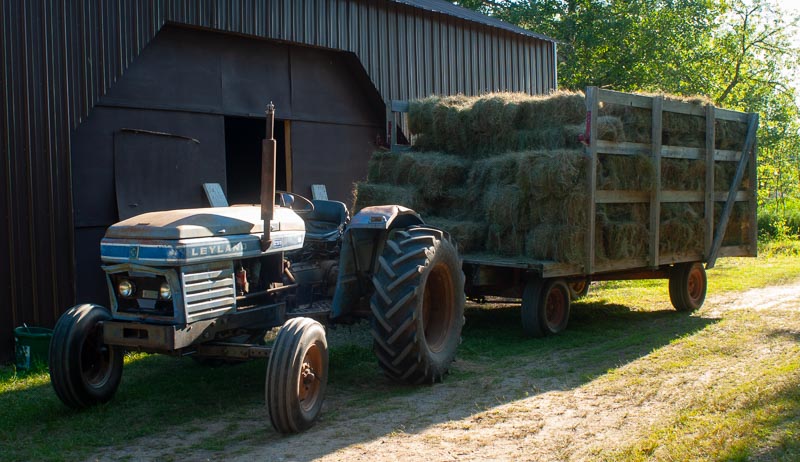
Now let me return to the example of a bottleneck doorway. Every summer during hay baling season on my farm, we unload wagons of small square bales into a hay barn with two doors.

One door is tall and wide, designed to allow large vehicles (tractors, trailers, etc.) to back in. The other door is short and narrow, designed strictly for human use.

Which door we use for unloading hay depends on which end of the hay barn we’re filling at any given time.But it’s obvious the large door allows for much faster unloading times.

The small door, it turns out, is a bottleneck in the process.

We might have four or five people on hand for unloading and stacking, but the small door is only wide enough for a single person and bale to pass through at any given time. As a result, bales enter the barn one by one—steadily, but slowly.

The small door is pretty much the definition of a bottleneck.

In contrast, the large door makes it possible for multiple people to grab bales off the wagon and bring them to the haystack at the same time. With a large enough crew, the length of time needed to unload a wagon can be reduced by 50 percent or more. This is a big deal on busy hay baling days.

Suffice to say, I’m making plans to enlarge the small hay barn door, reducing the bottleneck and allowing multiple bales to be unloaded at once.

Sure, the modification project will take a little time. But I know eliminating bottlenecks will help me gain back all that time (and more!) through improved efficiency during future hay season.

Categories
Animals Breeds Large Animals

Breed Profile: Babydoll Southdown Sheep

A versatile breed, Babydoll Southdown sheep are descended from the Southdown, one of the oldest down breeds. Standardized by John Ellman, they have been kept on farms in England since the late 1700s for flavorful meat and fine fleece.

Documented imports to the U.S., of what we now call the Babydoll Southdown, began in the mid-1800s.

Perfect Companions

Babydoll Southdown sheep make perfect companions for young and old because of their diminutive size—ideally 18 to 24 inches at the withers. Also known as the Teddy Bear sheep with a smile, they’re hard to resist once you’ve seen them.

They possess high intelligence, with a docile temperament, and  train easily.


Read more: Meet the Babydoll Southdowns of 1818 Farms.


Fiber Friends

Their fiber, one of the finest wools of the British breeds, is comfortable next to the skin, touting a micron count typically 23 to 29.

Short-stapled, spinners initially shy away, quickly realizing what they were missing once they take the plunge. Babydoll is resilient and springy, dyes well and has more barbs per inch than other wool. This attribute makes it suitable to blend with slicker fibers.

Needle felters love it.


Read more: For Katie Selvidge, Babydoll Southdown sheep are simply “marvelous.”


Other Attributes

Historically a meat breed, these sheep are short, long-bodied and well-muscled. Their heavy body type is not conducive for getting on their hind legs and reaching upwards.

Vineyards have tried other short breeds, realizing lighter built wool breeds are able and likely to stand on their hind legs in order to reach the higher vines and leaves. After some trial and error, used correctly, the Babydoll is clearly the winner in vineyards and orchards!

Babydoll Southdown sheep provide organic fertilizer, eat windfall fruit reducing disease problems, and can eliminate the need for herbicides and pesticides.

Their flavorful meat is the Angus of sheep. They produce an excellent carcass with good meat-to-bone ratio and are perfect for self-sustainability. Keepers can easily sell meat to ethnic markets, restaurants and friends and families.

You can milk Babydoll Southdown sheep for dairy products and soap-making. —Michelle Schubert, Bergamascos’ Babydoll Brigade®, secretary of the North American Babydoll Southdown Sheep Association.

This article originally appeared in the November/December 2020 issue of Hobby Farms magazine.

Categories
Beginning Farmers Crops & Gardening Farm & Garden Farm Management

Stable Root Cellar Conditions Treat Your Vegetables Right

In my previous article, we looked at how root cellars work and how we can best use them for winter storage of root vegetables. Now, it’s time to turn our attention to different kinds of root cellar designs.

Conditions for Storage

I like to say that it is better to have your cellar be at a slightly less than ideal temperature for carrot storage (say 39 degrees F, as opposed to 33.5 degrees F), then to have it fluctuate between those temperatures throughout the storage period.

For most roots, the ideal conditions are like those found in the soil over the winter—very cold, very humid and dark. Carrots and beets store best at around 33 degrees F, 95 percent relative humidity and dark.

Take these conditions into consideration. And understand the need to avoid fluctuations of these conditions. Then we can design low-cost root cellars that provide these conditions.


Read more: What should you store in a root cellar? Well … roots. Here’s why.


Passive Cellar

A root cellar that uses a compressor or other means of managing  cold evenly can do this. However, the trade-off is a cost and a reliance on electricity.

On the other hand, an in-ground root cellar can do this by maximizing the exchange between the earth’s ambient temperature. It will balance it against the outdoor conditions. Furthermore, you can improve the cellar through the addition of some ice made in-situ in January and February.

The design I use provides great conditions for storing root vegetables right through winter and into the summer. The basic design is as follows.

  1. Build a concrete (or other) root cellar into the side of the hill.
  2. Use the earth as both a source of geothermal heat and insulation on all sides.
  3. Create a well-insulated façade and airlock (if you have the space).

You do need additional insulation on the front façade and the roof (as well as a waterproof membrane) to ensure the cellar is well protected against both summer heat and winter extremes.

Concrete provides a thermal mass for the cellar, so the temperature doesn’t fluctuate readily in the fall and spring, or freeze easily in winter. The larger the cellar, the more thermal buffer is available to prevent freezing in winter extremes.

I store vegetables in new feed bags that allows them to breathe. They hold humidity as well. This prevents mold from growing and ensures they don’t dehydrate.

I never store anything directly in front of the door. This is the one place where cold or warm air can seep, especially when opened.

Instead the cellar is divided into a few bays with cinderblock partitions. These act as both thermal buffers and dividers for organizing different crops. When I want to get a bag of carrots or beets, I just bring it to a wash area and process it.


Read more: You can grow carrots in your garden. Here’s how (and why you should).


Discovering Your Passive Cellar Conditions

Passive root cellars are like living entities. Each is unique, and you need to use them to find their balance. Observe and ask yourself questions such as:

  • Do you need to add more soil on top to keep the temperature up in winter?
  • Would more insulation help if added to the front wall?
  • Will an overhang keep sun off the face to provide better conditions in spring?

Taking records and having a temperature humidity gauge in the cellar is key to understanding how the cellar is functioning and what is needed to improve it. Remember, unlike a “cold storage,” this is a passive entity that uses the earth’s natural conditions and the weather outside to strike a balance that serves your vegetables.

Root cellars are cold, dark and humid. They are also, by nature of being buried in the ground, very stable in their conditions.

When I used to store tens of thousands of pounds of roots in the winter for sale at farmers markets, people would sometimes ask me how I could stand packing and sorting vegetables in a cold cellar (mine keeps at 37.4 degrees F).

The fact is, because the cellar temperatures are so stable, free of winter effects and variation, I found it quite comfortable. When you have the right gear, a root cellar can feel far more comfortable than anywhere with a cold breeze.

Grow on,

Zach

Categories
Crops & Gardening Farm & Garden

Produce Profile: Growing Sage Is Just Smart

Culinary sage is in my herb trinity—the three plants I never want to do without in my garden. (Lavender and tulsi are the other two, if you were curious.)

It’s not that I love sage sausage (though I do) or that I must regularly drink sage tea (also true). Sage is a favorite because of its graceful presence growing in the garden, even during the winter.

Its showy purple flowers attract pollinators. It is easy to dry, delightful to drink and welcome in most culinary creations.

I’m having trouble thinking of a reason that I don’t prefer having sage around.

How to Start Sage Plants

Sage is a perennial herb. Plant it once, and it’ll give to you for years. It’s fairly easy to start from seed—this coming from someone who has trouble starting perennials from seed.

While you can start the seeds in the garden, I prefer to start perennials indoors. I have a picture in my mind of how I want my “finished” perennial garden to look—while it’ll never actually be finished. It helps for me to plant actual plants into that space, though, rather than plant seeds and cross my fingers that they germinate.

If you have sage plants already, take cuttings and let them root in a glass of water in lieu of starting from seed.

Another thing I love about sage and perennial herbs in general is that there’s no rush to get them started or planted in the spring. You can even up-pot them several times as they grow until you have the right place picked out for planting.

Start sage seeds any time, and plant them in the garden when the soil is warm.


Read more: Grow winter savory for some hearty, cold-weather greens!


How to Grow Sage

This plant is pretty low maintenance.

The most trouble I had with sage was the summer we had a few weeks of rainstorms that each produced 2 or more inches of water. The heavy soil I was gardening was so waterlogged that the sage roots couldn’t take it. The plant limped through that growing season but died that winter.

The moral: Sage is a Mediterranean herb and likes growing in Mediterranean-like conditions, such as well-drained soil, full sun, humidity and warm weather.

With a reasonable amount of harvesting, 2020’s first-year sage plants still ended up growing 3 feet around and 2 feet tall in my garden.

Keep your sage weeded, or surround them with wood chip mulch like I did to cut back on weeding work.

After four or five years, the plant becomes branchy and woody and produces fewer leaves and flowers. That might be the time to refresh your sage patch with younger plants.

How to Harvest Sage

Harvest sage at its leaf intersections as it grows to encourage continual leaf production. I prefer to use harvest snips, as these are kinder to the plant, but you can pinch off the leaves you need, if you forgot to take your snips with you.

Just before flowering is a potent time for the concentration of oils in the leaves, but sage continues to be tasty well afterward. Do not be alarmed by its early season flowering—it’s not a sign that the plant is declining. It’ll keep growing until your first freeze.


Read more: Love culinary herbs? Your chickens do, too, so grow extra for the flock!


How to Cook With Sage

Sage is traditionally thought of as a fall and winter herb, used in sausages, stuffing and other meat dishes. When I think about sage as an herb, its comforting nature comes to mind. I’m all about comfort when it’s cold.

Along the comfort-food lines, stuff sage leaves under the skin and into the cavity of a whole chicken before roasting. Chop sage and fold it into cornbread batter. Chiffonade and add it to pizza dough.

One year, I had sage in the garden but no oregano. I used sage in place of oregano in every recipe, including marinara sauce, and no one complained. So use sage interchangeably when recipes call for oregano or thyme.

Search online for sage browned butter, and brace yourself for an onslaught of recipes—many of which are quite good. The earthy, herby sage melts into the richness of the butter for a depth of flavor that other fat-herb combinations don’t seem to have.

You can use sage in sweet things, too, including apple quick bread and a honey-sage ice cream I made years ago and still think about.

Sage in beverage form is reason alone to grow the herb. Sage tea, hot or cold, is delicious. Combine that with mint and fennel, and you have a lovely digestive tea blend.

A sage simple syrup combined with sparkling water is an excellent homemade soda. You can add gin to that, or vodka, for an adult soda.

If growing sage, eating sage and drinking sage beverages has any impact on our sageness, we all had best get on it. If there’s no correlation between the two, I’m still going to grow it, eat it and drink it.

One plant now provides for years to come. That’s sage wisdom, for sure.

Categories
Animals Beginning Farmers

Spotlighting Babydoll Southdown Sheep & Knitted Goods At Timber Creek Farm

“We started the farm area here in the early ’90s,” says Janet Garman, a wool farmer and homesteader who runs Timber Creek Farm in Maryland. “It’s been a wild 30 years!”

With a fiber flock of goats and sheep playing a central role, Timber Creek Farm puts its faith in a self-reliant structure that includes producing a line of knitted goods and natural dye kits that Garman sells via her online store.

Ahead of the holiday season, we spoke to Garman about her Babydoll Southdown sheep named Ike and how she’s noticed farming changing over the decades. We also got the scoop on her knitting project plans for 2020’s festive period.

A Changing Farming World

“Back when we first started it wasn’t anything that suburban people were doing,” reflects Garman as she looks back on the wider changes that have taken place in the farming world since her start in the 1990s.

“There were very few people that didn’t have family farms that were doing a small farm operation,” she continues. “So I’ve really enjoyed watching this whole sector of small-yard homesteaders and seeing people finding out if they can raise some animals either for eggs or meat or if they can grow a decent garden that provides something for their family. It’s been really rewarding to see people returning to that lifestyle.”


Read more: Learn the fundamentals of raising animals for fiber.


New Farmer Tips

Asked what early lessons she learned when she launched Timber Creek Farm, Garmon presses home the importance of proper planning.

“People should get things in place before they get the animals,” she explains. “I repeat this so often: Make sure your fencing is good. Make sure you have a shelter. Take a breath and look into it a little before you start bringing home goats or llamas or whatever it is you want to raise.”

Ike and the Fiber Flock

Ike is a Babydoll Southdown sheep who’s become one of the stars of Timer Creek Farm’s social media accounts.

“He’s a member of our fiber flock,” says Garman, who adds that Ike is a key part of their operation. “Babydoll Southdown sheep are a miniature breed that’s been around for quite a while. They’re gentle for the most part.”


Read more: Considering small-farm ruminants? It’s hard to beat sheep!


Holiday Knitting Projects

When it comes to knitting projects over the festive period, Garman says that this year she’ll be crafting neck cowls as gifts for her nieces. She’ll also be involved with readying a new series of crocheted baskets to launch via her Etsy store in 2021.

Farming As A Purpose

“This year in particular has brought it home and made it clear that this is a purpose. It’s not just something to do,” says Garman, considers the rewarding nature of pursuing a farming life. “I don’t have a choice to wallow at home feeling like I can’t see my family out of town right now because I still have a really busy day every day. You can take it for granted, but it is a huge blessing.”

Follow Timber Creek Farm at Instagram.

Categories
Animals News

Better Than Wild Bird Feeders? Provide Shelter For Winter Roosting!

By now, plenty of gardeners have hung up their shovels and hoes for the season—only to replace these with bird feeders and bag after bag of birdseed. But feeding birds isn’t necessarily the most helpful action we can take to help get them through the winter.

“The feeders are a wonderful thing for people, but they’re not that significant for most birds,” says Roger F. Pasquier, author of Birds in Winter: Surviving The Most Challenging Season. An expert on the behavior and ecology of birds in winter, Pasquier is also an associate at the Department of Ornithology at the American Museum of Natural History in New York.

“Shelter is the scarcer resource,” Pasquier adds. “It is in these altered landscapes like suburbia and farm areas where [birds] have far fewer nest sites available. Creating more nest sites is really the most useful thing you can do for bird populations.”

Cold Winter Nights

Live trees with large cavities as well as snags allowed to remain standing can shield many birds simultaneously. For instance, Pasquier says, “There are places in the West where the pygmy nuthatch is found to roost with as many as 72 in a single hole in a tree.”

For their part, artificial nest boxes provide dry, secure spots to raise nestlings through spring and summer. These same boxes can offer certain birds much-needed protection in winter.

“The birds that, in winter, roost in man-made boxes are all species that in natural situations seek out holes in trees,” Pasquier notes. “Some birds that can fit into boxes intended for the nesting of a different species may use these, especially if the original occupants are not present…. Birds like Eastern bluebirds that often migrate some distance from their breeding range are on the lookout for suitable roost sites—natural or artificial—during autumn and winter.”


Read more: You can attract specific bird types with customized suet cakes. Here’s how.


Try a Roost Box

Relatively new compared to the myriad nest boxes available, roost boxes are designed specifically for groups of birds to use during winter. Unlike traditional nest boxes, the entrance hole for winter roosting boxes is located at the bottom of the front panel, rather than the top.

(Because heat rises, positioning the entry hole in this way is thought to help the boxes’ occupants to conserve heat.)

Roost boxes also typically include a series of staggered perches inside, to accommodate several small birds at once. And, while they do afford drainage, they offer much less ventilation.

Ideally, you should face roost and nest boxes south. If mounted on a post, include a squirrel guard or baffle to discourage predation.

Give ‘Em the Boot

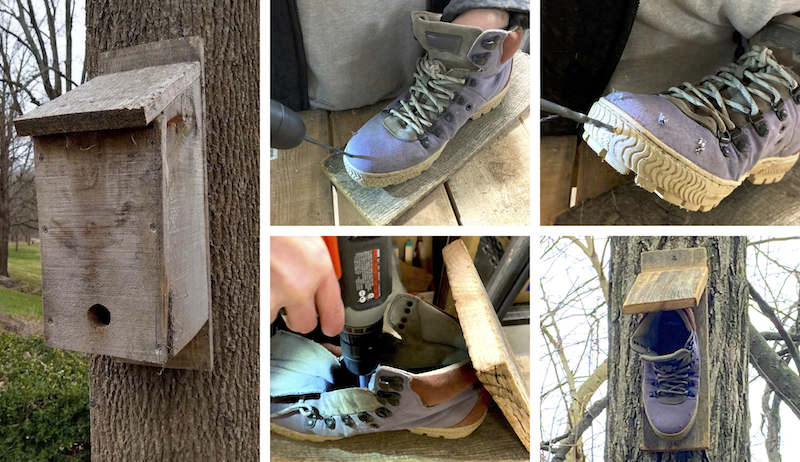
Of course, cavities for winter roosting or raising young during other times of the year need not be fancy. Got an old pair of boots that are beyond repair? Even these can serve as bird sheltering spots.

As you might expect, larger sizes work best. But if area birds have few cavities from which to choose, most any size will do.

To create a durable shelter that you can periodically remove and clean out, you’ll want to mount the boot (toe-down) to a small board and then screw the board as high as you can onto a tree, post, barn or other structure. For extra shelter from the elements, you can also affix a small roof piece to the top of the mounting board so that it overhangs the mouth of the boot.

To start, drill a few drainage holes into the toe of the shoe. Next, pull back the boot’s tongue, peek underneath the insole, and remove any metal plates or hardware that may have been built into the shoe.

Then, drill a couple of pilot holes from inside the shoe, which pass through the sole and into the mounting board. Screw the shoe onto the board and attach the optional roof piece now.

(Finally, to make installing the cavity shelter easier, drill pilot holes through the mounting board and get the mounting screws started before climbing that ladder!)


Read more: Think ahead to next season with this handbuilt bluebird nest box!


Spring Cleaning

Bird mortality during winter roosting is, unfortunately, common.

“No matter what kind of box you have or what natural sites there are, there are always likely to be some [dead] birds at the bottom, if many birds are using these,” Pasquier explains.

The birds at the bottom—possibly weak from winter starvation—are “least able to push their way [up] to get enough air,” he continues. So, come spring, always check roost and nest boxes for these unlucky specimens and remove them accordingly.

Categories
Animals Poultry Urban Farm

Quiet Chickens? These Breeds Are Great For Backyards

Backyard chickens have become so popular that many towns and cities are now allowing residents to keep small flocks. These municipalities usually limit the chickens to hens, thus preventing the nuisance of crowing roosters.

But, even when restricted to hens, flocks of quiet chickens make better urban or suburban neighbors. Fortunately, a number of chicken breeds are typically less noisy.

Although some poultry breeds are considered quiet, all chickens do make noise. If you live in an area that allows roosters and you include them in your flock, they’ll crow throughout the day.

(It’s a fallacy that roosters only crow at dawn.)

If you’re planning on just hens, they’ll cluck, particularly after laying an egg. This normally lasts a few minutes and is quieter than a barking dog.

“In a flock without a rooster, it’s common for one hen to assume leadership,” says Janet Garman, author of 50 Do-It-Yourself Projects For Keeping Chickens and creator of the Timber Creek Farmer blog.

“She will call the other chickens when treats are being given or when danger is lurking. While not as loud and disturbing as a rooster crowing, the caution clucking is louder than normal-activity clucking.”

Keeping Them Healthy

There are a few items you should keep in mind to maintain quiet and healthy chickens.

In general, larger breeds should be given perches that are lower (no more than 12 inches above ground) so that they don’t injure themselves hopping on and off perches. Also, heavily feathered birds generally do better in colder climates and in runs that are well-drained (so feathers stay clean).

It’s best to provide your chickens with a spacious and secure coop and run. A coop and run protected from predators will make them feel safe and prevent them from cackling about possible dangers.

Lots of room helps prevent boredom and promotes peace between hens.

Finally, be sure to provide dust-bathing areas. “One way to keep chickens quiet is by providing a dust-bath area in the run,” Garman says.

“Dust-bathing chickens seem very content. Give the flock an area that has a mixture of sand, wood ash and dry dirt. Toss in a few dried grubs to get the party started. After a snack and a good dusting, your chickens will feel like they spent the day at a spa.”

The breeds described in this article are all known for being quiet and are considered dual-purpose chickens (good to raise for their meat as well as their egg production). They are listed in alphabetical order along with other breed characteristics to help you select the perfect quiet chickens for your neighbor-friendly flock.

Ameraucana

Ameraucana chickens are a relatively new breed developed in the U.S. They were admitted to the American Poultry Association’s Standard of Perfection in 1984.

They come in many beautiful colors including Black, Buff, Blue Wheaten, Brown Red, Buff, Silver and White. Their popularity today is due to their good looks and the blue eggs they lay (about three to four per week).

At 5 1⁄2 pounds average weight (6 1⁄2 for roosters), hens are fairly small and have a striking appearance because they have beards and muffs instead of ear tufts. Bantam varieties exist.

They are normally calm and docile but become anxious (and noisier) if they feel threatened. They won’t respond well to confinement, so it’s a good idea to give them plenty of room to roam in a protected run. That way, they feel safe and stay calm and quiet.

Ameraucanas are friendly and can be handled as long as they are familiar with you. They do well in cold weather but aren’t particularly tolerant of heat.

Australorp

Australorps originated in Australia and were admitted to the APA Standard in 1929. In the U.S., they are approved only in Black, although blue and white colors are found Down Under. Hens average 6 1⁄2 pounds; roosters, 8 1⁄2. Ban­tams also exist.

Australorps are active but gentle, peaceful birds, and they’re generally extremely friendly and enjoy being held. The breed’s tendency toward quietness serves as a bonus for urban farmers.

quiet chickens urban backyard
Andrea J Smith/Shutterstock

They are fast growers and are incapable of flying because of their heavy size.

Australorps respond well to confined settings and are excellent egg-layers. They produce upwards of 300 large tan eggs per year and occasionally become broody. They are considered cold- and heat-tolerant.

If year-round eggs are a priority for your flock, then Australorps are a great choice.


Read more: Black Australorps are a favorite breed of many keepers. Here’s why.


Brahma

Brahmas are stately birds that came to the U.S. from China and were admitted to the APA Standard in 1874. They come in Light, Dark and Buff colorations and have calm, docile temperaments.

Hens average about 9 1⁄2 pounds, while roosters are big boys at 12 pounds. Despite their large size, they’re friendly chickens with abundant plumage and feathered feet. Smaller bantam versions exist at 34 and 38 ounces.

Brahmas were originally mostly used for meat or exhibition because of their enormous size, but hens will lay a considerable amount of medium-to-large tan eggs each year, roughly 140. They do better in colder climates, occasionally go broody and make great winter egg-layers.

The very docile rooster doesn’t mind sharing its coop with other males and keeps its soft crows to a minimum. This gentle giant also doesn’t fly and is easy to catch if allowed to roam outside its coop.

Cochin

The Cochin is another breed that arrived in the U.S. from China and were admitted to the Standard in 1874. These pretty birds have a profusion of long, soft plumage and feathered feet. All that feathering makes them good chickens for colder climates.

They come in many attractive color variations, including:

  • Buff
  • Partridge
  • White
  • Black
  • Silver Laced
  • Golden Laced
  • Blue
  • Brown Barred

At an average hen weight of 8 1⁄2 pounds (11 for roosters), they make for large, fluffy birds, as do their bantam counterparts (28 and 32 ounces, respectively).

Cochins are typically docile, calm, relaxed and caring. They make good surrogate mothers and pets, and do well in confined settings. Chicken-keepers usually keep them as meat or ornamental birds, but hens will produce approximately 140 large brown eggs per year.

A neat tip: They’re quick to go broody and can be used to hatch larger eggs such as duck or turkey eggs.


Read more: Here’s how you can help a broody hen hatch her chicks.


Java

The Java is one of the oldest breeds developed in the U.S. and was instrumental in creating some of the newer American breeds such as the Plymouth Rock and Rhode Island Red. Javas come in Black and Mottled colors.

Hens weigh on average 7 1⁄2 pounds (32 ounces for bantams), with the roosters tipping the scales at 9 1⁄2 pounds (36 ounces for bantams). Javas are docile but active birds that prefer smaller flock dynamics.

They were listed in the APA Standard in 1883.

Javas do well in warm and cold climates and dependably lay 150 or more large brown eggs per year. Considered great homestead birds, they forage well and grow slowly, making their meat very flavorful.

Orpington

Orpingtons originated in England and were admitted to the APA Standard in 1902. They come in Buff (a cross between Golden Spangled Hamburgs, Buff Cochins and Dark Dorkings), Black, White and Blue colors and are a popular breed because of their easygoing personalities.

quiet chickens urban backyard
SeanGArt/Shutterstock

Extremely calm, they like to interact with humans and are generally happy to let you pick them up. They are good with children and make good pets, too.

Orpingtons do well in free-ranging and confined conditions. At an average of 8 pounds, the hens are big birds that have lots of soft feathers; roosters weigh in at 10 pounds. All those feathers make them winter-hardy birds that need shade in hot climates.

Hens produce around 250 large brown eggs each year and can go broody. Bantams varieties exist at 34 (hens) and 38 ounces (roosters).

Plymouth Rock

  • Rocks come in many colorful variations, including:
  • Barred
  • White
  • Buff
  • Silver Penciled
  • Partridge
  • Columbian
  • Blue

The breed was admitted to the APA Standard in 1874.

Hens weigh approximately 7 1⁄2 pounds (roosters, 9 1⁄2). Bantam hens weigh 32 ounces, while roosters weigh 36. The large-fowl hens produce in excess of 200 large brown eggs a year, and tend to get along well with humans, forage well and can tolerate confinement.

The breed might be the perfect dual-purpose bird—friendly, quiet and able to adapt to most climates and living situations. They display an almost affectionate disposition, even in roosters, and make great pets for children.

They are considered extremely hardy and tolerate heat and cold. This immensely admired breed is an all-around solid selection for an urban or suburban coop.

Barred Plymouth Rocks are the most popular color and are always readily available because they can be sexed at hatching. (Roosters have a single white dot on their head.)


Read more: For this keeper, barred Plymouth Rocks rule the roost.


Rhode Island Red

As the name indicates, Rhode Island Reds are red in coloration. They were developed in the U.S. and admitted to the APA Standard in 1904. RIR Hens weigh in at about 6 1⁄2 pounds (8 1⁄2 for roosters) and are docile birds that get along well with other breeds.

They’re not particularly friendly with humans unless trained from an early age. Bantam hens weigh 30 ounces; roosters, 34.

Reds are very hardy and tolerate hot and cold conditions. They were once considered to be the finest flavored chickens in the U.S. In addition, because they lay in excess of 250 large brown eggs per year, they are one of the best egg-layers of the dual-purpose breeds.

Most hens will go broody but some strains of Reds developed specifically for egg-laying have had the broody characteristic bred out.

While Rhode Island Red hens are calm and easy to handle, roosters can become aggressive. This breed doesn’t display strong flying skills and requires only small-fencing enclosures. Confined and free-range environments are both tolerated by RIRs.

Sussex

Sussex come in Speckled, Red and Light colorations, with the Speckled variety being particularly attractive. They were admitted to the APA Standard in 1914.

Hens weigh approximately 7 pounds (9 for roosters) and are calm but curious and alert. It’s not unusual for a Sussex to follow its owner around looking for treats, and they’re easy to handle.

Bantam versions are available, weighing 32 (hens) and 36 ounces (roosters).

Sussex hens lay more than 200 large tan eggs per year. They forage well and tolerate hot and cold conditions. They do tend to go broody, but they make good mothers.

Unlike most chickens, the appearance of their plumage tends to improve as they age.

Wyandotte

Wyandottes come in nine gorgeous APA-approved color varieties:

  • Silver Laced
  • Golden Laced
  • White
  • Black
  • Buff
  • Partridge
  • Silver Penciled
  • Columbian
  • Blue

Hens weigh an average of 6 1⁄2 pounds (roosters 8 1⁄2) and are friendly. Bantam version are available at 26 (hens) and 30 ounces (roosters). The breed was admitted to the APA Standard in 1883.

quiet chickens urban backyard
Nick Beer/Shutterstock

Wyandottes, known for being good for meat, eggs and exhibition, produce approximately 200 large tan eggs per year and lay reliably through winter.

They are typically good mothers and tolerate hot and cold conditions. The breed’s bright-red rose comb gives it an additional advantage in cold climates because less surface area reduces the chance of frostbite.

Overall calm and easygoing, some strains can become slightly aggressive. The Wyandotte isn’t a high-maintenance bird. If kept in a coop in the yard, this breed easily adapts to confinement.

With the proper housing and environment, chickens selected from the breeds described in this article should produce a relatively quiet backyard flock. By choosing the other attributes that are most important to you—such as egg production, hardiness, appearance, etc.—you can have quiet chickens that you and your neighbors will all love.


Sidebar: Breeds to Avoid

Easter Egger and Polish breeds are two types of chickens that you might want to avoid if you want a quiet coop.

Easter Eggers aren’t actually a recognized chicken breed. They’re any mixed-breed chicken that carries the blue-color egg gene.

They may lay blue eggs but may also lay green, tan, pink or yellow eggs. Their colored eggs make them quite popular, but because they are a mixed-breed chicken, their tendencies toward quiet or noisy vary significantly. Many are quite vocal.

Unfortunately, Easter Eggers are sometimes sold as Ameraucanas, so be wary when purchasing this breed.

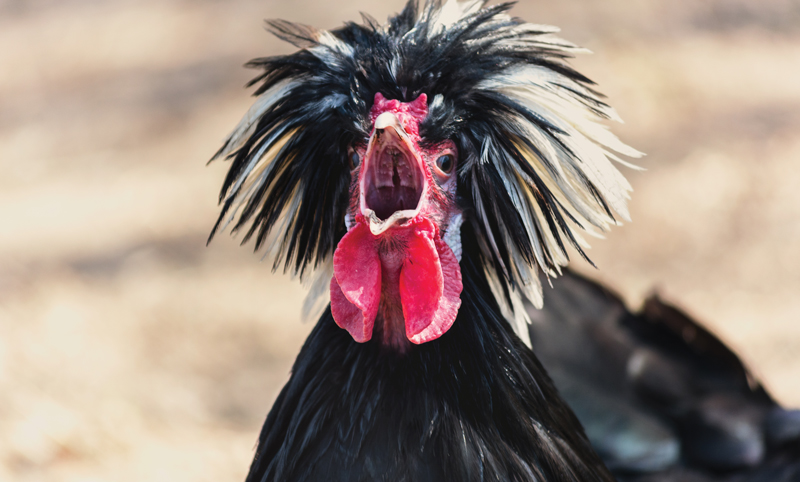
The Polish chicken is a distinctive-looking breed because of the crest of feathers on its head. However, this crest tends to restrict its vision, causing the breed to be easily surprised or lost from the flock. When this happens, it can become nervous and noisy.

Categories
Farm & Garden Homesteading News

Tiffani Thiessen On Backyard Chickens & Hollywood Homesteading

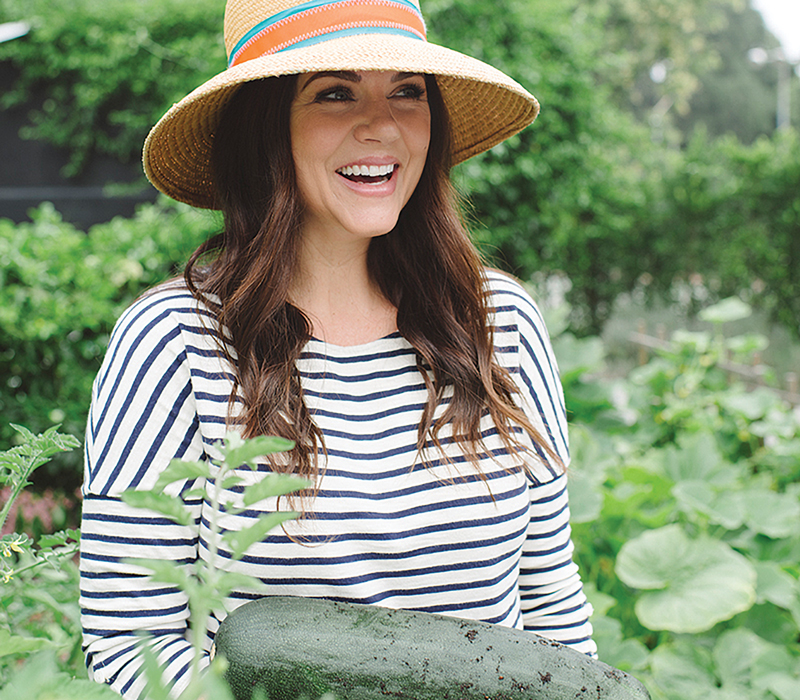
“During this time of being forced to slow down, homesteading can really feed so many parts of yourself—not just your belly,” says Tiffani Thiessen, who you might know more intimately as Kelly Kapowski, from the television show Saved by the Bell.

The teen sitcom, about a group of friends at Bayside High School, originally aired on NBC for four seasons from 1989 to 1993. A revived version of the show recently premiered on NBC’s Peacock streaming platform, with Thiessen reprising her role.

You might also recognize her as Valerie Malone in Beverly Hills, 90210 (1994-1998) and more recently in Netflix’s Alexa & Katie.

Back to Basics

In addition to being in front of the camera, Thiessen now enjoys being in front of her garden and kitchen. She grows vegetables, preserves fruit, cooks family meals and keeps chickens in the backyard of her Los Angeles home, which she shares with her husband, actor/artist Brady Smith, and two children, Harper (10) and Holt (5).

Her inspiration to try back-to-basic living came from recalling her pre-acting days, as a regular kid growing up in Long Beach, California.

“Everything seemed simpler then, right?” she says. This simplicity is something she is trying to impart to her own children. “Having a child see where food comes from has given my kids an excitement for what they eat. [And] we really make use of all we grow, which is why we grow it!”

Tiffani Thiessen Saved by the Bell
Rebecca Sanabria

Being able to grow part of your own food can be comforting in these current turbulent times, which aren’t as simple as her childhood. But some things are the same, such as the people around you.

“It’s about having faith and really keeping your core strong, which for me is my family,” she says.

To slow down and savor their time together, Thiessen and her family hike, color, read, complete puzzles and play outside. Last year, she and Smith published a young children’s book, You’re Missing It! It’s a cautionary tale of what happens when you are glued to your smartphone.

Smith, whose paintings have been exhibited in galleries in Los Angeles, New York City and Houston, illustrated and co-wrote the book.

Before Bayside

During Thiessen’s Southern California childhood prior to the original Saved by the Bell, her family had a handful of backyard chickens.

“We always had pets growing up,” she says. “My dad worked for the city and would always find stray dogs and cats and bring them home. [He] had the biggest heart and truly taught my brothers and me how to love and respect animals.

“My husband and I both reminisced about having chickens growing up and decided to give it a try ourselves.” A few years back, they added a small flock. It came with the standard adversities such as losing birds to egg binding, predation by a coyote and a hawk, and a hen named Anna turning out to be a rooster named Andrew.

Tiffani Thiessen Saved by the Bell
Rebecca Sanabria

They currently have seven hens:

  • Abigail (a Buff Orpington)
  • Betsy (a Barred Rock)
  • Dolly (a Delaware)
  • Ivy (an Australorp)
  • June (an Araucana)
  • Lily (a Barnevelder)
  • Pippa (a Blue Cochin)

Thiessen is in control of what food scraps they get from the kitchen. Smith mostly oversees the daily chicken husbandry.

“My husband read probably four chicken books and combed the web for coop designs,” she says. “He eventually drew up some plans, and then we hired our very talented friend who’s a carpenter to build it.

“What I love most [about keeping chickens] is what it teaches our children the responsibility of owning animals,” she says, “and the respect we need to have for all living creatures.”


Read more: Read more about choosing the right coop and run for backyard chickens!


Peach Pits

On the nearly one-acre plot, the family grows grapefruit, oranges, lemons and limes. They also have plum, peach and avocado trees and two varieties of apple trees.

They experience the usual trials such as dealing with squirrels grabbing the fruit and some insect damage. But the benefits far outweigh the challenges.

“My father’s a retired landscape architect, so he truly taught me the basics at a very young age,” Thiessen says. “I then wanted to continue that knowledge myself, so I would read about it as well.”

In addition to fruit trees, Thiessen grows several types of lettuces as well as most vegetables in three large garden beds. They also grow many herbs, one of which embellishes her Meyer Lemon and Thyme Whiskey Sours.

“Once you have had one, you can’t stop!” Thiessen says.

Tiffani Thiessen Saved by the Bell
Rebecca Sanabria

For her children, she makes homegrown, homemade chamomile and mint teas. “Both my kids love tea,” she says. “As for me, I am obsessed with kombucha. And ginger is a top favorite add-on for me for both kombucha and tea.

“There are definitely some foods my kids don’t love. But it’s all about balance, I tell them. Eat the stuff that truly feeds your body well … then you can have a little of the fun stuff. Balance!”

Out of the family of four, Thiessen spends the most time in the garden, with her kids a close second. They start some crops from seeds and many as plugs, and have composted for nearly two years.

“It’s all about the soil,” she says. “I have seen huge differences in how my garden has benefited from making my own dirt. We are building a new, tall raised-bed to be able to separate all my growing vines in one special place. I think they will be very happy in their new home.”


Read more: Ready to start building your own soil? Here’s how to get started with composting!


Start Small

For those city slickers who want to grow their own food, Thiessen advises to start small with something that you can easily manage. Then, go from there.

Some of the food never makes it to the kitchen as it’s snacked on simultaneously as it’s harvested. She and the kids turn huge yields into jams, jellies, pickles or preserves.

Many of the recipes—125 to be exact—can be found in her cookbook, Pull Up A Chair, and she also posts weekly recipes on her website, TiffaniThiessen.com.

“[Cooking] is a love that I have had since I was a child,” she says. “Many of my biggest memories are of me and the women in my family all cooking together in the kitchen. It’s now something I enjoy doing so much with my own children.”

“Gardening teaches so many things if you think about it,” Thiessen says. “It teaches nurturing, growth and where things come from. It’s endless on what it can do for kids.

“And just being outside and getting dirty is huge for the body and mind.”


Sidebar: Always Learning

Christy Wilhelmi, founder of Gardenerd, has provided Thiessen with organic vegetable gardening services for several years, taking Thiessen’s knowledge to a whole other level.

Gardenerd offers services such as custom vegetable garden design, gardening classes, consulting and maintenance for organic gardens.

Thiessen learned to relocate her vegetable beds to the current location from a shadier spot and consulted with the Gardenerd team on new fruit trees for the property as well as a new compost bin setup.

“[Thiessen and her family] have been great advocates of growing their own food and composting the food waste into fertilizer for the garden,” Wilhelmi says.

This article appeared in Best of Hobby Farm Home, a 2020 specialty publication produced by the editors and writers of Hobby Farms magazine. You can purchase this volume, Hobby Farms back issues as well as special editions such asBest of Hobby Farms and Urban Farm by following this link.