Categories
Poultry

Answers To Some Common Chicken-Keeping Questions

One of the nice things about writing for Hobby Farms—and about having a reputation locally as the Chicken Lady—is that people reach out to me with their chicken-keeping questions. Every couple of days, I receive a message on our farm’s Facebook page or in my town’s chicken-owner group asking for help or clarification.

This spring, my primary care physician was removing a tick from my chest when she started posing questions about chicks.

It’s all good. I do my best to answer. The chicken-keeping questions that stump me, I pass along to my university poultry-science contacts. They’re usually swamped, so I tackle pretty much any inquiry that comes along.

Here are five questions I’ve received over the five months and my responses to them.
chicken-keeping questions leg color chicken chickens
Ana Hotaling

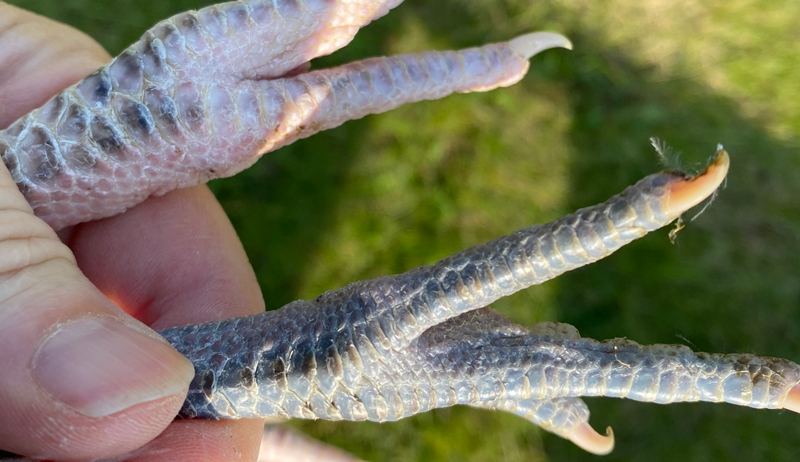
Why Do My Hens Have Different-Colored Legs?

The color of a chicken’s shank depends on the breed and variety of the chicken.

Buff Plymouth Rocks, for example, have rich golden-yellow legs while Buff Orpingtons have pinkish-white legs. Black Jersey Giants have black legs while White Jersey Giants tend toward willow-colored legs.

It’s all a matter of color genetics. If you are wondering what color your bird’s shanks should be, check with your breed national group. Or check the American Poultry Association‘s Standard of Perfection.

When Can My Baby Chicks Spend the Night Outside?

This is, of course, one of the more dire chicken-keeping questions. Chickens are homeothermic. That means they produce and give off heat to maintain their body temperature.

Feathers help chickens regulate the amount of heat they retain, so do not put your chicks outside until they are fully feathered. For most breeds, chicks are fully feathered by the time they reach 6 to 8 weeks old.

Still, be alert to extreme temperatures, especially at night. Juveniles may not yet have learned how to perch, so provide your chicks with an elevated surface on which to sleep so they do not lose body heat to the ground.


Read more: Here are some tips for safely moving chicks outside without risking chill.


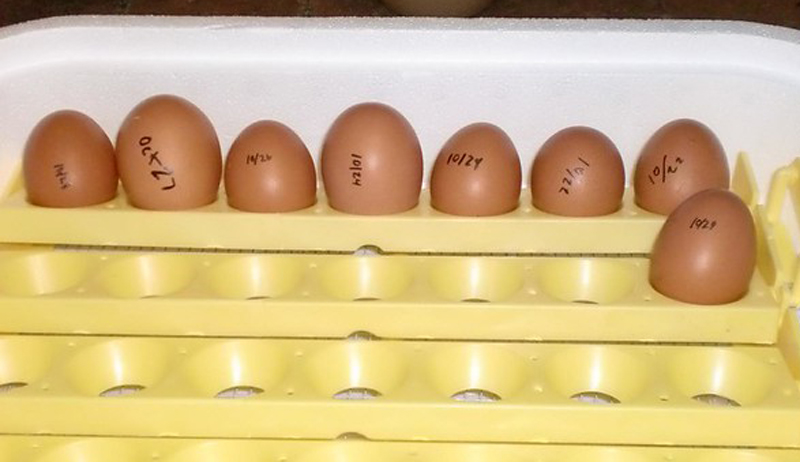
Is It Safe to Buy Hatching Eggs on EBay?

Many flock keepers sell fertile eggs on eBay. The advice I offer is caveat emptor: May the buyer beware. As with any eBay sale, you carry the burden of determining whether or not the seller is trustworthy and is offering a quality product.

Before placing a bid or using the “Buy It Now” feature, read the seller’s feedback to hear what previous customers have to say. You can always reach out to a seller with questions. They are not obligated to answer but those who are honest usually do.

Make sure you ask about refunds for poorly packed/shipped eggs. While purchasing fertilized eggs anywhere is no guarantee that they will indeed hatch, ensuring the eggs arrive intact is a matter of the seller’s proper packaging.

Confirm with the seller that they are indeed selling what was posted. I once purchased a dozen Chocolate Orpington eggs and ended up with a dozen Mottled Orpington eggs. That’s how Butters and Brioche joined our flock.

Lastly, remember that in order to ship hatching eggs across state lines, most states require that the sellers be certified by the National Poultry Improvement Plan (NPIP).
eggs incubator chicken-keeping questions
Bosque Village/Flickr

Can I Get Sick from My Birds?

Many poultry illnesses and parasites—like fowl pox, fowl typhoid and poultry lice—are strictly avian conditions that do not affect humans.  However, there a couple of illnesses exist that are zoonotic—transferable from animal to human.

The best known of these is Salmonellosis, caused by the Salmonella bacteria. Salmonella can transfer to humans not just by contact with live poultry but also via contact with poultry litter, eggs, coops, cages, feeders, waterers… pretty much anything in the birds’ environment.

The Centers for Disease Control has very definitive guidelines on how to prevent the spread of Salmonella from your poultry flock to your family, including:

  • Frequent washing of hands
  • Not snuggling or hugging chickens
  • Avoiding the handling of live poultry if you are immunocompromised or over the age of 65

Avian influenza (AI) is often a source of worry for flock keepers. AI was first detected in humans in 1997 in Hong Kong. There have been a number of outbreaks in the US, as recently as March 2017. But these were due to North American strains of the virus, not the dangerous Asian H5N1 and Asian H7N9 viruses, which have never been detected in the United States.

The CDC considers the risk of contracting North American AI to be low.


Read more: Keep these things in mind to keep your chickens (and you) free of salmonella.


How Can I Tell If an Egg Has Gone Bad?

This is one of the more common chicken-keeping questions I get. An egg that has started turning gives off several indicators of its decaying state.

First, it may start smelling off. This is especially true if there were unnoticed hairline fractures in the shell. These would have let in bacteria and, in turn, release an unpleasant odor.

Next, the egg’s interior may begin to turn color, usually a slate-blue, grey or black.

If your egg looks and smells normal, do the egg-float test. Place the egg in a container of water. If it floats, the albumin and yolk have contracted with age, allowing for more air to occupy the interior of the egg, causing it to float. These eggs, while not rotten, are no longer fresh enough to eat.

Categories
Equipment Farm Management

Water Dowsing Works (Even If We Don’t Know Why)

When I was a kid, my brother had a friend who showed us how to locate water using bent metal rods held loosely in his fists. Walking with the long ends pointed forward, when he came to a certain spot, the rods swung around and pointed back toward him.

Later, my husband, Lynn, became really good at this  He first witnessed “water witching,” commonly called water dowsing, in 1955 on the ranch where he grew up. One of his relatives used a forked willow to locate the origins of a spring that provided the house with water.

Lynn and I were married in 1966 and started ranching on our own place, living in the homestead cabin built in 1885. Water for this old house was provided by a hand-dug well that was short of water. In 1970, we decided to put in a deeper well.

“The well driller determined where to drill and showed me his techniques,” Lynn says. “After locating the underground water with a forked willow, he figured out how deep it was by using a willow stick about 3 feet long. He held it by the small end and let it bob up and down until it stopped bobbing and swung side-to-side. The more times it bobs up and down, the deeper the water.”

Lynn doesn’t know how water dowsing works, but he says it does work. When locating water sources for wells, he says he’s been able to predict the depth about 95 percent of the time.

Some wells have been less than 100 feet. But many have been 300 feet deep or more.


Read more: Ever wonder why there needs to be a pump at the bottom of a deep well?


Divining Rods

When dowsing for water, Lynn uses two steel welding rods, bent in L shape. He holds them with the long ends level and apart from one another—holding them loosely so they can swivel freely.

When they move, they aren’t attracted to one another. They are attracted to his body and point back toward him. You can use just one rod, and it works just as well as if you use two.

Dowsing rods point toward you when you are directly over water. They swing away from you when you walk past it.

“When I locate water for someone, I show them how to hold the rods and try it,” he says. “When it works for them, it’s very convincing. It doesn’t work for everyone, but the ones it does work for, it makes a believer of them. They know they are not doing something to make those rods move.”

Our new well supplied good water for our house (no more surface water that could be contaminated) and plenty of water for filling water troughs for our cattle. Then Lynn began locating wells for family members, neighbors and friends. One rancher was so grateful he paid Lynn $100.

That situation was interesting because the rancher had already hired a well driller who drilled 400 feet and didn’t hit water. In frustration, he asked Lynn to locate water. Lynn found a spot just 8 feet away from the dry hole. The well driller drilled 120 feet at that spot and got 18 gallons a minute.

When the grateful rancher paid him, Lynn realized his services were valuable.  He saved people thousands of dollars, not having dry holes, and so started charging a fee. Word got around, and more people asked him to find water.

water dowsing witching
Heather Smith Thomas

Where Water Is Scarce

Some regions have underground aquifers. People can drill wells just about anywhere and hit water.

In other areas, underground water sources are few and far between—just streams, some large, some small—coursing through the layers of rocks. Some are close to the surface—perhaps only 40 to 100 feet deep—while others are several hundred feet deep.

They also flow different directions.

When he’s asked to locate a well, Lynn tries to find a spot where two underground streams cross, at different depths, he says. This gives more chance to find adequate water, at two levels. Then if the driller hits one and only gets 2 or 3 gallons per minute (not enough to service a home), he can continue drilling until he hits the second vein.

“One example: I located a well for one person on top of a hill,” Lynn says. “They drilled 100 feet and got 3 gallons per minute and went down another 100 feet and got 9 more gallons per minute. If they’d stopped at the first level, it would not be a viable well. Combining the two levels made a good well.”

Location, Location

Water is not always where you’d expect. It doesn’t seem to correlate with soil type or rock formations on the surface. You don’t always know what’s under the ground.

“Geologists may have an idea, but this still doesn’t tell you where the seams of water might be,” he says. “If I were going to pay for a well—which today in our area costs about $90 per foot to drill—I’d want someone to locate the water.”

General logic is that you’d find water more often in the valley floor than on a high mountain. Or you may find it next to a river rather than on the uplands far from a river, but this isn’t always true. Some underground streams pop out as springs near the tops of high mountains, possibly following the folds, layers and up-thrusts when the mountains were formed.

It’s possible to find water sometimes at high elevations, while some attempts to drill wells near rivers have failed.

A case in point was when a person tried to drill a well within 30 feet of the river that ran past their property. The well driller went down more than 100 feet and didn’t hit water.

“It was the same driller who saw my success locating water just a few feet from a dry hole. So he recommended they call me,” Lynn says. “I located a spot 20 feet farther away from the river, and the driller hit 40 gallons per minute when he went down 30 feet. That well driller didn’t believe in water dowsing originally but now calls me whenever someone wants him to drill a well.”


Read more: You can also collect rainwater and store it in IBC containers for farm use.


Locating a Well Site

First, Lynn locates water using welding rods to determine if there is any water in a certain area. On some properties, there are very few options.

Some real estate agents in our valley ask him to check properties before offering them for sale, to make sure there is water. And sometimes people who are interested in a certain property ask him to find water before they decide to buy it.

“I use welding rods first, to see if there’s water, and where, or several possible locations on the property,” he says. “After finding a spot, I use a forked willow to see if there’d be enough water for a good well. The welding rods locate water but don’t tell you how much. It could be a tiny seep or huge underground stream. The willow gives you a feel for how much is there. If it pulls hard, you know there’s a lot of water. If it’s just a small pull, there probably isn’t much.

“You hold welding rods loosely, so they can swing freely and not drag on your index finger when they move (the rod free-floats). But you hold the willow tightly so you can determine how much it pulls. The ends of the forked branch are held one in each hand, with your wrists and palms facing upward, and the stem of the Y pointing straight ahead and slightly upward.”

This way you can hold tightly and feel the willow pull on your hands and wrists.

Branch size and thickness don’t matter—whatever feels right. When holding the willow branches, your arms are close to your body with elbows resting against your hips.

This gives a solid base of support to hold the willow securely and firmly as you walk slowly over the area to be checked.

Jackpot

When the willow twists, the part pointed forward and upward suddenly pulls down toward the ground. The pull is very obvious.

“If it’s a small willow and you are holding it really tight, it can actually take the bark off the willow where you are gripping it,” he says.

For the bobber stick (to determine depth of water), Lynn uses a dowsing willow about 3 feet long but small and light. “The small end, where you are holding it, is less than 1/4 inch in diameter,” he says.

The heavy end points toward the ground, held about a foot off the ground, and it starts bobbing up and down. Lynn counts each time it bobs, and each bob represents about a foot of depth. He just counts until it stops bobbing up and down and starts moving side to side—which indicates where the water is.

If it’s a thick vein of water, the stick will swing side-to-side many times. But if the stick only swings side-to-side a couple times, you know there isn’t as much water there.

“If it stops going side-to-side and starts bobbing again, this indicates another vein of water below that one and you can count the bobs to see how deep it is (when it stops and goes side-to-side again),” he says. “If there’s more water on down, it will start over and seek the next one.

“There are usually only two levels, because I’ve located where they cross. But on occasion there might be more.”

Water, Water

When the driller gets down to the first layer, the amount of water may be adequate and they don’t need to drill any deeper. But if it’s only a few gallons per minute and the client wants more, you know there is a deeper layer.

The well driller can keep going, and you can tell him roughly how deep it might be.

Probably any kind of willow will work for the forked stick and the bobbing stick. Lynn uses willow because it’s plentiful, but he’s also used chokecherry branches. Some people use hazel wood, but it doesn’t grow where we live.

You can also use apple or peach branches for water dowsing.

Lynn likes to use a green willow, but even a relatively dry one will work. He often uses the same willow branch many times during a summer, occasionally cutting a new one when the old one gets really dry. Even willows cut in the winter work fine.

This article originally appeared in the July/August 2020 issue of Hobby Farms magazine.

Categories
Equipment

Does Your Lawn Mower Need New Blades?

Nothing lasts forever, or so they say. And while I’m not sure I completely agree with this sentiment (winter certainly seems to last forever!), I’ll admit the phrase applies unconditionally to lawn mower blades.

It would be nice if lawn mower blades stayed sharp for years, requiring little or no maintenance from busy farmers. But such an outcome is unlikely for hardworking machines.

Farms can be particularly tough on lawn mower blades, since there’s usually a lot of ground to mow, and it’s unlikely to be as manicured as a golf green. Farm lawn mowers are more likely to encounter “off road” terrain. Their blades are at constant risk of damage from rocks, roots, stumps and other unseen obstacles.

As a result, blades can wear down quicker than you might expect. It’s generally advised that blades should be sharpened and/or replaced at least once a year, if not twice. Your lawn mower’s instruction manual may provide guidance on how often to change the blades—perhaps after every 25 hours of mowing.


Read more: These are the 10 important points of midsummer lawn -mower maintenance.


Are They Dull?

But short of following a regimented schedule of preemptive sharpening, how can you tell if your blades have grown dull and need attention? You could always remove the deck, flip it over and examine the blades for chips, dents or cracks.

However, going to such lengths really isn’t necessary. You’ll be able to diagnose the illness by the symptoms. In other words, the quality of the mow job will tell you all you need to know about the quality of your blades.

Pick a section of your yard that’s in need of mowing—preferably an area where the grass is a bit long—and give your mower a spin. As you mow (and once you’re finished), examine the grass from up-close and big-picture perspectives. Ask yourself the following questions:

  • Has the grass been cut to an even height? Sharp blades give your lawn an even haircut. Dull blades are more likely to leave patches of uneven height or miss some grass entirely. You’ll be forced to mow the same area multiple times to achieve a tidy appearance.
  • Does the grass look ragged? Sharp blades cut cleanly. Dull blades are prone to ripping and tearing grass, leaving behind subtle but significant damage.
  • How well does your lawn bounce back from mowing? Grass cut cleanly by sharp blades suffers minimal damage from mowing. Ragged grass damaged by a dull mower is apt to develop brown tips and lose its vibrant appearance.

Read more: These 4 sharpening tools will help put the edge back on your blades.


Look Sharp!

If any or all of the above symptoms are evident when you mow your lawn, it’s time to sharpen or replace your mower blades.

Sharpening can be an art form in and of itself. You don’t want the blades too sharp, and you have to keep them carefully balanced for optimum performance and reduced strain on the mower.

Lots of folks sharpen their own blades, and there are plenty of tools available for the job. But if your blades have suffered major damage that can’t be eliminated through sharpening, new blades are always a worthwhile investment.

Your lawn will thank you!

Categories
Animals Farm Management Poultry Waterfowl

Ducks & Geese Are Great Permaculture Livestock

In permaculture agriculture, farmers utilize the natural tendencies and behaviors of plants and livestock to help create a farm ecosystem that is sustainable and beneficial for the farmer. Bill Mollison, one of the scientists who coined the term “permaculture” in 1978, described it as “a philosophy (…) of looking at plants and animals in all their functions, rather than treating any area as a single product system.”

While you may think more of horticulture when considering permaculture farming practices, many livestock animals bring benefits to the permaculture farm. Perhaps some of the easiest animals to adapt to permaculture farming methods are ducks and geese.

Goose on the Loose

More than one farmer, including myself, has referenced geese as the inspiration to turn to a more permaculture way of agriculture. Geese are such well-suited livestock for perma­culture farming that they can change a farmer’s view of farm work.

Grass Machines

Why? Geese are avid foragers but are selective in their diet. Their favorite food is grass. From the first shades of green on a spring day right through dry, brittle stalks on frozen ground, they’ll seek out grass.

In the summer months and in warmer climates, they need little to no grain to supplement their leafy diet.

Farmers often struggle with grass encroaching on crops or making it difficult to harvest in orchards and vineyards. Without mowing, a time-consuming and gas-guzzling task, grass can choke out berry bushes, vines and small trees. Geese can keep this all under control.

For a well-trimmed lawn, approximately 10 geese an acre are recommended. While this varies depending on the greenery available, you can make do with smaller numbers if they are rotated around your property.

permaculture livestock geese
Lawrence Wright/Flickr

Garden Helpers

Geese shouldn’t simply be set loose in a vegetable garden, because there are some leafy greens that they enjoy just as much as grass. Instead, their focus should be amongst fruit trees, vines and small berry bushes.

They can be effective in raspberry patches where humans have trouble weeding because of the thorns, or among strawberry beds where their long necks can clean up difficult to reach places.

Compared to a person or equipment, geese are lightweight and can move among plants without disturbing them. If you are rotating a smaller flock, you should be able to encourage it to focus on specific areas of your property by using a lightweight temporary fence.

The fence can be easily moved with the geese, and as long as they have enough greenery to interest them, they shouldn’t challenge it.


Read more: Here are some pointers for choosing the right fencing for your animals.


Low Maintenance

Geese are largely self-sufficient birds.

They do require a shelter to sleep in that is safe from elements and predators, some supplemental food and fresh water. But most of the time, they will go about their business without human interaction. And they need no encouragement to keep weeds at bay.

As they continue their jobs as weeders, you’ll also benefit from their presence as a predator deterrent and alarm system. You can enjoy their large eggs in the springtime or harvest their meat for Christmas dinner.

Double Down on Ducks

Ducks, meanwhile, have a very different set of skills as permaculture livestock. Ducks are not vegetarians but prefer a varied diet rich in bugs and creepy crawlers. Any vegetable gardener knows what a battle it is to keep bugs away, especially nuisances such as slugs and tomato hornworms.

These slimy and giant pests will decimate a crop in no time, and even chickens seem to turn their beaks up at them. But ducks will eat them. In fact, Mollison put it very simply: “You don’t have a slug problem; you have a duck deficiency.”

Similar to geese, ducks are very active foragers that need no encouragement to gobble up their favorite snacks. Ducks should be used with care in a vegetable garden as they can eat your crops, especially if they are introduced before plants are mature.

Fencing can be used to keep them away from the plants they enjoy eating. And even their presence around the garden (ours free-range but don’t enter the vegetable garden itself) helps control the insect population.

Raised beds can also be used to keep particular favorites safe from hungry ducks. They are able to reach up and grab pests out of the bed. But they cannot reach to the fruit-bearing branches of your favorite vegetables.

Our ducks start in the spring, wandering our yard and eating the sleepy flies that emerge on the first warm days. Through the summer, they eat slugs, snails, hornworms and even small rodents.

We provide them with fresh water, shelter and some additional feed. They reward us with a pest-free vegetable garden. Additionally, they provide a steady supply of delicious eggs.

permaculture livestock ducks
Kelly Weatherly/Flickr

Fringe Benefits

Ducks and geese also leave behind nitrogen-rich fertilizer in their droppings. Their coop bedding can be used as fertilizer in the garden. Any manure they leave behind when free-ranging immediately begins to enrich the soil.

Both of these birds love water, and thrive on a property that offers a pond or stream. If you don’t have natural water on your property, offer a kiddie pool, livestock trough or repurposed old tub for them to wade in.

A well-watered garden can be cultivated to allow the runoff to make small pools that will delight your waterfowl.


Read more: Ready to start raising ducks? Here are some pointers for getting started.


Housing Concerns

Your bird’s housing can be integrated into your garden. Farmers often keep a duck or goose coop in or alongside the garden. This also makes it easier to directly transfer their bedding from coop to garden compost.

Additionally you can recycle their water onto your garden beds. Water from a duck or goose coop will be rich in all the fertilizer of their manure.

A comfortable duck coop should allow for 5 square feet per bird. A goose coop needs 8 to 10 (not including run space).

A coop for waterfowl is usually just a secure area for them to sleep and lay eggs, with clean bedding. Geese and ducks will happily work in any weather conditions, not taking a break for rain or cold.

Let’s Get It Started

As permaculture livestock, ducks and geese don’t need any training to start benefiting your farm. They will start devouring bugs and grass as soon as they are able to head outside.

They can be encouraged as youngsters by being fed grass (geese) or bugs (ducks) as treats. The more you offer their job as a food when they are young, the more active and eager they’ll be as adult workers.

Ducks and geese can live for 20 years as livestock, sometimes longer, as long as they do not fall victim to predators. While their abilities as layers will wane as they age, their active foraging habits continue for many years.

A good flock of weeder geese needs to be replenished infrequently—sometimes not at all. This makes them very cost-effective livestock.

permaculture livestock ducks geese housing
javajanie/Flickr

The feeding requirements of working waterfowl are also low, as long as they are able to forage. In fact, it’s recommended to feed permaculture ducks and geese only a very minimal meal to encourage them into the coop at night and otherwise allow them to graze for their feed.

The ability to be so hands-off with these permaculture livestock birds is very desirable. The farmer benefits from them without raising their bills or their daily efforts.

If you are looking for an enjoyable introduction into the world of permaculture livestock, look no further than ducks and geese. If you are already raising these beautiful birds for their eggs or meat, consider utilizing them in your garden as well.

Ducks and geese are the whole package for a permaculture farm: easy to house and raise, eager to work and a pleasure to watch.


Read more: Here are 10 steps to implementing permaculture on your farm.


Sidebar: Breeds to Choose

You will see a difference in performance depending on the breed of geese and ducks you keep. All have their benefits, but for the best results, use the most active of each type of bird.

With geese, these are the White Chinese.

White Chinese are energetic birds, always foraging. And they have particularly long and slender necks for reaching weeds in tough places. They’re also some of the most lightweight geese. They do the least damage to any crops or seedlings that they’re weeding around.

Similarly, Runner Ducks are some of the best ducks to keep for best control. They are more energetic than other breeds, with a bottom­less appetite for pests.

Like White Chinese geese, Runner Ducks are particularly lightweight and won’t crush any seedlings.

This article originally appeared in the July/August 2020 issue of Hobby Farms magazine.

Categories
Animals Farm Management

4 Livestock Considerations When Drought Hits Your Area

In many states across the country, late summer and early fall frequently usher in drier weather and some years and locations can be drier than others. Although this weather shift sometimes offers a respite from summer thunderstorms, the downside is bald pastures, dry creek beds and a low water table.

Although you may intuitively be concerned about providing water for your animals during dry weather, a drought more importantly (and chronically) means a lack of food for livestock. Here are some considerations for when you’re faced with extended dry weather.

1. Use Water You Have Wisely

This is especially important for those farms that rely on a natural source of water, such as a creek, pond or lake.

In late summer when the water table is low and land is dry, you may need to set up supplemental water troughs if you don’t have them already. Make sure they are in locations that make checking on them easy.

Another simple yet sometimes overlooked aspect when adding a new water source? If this is the first time your herd is using a trough, make sure they know where it is and what it is for.

Herd dynamics come into play here as well. Monitor your animals to ensure that each one has access to the water and older, weaker animals or those at the bottom of the social ladder aren’t getting pushed away.


Read more: Here are some things you can do to help crops during a drought.


2. Re-formulate Your Thinking on Feed

As pasture dries up during a drought, you will likely need to switch to other forms of feed to maintain an adequate plane of nutrition for your livestock. This may be as simple as putting out hay or other roughage earlier in the season than you intended, and/or switching to a concentrate.

Just remember to make any major dietary change as slowly as possible. Sudden shifts can cause diarrhea and other health issues, regardless of the species you are raising.

3. Playing the Numbers Game

If you find yourself in a drought season with little end in sight, this may be a time to reconsider the numbers in your herd. If feed is tight as a result of restricted water, take some time to critically evaluate if it’s time to sell off some animals who may be close enough to market weight, if you are raising for meat.

Likewise, if you have young from the spring and summer, early weaning may be an option, as a lactating female needs far more feed and water than one who is “dry” or non-lactating. If early weaning is not an option, also consider creep feeding as this will help decrease the amount of milk the young will consume from their mothers.


Read more: Keep these 5 important aspects in mind when feeding cattle.


4. Make a Plan

Whether you’re in the midst of a drought or not, it’s never too early to plan for the future. Based on rough animal number estimates, knowing what your herd requires in terms of feed and/or roughage can help you plan what you may buy the rest of the year.

Forming relationships with other farmers in your area can also help. One option when your pastures are lean is to rent or “borrow” other grazing areas. Sometimes, depending on the crop and when it was harvested, having cattle graze on the crop land can be beneficial.

As with most things involving livestock, knowing you have some options during a time of drought is always the best place to be.

Categories
Animals Farm Management

Mosquito Control Tips For Your Home Or Farm

Along with itchy bites, mosquitoes can harbor a host of diseases that put you and your livestock at risk. While it’s impossible to eliminate all the mosquitoes around your farm and home, you can take steps to decrease mosquito habitats on your property.

Mosquitoes love standing water and use anything that holds water as breeding grounds. Still or stagnant water less than 1 inch deep will support mosquito growth.

Look for and empty clogged gutters and leaf-filled drains, and drain outlets from air-conditioners, plastic wading pools, dog dishes, old tires, birdbaths and potted plant saucers. Even tire ruts, rotting stumps, old tree holes and puddles need to be addressed.

The goal is to eliminate as many sources of standing water as possible.

Bodies of water that can’t be permanently drained, such as bird baths or other landscape water features, can be treated by using “Mosquito Dunks” to control the mosquito’s larval stage. Most of these larvicidal briquettes will last several weeks and are safe to use around animals, including pets.


Read more: Here are some mosquito control tips to use in the urban garden.


Full Attack

Eliminating mosquito-breeding habitats is only part of the battle. While it will reduce the number of larvae that reach adulthood, adult mosquitoes can fly in from other areas.

Mosquitoes hide in tall grass, shrubbery and other dark, shaded areas. Keep grass mowed and shrubbery trimmed. If using insecticide, choose one labeled to kill mosquitoes on shrubbery and perimeter areas of your home.

Products containing the active ingredient bifenthrin, carbaryl, cyfluthrin, permethrin or malathion can be used to kill mosquitoes that land in these areas. But make sure to read and follow pesticide label directions carefully.

Some Tips:

Here are some recommendations from the University of Georgia Cooperative Extension:

  • Clean out eaves and gutters.
  • Remove old tires or drill holes in those used for playground equipment to allow for drainage. Cover stacked tires with plastic or store them under a shelter to avoid rain filling them with water.
  • Check boats for standing water. Be sure to clear drain holes, turn the boat over, cover it or increase angle to aid drainage.
  • Check tarps on equipment that might collect water in pockets or indentations.
  • Remove vegetation or obstructions in drainage ditches that prevent the flow of water.
  • Turn over or store plastic pots.
  • Dispose of broken, unused or discarded toys that can hold water.
  • Pick up all beverage containers and cups.
  • Replace water in birdbaths twice per week.
  • Replace water in pet and other farm animal feeding dishes or troughs at least twice per week.
  • Fill hardwood-tree holes with sand.
  • Dispose of broken or unused kiddie pools.
  • Don’t leave garbage can lids upside down.
  • Change water in bottom of plant containers, including hanging plants, at least twice per week.

By reducing mosquito breeding sites and taking a few simple precautions, you can control the number of mosquitoes taking a bite out of you and your farm animals.

This article originally appeared in the July/August 2020 issue of Hobby Farms magazine.

Categories
Farm Management

Marketing Farm Products During The Coronavirus Pandemic

Business owners worldwide have had to get pretty creative in order to survive the global coronavirus pandemic. With so many spring retail, restaurant and bar closures—along with the patchwork of shelter-in-place orders—came a cascade of economic and social effects.

And, while some farmers are really struggling, others have managed to thrive.

How well your own farm weathers the COVID-19 pandemic depends a lot on your marketing efforts in general. Your ability to pivot as needed also matters. In part, that means staying in touch with and finding new ways to serve your existing customers.

But you can also make hay with the wave of new customers who are increasingly cooking and eating at home.

Strength in Numbers

Mariana Leung founded Wicked Finch Farm in Pawling, New York. It’s an Airbnb getaway destination and producer of small-batch treats such as “boozy jam” and “tipsy marshmallows.”

Although Leung usually sells her specialty goods in retailers across the U.S., many of these are now closed. So, she and other area farms are pooling their marketing resources and working together to stay solvent through online pop-up shops.

“The farmer I am working with—Freville Farm—she’s quite savvy in marketing and all that,” Leung says. “She has several farmers and makers with a section on her website right now. There’s a cut-off time for [customers to place their orders] and there’s enough time for people to make things.”

Then, customers come during appointed time slots to claim their purchases, which are placed directly into their cars’ trunks.

Do you want to start a pop-up shop where you are? “If it’s a community of farmers, pick the one that’s the most prolific at social media and publicity,” Leung says. “Maybe that’s the central place to make your pop-up, and it’s on their website.”

You could also use social media avenues such as Facebook or Instagram in a similar way.

“That’s probably the easiest way to promote yourself—especially if you are doing things that are food or tactile or that are visual,” she adds. “And [the group of farmers involved] kind of promotes that to the central page of the person who is holding the pop-up.”


Read more: Here are some ways to build your farm’s brand through social media.


Go Direct—Differently

“Right now, a farm could basically put up a Google form and take orders over email, and that’s probably going to be fine,” says Simon Huntley, CEO and founder of Harvie, an online platform that facilitates direct-to-consumer produce sales for small and medium-sized farms across North America.

“If farms are selling to restaurants or to wholesale clients, then they are more at the mercy of what the market is going to give them,” Huntley says. “Some of those farms are in big trouble. They’re having to make really big shifts to their business models if they are going to stay afloat at all.”

These days, a farm that is set up to sell direct to consumers is well-positioned to take advantage of the unprecedented demand for local produce created by the pandemic.

“Probably something like half the food was going through restaurants and large institutions,” Huntley says. “Now it’s all going through people’s home kitchens. Even at a macro level, we are having to shift how the food goes through our food system and how we get it to people.”

farm farmers product coronavirus COVID-19 pandemic
Jason/Flickr

New Customers, New Habits

During the pandemic, Huntley has seen a 200 percent increase in sales of farm products. “I had already been calling 2020 the ‘Year of Home Delivery.’ This was already happening, but, now, it’s just like 100 times what it was before,” he says.

Harvie sent out a promotional email to a few hundred people offering home-delivered farm boxes. He received so many orders that the company had to shut down online sign-ups temporarily.

“We’re seeing people who’ve never bought local food, people who never go to farmers markets, people who’ve never been part of a CSA—now they want to do it. This is the moment to grab these people and get their habits formed.”

“If you’re not selling direct to consumer right now, in some ways it’s going to be hard to have a business,” Huntley says. As such, many farms that used to sell at in-person farmers markets have pivoted to sell via prepaid, drive-through farmers markets.

“If the transaction happens online, the farm can have everything preboxed when the customer gets there. They can just pick it up and go,” he says. “Then it’s basically the lowest contact that can be done right now.”

Local home delivery might be another option to offer. If you already have a customer email list you periodically use, you can leverage that, along with social media posts, to gauge existing and new customer demand for pop-up shops, CSAs, home delivery and similar services.

When you’re ready to implement new, low-contact, direct-to-consumer channels, use email, Facebook, Instagram and earned media (publicity gained through promotional efforts other than paid advertising) to spread the word.

And, Huntley advises: “Think about not only what you need for right now, but also what’s going to be a sustainable business model for you going forward.”


Read more: Check out these 4 tips for marketing your farm products digitally.


Be Kind

One way to be forward-thinking? “Be community-minded,” Leung says. “Be kind and thoughtful. If there are people who owe you money, let it slide a little bit.”

A farm can engender a lot of public goodwill while doing good during the pandemic. For her part, Leung has broken out her sewing machine. “Using fabrics that I had for the business—just because I liked the prints and it went with our brand—I started sewing masks for local health communities,” she says.

After Hudson Valley Magazine picked up the story, Leung’s business received some unexpected publicity and many more people joined the mask-making movement.

“There are distilleries that are making hand sanitizer. And there are other people who, if they have the means to donate food and help out, they do,” Leung says. “If you are good to the community, people will remember you—especially when this crisis is over. People remember the people who were good to them and the people who were helpful.”

This article originally appeared in the July/August 2020 issue of Hobby Farms magazine.

Categories
Animals Large Animals

Meet The Adorable Kunekune Pigs Of Halbert Farm

Halbert Farm is a 10-acre venture situated in Burleson, Texas, that has a focus on eye-catching Kunekune pigs.

“I have always wanted a farm since I was a young kid,” recalls founder Rebeka Halbert, who documents the farm’s daily goings on via social media and a live camera feed of the pig pen. “I can vividly remember drawing pictures of exactly how my farm was going to be laid out and what animals I was going to have.”

We spoke to Halbert about the appeal of Kunekune pigs and the rewarding nature of homesteading. We also got the scoop on the property’s house pig, Ripley.

Getting to Know Kunekune Pigs

https://www.instagram.com/p/CDGlOiuAOcS/

“I was never a pig person. But when researching animals for our 10-acre farm, I found these grazing pigs that are known for being able to fatten on pasture alone,” says Halbert. Recapping where her interest in Kunekune pigs originated from, she says, “I thought that sounded too good to be true but kept looking into it.”

After securing her first couple of pigs from Liberty Farms in Louisiana, Halbert says she “fell in love with the breed.”


Read more:Here are 5 pig breeds to consider for your hobby farm.


Living with Kunekune Pigs

https://www.instagram.com/p/CDYmx04n0Cv/

On a daily basis, Halbert says her Kunekune pigs are “so friendly and easy to care for.”

She adds that they are much cleaner to be around than she originally imagined.

“They are pretty lazy but do go out to graze daily and have been very gentle on the land,” Halbert adds. “Kunekunes stay small. I like to keep mine around 200 pounds. They do not get territorial or aggressive like other pigs.

“And we started doing Airbnb animal experiences with the pigs because they are so friendly and love attention.”

Spotlight on Ripley

https://www.instagram.com/p/CEhR82oHEt6/

If you follow Halbert Farm’s social media accounts, you’ll notice a star pig by the name of Ripley. As it turns out, Ripley is the Halbert’s house pig.

“Ripley was stepped on by her mom when she was born and we had to hand-raise her,” says Halbert. “She decided from 2 weeks old that she lived in the house. She would scream if we walked near the back door to make her go outside to go potty. As soon as she was done, she would jump back through the doggy door to get back inside the house.”

Halbert adds that Ripley “likes being clean and taking showers, loves getting her hair conditioned after her bath, loves being spoiled and pampered, and she gets massages all the time with one of those massage guns.”


Read more: Want to raise pigs? Here’s what you’ll need.


A Pig’s Personality

https://www.instagram.com/p/CEXHDYBnCDl/

When it comes to the personalities of the pigs on her farm, Halbert says that each and every one is a true individual: Clover loves to talk; Panda (pictured above) enjoys singing to her babies; and Corbin is proud of his “strange little oink.”

The Joys of Pig Farming

https://www.instagram.com/p/CAf9o2Ijf1s/

“The most rewarding thing about running a farm is seeing how happy the animals are and the joy that they bring to people,” says Halbert. “When I first started doing the Airbnb animal experiences I didn’t think anyone would sign up. Who in their right mind would want to pay to cuddle with Kunekune pigs?

“I also had just got a DSLR camera and decided I would take pictures for our guests. Never in my wildest dreams would I have thought I would capture the look of pure joy on so many peoples’ faces.”

Follow Halbert Farm at Instagram.

Categories
Equipment Urban Farming

Video: Sharpening And Maintaining A Reel Lawn Mower

I have an old reel lawn mower that clearly needed some TLC. (Rather than cut my grass, it ripped clumps of it out by the roots!)

When they work, these greener mowers have their appeal. They don’t need gas to run, and they provide their operators with a decent amount of exercise, too.

While you can buy new models, many older reel mowers—including mine—still have a lot of life left in them. You need only put in a little elbow grease to get them running smoothly again.

Then, it’s just a matter of regular maintenance, which is determined by how often and how much area you mow.

Getting Started

I’d never worked on one of these, but mine obviously needed to be cleaned up and oiled, and the blades honed. To find the owner’s manual, I entered the brand and model number online. From there, I followed the instructions for sharpening the cutting blades.

It’s worth noting that there’s more than one way to hone a reel mower’s blades. One involves using either a power drill or a specially designed hand crank to run the reel backwards. (The hand cranks are usually sold with grinding compound and applicator brushes via reel mower sharpening kits that cost between $20 and $40.)

Although this method is said to be easier and less time-consuming, I wanted to go “by the book” for my first try, so that’s what you see in this video.


Read more: Here are some tips for caring for your lawn during the fall months.


Step by Step

I’d need a flathead screwdriver, a $4.69 tube of valve grinding compound from my local auto parts store and some old rags.

First, I removed both tires, along with the left and right drive gears. Next, I removed the small metal pawls from inside the right and left reel shafts. Then I reoriented the direction of the pawls and switched the positions of the left and right drive gears. (This enables the mower’s blades to run in the opposite direction when the mower is pushed.)

Finally, I slathered grinding compound along the edge of each of the cutting blades and pushed the reel mower up and down my street. As the grit-covered blades made contact with the mower’s stationery bar, they became more honed.

To finish, I wiped off the excess grinding compound, removed both wheels, repositioned the pawls and drive gears as I’d originally found them, and replaced the wheels again. And now? My reel lawn mower is much easier to push and it actually works like it’s supposed to.

Categories
Animals Poultry

For Jennifer Lewis Of lipstick_and_chickens, Poultry Are A Passion

I was the girl who tried everything. You know the type—the one who has a tote in her closet full of wax that will never become candles.

You name it. I tried it. I searched my entire life for my passion—that one thing I couldn’t ever get off my mind.

But nothing ever clicked. Then, 5 years ago, my life changed when I was hired as a manager at a feed-supply store. Chick Days started, and I was immediately fascinated.

I spent the entire season taking care of the chicks for sale in the store and learning all I could about them. On the last day of the campaign, we were just about to pack up when a surprise shipment arrived.

I knew it was destiny, so I took home some chicks myself. Since then, I have become increasingly obsessed with poultry. I spend my nights researching about chicken health and the complexity of their wellness.


Read about one family’s journey from 7 chickens to 100!


Passion Found

It was evident to everyone around me I had finally found my passion. It’s an indescribable feeling when your life suddenly makes perfect sense.

My obsession and hidden talents grew even more when I started photographing my birds. I had never picked up a camera before in my life.

I pride myself on being able to capture the hidden personalities of my pets. There is so much more to them than most realize.

Eventually, I started making tiny sets and costumes for them and posting my photo shoots on Instagram at the lipstick_and_chickens account. The lipstick_and_chickens page grew in popularity as I connected with people from all over the world.

https://www.instagram.com/p/CEXFyQtg1rb/?utm_source=ig_web_copy_link

A Calling Answered

Then one unsuspecting day at work, I received a gift that changed who I am as a person. Bartholomew was dropped off to me in a diaper box.

I didn’t know what to expect when I peaked inside. I saw two big, brown, friendly eyes staring back at me. Removing him from the box, I was shocked at what I saw. He had no legs at all—hardly anything, just two little nubs holding up his frail little body.

Nursing him back to health and watching him thrive and grow set my course in a new direction: chicken and rooster advocacy.

Barth now lives inside full-time with his brother, Mitchell, and they rock the tiniest chicken diapers ever. Barth has stolen so many hearts, and I am incredibly lucky to be involved in this community.

Chickens have truly changed my life and put me in touch with nature and all it has to offer.

I love helping people and making them smile through the lipstick_and_chickens account. You can be whoever you want to be. We don’t have to fit in little boxes anymore. I am just a girly girl who loves to get dirty and take care of her animals.

Keeping chickens transcends any stereotype. I am a modern hobby farmer.

This story originally appeared in the July/August 2020 issue of Chickens magazine. It’s a feature called Chicken Chat, in which readers submit stories and photos of their experience keeping chickens. Would you like to tell the world how you got started keeping chickens and just how far you’ve come? Send your story for consideration. Compose your tale in about 750 words and send it to chickens@chickensmagazine.com with the subject line “Chicken Chat.” Include high-resolution photos of yourself, your chickens, your coop or your chicken run.