Trees can be messy, particularly after summer thunderstorms or winter ice storms. Maybe the stately shade trees in your yard have dropped a ton of branches. Perhaps a pine tree in a windbreak row has fallen in the line of duty, creating a huge volume of debris to clean up.
In any case, it’s common to find yourself with a ton of brush and tree debris to clean up over the course of a farming year. These tips and tricks will help you tackle these projects smoothly, safely and effectively, without inadvertently creating more work for yourself down the road.
1. Don’t delay and say, “I’ll clean it up later.”
It’s best to clean up branches as soon as they fall. And whatever you do, don’t create a pile of branches in your yard with the intention of transporting it to a better location “in a few days.”
Life inevitably gets busy, and growing grass waits for no one. Once grass grows up and around branches and brush piles, they’re significantly harder to clean up.
Plus, a neglected tree brush pile can become a home for stinging insects such as wasps, hornets or yellow jackets.
2. Choose an appropriate location for permanent brush piles.
For many reasons, including those listed above, you want to avoid moving a brush pile once it’s been established. Carefully choosing an ideal location from the start will save you a headache later on.
It goes without saying that proper safety gear should be worn when handling brush and tree debris. Branches can be sharp, so safety goggles are a must. Long sleeves and gloves are similarly important.
4. Don’t leave stumps behind.
I’ve made this mistake before. When cutting down a large number of trees—even saplings—cleaning up branches and trunks is imposing enough as it is. It can be tempting to leave the stumps behind, but you must resist!
Unless you’re able to cut them perfectly flush with the ground, or below ground level, they’ll quickly become a hazard for humans and machinery alike. You don’t want to damage your lawn mower by striking a grass-obscured stump on the edge of a field.
If you’re like me, you’re keen to pack as many branches onto a single trailer load as reasonably possible. Of course, the time you’ll save making fewer trips to the brush pile will be wasted if your trailer hits a bump on the path and sends the top of your towering load tumbling back to the ground.
Tying down your loads requires a few extra minutes but can save time and effort in the long run. I like to use ratcheting straps; they’re easy to attach to the wooden sides of my trusty red wagon, and by gradually tightening the straps, I can really pack down a load of debris tightly and effectively.
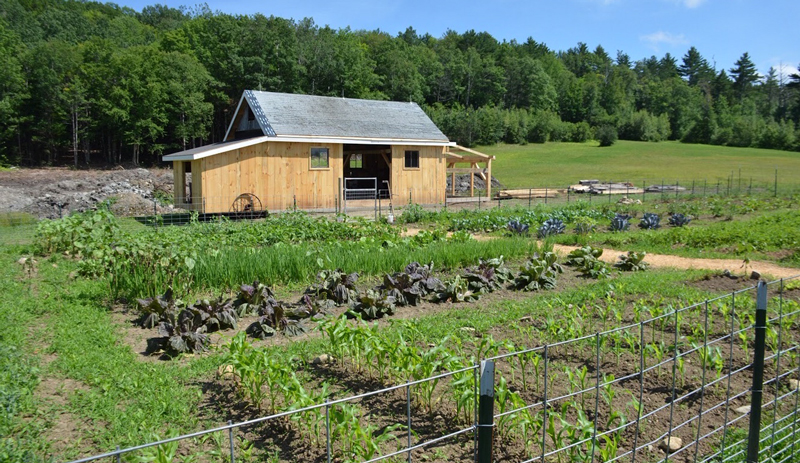
In the journey toward self sufficiency, many would-be farmers find themselves with a vegetable garden and some livestock animals. Often, they’re kept far apart or when the animals break into the garden it is mayhem on crops.
But applied smartly, a diverse group of farm animals can help your garden flourish.
Fowl Friends
Understanding what plants are most appealing to your animals can help you plan how to integrate garden and animals. With geese and ducks on the farm, we keep lettuce, cabbage and Brussel sprouts fenced off or protected with wire domes when the birds are about.
As long as they don’t eat the greens, ducks are invaluable in keeping pests away.They enjoy slugs, worms, caterpillars and other creepy crawlers and are more active hunters and adventurous eaters than our chickens. I credit our ducks with the lack of Tomato Hornworms, cabbage worms and more in our garden.
In addition to eating greens, the downside of ducks, geese and chickens in the garden can be the accidental destruction of plants by walking on them or scratching too much around them. That’s where guinea fowl are particularly adept.
They are lightweight and very active birds, and almost never harm plants that they’re kept around. They also have less interest in fruit and vegetable than other birds, and focus their energies entirely on bugs.
Guinea fowl will eat all sorts of insects and small vermin. But they may be best known for consuming ticks.
Kirsten Lie-Nielsen
Pig Pals
It doesn’t end with the birds!The most helpful livestock introduced to my garden has been our pigs.
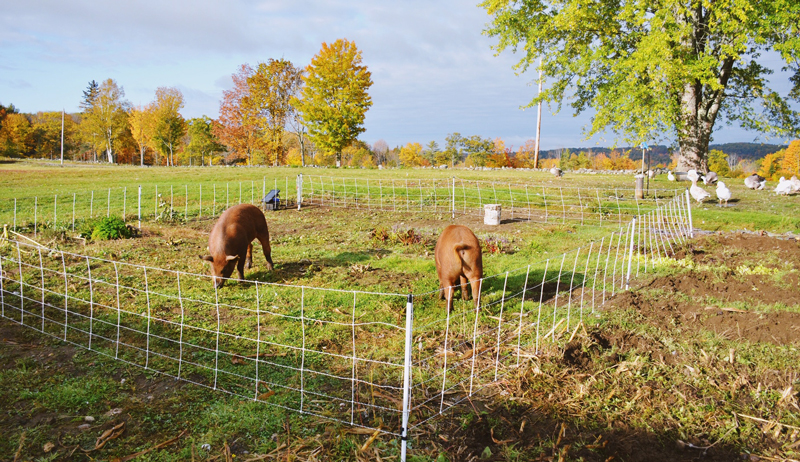
We overwinter our two Tamworth pigs in the garden, allowing them to uproot everything left at the end of the summer, turn over the soil and leave behind amazing fertilizer.With the pigs in the garden, we don’t have to worry about tilling or adding fertilizer in the spring.
Our girls are full-sized pigs, but farms with limited space may consider smaller varieties that are equally effective in gardens, such as Potbelly Pigs or American Guinea Hogs.
Goats are often too destructive to plants to be allowed in the garden during the summer, but they help the pigs take down what’s left before winter. Goats are particularly fond of corn. We feed all our remaining stalks to them as the weather starts getting cooler.
Sheep are more selective than goats, which can be useful for gardens with grass paths or mowing around fruit trees. Many sheep breeds are wholly interested in things like grass and clover, and so can keep lawns, paths and fields mown.
Kirsten Lie-Nielsen
Free Fertilizer!
All of these animals also produce nitrogen-rich fertilizer.With pigs, we’re about to turn that immediately back into soil.
For the other animals who have stalls and coops to sleep in at night, their bedding is composted and turned a few times to fully decompose over a few months or a year.Once decomposed, this livestock manure is an invaluable source of fertilizer and rich soil for your garden.
In fact, some farmers are able to turn a little farm profit selling extra fertilizer to local gardeners.
Whatever animals you decide to add to your homestead or small farm, consider how you can utilize them to your garden’s benefits. It can mean less work for you, and happier plants and animals.
Throughout history, honey has been used for its innumerable medicinal properties. Particularly when combined with the healing qualities of various plants, it’s a remedy for many ailments.
Even modern medicine admits to its proven healing qualities. Medical journals often cite it sans the stigma that traditional herbal healing often receives.
Honey possesses antibacterial and anti-inflammatory properties, meaning you can used it to not only soothe burns, cuts, bruises and other wounds but also to speed recovery. Manuka honey, a New Zealand honey from the nectar of the Manuka (Leptospermum scoparium) plant, was even approved by the U.S. Food and Drug Administration in 2007 for use in treating wounds and burns with Medihoney®.
That said, you needn’t buy an FDA-approved honey product to harness the healing qualities of honey. Simply smear some raw honey on a wound or burn and watch its miraculous healing qualities take effect.
Seek medical advice if the injury continues to worsen, of course.
Cold & Allergy Relief
Honey—local raw honey, in particular—is a powerful cold and allergy medicine. A common claim is that ingesting honey made by bees from local pollen helps alleviate allergies by boosting immunity to allergens.
It certainly doesn’t hurt. But some scientists claim that any allergens it contains are broken down by stomach acids before they can take effect, as opposed to taking a coated allergy pill.
Scientists are more kind when it comes to the cold-relief effects, though. Because of its ability to soothe inflamed membranes along with its sleep-aid qualities (yes, it can help with sleep, too), studies have shown that honey is as affective, if not more, than pharmaceutical cough suppressants and antihistamine in easing nighttime coughs.
Buckwheat honey in particular is a powerful cough suppressant.
Canadian Family Physician, a peer-reviewed medical journal from the College of Family Physicians of Canada, concluded in “Honey for treatment of cough in children” (December 2014 issue) that “Honey can be recommended as a single dose of 2.5 milliliters before bedtime for children older that 1 year of age with cough. (Babies younger than 1 year old should never be given honey, as it contains a bacteria that their digestive systems can’t handle yet and that can cause infant botulism.)
To even further improve its cough-suppressant qualities, combine with plants such as marshmallow root, ginger root and slippery elm bark, which have anti-inflammatory and mucilage properties.
Honey has a wide range of properties you can apply for healthy skin and hair, and even for cosmetics. Apply a little bit as a soothing skin cleanser and face wash. It can improve and soften your skin as opposed to many soaps and detergents, which can be harsh and strip away the skin’s natural oils.
If you wear makeup and need to wash your face more than once a day, wash at least once with honey. You can also apply it to relieve skin conditions such as eczema, psoriasis and dermatitis because of the antibacterial, antifungal and antiseptic properties.
Just rub a little on your skin daily. Or look for a company that sells natural honey-based skin care products.
Energy, Stamina & Sleep Aid
You can use honey as a pre-exercise energy boost and a post-exercise energy-recovery aid, as well as a sleep aid.
Yes, it does sound contradictory that a single substance can be a sleep aid and an energy boost. Raw honey, though, is a natural carbohydrate. It easily absorbs into the body as liver glycogen, the body’s natural energy storage.
And when it’s time to think about sleep? Those same qualities surprisingly work well to prepare the body for a well-rested sleep. By restocking the liver’s glycogen supply, it helps prevent your brain waking you up because of a need for fuel.
In addition, raw honey can provide your brain with a supply of melatonin by stimulating the release of tryptophan. This amino acid converts to serotonin that is, in turn, converted to melatonin.
Beekeeper hobbyists in particular often have a larger supply of honey than they know what to do with. A tasty and soul-lifting solution? Make mead from it.
Mead is the oldest alcoholic beverage. It will quite literally make itself.
Yeasts convert sugars into carbon dioxide and alcohol. In its dormant state, honey contains tons of sugars, as well as wild yeasts brought in by the bees on pollen.
This yeast can remain inert for long periods, centuries even, unless activated by water. Water acts to “wake up” all of the yeast and other microbes that are lying dormant in the honey. This causes it to begin fermenting.
Even a little water can cause mead to “make” itself. But if you intentionally mix water (nonchlorinated) with raw honey, you can make mead with your desired level of sweetness-to-dryness.
There’s a bit of a process to it, but it really is fairly simple to make a natural wild-fermented mead. To enhance its flavor and medicinal qualities, try mixing in various fruits and herbs for a truly heavenly beverage.
This article originally appeared in the September/October 2019 issue of Hobby Farms magazine.
There aren’t many crops from which one can harvest five entirely different products. But the black walnut can fill that order.
If you’re not eating the nutmeat out of hand or in cookies, then you’ve had it in ice cream.
The shell is tough enough for vendors to sell to auto companies for cleaning precision metal engine parts and as filler for sticks of dynamite.
The soft, greenish-black hull that surrounds the freshly fallen nut is valuable for fertilizer and making dyes.
Once the tree is at least 12 inches in diameter, you can tap it for sap from which to make sweet syrup.
And before the end of the tree’s useful nut-dropping life, its trunk can be milled into more than $10,000 worth of veneer or planks.
Depending on the cultivar and conditions, you’ll have to wait 40 to 80 years from planting to harvest for that high dollar lumber, but the good news is that in the eastern half of the United States, there are many thousands of wild black walnuts already dropping edible, salable nuts every September.
Anyone who has handled black walnuts in their hulls has come away with brownish-black stains that don’t want to go away. But the right tools can make all the difference.
The Nut Wizard, which sells for about $50, gathers nuts while still in their hulls. At the end of its long handle, a sphere of stiff but flexible wires rolls on the ground. Walnuts can push their way in—without tumbling out—until you flex the wires over a bucket.
With enough nuts gathered to fill your buckets or truck bed, choose a method for hull removal. For small quantities, cut a 1 1/2-inch circle in a piece of wood that fits over a bucket. With gloves on, set the hull over the hole. Pound it through with a hammer to peel off the hull.
For large quantities, you could use a modified, tractor-mounted lime spreader to strip hulls. Or go lower-tech: Spread them on a concrete driveway and run over them.
Or go medium-tech: Fabricate a small motor-driven tire that smooches the husks off in a rebar cage. This homemade gizmo is found in a 16-page document on managing black walnuts from the University of Missouri Center for Agroforestry.
Hammons also runs about 200 buying stations in 15 states in the central U.S. for gathering black walnuts from small growers and gatherers.
At home, hulls can be used for dyes or tinctures. Otherwise, compost them for a year to break down the chemical that suppresses growth of some plants around black walnuts.
Rinse the de-hulled nuts with a hose or in a container full of water. Toss any that float. Spread the rinsed nuts someplace where they can dry for a month or two. This will improve the flavor as opposed to cracking them open right away.
Frank Hyman
Nutmeats & Shells
Black walnut nutmeats can be more difficult to harvest than pecans and hickories. However, the flavor makes it worthwhile, and if you already have the trees on your land, there’s no sense letting them go to waste once you have a better understanding of their worth.
For example: Their 25 percent protein content makes 1 pound of nuts equal to 5 pounds of eggs, 9 1/2 pounds of milk or 4 pounds of beef, according to the Acornucopia Project.
Wild black walnuts may only have about 15 to 20 percent meat per nut, but cultivated varieties have 30 percent nutmeats or better and are easier to shell. So solicit cultivar choices from your local extension agent or local growers if starting a plantation. Oikos Tree Crops has some improved varieties.
A mature stand of trees can produce 1,500 to 2,000 pounds per acre. Selling to a buying station may only earn 50 cents a pound, but selling retail at market can bring up to $12 a pound.
At home, if you’re shelling small quantities, set the end of a nut on a hard surface and whack the top end with a hammer. Some people have success using vice-grips (a/k/a, the wrong tool for every job!).
If you want to get through larger quantities more quickly, use tools designed for nut cracking. Black Walnut Cracker sells different models priced from $35 to almost $500. They also sell nut wizards—both hand-held and tow-behind for riding mowers—for gathering fresh nuts.
If you’re not using the shelled nuts right away, save them in the freezer. On the home front, there aren’t a lot of uses for the shells except perhaps as fire starters and compost as described earlier for hulls.
Sugar maples up north aren’t the only source for sweet syrup to put on pancakes. All other maples and several nut trees produce a sweet-enough sap. However, the sugar content is not high enough to make them commercially viable.
For a backyard project, though, black walnuts can be tapped the same way you’d tap a sugar maple. I’ve tapped a neighbor’s 30-inch diameter black walnut in sunny North Carolina for a few gallons of clear-as-water sap and cooked it down to several ounces of delicious syrup.
But I think there may well be a commercially viable option. Instead of cooking the sap all the way down to syrup, try using a refractometer to get to the level of sweetness of simple syrup. You’ll have a lot more volume at much less expense.
Then label it as simple syrup and sell it to your local fancy-shmancy mixologist (aka bartenders). I’m sure they would love to offer it to their regulars as an “artisanal, locavore, sustainably harvested, black walnut simple syrup” for their fancy cocktail at an inflated price.
Lumber
Air-dried black walnut lumber has streaks of green, gold and bronze in addition to the usual browns and purples that dominate in kiln-dried wood. Allowing it to air-dry takes longer, of course, but that more colorful walnut has an even higher value for woodworkers.
High demand for this marvelous wood means that the availability of the lumber has been in a long-term decline. This makes it perfect for the landowner who thinks about long-term payback.
If you have very well drained land that doesn’t dry out, you may be able to grow a stand of black walnuts that can be harvested at an outrageous price in 40 to 60 years. It likes a pH of about 6.5 and plenty of phosphorus.
If you want to focus on lumber harvest, you would choose an appropriate cultivar and plant them on a 10-by-10-foot spacing so more than 400 trees per acre would grow straight and tall. Alternatively, an emphasis on nuts would call for a 30-by-30-foot spacing thinned down to 60-by-60-foot over time.
It’s best to plant in spring with 3-year-old saplings that are about 3-feet tall. They should be supported by stakes and protected from critters by shelters, until they get about 10-feet tall.
Bruce Thompson, the author of Black Walnut for Profit, figures that a well-managed acre of trees could earn about $100,000 just from lumber—not counting all the other products this tree gives.
Sidebar: The Nuttery
Black walnuts are delicious and nutritious, but the time, cost and effort to remove the hull, clean them and shell them keeps walnuts from taking their proper place in the market. The same could be said for other nut crops such as hickories, mockernuts and acorns.
But long-time orchardist Bill Whipple has a solution that he calls, with tongue-in-cheek, the Acornucopia Project. The project’s website states, “The Acornucopia is 10 percent nuts and 90 percent crazy people.”
Whipple and his colleagues aim to build the processing infrastructure to make tree nuts more profitable: first in the Southeast, then nationally. They’ve set up 20 sites across the southeast for aggregating those crops from farmers and foragers.
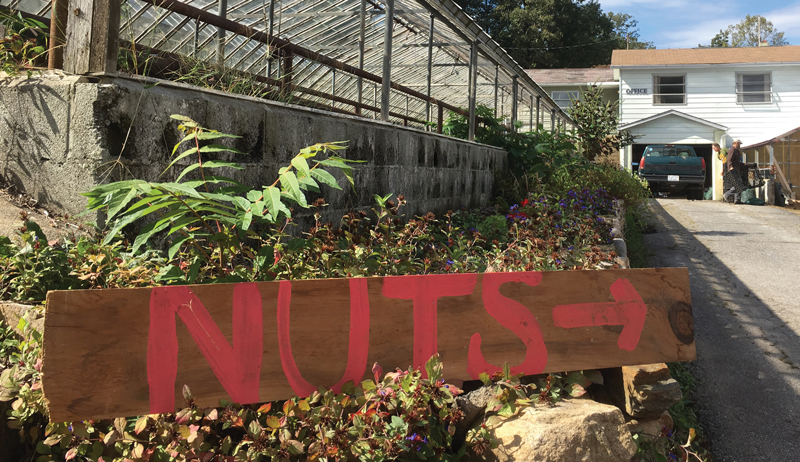
Those crops are then carried to what they call the Nuttery in Asheville, North Carolina.
Like the old-time grain mills that wheat farmers depended on, the Nuttery is like a nut mill that returns 60 percent of the final weight of unsorted nuts and shells. They keep 40 percent of what you bring in as their fee.
Using second-hand tools, modified equipment and Rube Goldberg devices of their own making, Whipple and friends turn these tree crops into popular value-added products such as oil, butter, cream and flour.
Their “bread and butter,” as Whipple says, are acorns. Mast from white oaks make a choice flour. Acorns from black and red oaks are too bitter for flour, but their 30 percent oil content—comparable to sunflower seeds—makes them valuable for unexpected tree products: salad oil and cooking oil.
To learn more, check out their website and ask them to make a presentation to your group. That’s what they call their Quercus Circus. You’re guaranteed to learn a lot about some undervalued crops and get a few laughs at no additional charge.
This article originally appeared in the September/October 2019 issue of Hobby Farms magazine.
Sure, you can farm without a tractor. But there’s no denying that the machine makes countless on-farm chores easier and more enjoyable.
Like anything, though, your tractor needs regular preventative maintenance to ensure it stays ready to help out. There are times you’ll want to spend some time getting things ready to go—like when spring rolls around, for instance. However, a quick, regular walk-around to inspect a few key maintenance areas can provide a wealth of information about your tractor. And it can help you avoid downtime and costly repairs down the road.
In this video, we detail what you should look for, how often you should check things out and what preventative maintenance tasks your tractor needs to stay in good working order.
Julie Kirchner is proud to call herself a “crazy chicken lady.” Presiding over Sadie-Girl Farm in western North Carolina, Kirchner spends her time tending to pasture-raised specialty chickens and quail. She also broadcasts her adventures in homesteading to the world via her social media accounts, which brim with photos of eye-catching colored eggs and adorable chicks.
We spoke to Kirchner about her interest in poultry and the benefits of living a homestead-focused lifestyle. We also got into the requirements for official crazy chicken lady status.
Learning to Love Rural Life
https://www.instagram.com/p/B9pHDgzgPjN/
Kirchner’s interest in farming and homesteading began with horses. “I was a kid from the suburbs but I was a horse crazy kiddo who bugged her parents for riding lessons at an early age,” she explains. “I eventually went on to study equine studies in college for a bit and it was a natural next step to love on more farmy animals.”
After working on a 1,100 acre farm on campus at the Warren Wilson College in North Carolina, Kirchner gained behind-the-scenes insights into farm living: “I was hooked and never looked back!”
On her popular Instagram account, Kirchner proudly calls herself a “crazy chicken lady.” She says it’s a plaudit that involves “naming all your chickens and saving special kitchen scraps for them that you know they will love.” She adds that Prada is obsessed with snacking on grapes, while Henry is all about noodles.
“I talk to them while I am working because I usually work alone and I swear they understand,” she adds. “Basically you have to love your chickies as a part of your family, getting to know their unique personalities and spoiling them rotten of course!”
Focusing on Chickens and Quail
https://www.instagram.com/p/B5F87XiAlk4/
Sadie-Girl Farm is centered around chickens and quail. Kirchner says she decided on this combination due to the smaller size of her one-acre land.
“I love all the animals but our somewhat suburban homestead dictates our animals,” she says. “Especially the quail [because] they are uniquely suited to a smaller space. But I love our smaller parcel because I can relate to others who are wanting to do this homestead thing and be more self sufficient in a more urban environment.”
On a daily basis, Kirchner says that quail are “amazing” to live around. “They are quieter than chickens but make these little cheepy sounds and even a purring sound when they are happy,” she explains. “They dart around and hop and peck. It is so fun to watch them!”
Kirchner also adds that her quail love taking dust baths and enjoy snacking on cucumbers and tomatoes.
A Smorgasbord of Vibrant Eggs
https://www.instagram.com/p/CAkWsCxgLJy/
The chickens at Sadie-Girl Farm have become renowned for the vivid-colored eggs they produce. Kirchner says that, right now, the dark olive eggs are the most popular with her customers.
“They are just so unique!” she says, adding that people love to show the eggs off to their family and pals. “When I bring friends a dozen rainbow eggs when I go to their house, it instantly becomes a conversation starter.”
As a twenty-something, I worked on an organic farm. Besides harvesting basil, I sometimes created cut-flower bouquets for market. When I needed filler material, the farmer directed me to snip from a pretty stand of ironweed. She also suggested I add some feathery asparagus foliage. Back then, it was all about making the most of what we had on hand and it worked.
Now, those old bouquets would fit right in with the “seasonal flower movement.” According to Erin Benzakein, founder of Floret Farm, “Flowers are just like food. The best results always come from using local, seasonal ingredients picked at their prime.”
“Plus, seasonal flowers have a story,” Benzakein adds. “There is a farm and a face associated with each bloom.”
“Nearly everyone struggled with the same things I had: how to approach color, basic mechanics, proper ingredient selection and, most importantly, confidence,” she says.
Regarding annuals, Benzakein always plants a mix of “cut-and-come-again” flowers—think cosmos and zinnias. She also plants “medium producers” like larkspur and snapdragons. And she includes favorite “one-hit wonders” such as liatris, flax and single stem sunflowers. Depending on their bloom times and duration, Benzakein succession sows flowers from each of these categories.
To help you track your own cut flower garden, she recommends keeping a bloom time calendar. This will give you a better idea about what kinds of flowers you’ll need to plant, when you should plant them and how often.
To begin, mark the last average frost date for your area. Next, consult the individual seed packets for the flower types you want to grow. Then, work backwards, marking when you’ll need to start seeds indoors or direct-sow in the garden.
In Cut Flower Garden, Benzakein writes, “All annuals can be re-planted at least once and often twice, usually allowing three to four weeks between plantings.”
Just as important as the flowers you grow? The greenery or filler material you produce along with them. Benzakein plants about half of her garden in flowers and the other half with foliage plants she uses to fill out her bouquets.
Scented geraniums and raspberry greens are two of her favorite foliage plants.
Caroline Grimble is lead florist at Bloom & Wild, a United Kingdom-based flower delivery service. For Grimble, filler material adds more than just shape to a bouquet. “I love to add grasses for texture and movement or herbs like mint or rosemary to add scent to an arrangement,” she explains.
Grimble also likes Bupleurum, a dual-purpose filler flower and foliage plant.
Chris Benzakein
Harvest How-tos
When you cut your flowers and how you treat them after cutting will affect the quality and longevity of your final product. Benzakein cuts hers in the early morning or evening when temperatures are coolest.
At these times, Benzakein notes, “Plants are the most plump and hydrated and will recover most quickly from the shock of being cut.”
Ideally, you should also choose flowers that haven’t fully opened and that have yet to be pollinated. (Once pollinated, flowers begin the process of setting seed. This can diminish bloom quality and speed the flower’s deterioration.)
Use clean, sharp clippers to cut each stem and remove lower leaves. “I always condition [cut flowers] as I go,” Gimble says. “I clean the stems before putting them into a clean bucket of water. It’s amazing how much time this saves later on and also means you can get a lot more into a bucket.”
In A Year in Flowers, Benzakein suggests keeping cut flowers and filler foliage in cool water for at least three to four hours or even overnight. This gives flowers time to perk up after cutting. She also recuts stems at an angle before placing cut flowers in their final arrangements.
Although longer stems can fetch higher prices, Grimble values varied stem lengths. “Play around with the heights of different stems…. Have some foliage drooping over the edge while other elements spire tall above the arrangement.”
To prolong your bouquets’ shelf life at market, keep their containers (and their water) clean. Also, if possible, display flowers in a cool, shady spot. Finally, keep them away from any ripening fruits or vegetables you may also be selling. (Ripening produce releases ethylene gas which can speed your bouquets’ deterioration.)
It’s fun to pamper your flock with treats and toys, and it’s good for your chickens’ happiness as well. Chickens, especially birds kept in confinement, that aren’t provided with physical and mental stimulation are prone to behavioral problems such as bullying, cannibalism, egg eating and feather pulling. Free-range chickens benefit from treats, too.
Chickens are smart and quick to learn things, but they need a reason to want to do it. Treats are the way to your chickens’ hearts, whether you treat them in an effort to teach them something or just because you enjoy watching them savor the goodies you give them.
Menu Dos and Don’ts
Chickens can safely eat the following.
bread, crackers: in moderation, nonmoldy
breakfast cereal: no sugary products
broccoli, brussels sprouts, cabbage, cauliflower: Hang whole heads or entire plants where chickens can pick them, or tuck pieces in a suet cage to hang on the fence or wall.
carrots: raw in chunks, cooked and foliage
cheese, including cottage cheese: in moderation due to fat content.
corn: cracked raw kernels, on the cob, and canned, raw or cooked
crickets: Buy them live at bait shops and pet stores.
cucumbers, pumpkins, summer squash, zucchini: especially large, overripe ones containing lots of seeds. Slice or crack them open to expose the goody inside.
eggs: scrambled or boiled and mashed
fish: cooked and deboned
fruit: bananas without the peel; all kinds of berries, melons, apples, pitted pears, peaches, plums, cherries and so on
garden pests: potato bugs, cabbage worms and slugs
grits: cooked
leafy garden greens: all kinds
mangels, turnips, rutabagas: raw or cooked
mealworms
meat scraps: but avoid fatty, salty meats
oatmeal: raw or cooked, no salt, no sugar
pasta, rice: cooked
peanut butter
popcorn: popped, not raw
sunflower seeds: in the shell or otherwise
suet: in moderation
tomatoes: mature but never unripe ones, raw or cooked; cherry tomatoes especially
weeds, wild flowers: plantain, dock, dandelions, chickweed, clover, lamb’s-quarter, violets and wild strawberry to name a few, but know your plants before you feed them. Some wild things, such as nightshades and poke, can kill poultry.
yogurt: plain or flavored
chatnarin pramnapan/Unsplash
Do not feed your chickens the following:
raw potatoes, raw potato skins or potato vines from the garden
green tomatoes or tomato vines
immature eggplant or eggplant vines
dry beans or peas
uncooked rice
stone fruit without the pips removed
onions, garlic
raw eggs
mushrooms
rhubarb stems or leaves
citrus fruit of any kind
sugary foods such as candy and chocolate
highly processed foods
excessively salty leftovers
any part of an avocado
Feeding asparagus can make eggs taste funny, so feed it in small quantities if at all. And don’t feed rotten items to your chickens with the exception of mushy but non-moldy fresh fruit.
Now that you know what to feed, you need to know how to feed.
Feed treats later in the day, after chickens have filled up on their usual fare. Otherwise, they’ll eat the treats and eschew feed they need to eat to grow and to lay eggs. For the same reason, only feed them enough to clean up in 10 to 20 minutes. If there are leftovers, give them less food next time.
Don’t feed treats every day. They’re supplements, not everyday fare. That’s why they’re called treats, after all.
Suspend large items such as head lettuce, broccoli stalks, cabbages, rutabagas and the like at chicken height and let them peck to their hearts’ content.
Place goodies in a Kong-type dog toy or a dog treat ball, and let your hens push it around. Or make your own treats dispenser by cutting or drilling holes in a 1- or 2-liter soda bottle. Size holes designed for the treats you plan to provide. Or drill small holes in plastic Easter eggs and fill them with scratch or seeds, then roll them so your chickens can chase them.
Chop fruits and vegetables into chunks, place them in suet cages, and hang them on fences and walls. Thread chunked or whole fruit and vegetables on a length of rope, loop it, and tie it to a wall or fence. Fill an onion bag with similar goodies or screw an apple to a corkscrew and suspend it or tie it to a fence.
Hide treats under loose straw or piles of leaves and let your chickens have at it.
Make a handy feeder by cutting lengths of rough-barked tree branches and smearing their fissured surfaces with peanut butter, mashed banana, applesauce, suet, yogurt and similar gooey treats. Or smear the goodies on pinecones; that works, too.
Give your birds a cooling treat by filling muffin tin cups with sweet corn, frozen peas or finely chopped fruit, then add a little water, freeze and serve in a shallow pan of water. You can also feed frozen corn, peas, broccoli florets, berries and similar frozen goodies in pans or trough feeders or scatter it so chickens can chase it. Float frozen berries in your chickens’ drinking water. A frozen chunk of beef tallow or a bunch of berries or mealworms frozen in a block of ice makes mighty fine eating, too.
Serve whole pumpkins, melons and overgrown zucchini and cucumbers by quartering them or breaking them open and letting your chickens do the rest.
Pop popcorn and dice fruit or veggies into smallish pieces; string them on thread, alternating popped corn with the rest, and hang garlands where chickens can find them.
Fill a hanging basket with yummies and suspend it in your chickens’ coop or run.
Create a wholesome smoothie by blending pumpkin seeds with a dash of water, and then stirring in chicken scratch, chopped fruit or vegetables, mealworms, dried or fresh herbs, whey, yogurt or buttermilk. Or add those ingredients to cooked oatmeal or grits. Your chickens will love it!
Most chicken toys incorporate treats, such as canine Kongs and treats dispensers mentioned earlier. Others are standalones, such as an acrylic mirror placed at eye level in your chickens’ coop, where they can preen and admire themselves. And they will!
Another fun toy is a children’s xylophone mounted at chicken-head height. Show your birds how to “play it” by smearing peanut butter, mashed banana or another squishy food on the keys so they peck them. Bells are popular peck-at items, too.
Chickens love shiny objects, so hang old CDs and DVDs where they can peck them.
A few big logs or a pile of tree branches provide fun places to climb and roost both in and outside the coop. Again, smearing the bark with a tasty treat makes them even more alluring to chickens.
Chickens enjoy dust bathing, and it helps control external parasites, too. Fill a large tire or a children’s wading pool with sand for a quick and easy dust bath.
Make a chicken swing by drilling two holes in a 3-inch diameter dowel rod or branch, then using outdoor rope to suspend it about 6 inches from the ground.
Finally, play with your chickens. Begin handling them as chicks. Feed them from your hands. Encourage them to perch on your shoulder or sit in your lap. A friendly human to climb on and cuddle is the best chicken toy of them all.
This article originally appeared in the July/August 2020 issue of Chickens magazine.
CJ was absolutely terrified the first time I lifted her out of her brooder. At six weeks of age, the little blue Orpington pullet was fully feathered. I wanted her and her clutchmates, TJ and Margie, to experience “real life.”
Our birds go from brooder to tractor to coop. It was time for them to feel grass and sunshine, discover bugs, and explore a larger space.
Oh, how she screeched! She tried to hide under her perch, under her mom, under her brothers. She carried on and on (as did her siblings) and spent her first day in the tractor huddled beside Mama Natalya. And the second day.
On Saturday, she actually started wandering around the tractor, although she still shrieked and ran evasive patterns when I went to retrieve her at dusk. Today, CJ hopped into my hand and trilled happily to herself as I carried her outside. When we got to the tractor, she sat on my palm for a moment, trilled a little more, then eagerly jumped down and started foraging in the grass.
Welcome to the wonderful world of the emotions of chickens!
While many of us are aware that companions such as dogs and cats exhibit a wide range of emotions, the fact that chickens are intelligent, emotionally sophisticated animals surprises many poultry farmers. The fact that the broilers being sent to the slaughterhouse experience complex feelings may be met with skepticism, denial or at the very least a raised eyebrow.
Those with backyard flocks, however, will readily attest to their chickens displaying emotions such as hunger, fear and contentment. But chickens feel much more than that.
Here are four examples of emotional—and cognitive—behaviors our backyard birds experience.
Like humans and other mammals, chickens are capable of experiencing frustration. Something might be blocking access to their destination of choice, for instance. Or something they have been tracking disappears from sight.
Our Buff Orpington hen, Flapjack, would become highly frustrated when she had to lay, only to discover her favorite nestbox occupied by likewise-driven flockmates.
She wouldn’t just climb in and smush together, like the other girls. She would pace back and forth near the nestbox, feathers ruffled, until all of them vacated the box. Similarly, over the years I’ve watched our ranging chooks stalk crickets, frogs, snakes and other outdoor critters, then pace back and forth, extremely agitated and feathers bristling, next to a rock, log or burrow where their prey took shelter.
In fact, frustration was one of the most recognizable emotional states observed in chickens by undergraduates participating in a University of Adelaide research study.
Empathy
Chickens are able to pick up social cues from each other and, through these, empathize with a bird experiencing sorrow or other negative emotion. This emotional contagion provides a way for chickens to respond accordingly in important circumstances and situations.
When our Blue Orpington hen, Stormy, was killed by a raccoon earlier this year, her sister and best friend Selene was practically despondent. She took forever to emerge from her coop. Then she would just sit in the coop’s shade, comfort-preening and warbling to herself in low tones.
This behavior continued for days and, during this time, her friends Butters and Fitzgirl would check on her. They paced around her worriedly and chirruped softly, as if reassuring her.
More amazing, however, were the two occasions at which our poultry farm came to a silent halt. At both these times—the burial of beloved roosters Arnold Orpington in 2014 and Claude Orpington this summer—every single one of our flocks simply stopped what they were doing and watched us lay the roosters to rest.
Those birds that ranged actually stood by us in silent contemplation when we buried Claude. They erased any doubts I had regarding whether chickens feel empathy.
According to Dr. Lori Marino of the the Kimmela Center for Animal Advocacy in Kanab, UT, chickens display Machiavellian-like social interactions. This means that within their social structure, they can plot, manipulate,and use deceit to gain personal advantage.
This is frequently observed in flocks with a dominant male and one or more subordinates. A subordinate may bide his time, for instance, waiting until the alpha bird is distracted to call hens to share the tidbits he has located. Then he’ll switch right back to subordinate vocalizations when the dominant bird reappears.
Our Thomas Orpington was a king at scheming in his younger days. He’d supposedly dustbathe, all the while keeping an eye on his brothers Claude and Davey. The second this duo’s attention diverted—usually to one of us bringing out kitchen scraps—Thomas would dash over to the nearest hen. He would have his way with her, then dash to safety the moment Claude and Davey realized what he was up to.
Even sweet little Silkies engage in Machiavellian plotting. Despite being overthrown by his son, Romy, our blue Silkie, Romanoff, never missed an opportunity to court his former hens. And I’m positive our lavender Orpington, Ginger Bean, takes great pride in kicking over the feeders I fill in the morning the moment my back is turned.
Anticipation
A research study conducted by the Swedish University of Agricultural Sciences demonstrated that chickens react with anticipation to learned cues.
The study taught the hens to differentiate between three sounds. One signaled an edible treat. Another resulted in a squirt from a water gun. A third yielded nothing. Within a short period of time, the hens responded with eager anticipation to the treat cue. But they displayed agitated behaviors such as pacing and flinching head movements for the squirt-gun cue.
Our own flocks have learned cues quite independently. The second they see the kitchen door slide open, they all dash towards the deck, waiting for kitchen scraps. Should they see one of us carrying a white bucket, they immediately swarm us, expecting scratch.
They also tend to flee at the sight of our rakes, making it much easier to clean out their coops.
It’s my hope that CJ will engage in yet another cognitive behavior—social learning — and teach her siblings that my appearance means a day of playing outside, not run in terror. I look forward to the trio of little chickens reacting with positive emotions when I arrive in the morning!
Renting equipment is an increasingly popular trend. Evidence of the equipment rental boom is found in expanding peer-to-peer rental companies. In areas including construction, agriculture, landscaping and technical trades, renting equipment is growing as an appealing option for business owners and workers who receive the benefits of machine use without having to make the commitment of buying and owning.
1. Cheaper Than Buying
This is an obvious one, but it’s worth mentioning. You won’t always have the money to make an outright purchase of every machine you’ll ever need. And some equipment you need only for a small percentage of your time on a job site, hardly justifying the cost of a full purchase.
Renting lets you have the right equipment when you need it at prices you can afford.
When renting equipment, you don’t have to worry about maintenance. You don’t have to worry about storage. You don’t have to worry about licensing fees, property taxes or many forms of insurance. There’s less paperwork and fewer records to keep.
Ultimately, renting equipment simplifies expenses, lowers overhead costs and gives you greater peace of mind.
3. Emergency Options
Machines usually do not warn us when they will break down, yet when they do, deadlines stay the same. Renting equipment helps you cover for unexpected breakdowns, or when other unexpected needs arise.
4. Flexibility
There are many machines available to rent from many rental businesses. Having so many options for renting equipment gives you the flexibility to find the ideal tool for each project you undertake.
Most dealers keep their rental inventory up to date with modern machines, because they know newer equipment brings more business than do rusty antiques. When renting contemporary equipment, you needn’t spend beyond your means to buy a machine that could quickly become outdated and obsolete.
6. Test-drive Before Buying
Dealers selling equipment should always allow for comprehensive inspections, but you might want more time with a machine before committing to a purchase. Renting lets you get a feel for what it’s like to use the equipment on the job, helping you make informed purchases later.
7. Boost Your Business
With access to equipment rentals, you can take jobs that you otherwise would be forced to turn down without having the proper machines.
This article originally appeared in the September/October 2019 issue of Hobby Farms magazine.