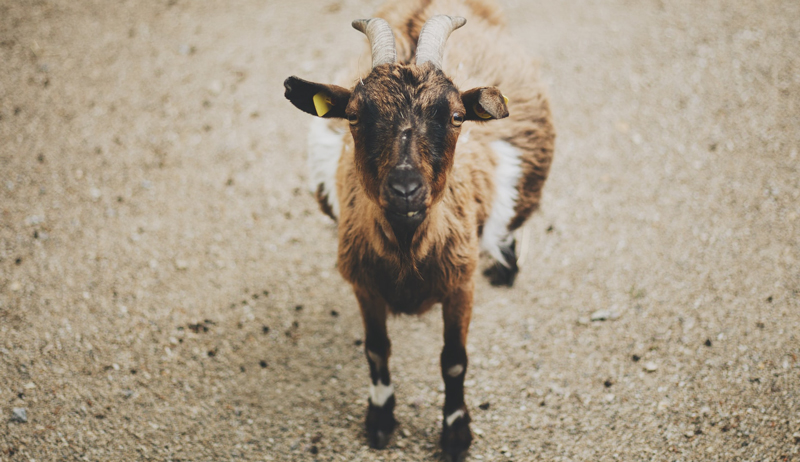
Remember the last time your feet hurt so badly you didn’t want to walk? Whether it was from a pair of ill-fitting shoes, overgrown nails, an infection or injury, the pain likely kept you off your feet. Goats, like people need routine foot care to stay healthy.
In Onondaga, Michigan, Mike Metzger operates HK-New Era Dairy, an 80 to 100 goat-milking operation. He also works as a small ruminant educator at the Michigan State University Jackson County Extension Office.
Usually, goats only need their hooves trimmed a few times a year, but he cautions that every animal is different. Some goats may need more frequent attention than others. When the outer shell begins to curl and weaken, it’s time for a trim, according to Metzger.
“It can be daunting to pick up a goat hoof and trim it. But after watching someone else or having someone teach you, it’s a relatively simple process,” he said. “If you find the right YouTube videos, those can be helpful.”
A Place to Work
You don’t need a fancy work area for trimming goat hooves, but you do need a way to hold them still. Metzger says he typically checks and trims hooves during milking time. Outfitting your goat with a halter and tying it or having a helper hold the animal are budget-friendly options.
Using a stand can make the task less onerous.
“You don’t have to have a stand, but there’s a lot less bending if they are up on the stand,” he said.
Hoof trimmers look like garden pruning shears. However, they are specially made for smoothly snipping through the hoof wall.
Lift the hoof by having the goat bend at the knee. Start by removing any dirt and debris from the goat’s sole and between the toes. You can use the point on the end of the hoof trimmer to clean the area.
The goal is to trim the hoof walls so they are level with the sole. Metzger encourages people to start with small with conservative cuts to take a little bit hoof off at a time. You can always remove more hoof, but you can’t add it back if you’ve cut too much.
When you start to see pink, quit trimming, Metzger said. When cut too deeply, it can bleed. It’s always best to trim a little at a time. If bleeding occurs, use a liquid hoof dressing dip to stop the flow of blood and help limit the entry of bacteria.
Reapply as needed until the hoof is healed.
“When you’re done, you want the length of toe to be the same length as the heel,” he explained. “Since goats have a split hoof with two toes, you want the outside hard shell a little longer than the inside so they are walking on the outside part of their hoof.”
Keeping goat hooves at a proper length is a project you can do yourself when sticking to a regular schedule. In situations where a hoof has grown excessively long, it is best to call in a professional until the length is back under control.
Overgrown hooves curl inward and trap dirt that can provide the perfect environment for bacteria-causing diseases. Wet ground can encourage hoof rot, which is found on the hoof soles and walls.
Warts or “hoof” scald can develop in between the goat’s toes.
Maintaining goat hooves is important for animal comfort and health. When hoof disease and overgrown feet make it painful to walk, goats will not walk to eat, and they can’t survive long if they are not continually eating.
“Keep an eye on your goat’s hooves and keep them trimmed,” he said.
Before my family farm invested in our own breeding pair of Berkshire pigs, my wife and I made a three-hour drive to Peebles, Ohio, every six months or so to procure quality piglets from a breeder. It was inconvenient, sure, but we knew these people raised good pigs.
Pork was sizing up to be the backbone of our small-farm income, so we climbed into the truck, popped in a CD (the truck stereo didn’t have an auxiliary input) and hoofed it to Appalachian Ohio.
We’d settled on raising Berkshires for a variety of reasons, notably the distinct taste of their meat and heritage status. So that’s what we’d planned on bringing back in the little red bumper trailer—10 little Berks. But after a bumpy three-hour drive in an old truck, plans can become malleable.
Raylan
“What’s that one?” I asked the kid helping us load the piglets into the trailer. “Is that a Gloucestershire Old Spot?”
The floppy-eared piglet was a white spot in the sea of oily black Berkshires. The kid nodded and relayed some story I don’t recall about why the family kept a Gloucestershire Old Spot (GOS for short) with the litter of Berkshires.
“It’s gourmet pork,” he said with pride. “High-end restaurants want it.”
There’s some truth to that, though we already knew our Berkshires had a flavor profile many chefs gravitated toward. But that’s not why we ended up paying extra to bring the spotty little fella to our home, where we named him Raylan—a distinct honor for a Kentucky farming family who calls “Justified” a favorite TV show.
Truth is, we just wanted to see a GOS in our pastures.
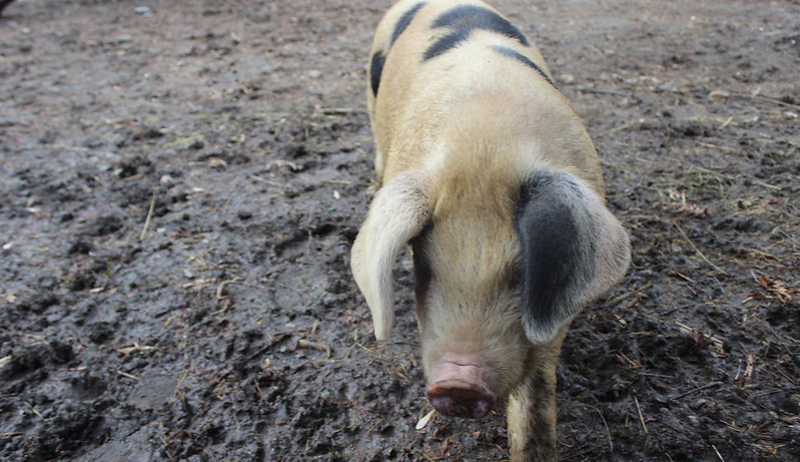
The Gloucestershire Old Spot, you must understand, has a distinctive look. With a fine, white coat of hair and black spots (it was once known as “The Orchard Pig,” with spots mistaken for bruises from falling apples), the hog is certainly an attractive breed for farmers of pastured pork.
And let’s not forget the ears, those big, floppy appendages that partially obscure the eyes and white eyelashes, and bounce jauntily when the pig bounds across a pen or field. If you’re inclined to find joy in porcine play, watching the gentle-demeanored GOS grow up is a particular pleasure.
For people who are very serious about breed characteristics, the following traits are probably a bit more important than a jaunty disposition:
Generally, the pig’s body is broad, with a straight back and deep belly.
Medium to long head length
A slightly dished nose (It curves up at the end, a trait that helps them root in the soil.)
Smooth skin under silky hair
Straight, strong legs
Those floppy ears
So if you’re dead-set on a true heritage hog, look out for things like short ears, bristly hair, curved legs, big jowls or wrinkly skin, as these traits could indicate some distillation of the breeding line.
Here’s the thing about the meat of a Gloucestershire Old Spot—it’s got some fat. Not as much as a Mangalitsa or a Guinea Hog, as the GOS is officially a dual-purpose breed (good for pork or bacon). So while it’s one of the more sensible heritage hogs to raise, it’s hardly a lean breed.
And there’s a reason the pork industry works so hard create leaner pigs. (Spoiler alert: It’s not necessarily about human health.) A fat pig yields less meat than a lean pig, so, from an ROI standpoint, feeding a pig that puts on fat means less profit for the pig farmer.
This is noteworthy for most heritage breeds, which haven’t been bred for those higher yields like industry-favored hogs such as the Yorkshire. For comparison, the Livestock Conservancy lists the hanging weight of a GOS at 180 pounds. Typical weight of a market pig such as the Yorkshire, however, is 211 pounds. And it takes longer to reach market weight (500-600 pounds for a GOS) for a heritage breed—much longer if you raise them solely on pasture.
For small and hobby farmers, who aren’t looking at razor-slim profit margins from ag industry contracts, this 30-pound discrepancy isn’t an income nightmare. So, for them, heritage breeds such the GOS have distinct advantages.
For starters, the meat just tastes good. In fact, the British Royal Family is known to support the breed because they prefer GOS pork for their tables. The taste improvement is certainly due in part to breeding differences between GOS and grocery-store pork, which I’ve heard described as “tastes like cardboard.”
After all, fat’s tasty.
But GOS pigs are also excellent foragers and grazers, and have historically been kept in orchards to dine on fallen fruit. That can greatly enhance meat flavors. As noted, a keeper could raise GOS solely on pasture, though that would take years to reach an ideal weight.
Some have cut feed costs by providing dairy or other food-/beverage-prep byproducts, and the GOS is particularly good at getting by on these alternative food sources.
So where did the Gloucestershire Old Spot pig come from?
Answer: Gloucestershire, England! The breed hails from the Berkeley Vale, to be specific, and can be traced back to the 1800s.
Beyond that, though, things get a little murky, though it’s believed that the GOS is a result of breeding two pigs that no longer exist: a big, white pig with waddles and no spots called the Gloucestershire, and the unimproved Berkshire (no wonder we loved watching Raylan in our Berk pastures). GOS pigs were shipped to the U.S. in the 1900s, though their numbers didn’t take off.
In 1913, the Gloucestershire Old Spots Breed Society formed in Berkeley Vale to protect the pig’s pedigree against British pig development plans. Good thing, too, because GOS popularity only grew thereafter, reaching a peak in the 1920s-30s, when the breed was favored for its lean meat.
That lean meat characteristic is ironic, though, when looking at what happened next. As intensive pig farming took off and development programs reached for ever-leaner pork, GOS popularity took a nosedive. Between the mid-40s to the 1960s, the GOS breed grew rarer and rarer, finally reaching a critically endangered status.
In 2009, there were fewer than 1,000 GOS pigs in England and fewer than 200 breeding pairs in the U.S.
A Happy Ending
Happily, things have changed for the Gloucestershire Old Spot.
In part, this is due to a concerted effort to bring the breed back. In 1995, a farm in Maine imported 20 piglets to re-establish the GOS in America. Concerned individuals established a breed society, and, slowly, the breed started to make a comeback.
But most farmers have to have an incentive to raise an animal, and a rediscovery of flavorful pork by discerning eaters provided a good one. Remember the breeder’s son’s claim to interest from gourmet chefs? Our market customers took notice, too, telling us numerous times that our pork (we raised Berkshires, but also Large Blacks and, of course, Raylan) reminded them of “what pork used to taste like.”
So as the market for heritage pork became established, GOS numbers rose. In 2015, the breed was officially moved off the critically endangered list. It’s still officially threatened, but there seems to be a future for Gloucestershire Old Spots.
Will Gloucestershire Old Spots ever become the pig of choice for the pork industry? That’s very unlikely, but for hobby farmers, the friendly, floppy-eared hog could be the perfect pig.
Over the years I have spoken with many growers, gardeners and homesteaders as both a friend and consultant. Most have very big dreams and ideals associated with living on the land, no matter the scale of their ambitions.
A big part of this is having a diverse production to meet their needs for the pantry, freezer and cellar. Homesteading after all is about self-sufficiency, right?
Probably the single biggest piece of advice I give to those who live on the land is this: Focus your goals to balance your time, energy and space. Less is more.
Keep It Simple
When we start a small farm or homestead, we want to do everything. We want chickens, sheep, an orchard, bees, gardens, ancient grain plots, etc.
Most people mention every productive enterprise possible when asked, “What is your goal for the land and your intended projects?” This is too much.
Not only will we fail to achieve all of these desired projects, but we will end up actually achieving less because we are stretched too thin. Each of these individual pursuits requires skills, time and money.
Instead, we should look to achieve a balanced production.
Your production should form a guild—a symbiosis of projects not unlike companion planting. I’ve termed this system a Guild Enterprise Production model (see my book The Permaculture Market Garden for more on that).
A Guild Enterprise Production model should:
Suit your site, environment, climate and soil
Contribute to your community by creating opportunities for trade and sale
Balance labor across the seasons so you don’t have too much work in any one month
Reuse seasonal waste to close the loop of regenerative productivity
Share resources effectively by partitioning space, time and energy
For example, a farm could have three enterprises: garlic production, mixed vegetables and honey. Your garlic is planted in fall, while vegetables are spring planted. Thus, the intensive labour is spread across seasons.
Your bees create additional products in the form of honey , wax and propolis. This is enough. You don’t also need chickens, cows and orchards.
Down the road, when you master these enterprises, you will find ways of integrating and organizing to expand your diversity of production. You may grow less garlic and amalgamate it with your vegetable production as one enterprise. This could free up a production niche for a fruit enterprise.
This simplification is not a hard and fast rule, but it is a great guideline. And it is especially true for a sole operator. If you have more people working the land, then each could manage a few small-production enterprises. Still, no matter the scale, I wouldn’t do more than nine enterprises on any piece of land.
You land doesn’t need to meet your every need. Consider trading, bartering and selling to gain more products for your pantry, freezer and cellar.
Over my years as a market gardener, I always had plenty of organic cheeses, eggs, fruit, meat, veggies, honey, syrup and cut flowers. But I didn’t need to produce all these. Why? Because I had a reputation for the best root-cellar carrots in town.
I could sell as many as I could produce, and I traded the rest for what I needed.
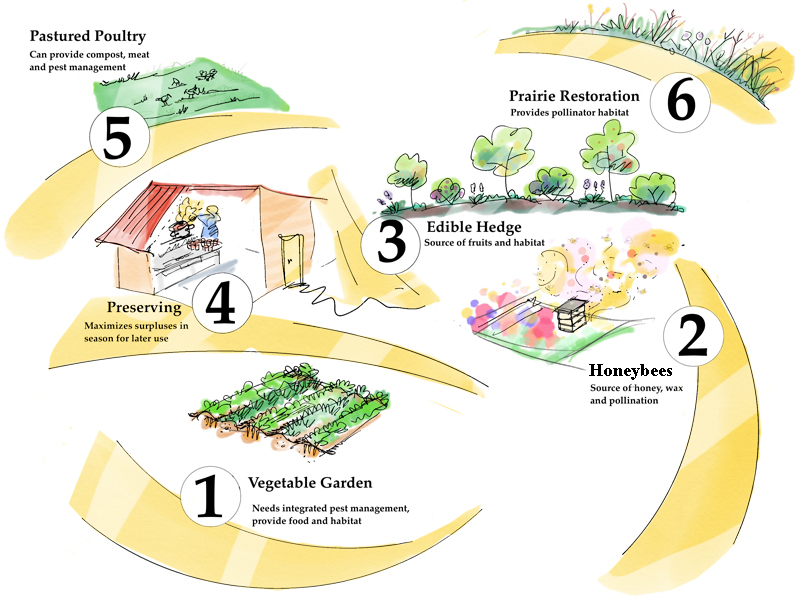
As a community, focusing on Guild Enterprise Production is a great strategy for resilience. Each community can balance nutrition, mixed-land use and area of focus to achieve lasting food security.Your garden has vegetable guilds, and your farm or homestead has a guild of enterprises. And so, too, can your community be a guild of stewards. The image below shows how different properties within a community can share production through trade and sale. It also illustrates how different productions can benefit each other within a larger community ecosystem.
courtesy of Zach Loeks
Consider how compost can be shared between neighbors or how pollinator habitat in a prairie restoration plot can improve honey production and orchard yield.
Your enterprises can provide habitat for beneficial predators in your garden, while neighborhood poultry contribute to integrated pest management. Some neighbors can produce foods, while others preserve the harvest.
Again, the idea is this: If we focus on select production in our small farms, we can balance these with our neighbors for a complete community, both ecologically and culturally, to achieve food security and community resilience.
Every micro-landscape—whether a garden, greenspace or farm hedge—is an opportunity for integrated yield. By designing guilds in our enterprises to simplify management, we build relationships with our community members as fellow stakeholders in a common future.
It’s fall-garden prep time in Central Kentucky—early August—and we just put our cabbage and other cole-crop transplants into the garden.
This is a tough time of year to start something new. We’re elbow deep in herbs to dry and tomatoes to can, the weeds we’ve missed are going to seed, and I’m downright tired. Come October, though, when the tomatoes are gone and fresh herbs are just a dream, I’ll be grateful we planted for fall.
For the purpose of this article, we’ll look at head cabbages (Brassica oleracea): green, red and savoy.
How to Grow Cabbage
Cabbages make wonderful intros and outros for the main garden season. They won’t tolerate the heat and sun of summer’s height, but they’ll thrive in early spring and late summer/fall gardens. Even with another month to six weeks of hot days to come, the cooler nighttimes and shortening daylight will carry the cabbages through.
For spring plantings, start seeds indoors six to eight weeks before the last frost. Harden off the cabbage seedlings, and put them in the garden two or three weeks before the last frost.
For a fall garden, start cabbage seeds indoors in mid- to late-summer, depending on your summer heat and first frost date. Be sure to give seedlings enough time to mature before nighttime temps dip into the 20s.
If you have mild winters, plant cabbage in early fall to overwinter and harvest in early spring.
Plant cabbage in the garden in full sun, 12 to 24 inches apart. If you’re looking for smaller cabbage heads, choose those varieties and plant them closer together. Spring-planted cabbages may grow smaller than those in fall, depending on how quickly the weather heats up. (Cabbage wants to bolt at around 80 degrees F.) Choose your varieties with this in mind, as well.
Cabbage likes consistent watering. Mulch will help to keep back weeds and hold moisture in the soil.
These cool-weather crops tolerate light freezes—28 degrees F or so. Row cover can give you another couple of degrees of protection and is a good idea for brassicas anyway, given the pest pressure from cabbage loopers.
Cabbage is also readily munched on by cabbage worms, cabbage root maggots, slugs, aphids and flea beetles. It’s a wonder we can harvest any at all for ourselves. Pest pressure tends to be less for springtime plantings.
Crop rotation is important, as flea beetles live in the soil, and all of cabbage’s pests are persistent.
Cabbages aren’t like tomatoes that pop off the plant into your hand. You’re going to need a knife. And keep your knife out of the dirt, otherwise you’ll dirty every head you cut after.
Find the stem at the bottom of the cabbage head, and slice straight across, parallel to the soil. You want to cut the stem and not the head, yet you don’t want to cut so low that you’re in the dirt. It’s a balance, but you’ll get the hang of it.
Peel off the loose outer leaves from the head.
Squeeze each cabbage head to determine its readiness for harvest. You want a firm head with leaves well filled-out. Cabbage heads can fake you out, looking like they’re ready but still having space inside. If you wait too long to harvest, the leaves underneath could grow too much and cause the head to crack.
Again, you’ll get the hang of this balance.
It’s best to harvest early in the day so the leaves maintain their crispness. Harvest when the cabbage heads are dry, if possible, or dry them off before storage or packing.
Cabbages store well in the crisper drawer of your refrigerator or, in the case of many cabbages, in a waxed cardboard box in a fridge or walk-in cooler. You might be able to keep yours for a month or more.
Cabbage’s storage traits make it ideal for heavy meals that want to be eaten in wintertime. Think cabbage rolls stuffed with beef, stewed in tomato sauce; corned beef and cabbage; and fried cabbage with apples, bacon and onion.
Cabbage can be eaten in less-heavy dishes, too. You’ve probably enjoyed your share of coleslaw and sauerkraut. Slice cabbage into “steaks” and grill them drizzled with butter and garlic.
And riff on slaw with very thinly sliced cabbage tossed with lime juice and salt for an easy salad.
This veggie is versatile enough to push the culinary envelope, too. Use cabbage leaves as a crunchy, refreshing alternative to flour tortilla wraps. If you’ve spent any time on Instagram, you have seen whole roasted cabbage as a stand-in for roasted meats at holiday meals. (Too much?)
You can preserve cabbage by lacto-fermenting or canning as sauerkraut or by freezing. When freezing, realize the cabbage will thaw with a less-crisp texture, and plan to use it in casseroles and soups.
Cabbage is a versatile ingredient, and it’s good for you, too.
While cabbage may not be a beginner’s plant, it’s great for growers with a few seasons of experience. Get your row cover ready, and add cabbage to your spring and fall plans.
Jenna Lee Panehal-Pelayo runs a mini-farm in Summerville, South Carolina, alongside her husband, Chris. Named Flowertown Charm, the historic 1870s farmhouse is also home to a herd of Nigerian Dwarf goats who enjoy partaking in goat yoga sessions alongside visitors and guests.
Naturally, the goats star in the mini-farm’s popular Instagram account.
The roots of Flowertown Charm stem from Panehal-Pelayo realizing that “the world started changing and people became more dependent on technology and further away from self-sustainability.” In return, she decided to research sustainable traditions, learned how to garden and looked into farm animals.
“We took the leap and we got our first two goats as bottle babies in 2016 and we’ve just been growing our mini-farm from there,” she recalls. “Now we have goats, sheep, pigs, chickens, a mini-cow, dogs, cats, a giant tortoise and bee hives!”
Taking time out from caring for the homestead, we spoke to Panehal-Pelayo about living around goats and how the yoga classes began. We also got the scoop on a giant tortoise who’s come to call Flowertown Charm home.
Bringing Goats to the Farm
https://www.instagram.com/p/CBJ_RwdJKdS/
“I have always had a cow dairy intolerance, and goats were a good way to substitute dairy in my diet that was easier on my digestion,” says Panehal-Pelayo when asked how goats came to be a key part of Flowertown Charm.
“Plus they’re just adorable.”
She adds that when she noticed the goat yoga trend, they hosted a class with a couple of their own goats—and promptly sold out. “So we got more goats and we’ve been doing classes every weekend for three years now and are pretty much sold out every time,” she says. “People just love goats!”
Panehal-Pelayo characterizes the goats at Flowertown Charm as friendly and well-mannered animals. This is due to the way they’re socialized from an early age.
“Many folks like to refer to our goats as acting like dogs,” she explains. “They love attention, they love being cuddled, they like to be on your lap, they follow you everywhere and they love treats too!
“So when you walk into our mini farm you will probably see a stampede of silly goats running towards you just to get all your attention. And they sound hilarious with their adorable goat bleats because they’re excited to see you!”
Giving Goat Milk A Try
https://www.instagram.com/p/B_40VCBH8Q1/
Panehal-Pelayo says that many people initially think goat milk might taste too gamey. But she explains that Nigerian Dwarf goat milk has a higher butterfat content that causes it to “taste creamy and almost sweet, like cereal milk!”
Goat yoga classes at Flowertown Charm take place outside in the sunshine and the breeze.
“You feel so happy inside because you are distracted by silly goats bleating, rubbing up against you for attention, taking a nap on your yoga mat and sometimes jumping on your back to make sure you’re getting that deep yoga stretch just right,” Panehal-Pelayo explains.
“Our goal is to make sure everyone leaves with a smile. I don’t think we have ever not made that happen.”
Introducing the Farm’s Signature Tortoise
https://www.instagram.com/p/B-ozJOIHigU/
If you scroll through photos of Flowertown Charm on social media, you’ll quickly notice that the Nigerian Dwarf goats are accompanied by a resident tortoise. Named Tank, he originally came into Panehal-Pelayo’s life when she resided in Hawaii.
“Last fall we decided to ship Tank here to South Carolina because my parents are traveling more from Hawaii and thought that our farm would be a bigger, better place for him,” she explains. “He shipped via UPS and got here in 36 hours! So we basically inherited him early because he will be living way past my parents and myself. These tortoises live beyond 100 years old, so he will have to be in our will as well.”
Everyone has heard about the curious dog that has eaten something inedible, from too many tennis balls to a stuffed bear, expensive jewelry to rusty bolts. Even the underwear that was left on the floor isn’t safe from a dog.
Well, chicken-keepers beware: Your chickens are indiscriminate eaters, too! Chickens instinctively pick through the ground in search of something edible. If a chicken can get it in its mouth, it’s fully acceptable to them as a food item, whether there is any real nutritional value or not.
The problem with this behavior is that some items a chicken picks up can be hazardous to its health. As a veterinarian, I have taken many items out of chicken crops and stomachs that should not have been there.
Poultry Patients
Take, for example, the time a chicken was brought into my office because it just wasn’t feeling well. The owners noticed their hen was laying down more and felt that she was acting quieter than typical. Her examination revealed what felt like a beanbag inside of her.
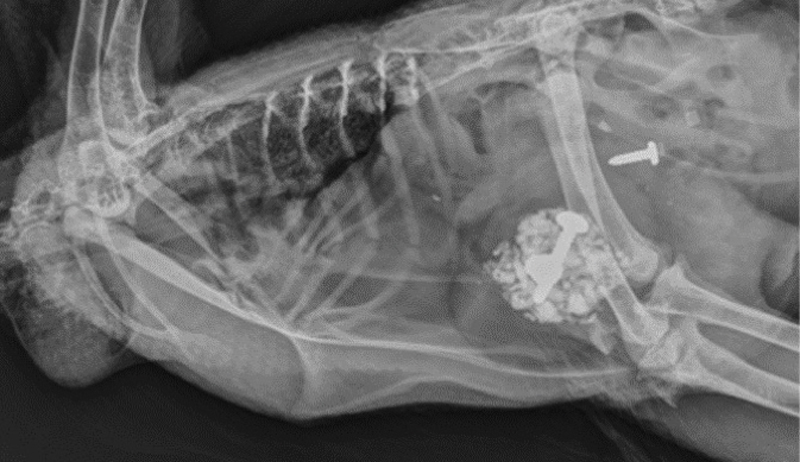
A radiograph (X-ray) of her abdomen exposed that her crop, stomach and intestines were filled with gravel! She had to have several days of laxatives and fluids to help move things along. The hen also required medications to help with ulcers in her stomach and intestines caused by the gravel abrading against the inner surface of her gastrointestinal tract.
She made a full recovery, and her owners made sure she was never allowed to walk on the rocks again!
Another chicken presented after walking around wobbly and acting quiet. A radiograph for her belly showed numerous small objects in her stomach that didn’t look like they would be able to pass out on their own. Therefore, we decided to take her to surgery to remove them.
When we opened up her gizzard, we found she had pieces of glass and a battery from a watch!
She was one lucky chicken. The glass had become ground down and smooth on its sides from grinding against other small rocks and grit in her gizzard—almost the way glass on a beach will become smooth from the sand!
Bad Beef
On a different occasion, a chicken came into the hospital after it had gotten into the garbage the owner had placed outside. There was expired ground beef in the bag, and the chicken ate it all. Her crop was full of this putrid trash, and she was inappetent (lacked an appetite) and depressed.
A culture revealed that this old meat had E. coli growing in it, and now she was sick from it and suffering from secondary kidney disease. She had to have a surgical procedure called an ingluviotomy to remove everything. Take my word for it, it did not smell very pleasant!
After a few days of intravenous fluid and antibiotic support after the surgery, she was able to go home.
Sometimes, even objects that may seem to be benign and normally in a chicken’s environment can prove to be problematic. One hen that was low in the ranks of the pecking order was being bullied away from her food. This caused her to peck at the bedding in her coup, and she ingested more than was safe.
When she finally came into the hospital, her crop was filled to the brim with aspen shavings, and she was severely underweight. It took several evacuations of the crop, followed by intensive supportive care to get her back to health.
Stephanie Lamb
Getting the Lead Out
Although all these previously mentioned items could have been deadly if not addressed appropriately, the ones that are the most problematic have been metallic objects. Countless chickens have come into the hospital with a metallic object identified after a radiograph is taken.
Bolts, screws, wires and nails have all been found. Sometimes the owners are aware that their chicken got into something. But more often than not, the owners are surprised that the chicken found these metallic objects.
I always remind owners that chickens are ground foragers. It’s in their nature to scratch at the ground and dig things up in search of food. Additionally, they are naturally curious and will test anything out as a food item.
There are a few problems with metallic objects being ingested by chickens. First, if the object is sharp or pointy, such as a screw or nail, it has the potential to cause physical damage to the crop, stomach or intestines.
These objects can directly scrape along the wall of the gut and cause irritation, bleeding and pain. This can also create an environment for opportunistic organisms to overgrow and cause infection, further complicating the issue.
In severe cases, these objects can even penetrate through the wall of the gut and lead to serious debilitating infections, pain and even death. Surgery is often needed for the birds to rid them of these objects and help heal the wounds they have caused.
Chicken Toxicity
Probably even more damaging than the physical trauma these objects can cause is the toxicities that can be encountered. Objects that contain heavy metals, such as lead, can cause toxicity in a chicken.
When objects that have lead—such as bullets, wires or even contaminated soils—get into the gut, the stomach acids work away at the object causing lead to be released. This then makes the lead available to be absorbed and get into the blood stream.
Once in the blood stream, lead can circulate to organs and cause damage. Various symptoms might be seen such as inappetence, quiet behaviors, loose stools, wobbly walking, weakness and even seizures.
Sometimes the birds won’t show any signs.
Volodymyr Baleha/Shutterstock
Egg Issues
The big problem that can occur with heavy metal toxicity in a chicken, though, is that this lead can get into eggs if the hen happens to be laying. For the humans consuming these eggs, it could be a major human health problem.
Depending upon how much gets into the egg, it could potentially be above the acceptable levels of lead for a human to consume. It could even get into the toxic range. That nice, backyard, humanely raised, organic chicken egg may not be so healthy after all if this problem is present.
Oh, Lucille
This exact problem occurred with a hen named Lucille not too long ago. Lucille was brought into the hospital for an exam because her owner noticed she had a “leaky” bottom. Stool was dripping from her vent making her bottom rather messy.
When a radiograph was taken to look internally, it was discovered that she had a metal wire in her gizzard!
Based on its location, it was apparent that this spiky object was stuck. Surgery was immediately recommended, and a 1-inch-long threaded wire was pulled out of gizzard from a site where it was already poking through the wall.
After Lucille was recovered from the surgery, a blood sample was sent out for analysis, and the chicken was found to have lead toxicity. Therefore, the chicken was put on treatments geared toward helping heal from the major surgery she just endured as well as treatments aimed at dealing with the toxicity.
The story doesn’t end there, though, because Lucille was still laying eggs. In fact, she had laid an egg just a day before she came into the hospital. This egg was sent out for analysis, and it was found to have 14 micrograms of lead present.
To understand what this means one must first develop a frame of reference for what is and is not considered accepted for lead contamination in foods.
Ideally, food items should not have any lead present as it’s not physiologically needed by the body. However, below certain levels it should not be toxic. The USDA recommends that the daily maximum of lead intake for children be no more than 3 micrograms and for adults be no more than 12.5 micrograms.
This means, in Lucille’s case, if a child ate her egg, they would be consuming nearly five times more than the daily-recommended level of lead intake for a child. Even an adult would be above their daily recommendation.
Additionally, lead can accumulate in tissues and build up to a point where it does reach toxic levels.
The good news is that a veterinarian can treat a chicken that has lead toxicity. This often involves treatment with a chelation medication that works to bind up lead in the body and help it to be excreted.
If a chicken does have lead toxicity, it’s currently recommended that the eggs from birds that have had lead toxicity not be consumed—ever. This means, the bird should be permanently retired as a layer. However, she can still make a good pet.
Be Vigilant
Chickens consuming inappropriate items have the potential to be a real nightmare for the urban farmer.
But fear not. Be vigilant with your observations of your flock. Monitor what they have access to. Create appropriate barriers to places they should not explore. And test your soil for heavy metals. These measures can be helpful prevention tactics.
And always remember that an ounce of prevention is worth a pound of cure!
Sidebar: Signs of Chicken Toxicity
Lead poisoning can be a problem in backyard urban chickens. It can be detrimental to the bird’s health, as well as to the humans who consume the eggs laid by the hens. A chicken with lead poison might present the following signs or show no signs at all.
Vascular System: pale comb, wattles or gum tissue from anemia
Sidebar: Prevention Tips
Just like in chickens, lead toxicity in humans can lead to damage to the nervous system, kidneys and other major organs. It can cause anemia (low red blood cells) and accumulate in the bones. When it damages the nervous system, it can impair an individual’s ability to learn, result in behavioral problems and even cause seizures.
If left untreated, lead toxicity can be just as deadly in humans as it can be in chickens.
Due to this, one can see that heavy metal toxicity in chickens can be a very serious problem to deal with. Don’t worry, though, as there are things that can be done.
Test, Then Layer
First, when getting a flock of chickens, consider having your soil tested for lead.
Next, put down several inches of fresh substrate so that they have layers of safe material to dig through. Make sure to inspect the area where your flock will have access to, and pick up any objects that could be dangerous or contain heavy metals.
Vet Check
Next, if you think your bird is showing any signs consistent with lead toxicity, then take them to your veterinarian. Remember, though: Not all birds with heavy metal toxicity will show outward signs.
So, if your veterinarian thinks it is a good idea to have your birds tested, follow their recommendations. A blood test is a simple procedure that can be done to check for evidence of lead toxicity.
Additionally, test the eggs. The California Animal Health and Food Safety Laboratory will accept eggs from urban flocks and test them for the presence of lead. Other laboratories may also perform this test, so make sure to check with your local poultry veterinarian to find out where you can send samples.
This article first appeared in the July/August 2020 issue of Chickens magazine.
A couple of weeks ago, I received a rather alarmed text from my friend Rose, who keeps a small flock of chickens in Idaho. “WHERE’D HE COME FROM??!!!!!”read the message.
It was accompanied by a photo of a a quintet of fluffy babies, perhaps 3 days old at the most. Amongst the adorable black peeps stood one oddball: a slate-blue fluff. Rose had purchased a half dozen hatching eggs to incubate from a neighbor who supposedly only raised black chickens.
“Is he an albino?” she asked, baffled by the little blue baby.
Thus was Rose introduced to the ofttimes mystifying world of poultry color genetics, where blue, white, and lavender can come from black; where black can come from blue; and where enthusiasts speak in strange notations such as (Bl/bl+), (Pg), and (Co).
While the average backyard chicken-keeper is usually not looking for a lesson in genetics, having a basic knowledge of poultry color genetics is a valuable tool as it can help plan out a beautiful variety of birds or assist in producing specific chicks for sale.
On our farm, we focus on blue-black-splash (BBS) birds. This allows for a variety of colors in our flock without risking a muddled mix that might result should a buff rooster cover a black hen.
A gene is a section of DNA that carries the blueprint for such traits as color. Austrian scientist Gregor Mendel discovered the keys to hereditary traits through his studies in the mid-1800s.
Mendel’s Laws of Inheritance state that genes occur in pairs and that each parent contributes one gene to that pair. That gene pair determines how the hereditary trait manifests in the offspring.
When a rooster and the hen contribute both contribute Gene A, the genetic state is called homozygous (homo- comes from the Greek word meaning “the same”). When a rooster contributes Gene A and a hen contributes Gene B, the genetic state is called heterozygous (hetero- comes from the Greek word meaning “different”).
Side note: This is how people end up with the AB blood type.
Ana Hotaling
Dominant, Codominant & Recessive Genes
Genes can be either dominant (manifesting in both homozygous and heterozygous states) or recessive (manifesting only in the homozygous state).
If a rooster’s Gene A and a hen’s Gene A are both dominant, the result would be homozygous dominant (same genetic state) offspring AA. But if a rooster’s Gene a and a hen’s Gene a are both recessive, the result would be homozygous recessive offspring aa.
If a rooster’s Gene A is dominant and a hen’s Gene a is recessive, the result would be heterozygous offspring Aa. However, if a rooster’s Gene A and a hen’s Gene B are both dominant, the result would be codominant offspring AB, showing both colors equally.
In poultry genetics, both black (BB) and white (WW) are dominant. So breeding a black rooster with a white hen would result in a black-and-white chicken.
The Blue-Black-Splash Coloration
In color genetics, the genetic code Bb represents blue while the genetic code for black is BB. The ‘b’ comes from splash (genetic code bb). Splash coloration in chickens manifests as a white or very muted grey (in other words, black) ‘splashed’ with irregular splotches of black or blue.
Splash chickens are beautiful, eye-catching birds and are often in high demand. I once had a customer who repeatedly asked to buy a dozen splash chicks … which is not as easy to breed as it sounds.
When it comes to breeding for Blue Black Splash, gender does not matter. These colors are not sex linked.
The rooster and hen can be any of these three colors. What does matter is which colors the parent birds are, though. This will determine the percentage of the blue-black-splash coloring in the chicks:
black (BB) X black (BB): 100 percent black (BB) chicks
black (BB) X blue (Bb): 50 percent black (BB) chicks, 50 percent blue (Bb) chicks
black (BB) X splash (bb): 100 percent blue (Bb) chicks
blue (Bb) X blue (Bb): 50 percent blue (Bb) chicks, 25 percent black (BB) chicks, 25 percent splash (bb) chicks
blue (Bb) X splash (bb): 50 percent blue (Bb) chicks, 50 percent splash (bb) chicks
splash (bb) X splash (bb): 100 percent splash (bb) splash
As it turned out, Rose’s egg seller did have a blue hen in his flock. This, then, explains how the mystery fluff appeared in her incubator.
Not that she minds. She plans on getting more hatching eggs from her neighbor with the hopes of hatching more blues that, down the line, may someday yield splash chicks.
In recent years, the U.S. has been hammered by a variety of natural disasters causing damage to property and threatening lives. There were so many tornadoes, flash floods, fires and hurricanes in 2018, for example, that the year saw the fourth-highest number of billion-dollar weather-related disasters.It also was the fourth-costliest for such disasters, with an estimated $91 billion in damages. Hundreds of thousands of people had their lives and livelihoods turned upside down. If you have a plan for an off-the-grid emergency, you can ensure the safety of your family, home or property. New emergency preparedness technology can help keep you safe in a survival situation.
Many of these devices premiered at last year’s Consumer Electronics Show in Las Vegas, Nevada. They highlight solutions to key components of emergency preparedness. Most notably, the event featured communication, emergency lighting and signaling, back-up power, food preparation, water, and disaster monitoring and assessment devices.
Communications
When the power goes out and you’re forced to take shelter or evacuate, you need to keep informed, situationally aware and connected. Communication capabilities are a key part of emergency preparedness.
John D. Ivanko
ION Audio Survival Scout Solar Powered Speaker
The Survival Scout speaker developed by ION Audio is designed to be the high-tech modern evolution of the classic emergency hand-crank radio. The relatively compact, 81⁄2-by-8-by-9-inch Survival Scout keeps you informed on severe weather developments from the safety of shelter without the need for power, cellular connectivity or an internet connection.
The speaker comes equipped with standard AM/FM radio. It also has seven special National Oceanic and Atmospheric Administration weather bands for emergency weather notifications. The speaker’s interface also includes an aux input and Bluetooth connectivity for pairing with mobile electronics. It features a built-in LED light strip, too.
The rugged Survival Scout features an IPX4 water-resistance rating and offers a wide variety of options to keep its 2,300-mAh battery charged. These includes a built-in solar panel, standard wall outlet charger and even a hand dynamo crank.
With USB ports located on the front of the speaker, the captured electricity can also be used to charge a phone or mobile electronics for an emergency call.
Cat Rugged Smartphone
A cell phone is indispensable during an emergency. But battery life and durability during a disaster can be a problem.
Less so with a Cat phone. The ultradurable midrange Cat S41 smartphone features an extremely durable and grippy rubber case with a massive 5,000-mAh battery. It can provide as much as 38 hours of talk time.
Furthering the rugged design, the S41 also features MIL-SPEC specifications. It has an IP68 waterproof rating, too, allowing full submersion in up to 6.56 feet of water for an hour.
Lighting is key for navigation and safety. But when disaster strikes, you don’t want to fumble with complicated, heavy or potentially dangerous kerosene or gas lanterns.
LuminAID PackLite Nova USB
Emergency lighting doesn’t get much simpler than the PackLite Nova USB, an inflatable waterproof solar lantern by LuminAID.
A sunny day to charge and a press of a button is all it takes to get the PackLite Nova USB to produce as much as 75 lumens of safe light for five hours with an array of internal LED lights. It takes only a couple of seconds and a few puffs of air to fully inflate the lantern. This provides buoyancy and protection.
Power & Batteries, Recharging with the Sun
Mobile battery life can be a precious resource if power is taken out for an extended period of time. Keeping a small battery bank on hand can help, but it’s temporary. So keep them charged with some solar power for emergency preparedness.
Sunnybag Iconic Solar Backpack
Many emergencies involve evacuating or moving to dedicated shelters. In these situations, staying equipped, prepared and connected while on the go are your keys to safety.
With built-in charging capabilities and as much as 1,220 cubic inches of storage space, Sunnybag’s line of solar backpacks can be the perfect bag for carrying vital supplies and keeping communications online when on the move.
Sunnybag’s Iconic stylish solar backpack fits laptops as big as 17 inches. It is built with sturdy polyester fabric and mounts an included 7-watt solar panel on the bag’s exterior. The internals of the Iconic feature a variety of zippered pockets for convenient packing.
It also features padded compartments for tablets, laptops and other fragile products. Sunnybag has thoroughly padded the section of the bag that rests on your shoulders and back for added comfort during travel.
The solar energy harvested from the external detachable solar panel outputs via a USB plug that sits in one of the Iconic’s internal compartments. While outside on a sunny day, two hours is all it takes for the 7-watt solar panel to fully recharge a modern smartphone.
Mobile devices already fully charged? The Iconic’s solar panel easily connects to a portable USB battery bank to store the surplus power for future use.
For those looking to go lighter, Sunnybag also produces the Explorer+. This smaller backpack can accommodate 15-inch laptops with a total volume of 915 cubic inches and a detachable 6-watt solar panel.
The Bigfoot solar battery bank from ToughTested keeps mobile electronics charged and connected for emergency situations. With a massive 24,000-mAh internal battery and 400-mAh solar panel for passive recharging, the Bigfoot can charge up anything from mobile electronics to small laptops using its built-in USB and USB-C ports.
It’s built to be reliable in rough conditions when needed most. The Bigfoot weighs 1.65 pounds and is built with study plastics, featuring rubber covers on charging ports and bumpers to protect the battery bank from falls. Also, its IP67 waterproof rating means the device can be safely submerged under 3 feet of water for as long as 30 minutes.
The Bigfoot also includes a potentially life-saving feature. The solar power bank’s design incorporates a built-in LED flashlight with a special mode that blinks out the SOS pattern, on repeat.
With a full charge, it can produce this emergency signal for an estimated 88 continuous hours.
Cooking & Water Purification
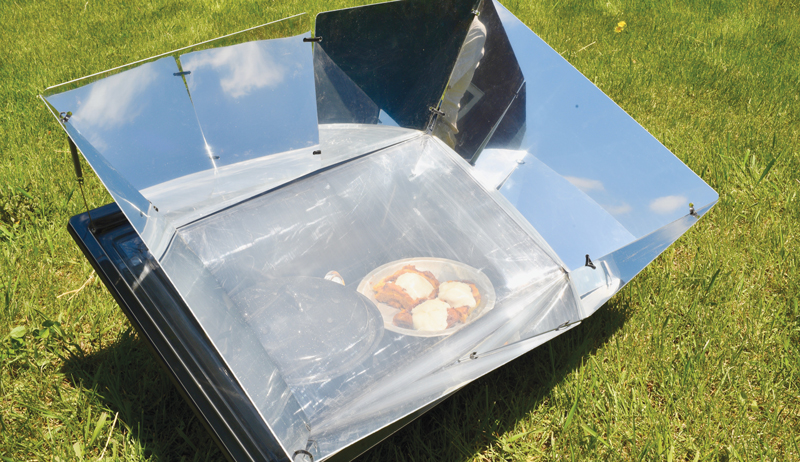
When traditional refrigeration and power goes out, emergency preparedness requires a solid plan for safely cooking. You also need to prevent foods from spoiling. Solar ovens offer one of the easiest ways to cook fresh produce, meats and other perishable foods.
You can even pasteurize water without the need for gas, wood or any electricity.
John D. Ivanko
GoSun Sport Solar Oven
The GoSun Sport has a uniquely narrow folding design that allows for impressive portability. Its central 2-foot long and 2.1-inch wide cooking chamber with a pair of fold-out solar reflector wings that concentrate solar energy, allowing the oven to reach temperatures as hot as 550 degrees Fahrenheit.
Perfect for safely cooking a delicious meal of meats, produce or even pastries using sunshine.
Solavore Sport Solar Oven
The Solavore Sport features a more traditional boxy solar oven design with a fold-out reflector. It provides significantly more oven space while maintaining a max temperature of 300 degrees Fahrenheit.
The Solavore Sport’s design allows it to pasteurize water in a pinch. It heats water for an extended period of time and authenticates safety with a water-pasteurization indicator.
In the immediate aftermath of an emergency, safely inspecting the situation and assessing damage can be crucial for deciding the proper course of action.
Over the past five years, consumer drones with photo and 4K video capabilities have exploded in popularity. And now prices are more affordable, too.
Drones provide a quick way to get an eye in the sky and investigate emergency situations. You can review livestock and assess buildings, all from the safety of your front porch.
Increasingly, people use drones to capture aerial documentation of damages, a potentially valuable asset for expediting insurance assessments.
DJI Phantom 4 Pro and DJI Spark
The more popular drones include DJI’s Mavic and Phantom 4 Pro lines with prices ranging from $1,000 to $2,000. DJI’s $400 Spark drone fits in the palm of your hand.
These drones provide as much as 30 minutes of flight time. They also offer technologies such as GPS stabilization and collision-avoidance systems that help make drone flights easy and safe.
Water Supply
Most people “living off the grid” do so with photovoltaics powering their home. But these systems often still tie into the grid.
In the event of a power outage, grid-tied systems go down as well. Then, pumping water from a well or letting it flow from a faucet is no longer possible.
Why not take your water supply off the grid as part of you emergency preparedness, too?
John D. Ivanko
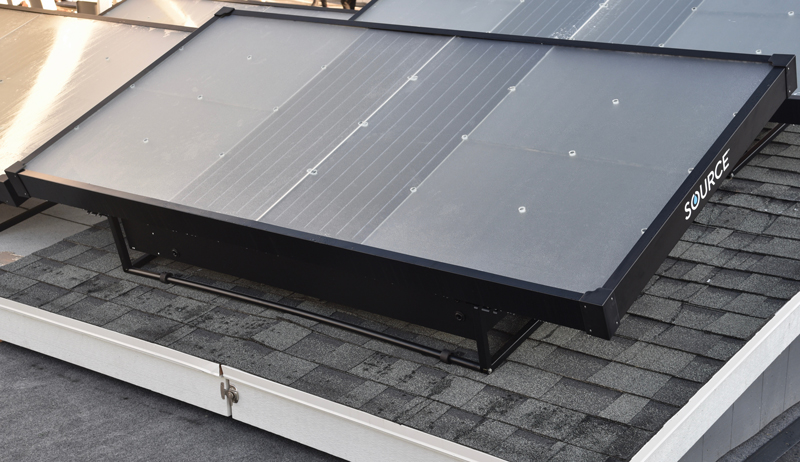
Zero Mass Water SOURCE Hydropanel
Zero Mass Water has engineered a safe, sustainable and easy way to provide clean drinking water to your home with their SOURCE Hydropanel.
Their proprietary collection system can capture between 8 to 20, 16.9-ounce bottles of water per day, depending on the climate where it’s located. Unlike well pumps, the SOURCE is completely self-powered thanks to a built-in solar panel, with an internal battery to power moisture collection on cloudy days.
This article appeared in Living Off the Grid, a 2019 specialty publication produced by the editors and writers of Hobby Farms magazine. Living Off the Grid includes stories on permaculture, growing plants without seeds and long-term produce storage. You can purchase this volume, Hobby Farms back issues as well as special editions such asBest of Hobby Farms and Urban Farm by following this link.
Well-drained soil is an important requirement when planting fruit trees. Read about the soil preferences of pretty much any variety, and you’ll see the term “well-drained soil” over and over again.
That’s not to say you want to plant fruit trees in a location as dry as a desert. To the contrary, fruit trees need plenty of water to thrive. But like many trees, they’re not fond of sitting with their roots in water-logged soil for days on end.
Roots need oxygen to function properly. So if they’re submerged in water for prolonged periods of time, trees can essentially drown as their roots rot and die.
As a result, choosing a well-drained location for your fruit trees is an important step to ensure their long-term health and productivity. And if your preferred location doesn’t drain well enough, you could be in for quite a head-scratching challenge.
I’ve discovered this over summer, while planning out a planting of flowering crabapple trees.
My vision has been clear for years. I’ve wanted to plant two rows of pink-blossomed crabapples inside the entrance to my orchard, marching up the hill to the upland location where my apple and pear trees are planted.
I can picture exactly how it will look in 15 or 20 years, with crabapple branches arching over the path to form an awe-inspiring tunnel of blossoms.
But I’ve had concerns about my chosen location for the trees. I intended to plant them not far from a low spot in the orchard where standing water frequently gathers after heavy rains. Although water doesn’t visibly gather where I’d planned to plant my crabapples, I was concerned enough about the condition of the subsoil to dig holes in advance of purchasing the trees, just to see how well the holes disperse heavy spring and summer rainfall.
So far, I’ve been disappointed with the results. While the uppermost holes drain reasonably well—they’re heading steadily upland, remember—the holes at the bottom of the slope drain very poorly. Following every significant rainfall, the bottom holes fill almost completely to the brim with water, and they require two or three days to drain back out again.
The culprit is the heavy clay soil on my farm, which isn’t very conducive to quick draining in low spots. Unfortunately, this means that potential solutions for addressing the issue are complicated.
On a dry day, when the holes were empty, I used post-hole diggers to penetrate deeper into the ground. I wanted to see if I could punch through a layer of clay and find more permeable soil underneath.
But it didn’t work. Once I got through another foot of clay, water started leaking in from surrounding soil. Clearly the water table is pretty high at the bottom of this slope, at least following a heavy rainfall.
Now I’m pondering whether I could dig a shallow ditch—a riverbed, if you will—to provide a means for water to drain out of the soil and flow downhill to an even lower location outside of my orchard. An even better option would be to install a subsurface drainage tile system. I suspect, however, this would be an expensive and time-consuming project.
I suppose I could just accept that this location soil doesn’t have naturally well-drained soil. Instead, I can build up sturdy berms on which my crabapples could survive and thrive. This way, they’d be raised safely above the water-logged subsurface. Or I could revise my plans and plant my crabapples somewhere else entirely.
I must admit the simplicity of the latter option holds some appeal. But I’ll ponder the drainage challenge a bit longer before making a decision.
I’m not ready to give up on my vision for a beautiful orchard entrance just yet!
Late summer and early fall typically bring dry, hot weather in many parts of the US. While we’re battling the heat and trying to keep our livestock hydrated, fire is another threat to the farm when it’s dry.
Here are some tips to keep in mind to help prevent the tragedy of a barn fire.
In Your Barn
What occurs in and immediately around your barn is a critical factor in fire prevention.
No Smoking
First and foremost, prohibit smoking. Period.
A discarded butt is all it takes to set off a flame in a barn where, by its very nature, prime kindling in the form of bedding, dust, dried forage and other flammable equipment resides.
Stay Ready
Secondly, a small but mighty farm investment is a fire extinguisher.
Depending on the size of the barn (or if you have multiple facilities), you may consider multiple extinguishers in well-marked areas. Make sure you know how to use the type you have and educate others on how to use it as well.
Smoke detectors are another reasonable investment to make.
If possible, consider storing feed and bedding materials such as straw and hay or shavings in a separate location. Not only is this helpful for pest control, but it also reduces the density of flammable materials adjacent to the barn and animals.
Likewise, consider the parking location for machinery and cars. Keeping gas tanks and other gasoline-infused materials far away from the animals in a barn is always a good practice.
Keep paint and other flammable maintenance materials out of the barn for the same reason.
Wiring
While fans and other electrical appliances are indispensable and commonly used in barns, wiring presents a fire hazard, especially when exposed to the elements and pests such as rodents and birds that may chew and fray cords. If you have exposed wiring throughout the barn, make a habit of routinely checking it for signs of wear and replace accordingly.
Not sure how to evaluate wiring and other electrical aspects on the property? Consider having a qualified electrician visit annually for an inspection.
Hay, Hay
A special consideration unique to the agricultural sector is hay. When hay is cut, it is not always completely dry (or cured). As the hay continues to dry after baling, chemical reactions take place that produce heat.
If a hay bale is baled and stacked tightly, the center of the bale may not be able to dry completely. Instead, as it sits, temperatures within continue to rise. In rare instances, temperatures can become high enough to result in spontaneous combustion.
This is most likely to occur within roughly six weeks of baling. Older bales that have been sitting around for months are not likely to burst into flames.
If you are concerned about a fresh hay delivery not being dry enough, examine it with a temperature probe. Temperatures above 150 degrees F within a bale are at risk of combustion.
Call your local fire department of advice on how to safely mitigate this fire risk.
A few fire hazards exist outside of the barn, as well.
Lightning Strikes
Lightning strikes are a common cause of fire in some places—especially a farm on flat, open countryside.
If your barn is the highest structure within the immediate area, consider having a lightning rod (or multiple rods) professionally installed on your structure to direct any strikes safely into the ground.
If you utilize a compost pile to dispose of animal waste on your farm, be aware that this can generate heat and therefore must be managed properly. If not, temperatures that reach above 180 degrees F pose a risk of spontaneous combustion, like incompletely dried hay bales.
Frequent monitoring of the temperature of the compost pile in the summer helps prevent interior temperatures from rising too high. Regular turning of the pile and/or breaking it up into small piles to increase exposure to ambient air circulation reduces the overall temperature.
Being aware of the fire risks unique to your property and geographical location are key to prevention and preparedness.