Categories
Poultry

What Can Chickens Eat: Holiday Edition

What can chickens eat and what can chickens not eat after the holidays is good information to know ahead of time to avoid any problems.

What Can Chickens Eat: A Holiday Leftovers List

With a fridge full of delicious side dishes your loved ones raved over but now receive looks of disdain, your chickens are about to get yet another fabulous meal. But not every extra is appropriate or healthful for your birds. Here’s our helpful list so you know what’s what.

Also read – Feed Chickens Food Scraps To Reduce Waste

Chocolate: A No-Go Treat

While we humans might consider chocolate heavenly, our chickens don’t. Chocolate toxicosis can occur in birds, dogs and other companion and livestock animals.  The specific culprits are the methylxanthines theobromine and caffeine, two substances found in everything from cocoa-bean hulls and dry cocoa powder to milk and dark chocolate.

Depending on the amount and type of chocolate consumed, an animal can experience excess urination (diuresis), excessive thirst (polydipsia), vomiting, diarrhea, restlessness, seizures and tachycardia. Coma and death may soon follow.

While chocolate toxicosis typically stems from an animal ingesting excessive amounts of chocolate, lesser amounts of chocolate can be deadly to a smaller, lightweight animal such as a chicken. Just three ounces of semi-sweet chocolate can prove lethal to a 10-pound animal. If you are overloaded with holiday chocolate, consider sharing it with neighbors and colleagues versus your birds.

Read more: Avoid giving these toxic treats to your chickens!

Avocado: Toxic to Chickens

Avocado may not be a part of many holiday traditions, but in many Latino households, it’s a staple of the festivities. Because it oxidizes swiftly, avocado is one of the first things to spoil.

If your avocado dish—or your fresh or sliced avocado—starts to turn, don’t give it to your chickens! Avocado is one of the most toxic plants … and not just its flesh but its skin, seed and leaves. These are known to cause myocardial necrosis, cardiac failure and death to mammals and birds.

According to the Merck Veterinary Manual, parakeets fed 0.31 ounces of avocado flesh died within 48 hours. If you have a surplus of avocado-containing food, your best bet is to throw it away. Do not add it to your compost pile, as wild birds and animals—and foraging chickens—may come across it and succumb to toxicosis.

Potatoes: Cooked Is Best

Potatoes are plentiful during the holidays, gracing the dinner table mashed, roasted, fried, in pancake form and many other preparations. I have yet to have a Christmas in which my fridge wasn’t filled with tubs of mashed and roasted potatoes.

Are potatoes on the when can chickens eat list? Yes … and no.

Potato skins, especially green-tinged ones, contain a toxic alkaloid called solanine.  Solanine affects both the nervous and digestive systems, causing vomiting, diarrhea, disorientation, stupor and depression. Fortunately, we humans prefer our potatoes thoroughly cooked, so feel free to share your extras with your birds.

Leftover Poultry Your Birds Can Eat

The centerpiece of many of our holiday menus is a roast turkey, goose or chicken. While many intrepid home cooks serve leftover poultry in sandwiches and soups, there’s often still plenty left in the fridge as our taste buds grow tired.

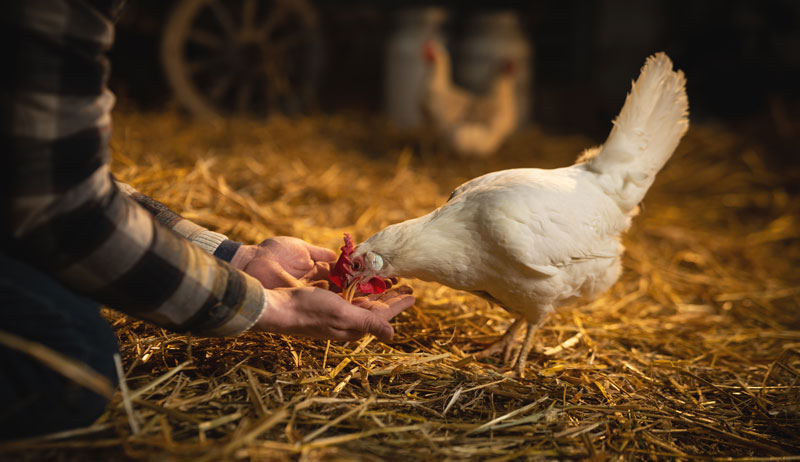
Is chicken (and other roasted birds) on the what can chickens eat list?  The answer is yes. Chickens are not vegetarians.

Your hens are omnivores and will eat both plant- and animal-based foodstuffs. It may seem odd or wrong to offer your poultry remainders to your flock, but your birds do not know they are eating a fellow bird. So go ahead—feed your chickens your leftover poultry.

Ham: Small Pieces Only

Ham is preferred by many for the holidays and it’s on the what can chickens eat list. Chickens adore ham leftovers.

The antics as one hen runs off with a chunk of ham, chased by the other birds, almost make the price of a honey ham worth it. If you plan to share your leftover ham with your flock, it can be best to dice it first, then offer it in small amounts. Ham is extremely salty, and excessive salt consumption by chickens can lead to salt intoxication.

Read more: Chickens aren’t vegetarians, so go ahead and give them meat.

Sugar and Sweet Treats: Keep It Light

What are the holidays without sugar? Cakes, pies, cookies, tarts, trifles, you name it … sugar is everywhere!

Bear in mind that, just like with humans, too much sugar is not a good thing for our birds. Instead of dumping an entire tub of gingerbread in front of your flock, offer perhaps one or two cookies per day, broken up into pieces. And make sure there is no chocolate!

Chickens also love sweet leftovers such as pecan pie and fruitcake. The nuts and dried fruits are a special treat for them, especially if they are all-natural or organic.

Onions: Flavorful but Risky

While not usually served on their own, onions often add flavor to festive roasts and side dishes. Are onions on the what can chickens eat list? Like potatoes, the answer is yes and no.

Eaten in small amounts, the most damage onions will do is give eggs an odd flavor. Eaten in excessive amounts, onions can cause anemia.

What Can Chickens Eat Safely: Moderation Matters

Whichever leftovers you offer your chickens, be they vegetables, starches, or proteins, bear in mind that moderation is the key. You may want to empty your refrigerator, but your birds should not be given a giant smorgasbord. At most, they should be given one or two handfuls of leftovers per day.

While they will happily gobble everything up, it is vital that they continue to draw their main nutrition from their formulated chicken feed. This ration provides the right percentage of nutrients for their health and development.

Chickens that have gorged on human leftovers will not touch their feed. Several days of feasting can be detrimental to their health. Your best bet—and theirs—is to start offering your chickens small amounts of leftovers well before you get tired of seeing them in your fridge.

What Can Chickens Eat: Final Thoughts

After the holiday celebrations are over, it can be tempting to empty the fridge straight into your chickens’ feed bowls. While many leftovers are safe in small amounts, it’s important to know which foods to avoid and which can be shared. Moderation is key—your flock’s main nutrition should still come from their regular feed, with holiday treats offered sparingly.

By planning ahead and knowing what’s safe, you can treat your chickens to a few festive extras without putting their health at risk. A handful of carefully chosen leftovers can be a fun reward for your birds, helping reduce waste while keeping your flock happy and healthy long after the holidays are over.

This article about what chickens can eat and what chickens can’t eat was written for Hobby Farms and Chickens magazines. Click here to subscribe.

Categories
Projects

Needle Felting Basics: Tools, Wool & How to Start

Needle felting has become a popular craft for creating small, sculpted animals, ornaments, and decorative objects from wool. The process appears almost magical to anyone seeing it for the first time—simple fibers gradually transform into firm, detailed shapes through repeated needlework.

As interest in handmade fiber arts grows, many crafters are discovering needle felting for its accessibility and charm. It requires minimal space, only a few basic tools, and offers quick, satisfying results for beginners and experienced makers alike.

This rise in popularity leads to a common question: What exactly is needle felting? Is it a new crafting trend or a time-honored technique with deeper roots? The answers may surprise you.

The History and Modern Appeal of Needle Felting

Needle felting has its roots in centuries of wool crafting. Traditional felting was primarily functional—large sheets of felt were made for clothing, rugs, or insulation rather than decorative items. This long-standing wool-crafting tradition laid the groundwork for today’s creative fiber arts.

Modern techniques emerged in the 1980s, offering a way to sculpt wool into detailed, three-dimensional forms. The craft quickly gained popularity because of its versatility: crafters can create animals, ornaments, dolls, and other 3D felted creations with relatively simple tools and small amounts of wool.

Understanding the Needle Felting Process

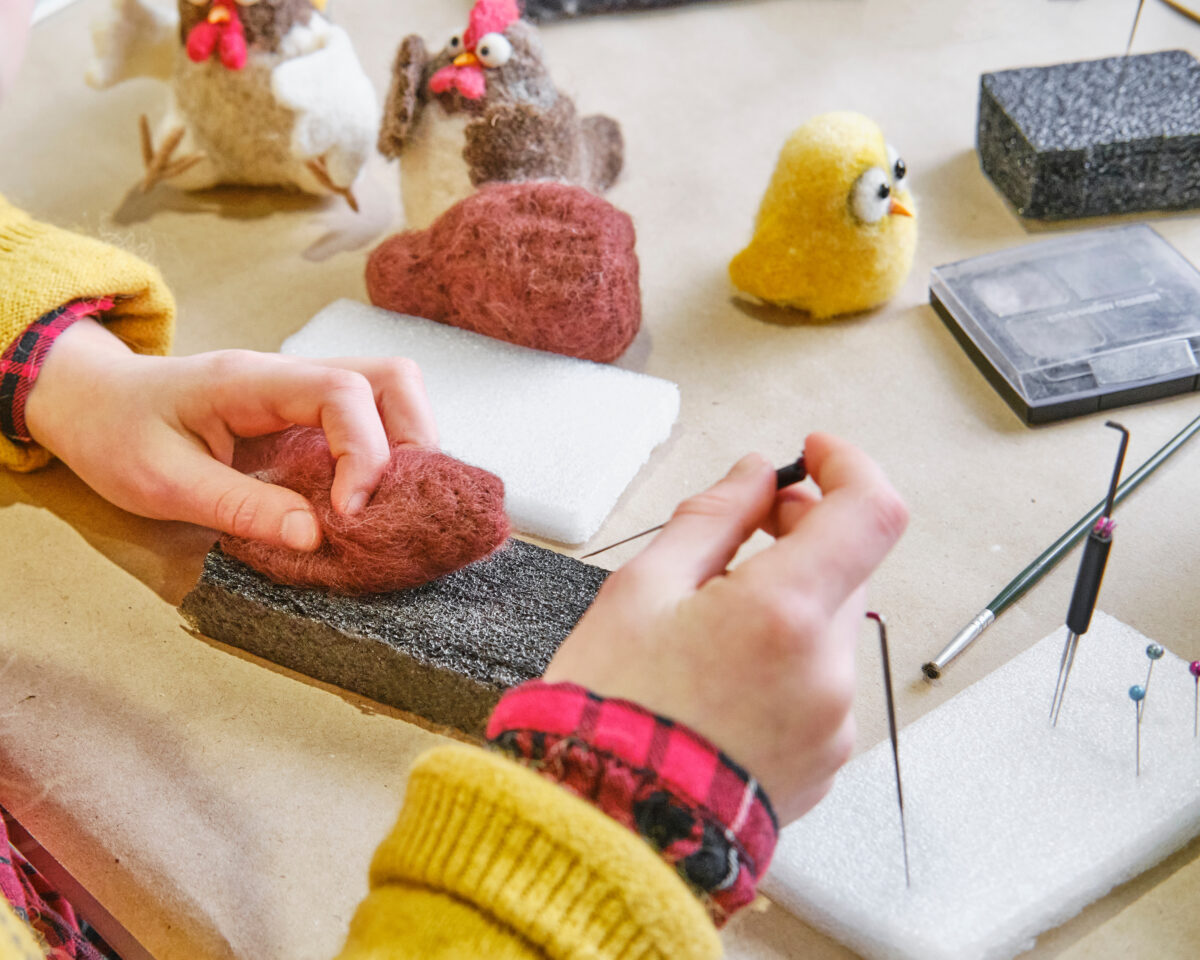
Needle felting, often called dry felting, is a fiber-arts technique that uses a barbed or notched needle, wool fibers, finger protectors, and a small foam or wool pad. By repeatedly inserting the needle into the wool, the barbs catch and tangle the fibers, gradually compressing them into a dense piece of felt. This controlled friction is the foundation of many beginner needle felting techniques and 3D wool sculptures.

A second felting method, known as wet felting, combines hot water, soap, and agitation to bond fibers into a solid sheet. Wet felting is typically used for larger or flatter projects such as bags, coasters, or wall art. In contrast, needle felting is ideal for shaping small, three-dimensional forms, detailed figures, or decorative ornaments.

The two processes also create different textures. Wet-felted pieces are generally smoother and more uniform, while needle-felted items have a slightly more textured surface that works well for sculpted animals and other miniature designs. Because it excels at shaping tight details and small components, needle felting remains the primary method for crafting the popular felted animals and characters seen in today’s fiber-arts community.

Needle Felting Project Ideas: Endless Possibilities

When it comes to felting projects, the only limit is your imagination. While larger items like hats, bags, or blankets are typically created with wet felting, dry needle felting excels at producing small, detailed, and three-dimensional objects. Beginners and experienced crafters alike can create a wide variety of figures, from woodland animals such as foxes, rabbits, hedgehogs, and owls, to pets like cats, dogs, and even farm animals like goats, sheep, and horses. Decorative items like flowers, mushrooms, trees, pumpkins, and houseplants are also popular, as are whimsical creations including fairies, dolls, and snowmen. Needle felting is perfect for crafting miniature keychains, ornaments, and unique gifts. Even insects, birds, turtles, and frogs can be sculpted with patience and practice. By layering wool, blending colors, and shaping fibers carefully, nearly any subject—real or imaginary—can come to life as a charming 3D wool sculpture.

Needle Felting Project Ideas: Quick List

  • Animals: Bears, Beavers, Bees, Birds, Cats, Dogs, Foxes, Frogs, Goats, Hedgehogs, Horses, Llamas, Mice, Owls, Penguins, Rabbits, Sheep, Snails, Spiders, Turtles

  • Plants & Nature: Cactus, Flowers, Mushrooms, Trees, Pumpkins, Houseplants, Fruits

  • Whimsical & Decorative: Dolls, Fairies, Snowmen, Ornaments, Keychains

Essential Felting Tools and Supplies

One of the reasons needle felting appeals to beginners is its simplicity. The craft requires only a few basic supplies, making it easy to set up a dry felting workspace even in small areas. Most beginner needle felting kits include everything needed to start shaping wool into small figures or decorative pieces, but supplies can also be collected individually.

A compact toolkit fits neatly into a small box or container, which makes needle felting ideal for crafters with limited storage or work surfaces. Whether choosing a complete kit or assembling items separately, the following needle felting tools form the core of any successful project.

needle felting felt wool craft DIY projects

Choosing the Right Needle for Needle Felting

Of course, we must start here. The needle is as essential as the wool itself. But not just any needle—you’ll need a notched needle especially for needle felting.

These needles are sold in a variety of sizes with different gauges ranging from 32 to 42. Lower numbers equal bigger needles, and the size/gauge of the needle will have a direct effect on the result of your project in terms of appearance. 

Protecting Fingers During Needle Felting

These are important! The rapid movement of the needle during the felting process is mesmerizing to watch, but also somewhat dangerous to any fingers that may be nearby.

Protect your vulnerable fingers with finger protectors made of leather, rubber, silicone or another protective material. And once you have the finger protectors, don’t forget to wear them!

Safety first! Needles are sharp, so don’t get hurt or poke yourself. When you’re hurriedly poking the wool, it’s easy to slip.

Using a Felting Pad for Safety

You might not think of this immediately, but as soon as you begin needle felting, you’ll quickly realize the need for a protective pad between your project and the table underneath. Needle felting pads are usually made of foam or of felted wool, and they provide a helpful barrier that gives you a sturdy work surface and protects your table or countertop. 

Selecting Wool for Felting Projects

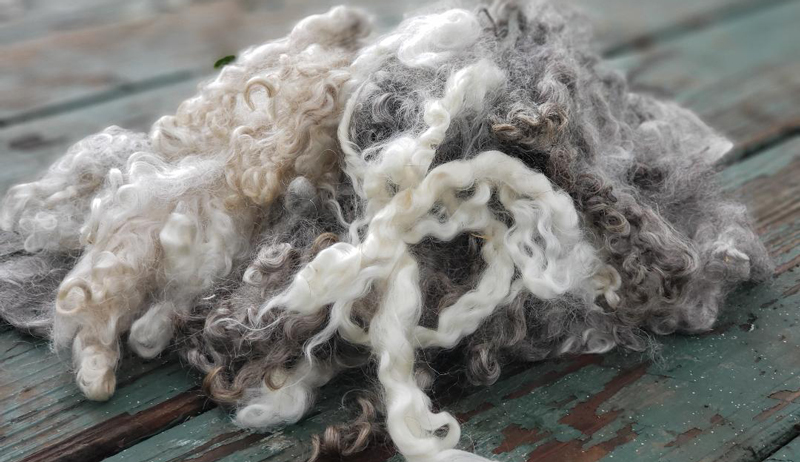
The type of wool you use can make a big difference in needle felting. While many kinds of wool can be felted, some fibers are easier to work with than others. Carded or combed wool—often labeled as roving, tops, slivers, or batts—is ideal for most projects. These forms are cleaned, aligned, and ready for shaping into detailed 3D figures or ornaments.

Finer wools, such as Merino, are silky and soft, but can be trickier for beginners because the fibers are more prone to slipping. Coarser wools, such as Jacob or Icelandic wool, provide more friction, making shaping and layering easier.

Obviously, if you have a flock of sheep, you’ll want to try spinning wool and felting with wool from your own sheep, regardless of their breed. But if you don’t have sheep, there’s no reason you can’t hop online and order yourself some wool, especially for felting. 

Other wool types may be used strategically:

  • Raw wool is unwashed and not recommended for felting.

  • Scoured wool has been washed but may still require preparation before use.

  • Core wool can serve as filler for larger projects where the interior is hidden.

Synthetic fibers are also an option, providing an affordable way to experiment with needle felting before investing in natural wool.

Tip: When creating 3D wool sculptures, start with a larger shape than needed; wool compresses as it is felted. Layer and blend different colors gradually to achieve subtle shading or realistic textures.

From Wool to Finished Project

Once you have your needle felting tools and wool ready, the next step is turning fibers into a finished creation. Needle felting is a process of shaping and compressing wool, building form layer by layer until the desired figure emerges.

  1. Form the Base Shape
    Begin by shaping your wool into a rough outline of the object you want. For example, an animal’s head might start as an egg or oval shape. Remember that wool compresses as you felt, so start slightly larger than the final size.

  2. Felt the Core
    Using repeated needle pokes, compress the wool to create a firm structure. Core wool or less expensive fibers can be used for hidden areas to conserve higher-quality colors.

  3. Add Color and Detail
    After establishing the basic shape, layer your chosen wool colors over the core to create the final appearance. Smaller details—like facial features, paws, or ears—can be sculpted separately and attached by felting extra fibers at the joining points.

  4. Blend and Shape
    Mixing colors for shading is simple: layer different fibers and gently pull or felt them together. Continue repeated needling until fibers are firmly interlocked and the surface is smooth yet textured as desired.

  5. Final Touches
    Adjust proportions, refine edges, and add tiny details until your 3D wool sculpture is complete. Patience and repetition are key—needle felting is a craft that rewards careful, consistent work.

Today, needle felting is celebrated for being both accessible and endlessly creative. From beginner projects to intricate designs, the process allows for experimentation with shapes, textures, and color blending. Whether for personal enjoyment or handmade gifts, modern needle felting projects continue to inspire fiber artists around the world.

This article was written for Hobby Farms magazine. Click here to subscribe.

Categories
Animals

Fiber Goats Explained: Breeds, Fleece, and Farm Tips

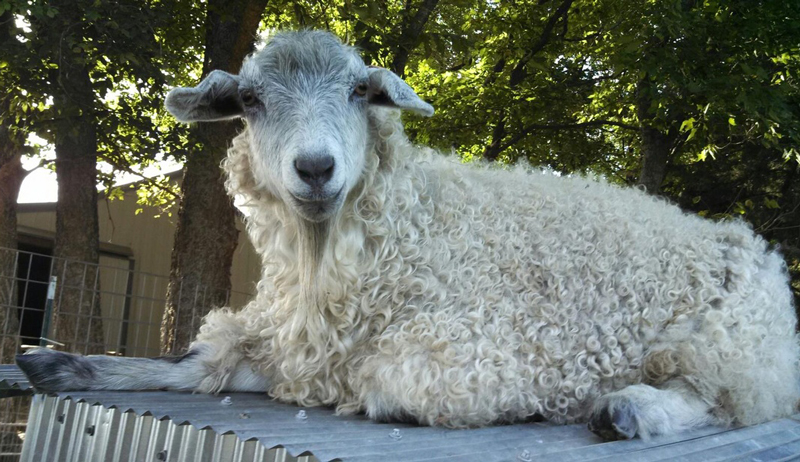
Fiber goats are not just adorable—they’re a source of some of the world’s most luxurious natural fibers. Often mistaken for sheep, these fluffy, long-haired goats produce mohair, cashmere, and soft blended fleeces prized by fiber artists and knitters. From Angoras to Pygoras and Nigoras, fiber goats offer a range of coats, colors, and textures, making them perfect for farms, small homesteads, or anyone interested in sustainable, high-quality fiber.

Benefits of Fiber Goats’ Natural Fibers

No matter how many times humans attempt to synthetically duplicate the strength, comfort and durability of animal fibers, fiber artisans and conscientious folks everywhere find themselves drawn to the ones only nature can provide. It’s not surprising, as it’s a tall order to fill. Consider the following compelling reasons to reach for natural fibers instead of their synthetic counterparts.


Here’s what you need to know to start keeping goats.


1. Renewable and Eco-Friendly Fiber

All natural fibers are biodegradable and fully compostable, while acrylics and other synthetic materials aren’t.

Fiber goats—just like sheep, alpacas, etc.—grow a new coat every year. Keepers need to sheer these fibers from the animals to keep them healthy.

Savvy clothing designers ignore the misinformation stating otherwise. They’re aware of the benefits of utilizing natural fibers and continue to purchase materials from farms with ethical husbandry practices.

2. Insulating and Flame-Resistant Fiber

Natural fibers are almost magical when it comes to insulation. Not only will these fibers keep you warmer in cold weather than acrylic, but they have an added virtue: They “breathe.”

What this means is the fiber absorbs perspiration and wicks it away from the skin and into the air.

Goat fibers, wool, alpaca and Angora rabbit fiber are all inherently flame-resistant. Not only do they have a high ignition rate (570 to 600 degrees Celsius), but when they do ignite, they tend to smolder and self-extinguish rather than supporting the flame.

And when these fibers do burn, they don’t melt or stick to the skin. They also produce less smoke and toxic gas than synthetic materials.

3. Traceable Fiber Goats: Know Your Source

As a consumer, you can literally choose the farm for your fiber, yarn or textile purchase. There are an infinite number of fibers and farms to peruse online or in person. You will know about the family you are supporting, their specific husbandry practices, and, perhaps, even the specific animal it came from. 

You may also want to try your hand at keeping and producing your own fiber—truly the ultimate organic and sustainable practice.

4. Fiber Goats and Allergies: What You Should Know

Often, people believe that they are allergic to animal fibers because they react to clothing purchased from large retailers.

Many times, when they try wearing a product purchased directly from the farm to consumer, they find that their skin doesn’t react. This is because they are actually allergic (or reacting) to the chemicals that are used to treat the wool and other fibers.

fiber goats mohair
Chris McLaughlin

Fiber Goats: Popular Breeds

Let’s take a look at a few breeds of fiber-producing goats and the products of their coats.

Angora Fiber Goats: Mohair Producers

If you’re interested in some serious fiber production, Angora goats have you covered. They are the most efficient fiber-producing animals in the world.

Angora fiber is called “mohair,” and there isn’t another animal breed in the world that produces it. Mohair is distinctive and often referred to as the “diamond fiber.” Its strength, durability, brilliant luster and light-reflecting properties are nothing short of elegant.

Once upon a time, mohair only came in one color: white. Historically, a kid that was born any other color was undesirable and immediately culled from the herd.

Thankfully, the fiber artists of today see the true beauty in mohair’s natural colors. These include browns, red, fawn, gray and black.

In 1999, colored Angora goats officially came into their own with the establishment of The Colored Angora Goat Breeders Association. Now, keepers raise colored Angoras alongside our classic, beautiful whites.

Mohair from Angora Fiber Goats

The dazzling luster and slippery-silky feel of mohair is due to its unique fiber scales, which are smoother, thinner and larger than sheep wool.

Angora goats have grease (or yolk) that coats the fiber, which protects it from the elements and keeps the fiber deliciously soft and luminous. There are varying degrees of grease in a fleece depending on the animal. A simple washing reveals the brilliant fiber underneath.

Animal fiber classifications are labeled according to micron count, from very fine to coarse. Fiber classing systems vary depending on who you talk to and the country that you live in. Everyone agrees, though, that mohair can be as low as 21 microns (or below), which is defined as superkid, all the way to the coarse 39 microns of an aged adult.

And while mohair fibers themselves are elastic in their own right (they will snap back into place if stretched), they lack the amount of spring-back crimp properties wool has.

On one hand, this allows mohair to act like silk and offers excellent drape. On the other hand, if the knitter is using 100% mohair yarn, this must be considered while knitting the pattern.

Mohair resists felting better than sheep’s wool, but can be coaxed into it if need be, especially if a little wool is blended into it. If you enjoy dyeing fiber, Mohair takes to it like nothing else. We have excellent success with using botanical dyes.


Ask yourself these 10 questions before bringing goats onto your urban farm.


Caring for Angora Fiber Goats

Angora goats are typically shorn twice a year, and an adult goat can produce upwards of 10 to 20 pounds of mohair. They stand 36 to 48 inches tall, respectively.

As much as I love our Angoras, these goats aren’t the only choice when it comes to gorgeous fiber. Other breeds may not produce in the high numbers Angoras do, but there’s a fiber goat for everyone!

Pygora Fiber Goats: Soft and Versatile Fleece

Pygora goats were developed in the late 1970s by crossing Angora goats registered with the American Angora Goat Association (AAGBA) with adorable pygmy goats (smallest of the meat breeds) registered with the National Pygmy Goat Association (NPGA). In order to register a Pygora goat with the Pygora Breeders Association (PBA), they can’t be more that 75 percent of either parent breed.

These naturally horned goats can enter a show ring either with or without horns. Most breeders choose to disbud, but the decision is left to personal preference.

Pygoras come in an array of lovely colors, including white, brown, black, gray and caramel. It’s not unusual for a goat that is determined to be one color to actually change color during another time of the year. Fleeces may be lighter while “in fleece” (loaded with their downy undercoat) and darker when they are not in fleece.

In general, Pygoras have a dual-coated fleece, consisting of fine undercoat fibers and coarser guard hairs. Yarn made from a fleece that isn’t dehaired—when guard hairs are removed from the down—won’t be next-to-the-skin soft. You may be able to get away without dehairing if you have a very fine type A fleece (very Angora-like—see later in this article).

Generally speaking, though, it’s necessary to dehair Pygora to take advantage of the soft undercoat. This can be done by a commercial dehairing machine at a fiber mill, or it can be done by hand using carders or mini combs. 

The PBA describes three Pygora fiber types. While each type has different characteristics, none of them is better than another; each has its place in use.

fiber goats pygora
Ruth Hawkins

Pygora Type A Fiber: Silky Mohair-Like Coat

This silky, lustrous fiber hangs in ringlets up to 6 inches long off the goat. It’s usually less than 28 microns. Type A fiber produces about 3 pounds of fiber and is closest in character to the mohair found on Angora goats.

Pygora Type B Fiber: Soft Blended Fleece

This curly, soft and fine fiber (less than 24 microns) grows to about 3 to 6 inches long. Three fiber types together make up a cashmere-mohair combo: a coarse/stiff guard hair, a fine, silky guard hair, and the downy undercoat. Type B Pygora goats produce about 1 pound of fiber per year.

Pygora Type C Fiber: Fine Cashmere Quality

The finest of the three, this fiber, often considered true cashmere, measures less than 18.5 microns. Its guard hair is quite coarse, and there’s good separation between the guard hairs and the down.
Type C Pygora goats may produce as little as 8 ounces a year of this unbelievably soft fiber.


Learn the fundamentals of animal fiber.


Nigora Fiber Goats: Multi-Purpose Fleece

The Nigora is the first breed in the U.S. that was specifically bred as a fiber-producing dairy goat. They are perfect for small farms and those who are looking for a compact goat that satisfies several purposes: milk, fiber and companionship. Fiber production for Nigora goats is fairly comparable to that of Pygoras.

The cross-breeding of Angora goats with Nigerian Dwarfs created Nigora goats. Today, they may carry the bloodlines of mini Swiss-type dairy goat breeds and even Pygoras, as well. Nigora goats are a colorful bunch, as any color or pattern found within the contributing breeds (Angora, Nigerian, Swiss types, etc.) are allowed within the registry.

Nigora goats average 19 to 29 inches tall for both bucks and does. Those that slide either below or above that range may still be acceptable, though. Like Pygoras, Nigoras can be disbudded or allowed to keep their horns, and some are naturally polled.

fiber goats nigora
Briana Frederick

There are breed standards for the three Nigora fiber types:

Nigora Type A Fiber: Mohair-Style Coat

This type of fleece has the characteristics of mohair and resembles the Angora breed the most.

Nigora Type B Fiber: Mohair-Cashmere Blend

This fleece has a blend of mohair and cashmere characteristics.

Nigora Type C Fiber: Cashmere-Heavy Fleece

This type of fleece has the most cashmere characteristics.

Nigoras, like Pygoras, have a dual-coated fleece. If the intended use of the resulting yarn is to be against the skin, all types usually need dehairing. That said, those with a focused breeding program can end up with Nigoras that need little or no dehairing at all. However, for the purpose of introduction, the possibility of having to dehair Nigora and Pygora fiber is pretty high.


Goats need minerals, but what and how much can vary. Click here to learn more.


Cashmere Fiber Goats: Luxurious Undercoat

Cashmere goats produce fiber world-renowned for its lightness, warmth and luxurious softness, but their name introduces some confusion, as a “cashmere goat” (from Kashmir, India) describes a type, not a breed, of goat (unlike previous fiber goats discussed in this article).

You see, cashmere is the downy undercoat that almost all goats produce—with the exception of Angoras—during the winter to insulate them from the cold. Any goat breed or lines within a breed that produce significant amounts of this undercoat (cashmere) are considered a cashmere goat. Therefore, keepers acquire (through selective breeding) animals that produce abundant quantities of cashmere.

People consider cashmere goats dual-purpose livestock animals for fiber and meat. Like Angoras, cashmere goats are raised for their fiber and are not typically dehorned.

Length, diameter and crimp determine cashmere fleece quality. Industry standards dictate that the fiber should be 1 1/4 inches long and be less than 19 microns. Because of the goats’ double coat (downy undercoat and guard hairs), you have to dehair the cashmere fiber before spinning.

Keepers can harvest cashmere both by shearing or combing (brushing) out. Fleeces that are shorn contain more guard hairs. On average, three to four ounces of cashmere is harvested from an adult goat in the spring.

For anyone who’s interested in luxurious, homegrown fiber and enjoys curious, easy-to-handle animals, a fiber goat could be the livestock of your dreams!

This article about fiber goats was written for Hobby Farms magazine. Click here to subscribe.

Categories
Poultry

Chicken Christmas Wreath Ideas: 4 DIY Edible Wreaths

Making a chicken Christmas wreath for your coop is fun for chicken keepers to assemble and for chickens to enjoy. The wreath should be safe and edible, since chickens are naturally curious, especially about shiny or sparkly objects, which can be hazardous if ingested. Homemade wreaths may not glitter or glow, but they are designed to be delicious and safe for birds.

Chicken Christmas wreaths can be made in a range of difficulty levels so that family members of all ages can participate in assembling them. Wreaths can be hung on run fences or coop walls, providing a fun and interactive way for chickens to enjoy seasonal treats.

Chicken Christmas wreaths should be offered in moderation to ensure they supplement, rather than replace, the flock’s regular feed. In areas with raccoons, opossums, or other predators, wreaths should be removed when not supervised to avoid attracting unwanted visitors.

1. Make a Popcorn & Cranberry Chicken Christmas Wreath

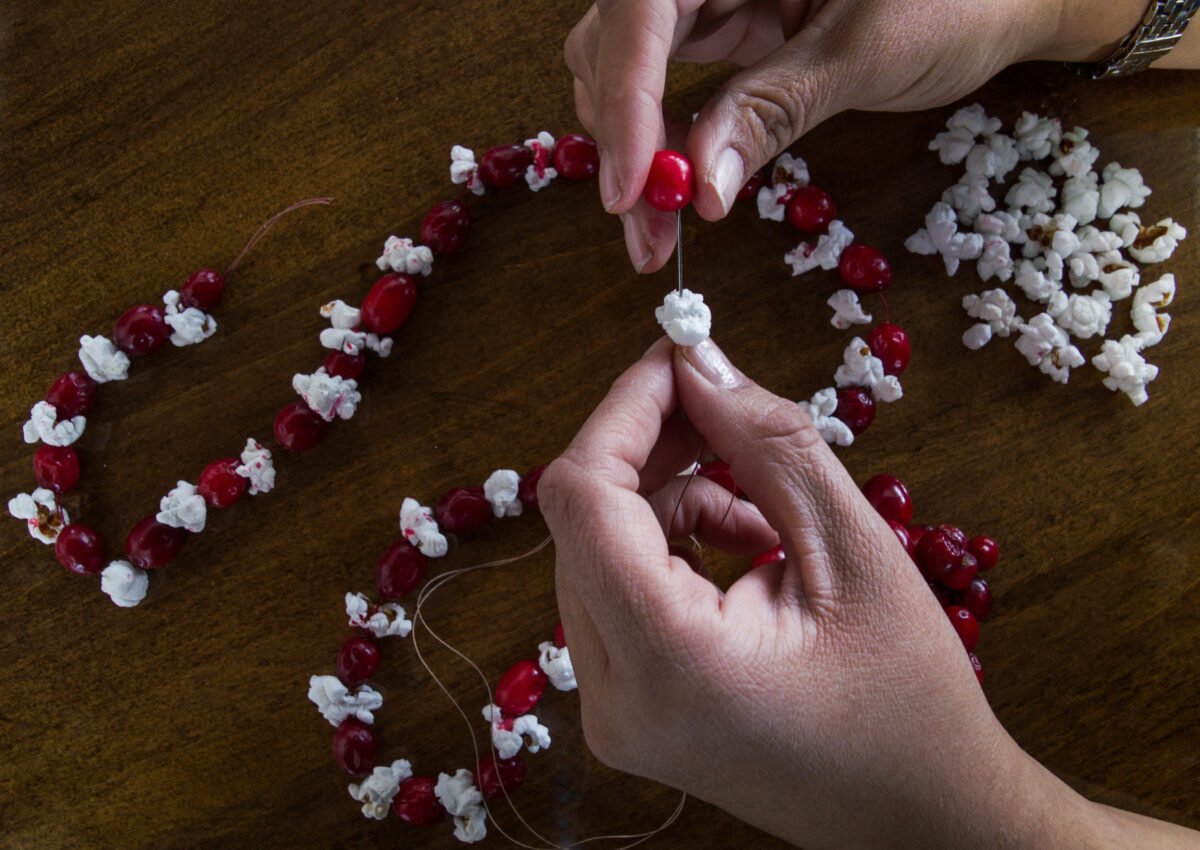
Chicken Christmas wreaths can be made from simple, safe ingredients like popcorn and cranberries. To create one, use 18- or 20-gauge jewelry wire from a craft store—thicker wire may break the popcorn, while thinner wire can be difficult to thread and may not hold the shape.

Cut a length of wire between 20 and 36 inches, depending on the desired wreath size, and carefully shape it into a circle.

Use unsalted, unflavored popcorn (freshly popped works best) and cranberries that have been chilled for at least two hours. Leave one to two inches of wire free at both ends, then gently string the popcorn and cranberries in any alternating pattern.

Twist the free ends together to close the wreath circle. The extra wire can be used to attach the wreath to a run fence or hang it safely inside the chicken coop.


Read more: Are Christmas plants toxic to chickens? The answer may surprise you.


2. DIY Fruit Wreath Your Chickens Will Love

The same concept as the popcorn/cranberry wreath, just a step up on the difficulty scale. Substitute chilled green grapes and chilled grape or cherry tomatoes for the popcorn and cranberries. This may become a chicken favorite since it incorporates two favorite summer snacks.

Unlike the popcorn-cranberry version, these wreaths should only be hung outdoors with your chickens due to the fruits’ high moisture content. 

3. Broccoli Wreath for Edible Chicken Christmas Fun

For this wreath, use five broccoli crowns, either quartered or separated into large florets. Either way, leave about an inch or more of stem.

Wrap 22- to 26-gauge florist’s wire (available at craft stores) about eight to 10 times around one stem. Then continue to the next broccoli segment and repeat, leaving a two to three-inch length of wire between the pieces. Repeat until all the broccoli is used.

broccoli, pinecones, cranberries and tomatoes being used to make a chicken Christmas wreath
Anna Hotaling

Connect back to the first piece and wrap the wire around the stem multiple times. Then leave a six-inch length of wire at the end. This half-foot of wire will be threaded through your run fence to hang your broccoli wreath.

It may not win any prizes for appearance, but your bird will love it. 


Read more: Winter enrichment is important in the chicken coop. These projects are both fun and helpful.


4. Peanut Butter & Pine Cone Wreath for Chickens

Chicken Christmas wreaths can be made using pine cones coated in smooth peanut butter and rolled in a wild bird seed mix. Florist’s wire is twisted around the base of each cone to create a loop for hanging.

If pine cones aren’t available locally, unpainted, fragrance-free cones can be purchased at craft stores. Some stores also sell natural cones in ropes, which work well for forming a wreath.

Wrap florist’s wire around the bottom of each cone, leaving 4 to 5 inches of wire to create a strong loop. For roped cones, loop the rope multiple times into a wreath shape and secure with florist’s wire every 6 inches along the circumference.

Spread peanut butter over each cone and press mixed bird seed into the coating, covering all sides. Additional florist’s wire can be used to string individual cones together, forming a full chicken Christmas wreath, or the cones can be used individually. Hang the wreaths on a run fence or inside the coop.

When hung outdoors, cone wreaths may attract wild songbirds as well. Consider creating extra cones to hang near windows for birdwatching enjoyment while keeping them separate from the chicken wreaths.

FAQ: Chicken Christmas Wreath

What is a chicken Christmas wreath?
A chicken Christmas wreath is an edible, safe decoration for chickens, made with ingredients like popcorn, cranberries, fruit, broccoli, or peanut-butter pine cones.

Are chicken Christmas wreaths safe?
Yes. Use poultry-safe ingredients, avoid glitter or paint, and offer wreaths in moderation to keep your flock healthy.

Where should chicken Christmas wreaths be hung?
Hang wreaths on run fences, coop walls, or ropes where chickens can reach them safely. Moist wreaths like fruit are best outdoors.

Can children help make chicken Christmas wreaths?
Yes. Simple designs like popcorn, cranberry, or fruit wreaths are perfect for supervised family crafting.

Final Thoughts

Chicken Christmas wreaths offer a festive, safe, and engaging way to enrich your flock’s environment during the holidays. From simple popcorn and cranberry designs to broccoli, fruit, or peanut-butter pine cone versions, these wreaths provide seasonal fun while keeping treats nutritious and secure. With a little creativity and care, holiday decorating for chickens can be both enjoyable for people and entertaining for birds, making the season bright for everyone in the coop.

This article about Chicken Christmas wreaths was written for Hobby Farms and Chickens magazines. Click here to subscribe.

Categories
Farm & Garden

Flavored Sugar Ideas for Baking and Herbal Gifts

Flavored sugar made with fresh herbs adds a natural burst of aroma, color, and taste to your favorite treats any time of year. Whether you grow herbs in your garden or pick up fresh sprigs from the market, these simple blends bring a touch of freshness to homemade cakes, teas, and gifts. Creating flavored sugars is easy; just combine herbs and quality sugar in a blender or jar, and you’ll have a colorful, aromatic sweetener that keeps beautifully for months.

Herbal flavored sugar is super fun to make and perfect for whipping up real-food cakes and confections. All that’s required is a blender or a sharp knife and quality sugar. We usually splurge and use an organic cane sugar so that the color of the herbs comes through.

Flavored sugar will keep for at least a year. The colors of the herbs stay as vibrant as they were the day they were harvested, which is amazing. Sugar is an incredible preservative!

Step 1: Choose Your Herbs for Flavored Sugar

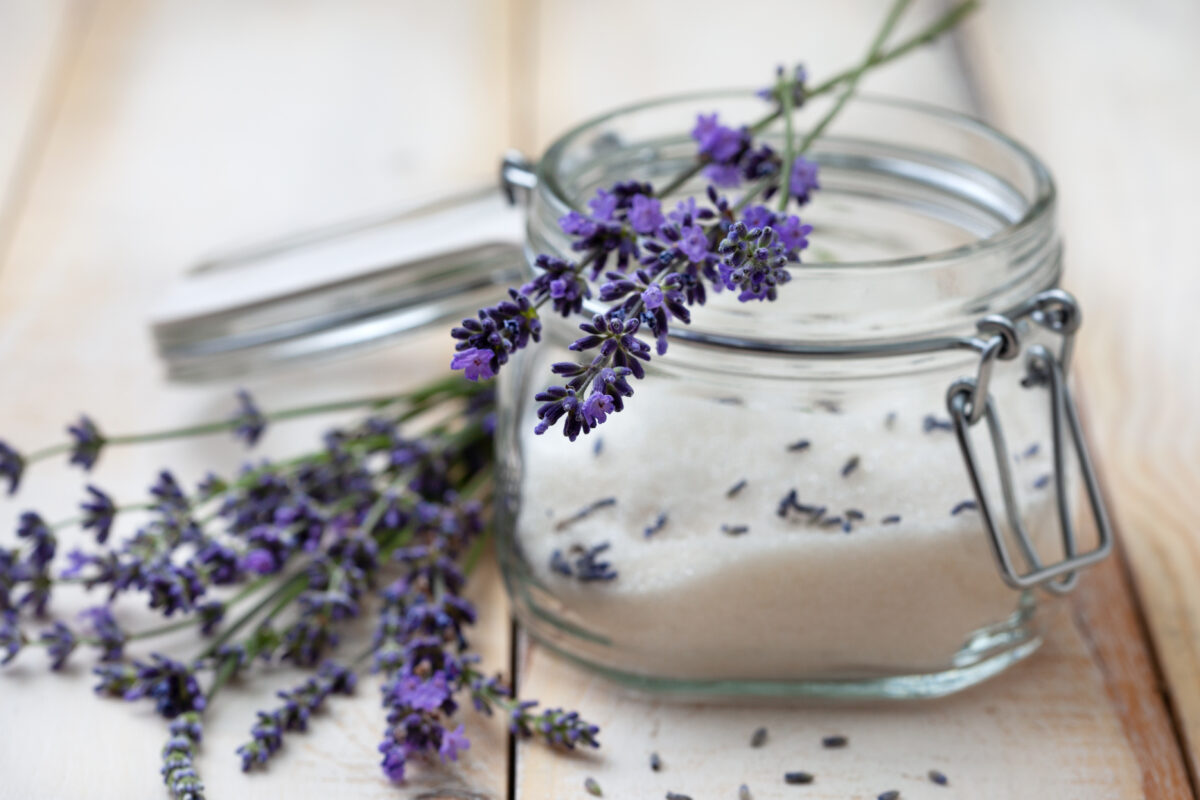
Whenever you have access to fresh herbs—whether from your garden, a market bunch, or a windowsill pot—try making some herbal goodies. Gather a few fresh herbs for your flavored sugar. Mint leaves, lavender buds, rugosa rose petals, hibiscus blooms, basil, and calendula all work beautifully. All are lovely, so let your taste buds be your guide.

Step 2: Prepare Fresh Herbs for Sugar

Clean and section your herbs. If you’ve picked a flower, like lavender, then pull off the flower head or petals to use and compost the stems. If you’ve chosen a leaf herb, like mint, remove the leaf from the stem for use.

Step 3: Blend Herbs with Sugar

Place one part herb and one part sugar in your blender. A 1:1 ratio works well for most herbs, but for stronger flavors such as lavender, reduce the herb amount by half. Experiment with the proportions until you find a flavored sugar that suits your taste.

Blend the herbs and sugar on low until mixed thoroughly. The sugar should slightly turn the color of the herb, and you should still see particles of the herb. You don’t want a fine powder—just a colorful mixture. The color will be more pronounced with herbs like rugosa rose and calendula. With leafy herbs, like mint, there’s a subtle color change, but the more you add, the darker it will be.

Put each flavored sugar into its own bowl and stir it around a bit more to make sure it’s well-blended.

If you’re using a knife only, cut each herb into small particles and mix them into the sugar vigorously. A handheld mixer would be useful if you have one.

Step 4: Use or Store Your Flavored Sugar

You can use the flavored sugar right away. Sprinkle it over baked goods, stir it into tea, or package it for a homemade gift.

Step 5: Infuse Sugar in a Jar for a Gentle Flavor

Another way to make flavored sugar is to fill a pint jar with sugar, then add de-stemmed or lightly chopped herbs. Let the mixture infuse for several days to weeks in a cool, dark place. This method is best suited to sugars for tea and other hot beverages. It won’t adopt any of the herb’s color, but it will be infused with its essential oils for a nice aroma.

Experiment with Flavored Sugar Year-Round

Whatever method you try, keep a few favorite herbs on hand and experiment with new combinations year-round. Fresh sprigs are easy to find in most groceries, so you can enjoy bright, aromatic flavored sugars even in winter. Share your favorite mixes with friends or gift a jar for an easy homemade treat.

This article about making flavored sugar with herbs was written for Hobby Farms magazine. Click here to subscribe.

Categories
Poultry

Raising Turkeys for Meat: A Guide for Small Farms

Raising turkeys for meat and eggs is a popular choice and has a loyal following among small-scale, sustainable farmers. With a little know-how, it’s possible to successfully add these feathered fowl to your farm.

“I enjoy the birds, their sounds and expressions,” says Lynn Gillespie of The Living Farm, in Paonia, Colo. Gillespie started raising heritage varieties, including Narragansetts, Bourbon Reds, Slates and Bronze, alongside Broad Breasted Whites eight years ago and believes that the birds are a profitable addition to her farm.

The biggest reason for raising turkeys for meat, especially heritage varieties, is for the holiday market, according to Don Schrider, author of Storey’s Guide to Raising Turkeys (3rd edition, 2013).

“There is a huge demand for turkey at Thanksgiving and Christmas,” he says, “and it can be a very profitable market.”

But it’s also possible to create a market outside of Thanksgiving and Christmas. The birds produce eggs and meat that is popular for bacon, sausage and ground turkey.

Although raising turkeys for meat and eggs is low-maintenance and suitable for beginning farmers, they are not chickens.

“They might look similar,” Gillespie says, “but they need different care; if you raise your turkeys like chickens, there is a good chance that all your turkeys will die.”

Choosing the Best Turkeys for Meat Production

Farmers can choose between commercial/industrial varieties and heritage varieties when raising turkeys for meat.

Commercial/Industrial Varieties

Industrial varieties, such as the Broad Breasted White and the Broad Breasted Bronze, are fast-growing birds that produce meaty, moist breasts. It takes about 20 weeks to grow the birds; hens will grow up to 20 pounds and toms, up to 70 pounds. Industrial birds are often raised in poultry houses with limited light and access to the outdoors.

The rapid growth cycle of commercial varieties means the meat is cheaper to produce and sell, which can appeal to a broader consumer market.

Heritage Varieties

In contrast, heritage turkeys come in multiple varieties—the American Poultry Association recognizes seven distinct varieties, including Black, Bourbon Red and Royal Palm, each with its own feather pattern and color. Heritage birds are raised outdoors and take up to 16 months to reach 12 pounds.

Although the market for heritage turkeys is smaller, the birds fetch a premium price.

“You have to choose between meat and flavor,” Schrider says. “The volume of meat on an industrial bird is greater but the flavor of a heritage bird is much more intense.”

Where to Buy Poults and Eggs

Once you know which variety you want for raising turkeys for meat and eggs, locate a breeder. To ensure the birds come from disease-free stock, choose a hatchery that participates in the USDA’s National Poultry Improvement Plan; a reputable hatchery will be able to provide their NPIP number. Eggs and poults can be shipped via the U.S. Postal Service.

Raising Turkeys for Meat & Eggs: Poults

Industrial varieties are often raised in confinement. Poults are started in a small section of the poultry house, and as they grow and need additional space, they are moved into the main part. It’s also possible to raise industrial varieties on pasture.

Pasture Management

To keep poults safe, keep them in a brooder until they are at least 8 weeks old. Be sure to provide at least 1 square foot of floor space per poult to prevent cannibalism; after 6 weeks of age, increase it to a minimum of 2 square feet. Poults that are confined past 12 weeks of age need at least 3 square feet of floor space each. In a brooder, Gillespie favors keeping poults in groups of up to 15, but not more: Poults will potentially smother each other in larger numbers.

Once the birds are old enough, they can be released onto the pasture until harvest, either to free-range or be kept with electric fencing and a shelter. Be sure to keep turkeys and chickens separate, especially in areas where blackhead disease is a problem.

“Chickens will be immune, but they can be carriers and turkeys will get it,” Schrider explains.

To protect the flock, keep turkeys at least 200 feet from chicken pastures and use a barrier to keep them separate; both flocks should have their own pastures, housing, feed and watering equipment. If birds are being raised on pasture, it’s essential to provide shelter and roosts as well as fresh water and feed.

Feeding Nutrition & Tips

Pastured turkeys eat a mix of ­formulated food mix and forage.

“Poults need more protein than chicks,” Gillespie says. “You need to feed them a turkey starter, not a chicken starter.”

Gillespie also feeds her turkeys weeds, salad trimmings and alfalfa hay. “They should have a fresh supply of greens every day,” she says.

Predator Protection When Raising Turkeys for Meat & Eggs

On pasture, turkeys must be moved often. Electric net fencing is an inexpensive, easy-to-use system that allows for rotational grazing while keeping turkeys from wandering too far afield.

Cats, snakes, raccoons, foxes, hawks, owls, snakes and other predators prey on turkeys. A secure coop, electric fencing and galvanized wire pens are the best defense to keep your flock safe. Keep in mind that heritage varieties can fly. (The breasts of industrial birds are too heavy to allow them to take flight.) Schrider suggests clipping their wings to keep turkeys from escaping their fencing.

Marketing Turkey Meat and Eggs

When raising turkeys for meat, outside of Thanksgiving and Christmas, there is still a small but profitable market for turkey products, such as bacon, sausage and ground turkey. With a goal of increasing demand, the National Turkey Federation launched a 20 by 2020 campaign to encourage people to consume 20 pounds per capita of lean turkey meat by 2020.

Of the 80 Broad Breasted Whites and 20 heritage varieties Gillespie raises on The Living Farm, most are destined for Thanksgiving tables. Some of the heritage turkeys are reserved for breed stock, but she is confident the farm could sell turkey most of the year. Gillespie also acknowledges the challenge of marketing heritage varieties during the holidays.

“Stores sell turkeys below the cost of producing a turkey,” she says. “You have to educate your customers as to why your turkeys cost more than the store.” Raising certified organic turkeys is one way to boost your return on investment.

To boost year-round demand, Schrider encourages farmers to educate shoppers about heritage varieties, including the best cooking techniques.

“You’ve got to use heritage cooking techniques, such as slow-roasting and basting, with heritage birds,” he says. Organizations such as Slow Food USA and Chefs Collaborative have recipes for preparing heritage varieties on their website.

Beyond meat, there is a niche market for turkey eggs. Hens start laying at 32 weeks—compared with 20 weeks for chickens—and lay up to 120 eggs during peak laying season, which extends from January through June.

Although Schrider calls turkey eggs “perfectly good eating eggs,” he notes that the proteins in their egg whites are thicker than in chicken eggs, making them unsuitable for light, fluffy foods. “They are good for pound cake but not angel food cake,” he says.

The Living Farm delivers turkey eggs to its farm-to-table café, The Living Café, in Paonia, Colo., and features them on the menu. The over-easy offerings are popular, according to Gillespie. “It gives people a chance to try something new,” she says.

Heritage Turkey Breeds to Consider When Raising Turkeys for Meat & Eggs

close up of turkey on farm raising turkeys for meat
Yumiko Yumiko/Flickr

Slow Food USA, an international grassroots membership organization for good, clean and fair food for all, has identified eight heritage turkey varieties that are facing extinction and encourages farmers to preserve these varieties by raising them and encouraging consumers to add them to their plates.

American Bronze: Classic Copper-Brown Heritage Bird

Until the Broad Breasted Bronze was replaced with the Broad Breasted White in the 1960s, it was one of the most popular turkey varieties in the United States. The birds have copper feathers on a background of brown and black with white bars on the tail. Toms weigh up to 36 pounds; hens can reach 20 pounds. The Bronze is listed on The Livestock Conservancy’s Conservation Priority List in the Watch category, with less than 2,500 annual registrations in the United States and an estimated global population of less than 10,000.

Black: Sleek Metallic Black Poultry Variety

Known as Black Spanish in Spain and Norfolk Blacks in England, Black Turkeys originated in Europe and were crossbred with wild turkeys after migrating to the United States with colonists. Although poults often have white or bronze feathers, the mature plumage is metallic black. The birds are small; toms weigh just 23 pounds, while hens weigh in around 14 pounds. The Black is also listed in the Watch category.

Bourbon Red: Rich Red Plumage and Flavorful Meat

Named for its birthplace of Bourbon County, Ky., this variety was developed from the Jersey Buff for improved meat production. Also known as Bourbon Butternut or Kentucky Red, the turkeys have brownish to dark-red plumage, heavy breasts and flavorful meat. Toms weigh up to 33 pounds, and hens tip the scales at 18 pounds. The Bourbon Red is also listed in the Watch category.

Jersey Buff: Light-Colored, Mild-Tempered Turkey

Also known as Buff, these turkeys were named for the color of their feathers. Toms weigh 21 pounds; hens, 12 pounds. The variety originated in the mid-Atlantic region and struggled to gain prominence despite its color providing advantages for processing. By 1915, it was nearly extinct. The variety is still available through small breeders and hatcheries. It is listed as Critical, with fewer than 200 annual registrations in the United States and an estimated global population of fewer than 2,000.

Midget White: Small, Efficient Meat and Egg Bird

A variety developed at the University of Massachusetts by crossing a commercial Broad Breasted White with a Royal Palm. The Midget White is a smaller bird with a broad breast. Toms weigh 13 pounds; hens average 8 pounds. Although it’s a flavorful meat bird, it was bred for improved egg production; hens lay up to 80 large eggs per year. It is also listed as Critical.

Narragansett: Hardy Bird with Traditional Coloring

Named for Narra­gansett Bay in Rhode Island, the variety is a cross between wild and domestic turkeys. The Narragansett has similar coloring to the Bronze breed but is smaller in size. Toms weigh 30 pounds; hens, 18. Hens are strong egg layers. It is currently a Threatened variety, with less than 1,000 annual registrations in the United States and an estimated global population of less than 5,000.

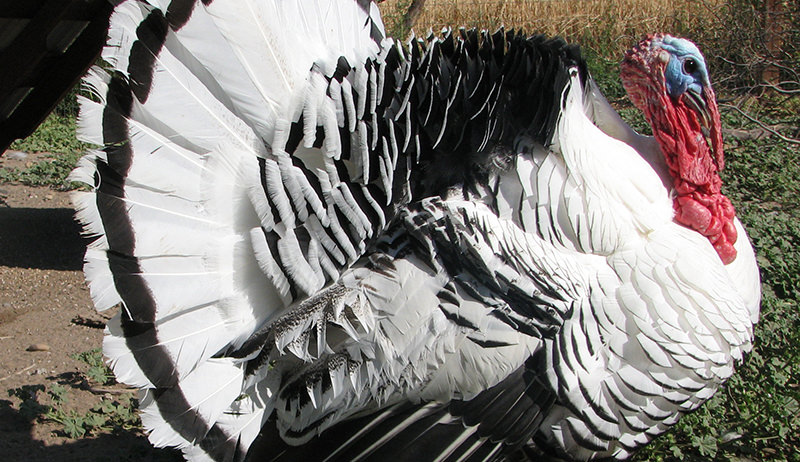
Royal Palm: Striking White with Black Feather Edges

With white plumage and contrasting metallic black edging on its feathers, the Royal Palm is a small turkey variety with toms weighing
16 pounds and hens averaging 10 pounds. The Royal Palm is also listed in the Watch category.

Slate: Blue-Gray Plumage and Rare Heritage Breed

This variety is also known as the Blue Slate, Blue or Lavender because of its solid to muddled blue plumage. Hens weigh about 14 pounds; toms average 23 pounds. Because there are fewer than 5,000 breeding birds in the United States—landing the Slate in the Watch category—production potential is unknown.

Convincing farmers to raise turkeys is a little like convincing diners to try turkey eggs for the first time. Gillespie offers some encouragement. “You will need to practice with turkeys before you are proficient at raising them,” she says. “Once you get the hang of it, it’s worth it.”

This article about raising turkeys for meat and eggs was written for Hobby Farms and Chickens magazines. Click here to subscribe.
Categories
Recipes

Turkey Recipes: 3 Classic Favorites Anytime

Turkey recipes are a beloved staple at Thanksgiving and Christmas, but they’re delicious any time of year. Many of my traditional turkey recipes date back to my great-grandmother’s kitchen in Scotland, and while I’ve updated them for modern cooking, they retain all the rich, classic flavors of the originals. These three classic turkey recipes are perfect for family dinners or holiday feasts, offering timeless taste and simple steps to create memorable meals.

1. Bubbledy Jock: Traditional Scottish Turkey Recipe

Bubbledy Jock Ingredients

  • 1 12- to 14-pound turkey, fresh (or thawed) and cleaned out
  • 1 cup of plain breadcrumbs
  • 1/2 cup milk
  • 1 tablespoon dried parsley
  • 1/2 teaspoon dried thyme
  • 2 stalks of celery, finely chopped
  • 1 dozen roasted chestnuts, shelled and coarsely chopped
  • 1 turkey liver, sautéed and finely minced
  • 1 pound pork or turkey sausage, casing removed
  • 4 tablespoons salted butter, melted
  • 3 cups chicken (or turkey) stock
  • 1 tablespoon red raspberry jelly
  • salt
  • pepper

Bubbledy Jock Directions

Preheat the oven to 325°F and lower the rack. In a small bowl, combine the breadcrumbs with the milk until just moistened. Add the parsley and thyme, blending well. Add the celery, chestnuts and liver, stirring until well mixed. Stuff the body cavity of the turkey with this breadcrumb mixture, taking care not to densely pack the stuffing. Stuff the neck cavity of the turkey with the loose sausage meat, folding the neck skin shut over the top. Place the turkey in a roasting pan and brush with the melted butter. Pour a half cup of the stock into the pan around the turkey. Cover the bird with an aluminum foil tent and roast in the oven for 20 minutes per pound, basting with the butter frequently throughout the cooking time.

Once the turkey is fully roasted, remove it from the roasting pan and place it on a warmed serving platter. Skim the fat from the roasting pan, then add the remaining stock, the jelly, and salt and pepper to taste. Blend well. Pour this mixture into a saucepan, then bring to a boil. Let boil for two minutes, then reduce the heat to medium, stirring constantly, until the sauce is reduced to your preferred consistency. Serve with the turkey.

2. Turkey Puff Pie Recipe with Port Wine and Sausage

Turkey Puff Pie Ingredients

  • 1 pound turkey meat, chopped roughly into inch-wide pieces
  • 1/2 cup flour
  • 1/2 teaspoon cinnamon
  • 1/4 teaspoon nutmeg
  • 1/2 teaspoon salt
  • 1/4 teaspoon pepper
  • 2/3 cup port wine
  • 1 pound turkey or pork sausage, casing removed
  • 1 8-ounce package puff pastry
  • 1 large egg, beaten
  • 1/2 cup chicken (or turkey) stock, warmed

Turkey Puff Pie Directions

Preheat the oven to 350°F. In a medium bowl, combine the flour, cinnamon, nutmeg, salt and pepper. Dredge the turkey pieces in the flour mixture, then place in a 2-quart casserole. Pour the port wine over the top of the turkey pieces, then cover and bake for 1 1/2 hours or until the turkey is cooked through. Increase the oven temperature to 400°F. Cover the turkey with an even layer of sausage. Cover the meat with a layer of puff pastry. Cut a dime-sized hole in the center of the pastry to allow the contents to vent. Brush the pastry evenly with the beaten egg, then bake for 30 minutes or until the pastry is golden brown. If the pastry begins to brown too quickly, cover with aluminum foil. Once the pie is done, remove it from the oven and slowly pour the stock through the vent hole into the pie. Do not overfill; you might not need all of the stock. Gently shake the pie pan to allow the stock to settle into the sausage and turkey. Let it set for 15 minutes, then serve.

3. Stovetop Turkey Recipe with Potatoes and Onions

Stovetop Turkey Ingredients

  • 4 pounds of turkey meat, white and dark
  • 1 stick salted butter
  • 1 large Vidalia or sweet onion, thinly sliced
  • 3 pounds of Yukon gold potatoes, cut into 1/4-inch-thick slices
  • 3 cups chicken or turkey stock
  • 1/4 cup fresh parsley, chopped
  • salt
  • pepper

Stovetop Turkey Directions

Melt half the stick of butter in a large saucepan over medium-high heat. Brown the turkey pieces a few at a time, ensuring that they are all golden brown on all sides. Place the browned turkey on a platter; keep warm. In a large stockpot or Dutch oven, melt one tablespoon of butter over medium heat. Carefully place one layer of onions, then cover with a layer of potato slices. Cover the potatoes with a layer of turkey meat. Chop the remaining butter into small pieces. Dot the turkey meat with bits of chopped butter. Repeat the layers of onions, potatoes and turkey. Top the turkey with more bits of butter, then top with a final layer of potatoes. Carefully pour the stock over the top of the layers. Place the lid on the pot, then simmer for 2 to 2 1/2 hours or until the turkey is tender and the potatoes are cooked through. Check from time to time to see whether more stock is needed and (if so) add it. Sprinkle with parsley before serving; season with salt and pepper to taste.

Whether you’re celebrating a holiday or enjoying a simple family dinner, these classic turkey recipes bring rich flavor and tradition to the table. Try one—or all three—and savor the taste of homemade turkey at its best.

This article about turkey recipes was written for Hobby Farms and Chickens magazines. Click here to subscribe.
Categories
Farm & Garden

Hedge Apples: The Curious Osage Orange Fruit

Hedge apples (Maclura pomifera), also known as osage orange or horse apple, are distinctive green fruits often used as natural fall décor. Their textured surface and vivid color make them eye-catching additions to autumn displays, and they are commonly found along roadsides and fence lines throughout much of North America during the season.

The Ancient Story of Hedge Apples

Part of the fascination with hedge apples lies in their remarkable history of survival. Like other large, fleshy fruits native to North America, they once depended on an animal partner for seed dispersal. Scientists believe that this partner was a now-extinct species of giant ground sloth that fed on the fruit and spread its seeds across what is known as the Red River drainage of Texas, Oklahoma, and Arkansas.

When those prehistoric mammals disappeared, the osage orange tree seemingly lost its natural means of reproduction. Yet the species endured and spread far beyond its original range. Today, hedge apples grow across nearly every state and even into parts of Canada—a testament to the plant’s adaptability and human influence.

Hedge apple fruits are edible, though the flavor isn't exactly worth it to most cooks.F.D. Richards/Flickr

Folklore and Function

Over the centuries, hedge apples have inspired a wealth of folklore. One enduring belief is that placing the fruit in basements or corners of homes will repel spiders and crickets. While scientific studies have found no evidence that hedge apples deter most pests, their sticky sap may have some repellent effect on cockroaches. The fruit’s unusual texture and color have also made it a traditional fixture in seasonal decorations and displays.

Though osage oranges are technically edible, they are not commonly consumed. You won’t see them mentioned often in foraging cookbooks. The seeds are difficult to extract from the dense, fibrous fruit. They are trapped inside the hard outer coating, embedded in woody flesh and encapsulated in a slimy pocket. Most reports suggest the flavor is far from appealing. Wildlife such as squirrels and horses may eat the fruit, but even they contribute little to seed dispersal.

The reason why the tree has been spread all across North America is less about the fruit and more about the wood.

The Wood That Built Fences

The wood of the osage orange tree was used by settlers to make fencing because it is strong.
Miche`le/Flickr

The wide distribution of the hedge apple tree owes more to its strong, flexible wood than to its fruit. Native American tribes valued the bendable limbs for making bows, and early settlers soon recognized its durability for building fences. Before the invention of barbed wire in the late 19th century, rows of closely planted osage orange trees—kept trimmed and woven together—created living fences described as “horse high, bull strong, and hog tight.”

This practical use ensured that hedge apples were planted widely across the country, turning a once-regional species into a fixture of the rural landscape.

Hedge Apples Today: A Living Legacy

When the giant sloths and mammoths disappeared, the hedge apple tree might have vanished as well. Instead, human interest in its fruit and its remarkably strong wood ensured its survival and widespread planting. The unusual green fruit, while not ideal for consumption, attracted attention, and the tree’s wood proved invaluable for fences and bows, making it a practical resource for early settlers and Native Americans alike.

Today, hedge apples remain a popular feature in seasonal décor, appreciated for their distinctive appearance and historic significance. The fruit continues to inspire curiosity and folklore, while the tree itself stands as a reminder of the ways humans and plants have shaped each other’s histories. From rustic living fences to autumn table displays, the osage orange tree maintains its place in both the landscape and American culture.

This article about hedge apples was written for Hobby Farms magazine. Click here to subscribe.

Categories
Farm & Garden

Rodent Control: Preparing Your Farm for Winter

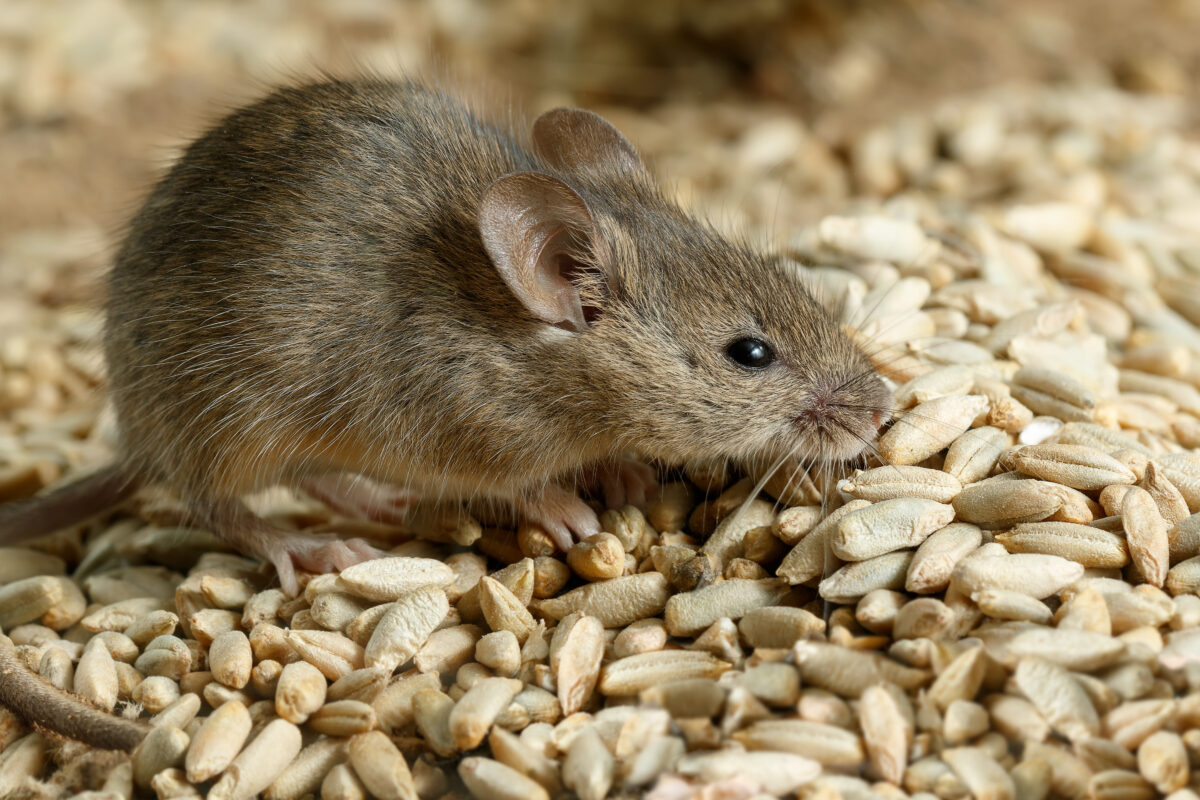
Rodent control becomes an important topic as winter approaches. Late fall is the time of year when mice, squirrels, voles, rats and chipmunks are trying to find a warm place for winter, and your farm buildings make an attractive target.

It’s easy to see why. Barns, sheds, stables, and pole buildings are generally not as well sealed off for rodent prevention—at least, not typically to the extent of a home. So there are more potential cracks, crevices, vents, and open barn door seals for rodents to access. Barns are also full of things that rodents seek out—feed, corn, oats as a food source (either spilled or contained), as well as bedding possibilities like hay, straw, and wood shavings. Finally, the warmth and dryness of these buildings is a big draw.

All of this can actually help you prepare and guard your buildings to help keep rodents outside as much as possible. By anticipating rodent habits, you can make it more difficult for them to move in and cause winter damage. Here are four ways to increase your rodent control on the farm.

1. Trap Mice and Rats Before They Settle In

This isn’t everybody’s favorite job, but setting basic mouse or rat traps in your farm buildings—and checking and resetting them regularly—can actually play a big role in controlling rodents. It doesn’t have to be elaborate. Simply a spoonful of peanut butter on a spring trap placed by a doorway makes a surprisingly effective and low-cost option. Make sure the traps are inaccessible to pets like dogs or cats, and ideally keep them out of the range of non-target animals like birds. If you’re consistent and maintain the traps for several weeks during the fall, you should be able to reduce pest numbers.

2. Rodent Control to Keep Feed Safe from Intruders

There are two elements at play here—protecting your animal feed so that it can’t be contaminated by rodents, and by doing so, you eliminate the attractant for better rodent control. Consider storing feed in airtight containers like galvanized trash cans or food-grade plastic/rubber containers. If these containers can also be in a rodent-proof shed or tack room, even better. Farms with higher feed needs may construct larger, custom, self-contained feeding systems that are efficient and rodent-proof. After this, general tidiness can go a long way towards keeping rodents away. Sweep up spilled feed right away.

3. Winter-Proof Your Barn and Outbuildings

This isn’t always possible—think of something like a three-sided animal shelter or hay storage—but some buildings can definitely benefit from additional winter sealing. This could range from tiny improvements—even worn weather sealing around doors and windows can be an open invitation to critters—to addressing larger issues like literal holes around wall joints, soffit, and siding. An arsenal of caulk, trim, screen, hardware cloth, and similar tools can be used to prevent access through a variety of small spaces.

4. Clear Hiding Spots to Discourage Rodents

Rodents are cautious and reluctant to ever dash across large regions of open space. They want to stealthily creep from one hiding location to another as they seek food and shelter. Rodent control means making your farmyard and your buildings much less attractive to rodents by keeping things clean. Avoid leaving that pile of pallets outside long-term. Try to clean up loose piles of hay, straw, leaves, and similar debris before it creates trouble. Keep the interior walls of your barn clear, so rodents can’t use the edges of the room to creep about.

Rodent Control: Final Thoughts

By taking these steps now—setting traps, protecting feed, securing buildings, and removing rodent hideouts—you can make your farm much less inviting to winter pests. A little preparation in the fall goes a long way toward preventing damage, protecting your feed, and keeping your barns and outbuildings safe all season long. Staying consistent and proactive is the key to keeping rodents outside where they belong.

This article about rodent control in the fall was written for Hobby Farms magazine. Click here to subscribe.

Categories
Poultry

Raising Turkeys with Chickens: A Beginner’s Guide

Raising turkeys with chickens is something that many poultry keepers consider. Turkeys have many of the same basic needs that chickens do, which makes adding a small flock of these all-American birds a thriftier choice than adding waterfowl or a herd of mammals.

Before you bring home a bunch of peeping poults, consider these six factors to determine whether turkeys are right for you.

Turkey Varieties for  Raising Them with Chickens

While there are dozens of breeds of domestic chicken, there is basically one breed of domestic turkey, Meleagris gallopavo, a direct descendant of the North American wild turkey. Several commercial and heritage varieties of domestic turkey exist, however. Small-scale farms have had success with such commercial varieties as the Broad-Breasted Bronze and the Broad-Breasted Large White (shown above), both of which grow quickly and have a high breast-meat yield.

The Large White is much more popular than the Bronze because of the Bronze’s dark-colored pin feathers, which sometimes remain on the bird after processing and detract from its appearance.

The American Poultry Association recognizes eight varieties of heritage turkeys, including the White Holland, Bourbon Red (shown below), Narragansett, Black, Slate, Standard Bronze, Beltsville Small White and Royal Palm. These varieties do not have the same feed conversion, growth or body size as the commercial varieties, but they are all stunning in appearance and are ideal for the hobby farmer as they tend to be more ornamental but can also serve dually as a meat bird.

I personally love the gray-blue plumage of the Slate and the contrast of the black bands of feathers against the white found on the Royal Palm.

bourbon red turkeys on a farm raising turkeys with chickens
Mtshad/Wikimedia Commons

Housing Tips When Raising Turkeys with Chickens

When raising turkeys with chickens, remember that even small turkey varieties are larger than the largest standard-fowl chicken breeds. Be prepared to provide your turkey flock with roomier housing than what your roosters and hens have.

Each turkey requires approximately six square feet of space from age 2 months to adult. For a flock of six turkeys, a 40-square-foot coop would more than suffice. Because of their larger body mass, turkeys require more ventilation than chickens, especially during the hot summer months. Their greater size and weight also necessitate a sturdier perch than that used by chickens. We use a 2-by-4 with its edges sanded down, and installed 2 to 3 feet off the ground.

Similarly, turkey nest boxes must be large enough to provide turkey hens with the space they need to lay and brood eggs. Our turkey nest box (one per four turkey hens) measures 24 inches high by 18 inches wide by 24 inches deep.

Ranging and Fencing for Flocks Raising Turkeys with Chickens

Turkeys are excellent foragers and happily range freely … and widely. Naturally inquisitive, turkeys tend to wander pretty far, which occasionally leads to lost birds.

If you plan on raising turkeys with chickens free-range, consider either permanent or portable fencing (or both) for your flock. Permanent fencing provides them with a wider range and protection from local predators, while portable fencing allows you to change their paddock on a weekly or biweekly basis, allowing for pasture recovery.

When raising turkeys with chickens, bear in mind that, unlike chickens, turkeys love perching up high—very high. If you have stands of trees within your ranging area, you’ll probably find your flock high up in the branches.

On a similar note, you need fencing that is at least six feet tall. Turkeys that perch high also fly high. I’ve lost count of the number of times we had to search for Henrietta and her daughters, Alexandra and Catherine, in the state forests surrounding our farm. We always found them 10 to 12 feet up a tree we could not climb.

Common Illnesses to Watch for When Raising Turkeys with Chickens

Turkeys are susceptible to many of the same illnesses that can infect chickens, including avian influenza, pullorum, fowl pox and Newcastle. There is one condition, however, that poultry keepers raising chickens with turkeys need to know affects turkeys to a much greater degree: blackhead (Histomoniasis).

This illness affects turkeys of all ages and has an 80 percent to 100 percent mortality rate. Chickens can indeed develop blackhead, but this is rare; the bigger concern is that they serve as hosts for the blackhead parasite.

Because of this, it is strongly recommended that turkeys not be housed in the same coop as chickens or use the same run or paddock.

Laying and Breeding Turkeys

Turkey hens on the whole produce between 70 to 100 eggs in a laying season, which lasts about five to six months annually. Just as with chickens, certain varieties of turkey—the Royal Palm and Narragansett—go broody easily and make great mothers, while others—the Broad-Breasted Bronze and the Broad-Breasted Large White—rarely even mate, much less produce a fertile egg without artificial insemination.

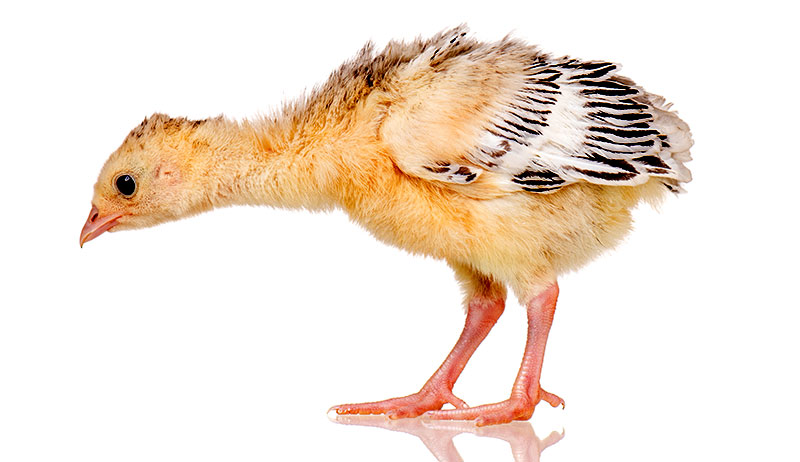
Whether it is gestated by a mother hen or incubated artificially, a turkey egg takes 28 days to hatch. The resulting infant, a poult, resembles a leaner, slightly taller chick, with a blip of flesh (its snood) at the base of its beak.

turkey poult isolated on white background
Shutterstock

Raising Poults Alongside Chickens

If you plan on raising turkeys with chickens from the time they hatch,  be aware that poults have a reputation for not being the brightest baby birds around. They eat sawdust and fine shavings, so avoid using these for bedding in your brooder.

Poults need to be placed on their food so that they know where to find it. They need to be shown where their waterer is—and have their beaks dipped into the water so that they know there is actually water. Keep the water level in the saucer should shallow by adding pebbles or marbles, because poults will accidentally drown themselves with a regular water level.

Like baby chicks, they need a nutrient-rich starter, a heated brooder and fine grit to help them get through the first few weeks of life.

This article about raising turkeys with chickens was written for Chickens magazine. Click here to subscribe.