Categories
Farm & Garden

Starting Seeds Indoors: 5 Benefits for Your Farm

Starting seeds indoors can start as early as mid-January. There are many plants that need a longer head start for growing than the warm season in many parts of the country will allow for, such as rosemary, onions and leeks.

Have you considered starting your own seeds but haven’t given it a try yet? Here are five reasons why it’s worth trying.

5 Benefits to Starting Seeds Indoors

1. Seed starting is less expensive overall. There are some upfront costs to growing your own seeds but many of them are a one-time expense. Once you have the supplies (seed starting containers, supplemental light, heat mats), you’ll be able to use them year after year. But honestly, I’ve started my seeds in reused plant containers and clean plastic food containers (yogurt and cottage cheese) for over a decade and I just bought my first heat mat this past spring. Besides grow lights, I haven’t purchased anything specialized and each year I start hundreds of seeds. I’m telling you this so you understand that expensive seed-starting equipment isn’t required.

Consider how much you pay per plant at the nursery and what it would cost to grow that plant yourself. For example, one nasturtium plant start at the nursey near my house is $5. I can purchase a packet of nasturtium seeds for $3 and grow 20+ starts. Better yet, once you grow your own, you can save the seeds from them and grow them the following year without spending a dime on seeds.

2. Starting seeds indoors allows you to grow a larger variety than what’s available at the nursery. Have you ever paged through a seed catalog? Wow, they have some unique plants that are sure to surprise you. Did you know there are 19 different options for beets that range nearly every color of the rainbow? There are many more plant options in seed form compared to what you can find at your local nursery. It makes growing your own food and plants even more exciting.

3. Starting seeds indoors generally results in healthier plants. When you start your own seeds with a quality seed starting mix, lovingly tend to them for months and make sure they are watered and healthy, they generally result in a more quality plant than what you can purchase.

4. Starting seeds indoors is a great way to get through the long winter, at least for the northern gardeners. A lot of people have great setups for growing inside but I don’t and end up taking over the living room of my house as my growing space. Thankfully, my family enjoys the plant starts being inside – it helps make the cold and brown winter a tad easier to navigate. It somehow shortens our cold season by starting our summer gardens in the dead of winter.

5. It’s incredibly satisfying. I relish the fact that nearly all of my vegetables and flowers are grown from seed (and most from saved seeds!). It’s so satisfying to harvest flowers and food from teeny tiny seeds you started months ago. All the effort of watering and weeding paid off and now you get to enjoy the literal fruits of your labor.

This article about starting seeds indoors was written for Hobby Farms magazine. Click here to subscribe.

Categories
Farm & Garden

Growing Microgreens: A Comprehensive Guide

Growing microgreens is different than growing sprouts, but both offer fresh flavor and crunch to salads, sandwiches, tacos, eggs and so much more. Here’s how they’re different and how to grow microgreens even if you have a small space.

What is the Difference Between Sprouts and Microgreens?

While both are sprouts and microgreens are young plants eaten after about a week of growth, however, sprouts are grown in the dark, while microgreens are not. Sprouts are eaten in the whole form, while microgreens are clipped off and eaten after leaves have developed. Also, sprouts don’t tend to last as long, while growing your own microgreens allows you to let them live in the tray until harvest.

The main difference is that sprouts are germinated legumes and seeds, while microgreens are edible vegetables and herbs in the young stage and therefore, very nutrient-dense.

Despite their differences, they are both delicious, easy to grow and said to be incredibly healthy.

There are many setups for growing microgreens, but typically they are grown in dirt-filled trays. An alternative option is to grow them on germination seed mats.

Growing microgreens is a great option for people with limited space since you can grow them in trays that fit your space.

5 Supplies Needed for Growing Microgreens

1. A packet of seeds of your choice (broccoli, cabbage, radish, arugula, beets, kale, collards, peas, herbs)

2. A germination mat to grow microgreens

3. A food-safe tray to hold the seed mat and water

4. A cover for the tray (only for the first 24-48 hours, until germination)

5. A sunny window to grow in once the seeds have germinated

6 Steps for Growing Microgreens

1. Place your germination mat in a food-safe tray with sides (to hold water), such as a glass Pyrex dish or a repurposed plastic food container.

2. Saturate the growing pad with water for one hour, allowing the germination mat to become completely soaked with water. After one hour, pour away excess water that did not soak into the pad.

3. Evenly sprinkle a packet of seeds onto the mat. The amount of seeds needed will depend on the size of your mat. For example, I use a 10-ounce packet of arugula seeds for a 10-inch by 10-inch square growing mat. Some seeds, such as pea seeds, will benefit from soaking overnight before sprinkling them onto the seed mat.

4. Once the seeds are evenly distributed onto the seed mat, cover with a clear plastic cover, such as plastic wrap or other food-safe material. This will keep the moisture in and the seeds damp. Place the tray out of the sunlight, in a dark space until they germinate. Depending on the seed, this will only take 24 to 48 hours.

5. Once the seeds have germinated, remove the plastic cover and place the tray in a sun-filled window to grow.

6. From this point on, you’ll have to continually keep the mat moist, adding water every other day or so and turn the tray so that the microgreens grow straight up and not far over to one side as the seeds grow toward the sunlight.

How Do You Harvest Microgreens?

Once the true leaves have grown on the microgreens, you are ready to harvest and enjoy. This growing process will take about seven to fourteen days, depending on the type of plant you’re growing.

To harvest, use clean, sharp sheers to clip away as many microgreens as you need. Allow the greens to keep growing in the tray until you’ve enjoyed them all.

Rinse before eating and enjoy!

Growing Microgreens Notes

  • Wash tray and all supplies used for watering and harvesting.
  • Recommended supplies from FarmerYou. Save 10% with code: SPRINGPLANTING
  • For more information on how to grow sprouts in a jar or how to grow your own garden, check out Small-Scale Homesteading, written by Stephanie Thurow and Michelle Bruhn.

This article about growing microgreens was written for Hobby Farms magazine. Click here to subscribe.

Categories
Farm & Garden

Groundhogs on the Farm: All About These Fabled Rodents

Groundhogs take center stage on Groundhog Day, but there is more to a woodchucks on a farm than just one day. Are they a nuisance or a help? Here’s more about these fabled critters.

What is Groundhog Day?

Long ago, some people decided that if a groundhog sees his shadow on February 2nd there will be six more weeks of winter. Cities all over the United States and Canada keep groundhogs on call just for shadow-spotting on Groundhog Day.

The most famous shadow-seeking groundhog is Punxsutawney Phil of Punxsutawney, Pa. Some others are Buckeye Chuck of Marion, Ohio; General Beauregard Lee in Atlanta; Staten Island Chuck in New York City; Sir Walter Wally of Raleigh, N.C.; Smith Lake Jake in Graysville, Ala.; and Queen Charlotte of Charlotte, N.C. Canada has Wiarton Willie of Wiarton, Ontario; Sutton Sammy in Sutton, Ontario; Winnipeg Willow in Winnipeg, Manitoba; Fred la Marmotte of Val d’Espoir, Quebec; and Shubenacadie Sam in Shubenacadie, Nova Scotia.

Because there are no groundhogs in Louisiana, down in bayou country, nutrias take their place. Two shadow-spotting Groundhog Day nutrias are Pierre C. Shadeaux of Iberia and T-Boy in New Orleans.

Whistle Pigs on the Farm

Most groundhogs, however, are simple country animals that like to bask in the sun, raid gardens and dig in the earth.

Groundhogs are ground-dwelling rodents belonging to the squirrel family. They’re also called whistle-pigs and woodchucks. Have you ever heard the saying… “How much wood would a woodchuck chuck if a woodchuck could chuck wood?” It doesn’t matter because woodchucks don’t chuck wood. Their name comes from an Algonquin Native American word wuchak, that’s all.

Groundhogs are cute. They have chubby bodies covered with grizzled grayish brown fur; short, powerful legs with thick, curved claws on their front feet; broad heads with short, rounded ears; and flattish, medium-long, bushy tails. They vary from 16 inches to 28 inches in length, tail included, and weigh 5 to 15 pounds. Male and female woodchucks look alike, though males are often a little bit bigger than females.

Groundhogs dig fantastic dens to live in. According to Mammals of the Eastern United States (John O. Whitaker and W.J. Hamilton; Cornell University Press, 1998), a typical groundhog moves 35 cubic feet of earth weighing about 5,500 pounds while building its home. Dens can be 5 feet deep and 60 feet or more long. The groundhog builds one primary entrance and two to five smaller “getaway” holes in case it needs to beat a hasty escape. Some groundhogs build two dens: a big, roomy one for summer living and a smaller one to hibernate in. Groundhogs are solitary creatures and usually live one groundhog per den, but occasionally several share the same digs.

Do Groundhogs Hibernate?

Groundhogs are true hibernators. They stuff themselves with yummy food as autumn approaches and then retire to a cozy compartment below the frost line in their dens. They go to sleep, and soon their heart rate slows so they can live all winter on stored fat supplies.

Groundhogs tend to stay within about 100 feet of their dens but will travel farther to find a mate or procure food they especially like. They dine on many types of vegetation, including garden goodies like peas, beans, corn, carrots and lettuce. They also love tree fruit that falls on the ground.

4 Steps to Keep Woodchucks Out of the Garden

It’s no fun when groundhogs raid your garden. It’s hard to fence out groundhogs because they dig and climb with equal ease. If groundhogs steal too much of your garden goodness, these scare-em-away tactics sometimes work.

1. Try motion-activated devices that spray water, flashlights or make noise. Keep in mind that groundhogs get used to these pretty quickly, so get several kinds and rotate them to keep groundhogs on their toes.

2. Sprinkle Epsom salts in your garden. The National Gardening Association says Epsom salts add magnesium to the soil and benefits many plants. It rinses away when you wash garden produce and groundhogs don’t like it at all. You must reapply Epsom salts after heavy rains.

3. Soak rags in ammonia and scatter them around your garden. Renew the ammonia as the smell dissipates.

4. Give your dog access to the garden. Dogs don’t like groundhogs and vice versa!

How Woodchucks Can Be Helpful

Groundhogs can be a nuisance, but they have their good points too. For instance, their digging helps aerate soil. Also, many other species occupy abandoned groundhog dens, ranging from foxes to snakes to rabbits to mama tarantulas and even some birds. Groundhog dens help those species survive.

This article about whistle pigs was written for Hobby Farms magazine. Click here to subscribe.

Categories
Poultry

Raising Ducks: 8 Tips For a Friendly Flock

Raising ducks who are friendly and calm will make it easier and more enjoyable to work with your flock. Whether you raise ducks for pleasure or profit, check out these eight tips for raising calm waterfowl.

#1 Choose a Friendly Breed

Raising ducks should begin with choosing a calm breed. Many duck breeds are friendly and make excellent pets, but a few breeds are more nervous. Nervous breeds to avoid include Khaki Campbells, Crested, and Runners (females only; Runner drakes make good pets) and some strains of Cayugas.

Friendly breeds include Welsh Harlequins, Saxony, Buff, Silver Appleyards, Rouens, and Pekins. These breeds are calm and docile and make ideal family pets.

#2 Get Ducklings

Raising ducks who have calm personalities and enjoy being handled means starting with ducklings. Ducklings imprint on the first thing they see, believing it to be their mother.  Ducklings that are imprinted on humans are friendlier, generally less skittish, and build a lifelong bond with their owner. (More on maintaining a lifelong bond with your ducks later.)

When handling ducklings, place the duckling in the palm of your right hand. Gently cup your left hand over the top of the duckling to prevent it from trying to jump out of your hand. Speak gently to the ducklings while handling them. For the best results when raising ducks as pets, handle each duckling for several minutes two to three times a day.

As with all poultry, never kiss ducklings, as they can carry diseases that could make you or your family sick.

#3 Calm and Careful:

Ducks are often more nervous in nature than chickens, so it is extremely important to avoid scaring them at all times. Two of the ways that experienced duck owners have found to keep ducks calm and happy are to avoid sudden movement and speak in a calm, quiet voice. A few tips to work with your flock while prioritizing a calm environment include:

  • Hand signals: To those new to raising ducks, it may be surprising that ducks respond extremely well to small hand signals. When herding your duck flock into the coop for the night, don’t wave your arms about. Instead, hold your arm out and gently move your fingers in the direction you want the ducks to move. With a little practice, your flock will understand the hand signals, and you will soon be herding your ducks with ease.
  • Speak calmly: Never raise your voice when you are around your flock, even if it is to be heard above their quacking. Keeping your voice gentle at all times goes a long way in raising ducks who are calm.
  • Secure Loose Items: Ducks are easily startled by unsecure objects blowing in the wind. Whether a piece of newspaper or a blown-away trash can, ducks frighten easily and will sound an alarm call, alerting all other flock members that something is wrong.

#4 Be Firm

Just like raising teenagers, raising ducks means setting rules and sticking with them. When ducks reach their “teenage years” (about five to eight weeks of age until the point of lay), ducks will often try to break the rules you have set for them. Whether it’s refusing to go into the coop at night, not getting off the pond each night with the rest of the flock, or refusing to be handled, teenage ducks will “test the water” any way they can.

Being consistent and sticking with the routine is necessary during this critical time to maintain a calm, happy flock for years to come.

#5 Treats

When raising ducks that have not been handled, the best way to help them get over some of their fear of humans is through their stomach.

Start by sprinkling a handful of wheat berries or peas into a bucket or dish of water. Take a few steps back until you are far enough away that the ducks feel comfortable approaching the water source.

As ducks become more relaxed, gradually decrease the amount of space between you and the water. When you are close enough to touch the ducks, it’s time for the next step of hand feeding.

Some ducks will immediately eat treats from your hand, but if you have a shy duck, sit on the ground and sprinkle treats near you. You can also try placing your hand on the ground with a few treats in it until the duck either eats the treats or moves away.

#6 Handle Frequently

One of the most common mistakes many duck owners make is believing that ducks handled as ducklings will remain friendly throughout their entire lives, but unfortunately this isn’t true without consistent handling.

Before picking up your duck, be sure to speak your intentions and tell them that you are going to pick them up. (Speaking your intentions no matter what you are doing, such as when carrying water buckets or a pitchfork through the duck pen, will also help reduce panic in the flock.)

When raising ducks as pets, frequent handling is vital for a calm and friendly flock. Our flock is handled daily to ensure all flock members stay in the habit of being handled, and they all enjoy being picked up for a snuggle.

#7 Female to Male Ratios

It may sound strange, but one of the best ways to raise calm ducks is by maintaining a good male-to-female ratio. Too many males for the number of female ducks will not only cause tension between the drakes (male ducks), but it will also cause the female ducks to be stressed from unwanted attention.

Stressed ducks quickly become nervous, so be sure to keep male-to-female ratios within manageable numbers.

Light and Medium-Weight Breeds: 4-6 females per male

Heavyweight and Bantam Breeds: 2-3 females per male

Housing excess drakes separately from the flock will cut down on the number of homeless drakes without causing stress and tension among flock members.

#8 Teach Them Young

One of the best things my family has learned about raising ducks is that in order to raise calm and friendly ducks, we need to start introducing everyday routines to ducklings as soon as possible.

Even simple things, such as gently pouring a bucket of water into the kiddie pool while the ducklings are swimming, are key to helping adult ducks stay calm when a bucket of water is added to the pool.

Another example is if your dog tags along with you while doing the evening chores, be sure your ducklings get used to seeing him from the safety of their brooder or dog-proof enclosure.

Whatever your daily routine looks like, being consistent is the best way to help your ducks learn the routine and realize there is no need to be nervous or scared.

Raising ducks to be friendly and calm takes slightly more work than chickens, but with time and consistency, you will soon reap the benefits of a happy, healthy, calm duck flock.

This article about raising ducks was written for Chickens magazine. Click here to subscribe.

Categories
Poultry

Why Does My Rooster Have Red Legs?

Why does my rooster have red legs? Here are three possible reasons a chicken might develop red legs.

A Personal Story: Red Rooster Legs

“Mom, should Bean’s legs be red?”

Jaeson stood in the kitchen doorway, a squawking rooster in his arms. As I approached, I started thinking about shank-color standards for Orpingtons. But I stopped in my tracks when I caught sight of Ginger Bean’s legs.

Instead of their usual white chicken color, Ginger Bean’s legs were a bright red, as if he’d gotten a severe sunburn. The webbing between his toes and the backs of his shanks was practically neon.

I went to get a closer look, but Ginger Bean’s cooperation ended there. He thrashed out of Jaeson’s arms, scrambling off our deck and dashing out to the back before I could inspect him more thoroughly.

Once I took care of the red on Jaeson’s legs (courtesy of the fleeing Ginger Bean’s talons), I contacted my trusted poultry pathologist, R.M. Fulton, DMV PhD, a Diplomate of the American College of Poultry Veterinarians. Recently, he’s also acted as one of my son Michael’s professors at the College of Veterinary Sciences at Michigan State University.

As more detail was necessary for a reasonable diagnosis, I lured the technicolor rooster back with some sunflower seeds. The redness wasn’t raw, thank heavens, nor was it bloody. No blistering or pus was noticeable, and there was no discernible odor.

There was sensitivity, however. Ginger Bean most definitely did not want me to touch the irritated areas on his legs and between his toes.

I was mystified. I had never come across this condition in all my years of poultry keeping. Fortunately, Dr. Fulton had.

Here are some reasons a chicken might develop red legs.

#1 Scald

Improperly kept coop litter can cause myriad health issues for chickens, and scald is one of them. Instead of boiling water causing the injury, the culprits in scald are wet bedding and chicken droppings.

The sodden litter accelerates the decomposition of the feces, releasing ammonia. The combination of ammonia and wetness causes acute irritation, increasing blood flow to the affected area.

Scald is as painful as its name implies but can be easily treated by:

  • Clearing out the wet litter
  • Letting the coop air out to dissipate the ammonia
  • Putting an even layer of fresh litter down.

An analgesic ointment may be applied to the afflicted bird’s toes and shanks if permitted by the patient. but the condition will fade on its own in a week or so.

#2 Hormones

Increased blood flow to the legs and toes once again comes into play, but this time the root cause is not an environmental condition but an internal one.

A rooster’s hormones may go into overdrive as spring establishes itself and his hens’ egg production starts up again. The layers’ reproductive reawakening causes a natural, hormonal reaction in the rooster, indicated by his bright red toes and shanks.

This condition also may occur as cockerels reach sexual maturity.


Check out these 6 changes you may observe as a hen ages.


#3 Weather

Sharp, chilly winds make children’s cheeks rosy as they play outside and turn ungloved fingers and ears bright red from the cold. When chickens are exposed to adverse wintry weather, the flow of blood to susceptible areas—wattles, combs, earlobes and toes—increases to adjust the temperature of these body parts upwards.

Rapid, repeated changes in climate can result in these areas becoming suffused with blood, a condition that reverses itself once the weather evens out.

Why Does My Rooster Have Red Legs? – Conclusion

My conclusion for why does my rooster have red legs was that Ginger Bean’s red legs resulted from the crazy weather Southeast Michigan had been experiencing: sunny 70-degree days mixed in with gusty below-freezing flurries and torrential rain since our hens had been in lay for more than a month and the coop interiors were dry

This story about why does my rooster have red legs was written for Chickens magazine. Click here to subscribe.

Categories
Farm & Garden

Snake Skin: How to Identify a Shed & What it Tells You

Snake skin sheds are fun to find on a farm. Snakes are known for their population-control contributions to gardens and farms, hunting insects and animals such as midges and moles.

Streamlined Snakes

Snakes have a body design that is streamlined and purposeful—nothing in excess.

Internally, the snake’s heart contains one single chamber, and the lung has only one lobe. It also smells with its tongue, gathering particles from the air and soil to taste with the Jacobson’s organ inside the roof of its mouth. The snake’s flexible ribs act like tiny arms and legs working from within the skin, without the risk of losing a limb to a predator—that’s what sets them apart from other reptiles and their amphibian ancestors.

Snakes can climb without legs using specialized belly scales that team up with muscular propulsion and undulation movements to go up trees, rock fences, cliff ledges and barn walls. Because most North American snakes usually live closer to the ground than up in trees, they have evolved a way to hear without ears. Those pesky orifices would get clogged with dirt, and eardrums aren’t suited for changes in pressure that a life underground includes. Snakes simply sense vibrations through the earth, taking note of any danger.

Why Does a Snake Shed Its Skin?

With a no-frills, no-fuss approach to life, snakes take care of grooming in one big move: by shedding their outer skin. This cleanses it of parasites and allows growth, just like wriggling out of a dirty old sock. When you’re out cleaning up the garden, cutting down last year’s growth and preparing for spring planting, you’re likely to come across dried natural design wonders, like wasps nests, mantis cocoons and perhaps a shed snake skin or two.

What Can You Learn From a Shedded Snake Skin?

Sheds—the term for the outer layer of skin that a snake releases during the shedding process, called ecdysis—could be more commonly seen in your garden than any actual reptile. They shed their entire skin several times a year as an efficient way to outgrow their clothing and clean house, in a sense.

Age, type of snake, health and other factors determine how many times a year a snake sheds, so you can’t count it by years. Under ideal conditions, the entire length of the snake’s body sloughs off in one continuous piece. Although sheds are usually dry and fragile when discovered, it’s not always that way. The snake exudes lymphatic fluids to moisten the skin and release it.

Snakes generally don’t shed where they spend most of their time. They need something to rub against to help pull the skin off, and they are in a vulnerable position during this process, thus more likely to strike. Their eyes are covered in a thicker membrane to protect them, so they can’t see very well and are particularly jumpy.

The shed skin you find provides clues not only to a slithering garden friend’s identity but also to what has drawn it to your property. Is it a gopher snake after your gophers? A rat snake looking for rats? A green snake stalking your grasshoppers?

3 Characteristics to Help Identify a Shed

To accurately identify a shed, you’ll need more than a simple guide to snakes. Check out a thorough field guide to local snakes, such as Snakes of North America: Eastern and Central Regions, by Alan Tennant and R.D. Bartlett. Color photos show the patterns and help you narrow down the possibilities, but you’ll want to take a much closer look at the drawings and descriptions of scales and compare them to your found shed skin. It might remind you of a kid’s puzzle book with those “what’s different in this picture” scenes, with minuscule differences that are easily overlooked.

1. Anal Plate – A distinguishing characteristic between pit vipers and nonvenomous snakes is whether or not the anal plate is divided. The anal plate is the last belly scale at the base of the cloaca, the opening where mating, giving birth and defecating all happen (again, nicely simplified into one organ) and where the tail begins. Most nonvenomous snakes have a divided anal plate and a double row of scales from there to the tip of the tail. One exception is the coral snake, so take that into special consideration. Rattlesnakes, copperheads, and cottonmouths have a single row of scales on the bottom of their tails. Of course, a rattlesnake’s tail looks like no other, but the skin on it does not shed, so there won’t be a tip with segmented rattles found on the shed.

2. Shape of Head – A more easily recognizable difference between venomous and nonvenomous snakes is the shape of the head. If the head on the shed is intact and distinctly arrow-shaped, or you can make out a small pit between the eye and nostril, you’re likely to have a venomous snake. Again, the coral snake is an exception in North America.

3. Color Patterns – On a snake skin shed, color patterns can be difficult to see if the skin has been exposed to the elements for a while. However, you may be able to see the banding on a copperhead or the diamond pattern on a diamondback rattlesnake.

How to Size a Shedded Snake Skin

A shed snake skin must necessarily be larger than the snake that once carried it. The interstitial area between scales allows intricate folds in the skin tissue to relax and stretch when it’s time to let go. Sheds are usually inside out because the snake scoots its way out through the mouth. If you are determined to see a shed as a more accurate representation of the snake, turning the fragile skin right side out is a delicate operation. A dedicated naturalist will carefully photograph the head at each step of the inversion, in case it gets torn or disfigured. To identify the species, you will have to be able to count scales and learn their names in relation to the animals’ body parts.

What Can a Shedded Snake Skin Tell You?

Knowing your snakes is a valuable tool for anyone working outdoors. Always take precautions in tall grass or around piles of brush. If you want to encourage snakes on your property but on your own terms, consider piling branches and leaves along a perimeter or leaving some boundary edges purposely unmown. The key is to be intentional about your messes and piles. Stagnant pockets could be a problem, whereas areas that change with the seasons will encourage a normal predator-prey relationship that coincides with the abundance and limitation of resources. Take a clue from the minimalist snakes, and use this spring-cleaning opportunity to pay attention to where stuff is accumulating.

This article about identifying a snake skin shed was written for Hobby Farms magazine. Click here to subscribe.

Categories
Farm & Garden

Seed Catalogs: Tips to Make the Most of Them

Seed catalogs and nursery catalogs provide a wealth of information that can greatly increase productivity in the vegetable garden and the fruit orchard. At first glance, catalogs may look like collections of pretty pictures but don’t be fooled. Once you know how much crucial growing information they contain, seed catalogs look more like reference books—reference books you can take outdoors with you and even drop in the mud.

Seed companies and nurseries take pride in their annual catalogs and each catalog has a personality that reflects the company’s heritage, specialties and customer service. Technology and tastes may change, but a collection of antique seed catalogs shows that some companies have endured for a century or more. Generations of experience go into producing garden catalogs, so read them carefully and follow their advice.

Think of seed and nursery catalogs as garden tools. They can be every bit as important as shovels and watering cans.

What Growing Information Is In Seed Catalogs?

Here are eight pieces of basic information that can be found in most seed catalogs.

1. Names: Along with the plant’s common name, the seed catalog will list the botanical (Latin) name. When you compare plants or seeds from various sources, using the botanical name will ensure you’re getting accurate information, as some plants may have multiple common names or multiple plants may share the same common name.

2. When To Plant: Not all seeds are planted in spring or summer, and the correct planting date makes a tremendous difference in the success of your crop. Some seeds only germinate in the warm soil of summer or early fall, while others only germinate in the cool soil of early spring or late fall.

3. How Deep To Plant: Like the time of year you plant, depth of planting matters greatly. Lettuce seeds, for example, must be sown practically on the surface of the soil or they won’t germinate, while garlic cloves and seed potatoes are planted several inches deep for best results. Catalogs take away the guesswork.

4. Spacing: There’s no need to over-plant—it wastes seeds and money. Instead, use catalogs to determine how close together to plant seeds or starts. Likewise, many seedlings must be thinned early in the growing process to allow maturing plants the space they need.

5. Germination Rate: Radish seeds are famous for germinating within a few days of planting, while crops like carrots and parsley seem to take ages to emerge from the ground. Knowing the germination time can help you plan your garden layout so that fast-growing crops lie within easy reach and slower-growing plants can occupy back portions of the garden.

6. Days To Maturity: Here’s one of the most important bits of information you need for garden planning and proper harvest. Catalogs list reliable harvest times, which can range from a mere 20 days to 120 days or more. Knowing days to maturity can also help you make succession plantings so that you have crops ready to harvest over a long period rather than too many all at once.

7. Seeds Per Packet or Ounce: Another planning aid, seeds per packet, combined with the length of rows in your garden, can tell you how many packets you will need. Some companies list seeds per ounce instead. Either way, do the math and save money by buying the right quantity.

8. Heirloom, Organic or Non-GMO Designation: Many gardeners like to know how their seeds have been produced, so look to catalogs for current designations.

Seven Helpful Seed Catalog Features

Below are seven features of seed or nursery catalogs that can be helpful for garden planning.

1. Photographs or Illustrations: How nice to see what your garden plants will look like at maturity, from beans to greens, and from turnips to tomatillos. Nursery stock for fruit trees, fruiting vines and bramble fruits can add long-term beauty to the landscape.

2. Shipping Times: Some crops are only shipped in spring or fall and must be planted promptly. Catalogs will inform you about special ordering and delivery times so you can have beds prepared.

3. Seed Viability: In some cases, seeds can retain their viability—the ability to germinate—for many years, but sometimes seed viability lasts only a year.

4. Frost Tolerance: For gardeners everywhere, it’s helpful to know if plants can tolerate sub-freezing weather and still keep producing. Northern gardeners may need to plant during a narrow window of time, while southern gardeners may be able to plant for year-round harvest.

4. Companion Plantings: Catalogs often sell seeds for flowers that do well alongside your herbs and vegetables. Double your pleasure by enjoying crops and ornamentals together.

5. Accessories and Books: Many seed and nursery suppliers sell their favorite garden tools, soil supplements and books.

6. Planting Guides: A particularly helpful feature is a complete planting guide that lists planting times and all other relevant information in a table or chart.

Know Seed Catalog Lingo

There’s a wealth of information in a good seed catalog, but there can be a lot of short-hand and confusing terminology, too. Here are three sets of terms that are good to know.

1. Open-pollinated (OP) and Hybrid (F1) Seeds

Open-pollinated varieties are necessary for saving seeds, tend to mature over a longer harvest window and are often cheaper. Hybrids (often called F1, for first filial generation) tend to mature into a very consistent, uniform crop, might show better vigor than OP varieties, are more expensive and cannot reliably be used for seed saving.

Some seeds are usually open-pollinated, like beans and lettuce, and some are more frequently hybrid, like cauliflower. Some, like tomatoes and corn, can be found in both open-pollinated and F1 versions. If your goal is to save seeds, you’ll want to stick with open-pollinated seeds. Otherwise, pick whichever seed best suits your needs. I tend to pick hybrid seeds for more finicky crops, such as cauliflower and Brussels sprouts; otherwise, I prefer the price point of open-pollinated seeds.

2. Heirloom

Heirloom seeds are open-pollinated varieties that have been saved over multiple generations and aren’t used in large-scale commercial cultivation. There isn’t a consistent standard for how old a seed variety must be to be labeled an heirloom, but gardeners generally disqualify varieties introduced after World War II.

Heirlooms have proven their worth by being extremely hardy, tasty or reliable in someone’s backyard for a very long time. But that doesn’t necessarily mean anything for your farm or garden. Seed adaptation is local. The romantic history of an heirloom can be captivating, but unless your garden can provide conditions similar to those to which the heirloom is adapted, the variety might fail to live up to its full potential.

Gardeners particularly interested in helping preserve seed diversity will find their best selection in heirlooms.

3. AAS Winner

All-America Selections, an independent nonprofit gardening organization, tests new plant varieties and recognizes the superior performers. Past winners include Honey Bear squash (an adorable acorn), Siam Queen Thai basil, the now ubiquitous Bright Lights Swiss chard and (way back in 1937) Bloomsdale spinach, a variety that’s still a garden and farm favorite. An AAS Winner variety in your seed catalog is likely to perform well.

Go for Built-in Disease Resistance

Various blights and fungal diseases can ruin your harvest, and prevention is typically easier than attempting cures. Stack the deck in your favor with varietals that tend to grow healthy and robust. Many vegetable varieties have resistance or tolerance to multiple diseases, and a good seed catalog will list these.

Disease resistance means a certain variety is less likely to be infected by a particular pathogen; tolerance indicates a variety that is less damaged by the disease even if infected. Choose varieties bred to withstand pathogens in your area.

Watch for Keywords

Even the most forthright seed catalog won’t describe a variety as “poor-tasting and hard to germinate.” The catalog writers do want to sell seeds, after all. Read between the lines to discover if a particular variety is right for you. Beware of phrases like “with a little extra effort,” “well worth the extra time” or “harvest promptly for best quality” unless you know that you can provide your crop that extra coddling.

Phrases like “consistently high producer,” “quick, vigorous germination,” “particularly resistant to bolting” or “excellent quality even at larger sizes” indicate varieties that are easier to cultivate and harvest successfully.

Buy Local

Despite your locale, there’s a seed house that’s right for you. In the Maritime Northwest where I live, we need seeds that germinate in cool soil and summer crops that can handle chilly nights. In the South and Southwest, resistance to bolting is an important consideration for greens and Brassicas. Different regions have different gardening challenges, and a seed house that specializes in your region is more likely to sell seed that will thrive and provide information that is relevant for your farm or garden.

A good seed house sells locally adapted seeds, but a great seed house trials them, too. Seed houses that grow their own offerings are able to fairly evaluate the merits of different varieties and provide accurate information, such as days to maturity and flavor development, that more closely reflect what you can expect in your own garden.

This article about seed catalogs was written by Nan K. Chase and Erica Strauss for Hobby Farms magazine. Click here to subscribe.

Categories
Poultry

Heat Tolerant Chickens: 8 Breeds for a Backyard Flock

Heat-tolerant chickens lay an abundance of eggs throughout the hot summer months and pay no mind to hot, humid climates. From Leghorns to Delawares, these eight heat-hardy breeds may surprise you.

#1 Leghorns

Whether you choose the White Leghorn or the less common Brown Leghorn, these robust birds are extremely heat hardy. Their big, floppy combs and wattles help these girls stay cool and keep laying an abundance of eggs during the dog days of summer.

Leghorns are exceptional layers, with each hen averaging three hundred medium-sized white eggs annually (five to six eggs per week). These hens are such exceptional layers that factory farms favor them over any other breed, due to their excellent feed-to-egg ratio.

Leghorn hens have a flighty personality, but if kept in small numbers in a mixed flock with more docile breeds, they can sometimes be tamed.

Leghorns get picked off by predators easily and should never be allowed to free range.

#2 Rhode Island Red

Known for being extremely hardy in the cold, many people never consider Rhode Island Reds to be heat tolerant chickens. However, these hens do well in the heat, producing eggs throughout the hottest summer months.

Due to their hardiness, Rhode Island Reds are ideal for individuals who live in a climate with hot summers and cold winters.

Rhode Island Red hens are exceptional layers, producing an average of two hundred and eighty light brown large/extra large eggs annually (about four to six eggs per week).

Hens are friendly, curious, and calm. Due to their curious nature, Rhode Island Reds are more prone to pecking than other breeds. This trait may put them at a disadvantage for families with small children.

#3 Hamburg

With their striking feather patterns and unique rose combs, the Hamburg is truly a one-of-a-kind chicken. But their looks aren’t the only thing these chickens have going for them. Hamburgs are also one of the best heat-tolerant chickens available.

Despite their ornamental look, Hamburg hens are good producers, averaging one hundred and twenty to one hundred and fifty medium white eggs annually (about three to five eggs per week).

A Hamburg hen’s personality is a little unpredictable, as some strains of this breed have a nervous and high-strung personality, while others are friendly, talkative, and sociable. However, all Hamburg chickens love adventure and are full of energy, preferring to free-range over confinement.

Roosters of this breed are extremely loyal and devoted to their hens and are always on the lookout for danger.

Did you know? While a Hamburg’s feather pattern may be eye-catching for humans, their unique feather pattern makes it extremely difficult for predators to spot them.

#4 Speckled Sussex

This typical barnyard-looking hen is one of the best heat-tolerant chickens available. Speckled Sussex are not only heat and cold hardy, but these delightful hens have few health concerns and are ideal for the novice and veteran chicken keeper alike.

Speckled Sussex hens are dependable egg layers, rarely dropping in production (with the exception to molt and overwinter) for the first four years of their lives. Each hen produces an average of one hundred and fifty light brown, medium-sized eggs annually (about four to five eggs per week).

Speckled Sussex are highly intelligent, curious, energetic, and friendly, and they love to carry on animated conversations with their owners. Ideal family pets, Sussex hens quickly become part of the family.

#5 Buff Orpington

You have probably read that Buff Orpingtons are a cold-hardy breed, so it may be surprising that they are also heat tolerant chickens.

heat tolerant chicken breed buff orpington walking in grass
Adobe Stock/alkerk

Buff Orpington hens are good egg layers, averaging one hundred and twenty large light brown eggs annually (about three to four eggs per week). Buff Orpington hens are more prone to go broody than other heat-tolerant chickens.

With their beautiful golden feathers and sweet, docile personalities, Buff Orpingtons continue to be one of the most popular heat tolerant chickens. These sweeties love to interact with their human families and enjoy snuggling on their favorite human’s lap.

#6 Andalusian

The Blue Andalusian is a striking chicken and is easy to recognize with their slate-blue feathers and bright red combs. Andalusians are extremely heat hardy, preferring the hot days of summer over winter.

Hens of this breed are among the most popular white egg layers kept in backyard flocks. They are excellent layers, producing an average of two hundred medium white eggs annually (about 4-6 eggs per week).

Blue Andalusian hens are talkative, noisy, and active. They enjoy free-ranging and prefer little to no human interaction.  Due to their flighty nature, the breed is not recommended for the novice.

#7 Golden Comet

Golden Comets are not only one of the most commonly kept brown egg layers, but they are also heat tolerant. With their small bodies and medium-large combs, these hens thrive in the heat.

Comets are excellent layers, producing an average of two hundred and eighty to three hundred large brown eggs annually (about five to six eggs per week). Even during the hot summer months, Golden Comets will continue to outlay all your other brown egg layers.

Comets have a calm, friendly, and relaxed personality and will happily seek out their owners for a snuggle and some treats. Golden Comet hens have a winning personality that makes them ideal family pets.

#8 Delaware

With their white plumage and big single combs, it’s no wonder Delawares are one of the best heat-tolerant chickens.

Delaware hens are excellent layers, averaging two hundred extra large brown eggs annually (about five eggs per week).

These clever hens possess a quirky personality unique to the breed. Delawares are friendly, entertaining, calm, enjoy interacting with their human family, and make a fun addition to the flock. However, Delaware hens can be moody when they don’t get their own way.

Many of the heat-tolerant chickens discussed in this article are also cold-hardy, making them ideal breeds for almost any climate while adding a splash of color and personality to both your flock and your egg basket.

Categories
Animals

Pig Feed Conversion Efficiency Explained

Pig feed conversion is a topic that can be confusing for new and experienced pig farmers. The basics are that pigs can loosely be lumped into two classes, bacon pigs and lard pigs. It’s important to know which is which before you get started.

Upon entry into the pig-purchasing arena, today’s new and prospective hog farmers are met with a kid-in-candy-store scenario: The slow food movement, along with a surge of interest in heritage breeds, has made buying starter pigs a venture worthy of some study and forethought.

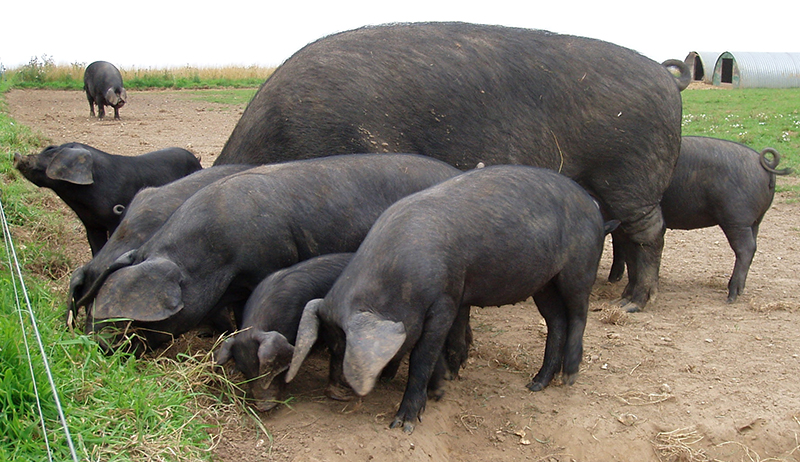
Some years back, we came upon the opportunity to acquire a litter of Large Black piglets. Large blacks are firmly a heritage breed, defined loosely as a breed that has fallen out of favor with producers over the years but is of interest to farmers and customers for their pasturing and foraging abilities, distinct flavor profiles and general preservation. Which is to say they’re different—and the opportunity to raise uncommon animals prompted us to buy all five and a Gloucestershire Old Spots (an even rarer pig that slipped onto the endangered list at one point) to boot. We grew our uncommon hogs out on a ration of high-protein, hand-mixed feed, reveling all the while in the sight of our uncommon animals lazily occupying the pastures we rotated them between. To our minds, the extra effort was sure to pay off in some as-yet-unidentified manner.

So we were of course befuddled when the vacuum-packed cuts we received from our processor fell far short of the weight we’d come to expect. And we were disappointed when customer feedback yielded such comments as, “That little pork chop sure was fatty.”

And this is how we learned the all-important first lesson in our lifelong education on the sprawling topic of feed conversion efficiency: We’d raised a litter of lard pigs.

What is Pig Feed Conversion Efficiency?

Feed conversion efficiency is something of an unwieldy topic, full of numerous interconnecting factors, but the basic concept is simple: When a pig eats, the resulting muscle gain roughly determines the feed conversion efficiency. If a pig requires a lot of feed to gain muscle, the efficiency is low; less feed required to achieve muscle gain is high efficiency. And the key term here is “muscle”—if a pig converts feed into excessive fat (i.e., not meat), you’ll leave the processor as unhappy as we were.

If you want to raise a herd of heritage pigs to keep a breed from extinction, feed conversion efficiency won’t be a primary concern. But if you’re trying to manage costs and keep market profits in the black, bacon pigs are definitely the way to go, and you should stay away from lard pigs.

Here’s a quick breakdown of bacon pigs and lard pigs, though be aware each pig is its own animal: You can get a fat Yorkshire, just as I’m sure somebody’s raised a buff Large Black. However, generally speaking, here’s where a few popular breeds land on the bacon vs. lard pig spectrum of conversion-efficiency metrics.

4 Lard Pig Breeds

1. Gloucestershire Old Spots: Known as “apple pigs” for their traditional use cleaning up fallen apples in orchards of yore, these pigs are the oldest breed of spotted pigs around today. GOSs pack on the fat, and they have a tendency to be stubborn.

2. Large Black: There’s a lot to love about the Large Black, such as its sunburn immunity and calm disposition, but that love can die at the processor, where meat yields can fall below expectations.

3. Mangalitsa: The Mangalitsa is a weird-looking pig. But not in a bad way—its thick, wooly coat is almost sheep-like compared to other popular pigs. It’s also firmly a lard pig, with much lower pork yields than other breeds.

4. Guinea Hogs: This pig grows fast on whatever you feed them, but much of that conversion results in fat, not muscle. Raise this pig for its foraging abilities, not its profit potential at the local farmers’ market.

4 Bacon Pig Breeds

1. Tamworth: One of the oldest breeds, traceable back to the domestication of wild hogs, the Tamworth was specifically bred for bacon—it has long, deep sides that curers prefer—but the hog’s wild ancestry makes it a frequent flight risk.

2. Berkshire: I’ll be honest—this is my favorite pig (and it’s what we raise on our farm). The oldest recorded British pig, this animal has just enough fat marbling to add moisture and flavor to a cut of pork. With a distinctly “porky” taste, this animal is often brought in to add flavor to a line that’s lost palate appeal.

3. Hampshire: Sporting a distinct white belt that crosses its shoulders, the Hampshire also boasts hardiness, vigor, breeding proficiency and a knack for foraging. It’s also a lean pig, reliably able to yield predictable amounts of market-ready pork chops.

4. Yorkshire: Sometimes called the Large White, this pig is hands down the most popular breed in the world. While the commercial pork industry is reliant on this breed for its excellent conversion rate, small producers can also benefit from the lean pig’s pork yield, though it’s worth mentioning that muted flavor is sometimes an issue, due to the extreme lack of fat.

This article about pig feed conversion was written for Hobby Farms magazine. Click here to subscribe.

Categories
Poultry

How to Prevent Bird Flu in Chickens

How to prevent bird flu in chickens can seem impossible, but there are several ways to protect your chickens from contracting this deadly disease. Here are six practical and easy tips on how to prevent bird flu in chickens. 

#1 Practice Biosecurity

Practicing biosecurity is one of the most important steps in how to prevent bird flu in chickens. But what is biosecurity? And how do you practice it in your flock?

Practicing biosecurity in your backyard flock means taking necessary precautions to avoid the spreading of harmful pathogens that could make your chickens sick. While it may sound complicated, practicing biosecurity is easy and will not only help to protect your chickens against the bird flu, but it also helps protect them from countless other diseases and internal and external parasites.

How to prevent bird flu in chickens by practicing biosecurity is a two-way street. This means you don’t want to bring home diseases from other chickens and poultry to your flock, but you also don’t want to share your flock’s germs with other birds or poultry. Never share or borrow poultry equipment. Stay clear of poultry shows, swaps, etc.; quarantine new poultry, and do not allow visitors to enter your coop and run.

Wear designated boots and clothes when visiting your coop and run to ensure you are not bringing in diseases from other birds to your flock.

How to prevent bird flu in chickens is extremely important, so be sure to practice biosecurity to keep your flock safe.

#2 Bye Bye Birdie

How to prevent bird flu in chickens should always include keeping wild birds away from your flock’s feeders and water founts. If wild birds eat or drink from the same source as your flock, some of the bird’s saliva will enter the water and remain on the feed. The avian flu is spread through bodily fluids, so preventing wild birds from contaminating chicken feed and water is critical.

Another concern backyard chicken owners face when dealing with wild birds sharing their flock’s feed and water sources is that the birds frequently poop while eating and drinking. Bird poop will contaminate the water, and poop in feed may be ingested by your flock.

Leave feeders and water founts in the coop or covered run to prevent wild birds from gaining access to your flock’s essentials. Never leave coop or run doors and unscreened windows open, as birds will quickly realize they can access your chickens’ feed and water through the door or window.

Even if the wild birds aren’t carrying the bird flu virus, they still carry many other diseases and parasites that could make your flock sick.

#3 Strong Immune System

Just like we humans take supplements and choose healthy eating habits to boost our immune systems and prevent sickness, how to prevent bird flu in chickens includes keeping your flock’s immune systems strong.

While your flock may still occasionally become ill, boosting their immune system will not only keep them healthy and safe from the bird flu, but it will protect them against other diseases, too.

There are three ways to boost your flock’s health: The best way to keep your flock’s immune system strong is by feeding them a complete feed formulated by a feed company specific to your flock’s needs, i.e., layer feed for laying hens, broiler feed for meat birds, etc.

Another option when researching how to prevent bird flu in chickens is to consider adding probiotics as part of their daily diet. Choose a probiotic that is made for poultry and preferably water-soluble. Poultry probiotics should contain lactobacillus, a critical probiotic chickens need to keep their digestive tract (the digestive tract is where sixty percent of a chicken’s immune system is.) healthy and running smoothly.

Fresh greens and herbs help to boost a chicken’s immune system and keep them healthy and strong. During the winter season, steeping some of your flock’s favorite spices, such as oregano, dill, basil, etc., into a tea to add to their water will help keep your flock’s immune system in tip-top condition all season long.

#4 Stay Away From Waterfowl

If you have ever searched online for how to prevent bird flu in chickens, you have probably read to keep your flock away from wild waterfowl. While this may seem easy if you only own chickens, for those who also share their home with domestic ducks and geese, this can be more challenging.

Wild waterfowl may not appear sick, but that doesn’t mean that they still aren’t carrying the bird flu. In many cases, the waterfowl simply act as a carrier for the disease but never succumb to the illness.

If your property is frequently visited by wild waterfowl, never allow your flock to free-range to avoid domestic and wild birds from intermingling and digesting each other’s poop. Keep domestic waterfowl off of ponds, streams, and other waterways to prevent your flock from drinking contaminated water. This is critical even if your pond or creek doesn’t have wild waterfowl visitors, as flowing water may be carrying this deadly virus from another pond or creek upstream from you.

#5 Avoid Free-Ranging

Free-ranging chickens are often thought of as healthier, so why does how to prevent bird flu in chickens include avoiding free-ranging?

It is true that access to fresh air and sunshine and the ability to forage for bugs and nutritious greens are excellent ways to help your flock stay healthy, but consequently being allowed to free-range has actually caused some flocks to contract the bird flu.

Chickens allowed to free-range may be tempted to hang out under trees where roosting birds poop and therefore ingest the wild bird’s poop. Not only is this behavior gross, but it is a sure way to make your flock sick.

Free-ranging flocks are also more likely to come into contact with birds that have died. As omnivores, chickens eat anything, including songbirds and other meat. Bad news for your flock if the deceased bird died from the bird flu.

#6 Migration Safety Tip

Migration time is one of the most feared times for poultry owners, as large flocks of birds are more prone to carrying the bird flu than the single robin hopping through the lawn.

How to protect bird flu in chickens and other poultry during migration season is extremely critical, so extra precautions should be taken.

Covering the run roof is one of the best ways to keep your flock safe from migrating birds and waterfowl. When the sky is filled with migrating waterfowl and birds, you run the risk of a migrating bird pooping while flying overhead and landing in your run. (Yes, it does happen.) Covering the roof of the run with shade cloth or tarps will prevent this and give you peace of mind.

By following these steps on how to prevent bird flu in chickens, you can rest easy, knowing you are doing everything you can to boost your chicken’s immune systems and prevent the bird flu from visiting your flock.

This article about how to prevent bird flu in chickens was written for Chickens magazine. Click here to subscribe.