Categories
Crops & Gardening

Fall Gardening: Try Some New Veggie Varieties

Fall gardening is a great time to try something new. Combining hybrids and heirlooms can yield more productive, flavorful fall produce. With cooler temperatures and shorter growing seasons, fall gardens may be a little more limited than their summertime counterparts, but they actually have a lot to offer. The soil’s already warm enough for rapid seed-starting, and there are fewer insect pests with which to contend.

In fact, when it comes to herbs like cilantro, fall can provide the perfect do-over. If yours bolted early this summer, you can always reseed in the fall. What’s more, many of the roots and leafy greens you can grow right about now are real superfoods.

And, with new varieties being released every year, the fall garden doesn’t have to be boring.

Fall Gardening Essentials

Diane Blazek is the executive director of both All-America Selections and the National Garden Bureau. While each group highlights new garden varieties each year, All-America Selections, in particular, is a plant-trialing organization.

Blazek explains, “For edibles, we have 35 different judges all across the U.S. and Canada and we divide it out by region. The judges are sent the entry, which is anonymous, and they’re sent two comparisons.”

Judges grow the different varieties, taking note of criteria such as growing habit, productivity, yield, taste and texture. If the tested variety performs better than its comparison varieties, it merits All-America Selections recognition.

Among 2020’s All-America Selection Award winners, Blazek recommends Snak Hero Peas for fall gardeners. “It’s 65 days to maturity and it looks a little bit more like a green bean, because it’s long and slender,” she says. “But it really is a stringless, snap pea. I grew it this spring, and I was just amazed at how sweet and tender it was.”

As for the National Garden Bureau? “Our membership covers pretty much every single breeder that’s doing work in North America,” Blazek says. “They submit varieties to us that they want to feature—it’s the newest of the new.”

If you’re looking for a striking new lettuce, you might like Lettuce Marciano. Vitalis Organic Seeds developed this butterhead variety for 2020, and it’s available via Johnny’s Selected Seeds. Along with improved resistance to downy mildew, lettuce mosaic virus and lettuce leaf aphids, Marciano features a bright burgundy exterior and splashes of green on its interior leaves.


These 5 tips will help you as you establish your fall garden.


More Good ‘Greens’

Renee Shepherd, founder of Renee’s Garden, offered two new and notable kale varieties in 2020—Mars Landing and Purple Moon. “They’re both gorgeous,” she says. “They’re unique for their color and very, very good flavor and really pretty form.”

“The Mars Landing has a lot of mauve in it and it has these interesting ruffled tips,” she says. “And, if you look at Purple Moon, those purple colors come up really strong—especially in cool weather.”

“If you plant them in fall, they just get sweeter and sweeter,” Shepherd adds. These kale types also hold their own well in cold temperatures, and they pack an extra nutritional punch. “They have a lot of purple in them, and purple is one of the colors that is most healthy. Color means more antioxidants and flavonoids.”

Shepherd also suggests trying Five Color Rainbow Gourmet Beets rather than your usual Detroit dark reds. Similarly, there are myriad Swiss chard varieties worth your time, too. Swiss chard’s large leaves can be stuffed like grape leaves or cabbage.

“There’s a huge array out there with more colors that many people don’t grow,” she notes. “The virtue of it is the more color, the more nutrition.”

For fall gardening variety, Shepherd also suggests gardeners consider growing stir-fry greens, braising mixes and Japanese baby turnips.


Turnips are healthy, tasty—and fun to carve!


Heirlooms and Hybrids

Adding new hybrids or new heirloom varieties to your fall gardening is another good way to shake things up—particularly if you’re partial to just one or the other. “Some heirlooms are wonderful, and some new varieties are wonderful, too,” Shepherd says.

For example? “If you’re going to grow broccoli, you as a home gardener will do infinitely better with hybrid broccoli, because it’s a thousand times more disease-resistant, it grows more side shoots, and it’s more compact,” she says. “Heirlooms are important for some things, but not all things.”

To further boost your fall gardening productivity, you might also want to top certain crops with a floating row cover. Not only will it protect sensitive crops like broccoli from flea beetles and other pests, but it also can prolong the growing season.

“If it’s going to be colder, and you want to extend your harvest, a floating row cover will give you three to five degrees,” Shepherd says.

This article about fall gardening was written for Hobby Farms magazine. Click here to subscribe.

Categories
Crops & Gardening

Yarrow Look-Alikes: Get to Know These Similar Wildflowers

Yarrow look-alikes can be abundant in the summer and early fall landscape. Beware! There are three wildflowers – Queen Anne’s lace, yarrow and poison hemlock – that look similar, each with a white umbel blossom. While two of them can be eaten or used medicinally, one is extremely poisonous. Here’s how to know what’s what.

1. Queen Anne’s Lace (Daucus carota)

Queen Anne’s lace (pictured above) is one of the first flowers I learned to identify as a child. I’ve always remembered it thanks to the legend surrounding one of its identifying features. As the legend goes, Queen Anne was sewing a piece of lace, when she pricked her finger, and a drop of blood fell in the center. Thus, a good way to tell Queen Anne’s lace wildflowers from the list of yarrow look-alikes is to look for a small purple flower in the center of the umbel—the drop of blood.

Queen Anne’s lace grows to be about 2 to 4 feet tall. It has finely dissected leaves, white umbel blossoms that emerge in a flat cluster and hairy stems. (Think: “Queen Anne has hairy legs.”) Flowers emerge from April through October. You’ll find them in disturbed areas such as roadsides.

Queen Anne’s lace is also known as wild carrot, and, as you might suspect, it belongs to the carrot family. In fact, the root is a favorite wild food among foragers, and you can eat it just as you would a carrot. As the plant is a biennial, harvest roots only in the first year. Second-year roots can be woody. The rest of the plant is edible, as well. Throw the flowers in a tea or use them to flavor pickles. Chop up the greens for a stir-fry or salad. You can use the seeds in tea as a diuretic or to relieve gas. You can also use them as a seasoning, similar in flavor to caraway. However, avoid using the seeds if you’re pregnant, as they have a history of use as a contraceptive.

2. Yarrow (Achillea millefolium)

yarrow wildflowers
Meredith Leigh Collins/Flickr

Yarrow and Queen Anne’s lace can be easily mistaken for one another. The two wildflowers grow about the same height, in the same areas, at about the same time of year. Yarrow grows about 1 to 3 feet tall and can be found in disturbed areas. It also produces a white (and, on rare occasions, pink) umbel flower head. The blossoms appear to me to be a little more hardy than that of Queen Anne’s lace, which looks more loose and lacy. Yarrow also has finely dissected leaves but with a more feather-like appearance. You’ll see its flowers popping out between May and October.

Yarrow is best known as a wound healer—you can literally pluck the flowers out of the field, give them a little chew to macerate them, and then stick them on a bleeding wound to make the blood flow stop. The legend goes that during the Civil War, people used these wildflowers as a poultice to stop the bleeding of wounded soldiers.

You can also use the aerial parts (flowers, stem and leaves) internally—dried, fresh or tinctured—in many ways. Yarrow can help regulate menstrual cycles in women. In combination with other herbs, it can treat colds and flu. It also helps treat hay fever, high blood pressure and circulation issues.

3. Poison Hemlock (Conium maculatum)

poison hemlock wildflowers
TJ Gehling/Flickr

Of the wildflowers on this yarrow look-alikes list, properly identifying this one is most important because the name doesn’t lie—eating it can be fatal. Unfortunately, as a member of the carrot family, it looks like many other edible plants, including Queen Anne’s lace, cultivated carrots and parsley. A farmer friend told me of a friend who raved about “parsley” that “suddenly appeared” in her garden that she’d been nibbling. Knowing that parsley doesn’t tend to “suddenly appear” where it wasn’t planted, my farmer friend asked whether she could see it. Turns out it wasn’t parsley at all, but poison hemlock. Thankfully, the person and her family hadn’t fallen sick from the bits they’d ingested, but this is a perfect illustration of the need to follow the golden rule of foraging: If you can’t definitively identify the plant, don’t eat it.

Poison hemlock can grow between 2 and 6 feet tall. It has a hollow, grooved stem, nearly as thick as an index finger, with distinctive purple spots. The leaves have a finely dissected appearance typical of those in the carrot family, though the general shape is that of an equilateral triangle. Like Queen Anne’s lace and yarrow, it has white umbel flowers. However, the stalk is highly branched, so you’ll see more umbels per plant on poison hemlock than you will on the other two species mentioned here. Like the other two plants, though, it grows in disturbed areas—I often see it in our area along creek beds or old cattle grazing areas.

I cannot overemphasize: This plant is extremely poisonous. Merely touching the poison hemlock can cause dermatitis. If taken internally, its toxic alkaloids can affect the nervous or respiratory systems. Even small amounts can result in death. If you find poison hemlock growing in an area where pets or children roam, remove it promptly and carefully. Wear long sleeves, pants and gloves. Dispose of the plant in plastic garbage bags, and do not let the plant touch your skin. Be sure to clean off any tools, such as clippers, you use so that you don’t inadvertently come in contact with the toxic juices. For more on poison hemlock control, visit the website of the University of California’s Integrated Pest Management Program.

Yarrow Look-Alikes: Foraging Advice

Foraging can be fun, but some yarrow look-alikes make it tricky. As you observe what grows in your area, find a guidebook and/or a plant identification app and learn more about what you see or, better yet, follow an experienced forager. Again, never eat something if you can’t identify it with 100 percent certainty.

This article about yarrow look-alikes was written for Hobby Farms magazine. Click here to subscribe.

Categories
Animals

Goat Shelter Options: From Sheds to Barns & More

Goat shelter and housing options are critical, as finding suitable housing can prove tricky due to goats’ destructive behaviors. This guide offers several goat housing options, from sheds and barns to calf hutches and more, to fit your needs.

Goat Shelter Requirements

Whether raised in the city or on a farm, goats require shelter from the elements. Housing should have at least three sides and a roof to protect them from wind and precipitation.

Three-sided goat housing should have a window on the north side and another on the south side (change window locations to east and west if you live in a particularly hot climate). Add a door to keep out the elements and potential predators whenever possible.

Goat housing should be spacious to prevent overcrowding, with each goat requiring a minimum of twenty square feet.

Other housing requirements include straw or hay for bedding, a feeding area (equipped with feed buckets and a hay manger), and a water trough or water buckets.

Goat Shelter: Barns

If you live in a rural area, you may already have an unused barn on your property. Using existing barns and other outbuildings is an excellent way to shelter your goats without stretching the budget.

Barns have another advantage: they are usually spacious, making it convenient if you are looking to expand your herd to a small business or hobby farm.

Also, many barns have stalls already built in and are move-in ready for goats.

Barn Disadvantages

If you don’t have an existing barn on the property, a barn is probably not the best option for many hobby farmers, as building even a small barn can prove costly.

If housing goats in an old barn, look for safety issues, such as rusty nails, old paint (old paint may contain lead, causing lead poisoning and death if ingested), or unsafe living conditions due to deterioration. Goats are strong, and even gentle Pygmy goats can damage outer walls if housed in a deteriorating barn.

goats resting under a goat shelter
Adobe Stock/Aaron & Wera

Goat Shelter: Sheds

Sheds are the best goat housing option if you live in a suburban or urban area, as they are generally more eye-pleasing than other shelters. If you don’t already have an outbuilding, sheds are a great option, as they are more affordable than building a barn.

Sheds are another excellent option for those who keep several goats as pets, as they do not require as much upkeep as a large barn.

Another advantage of housing goats in a new shed is that there is no need to worry about toxic paint.

If goats are being housed in a shed, test the shed structure to ensure it can withstand goats like a barn. Look for loose or rotting boards, weak spots, and other structural damage.

Shed Disadvantages

While sheds aren’t as expensive to build as barns, they may not be affordable for those with tight budgets.

Sheds will only accommodate several goats, so if you want to expand your herd, you will need multiple sheds.

Goat Shelter: Calf Hutches

If you live on a dairy or beef farm, you may have some unused calf hutches. These hutches work well for housing goats and are an excellent low-cost option.

Built to hold up to calves, these hutches can support the weight and abuse goats inflict on their housing.

Chain the goat to the hutch when housing goats in calf hutches to prevent them from jumping out. The chain should be long enough that the goat can freely move around the hutch but not so long that it can leap out. Attach the chain to the goat’s collar for easy on/off.

Calf Hutch Disadvantages

Calf hutches are usually three-sided, so they are not the best option for keeping out the elements. They also offer little protection against predators such as coyotes.

 Calf hutches have a rural look, so if you have neighbors nearby, you may want to choose a more eye-pleasing goat house.

Goat Shelter: Three-Sided Out Buildings

Three-sided outbuildings are the most popular goat housing as they are more affordable than other options, allow plenty of airflow, and protect goats from the elements.

This affordable goat housing option is excellent for those in climates with mild winters. However, the roof must be sloped to prevent rain or melting snow from dripping on the goats.

Another advantage of these structures is that if you are handy with tools, plans are available online for building your own.

Three-Sided Building Disadvantages

Three-sided buildings are one of the most popular goat housing choices, but they still have disadvantages. One of the most significant disadvantages is that three-sided buildings do not offer protection from all the elements. Goats are sensitive to wet conditions and cold weather, so having a fourth wall for extra protection may be necessary for cold or damp climates.

Another disadvantage of a three-sided building is the lack of predator protection. Three-sided buildings are accessible to coyotes, as they can easily jump over barn gates and fencing to access the herd. Coyotes can severely hurt or even kill goats, so care should be taken to protect your herd in locations where coyotes are prevalent.

No matter what goat shelter and housing options fit your needs and location, the necessities are identical. So, whether you choose a barn, shed, or calf hutch, select the one that will best protect your herd from the elements and the predators in your area for the best goat-keeping experience.

This article about goat shelter and housing options was written for Hobby Farms magazine. Click here to subscribe.

Categories
Animals

Hay Quality: The Importance of Testing Feed Hay

Hay quality is important since it makes up a large percentage of the diet in many domesticated livestock species, including cattle, goats, sheep and rabbits. Large farming outfits often keep hay fields that they harvest for their own animals, saving money by recycling the manure from those animals back into fertilizing the fields. In this way, they keep nutritional levels in the vegetation high and costs down. For the small homesteader, this is often impractical though, and buying hay from nearby farms is more common.

As fertilizer grows more expensive, trusting in providers to keep their hay at top-quality may become harder in certain areas. In areas already prone to poor soil, animals can literally starve to death with full bellies if fed hay that lacks the nutritional make up they need.

What should you look for in a hay provider, and how can you tell if your animals are getting the nutrients they need?

Types of Hay

The first step to getting livestock adequate nutrition is to make certain to buy the correct type of hay for their needs. While it is common to see all dried grasses referred to as hay, there are several varieties, depending on their makeup. Alfalfa, clover, timothy, orchard grass and other labels can make a difference in the nutrients, and how they may affect the diet of your animals.

For instance, most rabbit dietary information will call for rabbits to be fed pellets and a generous amount of “Timothy hay.” This is a type of hay high in fiber and tends to be tougher to chew, which helps to prevent dental issues.

However, if you are feeding them the standard, baled hay from a farm, you may very well be giving them meadow hay. Meadow hay is designed for larger ruminants, softer in texture and with a more varied nutritional content. This is fine as long as you provide the rabbits with wooden toys to chew and adapt their pellet intake.

Alfalfa, however, is a high-nutrient hay and should not be fed to rabbits alongside pellets. Doing so can cause obesity, difficulties with breeding and other health concerns.

Hay Quality

Goats have a reputation for being able to eat anything and they also have a reputation for being wasteful eaters. The reason for this discrepancy is that goats require highly nutritious vegetation and excel at judging and discarding anything that doesn’t meet their needs with just a taste. Trying to save money by feeding them low-quality cheap hay will result in a lot of wasted money on the floor of their stall. The same is true of sheep and other ruminants. A good rule of thumb is that the coarse the hay, the less likely animals are to enjoy it.

Finding high-quality hay can result in healthier animals and less waste. While not all animals will require alfalfa or ultra-fine hays, all livestock still require a certain nutritional quality in their feed. If your hay supplier has their bales tested for nutrient levels, ask if you can have a copy of the results.

Be careful if you don’t have a relationship with the hay supplier though – some can get defensive about these types of questions! However, if they do, this also suggests that perhaps looking elsewhere is best.

Testing Your Hay Quality

If you already have the hay in your barn, you can have it tested as well. While not ideal – since a supplier is unlikely to take low-quality hay back – at least you will know whether you should supplement your animals with other minerals or feed over the winter. Testing can be done with the help of your local feed store, or by yourself.

Developing a solid relationship with your local feed store is good for multiple reasons. In this case, the benefit is that they may have the resources to help you get your hay tested. If so, the representative will make an appointment to come out, take several core samples and you will receive results once they’ve been completed.

If you have access to a core sampler you can also take your own samples. Your local extension office can help you find a lab to have the testing done. The lab will give you directions on how to take the samples, package them, when to expect results and where to mail them. There will be a fee, and you may still need someone to help you understand the results when you get them.

The Importance of Good Hay Quality

Good nutrition is a core part of keeping livestock healthy. Especially in areas of the country where hay nutrition may be poor, suppliers should be expected to provide high-quality hay. Regular testing is the best way to keep these nutritional standards high.

This article about the importance of hay quality was written for Hobby Farms magazine. Click here to subscribe.

Categories
Poultry

Natural Poultry Supplements for Stronger Birds

Poultry supplements are a great way to ensure that what we put into our poultry will be what we get out. Poultry performance, whether that be for show, egg production, meat or pets, relies heavily on nutrition and sometimes a few poultry supplements to help our chickens go a long way.

You might be surprised to discover that you don’t have to go to your local feed-supply store to get premium supplements. In fact, many simple supplements can be found in your home cabinets that can help stabilize feathers, increase egg quality and boost the general health of your poultry.

Apple Cider Vinegar 

Apple cider vinegar is a panacea for many common health conditions, which applies to that of our chickens as well. Studies have shown that chickens given a dosage of apple cider vinegar in their water will have a higher percentage of beneficial antioxidants and lower toxic stressors in their cells. These antioxidants help fight against bacteria that cause conditions such as salmonella and E-coli, giving your chickens a stronger immune system and health.

By cleaning out your chicken’s system of those harmful bacteria, chicken raisers are also supporting their chicken’s gut health. This helps with the absorption of beneficial nutrients and digestion to bring your chickens the nutrients they need, making them stronger for any purpose.

Give chickens 1 tablespoon of apple cider vinegar per gallon of water at least weekly, being careful not to serve in a metal watering system, because the acidic vinegar — especially when organic —may corrode the metal which will make the water harmful for chickens to drink. From immunity to gut health to claimed egg production increase, apple cider vinegar is a mainstay poultry supplement that can easily be added to make a big difference in your coop!

Eggshells 

Who knew that chickens could even produce their own poultry supplement that can be given back to them? That is the verdict, however, of researchers and chicken raisers alike who grind their flock’s eggshells into unrecognizable powder (to avoid egg eating) and feed the eggshells to chickens alongside their daily feed.

Eggshells are made up almost entirely of calcium, which is exactly what hens need to produce adequate shells for their eggs and maintain skeletal health. Thankfully, hens are good regulators of their calcium needs and will eat as much shell as needed if it is available. Crushed eggshells should only be given to hens already laying to avoid pullets laying too early (resulting in laying and overall health issues). Shells should also be from the flock that is consuming the shell; store-bought eggs or shells from other flocks could carry bacteria causing disease. When given their own eggshells, chickens are given a crunchy side supplement to bring healthy eggs to your table.

Molasses 

The thick, dark syrup isn’t only for home cooking! Molasses is a natural supplement for chickens that is rich in nutrients to help build stronger muscles and heart health. Molasses can also act as a mild laxative for chickens, which is a pro and con.

Beneficially, molasses can be used in emergency situations if a chicken derives botulism from eating spoiled feed or toxic substances by absorbing the substance and flushing it out. Being a laxative, however, too much molasses or availability to it can lead to dehydration.

Mississippi State University Extension Service says to add one pint of molasses to 5 gallons of water. “Offer the drinking solution free-choice to the affected birds for about four hours. Treat severely affected birds individually if they can’t drink. Return the birds to regular water after the treatment period.”

Molasses may also be used to give chickens a boost, whether given as a couple drops in chicks’ waterer to boost energy and give nutrients after being stressed from shipping or poured over feed to give an ailing chicken motivation to eat. Whatever the cause or reason, molasses is a sweet poultry supplement to have on hand for many of your flock’s needs!

Sugar

Chickens may not have typical teeth, but that doesn’t stop them from having a sweet tooth! Sugar isn’t only a treat to chickens, but a poultry supplement also when fed in moderation and at a young age. The sugar is easily absorbed in chicken’s digestion system, making it an ideal energy source to give young or sick chickens that need a pick-me-up.

To give your chickens a sweet treat with healthy benefits, mix 3 tablespoons of sugar for each quart of warm water and allow them access for a couple of days. Sugar water has also been said to help chickens who are molting, making it an easy solution to try the next time your coop becomes covered with feathers.

Sugar (or honey) also can act as a medicinal ointment for chickens. If a chicken has an open wound, make a paste with sugar and petroleum jelly to apply to the wound and leave covered until it’s healed. The complex sugars in the honey or the sugar itself act to draw out infectious bacteria and restore skin much healthier and faster than if not treated. Whether directly applied or given as a sweet treat, sugar is one supplement with many sweet benefits!

Garlic 

While fresh garlic may be a natural repellant because of its smell, it’s a natural immunity booster and beneficial supplement to draw chickens back to health. Small amounts of garlic given to chicks twice a week help the birds acquire the taste and build a stronger immune system that builds momentum for life.

Garlic is also full of probiotics that promote gut health, helping the large intestine fill with beneficial bacteria that will absorb more out of the supplements and nutrients given in a chicken’s daily diet. Adding four crushed cloves per gallon of water may also help stimulate chickens’ appetite, helping your flock to fill out and eat when they may be sick.

Garlic may also become a favorite poultry supplement for anyone having to clean the coop as well! In The Chicken Health Handbookauthor and chicken expert Gail Damerow suggests mixing 1½ pounds of garlic powder with 50 pounds of feed to neutralize odors of chickens’ feces without causing any effect on the taste of the eggs. For those who raise chickens, garlic is one supplement they’ll want close!

Herbs 

Winter months mean two things for those raising chickens: cold weather and bare chickens, as many flocks migrate into their own season of molting. While it may feel helpless, herbs such as dill, mint, oregano, basil and parsley can help chickens regenerate new, stronger feathers to help them through the molting season — or any season they may need some shine, fluff and added number to their feathers.

Feathers are made up of approximately 90% protein, which means protein needs to be added to a flock’s diet to help build a supplement to regenerate new feathers, such as the levels of protein found in these herbs. They also are full of nutrients and vitamins that aid in the digestion of other supplements, which will help stretch your supplementing efforts further.

Milder herbs such as parsley and dill can be added to your flock’s feed (ideally dried and crumbled) while stronger or more pungent herbs such as oregano and mint be offered alongside the daily ration for your chickens to eat at will. In addition to helping bring your chickens’ coats back, herbs will help neutralize odors and leave your coop smelling fresh!

Sunflower Seeds 

To give your chickens’ feathers a boost of shine and improve cardiovascular health, sunflower seeds may be just the trick! Black oil sunflower seeds and striped shell sunflower seeds contain large amounts of oil which stimulates the oil production in chickens that then gives their feathers a glossy glow.

Because of the high oil content, however, sunflower seeds are a fatty snack that can lead to obesity and fatty liver syndrome if fed on a regular basis, so moderation is key. Soaking sunflower seeds overnight or feeding shelled sunflower seeds are the most beneficial ways to supplement sunflower seeds in small amounts of one tablespoon per three to six birds.

By scattering the seeds in your chickens’ courtyard, stirring them in their daily feed or feeding them by hand, each seed is a special treat that your chickens will always be hungry for.

Flax Seeds

To give your hens’ eggs a boost of omega-3 levels, mix 1 tablespoon of flaxseed per chicken into their daily feed. The flax seeds are rich in omega-3s, which makes their way into the yolks of select breeds of hens when fed in moderation and provide healthier eggs for human consumption and healthier, heartier chicks according to some studies.

Flax seeds also may improve the strength and appearance of your chickens’ feathers, which makes it an ideal supplement during molting season. It’s also thought to improve lay rates to war against the symptoms of molting.

As with any poultry supplements, moderation is key, however, as high dosages over a long period of time can lead to liver hemorrhages or obstruction of nutrient absorption. When fed as intended, however, flax is a handy standby supplement that can help your hens improve and give you some nutritious boost as well!

Kelp

Although kelp may not be a product you have on hand, seeing the benefits and differences in your chickens may make it a new standby on your list. The seaweed is loaded with vitamins and nutrients and amino acids that help improve fertility in roosters, hatching in fertile eggs, feather endurance and appearance and bone development in chicks.

Kelp also is rich in omega-3s, which along with boosting egg quality can aid in oxidative stress on their digestive system, helping them to absorb more nutrients that might be otherwise missed and absorbing more out of the nutrients themselves.

To add kelp to your flock’s diet, add 1 cup of dried kelp per 40 pounds of feed once a week or 1 teaspoon per 4 pounds of feed three times per week. Although kelp can help chickens of any age, give this supplement to chicks or pullets for their development. Although the seaweed may not look appealing to us, kelp is a natural poultry supplement and a treat chickens tend to flock after.

Poultry Supplements 101

While it may be easy and fast to pick up a commercial supplement for your chickens’ health and needs, a natural supplement is always a plus and can sometimes be the hearty boost your chickens need to be at their best.

Poultry supplements aren’t necessary once an issue arises with your flock either. You can use preventative supplements to raise stronger chickens and repel issues before they even take wing. Whether your flock is in need or full, these supplements, when used correctly by not making up more than 10% of a chicken’s daily ration, are ideal at any time and offer your chickens a natural way to be stronger, healthier and at their best.

This article about natural poultry supplements by Caitlyn Decker was written for Hobby Farms magazine. Click here to subscribe.

Categories
Poultry

What Do Chickens Eat? How to Raise a Healthy Flock

What do chickens eat is a common question. Feed stores are filled with bagged feed options and then there are the treats and supplements plus seasonal considerations and free-ranging. It can be a daunting task.

In the days before commercial chicken farming, small flocks on family homesteads mostly fended for themselves.

When it comes to dining out, chickens have eclectic tastes. Worms squirming in the manure pile, dangling tomatoes and raspberries, and minuscule seeds all attract a hungry chicken’s sharp eyes.

As more chickens were relegated to chicken houses where foraging wasn’t an option, chicken feeding became a more complicated affair.

Even after commercial diets emerged on the scene in the early 1900s, meeting chickens’ nutritional needs posed a challenge. Birds suffered from deformities and illnesses caused by vitamin and mineral deficiencies, which underscores the importance of a chicken’s balanced diet with optimal amounts of protein, fat, carbohydrates, vitamins and minerals.

If allowed to roam free around the urban backyard, our domesticated birds will lead an omnivorous chicken lifestyle similar to that of their wild ancestor, the Red Jungle Fowl of Asia.

No matter whether they free range or not, providing chickens with nutritional feed is easy nowadays. Head to your local feed or urban farm supply store and you’ll find commercial chicken feeds formulated especially for your chickens, whatever their age or purpose.

Specialized Chicken Diets

But beware of grabbing up any old bag that looks like chicken feed. A chicken’s nutritional needs change during different stages of its life. Newly hatched chicks, for instance, require a starter feed with high levels of protein for growth—about 20 percent for egg layers and slightly more for meat chickens.

From 6 to 8 weeks on, the layer chicks, now called pullets, receive a somewhat lower protein “developer” feed, while broiler pullets usually get an aptly named “finisher” feed until slaughter. (Keep in mind, not all feed stores carry these more specialized diets).

When egg production finally kicks in at around 20 weeks, hens will lay eggs every 24 to 26 hours if they are receiving the right nutrition and if they have a safe place to lay their eggs. Layer hens should be given a layer diet, which generally contains higher levels of calcium for egg production.

“A layer diet consisting of 16 percent protein is good for most areas,” says Kenneth Macklin, PhD, a research fellow at Auburn University’s Department of Poultry Science in Alabama. “However, one containing more protein [18 to 19 percent] will be needed to keep hens from going out of lay in areas that have hot summers. Chickens eat less when it’s hot out.”

Finding higher-protein feed can be difficult, but you can supplement layer feed with oyster shells.

What Do Chickens Eat? Other Feed Options

But hold that credit card—you may have even more options. Spurred by increasing demand for pesticide- and antibiotic-free foods, certified organic feeds have come on the market.

Cheryl Clarke, a chicken raiser and zookeeper in Carnation, Wash., switched to feeding her chicken flock organic feed because her chickens’ overall health seemed poor, and some of the chickens suffered from reproductive tumors. Since making the conversion to organic feed, she feels her chickens’ health, weight and plumage have improved.

Feed stores carry an assortment of other bagged and bulk grains, including scratch and even organic cracked corn or oats. Be aware that some chicken feeds, particularly chick starters and broiler chicken diets, are commonly medicated with antibiotics and coccidiostats, which are used for the control of a parasite called coccidia. Check the feed bag for feeding directions and withdrawal times.

Diet Supplementation

Looking for a nutritious treat for your chickens? Try these recipes for Bird Bread and Bird Salad. Many experienced chicken raisers concoct their own chicken diets. However, Macklin recommends feeding a commercial corn/soy feed to laying chickens for a simple reason: The chicken feed already contains the proper nutrition.

“Mixing your own feed, though possible, takes some knowledge of the nutrient contents of each component to get the right mixture,” he says.

Because formulated chicken feeds already contain the vitamins and minerals chickens need, your flock should require little in the way of supplements. Chickens without access to sufficient natural grit, like tiny rocks or coarse sand, should be offered granite grit free-choice to help them grind hard seeds and grains in their gizzards. Supplementing a layer chicken diet with oyster shell, which provides extra calcium for egg production, won’t hurt your birds and may help if their diet is imbalanced, says Macklin.

Commercial chicken feeds are considered complete diets. Adding scratch grain mixtures and other foods to the feed isn’t necessary and could lead to health or productivity problems.

Many chicken raisers cut their feed bills somewhat by augmenting their flock’s formulated fare with leftovers from the kitchen. Chickens love greens, corn, berries, apples, cereal, bread and even cow’s milk. Just don’t overload them with goodies so they spurn their balanced feed. Avoid offering onions or garlic (which might taint egg flavor), raw potatoes, high-salt foods and anything spoiled or moldy.

In winter, Clarke provides her chickens with some extra carbohydrates in the form of scratch to help them stay warm.

What Do Chickens Eat? Don’t Forget Drinks

Finally, when you’re focused on what do chickens eat, don’t forget the water. A constant supply of fresh, clean water. Like us, chickens are made up of lots of water (a whopping 55 to 75 percent); it also comprises more than half the volume of an egg. Water is essential for proper functioning of the digestive, metabolic and respiratory systems, so make sure your chicken flock has plenty to drink during hot spells. Give them extra containers if necessary and a source of unfrozen water on frigid winter days.

This article about what do chickens eat was written for Chickens magazine. Click here to subscribe.

Categories
Animals

Small Farms: 15 Livestock Breeds to Consider

Small farms don’t have to be restrictive when you’re thinking of raising livestock including cattle, sheep, goats, pigs, chickens and turkeys, and dogs to guard or herd them. Livestock need room to roam—and root, forage, peck or scratch—but certain breeds, including miniature versions of standard breeds, can thrive on small farms.

1. Pygmy Goat

As its name suggests, this goat breed is petite, with a height of just 16 to 23 inches and weighing in at 60 to 80 pounds (about the size of a large dog). Their animated nature makes Pygmy goats (pictured above) popular pets, but the breed also has a place on the farm. Females produce excellent milk that can be used in cheese-making.

The does are strong breeders. Their first breeding typically occurs between 12 and 18 months, and after a five-month gestation period, does can bear one to four kids every year. Kids are fully weaned around 3 months of age.

Like other breeds, Pygmy goats are social and do best in a herd atmosphere. Pygmy goats are also active and need ample space for exercise.

2. Berkshire Pig

Berkshire pig
WFIU Public Radio/Flickr

The Berkshire can be traced back to England in the 1800s. When the American Berkshire Association was formed in 1875, it was the first swine registry and breeding group in the world. The breed is prized for its meat: With a market weight of 600 pounds, Berkshires produce juicy, flavorful meat that marbles well.

On small farms, Berkshires thrive. It’s a hardy breed, and the pigs are excellent foragers with calm dispositions. The sows produce an abundance of milk so their piglets grow quickly. Their dark coloring—black with white legs, faces and tails—protects against sunburn, making them suitable for the outdoors.

3. Miniature Cattle

dexter cattle - miniature cattle that can be raised on small farms
Anguskirk/Flickr

A herd of large Holsteins might not be right for small farms, but that doesn’t mean cattle are out of the question. Several miniature cattle breeds, such as Dexters, Miniature Jerseys, Miniature Herefords and Lowlines, make up this small-farm option.

The docile, dual-purpose Dexter (producing milk and meat) is among the smallest breeds; an adult bull measures 38 to 44 inches at the shoulder and weighs less than 1,000 pounds. Jerseys, Miniature Herefords and Lowlines, aka Miniature Angus, are smaller versions of their standard-sized counterparts. While the diminutive Jerseys are prized for rich, creamy milk, Herefords and Lowlines produce tender, high-quality beef.

4. Babydoll Southdown Sheep

Babydoll Southdown sheep
Rachael Brugger

The North American Babydoll Southdown Sheep Association refers to the diminutive breed as “impish creatures” because of their dispositions and adorable appearance. The hornless breed originated in England in the 1800s. The ewes, known as excellent mothers that often produce multiples, reach a height of 20 to 23 inches; the rams top out at 24 inches.

Babydoll Southdowns have sought-after fuzzy white, off-white (light tan or gray) or black fleece that can be spun into luxurious fiber. Thanks to its small size and friendly disposition, the breed is often raised as a pet or used in 4-H projects. Babydoll Southdowns are also excellent foragers and are employed to keep grass trimmed and weeds down.

5. Jacob Sheep

Jacob sheep
Andrew Lews/Facebook

These black-and-white spotted sheep were popularized in England in the 1600s and imported to North America three centuries later. Ewes weigh between 80 and 120 pounds, and rams seldom weigh more than 180 pounds. Depending on breeding, some Jacob sheep (both ewes and rams) have two, four or six horns.

Their docile nature makes Jacob sheep ideal for novice farmers. Fiber artists are also big fans of the wool, as the breed produces a medium fleece with unique color combinations of black, white or a blend of both.

It’s difficult to find purebred Jacob sheep because they’re often crossed with other breeds, such as Dorsets, and the spotted offspring are marketed as Jacob sheep.

6. Miniature Cheviot Sheep

A smaller version of the American Cheviot, this sheep measures to just 23 inches; mature ewes weigh between 45 and 85 pounds while rams top out at 100 pounds.

The breed originated in the Cheviot Hills on the border between England and Scotland and is hailed as one of the U.K.’s hardiest breeds, thanks to its ability to thrive in the bleak, windswept landscape. Miniature Cheviots are mild-mannered, active sheep that love to forage and make great mothers, often producing twins.

With its distinctive white, wool-free head, black muzzle and long wool, the Miniature Cheviot is raised for its fleece, which can be white, black, tan or painted (a combination of two or more colors in the fleece).

7. Tamworth Pig

tamworth sow and baby are good to raise on small farms
Amanda Black/Flickr

Named for the village of Tamworth in England, where the breed originated, these dark-red pigs with long snouts are excellent rugged foragers. Tamworth hogs are active and need space to root and wallow. Their red coloring allows them to adapt to various climates because it protects against sunburn.

Once considered a “bacon breed” because of their slow growth and lean, fine-grained meat, Tamworth pigs, which reach a mature weight of between 500 and 600 pounds, are raised for all cuts of meat. The sows are prized for their ability to raise large litters, making excellent mothers and doing a good job of suckling their litters.

8. Nigerian Dwarf Goat

Nigerian Dwarf goat
Trisha M Shears/Wikimedia Commons

The breed originated in West Africa and resembles a petite version of large dairy goat breeds. Nigerian Dwarf goats range from 17 to 20 inches in height and weigh about 75 pounds. Both does and bucks have soft coats with short to medium hair in a number of color combinations, including black, chocolate, Dalmatian (black-and-white spotted), and gold and white.

This gentle breed is often kept as a pet or used in 4-H projects. On small farms, Nigerian Dwarf goats are great milking goats, producing a surprising amount of milk for their size; the milk is higher in butterfat than other dairy-goat breeds.

9. Large Black Pig

Large Black pig
Amanda Slater/Flickr

As its name suggests, the breed is named for its size and coloring. Perhaps the most noticeable characteristics of the Large Black are its lopped ears that flop forward, giving them the appearance of blinders.

Although it was one of the most popular breeds in the U.K. in the 1900s, The Livestock Conservancy now considers the Large Black a threatened breed. Large Blacks are excellent rooters and foragers; in fact, the shift to industrial/indoor production was one of the reasons the breed fell out of favor. For pastured pork, the breed, which reaches adult weights ranging from 650 pounds to 750 pounds, produces high-quality, lean meat.

10. Welsummer Chicken

Welsummer pullet
Oregon Department of Agriculture/Flickr

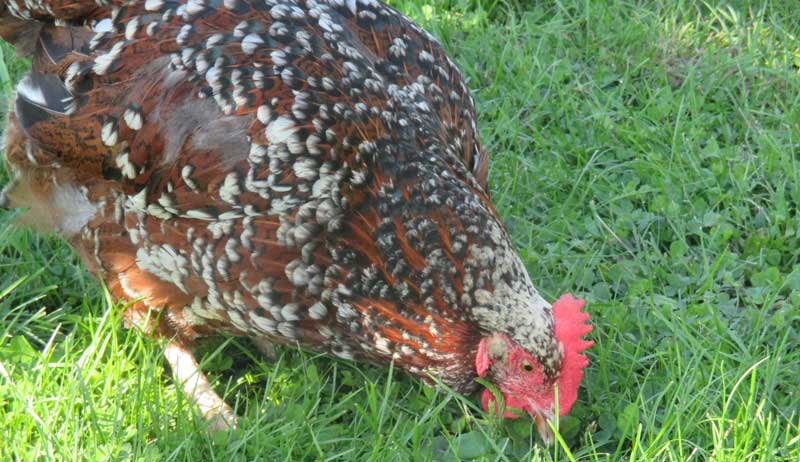
These petite chickens just weigh less than 6 pounds. Although the hens are vigorous layers, producing deep-reddish-brown and sometimes speckled eggs, the Welsummer breed is a dual-purpose bird that can also be raised for meat.

The breed originated in Holland and has a docile temperament. Welsummers are adaptable to most climates and fare well in cold and heat. They prefer to free-range and needs ample space to scratch and peck for their supper. Hens might go broody.

The medium-brown feathers of the Welsummer are tipped in dark brown and reddish brown with gold tips around the neck.

11. Bourbon Red Turkey

Bourbon Red turkey
Mtshad/Wikimedia Commons

An American breed, the Bourbon Red is a cross between the Bronze, Buff and White Holland breeds and named for Bourbon County, Ky., where it was first developed. The birds have brown to dark-red plumage with white flight and tail features; toms might have feathers edged in black.

Active foragers, Bourbon Reds do well on pasture, making them perfect for small-flock production. They reach a market weight between 14 and 23 pounds, producing heavy breasts and richly flavored meats. The hens lay pale eggs with light brown spots.

Although most Bourbon Reds are good-natured, some breeders select for aggressive traits, so toms will be more driven to mate. Careful breed selection is essential.

12. Orpington Chicken

orpington chickens can be raised on small farms
Elias Gayles/Flickr

Raised for eggs and meat, these docile dual-purpose chickens, developed by William Cook in Orpington, England, in the late 1800s, are still popular today for their rapid growth, weighing between 7 and 8½ pounds at 5 months, and their prolific egg-laying, producing large, light to dark-brown eggs.

The Orpington is popular with small farms and backyard chicken keepers because it’s calm and friendly, making it an ideal egg-laying pet. There are several varieties, including Black, White, Buff and Jubilee, a speckled bird.

13. Narragansett Turkey

Narragansett turkey
Glenn Kraeck/Flickr

Another American breed, the Narragansett was named for Narragansett Bay in Rhode Island, where it was developed from a cross between domestic and wild turkeys. Its color pattern is a striking combination of black, gray and white with a red to bluish-white head.

Although the breed is known for its meat (the birds reach a market weight of 14 to 23 pounds), Narragansett turkeys are also regarded for superior egg production, laying pale brown-spotted eggs. On pasture, the turkeys are excellent foragers with strong maternal instincts.

14. Guardian Dogs for Small Farms

Great Pyrenees livestock guardian dog
Don DeBold/Flickr

Livestock guardian dogs, or LGDs, can play an important role on the farm. The most common LGD breeds include Great Pyrenees, Anatolian Shepherds, Akbash, Kangal and Maremmas. Great Pyrenees are known as gentle giants for their ability to show affection to their families while guarding flocks ranging from chickens to alpacas. In contrast, Anatolian Shepherds have strong protective instincts and incredible endurance and are best-suited to farms with experienced owners. Both Maremma sheepdogs and Akbash look similar to Great Pyrenees thanks to their thick white fur and dark eyes. The Kangal, like the Akbash and Anatolian Shepherd, originated in Turkey. It can be territorial and protective of its flock and its family.

15. Herding Dogs for Small Farms

Border Collie herding dog
Corinne Benavides/Flickr

Nonguardian dogs have an equally important role on a small farm: using their herding instincts to keep livestock in line. Border Collies (pictured) are hailed as the best sheepherding breed in the world, using stalking movements and an intense gaze to guide sheep in a desired direction. Border Collies are comfortable working long hours on rugged terrain but are also affectionate and make great companion dogs. Australian Cattle Dogs, as their name implies, were bred to herd cattle in the outback of Australia. It’s believed that crossing the dingo, Kelpie, Dalmatian and Highland Collie created the breed. The result is a working dog with the strength and stamina to control cattle across large rangelands. Herding dogs have a strong work ethic and make excellent four-legged farmhands. The breeds can also form strong bonds with their owners and are suitable as pets.

This story about livestock breeds for small farms originally appeared in the July/August 2016 issue of Hobby Farms. Click here to subscribe.

Categories
Poultry

How to Keep Free Range Chickens Safe: Adding Cover

How to keep free range chickens safe by adding cover to their runs and pastures is said to be one of the best ways to protect your birds from predators. When chickens feel safe and comfortable, it encourages better health in the birds, less anxious behavior and is even believed by some to help produce a better product. However, does the addition of cover actually add a protective element to raising birds?

Effects on Predation

A 2024 study in Applied Animal Behavior Science discussed the wild ancestors of domestic chickens – noting that they prefer to remain in vegetation whenever possible. This is suspected to be for both food and to avoid predators. The study tested this theory by observing two farms – one with high vegetation and one with low vegetation. Farm Two – with low vegetation – was noted to have lost up to 200 chickens a year as supporting evidence for the idea that low vegetation leads to more predation.

However, there were numerous issues with the study, including the farms having significantly different hen populations, the short period in which the hens were observed and the decision by researchers to exclude parts of Farm Two that may have modified their results. They also did not report the number of birds lost on Farm One. This makes it difficult to form a firm conclusion – based on this study – about the relationship between range coverage and the comfort or safety of birds. Other studies have been equally indeterminate. For example, one older study showed that cover appears to result in lower levels of predation, while a study of chicks in South Africa showed that increased vegetation cover actually increased mortality, with sixty percent of losses coming from aerial or ground predators. Many of these studies involve a single breed of chicken, in a limited area, which may explain the varying results between studies.

Effects on Behavior

What is clear in these studies is that – whether predation is actually reduced or not – the birds involved show greater signs of comfort with their environment. They are more likely to range further and to show signs of relaxation – such as dust bathing, scratching and preening behaviors. These behaviors have been repeatedly shown to be signs of low anxiety, suggesting that having plenty of cover reduces stress for poultry flocks.

In addition, numerous journal articles have been written, showing that flocks that are offered environments with cover – especially natural cover consisting of long grass, trees and other vegetation – are likely to venture further from their coop. Increased ranging has also been shown to decrease foot issues, skin issues and to improve feather scores. Negative behaviors, such as pecking, were reduced, while positive behaviors, such as foraging for bugs and vegetation, were increased.

How To Keep Free Range Chickens Safe: Conclusion

While there have been studies showing improvements in chickens’ behavior when provided with covered runs and free-range environments, research exploring the effectiveness of cover against predation is less available. Studies have had limited scope, have provided varied results and have often only examined one breed of chicken.

It is also important to note that the color of the chickens may make a difference in whether they are more or less visible to predators and no studies could be found using entirely the white birds usually used for commercial meat production.

Still, health improvements in both egg and slow-growing broilers are well-documented, as well as the aforementioned positive behavioral traits observed. Therefore, it may be that offering coverage to domestic flocks may be beneficial, even if there is no improvement in predation.

This article on how to keep free range chickens safe was written for Chickens magazine. Click here to subscribe.

Categories
Homesteading

Farm Superstitions: 13 for Friday the 13th

Farm superstitions abound. If you’re superstitious, you might wish you could spend all of Friday the 13th in bed, covers pulled up to your ears, anxiously awaiting the onset of tomorrow.

Logically, we know that bad (and good) things will happen regardless of whether we cross our fingers. However, Judith Viorst gets at the core of most people’s superstitions with the following quote. “Superstition is foolish, childish, primitive and irrational – but how much does it cost you to knock on wood?”

Why not take the extra precaution?

13 Farming Superstitions


A quick online search will confirm that superstitions hold true across the board, but here are 13 superstitions that are well-known in the world of agriculture and farming. Do you swear by any of them?

1. Never start a new job/task on a Friday. (This must go doubly for Friday the 13th.)

2. Never raise 13 livestock of one species/breed.

3. Horseshoes are believed to be lucky and offer protection, but people have different beliefs about how they should be hung. Some say a horseshoe hung with the ends pointing up (U) will catch and store the luck. Others say a horseshoe hanging with the ends pointing down will let good luck flow out and surround your home or barn.

4. “Red sky at night, sailor’s delight. Red sky in morning, sailor’s warning.”

5. Finding a black snake in the garden or field is a harbinger of a bountiful harvest for that crop.

6. Tree leaves blown upside down by the wind foretell rain.

7. Crops sown from north to south will grow better than crops sown east to west.

8. Crops sown during a full moon will thrive, while crops sown during a waning moon will wither.

9. Never plant anything on the 31st of the month.

10. Rain on Easter Sunday will bring rain for the following seven Sundays.

11. Anything planted by a pregnant woman is guaranteed to thrive.

12. Never harvest or plant on the 13th of any month.

13. Once the forsythia blooms, there will be three more snows.

Regardless of whatever your beliefs on superstition are, Friday the 13th is an important day because it asks you to be present and aware of your surroundings more than other day throughout the year. Instead of just steering clear of the number 13 and being extra cautious around mirrors today, why not refocus that hyper-vigilance onto other aspects of your farm? Take this opportunity to analyze your soil with fresh eyes, or to reevaluate your chicken feeder/waterer setup. You’re already paying more attention to potentially bad things today; why not hone in on the good (and improvable) things, too?

In fact, maybe we should just put an end to Friday the 13th’s bad reputation and instead use it as a day to evaluate and improve the things around us on our farms and in our homes and gardens. But, just to be safe, I plan to avoid other things associated with bad luck today—as well as strangers in hockey masks carrying big knives. It can’t hurt, right?

This article about farm superstitions and Friday the 13th was written for Hobby Farms magazine. Click here to subscribe.

Categories
Animals

7 Herding Dog Breeds For Your Farm

Herding dog breeds are some of the most popular dogs kept on farms and ranches for their help in moving livestock. Whether you enjoy caring for backyard chickens as a hobby or raising cattle for profit, this feature will help you choose the herding dog to fit your needs.

#1 Border Collie

The Border Collie is the most intelligent and popular of the herding dog breeds. Highly energetic, talkative, playful and full of stamina, Border Collies must have a job to do. They also require several hours of vigorous exercise and mental stimulation daily.

Bred to herd sheep, this high-energy breed herds anything that moves. Border Collies are workaholics exhibiting a stronger herding style than other herding dog breeds. Because they were bred to herd sheep, Border Collies do not tend to nip at the heels of livestock, making this breed ideal for sheep, cattle, pigs, poultry and even ostriches.

Border Collies are natural headers (meaning they work from the front of the livestock). However, some individuals may also work as heelers (herding the livestock from behind).

Border Collies also use their intense eyes to help herd livestock. To do this, they crouch on the ground, staring down the animal. Next, while crouching, they take a few steps toward the livestock before springing into top speed.

#2 Australian Cattle Dog

Also known as “cattle dogs,” the Australian Cattle dog is another popular choice for herding dog breeds. Cattle Dogs are known for their high intelligence, active mind, and ease of training. These dogs require plenty of exercise (both physical and mental stimulation) and companionship, and they must have a job.

Cattle dogs are also affectionate and playful pets with their human family, but they can be aloof and sometimes aggressive with strangers.

Bred to herd cattle, Australian Cattle Dogs are natural heelers, working from behind the livestock, nipping at the livestock’s heels to move them along in the intended direction. Cattle Dogs work silently and do not feel the need to force bark to move the livestock along.

Cattle Dogs are a sturdy breed that can work long hours driving cattle. However, they thrive on human interaction and should not be left without companionship in the fields or pastures all day.

Cattle Dogs are also famous for their superior ability to move cattle and sheep.

#3 Australian Shepherd

Australian Shepherds, often called Aussies, are the only dog in the herding dog breeds that originated in America. Aussies are intelligent, affectionate, hardworking, loyal, protective, adaptive, and active. Even though many current-day Aussies have been bred more for companions than herding, these dogs still possess a strong herding instinct.

Aussies were bred to work large flocks of sheep without causing the flock to fear. In doing this, the breed has developed its unique herding style. While some Aussies use a strong, keen eye to herd like a Border Collie, many others have a loose-eye approach (they don’t make eye contact with the livestock). Aussies are excellent at herding cows, geese, chickens, and other livestock but excel at herding sheep.

Working Aussies should never nip at the livestock, preferring to bark rather than nip at them. If barking doesn’t get a particular sheep moving, the Aussie will hit the sheep with a front paw or shoulder.

#4 Shetland Sheepdog

One of the best herding breeds for hobby farms, the Shetland Sheepdog has grown in popularity since its origin in the early twentieth century. Shelties are lively, alert, loyal, active, playful, highly trainable, gentle and eager to please.

Shelties are agile, alert and intelligent dogs. What sets this breed apart from other herding dogs is that they are neither headers nor heelers. Instead, Shelties prefer to work in a “gathering” style, working in circles around the livestock, gathering and sending them in the right direction. The breed is known for its gentle herding tendencies.

The breed excels at herding sheep, cows, and ponies and is considered one of the best breeds for herding poultry.

#5 Pembroke Welsh Corgi

Pembroke Welsh Corgis are one of the most popular cattle dogs among herding dog breeds. They are known for their tenacious, friendly personalities and willingness to please their owners.

Corgis were bred to herd cattle, nipping at their heels to make the cows move along. This particular style of herding is called heeling, making Pembrokes a part of the herding group known as heelers. While Corgis can herd anything from cats, chickens, ducks, sheep, or goats, this breed excels best at herding cattle.

From their small stature, robust and stubborn nature, constant barking, and heeler style of herding, Corgis make ideal dogs for cattle ranches and farms.

#6 Rottweiler

Rottweilers are the most overlooked of the herding dog breeds as they are usually considered law enforcement dogs more than herders. But these mighty dogs might surprise you. Good-natured, devoted, obedient and alert, Rottweilers are fearless dogs with a strong desire to protect their home, family, and livestock.

Rottweilers are natural herders and generally do not need to be trained. They have a natural gathering style and a strong desire to control. Rottweilers typically show a loose eye while maintaining a strong force while working with livestock.

One of the most interesting things about Rottweilers’ herding traits is their ability to change their style to suit the livestock they are herding best. Rottweilers excel at herding sheep, goats, and cattle.

#7 Belgian Shepherd

Highly intelligent, alert, sensitive and playful, the Belgian Sheepdog is less prevalent in the U.S. than the other herding dog breeds. However, these dogs are hardworking and versatile herders.

Belgian Shepherds work well with tame livestock, barking at the front of the livestock before going around to herd the livestock from behind. While they excel at herding various livestock species, these dogs tend to nip, so they may not be ideal for herding poultry and sheep.

While not all individuals of these herding dog breeds excel at herding, most herding dogs naturally desire to herd and will become an essential part of your farm or ranch.

This article about herding dog breeds was written for Hobby Farms magazine. Click here to subscribe.