Categories
Beekeeping

3 Reasons To Ignore Your Hive This Summer

Summer is prime beekeeping time. Flowers are abundant and everything is in bloom. The urge to pull off the hive top and snap open the inner cover can be too tempting to resist, especially for new beekeepers. (That sound of the proplis cracking as the hive tool separates the cover from the top super? So thrilling!) During my first summer as a beekeeper, I wanted to do an inspection every few days. I was so enamored by the bees that I needed to know what they were up to at all times: Could I find the queen? How much honey were they making? What color pollen are they bringing in today?

But while my intentions were good, these weren’t always welcome visits to the bees. In fact, they were intrusions. I was interrupting (and at times, delaying), crucial honeybee work. What I learned over that first summer is that healthy, thriving hives don’t need regular, weekly inspections—they need timely interventions to suit their growing needs throughout the whole year. I’m not saying to ignore them all summer, but what does this mean for you, the beekeeper? Keep good records, keep track of your hive’s progress in writing and refer to it before inspections, and note significant events or items and the time of year you saw it. Don’t just go into a hive for the sake of looking—have a goal, an intention, in mind. Work you plan to do to help your colonies. Otherwise, leave them be for a while. Why? Because …

1. They’re making honey.

In the summer, honeybees aren’t thinking about how grand life is. They’re working their tiny, fuzzy butts off to pack away as much as possible for winter. All the honey they’re bringing into the colony, storing in cells and capping with wax is money in the bank for a rainy day. It’s what they’ll survive on come winter. It’s their life insurance policy. When a heavy nectar flow is happening in your area (the best reason to keep track of weather patterns for your region), don’t disrupt them. Leave them be for the duration of the flow. Most hives need 40 to 60 pounds of honey to survive the winter, and it’s a good year if they get all of that on their own. If it’s a great year, anything beyond that number becomes “surplus”—and up for grabs by the beekeeper.

2. They’re making babies.

Well, the queen is making the babies; the workers are raising them. Either way, the key to a colony’s success is in their numbers. “Strong” hives are often measured in their size. And the strength of a hive directly effects their ability to gather nectar and store honey. A honeybee’s life cycle in the summer is so strenuous: She only lives about three to four weeks. She literally works herself to death. The more worker bees there are in the hive, the more foragers there are bringing in nectar, and the more honey there will be for them (and you).

3. They’re hot—and so are you!

Does heat make you cranky? While honeybees love to be warm—and they need rather high temperatures to properly raise brood—extreme heat can push anyone to the edge. For the honeybee, the smell of broken combs and dripping honey can agitate a very active colony. As honey stores build up near the dog days of summer, a colony can become very protective of its stash. Combine that with a sweaty beekeeper (smelling an awful lot like a forest creature coming to steal honey), and you may have an uncomfortable situation on your hands for all. Leave them be until the heat breaks, and you’ll all be friendlier for it.

Categories
Beginning Farmers Farm Management

Small Loans For Small Farmers: What The Microloans Program Can Do For You

The USDA’s Microloans Program is a loan opportunity that specifically targets small farms of all types, especially those run by young and beginning farmers growing for local and regional food markets. It’s administered through the Farm Service Agency, the USDA’s credit and lending division. The microloans program illustrates a small but significant positive shift in funding opportunities within the FSA as the agency embraces and supports the growth of small-scale farm operations that often have smaller credit needs.

Specifically, these microloans are offered up to $35,000, which is much lower than the $300,000 maximum for the regular FSA farm-operating loans. Small loans mean less paperwork and a simpler, streamlined application process. Intended for smaller purchases that invest in and grow your farm business, these funds can be used for things like seed, livestock, equipment, marketing and distribution. You’ll still need collateral in the form of farm property worth a minimum of the loan amount. If you don’t have that, you can have a third party with collateral co-sign.

Additionally, you must show sufficient prior-farming experience to prove this loan is a solid investment in your business. However, on a good note, the FSA has flexibility in determining what this experience is. For example, you don’t need an agriculture degree—your experience could consist of internships, classes and on-farm employment. Interest rates are based on the regular FSA rates at the time of your closing, which are much lower than a regular bank loan—as low as 1 to 2 percent.

Matt and Peg Sheaffer, of Sandhill Family Farms in Brodhead, Wis., tapped into the FSA microloans program to purchase a refrigerated box-delivery truck to help support their growing community-supported-agriculture business.

“This new truck now helps us improve the quality and freshness of our farm produce when we deliver into the Chicago market,” explains Peg Sheaffer. “We also diversified to add cheese, meat and fruit shares, and this truck supports us in these added deliveries, as well.”

Sheaffer found the process for their $25,000 loan straightforward:

“Our local FSA representative talked us through the process, and it wasn’t that daunting,” she says. “We needed this truck and would have figured out a way to purchase it eventually, but thanks to this new microloans program, we were able to do it quicker and take advantage of terrific terms and interest rates.”

For more information, contact your local FSA office. The Farmers’ Legal Action Group also offers a free Farmers’ Guide to the Farm Service Agency Microloan Program, written by farmers to help navigate the microloan process.

Categories
Animals Crops & Gardening Poultry

Grow a Garden for Your Chickens

Many chicken keepers are avid gardeners, and when our gardens are producing, we want to share the abundance with our feathered friends by feeding them the excess. But then we stop and wonder whether the plants are really good for them—or might they be health hazards? Are all the parts of the plants good for poultry or should some parts be avoided?

In the not-so-distant past, feeding the flock from the garden was taken for granted. But today, most chicken owners feed their flocks commercially mixed and bagged feed. These premixed and balanced rations are a fairly recent development, and prior to about 100 years ago, they didn’t exist. Back then, chickens lived off of what they could forage from the farmyard, and that typically included garden plants. Supplementing the flocks’ diet with garden greens was a centuries-old practice, and the greens that are good for them were well understood.

In our era, we may need to relearn which greens make good chicken food, but the good news is that they haven’t really changed. Thankfully, there are only a few garden plants that should not be fed to chickens or that should be fed in moderation.

Basic Chicken Gardening Guidelines

In general, garden vegetables that we consider to be healthy for us to eat are also healthy for chickens to eat. But if your chickens are accustomed to commercial feed, then it’s best at first to begin offering them garden greens later in the day after they’ve fulfilled their dietary requirements by eating the commercial mix.

Also, it’s a good idea to start introducing varied fodder from the garden a little at a time: It’s never good to make drastic changes in any livestock-feeding regimen. Up to about 20 percent of a chicken’s diet can be replaced with greens; however, most of their food should still come from a balanced ration to insure they get sufficient protein and nutrients.

These recommendations for feeding common garden plants to chickens are grouped by plant families because plants within the same families tend to share characteristics that make them more or less suitable as chicken fodder. That way, even if the specific plant you’re interested in feeding is not listed, you can begin to identify whether that plant might make good chicken food based on its family. For example, if you were considering feeding a plant that’s from the Solanaceae family, you might want to reconsider, because those plants are generally not good choices for chicken feed.

Note that when sharing your garden excess with your chickens, consider bringing the plants to the chickens rather than the chickens to the garden. A few chickens can demolish a garden in short order and will reliably start on your most prized crop first.

Great Crops For Your Chickens

Supplement your flock’s regular feed with some of the following garden favorites.

Cucurbitaceae Family

  • pumpkins
  • squash
  • zucchini
  • cucumbers
  • melons

The vegetables from this family—all of the summer and winter squashes, cucumbers, cantaloupes, watermelons and gourds—are all excellent sources of nutrition and hydration, and a natural intestinal dewormer for your flock. Pumpkins and winter squashes can also be cured and stored so that they can be fed to the flock throughout the winter months.

Janet Garman, former feed-store owner, farmer and author of Chickens from Scratch (2015), advises that when gardening with chickens in mind, there are some vegetables that really help boost the birds’ nutritional intake.

“Pumpkins are an especially good superfood,” she says. “They’re a great source of beta-carotene and antioxidants. Definitely grow extra pumpkins in your garden, just for your flock.”

Leguminosae Family

These veggies rank second only to grains as our most important food source. As such, fresh green beans and peas are nutritious and fun treats for chickens, and the entire plant can be fed to them. However, uncooked dry beans should be avoided as they contain hemagglutin, a toxin poisonous to chickens.

Gramineae Family

  • corn

The original scratch, corn can be used to feed chickens on the farm. It’s high in carbohydrates, but it’s also low in protein and nutritional value, so it’s best to feed in moderation. The whole corncob with either fresh or dried kernels attached can be fed to chickens, whereas the plants themselves are better as additions to the compost pile. (The entire plant is edible but the stringy leaves can become a problem in a birds’ crop.)

Umbelliferae Family

This family is very large and includes herbs, such as dill, parsley and coriander, as well as common plants that have umbrella-shaped flowers. Chickens tend to love the plants from this family (both the tops and roots), and the vegetable and herb varieties are good for them.

Compositae Family

This family is often thought of as the salad family, but it also includes Jerusalem artichokes and sunflowers. All of these plants are nutritious, and they make great additions to chickens’ diets. Sunflowers can also be dried and saved to use for treats and promote exercise in the winter chicken coop.

Poisonous Plants To Avoid

Some garden vegetables are better left on your plate and out of the coop. While they are certainly nutritious for you, they can be downright deadly for chickens.

Solanaceae Family (aka nightshades):

  • potatoes
  • tomatoes
  • eggplants
  • peppers

According to Maat van Uitert, author of Chickens: Naturally Raising a Sustainable Flock (2015) and creator of the popular blog “FrugalChicken,” you should always avoid feeding potatoes that have sprouted or been left in the sun.

“The skins might have developed solanine, which is mildly poisonous to people, but potentially very poisonous for chickens,” she warns. “If the potato skins have turned green, then you know to avoid feeding them.”

The vines and immature fruit of tomatoes, eggplants and pepper plants may also contain toxic quantities of solanine and should not be fed to chickens. Because it’s difficult to tell how much solanine the members of the nightshade family might contain, we don’t feed any of this family of vegetables to our chickens.

Polygonaceae Family

“Something else to avoid feeding your chickens is rhubarb, which contains high levels of oxalic acid,” van Uitert says. “Oxalic acid can prevent calcium absorption, leading to bone issues; nutrient imbalance; and potential problems with eggshell quality.”

Rhubarb leaves are also toxic to humans: Only the leaf stalks should be consumed by humans because they contain minimal quantities of oxalic acid.

Amaryllidaceae Family

  • onion

Onions contain a substance called thiosulphate, which can cause anemia in livestock and chickens. Onions can also affect the taste of the eggs—and not in a good way!—so feeding onions to chickens is not recommended.

Plant With Caution

The following veggies should be tested first and fed only in limited quantities.

Brassicaceae Family

  • broccoli
  • cabbage
  • cauliflower
  • kale
  • turnips
  • radish

We all know that the members of the brassica family are nutritional powerhouses for humans, and it’s generally no different for our feathered friends. However, these plants contain glucosinolates, which can be toxic to livestock. These toxins are found in the greatest quantities in the seeds and young plants of these vegetables, and significant quantities of these must typically be eaten to cause problems, so feeding the mature plants (and not seeds) is generally considered safe for healthy chicken flocks. All of the brassicas can be fed raw.

Chenopodiaceae Family

  • Swiss chard
  • spinach
  • beets

This family is known for being nutritious, and occasionally feeding chickens leafy greens is a healthy treat. However, too much of some can be bad.

“Swiss chard, spinach and beet greens all contain oxalic acid, which binds with calcium when eaten by the flock and can lead to calcium deficiency,” Garmen says.
Beetroots, alternatively, are very nutritious and make great chicken fodder. Mangel beets, in particular, have been grown and used as chicken food for centuries.

Herbs For Birds

Just as many of our vegetables are good for our chickens, so are many of our herbs. Lavender, mint and oregano are all easy-to-grow perennials that are favorites for enhancing flock health. They can be scattered in the coop and nesting boxes or mixed into your flocks’ rations. They also help to repel parasites and insects. And mint and oregano grow so prolifically that they are often considered invasive, which makes them perfect additions for growing in a chicken run: The chickens will be happy to help control their invasive nature.

Lavender

The flowers and leaves of lavender make terrific aromatic additions to chicken coops and nesting boxes. Lavender is known for being a natural insecticide and stress-reliever, as well as promoting good circulation. It prefers full sun and dry soil (avoid wet roots), and all parts of the plant can be dried and used in the coop during the winter months.

Mint

Another highly aromatic addition to the coop, mint is also a good insecticide, as well as rodent repellant. There are many varieties of mint available, such as spearmint, peppermint and catmint. All of the mints are very easy to grow if planted in full sun and well-drained soil, and they tend to spread rapidly. The leaves of this herb are good for drying and using throughout the winter months in the coop.

Oregano

Another aromatic herb that is considered an insecticide and natural antibiotic for chickens, oregano is packed with vitamins and is thought to help combat many poultry diseases (such as coccidiosis, infectious bronchitis, etc.). It’s very easy to grow in full sun and well-drained soil, and the leaves can be used fresh or dried throughout the year to promote chicken health.

With a few exceptions, the greens and vegetables grown in our gardens are excellent fodder for chickens. Used in moderation, they are a nutritious dietary addition and will enhance the health of your flock. It’s no coincidence that the egg yolks from free-ranging backyard flocks are richer in color and tastier than supermarket eggs. The extra vitamins they get from the plants in their diets make for better eggs. So include surplus greens and vegetables—of the appropriate types—from your garden in your flocks’ diet.

This article originally appeared in the July/August 2016 issue of Chickens.

Categories
Animals Large Animals

For Hardy Dairy Goats, Look To The Swiss Alps

The high Alps of northern Europe might be beautiful, but for animals, it’s a harsh place to live—the air is thin and plant life is scarce. Cold and rocky, the terrain demands a rugged surefootedness. It takes a hardy creature to survive in this kind of environment. Thousands of years ago, goats wandered the Alps, adapting to the climate and the landscape. They became hardy and agile and proved valuable livestock for the people who called this part of Europe home.

The descendants of those goats are still with us today as breeds known for their excellent milk production and good temperaments. The Alpine, Oberhasli, Saanen and Toggenburg are all suitable breeds for small farms and for those just getting started in goats.

Alpine

Alpine Goat
Eponimm/Wikimedia Commons

The Alpine is the product of European breeders, who started selectively breeding goats for milk production and coloration hundreds of years ago. Goats were eventually taken on ships to various ports to provide milk and meat for sailors, and as a result, the Alpine goat is found in many places around the world.

The French Alpine was first imported from Paris to the U.S. in 1922 by goat fancier Dr. Charles P. Delangle. Delangle brought 22 Alpine goats to his farm in California to start a breeding program. His efforts were short-lived due to poor health and political problems within the goat industry; nevertheless the breed was successfully established. Today’s French Alpines are descendants of Delangle’s original French herd.

French Alpines are purebreds, the result of breeding two registered French Alpines. American Alpines, on the other hand, are the result of crossbreeding of French Alpines to other breeds, and then breeding back to French Alpines. American Alpines are not considered purebred, though both breeds are recognized by the American Dairy Goat Association. The French Alpine is also registered by the American Goat Society. Alpines International is a worldwide club dedicated to promoting both strains of Alpine.

Both French and American Alpines come in a variety of colors and patterns, including cou blanc (white front quarters and black hindquarters with black or gray markings on the head), cou clair (front quarters are tan, saffron, off-white, or shading to gray with black hindquarters), cou noir (black front quarters and white hindquarters), sundgau (black with white markings) and pied (spotted or molted). Their hair is medium to short, and bucks stand approximately 32 inches at the withers and weigh around 170 pounds. Does are 30 inches tall and weigh 135 pounds. The Alpine’s ears are upright, and the face is straight. The breed’s overall appearance is alert and graceful.

Oberhasli

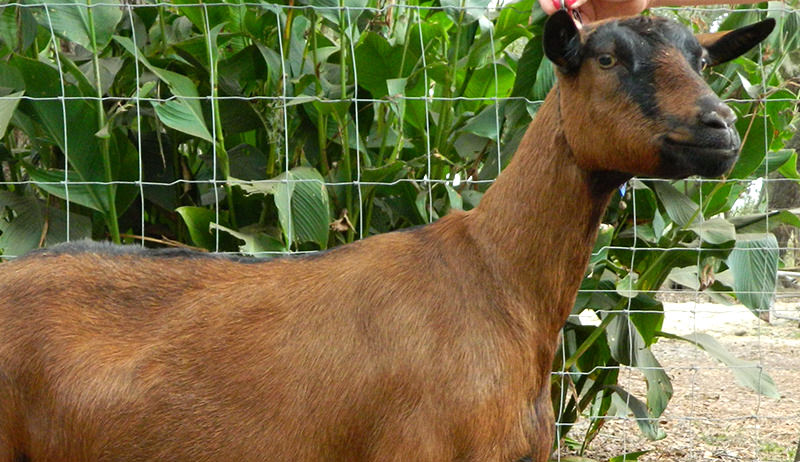
Oberhasli goat
Rachelsie Farm, Inc.

The Oberhasli is distantly related to the French Alpine and was originally known as the Swiss Alpine for where it was developed, before being officially recognized in 1979 by the ADGA.

The Oberhasli was first imported to the U.S. in 1906. The breed was nearly lost due to outcrossing to French and American Alpines. It wasn’t until 1976 that a group of goat fanciers united to save the breed from extinction. The Oberhasli Breeders of America still exists today, along with the newer Oberhasli Goat Club.

The Oberhasli’s color is one of the breed’s most treasured characteristics. The coat is a rich red-brown with distinct black markings that include a dorsal stripe, a black belly, black legs, and black facial -markings and ears. Some are born solid black, but the bay coloration is greatly preferred.

The Oberhasli is registered by the ADGA, which maintains the breed standard. Male Oberhaslis stand approximately 30 inches at the shoulder and weigh 175 pounds, while does are 28 inches tall and weigh 120 pounds. They have an alert appearance, with a slightly dished or straight face and upright ears.

Oberhaslis are known for their high-quality milk, which has a slightly sweet taste without high fat content, and are considered a rare breed by The Livestock Conservancy and is listed as Recovering on its Conservation Priority List.

Saanen

Agriculture Food And Rural Communities/Flickr

The Saanen, another goat that hails from Switzerland, is believed by some experts to have descended from the French Alpine, due to similarities in conformation and temperament. Unlike the French Alpine, the Saanen is almost exclusively white.

The breed originated in the Saanen Valley, where it was cultivated by farmers who appreciated its excellent milk. In the early 1900s, the first group of Saanen was imported to the U.S., and the breed quickly became well-known among American farmers for milking. The breed’s all-white color, large size and hardy constitution contributed to its popularity.

Today, the Saanen is registered by the ADGA and the AGS and is represented by the National Saanen Breeders Association. The largest of all dairy goats, bucks can stand as tall as 35 inches at the shoulder and weigh 160 pounds, while does are 30 inches and 135 pounds.

The Saanen has a straight or dished profile, with ears that are medium to large and held erect and alert. White is the preferred color, though some Saanen come in cream, as well.

Toggenburg

Toggenburg_Just-chaos-Wikimedia-Commons
Just chaos/Wikimedia Commons

First imported from Switzerland to America in 1883, Toggenburgs arrived in the states before other northern European breeds and are considered the oldest goat breed in the U.S. In the years that followed, large numbers of Toggenburgs were imported to the U.S. from England, where it was known as the first recognized dairy-goat breed in the U.K. In the U.S., the breed has been registered by the ADGA and AGS for decades. The National Toggenburg Club promotes the breed with shows and other events.

Toggenburgs acquired some fame in the 1960s when the breed became a favorite of poet Carl Sandburg. His wife raised Toggenburgs at their farm in North Carolina, and produced a doe that broke the world Toggenburg record for milk production in 1960.

The Toggenburg is solid brown, which varies in hue from light fawn to dark chocolate. White markings are always present and include white ears with a dark spot in the middle, two white stripes down the face from above each eye to the muzzle, and markings on the legs.

The breed is among the smallest of dairy goats, with bucks measuring at least 28 inches at the withers and weighing 145 pounds. Does stand 26 inches and weigh 120 pounds.

For hobbyists seeking hardy, easy-to-handle dairy goats to raise on a small farm, the northern European breeds are a perfect choice. Their beauty, size and gentle nature are only surpassed by their ability to provide plenty of wonderful milk.

This article originally appeared in the July/August 2014 issue of Hobby Farms.

Categories
News

Your Flowers Don’t Need You To Arrange Them—They Can Do It Themselves

Perhaps we give plants too little credit for continuing the circle of life. We already know that plants grow in different shapes, sizes and color to attract various pollinators, but a new study published in the Annals of Botany shows that the seductive abilities of plants are bit more complicated than that.

Dr. Crispin Jordan, of the University of Edinburgh’s School of Biological Sciences, studied how bumblebees move through stands of wild tall larkspur in Alberta, Canada, according to a press release on EurekaAlert! What he found is that flowers have a clever way of coaxing the bees in to pollinate: the subtle art of flower arranging.

“They found that when the plants’ flowers were present on only one side of the stem, bees would more often fly vertically between flowers,” the press release stated. “By comparison, when a plant had flowers all around its stem, bees would be less likely to fly upwards.”

So what does this all mean to us farmers?

Well, it could help us—or, at least, the plant breeders who develop our crops—figure out ways to grow more high-yielding fruits and vegetables. If crops blossom in certain patterns, it could mean more fruits for less labor. It also gives us more insight on our bee friends’ preferred food choices.

“Plants and their flowers exist in all shapes and sizes, and our finding that the arrangement of flowers can influence how bees forage might go some way to explaining how plants, which rely on others species to spread pollen, can influence their own reproduction,” Jordan said.

The bottom line: While you might not put this info to use in your day-to-day farming activities, the intimate dance between plants and pollinators is fascinating and something to watch in wonder. There’s a whole lot more going into how we grow our food than we know!

Categories
Animals Poultry

7 Summer Safety Tips For Your Flock

The sweltering, sultry, stifling days of summer are almost upon us, and I am fully in my element. I don’t know about you, but I crave the heat when it’s the dead of winter. Once the summer arrives, I look forward to all of the ways to soak the sun—and vitamin D!—deep into my bones before the wind starts to howl and the leaves begin to change again.

Like all of us, chickens reap enormous benefits from sunshine, too, but they aren’t too keen on the heat itself: In fact, serious heat can be downright deadly to your feathered friends. It’s not a personal preference on their part; most of our laying breeds are simply not designed to tolerate heat as well as cold, and without proper supports in place, they may pay the ultimate price for it.

1. Watch The Weather

Just as you would during winter, monitor weather patterns during those dog days of summer. Learn to anticipate weather extremes for your area, figure out how they’ll impact your poultry, and take action—you don’t want to be caught off guard when a heat wave hits!

Depending on where you live, the summer months may usher in waves of extreme dryness or wetness along with the climb in heat. Extremely damp conditions, especially if they persist for days or weeks on end, can create the breeding grounds for pests and disease, such as coccidiosis, that could harm your birds. During wet, hot weather, provide them with a covered, dry area to get out of the elements and keep their feet and feathers dry.

2. Keep The Air Moving

Airflow is the enemy of heat. OK, that may sound like an ancient proverb, but it’s not. The science, however, is pretty sound. Keep air moving—ideally moving hot air out of the coop and moving cool air in—to give your birds relief from the heat. I’m not suggesting you rig up a fancy air-conditioning system for your chickens. It’s much simpler than that.

Every coop should have adequate ventilation in place, especially for hot summer nights when birds are roosting together, generating more heat than any single bird would. In addition to built-in ventilation, pop open doors, if they have wire mesh covering them to protect from predators.

A good coop ventilation system isn’t only a summertime investment. In fact, ventilation is just as important during the winter months when unventilated coops can cause an excess of moisture to build up, and that brings its own set of problems. Consider this investment of infrastructure a lifelong, all-season one.

3. Exploit The Shade

Beating the heat often means getting out of the sun. Even with the biggest and fanciest coop, sporting all the bells and whistles, most chickens will want to spend their days out foraging or roaming out of doors. Under the shade of a roofed run, chickens can get out of the sun’s rays during the hottest part of the day. But if your flock pastures in large open areas, they may not have a shady place for respite. It’s really easy to create shade, though:

  • Move portable fencing to an area with bushes or trees that offer cover.
  • Plant bushes or trees in your chicken’s (uncovered) run or outdoor enclosure.
  • Provide your chicken flock with a small structure, such as a repurposed doghouse or children’s playhouse.
  • Put up a shade umbrella, sunshade or similar structure. If you would take it to the beach, it’ll do the trick for your birds.
  • Place shady spots and reliable cover in a flock’s ranging area doubles by providing much-needed cover from aerial predators, too.

4. Feed Frozen Treats

Are we going a little over the top here? Maybe, but your girls work hard to lay those beautiful eggs, so why not treat them when they need a little pick-me-up most? In fact, in times of extreme heat, hens may feel so stressed (or dehydrated) that their bodies put the pause on reproductive functions—which means no eggs. So, it’s in everyone’s best interest to pamper your ladies a bit, right?

Freezing water can be as simple as dropping a few ice cubes in your flock’s water font. Freezing treats takes a bit more thought and planning. When choosing foods to freeze, think of fruits and veggies with high water content that freeze easily and cleanly. A few favorites include:

  • watermelon halves
  • a variety of berries
  • applesauce
  • yogurt

As with any treat, remember that moderation is the key. As delicious as they are, treats should never take the place of age-appropriate feed.

5. Skip The Scratch

Commercial chicken treats, in the form of cracked corn or scratch, are great at bulking up birds for cold weather. The consumption of such treats increases body heat, which is a great thing in the dead of winter.

However, what makes it great in the cold is exactly why it should be avoided during the warmer months. Skip the scratch in the summer, and offer greens from the garden, vegetable kitchen scraps, mealworms, sprouted seeds or another green, protein-packed treat instead.

6. Provide A Continuous Water Supply

It should almost go without saying, right? Fresh water is an absolute must for beating the heat, and—in addition to protecting your chickens from predators—supplying clean drinking water is the most important tenet of keeping chickens. While fresh water is critical in all seasons, chickens can go downhill very quickly in a very short amount of time without water during hot weather. Dehydration is the fastest killer of chickens (other than predators, of course!).

The solution is simple: Provide ample fresh water for your entire flock daily during the summer. If you find that your birds go through their water faster than a day, dish out the dough and invest in a larger waterer or several water fonts placed throughout their coop or run.

If there’s any chance you won’t be able to get to the coop to water them daily, having these additional watering stations set up can be a lifesaver—literally! When it comes to water, too much is always better than too little.

7. Select The Right Breeds

Some of your heat-beating precautions will begin before you even have chickens to care for. It’s important to thoroughly research the best breeds for where you live and then only choose breeds suitable to your climate.

The good news is that there are more than 160 chicken breeds, and whether you keep birds for meat, eggs, for show or ornamentally, there are breeds that suit hot and cold climates. Some favorite warm-weather breeds include Welsummers, Silkies, Leghorns, Naked Necks and many game breeds.

What If The Heat Beats Us?

Even when the best systems are in place, some chickens still succumb to the heat. Old or sick birds are the most likely victims of heat exhaustion and dehydration, but others, such as birds low in the hierarchy that are being kept from the water by alphas, are potentially at risk, too.

Conduct a quick visual check of your birds each day, especially on days of extreme weather. Some early signs of dehydration include:

  • panting with beak open
  • wings held out from the sides of the body
  • pale combs and wattles
  • labored breathing
  • cease in laying in hens
  • diarrhea

Of course, some of these symptoms are indicative of other ailments, so take those signs as an overall guide, not a hard-and-fast list. Remember, being a chicken keeper is a bit like being a detective!

If you discover that a bird shows signs of heat exhaustion and/or dehydration, remove her from the flock. Calm her by placing her in a dark, quiet, cool room—a basement or laundry room is great. Offer water with electrolytes, such as water lightly sweetened with honey or sugar, and moistened feed, and guide her beak to the water if she doesn’t find it for herself. Many birds in the throes of dehydration, if caught early and prompted treated, can bounce back within 24 hours.

This article originally ran in the July/August 2016 issue of Chickens.

Categories
Crops & Gardening Video

Get Rid Of Weeds For Good!

Whether or not you like weeding, there’s one frustrating aspect of this garden chore: You pull up the weeds (or at least you think you pull up the weeds), and two days later, there they are growing in your garden.

The reason your weeds magically reappear is because you never actually got rid of them. When you get rid of the foliage of the plant, the garden looks great, but you’re missing one important part: the roots. If the roots are still in tact under the soil, that weed is going to come back in full force.

To combat this problem, you need one simple tool: a garden fork. Use this tool to dig under the root structure and remove the plant completely, leaving no traces behind.

My weeding smarter, not harder, you’ll cut down on your weeding work and get on to more important farm tasks.

Categories
News

Goats Called In To Help Control Wildfires

It’s wildfire season in California, and large-scale fires are ravaging the state, eating up more than 50,000 acres and requiring the services of approximately 3,000 firefighters, according to the L.A. Times. However, there’s an unlikely group of members adding to the fire-fighting crew: goats.

In the Central Valley, goats have been recruited to step in and mow down brush that’s fueling the fires, Joe Ybarra at ABC30 reports. Dead vegetation is wildfire candy, and the number of dead trees has skyrocketed since 2010 thanks to investations of bark beetles prolonged drought on the West coast.

Mowing down dry brush can take a lot of manpower, but it’s something goats excel at. In fact, goat services across the country offer up herds of goats for anything from mowing grass to eradicating invasive plant species. But the herd based in Los Banos, Calif., has a more dire task to attend to.

The goats are managed by Andrée Soares of Star Creek Land Stewards and are a Spanish x Boer cross. She has five herds doing work in four counties, according to ABC30, and each herd can mow down 1 to 2 acres of brush per day. In addition to getting rid of potential fire starters, the goats’ hooves leave indentations in the soil, making perfect places for puddling water.

Learn more about these heroic goats by watching the video report on ABC30.

Categories
Farm Management

7 “Value Added” Ideas That Don’t Require A Commercial Kitchen

The term “value added” gets thrown around a lot among market farmers. What it means, in essence, is to take a raw ingredient you produce and turn it into something more valuable. Grapes turn into wine, peanuts into peanut butter, berries into pie. Pretty simple.

But adding value to your farm business doesn’t have to be about cooking. While products made from your farm produce is a natural extension of your operation, it would meaning getting a microprocessing license, installing a commercial kitchen and dealing with a lot of red tape. To bypass the often-complicated world of food preparation, it’s worth exploring some simple ways you can add value to your farm offerings—some easy tricks to turn what you already grow or have (even if it’s just a clever slogan) into something more valuable. Here are some ideas to get your wheels turning.

1. Host Classes

Chances are, if you’ve been farming for any amount of time, you have some knowledge people would pay to hear. Hosting classes on farm or at another local venue can be a great way to make a little extra cash, get some helping hands or even spread the word about your farm. Kill two birds with one stone by hosting a canning class for $20 a head, for example: You’ll earn a little extra income while getting some of your tomatoes processed at the same time. There’s a lot of flexibility here, so figure out what your strengths are and brainstorm how you can share them with the world.

2. Ready-To-Cook Dinners

There are companies out there who are doing great business sending whole meals to customers—already portioned out, with recipes and ready to cook—and charging per delivery. I don’t know why an ambitious enough farmer couldn’t offer something similar at a premium to be picked up every week at market, taking the CSA model one step further into the kitchen.

3. Farm Swag

Shirts & Totes

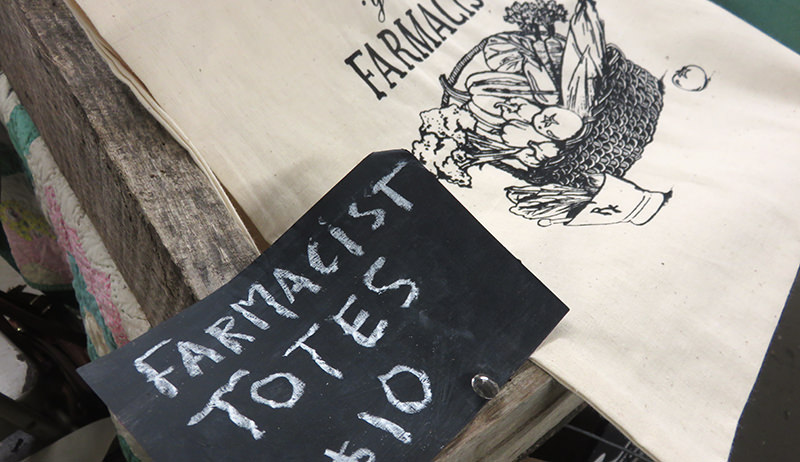
Got a funny idea, an ironic pun or turn of phrase? What about a good image? Put it on a shirt or tote bag. People like buying food at market, but they love buying stuff—especially come Christmastime when the gardens may not be producing as much and people are looking for presents. Totes and shirts are a great way to fill that gap. Unless you can work it into the design subtly, I would avoid putting solely your own farm name on there, as it limits your clientele, but a clever shirt and tote can bring in some extra bucks and help fill up a table if it ever starts looking skimpy after a long market day.

Stickers, Buttons & Other Small Items

This is essentially the same idea but smaller and cheaper, so these items can also double as good marketing incentives. Giving someone a free button or sticker when they buy something may help endear the customer to you for life. You can also do this with food––if you know a customer likes garlic, throw in a couple extra. The value of creating customer loyalty is incalculable.

4. Pricing Structures

This is certainly a less obvious way to add value to a market table, but pricing is an overlooked part of the market experience—usually decided on a whim—that can work for you or against you. Instead, consider this idea: Many farmers these days are selling their produce at $3 per unit or two units for $5 (a unit being a bunch of carrots, a pint of cherry tomatoes, et cetera). The brilliance here is that you make each unit worth $2.50, so that if someone only buys one unit, you are getting 50 cents extra. If they buy two to get the deal, you’ve sold two items and haven’t lost any money. It’s a good deal either way.

5. Flower Bouquets

How are flower bouquets adding value? First, people will generally pay more money for flowers than food. It’s odd but true. The other way it’s adding value is that it’s decorating your table in flowers. The flowers are eye-catching and bring customers over to see what else you have. Getting customers to stop at your table—where you can charm them into a sale—certainly has a value of its own.

6. Pickle Package

This fits in there with the idea of the ready-to-cook farm meal. Offering people everything they need, including a recipe, to make their own pickles might just revolutionize your business. A small box filled with cucumbers, dill flowers, mustard seed and a recipe could be a great way to make a little extra money while moving those excess cukes.

7. Canning Tomatoes

The tomato sauces you buy in the store are generally made up of the seconds tomatoes from various farms—the blemished or misshapen. And with the uptick in customers wanting to do their own canning over the last few years, I don’t see why you couldn’t sell your own seconds tomatoes as “canning tomatoes.” This gives you a very clever way you to sell tomatoes that may not normally sell on the market table. You’ll get less money, but at least you’ll get something for what might otherwise rot in the field!

Categories
Recipes

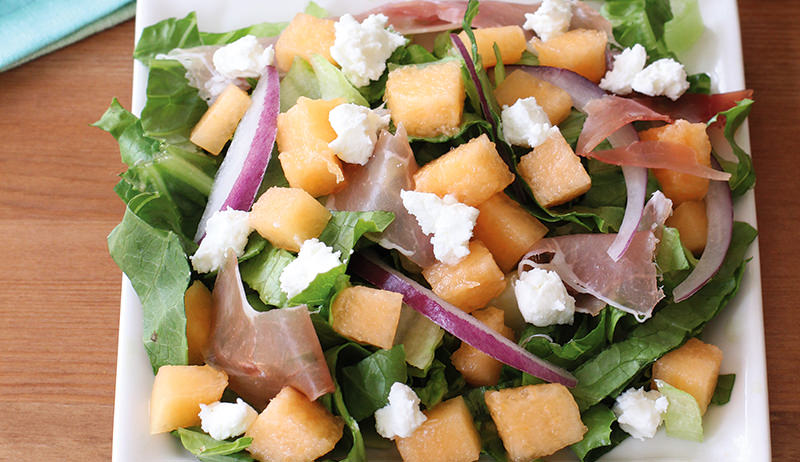
Crenshaw Melon, Prosciutto & Goat Cheese Salad With Honey Dressing

When the fruits of summer are abundant and fresh, it’s easy to get caught in a holding pattern. But your farm-grown melons are good for much more than fruit salads and the occasional smoothie—they can be right at home in a dinner salad, as well.

The crenshaw melon in this recipe pairs beautifully with the prosciutto and goat cheese, making for a salad that’s light and fresh while also filling and satisfying. The simple honey dressing adds a nice, sweet glaze to the meal—and offers all the allergy-reducing benefits, especially if harvested from a hive on your farm.

If you don’t grow crenshaw melon specifically, feel free to sub in a different type. The crenshaw is a cross between a cantaloupe and a casaba, so either of those melons would be a natural substitute, but you could also try a honeydew or watermelon if that’s what you have on hand.

Yield: 4 servings

Ingredients

Dressing

  • 1½ T. honey
  • 1 T. apple-cider vinegar
  • 1/4 cup extra-virgin olive oil
  • 1/8 tsp. salt
  • 1/8 tsp. ground black pepper

Salad

  • 6 cups lettuce (any variety)
  • 4 ounces sliced prosciutto, cut into thin strips
  • 1/4 cup thinly sliced red onion
  • 2 cups cubed Crenshaw melon
  • 4 ounces goat cheese

Preparation

Dressing

In small bowl, whisk together honey and vinegar. Whisk in olive oil. Add salt and pepper, and continue to whisk until dressing is combined and slightly cloudy. Set aside.

Salad

In large bowl, add lettuce, prosciutto, red onion and melon, and toss to combine. Pour dressing over salad. Toss again to evenly distribute dressing.

Break goat cheese into small marble-sized pieces. Sprinkle evenly over salad and serve.