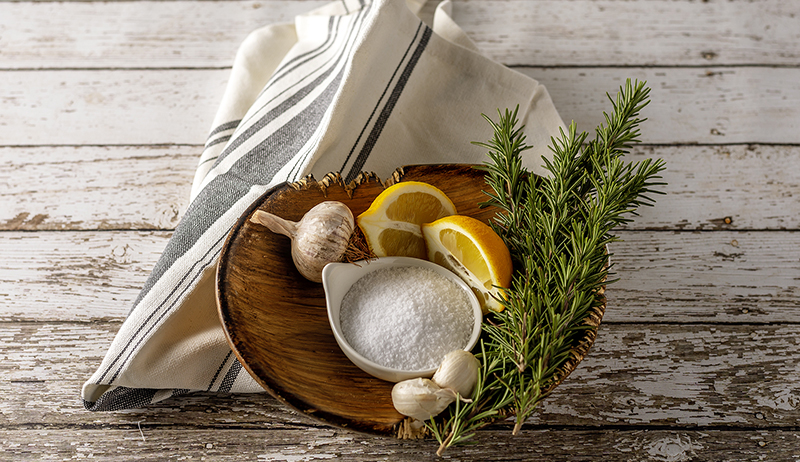
Rosemary salt is easy to make year-round and the addition of lemon creates a flavor profile that’s good for cooking, popcorn, cocktails and more.
During the winter and early spring, my rosemary is the only herb that I still have growing in the garden. Fortunately, it’s my favorite herb. Rosemary is a versatile herb that pairs well with sweet as well as savory dishes, on light and dark meats, and on many types of vegetables. One way I love to use rosemary is as an herbal salt.
Herbal salts are a cinch to put together with any type of herb. In the summer, I make herbal salts with basil, chives, parsley or any fresh culinary herb I have growing in the garden. They are wonderful to keep on hand on your spice rack. My favorite flavor combination for making herbal salt with rosemary is lemon and garlic.
How to Make Herbal Salt
Use this method to make savory herbal salts with any type of herbs. Substitute the garlic for shallots or the lemon for lime (depending on the flavor combination you prefer).
Debbie Wolfe
Ingredients
2-3 sprigs fresh rosemary
zest of 1 lemon
1 large garlic clove, peeled and smashed
1 cup kosher salt
Debbie Wolfe
Preparation
Wash and dry the sprigs of rosemary.
Strip the leaves from the rosemary.
Place the kosher salt, rosemary sprigs, lemon zest and garlic clove into a food processor.
Pulse the food processor a few times until the rosemary, lemon and garlic are finely chopped and incorporated into the salt.
Spread the salt onto a cookie sheet and let it dry for 2-3 hours.
Store the lemon rosemary salt in an airtight container. Use the salt within a week or two.
How to Use Lemon Rosemary Salt
Use the salt on roasted poultry, sprinkle it on popcorn, toss it onto root veggies or rim a glass with it for a Bloody Mary. Make an extra jar or two—herbal salts make great gifts for friends and family.
Lemon balm benefits are numerous. It is an easy-to-grow herb in the garden. It spreads quickly in the landscape and can be grown from seed or as a start from another gardener. It is a quick spreader, so most gardeners are happy to give a few starts to new growers.
Lemon balm’s scientific name is appropriately Melissa officinalis. Named for Melissa, the Greek god of honeybees, lemon balm’s tiny flowers are beloved by honeybees and other smaller pollinators, as well as herbalists and tea drinkers alike!
Growing Lemon Balm
Lemon balm loves a sunny location and can thrive in both dry and wet conditions. It will sow itself and form clumping patches outward from the original plant. It takes so little care to flourish that many have been known to thin it from their herb beds or landscaping.
To cultivate for bulk, young plants can be trimmed like any mint, removing the top three to four sets of leaves to make your first infusion. Then, while that infusion steeps (for a few weeks or more), the plant will grow bushier, making more medicine for you to harvest in the weeks’ time that your extraction steeps.
The lemony flavor appeals to almost every palate, making it an easy tea to serve company and anyone wary of plant tea, including children. It can soothe a cold, a fever and other common everyday ailments! It brings a dose of sunny disposition during long winter nights.
Lemon Balm Benefits
Lemon balm has so many uses that it’s easy to understand why the herb has been popular for so long and why people might carry it from place to place. It has no contraindications and is safe for children. Its daily use over time can help with chronic anxiety. And a strong dose will clear a headache almost immediately.
Lemon balm can help relax our whole system without sedating, making things like menstrual cramps and stress more manageable.
It has antiviral qualities and has been found specific to some herpes. Some friends of mine have successfully used it topically for cold sores and internally to prevent outbreaks. Although an alcohol preparation applied to an open sore is not pleasant, it has been shown to restore the myelin sheath of our nerves. A handful of plants have this ability, and lemon balm is probably the most abundant of them all.
Preparing Lemon Balm
Lemon balm is known as a rare essential oil due to its difficulty of extraction. The organic compounds, which bring both its smells and flavors, readily fall off the plant with both heat and mechanical disturbance.
I make a three- to four-times-infused alcohol extraction. You do this by covering freshly cut leaves, stems and flowering parts as tightly packed as possible with 95 percent alcohol. I let that steep for at least a week or two, straining and then repacking the strained extraction with more plant material. Repeating this another time or two will get you a stronger extraction that’s effective in lower doses.
Extraction is a fairly laborious project, so I more often use my lemon balm immediately upon harvest, whether drying or freshly infusing.
Make lemon balm a staple in your cupboard or medicine cabinet.
This article about lemon balm benefits was written for Hobby Farms magazine. Click here to subscribe.
It’s good to know the best herbs for chickens to help ease them through molting and support their bodies while they’re hard at work regrowing their feathers.
Every year, starting in mid to late summer, adult chickens go through an annual molt. This natural process allows chickens to shed their old, broken, dirty feathers, and regrow fresh new feathers before the chill of winter sets in. These brand-new feathers help chickens stay warmer throughout the winter and survive until spring.
The molting process is a stressful experience for chickens. And the process is painful, for the chickens as well as the chicken keeper. During molt, many birds look like they were on the losing end of a nasty bar fight. They often lose feathers in large patches, act lethargic and depressed, and skulk around the yard like they’re trying to avoid being seen by anyone they know.
Thankfully, we can support them through this process. Here’s our best herbs for chickens in molt list…
1. Chickweed
Heather Levin
Chickweed is an unassuming spring weed that you’ve likely walked past a hundred times without giving it a second glance. However, this innocuous “weed” can be a marvelous snack to your chickens while they’re molting.
Chickens love the flavor (hence the name, “chickweed”), and the plant is high in vitamins A and C, as well as B vitamins, calcium, magnesium and zinc. It’s also a powerful anti-inflammatory and helps the body feel refreshed and rejuvenated, particularly after a long, cold winter.
The challenge with feeding your chickens chickweed during molt is that this is an herb that typically only grows in the cool days of early spring. Once the hot summer sun blazes, it disappears. And your chickens will be molting in fall. So, what can you do?
The answer lies with your freezer. Chick-weed freezes well, so harvest chickweed in spring, freeze it and then dole it out to your chickens once they start to molt. I do this every year, as we have an abundance of chickweed that grows on our property, and it’s always a special treat for the chickens.
2. Basil
In addition to tasting divine, basil is a good source of protein and vitamin K, a mild sedative, and is helpful in treating stress, nervousness and irritability. Sounds like the perfect herb for a molting chicken to me!
Basil is best used fresh, as it loses much of its flavor and medicinal properties upon drying. One of the best ways to preserve basil is to freeze it with olive oil when it’s at its summer peak.
To do this, grab a handful of basil out of the garden and finely chop it. Stuff the basil into an ice cube tray, and then fill each cube with olive oil. Stick it in the freezer until it’s completely frozen, then pop out the cubes and store them in a freezer bag.
You can give your chickens these basil cubes frozen or thaw them and put them in a food dish. These basil cubes are also an excellent way to preserve fresh basil for winter soups and spaghetti sauce!
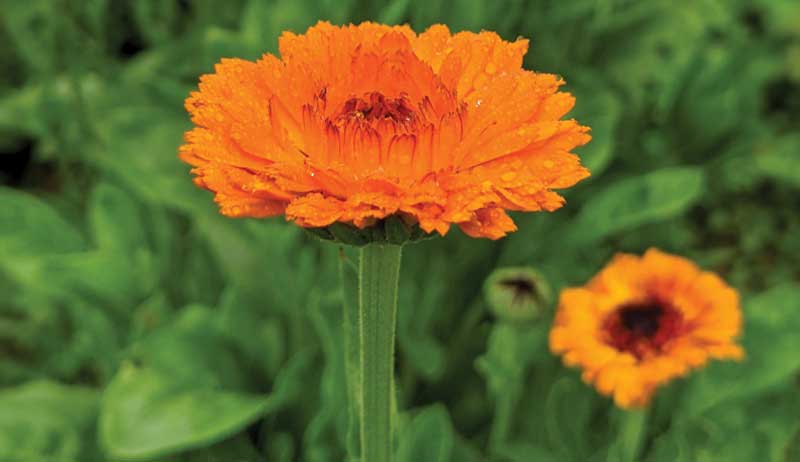
3. Calendula
Calendula is famous for its ability to repair skin, promote cellular repair, and combat infection. It’s often used topically in salves, but you can serve your chickens fresh or dried calendula in their feed.
This is another herb that’s easy and wonderful to grow at home. It’s also much more cost-effective than buying dried calendula from a retailer. Another benefit to feeding your chickens calendula is that it will turn egg yolks and your chicken’s feet and beaks a deep, rich yellow.
4. Red Clover
Red clover grows wild throughout most of the country during the summer months. And this pretty little weed offers a wide range of medicinal and nutritional benefits that you can take advantage of when your chickens are molting.
Red clover is an excellent cleanser of the blood. It’s also high in beta-carotene, calcium, vitamin C and minerals such as magnesium, copper and zinc. Think of it as a little vitamin for your flock!
You can offer your chickens fresh or dried red clover blossoms. However, if you live in a northern climate, most red clover will be past its prime by the time your chickens start their fall molt.
To overcome this, forage for red clover when it’s at its peak, and dry the blossoms yourself. Choose flowers that are bright pink, and avoid harvesting any blossoms that have turned brown.
5. Chamomile
Chamomile is a sweet, gentle herb perfect for the molting season, for several reasons.
First, chamomile is a calming herb that excels in alleviating stress and nervousness, especially when it’s prepared fresh. It’s also anti-inflammatory.
You can give your chickens dried chamomile mixed in with their feed. Or, you can make a pot of chamomile tea and give it to them in place of regular water once it has cooled.
6. Stinging Nettle
Stinging nettle’s scientific name is Urtica dioca. It comes from the Latin word uro, which means “to burn.” And if you’ve ever touched stinging nettle, you’ve felt the burn!
We have stinging nettle growing all over our homestead. I planted it right after we moved in, and it has grown and spread like gangbusters. Our neighbors wonder why we welcome such a painful plant onto our homestead, but we use nettle for so many different things that it’s worth the occasional sting.
So where do we start with nettle? It’s an anti-inflammatory powerhouse and can work wonders to control allergies. It’s also delicious when cooked or made as a tea with honey. Many people also use it to alleviate arthritic pain.
Nettle is beneficial during molt because it’s high in iron. It’s also rich in other vitamins and minerals such as vitamins C, A and K, as well as several B vitamins. It also contains calcium, phosphorus and all essential amino acids.
It’s important to realize that your chickens won’t willingly eat fresh, raw nettle. It stings their tongues! There are a few different ways you can give your chickens the benefits of nettle without doing them harm.
One way is to dry the herb and crumble it into their feed. Drying, as well as cooking, causes the stinging hairs to fall off and renders it harmless. You can sautée nettle or bake it into a frittata with other fresh herbs. Or you can steep nettle in hot water for 30 minutes to make a nettle tea and give it to your chickens in place of water.
If you choose to sautée it for your flock, taste it yourself before you give it all away. Sautéed nettle is delicious, and you might decide to start cooking it for your family.
7. Lemon Balm
Lemon balm is a sunny, citrusy herb in the mint family that’s well known as a relaxing nervine. And during the stressful molting season, your chickens can greatly benefit from herbs and any other calming aid you can give them.
Although many herbs are potent when dried, lemon balm is one that’s best to use fresh whenever you can. Lemon balm contains beneficial volatile oils that are often lost when dried, especially when handled incorrectly. So growing this easy, cheerful herb at home is a fantastic way to ensure you always have quality lemon balm when you need it.
One way to help your chickens relax is to make a tea using fresh lemon balm. Cut up 4 tablespoons of fresh leaves and steep, covered, in 20 ounces of hot water for 30 minutes. Pour the cooled tea into your chickens’ watering dish. You can also put fresh lemon balm in their water to soak throughout the day.
Support the Immune System
Molting is a stressful process for chickens and their bodies are taxed while they’re regrowing feathers. This means that their immune system won’t be as robust as it is during normal times. So, providing chickens with immune-boosting herbs and spices can help prevent illness and disease during molting.
Some beneficial herbs and spices to mix into feed for your chickens when they’re molting include turmeric, fresh garlic, oregano, thyme, cinnamon and fresh ginger.
Keep in mind that the duration of the molt is going to be different for each bird. Some chickens will molt hard and fast and have a complete set of new feathers in a month. Others take eight to 12 weeks or more to go through their molt.
A rare few, typically poor layers, can take up to six months to go through the molting process. However, because these molts are so slow you might not even be able to tell that they’re losing feathers.
So your birds might need extra support for longer than you think! Keep an eye on their progress as they transition through their molts, and switch them back to regular layer feed when they start laying again.
Magic Molting Frittata
Here’s a helpful recipe for herbs to feed your chickens during molting season.
Preheat the oven to 400°F. In a 12-inch cast iron skillet, pour the olive oil to coat.
In a large bowl, whisk the eggs, plant-based milk, garlic cloves, turmeric and oregano. Fold in the fresh herbs and sunflower seeds.
Pour the egg and herb mixture in the skillet.
Bake for 15 to 20 minutes, until the eggs are completely set in the middle. Let cool completely, and serve to your flock.
This article about the best herbs for chickens during molting originally appeared in the Sept./Oct. 2023 issue of Chickens magazine. Click here to subscribe.
Nasuha Lenuh talks about small-scale farming in the tropics.
Small-scale farmer and entrepreneur Nasuha Lenuh — nicknamed R — talks about the tree crops grown in her region, the southern part of Thailand. Hear about her family’s tree crops, from rubber to durian fruit, and how R has chosen her own path in developing Rganic Farm, including herbs, salad greens and edible flowers. R shares this journey, being honest about her family’s and community’s feelings about her attempt at growing crops that others just aren’t attempting in this area.
R talks about her elevated raised beds, which she said go together like Legos so she can move them as the durian tree crops around them grow tall. She also talks about her experience as a woman farmer in Thailand and why this profession is important to her.
Based on her experience of growing temperate-climate crops in a tropical climate, R explains a secret of her success: patience in soil building.
Hear about the Young Southeast Asian Leaders Initiative, hosted by the US State Department, which awarded R a fellowship that brought her to the US to study food systems (and then allowed the Hobby Farms Presents: Growing Good host Lisa Munniksma to visit Thailand through a reciprocal fellowship). R explains Kotatuera Basar Kita, the YSEALI project she’s working on now, to develop farmers and bring an American-style farmers market to her community in Yala, Thailand. R and Lisa also talk about what it’s been like to work together on this project both in the U.S. and in Thailand.
What is molting? Seasoned backyard chicken owners know when their flock experiences molting. But, if you’re a first-time backyard chicken owner, it can be startling to see your birds losing feathers in the fall. Molting is an interesting, yet natural, process that can also be very stressful to the animals. This article takes a deep dive into the process of molting and how poultry owners can help alleviate some of the associated stress for their beloved chickens.
What Is Molting?
Simply put, molting is a physiological process that occurs in avian species where they shed and replace their feathers. Molting is mainly regulated by various hormonal changes within the body and usually involves a period where the reproductive system stops.
During this time, birds typically lose and regrow their feathers in a gradient. They lose from the innermost feathers first to the outermost feathers last.
Why Molt?
The primary reason birds molt is to keep their feathers functioning well. Feathers play a very dynamic role in a chicken’s life. They help regulate temperature; protect birds from scratches, wounds and cannibalism; are used to communicate and attract a mate; and are indicators of a bird’s health.
Research has shown that molting can be beneficial to a chicken’s health and improve egg quality. Photoperiod-induced molting has been shown to increase livability in laying hens (Brake and Thaxton, 1982) and to improve egg production and egg quality (Koelkebeck and Anderson, 2007).
The reduction or pausing of egg production gives a hen’s reproductive tract time to rejuvenate, resulting in stronger eggs and better production. Plus, without molting, a bird’s lack of feather shedding and regrowth would lead to poor plumage, which is associated with fearfulness and stress and chickens.
When Does Molting Occur?
Avian species typically molt during any time they require a healthy plumage, such as breeding season, wintertime or migration. The time of the year in which a molt occurs can help determine if it is related more to a natural molting or can be attributed to stress.
Natural molt in chickens occurs seasonally, during the fall, where the primary trigger is a reduction in day length. This decrease in day length changes the bird’s circadian rhythm, which triggers a variety of physiological processes such as reduced reproductive function and molting of feathers. In migratory birds, it would increase fattening and induce some restlessness. On the flip side, in the spring, when day length gets longer, the reproductive tract increases egg production and therefore we don’t typically see chickens molt.
So, a strong relationship exists between molting, day length and egg production. In fact, ducks and chickens that have been sterilized tend to stay in an extended state of molt. When sex hormones are supplemented, however, molting stops.
Broody hens can also experience a natural molt. When a hen becomes broody (starts to sit and incubate her eggs), she typically reduces her feed and water intake. Research on broody jungle fowl hens found that hens consumed very little food or water during this time even if it was offered near the nest. (Weight loss and anorexia during incubation in birdsJournal of Comparative and Physiological Psychology, 1980, Sherry et al.).
The lack of egg laying and voluntary anorexia results in shedding and replacement of feathers, suggesting broody hens can also experience a molt. Once chicks hatch, a broody jungle fowl hen will resume eating and drinking, and her feathers will grow back.
Stress-related molt occurring at other times of the year can be associated with inadequate nutrient intake or severe stress. Molt can also be induced with water and feed restriction, which is why we may see some molting during the summer.
Flock Assistance
Support your flock during their annual molt with the following tips.
More Protein
Feed more protein, especially sources rich in cysteine. Feathers are made up of about 80 percent protein and represent about 3 to 6 percent of a chicken’s total body weight.
Proteins are made of building blocks known as amino acids. Cysteine is typically the most limited amino acid during feather synthesis so supplementation can help speed up feather regrowth. Cysteine is also important because it forms bonds within the feathers that make them durable and resistant to wear and tear.
Support Digestion & Immunity
Typically, issues in feather quality at any time of the year are often the result of a poor diet or lack of nutrient utilization. Ensuring molting chickens can digest and absorb the nutrients they need for feather regrowth is key.
Molting has also been shown to suppress the immune system in chickens and is associated with an increase in pathogenic bacteria, such as salmonella. Providing molting birds with supplements that strengthen the immune system and support the digestive tract can ensure they remain healthy during this stressful period.
Comfort Is Key
Make them comfortable and reduce stress. During feather regrowth, a chicken’s skin becomes more sensitive. This sensitivity typically peaks at eight to 11 days after the start of a molt. Plus, molting is a time when chickens are more vulnerable and, in some breeds, this can lead to more aggression and stress.
We can help reduce stress by minimizing handling during molt to help limit injury and discomfort, and continuing to provide care like offering fresh water and feed even if they aren’t consuming a lot. Plus, if you notice a molting hen getting picked on, isolating her from the flock can help prevent further injury.
That’s molting in a nutshell. When your flock molts this year to replace damaged or broken feathers for their protection and health, hopefully, you feel better equipped to support them so they are revitalized and stronger for the months ahead.
Mikayla Baxter, Ph.D., is the Digestive Health Products Manager at Perdue Animal Nutrition. This article about what is molting originally appeared in Chickens magazine. Click here to subscribe.
How to harvest lemongrass and even how to grow it are common questions for gardeners since lemongrass (Cymbopogon citratus) is not native to the United States, rather, it is a culinary and medicinal herb native to Southern India and Sri Lanka. While there are 55 varieties of lemongrass, only two are used in cooking: East Indian Lemongrass (also known as Cochin or Malabar Grass) and West Indian Lemongrass. It’s commonly cultivated in the Southeast Asian countries of Thailand, Vietnam, Cambodia and Laos for use in curries, soups, salads and other regional dishes, but the essential oil can be extracted for use in soaps, lotions, perfumes and deodorants, as well.
Fast-growing and easy to care for, the herb can be a delightful addition to your kitchen garden or home landscape. Here’s what you need to know to get started.
Basic Lemongrass Growing Tips
In the garden, lemongrass usually grows 2 to 4 feet tall and 2 to 3 feet wide, but in tropical areas, it can grow to as tall as 9 feet. As a tropical grass, it’s hardy to USDA hardiness zones 10 to 11, though the roots may be hardy to zone 8. In cooler growing zones, lemongrass is often grown as an annual or can be overwintered indoors in pots.
Growing Requirements
Lemongrass prefers fertile, loose, well-drained loam soil that is moist but not too wet. It will tolerate average soil if it has enough moisture and good drainage, but does best in soil with a pH of 6 to 7.8. Site it in a location with full sun or at least 6 hours of sun per day.
Like other grasses, lemongrass needs great deal of nitrogen. During the growing season, feed it a half-strength solution of a balanced soluble fertilizer—once per week if in a pot and once per month if in the ground. Non-chemical fertilizers that are high in nitrogen include composted chicken manure, blood meal and feather meal.
Limited Pest and Disease Risks
Because of its high essential-oil concentration, lemongrass is generally pest-free and, in fact, is commonly used as an ingredient in natural insect repellents. Once established, it also outcompetes weeds, though young plants may still require some weeding. Grown indoors, lemongrass is occasionally susceptible to spider mites, though overall, you’ll find this a delightful, easy plant to keep.
foam/Flickr
How to Harvest Lemongrass Stalks
Lemongrass is harvested for both the stalk and foliage. You can begin harvesting lemongrass as soon as the plant is about a foot tall. Cut, twist or break off a stalk that is at least 1/4 inch thick. The most tender part is at the bottom, so remove it as close to the ground as possible. Once you have harvested the number of stalks you want, remove the woody outer portion and the leaves. Save the leaves to dry, or compost them. Slice the tender part of the stalk, and add as needed to your recipe. Extra lemongrass can be refrigerated or frozen.
How to Harvest Lemongrass at the End-of-Season
In colder regions where lemongrass is grown as an annual, harvest the remainder plant in the fall, before the first frost sets in. Cut the foliage down to the lighter-colored stalks, and then cut or break them off, discarding the roots and any discolored portions.
Preserving Lemongrass
If you harvest more lemongrass than you need for one recipe or you have an ample supply leftover from an end-of-season harvest, you can freeze or dry the stalks and leaves for use throughout the winter.
Freezing Lemongrass Stalks
Lemongrass stalks can be frozen whole or in smaller pieces for about 6 months. For easy use in cooking, portion out the stalks in amounts that you’d use them in your favorite recipes. Place them in a freezer bag or container labeled with the date and amount stored.
Drying Lemongrass Stalks and Leaves
To dry the stalks or leaves, cut them into pieces while the plant is still fresh, as they can become crumbly and difficult to cut when dry. Separate the leaves from the stalks, and lay them on paper towels or on a screen in a dry area out of direct sun. When completely dry, store in a jar in a cool, dark place. Dried lemongrass can be used for up to a year.
Inga Munsinger Cotton/Flickr
Tips for Using Lemongrass
You’ll have just about as much fun using your lemongrass as you will growing it. Here are some suggestions for making it a staple in your kitchen.
Lemongrass tea: This is the perfect way to use the parts of the lemongrass plant that is not flavorful enough for cooking. Steep a few pieces (cut into 1- or 2-inch lengths) of the fresh or dried leaves and/or outer woody stalks in a cup of boiling water for 5 minutes, or longer if you desire a stronger brew. Add honey or sugar to taste. Lemongrass tea is delicious hot or iced.
Ginger substitute: Substituting lemongrass for ginger will result a milder flavor profile for any dish.
Salad topping or garnish: Mince the more tender pieces of the stalk for this purpose.
Lemon juice substitute: Lemongrass can be used in cream sauces in place of lemon juice, without the risk of the sauce curdling.
Seasoning for broths, sauces and other dishes: Lemongrass stalks or leaves can be added to any dish that would be enhanced by a mild, lemony flavor. Use it the way a bay leaf would be used, and remove prior to serving.
CIFOR/Flickr
Medicinal Uses of Lemongrass
Lemongrass is regarded in herbal medicine as a diuretic, mild sedative, anti-fungal, anti-bacterial, stomachic, anti-parasitical and anti-microbial. Both the whole herb and the extracted essential oil have been traditionally used to treat:
stress
colds
headaches
circulatory problems
sore throats
bacterial infections
Lemongrass is also used in natural deodorants and insect repellents.
Winter Care of Lemongrass
As a tender, tropical plant, lemongrass will not survive cold temperatures outdoors. It may be treated as an annual, or overwintered indoors. If you’ve grown lemongrass in the ground, you can dig it up before the first frost, cut back the foliage and stalks to just a few inches tall, and plant it in one large pot or into several smaller pots. Keep your potted lemongrass as a houseplant near a bright, sunny window, ideally with southern exposure; in a heated greenhouse; or under artificial lights.
Indoor lemongrass plants will benefit from regular feedings every two weeks, as they will quickly use up the nutrients in the potting soil. Keep the plants moist, but do not overwater them, as potted plants are subject to root rot if the soil remains soggy. The plants can be put back in the ground after the danger of frost has passed.
Propagating Lemongrass
If you want to increase your lemongrass supply or simply start over production in the spring, you can propagate the plant from a stalk harvested from a plant or purchased from a grocery store or Asian market. Cut the leaves down to about 1 inch above the base of the stalk, and place it in a dish or glass of fresh water—roots do not need to be attached. Set the dish near a sunny window, and change the water daily. After a few days, your stalk should begin to grow roots. In two weeks, if you see good root growth, plant it in soil either outdoors or in a pot.
This article about how to harvest lemongrass was written for Hobby Farms magazine. Click here to subscribe.
Types of manure on a farm raising animals, even a small farm, can be varied and plentiful. There are lots of advantages for gardens, pastures, fields or lawns. However, not all manure has the same makeup or can be used in the same ways. Some manures must be composted to prevent burning plants due to high nitrogen levels; some can be used right away and some are a matter of heated debate amongst farmers and experts in organic farming.
What is Manure?
While this may seem like a simple question, manure, compost and fertilizer are often used interchangeably. They are not the same things.
Fertilizer is an additive that increases nutrition and may improve the soil. Compost can be a type of fertilizer, as can certain types of manure. However, there are also chemical fertilizers.
Compost is a mixture of biodegradable substances, mainly including vegetable matter and sometimes including shellfish remnants or manure to make a healthier mix. Decomposition and time should cause the mix to become very hot, killing any harmful substances in the mix and allowing the final product to be used as a fertilizer. Most compost takes at least a year to make without special equipment, in order to ensure it is safe to use.
Manure is the feces that comes directly from an animal. Not all manure is considered safe for use, and even as high-quality compost, animal dung from cats, dogs and humans is rarely used because of the risk of pathogens.
Types of Manure: Cold
Cold manure is dung that is safe to put directly onto plants without harming the vegetation. These are usually the pelleted manures, such as goat, rabbit and sheep. Resources will vary as to whether it is the physical or nutritional makeup that makes these cold manures safer for plants, but their nutrients release into the soil more slowly. This gives the vegetation a “time release” dose and protects the plants from burning.
There are still some issues with direct use of cold manure, however. The animals that produce cold manure are grazers and may have seeds in their dung, which can result in weeds or other unwanted vegetation in your garden. Ruminants digest their food multiple times, but certain pathogens can still survive in their stomachs or the stomachs of rabbits. This can pass through their systems, and if their manure is used cold, these pathogens can make their way from pastures to lawns and gardens where they may impact pets or humans. For this reason and others many organizations suggest even cold manure be composted before use. Organic farming certifications will actually require it.
Types of Manure: Hot
Hot manure is from animals such as chickens and pigs that have a high protein diet and produce manure high in phosphorus and nitrogen. Chicken manure is extremely nutritious for plants and often easily accessible to farmers, so it is one of the more commonly used manures. However, due to the nature of the stuff, pouring it directly onto plants will cause a literal “burning” of the vegetation and will damage or kill crops. Hence, the term “hot manure.”
To safely use chicken manure, it needs to be mixed with decomposing vegetable matter. The carbon this vegetation provides combines with nitrogen and phosphorus to produce a nutritious, safe mix. This is why animals are usually bedded with carbon-based substances. Straw, hay, shavings and other such floor coverings will mix with animal droppings and begin the composting process immediately – even before the farmer cleans things up.
Complicated Manure
The topic of manure is a more complicated one than it may seem on the surface and has changed over the last several decades. Older resources will disagree with modern ones about which animals have “cold” manure. Finding a correct balance of manure and nutrients to break down your animal waste is a scientific field that is constantly making new discoveries. The techniques behind “deep bedding” animal manure have changed over time as well. Even the term “hot” manure – for some farmers – has been used to discuss the amount of moisture in manure.
Many of these terms have been stabilized across the research arena – or are stabilizing. Therefore, when researching your types of manure and what to do with it, make certain to use modern resources and editions.
This post about types of manure was written for Hobby Farms and Chickens magazines. Click here to subscribe.
Summer salad recipes from vintage cookbooks are fun because they include salads for every ingredient under the sun from apples to zucchini. Some recipes sound downright disgusting and others are tried and true winners, standing the test of time through the generations.
I’ve selected five summer salad recipes to share with you from a collection of cookbooks that came from my husband’s grandma who passed away just a couple of years ago. She was born in 1926 and I truly hold her collection of cookbooks near and dear to my heart, especially the recipes that have been marked up with notes.
Molded Tuna Salad
Ingredients
1 can tuna fish
6 tbsp. mayonnaise (sandwich spread)
1 tbsp. chopped onion
½ cup celery, chopped
1 package lemon Jello
Directions
Set Jello until jelly stage, add other ingredients; pour into mold and set in refrigerator until firm.
This interesting summer salad recipe was contributed by Mrs. Orrie Knutson. Shared from Hor d’oeurves Pickles ‘n Relishes cookbook.
Chicken Salad
Cut cold boiled chicken into small cubes; put them in a bowl and to each quart, allow a teaspoon of salt, a tablespoon of lemon juice or vinegar, a saltspoonful of black pepper; mix and stand aside until cold.
Cut two-thirds as much white celery into bits of the same size and stand it in a cold place until mixing time.
At serving time, mix the celery and chicken, cover thoroughly with mayonnaise, serve on lettuce, garnish with olives, capers and hard-boiled eggs.
This summer salad recipe has been shared from Everyday Recipes, 1930, The Wesson Oil People – New Orleans, LA.
Carrot Salad
Ingredients
6 cups sliced carrots
1 large green pepper, chopped
1 large onion sliced into rings
1 can tomato soup (10.5 ounces)
1 cup white granulated sugar
1 cup oil
¾ cup white vinegar
1 tbsp. salt and dry mustard
Directions
Cook carrots until fork tender, then combine with chopped pepper and onion rings.
In a separate bowl, blend tomato soup, sugar, oil, vinegar, salt and dry mustard into a sauce.
Pour over the vegetables and let stand in the refrigerator for 12 hours to marinate.
This summer salad recipe has been contributed by Mrs. Bill Feskorn of Houghton Lake, Michigan. Shared from the Pot Luck Cook Book, 1973.
Three Bean Salad
A popular potluck or buffet dish.
Ingredients
1 can green beans
1 can wax beans
1 can kidney beans
½ cup green onions, minced
½ cup green pepper, minced
¾ cup white granulated sugar
½ cup salad oil
½ cup cider vinegar
¼ tsp. pepper
¼ tsp. salt
Directions
Combine all ingredients. Refrigerate overnight.
This summer salad recipe has been shared by Gail Vaughan of Baytown, Texas. Shared from Aglow in the Kitchen, 1976.
Wilted Lettuce Salad
Serves: 8
Ingredients
5 slices bacon
2 hard-cooked eggs, chopped
2 heads leaf lettuce, torn into bite-size pieces
2 tbsp. chopped green onion or chopped chives
1 tbsp. white granulated sugar
½ tsp. salt
¼ tsp. pepper
¼ tsp. cider vinegar
2 tbsp. cold water
Directions
Fry bacon until crisp. Drain on paper toweling, reserving 2 tablespoons of drippings.
In a large serving bowl, combine lettuce, onion and chopped eggs.
Combine reserved 2 tablespoons of bacon drippings with remaining ingredients. Heat to just boiling. Pour over lettuce; toss lightly.
Garnish with crumbled bacon; serve immediately.
Tip: For an extra zippy salad, add ¼ teaspoon dry mustard with pepper.
If desired, crumbled bleu cheese over Italian seasonings may be sprinkled over salad before serving.
This recipe has been shared from Pillsbury’s Soup & Salad Cookbook, 1969.
This article about vintage summer salad recipes was written for Hobby Farms magazine. Click here to subscribe.
Set of dressings for salad. Adobe Stock/ricka_kinamoto
Salad dressing recipes from vintage cookbooks are so incredibly easy to make. Once you get the hang of mixing up your own, you won’t want those pre-made store-bought blends any longer.
Salad Dressing
1 cup tomato soup
¾ cup salad oil ½ cup white granulated sugar
½ cup white vinegar
1 tsp. prepared mustard
1 tsp. salt
1 medium onion, grated
1 tsp. celery seed
¼ tsp. paprika
Mix together all ingredients and store in the refrigerator.
This salad dressing recipe was contributed by Mrs. Paul Erickson. Shared from Hor d’oeurves Pickles ‘n Relishes cookbook.
French Dressing
Basic French Dressing should be made right at the table and served while it is freshly blended and most appetizing. With Wesson Oil and a dash of lemon juice and a few seasonings, it takes only a minute to whisk up a piquant French Dressing.
6 tbsp. Wesson Oil
2 tbsp vinegar or lemon juice
1 tsp. salt
¼ tsp. pepper
Dash of paprika
Pour the Wesson Oil and vinegar (or lemon juice) into a bowl, add dry ingredients and beat with a fork or an egg beater until thoroughly mixed.
This recipe has been shared from Everyday Recipes, 1930, The Wesson Oil People – New Orleans, LA.
Williamsburg Dressing
This is good over fruit or greens.
Ingredients
½ cup white vinegar
¼ cup white granulated sugar
¼ cup honey
1 tsp. dry mustard
1 tsp. paprika
1 tsp. celery seed
1 tsp. celery salt
1 tsp. onion juice
1 cup vegetable oil
Directions
Mix vinegar, sugar, honey, mustard and paprika and boil for 3 minutes. Stir and cool. Add remaining ingredients. Put in bottle and store in the refrigerator.
This salad dressing recipe has been shared by Glenda Woodington of Portsmouth, Virginia. Shared from Aglow in the Kitchen, 1976.
Green Goddess Dressing
All you need is some mayonnaise and sour cream with a few spices to make this pretty one! A great compliment to any vegetable salad.
Yield: 2 cups
Ingredients
½ cup to 1 cup mayo
½ cup sour cream
¼ cup chopped parsley
2 tablespoons chopped green onion
½ tsp. salt
1/8 tsp. minced garlic (or garlic powder)
1 tbsp. wine vinegar
½ to 1 can (2 oz) anchovy fillets, chopped if desired
Directions
In a small mixing bowl, combine all ingredients; mix well. Store covered in the refrigerator. Mix well before using.
Tip: To make in blend, combine all ingredients Process on medium speed, scraping sides occasionally until smooth. If desired, 1-2 tablespoons anchovy paste may be used in place of the fillets.
This recipe has been shared from Pillsbury’s Soup & Salad Cookbook, 1969.
Yogurt Coleslaw Dressing
Yield: 1.5 cups
1/2 cup mayonnaise
1 cup yogurt
½ tsp. salt
¼ tsp. dry mustard
Dash of pepper
Combine all ingredients, stir well. This makes enough dressing to cover 3 cups of shredded cabbage. Refrigerate until use.
This salad dressing recipe has been contributed by Irene (Koller) Rudy. Shared from the 100th Wedding Anniversary of Aleida and Michael Wetzstein II.
This story about salad dressing recipes was written for Hobby Farms magazine. Click here to subscribe.
Can rabbits and chickens live together? In the world of livestock, chickens are the easiest animal to raise on the farm or homestead and usually the starting point for most homesteaders. One other homestead animal that rivals the chicken in ease of care is the rabbit.
In general, rabbit care is quite easy, and we’ll explore the details of tending to these adorable critters in this article. The good news is that chickens and rabbits can—and often do—cohabitate on a homestead harmoniously. With a few precautions, of course, you can reap the rewards of caring for both on your land.
Plucky Personalities
At the risk of sounding obvious, remember that chickens are birds, and rabbits are part of the animal family logomorpha. (They were previously considered rodents, but that was updated in 1912). This quite simply means that the needs of these two species are different—sometimes very different. While they can live together copacetically, we must never forget that they have different instincts, behaviors and social structures, and this fact alone will determine how we best care for them.
With that said, there is one very distinct difference and one very important similarity between the two upon which we can base most of our decisions. The difference is that unless they’re mating or raising a litter, rabbits are mostly solitary animals.
Does (females) and bucks (males) left together will mate constantly, so the two must be kept separate until you are ready and able to prepare for kits (young bunnies). A pair or trio of just does, or just bucks, might coexist happily if raised together as kits and as long as the does aren’t raising a litter of kits themselves.
Chickens, on the other hand, are very social and must be kept in family groups—flocks—or they’ll be terribly unhappy. Typically, a flock comprises a number of hens, with or without a single rooster. Roosters also mate daily with hens, but because hens lay eggs (and presumably you collect them daily), chicks won’t hatch unless you let a broody hen sit on fertilized ones for 21 days or you raise the eggs in an incubator.
The big similarity between rabbits and chickens? They are both vulnerable prey animals, with comparatively few defenses. This is an absolute that we can always assume, and it will serve you, the keeper, well. Bank on the fact that they will be hunted by any and all predators in your area, and they know this, so they act accordingly. This is quite possibly the fact that most informs the behavior of chickens and rabbits. Why is this so important when it comes to rabbit care? How they respond to stress or fear is how they react to you, and that determines how we provide rabbit care, protection and housing.
Can Rabbits and Chickens Live Together? A Hutch Is a Home
Like chickens, rabbits require specific housing that meets their needs. You might notice many chicken coops and rabbit hutches are sold by manufacturers interchangeably, and admittedly one could sub for the other in a pinch. On our homestead, we’ve used a rabbit hutch as temporary housing for a sick or injured hen, and even a broody hen; this is certainly a pro to keeping both species.
If you already keep chickens, you know that a predator-proof coop is an absolute must. A locking door with a latch that is secured at night, a solid roof, hardware cloth mesh across doors and windows, and good ventilation are but a few undeniable requirements of a good coop. And you can apply all of those features to a rabbit hutch as well.
If you plan to have a doe raise kits, you’ll even want her to have a nest box. A big difference between chickens and rabbits regarding the coop is that chickens roost at night up high while rabbits’ instincts tell them to burrow low. You can also count on rabbits and chickens depositing their waste in a predictable place: Chickens usually defecate the most at night, while roosting. Rabbits pick a favorite spot, either in the hutch or in their own run, to do their business. This predictability helps with our cleanup efforts, too.
So when considering can rabbits and chickens live together, where do we begin constructing housing? What should we look for? When shopping for or devising plans to build a rabbit hutch or a chicken coop, look at how each is made. Notice the differences: You’ll see how each is designed with the instincts of the animal in mind.
Lefebvre Alain/Shutterstock
Hutches are typically raised off the ground to keep rabbits safe from predators. The flooring is part solid and part mesh. With furry, padded feet, rabbits fare better on mesh flooring than their poultry counterparts, which are more prone to foot ailments as time goes on. But they also need something solid upon which to rest those feet and to give them the sense of security similar to a dark burrow.
Chickens and rabbits have incredibly sensitive respiratory systems, and rabbit urine is particularly caustic. If the hutch is located within a closed barn or larger chicken coop, excellent ventilation (and consistent cleaning) must be one of your top priorities.
Once the fundamental physical needs of each separate animal are met, it’s important to consider the behavioral needs. Rabbits need to retreat to a dark, cozy space that is private and safe. But they also love to stretch their legs and frolic. How can you best meet those needs in your setup and also accommodate your chickens? Much depends on your own homestead and the structures you work with, but remember that proper rabbit care requires a safe haven. They should have the freedom to move but accessibility to their own hutch to hide at all times.
Nutrition Basics
Now, let’s talk food. Remember that we’re blending species from different walks of life, artificially, on the same land. While ground fowl and wild hares forage for their meals, what they forage for is sometimes quite different. Chickens left to free-range look for the juiciest, tastiest, bounciest bugs; as omnivores, chickens forage for a fair amount of animal protein in addition to the greens they seek on pasture. Rabbits, on the other hand, are strictly herbivores. They eat mostly grasses, seeds and fruits.
The domesticated versions of these animals naturally require different diets, too. What we feed them is determined by their life stage and circumstances. Domesticated chickens are often fed a commercial ration designed for their needs: young chicks, meat birds and laying hens have slightly different nutritional requirements and must be fed accordingly.
On a perfect homestead, the flock has unlimited access to rotating pasture lands that make up the bulk of their diet. Treats are offered in moderation, and supplements, such as oyster shells for the extra calcium that laying hens require, plus grit, for helping to break up predigested food, are at the ready.
Nearly all domesticated rabbits, whether raised for fiber, meat or as pets, can be fed roughly the same commercial ration: a high-quality pelleted feed designed for rabbits. As with all animals, variety is a key to optimum health, so supplement that feed with daily greens (such as lettuce), unlimited Timothy hay availability, and a few fruits and other treats in moderation. If you raise rabbits for meat, you’ll probably want to be choosy with the quality of feed and supplements you offer; you are what your animal eats, after all.
There’s one more important element of rabbit care to discuss. Like cats, rabbits continually groom themselves, and, also like cats, they ingest a bit of their own fur. Unlike cats, however, rabbits are not capable of coughing up any ingested fur that gets stuck or blocked in the form of a hairball. This is one of the main considerations of care for your rabbits, and many rabbit-keepers utilize dried pineapple and papaya fruits as a supplement to aid their rabbits in passing the excess fur.
Blockages can happen quickly and be quite dangerous, so having these supplements on hand at all times is a wise preparation. Pineapple and papaya fruits contain enzymes that help rabbits break down the fibers of their own fur—helping it to pass successfully. Many times, rabbits prefer the dried version (without sugar, of course), and it keeps longer, too. If you raise rabbits for fiber, this is doubly important—as is a good grooming routine on your part. The animals’ having access to Timothy hay daily will help here as well.
Most importantly, chicken and rabbit food should be kept separate and only accessible to the species it is meant for. One way you can manage this is by keeping the chicken feed suspended in a hanging feeder, at the height accessible for adult poultry. Water should not be shared between the species, so keep these fonts separate and only accessible to the animal it is meant for.
Health Considerations
It’s lovely and idyllic to imagine frolicking rabbits and sweetly clucking hens coexisting in a seeming homestead utopia, but there are health risks to keeping these two species together. Pasteurella multocida, streptococcosis, coccidiosis and, most concerning, salmonella, represent the highest possibilities of sharing disease between species. Salmonella, particularly, can make your rabbits very sick. Chickens will probably defecate in the rabbit’s food or water at some point if kept housed together, so smart setups and cleanliness are critical to keep disease at bay.
When thinking about can rabbits and chickens live together, remember that flocks of ground fowl and burrowing animals behave very differently. Chickens might see a wayward rabbit as a threat (especially a fast, jumpy rabbit) and might attempt to harm it or drive it away. Chickens can be quite brutal to outsiders or anything they perceive as a threat, and it’s possible that a flock could kill a rabbit. Smaller pet rabbits (vs. large meat breeds) are particularly at risk here and should always have a safe place separate from the chickens—if they’re not housed separately all the time. No matter your setup, rabbits should be kept separate from very small, fragile chicks.
As sweet as it seems, allowing rabbits to pasture is not the same as allowing chickens to graze untethered. A flock of chickens always comes home to roost and does it so predictably that you can set your clock by it.
Rabbits, on the other hand, are not so reliable, and if you leave them to free-range you might find yourself chasing unhappy rabbits at dusk every night. These behavioral tendencies are worth considering as you set up housing. Most rabbit hutches are open along the bottom, allowing access to grass below. Much like a chicken tractor, you can move this hutch daily to give your rabbits ample time on grass.
A fenced run could also be extended from the rabbit hutch and might or might not include the chickens while grazing. As always, more space is better than less for chickens. But if you give rabbits more space than you have eyes to manage it, you might leave your bunnies susceptible to predator attacks or escaping the enclosure.
Always keep rabbits in some type of fenced enclosure, even while they’re ranging. One indisputable fact of both chicken and rabbit care: A high level of good hygiene on your part always benefits both species and drastically reduces chances of illness and the spread of disease.
When considering can rabbits and chickens live together in a cohabitation situation, weigh the pros and cons as well as the risks and benefits, and know your own homestead’s layout and where everything will fit before bringing home any animals. Only you know whether it will be successful or detrimental in your space. Follow the rules of nutrition basics and housing needs, always watch for predators, and you can successfully keep chickens and rabbits together for years to come.
Chicken & Rabbit Manure
As a fertilizer, chicken manure is “hot” and needs to break down before you use it in the garden. Rabbit manure, on the other hand, is “cool,” which is to say that it can go straight into the garden. Both manures make great supplements for gardening when composted correctly, such as a compost tea.
This story about can rabbits and chickens live together originally appeared in the January/February 2019 issue of Chickens magazine. Click here to subscribe.