Categories
Crops & Gardening Recipes Urban Farming

Recipe: Mushroom Salad

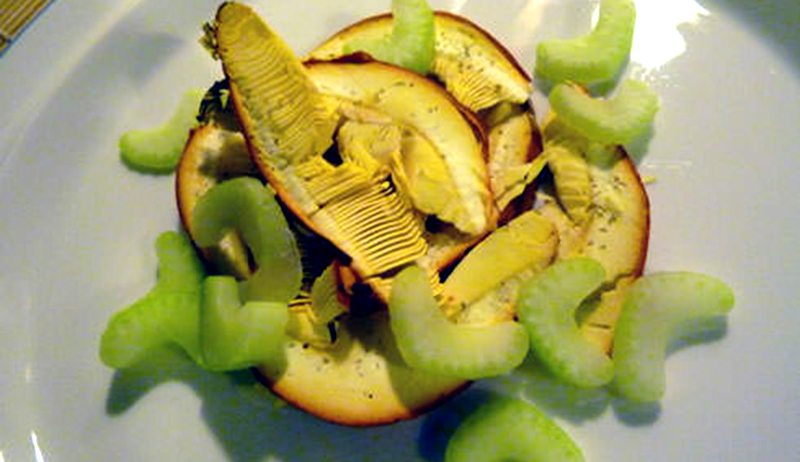
The mushroom salad I had in Italy featured delicious, prized mushrooms called ovoli (Amanita caesarea), or Caesar’s mushrooms, but almost any mushroom with character can be substituted.

This “small plate” mushroom salad was one of the best things I ate while in Italy last week, and that’s saying something because I ate a lot of wonderful things. So many simple dishes seemed to take seasonality for granted: egg tagliatelle with shaved white truffles or chunks of artichoke, this year’s new olive oil over grilled bread, broth enriched with eggs and cheese, chicory dressed with oil and anchovies, and a thick slice of roasted whole pig tucked into a fresh roll.

The centerpiece of this mushroom salad dish, prized mushrooms rarer even than truffles, are called ovoli (Amanita caesarea), or Caesar’s mushrooms. The name refers to their resemblance to eggs when they are very small. The ones our friend prepared for us had a rounded, egg-shaped cap but were gold-to-orange in color and sizeable. I think almost any mushroom with character (chanterelle, porcini, shitake, even portabella), wild or cultivated, could be substituted. Clean them by wiping them carefully with a dampened towel; dousing them with water will wash away flavor. Very good Parmesan is crucial to the recipe.

Ingredients

  • 2 to 3 good-sized mushrooms per person (see above)
  • 1/2 stalk celery per person
  • 6 to 8 wide shavings of best quality Parmesan per person
  • Salt and fresh pepper, to taste
  • Best-quality olive oil, to taste
  • White wine or champagne vinegar, to taste

Preparation

Clean (see above) and slice the mushrooms on each plate. Strew them with thinly sliced celery. Cover the pile with the shaved Parmesan. Drizzle on the oil and a little vinegar. Season.

Read more of Locavore Recipes »


Categories
Equipment

Plan… Refresh… Revise… Do

How-to book showing electrical wiring
Photo by Jim Ruen
Before adding lights and outlets to my new workshop, I need to refresh my electrical-wiring skills with how-to books.

The shop is starting to come together. It’s still a mess, but it’s getting closer—at least in my head if not in real life. While tools have been moved in, the shop is only in the rough-draft stage of development. I should have it all worked out soon, but the plan continues to evolve. 

One of the reasons for plan revision is because I’m relearning old skills. Years ago, while a young farmer, I took a class in electrical wiring. This broad overview was intended for those little wiring jobs that come up around a farm, adding fixtures to an existing circuit or adding a new circuit. Using what I had learned, I rewired a pig nursery and did other small repairs. Years later, I wired the unfinished portion of a house we had bought.
 
Now I’m wiring my small shop. The problem that amateurs like myself face is recalling the basics that lay largely unused for years. That’s one reason I rely on a professional for most jobs, like running conduit and cable to the shop. The professional has the tools and craft to quickly do a superior job. I was reminded of what I had forgotten as I pondered my shop redo.

I knew where I wanted lights and additional outlets, but had to revert to my how-to books for a refresher course before continuing. I then retraced my wiring plan with indicators of where the power needs to flow through or past switches. I’ll also trace out the common connections for the various outlet boxes and fixtures.

It’s only a small wiring job and I know I will take hours for a job the pro could do in a fraction of the time; however, it will give me the option of making changes as I go and refreshing old skills.

<< More Shop Talk >>

Categories
News

Wiki to Help Establish Food-systems Lingo

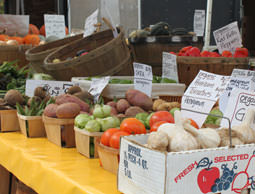
Farmers'-market stand with baskets of garlic, tomatoes, potaotes, peas, peppers and more
Photo by Stephanie Staton
Terms like “farmers market,” “sustainable agriculture,” “specialty crops” and “nutrition” are defined in the Food Systems Wiki.

The local-food movement is growing dramatically, with an emerging new lingo and jargon attached. To keep both farmers and foodies in the know about the verbiage surrounding food systems, the Food System Wiki was developed as a collaboration between the Department of Urban and Regional Planning at the University of Wisconsin Madison and the Journal of Agriculture, Food Systems, and Community Development.

A wiki is a website that allows anyone to add, delete or revise content via the Internet. The developers of the Food System Wiki, with its user-friendly design, intended it to serve as an evolving repository of the food-system lexicon—a place where “agripedians” can contribute new words and definitions, show how the terms are used, and fine-tune the definitions and usage of existing words.

The wiki began as a class project for the University of Wisconsin’s course “Urban and Regional Planning 711: Markets and Food Systems.” Taken from the definition provided in the wiki itself, a food system is “a dynamic structure consisting of the production, distribution, acquisition, consumption and disposal of food.” The terms compiled in the Food System Wiki are a collection of scientific, political and popular words, terms and acronyms related to food systems.

Several dozen users currently contribute to the Food Systems Wiki, but its developers are seeking greater participation from nutritionists, community-development professionals, county cooperative-extension agents, faculty, students, public officials, agency representatives, and of course, farmers and food entrepreneurs.

If you’re a hobby farmer interested in contributing to the wiki, participation is simple. Visit the Food System Wiki’s website, and click on the “request access” link in the upper-right corner of the page. Once registered, click the “Edit” tab (next to the “View” tab at the top of the page) and scroll to where you’d like to add or edit a term. To insert a new item, use the “Insert” drop-down list to insert a line between your new term and the term below it. To update an existing entry, use the editing tool to add links, photos or other media. Then save your work at the bottom of the page.

Categories
Urban Farming

Cooking Demo: Organic Baby Food

Tyler Florence

Photo courtesy BabyCenter

Today’s live Facebook event features a healthy baby-food cooking demonstration by Chef Tyler Florence and BabyCenter’s Lindsay Weiss.

Pregnancy and parenting website BabyCenter.com will be hosting its first-ever live Facebook event today. Scheduled to run from 6:30 p.m. to 7:30 p.m., the event will feature a cooking demonstration by Tyler Florence, chef, author and co-founder of Sprout Organic Baby Food, and Lindsay Weiss, food contributor and blogger for BabyCenter’s “Momformation”.

“This event taps into two growing trends among moms: the desire to buy organic and a growing need for convenience in every aspect of their lives, especially the kitchen,” says Linda Murray, BabyCenter editor in chief. “Teaching moms how to introduce their babies to healthy foods similar to what is being served to the rest of the family will save them time and allow them to encourage healthy eating habits at an early age.”

During the cooking demonstration, to be filmed at the Tyler Florence Shop in Mill Valley, Calif., Florence and Weiss will show parents how to make a healthful, tasty Thanksgiving meal for their babies. They’ll also explain how parents can expand the palates of their babies through foods that are rich in flavor and nutrition.

“The goal of Sprout is to teach parents that, by offering babies a wide variety of delicious, nutritious foods right from the start, they can encourage the development of healthy eating habits to last a lifetime,” Florence says. “BabyCenter is the ideal partner to help us reach and educate millions of moms about the importance of encouraging healthy eating early on.”

Fans are invited to post questions on the BabyCenter Facebook page in real-time. The questions will be answered by Florence and Weiss, and prizes, including a Tyler Florence Shop Gift Basket with a selection of gourmet items, including Sprout Organic Baby Food, Tyler’s Start Fresh cookbook and a gift bag of BabyCenter-branded goods, will be given away throughout the hour.

To view and participate, visit the BabyCenter Facebook page and click on the BabyCenter LIVE link or follow along on Twitter at #BabyCenterLive. After the live event, an edited version of the show will be available for viewing at BabyCenter.com and SproutBabyFood.com.

Categories
Animals

Talking Turkey

Tom turkey
Photo by Rachael Brugger
Humans always think turkey when Thanksgiving comes around. They are such interesting birds!

Next week will be Thanksgiving, and we can hardly wait! Mom makes treats for all of us animals and adds raisins and chopped apples to our food. Yum!

Humans eat special yummy things on Thanksgiving, too. Most people choose turkey because it’s the traditional Thanksgiving feast. Our Mom and Dad are vegetarians, though, so they have to think outside the box. One year, they tried a Tofurky roast; it was good but not quite the real thing. Now they fix a turkey feast with all the trimmings except the turkey: lots of mushroom stuffing, mashed potatoes and gravy, green-bean casserole, homemade dinner rolls with rich butter, Jell-O, and pumpkin pie with real whipped cream. It’s so good that nobody misses the turkey.

If you’re preparing a turkey dinner for your Thanksgiving feast, Hobby Farms can help you do it safely and show you how to make tasty turkey meals with the leftovers after you’re done.

Turkeys are cool. We know that because Uzzi and I Googled turkeys last night. Here are some of the things we learned.

  • United States turkey producers raised 2.9 billion pounds of turkey in the first six months of 2011. During the same time period live turkey weights averaged 30.1 pounds, up 1.1 percent from the same period in 2010.
  • Commercial turkeys grow faster and have lots more white meat than old-time heritage turkey breeds, but if you want a truly tasty turkey buy a heritage bird. The American Livestock Breeds Conservancy promotes them.
  • The Guinness World Record for heaviest turkey weighed 86 pounds already dressed and ready to roast.
  • Turkeys are New World birds that were domesticated in Mexico around 800 B.C. The Spaniards brought domestic turkeys to Europe in 1519 and they reached England by 1524. Turkeys became so popular that the Pilgrims brought tame turkeys back to America in 1620.
  • The famous Big Bird of Sesame Street is covered with nearly 4,000 white turkey feathers dyed bright yellow.
  • History says Ben Franklin wanted the wild turkey instead of the bald eagle for our national emblem. On January 26, 1784, he wrote a famous letter about it to his daughter, Sarah Bache, but some historians say the letter was written with tongue-in-cheek.
  • Only adult male turkeys make a “gobble, gobble” sound; they are called tom turkeys or gobblers. Hen turkeys make a gentle clucking sound instead of gobbling.
  • In 1863, President Abraham Lincoln officially proclaimed the last Thursday in November “as a day of thanksgiving and praise to our beneficent Father who dwelleth in the heavens.”
  • In 1939, President Franklin Roosevelt moved Thanksgiving a whole week earlier to allow for extra Christmas shopping time. The public disapproved, so it was changed back to the old date in 1941.
  • Turkey is also traditionally eaten for Christmas dinner. Charles Dickens’ A Christmas Carol popularized the Christmas turkey dinner in Great Britain.
  • The ballroom dance the “turkey trot” was named for the short, jerky steps that turkeys take. Some people thought the dance was scandalous. It was replaced by the fox trot in 1914.

Want to read more fun and fantastic turkey facts? Visit the University of Illinois’ Turkey for Thanksgiving website, where you can also learn to choose, cook and carve your holiday bird. There’s even a page of holiday hotlines if you need help. Check it out!

« More Mondays with Martok »

Categories
Urban Farming

Living Large

1/2

Photo by Audrey Pavia

A view of the horse stalls on my small urban farm.

Whenever I ride around the equestrian community where I live, I get a severe case of property envy. Some people around here managed to score anywhere from 3 to 5 acres for their urban farms. I, on the other hand, make due with a mere 1/2 acre.

A 1/2 acre is a lot of land in suburban Southern California. My friends in condos think I live on a huge spread. And I guess I do, compared to the postage stamps they call backyards. But when you have farm animals, a 1/2 acre is pretty tight.

When I first moved in here, I had all kinds of fantasies for my urban farm. It was the first time I’d lived anywhere you could legally keep livestock, so my imagination ran wild. I’d have horses, of course, and also goats, chickens and ducks. Maybe I’d even have a sheep or a miniature donkey. Why not? I lived on a farm now, after all!

But it wasn’t long before reality set in. I soon discovered that my 1/2 acre was made up of a significant amount of unusable slope. It also had a huge detached garage smack in the middle of the backyard. This certainly limited the amount of workable land I had at my disposal. Then we needed a patio, so some of the space was allotted to that. After that, we had to put in a lawn for our Corgi, naturally. (He grew up with a lawn and wouldn’t know where to pee without one.)

When all was said and done, my 1/2 acre came to a lot less than that. I had room for three 12-by-24-foot pipe corrals for my horses, a wash rack, small tack shed and a tiny chicken coop — so much for goats and sheep. And what was I going to do with a miniature donkey back there? It’s not like he’d have a big pasture to roam in; he’d be cooped up in a tiny stall all the time; it didn’t seem right.

After getting the horses and the chickens, the yard suddenly seemed packed to the gills. I didn’t want to be like some of the other folks in my town who had so many animals jammed onto their small lots that it looked like they lived in a zoo rather than on an urban farm. Quality of life was important — not just to me, but to my animals.

I decided to limit my animal crew to three — now two — horses and a handful of bantams. The dog has plenty of room to run around (and a lawn for peeing), and the cats and the bunnies stay in the house.

This arrangement works well. I’m not overwhelmed with animals, and my property is able to handle the wear and tear of this small group fairly well. Of course, I still dream of the day when I’ll have enough land for all the barnyard critters I want, but until then, I’ll find a way to be content with my 1/2 acre. After all, it sure beats living in a condo.

Read more of City Stock »

Categories
News

Researchers Tackle Leafy-greens Safety

Leafy green vegetables
Photo by Rachael Brugger
Leafy greens are often the culprit of food-borne illness outbreaks due to the difficulty in sanitizing them.

Leafy, green vegetables, power-packed with nutrients, are a growing part of the average American diet. Yet in 2009, leafy greens also made the Center for Science in the Public Interest’s “Top 10 Most Dangerous Foods,” due to a surprising number of food-borne illnesses linked to the seemingly innocuous salad staple.

A team of researchers with the Ohio State University’s Ohio Agricultural Research and Development Center is working to combat the problem with leafy greens.

According to the Food and Drug Administration, 82 food-borne illness outbreaks between 1996 and 2008 were linked to the consumption of fresh produce. More than 34 percent of them were traced to leafy greens, accounting for 949 illnesses and five deaths. One outbreak alone, the 2006 contamination of spinach with Escherichia coli O157:H7, caused 204 illnesses, including 104 hospitalizations, 31 cases of hemolytic-uremic syndrome (a serious complication) and three deaths. On top of the human cost, the economic impact of that outbreak alone was estimated at anywhere from $37 million to $75 million.

“Leafy greens—spinach, lettuce—are the most difficult type of fresh produce to treat,” says Ahmed Yousef, food microbiologist and professor of food science and technology at OSU. “The leaves are porous. That allows the plant to respire, but it also makes it easy for pathogens to enter into the leaf—not just stay on the surface. And, leaves are much more sensitive to treatment than other types of produce. We have been trying to figure out how to kill microorganisms without damaging the leaf at the same time. There’s not a large margin for error.”

Freshly harvested leafy greens are often vacuum-cooled, washed and sanitized with chlorine solution before packaging. “But research shows liquid sanitizers are not always effective, and sometimes make the problem worse,” says OSU food engineer Gonul Kaletunc.

The problem is twofold, the scientists explain:

  • Air bubbles can form in the liquid sanitizer, preventing it from ever reaching portions of the leaf surface.
  • Even when liquid sanitizer does come in contact with the surface, it may not have enough time to penetrate far enough into the leaf to reach microbes.

“If you have a bacterium sitting 1 millimeter inside a leaf surface cavity and your sanitizer doesn’t touch the bacterium, it’s not going to have any effect,” says Sudhir Sastry, OSU food-safety engineer and leader of this effort.

That’s why the team, armed with a $1 million grant from the USDA, has turned its attention to studying the effectiveness of gaseous sanitizers, including ozone and chlorine dioxide.

“To get into the crevices of the leaf, it’s got to be gas, not liquid,” Yousef says.

Although gaseous sanitizers have a much better chance of reaching the pathogens, they also need specific conditions to work. According to Sastry, that causes a challenge.

“At the processing stage, everything is geared to speed, speed, speed,” Sastry says. “But sanitizers, especially the liquid sanitizers, are slow, slow, slow, which is not compatible with a high-speed operation. So we looked at the whole process and thought, ‘Why not apply the sanitizer when there is some time to let it work?'”

Larger processors, for example, use vacuum cooling for a half-hour or longer after harvest and before greens are transported for packing.

“To use gas as a sanitizer, you need an airtight compartment,” Kaletunc says. “You have that with vacuum cooling, and vessels that are currently being used can be adapted to use gas.”

Another possibility is to subject the greens to a sanitizing gas during transportation.

“Greens are in transit up to 96 hours,” Sastry says. “Why not subject them to the sanitizing gas then, when there’s plenty of time for it to work? We need to be able to incorporate a gaseous sanitization procedure into the produce chain’s existing operations—that will be key.”

One OSU study, published in 2009 in the Journal of Food Protection and conducted by Sastry, Yousef and two of their graduate students, found that a combination treatment using ozone gas during vacuum cooling and transportation reduced E. coli on spinach leaves by up to 99.99 percent. In the current project, the researchers are further studying possible combinations of gaseous sanitizer—both ozone and chlorine dioxide—and partners at Iowa State University are examining the use of liquid organic acids combined with surfactants to determine if those would be as effective. Additional partners at New Mexico State University are preparing training materials for growers and processors. A half-dozen produce companies from across the U.S. have attended project meetings and expressed interest in the work, Sastry says.

It all comes down to safety.

“If we apply the right techniques in the right place at the right time,” he says, “we really can improve the safety of produce.”

Categories
Urban Farming

Girl Scouts’ Locavore Badge

Girl Scouts' Locavore Badge

Photo courtesy Girl Scouts of the USA

As part of the first revamping of badges in 25 years, Girl Scout seniors (grades 9-10) can now earn the new Locavore badge. According to the Girl Scouts of the USA website: “When I’ve earned this badge, I’ll know how to prepare a meal of seasonal and locally grown dishes.” What constitutes “local” hasn’t been determined yet; it may mean food grown within 100 miles or food grown within the girl scout’s state.

Girls can earn the Locavore badge by following five steps: 1. Explore the benefits and challenges of going local. 2. Find your local food sources. 3. Cook a simple dish showcasing local ingredients. 4. Make a recipe with local ingredients. 5. Try a local cooking challenge.

According to SF Weekly,“The girls start out slowly, first interviewing a local cook or a grocery store manager about the food system, and then identifying seasons when certain fruits and vegetables grow locally or ferreting through their fridge to identify products they can find local substitutes for.”

“There is a strong history of food-related badges with the Girl Scouts, including a Canning badge from the 1920s,” says Alisha Niehaus, executive editor of program resources.

The girls who earn this new Locavore badge will become better educated on agriculture, industrial food and the impact they make on the planet.

To learn more about the Locavore badge, visit the Girl Scouts website.

Categories
Crops & Gardening

Gardening Magazines to Pass the Winter Lull

I have always been a big magazine reader, especially those related to gardening. Although my preferred magazines have changed over the years, for the past 20 I have subscribed to at least three different ones at any given time.

Right after I graduated from college I enjoyed American Nurseryman, largely because in it was a lot of current research and information about nursery trends. I was working in the nursery industry at the time and found it very useful. At that time, it was published weekly and I just couldn’t keep up with all that reading. I felt guilty about it so I quit subscribing. I will return someday.

I have always enjoyed Horticulture magazine, as well, though I can’t say I am overly fond of the fact that they took so much of the science out of it. I loved it when Roger Swain was the science editor there—he had a way of explaining soil pH like no one else. The magazine staff seemed to take themselves more seriously then and had a greater appeal for very experienced gardeners. My guess is that now they are trying to cater to newer gardeners, which there is nothing wrong with; I just don’t find it as interesting as I used to. I’m considering letting my subscription lapse, but I would feel badly about it. There is still good information there, but where I used to learn 10 or 20 new things, I now only learn one or two.

Organic Gardening magazine has been in my life since, quite literally, the day I was born. My mother subscribed and I always remember the digest-sized magazines sitting around the house. It is the perfect fit for me as a gardener and a mother.

And, most recently, I have rediscovered Fine Gardening. Many years ago, I used to enjoy reading copies passed along from a friend, but hadn’t seen one in a few years. I had the opportunity to check out several issues from the past two years and was very impressed with the amount of information it offered. Lots of science without making it overwhelming. Lots of gorgeous pictures without eliminating the “real” gardens—blemishes and all. Lots of practical information without dumbing it down. And lots of different topics in every issue. I am going to ask for a subscription for the holidays. I can only hope they see me through winter’s gardening lull.

« More Dirt on Gardening »

Categories
Recipes

New Tricks for Halloween Treats: Cocktails and Caramel

Using what we have in fall abundance, like those bushels of apples, in unique, tasty and frugal combinations—that’s what being a farmstead chef is all about.

So let’s talk Halloween candy. Tootsie Rolls don’t jump to mind when you think “fresh,” but they definitely qualify as “seasonally abundant” in the weeks after Halloween. Creatively repurposing and making some room for those Christmas holiday treats to come, here are two funky ways we use up our Halloween treats:

Candy Vodka Infusions
As you probably inferred from Lisa’s article in Hobby Farm Home (“You’re Cordially Invited,” Nov/Dec 2011) on making vodka infusions with garden-fruit abundance, she can justify making a sweet-treat cocktail out of just about anything, including Toostie Rolls, Milky Ways and candy corn. Not for the kiddies (though our 10-year-old Liam did donate some of his unwanted excess for his Mom’s experiments), here are some tips to get started:

  • Cut up your candy of choice into as small as pieces as possible to speed up how quickly the candy infuses. Using a 2:1 candy-to-vodka ratio, mix two cups of candy with one cup of vodka in a canning jar. These won’t be “sipping sweet” liqueurs but more like the flavored vodkas available in the store that you’d use in mixed or blender drinks.
  • Shake the jar intermittently until all of the candy is dissolved, usually over the course of two to three days. The color and flavoring of the candy will infuse into the vodka.
  • The infusion will turn the color of the candy, so choose wisely. Candy corn turns the vodka a bright orange; chocolate variations infuse a fudge-like color. If you’re using multi-colored candies such as Skittles or Starbursts, it’s best to separate them and make individual mini-batches with each color.
  • If using candy that won’t dissolve completely (like the peanuts in Snickers), strain the infusion before serving. Store the infused vodka in a sealed container, and use within two weeks.

Caramel-apple Buffet
This homemade, hands-on version of those gourmet caramel apples in the shop makes a fun interactive dessert for a post-Halloween gathering.

  • Chop up or crush candy that would taste good on a caramel apple, like Butterfingers, toffee bars and various forms of chocolate. Jellybeans and other chewy candies are better left for the vodka infusions. Chopped peanuts, granola or crushed graham crackers are also good to add.
  • Slice up some apples and make the caramel sauce listed below—then dunk and dip.

For parties, we like to keep the sauce warm in a 2-quart slow cooker. Use this sauce on top of an apple cake, pumpkin pie, sundae or anything else where a drizzle of sweetness is desired. John likes the leftovers in his morning coffee.

Recipe: Caramel Sauce

Yield: 1½ cups

Ingredients

  • 1/2 cup sugar
  • 1/2 cup brown sugar, firmly packed
  • 2 T. flour
  • 1 cup heavy whipping cream
  • 1/4 cup butter (1/2 stick), cubed
  • 2 tsp. vanilla

Preparation
In a saucepan over medium heat, whisk together sugar, brown sugar, flour and heavy whipping cream. Bring to a rolling boil, and boil for 3 minutes.

Remove from heat. Mix in butter and vanilla.

Let cool completely. Pour into a clean, sterile jar. We like to use glass canning jars. Store covered in the refrigerator. The caramel will last about one week in the refrigerator (but never that long in our house).

Best heated before serving.

Savoring the good life,

John and Lisa Farmstead Chef Signature

<< More Farmstead Chef >>