Categories
Crops & Gardening

Unusual Deer Meal

My son and I were in the house the other day, and he called for me to tell me there was a deer standing outside the picture window in our living room. Not 6 feet from the window stood a large doe.

I can tell winter isn’t far away when the deer start eating the plants in my front garden they normally leave alone during the summer months. But this doe was doing something I have never seen before. She was gobbling up all the fallen leaves on the ground around our Norway maple. I have seen them eating live tree leaves and evergreens, and they love the young branches of our apple trees during the winter months, but this I have never seen. I ran and got the camera and took a video of her munching away. Check it out above.

It left me wondering if our deer herd has always eaten the fallen leaves and I just never saw it because it was under the cover of darkness. Or maybe is this one deer just trying something new. Has anyone ever seen deer do this before? I’m curious.

Regardless of why she was enjoying this strange meal, I encouraged her to continue, hoping that perhaps she would eat them all and I won’t have to rake them. Sure enough, within a minute or two a car came down the road and off she went, leaving plenty of leaves for us to collect and compost (a chore my husband is outside doing as I write this). Perhaps she will be back with her friends over the coming nights and get back to eating—hopefully the fallen leaves rather than my holly bushes. 

« More Dirt on Gardening »

Categories
Recipes

How To Make Fresh Pasta

No noodle tastes quite like that of pasta made in your own kitchen. Although the process can be long—allot at least 20 minutes just for mixing—the ingredients are simple, and chances are you produce some of them, like eggs, on your hobby farm.  

In the video above, you’ll learn a basic recipe to make a pound of fresh egg pasta, which will yield about four servings. The ingredients you’ll need are (use a home scale for measuring):

  • 460 grams semolina flour
  • 12 grams salt
  • 2 eggs
  • 12 grams oil
  • 86 grams water

Keep in mind that this recipe is just the tip of the iceberg when it comes to pasta-making. There are a number of pasta variations you can create, from gluten-free pasta (by substituting rice, potato and tapioca flours for the more traditional semolina flour) and flavored pasta (using farm-fresh ingredients, like spinach and roasted peppers) to pastas of all shapes and sizes.

The great thing about pasta is that anyone can do it—no fancy equipment necessary. However, if you want to speed up the process, a couple of machines will help. You might consider purchasing an electric stand mixer and a pasta roller and cutter (either hand-crank or electric) if you foresee large quantities of pasta in your future. Electric stand mixers can cost anywhere from $200 to $400, but you can purchase attachments to mix, roll and cut your dough, as well as perform other baking- and cooking-preparation functions. Pasta rollers and cutters vary from the affordable hand-cranked machine, starting around $40, to electric machines, which start at around $400.

Once you’re ready to make your pasta, keep these tips in mind:

  • Use semolina flour, not all-purpose flour. Semolina flour creates a stronger gluten structure, preventing the dough from crumbling.
  • Before adding ingredients to the flour, dissolve salt in room-temperature water and mix oil, eggs and any flavoring ingredients together.
  • Add ingredients slowly—take at least 5 minutes each to add the water-salt mixture and the oil-eggs mixture. Adding ingredients too fast will result in dough that’s sticky, not the more ideal granular consistency.
  • If working in humid conditions, don’t be afraid to add more flour to achieve the desired consistency for the dough.
  • Cook finished noodles to al dente, which literally means “to the tooth,” so that there is a firmness to the noodle when you bite it.
  • To serve, toss pasta with a bit of olive oil and parmesan cheese or a light amount of sauce, and enjoy!


Categories
Recipes

Easy Pumpkin Purée in a Slow Cooker

We’ve always had a casual love affair with the slow cooker. Now our friend and cookbook author Kathy Hester has turned that occasional fling of ours into a deeply rooted relationship. Pumpkin purée in a slow cooker? Who knew?

Basically a cooking pot surrounded by an electrical heating element, a slow cooker has an inner ceramic pot, or “crock,” that serves as both the cooking container and a heat reservoir to keep the heat constant. While we use our slow cooker for basic things like cooking beans or simmering tomato sauce, our reason to use it stems from the energy efficiency of the appliance. A side benefit in the summer is that show cookers don’t add more heat to the house, especially if they are placed on a front porch like we do.

“A slow cooker is an amazing tool for a working person because they can throw most meals together in the morning and come home to a dinner that just needs a few touches or is simply ready to eat,” shares Hester, a home gardener and loyal customer at the farmers market in Durham, N.C.

Her cookbook, The Vegan Slow Cooker, showcases the range of recipes that can be made in this handy appliance. As in our Farmstead Chef  cookbook, she prioritizes local, seasonal ingredients—in Hester’s case only those that don’t involve animals. For those of us trying to explore ways to stretch our food budgets by cutting back on meat or are looking for “Meatless Monday” options, Hester’s book provides plenty of ideas. From Exotic Cardamom Hot Cocoa to Mushroom Lasagna with a Garlic Tofu Sauce, Hester champions the slow cooker, introduced in the 1970s, to new culinary heights.

New to slow cooking? No worries. Here are some handy tips to get started:

1. Consider the Size of the Slow Cooker 
“For a family of two or four people who like leftovers, I recommend a 3½- to 4-quart slow cooker,” Hester advises. This size will also nicely cook about a pound of beans. Slow cookers also come in “3-in-1” styles that include a 2-quart, 4-quart and 6-quart crock that nest together and are easy to store. “Everyone should have one 2 quart or smaller slow cooker for breakfast and party dips. They are inexpensive and I promise you’ll use it more than you think. I have two that I use weekly.”

2. Do a Trial Run 
“Stay home the first time you use a new-to-you slow cooker, just as a precaution,” Hester says. “This way you can gauge the cooking temperature of the slow cooker and find out if it is faulty in some way before running it alone.”

3. Clear the Space Around Your Slow Cooker
“Make sure the area around the slow cooker is clear of anything that could scorch before you leave the house,” Hester adds. “Some outside casings get fairly hot and could melt something plastic if it is left too close. Also, make sure the slow cooker is somewhere away from little hands or pets. Even if the outside is not hot, what’s in the slow cooker is and could cause damage if spilled.”

4. Sauté the Night Before
While pre-cooking and browning onions can be skipped if you’re in a hurry, Hester likes to cook her vegetables the night before for better flavor. She keeps the mixture in the fridge overnight and throws it all together the next morning.

5. The New Low Is Almost the Old High 
Beware that older slow cookers cook at a lower temperature than newer models. “If you have an older one you may need to use less liquid than called for in newer slow cooker recipes,” Hester says. “However, if yours runs very hot, you may find yourself adding extra liquid. Once you’ve cooked in it a few times you’ll know what to do for future recipes.”

Hester’s cookbook along with her blog, Healthy Slow Cooking, share a range of recipes to make in the slow cooker. Just in time for the holidays, we’re delighted she shares her recipe for Beyond Easy Pumpkin Purée. Use a smaller pie pumpkin that will fit into a slow cooker and freeze in generous 1½-cup portions; that’s equivalent to one standard 15-ounce can.

Recipe: Beyond Easy Pumpkin Purée
from The Vegan Slow Cooker by Kathy Hester

Yield: 3 to 6 cups
Total Prep Time: 3 minutes
Total Cooking Time: 6 to 8 hours

Ingredient
1 pie pumpkin that will fit in your slow cooker

Preparation
Wash pumpkin, and poke holes in it for steam to escape. Place it in the slow cooker, and cook on low for 6 to 8 hours. When it’s ready, a fork should easily slide through the skin and the flesh.

Let pumpkin cool until you can touch it without burning yourself. Move it to cutting board, and slice in half. Remove seeds and pumpkin guts. Scrape the flesh into a food processor or blender and purée until smooth.

Check back near Thanksgiving for our Pumpkin Mousse Cheesecake recipe that uses pumpkin purée.

Categories
News

3 Reasons to Pay Attention to Farm Bill 2012

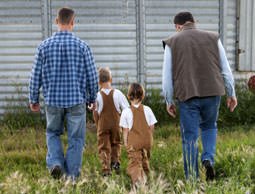
Three generations of farmers walking through a field toward a silo
Courtesy iStockphoto/Thinkstock
Legislation passed as part of the 2012 Farm Bill could support beginning farmers and affect how future generations operate their farms.

When you’re harvesting the pumpkin patch, Capitol Hill probably feels light-years away. While many hobby and small-scale farmers chose a rural lifestyle because they wanted to simplify and return to the basics of raising their own food, U.S. agriculture policy is closer and more important to all of us than we often realize.

Granted, the Food, Conservation and Energy Act—better known as the Farm Bill—is complicated and controversial. This large federal-legislation package sets the general direction for the nation’s food and farming policy. Enacted about every five years, the current legislation (which passed in 2008 and totaled $289 billion) is set to expire in 2012. The next Farm Bill is quickly making its way through the House and Senate Agriculture Committees.

“The Farm Bill is important to small-scale farmers and rural communities because, depending on how that policy is shaped, it can either provide opportunities for us or it can serve as a barrier to success,” explains Traci Bruckner of the Center for Rural Affairs, a Nebraska-based nonprofit and national leader in sustainable agriculture policy. “For example, we can continue to subsidize the nation’s largest farms or we can invest in proven strategies that create a better future for small farmers and rural communities.”

Here are three key areas the Farm Bill includes that directly champion the priorities and needs of small-scale farmers. While the 2008 Farm Bill made strides in these categories, these programs must be advocated for once again or any gains will effectively be wiped out.

1. The Next Generation of Farmers
“If the Farm Bill doesn’t support new farmers, we are at risk of losing what it means to be an American because we are at the core a rural, agricultural nation,“ says Brett Olson, co-founder of Renewing the Countryside, a Minnesota-based nonprofit that helped launch the Young Organic Stewards program to support beginning farmers. “With the average age of farmers now 65 and average landowners age at 70, we can’t wait until the next Farm Bill to put dollars behind these programs. The time is now.”

A new comprehensive bill intends to do just that: The Beginning Farmer and Rancher Opportunity Act. This bill, which came about through collaboration among farmer-advocacy groups, would be part of the larger Farm Bill and support economic opportunities for young and beginning farmers and ranchers in certain areas, such as land and capital access.

“The bill pulls together the best ideas from around the country for advancing new farming opportunities by building on the progress of previous Farm Bills and stepping up the pace of reform,” says Juli Obudzinski, a policy associate with the National Sustainable Agriculture Coalition, an alliance of grassroots organizations across the U.S. that champions federal policy reform.

2. Local Food
The Local Farms, Food and Jobs Act, another new piece of legislation that aims to improve the Farm Bill, creates a package of reforms and programs that will encourage production of local food, not only by helping local farmers and ranchers become more profitable and productive but also by helping consumers buy locally through improved distribution systems.

“We’ve seen explosive growth in sales of local food here in Maine and all across the country,” says Rep. Chellie Pingree, D-Maine, who helped sponsor the bill. “This bill breaks down barriers the federal government has put up for local food producers and really just makes it easier for people to do what they’ve already been doing. It creates jobs on local farms and bolsters economic growth in rural communities.”

3. Land Stewardship
The Conservation Stewardship Program and the Wetlands Reserve Program, both of which support farmers’ and landowners’ implementation of conservation-minded, restorative practices on their land, is currently slated for budget cuts in the new Farm Bill, wiping out more than 40 percent of the funding increases achieved in the 2002 and 2008 Farm Bills, according to NSAC.

As legislation behind these three category circulates through Congress toward final approval, it’s important for farmers to keep connected to issues and make their voices heard by contacting representatives.

Categories
Equipment

Made In America

Robert Foster of Bad Boy mowers poses with an orange commercial mower
Photo by Jim Ruen
Robert Foster and his partner successfully build their business, Bad Boy Mowers, right here in America.

The next time you think manufacturing is a thing of the past in this country, think again. Certainly we have lost plenty of business to low-cost, offshore factories; however, there are plenty of factories here that are going strong.

At a recent trade show, I spoke with several made-in-America business owners that exemplify the creativity and dedication to superior craft that made this country a manufacturing powerhouse. One of them was Robert Foster, a co-founder of Bad Boy Mowers. Foster told me how he and his partner Phil Pulley had entered a crowded marketplace with the confidence they could build a better mower.

Not only did they succeed and gain the recognition and confidence of a significant share of the market, they did it all in America. What started out in a small shop with a few workers has morphed into more than 200,000 square feet of facilities filled with the latest technology and skilled craftsmen.

Foster gives much of the credit for the company’s success to his employees in Batesville, Ark. “Each of them does the work of two,” he says with pride. 

A recent ABC news show showcased Anders Lewendal, a Bozeman, Mont., house builder who sought to use American-made components in a new house. (Click here for his source list.)He found that where prices were higher, quality more than made up for the disparity. Finding domestic suppliers was the toughest job, as the discount stores didn’t carry them. He had to ask.

Lewendal suggested that if more of us asked for American-made, our country would be stronger for it. Congratulations to Bad Boy, to Lewendal and to ABC for the story.

And next time … ask.

<< More Shop Talk >>

Categories
Urban Farming

Organic Community Wins Fight to Keep Labels Accurate

organic milk

Photo courtesy iStockphoto/Thinkstock

This week, the State of Ohio agreed to abandon a rule that prohibited farmers from stating how their organic milk products were produced.

On Monday, the State of Ohio agreed that it would no longer pursue regulations limiting the labeling of organic dairy products.

Previously, Ohio had attempted to prohibit statements on labels that informed consumers that organic dairy products are produced without antibiotics, pesticides or synthetic hormones. After the Organic Trade Association, a membership-based business association for organic agriculture and products in North America, sued the State of Ohio, the Sixth Circuit Court of Appeals sided with consumers’ right to know about how their food is processed and gutted the Ohio rule, finding that it was unconstitutional.

“The Sixth Circuit opinion made it clear that states cannot unduly restrict organic labels or consumers’ right to know how their food is produced, and the State of Ohio’s actions [this week] make it clear that the fight to keep labels accurate by OTA, its members, farmers and consumers was worth it,” says Christine Bushway, executive director and CEO for OTA.

Rather than trying to revive the rule, Ohio has agreed to abandon it, recognizing that the First Amendment allows organic dairy products to proudly state that they are produced in accordance with organic food standards, without the use of synthetic growth hormones, pesticides or antibiotics.

“This is significant for all of us who support what organic foods are about, and for consumers who carefully read food labels to find out what’s in their food and how it’s produced,” Bushway says.

In 2008, the State of Ohio issued an emergency regulation that restricted the free speech rights of organic and conventional farmers and marketers of milk within the State of Ohio. The regulation illegally restricted the right of farmers and marketers to state that some dairy products are produced without the use of synthetic and artificial ingredients.

OTA and its members, including Horizon Organic, Organic Valley and Stonyfield Farm, appealed a lower court decision that upheld the rule in question to the Sixth Circuit Court of Appeals. In 2010, the Sixth Circuit reversed the lower court decision, agreeing that consumers have a right to know how their dairy products are produced.

Critical to the decision was the Court’s reliance on an amicus brief filed by The Center for Food Safety and other organizations to rule that milk produced with synthetic hormones is different than milk produced without it (such as organic milk).

“Ohio’s abandonment of this misguided rule is a victory for consumers, farmers and manufacturers alike,” Bushway says. “The organic label is a federally regulated program that provides consumers with the knowledge that their food is produced without the use of antibiotics, pesticides or added growth hormones. Consumers have the right to make informed choices about the foods they eat, and farmers and manufacturers can continue to communicate truthfully with consumers.”

OTA was represented by Randy Sunshine of Liner Grode Stein Yankelevitz Sunshine Regensteif & Taylor LLP.

OTA looks forward to continuing the fight for transparency in labeling as part of the Just Label It: We Have a Right to Know initiative that kicked off last month. This initiative is driven by a coalition of more than 400 businesses and organizations interested in bringing about the labeling of genetically engineered foods. The campaign has submitted a petition to the U.S. Food and Drug Administration with the goal of inspiring consumers to contact the FDA to show their support of mandatory labeling of GE foods. Consumers can visit www.justlabelit.org to submit their support of labeling to the FDA.

To learn more about the Organic Trade Association, visit https://www.ota.com.

Categories
Animals

Winter Predictions

Persimmon seed cut in half; seed shaped like shovel means cold winter
Photo by Sue Weaver
The persimmon seeds look like a shovel this year. I guess we’re in for a cold winter.

Yesterday it was cold, wet and windy. Uzzi and I huddled in our normally comfy Port-a-Hut and chattered our teeth. Our winter undercoats aren’t grown in. We aren’t ready for winter yet.

Last night, we crept in while Mom and Dad were sleeping and booted up the computer; we wanted to visit the Farmer’s Almanac site to see what winter would bring. Their meteorologists are calling for unusually cold and stormy weather for most of the country, but the winter weather prediction maps say Ozark temperatures will be mild and very wet. Mild sounds great but we told Mom we need extra straw in our Port-a-Hut starting tonight because it sounds like we’ll be spending time indoors this winter.

Meteorologists predict the coming winter’s weather using maps and fancy instruments, but country folk do it other, old-time ways. Here in the Ozarks, they look inside wild persimmon seeds.

To read a persimmon, wait until after several hard frosts so the fruit is gooshy. Then pull out a seed from several fruits. Clean them (they’re very slippery), then carefully cut them in half the long way using a sharp knife. On one side, the cut seed will resemble a knife, fork or shovel (some say it’s a spoon). A fork foretells a mild winter when you can fork up the winter garden with ease. A knife predicts cold weather that cuts like a knife. A shovel means snowy weather when you’ll shovel lots of snow. Our persimmons have shovels in them this year: Could they know something the Almanac doesn’t? 

Old-fashioned rural folk all over the country predict winter weather by looking at black and orange banded caterpillars called woolly worms. According to Mom’s grandma, wide orange bands foretell a mild winter and wide black ones mean lots of snow and cold. In the 1950s, a scientist named Dr. C. H. Curran, former curator of insects at the American Museum of Natural History in New York City, ran an extensive survey on weather-predicting woolly worms and reported an 80-percent accuracy rate for the worms’ weather predictions.

Mom’s Irish grandpa had all kinds of ways to predict the weather using Nature’s signs. He said when oaks produce an over-abundance of yummy acorns, look for a long hard winter. Our oaks are very productive this year—maybe the persimmon seeds are right?

Other cold and stormy winter signs people look for are extra-plush coats on horses and cows, thick shells on wild hickory nuts, hornets building nests close to the ground, squirrels with extra-bushy tails, snowshoe hares with extra-furry back feet, and pigs gathering tons of sticks and leaves to line their nests. Seeing moths flying on late-autumn nights supposedly portends a mild winter.

Do you know of other country ways to foretell winter weather? If you do, please share them. We want to know!

« More Mondays with Martok »

Categories
Beginning Farmers

Hands-on High School Focuses on Ag-career Skills

Locust Trace AgriScience Farm high school, with solar panels and green roof
Photo by Rachael Brugger
The classroom building at Locust Trace AgriScience Farm boasts a solar-thermal array and an experimental green roof, among other energy-saving features.

Pencils, binders, loose-leaf paper: These are the tools found in nearly every high-school student’s locker. But what about a soil-testing kit, a stethoscope and a sturdy pair of rubber boots?

For about 188 Lexington, Ky., students, these unexpected backpack fillers happen to be the tools of their trade as they pursue a diploma at the city’s newest high school, Locust Trace AgriScience Farm.

The first high school of its kind in Kentucky, Locust Trace offers students hands-on training and career preparation along one of five tracks: plant and land science, biotechnology and environmental science, agriculture power mechanics, equine and vet science, and small- and large-animal science. Students also have the opportunity to take core courses in higher-level math and advanced English, biology and chemistry.

The school, which opened this fall after nearly a year of construction, was born out of “both a dream and a need,” says Sara Tracy, Locust Trace’s community liaison. Although Fayette County Public Schools, where Locust Trace is located, once offered a vigorous agricultural-education program, it had diminished in recent years: By 2010, the city’s Eastside Technical Center had only two agriculture instructors on staff. Despite the lack of teachers, students still demonstrated a substantial interest in these fields, with veterinary medicine appearing as one of the top choices on a survey of students’ career goals.

Coincidentally, it was a veterinarian who planted the seeds for the idea that grew into Locust Trace, Tracy says. Dr. James Martin, a lifelong friend of Eastside Tech’s principal, Joe Norman, wanted to “put together a program where students could work with a veterinarian,” Tracy explains.

The original plans called for an Eastside Tech satellite location to be built on a federal land-grant site the school system had acquired in 2008. Plans called for a one-room schoolhouse and six-stall barn where students could practice hands-on skills under a vet’s guidance. As Martin and Norman’s idea gained momentum, however, the blueprint expanded: Locust Trace’s campus now boasts a classroom building and several barns, as well as land designated for features, including paddocks, orchards, vineyards and more.

Determined to demonstrate that a large campus (82 acres) could have a small carbon footprint, Fayette County’s school board asked that Locust Trace be designed to meet LEED Gold standards. The end result, Tracy says, is a facility that’s “almost as green as you can be.” The campus boasts several sustainable innovations, including:

  • Photovoltaic panels
  • Geothermal heat field and solar-thermal array (“We have the third-largest solar-thermal array in North America,” Tracy notes.)
  • Domestic hot-water panels on the classroom building’s roof
  • On-site well for crop irrigation and livestock watering
  • Constructed wetlands for grey- and black-water management (“We’re not tied into the city sewer,” Tracy points out.)
  • Classrooms designed with numerous windows and solar tubes to replace artificial light
  • Light and motion sensors in place of conventional light switches
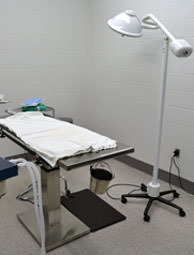
Veterinary surgery room
Photo by Rachael Brugger
The Locust Trace Veterinary Clinic contains surgery rooms with cameras that broadcast operations to classrooms so students can learn from vets at work.

Tracy says the goal is for the campus to produce more energy than it uses, adding that the only factor that keeps the school from being 100-percent net-zero is its use of water-company resources for key safety features, like the sprinkler system.

Sustainability is part of the curriculum, too. A “green screen” monitor located in the school lobby allows students and teachers to see how much energy is being used in each classroom. When waste or overuse is detected, students are tasked with finding creative solutions for getting back on track.

Weaving sustainability throughout the curriculum is one example of Locust Trace’s integrative, interdisciplinary approach to agricultural education. While students may focus on a specific track, their course work encourages constant collaboration with peers in other fields. Students with an equine focus, for instance, have been working with their peers in the plant science program to eradicate hazardous weeds and determine the optimal pasture makeup for horse health. This kind of cross-training is crucial for students pursuing 21st-century agricultural careers.

“It’s really about exposing them to everything,” Tracy says.

This exposure includes access to facilities, such as the school’s aquaculture lab.

“The aquaculture lab is definitely unique,” Tracy says. With equipment rivaling that found in many college- and graduate-level labs, students will have the opportunity to raise and research a variety of decorative, food and sport fish.

As for Martin’s original plans, last month they came to fruition in a big way with the grand opening of Locust Trace Veterinary Clinic. A full-service practice staffed by veterinarians and trained technicians, the clinic provides a full slate of services to local clients while simultaneously giving students in the school’s vet-science program an opportunity to observe and, when appropriate, assist with procedures.

“The veterinary clinic is an incredible asset,” Tracy says. Operating as a nonprofit, the clinic’s client fees are reinvested in the facility, allowing for the purchase of state-of-the-art equipment. When it comes to vet-school admissions, this cutting-edge approach gives students the edge, Tracy explains. “You will not get in without hands-on experience,” she asserts.

As Locust Trace grows, Tracy says, the hope is that it will provide a successful model of agricultural education that other suburban and urban districts can follow. Along the way, she hopes it will open people’s minds to what agriculture means.

“A lot of people hear ‘agriculture,’ and think old-school farming,” she says, citing the father who was shocked not to find a big, red barn when he dropped his daughter off on the first day of school. “We were able to show him that it was so much more than that.”