Categories
News

Genetic Trait Linked to Cattle Diseases

Cattle on a farm
Photo by Rachael Brugger
Bovine chromosome 30 might be linked to three common cattle diseases: pinkeye, foot rot and bovine respiratory disease.

The origin of three costly cattle diseases is genetically linked, according to findings from USDA researchers.

Scientists at the Agricultural Research Service Roman L. Hruska U.S. Meat Animal Research Center in Clay Center, Neb., have discovered a location on bovine chromosome 20 that is associated with the incidence of the most prevalent bacterial diseases—pinkeye, foot rot and bovine respiratory disease (pneumonia)—that affect cattle.

Eduardo Casas, research leader of the Ruminant Diseases and Immunology Research Unit at the ARS National Animal Disease Center in Ames, Iowa, and a former USMARC geneticist, examined the genetic makeup of cattle for evidence of genes associated with resistance or tolerance to diseases.

Casas and his colleagues combined pinkeye, foot rot and bovine respiratory disease to represent overall pathogenic disease incidence. They developed half-sibling families from crossbreed bulls: a Brahman-Hereford cow, a Brahman-Angus cow, a Piedmontese-Angus cow and a Belgian Blue-MARC III (part Red Poll, Pinzgauer, Hereford and Angus) cow. An analysis of DNA samples from the 240 calves infected with one or more of the diseases revealed a genetic marker, called a quantitative trait locus, on chromosome 20. This QTL is associated with the three diseases.

Chromosome 20 is located near genetic markers related to other cattle diseases. It might have a significant effect on the overall health of cattle, according to Casas. Identifying genetic markers responsible for disease would provide an opportunity to produce cattle with increased disease tolerance, which also could help reduce economic loss associated with diseases.

Results from the research were published in the Journal of Animal Science.

Categories
Urban Farming

Brussels Sprouts Advice

Brussels sprouts grown in Italy

Photo by Rick Gush

This year, I’m determined to grow Brussels sprouts 6 feet tall!

So, I’m hoping some of the readers of this blog might give me some advice on growing Brussels sprouts. Does one have to strip the lower leaves off the stalks, and if so, at what stage? Do commercial growers trim the lower leaves off their Brussels sprouts plants? What are some of the locations and various planting and harvest dates for good home-garden sprouts? Any counsel will be appreciated.

The reason I’m asking for help with growing Brussels sprouts is because I’m trying, yet again, to grow some really good sprouts this season. Sprouts are one of the vegetables of which I have never grown particularly good specimens. This is really annoying, not because of my horticultural machismo being dented, but because I really like eating steamed sprouts with mustard.

I used to visit the farmers markets in Half Moon Bay, Calif., near San Francisco, Calif., a lot when I lived up there. I always enjoyed being able to buy whole stalks loaded with attached sprouts. I swear, some of the core stalks were 3 inches in diameter and almost 4 feet tall. The best Brussels sprout plant I ever grew had a stalk that was only 1 1/2 inches across and 2 feet tall. We thought the sprouts we harvested last winter were tasty, but there were only limited quantities of them. So, this year, we’ve planted three dozen different Brussels sprouts plants in three different locations, all in the hopes that this might be the winter we grow some spectacular sprouts.

My basic plan is that I intend to fertilize these Brussels sprouts plants far heavier than usual. In home gardening, it is surprising how often extra fertilizer does the trick. So, I buried a big handful of aged chicken manure 6 inches below each planting hole, and I’m using manure tea once a week on the plants. My plan is to take advantage of the relatively warm fall months to grow the thickest and tallest stalks I can, and then hope the plants decide to make a bunch of the side shoots either during the cool days of early winter or late winter. I have no idea if we’ll get sprouts in 2011, or whether we’ll have to wait for early spring in 2012, but I think the bigger the stalks, the more — and tastier — sprouts will be produced.

Once I am certain that I can, in fact, manage to cultivate some reasonably awesome Brussels sprouts, I’d like to make them a standard crop for our winter planting schedule.

We have broccoli, lettuce, wild arugula, beet greens, edible pod peas and fava beans on the schedule every year now, and it would be nice to be able to add another significant crop. What I’m hoping to do one year is grow some of the red Brussels sprouts I’ve seen in the seed catalogs. Hopefully, I’ll already feel expert enough after this upcoming triumphant sprout season.

Read more of Rick’s Favorite Crops »

Categories
Animals Urban Farming

Need to Fly the Coop?

goats and geese

Photo by Mathew P. Gonzalez

Any urban farmer will tell you that farming is more than just a hobby; it’s a lifestyle — one that includes a number of daily responsibilities, especially when it comes to livestock. There are eggs to collect, goats to milk, weeds to pull, and more. Even during slower seasons, when the chickens stop laying or the garden is at rest, the animals need to be fed, and their coops and pens need to be cleaned.

It can be a challenge to find someone to care for your farm when you’re ready to fly the coop for a few days, but the good news is that it’s getting easier. The rising popularity of urban farming means you probably already have friends and neighbors who are eager to help out when you need to get away. Plus, a brand new industry is popping up in urban areas all over the country: professional farm-sitting services.

“One of the concerns I had when we considered goats was that not only would we have to find a dog sitter, but a goat sitter, too,” says Melissa Miller, who keeps chickens and two Nigerian dwarf goats on her urban farm in Bellingham, Wash. When she and her partner, Maxx, take a vacation, they rely on friends to care for their animals and never face a shortage of willing caretakers. “It helps that the goats are extremely adorable,” she says.

Before they skip town, the couple invites potential farm sitters over for a brief training session, making sure to leave good instructions.

Kathryn Durkin, who has four ducks, three chickens and two goats in Portland, Ore., admits to being surprised by the number of friends willing to stay at her home for a farm vacation when she’s away. “We’ve got so many friends who are so interested in the urban farm lifestyle and experience that, as of right now, we have a short list that we haven’t even burned through yet of people who are willing to come stay at our house when we’re not there,” she says. “Our friends are, in general, pretty willing to jump in.”

“People always ask me, ‘Can I go out of town? What do you do with your chickens?’” says Gretchen Anderson, a chicken sitter who teaches chicken-keeping workshops, offers coop consultations and cares for backyard flocks in Boise, Idaho. “If an urban farmer with a backyard coop wants peace of mind, it’s a good idea to find someone who is a true professional,” she says.

To find one, Anderson suggests seeking recommendations from local farmers markets, your local branch of 4-H (4-h.org) or wherever you purchased your animals. It’s also a good idea to look for one of a growing number of licensed and insured pet sitters in your area who not only tend livestock, but dogs and cats, as well. Professional sitters can often offer a few extras that you might not get from friends or neighbors, such as cleaning chicken coops and pens, and being able to spot any potential problems quickly. This is the one significant downside to having an inexperienced farm sitter: When something goes wrong, friends or neighbors aren’t as well-prepared.

“I think the biggest concern that I do have is an [unexpected] emergency,” says Miller. “The goat vet is 45 minutes away. They don’t do house calls 24 hours a day. All I can do is put down the emergency number for the large-animal vet hospital and hope that the [farm sitter] doesn’t have to [make that emergency call].”

Then there is the question of compensation. In addition to the fresh eggs they collect, Miller buys her helpers gift certificates, and Durkin makes sure to keep the house stocked with food when she has farm sitters stay overnight. Professional sitters often charge a daily fee; expect to pay about $20 per day on average, depending on your location and the size of your menagerie.

If you’re an urban farmer feeling the itch to travel, then go ahead — make those vacation plans! With a little research and preparation, you can ensure that your livestock will be in good hands during your absence.

Categories
Crops & Gardening

Master Gardeners Make a Difference

Jessica Walliser and Master Gardeners at the Master Gardener's Conference
Courtesy Jessica Walliser
At the Master Gardener’s Conference, I got to meet some Master Gardeners who do amazing work in their communities.

Sorry, folks. I missed posting last week. I was in the beautiful state of West Virginia for the International Master Gardener’s Conference, where I had the incredible opportunity to serve as both the Master of Ceremonies and a breakout presenter. Nearly a thousand Master Gardeners there from across the country attended the event; a few dozen came from Canada and a handful even traveled from abroad. What a pleasure it was to spend four days with so many kindred spirits!

The program crew there did a fabulous job piecing together more than 42 educational tracts on everything from “greening” your garden and the sex lives of plants to soil science and new plant introductions. Speakers included folks like Rick Darke, Anna Ball, Joe Lamp’l, Bill Cullina, Lee Reich and Vincent Simeone—what an amazing line-up! They also offered day trips to a ginseng and medicinal-plant farm, the grounds of the state capital and Museum of Culture and History, and the Allegheny Highlands. There was also a wonderful trade show with participants hawking everything from tools, peonies, jewelry, books and herbs to body products, wines and plants.

It was an amazing gathering and an incredible opportunity to find out what Master Gardener groups across the nation are doing to help better their communities. I met many people who dedicate thousands of hours every year to educating and helping others. A group from Illinois works in a 7-acre garden built exclusively to serve their regional food pantry. A group from Chicago organizes and operates a community garden with more than 100 4- by 6-foot beds planted and harvested by low-income families. Another group from Oregon grows food on-site for the chimpanzees at a rescue sanctuary. Still others include those working with inmates at a penitentiary to grow their own food and teach them valuable job skills in hopes of making them more employable upon their release; another group trials poinsettias for breeders and then sells them as a fundraiser for a local special-needs school; and many other groups who go into public schools every day to educate children about nature and pass along their love of gardening.

Master Gardeners are a group that hammers home the value of volunteering like none other. If you love getting your hands dirty and want to make a difference in your own community, contact your local land grant university and become a Master Gardener. You’ll learn a lot about gardening for sure but more importantly, you’ll learn the joy of helping others. 

« More Dirt on Gardening »


Categories
Farm Management

5 Farm-to-School Marketing Tips

Two kids with carrots, tomatoes, radishes and swiss chard
Courtesy Jupiterimages/Brand X Pictures/ Thinkstock
Farmers can help teach kids about healthy eating and where their food comes from through farm-to-school programs.

This month, farmers and schools across the U.S. are celebrating the first National Farm to School Month, thanks to a resolution approved by Congress in November 2010. Farm-to-school programs connect K-12 schools with local farms to provide farm-fresh foods for school meals. These programs not only aim to improve child nutrition and provide health and nutrition education, they also help support local farmers by giving them another marketing outlet.

As public interest in food systems has grown, so has farmer interest in participating in farm-to-school programs. Minnesota, for example, has seen a huge response in farm-to-school participation from both school districts and farmers. The number of school districts sourcing their produce from area farms increased by 113 districts between 2006 and 2010, according to the state’s Institute for Agriculture and Trade Policy. An IATP survey of 67 small- to medium-scale farm in Minnesota also demonstrated a strong farmer interest in selling to schools.

Other states across the country are continuing to see interest in forging a connection between farmers and schools, as well. Oklahoma Farm to School, run by the Oklahoma Department of Agriculture, Food and Forestry, has helped connect more than 60 school districts with farmers that source melons, cucumbers and squash. It also sponsors a number of educational activities, including taste tests, to teach kids where their food comes from.

Farmers might think getting involved in a farm-to-school program is a huge undertaking, but resources, including funding opportunities and information on how to get started, are available through the National Farm to School Network. According to Chris Kirby, representative of Oklahoma Farm to School, it’s important to keep in mind that there’s not one correct way to make a farm-to-school relationship work.

“We have schools that purchase produce through a statewide program that has a couple of growers that allocate production specifically to the program and their produce is shipped through partnering distributors,” Kirby says. “We have schools that purchase directly from a local grower in their area. There is a school that purchased a cow from a local rancher and had all of the meat processed into hamburger, and it was cost-effective for them.”

Farmers considering the possibility of farm-to-school marketing can also keep these tips from farm-to-school programs in mind:

  1. Make the price right. “It’s important to build a relationship with your local school, and also understand the school’s need for affordable produce and products,” Kirby says.
  2. Make yourself known. “Get out and visit area schools and community centers,” says Wendy Peters Moschetti, schools and community coordinator for Colorado Farm to School. “Welcome folks on your farm with tours and open houses and farm stands. Talk about your mission. Work with area extension and public-health agencies to address food-safety questions and work closely with your agriculture department to make sure you are using all available marketing tools.”
  3. Don’t assume your farm is too small. “It really doesn’t take a large grower to accommodate farm to school in Oklahoma,” Kirby says. “We have 530 school districts that range from 150 students to over 40,000 students and all sizes in between, which offers opportunity to all sizes of growers. For a school to serve 150 3/8-cup servings of yellow squash, they would only need 15 pounds of squash.”
  4. Grow for kids’ tastes. “The students love the locally grown fresh watermelon and cantaloupe, which they get to enjoy in August when school is back in session,” says Kirby. “The better the produce tastes, the more they like.”
  5. If you don’t grow enough produce, find other ways to contribute. “Talk about the importance of [farm-to-school] programs,” Peters Moschetti says. “Contribute to school-based CSAs or school fundraisers. Help out at school gardens or farms.”
Categories
Equipment

Out of the Office … Into the Cab

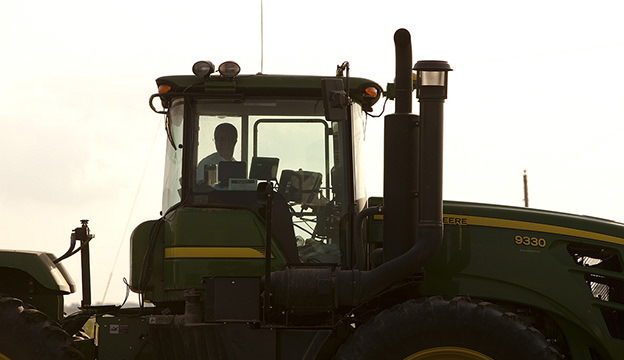
A farm surrounds our 3-acre lot. Hundreds of acres of corn and soybeans, plus more of pasture and woods. It belongs to my nephew, who farms it with his brother and father who have neighboring farms and rented land in the area. Ironically, while I write about large-scale agriculture all the time, I seldom get the chance to experience how technology has changed large commercial operations.

I grew up and farmed on a diversified operation that was large in its day, but would be considered midsize to small today. Writing about large and small farm machinery, agricultural technology and all sorts of farm inputs is what I do. The problem is that I view large-scale, high-tech products and practices for the most part done from my office chair.

I do all sorts of things with my ATV, I borrow smaller tractors and equipment that works with my 120 acres of field and forest, and I spend time in my shop. What I don’t do is spend time in large tractor or combine cabs.

When my brother and his son invited me to ride along in the field the other day, I jumped at the opportunity. Writing would have to wait. It was time to get some on-the-job training. Boy, was I in for an education. It was one thing when my nephew put me behind the wheel of the new 150+ horsepower tractor his co-farming brother had just bought. It was something else riding in the buddy seat of the combine as my older brother piloted it through the field.

I know how technological combines have become. I hadn’t thought about the complications of watching three monitor screens, leveling the header as it stripped the ears from the rows ahead, checking the level of the grain in the 350-bushel grain hopper and glancing at the moisture and yield monitors. All of that as he seemed to fly through the field at 8 to 10 mph. Farming isn’t what it used to be, and I need to spend more time in cabs.

<< More Shop Talk >>

Categories
News

Watch FFA Convention in Real Time

FFA Patch on FFA jacket
Photo by Sarah Dorroh Sweeney
This year’s FFA National Convention will be broadcast live on the Alltech Ag Network.

In a significant technological move forward for agriculture, the National FFA Organization will stream its 2011 National Convention in Indianapolis Oct. 19 to 22, 2011, live online via the newly launched Alltech Ag Network on iHigh.com. The televised convention will be accessible in real time via computers, iPads and all iPhone, Android and BlackBerry mobile devices.

Because FFA membership stands at more than one-half million students throughout the U.S., Puerto Rico and the Virgin Islands, iHigh.com expects this to be their largest telecast ever. Yet the significance of the FFA-convention broadcast goes beyond record-breaking metrics.

“Agriculture is taking the lead in communications, moving high-tech to engage the world in its story,” says Billy Frey, general manager of the Alltech Ag Network. “iHigh.com’s unique platform enables it to, for example, on a recent Friday night, broadcast more than 170 high school football games simultaneously and live to mobile devices free of charge. This is a capability far beyond many major sports organizations and applications. FFA is now harnessing this power, broadening its reach at a time when our growing population is moving increasingly far away from the stories of the farm and the origins of their food.”

iHigh.com, the Global Youth Network, is designed to provide free feature-rich Web services to schools, students and youth organizations, and enables live streaming of events, mobile broadcasting, unlimited photo uploads and more. Currently, iHigh.com receives 1.3 million unique visitors per month with a growth of 30 percent during September 2011.

“iHigh.com is a true supporter of FFA and exemplifies this by providing the means to take our convention message to tens of thousands of FFA members throughout the country and beyond, who aren’t able to attend the event,” says Dwight Armstrong, CEO of the National FFA Organization. “This is a major opportunity for FFA, and we are extremely grateful for iHigh.com’s expertise, resources and abilities to reach our membership in a new and meaningful way.”

The broadcast schedule for the 2011 FFA National Convention is as follows (times are listed in EST):

  • I Believe – Opening Session at Conseco Fieldhouse – Oct. 19, 2011 at 7:15 p.m.
  • I Believe in Action – 2nd Session at Conseco Fieldhouse – Oct. 20, 2011 at 2 p.m.
  • I Believe in … – 3rd Session at Conseco Fieldhouse – Oct. 20, 2011 at 7:30 p.m.
  • I Believe in Service – 4th Session at Conseco Fieldhouse – Oct. 21, 2011 at 8 a.m.
  • I Believe in Leadership – 5th Session at Conseco Fieldhouse – Oct. 21, 2011 at 12 p.m.
  • I Believe in Excellence – 6th Session at Conseco Fieldhouse – Oct. 21, 2011 at 3 p.m.
  • I Believe in Possibilities – 7th Session at Conseco Fieldhouse – Oct. 21, 2011 at 7 p.m.
  • I Believe in Passion – 8th Session at Conseco Fieldhouse – Oct. 22, 2011 at 7:45 a.m.
  • I Believe in the Future – 9th Session at Conseco Fieldhouse – Oct. 22, 2011 at 1:30 p.m.

View the broadcasts live on the Internet or an iPad at ffa.ihigh.com. For mobile phone, the broadcasts may be accessed at m.ihigh.com/ffa by clicking on the Media button and selecting your smartphone type.

Broadcasts will be viewable live and on-demand at no cost to users. If there are any issues viewing a broadcast, contact 859-514-3886 for technical support.


Categories
Homesteading

6 Whole-food Cooking Ideas You Never Thought to Try

Try making broccoli popcorn for a fun way to cook this brassica favorite. Photo courtesy Design Pics/Michael Interisano/Valueline/Thinkstock
Courtesy Design Pics/Michael Interisano/ Valueline/Thinkstock
Try making broccoli popcorn for a fun way to cook this brassica favorite.

You work hard in the garden to provide delicious produce for your family, so it’s important not to let any of it go to waste. While you can continue to sauce your tomatoes and add your zucchini bumper crop to breads and casseroles, you can also try some new preparation methods to use parts of your vegetables that might have otherwise ended up in the compost pile. Who knows, you might just discover a new favorite treat in the process!

Bryan and Michael Voltaggio, brothers, chefs and authors of Volt Ink (Olive Press, 2011), are proponents of local eating and encourage home cooks to get creative when using up hard-earned produce. They offer these tips to add some flair to your food and eat what’s in season:

1. Vegetable Paper
Choose a tasty vegetable. Dice it finely and place in a blender with vinegar and oil. Spread a thin layer of the mixture on a sheet of parchment paper, and place in a food dehydrator for about 3 hours. The result is a thin paper and a fun, delicious way to get in your daily servings of vegetables. Red peppers work well for this recipe, but so do other favorite vegetables, like onions and cauliflower.

2. Broccoli Popcorn
Cut broccoli into florets and cook in boiling water on the stovetop. Once tender, place in a food dehydrator for several hours. (Consult your dehydrator manual for cooking times.) Drop the dehydrated broccoli into hot water, and remove once it begins to pop.

If you don’t have a food dehydrator, don’t worry—you can still try this recipe. Set your oven to its lowest setting (about 130 to 150 degrees F). Place cooked broccoli on a baking sheet, and place it in the oven. Dry with the door open for air circulation for 3 to 4 hours or until fully dehydrated.

3. Char
Never fret over burnt food again. According to the Voltaggio brothers, charring is the new caramelizing. If a vegetable-roasting mission has gone awry, continue to cook the vegetables until completely black. Then grind the burnt vegetables into ash. Mix the ash with oil and salt for a flavorful dressing, or mix it into spice rubs and marinades for meats.

Avoid using bitter vegetables, like turnips, when making char, as the burnt flavor will already hit that part of your palate. Instead opt for sweeter vegetables as well as onions and citrus fruits. If you aren’t sure where to start, Michael Voltaggio recommends trying an orange-leek char, using orange peels and the green part of the leek.

4. Chimichurri
Put a local spin on a simple vinaigrette by blending it with typically wasted greens, like the tops of carrots, turnips, radishes and beets. In a food processor, purée chopped greens, oil, vinegar, salt, garlic and any other spices you desire. Use the resulting sauce to add a flavorful twist to salads and meats. (And impress those at the dinner table with its fancy name.)

5. Glazed Vegetables
Cut up your favorite vegetables, like carrots, and place them in a shallow pan. Fill the pan with water until the vegetables are just covered. Add a small amount of salt and sugar, and cook on medium heat until the water is gone. (The amount of time will depend on the size of your vegetables and how much water you add.) Transfer vegetables to a baking pan and place in a 500-degree-F oven for about 2 minutes, until the vegetables are slightly charred.

6. Vacuum-packed Veggies
If you have too many vegetables now and want to save some for later, a vacuum sealer could be your new best friend. To extend the life of your veggies, vacuum-pack them and then cook the pack in water until soft. Vacuum-packed vegetables will keep in the refrigerator for several weeks, so at your leisure, you can try out new recipes you’ve been eyeing.

Categories
Urban Farming

The Nation’s First LEED Platinum Building

The design of the Center includes permaculture, proper crosswind placement for temperature control, locally harvested and manufactured materials, including sunflower-husk cabinets and desks, and solar power. According to its website, 25 percent of the building materials used at the Center were locally harvested, and more than 50 percent of the materials were locally manufactured. This is 2 1/2 times the amount required to achieve LEED credits.

Audubon at Debs Park
Photo by Colleen Supan

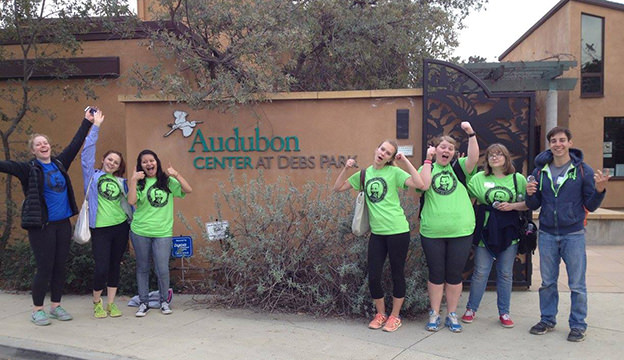
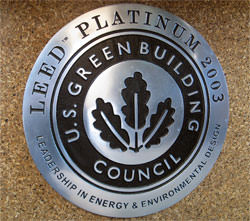
The Audubon Center at Debs Park, in Los Angeles, Calif., offers tours not only about wildlife, but also on its green building. The Center is the first in the United States to qualify for LEED Platinum certification under Version 2.

Virtually every part of the Audubon Center at Debs Park—from floor to rooftop—was created to adhere to the strict guidelines of a LEED Platinum-certified building.

The Center offers programs including a summer day camp, film Fridays, family nature walks and hikes; Nature Together, a bilingual family program; and an art and nature experimentation program for families — in the oasis that is Debs Park, right in the middle of Los Angeles.

For more information, check out its website or visit the Center at 4700 North Griffin Ave., Los Angeles, CA 90031.