Categories
Homesteading

3 Tips to Stir Up Your Inner Farmstead Chef

Lisa Kivirist holds a carrot at the Inn Serendipity farm, a wind turbine works in the distance
Photo by John Ivanko
Lisa celebrates food independence with her carrot harvest, as a 10 kW Bergey wind turbine powers the farm at Inn Serendipity.

A hearty, tasty and warm welcome to this new Farmstead Chef blog!

We’re honored and thrilled to join the Hobby Farms blogging family and connect weekly with you about recipes, tips and creative ideas to savor the garden harvest and eat seasonally and locally throughout the year.

Our kitchen philosophy and passion for all things culinary roots in our new cookbook of the same name: Farmstead Chef. Yes, this cookbook has recipes and ingredients with measurements and temperatures like you’d expect.

But the concept of a “farmstead chef” goes much deeper, a return to our nation’s historic, long-standing farmstead roots of independence, frugality, self-reliance and community connections. No culinary degree or abundance of gourmet gear required. (We have neither.) Rather, this “farmsteadtarian” approach stems from a commitment to connect directly with our farms and food sources and celebrate daily the fun factor found in fresh and seasonal fare.

There’s no farm address required to eat or cook like a farmsteadtarian, though. Growing numbers of suburbanites and urban dwellers in the heart of the city have kitchen gardens in their backyard or on a patio—or purchase a CSA share or hit the farmers’ market every week. We want to be on a first-name basis with the butcher, baker, farmer and beekeeper—not our doctor. Anyone, anywhere, can now take an active role in what’s on their family’s plate.

Here are three starter tips to channel your inner farmstead chef:

1. Focus on garden-fresh ingredients and eat seasonally.
Don’t worry about culinary technique; instead, focus on what’s in the pan. When you start with garden-fresh (or home-kitchen preserved) produce harvested at the peak of ripeness, let those flavors guide and inspire your cooking. Less is more with quality ingredients; focus on ways to let that rhubarb or rutabaga shine.

2. Think Boy Scout meets Michelangelo.
Remember that Boy Scout mantra “Be prepared,” but apply it to the kitchen. Keep a well-stocked pantry of staples (look for future posts on pantry tips) so you can readily whip up whatever you fancy in the kitchen, inspired by the pile of tomatoes or what’s in abundance on your counter.

But channel your inner Michelangelo, as well: Create in your kitchen. Think of produce as your palette: What new flavor combos can you concoct? We’ll share recipes for our new favorites inspired by produce profusion, from Beet Burgers (who knew shredded beets work so well in a veggie burger?) to unique combinations like Pumpkin Peanut Butter Bread.

3. Cultivate Collaboration
A key ingredient for today’s farmstead chef: connections. From talking about tomato-preserving techniques with your senior neighbor down the road (we’ll introduce you to some of our many local mentors in this blog) to researching radish recipes online, we’re blessed to live at a time that blends the best of traditional and modern communications. Keep those conversations going over coffee cups while also tapping into the wealth of information out there on the Internet. These resources quickly add up to more than technique and culinary skill. Connecting with others stirs up that core value for all farmstead chefs: building community and our interdependence with each other and the planet that sustains us.

We look forward to sharing this Farmstead Chef blog with you, inspired by our 5-acre farm and bed-and-breakfast, Inn Serendipity, located in southwestern Wisconsin, and we welcome your comments and ideas along the flavorsome way.

Check back next Wednesday and we’ll share how we savor our abundant Swiss-chard crop before the snow sets in with a delicious recipe, perfect for family visiting over the holidays.

Yours truely,

<< More Farmstead Chef >>


Categories
News

2012 Ag-Communication Scholarships Available

Apple on top of open textbook
Courtesy Hemera/Thinkstock
Two individual scholarships and one group scholarhip is available  to college students in the National Agricultural Communicators of Tomorrow.

Yamaha Motor Corp., U.S.A., is now accepting applications for its 2011-12 scholarship program, which provides financial assistance to members of the National Agricultural Communicators of Tomorrow. The national college student association has more than 350 members located on 17 college and university campuses across the country. ACT’s mission of fostering professional development is at the core of the Yamaha-ACT Scholarship Program, now in its fourth year.

The Yamaha-ACT Scholarship Program is divited into two individual student scholarships and one chapter scholarship. All three awards aim to help students attend the annual Agricultural Media Summit, the largest gathering of agricultural-media professionals in the country and the ACT students’ primary career-development networking opportunity each year. The conference is hosted by the American Agricultural Editors’ Association, the Livestock Publications Council and the American Business Media Agri-Council, all potential future employers and colleagues of the students.

“Yamaha is proud to help these ag students, but the program is structured so that the ag community might benefit most in the long term,” says Steve Nessl, Yamaha’s ATV/SxS marketing manager. “Within our application process, we are incorporating some basic points on safe, responsible equipment use, and we expect the students will take these important messages into their future careers as professional communicators.”

For the 2010-11 program, the University of Florida received Yamaha’s chapter award for the third year in a row, while Janell Baum of University of Illinois and R. Bruce Sargent of University of Guelph earned the individual scholarships. The University of Florida’s award helped cover the costs of bringing four students to the 2011 AMS in New Orleans, while the individual scholarships covered all travel and accommodations costs, plus more, for both Baum and Sargent. The 2012 AMS will be held in Albuquerque, N.M., Aug. 4 to 6.

“This program has helped my agricultural-communication students in two ways: It provides funding for them to attend AMS, and equally important, my students have benefitted from how I have incorporated the Yamaha/ACT program into my spring curriculum,” says Ricky Telg, PhD, ACT chapter advisor and professor in the Department of Agricultural Education and Communication at the University of Florida. “Without this scholarship award, my students would not have been able to attend the Agricultural Media Summit, which allows them to network with professional communicators, learn new communications skills and interact with their fellow ACT students from around the country.”

As AMS grows, so do the opportunities for agriculture students.

“These scholarships help students—many of whom might not have otherwise been able to attend—make it to the event, allowing them to participate in the professional-development sessions and networking while learning more about the industry as a whole,” Nessl says.

Applications are judged by a review committee consisting of Yamaha representatives and members of the AAEA and the LPC based on merit, need and quality of submission materials. The 2011-12 application process will run through the end of March 2012, and winners will be announced in late April 2012. More information and guidelines, along with the application form, can be found on the ACT website.

Categories
Urban Farming

Rosh Hashana Resolutions

winter melon

Photo by Judith Hausman

Next year, I’d like to make more of my addictive dip, in which I substitute roasted zucchini for eggplant.

This month, my gardening coop’s period of assessment and notes for next year coincide with Rosh Hashana, the Jewish New Year, so it’s a perfect time to make resolutions to do things better and differently next year. We learned so much from this first experiment that we want to profit from it again next summer.

Many of our garden failures were beyond our control and the result of weather, like the melons that never ripened, which I wrote about here. We decided to forego melons altogether in the future and grow more winter squash.

This year, the rain was very hard on our tomatoes; we’re going to move them and re-trench with hardier varieties. While our broccoli was strong, the worms were, too, and we barely saw a cauliflower. We never saw our soybeans, and our Brussels sprouts got lost, as well.

We had just managed to save our eggplants from the weeds, but we couldn’t keep up with the amount of lettuce we had planted. The novelty Mexican gherkins that grew like gangbusters were appreciated by only one member, and not enough of us loved the durable and multi-colored chard we grew, either. I’d like to see us try to grow kohlrabi and more fennel. We loved the peas and green beans, of which we all want to grow more, and we adored the beets.

In addition to the group’s resolutions, I have my own list of vegetables that I want to cook and eat more of. Next year, I’m going to push my own pickling envelope further, beyond the melon rind, pea pods and radishes I tried this year. I’m also determined to harvest our prolific okra smaller so I can learn to appreciate it. Lastly, I want to try cooked winter squash and roasted onions puréed into a spread.

As for the vegetables I’d like to eat more of? I think I’ll never get enough of my raw kale salad with Parmesan, preserved lemon dressing, yellow raisins and sunflower seeds, as well as my addictive dip that’s somewhere between hummus and baba ghanoush. To make the dip, I substituted roasted zucchini for eggplant.

High-heat roasting is a terrific and simple cooking method for most vegetables, but the silky leeks that I slow-braised intrigued me to explore that method further. I love celery root in classic remoulade salad, and I intend to try it in a creamy gratin, as I have with other root vegetables. More coleslaws, more greens.

I’d love to hear your hindsight assessments and New Year’s resolutions, dear readers. Was there a new recipe you discovered that you can’t wait until next season to make more of? Was there a crop you missed out on that you’re determined to make use of in the next go-round? Did you develop a new enthusiasm at the farmers market, a new method for your deck garden or a new taste in your kitchen?

Slice an apple, dip it in local honey, and while you munch on that Rosh Hashana treat that symbolizes the sweetness of new beginnings, reflect a little and send me a line.

Read more of The Hungry Locavore »

Categories
Equipment

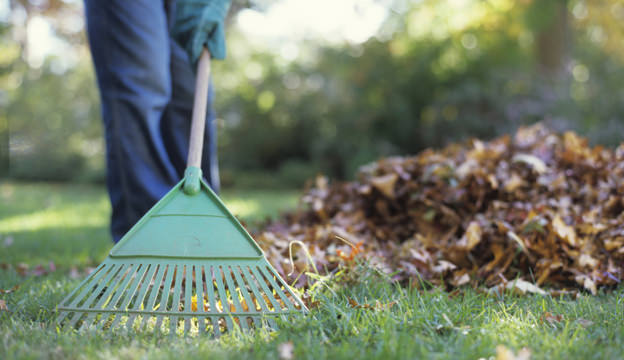
Low-tech Leaf Mover

At our place, leaves are raw product. We gather them up and run them through a shredder for mulching perennials before winter. The problem is, of course, that we can’t mulch until we’ve had a hard frost and the weather has turned cool, if not cold. When the leaves are falling in 70- and 80-degree weather like they are this year, we have to store the leaves for a week or two or three. If we shred them too soon, they tend to start heating up, and we’ll only have piles of ash to mulch with.

Stockpiling the leaves, instead of simply raking up a pile and shredding them, means having to move them. In the past, I’ve used my pickup, a cart behind the ATV and even a small tarp, depending on the distance to be moved. Of them all, I like the tarp the best. It is a minimalist approach … no fuel, no noise, no complications.

There’s a lot to be said for keeping things simple. The tarp is easy to load, too, a lot easier than a cart or pickup box. Simply rake the leaves into place, grab two corners and pull it to the leaf pile. I used to use a smaller tarp, grab all four corners and throw it over my shoulder. This tarp is 12×16 and a bit heavy to throw over my shoulders when piled high with leaves. That’s how I discovered that simply pulling from one end is just as effective. When the corners are pulled together, the sides curl up around the leaves and every leaf stays where it belongs.

Life is good when it’s simple, and it doesn’t get any simpler than this.

Categories
Urban Farming

Farm-Fresh Vacations

Fickle Creek Farm

Photo courtesy Jodi Helmer

Fickle Creek Farm, near Raleigh, N.C., allows guests to experience sustainable farming while on vacation.

If your idea of a perfect getaway includes waking up to the sound of a rooster crowing in the pasture, wearing rubber boots to breakfast, and bottle-feeding baby sheep,consider spending your next vacation on a farm.

Farm stays, first introduced in Europe in the 1980s to help farmers supplement their incomes, have become popular in the United States, where a growing number of farmers are throwing open their pasture gates to welcome guests.

Guests can help with farm chores or relax in the bucolic surroundings. Mucking out stalls is optional.

Here are a few popular farm stays across the nation:

The Inn at Serenbe: What started out as a weekend home for Steve and Marie Nygren blossomed into one of the most popular farm stays in the Southeast.

The couple purchased a farmhouse on 60 acres in 1991, planning to use it as a weekend escape from the hustle and bustle of Atlanta, Ga.

The rural landscape enchanted the family that began spending more and more time on the farm. Most weekends, their guestrooms were filled with family and friends, prompting the couple to open an inn on the farm.

Marie Nygren chose the name “Serenbe” to reflect what she hoped the inn would provide: A place to be serene.

Serenbe has grown to include 1,000 acres of farmland and an animal village with more than 100 farm animals, including rabbits, goatschickens, pigshorses and donkeys.

Five cottages offer plush accommodations complete with luxe linens, fireplaces, spa bathrooms and screened porches. The farmhouse once occupied by the Nygren family has been remodeled to include seven guestrooms.

The Farmhouse restaurant features recipes made with fresh ingredients harvested at Serenbe Farm, a 5-acre onsite certified-organic farm. Guests who want a true farm experience can sign up to work alongside farm Manager Paige Witherington. Depending on the season, chores range from planting and weeding to harvesting. Of course, there are plenty of opportunities to sample some of the 350 varieties of fruits and vegetables grown on Serenbe Farm in the process.

For a more relaxed stay, explore the trails, streams and waterfalls scattered across the farm or sit by the campfire and roast marshmallows.

Fickle Creek Farm: Named for the creek that traverses the 145-acre sustainable farm near Raleigh, N.C., Fickle Creek Farm offers guests the opportunity to get their hands dirty while helping with farm chores.

Collect eggs from flocks of free-range chickens, fill feed and water troughs in the pigpen or help lead the steers from their pens to the pasture. Gardens bursting with organic veggies, like garlic, spinach, Swiss chard, kale, potatoes, leeks and collards, are always in need of weeding or harvesting. The veggies you pluck from the soil may end up in your breakfast!

Overnight guests are welcome to explore Fickle Creek farm on their own, though Bergmann asks everyone to follow one rule: “Make sure to close the gate behind you!”

Farmers Ben Bergmann and Noah Ranells left careers in academia — Bergmann has his Ph.D. in forestry and Ranells earned his Ph.D. in crop science — to pursue their farming dreams. The pair started Fickle Creek Farm in 2001, and incorporated farm stays in 2005, hoping to share their passion for sustainable farming with the masses. “We wanted visitors to experience what life is like on the farm,” Bergmann explains.

Part of experiencing Fickle Creek farm is settling into one of two onsite guestrooms and watching the sun set over the pasture while a cacophony of farm animals offers an evening serenade.

Leaping Lamb Farm: On this Oregon farm, all of the ingredients for a farm-fresh supper are just steps from its cabin door.

Blueberries, raspberries, apples, grapes, lettuce and other homegrown fruits and vegetables are free for the picking, and there is no shortage of fresh eggs. Be sure to ask proprietors Scottie and Greg Jones if there is any lamb in the freezer; their Katahdin crosses are perfect for grilling.

A working farm since 1896, Leaping Lamb Farm began offering farm stays in 2006. With just one cabin available to overnight guests, it is one of the most private farm stays around.

Chickens, geese, horses and turkeys free range on Leaping Lamb farm, offering ample opportunities to feed and nuzzle the furry, feathered residents. There is even a colorful peacock strutting his stuff!

The main attraction is the flock of lambs in the pasture (it wouldn’t be Leaping Lamb Farm without them)! Scottie and Greg welcome help feeding and watering the farm’s four-legged namesakes.

One of the best things about the rural retreat is relaxing on the two-tiered deck overlooking the pastures and orchards after a farm-to-table supper.

Categories
News

Local Producers Share Favorite Gadgets

Three jars of Shell-bee's infused sugars with a wooden spoon laying beside them
Photo by Sarah Dorroh Sweeney
A wooden spoon is Cathy Connor’s must-have kitchen tool for making her flavor-infused sugars and spices.

Once the weather turns crisp and the calendar page flips to October, it’s time for the Hobby Farms editors to head to the Incredible Food Show in Lexington, Ky., giving them a chance to speak with producers creating locally made products. This year, we wanted to find out their most endeared gadget for creating (or in some cases, marketing) their products, as well as touch base with them about the challenges they’ve overcome as local businesses.

David Sponcil, Browning’s Country Ham
Browning’s Country Ham has been a family business since the 1970s. They offer cooked ham, uncooked ham, bacon, biscuits, cheese and more, offered in Kentucky retail outlets and online.

Favorite Gadget: Square
“This tool allows me to take debit cards and credit cards, so I can do business from my iPhone. I don’t need a computer to swipe the cards. My first time using it is today at the Food Show.”

Biggest Challenge: Marketing and advertising
“Right now I’m working to optimize our website for Google and to find more retail outlets. Finding retail outlets is the most difficult.”

Ed Puterbough, Boone Creek Creamery
Boone Creak Creamery offers more than 35 handmade, artisan cheeses. Using traditional European techniques, Boone Creek specializes in difficult-to-find Old World cheeses, giving each flavor a touch of Kentucky charm.

Favorite Tool: Hands
“Making cheese by hand makes for a better product; it protects the curd and keeps the flavor in the cheese.”

Biggest Challenge: Finding good products
“I source my milk from a Mennonite dairy. The cows are pasture-grazed and not given antibiotics or hormones, and the milk is not homogenized. Finding quality products to make quality cheese is the toughest part.”

Tammy Horn, Coal Country Beeworks
A project out of Eastern Kentucky University, Coal Country Beeworks manages hives situated on reclaimed coal mines throughout Kentucky. Goals of the project include collaborating with coal companies to plant pollinator-friendly trees on mine sites and restoring the beekeeping tradition throughout the region. This year, beekeepers managed 90 hives as part of the project and produced 600 pounds of honey. In addition, they host a winter bee school that is open to the public and, this year, began supplying queen bees to consumers.

Favorite Tool: Langstroth Hive
“For the industry, the Langstroth (moveable-frame) hive is the most important tool. Without the structure, the bees produce a natural comb, which would have to be crushed in order to get honey. Without the moveable-frame hive, there’s no honey industry.”

Biggest Challenge: Educating the public
The project, so far has been well received by the public, but they’re still working to educate. “We knew it would be a long-term project. It takes as long to grow people’s interest as it does to grow trees.”

Ouita Michel, Kentucky Specialty Sauce
Started in 2003 by Nancy Ward, Kentucky Specialty Sauces has grown from a single sauce made by hand in Ward’s kitchen to a full line of savory and sweet sauces. The newest addition to the lineup is local chef Ouita Michel’s signature bourbon mustard sauce. 
 
Favorite Gadget: “Obviously, the knife for prepping food. I’m also a fan of the new silicone products for baking and freezing—they’re microwave safe, too, which makes them very handy. Lately, I’ve become enamored with ball jars and am working on a line of bakery products that come packaged in and can be prepared in the jars; however, the least-respected utensil in the kitchen that is my go-to tool is the melon baller—it makes really cute garnishes!”

Biggest Challenge: Managing a business
“Being a small business has been my biggest challenge to overcome. The business side is pure stress while cooking is pure bliss.”

Rick Sutton, Sutton Honey Farms
Rick Sutton and his family manage 12,000 to 15,000 bee hives throughout the year, harvesting honey and providing pollinators to farms across the country. He offers specialty honeys, such as clover honey, as well as flavored honey creams, like cinnamon-apple honey cream, strawberry honey cream and blackberry honey cream.

Favorite Gadget: Smoker
“It keeps the bees at bay when working with the hives and harvesting.”

Biggest Breakthrough: Diversification
“I’ve learned through personal experience not to do huge orders, but instead to spread out my business among many smaller customers, so that if one order falls through, it doesn’t cost me the bank. In addition to my honey business, I also pollinate almonds in California, cranberries in Wisconsin, and pumpkins and melons in Kentucky, making my business all the more dynamic.”

James Caudill, Dad’s Favorites
Making cheese spreads for friends and family garnered so many requests that James Caudill and Susan Bratton began producing it for market. Within two months of the company’s debut, 20 sales locations and two restaurants were pushing Dad’s Favorites cheese spreads to Kentucky residents. The company continues to grow its cheese spread line and has opened a restaurant, as well.

Favorite Gadget: Onion slicer/dicer and stick blender
“These are huge timesavers and make my cheese-spread prep much easier.”

Biggest Challenge: Time management
“Keeping up with customer demand has been challenging with our current processes so we’re upgrading some of our equipment to handle the larger volumes.”

Sanford Chase, Good Shepherd Cheese
Good Shepherd is Kentucky’s only source for sheep-milk cheese. The sheep are raised on 132 acres of pasture and produce healthy, natural milk that is used to make the cheese.

Favorite Gadget: Curd knife
“A curd knife pulls through the curd and is spaced for the needs of your cheese. It helps make curds the right size without knives and measuring.”

Biggest Challenge: Consumer acceptance
“Most people don’t realize you can milk a sheep, and people are unaware or even wary about trying sheep’s milk.”

Allison Davis, Wild Thyme
Allison Davis is a chef and founder of Wild Thyme, a cooking school and boutique that also provides catering for private events

Favorite Gadget: Dispenser bottle for oils and vinegar
“The spout gives me better control of measurements.”

Biggest Breakthrough: Diversification
Wild Thyme isn’t just one thing … it offer birthday parties, catering, private events, cooking classes for all ages, and is a retail kitchen boutique.

Cathy Connors, Shell-Bee’s
Shell-Bee’s produces of homemade, flavor-infused gourmet salts and spices.

Favorite Gadget: Wooden spoon

Biggest Breakthrough: Getting repeat customers
“Also, being able to develop products that customers enjoy and request. For instance, a customer had requested a ginger sugar, and so I developed Blackberry Ginger Sugar.”

Categories
Urban Farming

A Day of Goats

Goats in Laguna Beach, Calif.

Photo by Audrey Pavia

Here are the goats I met on a hike this weekend, hard at work on fire abatement.

The beautiful weather on Saturday made it a perfect day to hike near the beach.

I opted to start at a little park at the top of a hill overlooking Laguna Beach, Calif., a resort city about 40 miles from where I live. The park has picnic tables and play yards, and a trail head that leads downhill into a regional wilderness park.

As I hiked through the canyons below the park, I thought I heard the bleating of a ruminant. Here in this resort area, where homes are closely packed together because of the high price of real estate, it seemed impossible that I would hear livestock. I figured I was imagining it — or so I thought.

After hiking for an hour, I turned around and went back to the trailhead and sat down at one of the picnic tables. The view was stunning. The hills below were dotted with unique houses, and just beyond them, the blue Pacific shimmered in the sun.

And then I heard it again — bleating. This time I knew I wasn’t imagining it. I stood up and looked down the hill below me. Hundreds of Alpine goats were grazing on the chaparral along the slope.

It was then that I remembered the Goat Vegetation Management Project, a fire-abatement program started in Laguna Beach in the early 1990s. Prompted by a wildfire that swept through the hilly community and destroyed 441 homes, the Goat Vegetation Management Project puts hundreds of Alpine goats to work, keeping the hillsides clear of dry brush.

I strained to see the goats through the cacti. I even climbed down the hill to get a better look at them. Then, the goat herder showed up and started pushing the goats up to the top of the hill, near the trailhead. He did this by moving the portable fencing that contained the goats, pushing them in the direction he wanted them to go.

In a matter of minutes, the Alpine goats were within a few feet of me, noisily chomping on the dried brush that grew everywhere. Scattered between cacti and sagebrush, they butted each other, jumped over bushes and called to each other, all the while munching away on dead plants.

I spent a good hour watching the goats eat and taking in the stunning view behind them as the sun dipped lower in the sky and closer to the ocean. The steady crunch, crunch, crunch of their jaws was soothing; it made me want to lie down in the dirt and go to sleep.

When I went out hiking that morning, I had no idea I’d be treated to such a wonderful sight. It made a beautiful day that much better.

Read more of City Stock »

Categories
Beginning Farmers

4-H Students Get ‘Wired for Wind’

4-H students perform wind-turbine experiments
Courtesy National 4-H Council
The 2011 4-H National Youth Science Day focused on wind energy. Kids performed experiments to examine the design efficieny of different kinds of wind turbines.

On Oct. 5, 2011, millions of youngsters from across the United States experienced the thrill of innovation and experimentation during the 2011 4-H National Youth Science Day. An annual event currently in its fourth year, NYSD seeks to spark an early youth interest in science and science careers. Each year, NYSD participants gather in their local communities to carry out 4-H’s National Science Experiment.

This year’s project, titled Wired for Wind, encouraged youngsters to consider wind as an alternative energy option. The experiment was developed by Nebraska 4-H and was the brainchild of University of Nebraska-Lincoln Extension educator John Hay. While Hay knew that a wind-energy project would meet NYSD criteria for an experiment that connects hands-on lessons in science, engineering and technology to civic engagement, he worried initially about the volume of materials windmill projects usually require. Through a partnership with KidWind, a private company specializing in educational wind-energy kits and curriculum design, Hay was able to overcome this obstacle. In addition to putting together a scaled-back, affordable turbine-building kit, KidWind pitched in on the NYSD curriculum, as well.

Participants used the kit to build horizontal- and vertical-axis wind turbines in order to determine the more efficient design. They also explored the effectiveness of various blade pitches and used wind-speed and population maps to determine how and where a wind farm could be implemented in their individual states.

“Every single state has some potential for wind power; although in some states, it’s not very much and it may be offshore,” Hay explains. The project is “a little bit about wind turbines, a little bit about physics and a little bit about the socio-economic impacts of where we locate turbines.”

Wired for Wind carried on the NYSD tradition of encouraging innovation for the sake of bettering students’ communities and local ecosystems. Previous NYSD experiments have covered such topics as water quality, biofuels and hydrogels. NYSD is also a cornerstone of 4-H’s “One Million New Scientists, One Million New Ideas” campaign, an effort to engage 1 million new young people in science, engineering, technology and applied math programs by the year 2013.

“Our nation is falling behind other countries in the fields of science, technology, engineering and math,” says Donald T. Floyd, Jr., National 4-H Council president and CEO. “Participation in 4-H NYSD and other year-round 4-H science programming offers youth and adults the opportunity to engage in scientific exploration and work together to build the next generation of our nation’s scientists, engineers and mathematicians.”

Once again, this year’s 4-H NYSD events were scheduled to coincide with National 4-H Week (Oct. 2 to 8, 2011), a week devoted to community service and promoting 4-H’s misson of teaching youth leadership, citizenship and life skills. With 6 million members throughout the U.S., 4-H is the largest youth-development organization in the nation. It’s implemented at the local level by land-grant colleges and universities and the Cooperative Extension System.

Categories
Urban Farming

Recipe for CSA Success

chefs

Photo courtesy Digital Vision/Thomas Northcut/Thinkstock

Increasingly, chefs who are commited to local farms and fresh, organic produce are partnering with farmers to distribute CSA subscriptions.

Your favorite restaurant may be serving up more than farm fresh fare.

A growing number of chefs are partnering with farmers to provide Community Supported Agriculture (CSA) subscriptions to diners.

The CSA subscriptions are still organized by farmers; chefs merely offer their restaurants as pickup locations, storing CSA boxes in their kitchens and inviting members to drop by for their weekly allotments of fresh produce, eggs or meat.

“It gives us a chance to work with the farmers more closely,” says Joseph Gillard, executive chef at Napa Valley Grille in Westwood, Calif. “It’s a very complementary relationship; it lets us give back to our guests and the farmers who grow our food.”

Gillard, who orders most of the produce for his farm-to-table restaurant from Country Fresh Farm, came up with the idea to partner in their CSA program in 2008.

Subscribers drop by on Wednesday afternoons to pick up their CSA box, which often includes a few extras from Napa Valley Grille.

“I work alongside the farmers to decide what goes into the baskets,” he explains. “We augment [the produce] with extras like pesto, peach jam, hot sauce, flatbread or other seasonal items we make in the kitchen.”

Gillard also provides the recipes that are tucked into each CSA box. Once a year, he prepares a farm fresh dinner for sulbscribers.

Steven Satterfield, co-owner and executive chef at Miller Union, started offering CSA pickups at his Atlanta farm-to-table restaurant in 2009. Moore Farms drops off 10 to 12 boxes of produce every Wednesday, and members are allowed to pick up their shares between 2 p.m. and 4 p.m.

According to Satterfield, partnering with Moore Farms to distribute CSA boxes to members helps further his mission to promote farm fresh fare.

“[Being a CSA pickup location] helps encourage people to use local, seasonal ingredients in their own kitchens,” he explains. “It also helps promote awareness of our farm-to-table foods.”

In San Francisco, executive chef Guillaume Bienaimé invited shareholders in the Baia Nicchia Farms CSA to pick up their boxes at Marché; Flying Pigs Farm in New York coordinated with two restaurants – Telepan on the Upper West Side and Peter’s Back Forty in the East Village – to serve as pickup locations for their CSAs.

Chefs believe that partnering with farmers to distribute CSA subscriptions demonstrates their commitment to local farms and fresh, organic produce.  Of course, the restaurants benefit, too.

“We develop closer relationships with the farmers who supply us with produce,” says Satterfield. “As far as our guests go, I guess it might help keep us on their brains a little more if they are dropping by the restaurant every week to pick up their CSA boxes.”

Jodi Helmer is the author of The Green Year: 365 Small Things You Can Do to Make a Big Difference.

Categories
Crops & Gardening

Cherishing the Autumn Garden

Seven ears of multi-colored corn on display in a wooden bowl
Photo by Jessica Walliser
There’s no better way to savor autumn than to spend time in the garden.

I know fall has arrived when the hens quit laying. It’s extra official now that the leaves have started to change color and the maples have begun to shed. Commence leaf-raking. But more importantly, commence appreciating fall’s beautiful weather—perfect for gardening (at least as long as it isn’t raining).

I get my best gardening done on sunny fall days. Wheel-barrowing compost, yanking out spent tomato plants, pulling dried up pole beans, planting garlic and tulips, mulching, and perennial planting are all chores that seem to be so much easier when the weather is cooler and the ground is soft with rain. Even weeding is a little more fun these days (only a little, mind you).

Tomorrow, I will be lucky enough to spend the whole day in the garden. I am car-less, due to my near-expired state inspection sticker, and plan on going nowhere but to the garden. I have a long list of to-do’s and relish the opportunity to spend a few hours by myself, away from the computer and out in autumn’s sunshine.

My problem now is knowing where to start. Do I complete all the small projects first (giving myself the pleasurable opportunity to cross lots of items off that list) or do I do one big-ticket project (giving myself the pleasurable opportunity of seeing a project from start to finish in only one day)? I may have to decide in the morning based on muscle aches (I took my first ever yoga class this morning … yikes!) and, of course, the ever-unpredictable weather forecast.

« More Dirt on Gardening »