Categories
News

Ohio Keeps Livestock Care Standards Local


The passage of Ohio Issue 2 in November 2009 allowed Ohio to establish a local board to regulate livestock care.

Members of Ohio’s agriculture industry are working to appoint members of the newly established Ohio Livestock Care Standards Board, a direct result of the passage of Issue 2 in the November 2009 elections.

Initiated by the Ohio Farm Bureau to support Ohio farmers of all sizes, the local regulating body will develop standards for livestock care in Ohio. The board will comprise 13 livestock experts from Ohio, including farmers, veterinarians, food safety experts, a local humane society representative, academics and consumers.

Farming is Ohio’s top economic contributor, said Jim Chakeres, executive vice president of the Ohio Poultry Association and member of the steering committee that promoted Issue 2. The desire for a local board that focuses on the state’s unique agriculture needs was the driving force behind the campaign.

“Ohio’s agriculture community recognized that the board was the right approach to ensure farmers can continue doing what we do best—caring for our animals and providing safe food for the world,” Chakeres said.

An ongoing conversation between Ohio farmers and consumers also stimulated the issue. While the board will focus on humane livestock care, it also impacts the production of safe, affordable, locally grown food for Ohio consumers, Chakeres said. He noted that out-of-state initiatives that threatened the campaign would hurt Ohio agriculture: “Implementing [such initiatives] would drive agriculture out of Ohio, force state farms to shut down, and increase both food prices and Ohio’s reliance on other states and countries for food products,” he said.

National activist groups, like the Humane Society of the United States, opposed Issue 2, viewing it as a roadblock to reforms encouraging the humane treatment of livestock. In a statement released before elections, HSUS said it would launch an initiative in Ohio to ensure ample room for farm animals kept in veal crates, gestation crates and battery cages.

Other national organizations, like American Humane, which promotes humane animal care, supported Ohio’s effort to develop a local regulating body.

“Our experience working with agricultural interests has shown that the most effective reform of animal welfare standards come when the solutions are not only good for animals, but good for people who buy food and good for farmers too,” said Marie Belew Wheatley, president and CEO of American Humane. “We think it’s important when farms large and small are part of the solution and voluntarily make good animal husbandry a part of their operating procedures.”

In the weeks and months following the passage of Issue 2, the soon-to-be-appointed chairman of the board will work with Ohio’s agriculture director Robert Boggs, Governor Ted Strickland and the Ohio General Assembly to develop legislation that will determine the functions and processes of the board and will continue conversations with local consumers and Ohioans for Livestock Care.

“This continued unity will allow us to engage with the board as it begins to consider policies about farm animal care in Ohio,” Chakeres said.

Categories
Recipes

Sourdough Bread

To ensure a good result when making sourdough bread, you need a dependable sourdough starter. You can purchase starter online or make your own. This recipe uses both starter and packaged yeast to guarantee success.

Ingredients

  • 1 cup sourdough starter
  • 1½ cups warm water (105 to 115 degrees F)
  • 1 package (2¼ tsp.) yeast
  • 1 Tbsp. sugar
  • 1½ tsp. salt
  • 4½ to 5 cups flour

Preparation
In large mixing bowl (or in work bowl of electric stand mixer), combine sourdough starter, water, yeast, sugar and salt. Add 1 cup flour, and mix well. Continue to beat mixture for one to two minutes until smooth and creamy. Add additional flour in 1⁄2-cup increments, stirring well after each addition until the dough holds together and starts to pull away from the sides of the bowl.

Turn out dough onto generously floured work surface, or switch from paddle attachment to dough-hook attachment in your stand mixer. Knead in remaining flour, adding two to three tablespoons at a time, until dough is smooth, firm and just slightly sticky. If kneading by hand, process will take about 5 minutes. If using stand mixer and dough-hook attachment, it will take about 3 to 4 minutes.

Lightly grease large mixing bowl or other container with small amount of oil. Place dough in bowl, and turn over dough to coat surface with oil. Cover bowl lightly with layer of plastic wrap. Let dough rise at room temperature until doubled—about 1½ to 2 hours.

Turn dough out onto work surface, and divide dough in half. To form loaves, gently roll each portion into round ball or oval shape, keeping surface of loaf taut. Place loaves on a baking sheet, and lightly cover with plastic wrap.

Allow the loaves to rise at room temperature until doubled again—about 45 minutes to 1 hour. Preheat the oven to 425 degrees F while loaves rise. Just before baking, use sharp, serrated knife to make two or three diagonal slashes 1⁄4 to 1⁄2 inch deep in top of each loaf. Bake for 25 to 30 minutes or until loaves appear deep golden-brown and sound hollow when tapped. Allow loaves to cool completely before slicing.

Makes two loaves.

This recipe originally appeared in Popular Kitchen: Homemade Bread.

Categories
Recipes

Sourdough Starter

Ingredients

  • 1 package (2¼ tsp.) active-dry yeast
  • 2 cups warm water (105 to 115 degrees F)
  • 2 cups all-purpose flour

Preparation

Create Starter: In medium bowl, dissolve yeast in 1⁄4 cup of warm water. Add remaining water and flour, and mix well. Place bowl, uncovered, in warm place or cupboard overnight. In morning, put 1⁄2 cup of starter in sterilized pint jar, cover, and store in refrigerator or cool place for future use. Leave lots of room for expansion in container, or set lid without tightening it. Remaining 3½ cups of starter can be used immediately.

Set Sponge: In medium bowl, place the 1⁄2 cup of starter. Add 2 cups of warm water and 2 cups of flour. Beat well, and set in warm, draft-free place to develop overnight. In morning, sponge will have risen and will be covered with air bubbles and smell yeasty. At this point, it’s ready to use.

Store Starter: Sourdough starter will keep almost indefinitely if covered in clean, glass container in refrigerator. Never use metal container or leave metal spoon in starter or sponge. If unused for several weeks, starter might need to sit out one extra night before you add the flour and water.

Information provided by University of Alaska Fairbanks Cooperative Extension Service.

This recipe originally appeared in Popular Kitchen: Homemade Bread.

Categories
Urban Farming

Rain Makes Applesauce

apple sauce and apple pie

Photo courtesy Mallory Mcgrath

The fruits of our rainy-day labor: our applesauce, alongside Mallory’s heavenly apple pie.

Rain Makes Applesauce was the name of a favorite children’s book; today, we experimented with applesauce recipes while it rained! Brave volunteers of our garden group gathered to trim, cook and can a few bushels of apples that had been available for the taking to our mate, CJ.

No one at the orchard knew the varieties, but one apple was Macintosh-like; it had white flesh, a tart flavor and a soft texture. The other had matte, dark-red skin, a firmer texture and a sweeter flavor. They both went into the pot — or I should say — many, many pots, bowls and pans.

We pooled our personal applesauce recipes to make two large batches. One was a smooth, rosy-colored sauce from unpeeled apples, which we passed through a food mill after cooking. The other batch began with peeled apples. Then, we milled half of this batch smooth and left the other half chunky.

When we taste-tested, we decided the applesauce was too bland, so we added a little bit of raw sugar and a healthy dose of cinnamon, agreeing that each of us could doctor the sauce further when serving it, if necessary. Nutmeg, lemon peel, sage or rosemary were other possibilities.

The group rotated casually through trimming, stirring the pots and milling the cooked apples. Then, some of us washed and set out the jars, then boiled the lids. Eventually, we transitioned to seasoning, filling and sealing the jars. CJ orchestrated the wisecracking flow of labor.

One member, Mallory, rewarded us with apple pie for our work. She completed it quickly while we worked on the applesauce, and just as the first jars went into their water bath, her shiny, domed pie emerged from the oven. We took a break over generous wedges of Mallory’s apple pie.

Mallory has apple pie down; this one was just sweet and just seasoned enough with cinnamon and a pinch of clove. Her favorite crust was thin and flaky over the heaped-high apple slices, which cooked down to neither mushy nor too firm, just the way I like pie filling to be. Heaven.

To stock your winter pantry, make a party. You might even look into sites such as www.neighborhoodfruit.com and www.veggietrader.com for foraged produce, but it’s relatively easy to pick or buy apples in bulk.

Assemble the correct canning equipment (www.freshpreservingstore.com) or make the party BYO jars. A dishwasher helps to heat and clean the jars, and a food mill assures no peeling, but neither is obligatory. Or, you can skip the hot-water bath altogether and freeze the sauce in quart-size freezer bags, which is even faster and simpler.

Tasks like this go so much faster in a group, and it’s great fun to chat, nibble and share stories while your hands are busy. Everyone goes home with a goodie bag of fresh, sweet-scented applesauce.

My favorite way to eat applesauce is on top of whole-grain pancakes, but applesauce is also mighty good dolloped on vanilla yogurt, served beside a good pork chop or transformed again into a raisin-spice cake.

Read more of The Hungry Locavore »

Categories
Equipment

Workshop In Progress

Former garage and workshop-to-be
Photo by Jim Ruen
I’m in the process of transforming my garage into a workshop.

After years of using a corner of our unheated car garage for a workshop, I am in the process of making a change. With the addition of a hoop building to store the ATV, leaf shredder, lawn mower and accessories, it was time to rearrange other things as well. Our 8- by 12-foot garden shed will soon be my workshop.

The first step was emptying the shed of garden tools and finding a new home for them on the garage wall. I took advantage of the move to scrub the spades and post-hole digger of accumulated dirt in preparation for winter. One of the positive aspects of the new tool display is dirty tools will be front and center, begging for attention every time we step into the garage. It was too easy to lose track of such things in the crowded garden shed.

The second step to the process was removing nails that held long-handled spades and forks. I also dismantled (with my biggest hammer) several sets of shelves installed 10 years ago. Thanks to lots of steel nails and liquid nail, they were as solid as the day they were put in place.

The third step was to remove the Oriented Strand Board panels nailed to the wall studs. While I could have left them in place, removal would make wiring the shed easier. It also might resolve the resident-mouse problem. Boy, did it!

Over the years, huge mouse nests had been built behind the panels. As I removed one panel after the other, the mice exited, as well. At one point, it was cartoonish as I chased half a dozen mice out with my broom and away from my jean cuffs.

Empty but not yet ready, the workshop process continues. Next week … the cleaning!

<< More Shop Talk >>

Categories
Crops & Gardening Farm Management

Protect Your Farm from Listeriosis

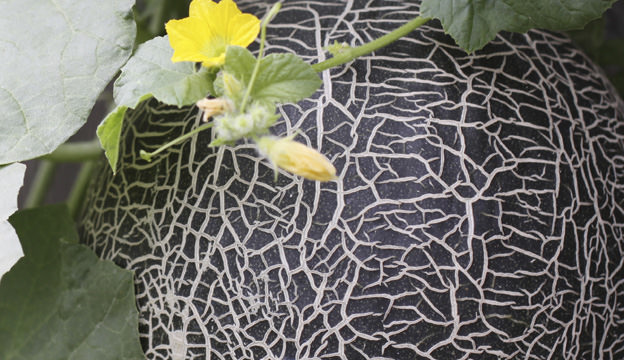
Since July 2011, a widespread outbreak of the food-borne illness listeriosis has occurred in 19 states. Eighty-four people have been affected and 15 deaths have been reported, according to the most recent Center for Disease Control update on Sept. 29, 2011. This disease, caused by the bacterium Listeria monocytogene, was traced back to the Rocky Ford cantaloupes of Jensen Farms, a family-owned farm in Holly, Colo., just outside Denver. Jensen Farms released a voluntary statement on Sept. 14, 2011, recalling the melons.

While the current listeriosis outbreak is one of the worst cases the U.S. has experienced in recent history—the last major outbreak occurred in 2002 and resulted in 54 illnesses and 8 deaths—the bacterium is fairly common. It can be found on farms, in parks and forests, and in other places throughout the environment, says Jeff LeJeune, DVM, professor in the Food Animal Health Research Program at Ohio State University’s Ohio Agricultural Research and Development Center. It’s particularly active, however, on farms with ruminant animals, like sheep or cattle, regardless of the farm’s size.

LeJeune and a team of researchers published a study in the January 2010 issue of the journal Foodborne Pathogens and Disease that examined L. monocytogene contamination in rural homes.

“One of our goals was to see if we could shed light on how Listeria enters homes and if ruminant-farm households were at greater risk for contamination,” LeJeune says.

The study showed that L. monocytogenes had a 54-percent chance of appearing in rural farm homes, nearly twice that of their non-farm counterparts.

A fairly hardy bacterium, L. monocytogenes can be found in soil, water, sewage and decaying plant material, according to the Virginia Cooperative Extension website. Although the bacterium can be killed with heat, it thrives in damp areas and on stainless steel and glass, and unlike a lot of food-borne pathogens, it can grow under refrigeration.

Typically associated with processed meats and cheeses, L. monocytogenes can be found on a variety of raw vegetables, including sprouts, potatoes, tomatoes and leafy greens, as well as in unpasteurized milk. Often animals and humans can be carriers of the bacterium without displaying any symptoms of listeriosis, LeJeune says. However, when conditions are just right, illness can occur.

Disease results, he says, when an at-risk individual (typically pregnant mothers, young children, the elderly and those with compromised immune systems) ingests a large enough number of a specific strain of the bacterium capable of causing the disease. Symptoms of listeriosis include flu-like symptoms and can progress into a more severe infection of the nervous system, causing headache, confusion, loss of balance and convulsions.

But a farm household can take steps to ensure their farm doesn’t put their family and others at risk of contracting the disease. LeJeune offers these tips:

  1. Adequately compost all manure before applying to farmland.
  2. Protect crops and water supplies from manure runoff.
  3. Perform regular checks of septic systems to ensure they’re working properly.
  4. Maintain private wells.
  5. Properly prepare silage to reduce risk of exposure to livestock.
  6. Wash produce with running water. For melons, use a scrub brush.

“Farmers working with animals, particularly dairy cattle, need to take precautions not to carry contamination into the household,” adds Lydia Medeiros, a food safety researcher at OARDC, who worked with LeJeune on the study. “Clothing and shoes worn outside need to stay outside.”

For the latest updates on the current listeriosis outbreak, visit the Center for Disease Control’s Listeriosis Web page.

Categories
Urban Farming

Growing for Good

Dan and Andrew

Photo courtesy Growing Cities

Filmmakers Dan Susman (right) and Andrew Monbouquette (left) traveled the country looking for urban farming.

Article first published in Urban Farm November/December 2011.

From children swiftly entering their teenage years to small towns hastily developing into cities, growth — and change — happens within a blink of an eye. But a quick growth spurt may not always be a good thing.

“In our hometown of Omaha, Neb., signs tell us how we are one of the fastest-growing cities in the country,” filmmakers Dan Susman and Andrew Monbouquette write on their website, www.growingcitiesmovie.com. “Yet, there are other signs that say [our country is] one of the least healthy. One-third of our children will develop diabetes, nearly 9 percent of the population is unemployed and environmental disasters, such as the Gulf oil spill and Hurricane Katrina, have become almost commonplace.”

Friends since childhood, Susman and Monbouquette began to contemplate the type of growing that would make America’s cities healthier places for its residents. Then an idea hit them: Why not capture America’s ever-expanding urban-farming movement on film?

“During college, I worked at an urban farm in Portland, Ore., called Zenger Farm, where I taught kids about sustainable agriculture and worked in the fields planting, harvesting and weeding,” Susman says. “It was through this experience that I was first introduced to urban farming and really got excited about its potential to improve cities across the country.

“I wanted to learn more about urban farming — to meet the amazing people behind the movement. Andrew was passionate about making movies that could have a positive impact on society. So we put our heads together and came up with the idea for Growing Cities.”

INSERT ALT TEXT

A feature-length documentary film set to be released in summer 2012, Growing Cities follows Monbouquette and Susman as they road trip across America to delve behind the scenes of urban farming.

“Urban agriculture has remarkable power on so many levels: It connects people to their food, strengthens communities, creates jobs, revitalizes blighted areas; the list goes on,” Susman says. “But what’s most exciting to me is that it allows us to reimagine what’s possible in cities. It challenges us to get beyond the urban/rural divide — to really think about how we can all be producers in a society driven by consumption.”

Monbouquette and Susman started investigating what Omaha had in terms of urban farms, but they didn’t find a whole lot other than community gardens. “That’s when we decided to hit the road to see what was going on in the rest of the country,” Susman says.

In early May, the filmmakers packed their bags and headed to their first major stop: Los Angeles, Calif. There for only three days, they were surprised to encounter numerous urban growers in Southern California’s bustling metropolis.

“We caught bees with the Backwards Beekeepers [a group of beekeepers] who rely on organic, treatment-free practices] and met with some amazing Mexican immigrants who grow for their families on about 10 acres [of land] in the middle of South Central, Los Angeles,” Susman reflects.

When Susman and Monbouquette stopped in Seattle, Wash., they experienced their most memorable moment: milking goats with the Goat Justice League.

“I’d never milked anything before, much less gotten milk shot into my mouth straight from the udder — you’ll have to wait for the movie for that one — so that was pretty fun,” Susman says. “Not to mention, we were just a few miles from downtown Seattle in a residential neighborhood, which was strange to think about.”

Since then, the pair has visited more than 20 cities and met farmers, community organizers and children who are all involved with the movement. They’ve even picked berries on a rooftop farm seven stories off the ground — at the Brooklyn Grange in Queens, N.Y. — while enjoying a view of the Manhattan skyline.

“One of the most important things we’ve learned is how remarkably diverse the urban-agriculture movement is,” Susman reflects. “People from all over the country with myriad backgrounds are all growing food for a lot of different reasons. There is not one face of the urban farming movement, and what it is can’t be summed up in one sentence. That’s part of the magic; that’s why it will be so powerful to put all these faces and stories into one film.

“Once Growing Cities is completed, we’ll be doing a promotional and educational tour across the country to spread the message as widely as possible. And hey, once all that’s done, we may just start an urban farm of our own back in Omaha!”

To learn more about Susman and Monbouquette’s journey across America, visit the Growing Cities website.

Categories
Animals

Economical Horsekeeping – Part 1

Imbir the horse
Photo by Sue Weaver
This is Imbir, the horse that lives on our farm.

Our mom is in between regular books, so she’s trying something new. She’s writing ebooks! She’s halfway through her first project, a book called Economical Horse Keeping; Buying and Keeping a Horse without Going Broke that she’s been thinking about writing for years. See, our mom is really old (64!) and she’s had horses for 52 years. She’s never had a lot of money, so she’s learned how to feed and keep them on a budget. She said I could share some tips with you.

Most important: If you don’t already have a horse, be sure to buy one that won’t cost a lot to keep. Some of the things to consider are:

  • Type. Look for a stocky-built horse that is neither tall and leggy nor overly obese. Such a horse is called an easy keeper. It takes more feed to keep a slim, rangy horse in good condition and obese horses with hard, lumpy fat deposits along the crests of their necks often have metabolic conditions that lead to serious problems, like laminitis and insulin resistance.
  • Size. Unless you need a tall horse because you’re tall yourself or you participate in English-riding disciplines, like dressage or jumping, consider buying a smaller, compact horse that costs less to feed. Smaller breeds, like stocky-built Arabian horses and Morgan horsesColonial Spanish horses, Welsh Cob horses, Norwegian Fjord horses and Icelandic horses horses are all outstanding weight carriers for their size, and they tend to have strong, sound legs and hooves.
  • Personality. Choose a quiet, easygoing horse; they require less feed than nervous, high-strung types.
  • Health. Mom and Dad used to rescue horses, bring them back to health and adopt them out to new homes. It’s rewarding work but sometimes very expensive. Although your heart goes out to a skinny, sick horse, unless you have enough money to invest in it, it’s best to buy a horse in good health.
  • Soundness. Don’t buy a horse with hoof problems, like shelly hooves, that easily crack and split, especially if you’ll ride only occasionally and don’t plan to shoe him. And opt for a pre-purchase health and soundness exam; exams aren’t cheap but in the long run it’s money well spent.
  • Training. Don’t buy a horse beyond your handling and riding capabilities. Doctor bills, even co-pays, cost a lot. And, Mom says, getting badly scared or hurt can color your joy of riding for the rest of your life. She once bought a horse to retrain that ran full speed through a fence and somersaulted over Mom when he landed. That was 20 years ago, and she still gets nervous when she rides.
  • Age. By the same token, don’t buy a young, untrained horse unless you’re qualified to train him. Trainers’ fees rarely fit an economical horse-keeper’s budget. With an older, well-trained horse you know what you’re getting. And, Mom says, don’t be afraid to buy a sound, healthy, well-trained older horse in his teens or even 20s, especially if you’re a beginning rider. Such a horse has seen and done it all. Though he may cost more to feed, he could save you big money in doctor bills. That accounts for a lot.

Mom says next week I can share some horse-care tips for horse keepers on a budget, so stay tuned! And if you have economical horse-keeping tips, please post them. If she uses them, Mom will give you credit in her book.

« More Mondays with Martok »

Categories
Urban Farming

Giving Back

Siamese-pointed tabby cat

Photo by Audrey Pavia

Zani, this blue-pointed Ragdoll, is one of the cats I met at the Mary S. Roberts Pet Adoption Center.

I have a soft spot in my heart for homeless creatures, which might explain why so many of my urban farm animals are rescues. All four of my cats, two of my chickens and both of my rabbits were in desperate need of homes when I took them in.

I’ve spent many years making a living writing about animals, and I love to give back whenever I can. That truth, combined with my concern for abandoned pets, led me to sign up as a volunteer at the Mary S. Roberts Pet Adoption Center in Riverside, Calif.

The Mary S. Roberts Center is a no-kill shelter where cats and dogs are housed until they can find new homes. The facilities are beautiful, and the staff is amazing. It’s the kind of place I knew I could visit regularly without the compulsion to bring home half the animals in the place. They are well cared for and guaranteed to find new homes.

I signed up to be a cat and dog socializer. My task is to spend time petting cats and walking dogs. This helps break up the monotony and relieve some of the stress of shelter life for the animals.

Yesterday was my first visit as a volunteer. I decided to start with cats because they are easier than the dogs. With the cats, all you do is sit in a “condo” with a cat or two, and pet them and play with them. The dogs, on the other hand, need to be leashed and taken outside, where they can walk and play in the yard.

When I walked into the sunny, cheerful cattery, a handful of colorful, older kittens were romping around loose. It was their time out of the condo, and they were making the most of it. I looked at the roster to see which cats had not yet been socialized for the day. I saw that a cat named Buddy needed a visit, so I found my way to his condo.

Buddy is a beautiful red tabby, as mellow as can be. I sat on the floor of his enclosure, and he crawled into my lap, drooling with joy at having company. After 20 minutes of visiting, I stepped outside his condo and read the sign on his door. Seems Buddy is diabetic, so finding him a home will be challenge.

I went down the roster, taking turns in various condos with an assortment of cats. I saw a beautiful tortoiseshell named Mollyanna, a Siamese-pointed tabby named Nani, and two black and white cats named Lucita and Alanna.

Next on the list was a cat named Zani. I marked him off on the roster and started to make my way to his condo. Suddenly at my feet, a beautiful blue-pointed Ragdoll was looking up at me with beautiful turquoise eyes, meowing for attention. I stooped to pet him and suddenly realized that this was Zani.

Zani and I spent a good 20 minutes visiting. He rolled on the floor, purring loudly, as I stroked his thick fur. Someone handed me a brush, and soon I was grooming him, which he clearly loved. Every once in a while, he would stop rolling and look at me, staring deep into my eyes.

After two hours of cat visiting, I decided it was time to go. I was amazed at how different each of the cats was that I had met; each had its own unique personality, likes and dislikes. But as much as they were different, they were the same in one regard: They all need loving homes. I pray that they get them soon.

Read more of City Stock »

Categories
News

Researchers Reveal No-till Alternative

Corn growing over annual ryegrass; farm machinery
Courtesy Jim Hoorman
Corn is planted overtop of annual ryegrass to fulfill the “continuous-living cover” requirement of ECO Farming.

The Ohio State University Extension, in conjunction with the Natural Resources Conservation Service and the Ohio No-Till Council, has developed an alternative to conventional and no-till systems.

The method, known as ECO Farming, is a new concept for farming in the 21st century, says Jim Hoorman, OSU Extension cover crops specialist. The acronym stands for “Eternal No-till, Continuous-living cover and Other best-management practices.”

“In other words, absolutely trying to eliminate tillage as much as possible,” Hoorman says.

Hoorman, along with Ray Archuleta of NRCS’ East National Technology Service Center; Dave Brandt, Ohio No-till Council president; and Mark Scarpiti, Ohio NRCS agronomist, collaboratively defined the ECO Farming concept. The team first introduced it to farmers at a series of field days in August 2011.

“Continuous-living cover means farmers try to keep a living crop on the soil 100 percent of the time,” Archuleta says. “The goal is to protect the soil from soil erosion, increase water infiltration and decrease nutrient runoff.”

Examples of continuous-living cover include grain crops, cover crops, pasture or hay systems, or perennial plants.

Other best-management practices include the concept of controlled traffic, water-table management where applicable, manure management and integrated pest management.

“The goal is to use an integrated system of conservation practices to solve environmental nutrient issues associated with hypoxia and eutrophication to improve water quality,” Scarpiti says.

Brandt has been practicing ECO Farming on his farm for 15 years and says he has reduced his fertilizer inputs by 50 to 70 percent and herbicide costs by 50 percent. He also has reduced his fuel consumption. In the process, he added soil organic matter, which has improved soil health and increased crop yields.

Hoorman said the ECO Farming system closely mimics natural cycles in virgin soils by feeding the microbes. “You have 1,000 to 2,000 times more microbes associated with live roots.”

Plants reserve 25 to 40 percent of their carbohydrate supply for feeding the microbes, which in turn recycle nitrogen, phosphorus and water back to the plant roots. This natural process improves soil structure and increases water infiltration and water storage.

The ECO Farming innovators insist that for farmers to accept this system, it must be economically viable and be ecologically sound and environmentally sustainable in the long run. The researchers say it appears to be all three.

“For 100 to 200 years, farmers have been tilling the soil and basically mining it of nutrients, destroying soil structure and losing 60 to 80 percent of soil organic matter,” Archuleta says. “Now we can use advanced knowledge of soils, soil health and soil ecology to work with Mother Nature rather than against her.”