Categories
News

UC Davis Launches Sustainable Ag Major

Woman looking at sprouted plants in greenhouse
Courtesy David Oldfield/Digital Vision
/
Thinkstock
Students who major in Sustainable Agriculture and Food Systems at UC Davis will learn about topics, such as food production, through experiences on and off campus.

The University of California, Davis, will launch an undergraduate major this fall focused on agricultural sustainability.

The Bachelor of Science degree in Sustainable Agriculture and Food Systems integrates several subjects to provide students with a thorough understanding of the many issues facing modern farming and food systems, including production, processing, distribution, consumption and waste management.

“This is an exciting addition to the college that reflects a change in how we think about food and agriculture,” says Neal Van Alfen, dean of UC Davis’ College of Agriculture and Environmental Sciences. “Students will gain a broad perspective of what it takes to put dinner on the table in an era of greater demand and fewer resources.”

The classes will focus on the social, economic and environmental aspects of agriculture and food—from farm to table and beyond. The degree program is designed to help students obtain a diversity of knowledge and skills, both in the classroom and through personal experiences on and off campus. 

Nine faculty members from eight departments are affiliated with the degree program.

“The skills and knowledge gained through this interdisciplinary curriculum will prepare students to become 21st century leaders in agriculture and food systems,” says professor Thomas Tomich, adviser for the program and director of the Agricultural Sustainability Institute at UC Davis.

Although the major is new, UC Davis has been covering agriculture and food systems in field- and classroom-based interdisciplinary learning opportunities at the Student Farm for more than 35 years, says Mark Van Horn, the Student Farm director who will teach a core course in the new major.

“Learning through doing and reflection adds a valuable dimension to students’ education because it helps them see the connections between theory and practice in the real world,” Van Horn says.

Continuing students have already begun transferring into the Sustainable Agriculture and Food Systems major. Applications for freshmen and transfer students to enter the major will be available in November.
Categories
Urban Farming

Santa Monica Farmers Market Celebrates 30th Anniversary

lemons at farmers market

Photo courtesy tarajane/iStockphoto

At this weekend’s Good Food Festival and Street Fair, visitors can watch demos from LA’s distinguished chefs and eat street food from vendors that source from the Santa Monica farmers market.

Launching this week, the very first Southern California Good Food Festival & Conference, produced by FamilyFarmed.org, heralds a five-day celebration of the 30th Anniversary of the Santa Monica Farmers Market.

“The purpose of the Good Food Festival & Conference is to link some of the best local farmers and family-owned producers of food and farm products with the public, trade buyers and leaders in the field to foster relationships that facilitate the growth of local food systems,” FamilyFarmed.org says.

The event will take place from Sept. 14–18, in Santa Monica, Calif.

“This unprecedented, multi-day event will focus on regional and national issues integral to building a local and sustainable food system while supporting the needs of California family farmers,” goodfoodfestival.com says.

Event highlights include: farmer-chef cooking demonstrations; two-day speaker series featuring national and regional leaders of the good food movement; preserving and gardening workshops; a film screening and discussion centering on the labor issues that surround the U.S. food system; a festival and street fair showcasing exhibits by family farmers and artisanal food producers; and more.

For more information on the Good Food Festival & Conference, click here.

To learn more about FamilyFarmed.org, click here.

Categories
Recipes

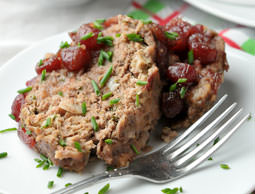
Cranberry-crowned Meatloaf

Two meatloaf slices garnished with cranberry sauce and thyme on a white plate with a fork
Photo by Virgina Pinkston

Ingredients

  • 1 pound ground beef or turkey
  • 1 medium onion, finely chopped
  • 1/2 medium green pepper, finely chopped
  • 1 egg, beaten
  • 2 tsp. salt
  • 1 tsp. dried parsley flakes
  • 1/4 tsp. dried thyme
  • 1/8 tsp. dried oregano
  • 1½  cups soft bread crumbs
  • 1/3 cup milk
  • 2 T. brown sugar
  • 1 pound whole-berry cranberry sauce

Preparation
Preheat oven to 350 degrees F.

Combine ground meat, onion, pepper, egg and seasonings. Add bread crumbs and milk, and mix well.

Sprinkle brown sugar on the bottom of greased loaf pan. Spread cranberry sauce over sugar. Add meat mixture. Bake for one hour or until done (internal temperature of 160 degrees F for ground beef or 165 degrees F for ground turkey). Cool slightly, and turn out, upside down, onto platter.

Serves 6

Categories
Recipes

Hearty Cranberry Cookies

Three cranberry, white-chocolate chip, nut cookies stacked on a white plate with a red and white striped table cloth
Photos by Virginia Pinkston

Ingredients

  • 1/2 cup butter
  • 6 T. white sugar
  • 6 T. light brown sugar
  • 1 tsp. vanilla
  • 1 egg
  • 1 cup all-purpose flour, plus 2 T.
  • 3/8 tsp. salt
  • 1/2 tsp. baking soda
  • 1/2 cup white chocolate chips
  • 1/2 cup dried cranberries
  • 1/2 cup chopped walnuts
  • 1/2 cup coarsely chopped macadamia nuts

Preparation
Preheat oven to 350 degrees F.

Cream together butter, sugars and vanilla. Add egg and mix well. Sift together flour, salt and baking soda, and add to butter mixture. Mix until just combined. Fold in chocolate chips, cranberries and nuts.

Drop tablespoon of mixture onto ungreased cookie sheet, about 2 inches apart.
Bake for 12 to 14 minutes, until bottoms begin to brown and tops are golden. Remove to baking rack to cool.

Makes 16 extra-large cookies.

Categories
Recipes

Cranberry Mousse

Cranberry mousse garnished with whipped cream, cranberry and raspberry in white bowl
Photo by Virginia Pinkston

Ingredients

  • 4 cups cranberries (fresh or frozen)
  • 1½  cups water, plus 3 T., divided
  • 1¼ cups sugar
  • 2 cups raspberries (fresh or frozen)
  • 3 T. cornstarch
  • 3 cups heavy cream
  • 1/2 tsp. vanilla

Preparation
Combine cranberries and 1½ cups water in saucepan and bring to boil. Add sugar and reduce heat; simmer until cranberries soften. Add raspberries and simmer five minutes more. Purée mixture in food processor or blender, then strain through sieve to remove seeds. Return purée to saucepan on low heat until it begins to simmer. Combine cornstarch and 3 tablespoons water, and add to purée. Remove from heat and cool, stirring often. (You can refrigerate it to speed the process.)

In a large bowl, beat together cream and vanilla until stiff. Fold cream into cooled berry mixture. Place in individual serving bowls and chill at least three hours before serving.

Serves 6.

Categories
Recipes

Beet-infused Sour Cream

Beet-infused Sour Cream - Photo by Virginia Pinkston (HobbyFarms.com)
Photo by Virginia Pinkston

Ingredients

  • 3 cups peeled, sliced cooked beets
  • 3/4 cup low-fat sour cream
  • 1 tsp. grated onion
  • 1 T. prepared horseradish
  • 1 T. dried chives
  • salt and pepper to taste

Preparation
Preheat oven to 350 degrees F.

Place beets in 8- by 8-inch baking dish. Combine sour cream, grated onion, horseradish and chives, and pour over beets, tossing to coat. Cover dish and place in oven for about 20 minutes, until heated through. Serve immediately.

Makes 4 servings.

Categories
Recipes

Puréed Beets with Coriander

Pureed beets with cilantro garnish
Photo by Virginia Pinkston

Ingredients

  • 3/4 cup butter
  • 1½ cups chopped onion
  • 4 pounds beets, cooked whole and cut into 1-inch pieces
  • 1/2 cup apple-cider vinegar
  • 1 T. brown sugar
  • 2 tsp. ground coriander
  • 1 tsp. salt

Preparation
Melt butter in large saucepan over medium heat. Add onions and stir to coat. Lower heat, cover and cook for about 20 minutes, until onions are translucent. Add beets, vinegar, sugar, coriander and salt. Mix well, then simmer, stirring frequently, for 10 minutes. Remove from heat and process in batches in food processor. Return to saucepan to heat through before serving.

Serves 6 to 8.

Categories
Recipes

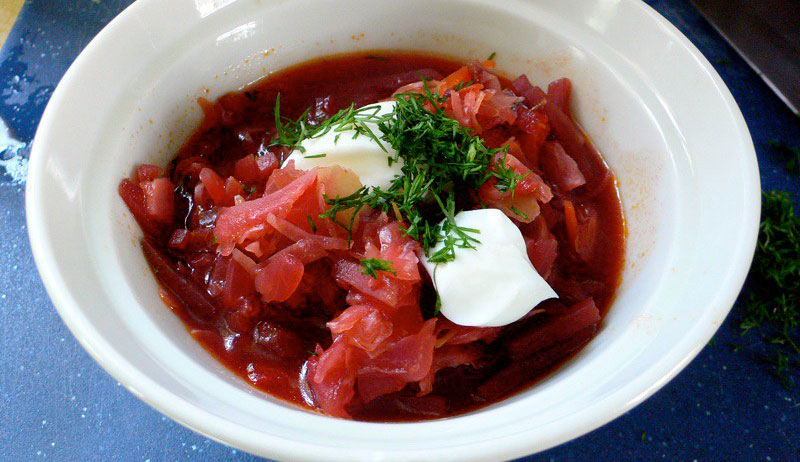
Russian Borscht

Ingredients

  • 1/2 cup peeled, finely chopped carrots
  • 1 cup finely chopped onions
  • 2 cups peeled, finely chopped uncooked beets
  • 1 T. butter
  • 2 cups beef stock
  • 1 cup finely shredded cabbage
  • 1 T. apple-cider vinegar
  • 5 T. sour cream
  • heaping 1/4 cup grated cucumber

Preparation
Place carrots, onions and beets in large soup pot. Add enough boiling water to barely cover vegetables, and simmer gently, covered, for about 20 minutes. Add butter, stock, cabbage and vinegar and simmer 15 minutes more.

Combine sour cream and grated cucumber.

Place soup in serving bowls, and top each bowl with dollop of sour cream-cucumber mixture.

Categories
Recipes

Beet-apple Compote

Beet-apple compote
Photo by Virginia Pinkston

Ingredients

  • 1 pound beets
  • 2 medium-sized tart apples, peeled, cored and sliced
  • 1/2 cup brown sugar
  • 1 T. cornstarch
  • 1 T. salt
  • 1 T. apple-cider vinegar

Preparation
Cook beets whole as described at left. Using slotted spoon, remove beets from pan and set aside to peel and slice. Add apples to pan, heat to boiling, then reduce heat and simmer for 10 minutes. Drain, reserving 1 cup liquid in pan.

Combine sugar, cornstarch, salt and vinegar; mix well. Add to reserved liquid and cook, stirring constantly, until thickened. Add sliced beets and apples and heat through. Serve immediately.

Serves 4 to 6.

Categories
Animals

More About Eggs

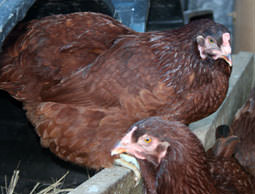
Buckeye chicken roosting in a coop
Photo by Sue Weaver
Our Buckeye hens give us medium-sized, lightly tinted eggs.

Last week, I told you some of the weird things Uzzi and I learned about eggs. We also learned some things that aren’t so crazy.

Chickens lay all sizes of eggs, from peewee weighing 1.25 ounces each to jumbo at 2.5 ounces each. The shell accounts for about 12 percent of the weight of a large egg. Pullets start by laying smallish eggs, but as a hen ages, her eggs get bigger. She also lays eggs of a specific color, not pink-tinted one day and deep, dark brown the next. Our Buckeyes’ eggs are medium in size and range from lightly tinted to medium brown. (Camilla lays the lightly tinted eggs.)

Colored eggs happen when pigment is added during shell formation. A thin layer of brown pigment is added to a brown egg’s bloom. Also called its cuticle, bloom is the last layer of shell deposited before a egg is laid. Blue pigment gets deposited in every layer, so blue eggs are colored all the way through. Green eggs are blue-shelled eggs with a brown bloom. White eggs aren’t pigmented at all.

You can tell how old an egg is by placing it in a container of water. A fresh egg sinks and rests horizontally on the bottom. A two- to three-week-old egg stands vertically at the bottom, big end up. Really old eggs float.

If you can’t remember if you boiled an egg, spin it; boiled eggs spin really fast, fresh eggs slowly wobble.

What chickens eat affects the taste of their eggs and color of their yolks. The rich, yellow color most humans prefer comes from xanthophyll, a yellow-orange pigment found in green plants and yellow corn. Acorns or shepherd’s purse can turn yolks green, and silage or cottonseed meal make reddish- or blackish-green yolks. (Yuck!)

Finally, not every egg a hen lays is “normal,” though if they’re fresh, they’re still safe to eat. Here are some weird things you might find in your eggs:

  • Blood spots don’t mean an egg is fertile. They happen when a small blood capillary ruptures and a spot of blood is released along with the yolk. They sometimes show up in a pullet’s first few eggs and again when she’s an old hen. As an egg with a blood spot ages, the blood spot becomes paler so a bright-red blood spot means an egg is super-fresh.
  • Brown, tan, gray or white spots near the yolk are called meat spots. Sometimes they’re blood spots that changed color, and sometimes they’re bits of tissue from the hen’s reproductive tract.
  • Occasionally, a pullet lays an egg with no yolk at all. One of our Buckeyes did that last week. These are called dwarf eggs or wind eggs. In olden times, people thought they were laid by roosters.
  • Sometimes eggs have two or more yolks. That happens when ovulation occurs super quickly and one yolk is joined by a second yolk. According to Gail Damerow, a chicken expert who wrote Storey’s Guide to Raising Chickens, the largest number found in a single egg is nine yolks.
  • Once in a great while, a hen might lay a double-shell egg. This occurs when an egg that’s almost ready to be laid reverses direction and gets a new layer of egg white and another shell. The Guinness World Record for the heaviest egg weighed 1 pound and had a double yolk and two shells. That was some egg!

« More Mondays with Martok »