Categories
Urban Farming

Balloon-Proofing Rio

Rio and a balloon

Photo by Audrey Pavia

Rio meets a scary balloon.

Not much frightens my 3-1/2-year-old Spanish Mustang, Rio. He will barge up to just about any strange object, grab it in his mouth, and shake it until it breaks. When it comes to a balloon, however, it’s another story.

Rio’s first encounter with balloons came a couple of months ago while on the trail. I was ponying him (leading him as I rode) when we spotted a few glinting Mylar balloons tied to the trail fence. They were intended to help party guests find their way to the right driveway, but as far as Rio was concerned, they were horse-eating monsters that were waiting for him to walk by so they could devour him in their shiny mouths.

My normally brave gelding snorted loudly and firmly planted his feet, refusing to move. It took a lot of coaxing and an example set by my friend’s horse, Teddy, to convince Rio to walk past the scary, floating creatures.

For my birthday, I received four Mylar balloons from a friend. After letting them live in my bedroom for a couple of weeks, I decided to take them outside so Rio could meet them. The helium was still working, so the balloons were still floating at the end of their ribbons.

When I first walked outside with the balloons, all the horses’ ears perked up. The chickens ran for the coop, terrified, which did nothing to calm Rio. As I approached his stall, he ran to the back corner, snorting and spinning. I tied them to the rail of his paddock while he whirled and galloped, trying to escape.

I stood next to the weird, floating things and tapped them with my hand, all the while talking to Rio and telling him there was nothing to fear. He didn’t believe me for the first 10 minutes, and continued to snort and spin. When he would stop to look at the balloons, I noticed he had grown much taller. His 14.1-hand height suddenly appeared more like 16.

But just like a cat, Rio’s curiosity got the best of him. He slowly began to creep toward the balloons, his muscles taught and ready for flight at the slightest provocation. Soon, he was sniffing the balloons from a distance. They moved in response to the puffs of air coming from his nostrils, which made him step backward with a snort.

Then, just like that, Rio decided these things had way too much potential as toys to be afraid of them. His fear suddenly left him, and he began batting the balloons around with his upper lip. Soon, the balloons were banging him in the head and whipping all around in response to his pummeling. He could have cared less.

I took a few pictures of him as he gradually destroyed each of the balloons. They had managed to survive two weeks of helium loss but were no match for Rio’s teeth. By the time he broke the last one, he had decided they tasted good, and I had to drop my camera and dash into his stall to pull the dead balloons out of his mouth.

Despite my efforts, I am still worried about running into balloons on the trail. Not because Rio will be scared of them, but because now, he thinks they’re edible.

Read more of City Stock »
Categories
News

More Herbicides Lost by Volatilization

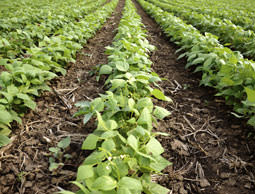
French beans on a farm
Courtesy iStockphoto/Thinkstock
A study shows more herbicides are lost through volatilization than through runoff.

Runoff is a constant concern for farmers who use herbicides to control pests on their crops; however, when soil-moisture levels increase, there’s also a rise in herbicide losses through volatilization, meaning the chemicals evaporate. In fact, in one long-term field study, USDA scientists found that herbicide volatilization consistently resulted in herbicide losses that exceed losses from field runoff.

Soil scientist Timothy Gish and micrometeorologist John Prueger, with the USDA’s Agricultural Research Service, led the investigation that looked at the field dynamics of atrazine and metolachlor, two herbicides commonly used in corn production. Both herbicides are known to contaminate surface water and groundwater, which was primarily thought to occur through surface runoff.

Many experts once believed that volatilization was not a contributing factor to water contamination because atrazine and metolachlor had a low vapor pressure. However, the monitoring of both herbicide volatilization and surface runoff at the field-scale over multiple years had never been done.

So the team set up a 10-year study in an experimental field in Beltsville, Md., equipped with remote sensing gear and other instrumentation for monitoring local meteorology, air contaminants, soil properties, plant characteristics and groundwater quality. This allowed the team to carry out their studies on a well-characterized site where only the meteorology and the soil’s water content would vary.

Prueger and Gish observed that when air temperatures increased, soil-moisture levels had a tremendous impact on how readily atrazine and metolachlor volatilized into the air, a key factor that had not been included in previous models of herbicide volatilization. When soils were dry and air temperatures increased, herbicide volatilization did not increase, but it increased significantly when temperatures rose and soil was wet.

Most surprising was that throughout the study, herbicide volatilization losses were significantly larger than surface runoff. An average measurement of the two herbicides showed loss by volatilization to be about 25 times larger than loss from surface runoff.

Results from this study were published in the Journal of Environmental Quality.

Categories
Urban Farming

Couple Ditches Supermarket Dependency

Tom and Rachel

Photo courtesy of Whole Foods Market

Tom and Rachel proudly show off the home-grown produce that’s been their sustenance for the past six months.

Six months ago, Rachel Hoff and Tom Ferguson of Vallejo, Calif., made an incredible commitment: Go a whole year without eating food from grocery stores or restaurants.

“Four or five years ago, we started growing our own food,” Ferguson says. “We read a couple books about people who live locally, and we sat down to talk about it and said, ‘You know what? We can really do that; we could not go to restaurants, not go to the store and pretty much get what we want out of our backyard.’”

From corn, tomatoescucumbers and peas, to strawberries, rhubarb, blackberries and onions, most of the couple’s food comes from their own backyard, which they’ve named Dog Island Farm. The couple is also currently raising 35 chickens, two adult female goats, two baby goats and 10 rabbits.

“We grow as much as we can here in the backyard; we do not step foot into the grocery store at all,” Ferguson says.

Besides depending on food they’ve grown, the couple makes regular trips to the Vallejo Farmers Market to buy ingredients not found in their yard.

“With a year without groceries, we’re saving a ton of money and eating much higher quality food,” Hoff says.

To date, the couple has already saved a whopping $6,500 — simply by foregoing processed, store-bought foods.

“By doing this, we’ve grown closer together, are healthier, and we’re giving back to the community as well.” Ferguson says.

To learn more about Hoff and Ferguson’s grocery-free adventure, click here.

Categories
Crops & Gardening

So Long, Summer Garden

Praying Mantis Nest
Photo by Jessica Walliser
I have found praying-mantis nests in my backyard evergreen trees.

Well, with my son now in school, I’m back to the garden. It’s so hard to believe Labor Day is behind us. Late last week, I harvested the last of the cucumbers—enough to make one more batch of pickles that I haven’t actually made yet—and pulled up the vines. Zucchini plants bit the dust two weeks ago, so they got yanked, as well. I managed to elude the vine borers this season with a collar of aluminum foil around their base—can’t believe how well it worked! We had more zucchini this summer than we’ve had in years. I made enough zucchini bread to safely see us through the winter. That chest freezer was one heck of an investment!
 
I also pulled up the stink-bug-ridden corn stalks. I considered leaving them in the garden to brown so that I could use them for Halloween décor, but with all the rain we’ve been having, they toppled over into the dirt and that was the end of that idea.

Plans for the rest of this week include harvesting the first batch of butternut squash and finishing up the basil. I didn’t get around to making pesto this summer, but that’s alright. I seem to get enough basil in the summer that by winter’s arrival, I’m OK to see it off the plate for a few months.

And I made one final trip to a favorite local nursery this morning. One of our newly planted trees died. I picked up a replacement along with a 5-foot-tall Leyland Cypress to join the row of three we already have to block the neighbor’s view of our back patio. What great evergreens they are! Fast-growing and very soft looking. Last winter, we found two praying mantis egg cases in one of the trees, an exciting find for sure. We never saw any of the hatchlings, but you can bet I’ll be out there later this fall looking for more egg cases and crossing my fingers they’ll make it safely to spring.  

« More Dirt on Gardening »

Categories
Urban Farming Video

7 Questions with Anastasia Cole Plakias

When the founders of Brooklyn Grange Rooftop Farm planted their first seedlings seven stories above a bustling street in Queens, N.Y., in 2009, their aspirations weren’t small. Ben Flanner, Anastasia Cole Plakias and Gwen Schantz set their sights on being the largest commercial rooftop farm in the world.

The 1-acre farm, built according to a green-roof system, holds 1.2 million pounds of soil (and yes, experts verified that the building constructed in 1919 can bear the weight). The farm’s soil is a special mix of compost and porous stones, which eases the weight burden, and in it grows a variety of organic produce—kale, Swiss chard, tomatoes, beans and more—that are sold to restaurants around New York City.

Pedestrians strolling down Northern Blvd. might not know such an operation exists high above their heads, but ascend the flight of stairs to Brooklyn Grange and you’ll find a healthy, hearty, vibrant farm overlooking the illustrious Manhattan skyline.

Watch the video above as managing partner and founder Anastasia Cole Plakias gives you an inside peek to what Brooklyn Grange is all about.

Categories
Urban Farming

After the Storm

water-damaged corn

Photo by Judith Hausman

Our storm-damaged tomatoes expired early this season.

Hurricane Irene may have been downgraded to a tropical storm, but it still made a mess in my area. Branches fell, neighbors’ houses flooded and the power was out for days. I’ve never heard a hum as sweet as my refrigerator’s last Wednesday morning and a silence as peaceful as when all the generators stopped. It was then time to roll up my sleeves and start cooking again … and, unfortunately, throwing things away.

About 40 percent of my freezer’s goodies had to be tossed, including some of the carefully squirreled-away crops from earlier this season. Fortunately, the four beautiful local chickens I had in there had only begun to defrost, so I was up at 6 a.m. roasting all four: one to keep and three to give away to friends and relatives whose cupboards had become bare after the storm. The strawberries and raspberries I had picked had to be re-imagined, too; I used them to assemble some Labor Day weekend berry shortcakes.

My inconvenience and small losses, however, were nothing compared to what Hudson Valley farmers have suffered.

GrowNYC, the organization that oversees New York City’s Greenmarkets, reported that “More than 80 percent of the tri-state area family farms that supply produce to the city’s 53 Greenmarkets were badly damaged.”

Second-round plantings of crops, such as carrots, onions, spinach, arugula and baby beets were washed away. Flattened cornfields, as well as waterlogged vegetable fields, are everywhere. Winter squash and pumpkins floated away down the flood-swollen creeks and rivers that have also created the fertility of the farmland. In addition, the FDA has prohibited the sale of produce that was under floodwaters or even in a flooded storage facility. As a result, many CSAs have basically had to shut down for the season because they cannot pass salvaged crops onto members.

City Greenmarkets were closed for the entire storm weekend but have reopened. Currently GrowNYC has organized a centralized help desk where farmers can post their needs. They also collected donations and offered running buses from the city to the farms for volunteers over the Labor Day weekend. Shoppers at urban markets will certainly be noticing a diminished selection of produce, which usually overflows at this time of year.

In addition, area cheese makers and dairies, such as Rainbeau Ridge and Ronnybrook Farm, have had to waste gallons of milk without the power to pasteurize and keep it cool for cheese. Some livestock have even drowned in the Catskills and the small farms of Long Island. Neighboring Connecticut and Vermont were terribly impacted, as well.

Underscoring the importance of decentralized food production as a safety net, gardens and urban-farming projects closer to the city seem in better shape. At our growing coop, our precious tomatoes have suffered an untimely death, and the rain has pumped up our melons without the sun to sweeten them. However, we continue to harvest armfuls of produce … and feel very lucky, indeed, to be able to do so.

Read more of The Hungry Locavore »

Categories
News

Help Available for Hurricane Victims

Tractor on a farm moving debris caused by Hurricane Irene, barns in background
Courtesy FEMA/Tim Burkitt
Hobby farmers and ranchers might be eligble for USDA aid to help with Hurricane Irene cleanup.

Agriculture Secretary Tom Vilsack says the USDA is ready to deploy personnel and resources to assist the efforts of federal, state and local authorities in response to Hurricane Irene.

“Our thoughts and prayers go out to all who have suffered losses caused by this massive storm,” Vilsack says. “USDA is ready to provide food, emergency assistance and other resources to the affected areas. We continue to closely coordinate with many partners to meet the immediate and plan for the long-term needs of those affected by Hurricane Irene.”

Farmer and Rancher Assistance
The USDA is encouraging farmers who have crop or physical damage, to contact their local Farm Service Agency service center as soon as possible.

The affected state and county emergency boards, chaired by the USDA FSA, are assisting with the Hurricane Irene response efforts and quickly assessing agricultural needs and determining the storm’s impact on crops. Emergency loans are available to farmers through the FSA’s Emergency Loan Program, which provides low-interest EM loans for crop and livestock production and physical losses. The loans are available in counties categorized under a presidential declaration or secretarial disaster designation.

Assistance also might be available through the FSA Emergency Conservation Program funds, subject to the availability of funds. Sign-up for ECP funds will be held in FSA State Committee-authorized locations. Applications will be processed subject to available funding. Farmers and ranchers also might qualify for assistance for any crop or livestock losses if they meet certain eligibility requirements.

Assistance is available through the following FSA assistance programs:

  • Supplemental Revenue Assistance Payments Program: For crop-revenue losses from quantity or quality deficiencies only in counties and contiguous counties declared disaster areas by the agriculture secretary or in cases where a farm’s overall production loss exceeds 50 percent
  • Noninsured Crop Disaster Assistance Program: For farmers and ranchers who previously submitted an application for coverage for noninsured-crop losses
  • Emergency Assistance for Livestock, Honey bees and Farm-raised Fish: For emergency relief to producers of livestock, Honey bees and farm-raised fish who suffered losses from disaster, such as adverse weather, or other conditions, such as hurricanes and wildfires, not adequately covered by any other disaster program
  • Livestock Indemnity Program: For assistance to livestock producers for livestock deaths from disaster events in excess of normal mortality
  • The Tree Assistance Program: For partial reimbursement to orchardists and nursery-tree growers for replanting, salvage, pruning, debris removal and land preparation if losses due to natural disasters exceed 15 percent
  • Debt Set Aside: For producers who have existing direct loans with FSA in counties declared or contiguous to counties declared as disasters; under the DSA program, up to one full year’s payment can be moved to the end of the loan

Assistance also is available for crop producers who previously purchased crop insurance through programs offered by the USDA Risk Management Agency. RMA is prepared to authorize emergency-loss procedures that streamline, on a crop specific basis, certain loss determinations and payments.

Additionally, USDA staff is coordinating closely with agricultural industry representatives to address specific needs as they arise.

Housing Assistance
USDA Rural Development is encouraging residents affected by Hurricane Irene to immediately apply for funding assistance under rural, single-family housing loan and grant programs. Funds are available for housing repair, rehabilitation and home purchases. For home financing, USDA will assist with expediting lender approval and approval for access to the Guaranteed Underwriting Services and offer streamlined loan processing. Individuals needing payment assistance on their existing USDA Rural Development single and multi-family loans are encouraged to contact the Centralized Servicing Center at 800-414-1226.

Community Assistance
The USDA’s Natural Resources Conservation Service state operations are prepared to work with local communities to determine Emergency Watershed Protection requests in Hurricane Irene disaster areas. The program provides technical and financial assistance to preserve life and property threatened by excessive erosion and flooding. Owners, managers and users of public, private or tribal lands are eligible for EWP assistance if their watershed area has been damaged.

The NRCS can fund immediate actions necessary to address threats to life or property (exigencies). Exigency funds are provided and approved quickly to lessen the threat to lives and property that exists as a result of storms or flooding. For example, exigency funding can be used to remove stream blockages and debris. Debris can include twisted trees and other woody vegetation as well as home construction materials. The removal of stream debris is important because obstructions increase the risk of flooding thus the further risk to life and property. Other conditions where EWP exigency funds can be used include embankment stabilization and erosion control around culverts or bridges of open roads. If these areas are not protected and stabilized after a storm or flooding there is increased threat to life and property.

The USDA encourages farmers, ranchers, producers, landowners and rural communities to contact their local Rural Development office for housing, business or community assistance information or their local NRCS office for help with debris removal.

Additional information about these assistance programs, safety tips and updates about USDA’s hurricane-relief efforts are posted on the USDA website. Click on the hurricane relief link.

Categories
Equipment

Nature’s Workbench

Cottonwood log with attached vises abd anvil
Photo by Jim Ruen
The way Liz mounted her vises in her jewelry store sparked an idea for creating a workbench in my future woodworking shed.

Last week, I described finding an old, heavy-duty vise for sale in Crown Trout Jewelers, a fine jewelry store in my community. While that was unexpected, its mounting was even more unexpected. Liz Bucheit, the owner, had three of the old vises mounted to a section of cottonwood log that was about 34 inches long and perhaps 30 inches across. Two more vises and a good-sized anvil were mounted to a second log. The logs stood on end, with three sets of lockable caster wheels between each one and the floor.

Liz explained she had mounted them in this manner so she could pull them out into an open space when working or teaching a class, as she does periodically. I could immediately see the benefits. I am a big fan of compact work areas. This fall, I will be installing all my woodworking tools and bench in an 8-by12-foot (former) garden shed. One of my concerns has been how I can work with long pieces of wood or iron rod.  Liz’s logs might be part of the answer.

I will probably settle for a slightly smaller-diameter log for mounting my two vises and my small anvil. I’ll also have to make a small platform that matches the lip of the doorway for smooth rolling out of the shop. For the log, a nice section of oak is tempting, but would add unnecessary weight. Instead I’ll probably opt for cottonwood, as Liz did.

I think it will work. We’ll see. That’s the great thing about getting an idea. The anticipation and planning are almost as much fun as the doing. Hopefully, the satisfaction of using it will be as great, as well.

<< More Shop Talk >>

Categories
Animals

It’s About Eggs

Buckeye chickens free-ranging on farm
Photo by Sue Weaver
Carl the Buckeye cockerel gave us the news of Camilla’s first egg.

This morning, there was a huge commotion over by the chicken coop. Uzzi and I wondered what was going on? Just then, Carl the cockerel strutted by with one of his hens. We asked him, and he said, “Camilla laid an egg.” Uzzi and I looked at each other. The way she was carrying on, you’d think she laid a basketball.

Our Buckeye chickens are almost 6 months old and the pullets have been laying for over a month. Mom is excited when she comes back from the coop with a handful of eggs. “What’s the big deal?” we thought, so we decided to learn all we could about chicken eggs. Here are some of the strange things we found:

  • Did you know that Howard Helmer, Senior National Representative for the American Egg Board, Helmer holds three Guinness World Records for omelet-making? He’s world’s fastest omelet maker (427 omelets in 30 minutes); he made world’s fastest single omelet (42 seconds from whole egg to omelet); and he’s the world omelet flipping champion (30 flips in 34 seconds).
  • On Oct. 11, 2010, Yum-Bir (the Turkish Egg Producers Association) and Pruva Neta tourist agency celebrated World Egg Day by frying an  world record omelet weighing 9,702 pounds and 8 ounces), using a 114 gallons of oil and 110,010 eggs. Who ate it? We don’t know!
  • World’s largest egg, already accepted by the World Records Academy and pending acceptance by the Guinness Book of World Records, was laid by a hen belonging to Zhang Yinde of Heilongjiang Province, China. The egg was 2.5 inches wide by 3.6 inches long and weighed 7.09 ounces. Now that hen had something to cackle about.
  • The Guinness world record for the number of persons participating in an egg toss was set on July 4, 2008, in Skagway Ala., with 1,422 people tossing eggs to and fro.
  • On Nov. 12, 1978 at Jewett, Texas, Johnny Dell Foley tossed a raw egg for a distance of 323 feet 2 inches to Keith Thomas, who caught it unbroken.
  • In March 2009, Zachery George of West Virginia broke the old Guinness record for egg holding by holding 24 eggs in his right hand.
  • Ashrita Furman balanced 888 eggs, all by herself, at York College in New York on June 12, 2010. On July 20, 2010, she set another Guinness record by eating three pickled eggs in 58.16 seconds.
  • I bet you think that’s bizarre, but think about this: Steve Starr of the United Kingdom achieved a Guinness record on March 16, 2011, when he swallowed and regurgitated 11 boiled eggs in one minute on the set of Lo Show Dei Record, in Milan, Italy. Now that is really weird!

« More Mondays with Martok »

Categories
Urban Farming

A Tough Decision

Photo by Audrey Pavia

Red will be going to a new home soon.

Last night was a hard night. I finally made a decision I had been struggling with for months: It was time to give up my quarter horse, Red.

Red came to us about four years ago, when his owners, Kim and Mike, became overwhelmed with their responsibilities of caring for a traveling petting zoo, which consisted of chickens, pigs, goats and ponies — a plethora of animals that needed a lot of time and attention.

Red, who was 18 at the time, wasn’t getting as much attention as he needed. While the quarter horse was well cared for, he wasn’t being ridden. Red spent most of his time standing around eating and sleeping, which was fine by him but didn’t sit well with Kim.

About two years ago, Kim and Mike moved a few miles away to a larger, 3-acre parcel in a rural community. They sold the petting zoo and settled into their beautiful new home with their two horses.

When Kim gave me Red four years ago, she asked me to let her know if the day ever came when I couldn’t keep him. I couldn’t fathom such a day, but always remembered her words. Last night, I asked her to take him back.

Urban farmers like me are facing hard times: Because the price of hay has skyrocketed, it costs twice as much to feed livestock as it did a few years ago. Horses are being abandoned all over California because owners can’t afford to feed them. Livestock rescues are full of owner-relinquished horses, and more than one horse has been found wandering around a regional park, dumped by owners who could no longer afford to care for it. I would choose to live under a bridge before I ever abandoned any of my horses. Fortunately, in Red’s case, I didn’t have to make that choice. I am lucky that Kim and Mike are willing to take Red back because I can no longer afford to keep three horses. Red was the obvious one of the three to go because he had someone to take him. I’ll need to find a way to keep paying for Milagro and Rio, who I hope will be with me for life.

I’m going to miss Red horribly. He is a kind and gentle soul with just a little bit of mischief in him. While he is a real goofball in the turnout, when it comes to babysitting inexperienced riders, he has no match. He takes care of small children or novice adults, careful never to unseat them or frighten them in any way. Put him in front of cattle with an experienced rider, and he comes to life. His younger days as a working cow horse are still alive and well in his memory.

Soon, Red will be living on 3 acres instead of my cramped, half-acre property. He’ll be hanging out with two other geldings, which is great because he loves to play with other horses. He’ll go on short rides in the nature preserve that butts up against Kim and Mike’s property and will be showered with love every day.

Knowing Red will be happy and well cared for the rest of his life helps temper the sadness just a little, but no matter what, I’m really going to miss him.