Categories
Homesteading

Holiday Garland

To spruce up your holiday decorations with homemade garland, follow the directions below:

  1. Download and print one or more of the garland designs below on your choice of colored paper.
  2. Cut out garland strips.
  3. Create links by gluing or taping end A to end B on each strip, linking loops together.
  4. Continue adding links to increase garland to desired length.

Garland template 1
Download now! 

Garland template 2
Download now!

Garland template 3
Download now!

Garland template 4
Download now!

Garland template 5
Download now!

Categories
Animals

William de Goat

Air Commodore William de Goat standing with member of British 609  (West Riding) Squadron near a plane
Courtesy Brian Waite/ British 609 (West Riding) Squadron
Air Commodore William de Goat was the highest ranking officer of the British 609 (West Riding) Squadron.

Last week, I told you about a brave goat named Sergeant Bill, who served in France in World War I as part of Canada’s 5th (Western Cavalry) Battalion. Another goat to serve his country was Air Commodore William de Goat, DSO DFC, of the British 609 (West Riding) Squadron, a Royal Air Force fighter squadron.

William, a British Toggenburg, a British breed related to regular Toggenburg goats yet slightly bigger, joined the Royal Air Force in July 1941, when he was given to Belgian pilot Vicki Ortmans by the landlady of a pub near the Biggin Hill airbase outside of London. Although just a kid at the time, he was immediately commissioned with the rank of Flying Officer. William remained with his squadron until its disbandment in 1945, when he retired in England with the lofty rank of Air Commodore.

William’s squadron included airmen from Great Britain, the United States, Canada, Australia, New Zealand, Belgium and Poland. On some days the squadron flew up to 150 missions. During the war, 73 of William’s boys were killed in action, including Ortmans, who bottle-raised baby William.

William flew with the squadron on several occasions, including across the English Channel, where he disembarked in Normandy and subsequently served at 12 different airbases in France, Holland and Germany.

During his two years with the British 609 (West Riding) Squadron, William sniffed oxygen bottles and consumed innumerable cigarettes along with top secret maps, files and records. William was shot at but never hit. He did, however, bloat badly after pigging out on mattress stuffing, and he almost died of slow poisoning. That happened because as William rose through the ranks, his boys used blue “aircraft dope” to paint bars denoting his rank on his horns. William, who liked the taste of the paint, would swipe his horns across his front legs and lick the paint off. Just prior to deployment to Europe, he became deathly ill. That’s when the airbase’s medical officer determined that the blue paint on William’s horns was toxic. After that William’s horns remained unadorned.

In 1944, William attained the rank of Group Captain, making him the highest ranking officer in the squadron. Even the unit’s commanding officer, Squadron Leader J.C. Wells, saluted him before taking off for operations. His boys loved William and believed his presence brought them luck.

William wrote a book about his wartime experiences with the help of his friend, Squadron Leader Brian Waite, RAF. It’s called William de Goat: The Story of Air Commodore William de Goat DSO DFC, the extraordinary Mascot of 609 (West Riding) Squadron during the Second World War. It’s a British book by you can buy it at Amazon if you like. Check it out. I bet you’ll be glad you did.  

« More Mondays with Martok »

Categories
Urban Farming

Roast Chickens

Audrey's chickens

Photo by Audrey Pavia

My chickens were so hot this last weekend, they dug areas in the mulch, which stays cool and moist.

While the East Coast was being battered by Hurricane Irene last weekend, the West Coast was sweltering in a heat wave. No one knows this better than my poor chickens.

Because my flock has the run of the yard, they get to make their own decisions about how to best deal with the rising temperatures. I’ve heard stories of chickens dying from heatstroke when kept in coops during particularly hot weather, but I’ve had a lot of luck with my birds, which are left to their own devices.

On Saturday, when temperatures climbed to 105 degrees Fahrenheit here, my chickens made their way under the covered patio and took up residence in a flowerbed that juts up against the house. I once had begonias there, but they were devoured, either by snails or a wild rabbit; I’m not sure which. The bark chips I used for mulch are still there, keeping the soil underneath cool and moist.

During the hottest part of the day, the chickens scratched out depressions in the bark deep enough to get to the damp soil beneath. They then nestled in the coolness of these depressions, their hot little bodies pressed up against the wet dirt.

At other times during the day, I found them lounging underneath the coyote brush on the back slope. Not only does this area provide shade, but the dirt stays cool and moist after being doused by the automatic sprinklers, which go off every morning at 5 a.m.

What’s funny is that the flock constantly moved around during the day, switching spots rather frequently. They dug new depressions in the dirt or hunkered down in the shade in other areas. Occasionally, they ventured out to drink water, which I kept under a cool rose bush.

I’m guessing they moved around so much because the spots they huddled in didn’t stay cool for too long. Chickens throw off a tremendous amount of body heat, and those cool depressions probably started to feel pretty warm after awhile.

I’ve tried setting up misters for the chickens in the past, thinking they would stand under them to cool down. It took me a while to realize they weren’t ducks and wanted nothing to do with a spray of water from a garden hose coming down on them. I’ve also tried giving them chunks of cold fruit from the refrigerator. Although they appreciated the fruit, I don’t think the “cold” part made much difference to them.

In the end, I decided it’s just best to let them figure it out on their own. They seem to know what they need and have so far managed to survive this summer’s hottest days. Should the temperature rise to 112 F, which it has done in the past during this time of year, I may need to intercede. For now, I’ll let my chickens handle things on their own.

Read more of City Stock »

Categories
News

World to Celebrate Kitchen Garden Day

Gardener harvesting lettuce in kitchen garden
Courtesy AbleStock.com/Thinkstock
An easy kitchen garden for beginners is growing salad ingredients in a small raised garden bed.

It’s no secret that food security is a major global concern. About one in seven people go hungry around the world, according to recent statistics by the U.N. Food and Agriculture Organization. In the U.S., more than 1/3 of adults suffer from obesity due to not eating the right foods, according to the Centers for Disease Control and Prevention. And look no farther than your wallet to notice that food prices at the corner grocery store are skyrocketing. For many, the solution to these problems is simple: grow a garden.

“When we encourage and teach people to grow some of their own food, we are helping them to become more powerful by taking more control of not only their food, but also their health and their pocketbooks,” says Roger Doiron, founder and director of Kitchen Gardens International and instigator of the White House kitchen garden.

The Maine-based nonprofit, which connects gardeners from more than 100 countries, started World Kitchen Garden Day in 2003 in response to February’s National Snack Food Month. The holiday promotes the positive role of organic gardening in society, health and gastronomy; it raises awareness of the benefits of eating local; and it aims to build community around gardening and food at local and international levels.

“The thinking was that if the makers of potato chips and fluorescent-orange cheese puffs could have a month for promoting their vision of good food, the world’s gardeners deserved at least a day,” Doiron says.

His family celebrated the day in 2003 by fixing a garden-grown potluck meal for friends and family. But what started as a playful jab at corporate food-like products has since turned into a celebration spread around the world. This year, Kitchen Garden Day will take place on Aug. 28, 2011, and gardeners, no matter what size land they sow, are encouraged to organize an event to take part. Kitchen gardens, also known as edible gardens or potagers, are meant to produce healthy food for the dinner table.

“For some, it can be as small as a window box,” Doiron says. “For others, as large as a small farm. I prefer [the term] ‘kitchen garden’ over ‘vegetable garden’ because it’s not just for vegetables, but also fruits and herbs.”
 
The KGI website suggests several things you can do to celebrate the day: organize a walking tour of local gardens, host a garden-grown potluck, invite neighbors for a kitchen-garden taste-test, throw a benefit for a local food or gardening charity, teach a kitchen-garden workshop.

Or you may just want to start by creating your first kitchen garden. For this, start small and add to the garden as you’re comfortable. Doiron suggests trying a salad garden in a 4- by 4-foot raised garden bed.

Perhaps by taking this step, you’ll be on your way to helping combat the world food crises. Just take a look at how kitchen gardening affected the Doiron family:

“My wife and I conducted a homegrown experiment of our own a few years back by weighing, recording and calculating the value of our harvests over the course of a growing season. In the end, we found that we had saved over $2,000, which is not bad if you consider we have a modestly sized yard and have a shorter growing season than most of the country.”

Now, there’s some food for thought.

Categories
Urban Farming

Marjoram

Marjoram

Photo by Rick Gush

Even in the middle of winter, I can cut a few good stems from my marjoram plant.

It seems a bit early; it’s the end of August, and we’ve already hit a wall with the vegetable garden. The cucumbers, squash, tomatoes, beans and corn are all done for the season, so I’m slowly getting stuff arranged for working the beds again in early September, before planting broccoli for the winter.

Our marjoram is doing exceptionally well right now, despite the growth wall our garden has hit. This is my favorite herb, and I put it on everything from salads to casseroles and chicken to fish. We use marjoram’s fresh leaves whenever they are available. Sometimes, we’ll even have a bunch of marjoram stems drying in the kitchen.

I have more than a half-dozen marjoram plants scattered around the garden, so — even in the middle of the winter —there’s always a plant I can cut a few stems from. Right now, they are all growing and flowering like crazy, so I could probably pick 10 pounds of stems if I wanted to.

When I harvest marjoram, I’m careful to select stems that have not had mud splashed on them, and I also avoid any stems that have dragged on the ground. This way, the clean, upright stems do not have to be washed before being shredded and added directly onto prepared food.

We’re also growing marjoram’s cousin, oregano, in a big bed on the western edge of our garden. The taste of the two herbs is fairly similar, but I prefer the marjoram. We don’t use the fresh oregano; we just wait until it goes to full flower at the end of the summer, and then cut a bunch of bouquets of the flowers to bring into the kitchen for our winter herb supply.

While marjoram generally remains a single plant, lasting two or three seasons, oregano is a real crawler: it grows roots on many of the procumbent stems along the outside edge itself. Because of this, oregano can fill a large area within a few years.

The routine around here is as follows: rip out the oregano bed every three to four years, replant with the best shoots and then replant a few new pots of marjoram every year.

Here in Liguria, Italy, we all live in shared, multi-story buildings because there are not enough flat areas for people to have detached, single-family homes. Despite not having a piece of land connected to their home, most people here still garden enthusiastically on their apartment-style terraces.

The main things that Italians grow on their terraces, apart from a few flowers, are cooking herbs. Fresh plants are available at nurseries, supermarkets, florists, and fruit and vegetable markets. The business of selling fresh herb plants here is active year-round.

Oregano is a bit sprawly for container gardens, but marjoram plants, called majoranna, are grown by the millions in 6-inch pots on apartment balconies. Rosemary and, to a certain extent, basil, are also widely grown throughout this region.

All of this herb growing means that almost all Italians have access to fresh cooking herbs, which is a right they take very seriously.

Read more of Digging Italy »

Categories
Urban Farming

Trend Alert: Locavore Spa Treatments

woman at a spa

Photo courtesy BananaStock/Getty Images/Jupiterimages/Thinkstock

Many people are looking forward to spending some relaxing, healthy time at spas now using locally grown ingredients in their oils and lotions.

Farm-to-table movements — when locally grown fruits and vegetables appear on restaurant menus — have had a ripple effect at spas, inspiring therapists to develop their own interpretations. Many spas now have massage therapists applying pureed, local, juniper-oil-infused or warm, honey-infused strawberries to skin.

Locavore treatments aren’t just available in the countryside, where many ingredients are grown. Spas in urban pockets deftly turn local ingredients into salt scrubs and body lotions used for signature massages, body wraps, facials and exfoliating treatments.

From rosemary to blueberries and dairy products, some ingredients are grown in spa gardens while others are purchased from local farmers. The Spa at Four Seasons Resort Vail, in Vail, Colo., uses locally snipped juniper and evergreen leaves, while another new spa, Corbu Spa & Salon at The Charles Hotel, in Cambridge, Mass., vows to forge partnerships with local farmers in pursuit of seasonally inspired treatments.

Some spas source ingredients from just a few miles away. Montage Laguna Beach, in Laguna Beach, Calif., uses rosemary that is grown in the spa’s garden as a calming ingredient. The spa in Grand Hyatt Dubai, in Dubai, United Arab Emirates, ditches conventional spa techniques by turning the strawberries in its signature De-Stressing & Rebalancing Body Wrap into essential oils for aroma and healing.

With the farm-to-spa movement going strong, FarmHouse Fresh offers a line of products that echoes this mantra. Based in Texas, FarmHouse Fresh makes deliciously fragrant, paraben- and sulfate-free moisturizers, face masks, cleansers/scrubs and bath soaks derived from fresh fruits, herbs and vegetables, packaged in recyclable glass bottles that sport a vintage vibe.

A similar company, Farm Fresh Living, takes full advantage of Stargazer Perennials, the company’s farm and nursery in eastern Oregon. Much of the organic food grown on-site is folded into a body-products line that you can order through its website. Certified-organic cucumbers, blueberries, cranberries, lavender, juniper, rosemary, orange peels and cloves, among other produce, are sourced for shampoos and conditioners, soap, facial cleansers, lotions and serums. Visit Farm Fresh Living for more information.

Categories
Animals

Treat Farm-dog Allergies Holistically

Siberian husky dog scratching
Courtesy Hemera/Thinkstock
Airborne allergens and fleas can cause itchy skin in farm dogs, which can be treated holistically.

When allergy season is in full swing, humans aren’t the only ones suffering from the effects of an abundance of pollen in the air. Our canine companions—particularly farm dogs, which spent much of their time outdoors where pollen abounds—can also be plagued by allergens, but they aren’t just limited to what’s in the air. They can suffer from fleas and food allergies, as well.

Before attempting to treat your farm dog’s allergic reactions, visit your veterinarian for a diagnosis. Your vet can verify that your dog is indeed suffering from allergies, treat any secondary bacterial infections that might have occurred as a result of scratching and help you determine the exact cause of its allergic reactions.

For farm-dog owners wanting to minimize the use of conventional medications in their pets, a variety of holistic treatments to farm-dog allergies can help. You can best sort out holistic-treatment options with a holistic veterinarian, though it might be difficult to find one in a rural area. To search for one near you, the American Holistic Veterinary Medical Association offer a listing of holistic vets around the country.

Airborne Dog Allergens
Unlike humans, dogs do not typically develop respiratory symptoms in response to airborne allergens. Instead, they suffer from skin problems, which include itching, hot spots, hair loss and even skin infections.

When treating your dog’s allergies holistically, your first task is to eliminate the allergen in its environment as much as you can. If your dog is allergic to ragweed, for example, getting rid of the ragweed growing on your property will go a long way to help your dog. If your dog is sleeping in a dusty doghouse or in the barn where hay is stored, you’ll need to change its sleeping arrangements to help it recover.

Once you’ve done as much as you can to reduce your farm dog’s exposure to allergens in its environment, you can work with your holistic vet to explore acupuncture as a way to ease its symptoms. Dietary supplements and topical herbal-therapy treatments can also work, as well as homeopathic treatments and flower essences.

Fleas
Farm dogs are particularly susceptible to fleas when the weather is warm and moist and the pests are most active. Fleas can cause enormous discomfort in farm dogs with sensitivity to flea bites. Flea saliva can cause skin problems that present symptoms similar to those caused by airborne allergens.

If fleas are the culprit of your dog’s allergies, getting rid of these pests is most important. A variety of natural shampoos and coat sprays are available on the market to help keep fleas off your farm dog. Natural indoor and outdoor treatments, like borate or diatomaceous earth, are also available to stop fleas before they reach your farm dog.

Dog Food Allergies
The same skin issues farm dogs experience with airborne allergens and fleas can also result from sensitivity to foods, like grains and animal proteins. Dogs with these food allergies can also develop vomiting, diarrhea and gas.

Farm dogs suffering from food allergies can be more difficult to treat because you’ll need to conduct a trial-and-error elimination diet with the help of your veterinarian to determine what may be causing your dog’s allergic reaction. Grains, such as wheat and corn, can cause allergies in dogs in many cases. Farm dogs can also develop an allergy to the protein in beef, chicken and fish.

Allergy-sensitive food for dogs can be found in specialty pet-supply stores and usually contain less-common meats, such as venison or duck. Rice or potato will often appear as the carbohydrate source. You can also make a homemade diet for your dog following the advice of your veterinarian.

In addition to switching your dog’s food, you can help ease its irritated digestive system by adding probiotics to its diet. Your holistic veterinarian can also recommend digestive enzymes and herbs to help soothe your farm dog’s tummy.

Categories
Crops & Gardening

Stinkbugs Stink!

Corn growing in home garden
Photo by Jessica Walliser
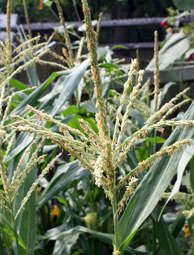
My corn looked good until those nasty stinkbugs took hold.

Stupid stinkbugs have ruined my corn! I was so excited to harvest my Jade Blue sweet corn, but when I peeled back the husk, the kernels are all shriveled and warped. The foliage is completely covered with stinkbugs and the white splotchy damage caused by their feeding.

I ran into my neighbor while walking our dog last night, and we were talking about how his corn is inedible this year, too, for the same reason. He has grown sweet corn in his veggie patch for 20 some years and has never had a loss like this because of an insect. (The deer and raccoons are a different story!) It’s so disheartening. We chatted for a good half hour about all the losses our gardens have had this year due to the stinkbugs. They are going to be crazy bad in our houses this winter. Gross.

I am leaving tomorrow for the Garden Writer’s Association’s annual conference in Indianapolis. I’m sure stinkbugs will come up as a topic in many conversations throughout the weekend. I have been invited to give a lecture on beneficial insects during the conference (stinkbugs are certainly not included on that list!) and am looking forward to seeing some old friends and making many new ones. I’m excited to have lots of new insect images to use during my presentation—I finally invested in an extension tube for my camera and have been trolling about the garden on a near daily basis to catch some good bugs in action. I wonder if they will ever notice what a great and prolific protein source stinkbugs are …

« More Dirt on Gardening »

Categories
News

Diet Supplements May Boost Pig Immunity

Adult pigs and piglets in barnyard
Courtesy Jupiterimages/Bananastock/ Thinkstock
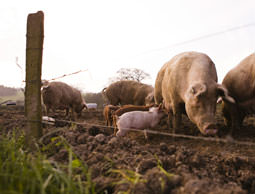
Feeding pigs a diet with mannan oligosaccharides could help regulate the animals’ immune response to diseases.

A new study at the University of Illinois suggests that feeding pigs mannan oligosaccharides, common nutritional supplements found in livestock feed, can fine-tune their immune systems.

“When it comes to keeping pigs healthy, there are some potentially powerful tools we can use in the diet besides antibiotics,” says James Pettigrew, professor of animal science at UI. “We have a tendency to think that we can administer health through a needle, by giving pigs antibiotics, and even through systems like all-in/all-out pig flow. These are important, but there are also many health benefits we can realize through the diet.”

MOS is a product made from the cell wall of yeast. It contains carbohydrates that might provide special benefits to pigs, Pettigrew says. Previous research shows that MOS increased the growth rates in newly weaned pigs and changed the microbial populations in pigs’ digestive tracts.

Tung Che, a postdoctoral research associate in Pettigrew’s laboratory, led two studies looking at MOS and its effect on pigs experimentally infected with porcine reproductive and respiratory syndrome virus.

In these studies, researchers evaluated how feeding MOS can regulate immune responses in pigs infected with PRRSV.

“We found MOS can enhance immune responses in pigs, but it can also alleviate the overstimulation of the immune system,” Che says. “MOS increases the total number of immune cells, such as leukocytes and lymphocytes, in the blood at the early stage of infection.”

This could be quite a benefit for pork producers fighting PRRSV, a respiratory disease that causes a reduction of immune cells.

“This is important because the increase in leukocytes and lymphocytes can help the animal to fight not only PRRSV but also secondary bacterial co-infections that are common with PRRSV,” Che says.

Seven days after the PRRSV inoculation, pigs experienced reduced fevers and had a better feed efficiency, indicating a reduction of ongoing inflammation.

“We wanted to find out why MOS enhances the immune system but at the same time alleviates the overstimulation of the immune system as observed by reduced fever,” Che says.

The results were consistent with the clinical signs and showed that in non-challenged pigs, MOS increased the expression of genes for cell receptors and those involved in immunity.

However, in the PRRSV-infected pigs, MOS reduced the expression of cytokine and chemokine genes involved in inflammatory responses. This combination of responses explains the enhanced immune response and the reduction of fever, Che says.

“MOS stimulates the immune system and enhances the immune response, except when the immune system is already challenged,” Pettigrew explains. “MOS actually reduces the inflammatory response in pigs with challenged immune systems. This may be how the product improves growth performance because it redirects nutrients to growth rather than the immune system.”

Che says MOS also improves pigs’ feed efficiency from day seven to day 14 after inoculation with PRRSV.

“PRRSV interferes with the immune response and makes pigs more susceptible to bacterial infections,” Pettigrew says. “This product seems to counteract this effect. It may even reduce bacterial infections associated with PRRSV, although we did not test that specifically.”

The research team is repeating this experiment with a second generation of MOS-like products to learn more about how this mechanism in MOS works.

“We are increasingly concerned about the importance of keeping pigs healthy, so we direct much of our research program to looking at things we can do in the diet to improve the health of pigs,” Pettigrew says.

“Mannan oligosaccharide modulates gene expression profile in pigs experimentally infected with porcine reproductive and respiratory syndrome virus” and “Mannan oligosaccharide improves immune responses and growth efficiency of nursery pigs experimentally infected with porcine reproductive and respiratory syndrome virus” were both published in the Journal of Animal Science. 

Researchers involved in the study include Tung Che, Rod Johnson, Keith Kelley and James Pettigrew of the University of Illinois; Bill Van Alstine of the Animal Disease and Diagnostic Laboratory at Purdue University; and Karl Dawson and Colm Moran of Alltech. Funding was provided by Alltech.

Categories
Equipment

Getting a Fast Shave

Drawknife
Photo by Jim Ruen
My drawknife is one tool that has blown away my expectations of it.

It’s great finding that tool you’ve been wanting. It is even greater when you get to put it to use and it does what you expected and more. That was the case the other day when I needed to bring a 4×4 post down 1/4 inch on two sides. My new (old) drawknife came to the rescue.

We needed a new post for hanging bird feeders and had picked up an 8-foot 4×4 at the local lumberyard. In order to fit it in the supports, I needed to shave it down a bit. I could have used a handsaw or a wood chisel—either one would have been a fine alternative. However, I remembered the drawknife I had recently picked up at an antique store.

For years I had looked at drawings or photos of craftsmen using drawknives. Occasionally, I’d seen them in tool catalogs. The twin-handled blade seemed to have an intrinsic value. You might say I was “drawn” to them. (Sorry, I couldn’t resist the pun.)

Drawknives come in many styles with blades of every shape. Mine is straight with the handles offset just enough to make a good pull. It does have a few knicks in it, and it’s quite dull. I didn’t dress them out completely before use, but I did sharpen up the edge.

Once I had the post crudely braced, I set to with the drawknife. The wood shavings were large and peeled away like cheese under a knife. In a minute or two, I had the 1/4 inch off of each of the two sides. It went so easy and so fast, I was almost disappointed to be finished.

<< More Shop Talk >>