Categories
Crops & Gardening

Watching Grass Grow

Grass growing
Photo by Jessica Walliser
The garden is doing well, but I can’t wait for the grass to grow!

Progress, progress, progress. How I love it when garden projects move along as planned!

I managed to sow just less than 35 pounds of grass seed last week and cover it with a dozen bails of straw. What a job it was, but the seed has already started to germinate. I’m dreaming of the day (hopefully in the not-so-distant future) where the mud is gone and I can walk barefoot through the grass in my backyard. One day at a time, for now, but it’s coming. Lugging the sprinkler around is not a fun chore, but when the grass begins to sprout, it’s all worth it for sure.

All the nursery finds I mentioned in last week’s post have been planted along with several others I acquired this week, including a beautiful little Stewartia tree (I have always wanted one!), a prostrate blue arborvitae (I know, who knew those even existed?), and 10 Winter Gem boxwoods that now line the edge of the patio around the fire pit. It’s beginning to look a bit like a garden out there.

All the while, the veggie garden has been chugging along. I had to water it this week, too,as we haven’t had rain in quite some time and things were looking a bit dry.

We’ve enjoyed the last few lettuce harvests—they are beginning to bolt and turn bitter, but the chickens sure do enjoy them once they are beyond human consumption. All my cucumbers and pumpkins germinated, including the ones I planted in our compost bin, and the tomatoes are just beginning to set flowers.

The only thing I have missed this year is the sugar snap peas. Because of all the rain this spring, I didn’t manage to get into the garden to plant any. They’re one of my favorites, and I have missed having them. Thankfully, though, I have found them at the farmers’ market the past few Saturdays and have gotten my fill. Not quite the same as homegrown, but darned close!  

« More Dirt on Gardening »

Categories
Beekeeping

5 Pollinator-preservation Pointers

Bee
Courtesy iStockphoto/Thinkstock
Encourage pollinators, like bees, to work your farm crops by protecting their natural habitats on or near your farm.

Just think about the time and effort you put into your hobby-farm crops—creating the perfect soil mix, planting the seeds and nurturing the growing plants. All that work would be in vain if it weren’t for bees, birds, butterflies, bats and other crop pollinators busily hopping between crops to fertilize them.

Due to pesticide use and other environmental factors, the number of pollinators aiding our farmland has drastically fallen over the years. According to the North American Pollinator Protection Campaign, Honey-bee populations were nearly cut in half between the 1940s and 1995 and two bat- and 13 bird-pollinator species are listed as endangered by the U.S. Fish and Wildlife Service.

Because the remaining pollinators have remained faithful to helping you produce a bountiful farm-fresh harvest, do them a favor by nurturing their living environment with these tips.

1. Plant a variety of native flowers.
Native pollinators use the nectar of native flowers as food and sometimes use the flowers as host plants for their larvae. Research the pollinators living in your area and the flowers that can best support their livelihood. For example, bumblebees are attracted to deep, complex flowers, like lupines, while other smaller bees are more likely to visit open flowers, like asters. By incorporating a variety of flowers into your farm landscape, you can nurture the pollinator populations in your area.

2. Protect pollinator nesting areas.
Don’t be fooled by the Honey bee’s honeycomb—this isn’t the only pollinator habitat you can host on your farm. Different pollinators depend on a range of habitats to create their communities and support reproduction. Some pollinators will make nests in dead trees while others will burrow tunnels in the ground. Try to foster these types of areas around your farm, especially if they’re near pollinator foraging sites. You many need to think twice about cutting down that old tree!

3. Be wise with pesticides.
When choosing a pesticide to use on your crops, consider the toxicity to native pollinators. Read the labels on pesticides to find out how the chemical may affect pollinators. Many pesticide labels contain “Bee Hazard” warnings or a Extended Residual Toxicity (ERT) indictor and offer guidance of how to apply it to your crops to minimize harm to pollinators.

If using pesticides, do so only when necessary. Try to avoid spraying in areas where pollinators live and during times of low temperatures, and guard against pesticide drift from ground or aerial applications. If possible, control pests instead by using integrated-pest-management techniques, which do not require the use of pollinator-toxic chemicals.

4. Preserve natural areas near farmland.
Encourage pollinators to visit your farm by providing them with natural habitat adjacent to your farmland. Most farmland lacks the habitat necessary to support native pollinators, so set aside a managed space (free from pesticide drift) where they can prosper. The Xerces Society, an organization dedicated to invertebrate conservation, recommends using land-management tools such as grazing, fire and mowing to foster a natural area that benefits pollinators.

5. Go the extra mile for pollinator conservation.
Many grants are available to help hobby farmers help pollinators. Check out a few of them below:

Categories
Urban Farming

Getting Game

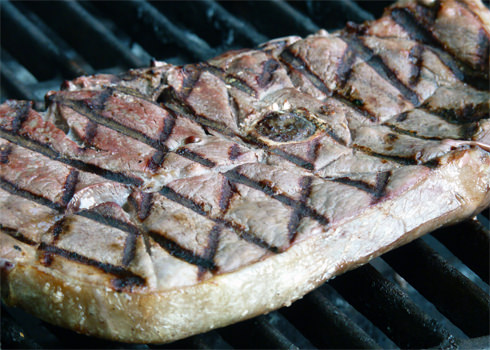
grilled steak

Photo by Judith Hausman

With this local venison steak, my grill has never been happier!

Doug Baum grew up fly fishing, saltwater fishing and freshwater fishing, but he didn’t start hunting until about five years ago, first with his dad and then with his son, now 12.

“At first, Ben just came out in the field with us bird hunting,” Doug explains. “Then it was his idea to learn how to bowhunt for deer.” Bowhunting is the only option in our county, where deer overpopulation is a serious problem because they eat virtually all shrubs and plantings and because they spread Lyme disease.”

Doug’s parents have 7 acres in a nearby suburban village, so he and Ben have their own private reserve in the late fall.
From September to March, bird hunting takes them a little farther up the Hudson Valley to bag pheasant, quail and partridge and to Long Island blinds from December to January for wild duck (Doug’s favorite). The morning we spoke, the father-and-son pair was returning (empty-handed) from hunting turkey, another wild population that has come back in force in our ex-urbs.

The Hungry Locavore can’t get much more local than the game Doug and his family love to eat as much as to hunt.

“When we head out to hunt, we’re thinking about what we want to eat,” says Doug. “That’s our family rule; we only take what we’ll eat.” He avoids bucks and very young does and he points out that, when it’s a good acorn year, the venison tastes even better.

Apparently, only sea ducks don’t taste good, perhaps because of the muddy wetlands that they feed in. Doug’s daughter, Maiya, favors “ribeye in the sky,” or Canada goose, which also pose a serious nuisance and even a health threat on area waterfronts, golf courses and parks. Doug says the breast meat looks just like roast beef.

Late this winter, Doug’s wife, Heather, urged four pheasant on me and four chukar partridge breasts, along with a few beautiful venison chops, stew meat and a steak (the little beauty pictured here on my barbecue grill), her favorite cut. I was also lucky enough to receive a number of hints for barbecuing; venison cooks very quickly and will be tough if overcooked.

Heather keeps her preparation easy, using Chinese hoisin sauce or bottled salad dressing for the marinades.

“With the full flavor of these natural, non-processed meats, I use very little seasoning,” says Heather. “We have never had to tenderize the meat to enhance its flavor because Doug chooses the right timing [pre-rut, October], the right age and gender.”

A very traditional marinade for venison includes red wine vinegar, red wine or dark beer, onion, black pepper, bay leaf and juniper berries, which suggest the woods where deer live (and also are responsible for the characteristic taste of gin). The spices you might use with lamb works well for venison, too: French: oil, red wine, rosemary and garlic; Moroccan: cumin, onion, cinnamon and a little cayenne; Greek: oregano, lemon, olive oil and bay. I’ll wrap the small bird breasts in good bacon, sear them quickly and then finish them in the oven or grill them carefully so they don’t dry out. Any game is good cacciatore too: quickly browned and then simmered in tomatoes, onion and garlic until very tender.

When animals — especially overpopulated species — are hunted with such respect and care, when they are appreciated for eating and enjoyed as a family, I support, even applaud hunting, and enjoy the result of it, too.

Read more of The Hungry Locavore »

Categories
News

Federal Funding to Aid Food Deserts

Roadside farm stand
Courtesy Hemera/Thinkstock
The USDA’s Farmers Market Promotion Program is focusing its funding to increase the availability of farm products in food deserts.

Approximately $10 million in funding for the USDA’s Farmers Market Promotion Program will be used to help increase availability of local farm products in communities throughout the U.S.

“These grants will put resources into rural and urban economies to create and support direct-marketing opportunities for farmers,” says Deputy Agriculture Secretary Kathleen Merrigan. “Consumer and farmer enthusiasm for direct marketing has never been greater. This year, we will place emphasis on food deserts because America’s low-income and underserved communities need greater access to healthy, fresh food.” 

In fiscal year 2011, USDA’s Agricultural Marketing Service will competitively award grants to agricultural projects that develop producer-to-consumer market outlets, including but not limited to farmers’ markets, community-supported agriculture and roadside stands. Priority status will be granted to those projects that expand healthy food choices in food deserts, areas with limited access to affordable and nutritious foods in urban, rural and tribal neighborhoods. AMS will continue to target 10 percent of grant funding toward new electronic benefits-transfer projects at farmers’ markets.

The USDA, in coordination with the Departments of the Treasury and Health and Human Services, says it seeks to eliminate food deserts in the U.S. by increasing access to fresh, healthy and affordable food choices for all Americans, while expanding market opportunities for farmers and ranchers. Through a suite of funding options, the federal partners are targeting food deserts. Earlier this year, USDA’s Economic Research Service released a Food Desert Locator tool online to pinpoint the location of food deserts across the country and provide data on population characteristics of census tracts where residents have limited access to affordable and nutritious foods. 

Because of changes to the Farmers Market Promotion Program in fiscal year 2011, applicants should visit the FMPP website for full details about food deserts and assistance in applying. The “FMPP Pre-Application Guide” also helps applicants assess their readiness for implementing a federally-funded grant project, and the “How to Apply for an FMPP Grant” tutorial will guide them through completion of the application.

Authorized by the Farmer-to-Consumer Direct Marketing Act of 1976 and amended by the Food, Conservation, and Energy Act of 2008 (the Farm Bill), FMPP is in its sixth year of funding direct markets that benefit local and regional economies.

Since 1994, the number of farmers’ markets listed in the USDA National Farmers Market Directory has skyrocketed from 1,755 to 6,132. The directory captures information about where and when farmers’ markets operate, if they participate in federal nutrition-benefit programs, and detailed information about their seasonality and location.

Complete FMPP applications must be received—not postmarked—by AMS no later than close of business on July 1, 2011. Applications received after the deadline and incomplete applications will not be considered.

For more information, contact in writing: Carmen Humphrey, program manager, Farmers Market Promotion Program, AMS, 1400 Independence Ave., SW, Room 4509—South Building, Washington, D.C. 20250; call 202-720-8317; or fax 202-690-0031.

Categories
Equipment

Born-again Windows

Cabin
Photo by Jim Ruen
We used recycled windows to build a small cabin at our tree farm.

We’ve been needing a “cabin” at our tree farm, which is six miles from our home. There are multiple reasons for building the cabin, including nailing down the zoning approval for a house some day. We also are planning an orchard and garden at the farm site to take advantage of sunlight our wooded lot doesn’t get.

Our needs are simple, so the 12- by 16-foot cabin is simple. Hopes to build it myself faded as the permit deadline neared. Finally, I hired a carpentry crew to do the job. They had done a great job on the windows at our place, and I knew they could handle this job with their eyes closed.

Best of all, the crew chief didn’t argue with what I wanted, which included reusing some windows we had removed from our home. I used Google SketchUp software to place the recycled windows. One was a combination unit with two crank-out panes to either side of a fixed pane, while the other two windows had once been sliding patio doors. 

The combination window had been replaced due to wood-casing deterioration. It will be plenty good enough for the cabin, as I plan to use some wood stabilizer and filler on the bad wood. The patio door had failed as a unit, but the two components would make fine fixed panes.

The entry door also was recycled from my parent’s house before they did some remodeling. For the past 50 years, it has rested in an old shed. Somehow the glass pane in it had survived without breaking or shattering.

The cabin went up according to plan. The door still needs to be hung, but the old windows have all been born again, letting in the light and sharing their views once more.

<< More Shop Talk >>

Categories
Urban Farming

Top 10 Climate-Ready Cities in the U.S.

Golden Gate Bridge, San Francisco

Courtesy Creatas Images/Thinkstock

San Francisco leads the way among the top climate-ready cities in the United States.

10. Chicago

Chicago Mayor Richard Daley has inspired this grand city to pull out of its once-Rust Belt manufacturing past and into one of the most livable big cities in the United States. Because of his good deeds, the city has been touted to become the greenest metropolitan city in the Midwest. Chicago has more than 300 miles of bikeways, 7 million square feet of green roofs and boasts more green hotels (13) than any city in the country.

9. San Jose, Calif.

San Jose is relatively unknown in the green world. Having once been the burgeoning backbone behind Silicon Valley, it fell behind when the dot-com bubble burst and people took their money elsewhere, which meant less attention on an environmental makeover. However, in 2007, San Jose city council approved a Green Vision, which had the goal of making San Jose the center of clean technology innovation. In 2010, the city invested in a number of clean tech funds. Not only is its per-capita energy use only 4.8 percent, but it also boasts 53.2 percent more trail miles than before the Green Vision was approved.

8. Philadelphia (tie with New York )

Philadelphia has taken efforts to transparently track its sustainability performance against forward-looking targets. This isn’t something every city does. The Mayor’s Office of Sustainability released its 2010 report, which stated city government energy consumption and greenhouse emissions were down as much as 30 percent of their goal and local food is now available within 10 minutes of 75 percent of the city’s residents.

7. New York (tie with Philadelphia)

NYC Mayor Michael Bloomberg boldly stated, “If you can’t track it, you can’t measure it.” And that’s exactly what the city is doing; publicly tracking its environmental progress seems to get the ball rolling. New York City has the envious No. 1-ranked public-transit-per-capita system, even though it’s the most densely populated city in the United States.

6. San Diego

San Diego has luck on its side in that it’s right next to the ocean. The beautiful climate and abundance of sun is allowing the city to add 50 megawatts of renewable energy by 2013, much of which is solar. As far as public transportation, San Diego has a famous light-rail trolley system that makes 90,000 daily trips, putting it in the running for one of the best.

5. Denver

Alongside its breathtaking views of the Rockies and the honor of being the eighth healthiest state in the country by Forbes magazine, Denver is also a leader in the transition to a low-carbon economy. The city’s Fast Track light-rail program not only built up a green economy, but helped keep emissions low.

4. Washington, D.C.

Although our national leaders based in this city have had a difficult time with making the entire country an overall green success, the capitol city is No. 5 due to D.C. residents being the second most active users of public rail transportation. On top of this, District leaders have vowed to reduce the city’s emissions by 30 percent by 2020 and 80 percent by 2050, passed a very buff green building code and is second in the country (behind Chicago) in green roofs.

3. Portland, Ore.

This small city has an excellent public transportation system and a double-digit number of downtown LEED-certified buildings. Also, in this college town, Portland’s universities are actively committed to sustainability.

2. Seattle, Wash.

Seattle Mayor Greg Nickels created the U.S. Mayors for Climate Protection Agreement, which vows to reduce carbon emissions in their cities below 1990 levels, in line with the Kyoto Protocol. The city also has six universities committed to the Association for the Advancement of Sustainability in Higher Education and houses Bainbridge Graduate Institute, which has one of the first MBA programs in the world dedicated to sustainability education. Seattle is also among leading cities with the most LEED-certified buildings in the United States. As for carbon reduction, the city is home to the country’s first carbon-neutral major utility.

1. San Francisco

San Francisco remains the leader as the top most environmentally advanced city in the United States. The city is part of four major climate agreements: U.S. Mayors for Climate Protection, Clinton 40, Carbon War Room and ICLEI. Like a few other cities, its universities (11) are members of AASHE, and the city also has one of the first and top MBA (Presidio Graduate School) programs dedicated to sustainability education. San Francisco is the winner in the race for the most LEED-certified buildings per capita in the United States and the largest impact investment conference in the world resides there (SOCAP).

Categories
Recipes

Cheese-fried Zucchini Sticks

Ingredients

  • 1/4 cup dried bread crumbs
  • 2 T. finely grated Parmesan cheese
  • 2 T. flour
  • 1 tsp. salt
  • 2 medium zucchini, sliced lengthwise into sticks (approximately 3/4-inch square; length will vary)
  • 1 egg, beaten
  • 2 T. olive oil (more if needed)

Preparation
Combine breadcrumbs, cheese, flour and salt in a large plastic bag; shake until well combined. Dip zucchini sticks in egg, then toss in plastic bag to coat with bread crumb mixture.

In a large skillet, heat oil over medium-high heat. Fry zucchini sticks, turning occasionally, until golden brown and crispy. Drain on paper towels. Serve immediately.

Makes 4 appetizer servings.

Categories
Recipes

Zucchini Bars

Zucchini bars
Photo by Stephanie Staton

Ingredients

Bars

  • 2 cups sugar
  • 1 cup vegetable oil
  • 4 eggs
  • 2½ cups flour
  • 2 tsp. cinnamon
  • 1/2 tsp. salt
  • 1/2 tsp. baking powder
  • 1/2 tsp. soda
  • 2 cups peeled, grated zucchini

Frosting

  • 4 T. butter, room temperature
  • 3 ounces cream cheese, room temperature
  • 1 tsp. vanilla
  • 2½ cups powdered sugar
  • chopped walnuts for garnish (optional)

Preparation

Bars
Preheat oven to 350 degrees F.

In large mixing bowl, beat sugar, oil and eggs until smooth. In separate bowl, stir together dry ingredients. Beat dry ingredients into oil mixture until thoroughly combined and smooth. Fold in grated zucchini.

Spread batter in greased 11- by 17-inch pan.

Bake at 350 degrees F for 30 minutes or until a toothpick inserted in middle comes out clean. Place on rack and let cool.

Frosting 
Beat together butter, cream cheese and vanilla until smooth. Beat in powdered sugar. Spread on cooled zucchini bars. Top with chopped walnuts if desired.

Makes approximately 30 bars.

Categories
Recipes

Zucchini-basil Soup

Zucchini-basil soup
Courtesy iStockphoto/Thinkstock

Ingredients

  • 3 T. extra-virgin olive oil
  • 1½ cups roughly chopped onions (any kind)
  • 1 T. chopped garlic
  • 1/4 tsp. salt, plus more to taste
  • 1 cup seeded and chopped sweet bell pepper (any color)
  • 2½ cups coarsely chopped zucchini
  • 4 cups vegetable stock
  • 4 cups fresh spinach leaves, loosely packed
  • 1 cup coarsely chopped fresh sweet basil
  • chopped fresh tomato for garnish (optional)

Preparation
Heat the olive oil in a large, thick-bottomed pot over medium-high heat. Sauté onions, garlic and salt until vegetables start to soften. Stir in pepper, zucchini and stock. Bring to a simmer, and cook until pepper is soft, about 10 minutes.

Stir in the spinach and basil just until wilted. Use an immersion blender to blend until smooth. Add more salt if needed. Serve hot, topped with chopped fresh tomatoes if desired.

Makes about 6 servings.

Categories
Animals

By the Moon

Lamb
Photo by Sue Weaver
Ursula wanted to have baby Dixie during the full moon, but she couldn’t hold out that long.

Yesterday, Ursula brought little Dixie over to meet us. She’s tiny! We told Ursula what a pretty lamb she is. That made Ursula smile.

Then we asked Ursula why it took so long to have her lamb and she said, “I wanted to have her at the full moon, but I couldn’t wait.” Uzzi and I must have looked puzzled because then she added, “Ewes often lamb at full-moon time. Didn’t you know?”

Uzzi and I looked at each other. We’re guys, so maybe that’s why it sounded like hokum. We decided we’d Google it during the night.

And guess what? We couldn’t find any scientific studies about animals giving birth when the moon is full, but there are some that talk about when humans have babies.

Since at least Roman times, humans have believed the moon affects birthing. And not just having babies but also how people act. It’s called the lunar or Transylvanian effect. Some hospitals and police departments schedule extra personnel when the moon is full because they think people act weirder around that time of the month. The term “lunacy” is derived from luna, the Latin word for “moon.” Imagine that!

But is it true? Not so, say researchers Ivan Kelly, James Rotton and Riger Culver of the University of Saskatchewan, who in 1996, analyzed 37 studies that examined relationships between the moon’s phases and in human behavior. They couldn’t find any positive correlations, so they came away unconvinced.

Some people think the moon exerts an influence on everything we do from setting fence posts to planting bean seeds in the garden. If its done in the correct phase of the moon (full moon, first quarter, second quarter, new moon, third quarter and fourth quarter) fence posts stay tight and the garden grows bushels of healthy beans.

Mom’s Irish grandpa did everything by the moon. She remembers him planting crops, like tomatoes, peppers and beans, that produce above the ground during the increasing light of the moon (between the new moon to full moon) and root crops, like potatoes, onions and carrots, that produce below the ground during the decreasing light of the third quarter. But he planted nothing during the fourth quarter because that’s when he cultivated, pulled weeds and zapped pests.

Mom sometimes plants by the moon, sometimes she doesn’t. When she does, she uses a free guide from Earl May Nursery. (To get it, mouse over “Information,” then over “How-To Guides,” and click on “Miscellaneous;” it’s the first item on the list).

Do you plant your garden by the moon? Or do you want to give it a try? Please add your comments! And if you want to learn more about it, buy a Farmer’s Almanac or go to your favorite search engine and type in “plant by the moon.”

« More Mondays with Martok »