Categories
News

MyPlate Promotes Whole-food Eating

USDA MyPlate icon
Courtesy USDA
The USDA’s new MyPlate icon emphasizes healthy eating with each meal.

Last week, the USDA along with First Lady Michelle Obama unveiled a new way for Americans to view the food they eat.

Replacing the food pyramid, developed in the 1980s, the USDA’s new MyPlate icon attempts to simplify healthy eating for American families. Although it’s the simplicity that has caused the new jewel-toned icon to endure intense public scrutiny, the USDA intends to use it to encourage consumers to think about healthy eating with each meal.

Along with emphasizing the ratio in which the various food groups—fruit, vegetables, grains, protein and dairy—should be consumed, the icon’s accompanying website, ChooseMyPlate.gov, points out the necessity for farm freshness as the means to obtaining a healthy diet. It specifically directs food consumers to:

  • Make half of your plate at each meal fruits and vegetables.
  • Make half of your grain consumption whole grains.
  • Avoid sugary drinks, and opt for water instead.
  • Choose lean proteins, like chicken and legumes.

“The new dietary guidance icon will be a tipping point in how Americans literally visualize what they should eat,” says Tom Stenzel, president and CEO of the United Fresh Produce Association. “The message to ‘make half your plate fruits and vegetables’ is simple, compelling and effective. It’s a breakthrough message that consumers can practice every day at every meal.”

Instead of emphasizing portion sizes to consumers, MyPlate recommendations are made in household equivalents, such as cups for vegetables, fruits and dairy and ounces for grains and proteins.

Although some things about America’s views on food consumption are not going to change (tomatoes, cukes and peppers will still be considered vegetables, not fruits), some of the new guidelines reflect the country’s growing food awareness. Consumers are told, for example, to vary their protein choices, which include nuts, seeds and legumes as well as meat, but nuts, peanut butter and legumes are now considered meat “alternates” due to their high caloric volume.

Consumers can find out more information about which foods are in which food groups by clicking on the “Food Groups” section of the ChooseMyPlate.gov website.  Each food group section contains a Food Gallery that can serve as a guide to sizes.

The guidelines on the website were developed by nutritionists, dietitians, economists and policy experts at USDA based on recommendations found in the Dietary Guidelines for Americans.

Take Action
Farmers interested in promoting healthy eating among younger generations can give their input on a proposed guide for marketing food to children. The recommendations for nutritional quality of food marketed to children and adolescents, ages 2 to 17, were created by a working group of federal nutrition, health, and marketing experts from four federal agencies (USDA, Federal Trade Commission, Food and Drug Administration, Centers for Disease Control and Prevention).

Public comments can be viewed and made electronically on the Federal Trade Commission website. Instructions on how to submit a comment via mail are available in the proposed guide

Comments will be accepted through July 14, 2011.  

Categories
Urban Farming

Garden Where You Can

Maria, Italian gardener

Photo by Rick Gush

This garden, wedged between a road and a 15-foot drop, has been in Maria’s family for generations.

Maria tends an 8-foot-wide by 50-yard-long strip that is wedged between the main road and a 15-foot drop. The garden is always tidy and full of healthy-looking plants. I’ve been driving past it for 10 years now and finally decided I had to stop and chat with the owner.

Maria told me that the garden has been worked by her family for many generations, which means that this little strip of a garden has witnessed a great deal of history and undoubtedly experienced a whole lot of poaching from passing soldiers. Maria’s garden runs right alongside the road called Via Aurelia, which is the north-south road that the Romans built. Armies have been marching up and down this road since before Hannibal brought his elephants here, and everybody from Napoleon to the Holy Roman Emperors and the Normans to the Nazis have used this road as the main thoroughfare leading to southern Italy.

When people think of a vegetable garden, the image that first comes to mind is a nice, big, flat area with rows and rows of vegetable plants. But in truth, a whole lot of gardening is accomplished in other types of spaces. Little corners, tiny community garden plots, pots on terraces and narrow urban strips probably make up as much as half of the garden locations around the world. People garden where they can, not where they wish they could.

I’ve always felt pleasure in seeing the many ways in which gardeners have adapted non-optimal spaces for cultivation. I remember my shock at seeing Thomas Jefferson’s vegetable garden in Virginia — 50 yards wide and 1,000 yards long. It was almost too good! Any fool could grow a garden there.

On the other hand, one of the most impressive gardens I’ve ever seen was an abandoned lot behind a tire garage in Chicago, where a group of homeless people was growing a few zucchini and beans. Here in Liguria, Italy, I’ve even seen a few gardens that are 4 feet square and right on the edge of a cliff that drops 200 feet into the ocean. I do like all the vegetables that we get from our own garden, but I’m most proud of the improbability of the steep cliff site.

To have wrestled a wonderfully blooming garden from that hostile chunk of rock was an act of horticultural machismo, and I’m just dorky enough to appreciate that fact.

I’d love to see your gardens. Please join me on the Urban Farm forum, where you can post your garden photos!

Categories
News

Washington Launches Rural Council

Rural community
Courtesy AbleStock.com/Hemera Technologies/Thinkstock
The White House Rural Council was established to help rural communities thrive.

While rural communities face challenges, they also present economic potential. To address these challenges, build on the federal government’s rural economic strategy and improve the implementation of that strategy, President Obama signed an executive order on June 9, 2011, establishing the White House Rural Council, a board that will promote the well-being of rural communities.   

The White House Rural Council will coordinate programs across government to encourage public-private partnerships to promote further economic prosperity and quality of life in rural communities nationwide. Chaired by Agriculture Secretary Tom Vilsack, the council will be responsible for providing recommendations for investment in rural areas and will coordinate federal engagement with a variety of rural stakeholders, including agricultural organizations, small businesses, and state, local and tribal governments. 

“Rural America makes significant contributions to the security, prosperity and economic strength of our country,” Vilsack says. “The Rural Council announced by President Obama shows his continued focus on promoting economic opportunity, creating jobs and enhancing the quality of life for those who live in rural America. Together with the rest of the Obama administration, USDA has worked to support families and businesses in rural communities so that their success will pay dividends for all Americans.”

Rural communities are also leading the way in finding clean and sustainable solutions to current energy challenges, according to EPA administrator Lisa P. Jackson.

“I’ve traveled from Georgia to Iowa to California to speak face-to-face with rural communities, hear their concerns and see their innovative ideas at work,” Jackson says. “This council will help us build on our efforts here at EPA to better engage all communities in the vital work of protecting our environment and our health.”

In the coming months, the White House Rural Council will focus on job creation and economic development by increasing the flow of capital to rural areas, promoting innovation, expanding digital and physical networks, and celebrating opportunity through America’s natural resources. The council will begin discussing key factors for growth, including:

  • Jobs: Improve job training and workforce development in rural communities
  • Agriculture: Expand markets for agriculture, including regional food systems and exports
  • Access to Credit: Increase opportunity by expanding access to capital in rural communities and fostering local investment
  • Innovation: Promote the expansion of biofuels production capacity and community-based renewable-energy projects
  • Networks: Develop high-growth regional economies by capitalizing on inherent regional strengths
  • Health care: Improve access to quality healthcare through expansion of health-technology systems
  • Education: Increase post-secondary enrollment rates and completion for rural students
  • Broadband: Support the President’s plan to increase broadband opportunities in rural communities
  • Infrastructure: Coordinate investment in critical rural infrastructure
  • Ecosystem markets: Expanding opportunities for conservation, outdoor opportunities and economic growth on working lands and public lands

Since taking office, the Obama Administration has set goals of modernizing infrastructure by providing broadband access to 10 million Americans, expanding educational opportunities for students in rural areas, and providing affordable healthcare. In the long term, these unparalleled rural investments will help ensure that America’s rural communities are repopulating, self-sustaining and thriving economically.

Categories
Crops & Gardening

Packed with Perennials

Perennial garden bed
Photo by Jessica Walliser
Take a peek at my drought-resistant perennial garden bed in full bloom.

The perennial garden beds have been simply spectacular the past two weeks. The peonies are now in full bloom, the bearded iris are strutting their stuff, and the forget-me-nots have filled my front shade bed with a big drift of tiny blue flowers.

I didn’t do much planting in the front perennial garden beds this year because we have been giving so much attention to the backyard. I did manage, however, to tuck some zinnias, cosmos, bells of Ireland and love-lies-bleeding into the beds in hopes of getting some season-long color in there. So far they seem to be doing just great.

Much to my chagrin, one of my favorite self-sowing annuals has decided to take over the world and germinate about a million little seedlings throughout the driveway garden bed. I normally love Verbena bonariensis for it’s skeleton-like structure and butterfly-magnet flowers, but despite my best deadheading attempts last year, I obviously did not remove enough of the seed heads before they ripened. Ugh.

This weekend, I must get in the garden bed and yank out most of the seedlings. I’m going to try to leave only a handful of plants behind so I’m not stuck with the same situation again next year. We’ll see how that goes. Perhaps I’ll try to share the love and pass some seedlings along to friends, with fair warning, of course.

The other shining star of the perennial garden beds right now is the blue salvia. If ever there were a stalwart plant for my baking-hot driveway garden bed, this is it. Plus, I’ve never had to stake it or do any sort of fussing, outside of the twice annual lopping it gets to generate new blooms. I have several different varieties but my favorite, by far, is May Night. Such a beautiful, clear-blue color!

Ah, yes, summer has begun.

« More Dirt on Gardening »

Categories
Urban Farming

Science Barge

Science Barge

Photo by Gwen Hill

The hydroponic system on the Science Barge keeps vegetables healthy and strong.

The small spinach, totsoi, kale, chard, parsley, basil and dill plants growing in the Science Barge greenhouse look sturdy and bright. It’s hard to imagine that 50 pounds of produce had been harvested and donated to a Yonkers, N.Y. food pantry in early May, two days before our visit. Even more food than that will be donated every two weeks when the string-trestled pea plants, climbing (and then wrapped-around) cherry tomato plants, stacked-up collard greens and the first of two cucumber crops start producing. Heavy melons will eventually dangle from vertical vines, which begin with their roots in a Dutch or Bato bucket hydroponic system.

The Science Barge has produced 35 tons of tomatoes in just 3 percent of the space that would be needed for traditional farming. The 1,300 square feet of protected, season-extending growing space on the Science Barge can grow as much as an acre of land.

Moored in the Hudson River on the Yonkers waterfront, the Science Barge has a view of the Palisades from one end, the bridges of New York City from the other and faces the commuter train station. The Science Barge was constructed and originally operated by New York Sun Works and acquired in 2008 by Groundwork Hudson Valley, the local chapter of Groundwork USA, a non-profit that promotes community-based efforts that improve environmental, economic and social well-being.

The Science Barge’s Director of Education, Gwen Hill, showed us around, explaining that the several different hydroponic systems not only produce more vegetables, but also grow them faster and cleaner. The Nutrient Film Technique setup, where the shallow-rooted greens and herbs grow, uses small plugs of rock wool, a fibrous growing medium, that fill the holes in a rack of simple pipes. Water- and salt-based soluble nutrients bathe the roots. Water is recycled in the systems too, which uses 1/10 the water of a soil system. The Science Barge also carries colorfully decorated 1,200-gallon rainwater collection tanks, a reverse-osmosis system to desalinate the Hudson’s brackish water, vermiculture and composting facilities, a passive solar-wind-backup biodiesel system, which supplies all their energy needs and a small onboard wetland that filters water before it is returned to the Hudson. Educator Rena Meadows showed us the Science Barge’s soon-to-be-perfected fish-growing loop, in which fish effluent nourishes plants that then clean the water and return it to the fish tanks.

The primary mission of the Science Barge is education, and the “cool” sustainable systems must thrill kids. Although funding for field trips has been threatened locally, schools from New York, Connecticut and New Jersey have visited, as have garden groups, seniors and area college groups. The Science Barge is open to the public for tours on weekends. It’s amazing what delicious, vital produce this cost-effective model can grow in so little space, with such light environmental impact and a breathtaking view to boot.

Categories
Equipment

Try Something Else

When I was a senior in high school, a group of us had gone to a dance in a neighboring town. During the evening, a light rain combined with freezing ground temperatures to coat everything in about a quarter inch of ice. Any sensible fool would have stayed with friends until morning. Being a teenager, I attempted to drive my friends home.

Going slowly, I was able to keep the car moving on the mostly level prairies. Then I hit the roller-coaster valley … down one side and back up the next with a one-lane bridge at the bottom. The road was gravel, but it might as well have been glass.

I put the car in low gear and started down the hill. The rear end decided it wanted to go faster than the front, and soon, we were sliding down the hill sideways. Out my window, I could see a bridge abutment aimed for the door post behind me.

Driving rules on ice are simple. Don’t hit the brakes. However, not hitting the brakes was definitely not doing me any good. I hit the brakes. The car swung around, and I drove through the bridge and up the hill, and the ice was gone that quick.

I was reminded of this the other day as I tried to start my rough-cut mower. The instructions about where the throttle was supposed to be to start were clear. I did everything I should have, but the motor wouldn’t kick over.

I ran the battery down twice, checked the fuel line and performed other maintenance. Then as the battery started to run down for the third time, I moved the throttle nearly to full, and the motor kicked over. Lesson learned: When hobby-farm equipment isn’t working … try something else.

<< More Shop Talk >>

Categories
News

Farm-payment Income Limit Could Lower

Small-scale farming
Courtesy AbleStock.com/Thinkstock
An amendment passed by the House Appropriations Committee would give small-scale farms a better chance at receiving farm-program payments.

The House Appropriations Committee approved an amendment on June 1, 2011, that will prevent producers with annual adjusted gross incomes of more than $250,000 from receiving farm-program payments.

Rep. Jeff Flake (R-Ariz.) offered the amendment lowering the AGI limit to $250,000 from the current law’s AGI limit of $750,000 in on-farm income and $500,000 in off-farm income. This new income limit would apply to farmers participating in all farm programs and to all program crops. The amendment passed on a voice vote.

“This is a good first step in reducing federal subsidies that mega-farms use to drive smaller operations out of business.  But it is only a first step,” says Chuck Hassebrook, executive director at the Center for Rural Affairs. “To get the job done, Congress must place hard limits on size of the payments doled out to the biggest operators. And it must close the loopholes they have used to evade those limits. Only then will the federal government stop wasting taxpayer dollars subsidizing the destruction of family farms.”

The House Appropriations Committee met at the end of May to consider agriculture spending for fiscal year 2012. In that meeting, the committee approved the amendment by Flake to prohibit certain farm-program payments for people with adjusted gross incomes exceeding $250,000.

Flake offered this amendment in the past to no avail. Although the amendment’s language must still survive floor debate and likely conference committee debate, it signals that there may be a push for significant reform of farm programs in the appropriations process.

According to a House Appropriations Committee news release, the committee reduced discretionary spending by $2.7 billion in legislation that would spend $125.5 billion on total overall programs for USDA and the Food and Drug Administration. The legislation is $5 billion less than funding proposed by President Obama.

Categories
Urban Farming

Yellowstone Eco-System’s New Partnership

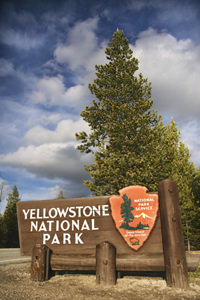
Yellowstone National Park Entry

Courtesy of Thinkstock

Yellowstone partnership will create less plastic waste.

A new recycling partnership has been forged between Yellowstone National Park and Universal Textile Technologies. This new partnership creates and protects jobs for the American workforce, reduces the amount of plastic bottles that go into landfills and helps Yellowstone National Park meet its recycling goals.

Universal Textile has committed to purchase the recyclable plastic bottles Yellowstone collects each year and convert them into a non-woven, fleece material used to manufacture BioCel and EnviroCel high-performance backing for carpet and synthetic turf. The Georgia Tech Research Institute has provided third-party verification for this innovative project.

Like many recyclable materials collected in America, most plastics collected in Yellowstone had previously been sold overseas. There, they were used to produce plastic products that were later sold in the U.S.

“Yellowstone was created as the world’s first national park in 1872,” says Jim Evanoff, nationally recognized speaker on the Yellowstone eco-system and an environmental protection specialist with Yellowstone National Park. “We have an obligation to set the example for promoting sound environmental stewardship practices that will serve as a model for future generations. This new partnership not only diverts plastics from landfills, it dramatically decreases the fuel and other resources used to transport materials around the planet.”

Both BioCel and EnviroCel utilize naturally renewable soybean- based polyols derived from domestically grown soybeans. The use of soy-based products helps support the U.S. economy by creating American jobs and through the sale of Universal Textile products.

BioCel and EnviroCel also provide numerous additional benefits related to green technology and sustainability. Both use Celceram, a highly refined material recovered from coal combustion in electric utility power plants that reduces dependency on petroleum-based products and supports the EPA’s initiatives for high-performance, sustainable products in industry. They also assist in LEED certification. BioCel and EnviroCel are resistant to moisture, insulate against energy loss, reduce ambient noise and increase the structural integrity of carpet and synthetic turf.

“We ask you to please recycle your plastic. If we don’t address the recycling issue today, our children and grandchildren will certainly be forced to,” says Doug Giles, director of marketing for Universal Textile Technologies.

For Yellowstone National Park facts and information, visit Yellowstone’s website.

Categories
Animals

The Heat Is On (Again!)

Ewe
Photo by Sue Weaver
Ursula says lambing in the heat is no fun—even with a fan.

Summer arrived in the Ozarks practically overnight. It’s hot—really hot—and Ursula’s going to have her lamb next week. She’s fat and grouchy and thinks she should have a fan right now. That’s one of the ways we stay cool.

I’ve already blogged about keeping animals and humans cool. Last year, when Sam the Lamb’s mom died, I wrote about preventing heat stroke. I hope you will read those entries again because they’re important: Heat can kill. We animals depend on you to keep us safe, and we want you to stay safe, too!

One of the best ways to help us cool off in the heat is to make sure we have plenty of cool water to drink. If water is yucky, with dead bugs and algae or droppings in it, we drink only enough to survive. That isn’t sufficient when it’s sizzling hot, so please keep our water clean.

In the summertime, it helps to use a lot of smaller tubs rather than one big one, that way they’re easier to dump and scrub. Mom uses the empty plastic tubs our mineral licks come in as water tubs—they’re the perfect size for sheep and goats. Bigger mineral tubs work for horses and cows. If you don’t have any, join your local Freecycle list and ask for unwanted tubs. Farmers are glad to give them to people who can use them.

Then put water tubs in shaded places close to where we hang out, so we’re likely to drink more water. Add electrolytes to some but not all of the tubs. Most of us like the taste of electrolytes, but if we don’t, there should be plain water available, too.

If you have a livestock guardian dog, like our friend Feyza, or a llama that guards your livestock, give it a plastic wading pool to cool off in. Otherwise, the guardian dog or llama may try to lie down in our water tubs, dirtying the water so we won’t drink it.

Also, try not to overtax us in hot, sultry weather. Don’t ride your horse during the heat of the day or catch chickens or trim sheep’s feet. If something is invigorating or stressful, do it early in the morning or at sundown when it‘s not so hot.

And, Ursula says, don’t breed a ewe so her lambing date is June 10, even if you give her a fan! She and Mom are marking off the days. Because Ursula is usually punctual about lambing, maybe next week I can show you her lambs!

« More Mondays with Martok »