Categories
Urban Farming

Bunny Love

Rex rabbit

Photo by Audrey Pavia

After years of living with me, my Rex doe Prudence finally showed me her love.

It’s wonderful being surrounded by so many animals all the time, but let’s face it: It can be hard to spend enough time with all of them when you are busy working and doing chores just to take care of them. My animals have learned that if they want my attention, they have to ask for it.

But today, when I was sitting at my desk working, I found myself with an empty lap. The cats were off sleeping somewhere, Nigel was off with Randy, and I had no fur to stroke as I searched the Internet. So I decided to grab one of the two bunnies I share an office with.

I started with Smokey, who is much more comfortable being held than Prudence. Smokey relaxes when you pick him up and seems to actually enjoying cuddling. So, I put him in my lap and petted him gently as I went back to work.

But it was only a matter of time before Smokey started to act up. He likes to be held, but he also likes to run around and chew on the cords under my desk. He started “digging” in my lap and, when that didn’t get the desired reaction (he wanted me to put him down), he nipped me.

Back in his pen he went. After putting him down, I started to walk back to my desk feeling forlorn. That’s when it occurred to me to try Prudence. She hates being held, but I thought I might get her to relax if I just let her sit in my lap.

Prudence was incredibly tense when I lifted her up. She relaxed a little bit when I sat down, and then buried her face into the crook of my arm. Her eyes were huge, so I knew she wasn’t completely comfortable. But I decided to hold onto her anyway, for my own selfish reasons. I absentmindedly stroked her ears, scratched her gently on the back of her neck and smoothed my hand over her face.

I was completely absorbed in my work when I suddenly felt Prudence stretch out on my lap. Her back legs went out behind her and her front legs draped over my thigh. I looked down at her to see that her eyes were half-closed. I couldn’t believe it; she was completely relaxed.

And then it happened: I felt her soft little tongue lick my arm.

I remembered back when I was researching my book Rabbits for Dummies and read somewhere that the ultimate sign of love from a rabbit is a kiss. I had never been kissed by a rabbit before; it was something I had only dreamed of. But here I was, holding my 8-year-old Rex doe, and she was kissing me.

Read more of City Stock »

Categories
News

Wet Spring Hurts Wildlife Populations

Bluebird
Courtesy iStockphoto/Thinkstock
Wildlife in Pennsylvania, such as bluebirds, have faced nesting hurdles due to the large amount of rain the state has experienced this spring.

In an unfortunate turn of events, the first nesting attempt for bluebirds behind the Pennsylvania Game Commission’s Harrisburg, Pa., headquarters appears to have lost out to nature.

“The first setback for this nest was when only two of the five eggs hatched,” says  Doug Gross, Game Commission ornithologist.  “While it is not usual for an egg or two of a clutch to fail to hatch, having three fail to hatch appears to have been a harbinger of bad luck for this nest.”

The Game Commission speculates the wet spring may have played a role in the nest’s demise.

“Wet weather makes it difficult for adults to find food and feed [their] young,” says Gross. “They have to find food, making them vulnerable to predation or other kinds of mortality, such as getting hit by a car. The more you have to wander around, the more likely something will get you.”

While the adult bluebird pair may attempt to re-nest, Gross and other Game Commission biologists agree that the excessively wet spring has been difficult for many kinds of birds and mammals. 

“Most songbirds, including bluebirds, forage on insects during the nesting season,” Gross says. “When it is raining regularly, they have greater difficulty finding adequate amounts of food for their young. The nestlings are very demanding of food, requiring several visits each day. The very young nestlings also are poorly insulated with natal down, so prolonged absences by the adults mean that they are unprotected from the cold, often dying of exposure if not starvation.  

“If the adults are away longer, the nests and their contents are more vulnerable to predation from domestic cats left to run free, as well as wildlife predators, such as raccoons, skunks, chipmunks, squirrels, opossums, snakes, crows, ravens, jays and hawks.”

Ground-nesting birds are particularly vulnerable, he says, because hard rains and runoff can drown the exposed eggs or young.

“Large-stick nests of some of our raptors are vulnerable to getting soaked and weighing down their supporting tree or snag. Some bald eagle nest trees have been washed away by flood waters this spring. High, muddy waters make it more difficult for visual predators, like bald eagles and ospreys, to find their food, causing them to range farther from the nest to provide adequate food for their young. Some raptor nestlings starve when their parents cannot hunt prey during bad weather.”

Mary Jo Casalena, Game Commission wild turkey biologist, says wild turkey nests might be impacted from the wet spring, too. Hen turkeys incubating eggs have no choice but to tough out rain events.

“Wet hens emit more odor than normal, so mammalian predators, with their keen olfactory sense, can more easily locate these ‘smelly’ hens, and either cause the hens to abandon their nests, or actually kill them on the nests,” Casalena says. “Keep in mind that [for ground-nesters] predation to nests normally is high, and hens are most vulnerable to mortality during nesting season.”

John Dunn, Game Commission Game Management Division chief, noted that cavity-nesting wood ducks, such as common mergansers and hooded mergansers, can have their homes washed away or flooded by high waters.  

“Game birds can re-nest if losses occur to nests or young, but second-clutch sizes are always lower and nesting success is reduced compared to first nests,” Dunn says. “Cold springs accompanied by wet weather have a bigger impact than just high precipitation. Since the peak of hatch is late-May/early-June for turkeys, grouse and pheasants, the weather we have the next couple of weeks will be more important than what occurred earlier.”

Ground-nesting mammals, such as cottontail rabbits, also are affected by extremely wet conditions.
 
“Cottontails construct a nest at the bottom of a slanted hole about 7 inches below the ground surface,” says Tom Hardisky, Game Commission game mammal biologist. “Newborns are left unattended by the adult female, except for periodic feeding, until the young leave the nest at about 2 weeks of age. Cottontail litters rely on body heat from one another and are particularly vulnerable to flooding rain and high water tables.  Females will re-nest if a litter is lost.

“Most mammals that reproduce in a den will move their newborns to a drier site. However, many species of small mammals, as well as most rodents, nest on or below ground level. Some aquatic rodents in stream habitats, such as muskrats, are very susceptible to mortality from sudden water-level rises. Muskrat burrows that quickly fill with water can entrap adults and their young, causing them to drown. Prolonged flooding will displace surviving muskrats to new areas, where they may experience food scarcity, greater exposure to disease, or increased predation.”

Weather-related phenomena can be tough on wildlife in the short term but should be kept in perspective, according to Calvin DuBrock, Game Commission Bureau of Wildlife Management director.

“As long as overall populations are healthy and adequate habitat is maintained on the landscape, there’s little cause for concern about long-term effects,” he says.

Categories
Urban Farming

Warning: Gardening May Cause Injuries

Garden injury

Photo by Rick Gush

I learned the hard way that carelessness in the garden can lead to painful results.

As you may be able to guess from the title of today’s post, I’m typing this blog with only nine fingers.

Usually, everyone who fires up a chainsaw is aware of the dangerous potential of the tool. But accidents don’t usually happen if one is actively conscious of the danger involved, and such accidents are a big surprise. When one is not thinking about the electrical line in the ditch or the danger of a newly cut tree limb, danger sneaks up from an unexpected corner and strikes. I think of myself as fairly accident-savvy, and I make sort of a big deal of rehearsing and calculating all the different possibilities when I know I’m doing something dangerous, but …

Yesterday morning, I was working at my friend Richard’s garden. We were digging out a big tree stump so we could build a ramp to pass from one terrace to another. I was kneeling and using a pick to loosen the considerable amounts of rock and soil stuck between the various roots. I did remember to avoid hitting myself in the head with the pick on the backswing (because I’ve done that before), but I didn’t consider that situation otherwise dangerous. Aside from wearing gloves to protect my hands from scratches, the probability of any danger didn’t really enter my mind.

I was swinging the pick pretty hard, kneeling in front of the stump and pounding away. On one blow I swung extra hard to dislodge a big rock and ended up hitting the index finger on my left hand against a hard root. I smashed the finger really well, and right away, I knew I’d done major damage. Surprise, pain, and shame all flooded into my brain in an instant.

I’ll spare you the gory details, but suffice to say, I visited the local hospital and then made my way to the big orthopedic ward down the coast in Sestri Levant, Italy.

Italy might be weird in a lot of ways, but the healthcare system is pretty swell. The seven or eight hours I spent with doctors, nurses, X-ray technicians and surgeons didn’t cost me a cent. I did spend 8 euros that evening for antibiotics and an ice pack, though.

The biggest price I’m paying in the whole incident is in pain and shame. Today, I’m typing much more slowly and am a bit concerned for a big report I am supposed to finish later today. The whole deal was obviously my own fault, and I feel uncomfortable accepting the condolences of my friends and the loving ministrations of my wife.

So let today’s photo serve as a safety poster. If even one reader avoids injuring themselves as a result of seeing today’s unpleasant image, the blog will have done a good thing — for somebody else, at least.

Read more of Rick’s Favorite Crops »

Categories
Urban Farming

Budweiser to Men: Don’t Shave, Save Water

Save water, don't shave

Courtesy iStockphoto/Thinkstock

Budweiser is encouraging men to not shave in order to save water.

This weekend, as the international community gears up for World Environment Day (June 5, 2011), Budweiser is asking adult men across the U.S. to help save 1 million gallons of water by not shaving.

As part of Budweiser’s ongoing commitment to water conservation, the “Grow One. Save a Million.” program encourages consumers to get involved by skipping a shave. The average shave uses 3 to 10 gallons of water.

Consumers 21 years of age and older can visit Budweiser’s Facebook page to make a pledge and share the water-conservation program with Facebook friends. Participants can commit to a range of no-shaving options, from a few days to multiple weeks. The page also features a daily tracker of the gallons of water saved to date.

“Water is a key ingredient in brewing Budweiser and all our beers, which is why water conservation is a priority both inside and outside our breweries,” says Kathy Casso, vice president of Corporate Social Responsibility at Anheuser-Busch. “In the past three years alone, our 12 U.S. breweries have reduced water use by 34 percent. Additionally, our employees and their families take action by volunteering to participate in local river-cleanup projects in communities across the country.”

In 2010, more than 1,200 employees from Budweiser brewer Anheuser-Busch skipped shaving for one week prior to World Environment Day, helping to save about 42,000 gallons of water. This year, Budweiser is expanding the effort by inviting suppliers, partners, wholesalers, retailers and consumers to join the effort.

“Every gallon of water that we conserve makes a difference to our communities. So when thousands of people get together for one common cause, great things can happen,” says Chad Pregracke, founder of Living Lands & Waters and the face of the program on Budweiser’s Facebook page. “By pledging to skip shaving and ‘grow one,’ guys can literally wear their commitment to conserving our most valuable natural resource.”

In 1998, Pregracke founded Living Lands & Waters, a non-profit organization based in East Moline, Ill., dedicated to cleaning up and preserving U.S.  rivers. For 20 years, River Network has provided organizational, technical and networking assistance to people working for watershed protection at the local, state and regional levels. Today, the organization has grown to include 10 full-time employees. Since the organization’s inception, more than 60,000 volunteers have helped remove more than 6 million pounds of debris from rivers. For his efforts, Pregracke has received numerous national awards.

As part of its annual recognition of World Environment Day, Anheuser-Busch and its Budweiser brand will again donate $150,000 to River Network to help support the organization’s watershed-conservation projects in each of the company’s 12 U.S. brewery cities. These projects will include stream and river cleanups, education programs, tree plantings and various activities that support the environment and provide employees and local wholesalers the opportunity to volunteer in their communities.

World Environment Day is a day set aside by the United Nations to create awareness of the environment and encourage participation in sustainability programs.

Categories
Crops & Gardening

The Garden Bustle

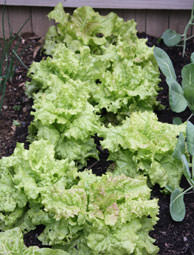
Lettuce
Photo by Jessica Walliser
We’ve been enjoying lots of crisp, green lettuce straight from the garden this season.

So much is happening in the garden that I don’t even know where to start!

Our landscape crew from Lighthouse Landscape Designs arrived with the excavator and Bobcat and began the grading process in the backyard. They laid the gravel base for the retaining wall and expect to begin setting the wall in the next day or two. They will likely be here for about two weeks, weather willing, and then it will be our job to create the flowerbeds, sow the grass seed and set the steppingstone pathways once they are finished. Perhaps by August we’ll have our backyard back!

The vegetable garden is looking great, on the other hand, despite my lack of attention. The tomatoes are nearly a foot tall already, and the first few lettuce harvests of the season have been absolutely superb.

I decided to dedicate an entire quadrant of the veggie patch to cucumbers, squash and pumpkins. The tiny seedlings have begun to emerge. So far, they’ve avoided a major slug onslaught.

I am continually amazed at the number of sunflowers that return to the veggie garden each year from seeds the birds drop. It’s always such a pleasant surprise to see what colors and types re-seed and where they manage to come up. 

And, with great pleasure, I noticed a few tiny peaches clinging to the branches of our young peach tree. Let’s hope they can hold on for a few more months and reach maturity (and that the squirrel doesn’t find them first). The tree is only 4 years old, so I didn’t expect to have any fruit on it yet, but I’m certainly not going to argue! No apples or plums, though. I guess that’s a pleasure that will have to wait for another year.

« More Dirt on Gardening »

Categories
Urban Farming

So Many Greens!

Greens

Photo by Judith Hausman

Ready to harvest lettuces fill the hoop house.

This summer, you’re going to hear more than once about a wonderful growing project I’m a part of. A group of about 10 of us are gardening/farming a very well-prepared plot together. We each have a weekly work slot, which may increase when the season is full throttle, and a wonderful farm intern links us and directs our efforts. I’m already learning so much about serious vegetable growing in a small space and about organic practices.

Seeds were started over the winter before we began, and a number of crops over-wintered, both inside an unheated hoop house and right in the field. This means that we lucky participants hit the ground running with goodies to harvest almost immediately.

Even with muddy, muddy sessions pulling the weeds, what could be more motivating than bags full of lettuce, arms full of leeks and chard, and bunches of radishes and carrots? This cool, wet spring we’ve had does mean stalled tomato starts, which had to be re-potted to combat legginess, as well as perfect growing conditions for weeds, but it’s also meant gentle growing for spring crops and explosions of greens. I feel like I’ve cheated the patient waiting time because I’m eating so deliciously and healthfully already.

Red and green oak leaf, mache, claytonia, butterhead, speckled romaine, baby spinach, and peppery arugula. What do I do with all those greens?

Hooray for salad with color, texture and a real taste that isn’t just a vehicle for dressing. I can treat salad greens like we usually treat pasta or pizza dough, using it as a base that embraces a variety of elements: a fried egg and crumbled bacon; warmed, diced tomatoes; tuna and capers; white or fava beans and Parmesan; warmly spiced, browned ground beef with green olives; sautéed leeks, carrots and baby beets with goat cheese; diced chicken, walnuts, scallions and bleu cheese. I like the warm (but not hot) ingredients, which wilt the greens just a little and accentuate the flavors they contribute.

Other greens, such as chard, beet greens, radish greens, turnip greens and spinach, are so vital that the basic olive oil-garlic quick sauté is really all they need. One of my gardening partners said she kept her family’s interest by generous additions of Parmesan to the classic. This combo could then be part of a risotto or pasta dish, too.

What else for greens? Well, anything you liked in my post about asparagus goes for greens, too. Greens with eggs and cream, cheese, breadcrumbs, herbs and a little ham make gratins, quiches, omelets and strata. Just drain the quickly cooked greens well so they don’t make these dishes watery.

Below is a recipe that was new to me, courtesy of a gardening colleague, Leslie Needham, of Bedford, N.Y.

“What I love about this spinach pesto is that it stays bright green, unlike basil pesto,” Leslie says. It’s the lemon that helps it stay beautiful. She also makes this serving suggestion: “I tossed the cooked pasta and pesto with some chopped spinach leaves and some edemame.”

Spinach pesto

Courtesy Leslie Needham

Use abundant amounts of spinach to mix up a spinach pesto.

Recipe: Spinach Pesto

Ingredients

  • 1 clove garlic
  • 4 cups spinach, stems removed
  • 1 cup freshly grated Parmesan
  • zest of one lemon
  • juice of 1/2 lemon
  • less than 1 cup nuts (pine nuts, almonds, hazelnuts or walnuts)
  • olive oil
  • salt

Preparation

Finely chop garlic clove in a food processor. Add clean, stemmed spinach, Parmesan, lemon zest and juice, and nuts of your choice. Stream in enough olive oil to achieve a thick paste in the consistency you like. Add salt to taste. (Omit the cheese if you intend to freeze.)

Read more of The Hungry Locavore »

Categories
Equipment

When Less Will Do

Adjustable drill press
It’s time for me to finally replace my adjustable drill press.

I am a sucker for the tools section of any hardware or big-box store. I can’t help but look at those chop saws, drill presses, band saws and table saws and wish they were mine. Of course, the reality is that there’s very little I could do with any of them that I can’t do with the portable electric and hand tools I have. Certainly if I were a craftsman woodworker or even a constant carpenter, they would be good buys. However, neither craftsman nor carpenter is a title I can claim.

That said, there’s an awful lot you can do with less. The other day, I was looking through some clippings of shop tips and I ran across an old friend. It was an adjustable drill press that attaches to the drill with an extended shaft for the chuck.

For years, a similar-style unit was a valued accessory at my workbench. It allowed me to drill holes at an angle and bore through the full diameter of round stock. It gave me many of the fine touches of a drill press, including a depth stop. It can be mounted above or below workbenches and even used for drum sanding.

It’s one of those accessories that’s easy to do without, but if you have one, it seems invaluable. Somewhere along the way, among my multiple address changes (eight moves in 10 years), it either broke or was misplaced. I often thought about getting a replacement but always in the midst of a job. I think it’s time to place an order so the next time I need it I have it. It’s significantly less durable or versatile than a drill press, but it will do.

<< More Shop Talk >>

Categories
Crops & Gardening

Growing Brambles in High Tunnels

Although for years farmers have been growing other crops in high tunnels to extend the growing season, they are now finding the benefits to growing brambles in them, as well.
Photo by Rachael Brugger
Although for years farmers have been growing other crops in high tunnels to extend the growing season, they are now finding the benefits to growing brambles in them, as well.

Since about the early 2000s, farmers have tried planting berries in high tunnels, and this technique is gaining in popularity. Cathy Heidenreich, berry extension-support specialist for Cornell University, says the high tunnels extend the growing season more economically than using greenhouses.

Typically 15 to 30 feet wide, 60 to 96 feet long, and 7 to 15 feet high, high tunnels allow for the production of fall-bearing brambles in climates with a short growing season. Researchers at Penn State’s Center for Plasticulture have found that brambles grown in high tunnels show “tremendous yield increases over field production” with fall-bearing raspberries, producing a crop two- to three-times larger than those not grown in high tunnels. This is due to the extension of the harvest by at least three weeks.

Additionally, high tunnels allow for “less hardy bramble varieties to overwinter in climates where they would otherwise be killed,” according to Heidenreich. Healthier plants and fewer pests are two additional benefits to growing brambles in high tunnels.

For all of their positives, high tunnels do have a downside: They get hot, requiring constant temperature monitoring. Researchers are experimenting with different plastics to find one that will provide a better temperature in the high tunnel. Until something is developed, however, the grower needs to provide good ventilation inside the high tunnel and be available to manually adjust the temperature as needed. Also, because the brambles are sheltered from the rain, using tunnels requires that the grower have a relatively large source of water and an efficient irrigation system.


Categories
News

U.S. Tackles White-nose Syndrome in Bats

Bat with white-nose syndrome
Courtesy Marvin Moriarty/ U.S. Fish and Wildlife Service
White-nose syndrome has been affecting bats in North America since 2006.

Last week, the  U.S. Fish and Wildlife Service unveiled a national management plan to address the threat posed by white-nose syndrome, which has killed more than 1 million hibernating bats in eastern North America since it was discovered near Albany, N.Y., in 2006.

“Having spread to 18 states and four Canadian provinces, white-nose syndrome threatens far-reaching ecological and economic impacts,” said Secretary of the Interior Ken Salazar. “We’ve learned a lot in the past few years about the disease, but there is much more work to be done to contain it. This national plan provides a road map for federal, state, and tribal agencies and scientific researchers to follow and will facilitate sharing of resources and information to more efficiently address the threat.”

“The National Plan for Assisting States, Tribes and Federal Agencies in Managing White-Nose Syndrome in Bats” provides a coordinated national management strategy for investigating the cause of the syndrome and finding a means to prevent the spread of white-nose syndrome. The service considered approximately 17,000 comments received on the draft plan made available to the public in October 2010.

Since white-nose syndrome was first documented, the FWS has been leading a national response that now includes more than 100 state and federal agencies, tribes, organizations and individuals.

Interior Department agencies have invested more than $10.8 million in this effort since 2007. This includes more than $3 million in research funding that is supporting ongoing research projects looking for methods to control or cure white-nose syndrome.

Researchers working with the U.S. Geological Survey have identified Geomyces destructans, a fungus new to science, as the presumed causative agent. In addition to research, the national response has also developed decontamination protocols to reduce the transmission of the fungus, surveillance strategies, and technical white-nose syndrome diagnostic procedures.

Bat populations are at risk in some areas of the country as a result of white-nose syndrome. Ecologists and natural resource managers are concerned because of the critical role that bats play in agricultural systems and in maintaining healthy ecosystems. A recent analysis published in Science magazine’s Policy Forum showed that pest-control services provided by insect-eating bats save the U.S. agricultural industry at least $3 billion a year.

The national plan’s release coincides with the fourth annual White-Nose Syndrome Symposium to be held May 17 to 19, 2011, in Little Rock, Ark. More than 170 of the world’s top scientific experts on bats, wildlife disease, and the white-nose syndrome fungus will present the latest research and information on how to contain the spread, determine the cause and hopefully find a cure for white-nose syndrome.

State, federal and tribal land managers will also discuss the national response to WNS and implementation teams will formalize work plans as part of a more detailed implementation strategy.

The final document and additional information about WNS are available on the FWS website.

Categories
Beginning Farmers Farm Management

8 Tips for Beginner Farmers’ Market Vendors

Farmers' market vendor
Courtesy Jupiterimages/Brand X Pictures/ Thinkstock
If selling at a farmers’ market for the first time, figure out a niche that will set you apart from the other vendors.

Perhaps you planted those first seeds with a goal of feeding your family, but as with many farm projects that start small, gardens can quickly blossom into a much larger endeavor. When your neighbors start locking their doors for fear of more covert zucchini deliveries, perhaps it’s a sign to start selling your bounty at farmers’ markets.

You won’t be alone in embracing farmers’ markets. According to the USDA, as of mid-2010 more than 6,100 farmers’ markets operated throughout the U.S., a 16-percent increase from 2009. With continued interest in local foods, shoppers find farmers’ markets the best opportunity to “know your farmer” and bring healthy, fresh food to their family’s plate.

But as with any farm-based venture, selling at a farmers’ market should be a well-thought-out, strategic part of your farm-management plan. Here are some tips to get started:

1. Do Market Research
Ideally, you’ll identify a potential farmers’ market the year before you want to start selling and visit it several times during the season. Get a feel for the market and attendance flow. Is there enough shopper volume to justify more vendors?

“Every market has its own culture and vibe,” explains Leigh Adcock, executive director of the Women, Food and Agriculture Network, an organization connecting women in sustainable agriculture. “Some markets cater to busy shoppers who want to quickly buy their week’s vegetables while others create a more social setting with music and kids activities. Talk to other growers and folks buying at the market to get a sense of what the market is like.”

2. Learn Farmers’-Market Rules
Understand the regulations of the particular farmers’ market you’re considering selling at. Ask the market manager questions, and make sure you can commit to the expectations. For example, you may inquire about rules regarding what you can sell. Some markets are “producer only,” which typically means you can only sell things you grew yourself, whereas others may allow you to resell other items or include things like crafts.

3. Start Small
Don’t go overboard—test the farmers’-market waters before investing in expensive tents and gear. See if you can find a market where you can sell as a “daily vendor” to get started. These are markets that will let you commit to one market at a time depending on available space. This way, you can get a feel for selling at the farmers’ market without over-committing. As you do these trial sales, take into account your driving time and costs and sales volume to determine if this particular market is a good long-term fit.

4. Identify Your Niche
How is what you’re selling different than other vendors at the farmers’ market? Sometimes it helps to specialize in selling varietals of one distinct item, such as garlic. Another route is to creatively package your items. Sure, a lot of farmers may be selling red, ripe tomatoes, but what if you sold green tomatoes, along with your recipe for fried green tomatoes?

5. Design Your Stand
“Plan your stand ahead of time, and even do a ‘dry run’ rehearsal and set things up at home before your first market,” advises Blue Strom of Shady Blue Acres. Strom sells at the Dane County Farmers’ Market in Madison, Wis., the largest producer-only market in the country.

“Colorful tablecloths and clear signage go a long way in showcasing your product and increasing sales,” she says

6. Get Organized
Develop a system for organizing, transporting and setting up your product at the farmers’ market.

“Keep detailed checklists of all the little things you’ll need that easily are forgotten, such as small bills and coins to make change, weights for your tent in case it gets windy, and even extra clothes to prepare for weather changes,” says Larry Johnson, manager of the Dane County Farmers’ Market.

7. Be Personally Prepared
Take along water and snacks, and prioritize a good night’s sleep the evening before, especially if you’re selling at an early-morning market.

“Nothing like a grumpy farmer first thing in the morning to decrease sales,” Strom says with a laugh. “It’s important that everyone selling at the market put their best cheery face forward, as this helps the market develop a reputation as a friendly, fun place to shop.”

8. Build Relationships
Share information about your farm with your customers. Connect them with where and how your items were raised. Bring in photos and your favorite recipes.

Connect with other farmers at the market, too, particularly at the end of the day when there’s the “second market” going on: A lot of informal bartering happens between farmers at this time.

About the Author: Lisa Kivirist writes from Inn Serendipity, her farm and bed-and-breakfast in Wisconsin, which is completely powered by renewable energy and specializes in local, seasonal, organic cuisine. She is co-author of the award-winning book ECOpreneuring and Rural Renaissance and the cookbook Farmstead Chef.