Categories
Beginning Farmers

10 Minutes With Shari Burgus

Education director at Farm Safety 4 Just Kids Shari Burgus

As the education director at Farm Safety 4 Just Kids in Urbandale, Iowa, Shari Burgus leads the organization’s efforts to initiate, design, develop, and evaluate farm-safety and health educational resources and programs for children, youth and families. 

She has taught in middle and high schools in both rural and urban settings, and has bachelor’s and master’s degrees in Education from Iowa State University as well as a specialist degree in Adult Education from Drake University.

Hobby Farms: What is Farm Safety 4 Just Kids’ role in farm-safety education?

Shari Burgus: Farm Safety 4 Just Kids has a mission of promoting a safe farm environment for children and youth to prevent health hazards, injuries and fatalities. The national office develops educational resources, manages programs and provides training opportunities for state- and community-program leaders. The public is also encouraged to use the material.

The rate of childhood farm-related injury has declined by nearly 60 percent between 1998 and 2009, according to The National Institute of Occupational Safety and Health. This is an encouraging sign that research and public awareness efforts are making an impact. After nearly 25 years of providing farm-injury-prevention programs at the community level, Farm Safety 4 Just Kids has helped to reduce farm-injury rates among children and youth.

HF: How was FS4JK founded?

SB: Farm Safety 4 Just Kids was initiated in 1987, a year after the death of an 11-year-old Iowa farm boy helping with harvest. Keith Algreen suffocated in a gravity-flow wagon, and his mother Marilyn Adams began a campaign to promote farm-safety awareness. Soon after the organization started, it became evident that programs at the community level were needed to reduce the number of farm-related injuries to children and youth taking place each year. FS4JK now has 119 chapters in 26 U.S. states and four Canadian provinces. Nine outreach coordinators also conduct farm-safety and health programs within their respective states.

HF: On small-scale farms, such as hobby farms, what is the biggest safety consideration for parents to keep in mind?

SB: The farm can be a great place to raise children and is often the reason parents choose to stay in or move to a rural environment. But the farm is also an environment where living and work settings overlap, often putting children within close proximity to dangerous situations. Farm machinery, including tractors, is the leading cause of fatalities to children on the farm. The tractors and machinery don’t have to be big to be powerful and dangerous. The inexperience of novice adult operators and children’s curiosity can be a deadly combination. Other safety concerns on the farm, even the small hobby farm, include the ever-increasing use of ATVs, the variety of livestock, chemicals used in crop production and landscaping, and rural-roadway issues.

Parents play a big role in providing a safe and healthy environment for their children to grow up in. Providing a safe play area, setting safe boundaries, setting and enforcing strict rules, assigning age- and ability-appropriate tasks, supervising children and youth properly, and providing training about safe operation [of equipment and tools] will help children and youth stay safe within the rural environment.

HF: How can we balance fun with education and safety on the farm?

SB: Education doesn’t have to be boring or avoided. It can be fun and is important to a child’s well-being. Farm Safety 4 Just Kids believes that education and programs should be interactive, where children and youth learn about the risks of being on the farm without being hurt. Demonstrations help them comprehend the risks and ways to prevent injury.

Puzzles, activities and games are available through Farm Safety 4 Just Kids to help program presenters encourage safety and health messages, help students internalize the concepts, and ensure students take home the activities to other family members.

Parents have a big influence on their child’s safety and health. Like it or not, children often imitate their parents. Parents can use this to their advantage and help prevent injury at the same time. Be conscious of your own actions and complete farming tasks safely. Both adults and children will benefit and be less likely to experience injury.

When training a child to complete a task for the first time, keep the mood relaxed and encourage questions. Don’t expect children to complete a new task perfectly the first time. Supervise closely and give constructive criticism when needed.

HF: A lot of our readers are fairly new to farming. What are good resources for beginner farmers to access information about farm safety?

SB: Farm Safety 4 Just Kids has an extensive listing of resources that can be used to conduct programs about staying safe and healthy on the farm. Visit www.fs4jk.org for free resources as well as educational material for purchase. Call 800-423-5437 to ask for technical assistance in finding the right resource, identifying data, conducting educational programs or ordering material.

Fact sheets and brochures are available for youth and program presenters. Educational packets help presenters deliver fun activities. Demonstration and game ideas help make presentations interactive.

HF: Is there anything else you would like Hobby Farms readers to know about FS4JK?

SB: The demographics of agriculture are changing. The two ends of the spectrum, small-farm operations and the largest farms, are increasing, while traditional farms of several decades ago are decreasing in number. But one thing remains constant: The next generation of farmers is at risk. Many rural children and youth are growing up on hobby farms. Farm Safety 4 Just Kids wants to ensure that they have a positive and safe experience so they can keep agriculture alive for their children and grandchildren.

Categories
Recipes

Zucchini-parmesan Biscuit Appetizers

Zucchini-parmesan Biscuit Appetizers
Photo by Stephanie Staton

Ingredients

  • 4 cups unpeeled, grated zucchini
  • 1¾ cups biscuit mix
  • 3/4 cup finely grated Parmesan cheese
  • 1/2 cup vegetable oil
  • 4 eggs, beaten
  • 1 cup chopped sweet white onion
  • 2 T. minced fresh garlic
  • 3 T. minced fresh parsley
  • 1/2 tsp. salt
  • 1/2 tsp. crushed dried oregano

Preparation
Preheat oven to 350 degrees F.

Combine all ingredients in large bowl, and stir until well-blended. Spread in an oiled 13- by 9-inch glass baking dish. Bake for 25 to 30 minutes or until golden brown on top.

Allow to cool slightly, then cut into bite-sized servings. Can be served hot or cold.

Makes approximately 24 small appetizers.

Categories
Urban Farming

Consumers’ Take on Sustainable Packaging

Unsustainable packaging

Courtesy Ryan McVay/Photodisc/Thinkstock

According to a survey, less people think consumers should be responsible for recycling product packaging.

In the just-completed wave of shopper research on environmentally friendly packaging conducted by Perception Research Services, 38 percent of shoppers agreed that consumers should be responsible for recycling packaging, down from 42 percent in 2009, with Midwest shoppers showing the least inclination (only 30 percent).

While more shoppers expect environmentally friendly packaging to cost more (36 percent versus 15 percent in 2008), fewer report a willingness to pay for it, and 59 percent say that environmentally friendly packaging should be at no additional cost to the consumer.

Ironically, while few shoppers indicated they would like to choose more environmentally friendly packaging (28 percent), nearly half think manufacturers should produce more of it; and fully one-third think government should mandate stricter environmental standards for packaging.

Shoppers’ reliance on manufacturers’ efforts may derive from an awareness of the steps that have been taken: Half of the shoppers polled indicated they noticed companies’ claims about environmentally friendly packaging. And of those, half noticed more of these claims in the past six months.

Fortunately for manufacturers, these shoppers feel their motives to create environmentally friendly packaging are primarily virtuous. More than half say companies are making these efforts for reasons having to do with reducing waste, saving resources and making the world a better place. Very few attribute these actions to self-serving interests, such as selling more product or increasing profits. And few think companies overstate the environmental benefits of their packaging.

Shoppers’ reported behavior patterns also suggest that they want someone else to do the work in this area, as nearly half (48 percent) say that seeing a “made from recycled materials” claim makes them more interested in buying the product, a significant increase from 39 percent in 2009. This more passive activity contrasts with the fact that very few (only 17 percent) say they check to see if a package is recyclable before buying a product. And, fully one-third report that they generally do not recycle packaging, consistent with the 2008 level.

“It’s becoming clear that while consumers may voice concern for the environment, most appear unwilling—at the moment—to make any major sacrifices to make a difference,” says Jonathan Asher, senior vice president of PRS. “They’d rather rely on manufacturers to provide products and packaging that they can feel good about, without changing their behavior, giving up performance or paying more.”

“Manufacturers have had the impression that they needed to be in sync with consumers’ environmental concerns and fit with the emerging lifestyle of going green,” Asher continues. “Our findings suggest that rather than follow consumers’ lead, manufacturers must be at the forefront, making it easier for shoppers to buy the products they prefer while also feeling good about the environmental impact and making as little sacrifice as possible. It’s a tall order, but if delivered, will be highly rewarded.”

The three waves of this research were conducted in 2008, 2009 and 2010, across the U.S., among more 1,000 primary household grocery shoppers ages 18 to 64 per wave.

Check out Urban Farm readers’ thoughts about eco-friendly packaging.

Categories
Animals

Tornado Time!

Martok goat
Photo by Sue Weaver
You can see the pin for our Port-a-Hut. Thank goodness we won’t blow away!

The past few weeks have been scary for me and Uzzi. We’ve had storm after scary storm! Uzzi hates thunder, so we cuddle in our Port-a-Hut while it booms across the sky. But our Port-a-Hut is firmly pinned to the ground so we’re safe.

That is, unless a tornado roars through. There was one just north of us a few nights ago. According to WLKY-TV News in Louisville, Ky., there have been nearly 1,200 tornadoes in the United States already this year and close to 500 people killed—that’s more than 9 times the national average.

Tornadoes are violently rotating columns of air extending from a thunderstorm to the ground. They occur mainly during the spring and summer months, most frequently east of the Rocky Mountains. Did you know that tornadoes are most likely to occur between 3 and 9 p.m., but have been known to occur at all hours of the day or night? Or that the average tornado moves from southwest to northeast, but tornadoes have been known to move in any direction?

Are you and your pets and livestock are prepared for tornado season? If you don’t already have a disaster-preparedness plan, including what to do if there’s a tornado, make one now.

Assess the stability of your barns and other structures; unless they’re sturdy, your animals may be safer loose outside. Remove objects from your barnyard and pastures that might become flying debris. If you use movable housing like Port-a-Huts or chicken tractors during tornado season, fasten them down.

To keep your animals safe during storms and disasters, identify your pets and livestock. (Our dogs have collars with nameplates riveted to them; we goats have tattoos in our ears.) And keep records where you can find your animals in a hurry. If you know a storm is coming and you have time, use livestock paint to spray paint your phone number on your horse or cow.

We animals depend on you. Plan now to help keep us safe. We don’t want to be hurt or to blow away!

« More Mondays with Martok »

Categories
Urban Farming

Cat Love

Cat

Photo by Audrey Pavia

Stanley is one of my four cats that keeps me company when I work.

When I’m surrounded by horses, chickens, rabbits and the most charming Corgi in the world, it’s easy to take my cats for granted. My four felines spend most of their time sleeping, curled up in balls in different parts of the house. They only really come to life when they hear the cat opener come out of the drawer.

Last night, I slept over at my sister’s house. A vet who ends up taking home every orphan kitten that finds its way into her hospital, my sis is currently fostering three 5-week-old kittens. She got them when they were only a few days old and bottle-fed them diligently until they started eating solid food. They are adorable: a tortoiseshell, a dark-brown tabby and a solid grey.

I laid on the bed with them while they crawled all over me. They took turns posing on their backs with all four feet in the air, waiting for their tummies to be rubbed. They were so cute—it was almost too much to bear.

When I came home from work tonight, I found my crew of cats, all of whom are fully grown, waiting in the kitchen for me, expecting their dinner. Once fed, they found spots around the house to crash.

I made my way into my office a little while ago and started to work. One by one, they came into the room and found a place to lie down. Bodhi claimed my lap, while Stanley stretched out next to my printer. Erma found a spot behind the monitor, while Cheddar lounged on the floor.

As I checked my email and posted some stuff on Facebook, it slowly dawned on me that my cats could have chosen to be anywhere in the house right about now. The guest room has several cozy cat beds where they love to sleep. The living room couch is a favorite, along with the ottoman and the wicker chair. But instead, all four of them chose to find spots in my office—with me—to take their after-dinner naps.

When a dog loves you, it’s overt. No one can mistake a wagging tail, wriggling body and a slurping tongue. Cats, on the other hand, are much too dignified for such a garish display of affection. Instead, they are subtle. They will gently rub against your leg, quietly curl up in your lap, or carefully find a spot on your messy desk to rest their furry bodies. It’s all about being close to you, being in the same room with you. It’s because they love you.

As of today, I am taking an oath. I’m never taking my cats for granted again.

Read more of City Stock »

Categories
Urban Farming

7 Summer Energy-savings Tips

Ceiling fan

Courtesy Brand X Pictures/Thinkstock

Use a ceiling fan to keep cool and cut down on energy costs. While you’re at it, switch out the incandescent light bulbs for extra energy savings.

As Memorial Day weekend approaches, it feels like summer is just around the corner. Once temperatures rise, the average home spends almost 20 percent of its utility bill on cooling, according to the U.S. Environmental Protection Agency. Increased energy production to run cooling systems not only raises costs, it also contributes to pollution that adversely affects the quality of the air we breathe.

Soon, you’ll be looking to beat the heat, so use these seven tips from the EPA’s Energy Star program to help you cut cooling costs, protect your health and save energy.

1. Change to more efficient light bulbs.

Change out incandescent light bulbs with more energy-efficient lighting choices. Energy Star qualified lighting not only uses less energy but produces approximately 75 percent less heat than incandescent lighting, so cooling bills will be reduced, too.

2. Find the best thermostat settings.

If you have a programmable thermostat, program it to work around your family’s summer schedule—set it a few degrees higher (such as 78 degrees) when no one is home, so your cooling system isn’t cooling an empty house.

3. Use ceiling fans optimally.

Run your ceiling fan to create a cool breeze. If you raise your thermostat by only 2 degrees and use your ceiling fan, you can lower cooling costs by up to 14 percent. Remember, ceiling fans cool you, not the room, so save energy by turning off the fan when you leave the room.

4. Maximize shade.

Pull the curtains and shades closed before you leave your home to keep the sun’s rays from overheating the interior of your home. If you can, move container trees and potted plants in front of sun-exposed windows to serve as shade.

5. Reduce oven time.

Cook with a microwave, toaster oven or grill instead of an oven when you can. Ovens take longer to cook food and can make your house warmer, often requiring your AC system to kick in to keep your house at a comfortable temperature.

6. Check air-conditioner filters.

Check your cooling system’s air filter every month. If the filter looks dirty, change it. A good rule is to change the filter at least every three months. A dirty filter will slow air flow and make the system work harder to keep you cool—wasting energy. Also, remember to have your system serviced annually to ensure it’s running at optimum efficiency for money and energy savings.

7. Plug duct-system leaks.

As much as 20 percent of the air moving through your home’s duct system is lost due to leaks and poor connections. Seal duct work using mastic sealant or metal tape, and insulate all the ducts you can access, such as those in attics, crawlspaces, unfinished basements and garages. Also, make sure connections at vents and registers are well-sealed where they meet floors, walls and ceilings. These are common locations to find leaks and disconnected ductwork.

Categories
Urban Farming

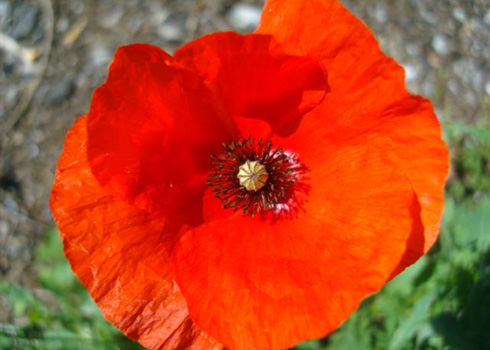
Poppy Time

Poppy

Photo by Rick Gush

I love the orange poppies from my home state of California, but the red poppies of Italy are striking and exotic to me.

One of the reasons I really like living in Italy is that so much of ordinary, everyday existence is exotic to me. For example, I get a big kick out of having so many red poppies flowering around here now. I’m fairly used to poppies blooming near me in the spring, except that the poppies in California were the orange Eschscholzia californica, and here in Italy they are the red Papaver rhoeas. So basically, I get excited just because one of the common wildflowers in my world is a different color. I am obviously a profound person.

I took the train yesterday to Milan and back, which ends up being two nice two-and-a-half-hour trips, during which I’m free to snooze, read the paper and gaze out the window. We travel through a nice mix of coastline, mountains, foothills and flat plain, and I get to see a wide range of agricultural activities. Yesterday, the red poppies were at the peak of their season, and they were everywhere.

Poppies like the uncultivated areas, so there are a lot of them along the train tracks. The Italians aren’t big on keeping things neat and tidy, so many of the train-station areas resemble the worst areas of Detroit. Ironically, the worse the train-yard, the more poppies there will be. So for a few days each year, the ugliest stations—blanketed with thousands of wildly blooming red poppies—are actually the prettiest.

The fields alongside the tracks are also dotted with poppies. In a dozen or so spots along the train journey, I saw huge rectangular fields covered entirely in red blooms. I’d guesstimate that the largest of the poppy-covered fields might have been 10 acres or so. That’s a lot of red! I’m not sure what the farmers have done or not done to have so many poppies growing among their crop, but it was obvious that some cultural practice was involved.

My own poppy patterns in the orto this year have changed, and the reasons are probably similar. I didn’t plant any seed, so everything this year is volunteer.

In the most intensely cultivated areas, there are almost no poppies. The most vigorous plants seem to be along the pathways and steps. I strongly suspect that both cultivation and watering are not beneficial to poppy growth. I don’t think poppies are particularly aggressive either.

This year, on the big slope on the south end of the garden—where last year I had carefully tended the main planting of poppies and enjoyed a fairly spectacular show of blooms—there are almost no poppies growing among the thick grass and other weeds. I was hoping the poppies would colonize that area, but I don’t think that’s going to happen.

Read more of Digging Italy »

Categories
News

Pink Pork? No Sweat

Follow the USDA guidelines to ensure your pork is safely cooked
Courtesy Hemera/Thinkstock
To cook pork safely this summer, use a meat thermometer to ensure the temperature reaches 145 degrees F in the thickest part of the cut.

As you fire up the grill this Memorial Day weekend, perhaps for the first cookout of the year, make sure your meat hits the mark for proper doneness. If pork is on the menu, don’t perspire over a little pink—according to a new USDA recommendation, some pink can be OK.

The USDA recently updated its guidelines for safely cooking pork, steaks, roasts and chops. The whole cuts of meat should be cooked to 145 degrees F, as measured with a food thermometer at the thickest part of the meat, then allowed to rest for three minutes before digging in. The most dramatic change seen as a result of the updated recommendation applies to pork, which the USDA originally recommended be cooked to 160 degrees F without the three-minute rest time.

Pretty (Pork) in Pink
Long-held perceptions about cooking pork are that pink means the meat needs a little more grill time. However, the appearance of meat is not a reliable indicator of food safety or risk, according to the USDA.

The pink color in pork can be due to the cooking method, added ingredients or other factors, according to the USDA. For example, cured pork, such as cured ham and cured pork chops, will remain pink after cooking. Only by using a food thermometer can consumers determine if meat has reached a sufficient temperature to destroy pathogens of public health concern.

3-Minute Rule
Cooking pork to 145 degrees F with a three-minute rest period is just as safe as cooking it to the previously recommended 160 degrees F, according to the USDA’s Food Safety and Inspection Service. During the three minutes after meat is removed from the heat sources, its temperature remains constant or continues to rise, which destroys pathogens.

The new cooking suggestions reflect the same standards the USDA uses for cooked meat products produced in federally inspected meat establishments, which rely on the three-minute rest time to achieve safe pathogen reduction

Cooking Other Meats
The USDA food-safety guidelines for other meats not mentioned in the updated recommendation remain the same. Ground meats, including beef, veal, lamb and pork, should continue to be cooked to 160 degrees F and don’t require a rest time. All poultry products, including ground chicken and turkey, should continue to be cooked to 165 degrees F. 

Categories
Crops & Gardening

Planting My Paradise

Potted fig tree
Photo by Jessica Walliser
I potted a Turkey Brown fig tree with hopes of moving it to the garden later.

When I got home last evening, I decided to fill my patio planters even though I can’t put them on the new patio until the final coat of sealant is applied. I went ahead and planted a few of them in the ground, too. This year, I’m trying to go with a more tropical feel than I have in the past, sticking with more foliage plants than with flowering.

Last fall, I bought four huge matching glazed terra-cotta pots on sale from a local nursery, figuring I would put them on either side of the back sliding glass door. I potted the larger two terra-cotta pots each with a gigantic elephant ear bulb. I plan to fill in around them with some succulents—primarily some yellowish-colored sedums and hens and chicks.

I planted the smaller pair of the matching terra-cotta pots, too. One has a red-leaved banana plant, and the other has a lemongrass plant and a hardy fuchsia I got from Mulberry Creek Herb Farm.

My biggest terra-cotta pot, in which I usually plant a small tree or shrub that I can transplant into the garden come fall, is now housing my very first fig tree! Several gardening friends told me that Turkey Brown is the hardiest fig-tree variety here and also the most productive. I’ll have to lug the pot indoors for the winter, of course, but that’s no big deal, especially if the pay off is fresh, ripe figs.

My other large terracotta pots were planted with variegated, gigantic-leaved hostas with some silver falls planted around the base to trail over the side. I have a few more smaller pots to plant up in the next week or two, as well. I’m crossing my fingers for a tropical paradise in just a few short weeks. 

« More Dirt on Gardening »

Categories
Urban Farming

Asparagus Spears

Asparagus spears

Courtesy Charles Diaz

Eat these beautiful asparagus spears simply steamed, or dress them up fancy.

Along with rhubarb and ramps, asparagus is in full-blown season here. Those gardeners who have patiently waited through three seasons of feathery ferns are rewarded by lots of fat purple spears that grow so oddly, pushing straight up from the beds, and endure for years when well-established.

It’s my private ritual to harvest two wild spears, which grow in an unlikely spot along a chain link fence. But that’s nowhere near enough. Apparently, my neighbors feel the same way. At the farmers market last weekend, a grower told me that his 60 bunches sold out by 10:30 a.m.

Some people favor the pale, lavender-white asparagus spears, so popular in Europe and now grown domestically. Some like the thickest pieces and when they’re very fresh and juicy, like now. (The fat ones are just as flavorful as the thin to my mind.) I prefer these thinnest green asparagus spears. I was recently served one lightly pickled, skinny spear as the garnish of a well-spiked Bloody Mary. Great idea!

Frankly, I don’t think you need much of a recipe to prepare these delicacies. If you don’t already know it, the trick to trimming them is to bend the spears until the woody end breaks off at the tender point. Then just steam the spears in one layer in a large sauté pan, in or over an inch of water, until they are toothsome, and season with salt, fresh pepper and a squirt of lemon juice. I don’t even need butter on them.

Asparagus spears are also deliciously and easily roasted: Roll in olive oil, then roast 10 minutes or so in a 400-degree-Fahrenheit oven, turning them over once. Afterward, you can dress them with a mustard vinaigrette or, as my friend does, a soy-mint-sesame-seed combo. Other delicious dress-ups for asparagus spears are sprinkled fresh goat cheese, chopped egg and dill, or diced, sautéed garlic mixed with parsley, capers and anchovies.

If you want to celebrate asparagus with more elaborate treatment, it responds beautifully, as well. Mixed with eggs, cream and Gruyere, asparagus becomes a quiche filling. With béarnaise or other cream sauces, it somehow becomes old-fashioned and richly formal. Chopped, it can delicately flavor a spring risotto: Add 2-inch, uncooked pieces to the rice with white wine and good Parmesan. Or you can impress guests by rolling each spear carefully in puff-pastry dough or filo leaves and baking the ”cigars.” 

For an elegant and healthy entree, lay white-fish filets, such as sole or flounder, in a baking dish on top of a layer of asparagus. Then moisten the filets with some butter and a sprinkle of white wine. Bake it all at 375 degrees, covered for 10 minutes and an additional three or four minutes, uncovered. Before serving, strew the fish with chopped dill, chives or tarragon. Serve with buttered new potatoes.

Asparagus is a strong example of the vibrancy of a locally grown treasure. Yes, we can find it year-round from far-away places, but for a brief, urgent period, asparagus pokes up boldly in the Hudson Valley, in all their purple-highlighted, matte-green glory, juicy with their unique flavor.

Read more of The Hungry Locavore »