Categories
Equipment

Call in the Experts

Window carpenter
Photo by Jim Ruen
When it comes to fixing windows, it pays to have an expert carpenter do the work.

As I write this, a couple of carpenters are squaring up and adjusting our 15-year old Pella windows. A couple of the windows have given us problems since they were installed, and others have gotten worse over time. Initially, the local Pella sales office recommended a carpenter to replace a failed window. Once finished with that, I asked about the other “problem” windows.

Jacob, the carpenter, showed me how to check the windows to be sure they are square and what I would have to do if I were going to fix them. I declined the DIY advice, and set up an appointment for him to do it instead. As I listen to him and his assistant struggle with a window in the next room, I am confident I made the right decision.

I learned to call in the experts quite a few years ago. A key had broken in the ignition lock of our older second car. Deciding that a locksmith would be too expensive, I proceeded to buy the bits necessary to drill out and remove the ignition lock. I spent more winter evening hours than I like to recall in our unheated, poorly lit garage. For hours, I contorted into various uncomfortable shapes as I worked at the lock on the steering column.

Later, when another lock failed, we did call a locksmith, and it cost us around $50. In retrospect, I would gladly have paid him twice that or more to do the job on the car or would have paid to have the car towed to a repair shop. Fixing things yourself is great, but sometimes it just pays to pay someone else.

<< More Shop Talk >>

Categories
News

Organic Versus Conventional Weed Control

Pigweed
Courtesy Weed Science Society of America
Scientists studied the viability of lamb’s-quarters and smooth pigweed (pictured above with redroot pigweed) in both organic and conventional farming systems.

Weeds are hard to kill—they seem to come back no matter what steps people take to eradicate them. One reason is because of the persistence of weed seeds in the soil. Organic and conventional farming systems both have methods for battling weed seeds, and the authors of a study in the April-June 2011 issue of the journal Weed Science conducted tests to compare the results.

The scientists’ research determined weed-seed viability under both organic and conventional farming systems over a two-year period at agricultural research locations in Maryland and Pennsylvania. To compare the systems, researchers buried two types of weed seeds—smooth pigweed and common lamb’s-quarters—in mesh bags. Weed-seed viability was determined by retrieving seeds every six months over the two-year period.

Depth of seeds in the soil, environmental conditions and soil management are among the factors that affect seed persistence. Under conventional soil management, tillage is an important practice that manipulates the depth of seeds and environmental conditions that can influence weed-seed persistence. Organic soils have enhanced biological activity, with more carbon, moisture and microbial activity that could lead to greater seed decomposition.

The organic soils in the study were higher in total soil-microbial biomass than the soils of the conventional-farming tests. This was measured by phospholipid fatty acid content. But the results of the tests did not lead researchers to conclude that this microbial biomass has a dominating role in seed mortality.

Pigweed seeds showed shorter life spans under the organic farming system in two of four experiments, whereas lamb’s-quarters seeds had shorter life spans in just one of the four experiments. The seeds in the conventional farming system had shorter life spans in two of four experiments.

These results leave an ambiguous answer to the question of which farming system can better eliminate seeds deep in the soil to control weeds from their source.

Categories
Urban Farming

Communities Share Seeds in Seed Libraries

Seeds

Courtesy iStockphoto/Thinkstock

Seed borrowers plant seeds from the San Francisco Seed Library, then return the seeds produced from their best crop.

Seed-lending libraries are sprouting up across California, and with the recent opening of two seed-lending libraries in San Francisco, community members are bringing food safety, biodiversity protection and urban farming back into their own hands.

The first two branches of the San Francisco Seed Library,  a project developed by Transition SF and the San Francisco Permaculture Guild, are open for lending at Hayes Valley Farm and as a pilot project at the Potrero branch of the San Francisco Public Library.

A group of people from Transition SF and the San Francisco Permaculture Guild volunteered their time and knowledge to prepare the Seed Library for its launch. Ania Moniuszko, Transition SF initiating group member, led this effort and collaborated closely with the San Francisco Public Library and the San Francisco Permaculture Guild.

“We wanted to create a community resource that will facilitate the free exchange of seeds along with the education on sowing, harvesting and saving the seeds,” Moniuszko says. “We believe that this will enable the community to preserve and share seeds that thrive in our climates.”

The process is simple: Residents choose from a list of vegetable seeds available in the Seed Library collection, borrow them and plant their seeds. After they’ve harvested their crops, they save the seeds from the heartiest and healthiest of their harvest and return the seeds to the same branch. Over time, each SF Seed Library branch will include a wide selection of seeds best suited to each microclimate because they have grown to full fruition, responding to the local soil, climate, and plant and animal diversity.

“It seemed like a natural fit for Potrero branch to pilot a seed-lending program at the library,” says Lia Hillman, Potrero branch manager of San Francisco Public Library. “Potrero Hill residents love gardening, and there are a number of burgeoning private and community gardens on the hill. The Seed Library offers the library the opportunity to promote urban, sustainable, organic gardening in our neighborhoods by disseminating seeds.”

San Francisco Public Library, through its Green Stacks initiative, aims at encouraging library users to live a more eco-friendly life. With the pilot seed-lending library project at its Potrero branch, users can borrow seeds, as well as check out books, tap into databases, talk to a librarian and find other information resources about urban gardening and native plants.

Seed saving has been the primary method of sustainable agriculture for thousands of years, yet in relative recent history, genetically modified seeds produced by some seed corporations (including those that carry a terminator gene to prevent propagation), threaten to contaminate the food supply with genetically engineered seeds, diminishing plant diversity, reducing the natural resilience of crops, and crushing the livelihood of farmers around the world.

“The cultural practice of selecting and saving seeds demonstrates how we can catch and store energy,” says Kevin Bayuk, permaculture-design instructor and board member of the San Francisco Permaculture Guild. “Though small, each seed is a dense package of incredible potential abundance of delicious local food, community connection and an astonishing amount of additional seeds to save. Sharing that abundance through libraries is a way for us to practice redistributing natural surplus resulting in greater biodiversity, easier gardening and most importantly, fun in learning and connecting.”

Categories
Urban Farming Video

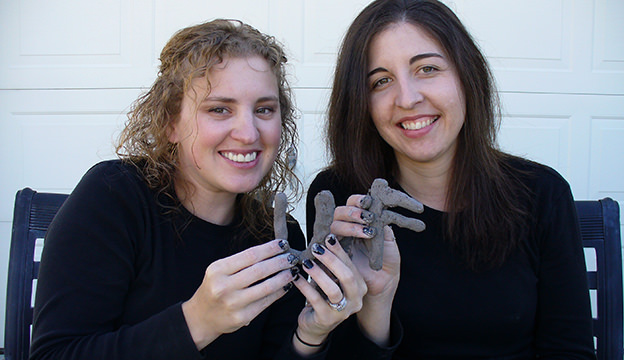
Guerrilla Gardening with Seed Bombs

If the brown in your town has got you down, it’s time to start gardening undercover. The guerrilla-gardening movement has empowered urban farmers to green abandoned urban lots and other city spaces with covert gardening techniques. In the video above, you’ll learn one of the most simple guerrilla-gardening methods that you can put to action right away: seed bombs.

Seed bombs were pioneered in the 1970s by Liz Christy, a leader in the guerrilla-gardening movement. To make seed bombs, mix powdered nontoxic clay, water and the seeds of your choice into a thick paste. Then roll the mixture into 1-inch balls (or fashion into other shapes of your choosing), and let dry.

Once the seed bombs are dry, they’re ready to toss into brown lots. After a moderate to heavy rain hits the area, the clay in the seed bombs will melt, and the seeds will start growing. It’s that easy.

Watch the video above as Urban Farm editors Lisa Munniksma and Stephanie Staton take you along on their own seed bomb greening mission.

Categories
Animals

Cadwaladr’s Goat

Martok the goat
Photo by Sue Weaver

Mom is snuffling and sneezing because she has pollen allergies. Guess what she’s allergic to? The nice oak trees that make our yummy leaves! Because she’s feeling down, Uzzi and I decided to share our favorite goat story with her (and you).

The story is called “Cadwaladr’s Goat” and it’s from British Goblins: Welsh Folklore, Fairy Mythology, Legends and Traditions by Wirt Sikes, an English book that was published in London in 1881. You can download it for free from Google Books if you like. It’s packed with great stories, but the one I’m going to share with you is the best. When Uzzi and I read it, we get goosebumps!
 
Cadwaladr owned a very handsome goat named Jenny of which he was extremely fond and which seemed equally fond of him. But one day, as if the very diawi possessed her, she ran away into the hills with Cadwaladr tearing after her, half mad with anger and affright. At last, his Welsh blood got so hot, as the goat eluded him again and again, that he flung a stone at her, which knocked her over a precipice, and she fell bleating to her doom.

Cadwaladr made his way to the foot of the crag. The goat was dying, but not dead, and licked his hand—which so affected the poor man that he burst into tears, and sitting on the ground took the goat’s head on his arm. The moon rose, and still he sat there. Presently, he found that the goat had become transformed to a beautiful young woman, whose brown eyes, as her head lay on his arm, looked into his in a very disturbing way. “Ah, Cadwaladr,” said she, “have I at last found you?’”

Now Cadwaladr had a wife at home and was much discomfited by this singular circumstance; but when the goat—maiden—arose, and putting her black slipper on the end of a moonbeam, held out her hand to him, he put his hand in hers and went with her. As for the hand, though it looked so fair, it felt just like a hoof.

They were soon on the top of the highest mountain in Wales and surrounded by a vapoury company of goats with shadowy horns. These raised a most unearthly bleating about his ears. One, which seemed to be the king, had a voice that sounded above the din as the castle bells of Carmarthen used to do long ago above all the other bells in the town. This one rushed at Cadwaladr and butting him in the stomach, sent him toppling over a crag as he had sent his poor nanny goat.

When he came to himself after his fall, the morning sun was shining on him and the birds were singing over his head. But he saw no more of either his goat or the fairy she had turned into, from that time to his death.

« More Mondays with Martok »

Categories
Urban Farming

Bert the Camel

Camel

On my trip to the feed store, I was awestruck by Bert, the deputy sheriff camel.

I’ve been obsessed with animals since I was a little kid and have spent more time at zoos and farms than I have in playgrounds and parks. So it’s not often that I see an animal that really takes my breath away. But it happened this past weekend, right here in the town where I live.

I went to one of the feed stores in downtown Norco, Calif., to take part in their customer appreciation day. Free food and a free raffle — it was certainly worth the 2-mile drive from my house on a Saturday morning.

As soon as I pulled into the parking lot, I saw him: a big, glorious, one-humped camel. He was standing in the parking lot wearing a halter and lead rope, held by a woman I would later find out was named Nancy.

I don’t even remember parking my car. I couldn’t take my eyes off the camel. I’d seen this guy walking down the trail a few times, led by Nancy on her horse. Of course, I was either on horseback or leading my horse at the time, and all I could think to do was get the heck out of there, fast, before my horse killed me. One of the most terrifying things to an uneducated horse is a camel, it seems.

But this time, I was unencumbered by any equine cowards, and could walk right up to this camel and touch him.

The camel was amazing. Standing almost 7 feet tall, he didn’t look real. He seemed like some wacky animated character you’d see in a Pixar film. His lips jutted out, his neck was long and S-shaped. And his feet! He had two toes on each foot, which were massive and flat as pancakes.

I found out the camel’s name is Bert, and he is a deputy sheriff. Apparently, he’s in the Guinness Book of World Records for being the highest-ranking law enforcement camel in the world. Nancy is a Sheriff’s Posse Reserve Deputy. She and Bert attend parades and other events to reinforce safety and anti-drug messages to kids.

Whatever. All I know is that I couldn’t keep my hands off him. His skin was rough and his hair bristly. His muzzle was soft, and his eyes were huge. He was clearly the most bizarre-looking creature I’d ever seen. Or maybe I’m just too used to looking at horses. Either way, he was spectacular. Meeting him made my weekend.

Read more of City Stock »

Categories
Farm Management News

Invasive Plants Inhibit Native Growth

Invasive plant species do not make good neighbors. Aside from their obvious disrespect for fence lines, invasive weeds can continue to edge out native species even after the invaders have been plucked or controlled. Although an invasive weed has been removed, its negative effects remain in the soil after its gone. This “legacy” can inhibit the growth of native plants, which are vital to forming diversified grasslands and valuable for agricultural landscapes, biofuel feedstocks and other aspects of the ecosystem.

A study in the January-March 2011 issue of the journal Invasive Plant Science and Management gauged the quality of soil after growth cycles of various grassland plants. Researchers found that invasive species can have a strong inhibitory effect on the growth of other grass species.

These weeds were found to alter soils physically, microbially or both. Long after the weeds are controlled or removed, their impact on the soil lingers. This sets the stage for additional weed invasions and poor performance of native species while grasslands are being established.

Scientists examined three invasive grass species—smooth brome, crested wheatgrass and leafy spurge—in the study. These weeds, along with three native grassland perennials, were grown separately through three cycles of growth and soil conditioning. Seedling plants were placed in soil previously “conditioned” by the other species. Native plants were found to share the soil with other species more easily.

Previously documented modifications to soil by invasive species include effects on soil food webs, microbial communities and fungi as well as alteration of the input and cycling of nitrogen and other elements. In the current study, the presence of arbuscular mycorrhizal fungi (AMF) affected the plants’ growth responses. With AMF in the soil, native species facilitated the growth of invasive species. Under the same conditions, invasive species offered neutral or negative consequences to other plants.

Some native plants, however, were unaffected by the invaders’ detrimental impact on the soil. This knowledge offers land managers some species that can be used positively as cover crops, or “nurse” plants. These plants can condition and restore soil, helping to make a friendlier environment for other native species to establish their roots.

Categories
Urban Farming

Businesses Commit to Going Green

Clif Bar

Courtesy Clif Bar

As part of its sustainability initiative, Clif Bar gives employees $500 to put toward their commuter-bike purchases.

At a time when green-washing is rampant, it can be difficult to know which companies are working to minimize their eco impact and which ones are only pretending to do their part.

Skepticism is on the rise: According to new research conducted by brand marketing firm Cone, 57 percent of respondents didn’t trust environmental claims made by companies.

Not all companies making green claims are guilty of false advertising, though. These four companies demonstrate a serious commitment to the environment through products and processes designed to protect the planet.

Patagonia

Since Patagonia was founded in 1972, the outdoor activewear company has embraced its mission statement: “Build the best product, cause no unnecessary harm, use business to inspire and implement solutions to the environmental crisis.” All aspects of the company, from the LEED Gold-certified customer service center in Reno, Nev., to clothing manufactured from organic cotton and recycled soda bottles, exemplifies a commitment to sustainability.

In 1985, Patagonia launched an environmental grants program called 1% for the Planet to contribute 1 percent of sales to environmental causes. To date, donations have totaled more than $40 million.

Employees are encouraged to participate in sustainability, too. Staff can take up to one month off of work to volunteer for the environmental group of their choice while Patagonia continues to pay their salaries and benefits.

IKEA

The largest home-furnishing retailer in the world is doing its part to make big profits with a small environmental impact.

In its 2010 sustainability report, the Swedish furniture giant documents its progress toward lightening its environmental footprint, including increasing the number of products made from certified wood and sustainable cotton and continuing efforts to phase out the sale of incandescent bulbs.

In 2010, IKEA initiated solar-panel projects at seven IKEA stores in the U.S., announced that the newest store in Centennial, Colo., will be built using geothermal technology and helped reduce CO2 emissions by planting 1.5 million trees through the IKEA Plant a Tree Campaign.

By 2015, the company aims for all home furnishing products sold in its stores to be made from renewable, recyclable or recycled materials; plans to have zero waste from its operations end up in the landfill; and pledges to evaluate all of its purchasing decisions based on a sustainability scorecard to ensure its products are increasingly more eco-friendly.

Clif Bar

Since Clif Bar was founded in 1992, significant efforts have been devoted to developing products that are as eco-friendly as they are tasty.

Clif Bar is committed to using organic ingredients, upcycling product wrappers and donating 1 percent of its sales to environmental organizations. Those efforts have led to significant environmental achievements. Since 2003, the company has purchased more than 100 million pounds of organics and collected nearly 5 million wrappers, turning them into new products.

In 2010, the headquarters in Emeryville, Calif., got a green makeover: 100 percent of the wood used to construct the building was reclaimed or harvested from sustainably managed forests, solar power provides almost all of its electricity needs, and 75 percent of construction debris was diverted from the landfill by recycling and composting. The onsite cafeteria serves organic foods sourced from local farmers. There’s even a full-time ecologist on staff to lead in-house sustainability programs.

To encourage its employees to be good stewards of the environment, Clif Bar offers staff up to $500 towards purchasing or retrofitting a commuter bike. The company’s Cool Commute program has helped employees purchase hybrid or biodiesel vehicles.

Microsoft

Microsoft adopted a set of environmental principles in 2006 to define the corporate commitment to protect the environment and conserve natural resources. The principles include creating energy-efficient data centers (with all future data centers designed for LEED ratings), using renewable power such as wind and solar energy, composting food waste from onsite cafeterias and conference rooms, stepping up recycling efforts, and eliminating PVC from product packaging.

Engineers are also leading efforts to use technology to address environmental issues, including developing sensors to locate energy leaks in homes and offices and designing Microsoft Dynamics Environmental Sustainability Dashboard to help businesses measure and manage their carbon footprints. Microsoft is also a member of the Climate Savers Computing Initiative, an industry coalition with a goal to reduce global CO2 emissions from computers by 54 million tons annually, and Green Grid, a global consortium of technology companies dedicated to improving the energy efficiency of data centers.

Environmental efforts aren’t just happening on Microsoft campuses. The company allocates significant financial resources to environmental stewardship, providing grants to research technology issues (including $500,000 in 2008 to support research into more energy-efficient computing) and granting low-cost licenses to Microsoft Authorized Refurbisher programs to extend the life of PCs that might otherwise go to the landfill.

Categories
Urban Farming

Ancient Pittosporums

Pittosporum tobira

Photo by Rick Gush

Pittosporum tobiras, shrub-like tree that were likely planted here in the 1920s, blanket the city of Rappallo.

Rapallo has many of the ancient shrub Pittosporum tobira. These shrubs, which are actually small trees, are really attractive year-round, particularly in spring when they bloom. From the conversations I’ve had with the city gardeners, I think a lot of these pittosporums were planted in the 1920s. A number of them are easily more than 25 feet tall.

The trees/shrubs are exceptionally self-cleaning. Without any particular pruning, they form themselves into tidy lumpy lollipop shapes. When they bloom, the abundant flowers are spaced perfectly around the crown of the plant. They look almost too good—sort of like fake little trees to plant around a model railroad setup.

Pittosporum tobira is one of the primary staples in the nursery industry in temperate areas, and it certainly makes the list of the 10 most planted landscape shrubs of the 20th century. It was “discovered” in China at the end of the 18th century, and the first European-grown specimens were listed in Kew Gardens in London in 1804. It remained mostly a botanical specimen until the end of the 19th century when people in Europe and the United States started to landscape their yards.

Nurseryman quickly noticed the easy propagation and excellent planting results. By the start of the 20th century, Pittosporum tobira was on just about every landscape-nursery grower’s availability list. It’s a perfect plant from the nurseryman’s point of view because it grows well in containers, has very few pests, is fairly fast-growing, is drought tolerant and blooms easily. By the 1920s, it was one of the most common shrubbery plants in nurseries, and therefore also in home, civic and business landscape plantings.

Over the years, there has been some selection by nurserymen, and the Pittosporum tobiras available for sale today are a bit faster- and straighter-growing than those available in the early 20th century. Fifty-year-old specimens in America, where nursery selection was heaviest for shrubbery, aren’t quite as sensuously curved as the European examples. While European gardeners in the first half of the 20th century planted more perennial flowers and less shrubbery, American gardeners planted huge amounts of shrubbery around their legions of single-family homes.

 American nurseries were very keen to grow shrubbery plants that looked tall and healthy in their pots. The changes in the late 20th century were also pushed most by American nurserymen who developed several dwarf varieties of Pittosporum tobira, which now sell more than the full-sized type.

Pittosporum tobira is a mild-climate plant, and the colder or hotter the climate, the less likely that the plants will survive to a mature old age. In cold areas, the plants often freeze, and in tropical situations, the plants are subject to a number of pests that don’t occur in temperate zones.

The most common name for the species is Mock Orange because the blooms sort of resemble citrus blooms in appearance and odor. It is also called Australian Laurel, because Australia is where the many cousins in the genus are native. My favorite name, which is used more in the UK and Australia, is Japanese Cheesewood. The freshly cut wood does have a distinctive smell, but it’s not like the smell from the traditional cheese I eat.

Unfortunately, this species can be easily clipped into squared off hedges and green screens, so this is what most gardeners did in the 20th century and the less well informed still do. Only in the past 20 years has the general public come to understand that letting this species take its natural form produces a very attractive plant.

Read more of Rick’s Favorite Crops»

Categories
Crops & Gardening

May Mart Plant Shopping

Designer Genes hosta
Photo by Jessica Walliser
My favorite plant find at the May Mart is the Designer Genes hosta.

Our local botanical garden hosted its annual May Mart last week so of course I made a trip to have a little lookie. In true form, I left with the back of my car full of plants. I like to tell myself it’s for a good cause. (It is! Really, I swear.)

I found a beautiful Acanthus (bear’s breeches) plant in a gallon pot for $10. I’ve wanted one since I saw a large, absolutely breathtaking specimen in the parking lot at Fellow’s Riverside Garden outside Cleveland, Ohio, a few years ago. I don’t know where I’m going to put it yet, but I can promise you it will have a choice position somewhere in the garden.

I also got a new deep-pink butterfly bush and a handful of heirloom tomato transplants, including the Cosmonaut Volkov, Snow White, Pineapple and Green Zebra varieties.

But my best find was at the Pittsburgh Hosta Society booth. I got two beautiful Designer Genes hostas. In my humble opinion, the market is so saturated with hostas, many of which no one but the breeder could ever manage to tell apart. Sometimes, I think they come up with new ones just so they can figure out some fancy name for them. But the Designer Genes hosta is so very different from any other hosta I’ve ever seen. It has brilliant chartreuse yellow leaves with deep-burgundy stalks. Sooo cool. These will go above the new retaining wall we’re going to build, where the pond used to be. It’s the perfect location for an incredible plant. I can’t wait to watch it grow.

« More Dirt on Gardening »