Categories
Urban Farming

Tradition … Tradition!

Charosets and matzoh

Photo by Judith Hausman

When I make the Sephardic version of charoset (pictured left) with apricots, dates and almonds, my family wants Grandma’s more familiar recipe (pictured right) with apples, walnuts and wine.

The Jewish holiday of Passover is celebrated with a ritual meal called a seder. A number of foods are part of the service, which is read aloud at the table. Much like Thanksgiving, there are also certain dishes that are part of the actual dinner that you just have to have—and they must be just like Grandma’s. Somehow we don’t want trendy when the family gathers so rarely for a special meal, do we?

Our family does not follow kosher dietary rules, which gives us quite a lot of latitude. Nevertheless, when I have tried a number of times to introduce different dishes into our family seder, it never works. Other than switching to good wine from the old-time, horridly sweet, Concord-grape wines, the biggest change we’ve made is to offer small gefilte fish balls (made from a mix of white fish) as hors d’oeuvres rather than as a whole course because most of us don’t really like them anyway. I’ve even tried to introduce traditions from other Jewish cultures, such as Italian or North African dishes. Nope! It’s gotta be the same-as-always German-Eastern European palate of flavors we grew up with.

Secret Weapon

After Passover, leftovers of both versions of charoset can be folded into a basic muffin recipe for a nice breakfast item. You might want to drain excess liquid from Grandma’s version first.

At our meal, we must have feather-light matzoh (or matzo or matzah) balls in clear chicken soup. We usually have tender beef brisket (but roasted salmon or leg of lamb are acceptable as well), and often piles of asparagus and a certain sliced potato dish are included. In addition to any fancy (and they must be flourless) cakes for dessert, there are always coconut macaroons in both chocolate and vanilla.

One of the best-loved ritual dishes is a fruit-based condiment called charoset (or haroset). It symbolizes the mortar or mud the slaves used in Egypt to build the pyramids, but it also encompasses the sweetness of hope for the future that a spring holiday brings. The fresh herbs that are part of the service carry the same symbolism. In fact, they are about all we have growing locally around here in late March or April.

Here’s the Grandma version of charoset, which we all love and eat only for this holiday:

Dice some apples into quite small pieces. (I can still pull some local ones from cold storage.) Chop some walnuts so the proportion is about 1/3 nuts to 2/3 apples. Mix and moisten with red wine. Some people add cinnamon and/or sugar, too. Also, some people like the mix very mortar-like, which is easy to achieve in a food processor.

I’ll also pass along the Sephardic version of charoset, from the Jewish cultures of Spain and the Mediterranean. I love it because it’s made with mostly dried fruits, but I’m the only one in my family who eats it this way:

Chop a mix of almonds and dried fruits, such as apricots, dates and figs. Moisten the pasty mix with a little lemon or orange juice and a little red wine or port. Some people like to add the grated lemon or orange rind, as well, or even the whole orange, chopped.

You should allow either of these to mellow a little before serving. We eat them with matzoh, the cracker-like unleavened bread, which symbolizes how quickly the slaves had to prepare when it was time to flee. They couldn’t even wait for their bread to rise!

Read more of The Hungry Locavore »

Categories
Crops & Gardening Farm Management

10 Reasons to Plant a Farm Tree

Each year on Arbor Day, states across the U.S. encourage landowners to plant trees on their property. The foundations of this celebration date back to 1855 in Nebraska. Being in a grassland-dominated landscape, wood for building homes and fences was limited. Longing for their beloved forests of the East, pioneer J. Sterling Morton and his wife began planting an orchard and trees on their claim.

In 1872, the Nebraska Board of Agriculture adopted Morton’s idea of a day dedicated to planting trees. His concept quickly took root as 1 million trees were planted on that inaugural day. Over the years, state after state adopted Arbor Day holidays. Given the variation in planting times across the country, the day can range from January and February in South to May and June in the North. National Arbor Day is celebrated on the last Friday in April.

Trees continue to provide a host of benefits to people and the environment, and those benefits haven’t changed. Let’s review a list of the top 10 reasons trees can be a valuable addition to the hobby farm, whether or not it’s Arbor Day.

1. Aesthetics
Land devoid of trees can sometimes appear desolate, especially in the winter. Evergreen trees can add a splash of life to that drab winter scene. Deciduous trees, which lose their leaves in the fall, can create beautiful arrays of fall color and refreshing spring greens. To many, a grove of trees provides serenity and a venue to slow the pace of today’s bustling world.

2. Food
What could be better than a pie baked from apples grown on your own tree? Maybe a peach pie from the farm! A host of fruit trees not only adds beauty to the farm but provides food for the table, as well.  Don’t ignore the value of nut trees, like hickory, walnut and pecan trees among others, for more homegrown food options.

3. Heat
As energy prices climb, wood can be a renewable and affordable form of heat. The fireplace, wood burner or outdoor wood-burning furnace won’t just take the bite out of the cold—it’ll take a bite out of your bills! Burning wood is also a great option for warming workshops on the farm.

4. Wind
Trees can be used to obstruct, deflect or filter wind from your home. Large coniferous trees, planted on the north side of a home and at a safe distance to avoid fallen limbs, can keep wind and weather at bay. Many shelter belts are designed to deflect wind upward by incrementally increasing the height of woody vegetation from shrubs to trees. Decreasing wind on your cropland minimizes soil loss, and obstructing it from your home saves on the heating bill and can limit storm damage.

5. Shade
Similar to wind management, shade from trees can benefit the home and the farm. Shading livestock minimizes stress during the hot summer months. Planting deciduous trees on the south and west sides of the home affords cooling in the summer and allows solar heating in the winter.

6. Wildlife
Trees and their mast (nuts and fruit) are essential for countless species of wildlife. They provide nesting, roosting, denning, cover, thermal protection and, of course, food. A diversity of deciduous trees and coniferous trees on the farm will provide year-round habitat for birds and mammals alike.

7. Timber
Wood fiber has economic value. The management of trees on the farm can serve as another cash crop, but it takes a lot longer to harvest. A well-managed forest can yield valuable timber income for generations.

8. Erosion Control
Trees have extensive root systems that help keep soil in place. They are particularly beneficial on slopes, but their value is most recognized along waterways, where their roots keep banks intact.

9. Carbon Storage
The burning of fossil fuels has raised the levels of carbon in the atmosphere. No plant stores more carbon for longer periods of time than trees. Carbon credits are well established in Europe and have been traded in the U.S. The future may bring a new market for the planting of trees to help combat climate change caused by carbon emissions.

10. Oxygen Production
What could be more important to life as we know it than producing oxygen to breathe? Like all plants, trees use the sun to convert carbon dioxide to sugars and oxygen through photosynthesis. Tree leaves can also serve as a filter for removing air pollutants like ozone, carbon monoxide and sulfur dioxide.

If these 10 reasons aren’t enough motivation for you to plant a tree on your farm, think about using trees to minimize noise from a nearby road or to obstruct the view of that neighbor who collects of relics. (Yes, that’s a friendly way of saying junk!) With so many benefits, pick a few spots where you can incorporate trees on your farm.


Categories
Equipment

Need a Sticky Solution?

Wood glue
Courtesy iStockphoto/Thinkstock
The website This to That will help you figure out what kind of glue you need to adhere a material to wood.

Need a sticky solution? Try the website This to That. It offers sticky solutions to any problem.

Drop-down menus let you identify the two materials you want to glue together. Click on the button for “Let’s Glue!” and up pops the sticky solution. Select the right (or wrong) materials, and you even get some humor. Thinking it would be a difficult combination to adhere, I tested the site with “leather” and “ceramic.”

The solution that popped up led off with “We won’t ask why you would want to glue ceramic and leather together—we just give gluing information.” Then they advised using Household Goop with thick leather and 3M 77 if gluing a light chamois or suede. Double click on Household Goop, and you get a full page of information, including toxicity, cost, time to adhere, where to find it and a link to the product’s official website. Additional notes went into detail on differences between Canadian and U.S. formulations.

Other pages on This to That include triva about adhesives, news, the philosophy of the website’s creators, and links to other glue websites that are both fun and technical. The FAQ is full of interesting information, links and a Glue of the Month. The latter, though out of date, could eat up weeks of your time. I mean, who can resist linking to Aleene’s Platinum Bond Patio and Garden Adhesive? I found it works on pottery, terra cotta, cement, ceramics, PVC and wood. The site creators highly recommended it for outdoor repairs … because it is highly toxic but it works.

Just one visit, and I’m literally glued to my seat. If I don’t get a blog done for next week, it may be because I’m still playing around on This to That.

<< More Shop Talk >>

Categories
Urban Farming

Electric Vehicles: Charge Up in Texas

eVgo Freedom Station

Courtesy eVgo

Electric-vehicle owners in Texas can now charge up their cars at public charging stations springing up in Houston and the Dallas/Fort Worth areas.

Electric vehicle owners in the Dallas/Fort Worth area can now stop to “fuel up,” so to speak. Over the weekend, NRG Energy, Inc., opened the first privately funded eVgo (ee-vee-go) Freedom Station at a Dallas Walgreens. The station includes the first high-speed direct current (DC) charger in Texas, which is among the first in the nation.

NRG plans to install a total of 70 Freedom Stations in the Dallas/Fort Worth area and 50 in Houston by the end of 2012, with half in place by this summer. NRG also plans to set up stations along the Interstate 45 corridor, connecting the two cities, in 2012.

Each Freedom Station provides a 480-volt DC fast charger that can add 30 miles of range in as little as 10 minutes and a 240-volt Level 2 charger that can add up to 25 miles of range in an hour. Freedom Stations are available 24/7 and include a customer-service tower with a mounted camera, giving customers access to an eVgo service representative or a strobe light, siren and law-enforcement alert, even from inside their vehicles. The eVgo network will also include Convenience Stations that offer a 240-volt Level 2 charger available during the retail host’s business hours.

“In an area of 6.5 million people, air quality is always a primary concern,” says Mike Eastland, executive director of the North Central Texas Council of Governments. “NRG’s eVgo network is a welcome complement to NCTCOG’s Electric Vehicles North Texas program, and we truly appreciate our public- and private-sector partners that have been and continue to be instrumental in preparing the region for electric vehicles.”

Electric vehicles powered by electricity generated from domestic fuels, including wind and nuclear power in Texas, have the potential over time to dramatically reduce America’s greenhouse-gas emissions. According to the EPA, transportation contributed to about 27 percent of U.S. greenhouse-gas emissions in 2008, and the sector continues to be the fastest-growing source of emissions. In most Texas cities, transportation is the largest single source of nitrogen-oxide emissions.

Electric vehicle owners in eVgo cities can sign up for NRG’s “home-and-away” charging plans for a flat monthly fee. NRG will install and maintain the region’s charging infrastructure of home chargers and public fast-charging stations located along major freeways and in key shopping and business districts.

“Electric vehicle ownership should be fun, affordable and convenient, with drivers having complete confidence that a fast charger is never more than a few miles away,” says Arun Banskota, president of NRG’s electric vehicle services division.

NRG is working with the North Texas electricity transmission and distribution company Oncor on zone planning and site selection for the eVgo charging stations in Dallas/Fort Worth to ensure accessibility and reliability. Oncor will install more than 1.5 million advanced meters and construct 850 miles of transmission lines to supply power to the charging stations, says Jim Greer, Oncor’s senior vice president of asset management and engineering.

“By 2012, our investments will enable more than 3 million homes and businesses in Oncor’s service area to use electric-vehicle charging technology, such as the NRG eVgo network, when renewable energy availability is highest and the cost of electricity is lowest,” he says.

Categories
News

Garden Week Q&A

Hobby Farms readers have difficult questions for Jessica Walliser
Courtesy iStockphoto/Thinkstock
Water anemones well in the first season to keep the roots from drying out.

Come this time of year, gardeners are out in full force, preparing their vegetable and flower beds for a productive season. This week—April 10 to 16, 2011—we’re celebrating National Garden Month and encouraging gardeners to learn something new as they are busy with their planting chores. Whether you’re a novice gardener or an old pro, the garden is always full of new discoveries, as Dirt on Gardening blogger Jessica Walliser can attest. To help get you in the gardening spirit, she’s answered a few questions that have Hobby Farms readers stumped.

Keep Deer Out
Q:
What is the best non-fence alternative for keeping deer out of the garden? ~Christy Franklin, Facebook

A: My favorite non-fence and non-spray deer-repellent system is a motion-activated sprinkler called The Scarecrow. The sprinkler connects to your hose and shoots a sharp, sudden burst of water in the direction of the activity. (It works great for dogs, cats and sneaky teenagers, too.) 

With a range of 1,000 square feet, one or two Scarecrow sprinklers will cover the average vegetable garden. I suggest you move the system every few days to keep the deer on their toes. The only major downside is that you can’t use it in the winter or if you don’t have a hose bib nearby. It runs on a single 9-volt battery.

Growing Anemones
Q: Why can I not grow Japanese anemones and all my neighbors can? They’re downright invasive in their gardens, and I can’t get a one to survive. Don’t say soil pH—I already know that one, and mine is correct. I’m a Master Gardener, and I’m stumped! ~Linda Reeve, Vanleer, Tenn.

A: Fall-blooming Japanese anemones are lovely plants indeed, and yes, if they like where they are, they have the tendency to take over the garden and become invasive. You already know that anemones prefer alkaline soil—that’s good. Next, I wonder how you have started them in the past. 

Japanese anemones don’t do well from seed for me nor do fully grown plants from the nursery.  They tend to suffer from transplant shock. I have had the greatest luck growing anemones from very small divisions. The two patches I have now were started from a friend’s plant. To make a successful division, they should be lifted in early spring when the new growth is only 1 or 2 inches tall. Each division should have a developing shoot system as well as a piece of spindly, brown root, at least 2 inches long. 

It’s very difficult to dig out a division and keep any soil on the root, so it’s extremely important that as soon as you dig up the division, you immediately replant it in either a pot of potting soil or directly into your garden. Choose a site with dappled shade, if possible. The next important step is to keep it very well watered through the first season. Because it will take several months for that spindly root piece to develop into a supportive root system, it’s important to keep it from drying out.  

Fruitful Tomatoes
Q:
My tomato plants last year were big and beautiful, but did not bloom or put out fruit. Why? ~Becky F. Friedrich, St. Augustine, Ill.

A: Nearly every time a horticulturist hears about a plant with a whole lotta green and very little fruit, they’ll blame it on the soil (and then on the gardener—sorry!).

There are three primary macronutrients a plant uses to grow: nitrogen, phosphorus and potassium (the N-P-K on every fertilizer bag). They are called macronutrients because they are needed in the greatest amount to support plant growth. Although no less important to plant growth than, say, boron or magnesium, they are the ones that we need to pay more attention to because they are needed in more substantial quantities. 

Each of the macronutrients performs different functions within a plant. (You’ll see where I’m going with this in a second, I promise!) In a nutshell, the nitrogen is responsible for making new, green growth. The phosphorus supports a good root system and helps develop fruits and flowers. Potassium raises plant vigor and helps make them tough and hardy. When a plant, like your tomato, makes a lot of green and no fruits or flowers, it usually means there’s too much nitrogen in the soil and, perhaps, not enough phosphorus. 

I’m thinking you may have fertilized with a high-nitrogen product or manure within the past year or two and the nitrogen needs to be balanced out.  The only way you’ll know how to do that is to take a soil test. You’re county cooperative extension agent should offer testing or point you to a lab that does. They’ll probably suggest you top-dress with bone meal or another phosphorus-rich fertilizer.  

Pile It On
Q:
Why are many melons, squash and the three sisters garden seeds planted on mounds? We have very sandy soil, and the water just drains right through. ~Julie Bannister Chen, Harrison, Tenn.

A: The purpose of using mounds depends on where you live. Folks who garden in clay-based soils use them to increase drainage. Gardeners, like you, who have sandy soils, build mounds to keep the soil from draining too quickly. You’re probably saying, “Huh? How can they both increase drainage and decrease it at the same time?” The answer lies in your soil type.

Properly made mounds in both clay-based and sandy soils contain plenty of organic matter. Organic matter helps contain soil moisture in sandy soils, giving the water something to cling to and holding it much like a sponge. In clay-based soils, organic matter helps break up and separate the clay particles, opening up drainage channels and allowing water to move through it more readily. In order for the mounds to function appropriately for your soil type, build the mounds out of lots and lots of organic matter—like compost, well-aged manure or fully rotted leaves—mixed with some of your native soil. Mounds are also the perfect solution for plants, like those you mention above, whose seeds are prone to rot in poorly drained soils.

Categories
Animals

Chew on This

Chewing cud
Photo by Sue Weaver
Jacy isn’t laughing—she’s chewing cud!

Last week, a lady brought her children to our farm to meet us. The little boy looked at me and said, “What’s he chewing?”

“His cud,” his mama told him. “He chews up his food and swallows it, then horks it up again and chews it some more. And you know what? He has four stomachs!”

Uzzi and I looked at each other. That’s not quite true. We don’t have four stomachs; we have one stomach with four chambers. Here’s how it works:

True ruminants—like us goats, sheep, cows, deer, elk, antelope, bison, water buffalo and yaks—have a rumen, a reticulum, an omasum and an abomasum. Combined, they make up our stomach.

The first and largest of the chambers is our rumen. It’s located on our left sides, where it acts as a fermentation vat. A rumen contains billions of bacteria, protozoa, fungi, molds, yeasts and other wee beasties that feed on carbohydrates in the stuff we eat. They convert carbohydrates into volatile fatty acids. Volatile fatty acids represent our primary source of energy.

As feed mixed with saliva enters our rumen, it separates into layers of solid and liquid material. Later, when we’re resting, we burp up some gas (that’s why you think our breath smells bad) and a bolus of food (our cud) and re-chew it more slowly. Then we swallow it again. Yum!

Chewed-up feed flows back and forth between the rumen and the next chamber, the reticulum, by way of an overflow flap. Particles remain in this area for 20 to 48 hours because fiber fermentation is a slow process. Eventually they pass from the reticulum through a short tunnel into our omasum.

The omasum is divided by long folds of tissue like pages in a book. It’s also lined with little finger-like things called papillae to increase its working surface. The omasum decreases the size of feed particles, removes excess fluid from digestive slurry, and absorbs volatile fatty acids that weren’t absorbed in our rumen.

The fourth chamber, our abomasum, is considered our “true stomach” because it’s the most like a human’s stomach. The walls of the abomasum secrete digestive enzymes and hydrochloric acid. Protein is partially broken down in the abomasum before material enters the small intestine.

Because our stomachs are so different from yours, there are tricks to feeding us ruminants. You know all those bacteria and other wee beasties in our rumens? Because they provide our energy needs, if all of them die, we die, too. And they’re sensitive because they get used to one type of diet at a time. So if you switch, say, from a high-hay and low-grain diet to one containing lots of grain, our rumen beasties die off. Then we’re in big trouble! So make changes in our feed very gradually to give our rumen beasties time to adjust.

« More Mondays with Martok »

Categories
Urban Farming

Mr. Pecker

House finch
Photo by Audrey Pavia

A feisty male house finch has taken to fighting with his reflection in the ladies’ room where I work.

Sometimes I feel incredibly lucky. Not only do I live in an amazing urban-farming community, but I also work here, just a couple of miles from my house. The property where I work is around a huge manmade lake that serves as a refuge for a host of water birds. The brush nearby is home to a family of coyotes and scores of raccoons, possums, skunks, ground squirrels and cottontails.

Another creature that calls the area home is the house finch, a bird that was once only found in Southern California. The species has spread to other parts of the U.S. and can now be seen even as far away as New York.

House finches are little brown birds, though the males do have a splash of color. Their heads and chests are usually red but sometimes orange. The females are plain and brown.

One day two weeks ago, while in the ladies’ room at work, I heard a loud tap tap tap on the window near one of the stalls. I went over to the window to see who could be trying to get into the bathroom from the outside and discovered it was a male house finch. He was perched on the ledge outside the window and pecking furiously at the glass.

I put my face practically up against the windowpane, but apparently, the bird couldn’t see me. He was looking at his reflection, thinking it was another male finch.

This pecking-at-the-window routine went on for days. Every time I’d go into the restroom, I’d see him going wildly at the glass. I spent some time observing him and soon saw his mate, a cute little female, who watched calmly from nearby as he tried to drive off what he thought was a potential rival.

After this went on for a week—and all the women at work had commented on it to one another—I came to the conclusion that this pair of finches had made a nest somewhere near the window and were either raising their babies or getting close to having eggs in the nest. The fury with which Mr. Pecker (as he came to be called) went at the window and the amount of time he spent there could only mean one thing: He was trying to protect his family.

Although I enjoy getting to see an angry house finch up close and personal (I can literally put my nose on the glass right where he is pecking), I’m concerned about this poor guy spending all his energy fighting a non-existent foe. I have opened the window a few times and put my hand out so could see that a human, not another bird, was nearby but to no avail. He flutters off when he sees my hand but 20 minutes later is back again.

I’m thinking about leaving some birdseed on the ledge in the hopes that he’ll get distracted by it and give up the fight. At the very least, he’ll have something to nibble on between battles with himself. As for my co-workers, they already think I’m a crazy animal lady. This will certainly help me keep my reputation.

Read more of City Stock »

Categories
Crops & Gardening

Old Patio, New Patios

Moving patio pavers
Photo by Jessica Walliser
The pavers from our old patio are going to two different friends, who are creating patios of their own.

Spring is coming on quickly here, though the backyard is still a muddy mess.

Work has begun on our new patio. Well, actually, the work has begun on removing the old patio. It is made from about a million brick pavers, each of which weighs about 5 pounds. I was having a hard time feeling good about sending all those pavers to the landfill in order to have the new patio put in, so I asked our contractor if he wanted them to use on another job. He declined so I just started asking around. 

Turns out, there’s a small market for used pavers! Who knew? So a friend, her father and I spent five hours yesterday lifting the pavers, stacking them in the tractor cart and loading them into her truck. They are going to use them to make a new patio of their own. It was a lllloooonnnnggg day of heavy lifting, and today, I am feeling more sore than I have in a very long time. The worst part is that after all that hauling and four pickup-truck loads, we only managed to remove about a third of the patio!

Another friend is coming with her posse on Saturday, hopefully to haul the rest away. She’s going to put in a patio where her pool used to be. I feel better about them not taking up space at the landfill, and it’s going to save us a couple of hundred bucks in demolition costs. We have a long way to go on the project, but just having it underway feels great!  Here’s to new beginnings!

« More Dirt on Gardening »

Categories
News

No-till Farming Prevents Erosion, Study Shows

No-till farming
Courtesy USDA/ John Williams
Not only does no-till farming save time and fuel during planting, a study shows it prevents erosion and water runoff.

Wheat farmers in eastern Oregon and Washington who use no-till production systems can substantially stem soil erosion and enhance efforts to protect water quality, according to research performed by USDA scientists.

USDA Agricultural Research Service hydrologist John Williams led a study that compared runoff, soil erosion and crop yields in a conventional, intensively tilled winter wheat-fallow system and a no-till four-year cropping rotation system.

Williams and his colleagues at the ARS Columbia Plateau Conservation Research Center in Pendleton, Ore., set up research plots in two small neighboring ephemeral drainage areas in the Wildhorse Creek Watershed in northeast Oregon. For three years, they measured runoff and sediment loads at the mouth of each drainage channel in the study area after almost every rainfall.

The scientists found that 13 rainfalls generated erosion from conventionally tilled fields, but only three rainfalls resulted in erosion from no-till fields. In addition, they noted that 70 percent more runoff and 52 times more eroded material escaped from the conventionally tilled fields than from the no-till fields.

No-till production left the soil surface intact and protected pore space beneath the soil surface, which allowed more water to infiltrate into the subsoil. In addition, there was no significant yield difference between the no-till and conventional-till production, but direct seeding in no-till production saved fuel and time.

Other research on no-till production and soil erosion had been conducted in small experimental plots, but this work provides much-needed information for farmers in eastern Oregon and Washington on how no-till management can reduce soil erosion across entire production fields.

Results from this work were recently published in the Journal of Soil and Water Conservation.

Categories
Urban Farming

Where’s Your Water Source?

Faucet

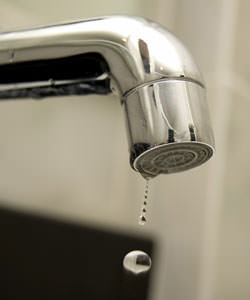
The majority of Americans don’t think about how water reaches their faucet.

Water comes from the tap, right? A surprising number of Americans seem to think so, according to the results of a new poll conducted by The Nature Conservancy.

In March, independent researchers polled 961 Americans over the age of 18 and reported that 77 percent could not identify the source of the water used in their homes. Well more than half of the respondents immediately declined to even hazard a guess until prompted by researchers. Those who did answer the question were wrong about 50 percent of the time.

“We have created a system that works so well, we never have to think about it,” says Jeff Opperman, PhD, senior freshwater scientist at The Nature Conservancy. “The problem is that until we know where something comes from, we can’t prioritize it or be aware of the issues surrounding its use.”
 
Opperman hopes that releasing the results of the poll encourages Americans to learn more about the source of their water and make a connection between the water used in their homes and the natural environment. In the U.S., 80 percent of our tap water comes from rivers and lakes; the remaining 20 percent comes from groundwater supplies, all of which depend on healthy ecosystems to provide clean water, according to The Nature Conservancy.

“The health of our environment is important to the health of our drinking water,” Opperman explains. “Identifying the source, whether it’s a local watershed or a lake, provides a direct connection to the natural world and, hopefully, gets people invested in maintaining a critically important resource.”

In tough economic times, when governments are making critical decisions about funding water conservation efforts, Opperman believes it’s even more important to raise awareness about the connection between the environment and clean water.

“That knowledge might be the first step in getting us to use water more responsibly,” he says.

Opperman offers the following tips to conserve water:

1. Water the garden in the morning.

Watering while temperatures are still cool will give your crops a chance to soak up the water. When you water during the hottest part of the day, most of the water evaporates before it penetrates the soil to nourish the roots.

Potential water savings: 25 gallons per day

2. Turn off the water when you brush your teeth.

There’s no need to let the water run while you’re polishing your pearly whites.

Potential water savings: 3 gallons per day

3. Install a low-flow shower head.

A simple DIY project can save a lot of water. Replacing your old shower head is as simple as unscrewing the old one and screwing on a new one—no tools required. At the home-improvement store, look for shower heads with a flow rate of less than 2½ gallons per minute for maximum efficiency.

Potential water savings: Up to 30 gallons per shower

4. Wash only full loads of laundry.

Instead of tossing a few T-shirts in the washing machine, wait until you have a full load. Use the cold-water cycle to wash your clothes. Changing the temperature won’t conserve water, but it will cut back on the amount of energy you use.

Potential water savings: Up to 50 gallons per load

5. Sweep driveways and sidewalks.

No one wants debris littering driveways and sidewalks. Instead of blasting leaves and grass clippings with a hose, a more eco-friendly alternative is using a broom to sweep them up. Remember, yard debris should be composted or put out for pickup in yard waste bags, not washed down storm drains.

Potential water savings: Up to 150 gallons

All data for water savings courtesy of The Nature Conservancy.

How do you save water on your urban farm? Tell us on the UF forums.