Categories
Urban Farming

Plan Revamps NYC Food Systems

Local food

Courtesy Hemera/Thinkstock

New York City’s FoodWorks plan aims to transform the city’s food systems to make local food more accessible and sustainable.

“New York state is home to over 36,000 farms and 7 million acres of farmland.  We rank second in apple production—growing more than enough to meet our local demand. Yet we still import apples from Washington and apple juice from China,” says New York City councilwoman Christine C. Quinn.

That’s a startling statement to the faithful locavore. Quinn is calling for change to New York’s food system, and she’s starting with the Big Apple. On Nov. 22, 2010, she unveiled a long-term comprehensive plan called FoodWorks, which aims to transform the city’s food systems through programs that range from combating hunger and obesity to preserving regional farming and local-food manufacturing to decreasing waste and energy usage.

“It’s a real milestone that NYC’s City Council has developed such a comprehensive and visionary document that recognizes critical linkages between farm and city,” says Jill Isenbarger, executive director of Stone Barns Center, a farm and education center 30 miles north of New York City. “Having this conversation in such a prominent arena is a major first step.”

Part of what FoodWorks will do is guide the city in expanding urban and regional food production. The plan breaks down into many facets for educating New Yorkers about where their food comes from and making local foods accessible through expanding space for urban farms, supporting farmers’ markets and community-supported agriculture, and encouraging green roofs and community gardens.

Isenbarger is excited about FoodWorks’ plan to make the connection between food and agriculture real for people.

“It’s a sneaky and effective way of carrying out nutrition education, focusing on the freshest possible, just-harvested food, simple recipes and great taste,” she says. “FoodWorks proposals to promote such programs will make an important difference in New Yorkers’ diets.”

However, food production is just the first step in FoodWorks’ comprehensive plan.

Once the food has been produced, Quinn says between 80 and 90 percent of all food in the U.S. goes through some form of processing. FoodWorks aims to achieve better regional processing by making more affordable manufacturing space available and by providing more technical assistance to food manufacturers.

Then, by diversifying and improving food transport, FoodWorks strives to improve food distribution and lessen carbon emissions.

“In order for food to get from the farm to your table, it has to move through a complex network of warehouses and markets, highways and train stations,” says Quinn. “During that time, a lot of our food has crisscrossed the country or circled around the globe.”

Specifically, FoodWorks proposes to redevelop the Hunts Point Produce Market, increase rail service through the Hunts Point Distribution Center—the world’s largest food distribution center—transform the distribution center into a hub for city-wide food system improvement, and pinpoint the city’s best food distribution routes.

These steps all come together to meet one of FoodWorks’ most critical goals: creating a healthier food environment.

“Right now, there are neighborhoods around the city with such little access to healthy food—they’re known as food deserts,” Quinn says. “Go to Jamaica, Queens, Central Brooklyn or the South Bronx. You’ll see bodegas and fast-food joints on every corner, but very few supermarkets or healthy restaurants.”

FoodWorks proposals include expanding food cooperatives, supporting food outlets with fresh and healthy foods, and discouraging fast-food consumption and unhealthy food consumption.

By providing the FoodWorks system blueprint, Isenbarger believes the city will be positively affected.

“As FoodWorks proposals become enacted, more and more city residents may develop a new understanding or deepen their awareness of our food system—and the incredible inter-relatedness of food and agriculture to other city concerns, such as jobs and health,” she says.

Categories
Urban Farming

Cacti, Succulents and Tourism

Aloe plants

Photo by Rick Gush

My succulents are doing well this year despite frost damage to the rest of the garden. My aloe plants are even in bloom!

This has been a cold winter with a bit of snow. Some of the tender stuff in the garden, like the clivia, is frost-damaged, but most of the plants have come through fine. Some, like the succulents and cacti, have actually seemed to thrive. I originally planted a bunch of succulents in the hottest spot in the garden where the soil is really shallow, but it’s nice to see they’re also tough in cold conditions.

The flowers of the cacti and succulents are nice. In the middle of winter, the big patch of aloe blooms like crazy. Then, as soon as spring starts, all the ice plants come alive in a riot of blooms.  

A few years ago, when we started taking our annual vacations on Mediterranean islands in late October, one of the fun discoveries on Corsica and Elba was that October is a perfect time to harvest Opuntia cactus fruits. I’d eaten a few of the fruits earlier in my life, but I wasn’t very good about removing the spines, which ended up being fairly bothersome. The first year I harvested Opuntia fruits on Elba, I somehow figured out the trick, and we became ardent consumers of the fruit.  

The trick is simply to wear leather gloves and to use a really sharp knife to slice off the skins, making sure to discard anything that was a part of the exterior. The inside pulp is really sweet, with a nice flavor. My wife usually dissects the corpses further and removes the little seeds, but being the goat I am, I eat the flesh, seeds and all.

Mandatory packing for vacations now includes a nice pair of leather gloves and a fruit-harvesting basket. Once we arrive at our destination, I go hunt up a few long river bamboo canes, and I set up my harvesting equipment. Harvesting cactus fruit is fun, because almost nobody else harvests it. I manage to find a lot of undisturbed cactus patches from which I can take as many fruits as I like. A typical breakfast on vacation includes a bowl of cereal with fresh cactus fruits. Yummy! I also always manage to find someone else nearby who also likes cactus fruits, so I get to give bags of fruit away (one of my favorite pastimes), even while I’m on vacation.

We brought back cuttings of a couple of different Opuntia cacti and planted them in the garden.  We now get a lot of the smaller red fruits that are as sweet as berries. The bigger Opuntia cacti are just now getting big enough to produce significant fruit crops. It’s fun remembering when and where we collected the various plants when we’re eating the fruit. Pretty nice souvenirs!

Read more of Rick’s Favorite Crops »

Categories
Crops & Gardening

Spring Seed Starting

Seedlings
Photo by Jessica Walliser
These seedlings from last spring were ready to be planted.

I know that spring is just around the corner because the chickens have started to lay again. That’s always a good sign. There are, of course, other indications that spring is nearly here. The days are longer, the birds are chirping their heads off, the snowdrops are beginning to peek out of the soil and the seed starting has begun. 

Last week, I cleaned up my new-to-me used grow light stand and got it all set up. I sorted through the seed box I keep in the basement refrigerator and pulled all the seeds I’ll start over the coming weeks: onions, broccoli, cabbage, lettuce, tomatoes, peppers, basil and Brussels sprouts. I have been saving some clear, clamshell-type take out containers to start seeds in and gathering my seed-starting trays and seedling heat mats (I have four of them somewhere but can only manage to find two). 

I’ll be headed to a few local nurseries over the coming days in search of some capillary matting—a favorite seed-starting, time-saving helper. I put the fibrous matting under the trays of seedlings and keep it saturated with water. The soil and roots then wick moisture out of the matting as its needed. As long as water is in the matting tray, I don’t have to water from the top, saving me time and preventing the tiny seeds from washing away or drowning. 

I also got the timers out and set up for the lights. I usually run them for 16 to 18 hours per day once the seeds have germinated, though the top tier will only be on for 11. I’m starting onions there and don’t want them to bulb up too early in the season. (The varieties we grow here in the North will begin to set bulbs when the days reach 12 hours in length, so I don’t want to mimic that with my grow lights.) 

I’m not sure yet how many other seeds I’ll be starting this year, but I also plan to sow some perennials and annuals to share with friends and family. My seed order from Renee’s has already arrived, and I look forward to more arrivals from Seed Savers Exchange and High Mowing Seeds.    

« More Dirt on Gardening »

Categories
Urban Farming

USDA Launches Biobased-product Label

Certified Biobased Product Label

Courtesy USDA/ Biopreferred Program

The USDA expectsthat products containing the new certified biobased-product label will hit the market beginning in the spring or summer 2011.

In an effort to raise consumer recognition of biobased products, the USDA’s BioPreferred program has implemented a product certification and labeling system. Now underway for nearly a month, the labeling system allows manufacturers and distributors to voluntarily apply the label to help clearly identify qualifying biobased products.

The new label indicates that the product has been certified to meet USDA standards for a prescribed amount of biobased content. Biobased products are composed wholly or significantly of biological ingredients—renewable plant, animal, marine or forestry materials. The USDA has not certified any biobased products at this time, but expects to see products begin to bear the new label this spring or summer. Products on which you might find the label include cleaning products, personal care products, linens and apparel.

“Today’s consumers are increasingly interested in making educated purchasing choices for their families,” says Agriculture Deputy Secretary Kathleen Merrigan. “This label will make those decisions easier by identifying products as biobased. These products have enormous potential to create green jobs in rural communities, add value to agricultural commodities, decrease environmental impacts and reduce our dependence on imported oil.”

Through implementation of the BioPreferred program, USDA has already designated approximately 5,100 biobased products for preferred purchasing by federal agencies. The new label will make identification of these products easier for federal buyers and will increase awareness of these high-value products in other markets. USDA estimates that 20,000 biobased products currently are being manufactured in the United States and that the growing industry as a whole is responsible for more than 100,000 jobs.

With the launch of the USDA biobased-product label, the BioPreferred program now comprises two parts: a biobased-product procurement preference program for federal agencies and a voluntary labeling initiative for the broad-scale marketing of biobased products. The goal of BioPreferred, a market-development program, is to create new jobs for farmers, manufacturers and vendors and to provide new markets for farm commodities.

USDA’s BioPreferred program was created by the 2002 Farm Bill to increase the purchase and use of biobased products within the federal government and the commercial market. Congress reauthorized and strengthened the program in the 2008 Farm Bill to further promote the sale of biobased products.

Categories
Urban Farming

Winter Pies

Dried-fruit Pie

Photo by Judith Hausman

I combined tart cranberries, oranges and golden raisins under a pretty lattice to make this cold-weather fruit pie.

No, I didn’t make cherry pie for Presidents’ Day. I do adore cherries, but the only way I could have used them is if they came from very far away or if they were canned or frozen (not enough in my own freezer from last summer).

Secret Weapon

Avoid the pie crust challenge like I do. Instead of filling a pie crust with fruit, cut rectangles of frozen puff pastry sheets to make turnovers. Or use your favorite biscuit recipe to turn the fruit mixes into a cobbler. Fill a casserole with either fruit mix, leave it in the oven until bubbling hot; then remove and quickly blop on the dough and return the dish to the oven until the biscuits have browned. Even stale cookies or dry breakfast cereal easily can be turned to crumbs in a food processor and subbed in to a graham cracker crust recipe.

However, there are pies I like to make in winter, even though I’ve never thoroughly mastered pie crust. Nut pies, of course, like maple walnut pie or pecan pie are winter holiday pies. Chocolate pie is season-less and a crowd-pleaser, whether it’s filled with elegant ganache or homey chocolate pudding. (Homemade chocolate pudding is amazing, in fact.) A rich butter crust made with added ground nuts, spread with summer fruit jam and then topped with a pretty lattice sparkles like a jewel.

Lemon meringue pie or Key lime pie could be considered seasonal (Meyer lemons and local eggs for the meringue or chiffon), though their flavors seem summery and light to me. Don’t forget that long-keeping sweet potatoes and winter squash are still around. They make wonderful pies with traditional pumpkin pie spices or with darker, southern flavors like molasses.

I update season-neutral buttermilk pie nicely with flaked, unsweetened coconut, a teaspoon of ground ginger and the grated peel of a lemon. If you make a graham cracker crust, you can add spices or coconut to the crust, as well.

While the ingredients are not local, here are two more pies I can make before the fresh spring rhubarb pokes up again and after the local apples get too soft or wrinkly. Reminiscent of mincemeat but without the suet or green tomatoes, I offer two versions of dried-fruit pies.

Recipe: Cranberry Pie

Ingredients

  • 2 cups fresh or dried cranberries (Yes, you can cheat by using a can of whole-berry cranberry sauce; reduce the sugar to 1/2 cup and the water to 1/3 cup in that case)
  • 1 cup dark or golden raisins
  • 3/4 cup water or apple cider
  • 1/2 cup orange juice or two small oranges, peeled and chopped
  • 2 T. butter
  • grated peel of one orange
    3/4 cup sugar
  • 1 cup chopped walnuts (optional)
  • 1/2 tsp. cinnamon
  • 1/2 tsp. nutmeg
  • 1/4 tsp. allspice
  • 1 egg, beaten
  • 1/4 cup crushed saltines or fine, unseasoned dry bread crumbs

Preparation

Preheat oven to 425 degrees F. In a saucepan, cook cranberries, raisins and water/cider about two minutes or until the cranberries pop. If using the canned sauce, simmer the mix until thick and reduced. Remove from heat, and stir in the butter immediately so it melts. Add remaining ingredients, mixing well.

Pour mixture into a prepared pie shell. Top with a second crust. Bake at 425 degrees F for 10 minutes; then reduce the heat to 375 degrees F and bake for an additional 20 to 30 minutes.

Serves 8.

Recipe: All Dried-fruit Pie

Ingredients

  • 2 cups chopped pitted prunes
  • 2 cups chopped dried apricots
  • 1 cup dried sour cherries
  • 1/2 cup chopped dried apple slices, or 2 small, fresh apples, chopped
  • 1½ cups apple juice or cider
  • 6 T. butter, cut in small pieces
  • 1/2 cup sugar
  • ½ tsp. cinnamon
  • 1/2 tsp. nutmeg
  • 1 cup chopped walnuts

Preparation

Preheat the oven to 375 degrees F. Cook the fruit in the cider until the liquid is absorbed. Cool slightly, and mix in butter, sugar, spices and walnuts. Pour mixture into a prepared pie shell. If desired, cut the second crust into strips and weave a lattice for the top, or leave the pie open-faced. Bake for about 40 minutes.

Serves 8-plus.

Categories
Equipment

Collectible or Useable

Tools
Photo by Jim Ruen
I’m searching for quality carpentry tools in local antique shops.

I love traipsing through an antique store, but I’m not there for the ornate decorative pieces. I love looking at the samples of fine craftsmanship—the “useables.” They are the tools and objects that people once depended on for their daily life. Sometimes they are decorative, too, but the decoration doesn’t interfere with the function of the item, whether it’s a tool for the kitchen, shop or field.

Currently, I’m in the market for carpentry tools, and area antique shops are one of the sources where I’m looking. I’m taking my time while I try to assess what it is that makes an old tool a good tool. The good part includes being useable, but it also needs to be in proportion to the cost of a new tool. Notice I said “in proportion.” That may mean I’ll pay more for the old one if it’s built better, stronger or with features a new alternative lacks. I may pay as much or more simply if it has the mark of a craftsman or a company once known for its craftsmanship. For example, most edging planes were built by the woodworker who used them.

I don’t have much time for collecting something just to have. I want to be able to use it. After all, that’s what the maker intended. I believe when we use items for what they were intended, we do honor to those who labored to design and produce them in the first place. That will include cleaning up and restoring the item if it isn’t in shape to be used as is. It also can mean using the item up, wearing it out and eventually discarding any parts that can’t be reused for another purpose. I believe that, too, is honoring the maker.

<< More Shop Talk >>

Categories
News

Students Celebrate FFA Week

FFA members
Courtesy National FFA Organization
This year’s National FFA Week encourages FFA students to discover their potential within their communities.

This week, the National FFA Organization will celebrate National FFA Week. To incorporate the vision of this year’s theme, Infinite Potential, FFA members are encouraged to envision, discover and achieve their potential within their communities.

“In order to feed a growing population, our organization must do more,” explains Riley Pagett, national FFA president. “FFA members have Infinite Potential and have potential to do great things even beyond their FFA careers.”

The week coinciding with George Washington’s birthday was designated by the organization as National FFA Week in 1947. 

“George Washington made a lot of contributions to agriculture and the development of the United States,” explains Landan Schaffert, national FFA secretary. “He had a very diligent work ethic, an honest character and also was very good at record keeping. Those are all things that we hope for our members to accomplish in the National FFA Organization.”

During the week, national officers will travel to different parts of the country to visit FFA members, participate in special events and meet with leaders of the agriculture industry. Individual chapters will initiate events throughout the week to promote FFA and agriculture in their classrooms and communities. Events will include community service projects, educational lessons for elementary students, and promotional programs for students, teachers and alumni.

The National FFA Organization, formerly known as Future Farmers of America, is a national youth organization of 523,309 student members (and counting), all preparing for leadership and careers in the science, business and technology sectors of the agriculture industry. Local FFA chapters are located in each of the 50 states, Puerto Rico and the Virgin Islands, for a total of 7,487 chapters.

The National FFA Organization changed to its present name in 1988 in recognition of the growth and diversity of agriculture and agricultural education. The FFA aims to make a positive difference in the lives of students by developing their potential for premier leadership, personal growth and career success through agricultural education. It operates under a federal charter granted by the 81st U.S. Congress.

The U.S. Department of Education provides leadership and helps set direction for FFA as a service to state and local agricultural education programs. Visit the FFA website to learn more about National FFA Week.

Categories
Animals

Jeepers, Peepers!

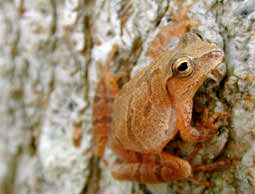
Spring peeper
Courtesy U.S. Geological Survey
Uzzi and I hear the spring peepers singing songs on the farm. Spring must be near!

Last Thursday evening, Uzzi and I were hunkered down for the night, chewing cud and gazing up at the rising full moon, when Uzzi said, “What’s that?”

We both stopped chewing and lifted our ears a little bit so we could hear. (You’ve got to do that when you’re a Nubian goat.) Frogs! There were frogs singing their merry chorus down by our pond in the hollow. Last week, we were snowed in; this week, it’s really spring!

Uzzi and I were so excited we crept in the house and booted up the computer to see what we could learn about our frogs. We listened to sound files until we identified them; they’re spring peepers (Pseudacris crucifer). 

Spring peepers are common throughout the eastern United States and Canada. There are two subspecies, the northern spring peeper and the southern spring peeper. The southern version has a belly marking the northern one doesn’t, and it’s only found in southern Georgia and northern Florida.

The ones in our pond are northern spring peepers. They’re little bitty, brown to olive-green frogs only an inch or so long, with yellowish underbellies and a darker, X-like marking on their backs. Females are usually a little bigger and lighter-colored than males. They have big toe pads for climbing and expandable vocal sacs at their throats. Only males sing, and they do it to attract mates. Scientists say females prefer males with the loudest voices.

Peepers live in damp, overgrown meadows or woodlands near swamps, temporary pools and ponds. They mate in water and that’s where they lay their eggs—as many as 900 pinhead-size eggs per clutch. After that, adults spend their summer in woodlands, eating beetles, ants, flies, mites and spiders. When winter comes, they hibernate under logs or loose bark on trees until the following spring; they can even survive if some of their body fluids are frozen! They’re nocturnal frogs, often heard but rarely seen.  

Spring peepers are the first frogs to emerge in the spring, shortly after the last round of snow and ice is gone and nighttime temperatures climb to around 50 degrees F. Some people think their high-pitched peeping sounds like sleigh bells; males also trill to warn other males to bug off. Peepers mostly sing in the spring, but they sometimes sing on warm, rainy days in the summertime, too. 

Spring peepers live up to three years in the wild but only if they’re really lucky—lots of woodland birds and beasts like to eat them. Turtles think their eggs are yummy and fish and wading birds eat spring peeper tadpoles. Snakes, raccoons, herons, egrets, minks and even bigger frogs savor adults. Everything seems to eat spring peepers. Makes me glad I’m a big, studly Nubian goat!

« More Mondays with Martok »

Categories
Farm Management

Cut Your Property Taxes

Barn
Courtesy Stock.XCHNG
Find out what tax benefits your state offers to farmers.

Whether we like it or not, April 15 (tax time) rolls around every year, and if you look carefully, you’ll find opportunities may exist for cutting your property tax bill. Property tax policies vary from state to state, so you’ll need to do a little digging to see what’s available in your area. Some may require proof of agricultural income, whereas others do not.

The American Farmland Trust revealed in 2004 that farmers pay more in property taxes than the government services they receive. The opposite is the case for the residential landowner. Farmers not only produce the food for those residents; they provide green space that can minimize urban sprawl and improve aesthetics, water and air quality, and wildlife habitat.

Many states have tax provisions that recognize these benefits to society. California has one of the most successful programs restricting land use to agriculture. Farmers can commit to 10-year contracts that reduce property tax rates by 20 to 75 percent if located in designated areas. Michigan offers an opportunity called the circuit breaker farmland tax program. Farmers can claim an income tax credit to offset the cost of local property taxes. They also must commit to a 10-year contract. In the eastern U.S., Pennsylvania offers the Clean and Green program: The landowner is bound by a seven-year agreement enrolling lands into one of three categories—agriculture, agriculture reserve or forest reserve—which provides significant reductions in property taxes.

Keep in mind that wood can be a crop, as well. Pennsylvania clearly recognizes this in its program and many other states do, as well. Christmas trees, firewood, saw timber or other forest products can be used to generate agricultural income from the land that may help qualify a small hobby farm for tax breaks.  

Finally, a growing opportunity exists in the form of conservation easements. They may provide benefits like the reduction or avoidance of inheritance tax, a federal income tax reduction for the gift of development rights, and reduced property tax assessment. Farmland conservation organizations, like The Nature Conservancy, work with landowners interested in protecting green space from development. Easements don’t eliminate the management of land in the majority of circumstances but simply protect land from being parceled or developed. Agricultural income is often not a requirement for conservation easements.

Work with a tax professional to investigate the opportunities available in your state to minimize your property taxes. Well-managed forestry and agricultural land uses provide societal benefits beyond commodities. Farmers often pay in more than they receive in government services, so you can feel good about taking a bite out of your taxes!