Categories
Poultry

Chicken Scratch Feed: A Complete Guide for Your Backyard Flock

Chicken scratch feed can leave even experienced backyard chicken keepers scratching their heads. Standing at the “snack bar” in a local urban feed-supply store, you might wonder which grains are best for your hens, how much to offer each day, and which mixes are nutritionally sound. Understanding what goes into scratch feed can help you make informed choices that keep your flock healthy and happy.

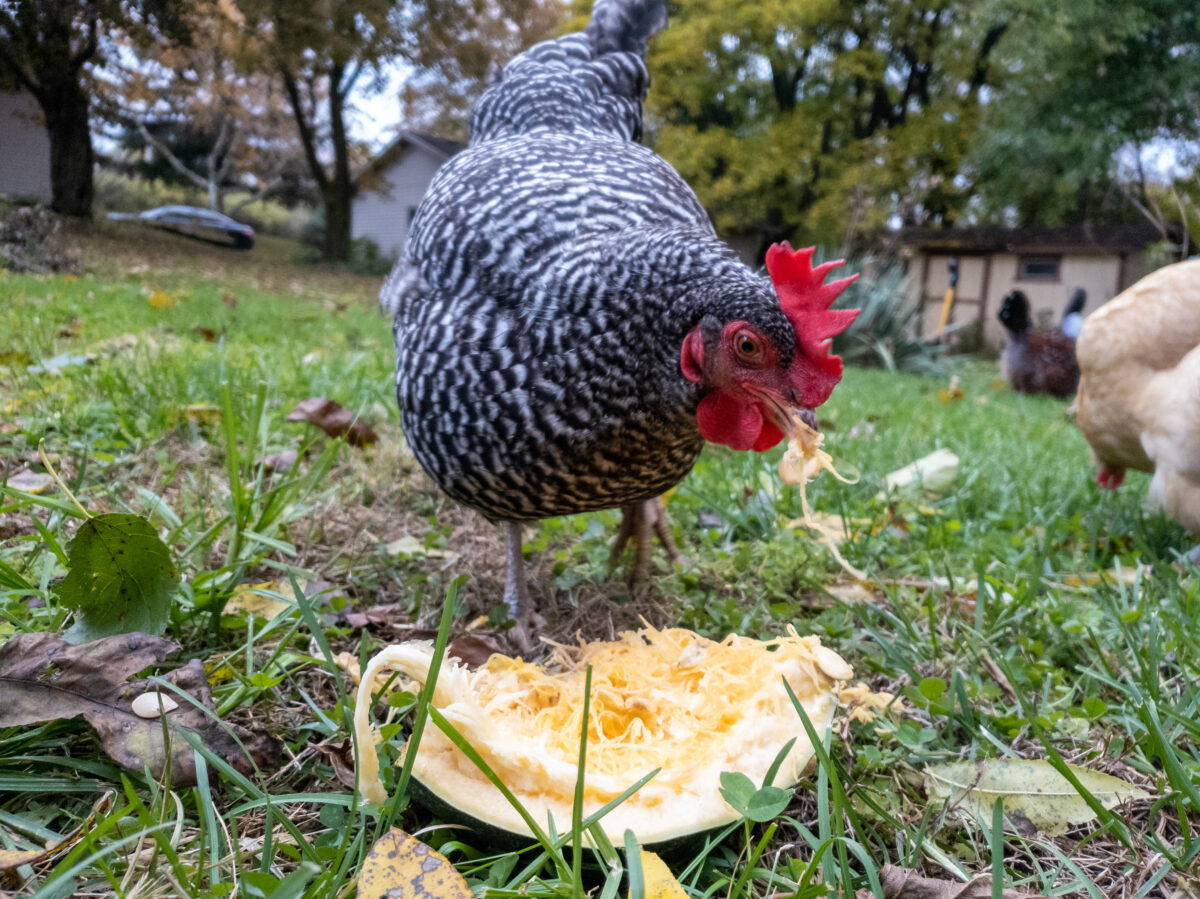
Chickens scratch the ground every day searching for seeds, insects and other tasty treats. Offering them scratch grains, such as cracked, rolled or whole grains (corn, barley, oats or wheat), stimulates that behavior while providing them with added food resources. Scratches are a source of mental and physical stimulation—particularly during the winter months when weather conditions reduce the presence of natural treats such as insects, grass and seeds.

Understanding the content of chicken scratch mixes can help you determine what to choose from the buffet at your local feed-supply store.

A word of caution: Chicken scratch grains are not meant to be the primary source of nutrition for your flock. Think of scratch as a limited treat—something hens enjoy but should not consume in large quantities. Feed mixes are nutritionally balanced resources your hens need for healthy living. They contain nutritional elements, including calcium and protein, that support growth and egg production. Chickens need those resources much more than tasty scratch offerings that they will inevitably enthusiastically eat.

Chicken Scratch and Your Hens’ Diet

According to Laura Harper, owner of The Urban Chicken store in Raleigh, North Carolina, the average hen eats about a 1⁄4 pound of food a day. Scratch should make up only about 10 percent of that. Any more than that will affect their nutrient balance.

“Scratch is so low in protein that it doesn’t support hen health,” Harper says. 

As with humans, too much of a good thing isn’t necessarily a good thing.

Robert Litt, former owner of the Urban Farm Store in Portland, Oregon, says chickens eat for energy. If you provide cracked corn with unfettered access alongside layer feed, they will eat all their calories in corn. And corn offers only 7 percent protein, while prepared chicken feeds offer 16 percent protein with corn in the mix.

Chickens that consume too much scratch can experience extended molts because of the low amount of necessary protein. A lack of nutritional balance can also affect egg production and cause birds to become unhealthily overweight. When hens choose between their regular feed and scratch, the feed lingers untouched in feeders, attracting mice and rats to your run.

With nutritional needs in mind, Litt and Harper educate people about the use and offering of scratches. Scratches should not be the only source of food a small flock receives. Scratches are always treats, and understanding their content can improve the health of your birds.

chicken chickens scratch
norrie39/Adobe Stock

Using Chicken Scratch Feed in Winter

During winter months, cracked corn is a good addition to any scratch recipe. Cracked corn is a high-energy carbohydrate made of starch and sugars. Chickens love it. Fed before dusk on cold days, the corn provides a thermic effect, creating heat as it’s digested.

This helps hens stay warm on long winter nights.

Scratches can also help bored hens during the wintertime. Cold months often limit hen activity levels, keeping them inside the coop and more sedentary than during other seasons. During these times, flocks become more disruptive, pecking at one another when boredom sets in. Scratch provides mental and physical stimulation for a small flock.

“During the winter, I suggest that people offer scratch in the form of a flock block or in a toy that makes the girls work harder for the food,” Harper says. 

Toys that require the hens to work harder to obtain treats promote activity, fight boredom and keep hens busy. Rather than picking on one another, hens will puzzle out how to get their favorite treats.


Read more: Help your chickens though cold weather with these tips.


Summer Tips for Feeding Chicken Scratch

During the hot days of summer, eliminate corn from scratch. Because corn stimulates metabolism, it can cause heat-related stress for birds. The summer is a time to add alternatives that provide nutrition, such as calcium and protein.

“Summer scratch can contain whole oats to help with heat stress,” Harper says. 

It, along with dried soldier fly larva (which adds calcium), is an excellent resource during the peak egg production days of summer. Harper sees people mixing their own summer scratch blends by including flaxseed and raisins along with the whole oats.

Hens that have some free-range time in a backyard each day gain the benefits of nature’s own scratch: new grass, insects, seeds, weeds and more. These fresh local foods are great for flock health because hens must work hard to find them.

chicken chickens scratch
Kalypso/Adobe Stock

Creating Your Own Chicken Scratch Feed Blends

Litt and Harper offer their own special blends of premixed, seasonally sensitive scratches. Each shop owner also provides scratch bars with resources for customers to make their own blends.

Harper suggests a wide range of ingredients when blending your own. She uses mealworms, dried soldier fly larvae, oats, barley, wheat, flaxseed—high in omega-3 for egg laying—sunflower seeds, raisins, kelp, and a vitamin/mineral supplement.

Harper also suggests making grit available on a free-feed basis.

Cautions When Feeding Chicken Scratch Feed

Chickens can—like humans—become addicted to their favorite scratch food items. Litt says that these hens become pushy, grumpy and demanding, expecting and choosing available scratch over the feed they need for a balanced diet.

Employ a tough-love approach. Give hens limited access to scratches, with their health and well-being in mind. Too much chicken scratch can cause health problems, including weight gain, longer molts and summer doldrums in egg production.

Litt and his wife, Hannah, work to find natural resources for hens that promote better health and egg production. The pair co-authored A Chicken in Every Yard (2011) and have researched the use of natural options for feed and scratches. For instance, Hannah Litt discovered that black cumin (Nigella sativa) seeds could support egg production and size. 

The Litts offer it in a mash so that none of the tiny black seeds are wasted. Their interest includes energy for hens. For instance, amaranth is another chicken scratch ingredient that can add protein and energy.

Robert Litt noted that people often offer hens kitchen scraps, such as pasta and bread. These, too, have low nutritional value because they don’t contain much protein. Small meat scraps are a good protein option.

Some people have begun growing their own chicken scratch. This includes raising fodder by sprouting seeds that are fresh and inviting. Litt suggests a windowsill fodder system. 

Chickens also like silage, fermented greens left from the summer season. Silage offers helpful probiotics that are partially digested and enable chicken keepers to offer greens throughout the winter.

Overall, scratches offer benefits in moderation. Just like us, hens need care and attention when it comes to choosing a diet. Seasonal offerings can help your hens have successful molts in the fall and winter and begin the spring and summer season with good egg production. Experiment with creating your own scratches by observing what your hens do and don’t prefer. 


Expert Advice on Feeding Chicken Scratch

Here is what Jacquie Jacob, poultry extension project manager at the University of Kentucky, says about chicken scratch in “Feeding Chickens for Egg Production.”

“Scratch grains are like French fries; chickens that eat too many scratch grains have less of an appetite for more nutritious feed. If you are using scratch grains, feed them to chickens in the afternoon after birds have eaten complete feed, and then provide only as much scratch grains as chickens can finish in 15 to 20 minutes.”

This article about chicken scratch feed was written for Chickens magazine. Click here to subscribe.

Categories
Farm & Garden

Mud Boots: 5 Reasons Every Farmer Needs Them

Mud boots are one of the most essential items for any farmer, hobbyist or seasoned pro alike. Without them, life on the farm would be a muddy, soggy mess—socks drenched, shoes ruined, and mud everywhere it shouldn’t be. They might not live in your toolbox or barn, but their importance can’t be overstated. Here’s why mud boots are a must-have for every farm, no matter the size.

1. Stay Dry in Any Weather

This seems elementary and obvious, but it’s really worth thinking about for a minute. Mud boots keep our feet dry. And as farmers, doesn’t it seem like we’re always out working in less-than-dry conditions? Rain, mist, heavy dew, mud and, of course, manure—all of these combine to make a pair of mud boots a must-have on your farm boots list. Your socks and feet will thank you.

2.  Mud Boots Are Built to Handle Hard Work

Farming takes determination, hard work and guts. And while you’re out there working hard in a determined, gutsy way, you feel better knowing that your feet are protected by a tough and durable pair of boots that are able to handle the challenges that farming throws at you.

3.  Perfect for Every Farm Task

Wherever your farming projects take you, mud boots are ready to go along for the ride: working in the garden, cleaning the barn, mucking out stalls, and foraging for wild leeks in the woods. Your boots have got you covered. Can you name any other type of footwear that can claim this type of versatility? Boots don’t have to break the bank, so be sure to look for how to save money on farm boots, such as sales and purchasing the best quality.

4. Style Meets Function on the Farm

A favorite attribute of mud boots is that they are an attractive complement to just about any outfit. Fashion isn’t number one on a farm, but it doesn’t hurt, especially if you have to go somewhere quickly and don’t have time to change. They can be paired with jeans (obviously), overalls, heavy winter snow pants, skirts, and—yes—even pajamas. (Hey, those late-night foaling checks are the perfect occasion for those pajama-boot pairings. It’s an eye-catching combination!)

5. Mud Boots Are Reliable Footwear You Can Count On

Whenever you need them, there they are, just waiting for you to slide your feet inside. Mud boots are one of the hardest-working members of your farm team, and they wait patiently, ready to spring into action at the first sign of a mud puddle, dirty stall or thunderstorm. You can count on your boots to be there for you—in any situation and at any time.

For any farmer, hobbyist, or homesteader, mud boots are an indispensable piece of gear. They provide reliable protection, durability, and versatility across a wide range of tasks, helping keep feet dry and comfortable in challenging conditions. Investing in a quality pair ensures that your footwear supports your work on the farm, season after season.

This article was written for Hobby Farms magazine. Click here to subscribe.

Categories
Crops & Gardening

Garden Chores List: 10 Tasks to Prep for Late Summer and Fall

Garden chores list tasks don’t end when midsummer arrives. In fact, late summer is one of the busiest times in the garden. Squash is vining, tomatoes are ripening, and corn is stretching toward the sky, but plenty of work still needs your attention. From weeding and pruning to harvesting and planting again, these chores keep your garden healthy through the heat of summer while setting it up for a productive fall.

Garden Chores List: Weeding, Spacing, Pruning & Staking

Frequent and shallow cultivation is the best means of weed control, according to Bob Olen, University of Minnesota extension educator. Cultivating serves two purposes: It loosens the soil, allowing air and moisture to circulate around the crop’s roots, and it controls weeds. Beginning as soon as plants are recognizable, cultivate lightly, loosening the top 1/2 inch of soil. It’s best done early and often so the garden looks good and the plant can grow without competition. Weeds vie for water and nutrients.

My husband has fabricated a handy tool he calls “the weeder.” He simply attached a loop of 1- to 1½-inch steel banding to the end of a broom handle. Every few days, he walks through our vegetable garden, wielding the weeder. It’s much easier on the back than bending to pull weeds, and it loosens the soil, easing the way for air and moisture to circulate around a crop’s roots.

If every seed sown in the vegetable garden were guaranteed to germinate, we could sow single seeds at predetermined intervals along a row, and thinning would be unnecessary. Because no such guarantee exists, it’s common to sow many more seeds than needed and then thin the row after germination. Yanking healthy seedlings out of the ground goes against the grain for most gardeners, but it must be done because crowded seedlings grow into miserable, leggy, unproductive plants. Thinning is easier after a rain when the soil is still moist and the unwanted plants slip from the soil with a minimum of disturbance. If there hasn’t been a recent rain, water your garden the day before you plan to thin your crops.

Vince Fritz, director of operations at the University of Minnesota North Central Research and Outreach Center, thinks that putting things too close together is one of the biggest mistakes gardeners make.

“It looks great in June, and in August, it’s a jungle,” he says. “Radishes, for example, you can control based on just putting in so many seeds per linear foot.” Most seed packets spell out this information for you.

Although it goes against my conservative nature to uproot healthy seedlings, carrots should stand 1 inch apart in the row to do their best. Beets and parsnips should be thinned to 2- or 3-inch intervals, and kohlrabi plants should be 4 to 6 inches apart. Another way to eliminate having to thin thickly planted rows is using pelleted seed or seed tapes.

Fritz also emphasizes the importance of pruning tomato plants regularly.

“A lot of gardeners will forget to pinch off the suckers—those shoots that grow out from the axil between the main stalk (leader) and leaves,” he says. “So now you’ve got this beautiful tomato bush trapping a lot of nutrients and moisture, and it delays flowering. Those suckers should be pinched off just as they’re starting to grow. One of the ways we can encourage timely fruit set is by pruning the tomato plant down to one or two main leaders.”

Caging or staking tomato plants does two important things: It keeps them from rotting because they are vertical rather than in contact with the soil horizontally, and it helps prevent or minimize foliar disease because the foliage won’t be wet.

Late Summer Harvesting, Watering & Mulching Tasks

PanAmerican Seed vegetable business and product manager Josh Kirschenbaum describes midsummer as when crops start to become harvestable.

“Keeping on top of the harvest is really important as well as exciting because that means all the work you’ve done prior to midsummer is starting to pay off,” he says. He side-dresses with some natural fertilizer to give the plants an extra boost in midsummer. “If you regularly harvest fruiting vegetables, such as tomatoes, squash, peppers, the plants will continue to produce.” Olen harvests spinach, lettuce and radishes early and on a timely basis, but stops harvesting rhubarb and asparagus by the Fourth of July.

Watering is critical.

“Typically, a vegetable garden at full throttle needs a good 1½ to 2 inches of water a week, especially when crops go from a vegetative to a reproductive state—plants going from green leaf tissue to flowering and fruiting, like peppers, squash and broccoli,” Fritz says. “Good continuous moisture supply is really important, especially on sandy soils.” He uses soaker hoses rather than overhead watering to minimize foliar wetness and prevent foliar disease. Trickle irrigation uses less water than most other forms of irrigation.

Water early in the morning on a sunny day to allow the foliage to dry and minimize the amount of water lost to evaporation. If you wait till midday when the sun is hot, you lose much of the water. If you irrigate late in the day, you run the risk of the plants going into the evening with wet foliage, which invites disease. Whenever you water, do so for fairly long periods so the soil is well-soaked occasionally rather than lightly moistened frequently.

Watering is never more important than during a plant’s first days in the ground. If newly sown seeds dry out, they will not germinate; if newly emerging plants, which lack the root structure to delve deeply for moisture, dry out, they die. It’s especially critical that carrot seeds be kept moist until they germinate. Vegetables planted in containers need to be watered every day in summer.

Mulches keep the soil moist and cool, conserve water, present a neat appearance and cut down on weeds. Wood chips, shredded pine bark, pine needles, grass clippings or shredded leaves are possible choices. Try to keep mulch about 2 inches from plant stems, and remember that mulch depletes nitrogen from the soil as it decays, so some additional fertilizer will be required.

Midsummer is a good time to do a soil test and fertilize as recommended.

“Whatever the nitrogen recommendations for a crop are, do a split application,” Fritz says. “Apply 50 percent of the total nitrogen needs to the crop at transplanting time, and the other half about four to five weeks after that, so you are not losing the nitrogen from rainfall.”

Many plants benefit from the addition of some type of fertilizer to give them a boost in midsummer. For instance, I side-dress all brassicas every three to four weeks during the growing season with a balanced fertilizer, such as 19-19-19, at the rate of about 1/2 pound to a 10-foot row. I scratch fertilizer into the soil on either side of the row and water to dissolve it and make it available to the plants. Cucurbits also need side-dressing, as do tomatoes and peppers.

Planting Late Summer Crops for a Fall Harvest

After harvesting early-maturing vegetables, such as salad greens, radishes, peas and spinach, gardeners can plant other crops in midsummer for a fall harvest. It’s important to know the average first frost date in your area in order to calculate when to plant late vegetables so they’ll mature before being killed by cold weather.

Lettuce you can plant later in the summer because it will have less danger of bolting, and you will still get a fair amount of yield out of it,” Fritz says. “Plant it in a partially shaded area.”

He says all brassicas are less bitter and tend to be sweeter when planted to mature in the fall.

Olen plants romaine lettuces in midsummer since they are more heat-tolerant than leaf or buttercrunch types. He harvests the main heads of broccoli to encourage the development of the side shoots. Iowa gardener David Cavagnaro plants fall-heading Chinese cabbage and other mustards, a late crop of cucumbers and summer squash in early July. He plants fall lettuce and cilantro at various intervals through the summer.

Steve Bellavia, who works on crop production at Johnny’s Selected Seeds in Maine, does succession planting of beans, lettuce, beets, Swiss chard and radishes in midsummer.

“Too many gardeners only plant a crop once or twice rather than multiple times,” he says.

Garden Chores List: Pest & Disease Control

Cavagnaro increases policing for mice and voles in midsummer.

“They love the lush midsummer cover and developing root crops, such as sweet potatoes, beets, carrots and winter squash,” he says. “Voles must be killed with rat traps, not mouse traps, set with chunks of carrot and covered from above.”

Cabbage, cauliflower and broccoli all face the threat of the cabbageworm caterpillar, a green worm that riddles the leaves with holes and hides in the broccoli heads. To protect against this pest, Fritz uses plant protectants rather than pesticides and insecticides.

“Physical barriers such as Reemay or floating row covers work well on the brassicas,” he says. “They are semipermeable to wind and water gets through. They’re expensive, but home gardeners can rinse them off, sterilize them and reuse for several years. Use a row cover like that if you really want to have an organic garden. However, if you’re seeing butterflies, there are probably eggs already, so if you put a row cover over it, those eggs will hatch and those caterpillars will have a wonderful party.”

University of Minnesota Extension horticulturist Cindy Tong uses low tunnels with sparkly netting for insect and rabbit deterrence. “The sparkly part is probably acting like reflective mulch that can repel some aphids,” she says.

Fritz adds that there are organic products you can use. “Bacillus thuringiensis comes in different applications, and it works,” he says. “If you have rain, you have to reapply because it doesn’t have a long-term residual effect.” He also suggests peeling off the outer leaves of cabbage. “It depends on what you’re after,” Fritz says. “Do you want an absolutely gorgeous garden you can showcase, or are you really after the productivity of the garden?”

Garden Chores List: Final Thoughts

Tackling this garden chores list in late summer keeps your plants thriving and prepares your beds for the cooler season ahead. With careful attention to weeding, watering, fertilizing, and planting successions, you’ll extend harvests and reduce stress on crops. A little extra effort now ensures both a beautiful garden and a bountiful fall.

This garden chores list was written for Hobby Farms magazine. Click here to subscribe.

Categories
Poultry

Fermented Chicken Feed Made Simple

Fermented chicken feed is one of the easiest ways to improve your flock’s health, boost egg production, and make feed more digestible. By simply soaking grains and allowing beneficial bacteria to grow, you provide your chickens with probiotics, enhance nutrient absorption, and even reduce coop waste. Fermenting chicken feed might sound a bit strange, but this DIY method is a natural, homemade superfood for your birds that reaps far more benefits than the small amount of time and effort it takes—no sales pitch required.

What Is Fermented Chicken Feed?

Humans have been using fermentation to preserve foods for thousands of years. Evidence suggests Neolithic people practiced fermentation by making cheese more than 7,500 years ago. 

Fermentation occurs when natural yeasts and cultures in the air are encouraged to grow and interact with a food source (in this case, chicken feed) under specific conditions. During fermentation, beneficial microorganisms such as the Lactobacillus bulgaricus bacteria break down sugars and starches and turn them into lactic acid. This promotes the development of healthy probiotics, changes the taste of the food, lowers the pH and aids in preservation by killing off harmful microorganisms.

It also changes the food’s nutritional profile for the better.


Read more: Your farm can feed your chickens a non-GMO diet.


The Benefits of Fermented Chicken Feed for Your Flock

You can encourage these good bacteria to grow by soaking chicken feed in water for several days. But you’ve got roughly three dozen other chores to do. Why on earth would you want to take the time to do this? There are several good reasons why fermentation is worth the few extra minutes it will add to your chore list. 

How Fermented Feed Improves Nutrient Absorption

When you soak grains, you soften them up and make it much easier for the chicken’s body to digest all the available nutrients. That’s common sense, right? But, if we peek under the surface, we see there’s more to the story.

All grains, beans, seeds and legumes contain phytic acid, which impairs the absorption of some nutrients. In “Reduction of phytic acid and enhancement of bioavailable micronutrients in food grains” (Gupta RK et. al, Journal of Food Science and Technology, 2015), researchers called phytic acid a “food inhibitor” because it limits the bioavailability of nutrients.

If we remove the phytic acid in foods, we’re free to absorb all the wonderful nutrients found in whole grains and seeds. And the fermentation process removes phytic acid. This means when your chickens eat fermented feed, their bodies can utilize the full range of protein, vitamins and minerals that chickens on dry feed can’t. 

Moreover, the fermentation process actually enhances the nutrition of the feed. It adds B vitamins that weren’t in the feed before.

chicken feed ferment fermentation
Heather Levin
Fermented Chicken Feed Supports a Strong Immune System

In “Fermented feed for laying hens: Effects on egg production, egg quality, plumage condition and composition and activity of the intestinal microflora” (Engberg et. al, British Poultry Science, 2009), researchers found that hens on fermented feed had a stronger immune system than the control group. The fermented feed increased acidification in the upper digestive tract, which helped form a natural barrier against acid-sensitive pathogens like E. coli, Salmonella and Campylobacter.

The process of fermentation also produces lactic acid, which helps promote the growth of healthy microbes called probiotics. A robust immune system can help your chickens fend off a variety of illnesses and diseases.

Reduce Waste and Cleanup with Fermented Feed

Chickens that eat fermented feed produce less waste than chickens on dry feed. And the waste is drier than birds on a regular feed diet. For you, this could mean fewer coop cleanings throughout the year.

Fermented Feed Boosts Egg Production and Quality

Fermenting feed for your flock may also result in better-quality eggs and improved health outcomes long-term.

That aforementioned study in British Poultry Science found that hens on fermented feed had heavier eggs with thicker shells. While this makes for a better breakfast, it also reduces losses from laying soft-shelled eggs. 

Additionally, “The Foothills Farm Fermented Feed Study” in 2019, conducted by Western Sustainable Agriculture Research and Education, found that hens on a fermented feed diet laid 9 percent more eggs than hens on a regular feed diet. 

How to Ferment Chicken Feed at Home

Fermenting chicken feed is simple, and it will only take a few minutes out of your day.

 Materials Needed for Fermenting Chicken Feed
  • large canning jar or bucket
  • mix of crumble, pellets, scratch, or whole grains and seeds like rye, quinoa, whole oats, sunflower seeds, barley, spelt, buckwheat, amaranth or sorghum.
  • dechlorinated water
  • cheesecloth, or other loose covering, for a jar or bucket
Step 1: Measure the Feed

Your first step is to figure out how much your flock eats daily. Most full-sized adult birds eat around 1/2 cup of dry feed per day. For example, a flock of 10 chickens will eat around 5 cups of dry feed per day. You’ll cut this in half when calculating how much chicken feed to ferment for your flock. 

Measure out 1/4 cup of feed or grain mixture per bird, and place the seed in the jar or bucket you’re using. Using our example, if you have 10 chickens, you’ll need 2 1/2 cups of dry chicken feed or grains to ferment.

Only measure out enough grain to feed your chickens for one or two days. Fermented feed spoils quickly once it’s taken out of the soaking water.

Keep in mind that you can choose a variety of grains to ferment, or you can ferment just one grain at a time. You can also ferment crumble or pellet chicken feed. However, it will get quite mushy after a 3-day ferment. Your chickens will still love it, though!


Read more: You can ferment pig feed, too, to improve porcine gut health.


Step 2: Soak the Feed in Water

Fill the jar or bucket with enough water to completely cover the feed, along with a few extra inches so the feed has room in the water to expand. You don’t want to add too much water, though. While this won’t hurt the fermentation process, too much water can make it harder to spot the bubbles that show healthy fermentation is taking place.

If you have chlorinated tap water, let it sit out, uncovered, for 24 hours so the chlorine can evaporate. Chlorinated water can inhibit the growth of beneficial bacteria, so you don’t want to use it. You can also use filtered or distilled water.

Step 3: Allow Feed to Ferment

Cover the jar or bucket with the loose cover of cheesecloth or the loose-fitting lid. The cover helps prevent unwanted bacteria or mold spores from getting into the ferment, yet allows the fermentation gases to escape.

Store the fermentation at room temperature, out of direct sunlight, and away from cold drafts. The optimal temperature range for fermentation is 75 to 85°F. So if your house is cool, keep the ferment in the warmest room.

Let the ferment sit for three days, stirring chicken feed from the bottom up at least three times per day. If the feed soaks up too much water, add enough back in so that the grains stay covered by at least 1 inch. Make sure the grain mixture is always submerged in water.

By the second day, you should start to see tiny bubbles in the jar. This is good news! It’s a sign that active fermentation is occurring. The ferment should smell tangy and clean, like sourdough bread or yogurt. The liquid will also start to get a bit milky-looking.

 Step 4: Feed Your Chickens the Fermented Feed

On the third day (72 hours after starting your ferment), pour off the excess water. If you’re about to start a new batch of ferment, however, save the water and use it to cover the fresh grains. It will speed up the fermentation of the next batch.

Feed the fermented grains to your flock immediately and refrigerate any unused feed for the next day.

chicken feed ferment fermentation
zhikun sun/Adobe Stock

Troubleshooting Common Fermentation Issues

Although it’s easy to get started with fermented chicken feed, things don’t always go as planned. Sometimes, due to temperature fluctuations or bacterial contamination, your ferment will fail and be unsuitable to feed to your chickens.

Sniff Check Daily

Healthy ferments should smell tangy and clean, like sourdough bread or plain yogurt. If the ferment starts to smell sulfurous, like rotten eggs, or acidic, like vomit, throw it out. An off odor is a sign that your ferment was exposed to too much oxygen or too much heat, or bacteria was introduced during the beginning of the ferment.

Check for Mold

You also need to check for mold daily. Any signs of pink, black or fuzzy mold on the surface mean the entire batch needs to be thrown out.

If your ferment develops mold, it could be because the temperature was too cold (which slows the bacteria and prevents the fermentation from happening fast enough to stop mold from developing), there was not enough liquid in the jar or bucket, or the brewing container was contaminated. 


Extra Tips: Save Money and Supplement Your Flock

Use these tips to save money on feed costs. 

Free-Range

While everyone can’t do this, allowing your flock to free-range means they’ll supplement their diet with bugs and grass instead of commercial feed.

Provide Forage

If you can’t free-range your flock, provide forage in the run. Grass clippings, vegetable and fruit scraps, and pasture weeds will be a tasty addition for your birds and help reduce their feed intake.

Ask Around

Another option is to feed your flock less than perfect produce. Contact local farmers, or even talk to the produce manager at your grocery store, and ask if you can pick up damaged produce once a week. Just make sure the produce isn’t moldy or rotten.

Grow Your Own

Start a garden to supplement your chickens’ diet. Your flock will love feasting on fresh tomatoes and zucchini all summer long.

Control Rodents

Feeding your flock free-choice can lead to a major rodent infestation. Limit feed only to what your flock will eat in a day, and employ a barn cat to control mice and rats.

This article about fermented chicken feed was written for Chickens magazine. Click here to subscribe.

Categories
Crops & Gardening Sponsored

Don’t Let Big Brush and Vicious Vines Ruin Your Perfect Pasture

Call it bucolic. Call it idyllic. Call it still, serene, vibrant and green. It’s the perfect pasture, and it can be one of the most beloved features of a hobby farm. But whether it’s a dining room for your horses and livestock, or just a favorite spot for a “Little House” run through the tall grass, you don’t want weeds messing it up. Gordon’s® is here to help.

Gordon’s Pasture Pro® Herbicide eliminates more than 125 species of tough listed broadleaf weeds and brush, including thistle, ragweed and pigweed. One gallon treats 2-4 acres and there’s no waiting between treatment and grazing when Pasture Pro is used alone, and the sprays have dried.

For extra stubborn brush like blackberry, mesquite, and that voracious kudzu, Gordon’s® Brush Killer for Hard-To-Kill Brush has you covered. It controls 50+ listed brush species, and is ideal for pastures, as well as hedgerows, roadside ditches, and other non-crop areas. And if you’re thinking big, Gordon’s® Brush Killer for Large Property controls tough brush, vines and trees with a concentrated formulation developed specifically for larger properties.

Categories
Poultry

Helping Chickens Recover From the Heat: 8 Vital Tips

Helping chickens recover from the heat is vital for their health and overall wellness. Late summer and early autumn is usually when the most heat-related chicken deaths occur, but by following these eight tips, you can give your flock the nutrients they need to survive the final dog days of summer.

#1 Boost Recovery with Life-Saving Electrolytes

Adding electrolytes to their drinking water can go a long way to helping chickens recover from the heat. Serving chickens electrolytes works to replace those lost in their bodies during the course of the summer.

Unlike humans, chickens don’t sweat and lose their electrolytes through panting. When a chicken pants, the pH levels in their body are disrupted. This disruption causes a loss of electrolytes, resulting in possible heat-related illnesses.

While chickens may benefit from electrolytes at other times of the year, helping chickens recover from the heat is the number one reason backyard chicken keepers rely on them for their flock’s health.

Electrolytes can be purchased at a farm supply store, or you can make your own using the recipe below.

Homemade Electrolytes

Ingredients

  • gallon water
  • 1 teaspoon sugar
  • ⅛ teaspoon baking soda
  • ⅛ teaspoon salt

Bring one cup of water to a boil. Stir in sugar, baking soda, and salt until dissolved. Remove from heat. Cool to room temperature. Mix homemade electrolytes into the remaining gallon of water.

Be sure to serve plain water alongside the electrolyte mixture, as some chickens do not enjoy the taste and may refuse to drink. Refresh with clean water after twelve hours.

#2 Strengthen Gut Health with Probiotics

Helping chickens recover from the heat means more than replacing what their bodies have lost; it’s also about keeping their bodies in tiptop condition.

During the hot summer months when temperatures and humidity levels soar, bacteria, fungi, and mold levels are also on the rise. While most times, a chicken’s body can fight off these infections themselves, adding some probiotics to your flock’s diet will help boost their immune system and fight off seasonal health problems.

Heat stress and other heat-related illnesses can also take a toll on a chicken’s gut health, so it’s important to do what we can to help keep our flocks’ guts healthy. Adding probiotics to your flock’s diet will improve overall gut health and also help to combat other common diseases, including coccidiosis.

#3 Keep Chickens Cool with Fresh Water

Providing your chickens with fresh, cool water is the best way to help your chickens recover from the heat. Like all living things, chickens need water to stay hydrated, survive, and lay eggs. Going without access to water for even a few hours can severely impact egg production, so be sure to provide layers with plenty of water to maintain good production.

Chickens do not like the taste of warm water, so be sure to place water founts out of direct sunlight. Adding additional water founts to the coop and run throughout the summer and into the autumn months is another good idea to ensure all flock members are staying hydrated.

#4 Support Flock Health with Quality Feed

Feeding your flock a good, nutrient-rich feed is essential to keeping them healthy year-round, and especially when helping chickens recover from the heat. As temperatures soar, it isn’t uncommon for chickens to consume less feed, so providing a high-quality feed will help replenish their bodies from the stress of heat and egg production.

Choose a feed specific to your flocks’ needs, i.e., layer, broiler, etc. Select a feed that contains prebiotics, probiotics, beneficial yeast, North American grains, and is vegetarian-based (excluding probiotics).

Always purchase chicken feed from a feedstore versus a farm supply store to ensure the freshest, most nutrient-packed feed.

#5 Use Fennel for Heat Relief and Egg Benefits

Fennel is my go-to herb for helping chickens recover from the heat. The neat thing about fennel is that not only does it benefit chickens, but studies suggest that chickens that consume fennel may lay eggs with less cholesterol. Making them healthier for you, too.

Fennel helps combat heat stroke and is also considered anticoccidiosis (a common occurrence in backyard coops during hot, humid summers). The entire plant is edible, including the bulb; however, the seeds are reported to have the most health benefits for chickens.

Another plus to fennel is that chickens seem to enjoy the taste of this fragrant herb and will eat the plant and seeds free choice.

#6 Offer Hydrating Summer Treats

Helping your chickens recover from the heat isn’t just about providing them with feed and water. In fact, feeding your chickens a hydrated treat is another way to help your flock beat the heat by providing some extra nutrients when feed consumption is down.

Watermelon, zucchini, cucumbers, peas, grapes, and berries all contain high water content and are excellent treat choices during the final dog days of summer. While healthy in moderation, keep treat intake to no more than ten percent of your flock’s daily diet.

#7 Cool Chickens Naturally with Peppermint

Adding some fresh peppermint leaves or brewed peppermint tea to your flock’s water can help prevent heat stress and other heat-related illnesses.

Peppermint is excellent at helping chickens recover from the heat, and is safe for chickens of all ages. This sweet-smelling herb has cooling properties to lower your flock’s body temperatures, and also works to strengthen weak eggshells.

#8 Parsley: A Vitamin-Rich Herb for Helping Chickens Recover from the Heat

High in vitamins and minerals, it’s no wonder parsley is one of the best herbs for helping chickens recover from the heat.

Parsley is a poultry super herb, and contains vitamins A, B6, C, E, and K, and minerals calcium, copper, iron, manganese, magnesium, phosphorus, potassium, selenium, and zinc.

This watery herb is a favorite among chickens, and some hens will even eat it straight out of your hand.

Helping Chickens Recover From the Heat: Final Thoughts

Helping chickens recover from the heat is critical for your flock’s health and longevity. Providing your flock with good nutrition and plenty of hydration can help lessen the chances of heat stress and other heat-related illnesses during the final days of summer.

This article about helping chickens recover from the heat was written for Hobby Farms and Chickens magazines. Click here to subscribe.
Categories
Farm & Garden

Potassium in Soil: Why Plants Need It and How to Add More

Potassium in soil is one of the three essential nutrients plants need to grow strong and healthy. Along with nitrogen and phosphorus, it plays a vital role in photosynthesis, moisture control, and overall plant resilience. There are three basic “macronutrients” that plants obtain from the soil—nitrogen, phosphorus, and potassium. Each one is a basic element (recall the periodic table), and each is represented by a letter—N for nitrogen, P for phosphorus, and K for potassium (because of its Latin name, kalium). As a gardener or small-scale farmer, it’s easy to hear these words, acknowledge them, and then move on without really understanding them. But maybe you’re wondering what soil potassium is, and do I need to think about it?

Potassium in Soil: Why Plants Need It

When it comes to your plants, potassium is critical and performs many functions. It’s involved with photosynthesis. It helps activate various plant enzymes and hormones. And it plays a significant role in managing the opening and closing of the stomata in leaves, which dictates plant moisture control. Stalks and stems need potassium to stay strong and rigid.

Potassium Deficiency in Plants: Symptoms to Watch For

So what does potassium deficiency look like in your garden or your crops? You’ll probably see your plants responding worse to stress—perhaps they struggle more in dry conditions, or become more susceptible to pests and disease. You might see slow growth, stalks or stems bending over instead of standing up. But a really good indicator is chlorosis—yellowing between the veins of the plant’s leaves. If it’s serious enough, the leaves might even curl or turn brown.

How to Test and Improve Soil Potassium Levels

Even with all those indicators, it can be tricky to know for sure if low potassium levels are to blame for your plants’ troubles, or some other issue. Luckily, the answer can easily be found with a simple DIY soil test. Fancier tests with a lab can get you more concrete numbers—especially helpful for bigger ag situations—but for a home garden, the basic home test will at least let you know if potassium levels are sub-par. From there, you have several soil amendment options:

Commercial Fertilizers: These will exhibit a series of three numbers, like 10-10-10, that indicate the percentages of nitrogen (N), phosphorus (P), or potassium (K) that they provide. If your potassium levels were particularly low, you could look for a fertilizer with a higher K percentage, like 10-10-20 or some other configuration. They’re easy to use.

Wood Ash: This is known to get potassium into the soil pronto, but you have to be careful because it works kind of like lime at adjusting soil pH at the same time. But if you have a good source for wood ash, this can be a fast solution.

Banana Peel Compost: The fruit is famous for being a good source of potassium, and you aren’t going to do anything with the peels but toss them anyway. Chop your peels up, and put them into your compost where they can properly break down and release their potassium for plant use. The rest of your regular compost should also help increase soil potassium.

Potassium in Soil: Final Thoughts

Soil potassium (K) is quite important. While you don’t need to know the deep science at a hobby level, it’s enough to know that if the nutrient is lacking in the soil, plants may suffer, and your yields could drop. But a quick soil test and some plans for soil amendment can help put things right.

This article was written for Hobby Farms magazine. Click here to subscribe.
Categories
Farm & Garden

Lasagna Gardening: A No-Dig Method for Thriving Gardens

Lasagna gardening, also known as “sheet composting,” is a simple, no-dig method for turning grassy or weedy spaces into productive garden beds. By layering cardboard or newspaper with organic materials such as leaves, compost, and grass clippings, this method suppresses weeds while building nutrient-rich soil. Over time, the layers decompose, creating fertile ground ready for planting without the need for tilling or strenuous digging.

As a child, I remember watching my mom start a new garden. She was adding a vegetable garden space on top of the hill at my grandparents’ house. She began by laying down cardboard. She placed flattened pieces of cardboard and newspaper on top of the lawn in the shape she wanted her new garden to be. She explained that this would snuff out the grass and eventually the paper would break down. She laid wooden logs around the edges of the cardboard. Then she added some old mulch and old leaves and shoveled dirt over that in a thick layer. That’s it, it was that simple! Mom didn’t have a name for the method back then but it’s what I now know as the “lasagna gardening” method.

No-Dig Methods for the Win

Lasagna gardening, also sometimes referred to as “sheet composting,” is a cost-effective, no-dig way to turn a weedy or grassy space into a garden. Because you aren’t tilling soil and removing the grass and weeds by hand, it’s much easier on the body.

The idea is that you snuff out the growth below the paper layer, then add organic materials that will eventually break down, top with soil (if you want), and you’re ready to go. The paper will eventually decompose, as well as the organic matter, offering nutrients to the soil below.

Ideally, you’d prep your garden in the fall using fall garden clean-up, such as fallen leaves and twigs, in your layering. By spring, the garden will be ready for planting. If you want to speed up the process, garden soil can be added in a thick final layer and planted directly into.

Materials Needed for Lasagna Gardening

To create a productive no-dig garden, gather the following supplies:

  • Cardboard or Newspaper – Forms the base layer and suppresses weeds. Avoid glossy or coated paper.

  • Brown Organic Materials – Shredded leaves, straw, twigs, sawdust, or mulch provide carbon and structure.

  • Green Organic Materials – Grass clippings, compost, coffee grounds, or kitchen scraps supply nitrogen.

  • Optional Garden Soil or Compost – Helps plants establish quickly if you want to plant immediately.

  • Watering Can or Hose – To moisten layers and aid decomposition.

Step-by-Step Guide to Lasagna Gardening

  1. Choose the Location
    Select a flat or gently sloped area with good sunlight. Mow any tall grass if necessary.

  2. Outline Your Garden
    Plan the size and shape of your garden. If desired, line the edges with logs, rocks, or garden bed frames to contain layers.

  3. Lay the Base Layer
    Cover the ground with cardboard or multiple layers of newspaper. Overlap the edges to prevent weeds from sneaking through. Remove any tape or glossy sections.

  4. Add Brown Organic Materials
    Layer shredded leaves, straw, sawdust, twigs, or mulch on top of the paper. These materials provide carbon and structure to the bed.

  5. Add Green Organic Materials
    Spread grass clippings, compost, food scraps, or coffee grounds. These materials supply nitrogen, essential for plant growth.

  6. Repeat Layers as Needed
    Alternate brown and green layers until the bed reaches the desired height, typically 12–18 inches. Only one base layer of cardboard or paper is needed.

  7. Water the Layers
    Lightly water each layer as you build the bed to help materials settle and start the decomposition process.

  8. Optional Final Layer of Soil
    Add garden soil or compost on top if you want to plant immediately. Otherwise, allow the layers to break down naturally over the fall and winter.

  9. Planting
    Once the bed has settled, you can plant directly into the top layer. Root crops, vegetables, and annual flowers all thrive in lasagna gardens.

Tips for a Successful Lasagna Garden

  • Layer Wisely – Alternate brown and green materials for a balanced decomposition process.

  • Moisture Matters – Keep layers slightly damp, but avoid waterlogging.

  • Start in the Fall – Build beds in the fall to allow materials to break down before spring planting.

  • Select the Right Plants – Most vegetables, herbs, and annual flowers thrive in lasagna gardens. Root crops like carrots do especially well in thick, well-decomposed beds.

  • Avoid Shiny Paper – Glossy sections or tape can slow decomposition and inhibit plant growth.

  • Be Patient – Layers need time to decompose. Allowing the bed to settle before planting produces the best results.

Final Thoughts

Lasagna gardening is a simple, sustainable, and highly effective way to create a productive garden without the physical strain of digging or tilling. By layering organic materials, this method improves soil fertility, suppresses weeds, and encourages healthy plant growth. Whether you’re a beginner or an experienced gardener, lasagna gardening offers a low-maintenance, environmentally friendly approach that can transform any grassy or weedy space into a thriving garden. With patience, proper layering, and a little planning, you can enjoy bountiful harvests and vibrant plants year after year.

This article about lasagna gardening was written for Hobby Farms magazine. Click here to subscribe.

Categories
Farm & Garden

Crop Art: How to Create Stunning Seed Designs

Crop art, also known as “seed art,” is a cherished craft across the United States. At many state fairs and local exhibits, artists create intricate designs using seeds, stems, and other natural plant materials. Commonly used seeds include flax, sorghum, pumpkin, beans, corn, rice, lentils, sunflower, mustard, and peas. Some seeds are crushed to achieve different designs, textures and colors, while the use of paint or dye is generally not allowed. The vibrant artwork is entirely made from natural materials, showcasing the creativity and skill of artists nationwide.

What is Crop Art?

Crop art has a long history in the United States, with many families and artists passing down techniques through generations. Traditionally, designs are created by cutting patterns into wood or other surfaces and carefully adhering seeds to form detailed images. This craft has been celebrated in fairs, exhibitions, and competitions nationwide, allowing artists to showcase their skill and creativity using only natural materials.

On a personal note, my grandma used to make crop art in the late 1960s and sell her pieces. She’d cut out designs from plywood and mimic the designs that her grandma made. Seeds came from the bulk aisle of her local grocery, and she used Elmer’s glue to adhere the seeds to the wood. It was an enjoyable way to spend her time, she told me. No phones or computers back then. She didn’t even have a television.

Materials Needed for Crop Art

Curious about creating your own crop art? Here’s what you’ll need to get started.

Wood or Base Surface – Plywood is traditional, but sturdy cardboard or pre-cut wooden shapes work too.

Glue – My grandma’s used basic Elmer’s craft glue and it’s proven to stand the test of time. But feel free to use a stronger type if you feel so inclined.

Tweezers – Helpful for the smaller details.

Seeds – Visit the bulk aisle at your local grocer or grow them yourself. Select seeds in various colors, shapes and sizes. If you can’t grow enough and you happen to garden or know a gardener, you can collect seeds from them at the end of the season to save money as well. Pet food stores are another great option for buying a variety of seeds in bulk. If you’re looking for something hyper-specific or unique, consider seed stores such as Territorial Seed or Eden Brothers.

NOTE: If using collected seeds from the garden, remember to allow them to thoroughly dry out before crafting with them so that they do not mold. Larger seeds are better for younger children to handle.

Seed Organizer – Egg cartons make great seed organizers.

Finishing Spray – This is an optional step; however, a matte or gloss spray can protect your art and make cleaning easier.

Step-by-Step Crop Art Guide

  1. Choose Your Design
    Start by hand-sketching an image or tracing a design onto plywood. Beginners may want to pick simple shapes, while experienced crafters can try intricate patterns. Pre-cut wooden designs are also available at craft stores for convenience.

  2. Prepare Your Workspace
    Cover your table with a newspaper or a craft mat. Organize your seeds in small containers, egg cartons, or trays so you can easily reach each type and color as you work. Gather tweezers, glue, and any additional tools you might need.

  3. Apply the Glue
    Use a small brush or glue applicator to carefully cover the area where seeds will be placed. Work in sections to prevent the glue from drying before you add seeds.

  4. Place the Seeds
    Using tweezers for smaller seeds, carefully place each seed onto the glued area. Start with larger seeds for background or outline sections, then fill in details with smaller seeds. Crush or break seeds if you want to create shading or texture.

  5. Layer for Depth
    For added texture or dimension, layer seeds lightly on top of each other. Experiment with patterns and colors to create gradients or highlights. Be patient—precision is key for a polished look.

  6. Let It Dry
    Once your design is complete, allow the glue to dry thoroughly. Drying times vary depending on glue type and the amount used, but a few hours to overnight is usually sufficient.

  7. Finishing Touches
    Check for any loose seeds and secure them with a tiny dab of glue. If desired, apply a matte or gloss finishing spray to help protect your artwork and make cleaning easier.

Caring For Your Finished Crop Art

Crop art can be kept for display long after the fair is over. Keeping your art in a covered display is the best way to keep dust and debris from settling onto your masterpiece. If you are planning a covered display, it’s best to make the original design to match the dimensions of your display rather than the other way around. If it is kept in the open air, use a feather duster to gently brush away the dust.

Remember that seed art can fade in direct light, so the best choice is to store it away from windows.

Final Thoughts

Crop art is a timeless craft that combines creativity, patience, and natural materials. Whether you’re a beginner or an experienced crafter, creating seed art is a fun way to express your artistic side and connect with a long-standing tradition celebrated across the United States. With the right materials, a bit of patience, and attention to detail, you can produce vibrant, lasting artwork perfect for display in your home, at fairs, or as unique gifts.

This article about crop art was written for Hobby Farms magazine. Click here to subscribe.

Categories
Poultry

Raising Chicks in the Fall: 5 Breeds to Choose

Raising chicks in the fall offers surprising benefits, whether you’re starting a new flock, adding to an existing flock, or raising meat birds. While spring is traditionally thought of as chick season—when hens go broody and hatcheries send their winter catalogs—autumn flocks can give you hardier birds and higher egg production in the first year.

However, there are advantages to getting chicks in the fall. I was originally attracted to the idea that fall-hatched pullets would ultimately provide more eggs during the first year than spring-hatched pullets. When chicks are hatched in the spring, they reach egg-laying maturity as the summer days are getting shorter, which means they will lay fewer eggs. Although they often lay through the winter, it won’t be anywhere close to an egg a day, which can be expected from most of the better egg-laying breeds throughout summer. They don’t hit their stride and peak production until they are close to 1 year old.

Fall-hatched pullets, on the other hand, reach maturity in the dark of winter, but because of the short days, their bodies defer laying until the days get longer, giving them a couple of more months to mature. At that time, they will quickly shift into maximum production, laying an egg almost every day. Because they are more mature, they also start laying larger eggs from the beginning, so you won’t see many, if any, tiny eggs.

Starting chicks in the fall also has benefits for those in southern states.

“Once spring chicks are of laying age, it gets too hot, so they lay fewer eggs and take a summer break,” says D’Lorin Nail, of Canton, Texas. “Then it gets cooler, and the days get shorter, so they take a winter break.”

If you’re raising chicks in the fall, choosing the right breed can make all the difference in egg production, hardiness, and temperament. These five breeds are excellent options for autumn flocks, whether you want top layers, friendly family birds, or fast-growing meat birds.

1. ISA Browns: A Top Choice for Fall Chickens

isa brown browns chicken breed
Pengo/CC BY-SA 3.0

ISA Browns were developed more than 30 years ago for top egg-laying abilities, and about 60 percent of the world’s brown eggs are laid by this hybrid sex-linked chicken. (ISA stands for Institut de Sélection Animale, the company that developed the hybrid.)

2. Rhode Island Reds for Raising Chicks in the Fall

rhode island red reds chicken breed
Garrett Heath/Flickr

Rhode Island Reds produce more eggs than any other dual-purpose (meat-and-egg) bird, laying an average of more than 200 large, brown eggs annually.

3. Australorps: Excellent Fall-Hatched Chicks

australorp australorps chicken breed
Palauenc05/CC BY-SA 3.0

This is Australia’s national breed. Australorps are master layers of more than 250-plus large brown eggs annually, laying well into winter.

4. Plymouth Rocks for Raising Fall Chicks

chicken breeds eggs chickens plymouth rock rocks
cskk/Flickr

Plymouth Rocks are hardy, dual-purpose, all-American birds that are friendly, quiet and able to adapt to many different climates and living situations.

5. Cornish Cross Broilers: Perfect for Raising Meat for the Fall & Winter

Cornish Cross can be included in a raising chicks for fall list for meat
Robyn Anderson/Flickr

Cornish Cross Broilers can still be ordered, raised and harvested before the first snowfall, depending on where you live. These immense, meaty birds can be ready for harvest at just six weeks of age.

This article about raising chicks in the fall was written for Hobby Farms and Chickens magazines. Click here to subscribe.