Categories
Animals Breeds Poultry

Barnevelder Chickens

Use: The striking Barnevelder chicken lays dark-brown eggs year-round and is a gentle addition to backyard flocks.

History: The Barnevelder chicken breed originated in the Barneveld region of the Netherlands, an area famous for its poultry. Local Barneveld chicken breeds were crossed with Asiatic chicken breeds, including the Langshan, Cochin, Brahma and Maleier, resulting in the Barnevelder. Breeders selected these chickens for their ability to lay well year-round, even during the long, damp Northern European winters. They were also looking to increase production of coppery, dark brown eggs. The Barnevelder was accepted into the American Poultry Association’s Standard of Perfection in 1991.

Conformation: The iridescent appearance of the Barnevelder chicken breed’s plumage comes from the lacing of bronze on the greenish-black feathers of the neck, head and back and the lacing of greenish-black on the bronze feathers of the saddle and breast. The male shanks are dark yellow and the female shanks are yellow with reddish-hued scales on the front. Barnevelders have a bright-red single comb that stands straight and upright with five well-defined points. Wattles and earlobes are medium-sized and bright red. Barnevelder cocks weigh 7 pounds and hens weigh 6 pounds.

Special Considerations/Notes: Barnevelder chickens are an ideal choice for hobby and urban farmers, as they are excellent layers, hardy, quiet and comfortable in both free range and confinement. Their lively, active and friendly nature is also great for children hoping to keep chickens as pets. Barnevelders are poor flyers, so a garden fence will help keep them contained. Highly susceptible to Marek’s disease, farmers should be sure to vaccinate Barnevelder chicks before adding them to the flock.
Categories
Animals Breeds Poultry

Booted Bantam Chickens

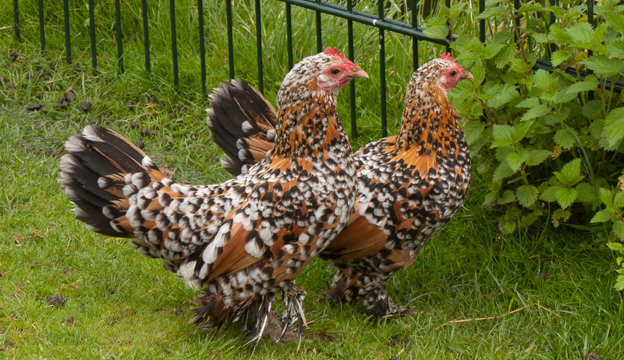
Use: The ornamental Booted Bantam chicken makes a striking appearance at poultry exhibitions. Hens are decent layers, considering their bantam status, and provide very small, creamy-white eggs.

History: Michael van Gelder, a fancier from the town of Uccle in Belgium, developed the Booted Bantam chicken breed by crossing Bearded d’Anvers chickens with other feather-legged bantam-chicken varieties. The breed arrived in North America by way of Germany during the early 20th century. It was admitted to the American Poultry Association’s Standard of Perfection in 1914.

Conformation: The Booted Bantam chicken breed has a compact build, feathered legs and unique feather hocks, and long feathers that stick out from the lower back-thigh area. The APA recognizes five colors: Mille Fleur, Non-bearded Black, Porcelain, Self Blue and White. All have standard plumage. Shanks are various shades of slate, and the breed’s single comb and wattles are bright red. Earlobes, medium-sized in males and small in females, are also bright red. Booted bantam hens will go broody and make great mothers, though their clutches do not produce many chicks. Booted Bantam cocks weigh 26 ounces and hens weigh 22 ounces.

Special Considerations/Notes: The calm and friendly Booted Bantam chicken breed is a great choice for fanciers, children, and hobby farmers and urban farmers with enough space for a nice-sized enclosure. The breed is not entirely opposed to confinement; however, as good fliers, Booted Bantam chickens will need fairly tall fencing around yards and coops. If given free range, the chicken’s feathered feet will help to discourage any damage to gardens and flowerbeds, as the feathers prevent the bird from scratching easily.

Categories
Animals Breeds Poultry

Campine Chickens

Use: The energetic Campine chicken is a dependable layer of medium-sized white eggs. In North America, the Campine is prized as an ornamental chicken breed, as well.

History:

With origins dating back to the time of Julius Caesar, the petite Campine is a very old and rare chicken breed. In 1893, Arthur D. Murray of Maine brought the Campine to America. The breed had some difficulty reaching popularity due to its lack of hardiness but was finally admitted into the American Poultry Association’s Standard of Perfection in 1914.

Campine numbers saw a severe decline after World War II, and the chicken breed almost became extinct. A small group of Campine chicken breeders were able to bring the breed’s numbers back to stability; however it’s still quite rare. Originally a farmyard chicken breed, the Campine chicken’s genes played a major role in the development of today’s commercial system, providing rapid feathering and growth for the meat industry and auto-sexing for the egg-laying industry.

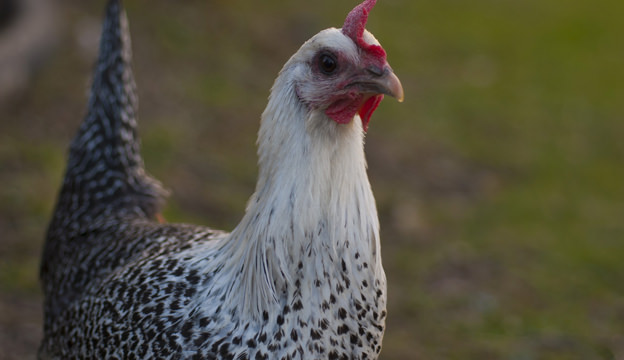
Conformation: Close-fitting feathers cause the Campine chicken breed to appear even smaller than it is. A Campine rooster possesses a form of “hen feathering,” in which he does not develop long sickle feathers in the tail, hackle and saddle feathers. The development of long sickle and hackle feathers in a Campine chicken disqualifies it from shows. The APA recognizes two colors: Golden and Silver. Both varieties are solid-colored on the head and neck and display black barring on the body and tail. The chicken breed’s single comb and medium-sized wattles are bright red. Its bright-white earlobes sit close to the head. Shanks are leaden blue. Standard Campine cocks weigh 6 pounds and hens weigh 4 pounds; bantam Campine cocks weigh 26 ounces and hens weigh 22 ounces.

Special Considerations/Notes: The Campine chicken is capable of foraging for its food requirements. The breed is listed in the Critical category of the American Livestock Breeds Conservancy’s Conservation Priority List.

Categories
Animals Breeds Large Animals

California Red Sheep

Use: California Red sheep are a dual-purpose breed noted for their silky, beige or oatmeal-colored fleece and their exceptionally tender, tasty meat.

History: In the 1970s, Glenn Spurlock, PhD, of Davis, Calif., began crossing Tunis sheep and Barbados sheep with the goal of creating a large, wool-free breed of sheep. Although he didn’t accomplish that goal, his Tunis-Barbados sheep were attractive and excellent meat makers. At his retirement, Spurlock handed over his flock to Aime and Paulette Soulier of Winters, Calif., who continued developing the sheep mix as a wool and meat breed. Others became involved, particularly Alice Gardner of Dixon, Calif. who raised a California Red flock from the first true California Red sheep. Today, there are more than 60 breeders of California Red sheep, all of whose sheep are descendants of Spurlock’s original flock.

Conformation: California Reds are medium-sized sheep. Rams weigh 225 to 250 pounds and ewes weigh 130 to 150 pounds. Both sexes are polled and have long, slightly pendulous ears. Their heads and their legs are free of wool below the knees and hocks; these areas are covered, instead, with gold- to dark cinnamon-colored hair. Rams sometimes grow impressive red manes. They are calm, easy-going sheep and are very responsive to gentle handling. California Red lambs are born a solid cinnamon red or rust color. By the time they’re 1 to 1½ years old, their fleece has grown in beige or oatmeal-colored, with soft red hair evenly distributed throughout. Their wool-free heads and legs remain the same color from their birth. The California Red sheep has silky, soft wool that grows 3 to 6 inches long between annual shearings, measures 50 to 60 on the Bradford count system and averages about 30 to 35 microns in diameter.

Special Considerations/Notes: California Red lamb is noted for tenderness, flavor and low fat content. California Red sheep breed year round, making it possible to wean three lamb crops in two years. Ewes generally produce twins; they’re attentive, protective mothers that make plenty of milk for their lambs. California Red sheep thrive on pasture, making them ideally suited for organic and grass-based production systems. Although the breed was developed in California, ranchers in harsh weather areas like Canada and Colorado swear by California Red sheep. They’re a first-class choice for weavers and handspinners’ flocks, as well as for hobby farms.

Categories
Animals Breeds Large Animals

American Blackbelly Sheep

Use: American Blackbelly sheep are extremely easy to care for and require no shearing or tail docking. As a hair sheep breed, they are much more worm-resistant than wool breeds and are often raised without deworming pills or vaccinations. (A veterinarian should be consulted regarding parasite control.) Ewes lamb without assistance and do well on lower-quality forage. For these reasons, they’re a good choice for new sheep keepers. In addition, rams with outstanding racks of horns are prized by trophy hunters and game ranchers. Primarily a meat sheep, American Blackbellies yield a very lean and mild carcass popular with ethnic and grassfed, all-natural niche markets.

History: American Blackbelly sheep are a composite breed created by crossing the Barbados Blackbelly with the Mouflon and the Rambouillet. The cross occurred because breeders wanted to increase the carcass size of the small Barbados Blackbelly, and they wanted the rams to have a rack of horns. The cross was called Corsican or Barbado. It did not increase the carcass size, but it did establish magnificent horns on the ram, causing it to be the first sheep added to the 1976 hunters’ trophy book in Texas. A lot of confusion existed between American Blackbelly sheep and Barbados Blackbelly sheep, to the extent that Barbados Blackbelly sheep almost became extinct in the U.S. because people raising American Blackbelly sheep persisted in calling them by the purebred name. Recognizing that the term “Barbado” did not adequately define the characteristics that breeders sought, the Barbados Blackbelly Sheep Association International established a separate breed standard in 2004 and defined animals meeting this standard as “American Blackbelly.”

Conformation: Because of the American Blackbelly sheep’s black facial bars and striking black belly and leg markings, it’s one of the most exotic-looking sheep breeds in the U.S. Ewes average 24 to 28 inches tall at the withers; rams average 30 to 32 inches. At maturity, ewes weigh 75 to 95 pounds; rams weigh 110 to 140 pounds. The rams are reknowned for their massive rack of horns, with curls of 30 inches or larger in the more mature sheep. American Blackbelly sheep have a hair (not wool) coat, with the potential in colder climates to grow a wooly undercoat that sheds in the spring. The coat color may vary from light fawn to reddish brown but should have no white on it except for the occasional white tip on the tail. Because of the sheep’s Mouflon ancestry, rams may exhibit a lighter-colored “saddle.”

Special Considerations/Notes: Blackbelly shep are bred year-round, unlike most of the wooled sheep breeds. They are fertile at 4 months and regularly twin. Although they are a slow-growing sheep breed, they lamb twice in 18 months at times of the year that correspond to market demands for lamb meat.

American Blackbelly sheep are relatively inexpensive, and shepherd’s costs will be minimal because the breed doesn’t require shearing or high-quality forage. The sheep can be a challenge to handle because they startle easily and jump like deer. With gentle and patient handling, they’ll quickly become accustomed to the farm’s routine.

Categories
Animals Breeds Poultry

Brahma Chickens

Use: Brahma chickens are dual-purpose chickens known for their regal stature, enormous size, feathered legs and calm, easy-going disposition. Like other heritage chicken breeds, they mature more slowly than modern hybrid broilers, but they have delicious, firm flesh, and hens lay a respectable number of large-sized, brown eggs. They are also ideal pet chickens, described by the International Brahma Club as “children-friendly.” Brahmas come in both large-fowl and bantam sizes.

History: Although a lot of theories exist, the exact origin of the Brahma is uncertain. The American Livestock Breeds Conservancy postulates that they were developed in America from large fowls imported from China via Shanghai with additions of Malay blood, hence the Brahma’s small pea comb, and to a lesser degree, Chittigong chickens from India. The Brahma breed originally was known by many names, particularly the Brahma Pootra, which was shortened to Brahma around 1850.

Cochins and Brahma chicken breeds fueled a craze that swept America and England around 1850 known as “Hen Fever,” an obsession for poultry, especially chickens. In 1852, poultryman George Burnham presented nine of his best Brahma chickens to Queen Victoria of England, an avid poultry breeder in her own right. According to the ALBC, this event caused Brahma chicken prices to jump from $12 to $15 per pair to $100 to $150 per pair overnight. (That equals $2,860 to $4,300 per pair by today’s standards, calculated using today’s Consumer Price Index).

Brahma chickens were considered America’s premier meat breed from the mid-1850s though the 1930s, after which point the industrialization of the American chicken made heritage breeds obsolete. It’s recovered enough to be considered an uncommon, but not endangered, breed. The Brahma chicken breed is currently listed in the ALBC’s Watch category.

Conformation: Historically, Brahma hens reached average weights of 10 to 12 pounds, and some roosters tipped the scale at an astounding 18 pounds. Today, the American Poultry Association Standard calls for 12-pound cocks and 9½-pound hens.

Brahmas have yellow skin and come in three colors: light, dark, and buff. The light and dark variations were accepted into the American Poultry Association Standard in 1874, and the buffs in 1924. They have feathered shanks and toes, pea combs, smooth-fitting plumage, blocky bodies, and broad, wide heads with “beetle brows” jutting out over their eyes.

Special Considerations/Notes: Brahma chickens are excellent free-range chickens but don’t tend to range as far afield as other foraging breeds. Because their leg feathering picks up mud and ice, they thrive best on dry, well-drained soils. They also bear confinement well and can’t fly over chicken-run fences easily. Their profuse, close feathering with a lot of down underneath, coupled with a small pea comb, makes them very cold hardy. They are superior winter layers of large-sized, medium-brown eggs, averaging three or four eggs per week. Hens are broody and good mothers, but because of their size, there is a trampling risk the first few days after birth. Brahma chickens are among the most docile chicken breeds, and they make great pets. It’s hard to beat the Brahma as an all-around hobby-farm bird.

Categories
Breeds

British Shetland Ponies

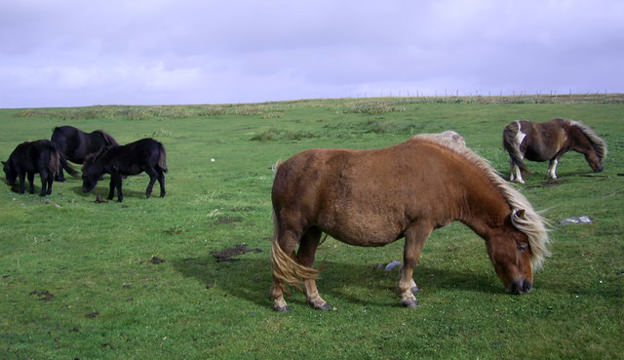
Use: The British Shetland pony hails from the Shetland Islands off northern Scotland. Small equines have inhabited the islands since the Bronze Age. It’s believed British Shetland ponies are related to a cob type of Tundra pony and a mountain pony type from southern Europe crossed with an Oriental horse.

Shetland Islanders used their stout, short-legged ponies to pull carts of peat and seaweed. Shetland ponies came into high demand when the law banned children from coal pits; their docile and willing dispositions allowed them to adapt to the underground environment. The Shetland pony became the first pony to have its own breed society when fanciers formed the Shetland Pony Stud-Book Society in 1890.

History: The British Shetland pony hails from the Shetland Islands off northern Scotland. Small equines have inhabited the islands since the Bronze Age. It’s believed British Shetland ponies are related to a cob type of Tundra pony and a mountain pony type from southern Europe crossed with an Oriental horse.

Shetland Islanders used their stout, short-legged ponies to pull carts of peat and seaweed. Shetland ponies came into high demand when the law banned children from coal pits; their docile and willing dispositions allowed them to adapt to the underground environment. The Shetland pony became the first pony to have its own breed society when fanciers formed the Shetland Pony Stud-Book Society in 1890.

Conformation: According to Britain’s Shetland Pony Stud-Book Society, today’s height for a British Shetland pony is a minimum of 28 inches to a maximum of 42 inches; these sizes are also historically accurate. The Shetland Pony Society of North America says British Shetland ponies in the U.S. ideally are no more than 44 inches tall with a 46-inch maximum height. British Shetland ponies on both sides of the Atlantic are cobby and broad with small, elegant heads and tiny ears. They have short backs with rounded barrels and strong hindquarters, as well as strong legs with shorter-than-normal cannon bones in relation to their size. British Shetland ponies have long, thick manes and tails and a dense double winter coat to withstand harsh weather. They come in every color except spotted. Intelligence mixed with a strong pony character are hallmarks of this ancient breed.

Special Considerations/Notes: There are few purebred British Shetland ponies in North America at this time, though interest in the breed is growing. The Shetland Pony Society of North America registers British Shetlands, though not all SPSNA-registered Shetlands are of British origin.

Categories
Animals Breeds Poultry

Poultry Profiles: Get to Know the Cochin

Use: Cochin chickens are popular exhibition fowl, but they’re also productive, dual-purpose meat and egg makers. Their impressive size and aristocratic demeanor make them standouts in any crowd, while their fluffy plumage and docile natures help them excel as huggable pet chickens. Cochins come in full and bantam sizes, in a wide range of colors.

History: Cochin chickens (once called Shanghais or Cochin Chinas) were an instant hit when they arrived in America and England in the mid-1800s. Queen Victoria, who adored fancy poultry, acquired five pullets and two cockerels in 1845. When fowl from Victoria’s Royal Aviary were exhibited at the prestigious Royal Dublin show in 1846, everyone wanted to own Cochin chickens. Cochins were included in the first volume of the American Poultry Association Standard of Perfection, published in 1874. Although they never met with commercial success, Cochins were raised for meat prior to the industrialization of the American chicken. As a heritage breed, they are included on the American Livestock Breeds Conservancy’s Conservation Priority List in the Watch category, making them an uncommon but not critically endangered chicken breed.

Conformation: The APA Standard of Perfection for full-sized Cochins calls for 11-pound cocks and 8½-pound hens, but their soft outer plumage lays over a massive amount of down, making them appear larger. Bantam-sized Cochin cocks average 32 ounces and hens average 28 ounces. Underneath the feathers and fluff, the Cochin chickens have strong, broad bodies with short wings and well-rounded breasts. They have yellow skin, a medium-sized single comb, and profusely feathered legs and feet.

Although the first Cochin chickens were more or less buff-colored, today they come in an array of colors, including buff, partridge, white, black, silver-laced, golden-laced, mottled, birchen, blue, brown, red, columbian and barred. They also come in a frizzle variety, in which their soft cover feathers turn outward.

Special Considerations/Notes: Cochin chickens are fair layers of large, light to medium-brown eggs, averaging 150 to 180 eggs per year, and they lay through the cold winter months. Cochins shine as broody hens; they hatch even turkey and duck eggs with ease. They don’t fly, they adapt well to confinement, and they’re comparatively quiet fowl – all qualities that make them an excellent choice for in-town chickens. While they enjoy room to roam, they’re fairly lethargic, so this isn’t a breed that can forage its own diet.

Although they’re hardy, their feathered feet and legs pick up mud and ice, so they should be kept indoors when it’s muddy or snowy outside. Because Cochins can’t fly very well, they require low roosts. Their unique looks, hardiness and lovable dispositions make them a best-bet breed for novice chicken keepers.

Categories
Animals Breeds Poultry

Dominique chickens

Use: Dual-purpose Dominique chickens lay a respectable number of small- to medium-sized, brown eggs yet are meaty enough to roast when young or stew in old age. Historically, Dominiques were expected to forage their own feed and still excel as fend-for-yourself, free-range fowl or in pastured-poultry situations. Because of tightly arranged feathers, they resist frostbite. Dominiques are also able to adapt well to hot climates. They come in both large fowl and bantam sizes.

History: The exact origin of the Dominique chicken breed is uncertain, but the American Poultry Association postulates that the Dominique’s ancestors original ancestors were hawk-colored or gray fowl imported to New England from Europe. The APA also refers to Asiatic and Hamburg bloodlines.

Barred chickens with both rose and single combs were well-established in the eastern United States by 1750, where they were known as Dominics, Dominickers or Dominiques. In 1871, the New York Poultry Society decreed that only chickens with rose combs would become the standard of the chicken breed and that chickens with single combs were to be called Plymouth Rocks.

Dominique chickens remained popular until the post-World War II industrialization of poultry breeds rendered most heritage breeds obsolete. By 1970, only four known flocks of purebred stock remained. When the American Livestock Breeds Conservancy published reports about their plight, chicken keepers so rallied behind America’s first breed that even though it’s still uncommon, the Dominique no longer faces extinction. It’s currently listed in the ALBC’s Watch category.

Conformation: The American Poultry Association’s standard for Dominique chickens calls for large-variety cocks to average 7 pounds and hens to average 5 pounds. Bantam-variety cocks average 28 ounces and hens average 24 ounces. They come in a slate-and-white barred pattern known as cuckoo or hawk-colored, which serves as camouflage to protect them from predation. Roosters have rose combs that rise to a distinctive, slightly-upturned spike at the rear; hens’ rose combs are smaller. Dominiques are broad-bodied, meaty and yellow-skinned chickens. Their abundant but close-lying feathers, along with their smallish rose combs, serve to make this a cold-hardy breed that also adapts to hot, humid climates.

Special Considerations/Notes: Dominique chickens are calm and gentle. Ideally, they should live in free-range conditions, but they also tolerate confinement well. Hens are decent layers of light- to medium-brown eggs, and historically average 230 to 275 eggs per year. Hens brood their own chicks and are attentive, protective mothers.

Categories
Animals Breeds Large Animals

San Clemente Island goats

Use: San Clemente Island goats are one of the rarest goat breeds in North America. They are, at this time, primarily a conservation priority breed. Does give a reasonable amount of delicious, high-butterfat milk and could be milked as household dairy goats.


History: San Clemente Island goats originated on San Clemente Island off the coast of southern California. Although a good deal of colorful hearsay surrounds these goats’ prior origin, it appears that a man named Salvador Ramirez brought them from nearby Santa Catalina Island in 1875. The goats thrived on San Clemente Island as feral goats until the mid-1980s when the U.S. Navy, which took possession of the island in 1934 and now maintains an airfield there, ordered their extermination or removal. The Fund for Animals saved the breed from extinction by removing more than 6,000 goats but soon lost track of them. However, the new and very active San Clemente Island Goat Association tracked down and registered 375 goats by fall 2008, and as of 2010, the estimated global population stood at 425 goats.


Conformation: San Clemente Island goats are medium-small, slender goats. Does must be at least 26 inches tall; bucks must be at least 27 inches tall. San Clemente Island goats have dished faces and narrow, horizontally carried ears with a distinctive crimp in the middle. They come in light brown to dark red or amber with distinctive markings: a black head with two brown stripes extending down the face from above or around the eyes to the muzzle; a black patch on the cheek or jaw; a small black spot on the chin; and a black cape over the shoulders, up the top of the neck and down the front legs. The underside of the neck is brown. Ears are black outside and brown inside. A black dorsal stripe runs down the back, and there is some black on the back legs and flanks.


Special Considerations/Notes: Slender, elegant and deer-like, San Clemente Island goats are listed as critically endangered small goats on the American Livestock Breeds Conservancy’s Conservation Priority List. There is a strong need for additional, dedicated conservation breeders. If you long to help save a piece of American history, there’s no better candidate than the San Clemente Island goat.