Categories
Animals Breeds Large Animals

Red Poll Cattle

Use: The Red Poll is a rare, exceptionally hardy, dual-purpose cattle breed raised for beef in North America, but it makes a fine household dairy cow, too.

History: Red Polls originated in eastern England, where cattlemen created a medium-sized, all-red, polled (hornless) dual-purpose breed by combining small, hardy, red-and-white, horned beef cattle from Norfolk with red, dun or brindle, polled dairy cattle from Suffolk. Recognized in 1846 as the Norfolk and Suffolk Red Polled cattle, in about 1880 the name was shortened to simply Red Poll.

The first Red Poll cattle were exported to North America in the 1880s. Breeders chartered the American Red Poll Association in 1883, five years before the British society was founded. Importation was a thriving business for a few years, but after 1902 few additional Red Poll cattle were brought over. The Red Poll cattle breed was established in the United States on only about 300 head from Britain. The breed spread from the United States into Canada.

Conformation: Red Poll cows weigh about 1,200 pounds; bulls weigh about 1,800 pounds. The cattle are solid red, though a splash of white on the underline is acceptable. Genetic consistency is the hallmark of this cattle breed and individuals are very uniform.

Special Considerations/Notes: Red Poll cattle are noted for their hardiness, longevity, quiet yet inquisitive demeanor and the ability to thrive on marginal pasture. Calves are born small and grow quickly, making calving problems practically nonexistent. Red Poll meat is fine-grained, tender and tasty, and cows give a good amount of milk for a dual-purpose breed. Red Poll cattle generally produce 1,250 gallons of milk per year through their teens or about 10,000 pounds of meat. In 1933, one Red Poll cow, Florabel, had an 11-year milk total of 108,310 pounds- an all-breed record for the era. The Red Poll is listed as Threatened on the American Livestock Breeds Conservancy’s Conservation Priority List, and it’s listed as endangered on the Rare Breeds Canada conservation list.
Categories
Animals Breeds Large Animals

Caspian Horses

Use: Caspian horses are slim, elegant small horses ideally suited for driving and for small adult or young riders. Their beauty, background and rarity make them a favorite horse breed among wealthy, equine rare-breed conservators.

History: Caspian horses are a horse breed of great antiquity. They descend from now-extinct miniature horses of Persia that lived in the region from 3000 B.C. through the seventh century A.D.

In 1965, Louise Firouz, an American-born horsewoman living in Iran was enchanted when she discovered a tiny group of horses in the Elburz region south of the Caspian Sea. Naming the breed Caspian, she brought three of them back to the Norouzabad Equestrian Center in Tehran, Iran, and returned a year later to purchase seven mares and six stallions, becoming the first serious breeder of Caspian horses in more than 1,000 years.

The Shah of Iran presented Prince Philip of Great Britain with a pair of Caspian horses when the prince visited Iran in 1971. Intrigued, Prince Philip approached Firouz about exporting breeding stock to Great Britain. Over the next five years, she exported 26 Caspian horses to Europe, thus providing foundation stock to fuel the rebirth of this ancient breed outside the Middle East. The breed wasn’t exported to the U.S. until the 1990s.

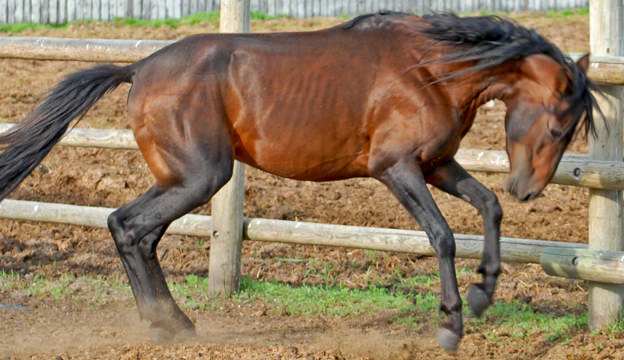
Conformation: The Caspian horse breed is small, but it’s not a pony. It casts the overall impression is of a well-bred, elegant horse in miniature. Adult Caspian horses stand from less than 40 inches to 50 inches tall, measured at the withers, and they come in all colors except spotted.

Special Considerations/Notes: DNA testing performed in the 1990s by Gus Cothran at the University of Kentucky’s Horse Genome Project directly linked Caspian horses to the horses of ancient Egypt and Persia, demonstrating a link to Arabian horses.

Roughly 2,000 Caspian horses are registered throughout the world, 600 of them in North America. The Caspian horse breed is listed as Critical on the American Livestock Breeds Conservancy’s Conservation Priority List. Additional conservation breeders are needed to grow this horse breed’s population.

Categories
Animals Breeds Large Animals

Dorper Sheep

Use: Dorper sheep are a large, hardy meat sheep breed from South Africa. They do one thing, and they do it well.

History: In the early 1930s, meat-sheep raisers in South Africa set out to create a mutton breed that didn’t require shearing and could produce high-quality, fast-growing lambs under harsh conditions. To do so, they crossed British Dorset Horn rams with fat-tailed Blackhead Persian hair-sheep ewes, the former because of its ability to breed out of season and the latter for its supreme heat-hardiness and its wool-less hair coat. The resulting sheep were culled for productiveness and color. The end result was a black-headed white sheep they called a Dorper (“Dor” for their Dorset Horn sires, “per” for their Persian Blackface dams). Other breeders created an all-white version they called the White Dorper.

Twenty-eight farmers and 11 officials formed the South African Dorper Breeders Society in 1950. Dorper sheep and White Dorper sheep were (and continue to be) registered in separate flock books, but they’re scored on the same set of characteristics. The first National Dorper Show was held in Hopetown, South Africa, in 1955. It’s since grown to be one of the biggest small-stock shows in the world, with more than 1,000 sheep vying for annual prizes.

In the mid-1990s, American and Canadian sheep ranchers became interested in Dorper sheep, but because the USDA doesn’t have an import protocol for South Africa, Dorpers had to come to North America as embryos processed through the Canadian import system. The first purebred Dorper lambs were born in the U.S. in 1995. Dorper sheep are now the fastest growing sheep breed in North America. Significant populations exist in South America, Mexico, Australia and New Zealand, as well.

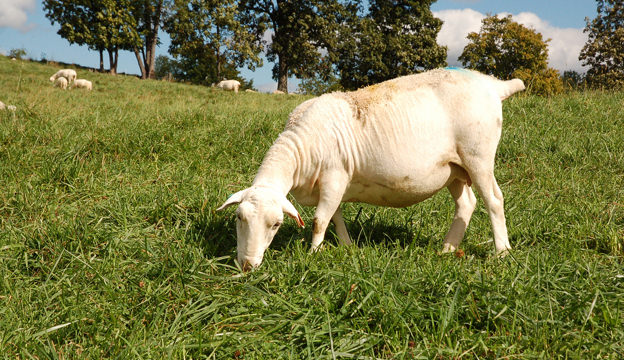
Conformation: Dorper sheep are large, broad, muscular sheep. Rams range in weight from 230 to 275 pounds, while ewes are smaller at 155 to 210 pounds. Both sexes are polled. They grow light, protective body fleeces during the winter months and shed or mostly shed them the following summer. (They shed from the bottom up, and some Dorper breeders shear their animals’ backs to keep their sheep neater looking.) Dorper sheep have hair on their tails instead of wool, so some Dorper breeders leave their tails long instead of docking them as lambs.

Special Considerations/Notes: Dorper sheep are the ideal, easy-care meat sheep. They’re both heat and cold hardy, they eat brush and weeds as well as grass, and ewes are protective mothers that don’t require crutching (trimming the wool around their udders and backsides) prior to lambing. Dorpers usually deliver twins, and lambs are born big and vigorous, weighing 7 to 11 pounds. Ewes give lots of milk, and lambs begin eating solid food at an early age, producing a muscular, lean, roughly 80-pound carcass at 12 to 14 weeks.

Dorper sheep are sensible, easily worked sheep. Some feel the White Dorper is slightly more docile than its black-headed kin.

Two categories exist for Dorpers and White Dorpers in the American flock book. Only animals of 100-percent South African breeding are full bloods. Full bloods and purebreds are registered in separate flock books. Purebreds never achieve full-blood status.

Categories
Animals Breeds Poultry

Buckeye Chickens

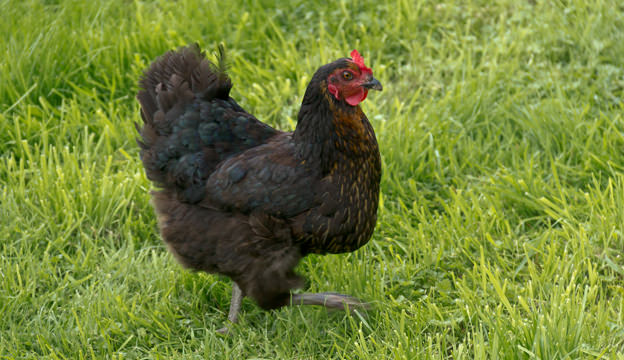
Use: Buckeye chickens are dual-purpose, heritage chickens known for their luscious meat and their wintertime production of medium-sized, brown eggs. They are active foragers and a calm-natured chicken breed, making them ideal for backyard flocks and pasture-poultry applications. Buckeye chickens come in large-fowl and bantam sizes.

History: Buckeye chickens have the distinction of being the only known American chicken breed developed solely by a woman, Nettie Metcalf of Warren, Ohio. When Metcalf began breeding chickens, her goal was to create a breed that produced well during northeastern Ohio’s bitterly cold winters. At this, she was eminently successful. When she showed a pair at the 1902 Cleveland poultry show, she called them Buckeyes in honor of her native state and for the buckeye-nut color of their deep-red plumage. They were admitted to the American Poultry Association Standard as Buckeyes in 1904. Today, the Buckeye is an endangered chicken breed included in the Threatened category of the American Livestock Breeds Conservancy’s Conservation Priority List. Fortunately, the Buckeye is staging a slow but steady comeback, supported by an increasing body of dedicated breeders who treasure this jewel from the past.

Conformation: Buckeye chickens are large, sturdy chickens with broad bodies and breasts, strong wings, and very meaty thighs. Cocks weigh about 9 pounds and hens weigh about 6½ pounds. In the bantam variety, cocks weigh about 34 ounces and hens weigh about 28 ounces. Buckeye chickens have yellow skin and small, freeze-resistant pea combs. They come in a single color, mahogany red with black tails, and have close, tight plumage.

Do not confuse this breed with the Rhode Island Red chicken breed. Buckeye chickens have a bar of slate color on their back feathers close to their bodies, whereas Rhode Island Reds do not. Buckeye chickens are also more compact than Rhode Island Red chickens, with shorter, broader backs.

Special Considerations/Notes: Buckeyes are active chickens and peerless foragers, making them ideal for free-range situations. They also adapt well to confinement as long as they have ample room to move around. They’re calm and unflappable fowl, friendly, and easily handled. Buckeye chickens are supremely winter hardy, and hens lay through the winter months, producing 150 to 200 tasty, brown eggs per year. They excel as meat chickens, but because they mature more quickly than most heritage breeds, Buckeyes require higher protein diets to support more rapid growth.

Buckeyes have several additional traits that make them unique. Roosters are noted for their range of vocalizations and their gentle dispositions. Buckeyes of both sexes are excellent mouse hunters (some owners compare them to cats), and they’re less inclined to feather-pick one another than most other breeds.

Categories
Animals Breeds Large Animals

Nigerian Dwarf Goats

Use: Nigerian Dwarf goats are perfectly scaled miniature dairy goats. Nigerian Dwarfs give up to two quarts of 6- to 10-percent butterfat milk per day. Nigerian Dwarfs, particularly bucks, have been used to develop a number of other small breeds, including the six breeds registered by the Miniature Dairy Goat Association (Miniature Alpines, Miniature LaManchas, Miniature Nubians, Miniature Oberhaslis, Miniature Saanen/Sables and Miniature Toggenburgs), the Miniature Silky Fainting Goat and the cute, fleecy Nigora.

History: Like Pygmy goats, Nigerian Dwarf goats originated in West Africa. The first documented imports of both Pygmys (short-legged and cobby, they’re used for meat and milk in Africa) and Nigerian Dwarfs (a more svelte, proportionate dairy-type goat) arrived to the U.S. in the 1930s to 1950s and found their way to private and public zoos and preserves, then to everyday owners and breeders.

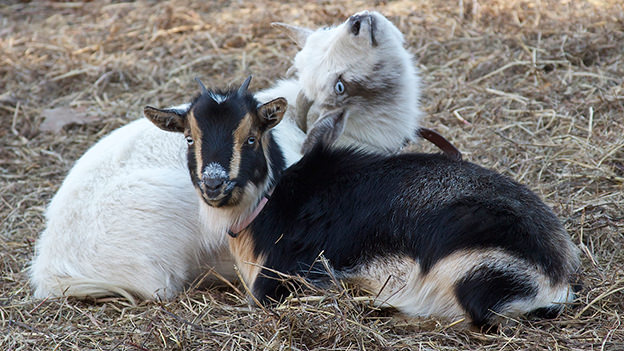
Conformation: Four organizations register Nigerian Dwarfs, and their standards differ somewhat. Generally, the ideal height for a mature doe is 17 to 19 inches, with does up to 22½ inches tall acceptable. Mature bucks should be 19 to 21 inches tall with up to 23½ inches accepted. Ideal weight is around 75 pounds. Nigerian Dwarfs have soft, short- to medium-length hair, upright ears and straight profiles. They come in all colors, though Pygmy-specific markings are penalized in the show ring.

Special Considerations/Notes: Nigerian Dwarfs are sweet, friendly goats that make wonderful pets. Kids weigh about 2 pounds at birth. They are precocious breeders, and bucklings can be fertile at 7 weeks of age. Most doelings are mature enough to breed at 7 to 8 months of age, though it’s better to wait until they’re at least 1 year old. Bucks can be used for service as young as 3 to 6 months of age. Nigerian Dwarfs breed out of season, and litters of three and four kids are the norm.

Categories
Animals Breeds Large Animals

Shorthorn Cattle

Use: Shorthorn cattle were once triple-purpose beef, dairy and draft cattle, but since 1948, there have been two main types of registered Shorthorn cattle: Shorthorns raised for beef and Milking Shorthorns.
 

History: The Shorthorn is one of the most influential cattle breeds in the history of agriculture. It was among the first livestock breeds to be improved and had one of the first herd books, which was established in 1822.

Charles and Robert Colling began developing Shorthorn cattle in the Tees River valley of northeastern England during the late 1700s. Shorthorns, then known as Durhams, came to the United States in 1783. Many were subsequently imported to New England where they were treasured for their meat, milk and plowing abilities.

The American Shorthorn Herd Book was first published in 1846. The American Shorthorn Association was formed 26 years later in 1872. The registry originally recorded both dairy- and beef-type cattle in its herd book, but in 1948, breeders of dairy-type Shorthorn cattle formed their own breed association.


Conformation: Both breeds of Shorthorn cattle are usually red or white, often with brindle markings or roaning. Milking Shorthorn bulls weigh between 1,800 and 2,200 pounds, and cows weigh between 1,200 and 1,400 pounds. Beef Shorthorn bulls weigh about the same as Milking Shorthorn bulls, but beef Shorthorn cows are beefier, thus heavier, at 1,450 to 1,800 pounds. Most have small, cream-colored horns, though polled strains exist.


Special Considerations/Notes: Both breeds of Shorthorns are unusually even-tempered. They calve with ease, graze efficiently, and are long-lived and hardy. The average Milking Shorthorn cow produces more than 1,820 gallons of 3.6-percent butterfat in a typical lactation; it’s the quintessential household dairy cow. Shorthorn beef from either breed is close-grained and tasty. Genetic testing has shown that among beef breeds, beef Shorthorns have one of the highest percentages of the tenderness gene. Milking Shorthorns are listed as critically endangered, not only by the American Livestock Breeds Conservancy but by rare-breed societies in Canada, Britain and Australia.

Categories
Animals Breeds Poultry

Andalusian Chickens

Use: The Andalusian chicken is a lean, elegant layer that produces about three large, chalk-white eggs per week. It is an exceptional winter egg producer as well as a good source of breast meat.

History: Andalusian chickens, also called Blue Andalusians, are natives of Spain’s Adalusia province. The breed was developed by crossing white and black chickens to create a slate-blue variety. Adalusians were imported to England in 1846, and then later into America between 1850 and 1855. The breed was accepted into the American Poultry Association’s Standard of Perfection in 1874.

Conformation: Like other Mediterranean chicken breeds, the Andalusian is symmetrical and compact with a stately carriage. A medium-sized breed, standard Andalusian cocks weigh 7 pounds and hens weigh 5½ pounds. Bantam cocks weigh 28 ounces and hens weigh 24 ounces. The breed has a large, single comb and comes in a single APA-recognized color: Slate-blue feathers laced in glossy black. This variety is achieved by crossing white and black chickens. When two Blue Andalusians are bred, 50 percent of the chicks will be blue, 25 percent will be black and 25 percent will be white or splash (white with blue or black splashes). Off-colored Andalusians cannot be shown at APA shows.

Special Considerations/Notes: Andalusian chickens are superlative foragers, graceful, stately and rugged. They’re noisy, somewhat standoffish and not adaptable to confinement, yet they’re less flighty than most Mediterranean chicken breeds. They’re cold-hardy, but their large, fine-textured combs are prone to frostbite. They’re also wonderfully heat tolerant in the South. Although once quite popular, the Andalusian chicken breed is scarce today and is listed as Threatened on the American Livestock Breeds Conservancy’s Conservation Priority List.

Categories
Animals Breeds Poultry

Araucana Chickens

Use: The Araucana is a dual-purpose chicken breed prized for its blue-tinted, medium-sized eggs and plump carcass.

History: The history of the Araucana chicken breed is somewhat clouded. However, according to The Araucana Club of America, the Araucana originated in an area of Chile controlled by Araucana Indians. It’s believed the chicken breed developed by crossing rumpless, blue-egg-laying Collonca fowl with ear-tufted Quetro chickens to produce the Collonca de Arêtes, forerunner of today’s Araucana chicken. The breed was first imported to the U.S. in the 1930s and was admitted to the American Poultry Association’s Standard of Perfection in 1976.

Conformation: The Araucana chicken breed is medium-sized and comes in Black, Black-breasted Red, Golden Duckwing, Silver Duckwing and White varieties. It has a small pea comb and lays medium-sized blue or bluish-green eggs. The breed has yellow skin and yellow- or willow-colored shanks. It’s rumpless (no tail) and has ear tufts (clumps of feathers) growing from small tabs of skin near their ear openings. Standard Araucana cocks weigh 5½ pounds and hens weigh 4 pounds. Bantam cocks weigh 34 ounces and hens weigh 28 ounces.

Special Considerations/Notes: The Araucana is a docile chicken breed that does well in confinement or as a free-range chicken. It should not be confused with the Easter Egger chicken breed, a mixed breed frequently sold through farm stores and hatcheries as Araucanas or the related Ameraucanas. While Easter Eggers are fine birds and good layers, for pure-bred chickens, buy Araucanas from breeders instead of commercial hatcheries.

Categories
Animals Breeds Poultry

Sicilian Buttercup Chickens

Use: The Sicilian Buttercup is a heritage layer chicken breed that produces medium-sized white eggs.


History: Although its exact origins are unknown, the Sicilian Buttercup chicken breed was reared by Sicilian farmers for centuries before importation to America in 1835. The first well-documented shipment of Sicilian Buttercups came to America in 1860 and was received by C. Carroll Loring of Deham, Mass., who bred and promoted the breed for 50 years. A breed club formed in 1912, which quickly grew to 300 members. The Sicilian Buttercup chicken breed was admitted to the American Poultry Association’s Standard of Perfection in 1918. Today’s stock all descends from eggs imported in 1892.


Conformation: The Sicilian Buttercup chicken breed is named for the golden-buff color of the hen’s plumage and for the breed’s unique comb, which is actually two single combs that merge in front over the beak and again at the back, forming a deep cup ringed with a fine-textured, red comb, beautifully crowned with points. Sicilian Buttercup colors are also unique. Roosters are a rich, reddish orange with a few spangles on the body and black tails. Hens are golden buff accented with black, elongated spangles set in parallel rows all over their bodies. Black portions of both sexes have metallic-green overtones, and both sexes have willow-green legs. The breed is slender and elegant like other chicken breeds of Mediterranean origin. Sicilian Buttercup cocks weigh 6½ pounds and hens weigh 5 pounds.


Special Considerations/Notes: Sicilian Buttercups are fast-maturing chickens. They are peerless, free-range laying chickens, and they don’t adapt well to confinement; they’re flighty and good fliers. The breed is listed as Threatened on the American Livestock Breed Conservancy’s Conservation Priority List.

Categories
Animals Breeds Large Animals Uncategorized

English Springer Spaniels

farm-breed-profiles/english_springer_spaniel_new.jpg

Photo Credit:


Use: The English Springer Spaniel is an intelligent and highly energetic dog breed that enjoys hunting on land as well as traipsing through water and brush.


History: The English Springer Spaniel dog breed is the first of English hunting spaniels. Derived from the same breed as the Cocker Spaniel when first bred in England during the Renaissance, these dogs were the bigger of the litter and used in hunting to “spring” on game. The breed became popular in the United States in the 18th century, and several other breeds developed from it.


Conformation: The English Springer Spaniel is a medium-sized dog with a compact body. It has a long, flat or wavy outercoat with a soft, dense undercoat. It comes in white and black or liver, roan and blue or liver, or tricolor. It stands at about 18 to 21 inches in height at the shoulder and weighs 40 to 50 pounds. It has close-lying ears that need to be checked regularly, as they are prone to injury or infection.


Special Considerations/Notes: Owners need to possess authority over the English Springer Spaniel dog breed because of its strong will. The breed’s life expectancy is 10 to 15 years. Be sure to brush its coat regularly so it doesn’t become matted.