Categories
Animals Breeds Large Animals

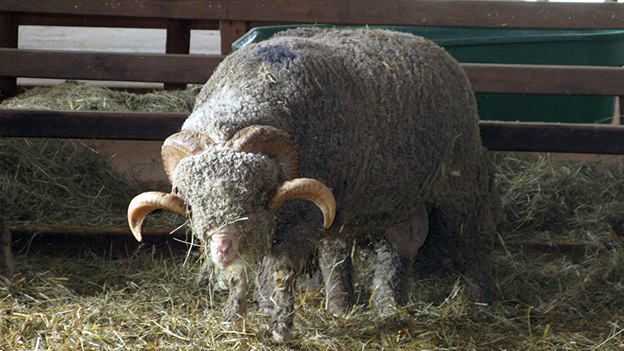
Merino Sheep

Use: The Merino is justifiably famous for its wool. Hand spinners adore the Merino’s exceptionally fine fleece, which spins up into a soft yarn that, when turned into garments, offers lightweight warmth without the itchy, scratchy feel of coarser wools. Quality Merino wool often fetches top dollar.

History: The Merino has its roots in Spain, where from the fourteenth to the nineteenth centuries this breed with its fine, luxurious fleece dominated the European wool trade. For many years, the Spanish government maintained a monopoly on the breed, refusing to allow its export.  Finally, in 1786 the King of Spain relinquished a small flock to his cousin Louis XVI’s estate at Rambouillet in France (the Rambouillet breed emerged from this stock). After the Spanish empire fell apart, the breed spread to other countries, including Australia, Britain, and the U.S.  Arriving soon after Australia’s settlement, the Merino proved to be as a versatile and resilient breed capable of succeeding in this vast continent’s varied climates and terrain. Today, the Australian Merino – the most common breed in that country — consists of four strains: the Saxon Merino, South Australian Merino, Spanish Merino, and the Peppin Merino.

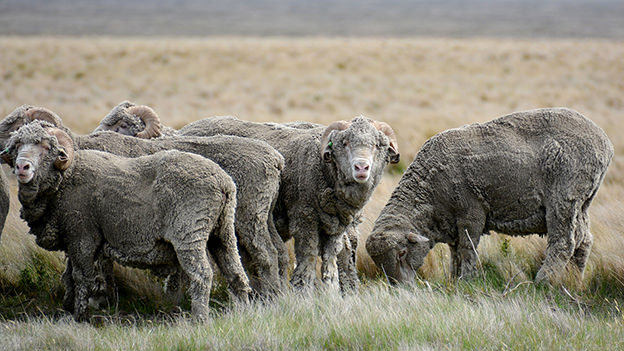
Conformation: The Oklahoma State University Breeds of Livestock website divides Merinos in the United States into types A, B, and C. The smaller, wrinkly-hided type A Merino developed in Vermont, while the larger type B Merino hailed from Ohio, where breeders selected for a heavier fleece and mutton body type. The adaptable, smooth-bodied Type C, or Delaine, Merino is the most common type in the United States. today. Medium-sized Delaine Merino ewes generally weigh between 125 and 180 pounds, while rams weigh in at around 175 to 235 pounds. Merino rams often sport magnificent curling horns. Each year, the Merino grows a dense, finely-fibered fleece with a staple length of  2.5 to 4 inches long. The wool color ranges from white to cream to straw-colored.

Special Considerations/Notes: Merinos have a highly developed flocking instinct, which makes them good range animals and easy for shepherds and their dogs to herd around. The motherly ewes produce twins about half the time and can breed out of season, allowing shepherds to be more selective about when lambing occurs. These sheep are said to have longer productive lives than other sheep breeds, living and producing wool and lambs for ten years or more.
Categories
Animals Breeds Large Animals Uncategorized

Miniature Cheviot Sheep

Use: Like their ancestors, Miniature Cheviots are ostensibly dual-purpose meat and wool sheep but few if any breeders raise them for meat. Instead, they’re promoted as the ideal hobby farm wool and pet sheep. Miniature Cheviots produce soft, dense, low-grease wool with a longer staple length (three to seven inches, in the 25 to 32 micron range) than many of today’s big Cheviots. A bonus: they come in not only white but in an array of colors ranging from true black through pale beige and silver, making colorful Miniature Cheviots fiber a favorite with handspinners. In addition, their hardiness, ease of handling, and sprightly personalities make Miniature Cheviots ideal small-farm pet sheep.

History: The Miniature Cheviot is not a true miniature as it never selected for reduced size. Instead, it’s the old-time Cheviot as the Cheviot breed appeared until it was bred up to modern meat-producing standards. Therefore, the history of the Cheviot breed is that of the Miniature Cheviot sheep as well. The foundation flock of small Cheviots came to America from Canada via a livestock auction in Washington State; beyond that, its origin is uncertain. Early promoters named their little sheep after a similar but unrelated breed, the Brecknock Hill Cheviot of northern Wales. However, when the registry was reorganized in 2006, the name was changed to American Miniature Cheviot sheep.

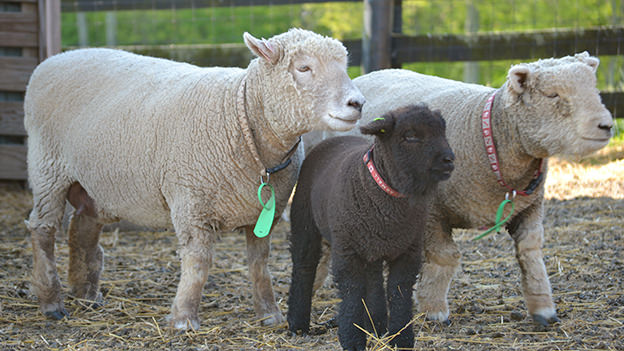
Conformation: Miniature Cheviots resemble their larger peers in every way except they’re not as tall: their long, deep bodies are set atop sturdy, wide-placed, but comparatively short legs. Miniature Cheviots are naturally polled; they have wool-free legs and faces and many sport a ruff of wool behind their ears. Some breeders prefer Roman-nosed Miniature Cheviots while others opt for a straighter profile; in either case, these are regal-looking, alert and graceful little sheep with wide faces and small, upright ears. White sheep have white faces and legs with black noses, eye-rims, and hooves. Colored sheep have called “fairy kisses”; white leg splashes sometimes occur as well. Maximum height at two years of age is 23 inches measured at the withers after shearing; mature rams weigh 55 to 100 pounds, ewes between 45 and 85 pounds.

Special Considerations/Notes: Miniature Cheviot ewes are attentive mothers, milky, and they lamb with remarkable ease; twins are the norm. Like all of the British Hill breeds, Miniature Cheviots are tremendously easy keepers and very long-lived, many ewes lamb well into their teens.

Categories
Animals Breeds Large Animals

Navajo-Churro Sheep

Use: Navajo-Churros have a lustrous fleece composed of a strong outer layer and a soft undercoat which is low in lanolin, making it easier to wash, card, spin, and weave.  The open locks and wide color range make Navajo wool ideal for hand spinners and weavers.  The meat of this multi-purpose breed is delicious and surprisingly lean, although they yield a fairly small carcass.

History: The rare and beautiful Navajo-Churro, the first breed of domesticated sheep brought to the New World, is one tough survivor.  The roots of this breed extend way back to Churra sheep brought from Spain by Spanish conquistadores back in the 1500s.  The Spanish prized the Churra – later altered to Churro — as a hardy and adaptable source of food and fiber, and the sheep spread to ranches all along the upper Rio Grande Valley.  Native Americans eventually obtained their own flocks by trading with (and raiding) Spanish settlements.  Herding these sheep and weaving their wool into rugs and other textiles soon became an important way of life for the Navajo, a primarily agricultural people.  The 1800s, however, almost saw the breed’s extinction, as many of the sheep on Hispanic ranches became cross-bred with fine wool rams and the U.S. army, in retaliation for raids on white settlements, decimated the Navajo’s flocks.  By the 1900s, thanks to more breed “improvements” and stock reductions, only a few remnant flocks remained in remote New Mexico villages and canyons in the Navajo Reservation. Luckily, some devoted breeders came to the Churro’s rescue during the 1970s. Today, the American Livestock Breeds Conservancy classifies the breed as threatened, with an estimated global population of less than 5,000 animals.

Conformation: While most Churros on the Navajo reservations are white, the wool of this genetically diverse breed can display a gorgeous variety of earthy colors:  black, gray, rust, brown, beige.  The outer coat has a long staple length of six to twelve inches.  These long-legged and long-tailed sheep are one of the few breeds that carry the polycerate gene; they can sport two, four, or even six horns (they can also be polled).  Mature rams weigh about 120 to 175 pounds, while ewes run around 85 to 120 pounds.

Special Considerations/Notes: The harsh conditions of the American Southwest have molded the primitive Navajo-Churro into a hardy, adaptable, easy-to-keep breed that excels on range and marginal land. They’re highly resistant to disease and parasites, and the ewes lamb easily, tend to twin, and make passionately protective mothers. Well adapted to dryer climates and rough ground, these sheep require more frequent hoof trimming when kept on lush, soft pastures. In wetter climates, they also need their wool sheared twice a year.

Categories
Animals Breeds Large Animals

Rambouillet Sheep

Use: A dual-purpose producer of meat and wool, the Rambouillet breed yields a good lamb carcass and the adult ewes will give ten or more pounds of fleece each year. The dense, fine wool has a staple length of 3 inches or more and a spinning count in the 64s to 70s range. It shrinks less than Merino wool and makes lovely worsted fabric and scarves.


History: When the Moors of North Africa invaded Spain during the 14th century, they brought flocks of sheep – flocks left behind when the Spaniards later booted them out and reclaimed their country. These fine-wooled sheep became the famed Merino, a breed the Spanish valued so much that their export was prohibited by the government. In 1786, however, France’s Louis XVI managed to finagle a gift of 318 Merino ewes, 41 rams, and a couple of wethers from his cousin Louis, King of Spain. Modified on the French king’s experimental farm at his Rambouillet estate, this flock gave rise to a French version of the Merino called, naturally enough, the Rambouillet. The first of this breed arrived in the United States in 1800.


Conformation: These big, sturdy-looking sheep have fleeces of white or natural colors, “open” wool-free faces framed by wooly heads, wool-covered legs, and white feet. The rams wield impressive curled horns, and weigh 250 to 300 pounds. Ewes run 200 to 275 pounds.


Special Considerations/Notes: These hardy, adaptable sheep have a strong flocking instinct that makes them ideally suited for open range conditions. Thanks to their North African ancestry, they do especially well in the Southwest. The ewes have few lambing difficulties, give plenty of milk, and make attentive mothers.

Categories
Animals Breeds Large Animals

Romney Sheep

Use: The dual-purpose Romney has been valued for both meat and wool throughout its history. The large, well-muscled lambs efficiently produce high-quality, lean cuts of meat on pasture, while mature sheep give around 8 to 12 pounds of fine wool each year. Easy-to-spin Romney fleece delights hand spinners with its long and lustrous separate locks, low grease content and range of natural colors (its spinning count runs 40 to 48). This versatile wool can be used for a huge variety of projects, from sweaters to rugs.


History: The Romney breed emerged over 250 years ago in a green, soggy, wind-swept region of Kent county in southeastern England, its ancestor a hardy old breed aptly called the Romney Marsh sheep. An efficient provider of wool and meat, the Romney sailed to New Zealand, where it has since become the most numerous sheep breed. William Riddell of Monmouth, Oregon, brought the first of these sheep into the United States in 1904. Both English and New Zealand lines have contributed to the improvement of present-day Romneys in North America.


Conformation: These burly polled sheep come thickly cloaked in wool of either white or natural colors, including cream, black, brown, gray and silver. They have a blocky build, strong legs, moderately sized ears and an open, wool-free face from the eyes down. Adult Romney rams weigh 225 to 275 pounds; ewes, 150 to 200 pounds.


Special Considerations/Notes: Thanks to their Kent, England roots, Romneys adapt especially well to lush, rainy temperate climates, such as those on the West and East Coasts (to arid regions, not so well). The ewes generally lamb with ease and make good, calm mothers.

Categories
Animals Breeds Large Animals

Scottish Blackface Sheep

Use: In Europe, the long, coarse wool of the Scottish Blackface is made into fine carpets, Irish and Scottish Tweeds, and used to stuff mattresses. Felters, rug hookers, and spinners enjoy working with the sheep’s unique double-coated fleeces, which have a staple length of 15 to 30 cm. This medium-sized breed also produces a lean, fine-grained, and flavorful meat. Plus, their lovely horns can be used in the creation of shepherd’s crooks and walking sticks.

History: An old and primitive breed, the Scottish Blackface may have originated in the border areas between Scotland and England. As far back as the 12th Century, monastery records show that monks raised horned, “dun-faced” sheep to provide wool for their garments; these were most likely the predecessors of today’s Scottish Blackface. In 1503, James the IV of Scotland established a flock of some 5,000 Scotties in Ettrick Forest, and during the 17th and 18th Centuries the breed went by the name of Linton sheep. By the 19th century, Scottish Blackface sheep had radiated into the highlands, Ireland, and over to the United States. Today, this hardy breed makes up a good chunk of Britain’s sheep population, although it remains a minor breed in the United States.

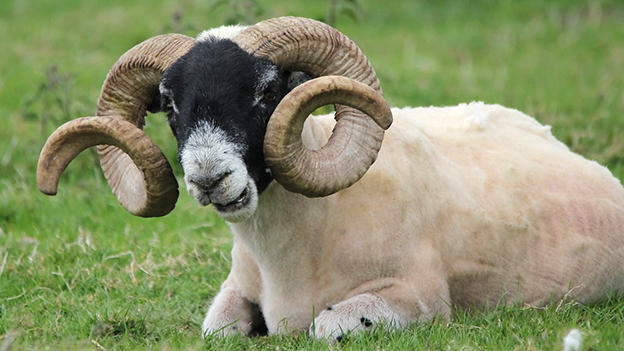
Conformation: A Scottish Blackface flock grazing an emerald Scottish hillside is a sight to marvel at.   These noble sheep possess striking black or mottled black and white faces and legs and long white fleeces that should be free of black fiber.  Both ewes and rams sport impressive horns; strong and energetic, these animals should be handled with care.  Body types vary, depending on what part of Scotland the animals came from.  Rams weigh around 150 to 200 pounds; ewes, 100 to 150 pounds.

Special Considerations/Notes: Scottish Blackface have a near legendary ability to withstand severe weather conditions on marginal grazing;  these thrifty sheep thrive in hilly and mountainous terrain, and will eat more brush and low quality grasses than their large, modern counterparts.  They tend to be highly disease resistant, and the ewes lamb easily and produce plenty of milk for their lambs.  These protective mothers will readily wield their horns against dogs and other perceived threats to their young.  Raisers describe the breed as smarter than your average sheep – if you have poor fences, they’ll find the weak spots and escape.

Categories
Animals Breeds Large Animals

Shetland Sheep

Use: Shetlands grow soft, strong fleeces in a delightful range of colors, patterns, and textures – a spinner’s dream come true. Indeed, the Shetland woolen industry with its fine, un-dyed sweaters, shawls, and other knitted garments owes its fame to this hardy little wool breed. Too small and slow-growing to make an efficient meat animal itself, the Shetland can be enlisted in cross-breeding programs to produce tasty lamb.


History: According to the North American Shetland Sheep Breeders Association (NASSA), the Shetland breed probably developed from sheep brought by Vikings more than 1,000 years ago to the Shetland Islands, a cluster of some 100 islands north of Scotland. The Shetland Flock Book Society formed in 1926 to conserve this primitive breed in its purebred state. Shetlands didn’t arrive in North America until the 1980s, and the breed still remains uncommon here. The American Livestock Breeds Conservancy (ALBC) lists the Shetland as recovering, meaning it has an estimated global population exceeding 10,000, but still needs monitoring.


Conformation: The petite Shetland ranks as one of the smallest of the British sheep breeds. Rams usually possess curling horns and weigh in at a mere 90 to 125 pounds; the normally polled (hornless) ewes run around 75 to 100 pounds. One of the most diverse sheep breeds as far as wool color, the Shetland comes in many shades, including white, fawn, gray, true black, moorit (brown), and silver-gray. The fleece, which generally weighs between 2 to 4 pounds, can also sport some thirty different patterns. Staple length varies with the three fleece types recognized in North America, from about two to ten inches or more.


Special Considerations/Notes: Shetlands may look delicate, but centuries of surviving the capricious climate, rugged terrain, and poor grazing conditions of the Shetland Islands turned out a truly tough little sheep. These thrifty livestock don’t require rich feed concentrates or snug accommodations in order to thrive. Like most other primitive, unimproved breeds, Shetland ewes tend to lamb easily and possess excellent mothering skills. The breed’s small size and docile nature make them easy sheep for shepherds to handle and manage. Shetlands, whose naturally short tails require no docking, are grouped with the other Northern European Short-Tailed sheep, including the Finnsheep, Romanov and the very similar Icelandic.

Categories
Animals Breeds Large Animals

Shropshire Sheep

Use: Classed as a medium-wool breed, the Shropshire produces a heavy, dense fleece with a soft handle and little kemp.  The wool – wonderful for spinning and knitting– has a staple length of 2.5 to 4 inches.  The lambs of this dual-purpose breed gain weight quickly and yield a good, meaty carcass.  In northern Europe, Christmas tree plantation owners use these sheep to graze their conifer stands: the animals serve as an environmentally-friendly form of weed control without damaging the trees.  This breed’s gentle nature and medium size makes them a good 4-H sheep for kids.


History: The Shropshire breed probably developed from robust, footrot-resistant native sheep flocking the border areas of Shropshire and Staffordshire, two counties in west-central England.  Improved during the first half of the 1800’s, the Shropshire acquired its name in 1848 and its popularity soon sky-rocketed.  Unknown raisers first imported the breed into Virginia in 1855, and five years later a ram and twenty ewes acquired by Samuel Sutton arrived in Maryland.  After this, the breed stormed the U.S. by the thousands, where they became known as “The Farm Flock Favorite” because of their vigorous and adaptable natures, not to mention their impressive wool cover.  They continued to be popular in the U.S. into the 1930’s


Conformation: Shropshires look like the stereotypical woolly sheep of nursery rhymes and children’s stories. A black face with medium-sized ears and black legs contrast prettily with thick white wool on the body and poll (this is a hornless breed).  There should be no colored wool in the fleece. According to the Shropshire Breeders Association in the UK, these medium-sized sheep are more completely covered in wool than any other British “Down” breed. They have a straight, broad back and muscular neck.  An adult ram can weigh anywhere from 225 to 250 pounds, while ewes weigh from 150 to 180 pounds.  Raisers describe this breed as docile and easy to handle.


Special Considerations/Notes: Toughing out Britain’s capricious climate has created a hardy, thick-wooled breed that tolerates rain, snow, and wind well. Prolific Shropshire ewes tend to lamb with ease, make excellent mothers, and have long productive lives. Although Shropshire breeders have been selecting for less wool on the poll, as heavy wool growth in this area can contribute to “wool blindness,” you should watch out for this problem and shear if necessary. 

Categories
Animals Breeds Large Animals

Southdown Sheep

Use: The American Southdown Breeder’s Association hails this fast-growing breed as an efficient and economical converter of grass to lean, tender and flavorful meat. These sheep make popular exhibition livestock and good 4-H/FFA projects for young people due to their mellow temperaments. They also make valuable additions to cross-breeding programs.

History: A true British native, the Southdown breed hails from the Downs, or hills, of Sussex, England, where it has probably lived for centuries. The breed – thought to be one of the oldest purebred sheep in the world — was further developed during the late 1700s and early 1800s. These sheep may have accompanied English colonists to the New World as early as 1640, and later importations occurred from 1824 to 1829. During the 1960s, imported New Zealand Southdown stock boosted the breed’s size here in the U.S. The American Livestock Breeds Conservancy lists the breed as recovering; that is, the global population exceeds 10,000 animals, but they feel the breed still needs monitoring.

Conformation: The well-balanced Southdown has a compact, muscular appearance and moderate size, with rams weighing around 190 to 230 pounds and ewes weighing about 130 to 180 pounds. The breed displays a high, proud head carriage that gives it an alert look, and medium-sized ears. The muzzle hair ranges from gray to brown (no white) and a moderate amount of wool surrounds the face. Southdowns have pink skin and a dense, uniform fleece that covers the whole body and extends down the legs. No black spotting of the wool is allowed. The medium-type fiber has a short staple length ranging from 1.4 to 2.5 inches and a fleece weight range of from five to eight pounds.

Special Considerations/Notes: Southdowns mature early and the ewes are good lambers and mothers. These easy-to-manage, polled (hornless) sheep adapt well to wet climates and hilly terrain—not surprising, given their roots in the Downs of Sussex.

Categories
Animals Breeds Large Animals

Suffolk Sheep

Use: One of the most popular meat sheep breeds in the United States, the Suffolk efficiently converts forage to lean, quality lamb. These sheep also produce about 5 to 8 pounds of medium wool with a spinning count of 48 to 58 and a staple length of around 2 to 3.5 inches.

History: A native of England, the Suffolk originated as a cross between the British Southdown, a large polled breed with fine bones and dark faces/legs, and the Norfolk Horned sheep, a muscular, long-legged breed capable of traveling long distances for food through the uplands of Suffolk, Norfolk and Cambridge. Mingling Southdown rams and Norfolk Horned Ewes resulted in sheep with the best qualities of both breeds, including large size, plenty of muscle, good foraging ability, and rapid growth of lambs – the ideal mutton sheep. At first called the Southdown Norfolk or Blackface, the Suffolk was recognized as a breed in 1810. It came to the U.S. in 1888 after a flock of the impressive sheep caught the eye of G.B. Streeter on his visit to Britain.

Conformation: Massive, muscular Suffolk rams weigh 250 to 350 pounds, while the ewes weigh 180 to 250 pounds. This regal breed has a polled head covered in fine black hair, a long Roman-shaped muzzle, and long, drooping ears. The Suffolk’s black head and legs, wool-free below the knees, stand out in beautiful contrast to the dense white fleece covering its sturdy, long-backed body.

Special Considerations/Notes: Suffolk ewes are said to be easy lambers whose offspring grow rapidly on the abundant milk they provide. These vigorous sheep do well foraging on range and their feet are very resistant to foot rot.