Categories
Breeds Crops & Gardening Urban Farm Urban Farming

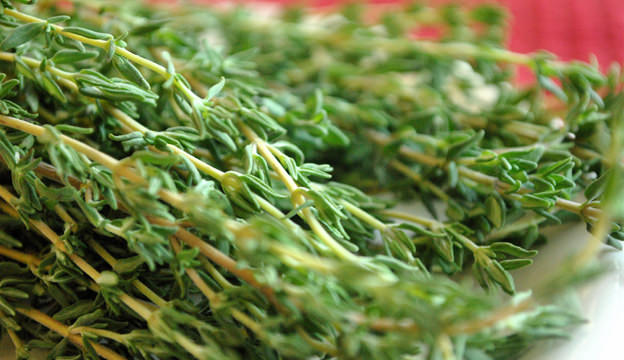
Thyme

Size: 6 to 12 inches

Sunlight requirements: Full sun

Water requirements: About 1 inch per week—herbs in containers need more moisture.

Soil requirements: Well-drained, alkaline soil that isn’t heavily fertilized

When to plant: Direct-seed or divide plants for replanting in early- to mid-spring.

Where to plant: Garden; containers

When to harvest: 90 to 95 days after planting (June or July is best.)

Produce storage: Store in a cool, dark space, or freeze in airtight containers for 6 to 8 months.

Categories
Breeds Crops & Gardening Urban Farm Urban Farming

Mint

Size: 12 to 24 inches

Sunlight requirements: Full sun; partial sun (especially in summer)

Water requirements: About 1 inch per week—needs more moisture than most herbs, especially if planted in containers.

Soil requirements: Well-drained soil that isn’t heavily fertilized

When to plant: Direct-seed in early spring.

Where to plant: Garden; containers

When to harvest: 60 days after planting

Produce storage: Store in plastic bags in high humidity at 40 degrees F.

Categories
Breeds Crops & Gardening Urban Farm Urban Farming

Pumpkins

Size: Full-sized vines grow up to 12 feet long; miniature vines grow 5 to 6 feet long. Each vine produces separate male and female flowers and develops several fruits per vine.

Sunlight requirements: Full sun (A minimum of six hours is ideal.)

Water requirements: About 1 inch per week

Soil requirements: Highly fertile soil, rich in organic matter

When to plant: Direct-seed in late spring when soil temperatures reach 65 degrees F, or start seeds indoors in peat pots three weeks before transplanting.

Where to plant: Garden

When to harvest: 100 to 120 days after seeding, when pumpkin rinds have fully colored and hardened

Produce storage: Store in a cool, dry place (55 to 65 degrees is ideal) for several months. Harvest with several inches of stem intact for optimum shelf life.

Categories
Breeds Crops & Gardening Urban Farm Urban Farming

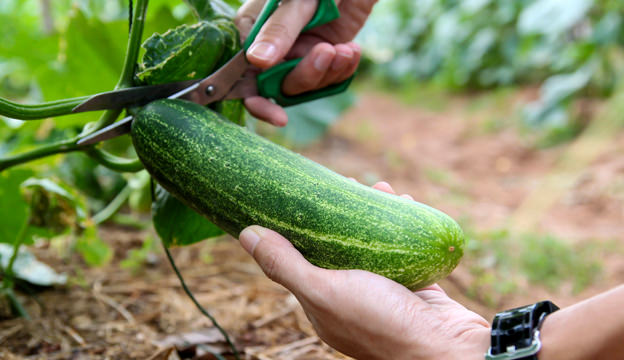
Cucumbers

Size: Vines grow up to 10 feet long.

Sunlight requirements: Full sun (A minimum of six to eight hours is ideal.)

Water requirements: Water weekly at most and mulch well; warm, dry conditions are best.

Soil requirements: Well-drained soil, rich in organic matter

When to plant: Direct-seed when soil temperatures reach 60 degrees F, or sow indoors in peat pots three to four weeks before transplanting.

Where to plant: Garden (grow up a trellis to save garden space); containers (miniature varieties)

When to harvest: 50 to 65 days from seed for most varieties. (Pick mature fruits continually to encourage production.)

Produce storage: Store in plastic in the refrigerator or process into pickles.

Categories
Breeds Crops & Gardening Urban Farm Urban Farming

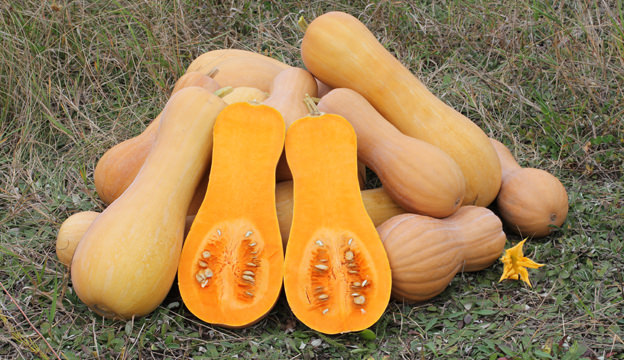
Butternut Squash

Size: Vines grow up to 10 feet long. Each vine bears up to six large fruits, each weighing about 4 pounds.

Sunlight requirements: Full sun (A minimum of six hours is ideal.)

Water requirements: About 1 inch per week—consistent moisture is ideal, so mulching is a good idea.

Soil requirements: Well-drained, fertile soil, high in organic matter

When to plant: Direct-seed in late-spring when soil temperatures reach 65 degrees F, or start seeds in peat pots three weeks before transplanting.

Where to plant: Garden

When to harvest: 90 to 100 days from seed, when a fingernail can pierce the rind with a moderate amount of pressure

Produce storage: Store in a cool, dry location for several months. Leave about 1 inch of stem attached to the fruit for prolonged storage.

Categories
Breeds Crops & Gardening Urban Farm Urban Farming

Acorn Squash

Size: Vine varieties grow up to 10 feet in length; bush varieties spread 2 to 3 feet. Each vine bears several ridged, acorn-shaped fruits.

Sunlight requirements: Full sun (A minimum of six hours is ideal.)

Water requirements: About 1 inch per week—consistent moisture is ideal, so mulch well.

Soil requirements: Well-drained, fertile soil, high in organic matter

When to plant: Direct-seed in late-spring when soil temperatures reach 65 degrees F, or start seeds in peat pots three weeks before transplanting.

Where to plant: Garden; containers for bush varieties (8-gallon minimum)

When to harvest: 85 to 100 days from seed, when the rind is hard and a yellow spot appears on the underside of each fruit

Produce storage: Store in a cool, dry location. Will last several months. Keep 1 inch of stem attached to each fruit prior to storage.

Categories
Animals Breeds Poultry Urban Farm Urban Farming

Cochins

livestock-profiles/cochin_300.jpg

Photo Credit: Courtesy Tom Roebuck

The Cochin chicken breed originated in China and became popular in England and the U.S. in the mid-1800s. Developed as a dual-purpose chicken, the Cochin provides both meat and eggs. It comes in both standard and bantam sizes and in a number of colors, including black, buff, partridge, white, barred, brown, golden-laced, mottled, silver-laced, and blue. The Cochin is listed on the American Livestock Breed Conservancy’s Priority Watch list.

Height: 

Weight: 8 to 11 pounds

Urban Uses: Cochin chickens are primarily considered ornamental chickens, though hens do lay an average of two eggs per week. They can be used as broody birds, as well.

Egg Size: Medium

Books & Magazines:

Cochins International
American Poultry Association

Categories
Breeds Poultry Uncategorized Urban Farm Urban Farming

Hamburg

livestock-profiles/hamburg_mb_300.jpg

Photo Credit: Courtesy www.MarthaBowman.info

Hamburgs, also known as Dutch Everyday Layers, are a common chicken available in both standard and bantam sizes. Originally from Holland, this ancient breed was refined by the British in the 1700s. Hamburgs come in six varieties: white, black, silver spangled, silver penciled, golden spangled and golden penciled. They are known for their ability to tolerate cold weather.

Height: 

Weight: 4 to 5 pounds

Urban Uses: Hamburgs produce about four eggs per week.

Egg Size: Small

Books & Magazines:

North American Hamburg Society
American Bantam Association
American Poultry Association

Categories
Breeds Poultry Uncategorized Urban Farm Urban Farming

Campine

livestock-profiles/campine_Eadepoeltegroen_300.jpg

Photo Credit: Courtesy Eadepoeltegroen

First developed in Belgium’s Campine region, the Campine chicken comes in both standard and bantam sizes and in two recognized colors: silver and golden. The breed is known for its beautiful markings, which feature finely penciled feathers. A good layer, Campines are somewhat rare in the U.S.

Height: 

Weight: 4 to 5 pounds

Urban Uses: Campines produce three eggs a week. They are also valued for their beautiful coloring.

Egg Size: Medium (standard type)

Books & Magazines:

American Bantam Association,
American Poultry Association

Categories
Animals Breeds Poultry Uncategorized Urban Farm Urban Farming

White-faced Black Spanish

livestock-profiles/white-faced-black_pd_300.jpg

Photo Credit: 

The rare White-faced Black Spanish chicken originated in Spain during the Middle Ages and came to the New World by way of the Caribbean Islands. Also known as the Clown chicken, the breed is easily recognized by its large white earlobes. The breed comes in standard and bantam sizes, and only in black.

Height: 

Weight: 6 to 7 pounds

Urban Uses: White-faced Black Spanish chickens are good layers, typically producing three eggs per week.

Egg Size: Large

Books & Magazines:

American Bantam Association
American Poultry Association