Categories
News

Farmland Costs Stable Despite Economy

Farmland
Courtesy Hemera/Thinkstock
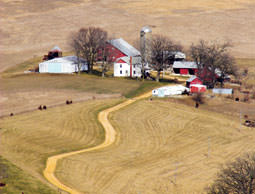
Illinois’ farmland prices have remained stable in the past couple years, according to a report from the University of Illinois.

Unlike many other assets whose values have tanked this past year, farmland prices have not fallen, according to a recent University of Illinois Farm Economics Facts and Opinions report.

“Currently, farmland prices in Illinois are in line with historical relationships suggested by capitalized values,” says Gary Schnitkey, a UI professor of agricultural and consumer economics and farm-management specialist. “These capitalized values take into consideration cash-rent and interest-rate levels. The rise in commodity prices experienced this summer and fall likely will lead to upward pressure on cash rents, thereby leading to even higher farmland prices.”

Schnitkey’s full report, entitled “Farmland Price Outlook: Are Farmland Prices Too High Relative to Returns and Interest Rates?” is complete with data and commentary. In it, Schnitkey describes what seemed like a roller coaster of farmland prices.

“In the early 1980s, we saw a really large decline in the price of farmland, primarily due to lower farmland returns and higher interest rates,” he says. “But since 1986, we’ve seen farmland prices steadily increase. They really took off in 2004 and 2008, averaging 15 percent increases each year. During that 2004 to 2008 period, a lot of the increase was due to urban pressures and 1031 [tax-deferred] exchanges. But the last several years, farmland prices, according to the USDA, have been fairly stable.”

The USDA indicated that prices of Illinois’ farmland per acre were relatively stable between 2008 and 2010: $4,850 in 2008, $4,670 in 2009, and $4,820 in 2010.

“There was a lot of concern from 2004 to 2006, when we were seeing price increases due to urban movement out from Chicago,” Schnitkey says. “We thought that when the buying ended, we’d see a decline in farmland prices. But fortunately, about the time that that boom in urban development ended, commodity prices increased, and that caused cash rents to increase and farmland prices have been holding steady.”

The report states that the last time Illinois’ farmland prices declined was during the agricultural financial crisis of the mid-1980s. During this crisis, average farmland prices decreased from $2,023 per acre in 1981 to $1,149 per acre in 1987, a decline of 43 percent over a five-year period. 

From 1987 through 2004, farmland prices averaged a yearly increase of 4.8 percent per year.  The rapid rise in prices between 2004 and 2008 was caused by demands for converting farmland to housing and other commercial uses.

“These development demands had a rippling effect, even impacting farmland that had no possibilities of development, as people who sold farmland for development purchased farmland elsewhere, often using a 1031 exchange provision in the tax code to shelter gains from immediate taxation,” Schnitkey says.

He doesn’t expect the price of farmland to dive any time soon.

“If we look at where cash rents are on farmland and where interest rates are, farmland prices in Illinois appear to be reasonable and in line with historical relationships,” he says. “We would expect that if we have stable interest rates, cash rent as percent of land prices should stay roughly the same. But interest rates have declined and reached historically low levels recently.  As an example, the interest rates on key treasury notes in 10 years have gone from 14 percent in 1982 down to below 4 percent recently.”

According to Schnitkey, the future looks stable. He expects that a 2- to 3-percent rise in land prices would be consistent with cash rent increases over the next several years.

“If I were concerned about land prices in the future, interest rate increases would be the factor that would have the largest impact,” he says. “Sometime in the future, we’re likely to see interest rate increases, and that could have a negative impact on land prices.” 

The farmdoc website received initial funding from the State of Illinois through the Illinois Council on Food and Agricultural Research. Since its inception over a decade ago, the website has delivered unbiased and timely economic information to agricultural producers and businesses.

Categories
Animals

Big Bales

Goat eating hay
Photo by Sue Weaver
Store hay on pallets and under cover where animals, like Jadzia, can’t reach them.

Here in the Ozarks, hay is expensive, so Mom and Dad buy most of our hay in big bales. It’s cheaper that way, but you have to know how to handle it or it gets wasted. Here are some things you should know:

  • Buy fresh-smelling, mold- and dust-free hay appropriate to the species that will eat it. Heather Smith Thomas wrote a great article about choosing hay. Also download Carol Ekarius’ hay chart, then you’ll know all about good hay!
  • Buy bales that have been stored under cover; otherwise, the outer layers of hay might be rained on and ruined. The outer 4-inch layer of a 5-foot diameter bale contains more than 25 percent of its total volume—you don’t want to throw that much away!
  • Choose tightly wrapped bales that don’t sag. Sagging puts more hay in contact with the earth and that causes spoilage. Bales tied with plastic twine or net wrap sag less than bales tied with natural string, and net wrap helps preserve hay quality, too. Mom reuses plastic twine from big bales to braid ties for gates and such. You could, too!
  • Try to buy big bales stored until you need them. Mom and Dad bring ours home two at a time in the bed of the truck. They also store four bales under cover for emergency purposes. (You never know when we might have another ice storm).
  • Put the bales where animals like us goats can’t climb on them. One time Mom’s sweet Pygmy goat fell down between big bales she was climbing on. They were stored too close together, and she got caught and suffocated.
  • When you bring the bales home, set them off the ground on wooden pallets or old tires to prevent spoilage. Put them under cover if you can. If you can’t, set each bale on its own pallet and cover it with a tarp; use strong tie-downs so it doesn’t blow off. Allow at least 1 foot of air space between bales.
  • To feed a bale, push it over, twine-side up, and strip hay off in layers. (It will come apart easier than you think.) Mom rolls the hay and stacks the rolls in her big-wheel feed cart.

Our fine-stem, premium Bermuda grass hay costs half the cost of the same hay in small, rectangular bales. It’s a little more work to feed this way, but Mom and Dad say it’s worth it!

« More Mondays with Martok »

Categories
Urban Farming

Missing Moira

Rosie and Moira

Photo by Audrey Pavia

My friend Moira Harris Reeve on my mare, Rosie—they’re both in a better place today.

As I sit down today to write my weekly City Stock entry, I am having a very hard time concentrating on chickens and bunnies and my mud-covered horses. (It’s been raining for nearly a week here.) Instead, all my thoughts are for my friend Moira Harris Reeve, who just died from breast cancer at the age of 45.

Moira and I first met when I became managing editor of Dog Fancy and she was managing editor of Horse Illustrated, both sister publictions to Urban Farm. We became fast friends when we discovered we both had a passion for horses and rock ’n’ roll.

I had been living in New York City for 14 years and had only just returned to California. I had been out of horses for the entire time I was in New York—it’s not a very horse-friendly city. Horse Illustrated needed an editor, and Moira encouraged me to apply for the job. I was hesitant. Even though I’d had 10 years experience as a magazine editor in New York, my horse knowledge was rusty. Back when I was riding in the 1970s, no one in the U.S. had heard of a warmblood, Appaloosas were one of the most popular breeds and the most accepted way to train a horse was to break its spirit. A lot had changed since I’d been living in the metropolis. I was afraid I wouldn’t be able to keep up.

That was no obstacle in Moira’s mind. She began taking me to the boarding stable where she kept her thoroughbred, Charlie, and got me riding again. She boosted my confidence by telling me how good I looked on her boy and how she couldn’t believe I hadn’t been riding in so long. She started talking horses to me, educating me about the various disciplines that had become so hot in the time I was absent from the show scene. Dressage was becoming a favorite pastime of middle-aged horse women who were afraid to jump, and natural horsemanship was starting to catch on. Slowly, patiently, she enlightened me on all that was new in the horse world, got me up to speed and helped when I bought my first horse as an adult, an Appaloosa mare named Rosie.

I eventually was hired as editor of Horse Illustrated, but Moira’s guidance continued even after I became her boss. She was there for me when Rosie choked on pellets one night and stayed at the barn with me ’til 10:30 p.m., cleaning every scrap of hay out of that mare’s stall so she wouldn’t swallow anything solid after the ordeal. When Rosie developed serious eye disease, Moira helped me administer eye drops three times a day—a schedule I never could have managed on my own given my demanding job. And when I wanted to put Rosie in a show but didn’t feel ready to ride her myself, Moira stepped up. She spent the day before showing me how to braid Rosie’s mane and tail, and then on show day, rode her in several classes and graciously handed me the ribbons.

When Rosie died a couple of years later after a series of heartbreaking illnesses, Moira, who was now editor of Horse Illustrated, wrote one of the most beautiful, incredible editorial tributes to her I’ve ever read.

I wouldn’t be the horsewoman I am today without Moira’s generous friendship and guidance. When she passed this week, she left behind her mare, Misty, along with two dogs, two cats, her grieving family and an untold number of friends. My life wouldn’t be the same if I’d never met Moira. If I’m lucky, I’ll get to see her again someday so I can tell her so.

Read more of City Stock »

Categories
News

Alpaca Fiber Warms Troops

Soldier with alpaca socks
Courtesy Micheal Coleman
Soldiers like to wear alpaca socks during cold weather because they provide the warmth and insulation of sheeps wool without the itch.

When Barbara Coleman asked her son, Army Sergeant Micheal L. Coleman, what he would like in his next care package to Iraq in January 2007, his request was simple: alpaca socks.

Mike went on to explain that since the troops were on their feet all day and had to withstand freezing temperatures at night, he would appreciate as many pairs of socks as she could send so that he could share the comfort of alpaca socks with his platoon.

Barbara and her husband, Randy Coleman, own Wings & A Prayer Alpacas in Amity, Ore., so the request was one she could easily fulfill. The Colemans sent out a plea to alpaca farms across the country for the 24 necessary pairs of socks to provide a pair for each member of Michael’s platoon. In a short time, more than 1,000 socks were donated.

Thus began the Sock Brigade.

Through the BentStar Project, Ltd., a California nonprofit originally formed to further public awareness of  the efforts of recovering POW/MIAs, the Sock Brigade has shipped more than 9,000 pairs of alpaca socks to deployed troops, and that number continues to grow.

For the past two years, the primary supplier of the socks has Creekwater Alpacas in Georgia. This year alone, more than 100 farms, individuals and groups made financial donations to the cause.

Why Alpaca Socks?
Because of its soft texture, alpaca fiber is sometimes compared to cashmere. Making the fiber even more coveted, it has the luster of silk. Alpaca is 1/3 the weight of wool, yet just as warm, ensuring warm feet for the soldiers during the cold desert nights.

Containing no lanolin, alpaca fiber is also naturally hypoallergenic. Most people who are sensitive to the itching or irritation they feel from wool find that they can wear alpaca fiber because it is smooth. Additional performance characteristics include: stretch, water repellency, and odor reduction. For travelers, clothing made from alpaca is desirable because it is wrinkle-resistant.

According to Barbara Coleman, the amount of fiber from one alpaca can vary drastically depending on the size of the animal.

“We have a very fine Huacaya alpaca female, with a super-low micron, who shears about 1½ pounds of her prime blanket fleece. We also have a Suri female who sheared over 9 pounds this year,” she says.

However, she estimates that on average an adult alpaca will produce 3 to 5 pounds a year.

“Given the weight of a pair of our Creekwater socks—less than 3 ounces—there are plenty of pairs of socks to be made from any given alpaca in an annual shearing,” she says.

How You Can Donate
The Alpaca Owners and Breeders Association has partnered with the Sock Brigade to help give soldiers warm feet, and more importantly, the reminder that they are not forgotten.

For more information about how you can help, visit the AOBA website.

Categories
Urban Farming

Food Justice for All

Urban farm

Photo by Lisa Munniksma

The Community Learning Project for Food Justice will pair urban-farming organizations to share skills and knowledge with each other.

In cities across America, tomatoes are growing in patio pots, beans are creeping up garden trellises and chickens are clucking in backyard coops. The success of the urban-farming movement can be attributed to organizations dedicated to fighting for food justice.

A new collaboration between two nonprofits, Growing Power and WhyHunger, aims to enhance the food justice movement across the U.S.

Dubbed the Community Learning Project for Food Justice, the program will connect pairs of organizations to help build relationships, leadership and resource development while supporting community-based learning.

“As the movement for better, healthier, more just food and food systems has been growing, [it’s become clear] that there is so much knowledge that is community-based and so many organizations that can benefit from one another’s knowledge,” explains Siena Chrisman, manager of strategic partnerships and alliances for WhyHunger, which supports grassroots solutions to connect people to nutritious and affordable foods. “Part of the focus of this program is elevating the on-the-ground, community-based work that’s being done.”

Starting in 2011, the Community Learning Project for Food Justice will bring together participant organizations to share knowledge and skills while each nonprofit develops a new program or increases capacities in a certain area. It’s being launched as a 12-month pilot project but Chrisman hopes it will evolve into an ongoing program.

The idea of partnerships is not new in agricultural communities. The Community Learning Project for Food Justice builds on those age-old connections.

“Traditionally, in farming, farmers take care of one another,” says Erika Allen, director of commercial urban agriculture for Growing Power, an organization that promotes the development of community food systems. “One of the goals of the program is to bring organizations together to help each other and, in the process, build national networks and create a stronger [food justice] movement.”

As part of the program, participant pairs will take part in national learning opportunities and participate in trainings, site visits and the annual Growing Food and Justice for All gathering.

Organizations can submit applications to be part of the Community Learning Project for Food Justice. The deadline is Dec. 31, 2010. Although Chrisman declined to provide details on the number of applicants who have applied, she is pleased with the interest in the program.

“I’ve gotten calls from organizations that have been thinking about partnering with other organizations down the street or in a neighboring state,” she notes. “After talking [about the program], some have decided not to apply [for the Community Learning Project] but to go ahead and create a partnership on their own.”

Organizations accepted to be part of the Community Learning Project for Food Justice will receive a small stipend. At the end of the 12-month program, each pair of partnered organizations will submit a single proposal for funding to implement a collaborative project.

Although applications are still coming in, Allen expects that the participants’ goals will range from establishing commercial kitchens and purchasing new (shared) equipment to launching cooperative marketing campaigns and educating others about food-justice issues.

“I’m looking forward to seeing all of the creative projects that come in as part of the program,” says Allen, pointing out that proposals are expected to contribute to each individual organization’s growth as well as the success of the food-justice movement as a whole.

“Some of the communities that are considered by the public to be in the most need of help are the ones that are doing some of the most exciting and dynamic work,” says Chrisman. “We want to build the capacities of those groups, empower them and give them support.”

To learn more about the Community Learning Project for Food Justice or to submit an application to be part of the program, call 212-629-8850 or email siena@whyhunger.org. Applications are being accepted through Dec. 31, 2010.

Categories
Urban Farming

Farinata

Farinata chef

Photo by Rick Gush

There’s a high demand for farinata in restaurants here, and waiting for your order can be extensive.

My wife and I went out for lunch the other day to a restaurant that serves local Ligurian specialties. The key dish was farinata, which tastes like a cross between a pancake and crunchy hash-brown potatoes. The dough is a liquid that is poured into a big, shallow, steel pan and then cooked inside a large brick stove with a wood fire inside. (These big, brick stoves are also the way wood-fired pizza is cooked.) 

It was a cold and drizzly day, so sitting inside in front of the stove was really comfortable, and the farinata cook’s routine was interesting to watch. The pan had to be rotated a few times and the cook used long rods with flattened ends to stick under the pan and twirl it around. Once the mix was cooked and burned to just the right extent, the pan was removed from the stove and the farinata was cut up into squares and strips. 

Farinata

Photo by Rick Gush

Farinata are made simply with garbanzo-bean flour and water.

The whole process takes about 15 minutes, and usually a large group of people is waiting for their portions. Ordering farinata at a restaurant can require patience, as there may be so many people ahead of you in line that you need to wait a half hour until your turn arrives. Luckily, we ate lunch a bit early and the farinata rush hadn’t yet started — we got our servings from the first pan out of the oven.

Some people do make farinata at home, but it’s difficult to get the correct level of crunchiness in an oven. The recipe is really simple, basically just garbanzo-bean flour mixed with water.

Garbanzo beans, called cece (cheh-chee) are one of the old foods of the poor people here in Liguria, and a lot of simple peasant recipes, like panissa (fried farinata, served with onions), use them. I’ve never grown garbanzo beans, because I’m not generally crazy for them, and also because they have the reputation of not yielding well. Still, it is a crop that grows in relatively hostile conditions. Before Columbus brought back beans, garbanzo beans were the main legume crop in the Old World. Garbanzos are still prominent in Indian cooking, being a key ingredient of hummus and falafel.

I’m amused at the recipes for farinata that advise people to soak the flour overnight before making it. This advice is given because there are often a lot of insect parts and debris in garbanzo flour, so soaking overnight allows the insects and scum to be scooped off before the mix is put in the cooking pan. The cook in the restaurant was also scooping scum off the top of his big pot of dough … but then he plunged his hands elbow-deep into the mix in order to stir it up.   

Read more of Rick’s Favorite Crops »

Categories
Urban Farming

Film Explores Local Efforts Worldwide

INSERT ALT TEXT

Courtesy The Economics of Happiness

The Economics of Happiness documentary explores local efforts taking place worldwide.

In an appropriate follow-up to the cheer of the holiday season, the creators of The Economics of Happiness, a one-hour documentary about the worldwide movement for economic localization, will launch its first screenings in North America.

The newest production from Helena Norberg-Hodge, founder and director of the International Society for Ecology and Culture, The Economics of Happiness demonstrates that millions of people are already engaged in building a better world. The film shows countless small-scale initiatives around the world exploring potential solutions to the multiple crises we face—climate change, economic meltdown, and personal sufferings, such as stress, loneliness and depression. These initiatives are united around a common cause: rebuilding more democratic, human-scale, ecological and local economies—the foundation of an “economy of happiness.”

Some of the local efforts profiled in the film range from urban gardens in Detroit, Mich., the Transition Town movement in England, community development in Japan and ecological development in Ladakh. The film features acclaimed environmentalists, scholars and authors, including Vandana Shiva, Bill McKibben, David Korten, Juliet Schor and Richard Heinberg.

Screenings of The Economics of Happiness will begin on Jan. 11, 2011, in Seattle, and continue across the country in five more events, ending in New York on Jan. 27, 2011. Each screening will be followed by a presentation or panel discussion with Helena Norberg-Hodge and other special guests. See details on each event below.

Jan. 11

Town Hall
1119 8th Ave.
Seattle, WA 98101-2738
The film begins at 6:30 p.m. and will be followed by a panel discussion with Norberg-Hodge and authors David Korten and John de Graaf. Other panelists to be announced.

Jan. 13

David Brower Center (Goldman Theater)
2150 Allston Way
Berkeley, CA 94704
The film begins at 6:30 p.m. and will be followed by a panel discussion with Norberg-Hodge, author Richard Heinberg, Jenny Kassan of the Sustainable Economies Law Center, Rosa González of Bay Localize and Eric Holt-Gimenez of Food First.

Jan. 21

First Unitarian Church of Portland
1011 SW 12th Ave.
Portland, OR 97205
The film begins at 7 p.m. and will be followed by a discussion with Norberg-Hodge.

Jan. 24

University of Toronto (William Doo Auditorium)
45 Willcocks St.
Toronto, ON M5S 3G3
The film begins at 5:30 p.m. and will be followed by a discussion with Norberg-Hodge.

Jan. 26

The Garrison Institute
14 Mary’s Way
Garrison, NY 10524
The film begins at 7 p.m. and will be followed by a talk with Norberg-Hodge.
No reservations required, but an RSVP is appreciated to help anticipate attendance. Please call 845-424-4800 or email garrison@garrisoninstitute.org

Jan. 27

Cooper Union (The Great Hall)
7 East 7th St.
New York, NY 10003
The film begins at 6:30 p.m. and will be followed by a panel discussion with Norberg-Hodge; Judy Wicks, co-founder of the Business Alliance for Local Living Economies; Gloria Steinem, writer and co-founder of New York and Ms. magazines; and Stacy Mitchell, author and senior researcher with the New Rules Project.

Find more urban farming and sustainability events in your area.

Categories
Crops & Gardening

Cherished Gardening Friends

Gardening friends
Courtesy Jessica Walliser
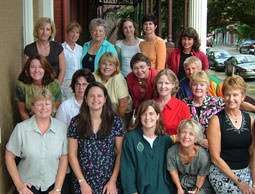
I’m blessed to have such wonderful gardening friends.

Last week, I got one of the best Christmas presents I could have asked for. I had lunch with three of my longest-running gardening friends. We spent three hours playing catch-up with one another, laughing hysterically and probably driving the waiter nuts with our complete lack of focus. 

I spent 10 years working with these women nearly everyday. Together we were professional gardeners—weeding, planting and watering other people’s gardens all day long. We had a lot of time to talk, getting to know about one another with dirty hands and smiling faces. They have become three of my most cherished friends and they make me laugh like no other group of women ever has.  We each have a completely different background and life, yet when we come together, it’s so simple and uncomplicated.  That, to me, is what being with good friends is all about.  

First, we talk about our families and old clients, then the conversation inevitably turns to gardening. One friend was pregnant when I met her, and her son is now nearly 14 years old. Her garden has grown side-by-side with her son. The other friend’s boy was 12 when we met and is now a first-year law student; her daughter a sophomore in college. She still gardens professionally, though her client list has been pared down considerably. And the youngest of us now owns an organic farm about an hour away.  When we met she lived in the city and farmed on a quarter acre. Now she has 35 acres, a green house and several high tunnels, with a processing facility in the works. She’s living her dream with passion and love, and I admire her so very much.

It’s amazing to see how our lives have changed over the years, but none of us have strayed far from the world of gardening, either as a volunteer or a job.  I don’t suspect we ever will. I think it’s in our bones. Just like a good friend.

« More Dirt on Gardening »

Categories
Homesteading

A Nutty Christmas Recipe

Hazelnuts
Photo by Cherie Langlois
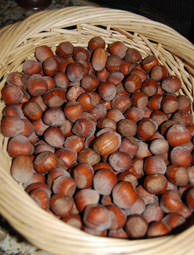
Hazelnuts, or filberts, grow well here in our area, so we’re planning to plant some trees on our farm this coming year.

I’ve nearly finished the National Geographic book Edible: An Illustrated Guide to the World’s Food Plants (2008), and so thought I’d regale you with a few more interesting facts from the last section I read. Serendipitously (don’t you just love that word?), the category of plant foods covered in this section included some delicious and healthy edibles bound to put on a short-lived appearance at many Christmas parties and feasts this week. (Indeed, one stars in the favorite holiday recipe I’ve shared below.)

I’m talking about nuts, the nutrient-dense seeds of hard-shelled fruits that have been valued as rich, versatile food sources since ancient times. Check this out:

  • The Brazil nut tree, indigenous to the South American rain forest, can grow to an impressive 150 feet in height and produces 2 to 4 pound fruits, which each contain 12 to 24 nuts.
  • Another South American native, the peanut ranks as one of the world’s leading food crops (and one of my favorite foods). Botanically classed as a legume, peanuts grow from above-ground plants whose flowers are pulled underground as the peanut develops.
  • The cashew is really weird: The comma-shaped nuts of this tropical tree grow from the bottom of the apple-like fruit, rather than on the inside.
  • The pecan tree, once an important food source for Native Americans, can reach 100 feet in height and produce 900 pounds of pecans a year.

Here’s a yummy holiday dish that features pecans and sweet potatoes (another of my favorite edibles) that  I’ll be making for my family’s Christmas dinner this year (with thanks to my mom’s friend Jane for the recipe).

Recipe: Mashed Sweet Potatoes with Pecans

Ingredients

  • 8 cups mashed cooked sweet potato (about 4 to 5 large potatoes peeled, cut up and boiled until soft)
  • 2 tsp. salt
  • 1/2 tsp. paprika
  • 4 T. half and half (or cream)
  • 2/3 cup butter
  • 1 cup brown sugar
  • About 3 cups pecan halves

Preparation
Mix together the first four ingredients in a large bowl and spread in a rectangular 12- by 8- by 2-inch casserole dish. Melt the butter and blend in the brown sugar. Drizzle the butter/sugar mixture over the sweet potatoes and stud the entire top with rows of pecan halves. Bake until bubbling, about 45 minutes at 350 degrees F.

Wishing you a Merry Christmas!
~ Cherie

« More Country Discovery »