Categories
Recipes

New York Cheesecake—Light

New York Cheesecake
Courtesy Stock.XCHNG

Ingredients

Crust

  • 1½ cups low-fat graham cracker crumbs
  • 1 T. sugar
  • 5 T. butter (or butter substitute), melted

Filling

  • 32 ounces American Neufchâtel cheese
  • 1½ cups sugar
  • 3/4 cup 1-percent milk
  • 4 eggs
  • 1 cup light sour cream
  • 1 T. vanilla extract
  • 1/4 cup all-purpose flour

Preparation

Crust
Preheat oven to 350 degrees F.

In a bowl, combine the graham cracker crumbs, sugar and melted butter. Mix with a fork until well combined. Press onto the bottom and up the sides of a lightly greased 9-inch springform pan. Bake for 6 to 8 minutes, until crust is golden. Set aside to cool.

Filling
In a large bowl, beat Neufchâtel cheese with an electric mixer. Gradually add sugar, and beat until smooth. Blend in milk, then add eggs one at a time, mixing after each addition. Mix in sour cream, vanilla and flour, and beat until smooth. Pour filling into prepared crust. Bake 1 hour. Turn the oven off, and let cake cool in oven with the door closed for 5 to 6 hours, to prevent cracking. Chill in refrigerator until ready to serve.

Serves 8.

Categories
Recipes

Cheesecake with Goat Cheese

Make goat cheese Cheesecake with help from Hobby Farms

Word has it that among milks from various goats, milk from Nigerian dwarf goats tastes the most like the more-familiar cows’ milk. The goat cheese used for this recipe was a deliciously mild, semi-hard cheese.

Ingredients

Crust

  • 1½ cups low-fat graham cracker crumbs
  • 1 T. sugar
  • 5 T. butter, melted

Filling

  • 16 ounces American Neufchâtel cheese
  • 1½ cups shredded/crumbled mild goat cheese
  • 2 T. fresh lemon juice
  • 2 tsp. grated lemon zest
  • 1½ tsp. vanilla extract
  • 1¼ cups sugar
  • 4 eggs

Preparation

Crust
Preheat oven to 350 degrees F.

In a bowl, combine the graham cracker crumbs, sugar and melted butter. Mix with a fork until well combined. Press onto the bottom and up the sides of a lightly greased 9-inch springform pan. Bake for 6 to 8 minutes, until crust is golden. Set aside to cool.

Filling
Combine cheeses, lemon juice, lemon zest and vanilla in a large bowl, and mix well with an electric mixer. Add sugar, about a third at a time, beating well after each addition. Add eggs one at a time, mixing well after each is added. Beat mixture until smooth. Pour into prepared crust and bake 50 to 60 minutes, until edges look set and golden and cake begins to pull away from sides of pan. (Center should still be soft.) Let cool to room temperature, then cover and refrigerate overnight.

Serves 8.

Tip: For a little extra oomph, drizzle with caramel, and sprinkle fruits and nuts on top.

Categories
Recipes

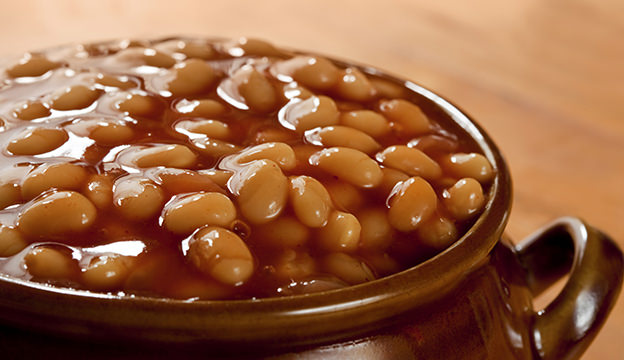
Boston Baked Beans

Although the preparation for this recipe can be time-consuming, there are those who say that if you haven’t tried the from-scratch version, you haven’t had real baked beans.

Ingredients

  • 1½ quarts water
  • 1 pound Navy beans
  • 1/4 pound salt pork
  • 2 tsp. salt
  • 1/3 cup firmly packed brown sugar
  • 1/4 cup molasses
  • 1 T. cider vinegar
  • 2 tsp. onion juice
  • 3/4 tsp. dry mustard
  • 2 tsp. horseradish
  • ketchup to taste

Preparation

Wash and sort beans. Heat water to boil in a large pan and add beans gradually, so boiling doesn’t stop. Boil beans 2 minutes, then remove from heat, cover and set aside to soak for 1 hour.

Remove rind from salt pork and cut pork into narrow strips. Add strips to saucepan of beans and return to heat. Bring to boil, then turn down heat immediately and simmer for 45 minutes, stirring once or twice. Remove from heat and drain beans, reserving the liquid.

Turn beans and pork strips into a greased 2-quart casserole dish or bean pot. Set aside while making sauce.

Preheat oven to 300 degrees F.

To make sauce, combine 2½ cups of the reserved bean liquid and remaining ingredients. Bring sauce to boil and pour over beans. Cover and bake about 21⁄2 hours, until beans are tender. Uncover and bake additional 30 minutes to brown the beans. Serve with a hearty bread and coleslaw.

Serves 8 to 10.

Categories
Recipes

Moose Bread

Moose Bread
Photo by Stephanie Gang

This recipe is said to have originated with the Micmac Indians, a Native American tribe indigenous to northeastern New England and Canada’s Atlantic provinces.

Ingredients

  • 1 cup molasses
  • 1 egg
  • 3 cups flour
  • 1½ tsp. baking soda
  • 1 cup sugar
  • 1 tsp. salt
  • 1 cup brown raisins

Preparation
Preheat oven to 350 degrees F.

Beat molasses and egg in a large bowl. In a separate bowl, combine flour, baking soda, sugar and salt. Add flour mixture to egg-molasses mixture, and mix well. Fold in raisins. Pour into greased 9-inch square baking dish and bake 45 minutes, until bread springs back when touched lightly in the middle.

Serves 9.

Categories
Recipes

Greek Beef Stew

Greek beef stew

Ingredients

  • 3 pounds lean stew beef, cut in 1-inch cubes (Lamb makes a nice substitute.)
  • 4 T. butter
  • 2 cups water
  • 12 small white onions, peeled (but left whole)
  • 1 6-ounce can tomato paste
  • 2 tsp. salt
  • 1/4 tsp. pepper
  • dash cinnamon
  • 6 medium carrots, cut in 1-inch pieces
  • 6 potatoes, peeled and quartered

Preparation
In a frying pan, brown meat in butter. Place browned meat into slow cooker or crock pot. Pour 1/2 cup of water into frying pan and heat over medium heat, scraping up browned bits with a fork. Add pan water to meat in crock pot, along with remaining water, onions, tomato paste and seasonings. Cover and set to medium-low for 4 to 6 hours, or until meat is almost tender. Turn up heat and add carrots and potatoes; cook 30 to 40 minutes more or until vegetables are tender.

Serves 4 to 6.

Categories
Recipes

Pumpkin Cheesecake

Pumpkin Cheesecake
Photo by Stephanie Staton

Ingredients

Crust

  • 1½ cups low-fat graham cracker crumbs
  • 1 T. sugar
  • 5 T. butter, melted

Filling

  • 1 cup low-fat cottage cheese
  • 3/4 cup part-skim ricotta cheese
  • 1/2 cup sugar
  • 1 tsp. ginger
  • 1/2 tsp. nutmeg
  • 1/2 tsp. cinnamon
  • 1/4 tsp. pumpkin pie spice
  • 1/8 tsp. salt
  • 1 tsp. vanilla extract
  • 3 eggs
  • 1¾ cups cooked, puréed pumpkin

Preparation

Crust
Preheat oven to 350 degrees F.

In a bowl, combine the graham cracker crumbs, sugar and melted butter. Mix with a fork until well combined. Press onto the bottom and up the sides of a lightly greased 9-inch springform pan. Bake for 6 to 8 minutes, until crust is golden. Set aside to cool.

Filling
In a large bowl, combine cheeses and mix well with an electric mixer. Add sugar, spices, salt and vanilla, and mix until smooth. Add eggs one at a time, beating well after each addition. (Reserve 1/4 cup of the batter to add later.) Add pumpkin to bowl and mix until blended. Pour pumpkin batter into prepared crust.

Drizzle the reserved batter in three circles over the pumpkin batter. Using a knife, draw a line through the batter from the center toward the edge, repeating all around the pan, spaced 2 to 3 inches apart.

Bake 50 minutes, until edges are golden. Remove from oven and cool to room temperature, then chill overnight before serving.

Serves 8.

Categories
News

Grants for Farm Solutions

Agriculture grants
Courtesy Stock.XCHNG
The USDA is providing funding for grants to be distributed through the Beginning Farmer and Rancher Development program to educate and support a new generation of farmers.

This fall, the USDA seems to be turning over a new sustainable leaf as it awards grants to myriad candidates trying to make the agriculture world a bit greener. In accordance with these eco-friendly initiatives, the USDA has taken steps overall to ensure that the future of American-grown food is robust, bountiful and secure.

The National Institute of Food and Agriculture, a subsidiary of the USDA, has been working through its own subsidiaries to spread the agricultural wealth, so to speak, by funding a bounty of farming initiatives that engage in sustainable practices and promote the future of farming. Through the Specialty Crop Research Initiative, NIFA granted $46 million to fund research aimed at securing the future of the $50 billion agriculture industry. SCRI funded projects address five focus areas:

  • improving crop characteristics through plant breeding, genetics and genomics
  • addressing crop threats from pests and diseases
  • advancing crop-production efficiency, productivity and profitability
  • developing new innovations and technologies
  • expanding efforts to improve food safety

In the wake of pesticide toxicities, farming waste and runoff, agricultural monopolies, and escalating challenges brought on by drought and abundant rainfall, these grants, made possible by the 2008 Farm Bill, provide a foundation for developing long-lasting solutions.

These broad guidelines propel much research considered conventionally useful, such as studies of bacterial threats to greenhouse food crops. Other grants are going toward less obvious sustainable solutions: So you’re an organic gardener and that plastic container you bought your basil in is getting you down? Join the club. The University of Illinois has received $1.5 million of the grant funds to research biodegradable planting containers. The study will explore the development of various types of planters using natural fibers and determine which are best suited for the market and the planet.

In addition to the grants provided through SCRI, NIFA is administering grants through the Beginner Farmer and Rancher Development Program, to nurture a new generation of successful farmers. The program was awarded $75 million under the 2008 Farm Bill to assist programs that provide farmers with access to credit, land, markets and technical assistance.

Eight of the 40 BFRDP grants were awarded to organizations belonging to The Natural Sustainable Agriculture Commission. NSAC, a network that advocates the expansion of environmentally sustainable federal legislation in agriculture, comprises groups that support small- to mid-sized farmers, protect natural resources, and promote healthy communities and food for everyone. Programs like the Northeast Organic Farming Association of New York are receiving the capital they need to continue training and mentoring beginning farmers.

The funding for these grants promotes the potential that sustainable agricultural practice can offer. It demonstrates a shift towards the acceptance of green solutions to the growing complications that modern agriculturists face.

Categories
Urban Farming

Moving Time

Moving boxes

Photo by Rick Gush

Moving these boxes—all 360 of them—down the cliff is going to be a real challenge.

I’d enjoy being able to recount the marvelous work that I’ve done in the garden this week, but it just ain’t so. Instead, I’ve been moving my office/workshop. (Well, I did at least manage to plant the fava beans this week. The little strip (pictured below) where I planted them is, in fact, my largest bed, so one can better understand the little handkerchiefs of cultivatable land I’ve created on the cliff face.)

Anyway, my office/workshop has been in its current location for 10 years now, so the process of packing everything up is sort of an archaeological exercise. I’ve been packing boxes and cleaning out the old place for the last month, and except for the computers, I’m mostly ready. I’ve counted 360 boxes and other wrapped stuff, all ready to move. Whew! 

Garden bed

Photo by Rick Gush

Despite all the work I’ve put into packing boxes for the move, I managed to find time to plant my fava beans.

The new place is full of charm. It’s a series of three rooms strung out behind a garage.  I’d estimate that it was last painted before the second world war, and there’s a fair amount of fixing up to do. The rear room was used as a wine-bottling and storage location by a local fellow and his brother. Along with a lot of cool old bottles, I’ve inherited some other winemaking equipment, so I’ll probably try my hand at winemaking the next abundant grape season.

There are windows running down the south side of the building, so even without lights, the place is pretty bright. Well, at least it’s bright now, since I’ve taken down all the ancient drapes that covered the windows. The ceilings are really high in two of the rooms, almost 10 feet tall. I like the frequency of tall ceilings here in Italy.  The ceilings in our home are also more than 9 feet high.

I did have to cut out some iron beams that supported a sort of second story built into the room I’m going to use as the office, but the upper floor was made with some ancient tongue and groove boards. I’m going to use those to make a nice wood floor for the office room. I’ve also inherited a truckload of mixed ceramic tiles, because the previous tenant was a builder back in the 60s. Some of the tiles are wonderfully wild, and I’m planning to tile the workshop room with an abstract pattern before I build the workbenches.  

There’s a little creek that runs right alongside the building, right underneath the windows. I like the loud gurgling that one can hear in all the rooms. I’ve already dropped a few tools into the creek while fixing up the windows, but I did manage to put a hook on the end of a long tube and reach down into the creek to retrieve them.  

My goal is to finish at least the one room I’ll use for my desk and computers by the end of the month, at which point I’ll round up my friend with the big truck and make the move. There are about 200 steps down to the street in the current location, so lugging the 360 boxes down to the street level will be a task.

I adore making shelves and stuff for my workshop. The opportunity to create a brand new workshop is intoxicating.  I’ve got a whole lot of lumber all ready to go and a delivery of some new plywood scheduled for next week.  It’ll be a fun winter.

Read more of Digging Italy »

Categories
Crops & Gardening

Post-frost Garden

Kohlrabi
Photo by Jessica Walliser
I’m keeping my kohlrabi in the garden as long as possible to avoid their time in the fridge.

We finally got a few hard frosts last week. Funny how it always seems to happen just after my pineapple sage starts to flower. I don’t know why I plant it every year, because it blooms so late. I wish a breeder would come up with a variety that begins to bloom a month or so in advance. It’s such a great plant for the butterfly/hummingbird garden, but only if it manages to bloom while they’re still around. Maybe next year.

I have been continuing to dig carrots up every few days. They are now nice and sweet and have been terrific additions to salads. I hope to keep them coming until Thanksgiving. I have yet to pick the Brussel’s sprouts, though, as I’m trying to let them get really sweet. It seems to take several weeks of really cold nights for that to happen. The tiny heads on them aren’t as big as they’ve been in previous years, but I think there will be enough on my three plants for a few meals. Sometimes they are better when they’re smaller anyway. 

And, believe it or not, I still have a small patch of potatoes to dig and kohlrabi to pick. I’m trying to extend things as long as possible without having to keep them in the pantry or fridge. So far so good. I also apparently managed to miss some onions when I pulled them up this summer. They have sent out new green shoots (which I’m using like scallions). I’ll probably end up pulling them for Thanksgiving dinner.  I get a lot of joy out of telling our guests what parts of the meal came fresh from the garden. I’m hoping it will be the taters, carrots, onions, sweet marjoram, sage, parsley and butternut squash. Someday I’d like to raise our own turkey, too—but my husband and our chickens might take issue with that! 

« More Dirt on Gardening »