April showers bring May flowers, or so the old saying goes. And while May flowers are delightful (and a welcome part of spring in snow-weary northern Wisconsin), June flowers, July flowers, August flowers and September flowers are equally welcome around the farm.
The truth is, flowers are enjoyable all times of year. Many different types of flowers, both wild and cultivated, grow around my farm and bloom in waves as the seasons shift. But you can never have too many flowers, and I have ambitions to plant more—many more.
Daylilies
They’re big, they’re beautiful. They come back year after year. And they don’t require much attention.
A few years ago, I bought a lovely hydrangea in full bloom from a local nursery. The giant clusters of flowers change color from white to pink as they age, and it’s a lovely centerpiece in my garden.
I want to purchase more hydrangeas this year and plant some in my orchard. I may even try growing one in a raised bed or large pot so I can control the soil pH and grow blue flowers.
Grape Hyacinths
They’re among the first flowers to sprout in the spring up here, and the burst of deep blue color they provide is refreshing coming off the dull grayscale of winter.
I once saw a photo of a walkway planted entirely with grape hyacinths. While I wouldn’t want to replicate the approach on a heavily-used path, the beauty of the expansive grape hyacinth planting left a vivid impression in my mind. Somewhere, somehow, I want to plant a similarly large group of grape hyacinths.
Crocuses
They also come up early in spring, providing a flash of color almost as soon as the snow melts. By the time winter ends, I’m ready to see signs of life and color. Planting more crocuses is high on my list.
Irises
They love water, so I’ve been planting them extensively in a low spot of my orchard where water often gathers after heavy rains. I find their foliage pretty even when they’re not in bloom, but when their flower buds shoot up and burst into bloom… beautiful!
My iris flowers are various shades of blue and purple. But many other colors are available, and I want to plant more for variety. A few dashes of yellow might look lovely amidst the blues and purples.
Feeling inspired to embark on a flower-planting mission of your own? You’ll need the right tools. A hand trowel, a digging shovel, and a rake are good places to start. But if you want to go all in, check out our list of 12 gardening tools you’ll be glad to have.
With newborns abounding this spring, now seems a good time to remind ourselves how important proper livestock umbilical care is. A direct link from mother to offspring when in the womb, the umbilicus, for a short period of time after birth, is also a direct link between environmental pathogens and the neonate’s insides.
No wonder the medical word for infection of the umbilicus is omphalitis, with the Greek root omphalos, which means “a central point or hub.” It’s also sometimes colloquially called navel ill. Here are some tips to ensure proper cleanliness and care of your newborn’s belly button, whether it be a calf, lamb, kid, piglet, cria or foal.
About the Umbilicus
When a calf or other livestock mammal is born, its connection to its mother via the umbilical cord is broken during passage through the birth canal. What’s in the cord are two umbilical arteries, an umbilical vein, and a tube called the urachus, which siphones fetal urine out of the body to be processed by the mother.
After birth, these structures quickly shrink and close. What’s left is a section of the umbilicus hanging from the abdomen of the newborn—typically about 5 to 15 centimeters in length in a calf.
For up to a week, this umbilicus is still wet. Wet and dangley things have a habit of acting like a sponge, soaking up bacteria and other pathogens in the environment. It’s easy to imagine an umbilicus as a super highway directly into the hub of the calf—a pathogen’s dream. For this reason, one of the most important things a hobby farmer can do in terms of neonatal care is dip the umbilicus in disinfectant to keep it clean and prevent pathogen transmission.
So what do you use as a dip and when do you do so? Let’s answer the second question first: A neonate’s umbilicus should be dipped as soon as possible.
Now, what dip to use? The gold standard is a 7-percent tincture of iodine. This not only has antimicrobial properties, but also acts as a drying agent. An umbilicus in livestock can take up to a week to dry out. The faster this process occurs, the better, since once dry, the umbilicus will shrivel and fall off, closing off access to the abdomen.
Other navel dip agents exist: 4-percent chlorhexidine is another commonly used dip and is perfectly fine to use. One warning: On dairy farms, you may be tempted to use teat dips as umbilical dips. Do not do this, as teat dips are not strong enough to help prevent infection of the umbilicus.
But is a single navel dip enough? If the calf or other neonate is housed in a clean and dry environment, then yes. But if housing is sub-optimal and the neonate is surrounded by wet and dirty substrate, a daily dip for the first few days is your best defense.
This illustrates that neonatal livestock umbilical health is a two-tiered process: a) dipping the umbilicus and b) keeping the environment as dry and clean as possible.
Treating Umbilicus Infection
What happens then if an umbilicus becomes infected? Signs to watch for include:
Chronically wet umbilicus past one week
Swollen umbilicus
Heat and pain around the area
Discharge/foul smell
If you notice any of these signs in your young livestock, contact your veterinarian immediately. If the infection is caught early and limited to the umbilical area, this can be relatively easy to treat with antimicrobials. However, if left too long, infection can spread to the neonate’s bloodstream, causing sepsis.
This is a much more serious body-wide infection with a guarded outcome.
A general understanding of umbilical care and a healthy respect for its importance are really all you need to help your young livestock get a good start on a healthy life.
With a little forethought and planning, establishing a sideline business of raising specialty poultry for meat can become a viable business option for your farm. Poultry raised for specialty markets includes a wide variety of fowl. The most marketed specialty poultry are chickens, turkeys, ducks and geese.
Other more exotic fowl include offerings such as guinea fowl and pheasants. Specialty poultry can also include quail and pigeons (or squab).
Identifying Your Niche
For the business to be profitable, you’ll need to identify the types of poultry that consumers in your geographic region will buy. Repeat advertising of your specialty fowl will let buyers know what you have and help generate interest in the specialty poultry you raise.
You’ll need to be realistic about the prices local consumers are willing to pay. Learning about your customers’ preferences may take some time, including beyond the first year of operation. For this reason, it’s often best to start small, test your market and slowly expand your operations as you identify what works for you.
One harsh reality that many specialty poultry producers face is that large retailers can sell turkeys and chickens so cheaply, especially during holidays, that raising and selling these birds locally can be challenging. This isn’t said to discourage but rather is one of the facts that must be considered when planning such a venture.
Fortunately, for specialty producers, many options exist beyond the scope of just chickens and turkeys. These include farm-raised duck, fattened holiday goose, and even farm-raised pheasants and guinea fowl. Over the past few decades, duck and goose consumption has dropped significantly in North America. That doesn’t mean that these markets are dead in the water, however.
If you can entice consumers in your area to try these specialty fowl (you may need to supply a few recipes), you’ll likely have repeat customers. The same goes for farm-raised guinea fowl and pheasant. Because there is often little competition from grocery chains for these types of poultry, they retain a more exotic view in most people’s minds. Along with this exotic and rare perception comes a much better chance of getting a more profitable price per bird.
Planning and budgeting for a repetitive advertising program that reaches local consumers, letting them know who you are, what you have, why your product is superior and where you are located will be some of the most important parts of your business plan.
Without advertising, sales rarely happen. Allocate funding in your annual operating budget for frequent, repeat advertising. It’ll return many times the cost and money spent.
Adherence to local health, zoning and livestock codes, while raising the poultry, are just a few of the regulations a specialty poultry meat producer will need to be concerned with. Slaughter, processing and distribution of the finished product falls under food and safety regulations overseen either by the United States Department of Agriculture or local state departments of agriculture or health.
Fortunately, federal regulations for small poultry meat growers are simple and straightforward. Small growers, with a little forethought and operational planning, should be able to meet the legal requirements. Make sure you read and fully understand the laws, both federal and state, regulating your operation, as part of your planning process.
Under a federal law known as the 1,000 Bird Exemption, small poultry farmers who produce poultry for market can slaughter and sell within their own states up to 1,000 birds per year exempt from federal oversight and inspection. Under this allowance, direct sales to the consumer must be made from the farm where the birds were slaughtered and processed. The birds can’t be transported to a farmers market or to a secondary retail vendor. (Growers selling through these venues must meet additional inspection requirements.)
For growers processing poultry less than the 1,000 bird exemption, specifics of state laws vary, however. Some states have very few additional restrictions, if the slaughter areas and methods used are sanitary. Other states have more stringent regulations that small producers must meet.
Some states allow open air (outdoor) slaughter and processing of market poultry, while other states forbid this practice. It often comes as a surprise to many people that California allows open-air processing while Kentucky forbids open-air slaughter and processing of market birds. Some states also have very specific codes regarding offal and slaughter waste disposal. Others have very little regulation on this issue.
When planning your operation, make sure you are aware of what is required in your area. Failure to comply could become cause for local health inspectors to shut down your business.
While the laws governing the slaughter and sale of the poultry aren’t extremely difficult to understand, there are some quirks in the federal 1,000-bird exemption statute. Each chicken or duck counts as one bird. However, each turkey or each goose counts as four birds, meaning you can legally slaughter, for sale, only 250 turkeys or 250 geese, under this law. The law also mandates that the birds be from one farm and not producer or farmer.
Therefore, if two people are farming together on the same farm, each one can’t raise and slaughter 1,000 birds. They can only slaughter 1,000 birds between them (or the legal equivalent, if raising turkeys or geese).
There is also another federal statute, commonly known as the 20,000 bird exemption, for growers who produce and slaughter more than 1,000 but no more than 20,000 birds per year. Under these guidelines, the facilities are subject to inspection, and laws of packaging, sales and distribution are more regulated.
For purposes of this article, we won’t deal with this issue. If you want to eventually enlarge your sales operation beyond 1,000 birds per year, just be aware of, understand and abide by this set of regulations.
Planning a specialty poultry meat production business can realistically be a 1- to 2-year process, before the first baby fowl are ever purchased. This doesn’t mean you can’t start sooner if you really want to get started, but start small and proceed slowly during the first year or two, as you experiment and test your market.
For the business to be long term and viable, advanced, solid planning of everything from housing to brooders and feeders to your home slaughter and processing facility—and even the design and look of your sales area—is extremely important. Don’t underestimate the value of solid, long-term planning for this multistaged business, for this is exactly what you’re building and developing.
Start with your end-product in mind. Do your research. Determine some different types of poultry that future buyers would be interested in. If raising heritage breeds, look for breeds that when dressed out meet what customers initially want and expect. As you develop your customer base, you can then start to entice them with more rare and special offerings.
Calculate feed consumption and choose breeds that have the best feed-to-meat conversion ratios. Be cognizant of how many weeks it will take for the breeds you’re raising to reach desirable market weight. Learn ahead of time if grain-based fattening, at the end of the growing period, is a normal process for the given breed.
Raising heritage breeds often takes several weeks longer for growth than modern production strains. Heritage breeds, overall, generally consume much more feed during the growing period than commercial meat strains.
Pasture raising poultry can significantly reduce your feed costs. Some heritage breeds of fowl were traditionally grain-fattened at least two weeks before slaughter. While a layer of fat isn’t considered the desirable commodity that it was many years ago, some heritage breeds, when dressed out, won’t look as pretty and plump without it. The extra feed consumed by many heritage breeds can become a significant expense to the grower.
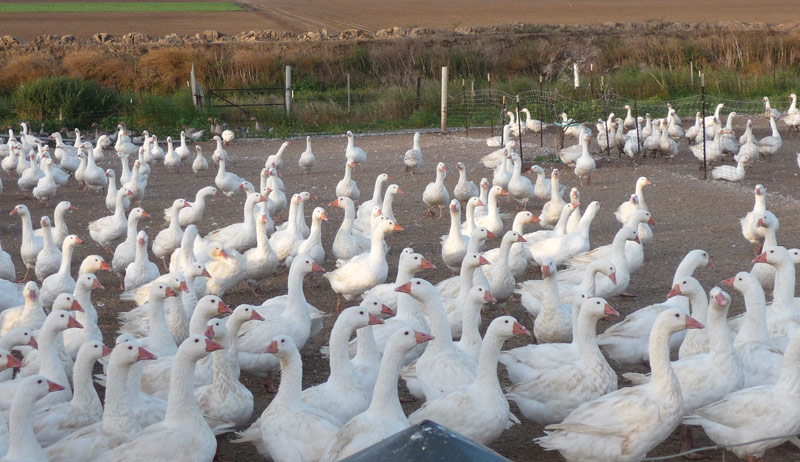
Crunch numbers time and again, as you plan. Make long-term plans how you can provide the necessary nutrition for your birds, in the most economical way, during the growing period. While they’ll often need some grain-based solids on the side, fowl such as geese can forage much of their own food in a pasture setting, after 5 or 6 weeks of age.
Turkeys, chickens and ducks also do well on pasture. Make sure that secure shelter and fencing are available to shield them from inclement weather and predators.
courtesy of John Metzer, Metzer Farms
Harvesting, Processing & Selling
Plan, design and build an area for the sanitary slaughter of fowl you’ve raised, or purchase a mobile unit, built for this purpose, even before you get your first batch of baby birds. Once the birds arrive, time and care will be needed to tend to them. Rushing to set up a slaughter and processing area at the same time may be more than you really want to deal with.
Such a unit should be set up for efficient killing, plucking, dressing, chilling and packaging of the fowl before the actual growing operation is ever started. Some sort of freezer units, for storage of the dressed carcasses, are also necessary.
Explore and calculate the costs of building your own processing area versus buying a trailer or mobile unit specially designed for this purpose. To the best of your ability, calculate the operating costs, plus possible repairs. Also, know how much depreciation, or allocated cost the tax code allows you to expense out each year for the different options you consider using.
(This also includes all equipment and housing used in the growing operations.)
In some regions, there are mobile processing units that can be rented. But in reality these units are currently rare in most areas of the country. Understanding these issues ahead of time will help your business be profitable.
Some growers are fortunate enough to be near a regional processor that is inspected under a federal or state inspection program and will slaughter and process poultry for a set price per bird. As an inspected and licensed facility, the birds they process can usually be sold at other locations, such as farmers markets or be delivered by you to your customers.
If this is the case, plans should be in place as to how are you going to transport the live birds to the processor and then bring the slaughtered, dressed birds back to your home or farm. During transit, have a way to keep the dressed fowl at temperatures mandated by law. Reserve slaughter dates well in advance, even before you order or hatch out your baby poultry.
Know how many weeks it will take for the growing fowl to reach marketable size, and plan accordingly.
Lastly, plan your sales area well in advance. If you already have a farm stand for produce sales, adding a freezer and poultry display is often a fairly simple process. If you don’t, where will you meet customers coming to pick up their purchases? Visual presentation, attractiveness and cleanliness of the actual area where the sale and delivery takes place makes an instant and lasting impression on the customer.
Raising specialty poultry for meat can be a wonderful side business, with many, varied options. With a little forethought and planning, it can be a business that will thrive for many years to come.
More Information
Find Out More
Here are two valuable on-line resources for growers wishing to do some long-term planning for their own on-farm, poultry processing set ups.
This program of the Oregon State University Center for Small Farms and Community Food Systems is based in Corvallis, Oregon. It currently has affiliates in 43 states.
There is nothing more forceful than water on the land. It goes where it wants under the undeniable force of gravity. Water flows downhill, following dip and curve to the lowest possible point. In the spring we can observe these forces at work in our farmland and communities. The snow melts, spring rains come and water moves.
Managing Water on the Farm
Water can upset the easy management of land.Too much water and you are unable to work in the fields around the farm. Tractors get stuck, feet get muddy and boots literally pull off in the paths, leaving you barefoot in the garden.
Then, at other times, there isn’t enough water to germinate crops and grow trees. Droughts and seasonal ebbs have a huge impact on crops as growing space weathers seasonal seas of relative moisture abundance.
10,000-Foot View
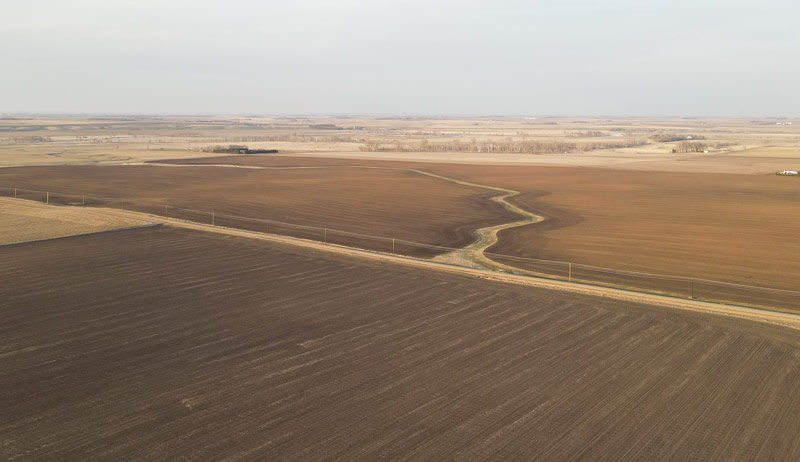
Key to managing water on the land, though, is getting a good look at things. We can turn obstacles into opportunities by observing the land from above. Using drone photography is one of the best ways to get started.
Zach Loeks
These aerial photos can show the way water moves across your land during the spring melt, helping you best target opportunities.Often, the way water moves now is how it always moved.You can almost see the forgotten stream and water meadows and wetlands during this season.
Putting a selection of these waterways back into the landscape can remedy some issues and create great production opportunities. You can potentially gain higher yield per acre using ecological design and demand for fresh and local produce (and the increase profit of direct marketing). Streams and wetlands were most likely removed to make room for production, but in an increasingly uncertain climate there is no reason we can’t return bodies of water to our farm and community landscape.
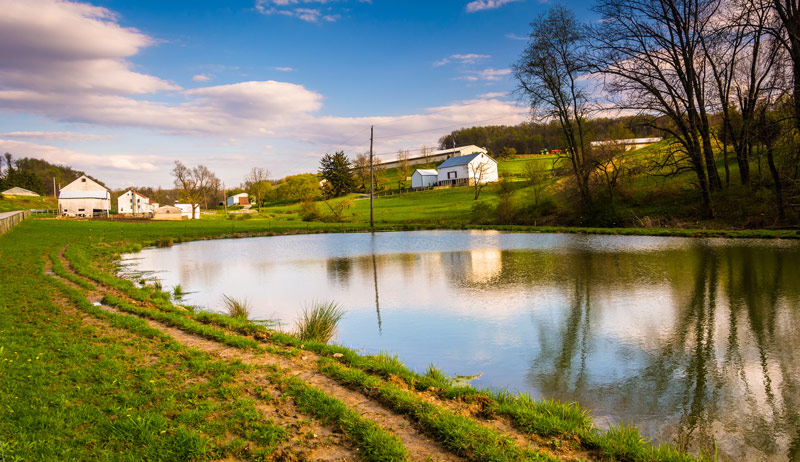
First, we are talking about building dugouts, sloughs, duck ponds, streams, ponds, ditches, etc.This will require excavation. You could use a backhoe, but an actual excavator will do a much better job.
Next, we want these water bodies to begin high—as high as we can see the land may hold water and store it there as potential energy.
Then, we want to pinpoint the next series of reservoirs down the slope. This applies to land that is mostly flat, too, as there are also many potential water reservoirs in low-lying land.Also, we need to see how these water bodies can connect with streams, spillways, water meadows or through soil seepage.
Finally, we must consider how we can make use of these water reservoirs. Water stored at height has potential for irrigation, for livestock watering, for washing and (when purified) for domestic use. Water can be accessed by pumping, by gravity or by controlled flood irrigation for gravity-fed watering troughs, drip tape irrigation, sprinkler usage and stock tanks.
Some dugouts will hit a spring and replenish easily. Others will rely on surface water to fill the reservoirs in spring; these will drain from use and natural loss over the summer. Still further, some will have groundwater recharge, refilling as we drain them based on a rate of recharge.
If your pond is fed by a perennial stream, a spring or ground water with a high rate of recharge (usually a lower point on the local landscape), then digging the pond, reinforcing the banks, and creating good access is the affordable way to go. However, if your pond is filled by seasonal runoff from snow melt or rain and/or you are pumping water from another source (like a distant river or lake) to fill it, then you need to make the pond impermeable to reduce water loss.
You can do this through the use of an impermeable membrane, like a rubber pond liner, or you can work by packing the clay using a technique called puddling.This can be done in clay soil, or you can line a pond with a clay material and pack this.Either way you are squeezing the air out of the clay and making it so it doesn’t have the porosity to allow water to penetrate and percolate, creating an impermeable earthen membrane.
Recently I asked my Instagram friends if they had any hobbies or skills they hoped to try or learn this year, and many of them replied with “pressure canning.” Pressure canning is a method of food preservation used for low acid foods with a pH above 4.6, such as vegetables canned in water, meat and fish.
Many people have a fear of pressure canning because of the risk of botulism, which can be present in foods that is not properly preserved. However, if the proper procedures are followed and safe recipes are used, then it is truly a very safe method of home food preservation.
Pressure Canning Pot
A pressure canning pot with lid and rack that is approved for home canning (All American or Presto brands are recommended). See “notes” for more info.
Canning Jars
Standard canning jars made for home canning such as Ball and Kerr brands. The National Center for Home Food Preservation recommends using a brand new lid each time you can. However, rings and jars can be reused safely if they are not flawed in any way.
Jar lifters are made specifically for lifting jars in and out of the canner. They have a rubber or silicone coating over the part that grasps the jars to keep them from slipping as you maneuver them in and out of the canner.
Ladle and Funnel
A ladle, preferably one with a pour spout, makes for less mess when filling jars with brines, juices and other food. A funnel helps keep the counters a bit cleaner.
Trusted Recipes
Always preserve with safe recipes that are written based on tested USDA-approved methods for home food preservation. When pressure canning, higher altitudes will require an increase in the pressure. Reference the altitude adjustment charts included in your recipe books.
When pressure canning, if the pressure ever drops below the required level, turn the heat back up to the target pressure and reset the timer for the full processing time. Even if the pressure drops at the end of the directed time, you must start completely over, get to the target pressure once again and reprocess for full time per the recipe.
When using pressure canners with dial gauges, remember to check the gauge annually for accuracy. Dial gauges can usually be checked at the local hardware store, or local extension office. Otherwise, you can send the gauge to the manufacturer for an inspection (varies by brand). Weighted gauges do not need to be tested.
Before pressure canning, also check the control valve or petcock and steam pressure gauge to make sure the steam can vent and clean it out if need be. Additionally, always remember to inspect the rubber seal to check for damage, stretching or shrinkage. Replace if need be.
Before storing away: Always wash off the jars after they have completely cooled and sealed, remove the rings, and be sure to label and date them.
Pick-your-own (PYO)/ u-pick farms have been around since the days of sharecropping. Recent education and events have led to an increase in popularity for both farmers looking to begin PYO farms and clients looking to pick.
As awareness of pesticide-infused crops grows, people are searching out ways to eat clean. As the boho movement grows, so does a shared interest in connecting to the Earth. And as the hobby farming/homesteading era continues stronger than ever (thanks in no small part to COVID’s lasting impact) people are looking for ways to make money off of their land.
For these reasons and more, it’s a great time for hobby farmers to consider starting a PYU operation.
A Study in Success
Megan Nebauer and her dad, Jack Nebauer, are the owners at Pure Land Farms in McKinney, Texas. The pair shared with us some successful strategies they’ve put in practice to make their operation profitable year round, despite only being open three to four months out of the year.
Megan, in fact, plans to combine her experiences, best tips and strategies into a book for the PYO market available fall 2023.
Pure Land Farms began operating on 28 acres in 2012, relying heavily on selling their products at farmers markets. Megan (a scientist) and Jack (an engineer) took on farming as an escape from their corporate jobs with the goal of growing great food and educating their community on local regenerative agriculture.
They quickly learned that following the farmers market model would take a very long time to meet their monetary goals. Weather, pick timing and customer loyalty are all factors that make farmers markets finicky. Switching gears, they moved to a u-pick model and quickly profited three to four times the amount they were making at farmers markets.
Megan believes this industry is much more successful because it is more adaptable, engaging and sought after by the public. “People love u-pick farms. If they are just looking for clean fruits and vegetables, they’ll go to Whole Foods. People come because they want to know the farmer and see where their food comes from,” explains Megan.
As for adaptability, if it rains Megan can quickly open more spots for more picking opportunities on the next dry day. At a farmers market, people don’t attend in rain and you are stuck with a load of picked and ready fruit and vegetables that won’t make it another week. All profit is too easily lost.
Farmers markets also require the labor of picking and traveling. Time is money, and when clients both travel to the farm and pick their own products, two major chores get eliminated, providing more opportunity for profits.
Grow Great Food
When asked where the first dollar should get invested on a PYO farm, Megan immediately replies, “Grow great food. No marketing tactic or gimmick will matter if the food is not great quality.”
At Pure Land you won’t see elaborate walk-in coolers, buildings or hay rides. They are first and foremost a farm, and the simplicity of that is appealing to their clients. The checkout table is a picnic table, the bathrooms are portable and the staff is just Megan, Jack and a couple of cashiers.
Keeping the overhead low is not just a strategy for a higher profit. It’s also a strategy for marketing.
Conducting surveys and having conversations are two very real ways Megan stays connected with her clients. Being in touch with their desires and needs keeps her focused and intentional about what gets planted, what days work for picking and how she can best serve them. Being present and meeting visitors are also ways she can continue to educate pickers on the what/how/why of the crops they pick.
The No. 1 reason those surveyed come to the farm is because they can meet the farmer and learn about their food. These are qualities that continually rank above even the organic methods she practices, the low cost of her products and her location.
Technology Tactics
Megan also relies heavily on her software programs. Through trial and error, she has dialed in her technology. Her checkout software is so comprehensive she can determine the square foot monetary value of each crop she grows, thus giving her data reflective of what she should grow more and less of.
She also uses a booking program online for participants to pre-buy their limited picking spots. Through this software she can open as many spots as she wants each day. If the weather changes, she can quickly adjust. Participants can handle all reservations without ever having to communicate with a staff member of Pure Land Farms.
For every crop they grow, there is a blog article loaded on their website of what it is; how to pick it, clean it and prepare it; and a QR code advertised on each row. And of course she utilizes social media every day April through July—peak u-pick season.
Another powerful way she connects with clients and educates the public is through April field trips. When the farm is not yet open, schools and community groups can book a field trip to the farm ($12 per person) for a tour and lesson on seasons, bug life cycles and growing food. They all leave with a potted seedling to begin their own growing journeys.
Return trips double the value of this offering. “Nearly every single kid on a field trip revisits the farm when it opens for picking.” Megan explains.
Pure Land Farms grows blackberries, onions, peppers, garlic, squash, sunflowers, tomatoes, cucumbers, beets and melons, and is open mid-May through July.
If you are looking for helpful strategies for starting your own PYO Farm, good luck! Education in this area is difficult to research, as Megan learned firsthand. She is currently working with a publishing company to complete her book focused on business strategies for this industry. You can expect to see the book available in the Fall of 2023.
“Had you asked me five years ago, I never would have imagined we would be owners of a cut flower farm,” says Melissa Brown, who runs Bee Merry Farm in Washington’s Skagit Valley alongside her husband, Jeff, who’s also a hobby beekeeper.
The roots of Bee Merry Farm came about through necessity. After moving to a new property that included 4 of its 5 acres zoned for agriculture, Brown knew they would need to work the land to maintain its zoning. So she planted 10 initial dahlia plants that soon bloomed to over 100 in their first season.
“Basically, what started as a hobby became something to help retain our farmland zoning, which ended up becoming something I absolutely love,” reflects Brown.
Taking a moment out from the flower fields, we spoke to Brown about the benefits of her land’s soil and the enduring appeal of dahlias. We also got into the potential of flowers as an artistic outlet.
“We are really fortunate to live in the heart of Skagit Valley’s farmland, which has some of the best soil due to a long history of flooding and nutrient-rich soils being deposited along the valley floor,” says Brown. “With dikes now preventing that type of flooding, we get to reap the benefits of fantastic soil with minimal worry about flooding—at least most of the time!”
Brown also says that beyond adding compost, she doesn’t need to tinker with the soil too much to successfully grow her blooms.
Brown suggests that the recent rise in popularity of dahlias is due to a number of factors, including “social media, an increased interest in gardening during the pandemic, and a rise in small farms selling dahlias.”
The abundant nature of dahlias has also helped their cause. “They produce blooms all summer long and multiply tubers that can be split and shared,” says Brown. “It’s rewarding, and a bit addictive, to grow them–with a little bit of care, they will bloom their hearts out and then give you more tubers so you can do it all over again the following season.”
“Over the last few seasons, the interest in procuring dahlia tubers has reached an almost competitive level,” explains Brown, as she considers the demand for dahlias. “Unfortunately, many of the dahlias sold in big-box stores are machine-harvested, imported and often diseased (commonly with crown or leafy gall, neither of which is curable).”
By comparison, Brown says, smaller farms are able to “take measures to ensure their plants are healthy, which typically means they are tended by hand.”
She adds that this extra level of care and attention means it can take a long time to build up enough stock to meet the demands of buyers. “This is why, when dahlia tuber sales go live on a seller’s website, they are often sold out within minutes. Coveted varieties are often sold out within seconds. There just isn’t enough to go around right now—[but] a collective desire to grow more flowers is a beautiful problem to have.”
While dahlias play a crucial role at Bee Merry Farm, some of their supporting blooms are just as eye-catching and beneficial.
“Aside from dahlias, other flowers I love to grow include sweet peas, cosmos, zinnias and nasturtiums,” says Brown. “It took me a few years to get the hang of growing sweet peas, but their nostalgic scent is well worth the effort of learning their ways.”
“Cosmos and zinnias are incredibly easy to grow and come in a variety of colors,” she adds. “Cosmos in particular add a nice whimsy to floral arrangements. As for nasturtiums, I grow them simply because I remember my mom growing them when I was a child. I was so fascinated by their leaves in particular.”
“One of the most surprising realizations I’ve made is that flowers can be an incredible artistic outlet,” says Brown, who balances her flower farming with a role as a teacher. “They are a beautiful medium for exploring textures and colors.”
Brown explains she’s fond of creating flower art through flatlays, which depict her flowers from directly above (and are regularly posted on her Instagram account). “I started creating flatlays as a way to say goodbye to flowers—experimenting with spent blooms before they hit the compost pile—as well as to give them permanence through photography.”
After reading Susan Cain’s book Bittersweet last summer, Brown adds that she learned how “some people are more apt to experience intense feelings of longing, being deeply moved by things that are fleeting in life.”
It’s a philosophy Brown has successfully translated to her own flower farming and artistic inclinations. “Accepting that the cyclical nature of growing flowers is both bitter and sweet has made the process of creating flatlays a meaningful outlet for me.”
My daughter, Sarah, and her husband, David, and their two children live across the hollow from me and my wife, Elaine. They have a totally different vision of how to raise chickens than Elaine and I do. And Sarah’s concept of keeping chickens versus ours basically covers many of the decisions people have when making plans to start chicken-keeping.
Let’s look at how those plans differ so that you can determine for yourself which chicken-keeping approach to take.
Heritage vs. Industrial
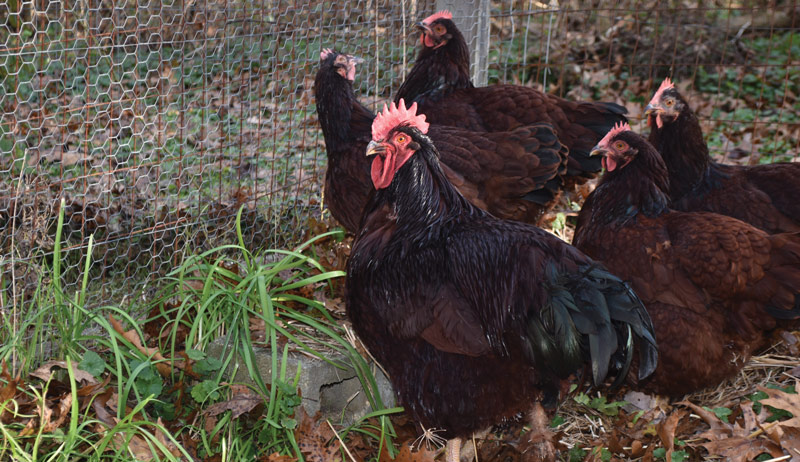
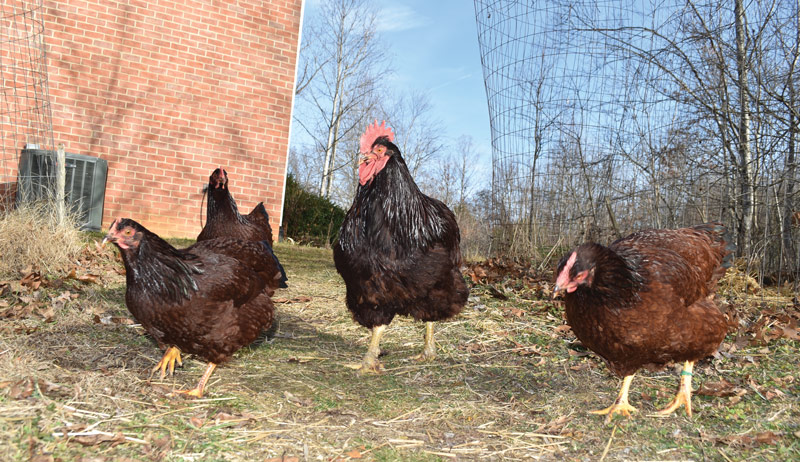
When Elaine and I first began raising chickens, we went the standard “buy them at the feed-supply store” route. But after four years of industrial birds and doing a great deal of research, we decided to rear heritage Rhode Island Reds. Our industrial RIRs never once tried to brood eggs, and the roosters, without exception, were aggressive toward us.
When we learned that many of the traditional chicken breeds were in danger of disappearing and that industrial hens had the broody trait bred out of them, our path was clear.
So we ordered heritage RIR chicks in 2014 and have ever since depended on our hens and roosters to do what comes naturally and instinctively to them: add new members to our flock. We also have added other heritage RIR chicks from breeders and friends that raise them to create genetic diversity within our two runs.
Every spring, we look forward to when one or two of our hens go broody, and 21 days later, we never grow tired of hearing the first peeps emitting from the nesting box. Of course, our excitement peaks when we glimpse several fuzzy heads emerging from beneath the mother hen.
Sarah’s approach is entirely different, and she is just as pleased with her game plan as we are with ours. In early spring every year, she orders six to eight pullets of some hybrid breed, usually RIRs or White Leghorns. Within a short time, the birds, especially the Leghorns, are producing huge numbers of eggs.
Sarah expects to gather a half dozen or more every day until the birds begin to molt come autumn and egg laying drastically slows.
Then, David butchers the entire flock, and the couple freezes the meat for the winter to come. And throughout the winter, Sarah, David and their boys enjoy a variety of egg and chicken entrees. Sarah is quite pleased with the situation, and David is glad to be relieved of the tasks of cleaning the coop, traveling to the feed-supply store to purchase feed and straw, etc.
Elaine and I aren’t fans of the free-ranging chicken phenomenon when it comes to making our chicken-keeping plans. We live on 38 rural, wooded acres in southwest Virginia. By my count, 16 different wild predators commonly prowl and fly in our area: four species of hawks, three species of owls, bears, coyotes, bobcats, red and gray foxes, skunks, opossums, weasels and minks.
Add in rogue dogs and stray cats, and the danger is apparent.
On the 1-mile-long rural road we live on, a half dozen of our neighbors raise chickens. At some point, every one of them has suffered the loss of birds. That mortality ranges from two or three on average being lost annually to an entire flock being wiped out.
The thought of one or more of our birds having their throats ripped apart deeply disturbs us.
However, we recognize the value of letting our chickens prowl our yard for bugs and vegetation. Reds are natural foragers, and when I approach them and say, “Let’s go out,” they enthusiastically line up at the door and truly relish their time browsing. But Elaine and I always supervise this activity and keep a lookout for predators.
Our usual approach is to release our birds when we conduct the weekly cleaning of their runs. During the fall and winter, we also let our chooks forage inside our fenced garden, in the process eliminating many weeds and overwintering insects. The rest of the year, the chickens’ bailiwick is our backyard.
At other times, Elaine will also let our chickens forage when I am cutting wood or doing some other outside task. But, again, she supervises the fowl full time. I am proud to state that we have never lost a bird to a predator!
Sarah, however, is an enthusiastic advocate of free-ranging. She’s a schoolteacher, so summers mean quite a bit of home time. She frequently lets her birds out of their run, especially during the cool of the evening. Sarah is also aware of the health benefits to her chickens due to them being able to feast on protein-rich bugs and plants such as clover, dandelions and broadleaf plantain, just to name a few.
And the additional health benefits go to her family when they eat the eggs and meat from those chooks.
She is also cognizant of the dangers local predators present and has accepted the high likelihood of losing one or two birds every year. Indeed, during the summer especially, I expect to receive a phone call from her asking me to come quick as her husband is at work and a (insert hawk, fox, coyote or other predator) is after the chickens!
As soon as our chickens reach about 6 months of age, Elaine and I position leg bands on them and give each individual a name. Elaine provides appellations for the hens, and she usually selects some movie, television show or other cultural phenomenon as the source for her inspiration.
For example, we’ve had hens named Thelma, Louise, Lucy and Ethyl. Others have been christened after the females on popular television shows such as Mad Men and Downton Abbey.
We both found the circumstance amusing when the hen Daisy, named after the servant cook on the latter show, was the alpha hen of her flock. And it was ironic that the hen called Joan was the dominant hen in her setting, just like the same-named character on Mad Men.
But there is another pleasurable reason we give first names to our birds. We’ve found that chickens are very much individuals, and they possess certain traits that distinguish them. For instance, Charlotte, who is named after a Sex and the City character, goes broody every year late in the spring and is a ferocious protector of her chicks.
But when she isn’t brooding eggs or nurturing chicks, she is a pure pacifist, never quarreling with the other hens or trying to move up in the pecking order. She simply doesn’t have an interest in henhouse drama that is so much a part of raising chickens.
On the other hand, Joan was like having another rooster inside the run. From the time she was an 8-month-old pullet, she was the alpha female inside her run. No other hen dared mess with her unless they wanted a sound wing thrashing. And when the hens were foraging outside the run, Joan was constantly scanning the sky and nearby woods as she watched for predators.
Elaine and I also have a practical reason for naming our birds and placing leg bands on them. We can determine which ones are the best egg-layers, note the health history of various birds and make sound decisions on which birds to cull come fall. Obviously, a quality layer with no history of health issues and a perennial broody such as Charlotte is deserving of living another year.
Whereas a 4-year-old quarrelsome hen that isn’t a good layer is a solid bet for the slow cooker.
Conversely, Sarah thinks our naming birds is silly and definitely not for her. Her hens only live a year or so anyway before they are harvested. Our daughter’s approach is simple and works well for her family, whereas Elaine and I believe our philosophy is best for us.
The Role of Roosters
Similarly, Elaine and I have a different concept of what a rooster should bring to a flock as compared to Sarah. To us, a run without a rooster lacks charm and a leader.
A wonderful part of country living is hearing a rooster sound off before daylight, thus officially confirming that a new day will soon begin and that he is just the male to usher in this amazing event.
The leadership skills of a good rooster within a run are very much underrated. We’ve had coops that have possessed a male sage and ones that haven’t, and the difference is obvious. When a rooster is present, hen squabbles are fewer and the ones that do occur end quickly because of his presence.
The sounds of a roo vocalizing the food cluck, also known as tidbitting, is a joy as well, as he dispenses treats such as a tasty bug to his harem. Watching all the hens inside a run scud to the rooster’s side is a fascinating experience. And hearing a rooster give the alarm note if he espies an avian or a terrestrial predator is reason enough to keep a male in residence.
Of course, the obvious fact that there can be no chicks without a virile male servicing his hens is crucial when building a homegrown flock. Every spring, we make sure that our most randy rooster resides within the run that possesses the hens that have gone broody in the past. Elaine and I don’t want to risk that a hen is sitting on unfertilized eggs. And when it comes to a creature being watchful of his domain, a rooster ranks a respectable second to that of the family dog at sounding off when an unwanted stranger appears or even begins to venture down a driveway.
While we desire a roo for all these things and more, Sarah only wants a rooster for protection of her hens while they’re free-ranging—which is reason enough to possess one. As someone who has lost quite a few hens to predators, Sarah has witnessed the difference an ever-vigilant male can make.
A great rooster’s constant watchfulness will mean that at the first sound or sight of a predator, he’ll screech an alarm note that will send every hen within hearing distance toward thick cover.
Our system of chicken raising works well for Elaine and me, and Sarah and David have a plan that meets their family’s needs as well. Go with whichever of these two plans best suits your chicken-keeping needs or perhaps borrow aspects from both approaches.
This article originally appeared in the March/April 2023 issue of Hobby Farms magazine.
My friend Alan and I were discussing our financial situations—griping might be a better term—and I noted that things were especially difficult with our poultry farm not yet producing income this year. “Oh, no!” Alan replied with concern. “Why no farm production?”
I imagined that Alan quite possibly envisioned raccoons running off with our layers or some other barnyard catastrophe.
Or perhaps he thought it might be the weather. It’s currently April 25 and blizzarding outside (hardly the weather to snuggle down on a nest to lay eggs). The truth, however, is much more mundane yet also quite insightful about the life of a laying hen.
Let There Be Light
A chicken’s reproductive cycle is extremely photosensitive. In other words, it reacts to light. A hen needs a minimum of 14 hours of consistent daylight to jumpstart her egg production, with 16 hours of light providing optimum conditions for egg laying. This ingrained behavior ensures species survival by making late spring and early summer the optimal time for hatching.
Prolonged periods of continual light are typically accompanied by the warmth necessary for chicks to thrive and grow. As winter approaches, both daylight and temperatures decrease, creating chillier conditions in which chicks flounder and fail.
What does optimum chick survival season have to do with egg laying? Everything, actually.
Avian physiology modified itself over the millennia to make a hen’s reproductive system go dormant during the colder months, when hatchlings cannot survive. Since there’s no need for species propagation during this time of year, there’s no need for eggs, which are essentially oval nurturing pods that house infant poultry until they are ready for release into the world.
It just so happened that someone somewhere in history discovered the tasty content inside the shell, turning eggs into a staple in the human diet.
Winter Break
I’m sure Alan wondered why I simply didn’t install artificial lights inside my coops to create the light necessary to keep hens producing. While this is popular with backyard and hobby-farm owners, there is a huge downside to this practice.
It negatively impacts a laying hen’s health.
The best layers aren’t cover models for Chickens Magazine. The most productive hens look like they’ve been through the ringer: scruffy, with droopy or broken feathers and, quite possibly, bald patches. This is because hens draw on the protein and calcium from their own bodies to provide the building blocks necessary for successful egg production.
Without their natural winter dormancy period, chickens literally wear themselves out years faster than if they were given the low-light months to recover and rejuvenate from the expectation to lay eggs.
So when can I expect the first egg of the year? Any day now, I assume.
Our Alexa announces when it’s time to lock up the coops a half hour before sunset, and lately those announcements are creeping up on 8 p.m. With dawn breaking at about 6:45 a.m., we’re drawing closer to that 14-hour sweet spot that will trigger our girls’ egg laying. We’re not there yet, but just in case I’ve started checking the nest boxes.
After all, chickens didn’t read the manual to learn that they’re not supposed to lay the day the calendar winter is over.
As for Alan, he learned something new today. “It just goes to show you what I know about farming or raising chickens,” he quipped. That’s all right, Alan. I’m more than happy to help you learn what you need to start your own backyard flock.
Sweet corn is one of the universal tastes of the summer season. Whether you’re raising it in your garden to feed your family, generate additional income or as a thank you to landlords or helpful neighbors, sweet corn is more than just a tasty treat.
Advantages aside, there is more to raising sweet corn than meets the eye, or in this case, ear. Choosing the best variety to meet your needs along with consumer education play important roles.
Family Tradition
Andy and Jenna LaFevor have been raising sweet corn on their family’s Tennessee Century Farm in the southern tip of Bledsoe County for the past five years, a tradition passed down to them by Jenna’s uncle, Lynn Johnson. Lynn and his wife, Sherry, first started raising sweet corn to sell for contributions to their daughter Elle’s future college fund.
When she was old enough to help, Elle began to take part, too. Today, the LaFevors carry on the tradition with their daughter, Landry.
Charlie Barker, of Dunlap, Tennessee, has raised sweet corn for decades. Much like the LaFevors, he chose to do so for “kid money.” With help from an extension vegetable specialist and a seed company representative, these Sequatchie Valley farmers offered their advice on selecting the best variety to meet your needs.
courtesy of Jenna LaFevor
Choosing a Variety
While in the past both farm families have raised other varieties, each now raise Obsession and Temptation. These are bicolor varieties, with Obsession being an 80-day super sweet corn and Temptation, a 70-day sugar-enhanced variety. Both are popular with their customers and less labor-intensive than other varieties they have tried in the past.
Obsession, for example, has a lower stalk that is easier to pick and less likely to be blown over by the wind.
Of course, there are other equally popular varieties. Faithway Alliance works to supply Tennessee Farmers Cooperatives, including those in Bledsoe and Sequatchie counties, with feed, seed and other supplies.
Chris Bowman, a lawn and garden category lead with the company, weighs in. “More and more customers are buying Ambrosia,” he says. “It’s got a good, sweet flavor to it.”
Peaches and Cream and Silver Queen are other popular varieties for the area. All are hybrid varieties, but while Ambrosia and Peaches and Cream are bicolor, Silver Queen is a white corn. Bowman feels that these varieties are popular because of their flavor and because of long-standing area traditions that often reflect a maturity date that allows growers to process their corn before the fall season.
Regardless of the variety you ultimately choose to raise, Annette Wszelaki, professor and commercial vegetable extension specialist in the department of plant sciences at the University of Tennessee, Knoxville, recommends doing your research. She feels you should ultimately base your decision on multiple factors including color of the kernels, maturity date, ease of raising, quality and storage life.
“There are great varieties of every color,” she says. “Bicolor varieties have become very popular, most likely because they are the best of both worlds.”
Further, planting varieties with varying maturity dates staggers the harvest across the season. This can also be achieved by succession planting of the same variety every two weeks. However, the Barker and LaFevor families take a slightly different approach and aim for a very targeted season.
Their goal is to have corn available for customers around the July 4th holiday, a sort of one-and-done that works well around their other farming enterprises.
If you seek to choose your sweet corn variety based on factors beyond color, flavor, maturity date, etc., you’ll need to examine such considerations as whether to choose a genetically modified organism (GMO) or a non-GMO.
GMO sweet corn was created to help with weed and pest management.
“Roundup Ready varieties can be sprayed over the top with the herbicide glyphosate, which can reduce weeds in the crop,” Wszelaki says. “Similarly, choosing Bt corn varieties can reduce the number of insecticide sprays required in a given year for European corn borer and corn earworm. Bt stands for Bacillus thuringiensis, which is a naturally occurring soil bacterium. Bt produces a very selective protein that crystallizes in the gut of those lepidopteran pests.”
The protein doesn’t harm insects in other orders and is safe for human consumption. Many Bt products are available for organic producers to use. However, Wszelaki advises that while organic producers do have several formulations of these sprays available to them for insect management, they can’t use GMOs, as the use of GMOs doesn’t comply with the USDA organic certification standards.
Sweet corn texture, sugar content and ease of growing are also dependent on their genetics. “Normal sugary varieties have the su gene,” Wszelaki says. “These varieties were the standard sweet corn for many years. Su varieties have the lowest sugar content and need to be eaten soon after harvest, preferably the same day they are harvested. As time passes, the sugar in these varieties is quickly converted into starch making them chewy and less tender, instead of creamy.”
Sugar-enhanced varieties have the se gene. “These varieties are sweeter than the su types and their sugar turns into starch more slowly, which means they will maintain their creamy texture and store for two to four days, if refrigerated,” Wszelaki says.
Peaches and Cream is one of the most famous se varieties, but there are sweeter varieties available. The super sweet varieties have the sh2 gene. These varieties are two to three times sweeter than su and se and have a slow sugar-to-starch conversion rate so that corn, if stored properly, will remain sweet for up to 10 days after harvest. “However, sh2 types can be less tender, crispier to eat and harder to grow than other types,” Wszelaki says.
Synergistic varieties also exist that combine the genetics of su, se and sh2 genotypes. These varieties are high in sugar levels, store well and have a creamy texture.
Wszelaki advises that when growing different varieties, producers should isolate those with different genotypes from one another. Otherwise, they can cross-pollinate, and the quality of corn will be diminished.
“It’s recommended to isolate sh2 types from su and se types by a distance of at least 300 feet or a space in silking date of at least 12 days to prevent cross-pollination,” she says. “Regardless of what you eventually choose, one of your top considerations is going to be a variety that tastes great and keeps your customers coming back.”
courtesy of Annette Wszelaki
Examining Organic
Delving deeper still, growers of certified organic corn cannot use GMO varieties and must also meet other specific criteria. “Corn must be grown on a field where no prohibited substances (i.e., synthetic fertilizers/pesticides) have been applied for at least three years and growers need to go through a certification process,” Wszelaki says.
To prevent cross-pollination, producers growing both organic and nonorganic corn would also need to raise these varieties at least 300 feet apart. While there are workarounds, fertilizer, insect and weed control are all areas in which an organic producer may struggle. It’s important to understand that while organic corn can bring a higher premium in the market the corn is often not as pristine looking as conventional corn due to high insect pressure.
Bowman further advises that to meet certified organic standards, certified organic seed must be used. While the farmer’s cooperatives he serves don’t sell certified organic seed in large quantities, this type of seed is offered in small packages off the rack. Some growers, he said, choose to forego the certified organic route and instead simply choose to raise corn as close to organic standards as possible. These producers don’t advertise as certified organic but rather make choices in the raising of the corn that aligns as closely as possible with organic values.
Regardless of the corn variety you eventually choose to raise, chances are good that outside of feeding your family you may choose to sell or give some of it away. Variety notwithstanding, Andy LaFevor says that consumers should look for corn that has a really green husk and that the ear should “fill up your hand” when you hold it. Questions of quality can also be addressed by shucking an ear open to make sure it is pollinated to the top with full kernels.
Barker further advises checking for mature, good-sized ears.
In the end, raising sweet corn can be a fulfilling endeavor. From growing a product that can teach your children such valuable life skills as counting money, self-confidence, customer service, advertising skills and more to the ability to eat and provide others with a tasty treat, raising sweet corn truly offers all of these and more.
This article originally appeared in the March/April 2023 issue of Hobby Farms magazine.