Categories
Farm & Garden

Fuzzy Black Caterpillars: How to Identify Common Species

Have you spotted fuzzy black caterpillars in your yard or crossing a trail? Late summer through fall is peak caterpillar season in much of North America, and several species fit the “black and fuzzy” description. Caterpillar identification is key and helps you decide whether to simply admire it or take action in the garden.

So, what are the black fuzzy caterpillars you’ve been seeing around, especially if you have a dedicated caterpillar garden? Well, that depends on where you live.

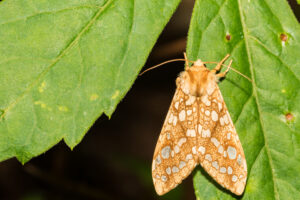
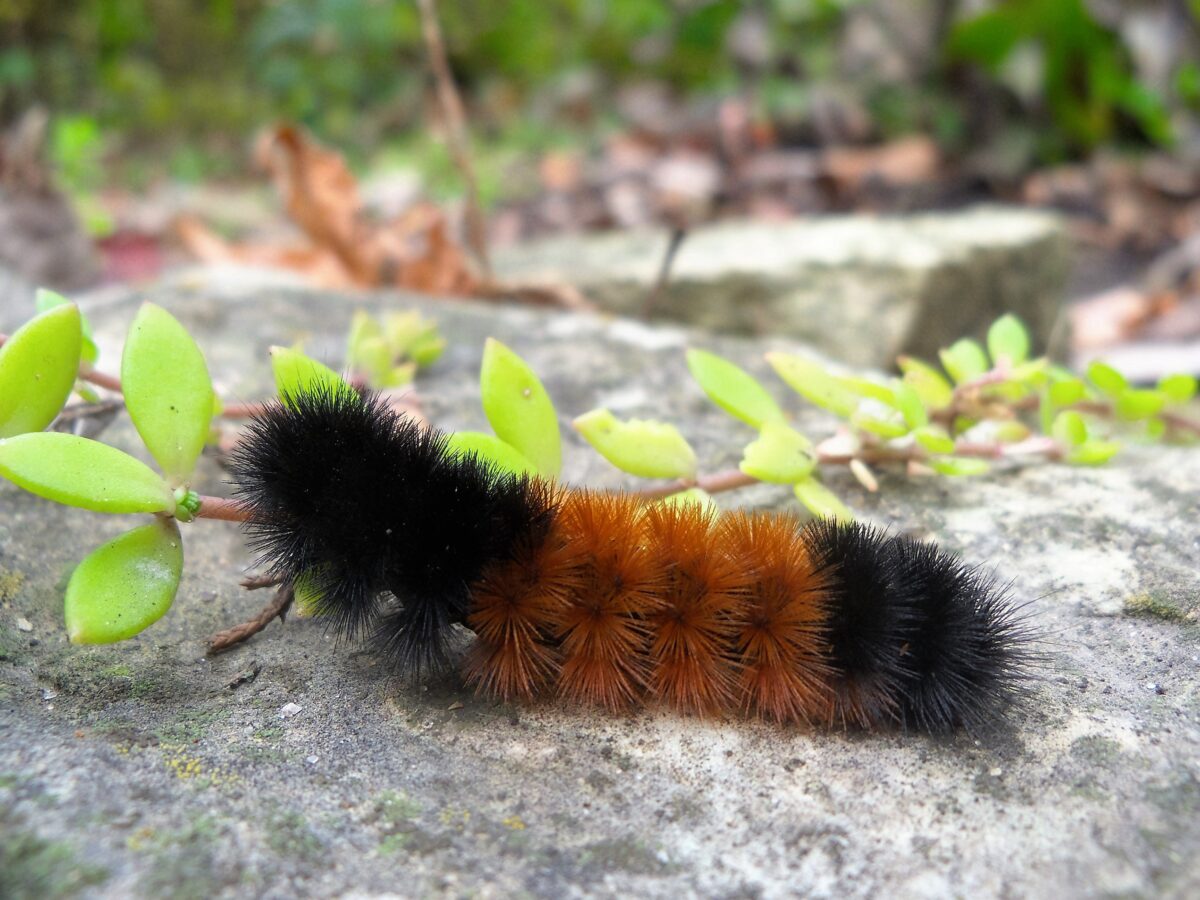
It’s likely that the most common fuzzy black caterpillar you’ve heard of or seen in nature is the Woolly Bear caterpillar. All caterpillars go through a transformation process and turn into either butterflies or moths. Woolly Bear caterpillars are the larval stage of the Isabella Tiger Moth.

Common Fuzzy Black Caterpillars

Woolly Bear Caterpillar (Pyrrharctia isabella)

  • Appearance: Black at both ends with an orange-brown band in the middle (sometimes mostly black or mostly brown).

  • Adult form: Isabella tiger moth.

  • Range: Across most of the U.S. and southern Canada.

  • Fun fact: Folklore says the width of the brown band predicts winter severity — but science says it doesn’t.
wooly bear caterpillar
Woolly Bear Caterpillar
Tanya/Adobe Stock
Isabella Tiger Moth - Pyrrharctia isabella
Isabella Tiger Moth – Pyrrharctia isabella
ondreicka/Adobe Stock

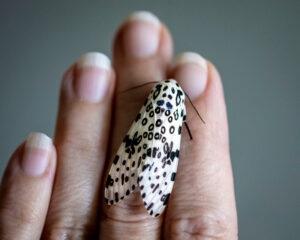
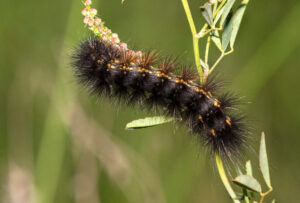
Giant Leopard Moth Caterpillar (Hypercompe scribonia)

  • Appearance: All black with stiff bristles; when rolled into a ball, bright red rings show between segments.

  • Adult form: Striking white moth with black leopard-like spots.

  • Range: Eastern and southern U.S., from New England to Texas and Florida.

  • Notes: Often mistaken for Woolly Bears, but lack the brown middle band.
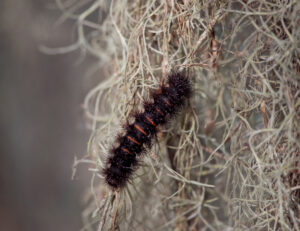
Giant Leopard Moth Caterpillars are fuzzy black caterpillars that resemble the Woolly Bear but have round rings instead
Giant Leopard Moth Caterpillar
SunnyS/Adobe Stock
A Giant Leopard Moth
Giant Leopard Moth
Heather Burditt/Adobe Stock

Hickory Tussock Moth Caterpillar (Lophocampa caryae)

  • Appearance: White overall with black tufts or bands; not fully black but sometimes lumped in with “fuzzy” searches.

  • Adult form: Cream-colored moth with black markings.

  • Range: Eastern North America, especially in hickory, walnut, and ash trees.

  • Caution: Hairs can cause stronger skin irritation than other species.
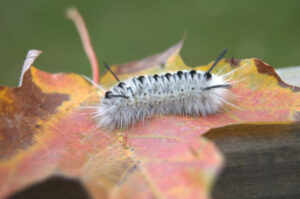
Hickory Tussock Moth Caterpillar
jodi McGee/Adobe Stock
Hickory Tussock Moth (Lophocampa caryae)
ondreicka/Adobe Stock

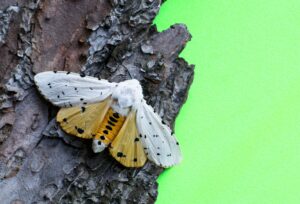
Salt Marsh Caterpillar (Estigmene acrea)

  • Appearance: Can be rusty brown, yellow, or black; dense coat of bristles.

  • Adult form: Salt marsh moth.

  • Range: Found in grasslands, gardens, and agricultural fields across most of the U.S. — not just marshes.

  • Diet: Beans, alfalfa, clover, and many garden vegetables.
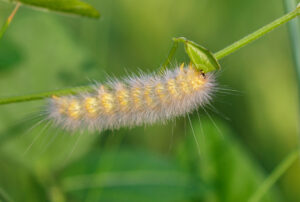
Salt marsh moth (Estigmene acrea) caterpillar feeding on grass in tidal marsh
Salt marsh moth (Estigmene acrea) caterpillar.
Ivan Kuzmin/Adobe Stock
the salt marsh moth (Estigmene acrea) caterpillar can vary in color including being a fuzzy black caterpillar
The salt marsh moth (Estigmene acrea) caterpillar. Natalia Kuzmina/Adobe Stock
An Acrea or Salt Marsh moth (Estigmene acrea) on tree bark with wings spread, displaying bright orange under wings against a green background.
An Acrea or Salt Marsh moth (Estigmene acrea) on tree bark with wings spread, displaying bright orange under wings. Brett/Adobe Stock

Fun Facts & Folklore

No fuzzy black caterpillar is more famous in North America than the Woolly Bear, thanks to the weather myth that the size of its orange-brown band predicts winter severity. According to folklore, a wide brown band means a mild winter, while a narrow one warns of a harsh season. Scientists have tested the claim and found no connection — the band width simply reflects the caterpillar’s age and the conditions it experienced while growing.

The Giant Leopard Moth caterpillar also has a quirky defense trick — when disturbed, it rolls into a tight, bristly ball, revealing bright red rings between its segments. Those red flashes are thought to warn predators that it’s not worth the trouble to eat.

Hickory Tussock caterpillars have earned a slightly scary reputation because their hairs can irritate skin, but for most people, it’s no worse than a brush with fiberglass.

In some coastal communities, Salt Marsh caterpillars were once considered “living barometers,” with sudden mass appearances thought to signal changes in weather or seasonal shifts.

Are Fuzzy Black Caterpillars Dangerous?

The short answer is: No. Most are harmless, but some can cause mild to moderate skin irritation if handled. Reactions vary by person and species — Hickory Tussock hairs tend to be the most irritating. If you’re unsure, use gloves or avoid touching them. None of the species mentioned here is poisonous.

Do They Harm Plants?

Some, like the Woolly Bear, rarely cause serious damage. Others — especially Salt Marsh caterpillars — can defoliate vegetable crops if populations are high. Spongy Moth caterpillars (which are not fuzzy black but sometimes mistaken for them) can strip entire trees.

Garden Control Tips

It’s possible that you may find the caterpillars feasting on your crops or landscaped shrubs. However, they prefer the edges of crop fields.

  1. Identify before acting — Many are harmless or even beneficial. Maybe it will become a beautiful butterfly or a nocturnal moth. Think of the Hornworm caterpillar, which turns into the Sphinx Moth.

  2. Hand-pick pests and remove them from the area.

  3. Encourage predators such as birds, parasitic wasps and predatory beetles.

  4. Use targeted treatments like Bacillus thuringiensis (Bt) for confirmed pest outbreaks, following label directions.

Fuzzy Black Caterpillar Quick ID Guide

CaterpillarAppearanceRangeHost PlantsNotable Traits
Woolly Bear (Pyrrharctia isabella)Black at both ends with orange-brown middle band; 1–2 in. longMost of U.S. & S. CanadaGrasses, clover, dandelion, garden greensFolklore winter predictor; harmless
Giant Leopard Moth (Hypercompe scribonia)All black; red rings between segments when curled; 2–3 in. longEastern & Southern U.S.Plantains, violets, dandelionsHarmless; striking white adult moth
Hickory Tussock (Lophocampa caryae)White with black tufts/bands; 1.5–2 in. longEastern North AmericaHickory, walnut, ash, oakHairs can cause skin irritation
Salt Marsh (Estigmene acrea)Black, rusty, or yellow; very hairy; 1.5–2 in. longAcross U.S.Clover, alfalfa, beans, vegetablesCan damage crops if numerous

Fuzzy Black Caterpillars: Final Thoughts

There are more than 150,000 caterpillar species worldwide, and less than 1% are poisonous — most of those outside North America. Next time you see a fuzzy black caterpillar crossing your path, take a closer look. Do a little research to find out what type of moth or butterfly larvae you’re seeing before you dispose of it. You may have found a harmless garden wanderer, a future moth with a striking pattern, or a tiny garden pest in disguise.

This article was written for Hobby Farms magazine. Click here to subscribe.

Categories
Crops & Gardening

Caterpillar Identification Guide: 4 Common Species to Know

Caterpillar identification is essential for every gardener who wants to protect their crops and support pollinators. From hornworms to monarchs, knowing how to identify common caterpillars helps you decide whether to take action or let nature run its course. Some species can destroy your vegetables overnight, while others are vital allies in your garden’s ecosystem.

Let’s investigate four common caterpillars and what they mean to your garden.

1. Hornworm Caterpillar Identification & Control

A Hornworm caterpillar on a plant
Caterpillar identification – Hornworm Caterpillar

There are two varieties of hornworms: tomato hornworms and tobacco hornworms. These plump, light-green caterpillars can grow as thick and long as your finger which makes caterpillar identification pretty easy. Diagonal white lines vary from seven on tobacco hornworms to eight on tomato hornworms, with more of a V shape on the latter. Both have reddish dots along the body and a curved, pointy horn on the rear, which is red on tobacco hornworms and black on tomato hornworms.


Also Read: How to Control Hornworms?


As expected from their names, these caterpillars devour leaves of tomatoes, potatoes, tobacco, peppers, eggplants and others in the Solanaceae (nightshade) family. However, the adult moths pollinate night-blooming flowers. The tobacco hornworm becomes the Carolina sphinx moth (Manduca sexta) and the tomato hornworm becomes the five-spotted hawk moth (Manduca quinquemaculata). Large, strong fliers, with a wingspan up to 5½ inches, their scientific names give clues to how many pairs of yellow-orange spots decorate the body (six on the sphinx moth, five on the hawk moth).

The moths resemble hummingbirds. Each has a long proboscis perfectly suited for reaching inside tubular flowers, such as morning glories, sweet potatoes, moonflowers, petunias, Datura, and four-o’clocks. As they drink deeply of the flower’s nectar, the moths spread pollen and help these plants develop fruits. The moths themselves pose no risk to the nightshade family, other than laying their eggs on them for the larvae to enjoy.

To limit their population in your garden, encourage parasitic braconid wasps. They have an insidious technique for destroying the caterpillars after they’ve used them up. The tiny, stingless wasp injects the caterpillar with its eggs and after hatching, the wasp larvae chow down on the caterpillar’s innards, avoiding major organs to prolong the slow death, until they work their way out to the surface. On the hornworm’s skin, they spin tiny cocoons, pupate and emerge as adult wasps by the time the caterpillar dies.

To support these natural predators, braconid wasps need nectar and pollen, and plants with tiny flowers fit them well. Examples include buckwheat, fennel, angelica, dill, goldenrod, yarrow, lovage, boneset, cilantro and Queen Anne’s lace.

2. Cabbage Looper Caterpillar: Identification & Prevention

A Cabbage Looper
Caterpillar Identification – Cabbage Looper

Turn over a cabbage or broccoli leaf in mid-summer, and you’re likely to find a little worm, perfectly matched in color to the underside of the leaf. Upon closer inspection, a thin white line runs the length of each side. This tiny inchworm-like critter has prolegs and hindlegs and no legs in between, so it moves in a looping motion.

Caterpillar identification is crucial as the Cabbage Looper is commonly confused with other cabbage-eating caterpillars that metamorphose into white butterflies; the looper becomes the ni moth (Trichoplusia ni), also well-camouflaged. The mottled brown moth with about a 1-inch wingspan resembles a knobby dead leaf or tree bark. The ni moth belongs to Noctuidae, the largest moth family that includes other agricultural pests, cutworms and armyworms.


Also Read: 5 Ways to Keep Cabbage Loopers Out of Your Garden


The looper eats most varieties of brassicas (aka cruciferous or cole crops), such as collards, kale, radish, turnip, broccoli and cauliflower. However, their taste isn’t limited to the cabbage family—they’ll eat the leaves of nearly every vegetable available in your garden. In nature, specialists have less chance of survival; as generalists, loopers are annoyingly successful.

To protect your crops, you have to outsmart the looper’s schedule. Row covers provide a physical barrier and extend the growing season by adding a layer of weather protection. Try planting early maturing varieties to beat the munching looper’s lifecycle. Diversify your garden and experiment with multiple varieties of brassicas to see which are more looper-resistant. Understanding the soil ecology at the base of the host plants will also help control pests, as the pupae are formed in the soil and crawl up to the leaves.

As with the hornworm, you can let another insect do the dirty work of extermination. Create habitat for parasitic wasps and tachinids, flies that not only feed on cabbage loopers but also destroy stinkbugs, gypsy moth larvae and Japanese beetles. In short, plant more flowers to support beneficial insects.

3. Monarch Caterpillar Identification & Why They’re Beneficial

Monarch Caterpillar on a leaf
Caterpillar Identification – Monarch Caterpillar (Caterpillar with White, Black and Yellow Lines)

Caterpillar identification is probably easiest and most recognizable for the Monarch: black-, yellow- and white-striped, with black antennae on the head and a body that stretches up to 2 inches long. Monarch caterpillars munch on milkweed—and lots of it!—not only for food but also for future protection. The milky sap from the leaves stays in their system even after metamorphosis and makes the adult butterfly taste offensive to predators. Birds will actually avoid them once they’ve learned their lesson.

The adult monarch butterfly is one of the most recognizable butterflies, especially if you’re growing a butterfly garden, keeping the same color scheme as the larva, with a stained-glass appearance to its pumpkin-orange wings, black veins and margins adorned with white spots.

Monarchs are the only butterflies that truly migrate, moving thousands of miles north to feed, depositing eggs along the way. In some cases, their offspring complete the journey for them. Returning south across the span of the United States, millions of monarchs head to Mexico to spend the winter huddled on massive pines and eucalyptus trees.

In recent years, a dramatic decrease in monarch populations has caused concerned groups to rally for their rescue. In addition to deep cultural ties to the Dia de Muertos traditions in Mexico, the monarch has recently become a symbol of pollinator conservation and appreciation for migration.

Because Monarch caterpillars only eat milkweed, they pose no threat to your garden. In fact, gardeners across the country go to great lengths to attract them. Historically, farms that let milkweed grow up along fences or between rows were a reliable nursery for caterpillars. The practices of using pesticides and fence-to-fence planting of monocrops are among the top reasons for the monarch’s decline.

Attractive flowers of blooming milkweed provide much-needed nectar for the migrating butterflies. Several varieties are available, producing colorful bouquets of rosy pink, lavender and orange. Other edible and medicinal herbs that attract butterflies include bee balm, catmint, Echinacea, comfrey and dandelion. In exchange for the sweetness, the butterflies provide pollination services for the plants.

A great list of butterfly host plants can be found on Monarch Watch, a source of information and supplies for all things monarch. Create a Monarch Waystation by planting the right amount and variety of host plants, which will attract other great pollinators and predatory insects. You can register your waystation and be included in a growing database of butterfly bed-and-breakfasts.

4. Cecropia Caterpillar Identification & Life Cycle

A Cecropia caterpillar on a leaf
Caterpillar Identification – Cecropia Caterpillar

Caterpillar identification is fun with the Cecropia since it looks like a punked-out circus clown. It’s about as long and thick as your finger, neon green with multi-colored spiked knobs. Surprisingly, the spikes aren’t harmful to the touch. Many go through different stages, known as instars, so you may see the same caterpillar at a wide range of lengths as they molt and leave behind their old skin.

You might also be surprised to know that this hearty caterpillar poses no threat to your vegetables. If you have fruit trees, watch for them on apple and cherry leaves. They also go for maple and birch leaves. Despite their tough appearance, they have enough predators that they don’t normally become a pest.

If you find them and want to help them out, you can protect them as they spin their cocoon of leaves and provide a safe place to spend the winter, metamorphosing into an impressively huge moth. The cecropia is North America’s largest moth, with a wingspan up to 6 inches. These moths sport furry, russet bodies and wings that fool predators with four white crescent shapes that resemble eyespots. The adult has no working mouth parts, so its only mission is to mate. Eat, have sex, and die—that’s the life!

Caterpillar Identification: Final Thoughts

Caterpillar identification isn’t just about stopping pests—it’s about understanding the role each species plays in your garden’s health. Whether you’re protecting your brassicas from cabbage loopers or planting milkweed to support monarchs, knowing your caterpillars means you can create a balanced, thriving ecosystem.

All gardens need animals. Besides bringing interest and fun, they create fertilizer, aerate soil, disperse seeds, regulate growth, decompose waste and pollinate flowers. Keep in mind that caterpillars are animals, too, and they do their part, as immature life forms and as adults, to maintain balance in the predator-prey dance that happens while we think we’re the ones gardening.

This article about caterpillar identification was written for Hobby Farms magazine. Click here to subscribe.

Categories
Poultry

Silkie Chicken Breed Profile: History, Traits & Care

The Silkie chicken is one of the most distinctive poultry breeds in the world, admired for its soft, fur-like feathers and gentle disposition. Venetian explorer Marco Polo (circa 1254–1324) returned from Asia with tales of a “furry” chicken, and while the exact origin remains uncertain, both China and Japan claim this extraordinary fowl as their own.

Fun Facts About the Silkie Chicken

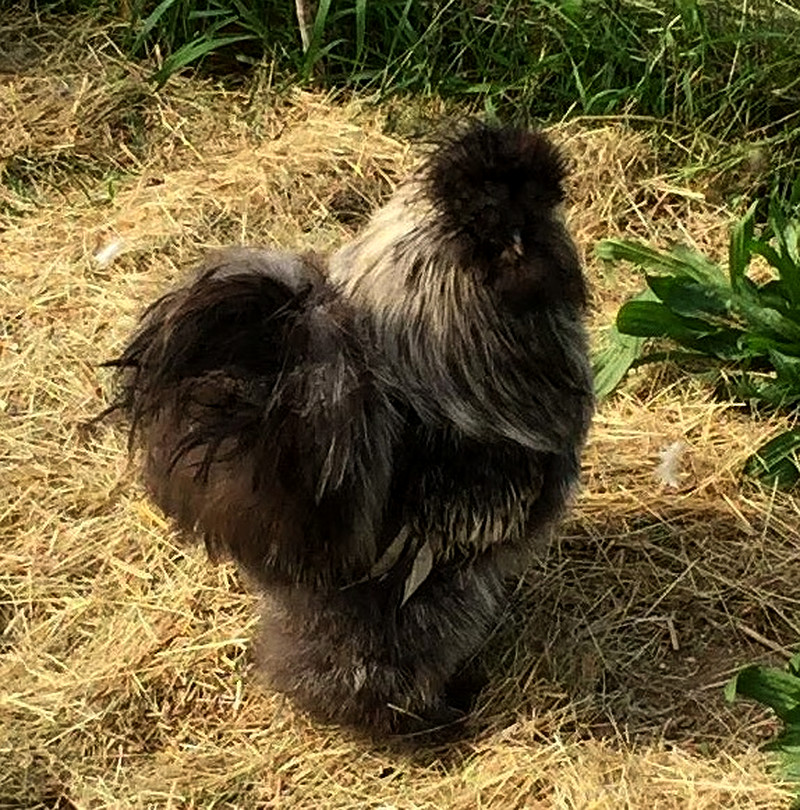
Silkies are named for the long, silk-like feathers that cover their bodies. Their small walnut combs and small to medium-sized wattles appear deep mulberry to black.

Silkie plumage looks like fur or down instead of feathers. This is because Silkie plumage lacks barbicels, the hooked projections normally extending from and interlocking the secondary branches of chickens’ feathers. In addition to luxurious, fluffy plumage, the breed has dark-blue legs with abundant feathering, turquoise-blue earlobes, black skin and bones, and grayish-black flesh.

The Silkie has five toes; most chickens have only four.

silkie chicken foot featuring five toes and leg feathering
Anna Hotaling

This breed comes in an assortment of colors, and some varieties are bearded with an extra muff of feathers covering their earlobes. The American Poultry Association recognizes Black, Buff, Gray, Partridge and White, and (bearded only) Splash, Blue and Self Blue varieties.

Mature males weigh only 36 ounces. Hens weigh 32 ounces.

black colored silkie chicken
Ana Hotaling

Silkie Chicken Characteristics and Facts

Silkie chickens are known for their calm and friendly temperament, making them ideal pets and exhibition birds. Their unique feather structure means they require a bit more protection from wet or cold weather compared to other breeds.

Broodiness and Maternal Instincts

One of the most remarkable traits of the Silkie chicken is its extreme broodiness. Silkie hens readily sit on eggs for extended periods and make excellent surrogate mothers, even hatching and raising eggs from other birds such as quail and ducks. This natural instinct makes them invaluable for breeders and backyard poultry enthusiasts who want to hatch a variety of poultry species.

Silkie Chicken History

In 1599, Italian naturalist and author Ulisse Aldrovandi wrote about “wool-bearing chickens;” however, today’s Silkie chicken breed is considerably different than those of the past. It was recognized in the American Poultry Association’s first Standard of Perfection, published in 1874.

silkie chickens
Ana Hotaling

Silkie Chickens in Cuisine and Culture

The Silkie chicken is more than just a unique pet or show bird—it holds a special place in Asian haute cuisine. Known as wu gu jis or “dark-boned chicken” in Chinese, Silkie meat is prized for its distinctive gray-black color and rich flavor. This culinary tradition has even found its way into French cuisine, where the Silkie occasionally appears in gourmet dishes.

Silkie Chickens Make Great Pets

Silkies are sweet, ultra-docile chickens. They are friendly and make good pets.

Silkie Chicken Egg Size

Silkie chickens lay about one small tinted egg per week.

Silkie Chicken: Final Thoughts

The Silkie chicken may be small in size, but it holds an outsized place in the hearts of poultry keepers. With their distinctive plumage, unusual black skin and bones, and sweet, docile nature, Silkies are as charming as they are useful. Whether you raise them for exhibition, as devoted broody hens, or simply as friendly backyard companions, these unique birds are sure to bring beauty, personality, and plenty of conversation to your flock.

This article about the silkie chicken was written for Hobby Farms and Chickens magazines. Click here to subscribe.

Categories
Poultry

When Do Turkeys Start Laying Eggs? Plus Tips on Raising Turkeys

When do turkeys start laying eggs? If you’re considering adding turkeys to your hobby farm, this is a common question.

Heritage Turkeys and Egg Production

For hobby farmers deciding between industrial and heritage turkeys, understanding the differences is key—especially if egg production is part of your plan. Heritage turkeys are prized for their natural breeding abilities, longer lifespans, and steady egg-laying over several years. In contrast, industrial turkeys are bred mainly for meat and have limited or no egg production capabilities. This guide will help you explore when turkeys start laying eggs and why heritage breeds might be the better choice for your farm.

Questions and Answers from an Expert

Frank Reese is a poultry expert and the maintainer of the last American Poultry Association-certified hatchery in the United States. He is one of our country’s (if not the world’s) most knowledgeable experts on raising turkeys for meat and eggs. He has spent his career traveling across America and rescuing rare flocks of turkeys and chickens for which no succession plan existed. He’s kept many breeds from being eliminated.

Frank was so kind to answer some basic questions on the topic of raising turkeys for eggs. If you’re curious about when turkeys start laying eggs and how to manage them for egg production, this guide with expert insights will help you get started.

Questions and Answers from an Expert

What is the difference between a heritage turkey and an industrial turkey?

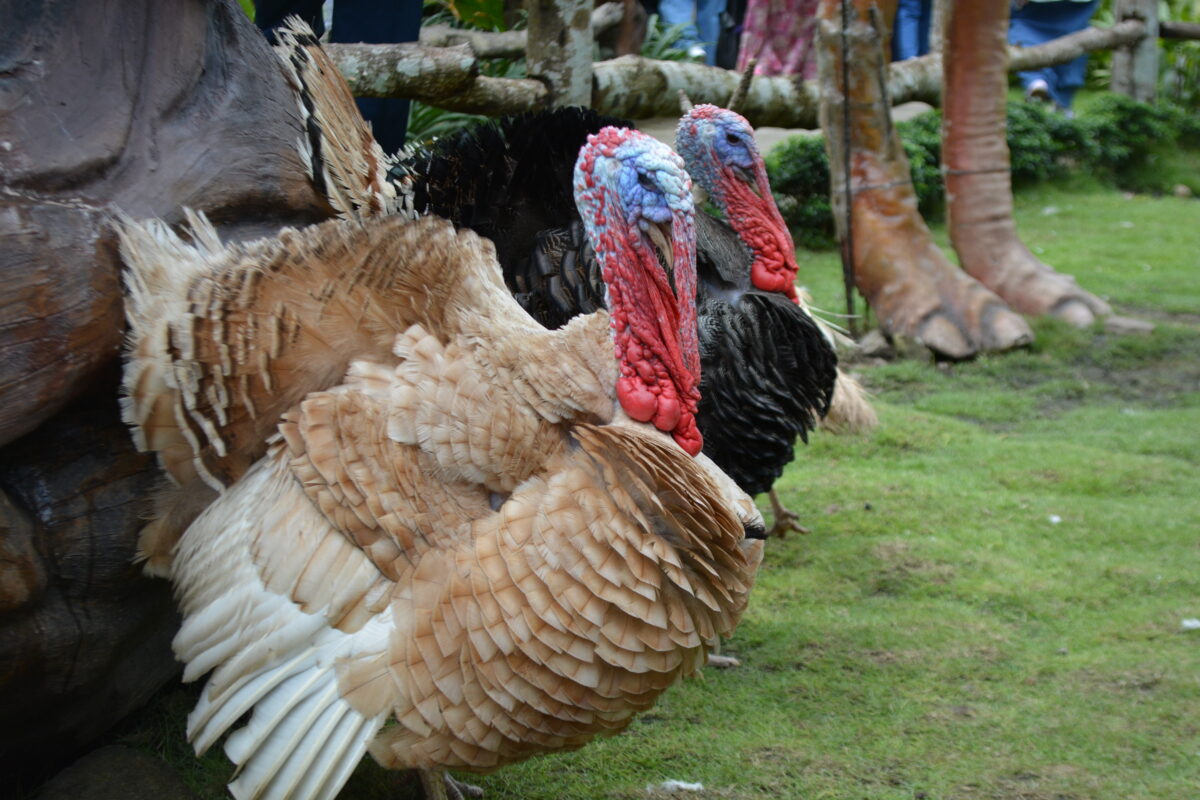
Heritage turkeys can still naturally mate, are capable of nesting, will live 10 to 15 years and grow at a normal rate.  They can run, jump and fly. 

Industrial turkeys can no longer breed on their own; they must be artificially inseminated, and they live less than two years.  Industrial turkeys become obese and can barely walk.  

Do turkeys make a good addition to the homestead?

Heritage turkeys have been part of American farm life for over 250 years. They’re a true American domestic farm species. Native to the Americas.  

When do turkeys start laying eggs? What age and what time of year?

Turkeys start laying between 7 to 10 months of age. It is very dependent upon where you live. Turkeys need longer days of sunlight and days above freezing in order to keep laying. In Kansas, they start laying most years in March and continue until August.

How many eggs do they lay per year?

Most hens will lay 30 to 60 eggs in a season, some up to 80 eggs. You must gather turkey eggs daily to keep them actively laying.

How many years do heritage turkeys lay eggs for?

If you manage your hens well, they should keep laying for up to seven or eight years.

Nutritionally, are turkey eggs better than chicken eggs – how do they compare?

Turkey eggs are just like chicken eggs in taste, texture and nutrition. The only difference is that a turkey egg is almost twice the size of a chicken egg. The flavor is mild and can be used just like chicken eggs.  

In your opinion, are turkeys worth adding to the homestead for egg production?

If you’re going to keep turkeys for egg production, then decide what your market is. It does cost more to produce a turkey egg, and you do get fewer seasonally than chicken eggs. Find your market: poults, fertile eggs and eating eggs, or all the above.

If someone were going to add heritage turkeys to their farm for egg production, which breeds would you recommend?

It is not the breed variety but the breeder behind the variety you choose. No matter which variety you choose, it will be no better than the breeder behind the line. The color of feathers makes no difference in meat or egg production. A lot of people think dark feathers mean heritage and white means modern, but this is not true – white feathered turkeys have been around for 100’s of years. The difference is the old type conformation of the bird. Get to know the breeder or history of the line you choose.  

When Do Turkeys Start Laying Eggs: Final Thoughts

Adding heritage turkeys to your hobby farm can be a rewarding choice, especially if you value natural breeding and sustainable egg production. While they may lay fewer eggs than chickens, their hardiness and longevity make them a unique and valuable addition. By understanding when turkeys start laying eggs and how to care for them properly, you can enjoy fresh turkey eggs for years to come—and help preserve these important breeds for future generations.

This story about when to turkeys start laying eggs was written for Hobby Farms and Chickens magazines. Click here to subscribe.

Categories
Poultry

Types of Poultry Eggs: Quail, Chicken, Duck & Goose Eggs

Types of poultry eggs vary widely in size, flavor, and nutritional value. From the tiny quail egg to the large goose egg, each offers unique qualities that can enhance your cooking and poultry-keeping experience. This guide will help you understand the differences and choose the right egg for your needs.

The funny thing about eggs is that most people say they all taste about the same. If you prepare a dish using duck, goose or even quail eggs, guests may notice subtle differences but usually will say it tastes like a chicken egg.” This is actually a good thing, because it allows you to incorporate the more unusual types of poultry eggs into recipes without worrying about drastic changes in flavor. You will, however, need to adjust the amounts!

Let’s explore some of the accessible types of poultry eggs. (Reprinted with permission from Cooking with Eggs [2015]).

Quail Eggs: Size, Nutrition, and Culinary Uses

quail egg - types of poultry eggs
Shutterstock

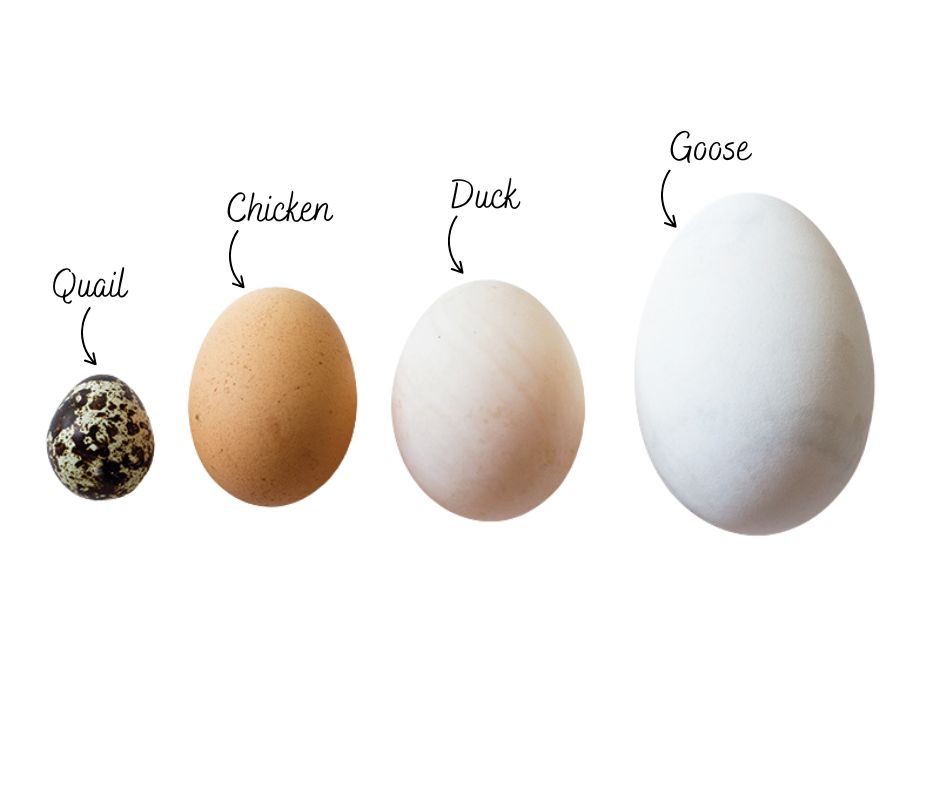
Bigger isn’t always better. The diminutive, spotted egg of the quail is perfect if you’d like to experiment with a fun, unusual type of egg. At about 1 inch in length and 9 grams in weight, quail eggs are popular with chefs looking to make creative treats such as bite-sized deviled eggs.

Quail Egg Nutrition Information

  • Calories: 14
  • Protein: 1.2 grams
  • Cholesterol: 76 milligrams

Chicken Eggs: The Most Common Poultry Egg Explained

chicken egg - types of poultry eggs
Shutterstock

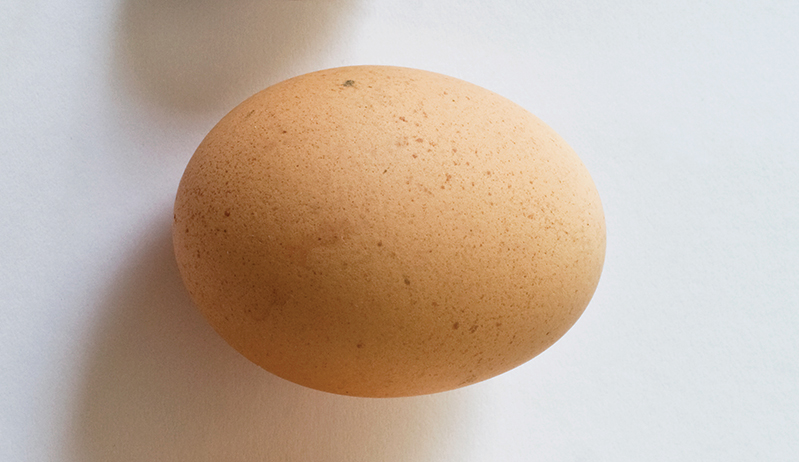
A standard 60-calorie chicken egg is about 21⁄2 inches long, weighs about 60 grams and can vary drastically in color, depending on the breed of chicken that laid it. This is the egg that Americans love most and the only egg that many have ever been exposed to.

Chicken Egg Nutrition Information

  • Calories: 60 to 70
  • Protein: 6 grams
  • Cholesterol: 187 milligrams

Duck Eggs: Flavor, Benefits, and How to Cook Them

duck egg - types of poultry eggs
Shutterstock

A bit larger than chicken eggs, duck eggs have a creamy, rich consistency, due to their larger yolk-to-white ratio. It also means that they have a higher fat content than chicken eggs. Duck eggs also contain more calories per egg and feature a harder shell than chicken eggs and have a potentially longer refrigerated shelf life.

Duck Eggs Nutrition Information

  • Calories: 130
  • Protein: 9 grams
  • Cholesterol: 620 milligrams

Goose Eggs: Large, Nutritious, and Unique Poultry Eggs

goose egg
Shutterstock

Weighing in at about 5 ounces each, goose eggs are equivalent to two or three large chicken eggs. Once you master the trick of cracking these giants — tapping them against a bowl won’t cut it! — you’ll find them a delight to eat. Geese have a limited laying season of just a few months in the spring, and most birds lay only about 40 eggs per year, give or take

Goose Egg Nutrition Information

  • Calories: 265
  • Protein: 20 grams
  • Cholesterol: 1227 milligrams

Types of Poultry Eggs: Final Thoughts

Understanding the different types of poultry eggs can elevate your cooking and expand your knowledge as a poultry keeper. Each egg type brings its own flavor, texture, and nutritional benefits to the table, making them versatile ingredients and fascinating additions to your kitchen and flock.

This story about comparing types of poultry eggs originally appeared in Chickens magazine. Click here to subscribe.

Categories
Farm & Garden

Gentle Weeding Techniques for Delicate Vegetables

Gentle weeding techniques are essential when working around delicate vegetables like lettuce, cucumbers, or onions—especially when those plants are newly sprouted or freshly transplanted. The wrong weeding method can accidentally damage stems, disturb roots, or even uproot your veggie plants entirely. Whether you’re dealing with fragile seedlings or tender transplants still recovering from shock, it’s important to weed with care. Here’s how to keep your garden tidy while protecting your most vulnerable plants.

Gentle Weeding Techniques to Protect Your Plants

First off, plan on a gentle approach. We aren’t going to use any kind of machinery or heavy tools. Herbicides are also off the table, as we’re working with food plants that are intended for consumption. Instead, gentle weeding techniques are going to come down to your hands and a few select tools.

Full-Length Hoe

If the spacing between rows is wide enough, you should be able to stand up and use a full-length hoe to lightly scuff the ground and remove a good percentage of the weeds.

Stirrup Hoe

Similarly, a stirrup hoe with a sharp blade can be used to gently slice weeds away from around the veggie plants you’re protecting.

Hand Hoe

To get closer to the plants, you can use a small hand hoe with a straight or pointed blade.

Your Own Fingers

Honestly, when it gets right down to it, simply picking and pulling weeds out with your own fingers is fast and effective for gentle weeding techniques near delicate plants. Most of the “weeds” you’re dealing with are probably just grass, so pulling by hand allows you to remove them without disrupting the root system of your veggies.

Scissors or Weeding Knife

Finally, the use of a simple pair of scissors may be necessary for snipping away weeds right at ground level, without disrupting the roots at all. This works very well for weeds that are growing directly next to or within the veggie plants. You can’t risk pulling roots and disrupting soil, so simply snip, snip, snip. A weeding knife works in a similar fashion. It’s delicate work, but helpful to the plants.

Additional Gentle Weeding Techniques for Delicate Veggies

Even with the right tools, timing and technique can make a big difference. Keep these extra tips in mind to make your gentle weeding techniques even more effective and plant-friendly.

Don’t Let Weeds Get Out of Control

Try not to let the weeds get too bad if you can help it. This isn’t always easy thanks to busy summer schedules and fast-growing weeds, but the smaller the weeds, the less disruptive removal will be to the tender veggie plants around them.

Weed When Soil Is Wet

Wet soil causes the weeds to pull out more easily. Weed after rain or after watering to help.

Pull Weeds Straight Up

Try to pull weeds straight up—you get more roots without breakage and it’s less disruptive to the surrounding soil.

Gentle Weeding: Final Thoughts

Delicate vegetables deserve a delicate touch, and the right weeding techniques can make all the difference in their survival and growth. With simple tools, hand-pulling, and a bit of timing and care, you can stay on top of weeds without harming your plants. A little extra attention now will pay off with a healthier, more productive garden later.

This article about gentle weeding techniques was written for Hobby Farms magazine. Click here to subscribe.

Categories
Equipment Sponsored

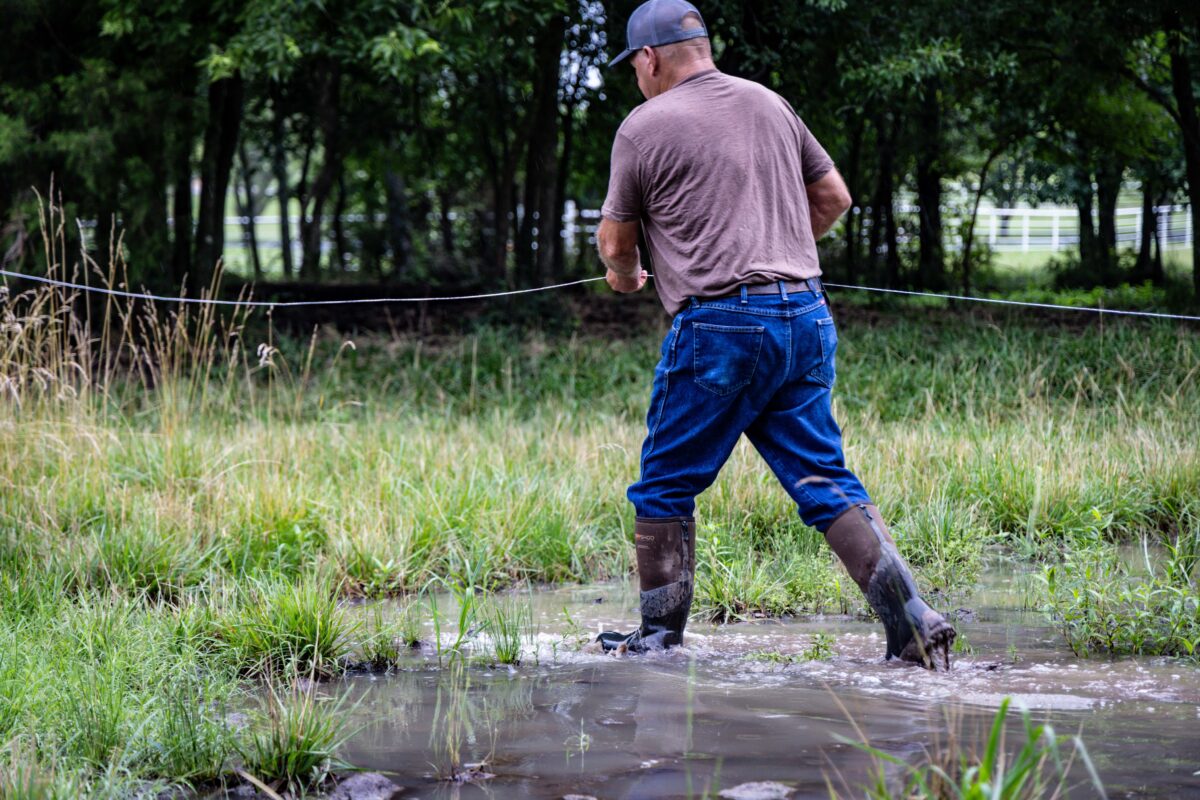
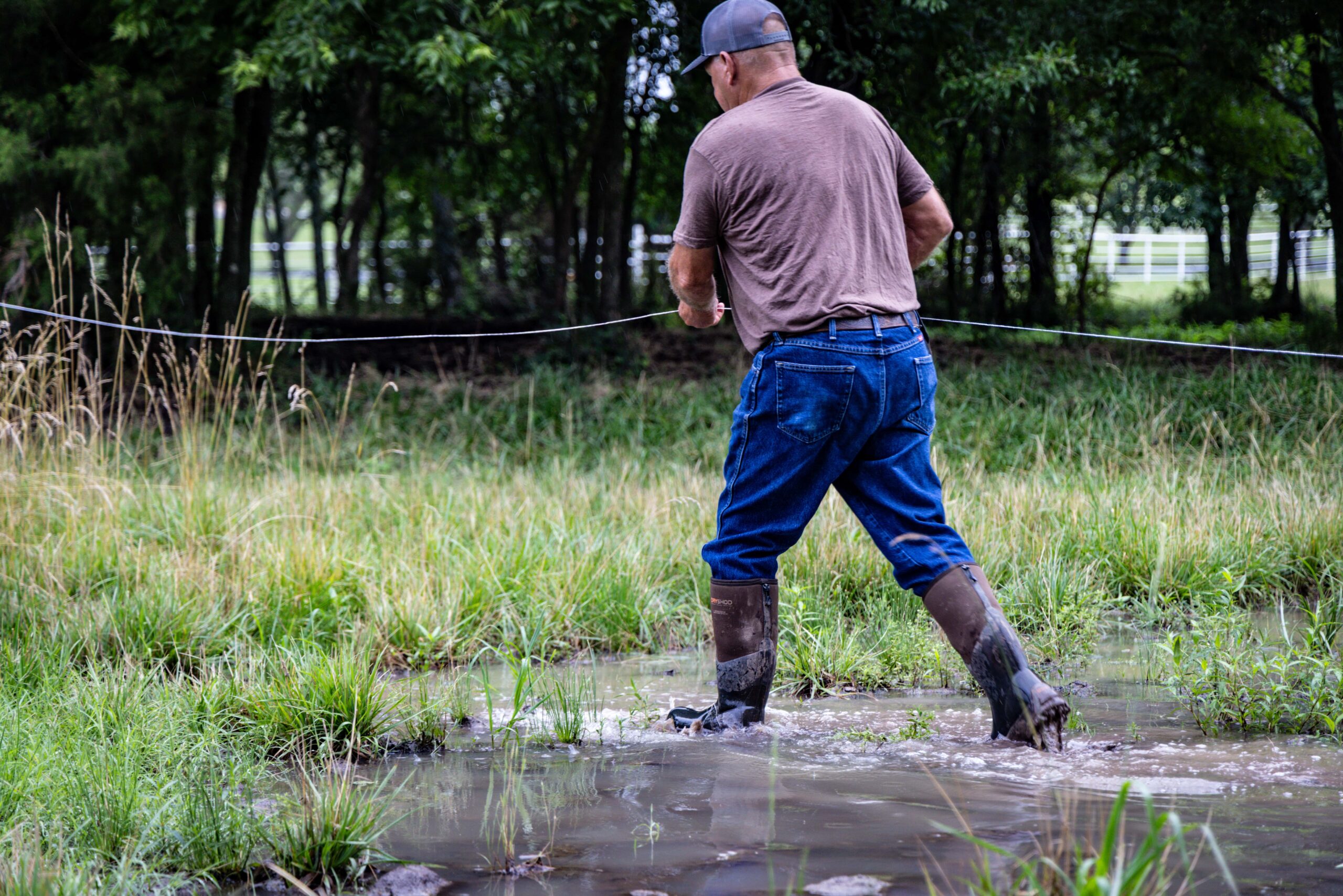
From Summer Heat to Winter Chill: Gear Up for Every Season on the Farm

The work never stops — and neither should your boots. Prepare for rugged terrain and changing weather from summer through fall and into winter.

Ask any farmer, and they’ll tell you: no matter the season, the work doesn’t wait. Summer’s heat brings long, sun-soaked days of sweat and hard labor, but as the calendar turns, fall’s cooler temperatures and wetter conditions bring new challenges. Before you know it, winter’s cold and frozen ground arrive, demanding even more from both farmer and gear.

Through these seasonal changes, reliable equipment isn’t just a convenience—it’s a necessity. And that all starts from the ground up.

Summer on the farm means early mornings and late nights, working through dry, dusty fields or tending to thirsty livestock. The sun beats down, and keeping your feet dry and comfortable is critical to making it through long days. As fall rolls in, rains soak the soil, turning fields slick and muddy. Cooler temperatures mean moisture lingers longer, making waterproof gear essential. Then winter settles in, bringing ice, snow, and freezing conditions that test both man and machine.

Farmers often say, “There’s no such thing as bad weather, just bad gear.” And this couldn’t be truer when it comes to boots. Wet, cold, or uncomfortable feet can slow a farmer down more than any other factor. The right pair of boots provides traction, waterproofing, and insulation to keep you moving safely and efficiently, no matter the season.

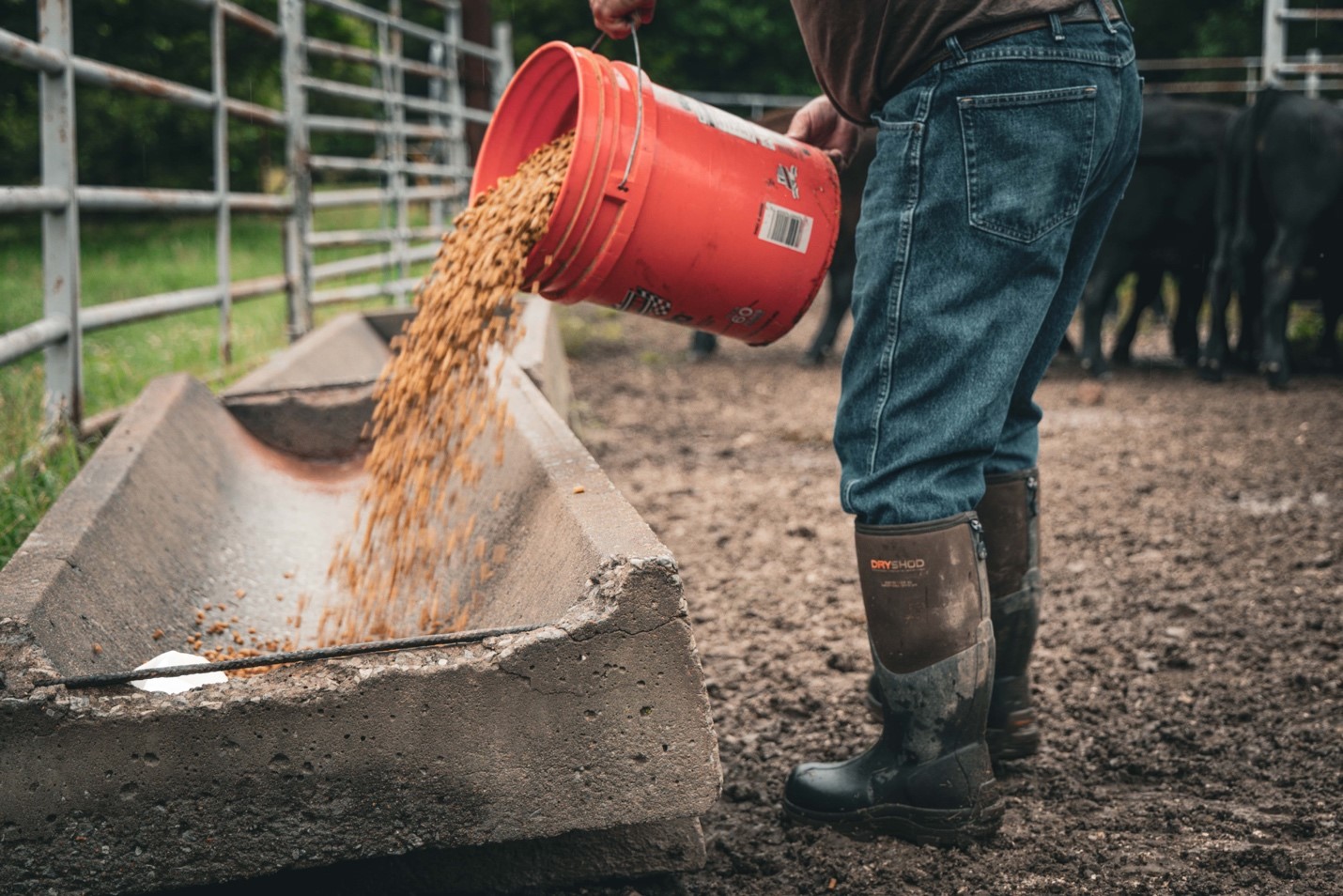
The Dryshod Haymaker boot is designed for these realities. From summer’s rugged terrain to fall’s muddy fields and winter’s cold, icy ground, the Haymaker stands up to the challenge. Its 100% waterproof construction keeps feet dry during wet chores, while the DS1 molded outsole provides dependable grip on all kinds of terrain. The EVA midsole offers cushioning and cold-blocking insulation, keeping feet comfortable and protected as temperatures drop.

Quality boots aren’t a luxury; they’re an essential part of the farm uniform. When your feet stay dry, warm, and supported, you can focus on the task at hand, rather than the discomfort or risk.

Whether you’re battling summer heat or preparing for the cold ahead, the proper boots make all the difference. The Dryshod Haymaker is built to withstand the rigors of your work, from the dog days of summer through winter’s worst.

Categories
Animals

Barn Cleaning for Goats: Simple, Effective Tips

Barn cleaning for goats is one of the most dreaded but also one of the most satisfying chores on a goat owner’s to-do list. With proper maintenance and a few smart cleaning tips, it doesn’t have to be dreaded anymore!

Why Barn Cleaning for Goats Matters

Barn cleaning day: The three words that make most goat keepers want to pull the covers over their heads and sleep the day away. But if you want to raise a herd of healthy caprines, barn cleaning is an essential part of every goatkeeper’s lifestyle.

Maintaining a clean barn not only helps maintain low levels of dust to promote a healthy respiratory system, but it also helps to prevent diseases. Since keeping our herds healthy is at the top of every goat owner’s priority list, grab a broom and pitchfork and let’s start cleaning!

Keep Goat Water Buckets Clean and Safe

You may not have considered keeping your goats’ water buckets clean as part of barn cleaning for goats, but it is one of the most essential parts to raising healthy goats.

Water should be changed twice daily, and the bucket thoroughly rinsed out before refilling with fresh water. Change water first thing in the morning while feeding your herd, and then again during evening chores.

While it may sound extreme, washing your herd’s water buckets should be a part of your weekly barn cleaning routine. Scrub water buckets out with hot, sudsy water and a designated scrub brush or cloth to prevent bacteria and algae from building up. Washing buckets also helps reduce the chances of your herd contracting coccidiosis.

Do not use bleach to wash goat buckets, as it can leave a residue behind that can be harmful to your herd.

How to Clean Goat Feed Buckets

Like water buckets, cleaning the feed buckets should be a part of your weekly routine. Goat feed contains molasses and tends to make the feed buckets sticky.

Feed buckets should be scrubbed out with hot, sudsy water (never use bleach) once a week to prevent the spreading of disease, bacteria, and parasites. Washing the feed buckets shortly after morning feeding should allow enough time for them to air dry before they are needed again the next morning.

Want to kill more germs and bacteria? Sit buckets out in the sun to dry, as sunlight naturally kills harmful pathogens.

Mice, flies, and other bugs can be attracted to the sweetness of goat feed and also make goats sick. Cleaning feed buckets on your weekly will help keep goats healthy and unwanted pests under control.

Don’t Forget to Clean Your Goat Equipment

Equipment often gets overlooked when considering barn cleaning for goats, but disinfecting your herd’s equipment can prevent the spread of diseases and parasites.

Wiping down hoof trimmers, shearing equipment, brushes, and other equipment after use helps to prevent parasites, disease, and infection from spreading from one herd member to another.

How to Clean Goat Pens Properly

Pen cleaning is the hardest and most time-consuming of the barn cleaning tasks, so many goat keepers prefer to put it off to once a year. However, from personal experience, it’s actually a lot easier and less of a chore to clean the pen more frequently.

Throw in the fact that cleaning more frequently decreases the chances of respiratory problems, coccidiosis, and external and internal parasites, and monthly pen cleaning is a win-win.

Clean your herd’s pen once a month, making sure to remove all soiled bedding, manure, and cobwebs from the pen. Sweep thoroughly with a broom. When using stall mats, be sure to remove the mats and clean underneath.

If possible, in the warmer months, pressure wash the floor of your goat barn to help keep your barn cleaner and wash away parasites.

While performing the monthly barn cleaning for goats, be sure to wipe down hay mangers with a damp cloth to remove dirt and dust.

Daily Cleaning for Goat Milking Equipment

If you raise dairy goats or are considering raising goats for milk, you probably already know that cleaning the milking equipment is part of the daily barn cleaning process.

After each milking, all dairy equipment must be rinsed in lukewarm (not hot) water. Scrub the equipment with a stiff wire brush using a solution of hot water, dish soap (use unscented dish soap to avoid giving your milk an odd flavor), and chlorine bleach.

Dairy equipment should be rinsed after scrubbing in clean water and then in dairy acid cleaner. Rinse in clean water for a final time.

Let the equipment drain before the next milking.

Time-Saving Tips for Barn Cleaning for Goats

Looking for some helpful barn cleaning tips to make the job easier? These tips will help save you time while keeping your herd safe and healthy.

Using proper cleaning supplies will make barn cleaning a lot easier. Pen cleaning tools include a wheelbarrow to cart dirty bedding and manure to the compost pile, a pitchfork to remove soiled bedding, and a broom and dustpan to sweep away cobwebs, manure, and dirt.

If you don’t have a dustpan on hand, a feed or snow shovel makes a great replacement for sweeping manure and dirt into.

While doing your monthly barn cleaning, be sure to look around your pen to ensure there are no holes your goats can squeeze through or get their heads stuck in. Also, check for loose wires, nails, or other sharp objects a goat could get caught on. Remove or secure objects to keep your herd safe from injuries or ingesting harmful materials.

When washing feed and water buckets, use gentle, unscented, natural dish soap that is easy to rinse out and won’t leave your goat buckets smelling like cleaner.

Having a set day to clean your pen and wash buckets keeps you in the routine and your schedule running smoothly.

Consider spot cleaning every several days in frequented areas to make the monthly barn cleaning easier and less time-consuming.

Barn cleaning for goats may not be a favorite job, but with the right tools, it doesn’t have to be difficult. Give these cleaning tips a try, and you will see for yourself how proper management and good nutrition will help your herd live longer, healthier lives.

This article about barn cleaning for goats was written for Hobby Farms magazine. Click here to subscribe.

Categories
Poultry

Egg Yolk Color: What It Means and What Affects It

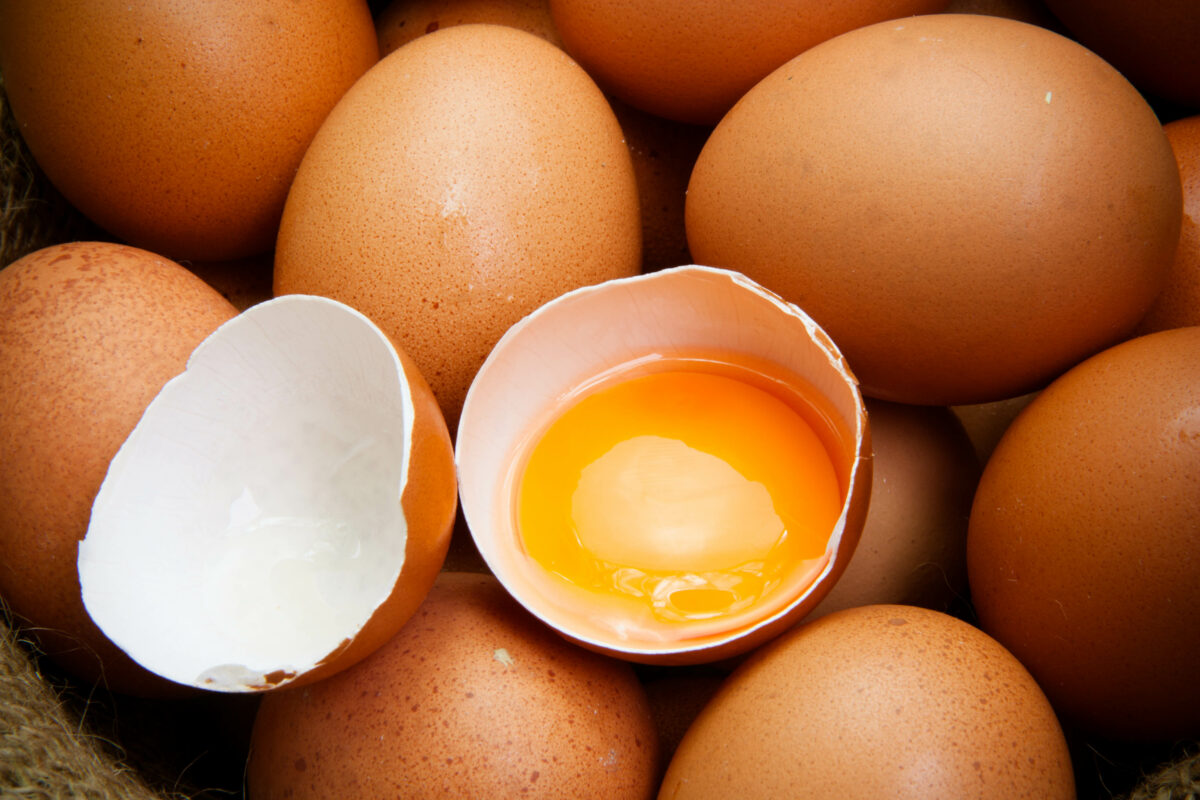
Egg yolk color can range from nearly white to deep orange, and it’s a surprisingly accurate reflection of what your hen has been eating. During the course of your breakfast, baking, and culinary adventures, you may have noticed that the color of an egg yolk is not always consistent. There can be quite a range of tones from pale to dark. And maybe you have some hens of your own, and the color of their egg yolks doesn’t quite match the color of egg yolks from the store. So what affects egg yolk color? And does it affect the taste or nutritional value?

How Hen Diet Affects Egg Yolk Color

Turns out, the reason is pretty benign. The color of an egg yolk hinges mostly on the diet of the hen. Specifically, it depends on the amount of carotenoids that the hen’s diet contains. You might recall that word—carotenoids—as the pigments that give things like carrots, pumpkins, tomatoes, corn and other plants their various colors. These pigments tend to lean towards the long wavelengths of the color spectrum—think red, orange, and yellow.

Animals don’t manufacture these pigments themselves; they obtain them from plants that they eat. So your egg yolk color depends directly on what foods your hen consumes, and how many and what types of carotenoids they contain.

Why Egg Yolk Color Varies from Pale to Dark

You can find eggs with yolks that are nearly white, some that are a deep red, and most somewhere in between. There’s even an industry-standard color checker chart, known as the DSM Yolk Color Fan, on which yolks can be judged.

  • Hens that consume plenty of grains in their diet—cornmeal, wheat and barley tend to lay eggs with light-colored yolks.
  • Hens that enjoy alfalfa might see vividly yellow yolks.
  • Free-ranging chickens and those with access to pasture often produce more yolks with an intense orange color, thanks to the variety of edibles they may come across during their travels, including seeds and bugs.
  • Seasonal changes in yolk color are quite common—you’ll see brighter colors during the summer when peak grazing is in place. And you may see very pale yolks during the winter, when the hens aren’t eating plants with carotenoids.
  • Some chicken owners even try to make the yolk color richer by supplementing their hens’ meals with certain flowers.

Does Egg Yolk Color Affect Nutrition?

Should you particularly care about the yolk color? Does yolk color affect nutrition in any meaningful way?

Nope—not to any degree that matters. Regardless of yolk color, you’ll still get all the terrific protein, vitamins, and antioxidants that make eggs such a popular “power food.”

What about taste? It’s definitely under-studied, but it seems that darker/richer colors—where the hen’s diet was more varied—may make for a slightly more flavorful egg.

But really, there is little reason to focus on this. Instead, just think of egg yolk as a fun reminder of where your backyard chickens’ diet came from, and watch the colors change with the seasons.

Egg Yolks: Final Thoughts

Egg yolk color is more than just a visual detail—it’s a subtle reflection of season, diet, and lifestyle. Whether your hens are pasture-raised, supplemented with vibrant greens, or fed a simple grain mix, the yolk color tells part of their story. While it may not significantly impact nutrition or taste, it offers a fascinating glimpse into the life of your flock. Keep an eye on those shades—they might just tell you more than you think.

This article was written for Hobby Farms and Chickens magazines. Click here to subscribe.
Categories
Poultry

Top Chicken Egg Questions & Answers

Chicken egg questions come up all the time from new chicken keepers to seasoned backyard chicken veterans. To help more chicken-keepers at once, here are 10 of the most common egg-related questions in one place. Let’s get cracking!

1. Are Brown Eggs Healthier Than White Eggs?

The color of an egg’s shell has everything to do with pigmentation and nothing to do with nutrition. Regardless of whether the eggshell is brown, blue, tinted, pink or white, the nutritional value of an egg is the same. Brown eggs tend to be (erroneously) considered healthier than white eggs because they are associated with local farms versus factory farms.

2. Why Do My Eggs Taste Different in Spring and Summer?

During the summer, more natural fodder is available for hens to eat than during spring, when plant growth is just starting to emerge. The more fresh forage they eat, the richer and tastier the eggs will be.

3. Why Are My Eggshells Thin or Easy to Break?

common questions eggs
Shutterstock

Eggshells draw their calcium from a hen’s own body. Without additional calcium to build up reserves, your layer will not only produce thin shells but also will suffer from weakened bones. To keep your hens healthy, strong and able to produce strong eggshells, offer your flock a supplement such as crushed oyster shells or limestone. Note: Do not allow your chicks or juveniles to eat the calcium supplement, as this can severely damage developing kidneys.

4. Can You Tell If an Egg Is Fertilized Without Cracking It?

There is no way to tell a fertilized egg from an unfertilized egg without cracking it open and looking for the germinal disc or germ. An unfertilized egg’s germ appears as a small white spot, while a fertilized egg’s germ resembles a small halo with a clear center.

5. When Will My Chickens Start Laying Eggs?

A pullet starts laying at an average age of six months. Factors that affect this include the breed of chicken and the time of year. Heavier breeds such as Cochins and Orpingtons take longer to reach maturity and start to lay later. Smaller breeds such as Ameraucanas and Leghorns lay earlier. Regardless of a bird’s age, if daylight is decreasing just as a pullet reaches laying age, that first egg won’t show up until the following spring.

6. Are Spots in My Eggs a Sign of Embryos?

common questions eggs
Shutterstock

Unlikely. Eggs sometimes include blood spots or meat spots. Blood spots results from a broken blood vessel releasing blood onto the yolk as it gets released into the reproductive tract. Meat spots are typically bits of oviduct tissue that break off and become incorporated into the egg as it passes through.

7. What Causes Double-Yolk Eggs?

chicken egg questions include why does my chicken lay double yolk eggs like the one pictured inside this broken open shell
Shutterstock

Double yolk eggs most commonly occur in pullets, whose immature reproductive systems accidentally release more than one yolk at a time. They can also occur as a hen gets older and her reproductive system starts slowing down.

8. Why Are My Chickens Laying Tiny Eggs?

Those tiny eggs, called wind eggs or fart eggs, are produced by pullets coming into lay whose immature systems are still stabilizing. As your birds mature, the eggs will become normal in size.

9. Do Chickens Lay Eggs Every Day?

A hen in her laying prime (one year of age) lays an average of four to five eggs per week. However, factors such as temperature changes, dehydration and stress can affect a hen’s rate of lay.

10. Do Hens Need a Rooster to Lay Eggs?

chicken eggs questions includes wondering whether you need a rooster
Shutterstock

Hens begin to produce eggs on their own as they reach maturity. You need a rooster only if you want to produce chicks.

Chicken Egg Questions: Final Thoughts

Raising chickens comes with plenty of surprises—especially when it comes to their eggs. Hopefully, this roundup of common chicken egg questions gave you quick, helpful answers you can use right away. Still stumped or seeing something new? Keep asking! Every flock is different, and part of the fun is learning together.

This article about chicken egg questions was written for Hobby Farms and Chickens magazines. Click here to subscribe.