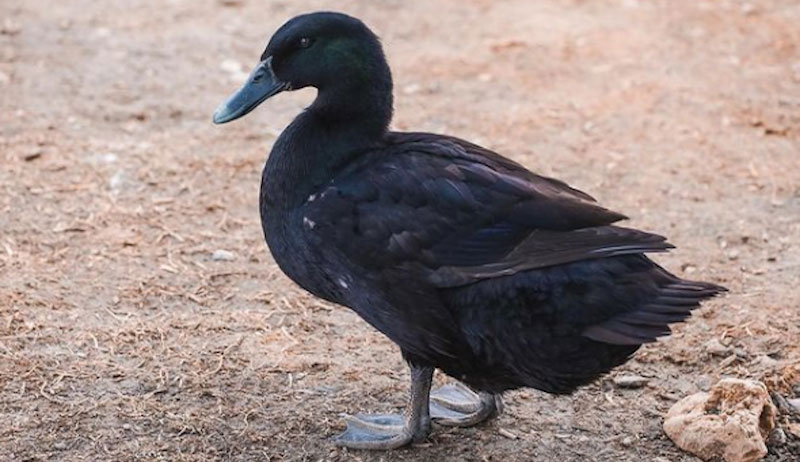
“The ducks are so funny with their eggs!” says Jenna Whelan of Rain Valley Farm, which is situated on five acres of land in Winchester, Kentucky. “I have found many eggs laid throughout our yard, their pool, buried nests in the shavings and between the small crack of the nesting crates and coop wall. They are a bunch of sneaky girls!”
Beyond the fun and games of tracking down hidden duck eggs, Whelan tends to a growing family farm that also includes a fine flock of chickens, a couple of horses and a clowder of resident barn cats.
We spoke to Whelan about the importance of sticking to an effective routine and the joys of Olive Eggers. We also got the scoop on a particularly mischievous duck named Twinkie.
“My mom grew up on a farm, with stories and photos of her riding horses, playing with goats and even driving a manure truck to school!” recalls Whelan as she revisits the origin of her interest in farming. “She’s always had a love for animals, so because of that I’ve not gone a single day in my life without having a pet.”
When Whelan turned 4 years old, she began taking horseback riding lessons—a development that she says was “when the real obsession began!”
After competing and eventually acquiring her own horse in 2007, Whelan realized that “I knew I had to have a farm one day” and that “being able to wake up every day and walk outside to see my horses was my dream.”
In 2019, Whelan’s dream became a reality, when she and her now fiancé moved from New Jersey to Kentucky and purchased 5 acres of farmland.
Rain Valley Farm began with one dog and two horses. But the current resident roll call includes two dogs, two horses, one donkey, five felines, six ducks, three goats and 22 chickens.
“We plan to continue to grow,” says Whelan. “We hope to move to a larger farm within the next few years and expand to add some cattle as well!”
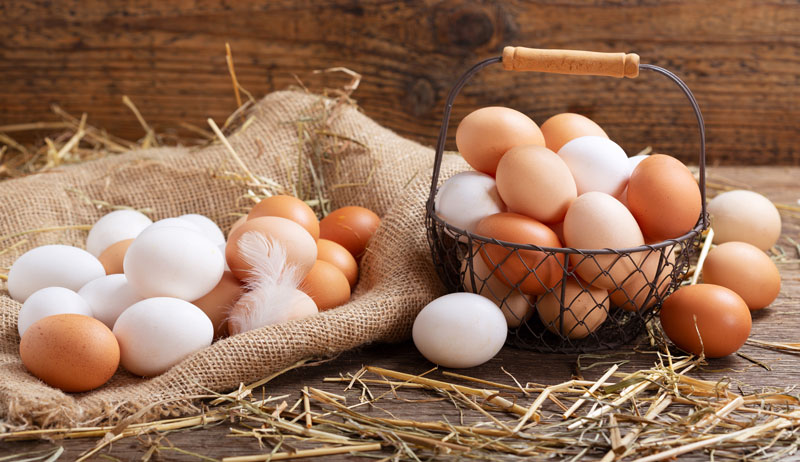
The chickens at Rain Valley Farm produce an array of eggs that Whelan enthusiastically describes as “just stunning.” She says that she used to assume eggs could only be white or brown “because that’s all they sell in the grocery store.” But since adding chickens to her farm, she’s come to appreciate the natural beauty of eggs.
“My favorite eggs have to be the olive green with brown speckles laid by my Olive Egger Priscilla,” says Whelan.
When considering the daily toll of running the farm, Whelan pinpoints a Pekin duck named Twinkie as one of the venture’s “most demanding” factors: “She’s always yelling at everyone and bossing them around!”
Beyond Twinkie, Whelan says that sticking to a routine is an effective way to make sure “everything feels so normal.”
Staying alert to the needs and behavior of her animals is also key. “I guess the most demanding is paying attention to over 40 animals for any slight differences in behavior [and] always making sure everyone is accounted for and healthy,” says Whelan. “Things can change rapidly and it’s so important to be in tune with your animals so you can catch anything before it’s too late.”
“I see the mutual respect all the different species have on the farm and it never gets old to watch,” says Whelan as she takes stock of running her farm. “Watching chickens, cats, goats, horses and dogs all together in the same yard and peacefully interacting—it warms my heart.”
Ramifications of the COVID-19 pandemic will be felt for years to come in nearly every aspect of our lives, from how we work to how we play to how we learn to how we connect with others. For many, the forced downtime was eye-opening. We reassessed how we wanted to not only spend our time, but how we wanted to live.
The inability to go to restaurants and forced meal planning at home for many families had them delving deeply into where their food comes from and who their buying power supports. Added to this was the fact that many city-dwelling folk learned that their cement walls were just that: barriers to truly living.
Thousands of people began looking for land where they could have a garden and raise some of their own food, whether in the form of eggs or meat.
This renewed interest in self-sustainability, combined with other factors, has led to a nearly meteoric rise in the price of everything from real estate to fertilizer. Another unforeseen effect of the pandemic? The incredible interest shown in horseback riding and horse ownership.
As one of the only activities that could continue when nearly all team sports were halted, riding schools and equine breed registries have experienced massive growth.
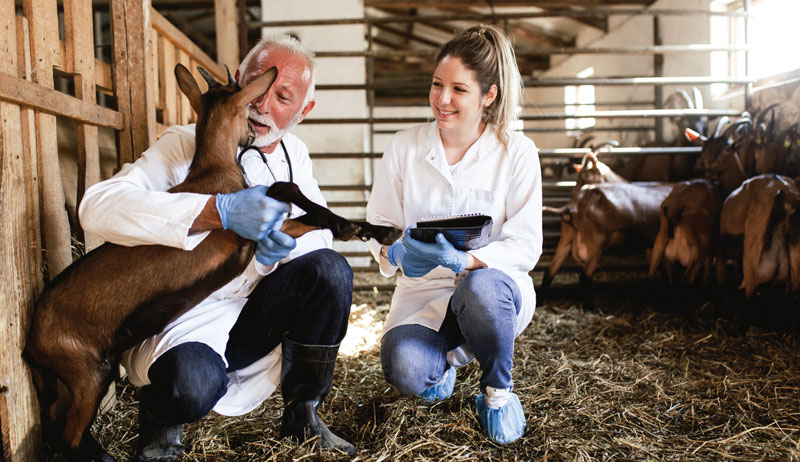
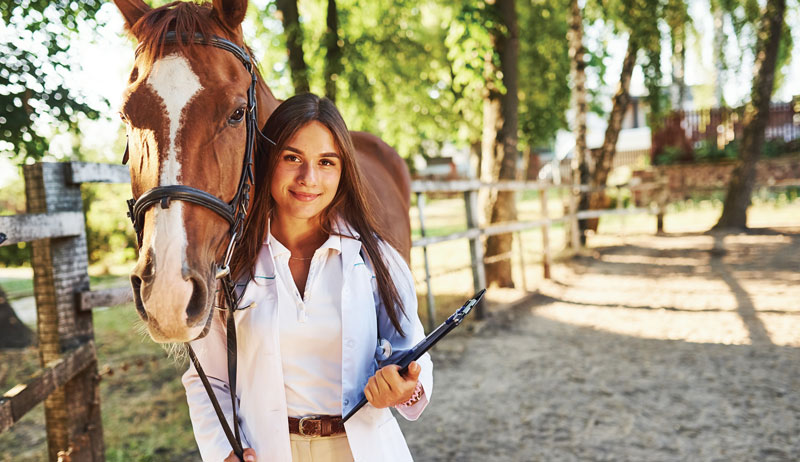
This influx of new, large-animal owners, however, has brought into stark relief what many have been talking about for years. There’s a concerning shortage of large-animal veterinarians these days.
Factors Causing This Crisis
In years past, most owners of animals small and large were spoiled for choice when deciding on whom to bring their animal for care. They often were able to weigh things like proximity, price and personality. Keepers could choose which vet they were most comfortable with.
Those days are truly in the past. Today, in many areas of the country, the ability to choose from multiple vets isn’t an option. The shortage of large-animal veterinarians in rural areas is reaching a crisis point. And our animals will be the ones to pay the price.
Veterinarians, vet schools and animal-health organizations such as the American Veterinary Medical Association have been sounding the alarm for years that this issue would soon reach a breaking point.
And finally, it seems, it has.
By 2025, the U.S. Census Bureau anticipates a possible national shortage of 15,000 veterinarians. The majority of these vets will be needed in rural areas.
If this statistic doesn’t scare you, it should. There is nothing quite as gut-wrenching as seeing an animal you have been tasked with caring for in pain, possibly for hours, as you wait for help to arrive.
But why are so few vet school graduates interested in large-animal practice? Multiple factors play into many vets’ decision to forgo the large-animal side of vet med and also why they leave. Often cited are:
pay
stress
lack of work-life balance
on-call requirements
It’s important to consider that the more rural the service area, the more pressing these issues are likely to be. While vets at larger, multivet practices can often garner more pay and specific working hours, those doctors farther from medical hubs are often on call 24/7/365. They also earn lower salaries.
With few graduates interested in working in more-remote areas, it’s understandable why some practitioners feel their only way to have a better work-life balance—and all that entails—is to leave large-animal vet med entirely.
The draw to companion-animal medicine is real, offering:
Better pay (The average starting salary for a large-animal vet is about half what a companion-animal vet makes; vets involved in food-animal care tend to make even less.)
Limited/no emergency Duty
Shorter work weeks
There’s no denying these perks are all enticing, specifically to female veterinarians who might be interested in starting (and spending time with) a family.
Budimir Jevtic/Adobe Stock
Addressing Vet School Issues
Though these factors may influence why vet students shy away from large-animal practice, there are issues at play even before vet students choose what type of practice they would like to pursue.
Veterinarian Debra Shoulders is the past president of the Kentucky Veterinary Medical Association and the owner of House Calls for Paws and Claws in Bowling Green, Kentucky. She cites the shortage of vet schools (there are only 32 in the country) and the vet school selection process as issues that compound the large-animal veterinarian crisis.
With a finite number of “seats” in each school, a limited number of veterinarians can graduate each year. And few of the people in these seats are opting for a career in large-animal care.
Shoulders says that the GPA often required to gain admission to vet school is a 3.8. Though this ensures that quality candidates are chosen, she notes that using this GPA as an admittance measuring stick can unintentionally prevent the perfect students from applying to—or gaining admittance from—vet school: Students working on their family farms while completing undergraduate degrees.
And these kids are truly students vet schools should be courting. Often, their on-farm work puts them ahead of their peers in regards to ability to handle large animals.
Shoulders suggests that the 3.8 GPA vet school cutoff be lowered to encourage other students to apply. Additionally, she suggests vet schools waive application fees to further encourage student applications.
Here’s a sobering statistic: As of 2021, the average vet school student graduates with $186,430 in student loans, reports the AVMA. Knowing this, it’s easier to understand why small-animal practice would be enticing to recent grads.
For those not entrenched in large-animal veterinary medicine, it can seem that not much is being done to address the veterinarian shortage issue from a national scale. But multiple programs and initiatives have been enacted in an attempt to encourage more vets to relocate into rural areas.
Veterinary Medicine Loan Repayment Program
One of these is the Veterinary Medicine Loan Repayment Program. The VMLRP will pay up to $25,000 a year (for three years) toward the student loans of vets working in areas designated by the NIFA as “shortage areas.” The vet must work in the area for a minimum of three years to receive the $75,000 loan repayment.
The National Institute of Food and Agriculture (a part of the USDA) creates a Veterinarian Shortage Situations map each year. At press, only three states don’t have rural vet issues: Massachusetts, Maryland and Rhode Island, as well as the District of Columbia. (All states in blue have at least one shortage area.)
Interested veterinarians apply for the VMLRP grant. Once funding is given, he or she must secure employment in a rural clinic within 90 days. At the conclusion of three years, a vet working in a shortage area can apply for a VMLRP extension for as long as he or she has veterinary school debt. While this program doesn’t address the salary of an equine veterinarian, its use will hopefully alleviate some of the stress of mounting student-loan debt.
However, this program has its pitfalls. Both the loan and tax payments made on the VMLRP recipient’s behalf are considered taxable income by the Internal Revenue Service. This means that this grant could increase federal taxes, and possibly state and local taxes, owed by the recipient.
To combat this possible increase, VMLRP provides supplementary funds.
Veterinary Services Grant Program
An additional financial assistance program available is the Veterinary Services Grant Program, which provides grants to entities that carry out programs or activities that develop, implement and sustain veterinary services through education, training, recruitment, placement and retention of veterinarians and vet students.
Grants are available to private practices, nonprofits and veterinary schools. They can be used to establish or expand veterinary practices.
The AAEP is also working diligently to address the attraction and retention of equine veterinarians. A task force has been created to identify the issues in equine vet med and explore ways to alleviate them. It is hoped that honest discussion can lead to real, actionable processes.
standret/Adobe Stock
Credentialed Veterinary Professional Roles
The AVMA is deeply vested in determining why fewer students choose veterinary medicine and remedying the problem. One proposed solution is the implementation of two new, credentialed veterinary professional roles: One that works under a veterinarian to diagnose, prognose, prescribe and perform surgery at a limited level and a second role related to clinic management.
The goal of these new roles would be to improve efficiency and reduce workforce stress. Thus far there has been no analysis done to determine if these professional roles are needed and how they would differ from already-established roles.
Despite this, efforts to create an educational framework for these roles is ongoing. The AVMA is researching if these additional team members are needed and if they will qualitatively affect the work-life balance lacking in so many aspects of vet med.
As the industry works diligently to fix the trajectory of the vet workforce, large-animal owners and caretakers have their own role to play. Understanding there may be a possible delay in care because of overwhelming caseloads and offering compassion is just one way to show practicing vets care.
Being aware of time constraints and each vet’s right to personal time is another.
Livestock owners, veterinarians and vet med organizations must work together to address burnout in equine veterinarians. If they don’t, the animals will suffer.
The shortage of large-animal veterinarians is on the radar of nearly every state. But this shortage is of particular concern for states with agricultural commodities as major drivers of their economy.
Kentucky is a prime example, with its top five agricultural endeavors, based on sales, being:
soybeans
corn
poultry
horses and other equines
cattle
The lack of large-animal, regulatory veterinarians in this state could directly affect the food supply chain, with too few vets to monitor the cows, pigs, chickens and other animals meant for human consumption.
Additionally, successful disease traceability at the state level relies heavily on vets in private practice as well as those in a regulatory capacity. Regulatory vets simply cannot be everywhere at once, says Katie Flynn, the state veterinarian for the Commonwealth of Kentucky.
A disease outbreak in any state is terrifying. In a state that helps feed tens of millions of people each year, the results could be catastrophic.
In June, the Kentucky Department of Agriculture, the Kentucky Board of Veterinary Examiners and the Kentucky Veterinary Medical Association held a stakeholder’s dialogue on the status of large animal veterinarians. Gathering producers, leaders, educators and subject matter experts from the livestock industry, as well as the veterinary and regulatory fields, the multihour session allowed for discussion on the background of the issue as well as open dialogue on possible ways to begin alleviating the large animal vet shortage.
Ideas that emerged from this meeting include:
investigation into grant funding for contract regulatory vets
exploration of low-interest loans that will allow new veterinarians to buy out established practices
utilization of existing funds to physically build vet practices or alleviate student loan debt
creation of legislation that would earmark funds to pay off one year of debt per year worked in underserved Kentucky areas
Missouri is another state thinking outside the box to encourage large-animal vets to stay in state. Missouri’s main livestock commodities include cattle, poultry and hogs.
The loan provides $20,000 for living and educational expenses for six individuals per academic year. The loans are forgiven if the student practices large-animal vet med in a defined area of need in the state. A large-animal vet can have $20,000 forgiven for each year of service provided.
Many vets and vet clinics are looking to more-unusual ways to entice vets to large-animal, rural practice. Some collaborate with others in the area to share on-call responsibilities. Others offer signing bonuses or housing assistance.
Veterinarian Keelan Lewis, owner of Salt Creek Veterinary Hospital in rural Olney, Texas, purposefully created a child-friendly practice to court and retain employees. In addition to allowing her staff to bring their children with them to work when needed, Lewis even purchased a nearby home and hired a nanny to care for the staff’s children while they worked at the mixed animal practice.
Though an expensive endeavor, Lewis says the return on investment is employee retention and productivity.
Though many organizations and veterinarians are working to address the issues associated with large-animal veterinary medicine, there is no silver bullet that will solve the nationwide vet shortage livestock owners are seeing. Creative approaches to addressing issues of pay, stress and work-life balance will be needed to encourage vet students to enter the large-animal vet med field.
This article originally appeared in the November/December 2022 issue of Hobby Farms magazine.
Microgreens get a lot of attention in the winter months. People are itching to grow something green, eat something healthy and start new habits and hobbies. Enter the wonderful world of microgreens.
Many companies have made it very simple to learn and begin growing microgreens at home. Below, we review three different starter sets to help you decide which system sounds best for you.
But first, a few questions about microgreens.
Why Grow Microgreens?
These tiny garnishes pack a nutritional punch of concentrated nutrients up to 40 time the value of mature greens. All microgreens are high in antioxidants and most contain potassium, iron, zinc, magnesium and copper in denser levels.
Many hobby farmers grow microgreens for themselves or to sell at farmers markets to generate income.
How Long Do They Take to Grow?
All microgreens can be grown and harvested between seven to 10 days. This makes them more mature than sprouts but less mature than baby greens.
What Do They Taste Like?
The flavors vary according to the plant. They are the same plants grown to maturity, just harvested earlier with more concentrated flavors.
Microgreen flavors can be described as spicy, sour, bitter, fresh, nutty and/or earthy, depending on the plant.
How Do I Use Them?
Popular ways to use microgreens are in salads, on sandwiches and in smoothies.
The most common varieties of seeds are from these plant families:
Brassicaceae: Cauliflower, broccoli, cabbage, watercress, radish and arugula
Asteraceae: Lettuce, endive, chicory and radicchio
Apiaceae: Dill, carrot, fennel and celery
Amaryllidaceae: Garlic, onion and leek
Amaranthaceae: Amaranth, quinoa swiss chard, beet and spinach
Supplies included: Six organic microgreen seed packets, three reusable grow trays, six grow mats, three reusable lids and trays, quick start guide
Supplies you’ll need to find: Water
Quantity produced: six trays
Growing Medium: Organic jute
Ease of use: Checklist in the quick start guide for days on through 14.
Daily Maintenance: Uncover day 23, instructions for watering and harvesting on each day.
Refill option: Refill kits available for seeds and mats.
All kits were extremely easy to grow. The instructions were very clear and direct. All grew in relatively the same timeframe with similar sprouting percentages.
For beginners growing microgreens to gauge their own interest, or for those buying gifts for garden enthusiasts, the two $25 sets are a great introduction. However, for just $15 more, the benefit of nicer reusable trays from Urban Leaf makes the most sense.
Three of the small trays are a good amount to supply a household every 10 days. Getting into a pattern of harvesting and starting over would be very simple for users looking to add microgreens to their daily lives.
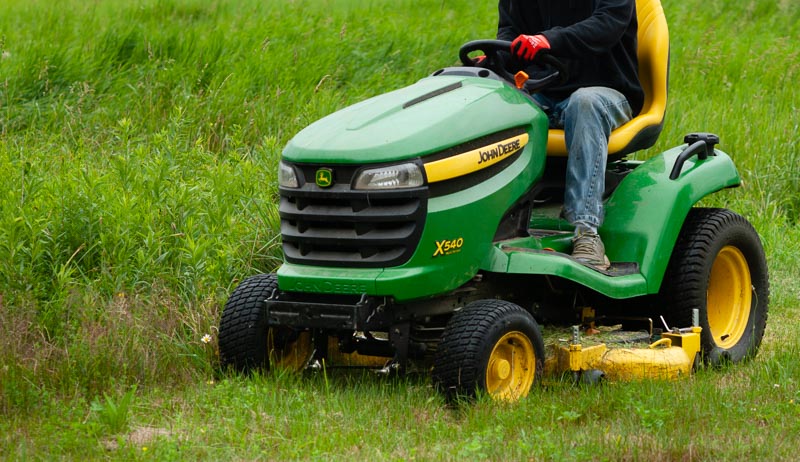
Let’s say you’re shopping for a lawn or garden tractor with the primary aim of mowing your farm. It’s easy to get caught up comparing the key numbers that outline each model: What is the engine horsepower? How wide is the mowing deck? And … how much does it cost?
But beyond the numbers, there are many less obvious features that affect the quality and performance of a riding mower. Here are five helpful features to consider when shopping for a riding mower.
1. Differential Lock
If possible, opt for a tractor that offers a differential lock. It’s a feature you’ll use often if you navigate challenging or slippery terrain.
Normally, the drive wheels are able to turn at different speeds, which is useful when turning. But this isn’t helpful when one wheel meets resistance and most or all of the torque is thrown to the free wheel instead.
A differential lock allows you to lock the drive wheels so they operate at the same speed, giving more torque to the wheel that’s meeting resistance. This allows you to power through tough terrain. That can save the day if—(ahem)—you accidentally get your riding mower stuck on top of an unseen anthill….
Goodbye, carburetors. Engines with electronic fuel injection offer a wide range of benefits. They’re easier to start, they require less maintenance, they use less fuel, and they produce more power than an otherwise comparable engine without electronic fuel injection.
It might not be the flashiest feature on the spec sheet, but electronic fuel injection is a significant positive.
3. Hydrostatic Transmission
A gearbox transmission gets the job done. But a pedal-driven hydrostatic transmission raises your mowing game to another level.
You can access any speed from zero up to the tractor’s top speed. And changing from forward to reverse is as simple as bringing the tractor to a stop and pushing the reverse pedal.
When mowing tricky areas that require frequent speed and direction shifts, a hydrostatic transmission is a big positive.
4. Hydraulic Deck Lift
By what means do your raise and lower the riding mower deck? Less expensive lawn tractors might use a mechanical lever with several different settings. It’s a perfectly serviceable way to adjust the deck. But it’s not as slick and easy to use as a hydraulic deck lift, which uses the tractor’s hydraulics to effortlessly control deck height.
If you frequently adjust your deck height, it’s hard to beat hydraulics. A hydraulic lift system might also be compatible with other attachments besides a mowing deck, such as a tractor-mounted snow blower.
When mowing, it’s common for grass to accumulate under the riding mower deck. Over time, the grass can build up and decrease performance. Some mowing decks offer hose attachments so you can run water through the deck and wash out grass clippings.
This helps keep the deck clean and free from buildup.
None of the five features listed above are absolute requirements for mowing grass. But they certainly improve the performance of your tractor and can help you get mowing done smoothly and easily.
As urban homesteaders we are always looking for ways to do more with what we have. We love the process of helping to heat our home with locally harvested wood instead of burning fossil fuels. It’s a great way to make good use of the resources around us while creating a cozy home and saving money too!
There’s a lot of information out there on whether wood burning is a positive or negative for the environment, and so much of it comes down to how you burn the wood. Burning wood is basically carbon neutral, as burning spurs the tree to simply release carbon it sequestered during its growth.
The possible negatives are the small particles that are emitted in the smoke and soot, which can be harmful for those with lung issues.
One way to greatly help this issue is to burn with a high efficiency woodstove.
Have you got a sweet ram you raised from a lamb that suddenly butts your back or charges you?Make no mistake: This is a dangerous situation. Shepherds should always stay aware of their safety around a ram.
I often decide what I’ll write about based on what I am interested in or what I hear others talking about. Sometimes I see a lot of topics from a Facebook group, my personal contacts or friends of those contacts.
One topic I see quite often is the issue of a ram becoming aggressive toward humans after having been perfectly friendly.
In many cases, the ram has been part of the flock since it was a young lamb. The owners petted and handled the cute little guy because he was “so sweet.” Suddenly, that sweet boy starts butting the person when they turn their back or the animal begins running at them.
The owners write a post on Facebook wondering why their formerly friendly male is suddenly not so friendly.
A Frightful Tale
I have heard stories of farmers being injured or even killed by a ram.
One story I heard from a sheep owner was particularly chilling. She was in her barn feeding and watering and a ram began charging her. He cornered her away from the gate. Her border collie happened to be with her, and the dog lept into a barn stall and held off the ram so the woman could escape.
Your ram may indeed be more docile and may not seem to pose a threat to the keeper’s safety. But it’s important to know that any ram can turn on a human or another animal. According to The Ohio State University Sheep Team, “Aggressive behaviors are associated with normal sexual behavior and highest during the breeding season.”
Aggressive behavior can be anything from pawing or stamping the ground as a human approaches to nibbling, head butting or charging.
Sometimes the worst aggression offenders are those cute little lambs that may be bottle lambs or simply very friendly. Because the ram is overly comfortable with a human, he may become more aggressive with his owners. That’s why it’s really best not to pet and handle ram lambs, instead simply letting them socialize with the flock.
It can be especially harmful if the young ram has been petted or scratched on the head. Later on, this may lead to the ram taking that pat as a challenge. And honestly you don’t want a 180-pound animal charging at you out of the blue or when your back is turned.
So first of all, if you decide to raise a ram lamb, don’t spend a lot of time handling him. Let him stay off by himself or with the other ram lambs. The folks at the OSU Sheep Team recommend keeping that distance, as otherwise the ram will not develop a healthy respect of their humans.
Once your ram has begun breeding, his behavior could change. Even if he does not seem aggressive at first, you need to be aware that he could be at any time.
And what do you do if a ram is coming at you? Well, first of all, always be aware of where the gate or other exit is when you go into an area with an adult ram. Some people have been known to successfully yell and threaten the charging ram enough to stop it.
But once your ram charges, he probably will only increase his aggressive behavior toward you, so stay vigilant about your personal safety.
I personally never go into a pen with a ram unless I have my border collie, Dash, with me. We kept one ram for two years of breeding after getting him as a lamb. However, after that (and a couple of foot stomps every time I came near), I realized he might need to go.
And so, we sent him to the processor. Now our farm keeps two growing ram lambs we are using for breeding this year.
I recommend not overreacting and getting rid of your ram. However you do need to keep a respectful distance from him, no matter how docile he has been in the past. And if your ram is especially aggressive, you may want to consider some different genetics.
This type of behavior can be inherited.
We’ll be looking for lambs at our place in April and May. But happy lambing to all of you who are undergoing that fun right now. Stay warm!
There is good profit to be made by growing lettuce mixes for salad greens—especially if there is higher yield from a piece of ground. In early spring the potential to cut greens and have them grow again for a repeat harvest is good. But this process does require some care and understanding to ensure the quality and quantity stays high.
Growers need to consider varieties, planting and harvest techniques, and overall soil quality.
Lemon curd is wildly popular, but have you ever tried orange curd or lime curd? They are just as special and delicious as lemon, and they can be used in all the same ways. Simply spread citrus curds over toast, scones or pancakes; mixed into oatmeal or yogurt; or use as fruit jam.
Curds can also be used as a pastry filler for filled doughnuts, tarts, cake or cookies. Or, better yet, just eat it by the spoonful as-is for a flavorful treat!
I have a spectacular recipe for lemon curd in my third book, WECK Home-Preserving. But today I’m sharing my adaptation of that recipe to make orange curd.
Navel oranges are at their peak this time of year, so take advantage and make a batch of sunshine to enjoy during these chilly winter days.
Yield: 3 cups
Ingredients
1 1/2 cups fresh navel orange juice and zest (organic recommended)
Scrub the oranges clean. Zest two oranges and set aside. Juice oranges until you have 1 1/2 cups fresh orange juice (the pulp and seeds are fine to include as they’ll be strained out later).
Heat water in a double boiler to a medium simmer. (You don’t want a rolling boil.) If you don’t have a double boiler set up, you can use a medium saucepan and a heat-tolerant glass or nonreactive metal bowl that fits on top of the pan.
Do not allow the water in the saucepan to touch the bottom of the bowl. It will heat the curd too much.
In the bowl (prior to adding to the double boiler), whisk together the eggs (and yolks) and gradually add in the orange juice, zest, sugar and salt. Add ingredients to the double boiler (or over the simmering pot) and begin to add in the cubed butter, one cube at a time.
Whisk constantly. As the butter melts, the curd will thicken. This step could take 15 minutes or longer. Be patient.
Once the curd begins to thicken, dip a spatula or wooden spoon into the curd to test if it has set. A set curd should coat the surface of the utensil. It won’t appear runny. Instead, the droplets should be thick and slow moving.
Once thickened to satisfaction, remove the curd from heat. Place a fine mesh strainer over a glass measuring cup or heat-tolerant bowl and pour the curd through to ensure a smooth finished product.
Transfer the finished curd to clean jars. Cover and store in the refrigerator up to two weeks or freeze up to one year.
If your layers produce over the winter months, you may be in for a minor windfall. The price of eggs is skyrocketing throughout the country as a shortage takes hold of the United States. This shortage has caused the cost of a dozen to double—and even triple—in some states.
Why so eggspensive?
Supply & Demand
Fears of an egg shortage first came to light late last fall, as the Highly Pathogenic Avian Influenza (HPAI) epidemic which began in early 2022 continued to rage. This drastically affected commercial and backyard flocks in 47 states in the U.S.
According to the US Department of Agriculture, close to 58 million birds have been lost to this killer virus in every state but Hawaii, Louisiana and West Virginia, with Iowa suffering the most losses.
This drastic reduction in layers has taken its toll on egg production. This shortage was compounded by the holiday season, as eggs are critical components in many dishes from latkes and kugel to egg nog and Christmas cookies.
The resulting inequality in supply and demand has caused egg prices to soar through the roof. According to the Egg Market News Report released by the US Department of Agriculture on January 9, 2023, the price of a dozen large eggs currently ranges from $4.59 in the Midwest to $7.35 in California.
In some parts of California, the prices run even higher. In Lathrop, located east of San Francisco, teacher Sindi Sheth noted that a dozen large brown eggs at her grocery store are currently priced at $7.99. And organic eggs carry an even larger price tag.
According to the Urner Barry Egg Index, the average price of a dozen eggs hit $4.66 in December 2022, compared to just $1.15 in December 2021. Inflation has also played a part in the escalating price of eggs.
Cage-Free Production
Another key reason that California is facing such a severe egg crisis is because of Proposition 12, the Farm Animal Confinement initiative, which mandates that egg-laying hens (and other domestic livestock) must be cage free. This initiative took effect on September 1, 2022. Since cage-free production requires more space than caged egg production, California egg farms have been struggling to keep up with the demand for eggs and the required changes.
California is not the only state that mandates cage-free egg production. Michigan, Massachusetts, Ohio, Oregon, Rhode Island and Washington also have cage-free laws.
And Colorado just became the eighth state to enact such a law. Colorado’s Egg-Laying Hen Confinement Standards, or HB20-1343, requires poultry keepers to provide at least one square foot of coop space per hen as of January 1. By January 1, 2025, all hens must live in a cage-free system.
In addition, the sale of caged eggs is no longer permitted, with stiff fines for violators. This new law is expected to negatively impact the egg shortage in Colorado and in states who obtain their eggs from Colorado egg farms.
What does this mean for the backyard flock owner? First and foremost, continue practicing biosecurity with your birds. Watch for signs of HPAI, especially if your chickens range freely in an area frequented by wild birds.
Second, if your hens lay year round and your municipality permits the sale of backyard-flock eggs, you can help with your local shortage while turning a tidy profit for your—and your girls’—efforts.
As a courtesy, check with your regular customers first. It may just be that they can use an extra dozen or two … or have friends desperately seeking dozens who may become new regulars for your egg business after the shortage ends.
Gardening has always had its challenges—like the time the raccoons got most of my sweet corn. (The fuzzy vandals had taken a few bites out of each ear and then just cast them aside with little regard for all of my hard work.) But I’ve noticed that—little by little and year after year—gardening seems to have become even more challenging.
Many gardeners now must contend with more extreme weather events, extended periods of heat and drought, unchecked insect pests and many other climate change-related troubles.
Based in Somerset, England, Morgan operates a 100-acre certified organic farm. She’s also edited the U.K.-based Organic Farming magazine for the last decade.
“My time with Organic Farming has brought me into contact with some inspiring farmers and growers,” she says. “Looking around their holdings and attending conferences, such as the Oxford Real Farming Conference, has given me new insights on how they cope with the extremes of climate.”
Those insights helped to inform The Climate Change Garden. According to Morgan, a couple of keys to more resilient gardens include developing healthy soil and a healthy soil food web—both of which can help to mitigate the effects of today’s “topsy-turvey climate.”
“I’ve not dug my soils for 20 years or more,” she notes. “Instead, [I] have moved to no-till, where the soil is left undisturbed as much as possible.”
But what if you have your heart set on turning over your garden beds each season? “For those who still like digging, I point out that every time you bring soil to the surface, some of the carbon is lost,” Morgan says.
That newly released carbon contributes to the warming of the planet. What’s more, Morgan continues, “The soil structure is disrupted, and you lose water retention capacity. [Digging also] damages the network of fungal hyphae in the soil that are so important for plant health.”
Digging also brings weed seeds up to the surface where they’re more likely to sprout. This, in turn, necessitates more work from you—removing the unwanted plants. To keep weeds down, lock in moisture and protect the soil, Morgan recommends adding a thin layer of compost to your gardens in the fall, as well as mulching during the summer.
Extra Protection
Morgan further protects her soil by growing living mulches like clover and nasturtiums underneath her crops. She explains, “[Living mulches are] low-growing, carpeting species.”
(Not only does clover fix nitrogen in the soil, but its flowers, along with the nasturtiums, attract pollinators.)
She continues, “I am pretty relaxed about some annual weeds, too. I don’t tend to worry about the smaller weeds, especially if they have flowers that support pollinators.”
Some of the weeds she actually welcomes include ground ivy (Glechoma hederacea), chickweed (Stellaria media) and red dead nettle (Lamium purpureum). “They produce lots of flowers, are not competitive with crops, and are easy to remove if necessary,” Morgan says.
But what if weeds do start to overwhelm the garden? Morgan generally cuts them off with a sharp hoe, leaving their root systems intact. “I always leave roots of large weeds in the ground wherever possible, so they decay and add nutrients to the soil,” she says.
Besides preserving the health and integrity of our topsoil, we also need to encourage more diversity in our gardens if we are to prevail as gardeners in the near future. “The more diverse the crops, the more varieties within a crop. [And the more we use] companion plants, the more resilient the garden,” Morgan says.
Certain crops may fail due to increased numbers of certain insect pests or, say, extra soggy growing conditions. But, provided you’ve hedged your bets with multiple varieties, others may survive.
Climate-wise gardeners should also grow more perennial veggies like leeks, onions and asparagus.
“They definitely save time—no sowing seeds, potting, transplanting, etc.—and often provide a crop during the winter and early spring when other crops [have yet] to get going,” Morgan says. “The soil under these perennials is undisturbed, of course. So, that helps conserve moisture while their leaves add a mulch to the surface. [That’s a] win-win.”
Cool Springs Press is set to release The Climate Change Garden: Down to Earth Advice for Growing a Resilient Garden in February 2023.