There’s a moment every gardener, farmer, or homesteader knows well: stepping out early in the morning, dew on the grass, a full day of chores ahead. You need a boot that’s ready for anything—watering seedlings, checking the coop, hauling hay, or even a quick run into town for seed trays or feed.
For those everyday “don’t-know-what-today-will-bring” kind of mornings, the Dryshod Evalusion All-Around Cuff Boot stands out as a dependable go-to.
The Dryshod Evalusion Cuff Boot: 4 Reasons It Belongs by the Back Door
When the day’s tasks range from harvesting greens to hauling water or wrangling livestock, footwear needs to be both dependable and easy to live with. The Dryshod Evalusion All-Around Cuff Boot offers a lightweight, mid-height solution built for those unpredictable days when comfort, durability, and versatility matter most.
Here’s why it’s earning a permanent spot by the door:
Lightweight Performance That Goes the Distance
Designed on a running shoe platform, the Evalusion Cuff Boot offers comfort and responsiveness without extra weight. The exclusive DUREVA™ outsole makes each pair nearly a pound lighter than comparable boots, while still delivering rugged durability across mud, rock, and loose ground.
Whether bending through garden rows, stepping into animal pens, or covering uneven terrain, the reduced weight makes long days easier on the legs and back.
Mid-Height Coverage Without the Bulk
The boot’s cuff-height design strikes a balance between protection and flexibility. It’s tall enough to block out grass clippings, mulch, hay, and light splashes—yet low-profile enough to fit easily under pants or work jeans.
Farmers and gardeners alike will appreciate how quickly the boots slip on and off, especially when juggling tools, gate latches, or an energetic farm dog all at once.
Breathability Where It Counts
Traditional rubber boots often trap heat and moisture, especially in warmer weather. The Evalusion Cuff combats that with WIXIT Cool-Clad™ lining, featuring moisture-wicking mesh and micro-perforations that improve airflow throughout the day.
The result? Dry, comfortable feet—even during midsummer garden sessions or long afternoons in the barn.
Stable and Quiet Tread
The built-in nylon shank gives enough support when you’re stepping over rocks or working on uneven ground. And the multi‑lug tread? It grips, but flexes with soft soil or gravel—no clomping barn‑yard echo. That quiet step is golden when you don’t want to wake the chickens too early.
Why It Hits the Mark
Tall boots aren’t always necessary, but sneakers or garden clogs often fall short on real farm terrain. The Evalusion Cuff Boot bridges the gap between comfort and utility. If you’re walking the line between garden rows, farm chores, and homesteading tasks and want one reliable, no-fuss boot, this is it. Every season, every task, every kind of day.
Looking to add a little patriotic flair to your backyard flock? Choosing red, white and blue chicken breeds is a fun and festive way to celebrate your love for country—especially around holidays like Independence Day or Memorial Day. Beyond their colorful plumage, these breeds are reliable layers, hardy birds, and charming additions to any coop. Whether you’re just starting your flock or planning to add more birds, these feathered friends bring color and character to your homestead.
Here are five full-colored breeds you can raise to create the perfect red, white and blue poultry flock.
🐔 Cochin: A Fluffy Breed with Patriotic Variety
Beloved by Queen Victoria, the feather-legged Cochin is a favorite with families because of its gentle, friendly nature. The bantam version of this chicken breed is just as affectionate … and comes in red, white and blue colors.
This colorful Bantam Cochin trio is ideal for chicken owners who have small yards, small children or both … or who simply want beautiful, full-feathered birds.
🐔 Orpington: Buff, Blue & Black for a Colorful Coop
One of America’s most popular backyard birds, the Orpington has earned its place in chicken owners’ hearts with its reliable egg production, amusing antics and mellow disposition. While the Buff Orpington can be commonly found in flocks throughout the country, White Orpingtons and Blue Orpingtons are slowly gaining prominence with poultry keepers.
The Red Orpington, developed by W. Holmes Hunt in 1911, remains a fancier’s favorite. But this breed can be purchased from specialized breeders as well as some commercial hatcheries.
🐔 Silkie: White and Blue-Gray Birds with Unique Style
This sweet, serene bantam was described as a chicken with “hair like cats” by explorer Marco Polo in the 13th century. Today, the Silkie is kept for companionship, for exhibition and for its fabulous mothering instincts.
Silkies come in both bearded and beardless chicken varieties, and both come in white and blue colors. Red Silkies are challenging to find. Your best bet is to check with Silkie breeders who dabble in color projects.
🐔 Ameraucana: Blue Egg Layers with a Patriotic Hue
What better breed to display the colors of our country than the chicken that practically has America in its name? This cold-hardy heritage hen is known for the beautiful, sky-blue eggs that it lays.
Ameraucanas are cheery, sociable chickens that enjoy roaming, foraging and satisfying their endless curiosity. Blue Ameraucanas and White Ameraucanas are recognized by the American Poultry Association (APA), as is the breed’s brown-red variety … which may not be fully red but hopefully that can be overlooked due to its patriotic name!
🐔 Leghorn: Classic White Breed with Strong Egg Production
Although this breed originated in the Livorno region of Italy, the Leghorn has become almost synonymous with American egg production. Despite historic—and ongoing—ties to commercial egg farms, the non-industrial Leghorn is actually a hardy heritage bird well suited for homesteads and hobby farms.
This extremely active chicken is an instinctual forager that can hunt and scratch for most of its food if given the opportunity. The Leghorn also lays an average of 300 eggs per year, one of the highest rates of lay in all poultry. The Red Leghorn and the White Leghorn are recognized by the APA. The Blue Leghorn is officially recognized in the United Kingdom but not in the U.S., though specialized breeders may produce this variety in America.
Red, White and Blue Chicken Breeds: Final Thoughts
Whether you’re planning your flock around national holidays or simply love the idea of a colorful, cohesive coop, these red, white and blue chicken breeds offer both beauty and practicality. From fluffy white Silkies to blue-egg-laying Ameraucanas and classic white Leghorns, there’s a patriotic pairing for every backyard setup. Celebrate your flock—and your country—with birds that bring charm, character, and a splash of festive color to your homestead.
This article was about red, white and blue chicken breeds was written for Chickens and Hobby Farms magazines. Click here to subscribe.
If you’re wondering what chickens lay white eggs, the answer includes breeds like Leghorns, Hamburgs, and Anconas, all known for their reliable production of bright white eggs.
Chicken Breeds That Lay White Eggs
So, if you are wondering what chickens lay white eggs, here are eight popular breeds to pique your interest.
#1 Leghorn
With their excellent feed-to-egg ratio, Leghorns are the most popular egg-laying breed in the U.S. The White Leghorn is the primary white egg-producing breed used in commercial egg farms and a popular breed found in many backyard flocks. Leghorn hens produce 5 – 6 large white eggs weekly (280 – 300 eggs annually).
Leghorns are flighty, excellent foragers and active birds who, if given the opportunity, will sleep in the trees rather than the coop. However, this practice is not advised, as a Leghorn’s white feathering is easy for predators to spot.
The Leghorn comes in several striking colors: Black, Black-Tailed Red, Buff, Columbian, Dark Brown, Exchequer, Light Brown, Red, and White. It is also among only a few breeds available in single and rose-combed varieties.
#2 Andalusian
Also known as the Blue Andalusian, this breed will make a lovely addition to the coop. With their beautiful slate-blue coloring and excellent egg production, Andalusions are among the most popular white egg breeds for backyard flocks. Andalusian hens average 4 – 6 medium white eggs weekly (200 – 220 eggs annually).
Close-up of an Andalusian chicken strutting around a garden. Adobe Stock by lizcoughlan.
Andalusians are active, flighty birds that prefer little human interaction. This talkative and noisy breed does best when kept in small numbers.
Andalusians are recognized in one color, a striking laced blue. However, the breed’s color doesn’t breed true, resulting in black or splashed-colored offspring.
#3 Dorking
When many backyard flock enthusiasts consider what chickens lay white eggs, Dorking rarely comes to mind. While the breed is often considered a table bird, Dorking hens are fair producers, averaging 2 – 4 white eggs weekly (100 – 120 eggs annually).
What they lack in egg production, Dorkings make up for with their friendly, people-loving personalities. This breed is calm and one of the few white egg layers to go broody.
Silver Dorking special breed cockerel standing alone on the grass. Adobe Stock by marilyn barbone.
Dorkings come in several recognized colors: Red, Silver-Gray, and White, with the Silver-gray being the most popular of the three varieties.
#4 Houdan
Houdans are one of the most prolific ornamental breeds. With their unique crest, muffs, and beards, Houdans resemble more of a fancy show chicken than an egg producer. While the breed is excellent on the show table, hens of this breed are excellent egg-layers, averaging 3 – 5 medium-white eggs weekly (120 – 150 eggs annually).
Houdan chickens in the garden. Adobe Stock by Koos.
While they can be flighty, Houdan hens are often friendly and ideal family pets.
Houdans come in two color varieties, Mottled and White.
Did you know? Both the Houdan and Dorking breeds have five toes.
#5 Polish
With their cute crest and beautiful feather patterns, it’s hard not to fall in love with Polish hens. Sweet, calm, and quiet, these hens are known for their friendly disposition, making them a good choice for family pets. Hens are good layers, averaging 2 – 5 medium white eggs weekly (100 – 150 annually).
Buff Laced Polish chicken with crest of feathers. Adobe Stock by Sunshower Shots.
With their limited vision due to their feather crest, the Polish should never be allowed to free range.
Polish comes in various eye-catching colors: Black, Blue, Buff Laced, Golden, Gold Laced, Silver Laced, White, White Crested Black, and White Crested Blue.
#6 Ancona
Anconas are among the most prolific white egg-layers. Hens average 4 – 6 medium white eggs weekly (200-220 eggs annually).
Ancona hen with large red comb. Adobe Stock by jenngarcia.
While they excel in egg production, Ancona hens may not be suitable for many backyard flocks as they are flighty and aggressive. This breed wants no human interactions and prefers to spend its days free-ranging. Ancona hens do not tolerate confinement and are not suited for a suburban area.
The breed comes in one color: black with a beautiful beetle-green sheen and striking white speckles across the head and body.
#7 Hamburg
Hamburg chickens are among the most uniquely patterned chickens available today. With their spangled feathers, they could easily be known as the “polka-dotted breed.” Despite their ornamental look, Hamburg hens are good producers, averaging 3 – 5 medium white eggs weekly (120 – 150 eggs annually).
Hamburg Chicken. Courtesy Oregon Department of Agriculture/Flickr
A Hamburg hen’s personality is a little unpredictable as some strains of this breed have a nervous and high-strung personality, while others are friendly, talkative, and sociable.
This breed comes in six striking colors: Black, Gold Penciled, Gold Spangled, Silver Penciled, Silver Spangled, and White.
#8 Campine
The Campine (pronounced Campeen) is known for its matching plumage in hens and roosters. The roosters lack the long sickle, hackle, and neck feathers that many roosters sport. Campine hens are nonsitters and respectable egg layers, averaging 3 – 5 medium white eggs weekly (140-200 eggs annually).
pinevalley/Thinkstock
Flighty and inquisitive, Campine hens may often be aloof until they warm up to you. If handled frequently, Campines make friendly and endearing flock members. While the breed is active and prefers free-ranging, keeping birds in confinement may be necessary for a friendly flock.
The Campine comes in two colors: Golden and Silver. Both color markings are the same, with the head and neck a solid gold/silver and lightly barred with black on the body feathers and tail.
What Chickens Lay White Eggs: FAQ
What breed of chicken lays the most white eggs?
The White Leghorn is the most prolific white egg layer, producing up to 300 eggs per year.
Do white chickens always lay white eggs?
Not always—egg color depends on genetics, not feather color.
Are white eggs less nutritious than brown eggs?
No, white and brown eggs have the same nutritional value; the color difference is cosmetic.
White Egg Laying Chickens: Final Thoughts
If you’re looking to add white egg layers to your backyard flock, these eight breeds offer both beauty and reliable production. Whether you prioritize temperament, egg quantity, or hardiness, there’s a white egg-laying chicken that fits your needs. Now that you know what chickens lay white eggs, you can confidently build a flock that suits your egg basket and lifestyle.
This article about what chickens lay white eggs was written for Chickens magazine online. Click here to subscribe.
If you aren’t experimenting with compound butters, what are you waiting for?
What is Compound Butter?
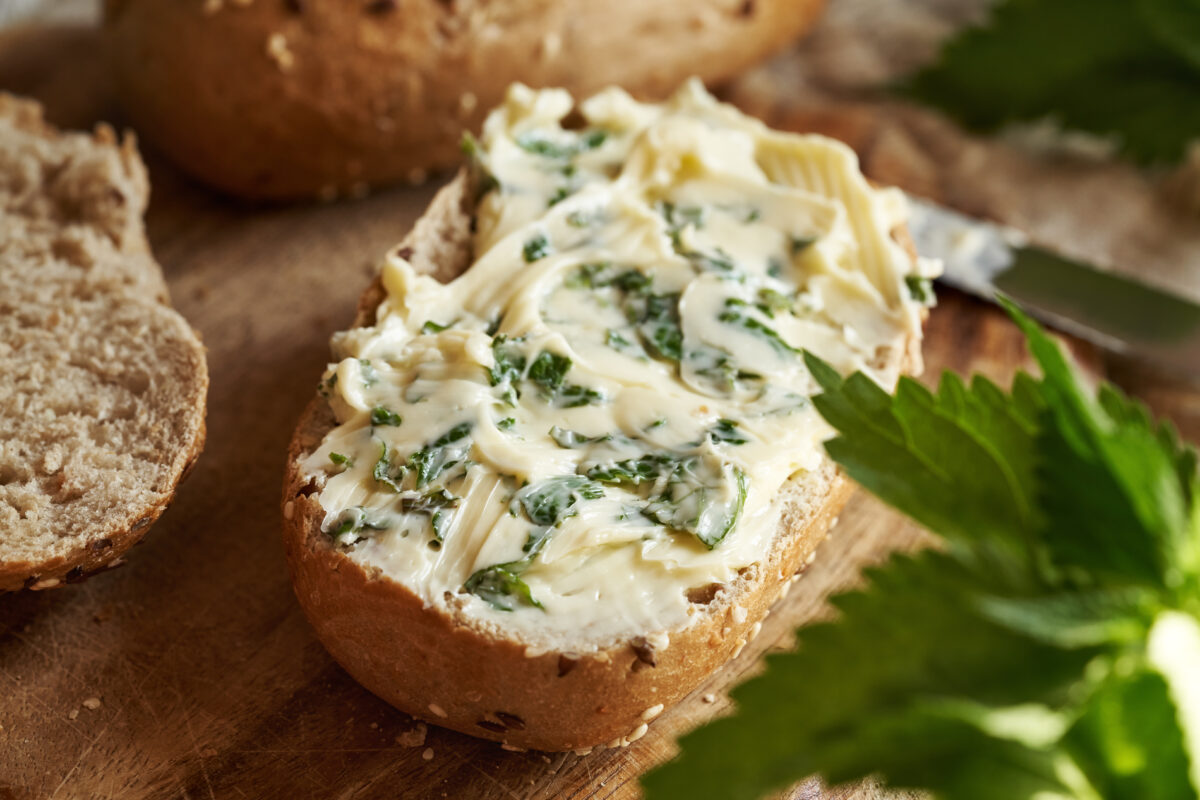
Essentially, compound butter is plain homemade butter or store-bought butter (salted or unsalted) that has been mixed with other ingredients, such as herbs and spices.
The infusion of chopped garlic, fresh herbs and other ingredients can level up a basic table butter into something exceptional. Aside from being packed with flavor, compound butter can be crafted to look visually beautiful as well (we do eat with our eyes first, after all). Enhance your meal with the addition of colorful edible flowers mixed within the butter or layered on the outside of a butter
log.
How to Make Compound Butter
The process of making compound butter is very simple, requiring only a few steps. The general process involves mixing various ingredients of choice into softened butter. Then shape the butter into a log and chill it.
Here are two recipes for you to try: one savory herb butter and a sweet compound butter.
Savory Herb Butter Recipe
Yield: 4-ounce butter log (1/2 cup)
Ingredients
4-ounce stick of butter of choice, softened to room temperature (I used salted butter)
2 tablespoons of fresh herbs of choice (thyme, rosemary, chives, parsley, tarragon), finely
chopped
3 cloves of garlic, chopped and crushed with the back of a spoon
Dash of black pepper
Pinch of salt
Other supplies:
Parchment paper
Directions
Add softened (room temperature) butter to a bowl.
Mix together the chopped ingredients with the room temperature butter. Stir until all ingredients are thoroughly mixed.
Spoon the butter into a large sheet of parchment paper. Fold the paper around the butter, as to make a butter “taco” so that you can create a log by rolling the butter within the parchment paper and shape it with your hands.
Use the parchment paper to roll the butter into the length and size of the butter log you desire. You could also skip this step and spoon the herbed butter into small ramekins for serving.
Once formed into a log, wrap the parchment paper around the compound butter and transfer the butter into the refrigerator to set. Serve once solid.
–
Whenever we make popovers, we love to make a whipped honey butter to serve them with. For special occasions, we like to go one step further and make a botanical honey butter log.
Sweet Honey Butter with Edible Flowers
My absolute favorite flowers to use for this butter are nasturtiums. Pansies, violets, calendula, lilacs and dandelions are other great options.
Yield: 4-ounce butter log (1/2 cup)
Ingredients
4-ounce stick of butter of choice, softened to room temperature (I used salted butter)
¼ cup honey
Edible flowers of choice
Other supplies:
Hand mixer
Bowl
Parchment paper
Directions
Add the softened (room temperature) butter to a bowl. Use a hand mixer to blend the butter while slowly adding one-quarter cup of honey.
Once the honey is incorporated into the butter, you can either gently stir in chopped edible flowers into the mixture or add them to the outside of your butter log after you’ve shaped it.
Spoon the butter into a large sheet of parchment paper. Fold the paper around the butter, as to make a butter “taco” so that you can create a log by rolling the butter within the parchment paper. Use the parchment paper to roll the butter into the length and size of the butter log you desire.
If adding whole petals to the log, do this once the shape of the butter log is formed. Place the flowers over the log and use the parchment paper to press them into place. Once formed into a log, wrap the parchment paper around the compound butter and transfer the butter to the refrigerator to set. Serve once solid.
Tips for Using Edible Flowers in Butter
It is best practice to grow your own flowers so that you know they were not treated with any pesticides or other poisonous sprays. Specialty shops sometimes offer edible flowers for sale as well. If infusing with homegrown flowers, be sure not to harvest any from close to the road or from parts of the yard where pets use the restroom.
FAQ: Compound Butter
What is compound butter used for?
Compound butter adds flavor to meats, vegetables, bread, and more. It can be savory or sweet, depending on the ingredients mixed into the butter.
How long does compound butter last?
Stored in the fridge, compound butter lasts 1–2 weeks. For longer storage, freeze it in an airtight container for up to 3 months.
Can you freeze herb butter or sweet butter logs?
Yes! Roll the butter tightly in parchment, then wrap it in foil or plastic wrap and store it in the freezer.
Are all flowers safe to use in butter?
No. Only use flowers labeled as edible or grown organically without pesticides. Nasturtiums, violets, pansies, and calendula are popular edible choices.
Compound Butter: Final Thoughts
Compound butter is a simple yet impressive way to elevate your cooking and baking. Whether you prefer savory herb blends or sweet floral spreads, these custom butter logs add beauty and bold flavor to your table. Keep a log ready in your fridge or freezer for easy entertaining or everyday indulgence. Experiment with your favorite herbs, spices, and blooms—your tastebuds will thank you!
This article about compound butter was written for Hobby Farms magazine. Click here to subscribe.
If you’re curious about starting a new creative hobby, needle felting is a simple, soothing craft with endless possibilities. Plus, “granny crafts” are all the craze now. Whether you’re hoping to make whimsical animals, wool “paintings,” or ornaments, it all starts with the right needle felting supplies. With just a few basic tools and some colorful wool, beginners of all ages can dive into this fun fiber art at home. In this guide, we’ll walk you through exactly what you need to get started—and share a few beginner-friendly projects to inspire your first creations.
What Is Needle Felting?
Needle felting is a fiber art technique that uses a special barbed needle to sculpt wool into shapes, figures, or flat designs. As the needle is repeatedly poked into the wool, the fibers tangle and compact, allowing you to mold the material into anything from tiny animals to textured wall art. Unlike wet felting, which uses soap and water, needle felting is a dry process that gives you precise control, making it ideal for both 2D and 3D creations. It’s a calming, low-mess craft that’s easy to learn and endlessly customizable.
All it requires are a few supplies, but the outcome of the craft is so incredibly versatile. It’s something that the young and young at heart can both enjoy equally, and the creative opportunities are truly limitless. If you can dream it, you can felt it.
Essential Needle Felting Supplies
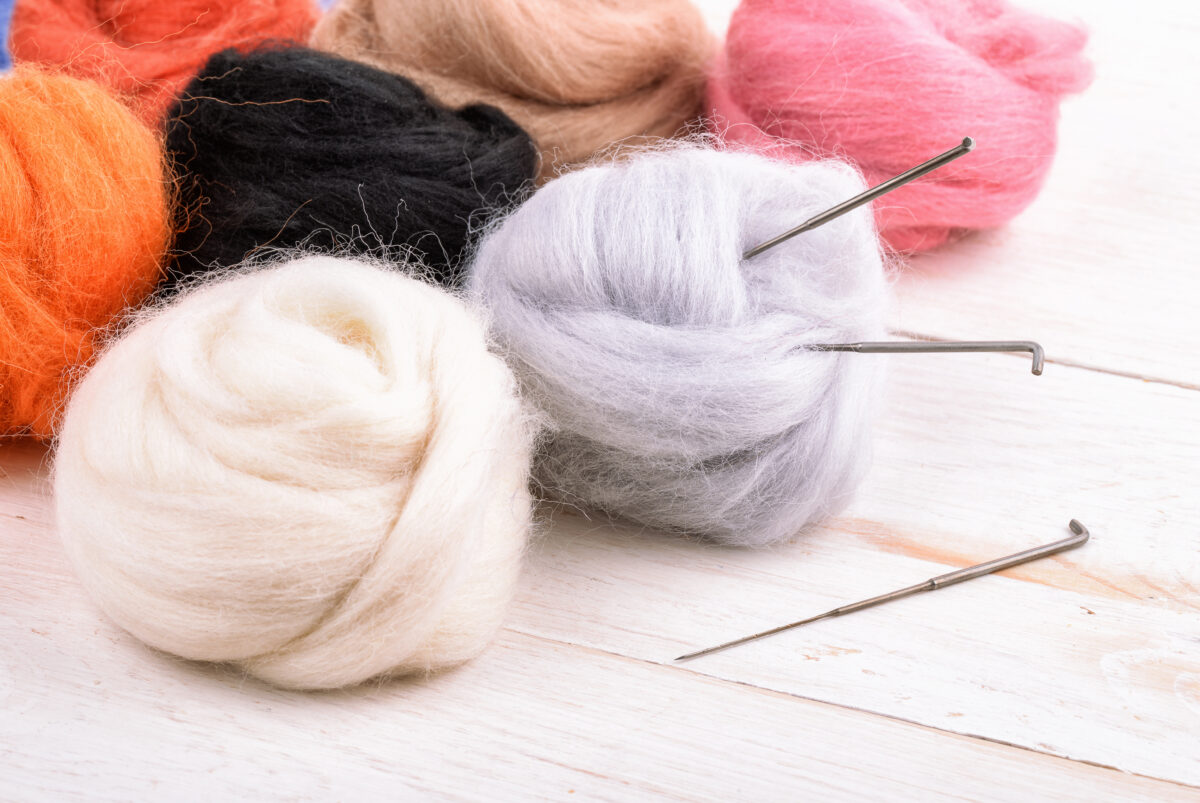
A variety of felting needles. These are needles specifically designed for needle felting that have barbs on them that help tangle the wool and keep the fibers in place.
A felting pad or mat. This allows you to poke the wool into shapes/other felt without poking it into your skin or another surface. You can purchase pads/mats, but I personally use thick pieces of Styrofoam packaging that arrive inside of my delivered items.
Wool. Find wool in various colors to create the designs of your choice. There are non-wool fiber options that are less expensive than real natural wool, but I find it to be more difficult to work with and that it overall results in a less desirable finished product.
Finger gloves. Finger gloves aren’t required but they are helpful with the comfort of your fingers when poking the needles repeatedly. It also makes the craft a bit safer for the little ones.
Scissors. Useful to cut various sizes of wool as needed while crafting.
Choosing the Right Felting Needles
Felting needles come in different sizes and are used for different details in the work. Thicker needles are used for large background coloring, while the thinner needles are used for finer lines and details.
Coarse Needles (32–36 gauge): These thicker needles are ideal for quickly shaping large pieces of wool or building the basic structure of a 3D figure. They felt fibers together more aggressively, which makes them great for the initial stages of a project.
Medium Needles (38–40 gauge): Versatile and beginner-friendly, medium-gauge needles are often used throughout the felting process. A 38 gauge triangle needle is a common all-purpose option that works well for both sculpting and adding surface details.
Fine Needles (40–42 gauge): These thinner needles are perfect for finishing touches, fine lines, and delicate detailing. They’re less aggressive, so they won’t distort your shape or leave large holes in the wool—great for refining facial features, textures, or smooth surfaces.
Some felters also use specialty shapes like star, spiral, or reverse barb needles for unique effects such as blending colors or lifting surface fibers for a fuzzy texture.
Why Needle Felting Is the Perfect Homesteader Craft
This is the perfect craft for the homesteader, being that it’s pretty low cost (especially if you have your own sheep!), the creations that can be made are truly limitless, it’s the perfect family craft since everyone can work together on their own project while spending time together and it’s ideal for such a wide range of ages including felting with children. I find the craft to be incredibly relaxing and one that’s easy to put down and pick up at a later time without missing a beat. With the number of supplies being rather limited, it makes needle felting easy to take on trips and on car rides.
Beginner Felting Projects to Try
Once you have all the supplies, here are a few excellent beginner project videos:
For those looking to get more into fiber arts, I recommend following fiber artist Dani Ives. I have her book, Painting with Wool: 16 Artful Projects to Needle Felt, and have taken her online classes with my daughter. She has wonderful classes you can follow along with on her website, and if nothing else, just check out her page to be inspired by all that can be done with wool and a needle – you’ll be blown away. Another favorite resource for supplies and project ideas is Felted Sky – I love the colors of wool available at this shop.
Needle Felting: Final Thoughts
Needle felting is one of those rare crafts that’s both accessible and deeply satisfying. With just a handful of simple supplies, you can create artful pieces or playful wool characters in no time. Whether you’re a homesteader looking for a portable, relaxing pastime or a parent seeking a creative activity to share with kids, needle felting is a rewarding choice. Once your needle felting supplies are gathered, the only limit is your imagination.
This article about needle felting was written for Hobby Farms magazine. Click here to subscribe.
Floral-infused water is a refreshing and beautiful way to enjoy the subtle flavors of edible flowers while staying hydrated. It’s popular to infuse water with cucumber, citrus, fruit and herbs. Though one highly delicious and beautiful addition that is largely missed in water infusions is the incorporation of flowers. Floral waters offer a delicate aroma and taste that elevate your beverage experience. Edible flowers make incredibly delicious water-infused beverages, especially when integrated with other fruits and herbs.
We began our floral water infusing years ago, with fresh lilacs from our backyard. To make, simply fill a quart jar with fresh lilac flowers (no leaves, stems, or bugs), and fill the jar with cold tap water. Allow the flavors to infuse overnight, strain the flavored water from the flowers and enjoy the floral water with ice.
Why Use Flowers in Water Infusions?
Drinking lilac-infused water is such a treat since there is no artificial flavoring that can come close to being as special or authentically incredible as the scent of fresh lilac flowers. This is the same principal with other flowers and brambles, like raspberries, as well.
How to Make Floral Infused Water
When making floral water, we typically add one to two cups of fruit, herbs and flowers (2 cups total of mixed ingredients) to a quart jar and fill it with tap water to the top of the jar. The mixture of ingredients is completely up to your personal preference. If you want less of a floral
flavor and instead prefer a fruitier flavor, use fewer blooms and more berries. Herbs are strong, so only a few leaves are recommended per quart. Infuse the flavors for 12 hours, or overnight, and strain the solids out, reserving the flavored water. Enjoy with ice. Garnish with more fresh fruit or blooms.
Infusing with Fresh vs. Dried Flowers
If you use dried fruits, flowers or herbs, use about half as much as you would use for fresh blooms.
Favorite Floral Infusion Combinations
Fresh blueberries with sprigs of lavender (blooms closed)
Fresh rose petals with raspberries or strawberries
Fresh hibiscus with watermelon chunks
Another enjoyable floral delicacy is rose tea. Rose tea can be made from dried or fresh roses.
How to Make Rose Tea at Home
Yield: about 1 pint
Homemade Rose Tea Ingredients
2 ¼ cups of water
1.5 cups rose petals (fresh, cleaned and prepared) – If using dried rose petals, only use 2 tablespoons.
Homemade Rose Tea Directions
In a small saucepan, bring 2 ¼ cups of water to a simmer.
Add rose petals, remove from heat, and cover the saucepan with a lid.
Allow the rose petals to steep for 25 minutes.
Once the water has infused with the rose petals, strain out the solids, while reserving the rose tea in a heat-safe container, such as a pint canning jar.
Add honey, maple syrup or lemon to the tea and enjoy.
Cover and store any leftovers in the refrigerator, enjoy within a few days.
Safety Tips When Using Edible Flowers
Be sure to only use edible flowers when making infused water and tea. The best practice is to grow your own flowers so that you know they were not treated with any pesticides or other poisonous sprays. Specialty shops sometimes offer edible flowers for sale as well. If infusing with homegrown flowers, be sure not to harvest any from close to the road or from parts of the yard where pets use the restroom.
Floral Infused Water: Final Thoughts
Floral-infused water and homemade rose tea are delightful, refreshing ways to enjoy the natural flavors of edible flowers. With just a few safe practices, you can enjoy seasonal flowers in a whole new way—one sip at a time.
This article about rose tea and floral water was written for Hobby Farms magazine. Click here to subscribe.
We joke here in Minnesota that our state bird is the mosquito. To say it gets buggy in the summer is an understatement. That’s why I turned to a natural solution: homemade bug spray. Whether you’re avoiding chemical sprays or just want a DIY option that smells great, this all-natural recipe is easy to make and effective against mosquitoes.
Natural Mosquito Repellents for Your Garden
There are some things that we can bring into our gardens to help naturally deter mosquitoes from our yards. The Massachusetts Audubon Society put some plants to the test to see if they actually
do work to keep the pests away without the use of harmful chemicals. They found that by incorporating flowers, herbs and other plants, they were indeed able to repel mosquitoes from the natural scent of the plants.
Plants that the Massachusetts Audubon Society tested that proved to aid in repelling mosquitoes include:
Because I’m personally not fond of using harsh chemicals that are found in commercial bug sprays, I started making my own homemade bug spray when my daughter was young.
This recipe only requires a handful of ingredients and only takes a few minutes to mix up.
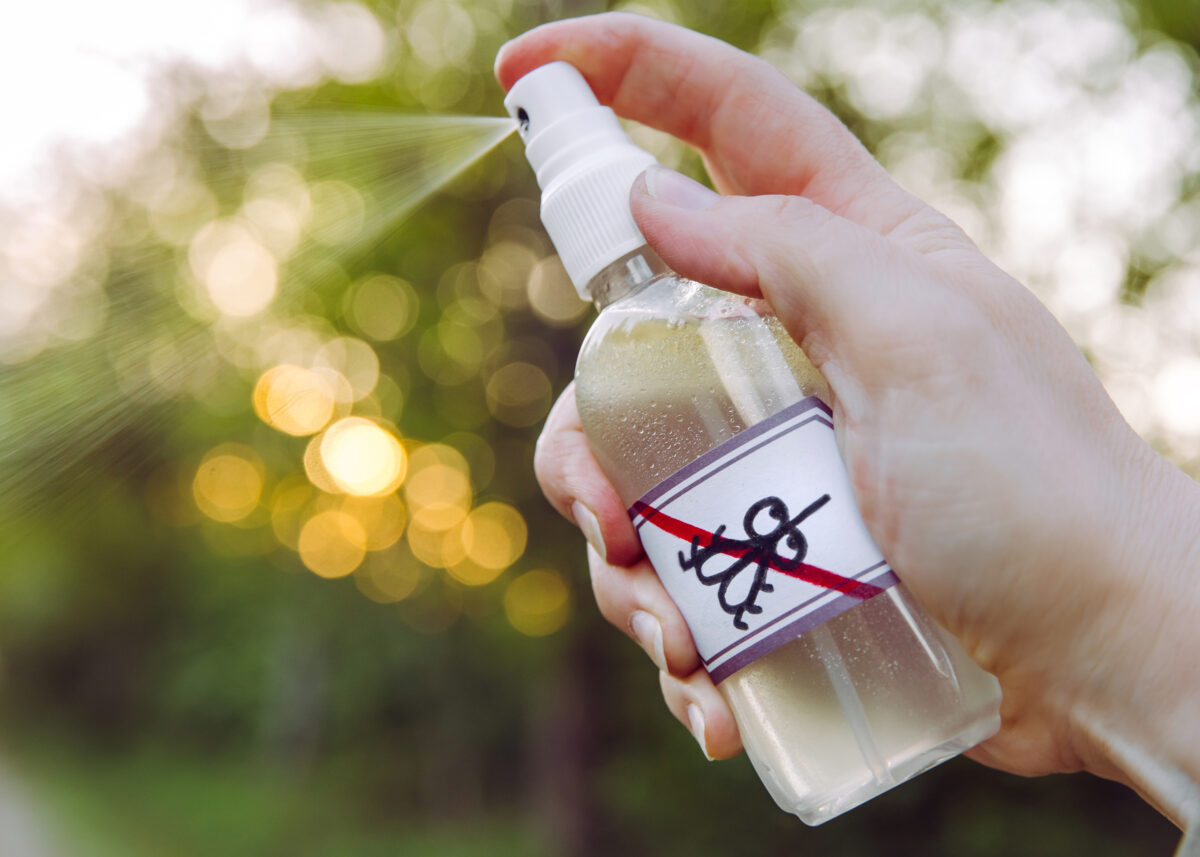
It’s recommended to find a small bottle with a spray top for easy application.
Easy Homemade Bug Spray Recipe
Yield: 4 ounces
Ingredients
½ cup witch hazel
30 drops lemon grass essential oil (organic)
30 drops citronella essential oil (organic)
Directions
Mix all ingredients together in a bottle, mix well. Store in a dark place, like a closet, out of direct sunlight. Apply to skin as needed. Feel free to mix and match your own blend of homemade bug spray using other bug repellent essential oils.
Essential Oils That Repel Mosquitoes
Alternative essential oils that are also said to be effective at repelling mosquitoes include peppermint essential oil, lavender essential oil, lemon essential oils, eucalyptus essential oil, basil essential oil, rosemary essential oil, thyme essential oil, and tea tree essential oil.
An alternative to using witch hazel as the base of the bug spray is to use a high-proof vodka or isopropyl alcohol.
Tips for Using Homemade Bug Spray Safely
It’s not recommended to spray homemade bug spray directly onto clothing as it can leave a stain from the oils. Test on a small corner before spraying directly onto fabric.
Do not apply to hands or the face, as you do not want to rub the spray into your eyes.
This recipe is meant for humans, not animals – some essential oils can be harmful to pets.
Natural Relief for Bug Bites
If you do happen to get mosquito bites, a natural paste to help soothe the bite can be made with baking soda and water. Just add enough water to the baking soda until it’s formed into a paste, apply the paste to the bug bite, and allow it to dry on the skin. Baking soda has anti-inflammatory properties that help to relieve the itch. Remove paste with cool water and a rag after ten minutes or so.
Final Thoughts: Homemade Bug Spray
Making your own homemade bug spray is a simple, safe and effective way to keep mosquitoes at bay without resorting to harsh chemicals. With just a few natural ingredients, you can protect your family and enjoy your time outdoors. Try this DIY mosquito repellent and discover the difference for yourself.
This recipe has been shared from Small-Scale Homesteading, written by Stephanie Thurow and Michelle Bruhn, with permission from Skyhorse Publishing, Inc.
This article about homemade bug spray was written for Hobby Farms magazine. Click here to subscribe.
The Orpington chicken is a popular chicken kept across the U.S. and Europe. And for good reason! It has both an award-winning personality and good egg production, making Orpington chickens ideal for backyard flocks.
William Cook Orpingtons
The Orpington chicken originated in Kent, England, in the village of Orpington in the late nineteenth century. Bred by William Cook, the breed initially sported black feathering instead of the more common buff variety found today.
Mr. Cook developed the Black Orpington by crossing Minorcas, Black Plymouth Rocks, and Croad Langshans to create a dual-purpose chicken to excel at egg laying and produce a good table bird.
While the Black Orpington was originally popular in England, the color quickly lost favor when the buff variety was developed by crossing Golden Spangled Hamburgs, Buff Cochins, and Dark Dorkings to create the most popular of the Orpington chicken’s color varieties.
The Buff Orpington arrived in America in 1891 and quickly gained popularity with midwestern farmers who favored these chickens for their excellent table qualities and eye-catching color.
Orpington Chickens: A Dual-Purpose Chicken Breed
Bred to be a dual-purpose breed (meaning they can produce eggs and meat), the Orpington chicken produces a fair number of eggs and is a decent meat bird. However, if you are looking for a high production breed to excel at either of these qualities, the breed may not be the best choice to fit your needs.
Orpington hens average three to six large light brown eggs weekly (about one hundred and fifty to two hundred and fifty eggs annually). Bear in mind that these hens can go broody, so egg production will also vary due to this trait.
As table birds, Orpington roosters are slow-growers reaching market weight (seven to eight pounds) between the age of five to six months. The Orpington chicken is especially well-known for their superb quality legs and thigh meat.
Eye-Catching Orpington Varieties
The Orpington Chicken comes in many eye-catching colors, including Black, Blue, Buff, Chocolate, Cuckoo, Lavender, Mottled, Red, Spangled, Splash, and White.
Heavy Breed Chickens
The Orpington chicken is a large bird with heavy feathering, giving the breed the appearance of being even larger than it actually is. The weight will vary depending on strain and some Orpingtons can be much smaller than the breed’s typical standard.
Average mature rooster weight: 7 – 10 pounds
Average mature hen weight: 6 – 8 pounds
Health Concerns
The Orpington chicken is a generally healthy breed; however, they can suffer from egg laying disorders common in brown egg layers including egg binding, egg yolk peritonitis, ovarian cancer/tumors, and oviduct prolapse.
Other health concerns, including bumblefoot, external parasites, heatstroke, and obesity, can be common in this heavyweight breed.
Special Considerations
Due to their large size and heavy feathering, the Orpington chicken has some special considerations that chicken owners should keep in mind.
Orpingtons can not fly or even run very fast and are prime targets for a predator attack. A concrete coop floor, predator skirts, strong half-inch hardware cloth over the sides and roof of an enclosed run, and no gaps larger than half-inch anywhere in the coop or run are essentials to protecting Orpingtons and other poultry from predators. Only allow these gentle giants to free range under the watchful eye of an adult.
Keep perches about two feet off the floor to help Orpingtons access the perch easily.
Provide plenty of physical and mental stimulation to keep Orpingtons happy, healthy, and maintain a healthy weight.
Restrict feeding times to twenty to thirty minutes twice daily to prevent Orpingtons from becoming obese.
How Long Do Orpington Chickens Live?
The Orpington chicken has a respectable life expectancy of five to eight years. (The typical lifespan of a backyard chicken)
Orpington Temperament: A Friendly Chicken Breed
The Orpington chicken has one of the best personalities for families with small children. These gentle giants are one of the most affectionate of all chicken breeds and quickly become part of the family.
Friendly, sweet, interactive, and personable, Orpingtons love to interact with adults, are patient with children, and enjoy sitting on your lap for a snuggle.
If raised with frequent, gentle handling as chicks and continued handling through adulthood, Orpingtons make an ideal breed for those solely looking for a pet chicken.
Orpington roosters are often less aggressive than other breeds and often display a friendly and affectionate disposition toward their handlers. Keep in mind that all roosters are individuals, so be sure to monitor your rooster closely for any signs of aggressive behavior, especially when allowed to interact with children and other household pets.
Orpington Chicken FAQs
Q: Where did the Orpington chicken originate?
A: The Orpington chicken was developed in 1886 in Orpington, England, by William Cook, a poultry breeder and former publisher of the Poultry Journal.
Q: What was the purpose of creating the Orpington breed?
A: Cook developed the Orpington to be a dual-purpose bird—an above-average egg-layer and a good table bird, with hardiness and fast growth in mind.
Q: What was the first recognized color variety of Orpingtons?
A: Black was the first variety, chosen because it hid the soot and grime common in London at the time.
Q: When were Orpingtons first imported to the U.S.?
A: Orpingtons began arriving in the United States around 1890, in small numbers.
Q: When did the American Poultry Association (APA) accept Orpingtons?
A: The APA accepted the Buff Orpington in 1902, followed by Black and White in 1905, and Blue in 1923.
Q: Do Orpingtons come in other colors?
A: Yes, aside from the APA-accepted colors, Orpingtons can also be found in unrecognized varieties like lavender (self-blue), silver laced, gold laced, partridge, and Isabel.
Q: Are there bantam Orpingtons?
A: Yes, the APA recognizes a bantam version of the Orpington.
Q: What do Orpington chickens look like?
A: Orpingtons are large, fluffy birds with a wide, rounded breast and back. Roosters average 10 pounds and hens about 8 pounds.
Q: When do Orpington hens begin laying eggs, and how many can I expect?
A: Orpington hens typically start laying between 6 and 8 months old and produce about 150 to 200 large cream to light brown eggs per year.
Q: Are Orpingtons good for hot or cold climates?
A: Both! Orpingtons are hardy and adapt well to both heat and cold. In hot climates, they need shade and cool water, while their dense feathering helps them thrive in snowy conditions.
Q: Can Orpingtons be kept in confinement?
A: Absolutely. Orpingtons tolerate confinement well and are known for their docile and friendly personalities, making them great for backyard flocks.
William Cook not only bred the original Black Orpingtons, but he also went on to breed four other color varieties in the breed: White, Buff, Jubilee, and Mottled. Later, his son-in-law, Mr. A. C. Gilbert, created the Blue and Cuckoo varieties.
The Buff Orpington chicken, shown by Dr. Henrietta Hooker, won a blue ribbon at its first showing at Madison Square Gardens in 1920. Three years later, in 1923, Henrietta’s daughter, Patience, took home a prize with her hen winning the title of champion Buff Orpington.
With their sweet and friendly personalities and golden colored feathers, the Buff Orpington chicken is nicknamed the Golden Retriever of the chicken world.
Orpington Chickens: Final Thoughts
The Orpington chicken has stood the test of time because of their sweet personality, quality meat and egg production. With so much to love about this breed, it’s easy to see how the Orpington became a success and continues to grow in popularity amongst backyard flock owners.
Toxic foods for chickens are more common than many flock owners realize, especially in summer, when seasonal treats are plentiful. From kitchen scraps to leftovers, it’s tempting to share with your hens, some foods can seriously harm them. Here are four summer foods that are toxic to chickens and should be kept off the menu.
1. Spinach – High Oxalates Can Block Calcium
Fresh spinach salads are a summer-meal staple, tossed with everything from sliced eggs and chopped walnuts to crunchy pepitas and juicy strawberries. While these toppings are totally safe for chickens, the spinach itself is not.
Spinach leaves contain oxalic acid, which binds with calcium, blocking its absorption into the body. This can be catastrophic for laying hens, leading to soft-shelled or no-shelled eggs, egg binding and skeletal issues. Also known as oxalates, oxalic acid can also cause kidney stones and renal failure.
How much spinach is too much? The answer varies, since no two birds are alike and flock owners define “in moderation” differently. Proponents of feeding chickens spinach point out that small amounts are beneficial to birds, due to all the nutritional positives provided by this leafy green … nutrients and vitamins that are already fully provided by chicken feed.
The safest option for your flock is to not offer spinach at all and, instead, provide safer greens such as dandelion leaves and beet greens, both of which are abundant during the summer. For me, toxic foods are best kept away from chickens altogether!
2. Green Potatoes – Solanine Poisoning Risk
Whole potatoes, wrapped in aluminum foil and cooked amidst charcoal briquettes, were part of every family cookout during my childhood. My sons, for some reason, dislike baked potatoes but adore potato salad and hand-cut fries, both of which are essential parts of our summer dining menus.
The sheer number of potatoes I peel to feed our family of six would floor you … and possibly earn me honorary citizenship in Idaho.
During prep, I make sure to carefully gather all my potato peels and carefully dispose of them in the trash. As much as I dislike adding biomass to the local landfill, I also understand that potato peels are laden with the alkaloid solanine, a toxin common to plants in the nightshade family.
Effects of solanine ingestion by chickens include diarrhea, dizziness, arrhythmia, paralysis and death. Even buts of green potato flesh contain enough solanine to endanger your chickens. Because my birds free range—and to avoid potentially poisoning wildlife, my raw potato peels never get composted. However, fully cooked potatoes—and their peels—can be safely ingested by chickens.
So remember: cooked potatoes are fine, but raw potatoes are one of the toxic foods for chickens.
3. Avocados – A Hidden Danger in the Pit and Skin
Avocados and summer go hand in hand. I fondly recall plucking ripe avocados from my grandmother’s trees when I was a child. My Uncle George and I would sit on the low wall surrounding the garden, eagerly diving into these delicious home-grown treats with our spoons.
Every now and then, the avocados I picked were nowhere near ripe. My uncle would amuse himself by hurling these into the garbage bin. Every now and then, my grandmother would scold him, telling him we could always just set the unripe fruit on the wall to ripen for a few days. My uncle’s expression would grow serious and he’d reply, “You know we can’t.”
I never understood his mysterious words and solemn expression until years later, when I learned that not even a half-ounce of avocado flesh was enough to fatally poison a parakeet. It’s not just the avocado flesh: the skin, the pit, even the leaves all contain the toxin persin, which can cause labored breathing, myocardial necrosis (heart-tissue death) and death within hours of ingestion.
Enjoy adding avocados to your summer salads and tacos, but toss all leftovers, skins, pits, and leaves in the trash. As far as foods toxic to chickens go, this is one of the really big ones!
4. Stone Fruit – Choking Hazard and Cyanide Risk
Peaches, nectarines, and cherries abound during the summer months. My husband Jae and I love going to our local farmers’ market to stock up on these fresh summer fruits, which we eat as snacks, as dessert and as ingredients in light, healthful entrees.
Our birds adore these fresh fruits as well and, when our enthusiasm causes us to buy more fruit than we can actually eat, we share them with our chickens … but not before we remove the pits.
All members of the Prunus genus—which includes chokecherries, almonds, apricots, cherries, nectarines and peaches—contain pits high in amygdalin. Amygdalin converts into the toxin cyanide when digested. Chickens poisoned by cyanide typically die within 15 to 30 minutes of ingesting the poison, which prevents cells from absorbing and using oxygen, causing irreversible cellular damage and death.
Share your summer fruits with your flock, as long as you first put the pits in their place: safely in the garbage can.
FAQ: Toxic Foods for Chickens
Q: What foods are most toxic to chickens?
A: Avocados, chocolate, moldy foods, and green potatoes or tomatoes are among the most toxic. They can cause digestive distress, respiratory issues, or death.
Q: Can chickens eat watermelon or other fruits?
A: Yes, most fruits like watermelon, berries, and apples (without seeds) are safe in moderation and help keep chickens hydrated in summer.
Q: What happens if a chicken eats something toxic?
A: You may see symptoms like lethargy, diarrhea, tremors, or difficulty breathing. Contact a veterinarian immediately.
Q: Are moldy scraps ever safe for chickens?
A: No. Moldy food can contain mycotoxins that are extremely dangerous and should never be fed to chickens.
Final Thoughts: Toxic Foods for Chickens
Keeping your flock healthy starts with knowing what not to feed them. Toxic foods for chickens—especially those common in summer—can lead to serious health issues or even be fatal. By avoiding risky treats like avocados, chocolate, moldy scraps, stone fruit pits, green potatoes, and high-oxalate greens like spinach, you’ll help ensure your hens stay safe, productive, and happy all season long. When in doubt, stick to fresh produce and chicken-safe snacks, and always monitor your flock after introducing something new.
This article about what not to feed chickens was written for Chickens and Hobby Farms magazines. Click here to subscribe.
Egg-eating hens can be a frustrating and costly problem for backyard chicken keepers. Once a hen discovers that eggs are a tasty snack, the behavior can quickly spread through the flock. Understanding why hens start eating eggs—and taking swift, practical steps to stop it—is key to protecting your daily harvest. In this article, we’ll explore the common causes of egg-eating in chickens and share nine proven strategies to prevent and correct this behavior before it becomes a habit.
Egg-Eating Hens: Telltale Signs
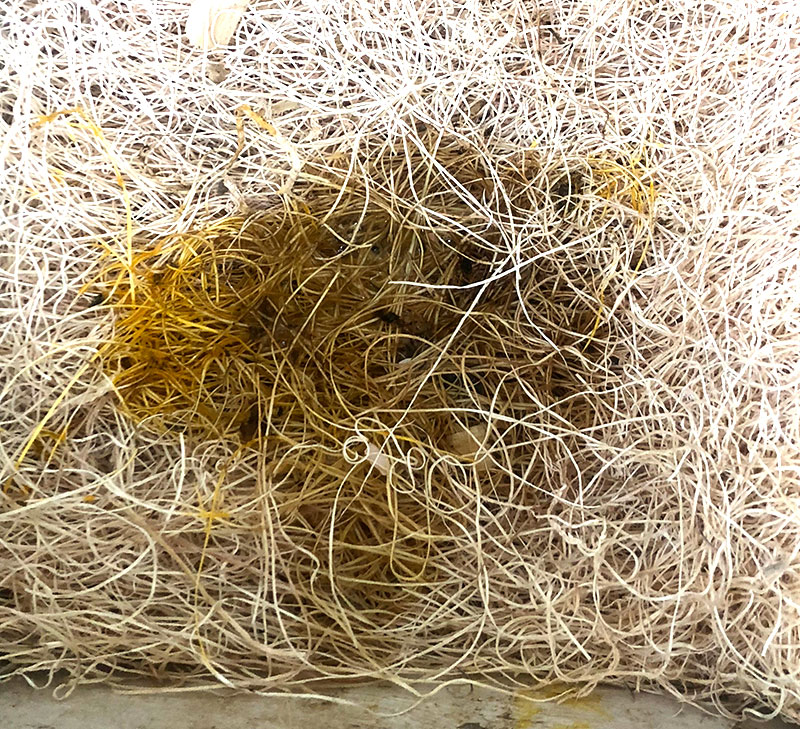
The telltale signs were hard to ignore. While the eggs collected from the ducks, Silkies and Ameraucanas were just fine, the ones from the main Orpington coop were not. At first, it was just one egg coming in coated with sticky, dried yolk. Over a week, the number of affected eggs increased to two or three per day. A peek into the coop’s nest boxes one morning revealed messy, rich yellow stains sullying all three nest pads. I quickly tossed these onto our compost heap and replaced them with fresh pads, but the next morning, one of the new pads—and the three eggs in it—bore the same golden blotches. There was no longer any doubt: These are the signs of egg-eating hens, and one of our birds was an egg eater.
Ana Hotaling
Why Do Hens Start Eating Their Eggs?
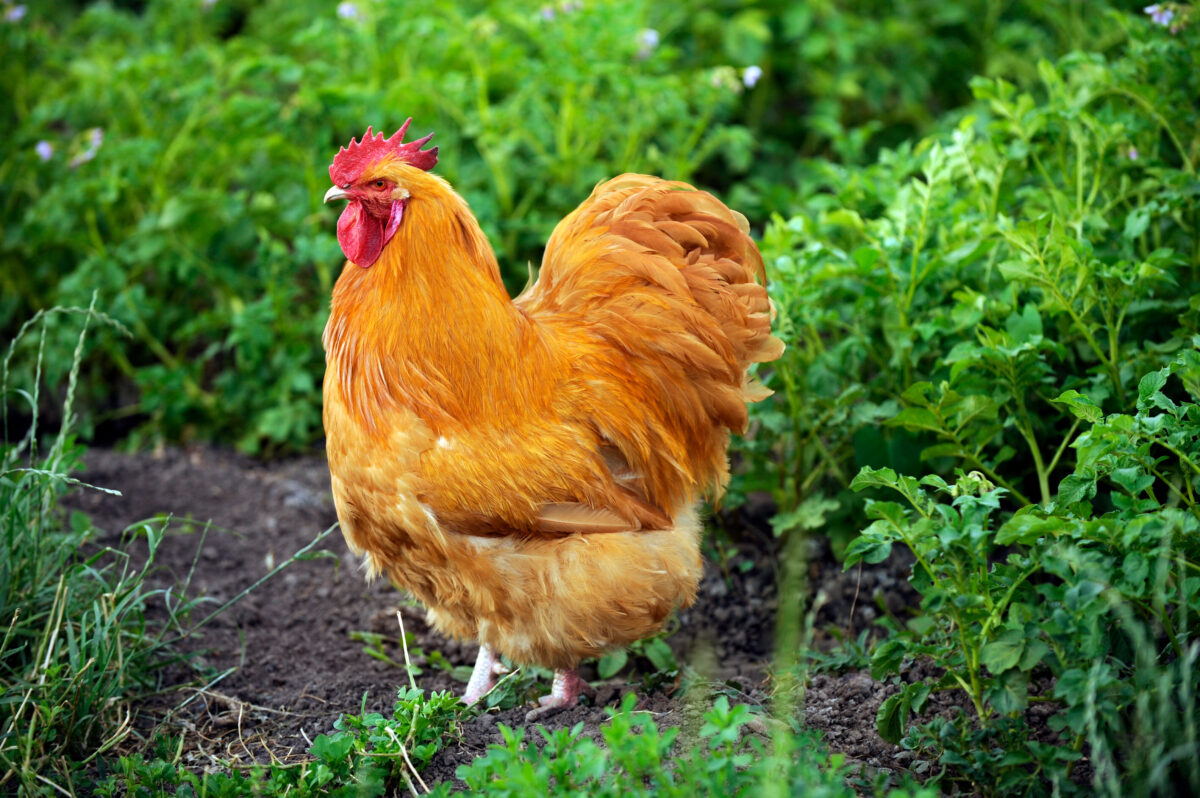
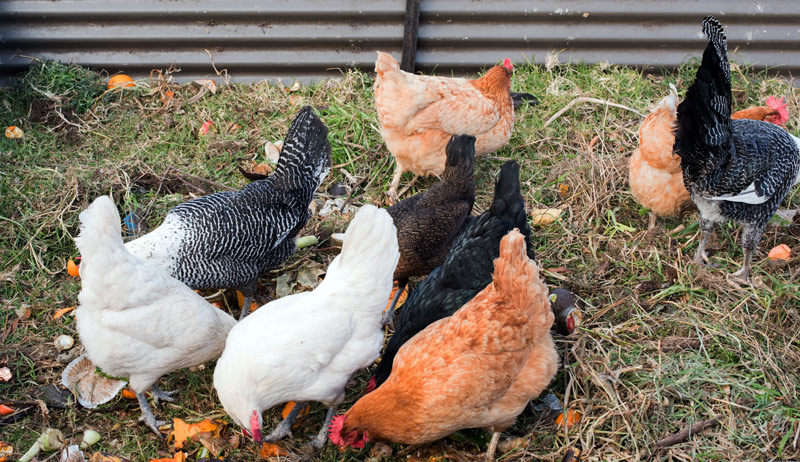
In egg-eating hens, the offending chicken pecks at an egg and then either eats the interior but not the shell or eats the entire egg. Egg-eating hens start this behavior for several reasons. Curiosity is one, especially in pullets and young hens. That oval thing that materializes seemingly out of nowhere? That bears investigating! An egg accidentally crushed by a heavier bird, such as a Brahma or English Orpington, or by overcrowded conditions? Very intriguing! Layers that are deficient in calcium might begin eating eggs to boost their mineral levels, while birds of both genders that are lacking in protein might find exactly what their bodies need contained within that fragile shell.
Proven Ways to Stop Egg-Eating Hens
Keep your flock free of egg-eating hens that cut into your profit margin by taking steps to thwart this behavior in your henhouse.
1. Collect Eggs Early and Often
Collect eggs regularly throughout the day. If the eggs aren’t sitting unattended in a nestbox, they won’t catch the attention of a potential eater.
2. Supplement with Calcium to Strengthen Shells
Place a hopper filled with crushed oyster shell or limestone in your coop to keep your girls’ calcium levels healthy—but only if there are no chicks or juveniles who might ingest it, as an overly high calcium level can cause improper bone growth and kidney failure.
3. Add More Protein to Their Diet
Protein is vital at all times, but especially during molting season, when it’s essential for feather regrowth. It’s also crucial for layers, who require it for egg production. Protein-filled treats such as sunflower kernels and dried mealworms, as well as protein-rich supplements, such as Calf Mann, provide your flock with this key nutrient. Switching to a starter or game-bird feed, both of which contain higher percentages of protein than layer rations, is another option to consider.
4. Provide Enough Nest Boxes to Discourage Egg-Eating Hens
Prevent accidental egg breakage by ensuring that you have enough nestboxes for your hens. One nestbox for every four girls is a good ratio and one that should keep your girls from all climbing into the same nestbox at the same time, potentially squashing the eggs already laid.
5. Practice Good Chicken Keeping Habits
Make sure that your chicken-rearing practices don’t encourage your birds to become egg-eating hens. Never dispose of cracked or pecked eggs by tossing them on the ground, where your chickens can feast on them and develop a taste for raw egg. Similarly, offering your flock their own eggshells as a source of calcium can have disastrous consequences. If you choose to offer eggshells, make certain that they have been thoroughly cleansed of membrane, yolk and albumen, baked until they are brittle, and crushed or ground until they no longer resemble eggshells.
Once you’ve determined that you have an egg-eater in your flock, your next move is to identify the perpetrator. You’d think that this would be easy: It’s the chicken with the yolk on her beak or the bits of shell on her feathers, right? Unfortunately, this isn’t always the case: Egg eating commonly occurs early in the morning, often before the birds have been released from their coop for the day. Those telltale traces often disappear by the time the door is opened.
5. Identify the Culprit Hen with a Camera
One way to catch a culprit is with a nestbox camera. Available at wild-bird supply stores and sites, a nestbox cam mounts on the wall of your nestbox and records all activity occurring within. There are drawbacks, however. You’ll need multiple cams if your coop features more than one nestbox; it won’t help at all if you’re recording the west box when eggs are being eaten in the east box. If your hens look alike, a nestbox cam will not help you identify your egg eater, because they’ll appear identical on the footage. Nestbox cams can also be a little pricey, especially the more compact models.
On a personal note, lying in wait with the hope of catching the offender red-handed—or golden beaked—was the option my sons chose. As expected, it lasted all of three hours. Trying to stay out of sight of our curious Orpingtons proved too difficult for two adolescent boys. Checking the Orpington nestbox every half hour also guaranteed that no hen would lay an egg, much less eat one, amongst all that commotion.
6. Catching the Culprit with a Dye-Filled Egg
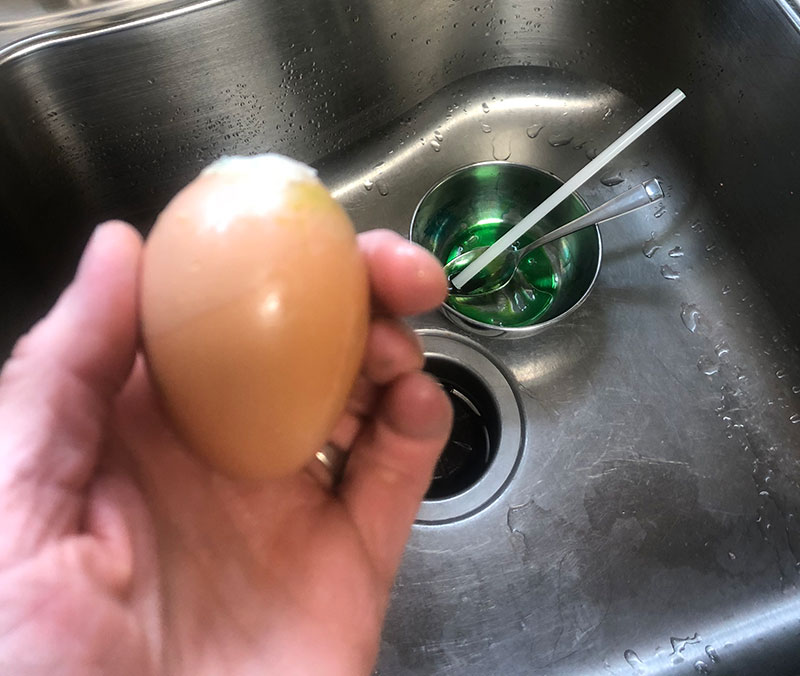
Several mornings of meticulously examining every Orpington upon release yielded no clue as to the identity of my miscreant. It was time to outsmart the outlaw. I selected a freshly laid egg, then shook it to release the yolk from its casing. Using a yarn needle, I carefully pierced the egg on the rounded end as well as the point, gently wiggling the needle on the round side to widen the opening slightly. With a straw, I blew the contents of the egg out of the shell into a small bowl.
Ana Hotaling
Using wax from a lit candle, I sealed the hole in the point. Next, using a tiny funnel, I filled the egg with light corn syrup colored a deep green using food dye. Once the egg was filled, I used wax to seal the top hole, then I lightly smeared a fine layer of blown egg yolk over the shell to mask the scent of wax and syrup.
Ana Hotaling
When the shell was dry, I placed it in the leftmost nestbox in the Orpington coop, then waited for results.
That first day, I was almost foiled by Flapjack Orpington, who went broody and, of course, chose my egg to hunker down on. After two hours, I remembered that Flapjack’s heat might very well soften the wax covering the openings on the egg, so I quickly shooed the poor disgruntled hen out of the nestbox. No further action involving my trap egg occurred that day. The next day, it rained all day and the birds spent most of their waking hours huddled underneath their coop, glaring at the puddles developing in their run.
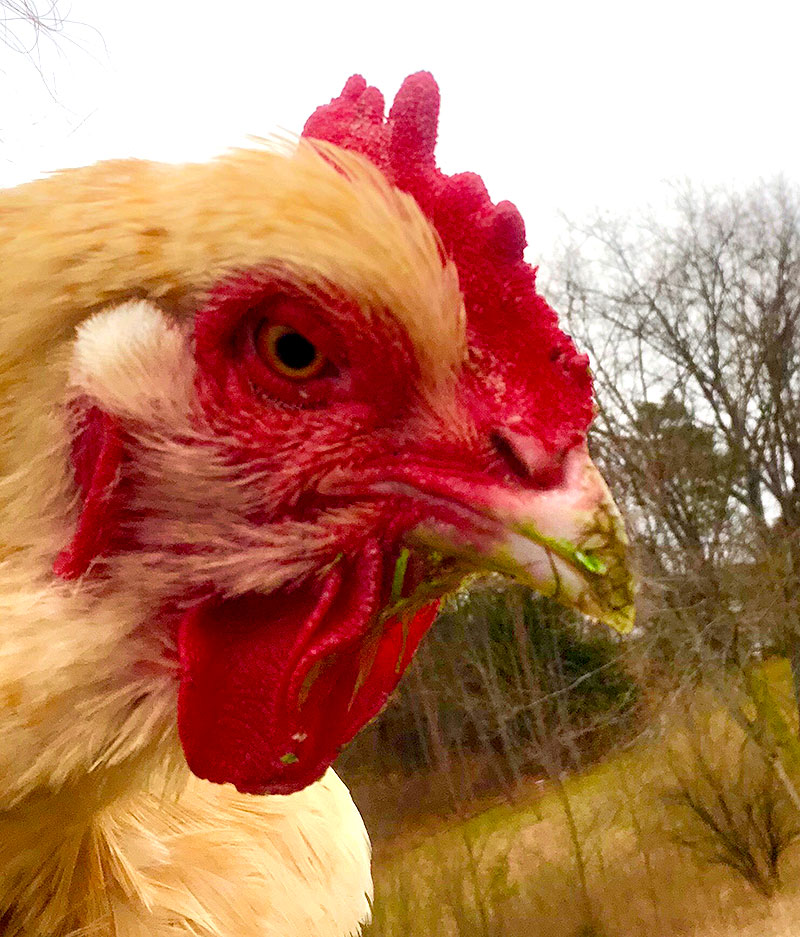
On the morning of the third day, I checked the coop nest boxes before releasing the Orpington flock, and bingo! All that was left of my trap egg were a few teal-colored pine shavings. Not one piece of shell remained. There wasn’t even a sticky mess in the nestbox, as I had feared might happen with the corn syrup. I opened the pop door, inspecting each chicken trooping out. Every single bird walked by with a clean beak— except the very last one. Lemon Cupcake stepped out of the coop, her beak and a few feathers tinted green. Our egg-eater was caught at last!
Ana Hotaling
Frequently Asked Questions About Egg-Eating Hens
Why do egg-eating hens develop this behavior?
Egg-eating often starts due to accidental breakage, poor nutrition, boredom, or curiosity. Once a hen tastes an egg and likes it, she may begin actively seeking them out.
Can feeding eggshells cause hens to eat their own eggs?
Feeding crushed, baked eggshells is generally safe and does not cause egg-eating. Make sure the shells are unrecognizable as eggs to avoid creating a connection.
How can I tell which hen is eating eggs?
Look for sticky beaks, yolk on feathers, or use a game camera to monitor nest boxes. Separating hens or using roll-away nests can also help identify the culprit.
Can egg-eating hens be retrained?
Yes—many egg-eating hens can be corrected with dietary improvements, nest box modifications, and deterrents like fake eggs. The sooner the behavior is addressed, the better the outcome.
Should I cull a hen that eats eggs?
Culling is a last resort. Try behavioral correction first.
Do roll-away nest boxes really work?
Yes. Roll-away nest boxes keep eggs out of sight and reach, which greatly reduces temptation and breakage—two major triggers for egg-eating hens.
Should You Remove an Egg-Eating Hen from the Flock?
An egg-eating habit is extremely difficult to break, and most experts recommend culling the offender as the only true way to stop this behavior. Lemon Cupcake, however, is my son Jaeson’s chicken, and he asked me to please not kill the hen he’d raised from an egg. I moved Lemon Cupcake from the main Orpington coop to the New Orpington coop, where she settled in after a brief pecking-order display from head girls Butters and Selene. Everything went fine for two days. On the third morning, the egg eater was back in action.
I’ve now temporarily placed Lemon Cupcake with our Ancona duck flock; the ducks’ coop has a perch in it to accommodate unexpected overnight chicken guests. Because the Anconas bury their eggs, Lemon Cupcake will have a trickier time snacking. In the meantime, I’ll ready our chicken tractor for spring. Lemon Cupcake and her friend, Big Boy, will move in once it’s ready. This way, the only eggs at stake are her own.
Offering her a dish of milk for several days to increase her calcium and protein intake.
Offering her a highly peppered beaten egg.
I’m keeping my fingers crossed!
Final Thoughts on Managing Egg-Eating Hens
Egg-eating hens can pose a serious challenge, but with prompt action and consistent management, the behavior can often be stopped. By addressing nutritional needs, improving nest box conditions, and reducing boredom in the flock, you can eliminate the triggers that lead to egg-eating. Keep a close eye on your hens, collect eggs regularly, and don’t hesitate to try multiple prevention strategies until you find what works. With a proactive approach, your hens can return to laying—not stealing—your daily eggs.
This article about egg-eating hens was written for Hobby Farms and Chickens magazines. Click here to subscribe.