Categories
Poultry

6 Types Of Poultry to Consider For Your Farm

The types of poultry to consider raising on a farm are considerable. Each variety brings unique needs and benefits, and you might find room for all of them or discover that only one type will really fit your lifestyle.

People might think chickens are the only option for farm-fresh eggs, but that is not the case. Most farmyard poultry lay eggs, all the species are prized for their meat, and some have other special skills to offer the homestead.

1. Chickens

chickens in front of a barn
Shutterstock

As the best-known backyard farm bird, chickens are valued because they are easy keepers and quite useful. They’ve been part of farmyards for about 5,000 years, since first being domesticated in Asia from a wild bird known as Red Junglefowl. These spangled birds are still found on islands across the South Pacific today.

The appeal of chickens in ancient societies and our modern world is their incredible versatility as a domesticated animal. Chickens do it all: They lay delicious eggs, they provide meat, they eat bugs, they can have beautiful spangled feathers, they can be great pets, they give you organic manure, and they are cheap and easy to keep.


Also Read: 5 Tips For Effective Poultry Showmanship


An adult hen lays four to six eggs a week, which means three or four chickens are enough to keep a family well supplied. They do not need a rooster to lay. Raised for meat, a chicken can feed a family for several days, providing lunch meat, salads and soups. Chickens require about 4 square feet per bird, and a small run. They eat approximately 1/4 pound of feed a day, and it’s quite easy to grow your own chicken feed. Many farmers will fund their chicken feed purchases directly with the sales of their farm fresh eggs.

2. Geese

three geese eating green grass on a farm
Kirsten Lie-Nielsen

The earliest domesticated poultry, geese can be friendly and useful additions to the farmyard. They take marginally more work than a flock of hens, but they are still easy keepers and can bring you a variety of rewards.

Geese can lay 20 tp 40 eggs a year, and a goose egg is large enough to make a full omelet on its own. Geese are prized for their delicious dark meat, and when slaughtered their fluffy under feathers make the down that stuffs our pillows and comforters.

These large birds also have some unexpected uses. They are used for weeding several broad-leafed crops, such as keeping the growth around plants like strawberries under control while leaving the sweet fruits behind. They also make excellent guard animals, honking loudly at the sign of any intruders or changes. While geese have a reputation of being aggressive, hand-reared ones are usually docile and friendly, all honk and no bite.

Geese do need more space, about 10 square feet per bird. They need access to water in order to swallow their food, but they don’t need a full pond to bathe in. As long as water is deep enough for them to immerse their beaks they should be fine, and geese kept on pasture in summer need little if any grain to supplement their grazing. Geese kept on grain eat about 1/2 a pound a day.

3. Ducks
ducks standing in the snow
Kirsten Lie-Nielsen

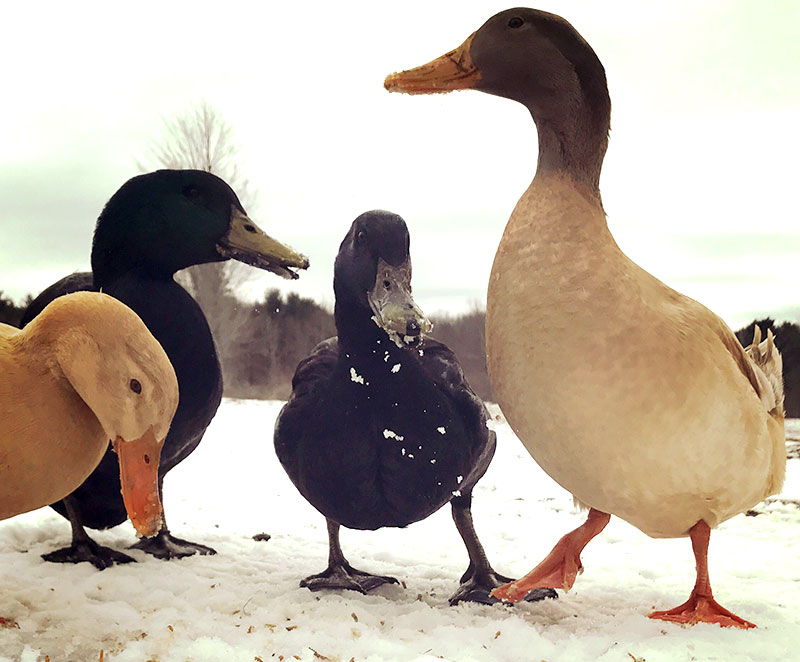
Ducks have been farmed for thousands of years, and wild ducks were hunted and their eggs scavenged even before that.

There are far more different types of ducks in domestication than you might guess. There are upright, skinny varieties known as runners; the meaty-faced, unique Muscovies; and also plumper, swimming breeds that descend from wild Mallards. Each type has its own needs, but like geese ducks do not need a pond to be happy. Ducks use water to bathe and eat—they also cannot swallow without immersing their beaks.

Ducks need approximately 4 square feet per bird. Geese and ducks sleep on the ground, unlike chickens, who prefer being able to roost at night. Adult ducks will eat about 1/4 pound of feed a day, and love special treats. Ducks are omnivores and enjoy tadpoles, lizards, and mice as much as lettuce, tomatoes, and bread.

One thing to keep in mind with ducks, especially breeds such as Mallards and Pekins, is that they are much more messy than other poultry. Waterfowl are intrinsically dirty, as part of their daily toilette includes splashing in water that will cover the area they are kept in, and if there’s mud anywhere on your farm it is guaranteed they’ll find it and play in it.

4. Guinea Fowl

two guinea fowl standing in front of a black background
LHG Creative Photography/Flickr

Guinea fowl are African birds most similar in appearance to turkeys, with bald blue heads and speckled bodies. Originally hunted and eventually domesticated, these birds are very low maintenance but most remain at least somewhat wild.

Many farmers keep guineas without any shelter at all, as they can fly high enough into the trees for night roosting to be safe from predators. If kept in captivity, they need 2 to 3 square feet per bird for a shelter. Additionally, guineas eat almost no feed during the summer months, when they are expertly foraging. They lay eggs seasonally, in the spring and summer, usually about 30 a year. Plump birds, they make good eating and are said to be more flavorful than chicken.


Also Read: Find Your Poultry Purpose Before Building A Flock


Apart from eggs and meat, many farmers keep guineas to protect flocks of smaller birds, such as chickens, and to reduce pests such as ticks and snakes on the farm. Guineas are active foragers and love little insects like ticks, and they are fearless hunters when confronted with snakes. They won’t shrink from mice or rats, either.

Guineas are very loud birds and they wander far when left to free range. They’re not on the ideal types of poultry list if you’re looking for a pet, but they are excellent low-maintenance fowl if you want pest control and fresh eggs.

5. Quail

quail sitting in staw nest
iStock/Thinkstock

Another bird whose behavior usually hovers on the edge of domestication is the quail. Quail are similar to pheasants, another of the types of poultry one might find on the modern homestead. Pheasants are often larger, and they usually have brighter plumage and louder calls.

Quail are great birds to keep on a small farm because they themselves are diminutive and need only one square foot per bird in a shelter. They don’t roost and don’t require nesting boxes, preferring to lay their eggs in private corners. Skittish by nature, they love having plenty of places to hide in their run.

Quail are productive layers, averaging more than 200 eggs in a year. These eggs are tiny and speckled, and they are considered a delicacy. Quail meat is also prized, however the breed yields very little per bird. They are very active and must be kept amused in their run or allowed to free range. This also makes them highly entertaining to watch forage and play, and adult quail eat only about 15g of feed a day.

Being so tiny—adults are about 1/4 of a pound—quail are always at risk to larger predators. They must be kept away from large house pets such as dogs and cats, and they need a shelter secure from even smaller predators such as rats and skunks.

6. Turkeys

turkey standing in front of a red barn
Hendrix Genetics

Turkeys make striking additions to the barnyard, the males always happy to show off their plumage and bright blue heads. First domesticated about 2,000 years ago, turkeys originate from Mexico and Central America. Turkeys are raised primarily for their meat but are becoming more popular as pets.

While you are probably familiar with turkey meat from the Thanksgiving tradition, these birds also lay two or three eggs per week that can be scrambled or fried just like chicken eggs. Turkeys are great fliers and can be kept without a run, as they will roost out of reach of predators at night. They eat about 1/2 pound of feed a day but can consume less if they are actively foraging.

Turkey owners describe the birds as surprisingly affectionate, allowing themselves to be carried around and choosing to hang out with their human companions instead of shying away. Weighing around 20 pounds each, adult turkeys can also effectively guard a flock of smaller birds. They are notoriously curious, which might lead to their fearlessness of people.

Other Types of Poultry

There are plenty of other types of poultry you can keep on your farm. Emus, the flightless birds from Australia, have become prized for their meat and large, speckled eggs. Because of their size, they require more space than the average poultry. Peacocks are kept on farms for their beautiful feathers and amusing personalities, despite their very loud calls. Swans, pheasants, partridges, and pigeons are all raised by farmers for various reasons and are well worth considering on your homestead.

While keeping poultry isn’t always a case of “Why not have one of everything?” it is fun to expand your flock to some of the more unique birds if you have the space and time. You might be surprised at how helpful they are on your farm.

This article about six types of poultry for a farm was written for Chickens magazine. Click here to subscribe. 

Categories
Farm & Garden

Snake Skin: How to Identify a Shed & What it Tells You

Snake skin sheds are fun to find on a farm. Snakes are known for their population-control contributions to gardens and farms, hunting insects and animals such as midges and moles.

Streamlined Snakes

Snakes have a body design that is streamlined and purposeful—nothing in excess.

Internally, the snake’s heart contains one single chamber, and the lung has only one lobe. It also smells with its tongue, gathering particles from the air and soil to taste with the Jacobson’s organ inside the roof of its mouth. The snake’s flexible ribs act like tiny arms and legs working from within the skin, without the risk of losing a limb to a predator—that’s what sets them apart from other reptiles and their amphibian ancestors.

Snakes can climb without legs using specialized belly scales that team up with muscular propulsion and undulation movements to go up trees, rock fences, cliff ledges and barn walls. Because most North American snakes usually live closer to the ground than up in trees, they have evolved a way to hear without ears. Those pesky orifices would get clogged with dirt, and eardrums aren’t suited for changes in pressure that a life underground includes. Snakes simply sense vibrations through the earth, taking note of any danger.

Why Does a Snake Shed Its Skin?

With a no-frills, no-fuss approach to life, snakes take care of grooming in one big move: by shedding their outer skin. This cleanses it of parasites and allows growth, just like wriggling out of a dirty old sock. When you’re out cleaning up the garden, cutting down last year’s growth and preparing for spring planting, you’re likely to come across dried natural design wonders, like wasps nests, mantis cocoons and perhaps a shed snake skin or two.

What Can You Learn From a Shedded Snake Skin?

Sheds—the term for the outer layer of skin that a snake releases during the shedding process, called ecdysis—could be more commonly seen in your garden than any actual reptile. They shed their entire skin several times a year as an efficient way to outgrow their clothing and clean house, in a sense.

Age, type of snake, health and other factors determine how many times a year a snake sheds, so you can’t count it by years. Under ideal conditions, the entire length of the snake’s body sloughs off in one continuous piece. Although sheds are usually dry and fragile when discovered, it’s not always that way. The snake exudes lymphatic fluids to moisten the skin and release it.

Snakes generally don’t shed where they spend most of their time. They need something to rub against to help pull the skin off, and they are in a vulnerable position during this process, thus more likely to strike. Their eyes are covered in a thicker membrane to protect them, so they can’t see very well and are particularly jumpy.

The shed skin you find provides clues not only to a slithering garden friend’s identity but also to what has drawn it to your property. Is it a gopher snake after your gophers? A rat snake looking for rats? A green snake stalking your grasshoppers?

3 Characteristics to Help Identify a Shed

To accurately identify a shed, you’ll need more than a simple guide to snakes. Check out a thorough field guide to local snakes, such as Snakes of North America: Eastern and Central Regions, by Alan Tennant and R.D. Bartlett. Color photos show the patterns and help you narrow down the possibilities, but you’ll want to take a much closer look at the drawings and descriptions of scales and compare them to your found shed skin. It might remind you of a kid’s puzzle book with those “what’s different in this picture” scenes, with minuscule differences that are easily overlooked.

1. Anal Plate – A distinguishing characteristic between pit vipers and nonvenomous snakes is whether or not the anal plate is divided. The anal plate is the last belly scale at the base of the cloaca, the opening where mating, giving birth and defecating all happen (again, nicely simplified into one organ) and where the tail begins. Most nonvenomous snakes have a divided anal plate and a double row of scales from there to the tip of the tail. One exception is the coral snake, so take that into special consideration. Rattlesnakes, copperheads, and cottonmouths have a single row of scales on the bottom of their tails. Of course, a rattlesnake’s tail looks like no other, but the skin on it does not shed, so there won’t be a tip with segmented rattles found on the shed.

2. Shape of Head – A more easily recognizable difference between venomous and nonvenomous snakes is the shape of the head. If the head on the shed is intact and distinctly arrow-shaped, or you can make out a small pit between the eye and nostril, you’re likely to have a venomous snake. Again, the coral snake is an exception in North America.

3. Color Patterns – On a snake skin shed, color patterns can be difficult to see if the skin has been exposed to the elements for a while. However, you may be able to see the banding on a copperhead or the diamond pattern on a diamondback rattlesnake.

How to Size a Shedded Snake Skin

A shed snake skin must necessarily be larger than the snake that once carried it. The interstitial area between scales allows intricate folds in the skin tissue to relax and stretch when it’s time to let go. Sheds are usually inside out because the snake scoots its way out through the mouth. If you are determined to see a shed as a more accurate representation of the snake, turning the fragile skin right side out is a delicate operation. A dedicated naturalist will carefully photograph the head at each step of the inversion, in case it gets torn or disfigured. To identify the species, you will have to be able to count scales and learn their names in relation to the animals’ body parts.

What Can a Shedded Snake Skin Tell You?

Knowing your snakes is a valuable tool for anyone working outdoors. Always take precautions in tall grass or around piles of brush. If you want to encourage snakes on your property but on your own terms, consider piling branches and leaves along a perimeter or leaving some boundary edges purposely unmown. The key is to be intentional about your messes and piles. Stagnant pockets could be a problem, whereas areas that change with the seasons will encourage a normal predator-prey relationship that coincides with the abundance and limitation of resources. Take a clue from the minimalist snakes, and use this spring-cleaning opportunity to pay attention to where stuff is accumulating.

This article about identifying a snake skin shed was written for Hobby Farms magazine. Click here to subscribe.

Categories
Farm & Garden

Seed Catalogs: Tips to Make the Most of Them

Seed catalogs and nursery catalogs provide a wealth of information that can greatly increase productivity in the vegetable garden and the fruit orchard. At first glance, catalogs may look like collections of pretty pictures but don’t be fooled. Once you know how much crucial growing information they contain, seed catalogs look more like reference books—reference books you can take outdoors with you and even drop in the mud.

Seed companies and nurseries take pride in their annual catalogs and each catalog has a personality that reflects the company’s heritage, specialties and customer service. Technology and tastes may change, but a collection of antique seed catalogs shows that some companies have endured for a century or more. Generations of experience go into producing garden catalogs, so read them carefully and follow their advice.

Think of seed and nursery catalogs as garden tools. They can be every bit as important as shovels and watering cans.

What Growing Information Is In Seed Catalogs?

Here are eight pieces of basic information that can be found in most seed catalogs.

1. Names: Along with the plant’s common name, the seed catalog will list the botanical (Latin) name. When you compare plants or seeds from various sources, using the botanical name will ensure you’re getting accurate information, as some plants may have multiple common names or multiple plants may share the same common name.

2. When To Plant: Not all seeds are planted in spring or summer, and the correct planting date makes a tremendous difference in the success of your crop. Some seeds only germinate in the warm soil of summer or early fall, while others only germinate in the cool soil of early spring or late fall.

3. How Deep To Plant: Like the time of year you plant, depth of planting matters greatly. Lettuce seeds, for example, must be sown practically on the surface of the soil or they won’t germinate, while garlic cloves and seed potatoes are planted several inches deep for best results. Catalogs take away the guesswork.

4. Spacing: There’s no need to over-plant—it wastes seeds and money. Instead, use catalogs to determine how close together to plant seeds or starts. Likewise, many seedlings must be thinned early in the growing process to allow maturing plants the space they need.

5. Germination Rate: Radish seeds are famous for germinating within a few days of planting, while crops like carrots and parsley seem to take ages to emerge from the ground. Knowing the germination time can help you plan your garden layout so that fast-growing crops lie within easy reach and slower-growing plants can occupy back portions of the garden.

6. Days To Maturity: Here’s one of the most important bits of information you need for garden planning and proper harvest. Catalogs list reliable harvest times, which can range from a mere 20 days to 120 days or more. Knowing days to maturity can also help you make succession plantings so that you have crops ready to harvest over a long period rather than too many all at once.

7. Seeds Per Packet or Ounce: Another planning aid, seeds per packet, combined with the length of rows in your garden, can tell you how many packets you will need. Some companies list seeds per ounce instead. Either way, do the math and save money by buying the right quantity.

8. Heirloom, Organic or Non-GMO Designation: Many gardeners like to know how their seeds have been produced, so look to catalogs for current designations.

Seven Helpful Seed Catalog Features

Below are seven features of seed or nursery catalogs that can be helpful for garden planning.

1. Photographs or Illustrations: How nice to see what your garden plants will look like at maturity, from beans to greens, and from turnips to tomatillos. Nursery stock for fruit trees, fruiting vines and bramble fruits can add long-term beauty to the landscape.

2. Shipping Times: Some crops are only shipped in spring or fall and must be planted promptly. Catalogs will inform you about special ordering and delivery times so you can have beds prepared.

3. Seed Viability: In some cases, seeds can retain their viability—the ability to germinate—for many years, but sometimes seed viability lasts only a year.

4. Frost Tolerance: For gardeners everywhere, it’s helpful to know if plants can tolerate sub-freezing weather and still keep producing. Northern gardeners may need to plant during a narrow window of time, while southern gardeners may be able to plant for year-round harvest.

4. Companion Plantings: Catalogs often sell seeds for flowers that do well alongside your herbs and vegetables. Double your pleasure by enjoying crops and ornamentals together.

5. Accessories and Books: Many seed and nursery suppliers sell their favorite garden tools, soil supplements and books.

6. Planting Guides: A particularly helpful feature is a complete planting guide that lists planting times and all other relevant information in a table or chart.

Know Seed Catalog Lingo

There’s a wealth of information in a good seed catalog, but there can be a lot of short-hand and confusing terminology, too. Here are three sets of terms that are good to know.

1. Open-pollinated (OP) and Hybrid (F1) Seeds

Open-pollinated varieties are necessary for saving seeds, tend to mature over a longer harvest window and are often cheaper. Hybrids (often called F1, for first filial generation) tend to mature into a very consistent, uniform crop, might show better vigor than OP varieties, are more expensive and cannot reliably be used for seed saving.

Some seeds are usually open-pollinated, like beans and lettuce, and some are more frequently hybrid, like cauliflower. Some, like tomatoes and corn, can be found in both open-pollinated and F1 versions. If your goal is to save seeds, you’ll want to stick with open-pollinated seeds. Otherwise, pick whichever seed best suits your needs. I tend to pick hybrid seeds for more finicky crops, such as cauliflower and Brussels sprouts; otherwise, I prefer the price point of open-pollinated seeds.

2. Heirloom

Heirloom seeds are open-pollinated varieties that have been saved over multiple generations and aren’t used in large-scale commercial cultivation. There isn’t a consistent standard for how old a seed variety must be to be labeled an heirloom, but gardeners generally disqualify varieties introduced after World War II.

Heirlooms have proven their worth by being extremely hardy, tasty or reliable in someone’s backyard for a very long time. But that doesn’t necessarily mean anything for your farm or garden. Seed adaptation is local. The romantic history of an heirloom can be captivating, but unless your garden can provide conditions similar to those to which the heirloom is adapted, the variety might fail to live up to its full potential.

Gardeners particularly interested in helping preserve seed diversity will find their best selection in heirlooms.

3. AAS Winner

All-America Selections, an independent nonprofit gardening organization, tests new plant varieties and recognizes the superior performers. Past winners include Honey Bear squash (an adorable acorn), Siam Queen Thai basil, the now ubiquitous Bright Lights Swiss chard and (way back in 1937) Bloomsdale spinach, a variety that’s still a garden and farm favorite. An AAS Winner variety in your seed catalog is likely to perform well.

Go for Built-in Disease Resistance

Various blights and fungal diseases can ruin your harvest, and prevention is typically easier than attempting cures. Stack the deck in your favor with varietals that tend to grow healthy and robust. Many vegetable varieties have resistance or tolerance to multiple diseases, and a good seed catalog will list these.

Disease resistance means a certain variety is less likely to be infected by a particular pathogen; tolerance indicates a variety that is less damaged by the disease even if infected. Choose varieties bred to withstand pathogens in your area.

Watch for Keywords

Even the most forthright seed catalog won’t describe a variety as “poor-tasting and hard to germinate.” The catalog writers do want to sell seeds, after all. Read between the lines to discover if a particular variety is right for you. Beware of phrases like “with a little extra effort,” “well worth the extra time” or “harvest promptly for best quality” unless you know that you can provide your crop that extra coddling.

Phrases like “consistently high producer,” “quick, vigorous germination,” “particularly resistant to bolting” or “excellent quality even at larger sizes” indicate varieties that are easier to cultivate and harvest successfully.

Buy Local

Despite your locale, there’s a seed house that’s right for you. In the Maritime Northwest where I live, we need seeds that germinate in cool soil and summer crops that can handle chilly nights. In the South and Southwest, resistance to bolting is an important consideration for greens and Brassicas. Different regions have different gardening challenges, and a seed house that specializes in your region is more likely to sell seed that will thrive and provide information that is relevant for your farm or garden.

A good seed house sells locally adapted seeds, but a great seed house trials them, too. Seed houses that grow their own offerings are able to fairly evaluate the merits of different varieties and provide accurate information, such as days to maturity and flavor development, that more closely reflect what you can expect in your own garden.

This article about seed catalogs was written by Nan K. Chase and Erica Strauss for Hobby Farms magazine. Click here to subscribe.

Categories
Poultry

Heat Tolerant Chickens: 8 Breeds for a Backyard Flock

Heat-tolerant chickens lay an abundance of eggs throughout the hot summer months and pay no mind to hot, humid climates. From Leghorns to Delawares, these eight heat-hardy breeds may surprise you.

#1 Leghorns

Whether you choose the White Leghorn or the less common Brown Leghorn, these robust birds are extremely heat hardy. Their big, floppy combs and wattles help these girls stay cool and keep laying an abundance of eggs during the dog days of summer.

Leghorns are exceptional layers, with each hen averaging three hundred medium-sized white eggs annually (five to six eggs per week). These hens are such exceptional layers that factory farms favor them over any other breed, due to their excellent feed-to-egg ratio.

Leghorn hens have a flighty personality, but if kept in small numbers in a mixed flock with more docile breeds, they can sometimes be tamed.

Leghorns get picked off by predators easily and should never be allowed to free range.

#2 Rhode Island Red

Known for being extremely hardy in the cold, many people never consider Rhode Island Reds to be heat tolerant chickens. However, these hens do well in the heat, producing eggs throughout the hottest summer months.

Due to their hardiness, Rhode Island Reds are ideal for individuals who live in a climate with hot summers and cold winters.

Rhode Island Red hens are exceptional layers, producing an average of two hundred and eighty light brown large/extra large eggs annually (about four to six eggs per week).

Hens are friendly, curious, and calm. Due to their curious nature, Rhode Island Reds are more prone to pecking than other breeds. This trait may put them at a disadvantage for families with small children.

#3 Hamburg

With their striking feather patterns and unique rose combs, the Hamburg is truly a one-of-a-kind chicken. But their looks aren’t the only thing these chickens have going for them. Hamburgs are also one of the best heat-tolerant chickens available.

Despite their ornamental look, Hamburg hens are good producers, averaging one hundred and twenty to one hundred and fifty medium white eggs annually (about three to five eggs per week).

A Hamburg hen’s personality is a little unpredictable, as some strains of this breed have a nervous and high-strung personality, while others are friendly, talkative, and sociable. However, all Hamburg chickens love adventure and are full of energy, preferring to free-range over confinement.

Roosters of this breed are extremely loyal and devoted to their hens and are always on the lookout for danger.

Did you know? While a Hamburg’s feather pattern may be eye-catching for humans, their unique feather pattern makes it extremely difficult for predators to spot them.

#4 Speckled Sussex

This typical barnyard-looking hen is one of the best heat-tolerant chickens available. Speckled Sussex are not only heat and cold hardy, but these delightful hens have few health concerns and are ideal for the novice and veteran chicken keeper alike.

Speckled Sussex hens are dependable egg layers, rarely dropping in production (with the exception to molt and overwinter) for the first four years of their lives. Each hen produces an average of one hundred and fifty light brown, medium-sized eggs annually (about four to five eggs per week).

Speckled Sussex are highly intelligent, curious, energetic, and friendly, and they love to carry on animated conversations with their owners. Ideal family pets, Sussex hens quickly become part of the family.

#5 Buff Orpington

You have probably read that Buff Orpingtons are a cold-hardy breed, so it may be surprising that they are also heat tolerant chickens.

heat tolerant chicken breed buff orpington walking in grass
Adobe Stock/alkerk

Buff Orpington hens are good egg layers, averaging one hundred and twenty large light brown eggs annually (about three to four eggs per week). Buff Orpington hens are more prone to go broody than other heat-tolerant chickens.

With their beautiful golden feathers and sweet, docile personalities, Buff Orpingtons continue to be one of the most popular heat tolerant chickens. These sweeties love to interact with their human families and enjoy snuggling on their favorite human’s lap.

#6 Andalusian

The Blue Andalusian is a striking chicken and is easy to recognize with their slate-blue feathers and bright red combs. Andalusians are extremely heat hardy, preferring the hot days of summer over winter.

Hens of this breed are among the most popular white egg layers kept in backyard flocks. They are excellent layers, producing an average of two hundred medium white eggs annually (about 4-6 eggs per week).

Blue Andalusian hens are talkative, noisy, and active. They enjoy free-ranging and prefer little to no human interaction.  Due to their flighty nature, the breed is not recommended for the novice.

#7 Golden Comet

Golden Comets are not only one of the most commonly kept brown egg layers, but they are also heat tolerant. With their small bodies and medium-large combs, these hens thrive in the heat.

Comets are excellent layers, producing an average of two hundred and eighty to three hundred large brown eggs annually (about five to six eggs per week). Even during the hot summer months, Golden Comets will continue to outlay all your other brown egg layers.

Comets have a calm, friendly, and relaxed personality and will happily seek out their owners for a snuggle and some treats. Golden Comet hens have a winning personality that makes them ideal family pets.

#8 Delaware

With their white plumage and big single combs, it’s no wonder Delawares are one of the best heat-tolerant chickens.

Delaware hens are excellent layers, averaging two hundred extra large brown eggs annually (about five eggs per week).

These clever hens possess a quirky personality unique to the breed. Delawares are friendly, entertaining, calm, enjoy interacting with their human family, and make a fun addition to the flock. However, Delaware hens can be moody when they don’t get their own way.

Many of the heat-tolerant chickens discussed in this article are also cold-hardy, making them ideal breeds for almost any climate while adding a splash of color and personality to both your flock and your egg basket.

Categories
Animals

Pig Feed Conversion Efficiency Explained

Pig feed conversion is a topic that can be confusing for new and experienced pig farmers. The basics are that pigs can loosely be lumped into two classes, bacon pigs and lard pigs. It’s important to know which is which before you get started.

Upon entry into the pig-purchasing arena, today’s new and prospective hog farmers are met with a kid-in-candy-store scenario: The slow food movement, along with a surge of interest in heritage breeds, has made buying starter pigs a venture worthy of some study and forethought.

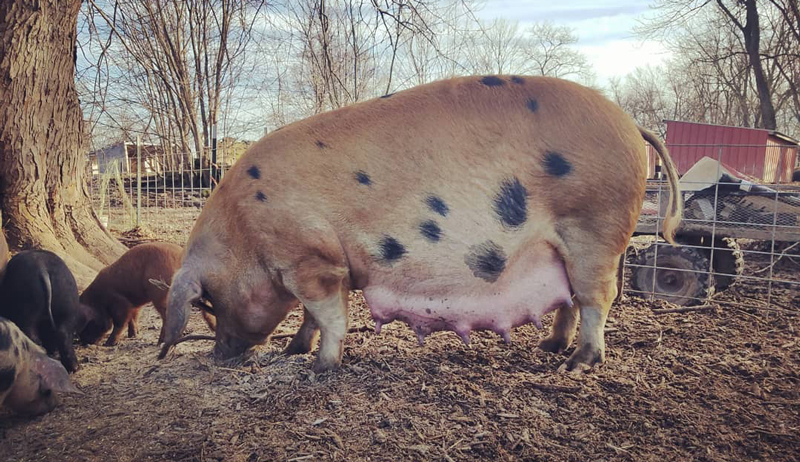
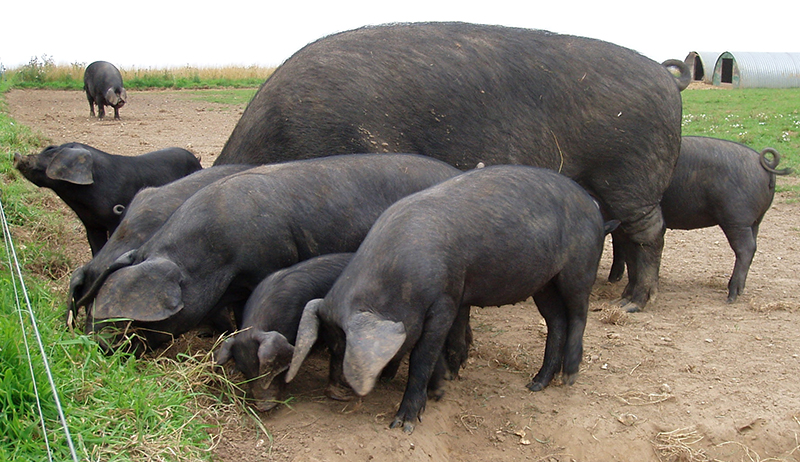
Some years back, we came upon the opportunity to acquire a litter of Large Black piglets. Large blacks are firmly a heritage breed, defined loosely as a breed that has fallen out of favor with producers over the years but is of interest to farmers and customers for their pasturing and foraging abilities, distinct flavor profiles and general preservation. Which is to say they’re different—and the opportunity to raise uncommon animals prompted us to buy all five and a Gloucestershire Old Spots (an even rarer pig that slipped onto the endangered list at one point) to boot. We grew our uncommon hogs out on a ration of high-protein, hand-mixed feed, reveling all the while in the sight of our uncommon animals lazily occupying the pastures we rotated them between. To our minds, the extra effort was sure to pay off in some as-yet-unidentified manner.

So we were of course befuddled when the vacuum-packed cuts we received from our processor fell far short of the weight we’d come to expect. And we were disappointed when customer feedback yielded such comments as, “That little pork chop sure was fatty.”

And this is how we learned the all-important first lesson in our lifelong education on the sprawling topic of feed conversion efficiency: We’d raised a litter of lard pigs.

What is Pig Feed Conversion Efficiency?

Feed conversion efficiency is something of an unwieldy topic, full of numerous interconnecting factors, but the basic concept is simple: When a pig eats, the resulting muscle gain roughly determines the feed conversion efficiency. If a pig requires a lot of feed to gain muscle, the efficiency is low; less feed required to achieve muscle gain is high efficiency. And the key term here is “muscle”—if a pig converts feed into excessive fat (i.e., not meat), you’ll leave the processor as unhappy as we were.

If you want to raise a herd of heritage pigs to keep a breed from extinction, feed conversion efficiency won’t be a primary concern. But if you’re trying to manage costs and keep market profits in the black, bacon pigs are definitely the way to go, and you should stay away from lard pigs.

Here’s a quick breakdown of bacon pigs and lard pigs, though be aware each pig is its own animal: You can get a fat Yorkshire, just as I’m sure somebody’s raised a buff Large Black. However, generally speaking, here’s where a few popular breeds land on the bacon vs. lard pig spectrum of conversion-efficiency metrics.

4 Lard Pig Breeds

1. Gloucestershire Old Spots: Known as “apple pigs” for their traditional use cleaning up fallen apples in orchards of yore, these pigs are the oldest breed of spotted pigs around today. GOSs pack on the fat, and they have a tendency to be stubborn.

2. Large Black: There’s a lot to love about the Large Black, such as its sunburn immunity and calm disposition, but that love can die at the processor, where meat yields can fall below expectations.

3. Mangalitsa: The Mangalitsa is a weird-looking pig. But not in a bad way—its thick, wooly coat is almost sheep-like compared to other popular pigs. It’s also firmly a lard pig, with much lower pork yields than other breeds.

4. Guinea Hogs: This pig grows fast on whatever you feed them, but much of that conversion results in fat, not muscle. Raise this pig for its foraging abilities, not its profit potential at the local farmers’ market.

4 Bacon Pig Breeds

1. Tamworth: One of the oldest breeds, traceable back to the domestication of wild hogs, the Tamworth was specifically bred for bacon—it has long, deep sides that curers prefer—but the hog’s wild ancestry makes it a frequent flight risk.

2. Berkshire: I’ll be honest—this is my favorite pig (and it’s what we raise on our farm). The oldest recorded British pig, this animal has just enough fat marbling to add moisture and flavor to a cut of pork. With a distinctly “porky” taste, this animal is often brought in to add flavor to a line that’s lost palate appeal.

3. Hampshire: Sporting a distinct white belt that crosses its shoulders, the Hampshire also boasts hardiness, vigor, breeding proficiency and a knack for foraging. It’s also a lean pig, reliably able to yield predictable amounts of market-ready pork chops.

4. Yorkshire: Sometimes called the Large White, this pig is hands down the most popular breed in the world. While the commercial pork industry is reliant on this breed for its excellent conversion rate, small producers can also benefit from the lean pig’s pork yield, though it’s worth mentioning that muted flavor is sometimes an issue, due to the extreme lack of fat.

This article about pig feed conversion was written for Hobby Farms magazine. Click here to subscribe.

Categories
Poultry

How to Prevent Bird Flu in Chickens

How to prevent bird flu in chickens can seem impossible, but there are several ways to protect your chickens from contracting this deadly disease. Here are six practical and easy tips on how to prevent bird flu in chickens. 

#1 Practice Biosecurity

Practicing biosecurity is one of the most important steps in how to prevent bird flu in chickens. But what is biosecurity? And how do you practice it in your flock?

Practicing biosecurity in your backyard flock means taking necessary precautions to avoid the spreading of harmful pathogens that could make your chickens sick. While it may sound complicated, practicing biosecurity is easy and will not only help to protect your chickens against the bird flu, but it also helps protect them from countless other diseases and internal and external parasites.

How to prevent bird flu in chickens by practicing biosecurity is a two-way street. This means you don’t want to bring home diseases from other chickens and poultry to your flock, but you also don’t want to share your flock’s germs with other birds or poultry. Never share or borrow poultry equipment. Stay clear of poultry shows, swaps, etc.; quarantine new poultry, and do not allow visitors to enter your coop and run.

Wear designated boots and clothes when visiting your coop and run to ensure you are not bringing in diseases from other birds to your flock.

How to prevent bird flu in chickens is extremely important, so be sure to practice biosecurity to keep your flock safe.

#2 Bye Bye Birdie

How to prevent bird flu in chickens should always include keeping wild birds away from your flock’s feeders and water founts. If wild birds eat or drink from the same source as your flock, some of the bird’s saliva will enter the water and remain on the feed. The avian flu is spread through bodily fluids, so preventing wild birds from contaminating chicken feed and water is critical.

Another concern backyard chicken owners face when dealing with wild birds sharing their flock’s feed and water sources is that the birds frequently poop while eating and drinking. Bird poop will contaminate the water, and poop in feed may be ingested by your flock.

Leave feeders and water founts in the coop or covered run to prevent wild birds from gaining access to your flock’s essentials. Never leave coop or run doors and unscreened windows open, as birds will quickly realize they can access your chickens’ feed and water through the door or window.

Even if the wild birds aren’t carrying the bird flu virus, they still carry many other diseases and parasites that could make your flock sick.

#3 Strong Immune System

Just like we humans take supplements and choose healthy eating habits to boost our immune systems and prevent sickness, how to prevent bird flu in chickens includes keeping your flock’s immune systems strong.

While your flock may still occasionally become ill, boosting their immune system will not only keep them healthy and safe from the bird flu, but it will protect them against other diseases, too.

There are three ways to boost your flock’s health: The best way to keep your flock’s immune system strong is by feeding them a complete feed formulated by a feed company specific to your flock’s needs, i.e., layer feed for laying hens, broiler feed for meat birds, etc.

Another option when researching how to prevent bird flu in chickens is to consider adding probiotics as part of their daily diet. Choose a probiotic that is made for poultry and preferably water-soluble. Poultry probiotics should contain lactobacillus, a critical probiotic chickens need to keep their digestive tract (the digestive tract is where sixty percent of a chicken’s immune system is.) healthy and running smoothly.

Fresh greens and herbs help to boost a chicken’s immune system and keep them healthy and strong. During the winter season, steeping some of your flock’s favorite spices, such as oregano, dill, basil, etc., into a tea to add to their water will help keep your flock’s immune system in tip-top condition all season long.

#4 Stay Away From Waterfowl

If you have ever searched online for how to prevent bird flu in chickens, you have probably read to keep your flock away from wild waterfowl. While this may seem easy if you only own chickens, for those who also share their home with domestic ducks and geese, this can be more challenging.

Wild waterfowl may not appear sick, but that doesn’t mean that they still aren’t carrying the bird flu. In many cases, the waterfowl simply act as a carrier for the disease but never succumb to the illness.

If your property is frequently visited by wild waterfowl, never allow your flock to free-range to avoid domestic and wild birds from intermingling and digesting each other’s poop. Keep domestic waterfowl off of ponds, streams, and other waterways to prevent your flock from drinking contaminated water. This is critical even if your pond or creek doesn’t have wild waterfowl visitors, as flowing water may be carrying this deadly virus from another pond or creek upstream from you.

#5 Avoid Free-Ranging

Free-ranging chickens are often thought of as healthier, so why does how to prevent bird flu in chickens include avoiding free-ranging?

It is true that access to fresh air and sunshine and the ability to forage for bugs and nutritious greens are excellent ways to help your flock stay healthy, but consequently being allowed to free-range has actually caused some flocks to contract the bird flu.

Chickens allowed to free-range may be tempted to hang out under trees where roosting birds poop and therefore ingest the wild bird’s poop. Not only is this behavior gross, but it is a sure way to make your flock sick.

Free-ranging flocks are also more likely to come into contact with birds that have died. As omnivores, chickens eat anything, including songbirds and other meat. Bad news for your flock if the deceased bird died from the bird flu.

#6 Migration Safety Tip

Migration time is one of the most feared times for poultry owners, as large flocks of birds are more prone to carrying the bird flu than the single robin hopping through the lawn.

How to protect bird flu in chickens and other poultry during migration season is extremely critical, so extra precautions should be taken.

Covering the run roof is one of the best ways to keep your flock safe from migrating birds and waterfowl. When the sky is filled with migrating waterfowl and birds, you run the risk of a migrating bird pooping while flying overhead and landing in your run. (Yes, it does happen.) Covering the roof of the run with shade cloth or tarps will prevent this and give you peace of mind.

By following these steps on how to prevent bird flu in chickens, you can rest easy, knowing you are doing everything you can to boost your chicken’s immune systems and prevent the bird flu from visiting your flock.

This article about how to prevent bird flu in chickens was written for Chickens magazine. Click here to subscribe.

Categories
Poultry

What is the Bird Flu Virus? Common Questions & Answers

Bird flu virus is a common concern among poultry keepers, as this deadly disease can wipe out an entire flock in a 24-hour period. Learn what symptoms to look for, how this disease is spread, if this disease is transmittable to you, and much more.

What is the Bird Flu Virus?

Often referred to as avian influenza, the bird flu virus is often present in the U.S. but is usually only found in a few wild birds and waterfowl, not spreading from flock to flock. However, every several years, the bird flu virus flares up, threatening backyard flocks and commercial farms and affecting wild birds and waterfowl.

How is Bird Flu Spread?

The bird flu virus is spread from bird to bird, either from direct contact with each other or by consuming contaminated water or feed.

This highly contagious disease can also be transmitted to your flock from manure tracked in on your shoes (courtesy of wild waterfowl or other domesticated flocks) or can be picked up at poultry shows, swap meets, or even from visiting your best friend’s coop.

11 Common Symptoms of Avian Influenza

Knowing the signs and symptoms of the bird flu virus is necessary for a correct diagnosis. Eleven common symptoms include the following:

1. Unusual or involuntary movements

2. Circling behaviors

3. Deformation of the neck

4. Lack of interest in food or water

5. Blindness

6. Diarrhea

7. Nasal or eye discharge

8. Sudden death soon after symptoms appear

9. Multiple deaths in the flock

10. Swelling around heads, necks, and eyes

11. Purple-colored legs and feet

Note: The symptoms of the bird flu virus are often the same as those of other common poultry diseases. Just because your flock may be experiencing some of these symptoms does not necessarily mean they have the bird flu. If your flock experiences these symptoms, contact your local or state veterinarian to see if the bird flu virus is a possibility in your flock.

Can I Get the Bird Flu Virus?

Can I get the bird flu virus, is a commonly asked question. In rare cases, humans can contract the bird flu virus, but it doesn’t usually happen. The good news is this disease is not deadly in humans, with symptoms being similar to other human flu symptoms, such as muscle cramps, fever, coughing, etc.

farmer wearing protective mask to prevent bird flu transmission
Adobe Stock/visoot

Individuals who work with or have come into contact with sick poultry are more likely to contract the bird flu virus. If you need to be around sick birds, wear a mask to help protect yourself.  If you have come into contact with the disease, follow all of the safety and cleaning guidelines laid out by the state vet and your family doctor to prevent it from spreading.

Following good hygiene, such as washing your hands for twenty seconds (the amount of time it takes to sing happy birthday twice) after handling poultry, poultry equipment, or cleaning the coop, will help keep you and your family healthy and safe.

Can Livestock Be Affected By the Bird Flu?

While it is not very common, some livestock, such as cattle, can contract bird flu. Keeping your herds and other livestock healthy and their immune systems strong is the best way to prevent them from contracting this disease.

Practice good biosecurity, feed nutrient-rich, species-specific, vegetarian-based feed, and clean barnyards and stalls frequently to prevent the spreading of disease.

Keeping wild birds out of pastures and barns can be challenging, if not impossible, so your best bet is practicing good husbandry.

Are Household Pets At Risk for the Bird Flu?

Household pets are not usually at risk of contracting bird flu but if your dog or cat consumes a contaminated bird, they can become ill.

Protect your four-footed family members by never allowing them to roam around outside unsupervised. If your dog or cat does consume a bird, keep an eye on them for signs of illness and call your vet immediately if they become sick.

Just like outdoor birds and poultry, house birds can be at risk of contracting the bird flu virus. Protect your parrots and other house birds by removing outdoor shoes before entering the house and changing your clothes after handling your poultry.

How Can Waterfowl Hunters Stay Safe?

Wild waterfowl are known for carrying the virus without appearing sick, so waterfowl hunters should use extra caution, especially if they have backyard poultry at home.

canada geese flying
Adobe Stock/Dennis Donohue

Before setting out on a hunt, do some research to see if the bird flu virus has been seen in your area. If cases have been reported near you are hunting, protect yourself and your flock and stay home.

If cases haven’t been reported close by, wear separate shoes and clothing for hunts. If possible, change footwear and outdoor wear before returning home to avoid spreading the bird flu virus and other diseases.  Never wear hunting gear or shoes when in contact with your flock.

Waterfowl hunting is never complete without your faithful canine by your side. When hunting with your dog, be sure to avoid having him retrieve deceased birds who were not shot or obviously sick birds to keep your canine safe and healthy.

For complete guidelines on how you can protect yourself, your hunting dogs, and poultry flocks while hunting, please visit https://www.aphis.usda.gov/sites/default/files/fsc_hpai_hunters.pdf  and https://www.ducks.org/conservation/waterfowl-research-science/waterfowl-hunters-and-the-avian-flu-what-you-need-to-know

Learning about avian influenza, including the signs and symptoms, is necessary to protect your flock and avoid the spreading of this deadly disease. But with proper care, good husbandry, and practicing biosecurity, the bird flu virus should not pose a threat to your backyard flock.

This article about bird flu was written for Chickens magazine. Click here to subscribe.

Categories
Animals

5 Tips For How to Tell If a Pig Is Pregnant

How to tell if a pig is pregnant is something that many farmers wonder about. Knowing the answer can be difficult, but here are five tips to help.

Is My Pig Pregnant?

Three months, three weeks, three days. The short gestation and prolific nature of the swine means that, relatively, we don’t have to wait too long to find out if hog-farrowing is an enterprise on your farm. The maximum amount of torture you will endure is 114 days.


Developing and minding a farrowing calendar helps you plan for piglets.


#1 Detecting Heat

The trickiest part is establishing a starting point for the 21-day count, or the estrus cycle of your lady.

Pigs cycle every 18 to 21 days. The span of symptoms is wide, ranging from none at all, to fully aggressive, restless, swollen mamas, mounting pen mates with visible discharge, ears popping up and down, vocalizing and locking their back legs to brace for the boar’s heavy frame.

My favorite sow used to walk to the edge of her paddock closest to our house and stare, unmoving, for hours. She was a great no-brainer sow for a beginning farmer. Some are less obvious, but most gals show at least a few of these signs.

The most reliable indicator is the attention of the boar. However, keep in mind, that you do not have to witness a boar mount a sow or gilt for her to get pregnant.

We’ve had seemingly discrete boars that prefer to breed when no one is watching, and we’ve had boars with less scruples, willing to mate only on full agriculture educational display, as a bus full of school children drives by.

But sneaky or not, the boar always leaves evidence of mating. He’ll leave sticky evidence all over the sow’s body, particularly her rear end, all over the pasture, maybe even all over a bale of hay, it’s just … you’ll see it.

# 2 A Little Bit Pregnant

Once you can establish mating has occurred, it’s time to start the 21-day clock looking for another heat cycle. Prepare to endure all sorts of “what ifs” and self-doubt.

No is the only definitive answer. If she cycles again, she is not in the family way. If there’s no evidence of heat, you’re partially on your way to answering yes, my pig is pregnant.

Unless she’s only a little bit pregnant.

There are many roadblocks to certainty on the farm. Disease pressure, stress, weather changes, transportation stress, age and condition of the sow—a number of things can cause a gilt or sow to absorb an early pregnancy. It’s rare, but it happens.

To complicate matters further, aggressive boars will mount a sow who is already pregnant. It’s a good sign if she refuses to put up with his tomfoolery, but it depends on the temperament of both the boar and the sow.

I have seen very pregnant sows put up with this behavior.


Follow these strategies when planning and planting pastures for pigs.


#3 Testing for Pregnancy

When we first started out, we were tempted by expensive cheats like pig pregnancy test strips (yes, they exist) and portable ultrasound instruments, which emit a series of tones that indicate pregnancy between 30-80 days after mating.

Ultimately, collecting pig urine or convincing sows to hold still for the Doppler—as well as learning proper technique for these devices—were not practical at our scale. I could definitely see myself diagnosing a full bladder as a false positive.

We put off buying equipment until, one day, we found we had trained our eyes to recognize a pregnant pig.

#4 Monitoring Mammary Development

Milkline, underline, rail, milk rail—there are many terms for it, but mammary development is the most reliable and consistent indicator of swine pregnancy.

Udders along the belly will fill out slowly from the rear like a balloon animal prior to being twisted. Teats will expand or cone out toward the ground.

It takes several hours of pig boob observation to make the call, but as a general rule, gilts show change earlier than our sows. The professional eye can detect change about 30 days out.

In an older sow, our warning window is shortened to about 2-3 weeks. Eventually, the udders will become so engorged that you’ll be able to squeeze the teat and express milk, a sure indicator of Go Time. Pack your hospital bag, as you’ll likely have piglets within 24-48 hours.

Fair warning, we have had high production sows express milk for a full week before farrowing. Just to keep us from getting too confident.

pig pregnant sow
The key is in the mammary. This gilt is three weeks from farrowing. (Lyndsey Teter)

#5 Watching Lady Pig Parts

As the mother pig’s belly swells and is weighed down with the pregnancy, in some pigs, the vulva will actually begin to point up toward the sky. The key here is knowing what the sow’s vulva looks like when not bred, and observing any change.

This appears to be a genetic trait, as this method has proven less reliable on our farm. But many have found success in observing change of direction in lady pig parts, if that’s your thing.


Raising Baby Pigs: Advice From An Accidental Farmer


Can Results for How to Tell if a Pig is Pregnant Be Clear?

Waiting for babies is a major cause of anxiety for new farmers.

Farmers want to be prepared for a new litter of piglets. At the same time, they also seek assurance they are not carrying costs for livestock with reproductive issues.

Luckily with pigs, there’s usually only a month or two (at most) of wondering in despair if your pig is pregnant. Just hang on a few more weeks.

This article about how to tell if a pig is pregnant was written for Hobby Farms magazine. Click here to subscribe.

Categories
Animals

Meet the Idaho Pasture Pig: A Good Grazer

The Idaho Pasture Pig was developed by Shelly Farris of Rigby, Idaho, when she saw a need for a good grazing pig. She wanted a good-natured animal that would graze the grass instead of rooting. The animals would also need to mature out at a smaller size than traditionally grown pigs, but able to reach a butcher weight in a reasonable amount of time. She began offering breeding stock to the public in 2012.

Down with IPP

The Idaho Pasture Pig—also called an IPP—is comprised of Old Berkshire, Duroc and Kunekune breeds. Many years of dedicated work went into creating a pig that is great for small family farms, as well as anyone interested in raising quality pork. 

The meat from grass-fed pigs is higher in omega-3 fatty acids. It’s also more marbleized than traditional grown pork, with a deep red color and a sweeter flavor.

Idaho Pasture Pig boars mature to about 350 to 450 pounds. Sows top out about 250 to 350 pounds. With a diet consisting primarily of grass, the pigs will mature to a butcher weight of about 230 to 250 pounds in approximately 10 months.


Read more: Small farms can be perfect places to raise some pigs in pasture!


What Do You Feed an Idaho Pasture Pig?

All pigs require lysine that is found in grains, so IPPs are unable to be 100 percent grass-fed. But they can be primarily grass-fed. Only 10 to 20 percent of their diet needs to consist of grains and minerals.

It’s essential for the minerals to be mixed properly into the feed. Due to their toxicity to salt, Idaho Pasture Pigs are unable to be fed free-choice minerals or mineral blocks. A mineral deficiency will result in the pigs digging in the ground to locate additional minerals instead of grazing the ground properly. 

Its uniform head leads to a shorter, upturned snout. This allows the Idaho Pasture Pig to graze grass. Other breed-standard attributes include:

  • a long back
  • well-developed shoulders
  • rounded hams that extend all the way down to the hocks
  • a good personality 

The Idaho Pasture Pig has more hair on its body than other breeds, making it very cold-hardy. Sows make excellent mothers, and they don’t require heat lamps to farrow outside in A-frame shelters.

The keys to a happy, healthy grazing pig include minerals; water; grass, hay and fodder; shelter; and, of course, a nice wallow!

This article about the Idaho Pasture Pig was written for Hobby Farms magazine. Click here to subscribe.
Categories
Poultry

3 Safe Methods for a Heated Chicken Coop

A heated chicken coop is something that people in regions of the United States where the temperatures drop dramatically from October to April often consider to keep their birds from freezing. Here’s how to keep your flock safely warm throughout the winter by providing heat via one of these three secure options.

Heated Chicken Coop Dangers

My husband Jae recently shared some sad news with me. A couple of his colleagues had lost their entire chicken coop over the weekend to a fire. All but one of their hens had perished; the lone survivor had to be euthanized, her injuries too extensive to treat. Scorch marks on the outer bricks of their residence showed how tragic this incident could have been.

I looked at Jae and said two words: heat lamp. And of course, it had been.

Search the internet and you are bound to find dozens of examples of coop fires caused by heat lamps. As with this local blaze, the poultry owners tend to be unaware of the inherent risks that come with using a searing-hot bulb over such combustible materials as straw and pine shavings.

3 Ways to Safely Keep Your Chicken Coop Warm

1. Heating Panels

Infrared heating panels are popular in home improvement because they can transfer heat quietly, without the use of fossil fuels and with no bulbs or filters to maintain. Most commonly found in bathrooms and yoga studios, these panels are easy to use: Mount them on a wall or ceiling, plug them in and wipe them down every so often. These traits make them ideal to use in a chicken coop. Simply position them beside or above your perch, and your birds will keep warm all winter.

Added bonus: The dust in your coop won’t get kicked up because these panels do not blow air in order to heat.

Drawback: The initial layout can be costly. Infrared heating panels can cost from about $100 to more than $300, which can be a little pricey for the debutante flock owner.

2. Deep Litter

A tried-and-true method, deep litter relies on in-situ decomposition to heat the henhouse. As the pine shavings become soiled with droppings, fresh litter is added on top. As more fresh litter is added, the soiled litter is compressed and begins to decompose in place. The decomposition process releases natural heat, which warms the coop and its inhabitants.

Added bonus: When it’s time to clean out the coop come spring, you’ll have plenty of fresh compost as a byproduct.

Drawback: Your coop must have proper ventilation to prevent an accumulation of gases that could be harmful—or fatal—to your flock.

3. Caged Heat Lamps

When used properly, a heat lamp provides an effective source of heat for your chickens. If you use a heat lamp, do some research rather than plunking the first one you see into your shopping cart.

  • Make sure the bulbs are infrared heat-lamp bulbs that are shatter-resistant.
  • Check the wattage: If you buy a 250-watt bulb, for example, you must use a 250-watt lamp.
  • Never exceed your lamp’s allotted wattage, which easily and unknowingly can be done by adding a timer.
  • Suspend your heat lamp from a permanent fixture such as a rafter or stud.
  • Use appropriate hardware to securely install your light.
  • Reinforce the chains with hardware wire so that they do not unlink.
  • Hang your heat lamp a minimum of 18 inches above head level to allow your chickens room to safely jump
  • Do not position your heat lamp above the perch, which will raise the birds to a level too close to the heat source to be safe.
  • Most importantly, use a cage over the face of the heat lamp. This way, should your heat lamp fall, the hot bulb will not contact anything incendiary.

Added bonus: Heat lamps, for the most part, are inexpensive.

Drawback: Heat lamps are also laughably easy to install incorrectly—which is a risk to your flock.

Jae shared our condolences with his colleagues and gently reminded them that I am just a phone call or text message away when they’re ready to outfit their new coop. I only wish they’d called me back in October, when they first hung their uncaged lamp from a cast-iron planter hook. They thought they would provide heat for their hens. Unfortunately, they didn’t realize how much.

This story about a heated chicken coop was written for Chickens magazine. Click here to subscribe.