Categories
Farm Management

3 Almond Tips From Fat Uncle Farms

3 Almond Tips From Fat Uncle Farms - Photo by Nathaniel Siemens (HobbyFarms.com)

A third-generation almond farmer, Nate Siemens takes pride in sustainably growing almonds the ways his grandfather did back in 1963. He and his wife, Bekki, own Fat Uncle Farms, an 18-acre orchard in California’s San Joaquin Valley. Six years ago, Siemens’ business took a new turn when he began selling specialty almonds in flavors like Coconut with Honey, Cinnalmond, Rosemary and Lemon Pepper. Now you can find his almonds in more than 15 farmers’ markets and specialty stores in the Santa Barbara area.

Almond Joy

3 Almond Tips From Fat Uncle Farms - Photo by Nathaniel Siemens (HobbyFarms.com)

Perhaps you, too, are considering almonds for your own orchard. A gregarious farmer and jack of all trades, Siemens is a wealth of information about this hugely popular and profitable nut. If you can’t visit him yourself at market or at his 100-acre ranch in Lompoc, Calif. (more on that below), glean a few of his almond growing and eating tips below.

1. Growing Almonds

Grow almonds anywhere you can grow cherries or apricots, but don’t expect to a harvest for about two to three years. Most species require hot dry summers and relatively short winters, but don’t despair if you live in a colder clime: Check with your local nursery to for Ukrainian varieties that tend to be hardier to cool temperatures.

2. Soak ’Em

Almonds are a healthy, savory snack, packed with protein, fiber and omega-3 and -6 fatty acids. Most people are aware of their health benefits and how to incorporate almonds into a healthy diet, but few are aware that soaking almonds can unlock more health benefits and make them easier to digest. Soaking almonds increases the amount of nutrients and vitamins your body absorbs from the food, making it a simple and effective way to improve this healthy nut.

3. Bees, Please

If you’re preparing to plant some almond trees on your property, don’t neglect your pollinators. Bees play an extremely important role in almond production, as almonds need pollination for fruiting to occur. Honey from the same bees can also be used to make honey-roasted almonds.

Not Quite a Beach Getaway

3 Almond Tips From Fat Uncle Farms - Photo by Nathaniel Siemens (HobbyFarms.com)

In 2013, Fat Uncle Farms expanded their operation to a 100-acre working ranch at the edge of the Pacific, about 2½ hours from the almond orchard. The Siemans reside there in a 1920s ranch house, growing a mix of grains and beans and raising animals in a holistic rotational system. In the past year, they turned separate ranch-hand quarters into a cozy guesthouse. The ranch boasts more cattle than people—a rarity in Southern California—and visitors can stroll along the gardens and pastures and participate in a variety of farm projects, from cheese-making to tending bees.

This is no resort. Guests are welcomed and encouraged to get their hands dirty milking the goats, feeding the animals, collecting eggs and watering the garden, but the benefits are worth it. Meals at Fat Uncle Farms are hearty and include products grown right on the farm: milk, eggs, berries, vegetables, honey and grains. For the eco-conscious traveler, there’s an Amtrak station at Surf Beach, about 20 min from the farm, where farm owners shuttle up to five people up to the farm.

To learn more about the farmstay, visit the Siemans’ listing on AirBnb.

When You Visit

To say a stay at Fat Uncle Farms is all work and no play would be a lie. The ranch is surrounded by plenty of outdoor activities guests can enjoy. Explore nearby beaches or take hikes through the surrounding rolling hills, beaches and coastal dunes, where you’ll find views of the Pacific Ocean. Some can’t-miss activities include:

  • Cheese and Yogurt Making: The Siemans offer cheesemaking classes, where you can learn to make simple cheeses, such as Chevre or mozzarella.
  • Wine Tasting: No visit to the Santa Barbara area would be complete without sampling local wine. Try the Lompoc Wine Trail to hit the vineyards that source local grapes. One of my favorites: Sta. Rita Hills AVA, renowned for exceptional Pinot Noir and Chardonnay.

« More Farm Traveler »


Categories
Crops & Gardening

Redbuds In Bloom: Spring Is Near

Redbuds In Bloom: Spring Is Near - Photo by Jessica Walliser (HobbyFarms.com)

One of my favorite harbingers of spring is the redbud tree. Although we’re a few weeks away from seeing the blossoms of this beautiful native tree here in Pennsylvania, I’m already looking forward to it. To me, there is no surer sign of spring’s arrival than the rosy-pink flowers of the redbud.

The Eastern Redbud

The Eastern redbud (Cercis canadensis) is native to the Eastern U.S., growing from New England to Florida and west to Texas. It’s a lovely, small, understory tree, reaching only 20 to 30 feet tall with an equal width. The Eastern redbud is adaptable to both moist and dry soil conditions, and it thrive in soil with less-than-perfect fertility.

This redbud’s blooms cluster tightly against the bare twigs in early to mid-April. After they drop a few weeks later, 3-inch-long, heart-shaped leaves emerge. At first the foliage appears reddish-purple, but in the straight species, it eventually matures to a glossy green.

In late summer, 3-inch-long, flat seedpods arrive. This tree readily self-sows if the seedpods are left to mature and drop naturally from the branches. You can often find small, young redbud trees in the area around a mature specimen. Letting a few of these baby trees grow is never a bad idea as, in my experience, redbuds are relatively short-lived. Letting a youngster take over when the parent tree dies allows for a natural succession.

Eastern redbuds are very common in the nursery trade. They don’t like to be transplanted, so care should be taken in the planting and subsequent maintenance of this lovely tree. I have had better success growing younger potted specimens than I have had with more mature balled-and-burlapped trees. Because redbuds are an understory tree, they prefer a partially shaded site and often become stressed in full sun situations.

And just incase the straight species doesn’t strike your fancy, there are also several interesting cultivars on the market. Alba and Royal White have white flowers instead of pink, and Forest Pansy has burgundy-purple foliage. Hearts of Gold boasts pink flowers followed by chartreuse green foliage, The Rising Sun has orangey-yellow new foliage, and Merlot is a hybrid with increased heat and drought tolerance.

The Western Redbud

Another redbud species, the Western redbud (Cercis occidentalis), is a native of the western U.S., including California, Utah and Arizona. It, too, bears rosy-pink flowers in late winter or early spring and looks very much like its eastern counterpart in both leaf-shape and plant-form. However, this species does not survive extremely cold temperatures below about 15 degrees F, though it does need a chill period in order to go dormant and develop flower buds. It’s best for USDA hardiness zones 7 to 9.

Learn more about growing trees on HobbyFarms.com:

« More Dirt on Gardening »


Categories
Poultry Urban Farming

4 Tips For Selling Backyard Eggs

4 Tips For Selling Backyard Eggs - Photo by Rachel Hurd Anger (UrbanFarmOnline.com)

Every year I look forward to my local newspaper’s holiday haiku contest. Its many ‘winners’ see their poems published in the Christmas edition of the Courier-Journal. In 2014, a sign nailed to a mailbox post stating “Fresh Eggs” inspired me to submit this:

”Fresh Eggs!” shingles read.
Yoking to activism,
Metro Cluckers flock.

When we order our first flocks, do we realize we are local-food activists? When I started, I just wanted protein from my backyard. Now, I’m part of a network of people who raise chickens to be a part of the local-food movement. Chicken-keeping has grown into something bigger for me, just like the size of my flock.

Last year, I added to my initial flock (now nearing age 5) anticipating leaner egg years and eventual deaths. But 15 months after ordering the babies, the original flock remains unchanged. Now, the chickens have the last laugh—I’ve been collecting seven eggs a day for nearly a week. Oops!

As we spring forward into the prolific egg season, I could very well see eight eggs every day. That’s 56 eggs a week! It’s time to start selling the abundance.

Here are the four things I’m considering before launching my egg business:

1. Do local laws allow chicken keepers to sell backyard eggs?

Even if you’re allowed to have chickens as a personal food source, check your state’s laws about selling eggs. If you move beyond casually selling eggs to friends, family and neighbors, you’ll probably need to follow a few specific FDA guidelines regarding temperature, storage and food-safety labeling.

2. Who will buy my product?

Who are your neighbors? Will they be willing to pay the price you’ll demand? You’ll probably charge between $2.50 and $4 per dozen, depending on egg prices in your area and current market saturation, meaning how many people are already selling eggs in your area. If your neighbors won’t buy them, marketing through friends on social media can be an effective way to move your product.

3. What are packaging and labeling costs?

Packaging might be an unwanted cost, but in most places it’s illegal to sell eggs from a re-used container. Why? Washed eggs can allow bacteria from the old container through the eggshells, contaminating your product. And, yes, to sell them, you must wash your eggs.

A professional-looking label on your egg cartons, complete with your contact information, can help your customers spread the word about your flock’s extra eggs.

4. How can I educate people about the origins of their food?

Imagine a consumer switching from store-bought eggs to backyard fresh for the first time, opening a carton, and seeing blue, green and different shades of brown, all in varying sizes and shapes. You won’t get rich selling this magical experience, but you will have an opportunity to step up to the dinner plate as the local-food activist you are.

If you have too many eggs like I’m soon to have, selling them keeps the eggs from going to waste, it helps educate the community about local food, and it can help you break even on feed or to make a small profit from your bounty.

Read more of Chicken Quarters »

Categories
Crops & Gardening

Cattails: A Delicious, Healthy Nuisance

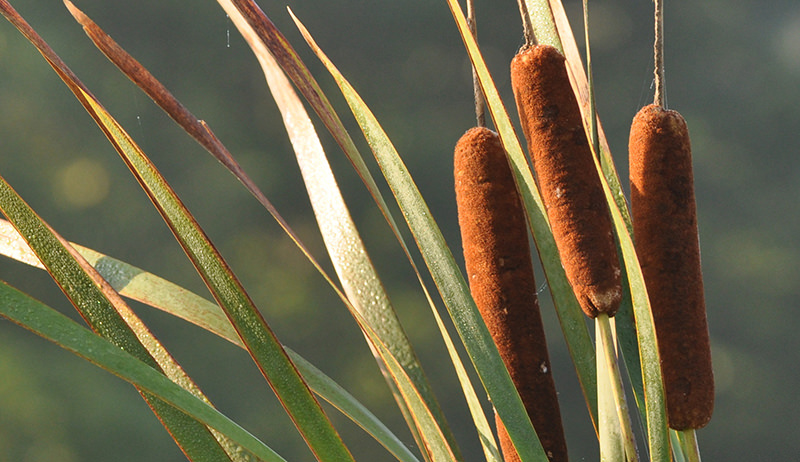
Yesterday afternoon, as I led a group of students around the farm, I saw my first red-winged black bird of the season. Throughout winter I enjoy the bluejays, cardinals and robins: Their bright colors against the snow as they eat the berries from one of the trees just outside our kitchen window is cheering. The feeling is quite different to see my first soaring red-winged blackbird when the weather finally breaks.

For years, I only saw these birds from a moving car as they congregated in marshy fields and ditches. Just a couple years ago, our pond matured enough to begin to grow cattails (Typha latifolia), and suddenly we had red-winged blackbirds of our very own. While swimming in the pond one summer afternoon, I discovered why this was. This curious bird builds its nest on the strong stalks of the cattail just above the water level. Genius! In order for a predator to get at its babies, it either has to fly in and land with precision or swim out into the middle of the pond. This time of year I enjoy sitting on the rocks for hours to watch the females building their reed baskets just before they settle in and lay eggs.

The birds and I have a similar love: cattails. Too many folks see these fuzzy-tipped plants as a nuisance. They pour chemicals into their pond to eradicate them. My father warned me that once the cattails start they will inevitably choke your water source. This is mostly true of the introduced cattail species (Typha angustifolia). Unmanaged, that is exactly what they’ll do. Their rhizomes will quickly spread and cover a wet area, sucking up the water and creating marsh where once there was open water.

The answer is to manage their growth—we don’t have to use chemicals, though! Instead we can freely eat them. The rhizomes are edible and delicious. They can be pounded down to produce a starchy flour. We can peel and eat the underwater corms, as well, as the interior portion of the stalks. They are delicious both raw in a salad and sautéed as you would asparagus. The pollen can be collected and used as part of the flour in flat breads, such as pancakes or crackers. We can even eat the fuzzy seed heads, though they’re destined for the pan long before they become fuzzy. It is important to understand that one of the great benefits of our native cattail is to filter lead out of contaminated areas. This means that the location of your foraging matters. Our pond is a safe place for us to collect this abundant food source, but I would avoid cattail stands in industrial areas or along busy roads.

Of course, being who I am, I can’t leave you without talking a bit about the medicinal uses of this fabulous weed. To be honest, there aren’t a lot. The ground up rhizome can be poulticed over cuts and bruises with a bit of success. If you were in need of an antiseptic while out in the wild and had nothing else close to hand you could make a small cut at the base of the plant just above the water line. The plant will bleed a thick, semi-clear liquid that can be used to protect a wound from infection.

Our family has offered a peeled stalk to our more adventurous visitors on farm tours. The flavor is reminiscent of a mild water chestnut. I’ve been meaning to try the rest of the plant in some of my favorite dishes. This year, we’ve watched for the ice to clear with anticipation. We’ll be eating each part of the plant in season because we need to clear some areas of cattail anyway. I love it when I can eat my problems!

Categories
Beginning Farmers

Burning Question: Will Small-Scale Farming Survive Without “Farm-to-Table”?

Burning Question: Will Small-Scale Farming Survive? (HobbyFarms.com)

Editor’s Note: “Burning Questions” takes an in-depth look at the hot-button issues facing today’s farmers. The ideas expressed here are not the opinions of Hobby Farms, but of individual farmers and food advocates rooted in the local-food movement. If you have thoughts or opinions about what is expressed here, please contribute them in the comments below. We want to hear from you, too!

It can’t be denied, I suppose, that farm-to-table food has become pretty trendy. In some parts of the country, the trend has long been established. In other places, it is just catching on. We’ve read about it in New York Times bestselling books. We’ve watched documentaries. We’ve eaten at the restaurants with carefully-crafted farm lists on the back of the menus. Many small-scale farms have gotten their start and gone on to thrive in this era of “Know Your Farmer,” a renaissance for local food.

The question is: Will it last? In 20, 50 or a 100 years, will we still be here talking about the farm-to-table movement? Or will it just be taken for granted? “Of course the food is grown locally,” people will say. Or is it possible that all will be forgotten and we will be right back where we started, with a heavily industrialized food system that has been taken from the hands of small farmers and handed back to giant corporations? Can small scale farming survive if farm-to-table isn’t cool anymore?

Increasing Demand For Local

The truth is that I mull over this question a lot. I mull it over because I live in a place where farm-to-table isn’t yet cool enough. It hasn’t caught on like it has on the East or West Coasts. I live in a town where local ingredients aren’t found on the menus of our restaurants, where politicians don’t see the value of our local farmers’ markets, and where even though we’re surrounded by beautiful farmland, we still get most of our vegetables at big-box stores that bring it in by the truckload from out of state and even out of country.

Here are the results of local food not being cool: Our economy suffers and our diets suffer. We deal with chronic illnesses and high obesity rates. Our tastebuds languish as one of our most popular restaurants in town is known more for the fact that the servers line-dance than the quality of the food.

Here in rural Kentucky, we just don’t yet have the infrastructure, the distribution network, and enough small-scale farmers to make local food work. I’ve run a farmers’ market for two years and my farmers don’t grow enough and don’t have enough outlets to sell their products to make it worth trying to extend their season. Most of our customers can’t stretch their tastes beyond “corns and tomatoes” and don’t want to come to market when those things aren’t in season. (I realize this is not the case everywhere, but I cannot help but form my opinions based on my geography.)

The Conventional View 

The fact is that conventional farmers and modern transportation have given us the most abundant, most affordable, most convenient food supply in the world. The advancements have been incredible over the last 100 years. We are only now beginning to count the costs of our switch to this type of farming. We don’t yet know all the long-term results of monoculture crops, genetic modification, and the widespread use of chemical pesticides and fertilizers. Even so, many rightfully fear the use of such practices and have gone out of their ways to become farmers who avoid them and consumers who don’t support them.

What I’ve learned is that wanting to support small-scale farmers isn’t enough. As much as I try to eat locally and seasonally in a town with farmers’ markets five months out the year and no co-operatives or year-round CSAs, I can only do so much. Farm-to-table needs to be cooler. It needs to be cooler and it needs to be financially sustainable for those making it happen. I know too many small-scale farmers who aren’t making a profit and frustrated consumers who can’t conveniently get the farm products they want when they want them.

Give and Take

I think for small-scale and environmentally friendly farming to survive, there must be hybridization of practices. Let’s not throw the baby out with the bath water. I think we can reject harmful practices and still embrace some of the same principles that have made conventional farms financially sustainable and have revolutionized the availability of affordable food.

What does this look like? Perhaps it means integration of technology, crop specialization, value-added products or better distribution methods. Maybe it means that government subsidies need to shift away from supporting the big boys to focus on small, sustainable operations. Is it better marketing, more farmer co-ops combining together to nab bigger sales, or finding affordable laborers without exploiting our workers? Is it a focus on prepared foods as consumers increasingly don’t have the time or motivation to cook? I certainly don’t have all the answers, but I hope the conversation will continue with people much smarter than myself.

Can farm-to-table survive? YES. I believe it can, but first we need to learn how to effectively meet the needs of consumers in new and exciting ways. We need to ditch the “us vs. them” mentality—conventional or sustainable, large or small, family-owned or business-operated. Farming is still farming. What can we learn from each other? How can we work together to nourish our population, protect our planet, and feed our hungry? There are many people throughout America who will never care where their food comes from or how it was grown. There are farming operations that will never consider how their growing practices affect the long-term vitality of the soil, water and air. We need major change if we are going to stay vital over the next 20 to 40 years and beyond.Farm-to-table needs to become even cooler before we can start worrying about what happens when it isn’t anymore.

Your Thoughts

We asked you on social media how you’d answer this question. Here’s what you said:

Ronny Williams The problem with small-scale farming is higher overhead and because of that the price of your product is higher than that produced by mega farms or import. As long as people are willing to pay for quality food that has been produced using safe practices the small-scale farms can make it. If price is all that matters to the consumer then they will eat tainted products grown using questionable practices.

Tom Freedom As long as I can sit at a farmers market or a gas station and sell out of my truck I don’t see small organic farming going anywhere.

Appalachia Kevin Cottrell “Small Scale” will survive through the educated only. Farming today incorporates many specialties to live a comfortable living. The farm for self sufficiency is the easy game. To profit you’ll need be a engineer, a chemist, a mechanic, a MBA, a expert in marketing, expert at utilizing the NET, (amongst a few). The days of till, fertilize, plant, cross your fingers have been gone.

Elisabeth-Anne Mabie Small scale farming does far more than reduce the carbon footprint to deliver goods to market. They also raise a wide variety of plant breeds which adds to the genetic diversity of our nation’s food supply. If genetics has taught us little else, it has taught us that reliance on a single strain is dangerous. Also, as industrialized farming relies on monocropping, the only place people will be able to obtain different varieties and less common produce is from small scale farmers. Though the term may change, I think those that are adaptable to the market will survive.

Jodi Porter If locavore, and farm to table ever became non trendy, small farms would suffer greatly. But, with that said, I don’t think it’s going anywhere, junk food sales are plummeting, and people are waking up to their health!

Deanna Poindexter The people I talk to who are either small scale farmers or support small scale farming are not doing so because it’s a fad but because they genuinely care about the source of the food they feed their families. They will continue to care even when it’s out of style.

Annika Johnson Of course it will survive; while some people just go to a farmer’s market because it’s “cool” at the moment, the people who buy CSA shares or regularly buy eggs or milk from a farm without belonging to a co-op do so for reasons other than being “cool.”

Bea Jones There have always been people who either grew their own or bought from local farmers and producers. The “small-scale farming” fad, like the “organic” farming fad, will pass, as finances, speed, production, and availability, as well as changing outside interests, of the consumers dictate. People who, for example, find out that cow and chicken manure are used (and are fearful of contamination) for ‘organic’ farming, disease scares like salmonella and listeria, or even bird flu, mad cow, or hoof-and-mouth disease, will cause people to fall away – as will their personal loss or increase of income, jobs, or financial stability. Some will do what they have always done, most will eventually fall away. [shrug] It doesn’t matter to those of us who have always done it, even before it was “cool.”

Join the conversation below!


Categories
News

California Is Parched—and Why You Should Care

California Is Parched—and Why You Should Care - Photo by iStock/Thinkstock (HobbyFarms.com)

Editor’s Note: “The News Hog” is a news and opinion blog from the perspective of one farmer, and does not necessarily represent the stance of Hobby Farms magazine and HobbyFarms.com.

Attention anyone who eats, drinks wine, watches movies or pretty much just exists in the U.S.: Your life is about to change. Unless you’ve been living under a rock for the past few years, you know that California is in a dire drought. Now, NASA satellite maps show the state has just one year of water left in its reservoirs at its current water-use rate. Let’s add to that the USDA National Resource Conservation Service’s announcement last week that there’s record-low snowpack in the Sierra Nevada and Cascades, which supply much of the West Coast with water as it melts. The reality behind these terrifying truths strikes harder than simply an urging to turn off the water while you’re brushing your teeth.

This Los Angeles Times op-ed piece by NASA senior water scientist Jay Famiglietti has super-interesting stats that might make your stomach tense up the way it did mine. It’s hard for me to digest the idea that the water stored in the Sacramento and San Joaquin river basins was 34 million acre-feet below normal in 2014 while I look out my window on a farm in Kentucky and see 2 inches or more of standing water over parts of the property from a recent 8-inch snow melt and 2 inches of rain. I don’t know what it’s like to be a farmer in California and watch your land turn to dust, to have to make the decision to pump more groundwater—the state’s precious reserve to the river basins’ water supply—to feed some of your crops while knowing it’s not a sustainable practice, and to have to let some of your land go fallow because there simply isn’t enough water for it all. I can’t wrap my mind around it, really, other than to give thanks for having an abundance of water here as we prepare for our growing season to begin.

Blame Your Lunch

Yes, California is the most populous state in the U.S. And, yes, California has manufacturing and other industries that use plenty of water. But agriculture is California’s—and therefore America’s—water hog. From the California Department of Water Resources:

  • California produces more than 250 different crops.
  • The state leads the nation in production of 75 crops.
  • California is the nation’s sole producer of 12 different crops, including almonds, artichokes, dates, figs, raisins, kiwifruit, olives, persimmons, pistachios, prunes and walnuts.
  • 9.6 million acres of ag land is irrigated each year using roughly 34 million acre-feet out of the 43 million acre-feet of water diverted from surface waters or pumped from groundwater. That’s 79 percent of California’s water going to agriculture.

I don’t know about you, but I eat almonds, raisins and olives on a pretty regular basis. I also eat as much locally produced food as possible, which is a whole lot easier for me than it is for most people I know because I produce food! California’s drought only highlights our nation’s—and the world’s—need for more resilient local food systems. We can’t rely on one area to provide most of our food because we’re putting unfair pressure on an already way, way overtaxed system.

If you’ve ever wondered just how much water it takes to produce your food—whether you grow it yourself or buy it from somewhere like California—the Water Footprint Network can tell you. I bet you’ll be surprised at some of these amounts. (Chocolate eaters, I’m talking to you!)

What Are You Doing?

Whether or not you live in California, do you use water-conservation tactics on your farm? I think everyone is familiar with the use of water-catchment systems like rain barrels and cisterns, and people are pretty good about turning off the hose before the water trough runs over, but if you do something creative, please tell us about it in the blog comments below!

In the farm house where I live, our cistern ran out of water three times last year, and I wrote about how to conserve water for HobbyFarms.com’s sister website. What home water-conservation ideas did I miss?

Also check out a small glimmer of hope from the University of California-Davis College of Agricultural and Environmental Sciences, which has been doing ongoing research into improving groundwater resources. We can all only hope it’s not too late!

And, in a tiny bit of humor in this really humorless situation, the satirical website The Onion weighed in on the one-year-left water declaration. Go ahead and read it, maybe crack a smile, but then join me in shaking your head, knowing that these are thoughts some people in the water-shortage-can’t-happen-to-me camp are thinking.

Read more about drought on HobbyFarms.com:

  • 4 Ways to Nourish Your Soil During Drought
  • The Beginning Farmer’s Guide to Preparing for Drought
  • Drought Management of Livestock
  • Get Into the Permaculture Zone
  • Honey Bees and Drought

    « More The News Hog »

Categories
Homesteading

Simple Citrus All-Purpose Cleaner

Simple Citrus All-Purpose Cleaner - Photo by Merissa Alink (HobbyFarms.com)The first morning of the year that the hint of warm spring breeze makes its way to my house means one thing: It’s time for spring cleaning. I couldn’t tell you exactly what it is, but there’s something about that special breeze that always gets me itching to clean up and clean out.

Instead of filling my house with unnecessary toxic cleaners, I prefer to make my own. Not only do they help to get the house clean, but my favorites have great uplifting scents that always seem to help the cleaning process. Sweet orange essential oil is known to be a “happy,” invigorating scent that is known in aromatherapy to help with things like anxiety. I always knew that spring cleaning was a special kind of therapy!

Below is the recipe for one of my favorite all-purpose cleaners that use sweet orange essential oil. This cleaner is great for use on non-porous surfaces, such as kitchen counters and bathtubs. For any surface you aren’t sure about using it on, test in a small, inconspicuous area first.

This cleaner only takes minutes to mix together, and it has a great citrus scent that will help lift your mood. Note that you should use filtered water in this recipe, especially if you have hard water, as water’s mineral content has the tendency to stain surfaces over time. Both grapefruit and sweet orange essential oils used here have antibacterial properties, which make them great for cleaning germ-filled spaces, like kitchens and bathrooms.

Materials You Need

  • 16-ounce spray bottle
  • 2 cups filtered water
  • 10 drops sweet orange essential oil
  • 5 drops grapefruit essential oil

Preparation

Mix all ingredients together in the clean, empty spray bottle. Give the bottle a shake before spraying to help distribute the oils evenly. Spray onto surface you would like to clean and wipe off with a dry towel.

Merissa Alink at The Craft Hub
About Merissa Alink
Merissa Alink believes in making the most with what you have. She blogs about simple living, modern homesteading, and from-scratch recipes at Little House Living and joins us each month on The Craft Hub with sewing projects you can incorporate into your own home. 


« More of The Craft Hub »


Categories
Homesteading

6 Ways to Use Swiss Chard

6 Ways to Use Swiss Chard - Photo by Melissa Griffiths (HobbyFarms.com)

Swiss chard has been around for a very long time, but if it’s new to you, there’s no better time to get acquainted with this beautiful, delicious leafy green. Swiss chard was used by the ancient Greeks for food and medicine and is still a well-loved vegetable in the Mediterranean. You can find it in most grocery stores, though like most vegetables, it’s superior when grown at home.

Growing and Harvesting Chard

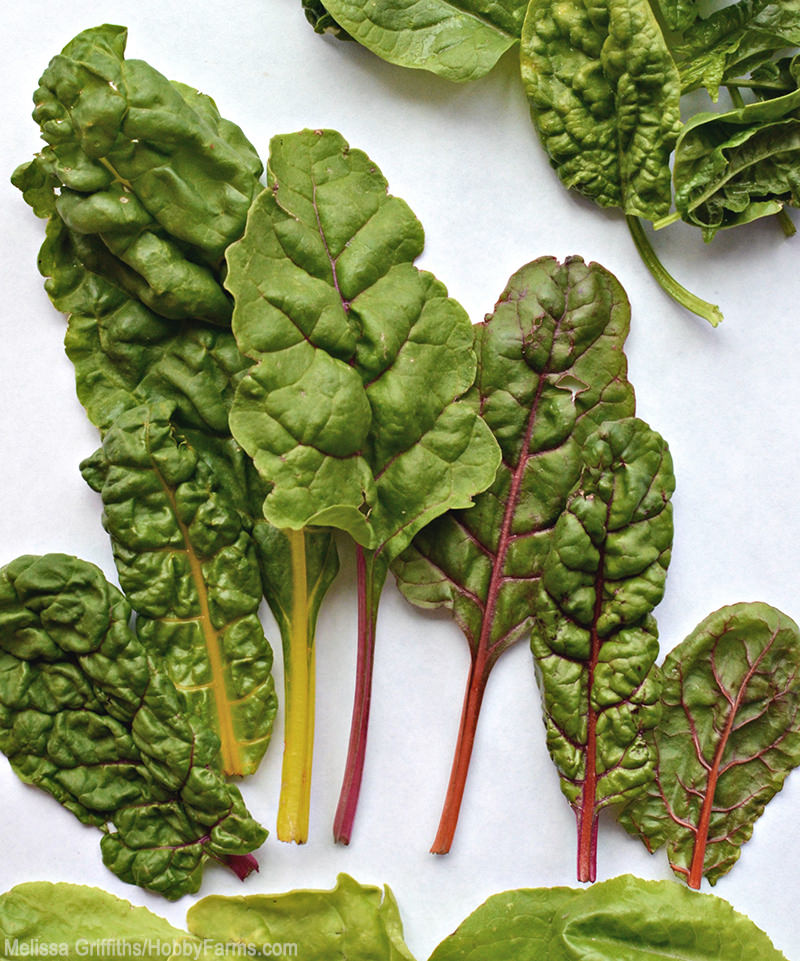
Swiss chard comes in two general varieties: The more traditional Swiss chard has a white stem and large, ruffled, dark-green leaves; colored chard, aka rainbow chard, has similar leaves and red, pink, orange and yellow stalks. Both varieties are easy to grow and do well in most climates, as long as they’re protected from heavy frost. Sow seeds in early spring, water well, and harvest when the leaves and stalks are young and tender. Like most greens, chard doesn’t fare well in the extreme heat of mid-summer, but keep watering: When things start to cool off in the fall, you’ll likely get a second harvest.

Swiss chard is best picked small, and often the grocery store only carries very large, almost stalk-like pieces. You can remove the stalks before using and feed them to your hens or compost them, or you can treat the stalks like celery and add them to soups and stews. Growing your own ensures you can pick it when the leaves are 4 to 6 inches long (or even smaller for fresh salads) and the stems very thin and tender. You’ll also likely find fresher, tenderer chard at your local farmers’ market.

Don’t wash your chard before storing it, as the water will promote spoiling. Store your chard in a sealed plastic bag in your produce drawer, and wash as you use it. It should last two to four days in the fridge, depending on when it was picked.

6 Ways to Use Swiss Chard - Photo by Melissa Griffiths (HobbyFarms.com)

While Swiss chard is a great green for salads or a light sauté, here are a few simple ways to use it that may not have crossed your mind.

1. Green Smoothies

Replace your typical spinach in green smoothies with Swiss chard. Here’s a simple recipe to try: Add one frozen banana, 1 cup frozen berries of your choice, a handful of Swiss chard, 1/2 cup vanilla yogurt, and 2 cups milk in a blender and process until smooth. Drink right away. You’ll never even know the greens are in there, but you’ll be getting all their health benefits. Swiss chard can also be juiced, though you’ll lose out on the fiber content.

2. Pasta Sauce

Try mixing Swiss chard into your favorite pasta sauce. Chop a handful of chard well and add it when you’re sautéing your onion. Your family will never know because it looks like you used extra basil in your sauce.

3. Soup

Swiss chard is excellent in soups. Roughly chop it and add it to your favorite soup about 5 minutes before the end of the cooking time. Allow the chard to wilt before serving. This is a great addition to tortellini, minestrone, beef vegetable and other vegetable-heavy soups.

4. Egg Dishes

Making a savory quiche, strata or frittata? Mix in a handful of chopped Swiss chard before baking and enjoy a little extra color and flavor in your dish.

5. Pickled Chard Stalks

Chard is best used fresh, but you can pickle larger stems. Use your favorite refrigerator pickle or pickled beets recipe, and either replace the other vegetables with the stems or add the stems to what you’re already pickling.

6. Freeze It

If you have a bumper crop of chard, it can be frozen: To freeze chard you’ll need to wash it, chop it, and then blanch it for 2 minutes, working in small batches. After the chard is blanched, shock it in an ice-water bath and then remove it with a slotted spoon. Place it on paper towels or give it a spin in a salad spinner to remove extra moisture. Portion the blanched chard into freezer bags (1 cup is a good amount per bag), add the date, and freeze. Frozen chard should be used within 6 months. Add it to cooked dishes, like soups, stews, pasta sauces or quiche. You could also use this in your smoothie recipes (though a whole cup might be too much for one smoothie) since it gets blended up.

Chard is a gorgeous vegetable that’s easy to grow, delicious to eat, and versatile in the kitchen. It even grows nicely in well watered containers if your space is limited. Look for it early in the spring at the farmers’ market and plan on putting in a row of it in your home garden as soon as you can plant in the spring.

Get more recipe ideas from HobbyFarms.com:

  • 5 Cool Ways to Use Your Cucumber Harvest
  • 3 Ways to Use Your Okra Year-Round
  • 7 New Ways to Preserve Squash
  • 9 Ways to Preserve Peppers For Winter
  • 3 Ways to Preserve Fresh Oranges


Categories
Homesteading

Farm Sprouts Q&A: Vermicomposting With Kids

Farm Sprouts Q&A: Vermicomposting With Kids - Photo by Annie Bernauer (HobbyFarms.com)

As spring advances, everyone is thinking of baby animals on the farm. While a chick is adorable and a baby goat is endearing, today we’re going to talk about something wigglier.

As my children and I were reading about worms and what they do, we were introduced to the wild world of vermicomposting. We learned some people keep worms bins to make compost for the garden. For those of you also new to worm composting, worms will eat through paper and kitchen scraps you throw into the bin, and what they poop out (aka their castings) can be harvested and is extremely beneficial for garden soil. Not just any worm will do in a vermicompost bin: You need the red wigglers.

To learn more about vermicomposting in worm bins, I chatted with Annie Bernauer, author of “Montana Homesteader.” As her blog name implies, Annie lives in Montana and experiences some very cold winters; I was curious how that affected her choice of vermicomposting methods. She also has small children, so I was also super-interested in her advice for involving kids. Below an excerpt from our conversation about all things worms.

Tessa Zundel: Why do you compost with worms?

Annie Bernauer: We started vermicomposting primarily as a means to make compost year-round. Because we live in Montana where there are long, cold winters, it’s impossible to keep our outdoor compost bin from freezing. In years past, I kept adding food scraps to our outdoor compost tumbler all winter long even though it was frozen solid, as I didn’t want to throw the food scraps in the trash. Once it warmed up enough in the spring, the food scraps would start to compost, but it was only going for about five or six months before it would freeze solid again.

Farm Sprouts Q&A: Vermicomposting With Kids - Photo by Annie Bernauer (HobbyFarms.com)

Because we have a large garden, we use a lot of compost, so we needed a way to generate it year-round. Then we discovered vermicomposting. We keep our worm bins in our mudroom next to the kitchen, where the worms happily turn our food scraps to compost all year long.

TZ: What kind of vermicomposting have you practiced, and which do you prefer?

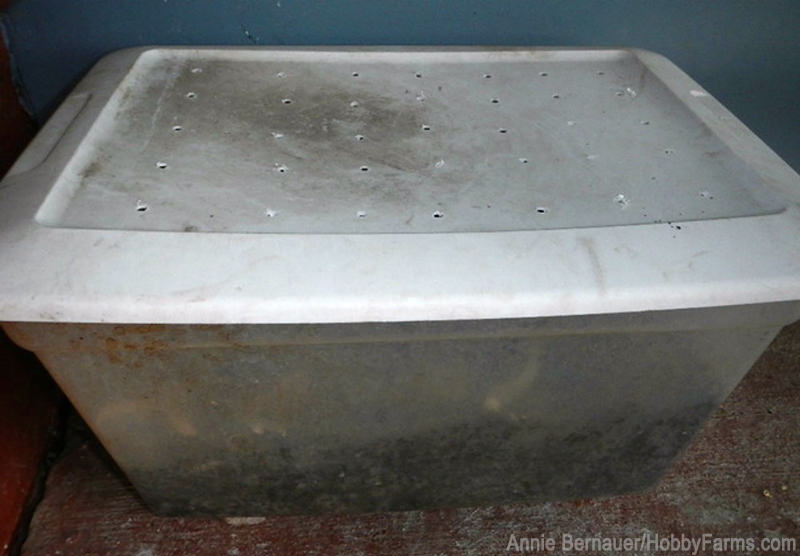
AB: We started out with a simple homemade worm bin made out of a large plastic storage tub and a pound of red wiggler worms. A few months later, I made another worm bin out of a 5-gallon plastic bucket for a different variety of worms. Then we got a Worm Factory 360 with more red wiggler worms, and this one is definitely my favorite!

The large plastic tub is cheap, but it’s heavy to move around and a time intensive process to harvest the castings. The bucket bin is cheap and easy to move around, but also more time intensive to harvest castings. The Worm Factory 360 is easy to move around and designed so the worms eventually migrate to upper trays making casting harvest quite easy!

TZ: How much time per week do you spend maintaining your bin?

AB: I spend about 10 to 15 minutes per week maintaining our worm bins. I add a bag of previously frozen and thawed food scrapsonce or twice per week. (We freeze the scraps to cut down on fruit flies.) I also add a new layer of shredded newspaper and/or cardboard. I do a quick bin inspection by gently digging around with a hand rake. I check to make sure the bin isn’t too dry or too wet and look for any potential issues to address to keep our worms happy in their bins.

Farm Sprouts Q&A: Vermicomposting With Kids - Photo by Annie Bernauer (HobbyFarms.com)

TZ: Is this a project a child could help with?

AB: Absolutely, a child can help with vermicomposting! When we got our first worm bin, our daughter was 2½ years old, and she was actively involved in the process from Day 1. She helped build all our worm bins by adding in bedding material. She loves to help feed “the wormies,” and I taught her how to gently rake through the bin to do a bin inspection. I also used it as an opportunity to teach her about the life cycle of worms. If our toddler can help with vermicomposting, I’m pretty sure an older child or teenager can do it, too.

Will You Compost with Worms?

A big thank you to Annie for taking time to share her experience with us! My kids are now clamoring for a worm bin in the laundry room and saying it’s all in the name of science because Ms. Annie says so. I really do like the idea of year-round compost, and I can always use more in my garden. What do think: Are you game to try vermicomposting with your family?

You can another conversation about vermicomposting (this time about worm towers) on HomesteadLady.com.

Get more vermicomposting info on HobbyFarms.com:

« More Farm Sprouts »


Categories
Urban Farming

Container Gardening: Choose the Right Pot

Container Gardening: Choose the Right Pot - Photo by Kevin Fogle (UrbanFarmOnline.com)

One of the biggest challenges for gardeners interested in container gardening is choosing the right type of container to grow both edibles and ornamentals. When you visit your local garden center or hardware store, you may be overwhelmed by the sheer variety of container materials from plastic and terra-cotta to stoneware and concrete. Below are some of my tips for finding a pot that will help your container plants thrive.

Drainage Is Key

Before considering the material of your container, I strongly recommend you find one with holes in the base for water drainage. Drainage is a critical element of container gardening. Without an outlet, water will accumulate in your pot and lead to root rot, which will damage or kill your plants over time. While you can often create your own drainage holes in containers, it can be a pain in the neck and can actually weaken some ceramic containers.

Choose Your Material

Two of the most common types of garden containers are terra-cotta and plastic. Both have advantages and disadvantages, and here are some of my thoughts on each to help you choose one to suit your growing purposes.

Unglazed Terracotta

The ubiquitous mental image of container gardening inevitably includes these classic dark-orange clay planters. Unglazed terra-cotta pots are attractive and come in a range of sizes and shapes. Their porous nature allows water and air to gradually pass through, meaning root systems get the moisture and oxygen they need while also having the ability to wick away excess water. Their thickness helps insulate the soil, keeping root systems free of rapid temperature swings, which can be detrimental.

While container gardeners often reach for terra-cotta pots, keep in mind they’re relatively fragile. During cold spells, the moisture in the walls can freeze and expand, causing the pot to chip or crack. Terra-cotta users also frequently complain about the white crusty residue that builds up on the exterior of the pots caused by salts in the local water or fertilizers leaching through the porous walls. This residue can be removed with a diluted vinegar solution, a scrub brush and some elbow grease.

Plastic

Plastic containers have the advantage of being both cheap and lightweight, though there are some significant issues with plastics. Because we’re discussing outdoor usage, plastic containers will be exposed to a regular dose of UV rays, which can discolor and weaken many plastics, turning them fragile and brittle within a few seasons. UV-resistant containers are available and are recommended over traditional plastic containers.

Unlike the insulated walls of terra-cotta, plastic pots have very thin walls that can quickly cool down or heat up depending on both the size of the planter and color of the plastic. If you’re in a warm climate, like South Carolina where I live, avoid using dark-colored plastic containers in the summer because they can overheat and dry out the soil quickly.

Read more of Garden In Front »