Categories
Animals Poultry

How to Get More Money Selling Your Farm-Fresh Eggs

The trend of raising backyard chickens has certainly helped accommodate a healthier American diet, but it has unintentionally had a detrimental effect on those selling their excess eggs. Because of the overwhelming supply of fresh eggs from backyard flocks and small farms at farmers markets, feed stores and roadside stands, the price of eggs is being kept artificially low.

It’s often hard to sell a dozen eggs for a high enough price to cover the cost of raising chickens—including their feed, supplements and housing—as well as the egg cartons and other packaging. Many times, locally grown eggs are sold for about the same price as eggs found in supermarkets, despite the former being fresher and more nutritious. When you sell your eggs, you’re not only competing against the low grocery-store egg prices but also against other local sellers. Here are some tips to get your eggs to stand out from the crowd without undercutting the sale price.

1. Boost Yolk Color

raw eggs egg
Shutterstock

Eggs from free-range chickens that eat a lot of grass and weeds will naturally have more vibrant yolks and look fresher than store-bought eggs from caged chickens, but you can bump up the wow factor of your chickens’ egg yolks simply by feeding foods high in xyanthophyll, a carotenoid with a naturally orange pigment. Some of these foods include basil, carrots, corn, marigolds, parsley, pumpkin, red cabbage, tomatoes, watermelon and the leaves of most green plants. And if you’re selling at a farmers market or fair, crack a few eggs into a bowl to show potential buyers how great your eggs look.

2. Hand Out Free Samples
eggs marketing selling
Shutterstock

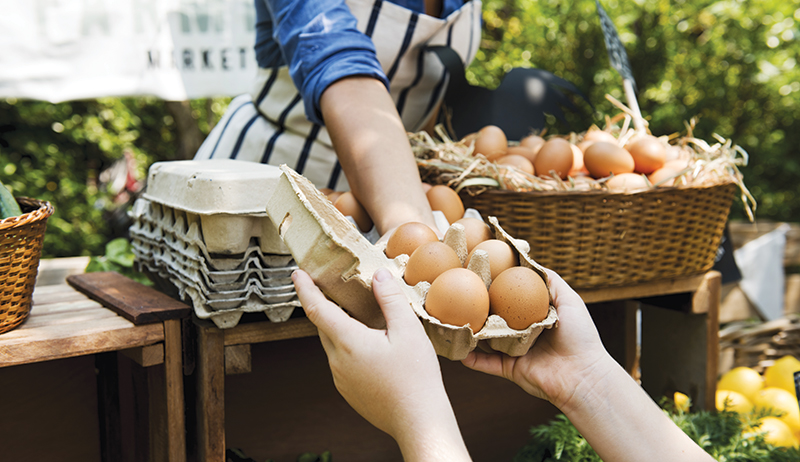
If you’ve priced your eggs high and aren’t attracting many buyers at the farmers market, consider putting out a basket of free samples. Allow people to take home an egg to try it for themselves. Hopefully, that will compel more than a few to come back the next week to buy.

3. Provide Nutrition Information

A 2010 study from Penn State shows that chickens raised on pasture may produce more nutritious eggs than chickens that never see the light of day or step foot on grass. Pasture-raised chickens have access to a more diverse diet, including a variety of forages and insects, which can lead to increased levels of vitamins A and E and omega-3 fatty acids. Share this information with your potential customers by printing out a nutritional comparison on cards or handouts.

4. Use Creative Packaging

egg business sell eggs money
Lisa Steele

Make your packaging unique and attractive. Instead of merely packaging your eggs in cartons and stacking them on a farmers market table, why not tie a pretty ribbon or some baker’s twine around the carton and attach an attractive business card? Sending each customer away with your contact information is a must to make it easy for them to locate you when they’re ready to reorder. Consider tucking some fresh flowers or herbs into the ribbon or twine. If you raise breeds that lay colored eggs, use packaging that showcases their diversity.

5. Raise Different Poultry
egg business sell eggs money
Lisa Steele

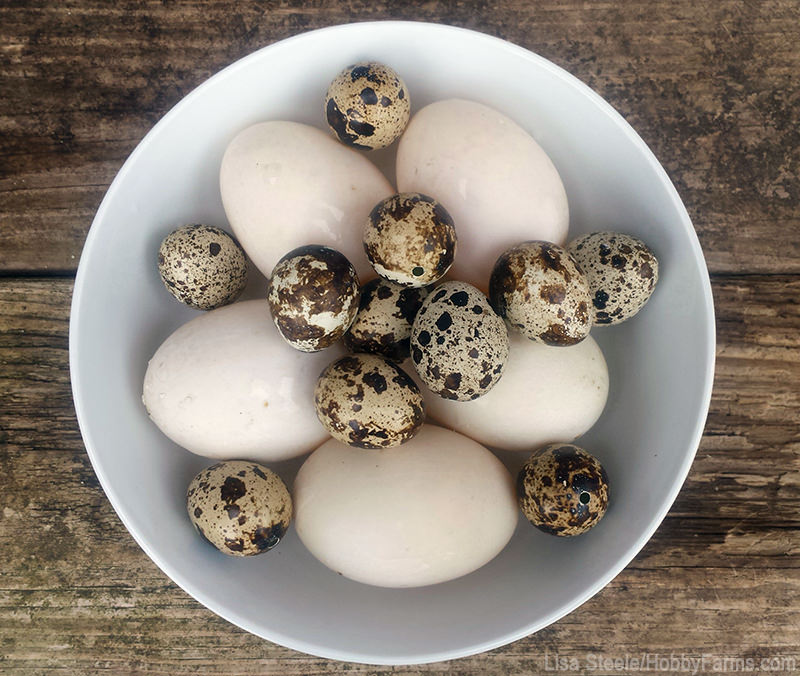
Chicken eggs can literally be a dime a dozen because of the large supply available, but even those who raise chickens themselves might be interested in trying duck or quail eggs. Duck eggs are larger than chicken eggs and thought to be to be better for baking due to their higher fat content. Quail eggs are considered a delicacy and are often pickled or used by five-star chefs to top burgers or salads due to their diminutive size and relative rarity.

6. Sell Legally

Before selling your eggs, be sure to check your state Department of Agriculture’s egg laws or cottage-food regulations, which will lay out handling and storing requirements, grading guidelines, reuse of cartons, and carton labeling regulations, including the use of such terms as free-range, pasture-raised, vegetarian and organic. These laws vary by state and often by how many eggs you plan to sell. Your local extension service should be able to point you in the right direction to get that information, or you can find it online. You will also need to find out the business-licensing requirements for your municipality before you start selling your eggs.

By using some of these tactics, you should be able to set your eggs apart from the competition and price them higher than you could otherwise. Once most people are made aware of the incredible taste, freshness and nutritional value of backyard eggs, they are more willing to pay a premium for them—and a pretty carton doesn’t hurt.


Categories
Beginning Farmers

Strange (Garden) Bedfellows

Greenhorn Acres: Strange Garden Bedfellows - Photo by Cyn Cady (HobbyFarms.com) 

Who’s up for a heaping plate of strawberry-onion surprise? A disgusting combination on the plate, planting strawberries and onions together in the garden plot is a match made in heaven. And even though peas tossed with butter and thinly sliced red onion is delicious, planting them together can stunt both plants. Weird, right? But it just goes to show you, there’s someone for everyone.

As I explore the world of synergistic planting, I’m learning that “companion plant” doesn’t just mean that asparagus fern in your kitchen window that you talk to when no one else will listen, it’s the importance of combining … or separating … plants that can help or hinder each other’s growth.

And then there’s the bug thing: Some plants or combinations of plants help to repel those evil plant-eating bugs that we all know and hate. It’s fairly common knowledge that marigolds help keep aphids away (even though I mostly like them because they are cute and orange and look and taste awesome in salads), but aromatic herbs like basil and mint are not only kryptonite to Evil Garden Bugs, they may also attract the Superhero Garden Bugs, who will come to the rescue and save the Vegetable Universe.

OK, maybe I’ve been reading too many comic books again. But you get the point.

Greenhorn Acres: Strange Garden Bedfellows - Photo by Cyn Cady (HobbyFarms.com) 

Clearly, synergistic companion plantings are yet another important thing to consider when laying out my spring veggie garden. I can’t keep everything in my head; there’s no room in there, what with all the other junk I have accumulated, which includes, strangely, details of a seventh grade science experiment involving cilantro. But, of course, my favorite gardening tool—the Internet—is right there close at hand with charts that even my overloaded brain can quickly grasp at a glance: beets and bush beans, yes; beans and garlic, no … you get the idea.

While in some cases there seems to be some actual soil chemistry involved, sometimes it’s just the nature of the plant: Shade-loving lettuces can snuggle up under the protective parasol of a zucchini leaf.

So I’ve got onions set between my strawberry rows, my turnips are hand-in-hand with bush peas, and borders of marigolds and nasturtiums are everywhere as a barrier against pests. I’m ready to jump in with fertilizers, organic homemade insecticidal soap, and blasts from the hose as needed to help keep things going, but I’m hoping by carefully controlling the planting arrangements, I can avoid the kind of disaster that occurs at weddings when someone accidentally seats Aunt Jennifer next to Cousin James, and the next thing you know, a massive food fight breaks out, chairs and tables are upended, and someone does a face-plant into the wedding cake.

« More Greenhorn Acres »


Categories
Beginning Farmers

The Books for Troubleshooting Your Bees and Chickens

The Books For Troubleshooting Your Bees and Chickens (HobbyFarms.com)

The Beekeeper’s Problem Solver, James E. Tew, Quarry Books, 2015, 224 pages, $19.99

When you’re just starting out in agriculture, or if you’ve recently added a new animal or crop, you’re usually packed to the gills with questions—and understandably so. You’ve likely put a decent financial investment into this project, and the last thing you want is to waste all that money and time without having any edibles at the end of it. Fortunately, there are a wide variety of resources at your disposal in this modern age—libraries, the Internet, HobbyFarms.com (hint, hint)—but even then, it can be difficult to find the answers to a specific question, and that’s where the two books below come in.

Like The Rabbit Raising Problem Solver before them, The Beekeeper’s Problem Solver and The Chicken Keeper’s Problem Solver are set up in a question-and-answer format, designed to make it easy to find the answers to 100 common questions, including both how to resolve the issue at hand and what is causing it. The discussions points are grouped into themed chapters—egg production and behavioral problems for chickens; equipment and honey production for bees—allowing readers to peruse other related issues to the topic at hand.

Each discussion runs no more than a page in both books, making some of the questions a bit surface-level, which makes the books ideal for beginners, but intermediate and advanced keepers will likely want to turn to another source for answers.

The beekeeping installment is probably the more valuable of the two books. It starts from the ground up—the first problem tackled is “I don’t know how to start beekeeping”—so if you’re new to the practice, its entire first chapter is tailor-made for you, addressing issues like not knowing what time of year is best to start with bees and properly siting a hive.

That said, the complexity of beekeeping cannot really be summed up in 100 questions or 224 pages—for example, the book deals primarily with Langstroth hives, which will leave top-bar beekeepers scratching their heads in some places. Thankfully, a lot of the information is widely applicable—Varroa mites will affect a colony no matter what hive type they live in—and author James E. Tew does a nice job providing useful, practical tips and pointing out where novice beekeepers should look for further information.

The Books For Troubleshooting Your Bees and Chickens (HobbyFarms.com)

The Chicken Keeper’s Problem Solver, Chris Graham, Quarry Books, 2015, 224 pages, $19.99

Like beekeeping, chicken-keeping is also difficult to sum up in a limited space, but The Chicken Keeper’s Problem Solver does an admirable job covering the essentials. In the introduction, author Chris Graham writes that the secret to identifying issues in your flock is developing a good working knowledge of normal chicken behavior and an appreciation for how hens work to disguise any illness or injury, and that is exactly what this book does. From housing concerns and parasites to incubation and chick-rearing, Graham hits both major and minor issues, addressing them in an authoritative yet conversational tone.

Basically, if you’re new to either beekeeping or chicken-keeping, these two books are probably worth your while: You’ll avoid getting caught off-guard by surprise infestations or drops in production, and you’ll be able to tackle the issues with aplomb. Just keep in mind that you’ll eventually outgrow the books—and that’s exactly what you’re designed to do.

The Final Word:These two books are great reference material for burgeoning beekeepers and chicken keepers, respectively, but you’re best served checking them out of the library—once you have a little experience under your belt, you’ll likely move beyond their scope.

Get more beginning-farmer help from HobbyFarms.com:

« More Plowing Through »


Categories
Crops & Gardening

6 Lily Types to Beautify Your Garden

6 Lily Types to Beautify Your Garden - Photo by Jessica Walliser (HobbyFarms.com) 

Lilies are real showstoppers in the garden, and I’m always sure to include them in my perennial beds. I’m not talking about daylilies, which while they are nice aren’t true lilies. Daylilies are in the genus Hemerocallis and grow from fleshy roots, while true lilies are in the genus Lilium and grow from bulbs.

One of my favorite things about lilies is their fragrance. Not all varieties have a heady perfume, but those that do can fragrance the air for days on end. I love having a few lilies near the patio so we can enjoy their scent in the evening.

All lilies are terrific choices for garden areas with well-drained soil and a minimum of six to eight hours of full sun each day. Lily bulbs are most often planted in the spring, and while you can purchase them as potted, flowering plants, I find the extra cost unnecessary. Buying the unsprouted bulbs is far cheaper. Not to mention the fact that when potted lilies are already in bloom, it cuts down on their in-garden bloom time. Another benefit of planting from bulbs is the plant’s ability to dedicate energy to growing a superior root system in native garden soil rather than in potting soil. This results in a root system that is better able to support the tall plant and the blooms.

Each lily bulb comprises numerous fleshy sections (called scales), and unlike a tulip or daffodil bulb, the lily bulb is not covered with the papery covering called a tunic. To plant a lily bulb, dig a 6- to 8-inch-deep hole twice as wide as the bulb itself. Nestle the bulb into the hole, spread the roots out, and cover it with soil. If you like, you can top-dress the area with an organic, bulb-specific fertilizer soon after planting.

Lilies are often separated into several different categories, a few of which are described below. Alhough this list does not include every lily available for the garden, it contains the most commonly found types.

1. Oriental Lilies

6 Lily Types to Beautify Your Garden - Photo by Jessica Walliser (HobbyFarms.com) 

Most oriental varieties are hybrids with tall, straight stems and very fragrant, large flowers. Examples include Stargazer, all-white Casablanca and double-petaled, soft-pink Broken Heart.

2. Asiatic Lilies

Although they’re not fragrant, Asiatic selections (pictured at the top of the page) have lovely flowers often with dark speckling on the interior of the petals. They are hybrids of medium stature and many don’t require staking in the garden. Some of my favorite Asiatic varieties include the dark and mysterious Blackout and golden-orange Loreto.

3. Martagon Lilies

Tall in stature, with recurved petals and nodding flowers, Martagons are sometimes also called “Turk’s cap” lilies. They are hybrids. I’m particularly fond of Orange Marmalade and Manitoba Morning.

4. Longiflorum Hybrids

The Easter lily fits into this category. Longiflorums are often grown as nursery plants and cut flowers and don’t always make good garden specimens.

5. Trumpet Lilies (including the Aurelian types)

These are some of my favorites. With large, trumpet-shaped flowers, tall stems and an amazing fragrance, trumpet lilies are breathtaking. The flowers are slightly downturned and are especially fragrant in the evening. The brilliant-orange African Queen is my favorite of all the lilies.

6. Orienpet Lilies

6 Lily Types to Beautify Your Garden - Photo by Jessica Walliser (HobbyFarms.com) 

A hybrid of Oriental and Trumpet lilies, these varieties have the fragrance of the Orientals, a low-maintenance temperament and grow up to 5 feet tall! Purple Prince and pink-and-yellow Satisfaction are just beautiful.

If deer are problematic in your garden, know that while no lily is deer-proof, some varieties are more resistant than others. In my own garden, I’ve had the best luck with Oriental, Trumpet and Orienpet selections. I avoid Asiatics completely as both the deer and rabbits seem to adore them. Spraying the growing lilies with repellants from the day the shoots emerge from the soil until the flowers have faded does afford them some protection.

Check your local nurseries this spring for a good bulb selection. Online sources include www.brentandbeckysbulbs.com and www.lilypadbulbs.com.

Get more ornamental-gardening help from HobbyFarms.com:

  • Video: Ornamental Container Garden Design
  • Grow a Colorful Cutting Garden 
  • 12 Pollinator-Friendly Flowers You Can Eat
  • 4 Flowering Trees
  • Video: How to Use a Bulb Auger

« More Dirt on Gardening »


Categories
Crops & Gardening

The Health Benefits of Reishis

The Health Benefits of Reishis - Photo by iStock/Thinkstock (HobbyFarms.com) #mushrooms #reishi

How far are you willing to stretch your definition of gardening? Does it entail only vegetables? How about flowers or herbs? Have you considered raising mushrooms this year?

By now, I think most of us recognize the value of the mushroom beyond the miscellaneous pizza topping. Shiitake (Lentinula edodes) mushrooms can be found in most grocery store produce sections. At our local farmers’ market, we find fresh oyster and shiitake mushrooms at the booth between the flower farm and the strawberries. But how many of us feel confident enough to grow these at home, just like we grow our spring greens?

This weekend I spoke at the Organic Grower’s School in Asheville, N.C., during their annual spring conference. One of my favorite parts of every conference I attend is the marketplace. This time I stumbled upon what seemed like a double booth of mushroom nirvana. Mushroom Mountain is a seed store (in this case seeds are called spawn) for mushroom growers. I’m heading home with starts for my own blue oyster (Pleurotus ostreatus) and reishi (Ganoderma lucidum) mushrooms.

Mushrooms are a perfect example of food as medicine. Every time you sauté up a pan of shiitake mushrooms, it’s delicious but also a great support for your immune system. If you’ve only experienced the white button mushroom that comes in a cellophane wrapped package from the supermarket, growing your own mushrooms can seem like an unnecessary leap. I can assure you, though, it’s worth the time and effort to enjoy a larger variety of fresh mushrooms.

If you can get on board with the idea of finding space near your garden shed for a few hardwood logs inoculated with shiitake, the next step to take is raising mushrooms for medicinal reasons. I was so excited to see reishi mushroom spawn on the table this weekend.

Reishi mushrooms look like varnished wood. They are tougher in texture, even when fresh, than many other mushrooms. You’re not going to sauté some up in a pan. Instead, reishi mushrooms can be powdered or tinctured. Reishi is classified as an adaptogen, meaning it helps the body to adjust to stress and doesn’t present any contraindications to most people. Like most adaptogens, it offers support to the immune system. It’s high in antioxidants and has been found to support healthy pressure and blood sugar levels, as well as has anti-viral and tumor-suppressant properties.

The first time I held a reishi mushroom in my hand I was struck by how exotic it seemed. For a long time, it was best known in traditional Chinese medicine. There really isn’t a need for us to see it as an exotic medicine from another country, though. Ganoderma lucidum is native to North America and can be grown at home or sustainably wildcrafted if you know to look for it. If you decide to give mushroom gardening a try this year, let’s plan to meet back up here in about six months, when the fruits of our labor begin to sprout … we can compare recipes!

Learn more about mushrooms on HobbyFarms.com:

« More of the Prescription Gardener »


Categories
Poultry Urban Farming

6 Things Everyone Should Know About Chickens

6 Things Everyone Should Know About Chickens - Photo by Rachel Hurd Anger (UrbanFarmOnline.com)

When I started raising my first flock of chickens, I would sometimes start a conversation with something like, “So sorry I’m late! I had to chase a chicken.” It was always true, of course, but it was a great conversation starter about my favorite hobby.

Now that I’m more seasoned, I’ve noticed a pattern when I find myself talking chicken with non-chicken keepers. People just don’t know much about where food comes from, and they’re unknowledgeable about the same things. Because we chicken keepers love talking about our chickens, we have the opportunity to teach them. Here are six things everyone should know about chickens, but don’t.

1. Hens do not need a rooster to lay eggs.

The most common question I hear from people is, “How do you get eggs without a rooster?”

With or without a rooster, a female chicken will begin to ovulate when she reaches sexual maturity. Despite its size, the chicken egg is a single cell just like a human egg. The absence of a rooster won’t halt a hen’s biological programming to be ready to reproduce at a certain age. Females produce eggs; whether chicken or human, we just can’t help it.

2. White eggs and brown eggs are nutritionally identical.

Somehow, when the white egg became standard and cheap, the brown egg crept onto the scene as health food, but the only thing that makes some eggs nutritionally superior to others is the diet of the hens that laid them. Yesterday, someone asked me why brown eggs are so much more expensive than white eggs. I told her that white and brown eggs are marketed differently. White eggs found in grocery stores are laid by factory-farmed hens at a very minimal cost, and brown eggs happen to be marketed in a variety of ways that appear healthier.

A higher-quality diet and improved living conditions are two reasons for the increased cost of brown eggs. Buzz words like ‘cage free’ and ‘vegetarian fed’ and pastoral images of sunny, green farms can encourage consumers to spend more, without any proof of improved living conditions of the hens. Eggs from hens raised on pasture will beg the highest price because a farmer takes care to move the chickens and maintain a diverse and nutritious pasture. Egg color depends only on the breeds the farmer chooses to raise, which is not indicative of the health value of the eggs. Ultimately, a farmer’s labor drives the cost of the eggs.

3. Eggs come in more colors than just white and brown.

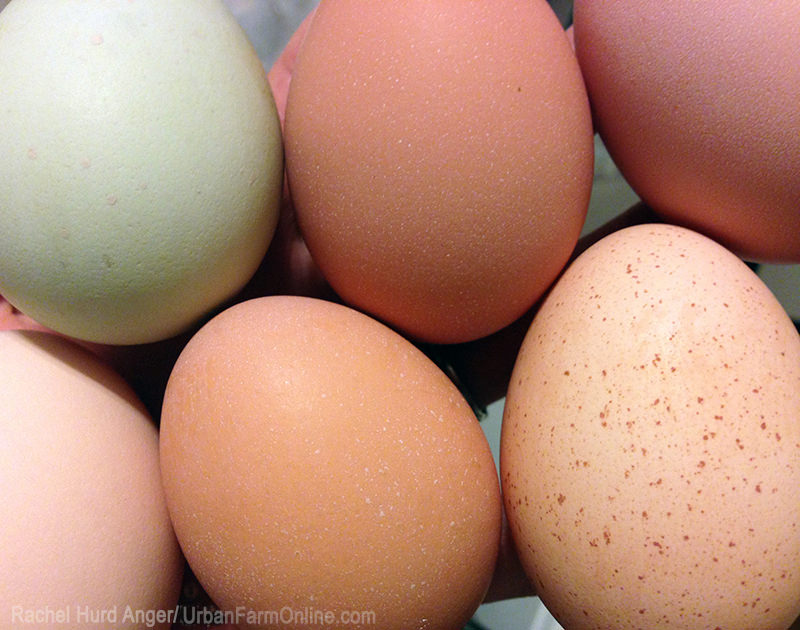
Because of genetic variations between breeds, similar to the genetic variations that assign human eye color, chickens produce a rainbow of colors that can’t be found in a grocery store. Some breeds lay blue, green, pink, and even chocolate-brown eggs. These, too, are all nutritionally identical.

4. Chickens are not dirty.

6 Things Everyone Should Know About Chickens - Photo by Rachel Hurd Anger (UrbanFarmOnline.com)

Maybe you’ve experienced someone scoffing at your chicken-keeping hobby because it’s ‘gross.’ I certainly have.

Chickens might like to dig through the dirt, but they’re not inherently filthy animals. Livestock gets a bad rap for being smelly and unclean, at least by city-dwellers who have never met them. Common-sense cleaning practices keep chickens and their living quarters free from offensive odors and disease.

5. Some chicken breeds are endangered.

Breeds once prized for meat and egg production have fallen out of favor due to the development of meatier and more prolific laying breeds over time. Because of our modern daily egg expectations, vintage breeds that still have value are now in danger of extinction.

Chicken keepers love raising a menagerie of breeds, whether for beauty, oddity or egg color. Many endangered breeds lay fewer eggs or produce less meat, but many of these chickens lay on a more natural schedule that reduces ovarian cancer rates, and they have more flavorful meat.

6. Vegetarian-fed hens are a myth.

Chickens are omnivores, and they will eat almost anything. The feed might be vegetarian, but a flock will eat live bugs, dead mice, and even its injured or dead flock-mates under certain conditions.

For vegetarians who don’t eat meat (or eggs from chickens that eat meat), know that chickens that can’t eat bugs are raised in small cages, and hens raised with access to the outdoors are not vegetarians. For vegetarianism that values animal welfare first, consider that a happy, omnivorous chicken makes healthier food than a chicken starved of its natural habits.

Readers, what do you think surprises people most about keeping chickens?

Read more of Chicken Quarters »


Categories
News

Smart Agriculture Can Curb Climate Change

Smart Agriculture Can Curb Climate Change - Photo by PresidenciaRD/Flickr (Hobby

Editor’s Note: “The News Hog” is a news and opinion blog from the perspective of one farmer, and does not necessarily represent the stance of Hobby Farms magazine and HobbyFarms.com.

“What do we want? More resilient agriculture! When do we want it? Now!”

These chants were heard from the International Forum on Agriculture and Climate Change (IFACC) as the director-general of the United Nations Food and Agriculture Organization gave his speech. … OK, not really. But how great would it be if that’s what actually happened? The reality is still promising, though.

FAO Director-General José Graziano da Silva presented a convincing argument that modern agriculture must change. We’re now producing enough food to feed everyone in the world, he said, and we need to shift our focus to doing it more sustainably. He pointed to industrial agricultural practices as causes for soil degradation and biodiversity loss. At the same time, sustainable-agriculture practices have the ability to reverse these issues, as well as human activity’s contribution to greenhouse gasses.

Yes, But How?

Graziano da Silva highlighted the FAO’s Global Alliance for Climate-Smart Agriculture, which was launched at the UN Climate Summit in the fall to put FAO’s food-security directive into motion in the face of climate change.

The FAO defines climate-smart agriculture as: “agriculture that sustainably increases productivity, resilience (adaptation), reduces/removes greenhouse gases (mitigation), and enhances achievement of national food security and development goals.” This includes:

There are examples of food systems being transformed by climate-smart agriculture, and the FAO is providing a framework for others to get started, outlined in these FAO publications.

What’s In It For You?

“The impacts of climate change are no longer an anticipated threat,” Graziano da Silva said in his speech. “They are now a crystal-clear reality right before our eyes. … Climate change will not only affect food production but also the availability of food and the stability of supplies. And in a global, interdependent economy, climate change makes the global market for agricultural products less predictable and more volatile.”

If you’re not convinced climate change is something farmers need to be concerned about, the University of Copenhagen’s Research Program on Climate Change, Agriculture and Food Security posted clever infographics about climate-change impact on farming and on people, as well as some statistics about agriculture and food in North America. Expect to hear more about climate change and agricultural practices throughout the year, as the IFACC is just part of a series of events that will be held as we approach the World Climate Summit in December.

« More The News Hog »

Categories
Homesteading

Handcrafted Rustic Wire Basket

Handcrafted Rustic Wire Basket - Photo by Emily Lawrence Mendoza (HobbyFarms.com) #diy #craft #project #basket

You can never have too many baskets, especially in the spring. Whether you’re harvesting early crops, hunting for Easter eggs or packing a gift, these affordable rustic wire baskets come in handy. With a little effort and a budget-friendly trip to your local home-improvement store, it’s easy to handcraft a wire basket.

To make this basket, you’ll need:

Handcrafted Rustic Wire Basket - Photo by Emily Lawrence Mendoza (HobbyFarms.com) #diy #craft #project #basket

Handcrafted Rustic Wire Basket - Photo by Emily Lawrence Mendoza (HobbyFarms.com) #diy #craft #project #basket

  • a rebar chair (Find them near the concrete supplies for about $0.50)
  • chicken wire or wire garden mesh
  • wire cutters
  • scrap wood (for the base)
  • staple gun
  • scissors
  • pliers
  • felt or cardboard
  • yarn or tape (optional)

Step 1

Handcrafted Rustic Wire Basket - Photo by Emily Lawrence Mendoza (HobbyFarms.com) #diy #craft #project #basket

Cut a rectangular piece of chicken wire or garden mesh with a width equal to the circumference of the rebar chair and your desired depth. I used a large chicken wire because I have a ton on hand, but a smaller hex or square wire garden mesh would be easier to work with and create a basket that could hold much smaller items.

Handcrafted Rustic Wire Basket - Photo by Emily Lawrence Mendoza (HobbyFarms.com) #diy #craft #project #basket

Step 2

Handcrafted Rustic Wire Basket - Photo by Emily Lawrence Mendoza (HobbyFarms.com) #diy #craft #project #basket

Roll the wire into a tube, and twist the tines along the edges together to hold the tube’s shape.

Handcrafted Rustic Wire Basket - Photo by Emily Lawrence Mendoza (HobbyFarms.com) #diy #craft #project #basket

Step 3

Handcrafted Rustic Wire Basket - Photo by Emily Lawrence Mendoza (HobbyFarms.com) #diy #craft #project #basket

Shape the wire to match the rebar chair, and wrap the wires around the base of the chair. It helps to use pliers and gloves, for this as the cut wire ends can be somewhat sharp.

Handcrafted Rustic Wire Basket - Photo by Emily Lawrence Mendoza (HobbyFarms.com) #diy #craft #project #basket

Step 4

Handcrafted Rustic Wire Basket - Photo by Emily Lawrence Mendoza (HobbyFarms.com) #diy #craft #project #basket

Insert the scrap-wood base into the other unfinished end of the wire tube.Fold the wires under the bottom of the wood, and staple them into place. To cover up the sharp pieces of wire on the bottom of the basket and give your basket a finished look, glue a piece of felt or cardboard up against the wood, with the wire ends and staples sandwiched between.

Step 5

Handcrafted Rustic Wire Basket - Photo by Emily Lawrence Mendoza (HobbyFarms.com) #diy #craft #project #basket

The basket could be complete here, but if the ends of the wires wrapped around the base of the rebar chair are still poking out, you can wrap yarn or tape around the edges, being sure to cover up each piece of protruding wire. This is also a great way to add a little extra color and texture to the project.

Find more craft projects on HobbyFarms.com:

Emily Lawrence at The Craft Hub
About Emily Lawrence Mendoza
Emily Lawrence Mendoza is a graphic designer and crafty mom who recently started her own blog SweetMommyMom.com. She loves sewing and crafting without breaking the bank and using items that can be easily sourced.

« More of The Craft Hub »


Categories
Recipes

Starting With Sourdough: Breakfast Cake

Using a sourdough starter, which includes wild yeast, is a healthy way to prepare bread products, making grains easier to digest. Because making homemade sourdough bread can be a daunting process for first-timers—and it can be difficult to get kids on board with the flavor—I’d like to offer a suggestion: For your first forays into using sourdough, start with sweets. They’re generally pleasing to the taste buds, and no one is too disappointed if your efforts don’t turn out exactly the way you planned. Below is a simple sourdough breakfast cake made with wholesome ingredients. If little tummies consume fermented foods from the start, their overall gut health and well-being will be fortified.

Recipe: Sourdough Breakfast Cake

Begin the cake the night before you plan to eat it, and finish assembling it in the morning. The fruit purée that’s slathered in the middle can be made from pretty much any fruit you have on hand. This cake is super moist, and it’s heavy on the eggs, so tell your chickens to ramp it up!

Ingredients

Cake

  • 1/2 cup warm water
  • 1 cup sourdough starter
  • 1/4 cup coconut oil or high-quality butter
  • 1 cup whole-wheat flour
  • 1 tsp. sea salt
  • 7 eggs, separated
  • 1½ cups raw sugar or sucanat*
  • 2 tsp. baking powder
  • 2 tsp. vanilla
  • 1/2 tsp. cream of tartar
  • whipping cream (amount depends on how you use it)
  • cut fruit, for garnish

* If you want to use honey, decrease the sweetener to 1 cup and increase the flour to 1¾ cups. Look at your batter in the morning: It should be loose but not runny. Add a bit more flour if the batter is too wet. Your flour choice, quality of your honey and any other changes you make will affect consistency.

Fruit Purée

  • 1 can pineapple, drained
  • 2 bananas
  • 1 cup shredded coconut
  • 1 tsp. nutmeg

Preparation

The Night Before: Mix warm water, sourdough starter, butter or oil, flour, and sea salt. The batter should be thick. Cover the bowl with a towel, and place in the oven overnight with the light on to keep it warm.

In the Morning: Remove your batter from the oven. Preheat the oven to 350 degrees F.

In a small bowl, combine egg yolks, sugar, baking powder and vanilla.

In a separate bowl, whip egg whites and cream of tartar until stiff peaks form.

Add yolk mixture to batter made the previous night. Gently fold in the egg whites. Pour into into a buttered 9×13 baking dish. Bake for 30 to 35 minutes, until firm. (If you double this recipe, double the size of the pan or bake in two 9×13 dishes; this cake is dense, so it won’t bake well in a tall container.) Allow the cake to cool.

Combine fruit purée ingredients in a blender until smooth. If the consistency is too wet, add more banana or coconut. It will taste yummy no matter what it looks like.

Using a mixer, whip heavy whipping until stiff peaks form.

Cut the cake in half. Spread the fruit purée on one half, and layer the other half on top for a layer cake. If this is too weighty, slice the cake in half horizontally for a thinner cake. Cut the cake into serving-size pieces, and top each with a dollop of whipped cream and cut fruit. As an alternative, you can ice the entire cake with whipped cream. To do this, you’ll need 4 to 6 cups heavy whipping cream.

Sourdough Breakfast Cake Recipe - Photo by Tess Zundel (HobbyFarms.com)

Sell It, Mom!

When you’re making improvements to your family’s diet, especially if you have small children, the key to success is in the marketing. If you have older children, you can explain the process of how a sourdough starter works, predigesting all those grains and eating up sugars. If your kids are little, you can just say, “We use this bubbly stuff to make our cake good for us to eat!” Whatever their ages, if it doesn’t taste good, they’re not going to buy into it. Package gut health with fruit and breakfast cake and you’ll be golden. Trust me.

« More Farm Sprouts »

Categories
Animals Farm Management Large Animals

7 Tips for Marketing Goat Meat

Raising goats adds a fun and interesting element to any farm, but it can also be profitable. Adding goat meat to your farm’s offerings can expand your customer base and increase your marketing opportunities. Keep in mind, though, that selling goat meat might take some creativity and persistence to pay off. The number of goats raised for meat has risen rapidly since the 1980s and will only continue to increase as goat meat gains popularity. By planning ahead and taking time to cultivate the right market, goat meat can become an important source of revenue for your farm.

1. Think Globally

Of all red meat consumed globally, 63 percent is goat. For this reason, much of the goat market in the United States has been targeted at ethnic populations longing for a taste of home. Advertising goat availability in local ethnic communities, community centers and places of business is a good place to start your efforts, but keep in mind that goat has potential beyond this traditional market.

2. Promote Health Benefits

Goat is a healthier meat option, with 50 percent less fat than beef and 40 percent less saturated fat than chicken. It also has more iron than beef, pork or lamb.

In addition, goat meat is a perfect option for consumers concerned about hormones in their food because it’s illegal to use hormones to promote goat growth. Consumers might not be aware of the legal regulations surrounding growth hormones and meat, so take time to educate them about federal regulations, as well as your farm’s standards.

3. Provide Recipes

Providing good goat meat recipes is essential in encouraging your customers to try goat. The more knowledge you can share with your customers, the more likely they are to attempt to cook an unfamiliar meat. Experiment with recipes at home to see what works best with your particular inventory, and print up your favorites to share with customers at market or via your farm website.

As a general rule of thumb, popular lamb cuts are also desirable for goats, so goat meat can usually be substituted into lamb recipes. However, because of goat meat’s extremely low fat content, recipes that include a lot of moisture, such as braises and stews, are most desirable when preparing goat because slow cooking is essential to achieving tender meat. Preparing goat meat is also a great way to try out international cuisines, particularly those from the Middle East or Caribbean.

4. Sample, Sample, Sample

The idea of eating goat might seem too foreign for many of your current customers. You can help win them over with the unique and delicious flavor of prepared goat by offering samples of your favorite recipes at market. (Before you do this, be sure you have any certifications or licenses necessary for sampling at your farmers’ market.)

If you don’t sell at a farmers’ market, host a meal on your farm for CSA customers and others. This is a great opportunity for your customers to taste your products—not just goat—in their best light, because you can prepare them using recipes that you know have a wow factor.

5. Seek Out Wholesale Markets

If you can’t drum up business for goat meat with your retail customers, think about offering goat as a wholesale product. Many upscale restaurants now feature goat on their menus, and if they don’t, the lack of a consistent, local supplier might be the thing holding them back. Ethnic restaurants are another potential source for goat meat sales.

6. Skip the Butcher

While USDA-inspected, prepackaged meat cuts might work best for large animals, including cows and pigs, consider selling whole goats right off the farm. Many ethnic populations in particular might prefer slaughtering and preparing the animal whole as part of their religious or holiday celebrations.

7. Share Your Goat Story

As more and more customers become concerned with how their meat is raised, it’s important to let potential customers know how your farm treats your goats. Goats thrive in a free-range environment and with a minimum of chemical inputs and processed foods. It’s incredibly important to emphasize the sustainable and humane way your farm is raising goats, through online sharing as well as frequent farm tours open to the public.

While opening up a market for a new farm product can seem daunting, don’t let it overwhelm you. If you have developed a personal relationship of trust and loyalty with your customers, they’ll be eager to try any product you have to offer. Education is key to winning over any skeptics. It is also important to believe in your own product—if you love to eat goat meat, your customers will, too!

Get more marketing help from HobbyFarms.com:

  • 6 Questions You Should Know How to Answer at the Farmers’ Market
  • How to Make Money Selling Rabbit’s Meat at the Farmers’ Market
  • 4 Marketing Tips for Heritage Thanksgiving Turkeys
  • 5 Ways to Make Your Market Booth More Professional
  • 7 Onions That Can Bring In Cash at the Farmers’ Market