Categories
Homesteading

Teach Kids to Make Candles

Teach Kids to Make Candles - Photo by Tessa Zundel (HobbyFarms.com)

I’m not really that crafty to be honest. Unless an item is useful for something, you probably won’t find me spending much of my precious time on it. That’s why candle-making is the perfect craft for me and my kids: It produces a beautiful and useful item for our home, while increasing our skill set. Plus, it’s messy and fun.

A Day to Celebrate Candle-Making

So, today is Groundhog Day, but for our Christian friends, it’s also Candlemas. Apart from the lovely religious symbols surrounding this holiday, it also happens to be a rough midpoint between the beginning of winter and spring. With Candlemas, we can officially start thinking about light returning to the Earth; longer days, more sunlight and, yes, growing things in the dirt.

Where I live, we aren’t exactly busting out our swimsuits (we aren’t even safe to do that in June!), but in our family, we like to celebrate this day with a bit of candle-making. Candles are not only a blast to make, but they’re a great emergency item to have on hand for both light and warmth.

Tips for Teaching Candle-Making to Kids

Teach Kids to Make Candles - Photo by Tessa Zundel (HobbyFarms.com)

Candle-making with kids isn’t like candle making on your own or with your girlfriends. Candle-making with kids is … an experience. Hot stove, hot wax, lots of fingers and a thousand questions. Take a deep breath and find a happy place while I share a few tips how to make your and your children’s candle-making venture successful.

When I refer to “class” below, I mean any number of children that are learning to make candles under your tutelage—that could be a class of one. Also, this article assumes you have certain level of interest in candle-making, if not experience. I’m guessing, since you’re reading this that you’ve read some blog posts or books on candle-making and have an idea that it’s something you’d like to try with your kids. If not, do a bit of research on the different methods of home candle-making and see if there are any you’d like to do with your children. Then come back and read this because you’re going to need it!

  1. Pick one kind of candle to make and stick to it. There are tapers, votives and molded candles, but you can’t do them all with a group of children in an hour or less. I primarily work with homeschooled children, so I have to tailor my teaching to children of a variety of ages. Even if you’re kids are all the same age, they’re not all going to have the same attention spans. Pick one type of candle to make, and make that one.
  2. Set out all your supplies ahead of time. Double-check that you have everything because you run the risk of kids getting into stuff they shouldn’t and/or beating each other with their half-done candles if you have to go off to look for something. Ask me how I know.
  3. Start melting your wax on low heat in a double boiler before your class begins.
  4. Make sure everyone is aware of your candle-making rules. For example, if everyone is to stay in the garage while their candles are under construction, then make sure they know that.
  5. Set up a place to cool the candles before your class begins. Everyone will finish at different times, and you don’t want to have to leave the instruction area to keep finding places to hang/place candles.

Which Candle Should You Make?

Teach Kids to Make Candles - Photo by Tessa Zundel (HobbyFarms.com)

4 to 6 Years Old: Rolled Candles

Buy pre-stamped beeswax sheets and some wick to roll taper candles together. (You can also buy candle-rolling kits.) Even with little hands, these candles take only a few minutes to put together, making them suitable for shorter attention spans. Plus, the sheets come in lovely colors and your little one will be so pleased at her creation. 

6 to 12 Years Old: Dipped Candles

Call me crazy, but I really like to make dipped taper candles with this age group. I’ve taught troops of Cub Scouts and scads of school-age kids how to dip their own taper candles and the best part about it is that it keeps them moving.

I have a camp stove with two burners and I set up two, 6- to 8-foot tables on either side of the stove. I give each child about a foot’s worth of wicking and tell them to bend it in half, putting their finger in the bend so that the two ends dangle down. (I always use wick with wire in the center when I’m working with children because it will keep its shape much easier.) Then I have them form a line at the stove, where two double boilers of melted wax sit on low heat.

The first child in line dips his or her wick into the first vat of wax, then walks clear around the first table, stopping at the other vat of wax on the other side to dip the wick again. He or she then walks around the other table back to the first vat of wax. Each child follows this path: All in a line, around and around they go, dipping each time the come to the wax and chatting with one another in a merry, candle-making way.

Three things to note here:

  1. Keep your wax at an even heat, and instruct children to make a quick dip. If they let their wick stay in the vat too long, all the previous wax they’ve built up will melt off and they’ll have to start over. That can create tears.
  2. Until the wick builds up some layers of wax, children will likely need to carefully pull on the bottom of their wicks to keep them straight. Make sure they don’t do this right after they remove the wick from that wax vat or they’ll get burned. (Some boys end up doing this on purpose as part of their inherent knight-of-the-realm training that leads many young boys to be both brave and foolhardy.) Always have moms stay to help with children that get truly out of hand or are developmentally challenged in any way. Hot wax can be dangerous if the children can’t or won’t follow the safety rules.
  3. The walk around the tables is necessary for the candle to cool enough to take another layer of wax without it melting right off. Don’t trust the children to wait a sufficient amount of time on their own. They’re eager and will be having fun, and they’ll want to finish quickly. Candle-dipping isn’t a quick activity; it takes a good 30 45 minutes to dip a taper worthy of burning. The tables are necessary obstacles in their happy candle making experience. Oooh, life lesson there.

12+ Years Old: Molded Candles

Making molded candles with this age group is my favorite because they have the dexterity and brain development to get truly creative and to follow along with more detail. (Though, that’s not to say that an older child won’t have fun doing rolled and dipped candles.)

You can experiment with dyes, scents and paints for decorating your finished candles. You can even provide craft knives so they can carve patterns. Experiment with adding pressed flowers to the very outer layers of their molded candle, too, or add layers of different colored wax to make rainbow candles. Mold candles in sand or ice, creating wonderfully interesting patterns and shapes.

One of my favorite things to do with the older kids is to have them bring their own molds to class. Any sturdy, upcycled container will do as long as it doesn’t leak. I like this exercise because it helps children to look around their rooms and homes for items that they would otherwise throw away or recycle and determine to put it to use instead. A small milk carton, an orange-juice bottle or a glass jar that previously housed a candle can all be used as a mold.

Have Fun!

Making candles with kids might seem daunting, especially if you’ve never made them yourself. I give you permission to not do everything perfectly, but go ahead and do a test batch on your own one night while your farm sprouts are sleeping, or get together with your friends for a candle-making party!

Make sure, though, that you share this super-fun experience with your children. It will take some set up and planning, but that’s always true of raising homestead kids. Candle-making every year will improve everyone’s skills, add to your emergency stores and provide a way to celebrate the slow return of the spring light with your family.

Get more candle-making help from HobbyFarms.com:

« More Farm Sprouts »


Categories
Urban Farming

Start a Garden Journal

Start a Garden Journal

Winter is the perfect time of year to review the previous year’s garden journal to help plan for the upcoming growing season. Flipping back through the dirt-stained pages, you can easily find when you planted your spinach the previous year and which of the tomato cultivars did the best. Keeping good garden records can help make you a better gardener, too, helping you learn from your past successes and failures.

What to Record

A garden journal can be as simple or as complex as you want it to be. Think about doing a short daily entry during the growing season giving a general description about what’s happening in your garden. Some of the basic information to record includes:

  • weather conditions, including the high and low temperatures for the day
  • seeds or starts you purchased, noting the exact varieties and where you purchased them, especially if they’re unusual cultivars
  • how crops are started (sowed directly from seed, seeds started inside or from purchased starts) and the date they’re planted in the garden
  • where crops were planted—a simple sketched map can be helpful
  • when the harvest began and ended

Some gardeners take it to the next level, recording every detail of their gardening lives:

  • rainfall amounts and how often crops need watering
  • timing and size of fertilizer applications or other soil amendments
  • when each plant began to flower and set fruit
  • average size of each harvest
  • tasting notes for various cultivars
  • types and timing of insect attacks, along with treatment for them, including application date and success of treatments
  • discussion of plant diseases encountered and any attempted treatments

Find the Perfect Journal

You can find a plethora of commercial notebooks designed especially for garden journaling at your local nursery center, a bookstore or online retailers. However, you certainly don’t need to buy a commercial product. Many folks make due with a small, ring-bound notepads or use a repurposed diary. For this year’s garden journal, I’m planning to repurpose one of the many personal journals sitting around my office gathering dust that I seem have accumulated over the years. Every one of these old journals is virtually 95-perfect blank with a few random entries in the front of the book. While I prefer pen and paper, there are also software options aimed at gardeners that will let you track your garden data on your tablet or home computer. No matter how or where you keep track of your garden observations, even the most basic notes will allow you improve your harvests year after year.

Read more of Garden In Front »

Categories
Crops & Gardening Farm Management

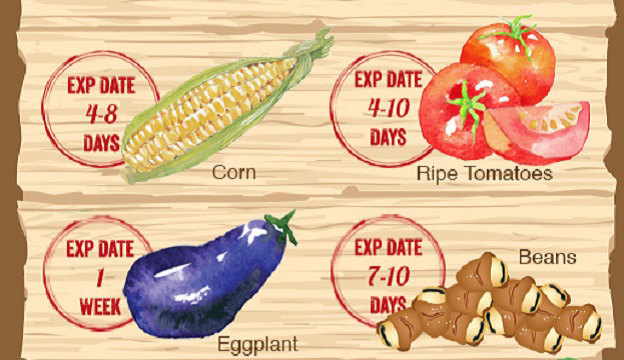
Infographic: Cool Your Vegetables to Make Them Last

Just like people, some vegetables love cold, dry air and others like moderate, moist air. These garden favorites are a fickle bunch, but using the right harvest techniques and storage conditions, you can maximize the marketability of your garden’s harvest.

Ideally, you’ll pull your vegetables out of the field and whisk them off to your customers at the farmers’ market in a refrigerated truck the same morning. This isn’t always reality, especially for small-scale and part-time farmers. Improper produce storage and handling can result in 10 to 40 percent product loss. By learning your vegetables’ temperature and humidity preferences and taking care to cool them quickly after harvest, you’ll be able to extend their life, thereby extending your profit at the farmers’ market.

The information here will help you with your home garden, as well. Even if you’re just growing food for your own family, it’s hard during the growing season to use all of the veggies that you’re producing. Use this guide to know which foods to eat first and which will still be good come next week’s dinner plans.


 Click here to download a PDF of this infographic.


Categories
Beginning Farmers

Why the Grocery Store Lady Thinks I’m an Alcoholic

Earwigs: The Reason the Grocery Store Lady Thinks I’m an Alcoholic - Photo by Derek Parker/Flickr (HobbyFarms.com)

It’s 9 o’clock in the morning, and I’m in line at the grocery store with a cart full of 20-ounce cans of beer. I have about three different kinds, the cheapest I could find. I’m clearly going for quantity, not quality. The checker gives me a wary but pitying look. The poor woman, she’s probably thinking. She’s going to go home and drink herself into a stupor while watching reruns of “Desperate Housewives.” I want to tell her I don’t drink cheap beer (I am a loyal Lagunitas fan) and that I never watch “Desperate Housewives.” I want to tell her I need all this beer because I’m at war.

The day before, I skipped down the path to the Fortress Garden, excited about my new artichoke plants. I had built four palatial planter boxes at the northern edge of the garden fence so that when they reached their full size of about 4-by-4 feet, they wouldn’t shade the other plants. Being perennials, I expected that my new babies would be with me for years to come, sprouting bagsful of delicious, thorny artichokes. Artichokes are one of my favorite veggies. They’re chock full of potassium, vitamin K, iron, copper, folic acid, antioxidants and all kinds of other goodies. Also, they are delicious with mayonnaise mixed with a dash of curry powder.

But alas! My darlings look unwell. No, worse than unwell … like death warmed over, drooping sadly and with large bites taken out of their lovely silvery leaves! One poor plant had most of the tender foliage chewed away, leaving a bundle of bare stalks. I nearly wept.

Earwigs: The Reason the Grocery Store Lady Thinks I’m an Alcoholic - Photo by Derek Parker/Flickr (HobbyFarms.com)

Bending over, I parted the stalks and peered into the plant’s interior. Something moved. I pulled the stalks apart further and saw the earwig dart deeper. Earwigs! I hate earwigs. Next to potato bugs, they rank at the top of my list of Most Gross and Disgusting Insects. They have a shudder-inducing factor that’s off the charts. Those shiny shells! Those pointy pinchy things! The stories about them crawling into ears, for crying out loud. Ewww! I jumped back from my beloved artichokes in horror.

This was war. I unsheathed my favorite weapon (the Internet) and planned my attack. Step 1 was to go into the garden at night and pick the nasty little suckers off by hand. Dragging my partner Danny with me for moral support, and just in case the legend of the Were-Earwig was true, we crept up on the artichokes and blasted them with our flashlight beams.

Earwigs were everywhere—and I mean EVERYWHERE. Hundreds of them, skittering around in that disgusting way they do. I had to hand-pick these things? But I love artichokes, so I started right in, pinching them off the plants and smashing them against the side of the planter boxes. It took about 30 seconds for me to fully embrace the hand-picking concept. In moments, I was yelling things like, “Die, you nasty mothers!” and “I will crush you until your ancestors feel it!” and “Feel the searing pain of my wrath!” as I smashed earwig after earwig.

It was somewhere around this point that I noticed Danny backing away from me nervously. “Um … honey?” he said, “You’re scaring me a little bit.” Reluctantly, I toned it down. After awhile, we appeared to have destroyed all the earwigs we could find. It was time for step 2: bait and drown.

According to my research, one of the best baits for earwigs (and slugs and snails, as a bonus) is beer. Take an old tuna can, twist it down until its top edge is flush with the dirt, fill it half-full of beer, and those party animal earwigs can’t resist diving in and drowning miserably. Hurray!

So there I was, the very next morning, loading up on cheap brewskis and jiggling excitedly in the checkout line. I’m sure the checker thinks I’m jonesing for my breakfast beverage, but I’m just eager to get my beer traps in before the Evil Earwig Empire does any more damage. I’m also thinking about designing a battle flag, maybe crossed beer bottles above the corpse of an earwig, with a garland of artichoke leaves.

Keep the bugs in your own garden at bay:

« More Greenhorn Acres »


Categories
Poultry Urban Farming

What Do I Do With Small Eggs?

Biodiversity and Baking Fun - Photo by Rachel Hurd Anger (UrbanFarmOnline.com)

Our backyard chickens usually produce an inconsistent product. Their eggs vary in shape, size and color, mostly because we collect a variety of breeds based on their coloring, lace, combs, cold hardiness, heat tolerance, egg colors and sizes—whatever tickles our fancy, really.

Whether or not we realize it, those of us with many different breeds are participating in biodiversity: raising more than one breed for biological variety. It’s diverse genetics that will influence a flock’s chances of survival when exposed to disease and its ability to thrive for those who recover.

I stumbled onto a chicken forum the other day when I was trying to figure out which pullet laid the tiniest egg I’ve ever found in the nest box. I hadn’t thought much about eggs sizes when choosing the new breeds, so I assumed they were all layers of large eggs. I jumped to the conclusion that the Easter Egger was the culprit (because it’d be my luck to have an Easter Egger named Rainbow who lays brown eggs).

In the forum, people were talking about the Speckled Sussex, and sure enough, some people refuse to keep the breed because their eggs are “too small.”

But, what does it mean for an egg to be too small?

As a supporter of natural processes and biodiversity, I’m not a selfish chicken keeper. Raising chickens is a hobby that happens to feed me in the months of abundance. I still buy organic feed pellets whether or not they’re laying. I don’t supplement light in the winter because I can empathize with the need to take a break from ovulating every once in a while.

A tiny egg is completely adorable, but beyond that, do they serve any other purpose?

The Skinny On Egg Size

The only trouble I see with small eggs is in baking, but here’s an example of where we’ve been conditioned to expect our food to be large. Have you ever seen a recipe call for three small eggs instead of two large ones? Recipes always call for large eggs, without any other options or substitutions. When urban dwellers stopped keeping chickens and bought their eggs in stores, all the large eggs their recipe books called for came from just one breed that laid large white eggs.

My mom once said that a good cook can modify a recipe and make it her own … or something like that. To not be intimidated by a recipe is the key. When I’m baking and I need two large eggs, I know it’s not a hard and fast rule. Urban chicken keepers are already friends of anarchy, of bending the society’s rules and living on the edge of a good, tall fence. If you have a large, medium, and small egg, it probably equals two large eggs. Just eyeball it. I promise, the sky will not fall.

If you can’t bear to experiment or you’re a stickler for volume, information from the USDA will help you tailor your eggs to your recipes.

  • Jumbo: 30 oz./dozen; 2.5 oz. ea.
  • Extra Large: 27 oz./dozen; 2.25 oz. ea. 
  • Large: 24 oz./dozen; 2 oz. ea. 
  • Medium: 21 oz./dozen; 1.75 oz. ea. 
  • Small: 18 oz./dozen; 1.5 oz. ea.
  • Peewee: 15 oz./dozen; 1.25 oz. ea.

I get a kick out of choosing among the varieties of eggs in my cartons. Enjoying life is all about the little things, including the little eggs my Speckled Sussex lays.

Read more of Chicken Quarters »

Categories
Crops & Gardening Farm Management

How to Write a Farm Business Plan


If you fail to plan, you plan to fail, so the saying goes. Regardless of the size of your farm when starting out, whether operating a small truck farm that sells produce at a weekly farmers’ market or a farm with multiple enterprises that support your entire family plus some part-time employees, getting a plan down on paper is essential to your success.

Undoubtedly, when beginning farmers get started, it’s their passion for feeding the world good food and taking care of the land that drives their ventures. However, farming is a tough business, and without a solid business plan, it can be difficult for a first-time farmer to make ends meet.

Preparing a business plan can feel a bid tedious, especially if you don’t spend much time typing on a computer. Great news, though, is business plans tend to follow a fairly common format, and there are numerous templates that can be adapted for your own use. Depending on the source, business plans can be structured in different ways, but each seeks to accurately depict what your business is all about in both words and financial numbers.

“A good business-planning process will put you through the paces of assessing the realities: exploring markets, looking at your assets, and thinking about what you can realistically do with your time and skills,” says Jody Padgham, editor of Fearless Farm Finances: Farm Financial Management Demystified (Midwest Organic and Sustainable Ed Service, 2012). “Even if you never show your business plan to anyone else, it will be very valuable in helping you think your farm business through from every angle.”

Lay It Out

The best plans are those that are constantly revisited, revised, and that incorporate changes in the business environment or marketplace as they occur. In other words, don’t write a plan only to shelve it with the receipts for chicken feed.

There are seven basic units of a business plan, each serving a role to clearly direct your operation’s course of action over the next three to five years. In cases where you’re soliciting investment or loans to start your business, being accurate, realistic and complete in your descriptions and financials could be the difference between getting some start-up capital or not.

  1. Executive Summary: A one-page overview of your operation, usually written after your entire plan is completed. Included in this section are your objectives and mission. Think of it as a brief “elevator pitch” and distilled summary.
  2. Company Summary: Provides the basic information related to ownership, company structure, mission and objectives, plus start-up specifics and costs.
  3. Product and Sales: Describes the products you’re growing, harvesting, producing or raising on your farm and any other diversified aspects of your operation (e.g., a farmstay or U-pick operation). Remember to cover what you sell, as well as how or in what ways your products or services benefit your customers. What needs does your business meet?
  4. Market and Competitive Analysis: This section details both the competitive marketplace related to your products or services and the market niche, target market segment (your anticipated customers) and positioning of your products in relation to the competition. For example, will you be selling direct to customers or wholesaling to restaurants—or both? The narrowing of your market to the most promising and profitable one is called segmentation. It’s important to incorporate any research or trends that support your decisions.
  5. Marketing Strategy and Sales Forecast: By focusing on your competitive advantage, say pastured beef or organic small fruit, you can devise a marketing plan that can include both advertising and public relations efforts. Covered in this section is your sales forecast, usually three to five years out. Many plans also include key milestones, to measure business progress, such as the completion of a greenhouse or securing the targeted 75 CSA member sign-ups in year one.
  6. Management and Payroll: Explain the operations of the farm from the perspective of who is doing what. Define salaries and number of part-time employees you plan to hire.
  7. Financials (Profit & Loss Forecast, Cash Flow and Balance Sheet): To be considered a business, according to the IRS, your business must make profit three of every five years. In the financial section, you paint a picture of your farm with numbers, creating a pro forma profit and loss statement, cash flow chart, and balance sheet that reflects your business assets, liabilities and net worth. Income minus expenses equals profit, the ultimate measure of a successful business that’s found in the profit and loss statement. Without profits, you won’t be in business for long. A cash flow statement addresses sources of and uses for funds for your business by year.

Get It on Paper

It’s the process of writing the business plan that’s often the most valuable. Writing a business plan forces you to evaluate every aspect of your enterprise and get these details down on paper.

“Farmers are inspired people and love to see where their desires take them,” Padgham says. “The ability to respond to changes and be ready for new things is what makes a good farmer great. Taking the time to think a farm though from beginning to end, as the process of business planning does, can put you on the path to success more firmly than just making decisions as they come at you.”

Fortunately, there are plenty of free online resources that guide you through the steps of writing a business plan, from a vision statement to the profit-and-loss statement. Among some of the better ones that allow you can customize for your needs include:

Specific to the farming community:

In addition to the in-depth, face-to-face business-planning workshops often offered at various national farming conferences, the Association for America’s Small Business Development Centers provides a small-business assistance network throughout the United States to help new entrepreneurs, including farmers, realize their dreams of business ownership. Small-business owners and aspiring entrepreneurs can go to one of more than a thousand local SBDCs for free, face-to-face business consulting and at-cost training on writing business plans, marketing or regulatory compliance. BeginningFarmers.org also addresses a wide range of topics related to farm business-plan development.

Don’t be afraid to bring your ideas to the table, but avoid jumping into a business before thinking it all the way through. With careful analysis of the marketplace and a plan in hand, you can turn your love of the land into a successful enterprise.

Get more farm business help from HobbyFarms.com:

Categories
Crops & Gardening

How to Grow Apples in Tight Spaces

How to Grow Apples In Tight Spaces - Photo by Jessica Walliser (HobbyFarms.com)

Although we’ve been buried in snow for the past few days here in western Pennsylvania, I’ve been thinking about my garden—my fruit trees in particular. The deer have started nibbling on the buds in earnest, so I’ve had to cover them with deer netting, but more importantly, I’ve been hatching a new plan for the spring. I’m going to add a handful of columnar fruit trees!

Columnar trees are a great way to grow full-sized apples in a very small space. The trees are perfectly straight and have extremely short fruiting spurs that stay close to the main trunk while still producing fruits. Mature columnar trees reach about 8 to 10 feet tall and only need to be spaced 2-3 feet apart, making them a perfect fit for tight spaces. We have a row of immature boxwood bushes around the curve of our patio and fire pit. I’m going to put four or five columnar fruit trees in between the boxwoods so that when both are mature, I’ll have a hedge of boxwoods with columnar fruit trees extending out of the top. I can’t wait!

As for which varieties to plant, I’ve been browsing some of my favorite bare-root fruit tree catalogs and am considering using Raintree Nursery if I can’t find a local nursery that carries the trees. I’ve sourced bare-root fruit trees from Raintree before and have had good luck. Standard varieties of columnar apples include North Pole, Golden Sentinel and Scarlet Sentinel, though the Greenleaf Nursery Company has recently released a line of columnar trees called the Garden Debut. They were developed and bred in the Czech Republic to be cold hardy and easy to grow. This line of apples are branded under the name Urban Apple, and some of the names include Tasty Red, Blushing Delight, Golden Treat and Tangy Green. This line of trees is available from Stark Brothers, Raintree Nursery and other online sources.

If you’d like to include a few of these super-fun fruit trees in your own landscape, be aware that like all apples, columnar types are not self-fertile. To ensure proper fruit set, you’ll need at least two different varieties, but if you (or a close neighbor) have a mid-season standard apple in your yard, it could serve as pollinator, as well.

Site the trees in full sun and thin the fruits to one apple per fruiting branch (called a spur) when they are the size of a dime. This important step prevents the tree from toppling under the weight of the developing fruit.

Now I’m even more excited for spring to arrive. It’s going to be a long February!

Get more fruit-growing help from HobbyFarms.com:

« More Dirt on Gardening »


Categories
Crops & Gardening

Grow Plants to Treat Childhood Illnesses

Grow Plants to Treat Childhood Illness - Photo by iStock/Thinkstock (HobbyFarms.com)

Living with two young children is a constant adventure. One of the most interesting aspects of development—and the most impactful to family life—is the young immune system. For parents leaving the house everyday for work, this time period is a tough one.

In our culture, getting sick is shamed. It seems now that we’re supposed to get through childhood without illness. The parents who continually need a day off because their kids are sick are talked about around the water cooler and over coffee at playgroups. This is an inevitable result of our decades long germ warfare. Somehow if we as parents allow germs to get into our homes and infect our children, we’ve failed. Vaccinations are given to prevent anything from mumps to the flu. Children are dutifully bubble-wrapped before taking part in daily activity. If they become injured it is no longer seen as a normal part of childhood; instead, it’s now a possible case of neglect.

The immune system is just like a muscle. We don’t expect children to be able to sit up or hold up their own heads until their muscles have had time to strengthen, so why should we think their immune systems, intended to protect them from catastrophic illness, should come out of the box fully assembled? It seems strange to me. In reality, it’s all the small illnesses that allow a child’s body the chance to build a robust immune system. I hear parents boasting that their children have never been sick. It’s odd to me to think that this is a good thing.

My kids are raised on whole, organic food. This certainly doesn’t mean that they are never sick. They’ve both had a couple colds and one incidence of the flu. We are fortunate in some ways that our office is here on our property and we’re in charge of sick days. But in other ways, we’re even more apt to be judged. Those living outside of a natural lifestyle like ours love to jump on the fact that our kids are sick as some sort of proof that our way of living is not successful. In my mind, illness is not to be feared. Even the childhood illnesses of old that have become so stigmatized.

A few weeks ago, my daughter came down with a high fever. She was acting off for a day before the fever started. When I noticed the heat in her forehead, I started looking for secondary symptoms. Her cheeks were flushed red, but around her lips was white. I asked her to stick out her tongue and saw that it was dotted with raised red bumps. We didn’t have it tested, but I suspect she had a case of scarlet fever. My next book, Heal Local, is coming out in April, and I was able to pick up my notes and follow my very own advice. 

Scarlet fever is an illness to take seriously. It’s very important to keep an eye on the fever. The real danger here is if the Streptococcus bacteria grow unchecked and fill the body with their toxins. While I watched her fever I mixed together some licorice root (Glycyrrhiza glabra), elder (Sambucus Canadensis), ginger (Zingiber officinale) and Echinacea (Echinacea angustifolia), all of which have action against this particular bacterium. We addressed the issue at home, but had her fever gone higher or if she had become dehydrated or disoriented, we would have taken her to the doctor for a prescription.

In two days, my daughter’s fever was gone, and we were fighting with her to keep quiet and rest. Parents with young children should be sure to grow some of the herbs that are needed for the most common childhood illnesses. All of the herbs I used for my daughter are easy to grow either directly in the ground or in pots. If you have a plan in place, a good pediatrician just a phone call away and a good nervine tea to keep yourself calm, there is no shame in the times that your children are exercising their immune systems. You may come out of the experience with a few more gray hairs, but they’ll come out of it with a stronger body that will protect them for a lifetime.

Learn more about herbal remedies on HobbyFarms.com:

« More of the Prescription Gardener »

Categories
Recipes

Beer-Glazed Carrots

Like many farmstead chefs, we’re plowing through our root-cellared produce: beets, potatoes, winter squash and carrots. If you can get the temperature and humidity level right, it’s amazing how long certain crops can last. We’ve turned our few remaining pumpkins into chocolate-chip spice muffins and our butternut and carnival squash into delectable side dishes.

During the long winter months, however, we try to hit the road, learn something new and explore a different part of the farming community—ideally in warmer climates, if we can swing it. Lisa just finished up at the National Farmers Union’s Women’s Conference held in Clearwater, Fla., which included a visit to Keel and Curley Winery that specializes in blueberry wine. Along the way, we visited a bakery and were inspired by their Paleo brownies (made with dates)—we look forward to experimenting with our own Paleo baked goods in the months to come.

Our winter excursions may be unconventional, but we’re not the only farmers who take advantage of winter downtime to get off-farm. We’ve recently been inspired by Stacey Givens, an urban farmer and chef who just returned from a 10-day food- and farming-inspired trip to Shiga, Japan, where she prepared a meal for her Japanese guests, including renowned chef Darren Damonte.

In 2009, Givens established the Side Yard Farm and Kitchen in Portland, Ore., supplying restaurants with local, organic produce, as well as dishing up hyper-local cuisine to diners at seed-to-plate brunches. The meals are served either on the farm or at various locations connected to her urban farm-to-table catering company and “nomadic supper club.” Her meals are anything if not fresh, so of course we turned to her to help us blaze through the remainder of our winter vegetables.

At her Japanese dinner, Givens served up cast iron-grilled Spanish mackerel with burnt cauliflower, a lemongrass yogurt, a side of pickled cilantro seeds from Side Yard Farm, and beer-glazed carrots, the recipe of which she shared below. The beer-glazed carrots work great as an appetizer or attractive side dish, and her secret lies in the beer she uses for the glaze.

“Urban Farmhouse Ale by The Commons Brewery is one of my favorite beers to drink and use for cooking, not just in this dish, but it works well in braised pork dishes and marinades,” she says. “The glaze has a floral nose, a soft underlying hoppy bitterness, and sweet notes of ginger with a hint of spice.”

For your own local spin, try the recipe out with one of your locally brewed beers.

Recipe: Beer Glazed Carrots

Courtesy Chef Stacey Givens

Yield: about 5 servings

Ingredients

  • 3 bunches baby rainbow carrots, peeled and tops removed
  • 3 T. unsalted butter
  • 1 ounce fresh ginger, skin removed, sliced
  • 1 shallot, thinly sliced
  • 1 bottle beer
  • 1/4 cup fresh carrot juice (orange or yellow carrots only)
  • 2 cups vegetable stock
  • 3/4 cup sugar
  • small pinch chili flakes
  • salt and pepper to taste

Preparation

Bring a pot of salted water to boil. Blanch carrots until just tender.

In a shallow saucepan, remaining ingredients. Bring to a boil, then reduce to a simmer. Cook until liquid has reduced by half, about 15 minutes. Taste and season accordingly with salt and pepper.

Toss blanched baby carrots in glaze and serve.

Categories
News

Will Big Ag CEOs Accept Debate with Family Farmers?

Will Big Ag CEOs Accept Debate with Family Farmers? - Photo courtesy Bartlett Brothers Debate CEOs (HobbyFarms.com)

Going up against the biggest of the big—three CEOs from three of the largest ag and food-system corporations—has got to be a little like facing your high-school bully head-on. Yet here goes Stephen Bartlett (who I know through his work with Sustainable Agriculture of Louisville), Andrew Kang Bartlett and David (Bartlett) Abazs, asking the CEOs of Monsanto (Hugh Grant), Tyson (Donnie Smith) and Walmart (Doug McMillon) to have a friendly food and ag debate.

The Bartlett Brothers sent a letter to the CEOs on Dec. 21, 2014, inviting them to engage in a national Future of Food debate online. “Surely, you have nothing to fear in debating the Bartlett Brothers, since we are simple farmers, gardeners, community organizers and food justice advocates and have never run a Fortune 500 corporation as each of you are doing,” the letter says.

It’s been a month, though, and the Bartlett Brothers haven’t heard a word since.

Maybe three middle-class farmers and food-justice workers/activists are not the most likely candidates to debate the leaders of companies grossing $522.36 billion in net sales in 2013. As the campaign blog points out, the three CEOs earn 400 times more than the three brothers combined. At the same time, what have they got to lose?

Debate Amongst Yourselves

If the Bartlett Brothers do not hear back from the CEOs—and it kind of looks like they won’t—by Jan 31, they’re going to go ahead and post their responses to the debate questions. There’s one question per month for the whole year. At this point, the debate is a little one-sided, as they’re answering their own questions, but if the CEOs posed their own set of questions, the brothers would respond to those, too.

Each of the questions pits Big Ag against agroecological farming. If you read the 13 food and farm predictions posted on The News Hog blog earlier this month, you might remember that my prediction was further polarization between food and farm communities—the us versus them. I then said what we need is for all aspects of the agricultural community to be coming together to provide truthful, unbiased education to the public about food production and its effects on the world. While the Bartlett Brothers’ questions highlight this divide, the discussion to come out of them might offer some of the public education we need.

The first question up for debate: Is Big Ag or agroecological farming better for family farmers? If the CEOs decline the debate invitation—or decline to respond altogether—the Bartlett Brothers will present their own thoughts as well as post the corporations’ public stances on the topic.

Follow the debate on the Bartlett Brothers Debate Big Ag CEOs blog or Facebook page.

If you were given the opportunity to debate either the CEOs or the Bartlett Brothers, what questions would you ask? Tell me in the comments section below! Maybe we can have a future debate on The News Hog blog.

« More The News Hog »