Categories
Recipes

Almond Rosemary Beer Brittle

Almond Rosemary Beer Brittle - Photo by Lori Rice (HobbyFarms.com)
Photo by Lori Rice

The rosemary in this brittle adds a subtle savory touch that is perfect for spring.

Yield: 1¼ pounds brittle

Ingredients

  • 6 ounces beer, any type
  • 1 cup water
  • 1½ cups white granulated sugar
  • 1 cup light corn syrup
  • 3 T. unsalted butter, cubed
  • 1½ tsp. baking soda
  • 1½ cups unsalted, whole almonds
  • 1 T. finely chopped fresh rosemary leaves
  • 1/2 tsp. pure vanilla extract

Preparation
Generously grease rimmed baking sheet with unsalted butter or grease silicone mat set over baking sheet.
In small saucepan over medium-high heat, cook down beer, about 20 minutes, stirring occasionally, until approximately 1 tablespoon thickened syrup is left,. Turn off heat and transfer to small dish to cool.

In heavy 3-quart saucepan, combine water, sugar and corn syrup. Turn to medium heat, and stir gently to dissolve sugar. Use natural- bristle pastry brush dipped in warm water to brush down any crystals on the inside of the pan.

Insert thermometer and let boil to 240 degrees F, soft-ball stage, about 20 to 25 minutes.

Remove from heat and stir in butter and baking soda until butter is melted.

Return to boil and bring to 300 degrees F, hard-crack stage, about 13 to 15 minutes longer.

Remove from heat. Stir in almonds, rosemary, vanilla and beer concentrate. Stir well, but do not scrape bottom of saucepan to avoid transferring any burnt pieces.

Quickly pour syrup onto prepared pan. Use buttered spatula to spread it in single layer about 1/4-inch thick. Work quickly because brittle will begin to set.

Let cool until completely firm, 1 to 2 hours. Break into pieces. Store in airtight container in single layers separated by parchment paper or wax paper. Keep for up to 3 weeks at room temperature.

Categories
Animals

How Are You Practicing Kindness?

How are you practicing kindness on your farm and in your community? Photo by iStock/Thinkstock (HobbyFarms.com)
Courtesy iStock/Thinkstock

I bashed Uzzi in the butt last week when Mom brought out cookies to share. Mom got cross. She said I wasn’t very kind to my best friend. Uzzi and I looked at each other. Goats don’t tend to be kind to one another, but humans do? That made us think, so we looked up kindness online.

Did you know that in February, people celebrate National Random Acts of Kindness Week? This year it’s Feb. 10 to 16. Random acts of kindness are when humans do nice things for each other for no reason at all. Mom and some friends decided that they’ll perform at least one random act of kindness every day beginning Feb. 1 and continuing through Feb. 16. Maybe you’d like to do that too? Uzzi and I visited lots of random acts of kindness web sites, collecting ideas. These are some of the best.

  • Plan a sharing section in your garden this year. Plant yummy things to share with food shelves, neighbors and co-workers. Plant some flowers, too.
  • Be a good neighbor, especially if you have elderly or disabled neighbors who have trouble doing things like yard maintenance and shopping. Shovel their walks when you shovel your own. Mow a neighbor’s lawn next summer. Ask if you can pick up items your neighbor needs when you head for the grocery store. Invite a new neighbor over for a meal or to munch cookies and sip coffee. Gift a neighborhood shut-in with a homemade loaf of bread or a plate of brownies. Cook extra portions of your favorite meal and take it to a neighbor who’d enjoy them.
  • Gather books and magazines you no longer need and take them to the library, a hospital waiting room or a shelter where others can use them. Gift a friend with an inspirational book you think they’d like. Buy extra copies of your favorite children’s books for a women’s shelter.  
  • Print extra coupons when printing coupons for your own use. Take them to the grocery store and leave them near the product they’re for.
  • Buy or make dolls or stuffed animal toys to leave with shelters, emergency services, police and fire departments to distribute to children in times of need.
  • Smile at strangers, and say hello. If they’re wearing a shirt you like or they have beautiful hair, say so.
  • Call or write a note to a person from your past that made a difference in your life, even if it was long ago.
  • Take flowers to a hospital or a nursing home to distribute to people who haven’t had many visitors.
  • Listen when someone needs a sympathetic ear. Don’t interrupt and don’t try to fix things, just give the person your undivided attention.
  • Wave to kids on the school bus. They’ll love it!
  • Learn the names of people you interact with on an ongoing basis like the mail carrier, your veterinarian’s assistants, waiters at your local cafe and the people in checkout line where you shop. Smile and greet them by name.
  • Teach someone. Show the neighbor’s little girl how to knit. Offer to teach the kids in your daughter’s 4-H group how to train their lambs. Help the struggling beginner at your boarding stable clip her horse.
  • Don’t ignore the next homeless person you see. Smile, stop and converse. Buy gift certificates from nearby restaurants to those who ask for money. Think outside the box. Mom and Dad knew a person who drove around Minneapolis and distributed donated shop blankets to homeless people on bitterly cold nights. It feels good to help people in need.
  • Stop at kids’ lemonade stands and buy a drink, even if you’re driving down the road and have to go back.
  • Clean up litter wherever you go. Pick up trash that other folks drop. Volunteer to pick litter along a stretch of highway or at your favorite park. Recycle anything recyclable. Ask your friends to help.
  • Take time to leave a comment at your favorite blog or to review a product or a book. Leave a kind note when you sign guest books.
  • Ask your kids to get involved by making handmade valentines to hand out at a hospital, nursing home or assisted living facility. Give some to a Meals on Wheels volunteer to distribute.
  • And always accept others’ acts of kindness. Everyone loves to give. Allow them share their joy with you.

What additional random acts of kindness do you suggest? Leave a comment. Uzzi and I want to know!

Ask Martok!
Do you have a livestock or wildlife question you want me to answer? Send me your question! 
Please keep in mind that I receive a lot of questions, so I won’t always be able to answer each one immediately. In the case of an animal emergency, it’s important to reach out to your veterinarian or extension agent first.

« More Mondays with Martok »


Categories
Homesteading

Humiliating Encounter with the Traffic-stopping Snake

Rat snakes, aka chicken snakes, are often welcomed in barns to chase away mice. Photo by Chris Evans/Illinois Wildlife Action Plan (HobbyFarms.com)
Courtesy Chris Evans/Illinois Wildlife Action Plan

It has been brought to my attention by my young farmhands that while I have posted many of their antics and shenanigans, I have not divulged nearly enough of my own “learning curves.” Although I attempted to wiggle my way out of this one, my own words were used against me. “This is about us as a family,” the three older ones mocked. “We’re learning together.”

My dear husband merely put one hand up and shook his head as if to say “I’m not getting involved.” He and my uncorrupted 4-year-old were the only ones that did not partake in the lynch mob. So, kissing my youngest atop his head, I asked “Have I told you lately you’re my favorite?” and headed towards my computer to write.

Hi my name is Kristy, your dimwitted new neighbor!

Shortly after we moved to the country, I was returning from the store in town. It was dark, and I had two of the kids with me. Just as we were approaching the edge of our neighbors’ property, I saw something lying across my side of the road, stretched from the white dotted lines to the solid yellow line. As I slowed down I realized, to my horror, it was a massive snake! A thousand thoughts ran through my brain at one time, as well as every tall tale ever told about snakes eating animals, kids, cars, et cetera.

Apparently, my brain and my feet had stopped communicating at this point, as my foot never left the break from my initial thought to slow down. I am now stopped in the middle of the road, having managed somehow to pin a portion of this snake under my front tire. He let me know I had run over him, in part at least, by raising his body up the side of my car and peering through the passenger window as if to say, “Um, excuse me! Did you know you’re sitting on my tail?”

My brain had yet to resume conversation with the lower half of my body, and my foot was still firmly planted on the brake as I sat in a state of pure petrifaction.

My children, being typical boys, are in awe. Feeling safe within the confines of the metal and glass, they were glued to the windows, completely entranced, as they simultaneously exclaimed, “Cool!” Luckily, the screaming I was hearing was safely tucked inside my own brain and had yet to pass my lips.

I’m not sure how long we had been sitting there, but the next thing I knew, a truck pulled up beside me. The driver and his wife motioned for me to roll down my window as they proceeded to inquire if I was having car trouble. Shaking my head I managed to squeak out “Rattle … snake,” and point to the large, now somewhat angry, head still peering at me. Gasping at the sight, the man quickly reached behind him to grab his shotgun while his equally shocked wife grabbed her cell phone and called for backup.

The next several minutes were a bit hazy, but they involved me having to remove my foot off the brake and put the vehicle in park. The other driver further instructed me to turn my headlights off so he could pull up in front of me and “get a good look him,” from the safety of his vehicle of course.

By this time, backup had arrived, all armed, in a truck with flood lights across the top. Several other passersby had also stopped to lend a hand or at least watch the show. A few nice men were even directing traffic around my car, which was still parked in the middle of the road, now fully illuminated by the flood lights and high beams shining upon it. 

It turned out, my neighbor’s son lived on the property across the street. Hearing that there was a woman trapped in a car with two children by a massive rattler, he called his dad, and they also joined our little party. There was quite a debate about how to shoot the snake without shooting the car. Not to mention there was too much upper body for anyone to comfortably get too close. Actually, no one had even walked to the side of the car yet. The large shadow gliding slowly down my passenger side was more than enough to keep everyone a safe distance back.

My neighbor however is a doer.  I have since learned this about him and his son. They  don’t over think things; they just do it! Wading through the crowd, the son walked straight up the front of the car, disappeared for a moment and suddenly reappeared, instructing me to “Back up!” The tone of his voice was enough to reconnect my brain and lower extremities, and I promptly did as I was told (slowly though, not wanting to add “ran over by-stander” to the local headlines).

The son reached underneath the car, and pulls out the 6-plus-foot beast. Grabbing its head, he allowed the snake to twist around his arm and torso as he examined its injuries.

“Sweetie,” he declared in a not quite condescending yet somewhat amused country drawl. “Rattlesnakes have rattles! This is Bob—he lives in my barn. See?” he said, holding up Bob’s tail. “No rattle! Bob’s my mouser. Not sure why he’s all the way down here, though. Bet he won’t try it again after tonight!”

News of my traffic stopping faux pas spread like wild fire. To further my humiliation, it turned out the “backup” called was part of the local volunteer fire department. (Yep, we buy a fundraiser calendar every year now.) One thing I’ve learned about living in a small town is that no one forgets anything—ever!

It doesn’t really matter to me, though. A snake at 6 feet 6 inches is still a snake, and they scare me stupid. Regardless, if I am buried in this town, I imagine my head stone will read: Here lies Kristy: Wife, Mother, Snake girl!

Kristy Rammel at Kids on the Homestead—Uncensored
About Kristy Rammel
A self-admitted former city girl, Kristy Rammel was “promoted” from AVP of Operations in a Fortune 200 company to VP of Homestead Operations and team leader of her family’s Animal and Child Disaster Response Unit. While many people work desperately to avoid the monotony of daily life, she prays for it. Come back each week to follow her wild, crazy, but never boring homesteading adventures with four boys.

« More Kids on the Homestead—Uncensored »


Categories
Recipes

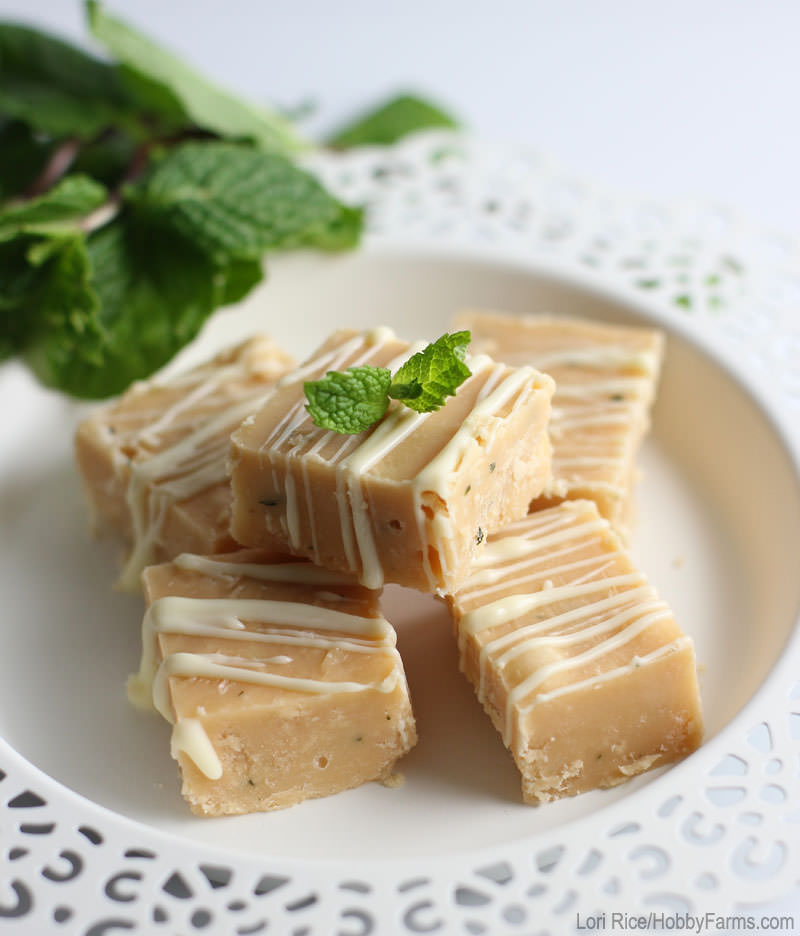
White Chocolate Mint Fudge

White Chocolate Mint Fudge - Photo by Lori Rice (HobbyFarms.com)
Photo by Lori Rice

Yield: 64 pieces

Ingredients

  • 2 cups white granulated sugar
  • 1/2 cup heavy cream
  • 1/2 cup half-and-half
  • 1/4 cup light corn syrup
  • 1/4 tsp. salt
  • 2 sprigs fresh spearmint
  • 6 ounces white chocolate chips or chopped white chocolate
  • 2 T. unsalted butter, plus extra for greasing pan
  • 1/2 tsp. pure vanilla extract
  • 5 leaves of spearmint, finely chopped
  • 2 ounces white chocolate, melted

Preparation
In 3-quart heavy saucepan, combine sugar, heavy cream, half-and-half, corn syrup and salt. Turn to medium heat, and add mint sprigs.

Cook, stirring occasionally, until sugar dissolves and syrup begins to simmer. Remove mint. Allow syrup to come to low boil and boil for 1 minute without stirring.

Remove from heat and stir in white chocolate chips until melted. Return pan to heat. Use natural-bristle pastry brush dipped in warm water to brush down any crystals that collect along inside of pan.

Insert warmed candy thermometer in syrup and bring to boil. Do not stir. Let cook to 235 degrees F, soft-ball stage, about 10 to 15 minutes.

Remove pan from heat. Add butter and vanilla to pan, but do not stir.

Fill large bowl with ice water and place bottom of saucepan in water to cool sugar syrup. Let cool to 110 degrees F.

While it is cooling, prepare an 8- by 8-inch baking dish by lining it with parchment paper that extends at least 1 inch over top edge of dish. Grease parchment paper with unsalted butter.

Once cooled, pour syrup into bowl of mixer fitted with paddle attachment. Do not scrape bottom of pan to avoid transferring any burnt pieces.

Add finely chopped mint. Turn mixer to medium high and beat syrup for 7 to 10 minutes, until it loses its sheen.Alternatively, transfer syrup to large mixing bowl and use hand mixer, or mix fudge quickly by hand with wooden spoon. 

Pour thickened syrup into prepared dish. Use buttered spatula to spread fudge evenly. Let cool completely, 4 to 6 hours.

Use edges of parchment paper to lift fudge from dish. Cut into 64 pieces. Drizzle pieces with melted chocolate and let chocolate harden, about 1 hour.

Store in airtight container in single layers separated by sheets of parchment paper or wax paper. Keep in refrigerator for up to 3 weeks or freeze up to 2 months.


Categories
Recipes

Strawberry Marshmallows

Strawberry Marshmallows - Photo by Lori Rice (HobbyFarms.com)
Photo by Lori Rice

Making delicious marshmallows at home is easy. These strawberry marshmallows have a light-pink color perfect for spring, but feel free to get creative by substituting other flavorings for the strawberry. Try adding 1/4 teaspoon vanilla, a few drops of food-grade peppermint oil or 2 tablespoons chopped nuts at the same point in the recipe when the strawberry is added.

Yield: 64 small marshmallows

Ingredients

  • 1/2 cup powdered sugar
  • 1 T. cornstarch or tapioca starch
  • 1/4 cup plus 1 T. cold water
  • 2 envelopes (1/2 ounce) unflavored gelatin
  • 1 cup white granulated sugar
  • 1/3 cup light corn syrup
  • 1/4 cup water
  • pinch of salt
  • 3 T. puréed strawberries

Preparation
In small dish, mix powdered sugar and starch. Grease 8- by 8-inch pan with butter and dust with 1 to 2 tablespoons powdered sugar mixture.

Add water to bowl of stand mixer (or deep -mixing bowl if using hand mixer). Sprinkle gelatin over water and set aside while you prepare marshmallow.

In 3-quart heavy saucepan, combine sugar, corn syrup and water. Turn to medium heat, and stir gently until sugar dissolves. Use natural-bristle pastry brush dipped in warm water to brush down any crystals that form on inside of pan.

Insert thermometer into syrup, and let liquid come to boil. Do not stir. Cook to 245 degrees F, or firm-ball stage, about 15 to 20 minutes.

Place whisk attachment on mixer. Turn mixer on low. Pour hot liquid into gelatin slowly as it mixes. Increase speed to medium-high. Beat for 10 minutes, until mixture turns thick and white. It should stick to whisk when lifted from bowl.

Add strawberry purée and salt. Mix on high for 30 seconds.

Transfer to prepared pan. Sprinkle top with 1/4 cup powdered sugar mixture, gently press marshmallow into corners, and smooth top. Cover loosely with plastic wrap and refrigerate for at least 3 hours.

Remove marshmallow from pan. Place on -cutting board and cut into 64 squares. Roll squares in -remaining powdered sugar mixture to coat.

Store in refrigerator in airtight container with layers separated by parchment paper up to 3 weeks.


Categories
Recipes

Brown Sugar Pistachio Caramels

Brown Sugar Pistachio Caramels - Photo by Lori Rice (HobbyFarms.com)
Photo by Lori Rice

Make these caramels as a great bite-sized dessert to keep around the house for snacking or tucking into an Easter basket.

Yield: 25 caramels

Ingredients

  • 1 cup white granulated sugar
  • 1/2 cup brown sugar
  • 1/2 cup unsalted butter, cubed
  • 1/2 cup heavy cream
  • 1/2 cup dark corn syrup
  • 1/4 cup water
  • 1/2 cup chopped unsalted pistachios, divided
  • 1/2 tsp. pure vanilla extract
  • 1/4 tsp. finely ground sea salt

Preparation
Grease 8- by 8-inch baking pan with butter. In 3-quart heavy saucepan, combine sugars, butter, cream, corn syrup and water. Turn to medium heat, and gently stir until butter has melted and sugar has dissolved in liquid. Use natural-bristle pastry brush dipped in warm water to brush down any crystals that collect along inside of pan.

Place candy thermometer in syrup and let mixture come to boil. Do not stir. Let cook to 245 degrees F, or firm-ball stage. This can take up to 30 minutes.

Remove pan from heat. Reserve 2 tablespoons pistachios and add remaining to caramel. Add vanilla and sea salt, and stir until all ingredients are incorporated.

Pour caramel into greased baking pan. Coat metal spatula in butter to evenly spread caramel into pan. Sprinkle reserved pistachios over caramels, and gently press them into candy.

Let cool completely, about 3 to 4 hours. As soon as caramels have cooled completely, lift caramel slab from pan using spatula. Place on cutting board and cut into 25 squares.

Wrap each caramel in 4½-inch square of wax paper, and twist to secure each end. Store in airtight container for up to 3 weeks.


Categories
Crops & Gardening

Start Seeds in Soil Blocks for Easy Transplanting

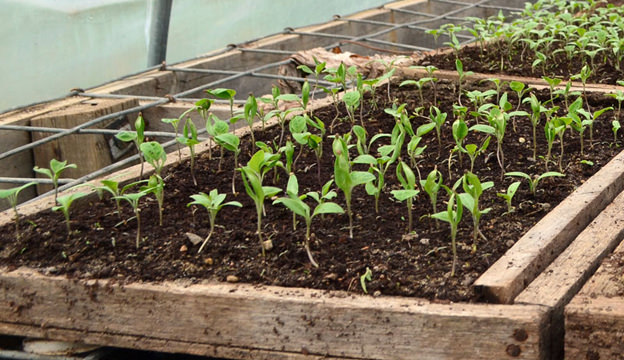
While soil blocks are typically used in the spring to get a head start on planting, you can make them any time of year to start seeds for transplanting into the garden. Soil blocks offer an alternative to plastic garden pots, which are costly and take up valuable space in the shed or greenhouse in the off season, plus they provide benefits for overall seedling health.

“Soil blocks, [when] properly used, eliminate transplant shock and maximize the healthy number of plants per flat,” says Pat Patterson, a master gardener with the Ohio State University Extension. She uses a chef’s knife or slender lathe to carve her blocks to the desired size, but garden centers and seed catalogs now sell multiple sizes of soil blockers to make the task even easier.

And trust me, making soil blocks is not difficult—though your hands might cramp up, depending on the number of trays you plan to seed. To get started, all you need is a couple buckets, a soil blocker, water and your preferred soil mix. Patterson’s soil-mix recipe contains one-third each of compost, pre-moistened coir, and fine grit or perlite, but you can use a mix that suits your growing conditions and available materials. Try peat moss in place of coir, for example, or lime and sand in place of perlite. Regardless, fresh soil is best for maintaining high levels of oxygen and organic matter in the mix.

Materials

  • 2 large buckets (one for soil and one for water)
  • soil mix
  • water
  • trowel
  • soil blocker
  • propagation tray
  • gloves (optional)

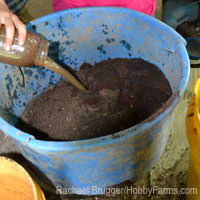
Step 1: Mix soil and water.

How to Make Soil Blocks - Photo by Rachael Brugger (HobbyFarms.com)


In one bucket, add approximately 4 quarts water to 10 quarts soil. This ratio might vary depending on the moisture present in your soil mix. When compacted in your hand, the mixture should remain in a clump; if it crumbles, add more water. Use warm water, as it’s more easily absorbed by the soil-mix components than cold.

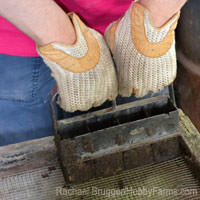
Step 2: Load soil blocker.

How to Make Soil Blocks - Photo by Rachael Brugger (HobbyFarms.com)


Take the soil blocker in both hands and push straight down into the soil-water mixture. There should be enough mix in the bucket that it thoroughly fills the blocker while allowing it reach the bottom. Shift the soil blocker slightly around its axis so the soil more readily packs inside. Repeat this three to four times, rotating the direction of the soil blocker to ensure equal soil distribution among all blocks.

Step 3: Punch out blocks.

How to Make Soil Blocks - Photo by Rachael Brugger (HobbyFarms.com)


Have a propagation tray ready that allows ample drainage. Wipe off the sides of the soil blocker, and set it down in the tray so the sides are flush with the tray corner. Gently pull up on the body while pushing down on the lever, giving gentle shakes if necessary to release the soil blocks. Dip the soil blocker in a bucket of water to rinse. Repeat steps 1 through 3, lining up each set of soil blocks snugly with those already on the tray, until the tray is full.

Step 4: Plant seeds.

How to Make Soil Blocks - Photo by Rachael Brugger (HobbyFarms.com)


Place one or two seeds in the crevice of each soil block. Only plant seeds that you would other-wise transplant, Patterson says, and follow any seed-packet instructions for presoaking or scarification. Cover blocks with soil mix, water thoroughly, and, fertilize if desired. Ensure blocks stay moist until seedlings are ready to transplant.

If making small blocks, such as the 3/4-inch size, you can plug them into larger blocks when seeds begin to sprout. Otherwise, once you have strong seedlings, you can place the entire block into the garden, spacing according to seed-packet directions.

Categories
Farm Management

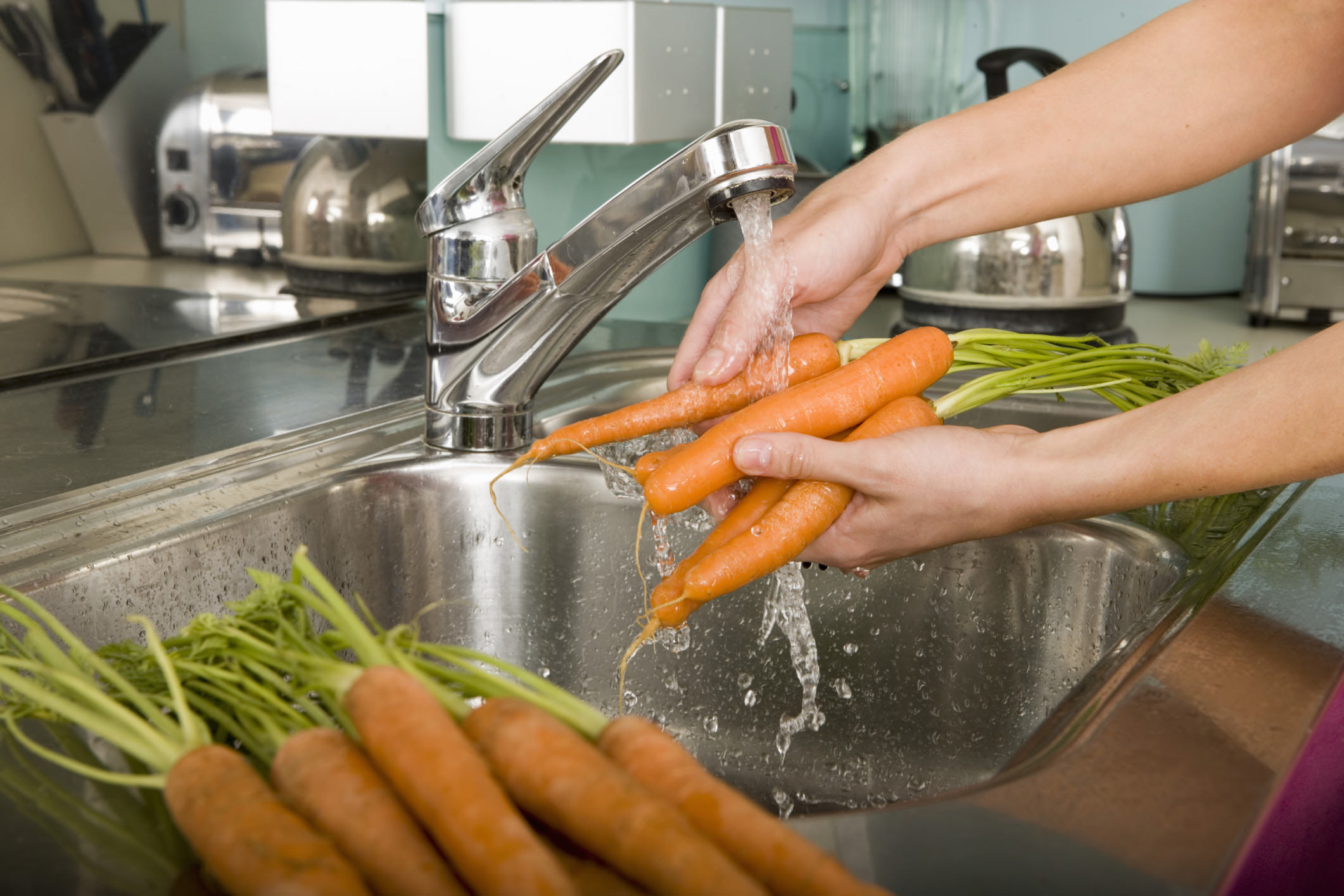
Wash Your Organic Carrots!—Here’s Why

Think you don’t need to wash that organic apple from the farmers’ market? Think again. It’s organic and locally grown, sure, but that apple has developed over many days in an uncontrolled environment, was harvested and packed by hands that were not your own, and has come in contact with surfaces untold. It’s had many chances to interact with harmful microbes that could potentially cause a food-borne illness.

“Fresh produce is a raw agricultural product,” says Catherine Strohbehn, PhD, RD, CP-FS, hospitality management extension specialist and professor at Iowa State University. “As part of production, it is exposed to potential contaminants from environmental and human sources. It is pretty hard to control the birds flying overhead or animals, so it is always a good idea to wash a product before eating.”

Whether local, organic or even out of your own garden, a quick wash is the best way to ensure you’ll healthfully enjoy your fruits and vegetables with less risk of ingesting harmful bacteria or chemicals. This goes for produce you peel before eating, too. “The knife blade can pull contaminants from the outside through the flesh, so even if the avocado peel is not eaten, the utensil used to fabricate it will have contact with [both] the soiled or outside portion and the clean or edible portion, thus resulting in cross-contamination. That is why handling contact surfaces—hands, knives, cutting boards, containers, sinks, et cetera—should all be clean and sanitized before having contact with fresh produce,” says Strohbehn.

You’ll find products on the grocery-store shelves marketed as fruit and vegetable washes, but those aren’t necessary.

“Research has found little significant difference between running water and commercial cleaners,” Strohbehn says. “Many producers use some type of post-harvest cleaning/sanitizing agent to reduce microbial loads … but for consumers, free-running water is still just as effective as purchased products.”

There’s debate in the food-safety community about the ideal wash-water temperature. Most sources, including the USDA and Council for Agricultural Science and Technology, recommend using water 10 degrees F warmer than the produce to prevent microbial transfer into the produce.

For some fruits and vegetables, a good rinse will do. Use these tips to further clean these types of produce:

  • Immerse lettuce and other leafy greens in cool water for a few minutes to help loosen and remove soil and dirt. Use a large, clean bowl instead of the sink, which might contain more pathogens. “If using the ‘bath’ rather than ‘shower’ approach, be sure to repeat a few times, or use a colander/strainer insert in the bowl,” Strohbehn says.
  • The Food and Drug Administration recommends scrubbing firm produce, such as root vegetables, melons or cucumbers, with a clean produce brush under running water to remove as much dirt and bateria as possible.
  • To remove dirt from mushrooms, the Colorado State University Extension suggests using a soft brush under running water or wiping mushrooms with a wet paper towel.

The only produce that you should not wash before consuming is produce that is sold as “ready to eat,” such as bagged salad mix, having been washed by the producer or packager. Rewashing this already-clean produce has a greater potential to introduce bacteria than it does to rinse it away, according to Strohbehn.

To prolong its storage life, don’t wash your produce until you’re ready to use it unless it’s really dirty.

Beyond Washing

Proper handling doesn’t stop at the sink. “Some fresh produce items need to be kept refrigerated after washing and/or cutting,” Strohbehn says. “Sliced melons, cut tomatoes and leafy greens should be kept below 41 [degrees] F.” Store refrigerated fruits and vegetables away from raw meat and ensure meat drippings cannot contact your produce.

In the Garden

For homegrown produce, reducing the risk of contamination begins in the garden. Follow these guidelines for growing the safest produce:

  • Once the edible portion emerges, irrigate food crops only with potable water.
  • Don’t apply untreated compost or manure to the soil of food crops within 120 days of harvest if the edible portion is in contact with the soil; don’t apply to other crop soils within 90 days of harvest.
  • Keep pets and wildlife out of the garden.
  • Site your garden as far from animal pens and compost piles as possible.
  • Prevent rainwater and irrigation runoff from animal pens and compost piles into your garden.
  • Wash your hands, harvesting gloves, knives and containers before harvesting.

With many environmental and handling factors outside of your control, you can reduce the risk of food-borne illness for yourself and your family with a little effort and thoughtful produce preparation.

This article originally appeared in the March/April 2014 issue of Hobby Farm Home.

Categories
Homesteading

From ‘Selfie’ to ‘Healthie’ in 2014

Be free to express yourself. (HobbyFarms.com)

As a magazine staffer, it’s part of my job to keep afloat of new media trends, and one of the most inescapable social media trends in 2013 was the “selfie,” which was named Oxford Dictionaries Word of the Year. Chances are you’ve heard of the term, too. Whether or not you’ve ever taken a photo of yourself and posted it on your social media site of choice, you’ve probably seen, enjoyed or, in some cases, rolled your eyes at the selfies taken and shared by your children, other family members or favorite celebrities. From hipsters to baby boomers (including the president of the United States), selfies have become an acceptable form of self-expression.

Farmers haven’t escaped the selfie fad either—and there’s a new spin-off to prove it. Perhaps it’s the slow days of winter that have helped the “felfie” rise to social media stardom in the last couple of weeks. The felfie, in short, is a selfie for farmers, a craze which reportedly began when The Irish Farmers Journal created a contest for “Ireland’s greatest farmer selfie.” The trend has since exploded internationally with a dedicated website (felfies.com), Facebook page, and, of course, an endless stream of felfies on Instagram and Twitter of proud farmers posing with their barnyard friends—chickens, goats, pigs, cows, et cetera—or in front of some other farm-scene backdrop.

Selfie spin-offs, like the felfie, might seem a little more palpable to those who might think a selfie is, well, a bit trivial, narcissistic or a just a big waste of time. The felfie doesn’t just bring attention to the farmer, but it seems to celebrate farming as a way of life in a simple and positive way. It also shows the evolution of the selfie into something a little more meaningful and focused, which brings me to the newest selfie spawn I read about this week: the “healthie.”

The healthie goes beyond a simple self-photo of you eating at your favorite pizza joint or standing in front of some city’s greatest landmark—it’s a selfie intended to be inspirational or contain a call to action, specifically related to healthy living. In his recent Mind Body Green blog post, Dr. Joel Kahn describes healthie as “a new photo community of committed, supported wellness warriors.” He suggests using healthies to inspire others by capturing moments of personal growth and healthy living. I think this is a great suggestion as the end of January nears and all the health goals we set for ourselves on Dec. 31 become overshadowed or replaced by other important impending farm goals and projects.

Dr. Kahn gives a list of healthie ideas that could inspire others, which made me start to think of a few other ways farmers can capture and celebrate their moments of farming and healthy living as a way to encourage friends, family members and others out there in the social stratosphere. Whether you’re a newbie to the selfie, felfie or healthie trend, or a well-adept social media self-portrait artist, below are a few other photo ideas to inspire others in 2014. And once you snap one, be sure to post it to Instagram with the hashtag #hobbyfarmselfie so we can see it and help spread some farm inspiration!

Ideas for your 2014 healthy living/farming selfies:

Proudly displaying your containers of indoor seed starts.

  • Dipping into jars of homemade preserves you put up for winter enjoyment.
  • Riding your new farm tractor that will help you harvest your crops faster this year (and give your body a little rest).
  • Serving up freshly picked veggies at your local farmer’s market this summer.
  • Stopping to strike a new yoga pose or stretch during a hard day’s work.
  • Munching on produce straight from the garden.
  • Cuddling with your farm’s animal babies.
  • Shots of your muddy muck boots, as you keep up farm production, no matter the weather.
  • Funny faces as you try to imitate your animal counterparts.
  • Photo bombing the chicken flock.
  • Playing in the garden with your children or grandchildren.
  • Taking a bite of that delish pancake drizzled in your homemade maple syrup.
  • Stowing away at your favorite on-farm getaway location.

« More Farm Inspiration »

Categories
Crops & Gardening

Take Advantage of Free Compost

Though you should exercise caution, take advantage of your municipality's free leaf compost, especially for use around trees and shrubs. Photo by Jessica Walliser (HobbyFarms.com)
Photo by Jessica Walliser

I had a lunch date with some gardening friends last week, and as it tends to do with this group, the conversation eventually turned to compost. I learned that the majority of our group (six out of eight) doesn’t take advantage of the free leaf compost given away by our municipality. I was surprised to find out that only two of us religiously shovel our own. It’s free, after all, and very good stuff.

If you have a shovel and some buckets (or better still, a pickup truck), call your own municipality and ask if a pile of leaf compost is available to residents. You’ll have to do a careful inspection to be sure it’s fully composted and perhaps ask a few questions if you are concerned about what was used to make it, but around here, it’s usually a good-quality product—and the price certainly can’t be beat.

Many municipalities make leaf compost from leaves collected off of streets each autumn. Sometimes they use chipped tree trimmings and grass clippings from local parks and other open spaces, as well. Someone in charge of municipal maintenance should be able to tell you what’s used to make the compost, so if you are concerned about it, just ask. 

While a certified organic farmer can’t use this type of compost because the sources of the ingredients and the composting process are not tracked, it’s a great deal for a home gardener. Several of my friends were rightfully concerned about the potential pesticide and/or herbicide content of city compost, as the ingredients are largely unknown. I do think this is a valid concern, but when composting on such a large scale, the temperature of the pile or windrow is sustained above 165 degrees F for long periods of time. Those temps are much higher than the average home compost pile, so it isn’t as great of a concern, but take care to ensure the pile is fully composted before using it. Even free compost isn’t a good deal if it harms your plants. That being said, I have never heard of municipally produced compost harming a garden when used appropriately. As always, wear gloves when working with any compost or manure products and wash well when you’re done.

In general, free leaf compost is perfect for perennial and shrub beds. If you’re concerned about its content, like some of my friends, skip using it in the vegetable garden or try it on only a small portion of the garden first.

And don’t forget, compost is good for the lawn, too, especially if you can screen it first. I suggest spreading 1/4 to 1/2 inch on the lawn once or twice per year. You can do this either after or before seeding (I prefer after so it helps protect the seeds from marauding birds and holds it in place until germination). The compost feeds your lawn, as well as all the beneficial soil organisms in the soil below it.

« More Dirt on Gardening »