Categories
Equipment Farm & Garden News

John Deere Is Ready To Tech Out Your Tractor

Imagine what it was like for farmers to own a tractor in the 1920s. After using a horse and plow for so long, they probably felt a bit awe-struck when they saw how a motor-powered vehicle could take on big jobs and make their lives a little easier. When I was a kid I remember how excited my own grandpa was when he showed me his John Deere Combine all decked out with a TV and VCR.

He said it kept him entertained during the long, repetitive days of harvesting.

Decades separated these innovations. But that excitement and awe must be how farmers feel now as they read about John Deere’s self-driving tractor. Years ago, it would have been difficult to picture a tractor that heads off for a full work day by itself.

But John Deere has made it a reality. And it’s clear now that the autonomous tractor was just the beginning.
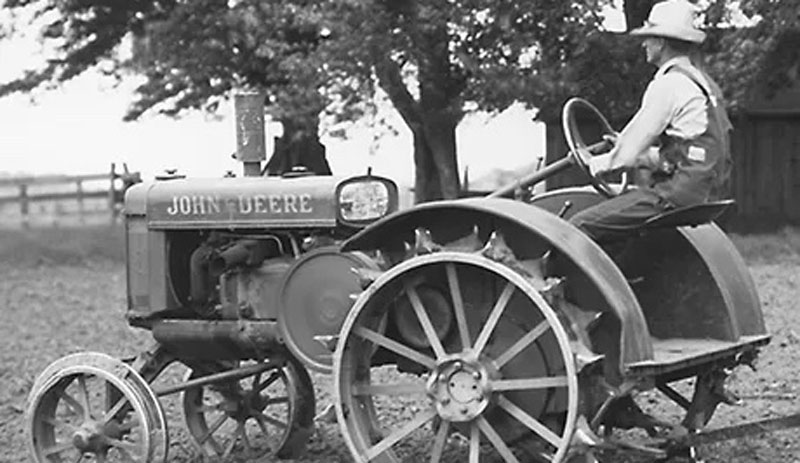
John Deere

John Deere Named 2023 CES Honoree for Best of Innovation in Robotics

John Deere is kicking off 2023 with a bang as they move to put the latest farming technology in the hands of the hobby farmer. The company has already been named a CES 2023 Innovation Awards Best of Innovation Honoree in the Robotics category and an honoree in the Vehicle Tech & Advanced Mobility category.

Here’s a glance at what the company has on the radar this coming year.


Read more: Autotrac lets your John Deere Gator drive itself!


A tractor That Sees & Learns as We Do

John Deere’s first move into the world of artificial intelligence began back in 2017 when they purchased a tech start-up called Blue River. They applied the startup’s technology to the concept of a self-driving tractor that would use AI and machine learning to drive itself.

The John Deere autonomous tractor has cameras on board to give the tractor sight and a neural network that can process what the tractor sees. The networks on the tractors are fed images not just from their own farm, but from thousands of other farms.

The result is a tractor that drives itself without you being in the cab at all. It can steer around stumps or rocks and knows what is a plant, what is a weed, and what needs to be sprayed when applying fertilizer or herbicides.

The latest update for this machine is maybe even more awe-inspiring. They are currently working on 3D vision for the autonomous tractor. The tractor will use cameras to see the terrain in the same way the human eye can.

Putting New Tech in the Hands of Hobby Farmers

John Deere’s acquisition of several other tech startups over the past few years means their new technology is going to be in the hands of hobby farmers a lot sooner than you might think. They’ve developed sprayers for orchardists that can control from a laptop, for example. And they are able to determine what types of trees you have and whether they need to be sprayed with pesticide.

They are also upping their retrofit game by putting the new technology in the hands of even more farmers.

Last year the company announced that some features of their self-driving technology could be retrofitted onto certain models of John Deere tractors. This coming year they will offer their technology as a retrofit kit for much smaller tractors.

Everyone, even farmers with smaller properties, may have the opportunity to add some of the latest tech to tractors they already own.

Where Will John Deere Go Next?

It looks like 2023 is shaping up to be quite a year for the John Deere company. For a broader look at what will be new in farm tech this coming year, be sure to watch the coverage of CES 2023 beginning on January 5th, 2023.

Categories
Farm & Garden Food Recipes

Recipe: Spiced French Toast With Dried Fruit

In this French toast casserole, cubes of bread are baked in a creamy custard made with fresh eggs and maple syrup that’s seasoned with aromatic spices such as nutmeg and cardamom. A mix of dried fruits gives it a festive touch making it a welcomed warm breakfast to serve a small crowd during the holidays and throughout the winter season. 

Yield: 9 servings

Ingredients

  • 8 cups cubed sourdough bread (about a 10-ounce loaf)
  • 6 large eggs
  • 2 cups whole milk
  • 1/4 cup maple syrup
  • 1/4 cup packed light brown sugar
  • 1 teaspoon pure vanilla extract
  • 1/2 teaspoon ground cinnamon
  • 1/2 teaspoon ground ginger
  • 1/2 teaspoon ground nutmeg
  • 1/4 teaspoon fine ground sea salt
  • 1/4 teaspoon ground cardamom
  • 1/4 teaspoon ground clove
  • 1/2 cup mixed dried fruits (e.g., golden raisins, cranberries, blueberries, chopped apricots)
  • 1/4 cup chopped walnuts, optional
  • powdered sugar for serving

Read more: Here’s everything you need to know to start baking sourdough bread!


Preparation

Spray an 8-by-8-inch baking pan or casserole dish with nonstick cooking spray. Arrange the bread cubes evenly in the pan. In a large bowl, whisk together the eggs and milk. Whisk in the maple syrup, brown sugar and vanilla. Next, whisk in the cinnamon, ginger, nutmeg, salt, cardamom and clove until evenly distributed throughout the liquid.

Pour the liquid over the bread. Press the bread gently to nearly submerge it all. Cover the pan and refrigerate overnight or up to 24 hours. 

Remove the pan from the refrigerator and uncover at least 30 minutes before baking. Preheat the oven to 350 degrees F.

Place the pan on a baking sheet, just to protect from any spills over the sides. Sprinkle the dried fruits over the soaked bread. Then, sprinkle on the walnuts (optional). Gently press in the fruit and nuts and work them into the crevices. Fruit on the very top will brown, and possibly burn, while baking. 

Bake for 50 minutes until the top is golden brown and the French toast is firm in the middle. Liquid should no longer bubble up when you gently press on the pieces in the center. 

Let cool for 10 minutes, and scoop with a spoon or cut into squares. Serve with powdered sugar on the side for topping the French toast. 

This article originally appeared in the November/December 2022 issue of Chickens magazine.

Categories
Farm & Garden Food Homesteading Recipes

Recipe: My Aunt Kris’s Peppermint Bark Is A Holiday Favorite

If you need a sweet treat to set out at your next holiday gathering, or want a festive homemade candy to gift, this peppermint bark is your answer. It’s very simple to make (hint, hint, I’m talking to the last-minute planners here), tastes delicious and is aesthetically very festive looking. Plus, a little goes a long way.

There are many bark recipes out there, but the one I’m sharing is one my aunt has been making during Christmastime for over two decades.

Yield: 9 x 13 cookie sheet of peppermint bark

Ingredients

  • 16 ounces white chocolate with real cocoa butter
  • 12 ounces semisweet chocolate
  • 1/2 tsp. peppermint extract
  • 1 cup organic candy canes (skip the corn syrup ones), crushed

Instructions

Microwave the semisweet chocolate in a medium microwave-safe bowl for 30 seconds. Stir and heat another 30 seconds, until the chocolate is smooth and completely melted.

Line a 9×13 cookie sheet with parchment paper, and spread the melted semisweet chocolate out evenly with a spatula. Transfer to the refrigerator until set (15 mins or more).

While the first chocolate layer sets, crush the candy canes. This method can be done multiple ways, but it’s easiest to unwrap the candies and transfer them to a large Ziploc storage bag.

My aunt recommends using 2-gallon sized Ziploc bags, doubled up. She then recommends slapping the bag on the countertop and using a wooden rolling pin to break up the remaining larger pieces of candy.

Next, repeat the melting process with the white chocolate. Once melted, stir in the peppermint extract.

Take the set semisweet chocolate out of the refrigerator and evenly spread out the white chocolate over it. Sprinkle the crushed candy canes over the pan.

Transfer the pan to the refrigerator once again and allow it to set completely. This will take 20 minutes or more.

Once set, take the peppermint bark out of the fridge and bring it close to room temperature. Use a large sharp knife to cut it apart into serving size chunks and serve. If packaging candy to gift, allow it to completely reach room temperature before packaging.


Read more: Check out this recipe for scrumptious sugar cookies!


Notes

Want a different flavor? Try a different flavor of candy canes!

Consider adding in cookie sprinkles or other yummy holiday candies that would pair well with peppermint.

You can sometimes find crushed peppermint candies. This would skip the pulverizing step of the recipe.

Categories
Animals Chicken Coops & Housing Chickens 101 Farm & Garden Flock Talk Poultry Poultry Equipment

Chicken General Store: Chic(k) Gifts & Decor

Chicken & Egg Beaded Garland

This year, trim your holiday tree with this 4-foot, hand-painted hen and egg garland (pictured above). $30. 

Poultry T-Shirts

Get your favorite poultry-inspired T-shirt from Cynthia Parker-Houghton Art, with designs focusing on free-range chickens. Available in men’s, women’s and youth sizes and cuts. $20 and up.   

Farmhouse Chicken Blue Travel Mug

This attractive travel mug is crafted of lightweight stainless steel, with double-walled insulation to keep your drinks hot or cold for hours. $47.98 for 20-ounce size. 

Salt & Pepper Shakers

chicken shakers

Add some poultry pizazz to your holiday table with these earthenware salt and pepper shakers shaped like happy little hens. $18.   

Cozy Rooster Cat Tunnel

This cozy cat tunnel has a shaggy fabric tunnel and a jute scratching post in a tiny footprint. $99.95.   

Chickens Can’t Fly Print

Printed with fade-resistant archival ink on cotton artist-grade canvas, this adorable print will add a bit of whimsy to any room in your house. $39.99.   

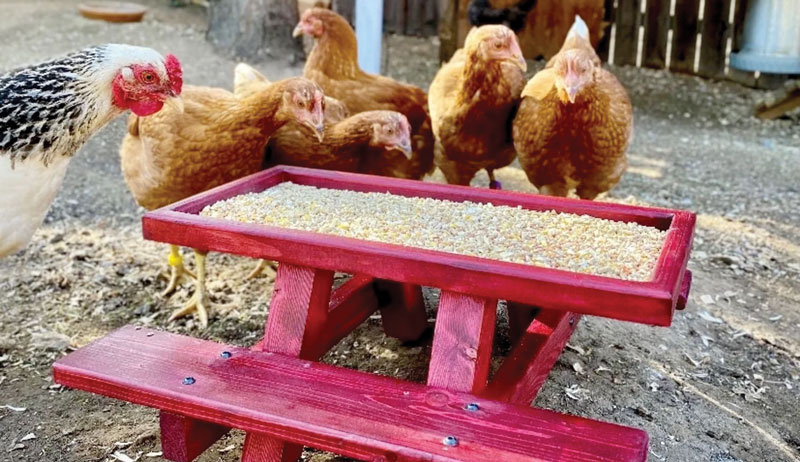
Chicknic Table

This cute little “chicknic” table (pictured above) is handcrafted of pine, with drain holes to prevent feed from getting soggy. It also includes a screen to prevent feed from dropping through and is available in multiple stain options. $45.   

Chicken-Inspired Wine Glass

Ring in the new year with a toast in one of these hand-painted, poultry-themed wine glass. Available as stemmed or stemless in a variety of shapes and sizes. Prices start at $17.  

Rooster Ornament

chicken ornamnet

Bring some poultry-themed sparkle to your tree this year with the Nobel Gems glass ornament from Kurt S. Adler. It’s brightly colored and hangs from a gold string. The price varies by retailer.  


Read more: Decorate your “poult-tree” with these chicken-themed ornaments!


Prosperity Hens

Hang a chain of prosperity hens in your home, and welcome wealth, health and happiness through your door. Each strand is made with jewel-toned fabric, silver ornaments and bronze bells. $22.95. 

This article originally appeared in the November/December 2022 issue of Chickens magazine.

Categories
Animals Chickens 101 Farm & Garden Flock Talk Poultry

Shutterclucks: Chickens Editors Choose Reader Photos

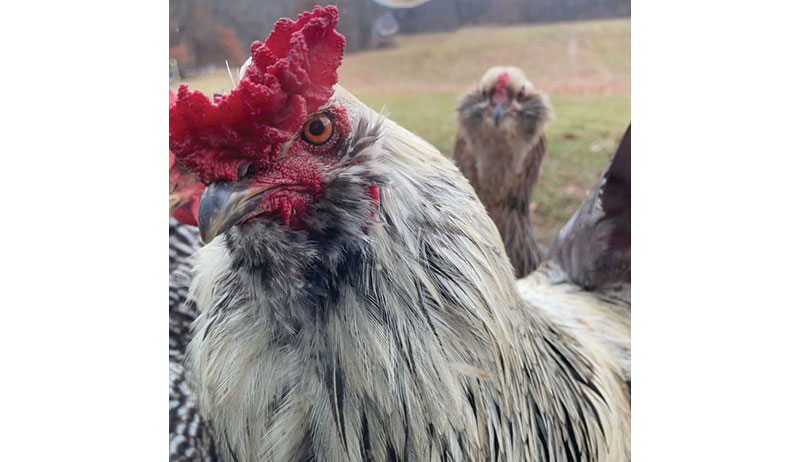
The editors of Chickens magazine are always on the lookout for great chicken photos, and in the November/December 2022 print issue they ran a contest titled Shutterclucks.

Above is the winning photo submitted by Amy Vanlue of Portland, Indiana and below you’ll find others chosen and printed in Chickens. Each one includes the name and city of residence of the chicken lover (or lovers) who submitted it.

Alexis Macaluso, Grand Rapids, Michigan


Angela Bornemann, Peru, Illinois


Holly Lutz, Delton, Michigan


Judy Bainbridge, Pekin, Illinois


Nick Larson, Sumner, Washington


Nicole & David Riggs, Morgantown, West Virginia


Sherrie Harshbarger, Travelers Rest, South Carolina


Shan Keeler, Lake Ariel, Pennsylvania


Rachel Von Daacke, Southington, Connecticut

Got a cool clucker you want to show off? Email us an image of your chicken(s) to chickens@chickensmagazine.com with the subject line Shutterclucks, and include your name and mailing address. The winner will receive a prize from one of our sponsors!

This story originally appeared in the November/December 2022 issue of Chickens magazine.

Categories
Podcast

Episode 44: Dr. Mehmet Öztan

Hobby Farms Presents: Growing Good, Dr. Mehmet Öztan

In this episode of Hobby Farms Presents: Growing Good, Dr. Mehmet Öztan talks seed justice, selecting seeds for saving, the Seedy Talks speaker series, and his work as an underrepresented minoritized farmer in West Virginia.

Hear about how Dr. Öztan went from receiving a PhD in civil engineering to starting Two Seeds in a Pod heirloom seed company with his wife, Dr. Amy Thompson, all because he wanted to recreate the flavors he remembered from his childhood in Turkey. He shares the challenges of tracking down seeds and histories of vegetable and herb varieties whose stories are largely passed down by oral tradition. 

Listen—with horror—to Dr. Öztan’s story about that time he got a call that a cow was loose in his garden on leased land and appreciate other complexities of growing and maintaining rare and culturally significant seeds. Get Dr. Öztan’s advice for selecting the plants from which you want to save seeds and understand what it takes to get a variety ready for commercial availability.

Go behind the scenes in the seed industry, from Dr. Öztan’s take on how your seed purchases shape the seed industry to navigating seed importation and accessing USDA germplasm seed banks, plus the problematic nature of seed expeditions. 

Finally hear about the Seedy Talks seed-justice conversation series that Dr. Öztan hosts as part of his work at West Virginia University.

Categories
Animals Chickens 101 Farm & Garden Flock Talk Poultry

Chicken Chat: When Chickens Make A Winter Breakout

My friend and I were outside letting the chickens free-range in winter. We have 16 chickens, all hens: Zoe, Doodle, Buttercup, Kiwi, Mary, Goldilocks, Hotwings, Pepper, Penny, Chloe, Gracie, Peanut, Thalia, Eggy, Chai and Daisy. We tell them apart by little colored bands and charms on their legs. 

As they were all grazing on the grass and enjoying life that day, I went into the garage to get some treats. Then I heard my friend scream.

I looked out, and she was pointing at some chickens that were running into the neighbor’s yard. They have a little pond, and once the chickens discovered it, a few adventurous ones always make a break for it for a quick drink. 

A line of pine trees separates our yard and our neighbor’s yard, so the chickens can get through but we can’t. While my friend was getting the rest of the chickens back into the coop, I tried to find a way to get through to the neighbor’s yard.

There was a little gap between the trees that I could fit through. But a few branches stood in the way. 


Read more: Get your chickens ready for winter with these easy-to-follow tips!


Chicken Catching

I made it into my neighbor’s yard to find three chickens left: Zoe, Buttercup and Hotwings. They were walking on the frozen-over pond. The ice was strong enough to hold me, so I walked out to one of the chickens. She started running away, so I instinctively ran after her.

A few seconds later, she surrendered. I was able to carry her back to the coop. 

When I came back, my friend was now standing in the middle of the frozen pond with a chicken in her hands. I was surprised because she was usually afraid to hold them. I told her to carry her back to the coop. As she was passing through the trees, though, the chicken jumped out of her hands.

She kind of just chased it back to the coop from there. 

The last chicken was a major challenge. I had to chase her a bit before my friend came back. It took a long time of the chicken going between me and my friend. Eventually, I got a hold on her, and she surrendered. Then, I carried her back. 

From that day on, we give the chickens a tray of water when free-ranging even in winter to keep them from racing to the pond because drinking water from anywhere but their coop can be very exciting! —Clay Little (Antioch, Illinois)

This article originally appeared in the November/December 2022 issue of Chickens magazine.

Categories
Animals Beginning Farmers Crops & Gardening Equipment Farm & Garden Homesteading Large Animals Poultry Poultry Equipment

45 Gift Ideas For The Hobby Farmer In Your Life!

Shop these lists to find small gifts for the hobby farming enthusiasts in your life. Each list of the following three lists has 15 farmer gift ideas available for $15 or less.

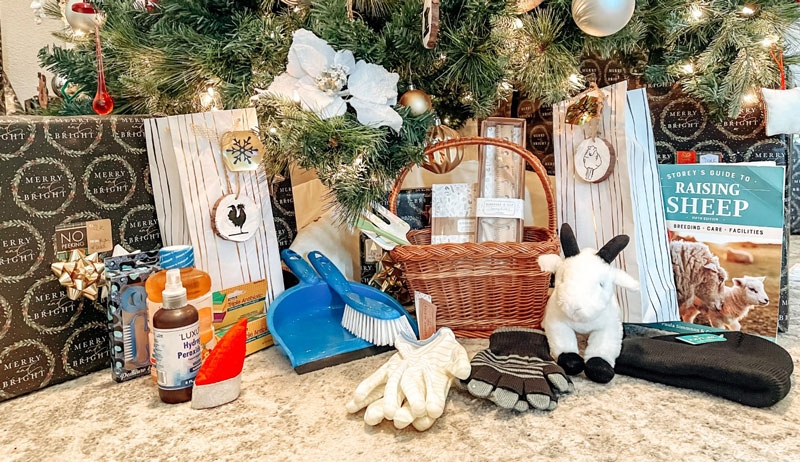
These farmer gift ideas are all perfect to stuff in stockings, tie on larger gifts or create a themed basket!

Gardening Gifts

Gardeners are some of the easiest hobby enthusiasts to shop for. They love anything that helps grow more plants or take care of plants. They even love simple pictures of plants!

This list will give you creative gift ideas for the gardener or small farmer in your life:

  1. Merch: So many great web sites and local feed stores full of gardening hats, t-shirts and socks!
  2. Kneeler Pad: A foam pad, usually around 18 by 12 inches, to protect knees while digging in the dirt 
  3. Hori Hori Knife: Hailed as the “best gardening knife”, this useful tool divides plants, plants bulbs, digs holes, loosens root bound plants and helps with tons of garden chores.
  4. Outdoor Thermometer: In greenhouses and outdoor gardens, temperature plays a huge role. Find a thermometer that can determine the soil temperature as well as the air!
  5. Seed Packets: Many sites and stores have seed packets printed for seed saving. This allows gardeners to keep record of what seeds they are, when they were saved and materials required to keep the seeds healthy.
  6. Journal: A good journal is a great gardening gift, with so many planting timelines, shopping lists and notes on what worked in a garden.
  7. Christmas Topiary: Most nurseries have rosemary, lavender or spruces in a small potted shape sure to thrill any gardener.
  8. Themed Growing Kits: Salsa, cocktails and kitchen herbs are popular themes in curated garden kits. These growing kits make windowsill growing a delight.
  9. Mini Kenzan: Often in a frog shape, these structures are used to keep flowers (cut fresh or faux) in place during display.
  10. Vases: Thrift stores are a great place to shop for beautiful vases the gardener can use to display a harvest.
  11. Garden Gloves: A gardener can never have enough gloves.
  12. Garden Markers: Cute displays to remind the gardener what seeds were planted and where 
  13. Gardener’s Soap/Scrub: Several brands have a gritty mix for gardeners to really get nails cleaned and dirt exfoliated.
  14. Fruit/Vegetable Scrubber: You’ll find many cute tool options to clean fresh fruits and vegetables when they are brought into the house.
  15. Tools: Hand-sized trowels, shovels, weed eliminators, sheers and small rakes are always welcome gifts!

Read more: Check out these handy gardening gift ideas!


Chicken Gifts

Chicken-keepers (both the novice and professional farmer) love gift baskets of helpful and useful supplies. These items can be very inexpensive and easy to find. Throw a few of them in together to make a great basket option.

  1. Mini Pebbles: Small chicks often need to pebbles inside their waterers to prevent drowning.
  2. Thermometer: Having a good idea of the temperature inside a coop or brooder box is perhaps even more important than knowing the temperature of the outside air.
  3. Clippers: Like humans, chickens sometimes need their nails clipped. 
  4. Dust Pan: A handy broom and pan are nice to have near the chicken housing to clean shavings
  5. Dust Bath: The No. 1 way to combat mites? Provide a dust bath for chickens. This is just a pail you can add soot and ashes to. Make sure it is adequate for a full-size bird to get in and wiggle around. It’s also a great basket option to hold chicken presents.
  6. Medicine Basket: Chicken-keepers need a first-aid kit available to treat conditions as they arise. We recommend including antibiotic spray, hydrogen peroxide spray, electrolytes, vaseline and epsom salts.
  7. Wipes: Whether they clean the chicken or just the area, disposable wipes are great to have nearby.
  8. Cleaning Brush: Chicken shavings and droppings ensure waterers and feeders constantly need a good scrubbing
  9. Swing: For your chickens’ entertainment (and yours!), find a chicken swing!
  10. Chicken Harness: Yes they make these, and your chicken lover will just have to try it out!
  11. Chicken Hats: Santa hats, gnome hats, feather top hats and birthday hats have become a hot trend in chicken fashion. 
  12. Egg Apron: Also fashionable, but actually practical for the chicken keeper, is an egg apron with pockets perfectly sized to collect eggs. No more hoodie pockets as baskets!
  13. Merch: Shirts, hats, socks with chickens are available everywhere these days, with several great options!
  14. Heat Lamps: Another staple of owning chickens is using heat lamps from time to time.
  15. Waterers and Feeders: Fresh and clean new waterers and feeders are a great and appreciated option for chicken keepers. 

Livestock Gifts

Farm animal owners love their livestock! Buying something special for the animals they hold near and dear to their hearts is always a safe bet. So is any gift that makes chores for the livestock farmer a little more pleasant!

  1. Books: Works about raising animals or books with their animal as the main character are great for any age farm animal owner.
  2. Merch: Socks, hats or shirts with their beloved species are sure to be a hit!
  3. Stuffed Animals: Depending on the age, these toys can be real pleaser. (Bonus points for Squishmallows!)
  4. Journal: A livestock journal is a great idea and will include all the things they will want to keep record of. But even if it isn’t targeted to livestock, you can find journals to keep medical records in, notes, breeding schedules, certificates for breeding and handy information for quick reference.
  5. Brush: New, clean brushes are always a safe bet! 
  6. Thermometer: It’s important to know the temperature of animals’ housing, as well as the outdoor temperature. Getting a thermometer just for inside the barn is a very thoughtful idea.
  7. Winter Gear: Gloves, ear muffs, scarves, beanies are all things livestock owners will appreciate when combating cold weather to check on animals.
  8. Flashlight: As the days grow shorter, flashlights are a necessity for checking animals.
  9. Tool Belt: Most farm jobs could benefit from extra hands! A tool belt would be extremely handy for keeping a farmer’s hands free.
  10. Tool Box: Birthing kits, medical kits and general maintenance supplies are all great to keep in a tool box.
  11. Buckets: There are exactly 1,000 uses for a bucket on a farm. (No need to fact check!) Seriously, you can trust that a bucket will always be a useful gift, especially when filled with other  presents!
  12. Syringe: Blue bulb syringes are great for all animals for a multitude of purposes.
  13. Work Gloves: These easily fall into the category of “you can never have too many.” A great, dependable gift to give.
  14. Ear Tagger: There are several inexpensive options out there that will do a great job for tagging ears.
  15. Thermos: Never underestimate the power of warm coffee while doing chores. An insulated cup or thermos will definitely please your farmer.
Categories
Equipment Farm & Garden

7 Items You Need To Harvest A Christmas Tree From Your Farm

A hobby farm can provide a wide variety of harvests throughout the year. Vegetables from a garden, fruit from an orchard, eggs from chickens, Christmas tree from your woodlot….

That’s right. Even if you’re not specifically growing a crop of Christmas trees, your farm may have young conifers perfect for harvesting as Christmas trees. Maybe they’re growing on the edge of a woodlot, or maybe they’re taking over an old rocky field. The details aren’t important. If they’re attractive and the right size for a Christmas tree, why not harvest one and enjoy a real Christmas tree fresh from your farm?

If this sounds like a delightful DIY experience, read on. We’ve outlined seven items you may need to harvest a Christmas tree off your farm:

1. Tape measure for measuring the tree

A young conifer can look downright tiny growing in a field next to larger trees. But once you cut a tree down and bring it into your home, it may seem a lot larger.

So before you cut down what seems like a suitably sized tree and realize too late that it can’t stand upright in your living room, grab a tape measure and figure out exactly how large a tree you need. Choose the spot where you’d like the tree to stand and measure how much height and width the spot provides. Then head outside with these measurements and search for a tree that matches your specifications.

2. Hand saw or pruning loppers for cutting the tree

I suppose you could use a chainsaw to quickly hack through your carefully chosen Christmas tree. But that’s not very picturesque, right? Unless you’re using an electric chainsaw, it’s bound to be noisy.

Instead, use a hand saw or pruning loppers to cut down your Christmas tree. Any tree of manageable height for indoor decorating is going to have a skinny trunk, so hand tools won’t be undersized for the job.


Read more: There are pros and cons to both hand and power tools.


3. Winter gloves to stay warm

Hopefully you’re harvesting your Christmas tree on a beautiful sunny day with pleasant temperatures. But if you brave cold temperatures in search of homegrown Christmas cheer, be sure to wear warm winter gloves. And a whole winter outfit, for that matter.

4. A sled, cart or wagon for towing the tree home

Unless you want to carry the tree back by hand (which isn’t impossible for a small tree and a short distance), you’ll want to bring a sled, cart or wagon. A sled (like my favorite polyethylene snow sled) is obviously ideal if there’s a lot of snow on the ground.

But if the ground is all or mostly clear, a cart or wagon pulled by a tractor or ATV might be even better.


Read more: I can’t live without my red wagon. Here’s why.


5. Snowshoes (or maybe a snow blower)

If you’re plunging through deep snow to harvest your Christmas tree, you may want to consider a pair of quality snowshoes to keep you from sinking in deep. Or maybe you need to fire up a snow blower (perhaps a tractor-mounted model) and clear a path to your chosen tree.

6. Ratcheting straps or bungee cords for securing the tree

How far must you transport the tree? If the tree is growing across a flat field 100 feet from your house, bringing it home will be a breeze. On the other hand, if you’re harvesting a Christmas tree from half a mile down a wooded trail on the back 40, you might want to use ratcheting straps or bungee cords to secure the tree to your sled, wagon or cart.

You don’t want to get halfway home (or worse, all the way home) and realize the tree slipped off somewhere.

7. A tree stand to support the tree and keep it in water

Don’t overlook this critical step! Your Christmas tree isn’t going to stand sturdily on its sawed-off trunk. You’ll need a tree stand to lock the tree in place and keep it upright.

A tree stand also provides your tree with a source of water to keep it green and cheerful through the holidays.

Have fun harvesting your own Christmas tree!

Categories
Beginning Farmers Farm & Garden Farm Management

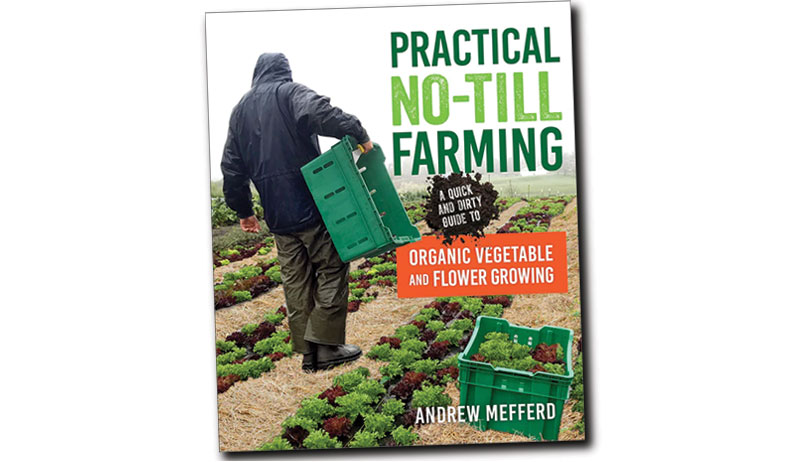
Book Review: “Practical No-Till Farming”

Title: Practical No-Till Farming: A Quick and Dirty Guide to Organic Vegetable and Flower Growing

Author: Andrew Mefferd

Cover Price: $34.99

Publication Date:  November 1, 2022

Publisher: New Society Publishers

If you’re a small-scale vegetable or flower farmer, you’ve probably heard a lot about no-till over the past several years. And rightly so. As Andrew Mefferd explains in his newly released book “Practical No-Till Farming,” no-till growing can come with many advantages.

Among other things, these advantages include improved soil health, better soil aeration and drainage and lower barriers to entry to starting or scaling up the farm. As Mefferd explains at the beginning of the book, “no-till growing makes it possible to start a profitable farm with little to no equipment, on a very small land base.”  

A No-Till Revolution

In 15 years from now, perhaps we’ll look back on this decade as the time in which organic no-till reshaped the world of small-scale agriculture. (I sure hope so).

When I first developed an interest in no-till growing six or seven years ago, there were very few resources on the topic. So much has changed.

Now, one of the most popular farming podcasts in the country is devoted to the topic and several recent books by authors like Brian O’Hara, Andrew Mefferd and Jesse Frost offer deep-dives into no-till systems. 

Maybe we are living in the good old days of “the organic no-till farming revolution” (to borrow the title of Andrew Mefferd’s previous book on no-till) right now.  

A Practical Guide

Given the proliferation of no-till resources, however, a new problem can also emerge: Where to begin? As Mefferd explains at the beginning of “Practical No-Till Farming,” he “wrote this book primarily to help people who are interested in no-till but don’t know where to start. But it’s also for growers who have already started with no-till and are interested in expanding or refining their repertoire of techniques.”  

“Practical No-Till Farming” would certainly be a valuable asset for people in either of those camps. The book offers a no-nonsense overview of no-till growing that covers everything from the advantages and disadvantages of no-till (there are some of those too) to the nitty-gritty of no-till systems.   


Read more: Organic no-till growing is good for you and you land.


A Unique Perspective

It is also worth noting that there are few farmers across the country who are as well positioned as Andrew Mefferd to write a book like this. As no-till practices became more widespread in recent years, farms across the country have evolved their own no-till techniques.

Mefferd visited many of these farms and cataloged their unique strategies in a previous book, “The Organic No-Till Farming Revolution.”  He is also a farmer himself with ample no-till experience, and is the editor and publisher of Growing For Market magazine, which has been at the center of the no-till conversation for years. 

In short, if someone has developed a successful system of no-till production, chances are Andrew Mefferd is aware of it.

It may sound like a trite thing to say about a book like this, but I’ll risk it anyways: I wish I had this book when I was managing a no-till vegetable farm several years ago. I would have kept a copy stashed in the tool shed for quick reference. 

Overall the book strikes a kind of happy balance between serving as a reference guide for farmers in the field and as an introduction for those who are no-till-curious.  

Whether you’re an experienced no-till grower looking for some additional tips or an aspiring no-tiller hoping to get started, “Practical No-Till Farming” has something to offer. My only complaint is that Mefferd didn’t write it sooner.