Categories
Farm Management Homesteading

DIY Root Vegetable Washer

For a long time, I’ve imagined creating a root vegetable washer: a brush-lined bucket I could vertically slide each carrot or beet into while holding the greens. A little reflection revealed though, that this setup wouldn’t work for greenless roots. Online stores have countless iterations of rotating wooden-barrel washers, but I didn’t want an enormous, limited-use piece of power equipment for my small farm, so I created a model that fits the needs of my small community-supported-agriculture operation. The instructions for this root vegetable washer aren’t hard and fast—feel free to adapt the plans for your situation and available materials.

Step 1: Collect Materials

There are two key areas to focus on when you start to assemble your washer: the exterior container and conveyor-belt system. These choices will often drive your design, so map them out before gathering materials.

Exterior Container

For a small-scale washer, I chose a rectangular container that’s strong and stable and lets the dirt and water wash through. A simple milk crate served my needs. Also consider using large, plastic storage containers (adding an exterior wooden frame for strength), various wooden crates, old stock watering troughs, industrial-sized sinks, custom-made boxes or even old bathtubs. Open-bottom containers can be placed over sinks, drains, compost bins or even small raised beds, so you can water as you rinse; closed-bottom containers can incorporate a drain and hose to direct the flow elsewhere and prevent puddling.

Consider attaching legs to the box for a comfortable, upright cranking position. Alternatively, latching or lashing the washer to a stable base—even well-anchored sawhorses—increases its versatility and storability.

Rollers & Conveyor Belt

As I began envisioning pieces that could serve as rollers, I started to see tubular items everywhere, analyzing them for suitability: closet hanger bars, paper towel holders, roller-
blind inserts. Ultimately, PVC pipe proved the best. The rollers should fit closely inside the exterior container while being secured on their axles through the side walls. The upper roller and handle must operate as a single unit that’s also separable for construction; threaded joints serve this purpose. The lower roller can spin freely but must be strong on its axle.

The conveyor belt needs to be flexible but strong, rough for dirt removal yet soft enough to not grate the carrots, and porous for water flow. Plastic-mesh gutter cover was ample at my local rebuilding center (it apparently doesn’t work well for its intended purpose), and I also considered vinyl-covered hardware cloth, discarded bamboo “screening fence” or roller shades, and burlap or synthetic-weave sacking. Astroturf won out: It’s inexpensive, easy to work with, tolerates wetness without rotting, and doubles as a brush. I found a loose-weave variety that was a garish blue.

I had on hand another ineffective gutter product: round brushes that insert and block debris from downspouts. These brushes are great for my root washer, though not necessary; you could also mount a push-broom head.

Step 2: Assemble Rollers & Crank

Measure the width of your box. Use this width to cut the PVC to length accounting for the endcaps, too—you want it to be close to the inside edges but with enough of a gap to be able to move. My box has a 12-inch opening and each cap has a 1/4-inch lip. So I cut my pipe just under 11½ inches so that when the caps were in the pipe, each roller was slightly shorter than 12 inches. I could hold the rollers in where they were to be placed to make sure they fit—I didn’t glue the caps into the pipe until I had assembled everything to make it easier to install other components. If you have a removable fourth wall, assemble it securely.

Step 3: Install Rollers

Screw small pieces of threaded metal pipe from the outside of your box through the wall into the threaded holes of the PVC endcaps. This creates axles for the rollers to rotate on. One roller should be placed high in the box and the other should be low on the opposite side, so the produce rolls and tumbles downward as you crank the washer. The sprayer will be positioned over the bottom roller, washing the roots as they tumble. Once the rollers are in place, measure the circumference of the installed rods—this will be the length of your belt.

Step 4: Cut & Connect Belt

Sew the ends of your belt material together to create a tube that fits around both rollers. I used my sewing machine, but if you don’t have one or are using heavier material, waxed dental floss or high-gauge wire makes strong thread. You can weave this through open mesh or hand-sew the ends with a heavy-duty sewing needle. (If you don’t have one, make it by hammering the end of a large nail flat and drilling a hole in it.)

Step 5: Add Grip To Top Roller

Screw sheetrock screws through the entire diameter of the PVC pipe to make points on the “drive” roller (the one up higher) to help grab and turn the belt, so it doesn’t slip. Alternatives include wrapping sandpaper or soft and squishy material, such as sponge or foam rubber, around the roller. Pointy nail plates or barbed wire wrapped around the roller can work, but make sure the points don’t protrude beyond the belt face.

Step 6: Install Roller & Belt

Insert the entire roller and belt apparatus into the washer box and screw in the outside axles tightly.
Make sure the crank handle will be on the side that is most comfortable for you and that it’s attached to the top roller. You’ll be cranking the belt away from the lower roller while gravity pulls the roots back down under the sprayer.

Step 7: Add Brush Roller (Optional)

Insert a brush facing the lower roller if desired. I used a gutter brush that has stiff wire in the middle. I cut it to fit the outside width of the milk crate, pulled out the outer bristles, and stuck the wires into the crate openings so it sits right above the lower roller. Other brushes, such as push-broom heads, could be attached to the back wall of the box.

Step 8: Assemble Watering Pipe

Depending on water flow, you can aim any number of sprays at the roots and attach microsprayers to soften the jet. For mine, the force of the water stream through a 1/4-inch pipe works; with a valve at the hose connection, I can control the flow for ample splash to wash the tumbling tubers.

Step 9: Attach Lid

If you want to attach a hinged half lid, it can be held closed over the climbing roots while you crank, and then flipped open as a slide for the veggies to be sent straight into a box or bin for distribution.

Step 10: Tumble Your Root Veggies

Gravity pulls the root crops down as the belt movement tries to pull them up, and you control the speed with cranking. As water sprays the roots, they tumble around the brush apparatus, and the dirt washes downward.

My tiny washer will hold and clean about 1 to 1½ pounds of new potatoes or a good pound or two of radishes or small carrots—without greens, obviously. It can accommodate between five to 10 beets, depending on their size, but probably not too many turnips or rutabagas. If you grow crops of larger roots, consider increasing at least double the project size.

This nifty device cuts my root washing time more than half, is easier and uses less water than my previous labor-intensive soaking and hand-washing method. It does a surprisingly good job, though I haven’t tried it for sunchokes yet—that will be the real test of its efficacy.

This article originally appeared in the July/August 2014 issue of Hobby Farms.
Categories
Animals Poultry

Working Animals On The Farm: Chickens

Your farm animals are more than beloved pets. In the series “Working Animals On The Farm,” we’ll explore the various ways livestock can earn their keep on your land.

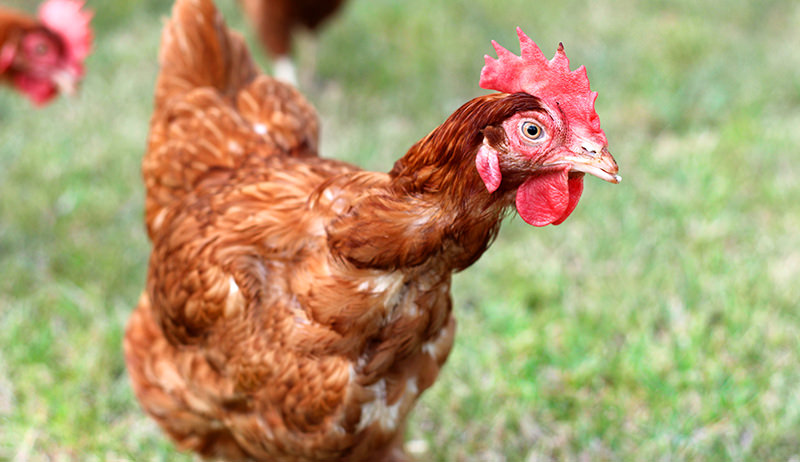
Chickens are a popular choice of livestock for farmers of all sizes and scope to incorporate into their food landscape, and there are breeds for all purposes and budgets. Chickens can be employed for natural insect or weed control or to provide food for your household. Of the hundreds of species of chickens, you are bound to find one or more suited for your desired purpose. Plus, many are considered dual purpose birds and are suitable for any use.

Garden Chores For Chickens

Chickens will gladly eat your weeds, pick off insects and fertilize and aerate your soil. Unlike other farm work animals, though, they aren’t herded easily and do not take direction well. To get them to focus on the area that you may want them to browse or work the soil, fence them in or make use of chicken tractors to move them around an area. This will ultimately protect them from predators while giving them a constant source of fresh pickings.

Keep in mind though that chickens do not distinguish between good bugs and bad bugs or crops and weeds. Do not release them into areas with young or recently planted food plants or those bearing attractive fruit. If you’re trying to increase your population of worms, do not allow your chickens into this area either.

Chicken manure is a great fertilizer, but it needs to be composted, aged or worked into the soil well. It can burn plants if large quantities of fresh manure are applied directly as a soil amendment. Releasing a flock of chickens onto a patch of land that you wish to farm in the near future is a great way to sustainably revive it. Their pecking and scratching, along with their manuring, will add the needed life back into tired soil and make it suitable for planting again.

Meat Makers

Many farmers like the idea of raising chickens for meat, as broiler chickens don’t take as long to mature to size as compared to other livestock. Depending on the breed, they may go from chick to harvest in about two months. This means that even a small farmer can have several generations and a near continual supply of meat birds over the course of the year without significant up-front investment. If choosing a heritage breed of chicken, it may take longer to mature to the weight required for harvest, but many consumers that care about the quality of their meats are willing to pay extra for eating a breed of bird that our ancestors raised. Some examples of meat breeds are Jersey Giants, Cornish Cross, Buckeyes and Chanteclers.

Egg Layers

Raising chickens for eggs is the reason most often cited by small-scale hobby farmers. A healthy hen can lay several eggs per week and sometimes even one or more per day in her peak. They more than pay for themselves within the first year when considering the price of locally produced, cage-free eggs. In many markets, these eggs go for more than $5 per dozen.
Even if your intent is not to sell the eggs, few who have ever tasted them would argue that there are any brighter yolks or tastier eggs than those laid by well-treated hens. All breeds of hens will lay eggs, but some are more prolific than others. Common laying breeds include Rhode Island Reds, Buff Orpington, Plymouth, Partridge Rocks and other hybrids bred for egg production.

Show Birds

Chickens can also be raised solely for breeding purposes. The chicks can be sold direct to consumers, or to farmers, garden centers or pet stores. Breeders may also raise chickens for show or to supply animals for educational purposes, such as county fairs, 4-H or the FFA. Common breeds for show include bantam breeds, Polish, Silkies and Cochins. These are known for their plumage or diminutive sizes—not necessarily for their egg-laying abilities or tasty meat.

Rooster Work

Regardless of breed, keep in mind that the role of roosters. Roosters are not required for egg production—only to produce fertilized eggs for breeding. Some municipalities will allow for the raising of hens but not roosters due to their tendency to crow loudly. Roosters are also more prone to show aggressive behaviors, especially when they don’t have room to roam. In settings where the chickens will be free-ranging, even if you are only raising chickens for their eggs, it may be advisable to have at least one rooster if your local zoning rules allow for it.

They will be noisy, but they also will protect the flock from predators that may attempt to kill your chickens.

The ratio of roosters to hens will vary depending on the purpose you are raising them, but in general, there should not be more than one rooster for every 10 hens. The males will be especially aggressive towards one another, and the dominant one will likely kill the other males.

Before You Enlist The Help Of Chickens

Like all other work animals or pets, chickens require daily care. It is imperative that they have access to fresh, clean water, enough food, and space to run around, roost and nest if you are raising layers. If they don’t have these things, they can become aggressive toward one another and, in some cases, kill and cannibalize one another. Also check specifics about the hardiness of breeds. Not all chickens can survive in all environments. Chickens that will do well in Maine may not be the best choice for Arizona.

Categories
Beginning Farmers Crops & Gardening

Can You Name That Wildflower?

Since moving to our farm, I’ve been in complete awe of the landscape. Not only in the diversity that exists on our acreage—forests, pasture, creeks, ponds—but also the way it has changed in the short time that we’ve been living here. Despite numerous camping and hiking trips, and time spent in my urban garden, I’ve never had the luxury of being this up close and personal with nature. Every day is like a seek-and-find game—there’s always a new plant waiting to be discovered.

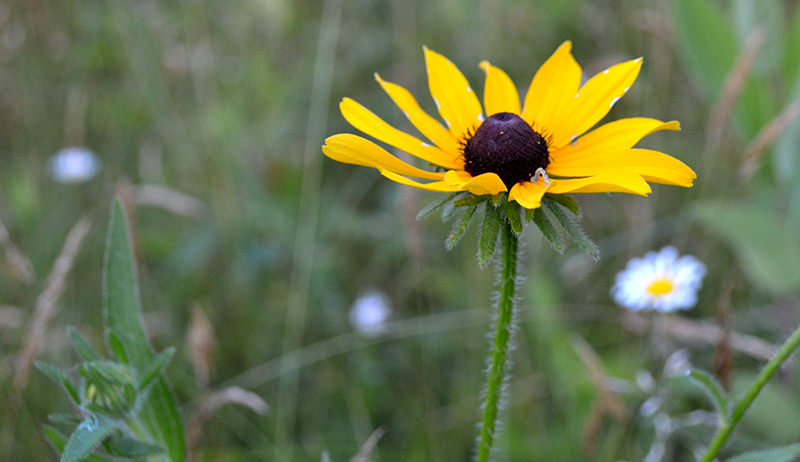
On move-in day, our property was awash with daisies, the cheery white flowers spread as far as the eye could see. Daisies soon turned over to butterfly milkweed, and then black-eyed Susans started punctuating the pastures. Now it’s all about wild bergamot, with clumps of the wild-headed purple flowers growing with abandon. Hidden among tall grasses, I’ve spotted St. John’s wort and cinquefoil, and not so hard to spot have been wild blackberries and autumn olives. Just now, ironweed is starting to show it’s colors, and I’m looking forward to what else is in store for late summer and fall.

Part of the fun of this little game is that I’ve gotten to identify plants I’d only read about in books or experienced in their dried form and learn more about how they can contribute to the health of our land and of our bodies. Do you want to join in the fun, too? Below is a selection of flowers I’ve spotted on my farm. Try to identify the flower first (I’ll provide some hints in the text below), and then slide the bar left to reveal the true identification. Tally up your correct guesses, and let me know how you do!

Wildflower No. 1


Hint: I learned to identify this flower a long time ago as a little girl. The legend behind the flower (aka wild carrot) says a member of royalty was sewing a particular garment when she pricked her finger and a drop of blood fell in the center. You can distinguish this flower from others in its family because of a little red flower found among the white.

Wildflower No. 2


Hint: The heads of this plant eventually develop purplish flowers that are arranged almost like a UFO. The spiky dried flower heads were once used to “tease” wool into fleece.

Wildflower No. 3


Hint: The wood of this evergreen is praised for its sturdiness and for the lovely scent of its wood. What you might not know is that the berries can be chewed to cure mouth sores or a tea can be made from them to expel intestinal worms.

Wildflower No. 4


Hint: A signature trait of this plant is the leaves, which grow in a cross shape and, when held up to the sun, appear to be perforated with a needle. You’ll likely be harvesting the blooms for a skin-relieving salve or anti-depressant tea around June 24, the birthday of its namesake.

Wildflower No. 5


Hint: This cheery yellow flower is cousin to the daisy and Echinacea.

Wildflower No. 6


Hint: This flower is a biennial. During its second year, it sends up a tall stalk with yellow flowers on it. All parts of the plant have a different medicinal use, from soothing earaches to calming coughs. It’s even known as nature’s toilet paper because of its soft leaves.

Wildflower No. 7


Hint: This is one of the hidden gems I found on the farm. An introduced species from Eurasia, it can be used as a poultice for cuts and wounds. A more mystical belief says it can be used in “love potions”—which I take as a good sign for Mr. B and me as we transition into life as newlyweds.

Wildflower No. 8


Hint: This is butterfly candy. While I recently learned that parts of the plant are edible, if you have any in your pastures, just let it be. The butterflies will thank you.

Wildflower No. 9


Hint: The root of this plant is known as poor man’s coffee, so if you’re looking to skip the caffeine, mix it with some roasted dandelion root in some tea for a farm-based bitter brew.

Wildflower No. 10


Hint: This is the plant I’m obsessed with this season. I love to say it’s Latin name because it rolls off the tongue so playfully. A plant in the mint family, it’s particularly helpful as a cough and cold remedy. In fact, I think I’m going to infuse some in our freshly harvested honey to have on hand for the winter.

Wildflower No. 11


Hint: This is another bee and butterfly favorite—in fact, just the other day I spotted a monarch caterpillar noshing on one. This plant is also known as pleurisy root because the root is helpful in treating lung and chest conditions. Avoid letting your animals graze on it, though, because parts of the plant can be toxic to them in its more mature stage.

Identifying Your Farm’s Plants

If you also want to learn more about what’s growing wild on your property, there are a number of resources that are there to help. I have a trusty regional plant identification book and tree dichotomous key that I consult for everything—I carry them with me when I’m out hiking. There are also some websites, including the USDA’s PLANTS Database and the Lady Bird Johnson Wildflower Center, that make excellent resources. For those tricky plants where you want a second opinion, check out a number of Facebook groups dedicated to plant I.D., including “Plant Identification,” “Plant Ident 101,” and “Edible Wild Plants.” And, of course, nothing beats hitting your land with an experienced forager, forester or naturalist—these people are a wealth of knowledge, and I always learn something new when I go on a hike with one of them.

I do want to point out that if you’re foraging plants for their edible or medicinal qualities, like I usually am, make sure you have a positive identification of the plant before you use it. Know the plants’ dangerous look-alikes—especially in the carrot family—and if you have any doubt about if it’s safe to consume, leave it for the bees and butterflies to enjoy.

Categories
News

Got A Mosquito Problem? Get Chickens!

We all know that chickens are good at cleaning up bugs in the run, but now new research shows that the simple fact that they are chickens could keep mosquitoes out of your way for good.

New research published in Malaria Journal found that the malaria-carrying mosquito species, Anopheles arabiensis, not only won’t bite chickens but are repelled by chickens’ odor. Scientists found that the blood-thirsty bugs want nothing to do with four chemical compounds, called volatiles, inside the chicken’s scent. In other words, the chickens smell pretty bad to them, and they steer clear.

Unfortunately, this particular mosquito species is native to sub-Saharan Africa, meaning that the mosquitoes in your area might not react the same way to your flock. However, scientists are using this info to do further research on how to repel mosquitoes from non-chicken species, like humans, and minimize the spread of malaria. We think that’s pretty cool. Hopefully, it can give researchers on this side of the world some insight on how to prevent other mosquito-spread diseases, like the Zika virus, and discontinue the summer ritual of scratching itchy bites.

Categories
Crops & Gardening

Fighting Weeds With Fire

Fire has been a driving force in nature for millennia. It shaped the Earth’s landscape and favored some plant communities over others. Humans learned to use fire to their advantage: Native Americans and early settlers used fire to clear land, attract or drive game, and foster agriculture. Fire was a staple of life.

The turn of the 20th century changed the public perception of fire. Catastrophic wildfires destroyed forests and homes, and a new era led by Smokey the Bear was born. Throughout the United States, fire was perceived as “bad,” and the use of prescribed burning for the management of land was dramatically reduced.

Modern agriculture progressed in leaps and bounds as fire found its way off the landscape. Mechanization and specialized cultivators and plows increased yields and helped control weeds. Over the last several decades, agriculture advanced to yet another level. High-tech herbicides and crops were engineered to defeat the pesky and profit-eating weeds. In many respects, they’ve been incredibly successful. Production has dramatically increased, and cost has remained relatively low.

As the old adage goes, the only thing constant is change, and it’s coming in multiple forms. First, the war on weeds is facing an evolving enemy. Years of herbicide use continue to build herbicide resistance in some weed species. People are changing, too. Pesticides and genetically engineered crops are falling out of favor in some circles. Organically grown crops are in greater demand, and home gardens are becoming more naturally managed.

Flame Weeding And How It Works

Fire has found a way to return to the land for agricultural purposes. Modern technology has dramatically changed its appearance, however. Thermal weed control, also known as flame weeding or flame cultivation, is a management technique using heat to kill weeds. Heat may be applied to plants in three primary forms: direct flame, steam and infrared. Each approach delivers foliar heat of approximately 212 degrees F for a fraction of a second (achieved by a 2 to 3 mph pace). Superheating the plant surface causes intracellular water expansion that ruptures cells. Three days after treatment, weeds are shriveled and dead.

Plants are most susceptible to flame weeding as seedlings. Treatment should be delivered when weeds are 1 to 2 inches tall. Broadleaf plants are easier to control than grasses because grasses have a protective sheath during early development; therefore, grasses might require a second treatment.

Effectively heated plants can easily be evaluated. Plants are not “burned up” from a thermal treatment. A simple pinch between thumb and forefinger will result in an imprint, which characterizes a lethally heated plant. Seed-bed preparation or hilling, like for potatoes, provides an ideal environment for flame weeding. The soil disturbance scarifies seed and fosters extensive weed germination. Over time, improved control can be realized by depleting the seed bank, and the thermal energy kills pioneer seeds on the soil’s surface.

Before You Start Flame-Weeding

Flame weeding can be used for just about any crop. It has been used in orchards, row crops, potatoes, cabbage and herb production without harm to yield. However, green beans are flame-sensitive, so treatment must be limited to pre-emergence only. Caution must be used with crops that have shallow root systems because thermal control can heat 1/4 to 1/2 inch of soil. Adjusting the angle of flaming and using shields can help protect sensitive crops.

Timing is a critical component, not only to control weeds but also to protect crops. Flaming can be used as a pre-emergent control with little risk. For example, onions with less than 2 inches of exposed growth can be thermally treated as the terminal bud remains below ground. Corn can also be treated when it is less than 1 inch tall. Potatoes are especially tolerant of heat treatments, but repetition can reduce total yield. Ultimately, experience will maximize effectiveness. Flame weeding is designed to control weeds and give the crops a competitive advantage. Finding that balance takes experience.

Thermal Weed Control: Then And Now

Believe it or not, flame weeding originates in the 1930s. It was commonly used in the production of cotton and sorghum until herbicides emerged. The widespread use of herbicides largely stalled the advancement of thermal weed control in the U.S., but by the 1990s, the technique had a rebirth with the expansion of organic farming.

Today, innovation continues making it more efficient and precise, and one of those innovators is Greg Prull, of Sunburst Inc., in Eugene, Ore. As a professional forester, he has more than 35 years of experience in integrated pest management that led him into the arena of flame weeding. He’s spent considerable time and effort innovating delivery systems designed for environmentally friendly weed control for railroads, roadsides, sports fields and crop systems.

When recommending a flaming system, he bases it on the size and shape of the area being treated. The delivery systems should match the circumstance to maximize efficiency.

The most practical units for hobby farmers are the manual hand-held torches, push cart or wagon. Flame Engineering’s Red Dragon line offers multiple hand torches of different sizes, including a novel backpack that helps carting fuel around more efficient.

“Our company focuses on ease of use that can be scaled up to the size of the job,” Mel Liman, Red Dragon representative, says. “Some torches can be quite intimidating, but our Mini-Dragon runs on a one-pound propane cylinder, which is safe and easy to use.”

The company also offers an adjustable hand cart intended to prevent compacting the seed bed.

Catching Fire

The use of open flames to control weeds does conjure images of igniting wildfires. However, the practice is quite safe. Most applications are deployed where dried plant material is absent or decomposed (cultivated soil, roadsides parking lots, et cetera). The weeds themselves are green and are heated, not burned, so most devices are designed with metal shields to control heat distribution to targeted areas, because fire risk is of little consequence. However, Sunburst’s push cart and wagon designs use a patented water-mist technology that maximize heat delivery to the plant surface while minimizing risk of unwanted fire.

If you’re interested in managing your hobby farm in an environmentally sensitive way, then thermal weed control is worthy of consideration. What’s more natural than fire? Pesticides certainly have a long and successful history, but they aren’t for everyone. Getting started in thermal weeding won’t break your pocketbook either. Five-hundred dollars could get you up and running. Expect a trial-and-error period when deploying this management tool, but compared to a hoe—need I say more?

This article originally appeared in the July/August 2014 issue of Hobby Farms.
Categories
Crops & Gardening Urban Farming

Save Time In Your Home Garden With Plasticulture

This summer, I knew that between my two jobs I’d be clocking 60 working hours a week. Still, as with every year, I wanted to have a productive vegetable garden. I needed a mode of cultivation that required the absolute minimum in terms of attention.

On a working trip to Italy, I stumbled upon an agricultural field that held the solution to my problem of being short on time, while rich in seeds, space and the desire to grow my own food: the field was covered in plastic mulch, using a growing strategy called plasticulture.

garden grown on plasticulture
Lynsey Grosfield

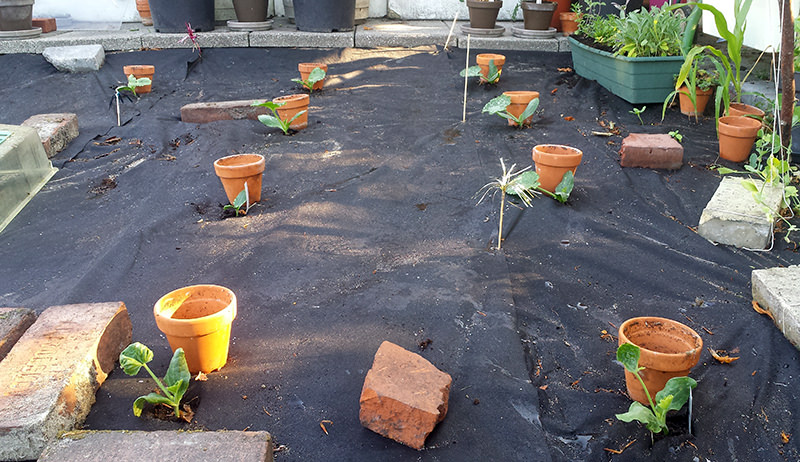
Normally this isn’t the most environmentally friendly gardening solution, as many agricultural plastics are one-time-use. To do plasticulture at home, however, I used polyethylene landscaping fabric, the kind that is supposed to last 20 years. I anticipate using the same plastic mulch sheets many times over.

Unlike soil solarization, which also used plastic sheeting, plasticulture is a method of growing crops. The goals are to physically (as opposed to chemically or mechanically) inhibit weed growth, prevent the evaporation of surface water, and create a warm microclimate of radiating heat from the black surface.

zucchini grown in plasticulture
Lynsey Grosfield

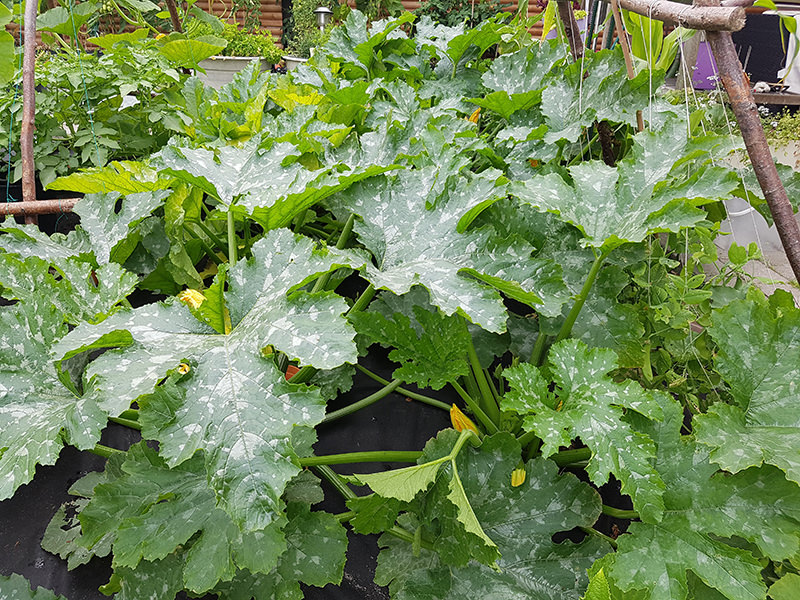
This year, I grew all my squash and pumpkins on landscaping fabric, irrigating and fertilizing them with aboveground clay pots, the drainage holes of which were aligned with holes in the fabric. The results have been impressive. Due to the lack of soil backsplash, I have yet to see common fungal problems, like powdery mildew, crop up. Additionally, the plants have grown rapidly, due in no small part to the warm microclimate the radiating heat of the black landscaping geotextile exudes after absorbing the sun’s rays.

Although home plasticulture may not be the most traditional—or even the most attractive—way to cultivate a vegetable garden, it is certainly a good solution for those of us who are pressed for time to do the regular work of weeding and watering.

Categories
Farm Management

How To Maintain Field Borders, And Get The Best Crops Possible

Modern farming practices are more expansive, high-tech and large-scale than the patchwork farms of yesteryear. Modern efficiencies and technology have increased yields, but bigger isn’t always better: Some contemporary techniques don’t always maximize production or foster good land stewardship.

Today’s row crops are often planted woodline to woodline, and farming on those treed edges robs crops of sunlight, nutrients and moisture. A quick stroll along those outer limits quickly reveals these realities. Plants are smaller and less vigorous, resulting in marginal yield.

Is the cost of soil cultivation, fertilizers, planting and harvesting worth the investment? Modern technologies are capable of mapping yield across the field. Every situation is different, but more often than not, the outer edge of the field is less productive. While the edge eats at the field’s profit margin, determining how far away from the edge to plant is difficult.

Visually taking note of edges can give you an idea of where production wanes—as a rule of thumb, the first 20 feet of edge likely has yields lower than the center.

Finding Good Use For Field Borders

There are a few options for those edges or field borders. Perhaps the easiest is to simply let the edge go fallow, allowing the seed bank to re-vegetate. Another option is to plant clover, which might help distract wildlife heading for your planted crops. Finally, a restoration of native warm-season grasses and wildflowers might earn you a conservation award by maximizing wildlife habitat benefits and helping out troubled pollinators.

Maintaining Field Borders

Like everything on the farm, your borders are going to need maintenance. The point of the border is to keep trees from sapping your crops, which means disturbing the ground to keep it in a grass and wildflower stage. Several tools are in the hobby farmer’s tool box to tackle this job, but the easiest, of course, is mowing. Break the border into blocks or strips and mow one-third of them each year. By year three, your entire border has been managed once. Continue this rotation, occasionally spot-spraying young trees to arrest their growth. If you plant clover, you’ll need to mow the entire border several times each summer to keep it growing vigorously.

If you have a fallow or native grass border, better options include controlled burning or disking. Create a two- or three-year rotation similar to the one for mowing. Get help from your state forestry division or fish and wildlife agency. If you’d rather not burn, a heavy offset disk is a great tool to consider. Mow the vegetation first to make your disking easier, then go over the ground at least once in each direction.

The Benefits Of Field Border Control

Field borders do more than save time and money: They can help curb soil erosion, filter nutrient-laden run-off and harbor beneficial predatory insects. Plus, they’re great wildlife and pollinator habitats.

But there’s one more big benefit: They can earn you money! The USDA Farm Services Agency has a program that pays you to install borders around your crop field called Conservation Reserve Program, and the practice is called “Habitat Buffers for Upland Birds.” Go to your county USDA office for more information and see if you’re eligible. You’ll be glad you did!

This article originally appeared in the July/August 2014 issue of Hobby Farms.

Categories
Animals Poultry

Your Easy-To-Follow Guide To Chicken Chores

Like any pets, a flock of chickens requires ongoing care. Because chickens are able to meet their own physical and social needs, caring for chickens usually demands less of your time than other domesticated pets do, but you’re also responsible for maintaining an environment where chickens can meet all their needs for a happy, healthy life.

If you’re new to chicken-keeping, here are some of the chicken chores you can count on being part of your routine. For the less frequent chores, mark your calendar or set an alert on your smartphone, so that you remember what needs to be done.

Daily Chicken Chores

Provide Meals

Check feed levels and offer fresh water first thing in the morning and again before dusk. Chickens should always have access to food (continuous feed year-round or structured mealtimes plus free ranging in the summer) and clean water. Chickens should also be able to access grit as needed.

Gather Eggs

Collecting the eggs several times a day, versus once a day or once every other day, keeps eggs clean, avoids breakage and encourages broody hens to get off the nest. It’s much easier to put away a handful of clean eggs (whether you wash them or not) than it is to gather two days worth of eggs that need to be scrubbed free of chicken poo. Periodic egg checks save time in the long run.

Tidy Up

Remove the dirtiest bedding every day and add clean bedding if it’s needed. Removing the overnight poo from below the roost will keep the coop smelling chicken-fresh, and it will discourage flies from breeding in the coop.

Weekly Chicken Chores

Inspect The Flock

Give the girls (and boys) a good once-over for any signs of illness, injury or infestation.

Change Bedding

Remove all the bedding you’ve been tidying up over the course of the week, and replace it with clean bedding. Changing bedding weekly helps keep the coop free of parasitic pests and other invasive critters. It also removes moisture from the coop that allows bacteria to thrive and that promotes dangerous frostbite in the winter months.

Rake The Run

If your run is fixed (versus mobile), keep the run tidy by raking out chicken waste and any wet/dirty ground material, like straw. Buildup of moisture and chicken waste creates an environment where disease thrives. From intestinal worms and external parasites to respiratory infections and bumblefoot, chickens are at risk on a filthy run floor. Keep it clean.

Monthly Chicken Chores

chicken chores
Rachel Hurd Anger

Assess the Seasons

Like gardening, keeping chickens emphasizes the nuanced differences between each month of the year. When the pest population is high and the grass grows too fast, chickens can eat less feed. When the summer becomes hot and dry, fewer and/or different pests are available, and the grass slows, more feed is required. Every month of the year demands tweaks in daily and weekly chicken care. Only you can determine these changing needs in your flock based on your climate.

Twice-Annual Chicken Chores

Scrub the Coop

Clean the coop with soap, water and a scrub brush every six months. I prefer to use plain old dish soap. Soap will kill pests but not the grass. Once the coop is completely dry, dust its nooks and crannies with food grade diatomaceous earth (DE) to help stop insects from moving in.

Fill The Bath

Freshen up the dust bath with peat moss, wood ash and sand. Peat moss absorbs oils from the skin, wood ash coats the skin with a barrier that deters parasites, and sand helps to weigh it all down.

Allow Garden Access

Spring and fall garden cleanup exposes the flock to a boost in dietary protein and to edible greens. Chickens also help turn soil and organic matter. Chickens are voracious eaters and unparalleled garden workers.

Annual Chicken Chores

Make Repairs

Keep the coop in tip-top shape to discourage predators and infestations and to keep chickens clean and dry.

Categories
Farm Management

3 Ways To Protect Grassland Birds On Your Farm

Grassland birds are a cornerstone of Great Plains ecology. Forty-two species call American grasslands home, from smaller birds, like the Eastern meadowlark and Henslow’s sparrow, to larger ones, including the ring-necked pheasant and the sharptail grouse. Unfortunately, their habitat is being threatened dramatically by the spread of human development, both rural and urban—the Wildlife Conservation Society acknowledges that these birds are the most threatened group of species on the continent.

The State of the Birds 2013, a joint report on the status of birds and bird habitats on private lands for 2013, says that grasslands cover 358 million acres of the U.S., and 85 percent of that landmass is privately owned. Because these species nest on the ground and so much of their habitat is not in the public sector, a good portion of the conservation burden lies on the farmers and ranchers who own these grasslands. Here are a few ways to promote grassland bird habitat on your farm without hampering your farm’s production.

Promote Refuge Areas

Patches of uncultivated land make a perfect habitat for grassland birds. According to the Michigan State University Extension, keep sections of uncultivated land next to pastures and fields instead of row crops, woodlots and residential areas to maximize the number of bird species that can nest in an area.

Plant Native, Warm-Season Grasses

The initial cost of planting warm-season grasses, such as Indian grass, switchgrass and big bluestem, is higher than that of their cool-season counterparts, but converting a portion of a cool-season field or pasture—the MSU Extension recommends one-fourth to one-third of a field or pasture—can pay for itself and then some. The conversion will give your livestock a wider variety of forage throughout the year, in addition to a longer period of grazing for animals while also promoting grassland-bird habitat in the spring nesting season, when it is most valuable. Finally, warm-season grasses native to your area will likely be hardier and less susceptible to pests and diseases than their non-native counterparts.

Mow Rotationally

To reduce grassland-bird mortality, mow fields and pastures outside of nesting season, which runs from April to August for most species. If this isn’t an option, minimize the number of mows during this time. Implementing a rotational mowing plan, where you mow one section of a fallow field or grassland once per year, minimizes habitat disturbance and allows the plants to have varying age structures, which in turn provides nesting ground for a wider variety of birds—some species, such as the killdeer, nest in grass shorter than 6 inches, while others, including the dickcissel, require more than 2 feet.

Grassland birds contribute to biodiversity, and their habitat aids in improving water quality and watershed health, so promoting habitat on your farm can benefit both birds and farmers, both in the short term and the long run.

This article originally appeared in the July/August 2014 issue of Hobby Farms.

Categories
News

700 Farm Animals Evacuated In California’s Sand Fire

The Sand Fire, which has burned 37,473 acres in the Santa Clarita Valley, is among the worst fires that California has ever seen, according to firefighters in the area, and more and more lives are increasingly becoming affected. Through the efforts of Society for the Prevention of Cruelty to Animals Los Angeles (spcaLA) and the Hansen Dam Equestrian Center, more than 700 horses, goats, chickens and other farm animals have been evacuated from Sand Canyon to safer pastures.

“Animal rescue is one piece of a very sophisticated puzzle in a disaster,” says spcaLA president Madeline Bernstein in a press release. The organization works alongside and communicates with other first responders and emergency personnel to share critical information in getting both humans and animals to safety.

The spcaLA has deployed their Disaster Animal Response Team to help keep the animals safe, and it’s likely that they’ll be working in the coming days to relocate many more due to difficulty of area responders to get the Sand Fire contained.

If your farm is in an area at risk of wildfire, it’s important that you have a disaster kit on your farm ready and that all individuals involved with the farm know how to employ. For more information on keeping your animals safe during a natural disaster, check out these HobbyFarms.com articles: