Categories
Beginning Farmers Farm Management

What Do You Do When Your Cats Are BFFs With A Raccoon?

Upon coming to the farm, I knew animals would be a big part of life here. Of course, my pudgy indoor cat, Kat, moved in, and with the property, we inherited two supposed “farm cats,” Jackson and Linny, who don’t take their jobs as mousers too seriously. There are also plans in the works for ducks and chickens and potentially other farm animals.

And then there’s Ralph, our resident raccoon.

Let me preface this post by saying I understand the socially acceptable relationship between people and wild animals, despite my suburban origins. Mr. B and I are nature lovers and want to promote a diversity of wildlife on our farm to maintain a thriving ecosystem, but we also understand that healthy boundaries need to be maintained between us and the creatures that crawl our land. (No figurative bison selfies for us, thank you.)

Ralph, on the other hand, doesn’t quite accept those boundaries. And given the fact that we’ve named him—or her—you know where this is going.

We met Ralph in an encounter that startled both parties. Mr. B opened the door to our porch, and there was Ralph, a juvenile raccoon, face first in the cats’ water bowl, with Jackson and Linny lounging nearby watching. Yelling and stomping ensued, throwing everyone in a tizzy, though it wasn’t quite the discouragement Ralph needed to keep his distance.

Every evening, when I have three cat faces begging me for their dinner, I can sense another set of eyes watching me from the distance. And sure enough, when dusk casts its shadow over the farm, our uninvited guest comes to join us for the feasting.

I have to be honest: I find little raccoon faces incredibly cute. I also have an unrelenting curiosity for the nature around me. So, maybe I haven’t done my due diligence in putting this critter in its place. Despite a minor scuffle between Jackson and Ralph that was all attitude and no substance, the raccoon hasn’t caused any trouble besides the constant attempts to nibble on the cats’ leftovers, so from time to time, I like to observe this creature’s behaviors.

Ralph is quite intelligent. He’s learned our habits, and I think the cats have taught him the ways of the humans who own this place … like if you give them sad kitty eyes they’ll cave to anything. (Not quite true.) He doesn’t like to ruffle feathers, and he keeps a cautious distance from those bigger than him. The cats seem to be OK with him, which I know isn’t a good thing, but I get the sense that they consider him one of their own—like one of their wild redneck cousins.

Nonetheless, we have graduated from clapping and stomping to pan-banging to run him off our porch because the milder approach was becoming ineffective. The first time we dragged out the cookware cymbals, he scurried up a tree, sitting on a branch where he could safely observe us through our kitchen window. (I know it’s a raccoon, but I felt oddly creeped out by the notion.) We watched each other for a while, a pane of glass and several tree branches between us, but as soon as he noted that the crazy lady who makes loud noises had lost interest, there he was again, back on our porch, nearly nose-to-nose with our indoor cat (thankfully through a screened door), who also has become fascinated by the new animal that has started making himself at home here.

Now, I realize Ralph’s behavior can’t go on forever. Soon this smallish raccoon will grow into an adult and we’ll have bigger problems on our hands: aggressive behavior, diseases, home damage, helping himself to our kitchen like a teenage boy. (You never know—they’re geniuses with food on the brain!) Plus, we can’t have him going face-to-face with our future chickens. If necessary, we may have to take drastic measures to keep him away from our home and animals, but the thought of that breaks my heart, so I hope it doesn’t come to that. Please, Ralph, go back to your home in the wild peacefully and willingly.

Have you dealt with a raccoon who started getting a little too close for comfort? What did you do to discourage it?

Categories
Crops & Gardening

7 Of My Favorite White Eggplant Varieties

Eggplants are a topic I’ve covered before, but today I’d like to introduce you to a few of my favorite unconventional eggplant varieties. While large, purple eggplants are certainly wonderful additions to the garden, if you haven’t grown white eggplants before, you may want to give them a try.

In my experience, white eggplants have a slightly different texture than their purple kin, and I also love the way they look in the garden. I’m particularly fond of elongated varieties, which have perfect, snowy white fruits that hang delicately from the plants. Everyone who comes to my garden asks about them, wondering where they came from and what they taste like. They’re also a hot seller at the farmers market. Here are some varieties to try.

1. Snowy

This beauty produces elongated eggplants that are about 8 inches long at maturity. Harvest while the skin is still shiny and blemish-free. The texture is firm, and it cooks great. The plants don’t need to be staked and are well-suited for growing in the ground or in containers.

2. Casper

Many consider Casper to be the standard of white eggplants. This 6-inch-long, Japanese-type eggplant is highly productive, often producing right until frost. The flesh is mild flavored—it almost has hints of mushroom with absolutely no bitterness.

3. Japanese White Egg

This cute little teardrop-shaped eggplant is early-maturing, and each plant makes dozens of pure white, 2- to 3-inch-long fruits. We love to slice them in half and put them on the grill. The flavor is classic eggplant. This is a great variety for households with only one or two eggplant lovers—nothing will go to waste.

4. Thai White Ribbed

A funky-shaped eggplant, the fruits of Thai White Round look more like white heirloom tomatoes than eggplants. They’re flattened spheres with deep ribs. I’ve only been able to find seeds at Baker Creek Heirloom Seeds, and I’ve only grown them once, but we enjoyed the mild flesh and unique fruits of this variety.

5. White Star

A hybrid variety with great disease resistance and good production, White Star is fairly sweet-flavored and makes an excellent harvest when picked as either baby eggplants or when the fruits reach maturity. The fully formed 7-inch-long, tear drop-shaped fruits are meaty and should be harvested before the skin starts to yellow.

6. White Comet

Another hybrid selection, this Japanese variety produces long, tapered fruits. There’s no bitterness at all and very few seeds. I find the plants themselves to be quite beautiful. The leaves are a dark green with purple ribbing and stems, and the purple flowers are striking, especially when white fruits are also present.

7. Gretel

The final white eggplant variety I’d like to introduce you to is certainly one worth growing, especially if you garden in containers. Gretel’s fruits are small and finger-shaped, and the plants are short-statured and highly productive. The fruits are bitter-free and tender; we love to grill them whole.

Give a few of these white eggplant varieties a try in your own garden and let us know what you think.

Categories
Animals Large Animals

Protect Your Goats From CAE

As a new dairy goat breeder, I’m concerned about caprine arthritis-­encephalitis syndrome affecting my herd. How can I protect my goats from this specific infection and what are warning signs of the disease?

Caprine arthritic-encephalitis (CAE) virus was initially reported in the early 1980s from young goat kids with neurologic symptoms resulting from encephalitis, aka inflammation of the brain. Coincidentally, mature goats were also developing arthritis, which would result in some goats going lame. Any joint can be affected, but the carpal joint appears to be most commonly affected.

A warning sign of the disease, especially in kids, is lameness; however, this can be variable, with some goats appearing to experience discomfort, while others walk soundly despite considerable enlargement of the joints. In addition to the two aforementioned symptoms, described clinical features of CAE syndrome, indurative mastitis (hard udder), interstitial pneumonia and progressive weight loss, have also been reported. In kids, depression, head tilting, circling, leg paralysis, body temperature increases and even blindness might also be observed clinical symptoms. Affected kids are generally humanely euthanized but oftentimes die of secondary causes, such as pneumonia. With adult goats, chronic polyarthritis pain is usually an observable sign, along with synovitis and bursitis. Infected goats also lose body condition and show coarse, dull coats.

Differentiating infection from disease is vital. It is estimated that up to 85 percent of goats don’t show clinical symptoms but rather act as a reservoir of infection to the population at large. A subpopulation of goats (approximately 10 percent) actually demonstrate the aforementioned various clinical symptoms—i.e., disease.

Since the advent of the initial serum assay, there have been progressive developments, so that new generation serology tests use the ELISA (enzyme-linked immunosorbent assay) test, which has extraordinary accuracy (99.6 percent specificity and 100 percent sensitivity). With the ELISA, it’s recommended that all resident goats in the herd be tested to achieve a CAE-free population if that is the goal of the owner. Once this is accomplished, strict biosecurity is implemented, which means all incoming goats are tested twice 30 days apart, before adding them to the herd. Sometimes it might be impractical to remove all CAE-infected goats, so heat-treating colostrum and discontinuing use of common needles and instruments between goats is recommended as they are the most common means of spreading the virus.

More recent information has verified earlier reports of interspecies spread of CAE virus and a related virus in sheep, referred to as ovine progressive pneumonia virus. Together the group of viruses is referred to as the Small Ruminant Lentiviruses. This is important when goat producers comingle their goats with sheep, as it means that both populations of animals should be tested as one group of animals. No vaccine is available for either CAE virus or OPP virus; therefore, control is dependent on herd testing using a reliable laboratory and strict bio-security when adding new replacement animals. There is no serologic or clinical evidence that humans are susceptible to CAE virus.

This article was writted by Jim Evermann, professor of Infectious Diseases, Department of Veterinary Clinical Sciences and Washington Animal Disease Diagnostic Laboratory College of Veterinary Medicine at Washington State University, and was vetted by Dr. Lyle G. McNeal.

This article originally appeared in the July/August 2014 issue of Hobby Farms.

Categories
News

P.S. Kissing Chickens Can Still Make You Sick

We know you love your chickens, and sometimes that means snuggling with them. Do what you want—we won’t stand in your way—but do hear this: More and more backyard chicken keepers are contracting salmonella from their birds through lip to beak action.

More than 600 people across 45 states have gotten sick from interaction with their chickens this year, according to reports this week from the Centers for Disease Control and Prevention. This is the highest illness rate connected to live poultry, with a 2013 illness count of 579 being a close second. And the year’s not even over yet!

Before you shut down you shut down your computer and swear off Hobby Farms forever, hear us out: The government is not telling you what to do! Kiss your birds all you want if that’s what you’re into. Just know that if they’re sick, you could get sick, too. That’s why we promote things like backyard biosecurity and not wearing boots you wore on a neighbor’s chicken farm around your birds. You take good care of your flock, so there’s a good chance they’re perfectly healthy. But if they’ve caught some germies, it’s better to be safe, right?


Categories
Homesteading

What To Expect When Transitioning To Rural Schools

While my spouse and I dream of moving to a farm property, we’re concerned about how our suburban kids will adjust to a rural schools. Do you have any advice for easing the transition and tips for commonly overlooked issues?

First off, your family will undoubtedly be warmly welcomed and embraced by your new school system. With enrollments generally declining in rural schools, new families bringing fresh faces and warm bodies into the classroom typically encounter administrators and teachers willing to go out of their way to help make the adjustment comfortable.

That said, there are some differences you’ll find in a rural school district, particularly related to bus routes.

Longer Bus Rides

Gone are the days of a short walk or bike ride to school. Your kids’ commute time to the classroom could last an hour or more each way. Time on the bus depends greatly on where you’re located on the bus route. If you find your farm is the first early-bird pickup in the morning, see if you can negotiate a reverse bus route on the way home so your kids would be the first drop-off.

You could drive the kids to school, but that leads to a bigger question: Why did you move to the farm in the first place? Most likely it was because you wanted to get out of the driving and commuting habit and be able to spend more time developing your farm operation. When you add up the round-trip drive time to make two trips into town, plus the gas and wear-and-tear on your car, is it worth it?

Mixed Age Groups

Most likely, there will be one school bus coming to your house that will be filled with kids of all ages, from kindergarten through high school. It’s something for you and your kids to be aware of if they were used to being on a bus with similar age groups.

Making The Transition

Don’t forget the advantages of rural school-bus routes: Buses pick up right at your driveway, and during inclement weather, your road might rank one of the first to plow, as school-bus routes have priority.

The key to a successful transition is understanding and working with the needs and personalities of your individual kids. Does your daughter have a harder time making friends in new situations? It might be better to time the move when she would be changing to a new school, such as from elementary to middle school, to ease the move. Because rural schools have lower populations, there are usually plenty of opportunities to join various sports and extracurricular activities. Encourage your child to connect with a few activities right away to avoid feeling isolated and out of place.

A positive perk for kids can be to have something to personally look forward to when the farm move is complete—something that perhaps they weren’t able to do back in your urban or suburban days, like raise their own flock of chickens or take care of a larger pet dog. Even something that you didn’t have space for before, like a trampoline, adds anticipation and appreciation to the farm move and gives kids something to look forward to and enjoy on a daily basis.

This article appeared in the July/August 2014 issue of Hobby Farms.

Categories
Animals Waterfowl

What Is Fowl Cholera & Should I Be Concerned?

Avian cholera, aka fowl cholera, has been recognized as a distinct disease associated with domestic fowl and poultry for more than 200 years. The first reports of avian cholera in North America from wild waterfowl occurred during the 1940s in Texas and California. Avian cholera is a common name used for overwhelming systemic infections with the bacteria Pasteurella multocida in ducks, geese and swans. Waterfowl with avian cholera die acutely and peracutely, sometimes literally dropping from the sky, and are almost always in good to excellent body condition. Epidemics are reported yearly in wild waterfowl, but it can occur in parks, zoos, domestic flocks and backyard ponds, too.

Most current evidence suggests that the P. multocida that adapted to waterfowl came from domestic turkeys or chickens, where it had been a recognized cause of disease for many years. The bacteria have been found to survive in the soil between 15 to 113 days, depending on environmental conditions.

P. multocida are ingested or inhaled, and the bacteria colonize the upper respiratory tract and invade the bloodstream, where they reproduce in large numbers and are spread to all the body’s organs. The gross lesions consist of multiple small (pinpoint- to pencil-lead-sized) hemorrhages across the surface of the heart and on great vessels, with multiple small, white spots (septic infarcts) across the liver. One problem with taking shortcuts when diagnosing avian cholera is that two dangerous viral diseases, avian influenza and duck virus enteritis, cause similar, often indistinguishable gross lesions and can occur under the same circumstances. P. multocida has 16 known serotypes and at least 29 different combinations; accurate diagnosis thus depends on isolation and identification of the causative organism.

The bacteria is infectious and spreads rapidly from bird to bird in crowded situations. They can live in feces and mucus from dying ducks for hours to a day or more, and aerosols created by ducks and geese can contain and spread the infection. Some of the symptoms or signs to look for are ruffled -feathers; loss of appetite; diarrhea; coughing; nasal, ocular or oral discharges; swollen wattles and face; swollen joints; lameness and sudden death.

A number of drugs, including sulphonamides, erythromycin, streptomycin, penicillin and tetracyclines, will lower mortality from fowl cholera; however, deaths might restart when treatment is ceased, which demonstrates that treatment does not eliminate P. multocida from the flock. If caught early, it can be treated with injections of long-acting antibiotics. Traditionally, drugs and medicated food or water over several weeks were the preferred treatments for caged birds, but newer, long-acting cephalosporins might be more effective, though significantly more expensive.

Disinfection using bleach or other antibacterial compounds, which might be possible in concrete small pens, is impractical and ineffective in complex environments with a lot of organic matter. Eradication of infection requires depopulation, cleaning and disinfection of housing facilities and all equipment used, including feeders, waterers and buckets.

In the end, prevention is the best measure, which could include the following practices: biosecurity, rodent control, overall hygiene, bacterins at 8 and 12 weeks of age, and live oral vaccine at 6 weeks of age. Before using any bacterins or live vaccines, it’s strongly recommended you contact your local vet or your state veterinarian for someone with avian medicine expertise.

This article was written by David A. Jessup, DVM, executive manager, Wildlife Disease Association, with additional information and vetting provided by Dr. Lyle G. McNeal.

This article originally appeared in the July/August 2014 issue of Hobby Farms.

Categories
Crops & Gardening

Holy Basil: A Garden-Fresh Approach To Stopping Diabetes

‘Tis the season for garden-fresh pestos, and with so many varieties of basil out there, it’s easy to make a unique variety most nights of the week. In fact, I came across 38 different types of culinary basil when preparing this piece, but there’s one type that particularly fascinates me: holy basil.

Growing Holy Basil

Holy basil (Ocimum sanctum), also called tulsi, is in the same genus as sweet basil. The plant looks a lot like our common garden basil, but its stems and leaves have purple undertones. Holy basil is easy to grow and can be transplanted from seedlings or direct seeded in a shallow bed. The plant likes full sun and a lot more water than we are presently getting here in Ohio. It will only overwinter in zones 10 or 11, so in temperate zones, you’ll need to bring a plant or two in to enjoy when the snow flies.

Holy Basil’s Health Benefits

I’ve been using holy basil a lot in my family apothecary. It is considered an adaptogen and has a long list of benefits. In Ayurveda, holy basil is classified as a rasayana, meaning it nourishes the body, encourages health and leads to a long life. The plant is known to be anti-inflammatory, good for the digestion, supportive to the nervous and circulatory systems, antimicrobial and immunomodulatory. I have been using it for its anti-diabetic properties.

Holy basil has been extensively studied and has been shown to lower blood glucose levels, as well as the high triglycerides and cholesterol that tend to accompany type II diabetes. My mother, who is a diabetic, has used holy basil as part of her daily regime for over a year with good effect.

As a bonus, holy basil has been tested in those who are concurrently taking diabetic medication. This is a really important note, as some herbs that are used for blood sugar control are not safe to use in those who are already on a prescription. While I tend to feel most things are safe in moderation when enjoyed in food, that might not always be the case when it comes to this sort of interaction.

Happily, there is not much of concern in holy basil. With centuries of human use and a slew of modern clinical research, we know a fair bit about this plant. Not only can it be tinctured and encapsulated, but it tastes wonderful. Holy basil has a bit of an anise-like flavor that works well in a delicious tea all on its own or when added to any number of culinary treats. I like a bit gathered fresh from the garden as an after dinner soother. One of the cuisines it excels most in is Thai, so I here’s a holy basil pesto that you can use to top rice noodles.

Holy Basil Pesto

Ingredients

  • 1 cup holy basil
  • 1/2 cup cilantro
  • 1/4 cup cashews
  • 1/2-inch piece of fresh ginger, outer bark removed
  • 1/2 cup Parmesan cheese
  • olive oil
  • salt and pepper to taste

Preparation

In a blender, purée holy basil, cilantro, cashews, ginger and Parmesan. Pour in olive oil until you reach the desired consistency. Add salt and pepper to taste. Serve immediately or freeze for later use.

Categories
Animals Poultry

Myth-Busting The Egg-Eating Hen

The first time I dropped an egg I’d collected from the coop, the pullets flocked to the egg and devoured it entirely within seconds. Like some kind of illicit drug, this first taste of delicious egg is said to be the gateway to long-term egg eating inside the coop.

The same is said for any intentional egg feeding, but many chicken keepers feed excess eggs for additional protein during a summer molt, or they will cook up some eggs for winter warmth and enjoyment when dry feed is the only food on the menu. It’s a controversial practice for those who experience egg-eating troubles, but egg-eating likely isn’t the real problem, rather it’s a symptom of something bigger.

Ensure Privacy

Chickens prefer to lay eggs in strict privacy. Nest boxes should be easily accessible, dim, quiet and calm. In my egg-gathering experience, my flock leaves its eggs alone in the nest box until I open the door and let the light inside. Once the eggs are in the spotlight, perhaps they’re rushing to protect them, or to destroy them rather than allow them to be taken when the eggs are vulnerable. During certain times of the year, especially when my Australorp is broody, the flock is more likely to try to destroy the eggs when I collect them—it’s necessary to lure the flock elsewhere with treats before I collect eggs sometimes. Other times of the year, they don’t seem to mind so much.

Weakened Eggs

What looks like egg eating could be nothing more than accidental breakage. If a hen’s egg breaks, she’s unlikely to waste the magic elixir inside. For chickens, anything and everything edible is fair game. If you find a broken egg inside the nest box with its insides missing, inspect the shell that’s left. Is it thin, soft or otherwise different than the shells of other eggs you’ve collected and cracked? Is the bedding underneath soaked with egg, suggesting breakage, or does it appear to be eaten from the top with clean betting underneath?

Calcium Supplementation

The hen laying weak eggs might not be getting the calcium she needs. Offer free-choice oyster shell grit to the flock if your feed doesn’t contain all the calcium a flock needs. Some feeds specifically note not to feed extra calcium, so be sure to read the bag.

It’s important to understand how calcium absorption works. Dietary calcium doesn’t go straight to the reproductive system. Chickens absorb calcium from the diet to build strong bones first, and then the reproductive system pulls calcium from the reserve in the bones and repurposes the mineral for building strong eggs. If a hen is eating eggs and most of the shell is also missing, she might be trying to supplement herself with calcium.

Consider The Diet

If the flock is eating too many kitchen scraps and not enough of their feed rations with added calcium, limit or temporarily eliminate kitchen scraps from the diet until the egg quality increases. Also, consider whether the flock is eating enough feed. If you’re rationing feed to control costs, but you’re not feeding them enough, hungry chickens will eat eggs. Hungry chickens could also be calcium deficient.

Aging Hens

Older hens producing thin-shelled eggs might not be able to produce stronger eggs. As a natural side effect of the aging process, chickens can become limited in how much calcium they’re able to draw from aging bones to deposit into their eggshells. Gathering eggs quickly and handling them with figurative kid gloves can be the only way to handle these eggs. Some people might advocate culling the old hens that are producing poor-quality eggs, but I won’t advise that—there’s more to a quality chicken life than laying eggs.

Collect Eggs Promptly

Because chickens enjoy sharing a favorite nest box or two, it’s unlikely that you don’t have enough nest boxes, unless your flock is large. To stop hens from walking back and forth over a pile of eggs like a doormat, collect eggs often. If you know you’re getting a dozen eggs a day, for example, it’s wise to collect eggs several times throughout the day in order to get the cleanest, highest quality eggs possible. This practice will help save delicate eggs from being broken and eaten by the flock.

My own flock eats eggs because I offer them as treats, but we’ve never developed a serial nest box egg eater. If you’re inclined to feed eggs for protein or to recycle calcium by offering eggshells to the flock, there’s no reason to hesitate. It’s a myth that feeding eggs leads to egg eating. Egg eating is most often a symptom of another problem.

Categories
News

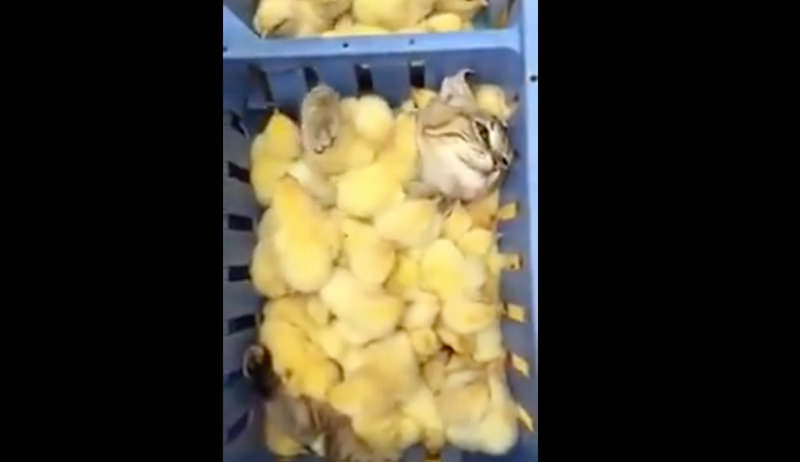
This Gives A New Meaning To Feather Duvet

You love your farm cat because it catches mice and other nuisance rodents. You love your baby chicks because—well, they’re baby chicks. However, usually you keep the two pretty far apart for obvious reasons.

In this video, this cat and box of chicks defy all expectations of the feline-chicken relationship. The cat is content to bask in the cuddles of it’s peeper companions, no threat of predation to be found. I mean look at its face—absolute bliss.

Isn’t it great when our farm animals all get along. Post a pic of a pair of your unlikely animal friends and it could make an appearance on HobbyFarms.com.

Categories
Equipment Farm Management

Keeping Your Fields Tree-Free

When people think of weeds, they tend to think of thistle plants, invasive species and such, but because the definition of a weed is “a plant growing where it’s not wanted,” it’s possible for any plant to be considered a weed. And believe it or not, if you live on a farm, that can include even the best of trees.

Speaking from personal experience, I know that trees can be troublesome. If you have fields that border a forest or even just a tree line, it’s only a matter of time before seedling trees start popping up on the edges of your fields. Over time, more and more seedlings will gain a foothold and start a steady, stealthy advance across your fields, reducing the amount of space for your crops, as well as hiding the beautiful mature trees behind an unattractive wall of seedlings and saplings. That’s why you’ll want to work diligently to keep your fields tree-free.

The Tools You’ll Need

Having spent more time than I care to count waging the war against encroaching trees, I’ve experimented with using many different tools and techniques for keeping them under control and have finally settled into a rhythm that is fairly simple and straightforward.

To determine the best way to approach the job, you have to know the size of the trees you’re dealing with. Tiny sapling trees that are only a year or two old can easily be handled with a tractor-pulled mower or even a large lawnmower, but if they’re any larger, you’ll need to cut them by hand close to the ground so that you won’t leave behind sharp, ragged stumps. A pair of pruning shears will do a fantastic job, but don’t skimp on size—get a large, strong, powerful pair that will last a long time and cut through just about anything you might encounter. Weight is also a consideration, as heavy pruning shears can get tiresome to handle. A lighter pair will help save your strength.

Maintaining Cleared Fields

If the trees you’re cutting are several feet tall, it can be helpful to work from the mature trees outward, since the young trees will be leaning away from the large trees and won’t have as many branches on that side, making them easier to cut.

Once you’ve got the trees cleared, you might think that the job is done, but unfortunately, that’s not the case. Hardwood trees can sprout new growth from their roots, sometimes in an incredibly vigorous manner, and within weeks you might find that the trees are coming back thicker than ever.

When this happens, it’s time to bring in heavy machinery! A regular lawnmower or a hand-pushed mower will easily eat through the thin, delicate stems of the fresh growth and will get close enough to the ground that it won’t leave behind any stems. A hand-pushed mower can be particularly useful since you can get in between and very close to the larger trees.

The trees will attempt to come back for a few more times, but if you keep your eyes open and mow them down as soon as they start to sprout, they will eventually run out of energy and go away for good, keeping your field edges under control and as beautiful as ever.