Categories
Recipes

Launch a Business From Your Farmstead Kitchen

We’ve long-written about the joys of preparing our own meals, often with farm-fresh produce grown ourselves. Many people who enjoy cooking as much as we do have started earning a profit from their home-cooking, thanks to cottage-food laws in effect in 42 states, making it possible to sell homemade goods to to the public.

We just finished giving a presentation this week in Florida, one of the states with the most flexible cottage-food laws in the county. Our attendees could pick up some flour, sugar and salt on the way home and bake a batch of cookies to sell at the Sunday Las Olas Sunday Farmers’ Market in Ft. Lauderdale. Is this something you’ve considered doing?

Cottage foods laws have largely come about as a result of the Great Recession, as a way to encourage small, home-based entrepreneurs. Depending on your state, these laws only apply to “potentially non-hazardous foods”—those that are either low-moisture products (cookies, cakes or breads) or high-acid foods (jams, jellies and preserves). Additionally, most states clearly define what other products you can sell, the venues where you can sell, and how much you can earn each year. Each state, however, requires certain information be printed on your product label, including a line that says something like “Not prepared in a state-approved commercial food facility nor subject to state inspection.”

What’s not covered by cottage-food laws are products that involve refrigeration, food service (including catering) or, in most cases, wholesale goods. Like selling fresh produce at a farmers’ market, your cottage foods must be sold directly to your customers. Check with you’re state’s law for specifics before you begin to sell.

If you love cooking, perhaps it’s time to start selling what you love to make. Below are our recipes for Pita Bread and Pita Chips. Pita chips are an increasingly popular specialty food permitted by many cottage-food laws. In Florida, you cannot sell pickles or anything liquid under cottage food laws, but the pita chips below are perfectly legal—just bake, weigh, bag, label and sell. We cover a lot more of the details in our newest book Homemade for Sale.

Recipe: Pita Bread

Courtesy Farmstead Chef, by Lisa Kivirist and John D. Ivanko

Yield: 6 pitas

Ingredients

  • 2¼ tsp. dry active yeast (one 0.25-ounce package)
  • 1¼ cup warm water
  • 2 tsp. salt
  • 3 cups flour
  • 1 tsp. canola oil

Preparation

In bowl of electric mixer, mix yeast in warm water. Let stand five minutes. Stir in salt and enough flour to make soft dough.

With dough hook of mixer on low speed or by hand on a floured surface, knead dought about 8 minutes until smooth and elastic. Do not let rise.

Divide dough into six equal pieces. Knead each piece individually for one minute.

Roll each piece into 5-inch circle. Sprinkle flour on baking sheet. Place circles on baking sheet, and let rise in a warm place until doubled, about one hour.

Flip circles and place upside down on lightly oiled baking sheets. Bake at 500 degrees F for 5 to 10 minutes. Remove from baking sheets and cool on wire racks.

Recipe: Pita Chips
Courtesy Farmstead Chef, by Lisa Kivirist and John D. Ivanko

Yield: 36 crunchy, salty chips

Ingredients

  • 6 pitas
  • 1/2 cup olive oil
  • 2 tsp. salt, garlic salt or seasoned salt
  • 2 tsp. dried herbs, like oregano and basil

Preparation

Cut each pita into six pie-shaped slices. Mix olive oil, salt and herbs. Using pastry brush, brush oil mixture on one side of pita slices.

Place slices on cookie sheet and bake at 350 degrees F until they start to crisp, about 10 minutes. Watch closely to avoid making them too crispy or burnt.

Flip chips over, brush again with olive oil mixture, and bake for about 5 more minutes until crispy.

When out of oven, brush one more time lightly with olive oil.

Categories
Crops & Gardening

5 Herbs to Grow for Summer Barbecues

This afternoon our family went out for a treat. We headed to a celebrated local food truck here in Columbus, Ohio, called Ray Ray’s Hog Pit. On Sundays, they offer grassfed brisket, and as I devoured my tender and delicious plate of ribs, I began to ponder the phenomena we call barbecue here in the United States.

I’ve often lamented that our cuisine in America is lacking the completeness of others around the world. I looked at the traditional food in India and thought that they were superior because they had not divorced their food from their medicine. Here we are in America and food is clearly found in the supermarket while medicine is hidden behind the pharmacy counter.

Today I suddenly saw that I may have been wrong. We do have a traditional cuisine here in America that combines food and medicine. It’s been hiding right under my nose. Barbecue is distinctly American. All of us participate, whether we grill meat or vegetables. And despite the techniques and sauces that vary by region, the spices are similar. It’s where we Americans effectively marry food and medicine.

This week, I’d like to encourage you to grow a barbecue garden. Grow the spices that we often take for granted in our dry rubs and our sauces as merely flavor. Grow them for their health benefits and cover your grilled vegetables or grassfed meats with them. Revel in the food as medicine culture that is alive and well even here in America.

1. Cayenne (Capsicum anuum)

5 Herbs to Grow for Summer Barbecues - Photo by Tennessee Wanderer/Flickr (HobbyFarms.com) #herbs #bbq #barbecue

This well-known spicy pepper is grown as an annual and harvested when it is red. The compounds within cayenne include capsaicin. This herb promotes good circulation and is a digestive aid.

2. Cumin (Cuminum cyminum)

5 Herbs to Grow for Summer Barbecues - Photo by Emily/Flickr (HobbyFarms.com) #herbs #bbq #barbecue

We use the seed from this plant. In most of the U.S., we need to grow cumin under high tunnels or in greenhouses to allow it enough time to mature. Cumin is a master digestive tonic, encouraging a return to fitness when the stomach and bowels have become sluggish.

3. Garlic (Allium sativum)

5 Herbs to Grow for Summer Barbecues - Photo by Isabel Eyre/Flickr (HobbyFarms.com) #herbs #bbq #barbecue

Of course, we all know garlic. A premium digestive tonic that is antibacterial to boot. The regular addition of this plant to our food has been known to decrease the virulence of many of the most dreaded degenerative diseases.

4. Mustard (Brassica juncea)

5 Herbs to Grow for Summer Barbecues - Photo by Jessica Spengler/Flickr (HobbyFarms.com) #herbs #bbq #barbecue

Mustard has very important folk medicine applications externally, but when we use the ground seed in our food there’s even more to consider. Mustard is easy to grow and tends to produce large amounts of seed for our use. It’s a pain reliever and anti-inflammatory herb with support for our kidneys and antibiotic action throughout the body.

5. Black Pepper (Piper nigrum)

5 Herbs to Grow for Summer Barbecues - Photo by Darryl/Flickr (HobbyFarms.com) #herbs #bbq #barbecue

The common black pepper we use at the table is the product of a tropical vine. Of course, most of us in the U.S. will be unable to grow this in any quantity, though it’s possible to get a plant to grow for personal enjoyment if you have a sunroom or greenhouse. Black pepper is far more than just a condiment. This powerful medicinal herb has been used as an effective pain reliever, a circulatory tonic, digestive aide and also increases the absorption of nutrients of the food we put it on.

Learn more from The Prescription Gardener:

« More of the Prescription Gardener »


Categories
Crops & Gardening

10 Things to Consider Before Starting a Vineyard

10 Things to Consider Before Starting a Vineyard - Photo by Amanda Slater/Flickr (HobbyFarms.com) #vineyard #grapes

Planting picturesque grapevines on your farm is a romantic notion. Established vines strategically placed along a residence can add a rustic beauty to the landscape, as well as provide fruit for eating, juicing and winemaking. Although the temperate regions of the West Coast are known for their vineyards, it’s possible to grow grapes on hobby farms across the country, though some climates may need a bit more effort than others.

Like many projects, the more research you do and time you spend before you break ground, the more likely you are to have a successful experience. If you’re considering starting a vineyard on your property, here are some things to think about before you start planting.

1. Your Goals

Do you want wine, jelly, table grapes or bird food? The clearer the vision you have for what you want to do with your vineyard, the easier it will be for you to make decisions, including what types of grapes and how many to grow.

2. Your Growing Season

Knowing the length of a typical growing season in your area may affect your vine choices. Valiant grapes, for example, grow like weeds in our northern climate, but they have a very distinctive flavor: perfect for jelly or juice, but unsuitable for wine. You’ll need to balance plant growth rates with your goals when selecting the right cultivars for your farm.

3. Your Land

Vines like warm summer sun and benefit from a slope for good drainage. You’ll want to plant vines on western-exposed, gently sloping terrain with lots of sun from the south and west. Perform a percolation test [LINK: https://www.extension.umn.edu/environment/housing-technology/moisture-management/how-to-run-a-percolation-test/] on your property if you have doubts about the sufficiency of your land’s drainage.

4. Vineyard Orientation

Orient your vineyard to maximize sun exposure. This may be north-south or east-west, depending on your location. You’ll need to take obstacles that block sunlight, such as tall trees or a large barn, into account.

5. Soil Quality

Soil pH between 6.0 and 6.5 is a good benchmark for happy vines. Test your soil before planting so you are aware of what you’re working with and amend appropriately. You can also select cultivars that prefer your native soil type.

6. Pests

Deer can do significant damage to your growing vines, so fencing (between 6 and 8 feet tall) is important to protect your vines as much as possible. Birds also love to pick at vines; consider using netting or other deterrents to keep them at bay.

7. Disease

Grape vines are susceptible to mildew and other fungal diseases. Plan ahead of time whether you’ll maintain your vines organically or use commercial treatments. Research what diseases grapes are susceptible to in your area, and select hardy cultivars resistant to those particular problems.

8. Time

Use caution not to get overly ambitious and take on more than you can comfortably manage. Start small and grow the size of your vineyard as your time and ability affords.

9. Tools

If you’re beginning from bare ground, plan the layout of your vineyard, taking into consideration irrigation and fencing, and determine what tools you might need to get the job done: truck, tractor, post-hole digger, tiller, mower … the list goes on. The truck will come in handy when hauling the fencing. If you have to rent these items, put aside some extra money.

10. Books

There are so many sources for information these days at our fingertips. Take the opportunity to take advantage of them as time permits. The Backyard Vintner: An Enthusiast’s Guide to Growing Grapes and Making Wine at Home (Crestline Books, 2011) by Jim Law is an easy read and very informative. Grape Grower’s Handbook (Apex Publishers, 2013) by Ted Goldammer is another book that makes quick work of complicated vineyard systems. Don’t forget of the abundant information available from university programs, trade associations, extension offices and the growers themselves. You may be surprised at how much information you can quickly discern from competent farmers who share your same passion.

Get more help growing and using grapes:

  • Crop Profile: Grapes
  • 4 Tips to Grow Disease-Free Grapes In Your Backyard
  • Recipe: Grapes and Greens Juice
  • 8 Natural and Healthy Canning Substitutions
  • 7 Steps to Make Wine Out of Anything 

About the Author: Audrey J. Brown lives with her husband on a small hobby farm in Sheridan, Wyo. Her hobbies include raising chickens, gardening and cheese making, and she also loves the peaceful, back-to-your-roots lifestyle of Wyoming.


Categories
Urban Farming

Eggs-on-Eggs Open-Faced Sandwiches

Egg-on-Egg Open-Faced Sandwiches - Photo by Judith Hausman (UrbanFarmOnline.com) #toast #eggs #sandwiches #recipe 

This weekend, I took a page from the book those hearty Scandinavians, who do winter with such flair. Delicious, open-faced smorgasbord sandwiches paired with hot soup was the lunch that welcomed us inside after clearing the latest snow from the walks and parking spots around our house.

This style of sandwich is often artfully assembled, topped with sprigs of herbs, small bits of pickle or red peppers, but they needn’t be delicate tea sandwiches. I’ve featured the very easy eggs-on-eggs ensemble here: sliced hard-boiled egg stacked on top of thinly sliced radishes and dabbed with inexpensive fish roe. A schmear of good butter, cream cheese or mayonnaise helps the toppings to stick to the whole-grain or rye bread underneath it all. In addition, a little fat makes the main ingredients shine without much added fuss.

Toast is apparently the next, post-cupcake, post-Cronut swing of the food-trend pendulum, so you can consider these tasty sandwiches as embellished toasts. They’re neither the immense Dagwood-style, triple-decker variety, nor the slathered peanut-butter-and-jelly type. They are a bit more sophisticated than tartines (the classic French bread snack, spread with just butter or jam), but not too elaborate. Notice they don’t depend on cheese either.

Open-faced sandwiches are appealing, simple and special at the same time, just right next to a bowl of chowder, tomato soup or other warming winter favorite. Make a variety all your own. Here are some other smorgasbord toppings to try:

  • thinly sliced ham layered with cornichons
  • dill and cucumber on top of smoked fish, herring or anchovies
  • mashed cooked squash under thinly sliced kielbasa or dried sausage
  • mashed avocado topped with browned mushrooms
  • sprigs of dill, cilantro or watercress, sprinkled with chunky hazelnuts or walnuts

Yield: 2 open-faced sandwiches

Ingredients

  • 2 hard-boiled eggs, peeled and sliced
  • 3-4 slices whole-grain or rye bread
  • fish roe/caviar
  • mayonnaise, cream cheese or butter
  • 1 large radish (any variety) or small salad turnip, thinly
  • sliced

Preparation

Toast bread. Spread on butter or mayonnaise as thickly as you like. Layer on radish slices and followed by egg slices, being careful not to over-pile. Dab on fish roe/caviar. Garnish with sprig of dill or cilantro, if desired.

Read more of The Hungry Locavore »


Categories
Animals Farm Management Large Animals Poultry Waterfowl

5 Predators After Your Livestock

A pile of feathers here, a dead lamb there: Predators are an unfortunate reality of keeping livestock on the farm. While a predator threat is outside of your control, you can better prevent attacks on your animals if you know what is lurking in the distance and take precautions to keep them safe from those predators. Here’s what you should know about five common land-based predators so you can be on guard.

1. Badgers

Habitat: Midwest to West Coast; badgers prefer open areas (including meadows, fields, prairies, deserts and farmland) where soil is loose and prey is accessible.

Livestock at Risk: Small lambs and poultry

Signs of Predation: Badgers are pigeon-toed, meaning their long-toenailed tracks point inward, and are more rectangular than dogs’ tracks. After eating their prey, these predators might bury the body parts in holes in the ground.

Protect Your Farm: Trapping or hunting are primary means of control.

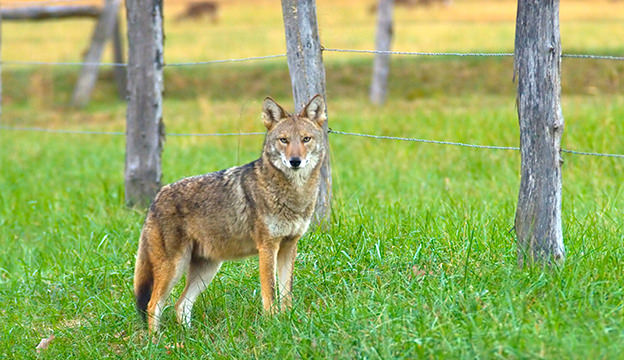
2. Coyotes

Habitat: Nationwide in a variety of habitats, including urban/suburban areas; they seek areas of good cover, such as woodlands or shrublands, for denning and protection. These predators are often found hunting along areas where open land and woodlands meet.

Livestock at Risk: Sheep, lambs, goats, cattle and poultry—particularly young, small and weak animals

Signs of Predation: Coyote footprints look like dog tracks, though more rectangular with the toes closer together. These predators usually kill their prey around dawn or dusk, which is when they’re most active, though they can hunt any time of day. They often take down their prey by attacking the hindquarters and sides. The prey will also have bite marks on the neck, throat and top of the skull. Coyotes consume the organs and intestines of their kills.

Protect Your Farm: Coyotes might not have the natural instinct to kill livestock—it’s thought to be a learned behavior—so if you see a coyote near your farm but aren’t experiencing predation, keeping that coyote around can actually deter other, possibly more dangerous, coyotes from moving in. These coyotes might be helping to control your rodent population, too.

Electric net fencing, 5-foot wire-mesh fencing with a portion buried underground, guardian animals and frightening devices can keep these predators away from your livestock, while trapping and hunting are removal options.

3. Dogs

Habitat: Nationwide

Livestock at Risk: Poultry and small and/or young livestock

Signs of Predation: Dog prints are round with the toes spread farther apart than those of coyotes, and their rear legs generally track slightly to the side of their front legs. Canine predators (especially domestic dogs) usually kill for fun rather than for food, so they’re likely to maul their prey but not eat it. A pack of dogs can do quite a bit of damage to a flock, often harassing and chasing your animals, causing stress and even running them through fences.

Protect Your Farm: Electric net fencing and wire-mesh fencing can keep these predators from having direct contact with your animals. Livestock guardian donkeys and llamas are effective against dogs, but some guardian dogs can become friendly with visiting dogs, making them less effective protectors.

4. Bears

Habitat: Black bears are found throughout the U.S., while brown bears (grizzly bears) are in Wyoming, Montana, Idaho, Washington, Alaska and Canada. These predators live mostly in forested areas, but they’re highly adaptable. The combination of increasing bear populations and decreasing bear habitat near growing urban and suburban areas means bear attacks on livestock are becoming more common.

Livestock at Risk: Livestock of all kinds

Signs of Predation: Bears have five toes, but the small fifth toe doesn’t always leave a track. Prints are long and resemble human feet. These predators kill their prey with force—biting and mauling as necessary to reach their goal. They’ll eat udders, organs and muscle, sometimes leaving behind only skin, bones, and the stomach or intestines. A bear might leave behind feces as a calling card near the kill and might move the prey to a more secluded spot. The presence of a bear can cause animals to stampede and run through fences. They generally don’t stop their show with just one kill, either, and they’re known for rooting through trash cans and bee hives, too.

Protect Your Farm: The grizzly bear is listed as threatened under the Endangered Species Act, so it’s protected. If you believe you have a grizzly bear problem, contact your state department of fish and game. Black bears can be fenced out with two or three strands of electric ribbon and deterred with frightening devices, but they can become desensitized to those after using for a while. Black bear hunting laws vary by state. Young livestock brought indoors at night will reduce bear visits, too.

5. Foxes

Habitat: Through most of the U.S., except the Rocky Mountains and Great Plains; they like open areas, wetlands and brushy fields.

Livestock at Risk: Poultry and young livestock

Signs of Predation: Fox prints are smaller than coyote and dog tracks, and they generally have a smaller stride. These predators usually attack at night, targeting the throats of livestock but sometimes biting along the neck and back. They eat the viscera, nose and tongue of livestock, and the muscles of poultry. A fox will likely take away poultry and small animals to its den to feed its young.

Protect Your Farm: Be sure wire-mesh fencing is secure, not leaving room for foxes to squeeze under. Guardian dogs and frightening devices can keep these predators out of livestock and poultry areas. Hunting and trapping are common means of removal. Clean up other potential food sources, such as meat scraps in compost piles, pet food and fruit, to give foxes one less excuse to visit.

There are many animals out there that want a piece of your livestock-farming action. Your state’s cooperative extension has information about livestock and poultry predators specific to your area. Work with neighboring farmers to identify and control problems, too, as a predator won’t stick to just one piece of property.

Categories
Farm Management

How to Find a Trustworthy Farm Sitter

How to Find a Trustworthy Farm Sitter - Photo by Roger Williams/Flickr (HobbyFarms.com) #farmmanagement

A small farm, whether intended for profit or pleasure, requires round-the-clock maintenance. Intimately in sync with the rhythm of your livestock, crops and daily routine, you may find it difficult to leave your operation for an extended period of time. However, many farmers today can arrange family trips and vacations once thought impossible through the invaluable assistance of a farm sitter, allowing farmers the freedom to leave their property for more than a few days while preserving their peace of mind.

Erica Frenay, manager of the Northeast Beginning Farmer Project at Cornell University and owner of Shelter Belt Farm outside of Ithaca, N.Y., felt anxious about leaving her family’s 28 acres for the first time. Frenay and her family raise sheep, turkeys and pigs, and they planned a trip to reunite with friends in Portland, Ore., one spring, dangerously close to the time their breeding stock of ewes were scheduled to deliver.

“There are so many things that could go wrong,” Frenay says. “You don’t know what you don’t know until you are gone, and we haven’t left the farm for more than a two- or three-day period.”

Fortunately, she hired a farm sitter who had prior experience working with her family and farm. Frenay built a relationship with her sitter over nine years, and she felt her farm would remain prudently managed in her absence.

“Just because you have a farm doesn’t mean you are stuck there forever,” Frenay says. “It’s so important to get away, whether for learning or relaxing—you just have to be an intentional planner.” She advises only hiring a sitter who has experience working with the specific livestock species raised on your farm and having live training sessions to ensure the sitter has considered every possible circumstance, even unlikely emergencies, that could arise while you’re away. The farm sitter needs to know how to contact the veterinarian and monitor signs of distress or illness in livestock.

Trust Is Key

All the preparation in the world doesn’t guarantee that a sitter will do what you ask. Now a rancher in Arizona, Susan Dedrick-Shuford once returned to her small Indiana farm after a long weekend to find her dogs’ water bowls empty. The farm doesn’t lie–farmers will notice signs of a negligent sitter upon their return. Today, she works with someone dependable who regularly oversees the care of several dogs, horses and free-range chickens at her remote ranch near the Mexico border.

While trust and experience are essential qualities for a farm sitter, Dedrick-Shuford emphasizes the value of communication, too. When she’s away from the farm, she knows when her sitter is checking on the ranch through text messages.

When hiring a farm sitter (be they part-time or full time), Lily Marie Plasse, owner of Barnyards and Backyards Farm Sitting Services in Troy, N.H., encourages farmers to consider hiring someone who offers sitting services as a business with insurance. In addition to running her own hobby farm, Plasse oversees as many as three farms at one time, often separated by long distances and involving several visits a day. As a sitter, she performs basic upkeep including livestock and pet feeding, brushing, milking goats, administering medications, and other routine duties. Some of her clients travel as often as every month for work or pleasure.

“People still want to have a life and be able to travel, and most people who do have a hobby farm also work outside the farm,” Plasse says. “Having a farm, it’s tough to ask your neighbor to do everything if you have different animals, and you don’t have the option of a kennel.”

She stresses that farm owners should write every instruction or detail down either on paper or electronically, including dietary regimens, livestock turn-out schedules and veterinary contact information. She conducts a meet-and-greet with every client and asks that they leave out equipment and place feed in assigned areas for a fluid check-in.

“Do your homework and find somebody who is experienced, insured and does their work professionally,” Plasse says. “Ask as many questions as you can, and the farm sitter should be able to answer all of them.”

Narrow Your Search

If you’re not sure where to start your search for a farm sitter, many online resources, including www.farmsitterusa.com, are available to assist with finding a farm sitter. Here are some tips to a successful search.

Obtain References
When seeking out a farm sitter, reach out to fellow farmers in the area or your local veterinarian’s office for recommendations. When considering a farm sitter for hire, ask for a veterinarian’s reference and a reference from a previous client.

Discuss and Agree On Compensation In Advance
Many professional farm sitters will have set rates and might charge extra for some services.

Conduct a Live Walk-Through
Especially if it’s your first time working with a farm sitter, insist on hosting a live walk-through or training session. During this session, the farm sitter should ask many questions about your farm, and you should ask many questions about the sitter’s experience. If you have a particular type of livestock needing care, ask the farm sitter about specific experiences working with that animal. Be as specific as possible and don’t hesitate to interview several sitters before deciding on the correct individual.

Put Care Information In Writing
Before you leave, make sure your farm sitter has as much information as possible in written and electronic forms. Sit down and write out detailed instructions. All information regarding medication and nutrition should be in written form. If you’ve hired a good farm sitter, he or she will take notes, too.

Discuss Safety and Biohazards
Safety should be the highest priority while you’re away. Does the farm sitter know how to reach the veterinarian? Do they know who to contact in case an animal escapes? Is there a plan in place in case of severe weather? The sitter should have instructions to direct them in every situation.

To reduce biohazard risks, make sure the sitter knows to bring decontaminated equipment and attire, such as clean muck boots, to work on the farm. Don’t forget to talk about the farm sitter’s safety, too. If a horse displays behaviors that might endanger the farm sitter, make sure the sitter is aware of those characteristics. Make sure the farm sitter is aware of equipment dangers around the farm.

Establish a Relationship
Finally, if the farm sitter’s work has impressed you, foster a long-term relationship with that sitter. Build rapport and trust so when you need someone to step in during a family emergency, you know you have a friend, not just a sitter, who you can call upon.

Get more farm-management help on HobbyFarms.com:

About the Author: Elizabeth Troutman Adams is a public-relations specialist and freelance writer based in the Bluegrass region of Kentucky. In addition to gardening, cooking and homesteading, she loves riding horses, practicing yoga, and spending time with her French bulldog Linus and husband Shawn.


Categories
Homesteading

4 Ways to Save Money When Homebrewing

4 Ways to Save Money When Homebrewing - Photo by iStock/Thinkstock (HobbyFarms.com) #homebrewing #homebrew #brewbeer

Spend a few minutes online trying to fit out your homebrewing rig, and pretty quickly, you’ll be looking at advertisements for $10,000 touch-screen-controlled PicoBreweries—and if not that, then at least few thousand bucks worth of shiny stainless steel. Homebrewing has become popular, and with that popularity has come a whole world of high-profile, custom-made hardware. Don’t get me wrong: Some of this equipment is fantastic, and if I won the lottery, you can be pretty sure where I’d start spending the winnings, but much of this is beyond what the typical homebrewer requires or can even take advantage of.

Remember, homebrewing had its origins as a scrappy, underground hobby in the 1970s, with mimeographed recipes and patched-together brew rigs. Although today’s brewer has the option of running out and buying a turn-key automated brewery, there’s still plenty of ways to get the equipment you need (and want) without having to take out a second mortgage.

1. Shop Used and DIY

Let’s be honest, those homebrew supply catalog photos of shiny, stainless-steel brewing equipment, with the bells and whistles of built-in thermometers and water-level gauges, are pretty seductive. But if homebrewing is just a hobby for you, you can save money by checking Craigslist or community “buy nothing” forums for carboys, oversized stockpots and the like.

If you’re willing to break out the power drill and adjustable wrench, it’s easy enough to build up your own mash tuns and boil kettles; the Internet is full of tutorials, and the availability of “weldless” fittings means you don’t need to deal with the tricky task of welding stainless steel. Drilling stainless steel is hard enough, and I recommend a decent power drill and set of bits if you’re going to start building your own equipment.

2. Brew Small

Homebrewing has long been obsessed with 5-gallon batches. The reason, presumably, is the availability of 5-gallon buckets, carboys and kegs. But that’s a lot of beer to deal with! Smaller batches can be fermented in 1-gallon glass jugs (either bought new or re-used from something like fancy organic apple juice). Working with 1- or 2-gallon batches cuts down on ingredient costs and the need for giant, specialized pots for mashing and boiling. It’s also a fun way to turn out more variety in your brewing or experiment with different yeasts.

If working with existing recipes, just divide the ingredients by whatever fraction is necessary. The only exception is for the yeast: I’ll usually use a half-pack for a 1-gallon batch and a full pack for anything 2 gallons or larger. When setting up gallon jugs as fermenters, be sure the bung holding your fermentation lock fits well; some jugs have beveled mouths that can make it tricky to get the bung seated. Some homebrew suppliers are now selling smaller-sized carboys and even promoting ingredient kits in 2- or 3-gallon sizes.

3. Use Multi-Purpose Equipment

This may be anathema to some brewers, with sacrosanct collections of special-purpose gear, but I frequently share my brewing equipment with our homestead-at-large. My boil kettle and mash tun have both seen double-duty as water-bath canners, and the boil kettle has even served as a stockpot when we found ourselves with a glut of chicken carcasses one winter day. Thinking of brewing gear as part of the homestead’s general-purpose kit may not make it cheaper to buy, but it will make it easier to justify.

Of course, the opposite is also true: If you’re willing to adopt the right techniques and work around the challenges, you can brew a fine beer with what you’ve probably already got around the house. Working with smaller batches, as suggested above, helps. Just make sure you clean any shared gear thoroughly before using it to brew, not just to avoid off flavors but because residual grease or fat can spoil head formation.

4. Share Your Gear

No homebrewer need be an island—even as enthusiastic a brewer as I am, my gear will lounge in the garage for weeks at a time. Making connections at a local homebrew club or online forum opens up the opportunity to share. Ask your neighbors, and bring a bottle or two of homebrew when you come calling. It never hurts to pay it forward! Bottles of all kinds, bottle cappers and high-BTU turkey fryers seem to be the easiest to find, but I’ve been pleasantly surprised how many folks seem to have a carboy or a CO2 tank languishing in their garage or basement.

Get more homebrewing help from HobbyFarms.com:

About the Author: Nick Strauss is an all-grain homebrewer with more than 13 years of experience. He and his wife own a small homestead in the Pacific Northwest and blog about homebrewing, homesteading, cooking and more at Northwest Edible Life.


Categories
Homesteading

Celebrate Valentine’s Day As a Family

Celebrate Valentine's Day as a Family - Photo by Tessa Zundel (HobbyFarms.com) #ValentinesDay #crafts #kidscrafts

Something I’ve noticed about living on a homestead is that the closer I get to the dirt, the more in tune I become with the natural rhythms of each season. My children have easily picked up on this, too, and it’s become a part of how we educate them and what we do together as a family. Seasonal traditions become essential.

When I was young, I appreciated the consistency of my family’s traditions, from food to decorations. Even children privileged to grow up in very happy families can benefit from the security the anticipation provides. Almost every holiday in our family had a tradition attached to it, but Valentine’s Day, for the most part, was always a holiday we passed over. We got chocolate from Grandpa, but otherwise, pretty much ignored it. We were kids, and Valentine’s Day was for grown-ups and all that mushy love nonsense.

When my first daughter was young, she took a fancy to the Victorian scrap and heart doilies I put out to craft a few homemade Valentines cards one year. She loved the excitement surrounding an anonymous gift left for Daddy and the special, heart-shaped treat we would make together for Grandma. What can I say? Her enthusiasm for a holiday dedicated to showing love rubbed off on me, and I realized I was missing an opportunity. In our house, Valentine’s Day has evolved into a family and homestead holiday.

Love for the Farm

Our gifts for Valentine’s Day are always simple and homemade, especially for the animals. We make our favorite frozen bird feeder for the poultry. The goats always get the very precious last bit of preserved, homestead-grown rose hips; we save them back especially to show the goats how much we love and appreciate them.

Even our little orchard and vineyard get a dose of affection this time of year, as we head out in the still wintry winds to begin the month-long ordeal of pruning. Sometimes I’m so tempted to just let it go—it’s cold up on that ladder and often quite wet. The simple truth is, though, that I love my trees and vines; I appreciate the service they render to my family throughout the year.

Show Kindness to Others

I know a lot of people—some with farm sprouts and some who live alone—who struggle with Valentine’s Day. The day is complicated by the reality of tricky inter-personal relationships, or we’re just tired of how commercial the holiday has become. Still others of us, though we may be slow to admit it, are disappointed in the day because we are too much focused on ourselves and what we have (or have not) received.

May I offer a suggestion?

Turn Valentine’s Day into a family affair—even if that family is just you and your cat. Find someone to serve, someone to surprise and someone to show your love to for this day. What an opportunity: a whole day to do nothing but serve the people we love! You have the rest of this week; think about it and pick one or two people (or animals on your farm) that you’re going to really blow away with kindness this Valentine’s Day.

Give Decorations as Gifts

I’m a tactile kind of girl—I need something to do. All the introspection and feeling surrounding Valentine’s Day is great, but my kids and I need a hands-on project to engage in. We love to decorate for holidays, so we decided to focus on that: Valentine decorations to give as gifts. Here are two of the things we did this year. Bear in mind that my kids are small and we’re focusing more on sentiment than style.

Feed Sack Heart Garland

Celebrate Valentine's Day as a Family - Photo by Tessa Zundel (HobbyFarms.com) #ValentinesDay #crafts #kidscrafts

We have neighbors who are also homesteaders, and we figured if anyone around here would appreciate this Valentine decoration, it would be them. We suggested they hang it on their chicken coop, but it would also be cute hanging on a mantle or running the length of a shabby chic dining table.

To make these, we followed the instructions found on the blog Directions NOT Included. The garland is super simple to make, and my kids barely need my help. Modern feed sacks (the plastic type, not the old-fashioned fabric ones) are unpredictable creatures, thick in some places and thin in others. We found the paper bags with the inner plastic liner worked best for this project; straight plastic was too weak to bend well and hold its shape. Before getting started, dust out or wash down the inside of the feed sack.

The garland is a bit of work, but it makes us smile. Upcycling is so fun to do with kids, and we have quite a few feed sacks around here.

Borax Crystal Ornaments

Celebrate Valentine's Day as a Family - Photo by Tessa Zundel (HobbyFarms.com) #ValentinesDay #crafts #kidscrafts 

We also have some neighbors we love who are decidedly not into homesteading so when we gift them something, we try to fancy it up. Farmer-type folks are so often down-to-earth practical, we forget that some people like to simply be decorative now and then. We learned to make these ornaments by following the instructions found on the blog Schneier Peeps and were so happy with the results.

Borax is something I always have on hand to make homemade laundry detergent, and we seem to constantly have pipe cleaners coming out our ears. The only other things required were a container, boiling water and some raffia. Anyone can do this and the result is a sweet, little Valentine decoration easily made out of supplies you may already have on hand.

One of my greatest heroines once said:

Celebrate Valentine's Day as a Family - Photo by Tessa Zundel (HobbyFarms.com) #ValentinesDay #crafts #kidscrafts

Family is about time. Take the time this Valentine’s Day to make it a special one for all your family and friends. For more ideas on how to incorporate quality traditions into your family’s life, visit my blog.

Get more Valentine’s Day ideas from HobbyFarms.com:

« More Farm Sprouts »


Categories
Urban Farming

Time to Plant Peas

Time to Plant Peas - Photo by Kevin Fogle (UrbanFarmOnline.com) #peas #garden #plant #grow

One of my favorite childhood memories was wandering into my mom’s seemingly endless garden in spring and eating both snow peas and sugar snaps right off the verdant vine. For some reason, the sweetness of the peas and the crunch of the bright-green pods are forever ingrained as sensory memories of the old-home place in the mountains. I want to recreate part of that experience for my children even though we live in the middle of the city, so I’m growing peas in my small front-yard garden with the hopes they’ll pick and enjoy them as much as I did at their age.

Just last week, I planted my pea seeds. I’m growing exclusively edible pod peas: snow peas (or sugar peas), which feature undeveloped seeds in a flattish pod, and snap peas, with thicker pods and fully formed seeds. Both are great raw right off the vine or can be used in any number of culinary applications from salads to stir-fries. I planted early varieties of both sugar snaps and snow peas in the garden, and I’m looked forward to the first harvest in 55 or 65 days, when the plants mature. Be sure to follow the directions for your individual cultivar regarding spacing and seed depth.

As a cool weather crop, peas don’t do well with heat and humidity, which means it needs to be planted pretty early in most regions. When it’s time to plant in your area, be sure the peas are situated in a plot that receives full sun to guarantee the sweetest pea pods. (Consult the USDA’s plant hardiness zone map as a guide on planting dates.) The garden soil should be well-drained and have a pH of about 6.5 for maximum production.

Both the vining and dwarf bush edible-pod pea cultivars will benefit from a support to climb, such as a trellis or mesh. Whatever support apparatus you go with, place it in the ground before the peas are planted or immediately after so as not damage the plants’ shallow roots. To make things easier, I planted my crop of edible pod peas around the outer edge of the garden, right along the mesh fence that keeps out squirrels and neighborhood dogs. The mesh fence will provide a handy support and hopefully will allow the plants to spread onto the outside of the fence where they are easily accessed by little hands!

Pea-plant care is pretty simple. Keep them at an even moisture level, and pick pods every two or three days to keep the peas sweet and less starchy. Regular harvesting also ensures continual production until the warm temperatures set in, which slow and eventually stop pea plants from producing.

Read more of Garden In Front »


Categories
Beginning Farmers

5 Ways to Love Your Farm

5 Ways to Love Your Farm - Photo by iStock/Thinkstock (HobbyFarms.com) #farm #valentinesday

Is your ground frozen? Is your heart cold? Are you going stir-crazy indoors? Valentine’s Day is a great time to renew your vows to love and cherish the land that feeds your body and nourishes your soul. Take time to write it a love letter of its own, so to speak. Get outside, appreciate nature, and feel those warm fuzzies. Yes, I am actually telling you to go hug a tree. And let it hug you back. Here are some ideas to get reconnected with your land this season.

1. Count Your Lucky Stars

If you’re outside of a city’s light pollution, consider yourself among the fortunate few. You might see up to 2,500 stars at night, while city dwellers count around 200 to 300. Astronomer Andrew Fraknoi estimates that 80 percent of the world’s population has never seen the Milky Way—that’s our galaxy, in case you didn’t know. On a clear, crisp winter night, heat up some apple cider and invite your friends over for a star party. See the International Dark-Sky Association’s website for ideas on how to host a stargazing event.

2. Cherish Your Compost

The reasons to compost are as numerous as the stars. Woody debris, branches, leaves, kitchen scraps and grass clippings are not to be wasted. Unlike dirt, healthy soil is teeming with life, and carbon is the limiting factor to biological diversity. By recycling the carbon and nitrogen in plant material, you’ll feed the beneficial creatures that keep harmful plant pests in check. Start an easy, breezy compost bin by lashing four wooden pallets together to make a square cage. Fill it, turn it and keep it moist, and by this time next year, you’ll have a rich and robust soil amendment.

Better yet, compost in place with a hügelkultur mound, and landscape your site to harvest rainwater more efficiently. A hügelkultur pile starts with a woody base: All the biggest logs go on the bottom, followed by the same composting materials you’d put into a normal compost bin. Place finished compost and soil on top, and smash it into gaps in the brush. You can then plant directly into the mound. It’s great for adding a vertical element as well as creating a berm to catch water flowing downhill.

3. Spread the Good Wood

Spread some love to areas of your land that could use some TLC with dormant live cuttings, an easy way to propagate healthy woody plants. Dogwoods and willows are excellent stabilizers in floodplains and along stream banks. They reduce erosion, outcompete invasive plants and provide wildlife habitat. Simply cut a 3-foot-long, 1-inch-diameter stake from a live tree, and soak the cut end in water for at least 24 hours. For extra assurance, add a rooting hormone to the water. Roots will grow from the cut end if buried deep enough—around 2 feet—and have access to water and nutrients. Use rebar and a hammer to drive a pilot hole to make planting easier. Keep them watered, and buds should peek out and start growing this spring. Get creative and form natural windbreaks and hedges made of native willows and redosier, gray or silky dogwoods.

4. Tap Into a Sweet Treat

Any native maple tree’s sweet sap can be tapped to make your own syrup. Sugar and black maples have a higher sugar content than red or silver maples, and even boxelder trees produce a heavy, sorghum-like syrup. Sap rises in trees when cold nights are followed by warm days, ranging from lows below freezing to highs around 40 degrees F. You can tap a tree anytime after it drops it leaves until just before buds begin to form.

The Ohio State University recommends drilling holes only in trees that are large and healthy enough, around 12 inches or more in diameter. Tap kits can be homemade, purchased online or provided by your local agricultural extension office. After you collect 40 gallons or so, then comes your labor of love: Boil it for 20 hours or so, carefully skimming off foam and making sure it doesn’t scorch. With careful finishing at the perfect temperature, you’ve got a sweet treat from the heart of your trees. Make your sweetheart a Valentine’s Day pancake breakfast topped with homegrown maple syrup!

5. Show ’Em That You Cairn

Winter may bring buried treasures to the surface, such as rocks that get pushed up by frost heaving. Go for a walk and scour your fields for stone. Stack them up to build muscles, garden bed walls, beneficial wildlife habitat and thermal mass. Pile or carefully perch rocks on top of one another to make cairns, landmarks that guide the way to a favorite spot or keep you on the right path, literally or symbolically. Millions of years of geologic forces have shaped your landscape, molded and moved these stones, and ground down the minerals into soil where food and flowers grow. Feel the weight of these rocks and the lightness of your footprint on this place. Don’t take it for granite. (Ha!)

February brings you to the mid-way point between winter and spring, when you begin to come out of your hibernation and reach for the light. Dormant plants, dead and down debris, dark and starry skies, and plain old rocks all offer beauty and functions that are often overlooked and under-appreciated. Remember to celebrate all that nature provides, and your best yield this year may just be the relationship you have with your farm.

Get more tips for sharing the love around your farm: